Jose Vilson's Blog, page 29
November 1, 2015
Like Water Off A Duck’s Back [A Note on Duncan’s Legacy]

Six years ago, I remember sitting in an afternoon meeting with my principal and about 25 other administrators and educators, waiting patiently for a central official to come down and give us some awful news of some consequence for us and all of our work. The school official stood there whispering to an assistant, arms folded while everyone else chatted each other up about Mayor Bloomberg’s latest overnight budget purge. The meeting started as a mundane set of manufactured talking points from the PR department, but quickly escalated to a shouting match between those of us who sat (educators) and the one who stood (the school official). That was also the night that I found out firsthand how nice and well-meaning these central folks are, and, no matter how many insults and ad hominems shouted at the official, he would not be moved.
It’s the first time I learned the difference between temperament and action in education policy. Too many folks obfuscate both when we mean to address one.
Take, for example, the legacy of former Washington DC public schools Michelle Rhee, who remains in the spotlight after Deadspin’s thorough discrediting of Sacramento, CA mayor and Rhee’s husband Kevin Johnson. Initially, too many of my colleagues focused on her abrasiveness and orneriness as if they were reflections of the true nature of her larger agenda. The same can be said of Chicago mayor Rahm Emanuel, Success Academy CEO Eva Moskowitz, and dozens of other education reform leaders full of grump and circumstance. With friends who agree with them on these educational issues, they’re all nice people who care about kids. That’s not enough.
That’s why, when I was interviewed by The Nation about Secretary Arne Duncan’s legacy, I tongue-in-cheek said “He’s a nice guy who cares about kids, but he showed that in all the wrong ways in policy and practice.”
In my interactions with him and successor and former New York State Education Commissioner John King, I’ve had nothing but pleasant experiences. I’ve met Duncan thrice, and I asked nothing but hard questions that eschewed the normal line of questioning, such as testing and charter schools. With King, he has interesting thoughts on integration and schools. In fact, the last time I fielded an oppositional comment to him, he (or his people) responded. These encounters disabused me of the confusion between nice and kind.
Yet, with both men, they rarely have gotten held accountable for the avenues they left open for the private sector, including excessive standardized testing and unnecessary charter schools all across the country. While our current American politic prefers personalities over policy, everyone from the President of the United States (a very nice guy) down to principals who’ve bought into the education reform narrative (lots of them, very nice people) has taken the accountability narrative on without taking a harder look to see if our schools are working for our kids.
In New York, we have an evil villain in Mrs. Moskowitz, too. She makes it easy in her attention-seeking approach to her hype machine, but what about all the swell, aw-shucks folks sipping champagne on the first day of school while kids pee in their pants during test prep? Or my colleagues who speak up in her defense in commercials and staged protests, many of whom smile and nod while Teach Like A Champion strips our black and brown kids of their voices? Or the softer, gentler folks in central offices who still believe in their predecessor’s visions for public schools? And the plethora of other colleagues who believe parents, students, and rank-and-file educators deserve minimal voice in the workings of our schools?
There are so many nice people. Recently, in POLITICO’s Education Issue, the interviewer asked him about his matter-of-fact gaffes in the media, including his now famous “Hurricane Katrina was the best thing to happen to the education system in New Orleans.” He said, ”
“Water off a duck’s back,” he told me. “There are a lot of pressures to maintain the status quo, and if you’re not challenging that, why are you here?”
That is correct. Too many of us worried about what he had to say instead of paying attention to what he and the very nice, nameless folks who laid waste to New Orleans’ education did. Saying does a lot, too. It can inspire and move ideology, and it can convince millions of people to some level of sincerity. It can do nothing when 25 educators get hammered by the droning voice of a school official who shakes off the barbs like ducks do.
Words mean so little in the face of execution.
continue reading
The post Like Water Off A Duck’s Back [A Note on Duncan’s Legacy] appeared first on The Jose Vilson.








October 30, 2015
Lead With Love [Spring Valley High Is Your School Too]

Today, I finally saw some of my cockamamie student groupings come to a screeching halt when some of my best students started clashing with each other over how to approach their scientific notation project. My 280 lbs frame usually settles disagreements if I’m in proximity, but this was not one of those days. As I listened to their grievances, I picked apart the major contents and helped them work out the minor details without me.
In my younger days, I might have had a conniption, shifted a few students to different groups, or rolled my eyes hard. Today, I decided to lead with love. continue reading
The post Lead With Love [Spring Valley High Is Your School Too] appeared first on The Jose Vilson.



October 27, 2015
We’re Wrong [Reflecting on Spring Valley High]

One more thing about the teachers of color panel went awry from a couple of weeks ago: we too embody white supremacy as agents of the state.
Yesterday, a cop assaulted a black girl in the middle of class for refusing to leave the class when a teacher, an administrator, then the school resource officer told her to step out. The easy part for my colleagues is to say that, if the student just complied, then none of this would have happened. If the student had simply gotten up on her own accord and done exactly as the overseers had told her, Spring Valley High School would not be a trending topic in all the worst ways.
But that’s not how students work. They’re not 100% complaint. Neither are adults. Our laws and their executors thrive on this. continue reading
The post We’re Wrong [Reflecting on Spring Valley High] appeared first on The Jose Vilson.



October 20, 2015
This Is What Has To Be Done [#WhyIWrite]
I had the honor and pleasure of having my superintendent visit my classroom today. The first time didn’t go so well. The students were wrapping up group project business, but, to the naked eye, it might have looked like the kids were winding down the school year leisurely. Since then, I’ve had a phrase brewing in my mind, intentionally, but I hadn’t gotten the chance to speak it. Then, it happened today. He came in with a few folks whose faces I’d never seen before and my principal. Our class stopped what we were doing, and, after saying hello, I let out the phrase I’ve been wanting to say for months:
“Ask the kids what they’re doing.”
The students were probably shocked I was so open about them and their work, and responded by pushing to finish the work. But for me, I wanted the adults who weren’t normally in the classroom to see that I don’t put on pretenses or shows. I don’t need silent classrooms, especially during the last period of the school day. I work as intently with my struggling classes as I do with my advanced classes. I don’t use the words “high expectations” and “rigor,” but, if that’s the interpretation, and if it allows me to keep doing the work I do, I’m happy.
I don’t take pride in my teacher evaluation reports, but in how my students respond to the work I’m doing. continue reading
The post This Is What Has To Be Done [#WhyIWrite] appeared first on The Jose Vilson.



October 18, 2015
EduShyster and I Tag Team On A Microphone

A couple of weeks ago, EduShyster visited my classroom because she’s my cousin, not in a biological way, but in the Dominican way where, when you think you’ve run out of cousins, out comes another one. Or, in this case, she’s an almost-kin.
Such is the case for one of the few people outside of my school building who’ve visited my classroom more than once. As she’s grown into a new role of provocateur, challenging her own notions about education reform, she’s caught serious heat from reformers and traditionalists alike. The former wonders what she’s up to and the latter thinks she’s lost her way. Instead, she defies both through her usual wit and candor, and gives us glimpses of people we might not otherwise get if we stuck with the “two-sided argument” strategy proffered from the last decade and a half. I for one am glad she’s had these conversations.
The most beloved anti-reform blogger in the country pulled the rug from under her audience for a thorough dusting. Good on her.
So what happens when the most admired and the most infamous education bloggers in the country come together for a podcast? Here’s a hint of it. If you happen to hear it, let her know I sent you. Thanks.
continue reading
The post EduShyster and I Tag Team On A Microphone appeared first on The Jose Vilson.



October 11, 2015
Where Have All The Teachers of Color Gone? (With Answers)

You should know that, at last week’s panel for the conference I attended, I went to a panel entitled “Where Have All The Teachers of Color Gone?” and never got our main question answered. Instead of coming for the moderator for not “doing the education,” I’ll ask you to consider a few things:
I’ve done some of the research for New York City, and similar patterns arise across the country.
Before we can even answer the “teachers of color” question, we have to differentiate what types of leaving we have.
Before that, we have to consider the mindset of the folks asking questions about it, and whether they’ve read any of the tangible research.
Even after the Albert Shanker Institute released their comprehensive report on the decline of teachers of color, mass media generally eschews thorough examinations and historical contexts of the question. The “teachers of color” issue is almost exactly like the teachers at large issue, but that difference, namely race, makes this all the more complicated. When integrationists won a hard-fought battle for school integration in 1954, folks across the country responded to it and the other numerous court-ordered integration orders by firing more than 38,000 black teachers and other education professionals en masse. When education reformers of present-day wanted to disrupt their education systems, they competed against each other in their shows of force by shutting down, breaking up, and privatizing schools with majority students of color.
Guess where teachers of color, not so coincidentally, tend to work?
All of this has precedent. It isn’t even that teachers of color have a preference towards teaching one set of kids over another per se. A part of it is that they want to teach students who come from their backgrounds. But they’re also not getting hired at schools that are predominantly white. That’s why they often have fewer options to stay in education than their white counterparts who, from my informal observations, seem to have more options within the school system.
This particularly stung in places like Washington, D.C., NYC, and Chicago where, after my own conversations and observations with countless teachers, reformers sought to bring a hammer to schools with majority students of color and bring in their own visions for what teachers looked like: white, young, and possibly conforming to a corporate ethos. Teach for America CEO should take responsibility for this as that was the premise of her domestic Peace Corps project. At the same time, former NYC mayor Michael Bloomberg, former DC schools chancellor Michelle Rhee, and the handful of education officials who ran Chicago Public Schools for the last decade and change carried this out to fidelity, filling their central offices with lawyers and MBAs to talk to a teacher corp that started to look more and more like central offices.
How fitting.
Across the country, we also had faces of color telling other faces of color that this was the path to freedom and liberation. They used terms of “not all skinfolk are my kinfolk,” an axiom of grave consequence, to change the face of the failing teacher to a darker, older face. Even when the research shows that teachers of color are more likely to see children of color as potentially gifted, these folks couldn’t wait to fill in the conservative void and give cover for the folks plundering our schools. But the inborn capitalist in them asserts that, because they’re eating well, no one else can or must.
Thank you, Dr. Steve Perry and Democrats for Education Reform.
So, to answer the question, teachers of color are either dismissed or leave. They’re dismissed largely because their schools are more likely to get shut down due to the major reasons we see out there: standardized test scores, restructuring plans, and lack of parental voice and real choice. They leave due to the lack of autonomy in teaching in ways that would more readily impact students of color. Things like scripted lessons and curricula and silencing in common planning meetings contribute to the profession being stolen from right under them. These are issues that also affect white teachers who’ve decided to stay in the profession long enough to consider it a career. This is why solidarity matters, and why we all must advocate for teachers of color.
The rebuttal to this question reminds me of when basic folk say things like, “All lives matter” when activist assert that Black lives matter. My first question is usually, “Well, do you organize for all of us to have a well-compensated, respected profession that listens to students and the community, and can make sharp decisions about the students in their care? Or do you only care if you personally get what you want out of life?” If we can show solidarity for the folks most disempowered by our system, then the whole system benefits as a result. That’s not a rising tide lifting all boats. That’s us moving the whole freaking sea floor.
But I wouldn’t expect everyone to have done the research on it. Institutional racism thrives on people not actually reading up.
continue reading
The post Where Have All The Teachers of Color Gone? (With Answers) appeared first on The Jose Vilson.



October 8, 2015
Mmmmm Oh My Gosh, Stop Lying, Ms. Moskowitz! [Medium]

Remember that piece I wrote at the Progressive? Success Academy CEO Eva Moskowitz’ team decided to write a response. I didn’t expect it, but nonetheless, here’s my response on Medium. An excerpt:
You can’t speak to agency if you’re trying to co-opt the parents of PS 307 in your argument for why we need more charters. You can’t speak to agency if you force parents and students to attend rallies under threat of, you guessed it, kicking them out. You can’t speak to agency if the pedagogy in your buildings feel less like liberation and more like indoctrination. You can’t speak to agency if kids can’t even pass the hallways without making a peep or have lunch periods where they only get to dine.
Read the rest here and let me know what you think. Thanks!
continue reading
The post Mmmmm Oh My Gosh, Stop Lying, Ms. Moskowitz! [Medium] appeared first on The Jose Vilson.



October 4, 2015
Shut. It. Down. (On The Battles for Racial Equity and Public Education)
39,000 feet above the ground, the chants still ring in my ear:
What do we want? JUSTICE!
When do we want it? NOW!
What do we want? JUSTICE!
When do we want it? NOW!
We hit a rhythm right around here:
If we don’t get it? SHUT IT DOWN!
If we don’t get it? SHUT IT DOWN!
If. We. Don’t. Get. It? SHUT! IT! DOWN!
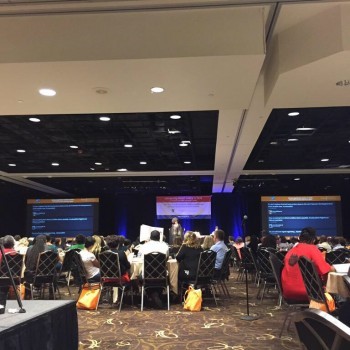
Indeed, with more than a dozen social justice advocacy groups from across the country co-hosting an event with the American Federation of Teachers in New Orleans, LA, one might have expected a palpable ferment take over the room. The AFT’s Racial and Social Justice Conference, with its 600+ attendees, felt like a direct response to the question of whether any teachers union would respond to the consternation in our streets and our classrooms. Parent groups, community activists, union leadership, LGBTQ collectives, prison reform groups, and advocacy institutions of all ages, and many cultural backgrounds immediately charged with the task of justice, including an opening action and rally in front of NOLA’s city hall.
This felt like the perfect space for us to challenge the inadequate resolutions that have beset those fighting for a better public education.
The public education blueprint for many of us for years has encompassed these items: stop the privatization and charterization of public schools, decrease (if not eliminate) the amount of standardized testing, shrink class size to private-school levels, create equitable funding systems across any and all public school districts, do away with mass school closures as a function for reform, work towards minimizing child poverty, and develop better teacher evaluation systems that don’t depend on unreliable and non-sensible equations. If, on the path towards following the blueprint to the tee, we can increase recess, the arts, and teacher pay, we would apprectiate it.
Yet, that “we” is fraught with several opportunities for the erasure of agency from the folks most affected by the decimation of public schools.
As Erin and Xian Franzinger-Barrett quickly pointed out to us this weekend, this “we” hasn’t always been “we.” This weekend allowed for the “we” to be parsed and deconstructed for a more nuanced view of our agenda. We have students who get suspended for merely speaking in the school hallway. We have parents who get shut out of their child’s learning because they look different. We have community activists who did not find allyship with their local teachers unions when they fought against racist policing or the deportation of millions of undocumented workers. We have teachers chagrined by the attack on teachers, but simultaneously pass the angst onto others, amplified by latent racism.
As I stood there listening to other people’s stories, I found myself torn in kinship and complicity. As an educator, I almost felt compelled to say “Not all of us.” As an educator of color, I almost felt compelled to say “I told you so.”
The “we” is dangerous for those of us who’ve had critical race conversations among ourselves when everyone else leaves the room and have a “real” conversation. How do educators of color (or anyone with a critical race consciousness) reconcile the public education blueprint with the vast and legitimate concerns from folks who’ve had a troubled legacy with this institution? How does the “well-meaning” white leadership of the public education debate address them in a susbtantive way? How do these leaders prevent themselves from bristling at the mere mention of race, then shoving a face of color to the mic when racial fires are set ablaze?
This conference certainly had one answer: put race at the center of the work we do, and let everyone wrestle with the discomfort shortly thereafter. (Side note: this conference, as I expected, also had a larger representation of Black, Latino, and Asian people than the average education conference. But of course.)
Challenging each other to do this work more thoughtfully is the way forward. As a reminder, when the opt-out movement in New York State hit a peak this past March, a state legislator introduced a bill that would effectively remove consquences for upper-class schools that reported massive opt-outs … while keeping the destructive policies intact in lower- and middle-income schools across the states. While this sounds like a class issue, the faces of this will inevitably be a white child and a Black or Latino child. Families for Excellent Schools, Governor Andrew Cuomo, and Eva Moskowitz will make it so.
I fear, with proof, that should all of the current public education blueprint be resolved without a critical race lens, the rabble rousers who are supposedly colorblind and not racist will go back to their segregated neighborhoods with their segregated schools, segregated funding, segregated class sizes, segregated teaching force, and segregated policies, content that they won for their child and not for othe people’s children. I fight against the continuance of crap for policy.
In this hypothetical playbook then, we must be able to adequately and thoroughly answer questions like “Why would a dozen parents go on hunger strike to fight for a high school in Chicago?,” “Why would parents of color in Brooklyn and Washington Heights, NYC, opt out their children when the movement was mostly seen as a white thing?” or “How do we build relationships with students and parents of color where all parties can feel vested in this fight?” We can’t do this as an addendum to the work, but as an interwoven part of the framework.
Community activist Zakiyah Ansari asked us to be fearless in our works. There’s a start.
These are the elements that the conference that came to light as social justice organizations came up to speak. The conversations weren’t about wages, benefits, pensions, presidential endorsements and the rage that often accompanied the mention of AFT President Randi Weingarten. It was the collective inability of teachers to reflect on the cultural identities of students that don’t share their racial makeup. That’s why I applaud this conference and its participants because, instead of reflexively asking their staffers of color to fix it, the AFT organizers proactively invited the challenge, moving themselves to the intersections of organizing, community, the Fight for 15, equitable immigration policy, and yes, Black lives mattering. To do it in disaster capitalism’s playground underscored the work we must do.
James Baldwin reminds us that, because he loves America so much, he insists on critiquing it early and often.
Those of us with a racial consciousness within unions do the work because, in reclaiming the path for public schools, we find affinity with those who may not have that racial lens yet. Simultaneously, we struggle as optimists and hopers in places that have often attempted to silence us via disinvitations, phone calls to districts, and, yes, rumors in on and offline group forums. If this “we” is to truly be a “we,” then reflection, action, and growth become paramount elements of our work. Chicago organizer Jitu Brown reminds us that the current education reformers play chess while we’re playing checkers when we don’t update our strategies.
The challenge, then, is to push each other towards a better future for public education. And if. we. don’t. get. it, they will shut. it. down. In the worst ways possible.
P.S. (At times, I wondered aloud when AFT would proffer its rank-and-file members who concurrently do social justice work, but more soon.)
continue reading
The post Shut. It. Down. (On The Battles for Racial Equity and Public Education) appeared first on The Jose Vilson.



October 1, 2015
Our Justice Is Complicated
For some reason, my Pocket app has been full of idiosyncratic profile pieces. This Fader one of Drake. This POLITICO one of Secretary of Education Arne Duncan. This New York Times obit dedicated to teacher-turned-community activist Terry Rosenbaum. This Esquire bit on the old new Mark Zuckerberg.
So when La Galeria Magazine published their profile on me today, on the same day that the most beloved education blogger would visit my classroom, I was curious about what’s happened since the last time she visited my class.
One of the recurring themes I see in my work is the idea of justice as a messy and complicated idea. That’s where justice needs to be served. Justice isn’t a facile thing. Whereas any number of situations can be looked at from a binary lens, I’m more excited by the idea that most of the work we must do requires finer instruments than folks have used. Most of this work feels more like knowing when to use a Phillips screwdriver instead of a hammer, or when to use a drill instead of a pocket knife.
Most of my friends have more than one tool in their toolbox.
The post Our Justice Is Complicated appeared first on The Jose Vilson.



September 29, 2015
#DontStealPossible My A … [The Progressive]

My latest for the Progressive explores the Families for Excellent Schools’ (now postponed) rally in Brooklyn for “equity”. Whatever that means. Here’s an excerpt:
FES’ white paper (and the rallies that follow) perpetuates the white savior narrative emerging in the education debate. Would FES fight with equal fervor for P.S. 307 in Brooklyn, NY? Across the bridge from this rally, another heated debate happening now in New York City centers on the rezoning of the DUMBO district where two public schools, one the predominantly white P.S. 8 and one the predominantly black 307. I’ve said in previous pieces that this debate is the 21st century fruition of the integration versus segregation argument. My conversations with people close to the matter reveal that P.S. 307 is a great school, and NYC School Chancellor Carmen Fariña affirmed this in her rezoning plans. Yet, gentrification is a beast that often strips the voices of the people who lived there and would like to stay. Such is the case in Dumbo, once vacated for green pastures and now revitalized by a wellspring of businesses.
For more, please read here. Let me know what you think. Thanks!
continue reading
The post #DontStealPossible My A … [The Progressive] appeared first on The Jose Vilson.