Jose Vilson's Blog, page 17
June 20, 2017
What Philando Castile Taught Me About Fatherhood [Medium]
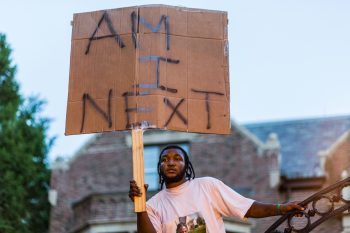
Recently, I put a post on Medium about Philando Castile and Father’s Day, which I think will be useful for any day:
“Castile’s name comes to me every so often in the quietest moments. Before I became a father, I knew I had internal work to do before taking on the gift and the burden of another life. My father showed up once or twice a year, and I begrudged him for it for decades. My stepfather was mentally and physically abusive, and I learned to create my own version of manhood from that. The various men in my life, from the priests and professors who dropped gems of wisdom to the celebrities and activists I admired from afar, couldn’t teach me how to be a better man for myself, much less for others.
Teaching over a thousand students over the course of 12 years gave me glimpses of how deep I would have to love a child, whether they excelled in class or not. Even when some have called me like a “father,” I knew it was only a sample of the joy and rapture I wanted to feel as I held my son.”
For more, please read the Medium article. Share. Let me know what you think. Thanks!
The post What Philando Castile Taught Me About Fatherhood [Medium] appeared first on The Jose Vilson.


June 12, 2017
Meet Me Inside, Meet Me Inside
The students already dispersed. They left desks misaligned, books out-of-place, looseleaf discarded, and the only adult in the room weary. Last period is almost always exhausting, but, after a week of filing, organizing, and getting the last bit of learning into students, this’ll drain even the most ardent of us. I was three computer clicks, one disorganized pile, and 16 iPads away from leaving my room.
Once I locked the door behind me, I had this sudden revelation come over me: there are only a few days left until the end of the school year.
This is how the end of the school year goes for NYC teachers. It starts around late May when teachers across the country across the country wave their fingers and stick their tongues out at us for starting their vacations earlier than us. We finally get to take a few deep breaths to see what the students’ first marking period grades looked like and what their last may look like. But not before you’re pleading and begging them to turn in work they swear they have for you somewhere. The portfolios we’ve organized and the phone logs we kept suddenly look like security blankets in front of the handful of parents and administrators who might have questioned whether we weren’t keeping tabs on our students’ progress for whatever reason.
The sun rays pierce our windows harder. The coffee tastes like it has one extra cup of sugar. The lesson plans start to blend into one another. The quizzes barely make a dent on our digital grade book. The professional development sessions feel like partial nap sessions for the fatigued and exasperated. The papers are still stacked eye-high and we’re seated there determining priorities. The kids are tired. The adults don’t want to talk about it.
The end of the year means that, for all the worry about making it to the finish line, we’re almost there … and we’re kinda left hanging.
What could we have achieved with more time? More support? More energy? More reflection? Everyone has no one but themselves to blame and celebrate, really. Field trips, in-room movies, and the fa-real-fa-real conversations crowd our agendas. One room has a teacher sitting while the students do impressions of their teachers. Another room has students presenting their best and brightest work for a final grade. Another still is sweating it out without an air conditioner, and still enjoying their time in their sweatboxes.
Bless the children because they get to be a closer rendition of themselves now that summer unofficially arrived after the thermometer passed 70°. Adults, on the other hand, relish the idea of being called by their first name sans the implied powers and responsibilities that come with. Que será será isn’t quite it. It’s more like “What will be can still be fixed and, if not, can I do this again next year?”
As for me, I’m looking at the faces of staff and of students, all of which will probably change in some way. For the kids who stay, the summer will augment their heights and smells. For the kids who leave, they’ll remember me, but won’t have the time to bang on my door the way they’re wont to do. For the adults who stay, they (usually) add one more wrinkle, one more strand of grey. For the adults who leave, they’ll be memories, usually attached to laughter, pride, or bewilderment.
I’ll enjoy lifting my feet up, visiting all the doctors whose appointments I’ve missed and all the friends and family who got annoyed at my teacher stories. But for now, there’s about 140 students and dozens of adults who depend on me to close out the year with them. 12 years after I didn’t think I’d be a teacher, I get to pack up these memories and try again one more time.
This is the awe in awesome.
The post Meet Me Inside, Meet Me Inside appeared first on The Jose Vilson.
June 4, 2017
I Only Do This Because You’re Doing Well [Stop Asking Me About Your Grades]
Not a day goes by when a student asks me how they’re doing in class. My teaching days have about three guarantees: a student will ask to go to the restroom when they already asked in their previous classes, a student will ask what they’re supposed to be doing even after I’ve written it for them on the board, and a student will ask me what their grade is. While the other two make me twitch a bit, that last one makes me grind my teeth. It goes like this:
Day 1
Student: What’s my grade?
Me: It’s around a 70 or an 80, I gotta look at my gradebook.
Student: How come? I do all my work.
Me (whispering to myself): You don’t wanna reflect on that before making such provocative statements?
Me (out loud): Let’s check my online gradebook. Did you log in and see?
S: Um, yeah.
Me: Did you click on the number?
S: Um, no.
Me: OK, click on the number and tell me what you’re missing.
S: OK, will do.
Day 2
Student: Mr. Vilson, what’s my grade?
Me: It’s around a 70 or an 80, I got like 140 students, let me go see.
Student: I know I have an 80 in this class, I did what you said.
Me: Oh good, so why are you asking me?
Student: … I don’t know …
Me: OK, cool. Let’s go to work.
The post I Only Do This Because You’re Doing Well [Stop Asking Me About Your Grades] appeared first on The Jose Vilson.
May 29, 2017
Superpower [A Tough Love]

I’m not here to convince you I’m perfect. I’m here to convince you I’m not.
There’s a school in my old neighborhood that took the time to set up a book study, read my book, and invite me to one of their meetings. It was odd sitting there as a colleague in this work being asked to speak like an expert. It was uncanny sitting there as an introvert who spends a few hours turning into a temporary extrovert because the work matters. A few hours prior to the meeting, I had to quit beating myself up for the mistakes I made in the classroom. A few hours before that, I got messages and e-mails that made me question whether this system and I were compatible. A few hours before that, I was worried whether the students in front of me would pass this quiz I prepared for them with care. I woke up with my brain screaming my agenda to me. My brain found quiet in the crunch of my cereal and the misery others suffered on the news that day.
Doubt can enter my work like nimbostratus clouds do, and I rarely pack an umbrella.
No more is doubt more powerful than when the last days of the school year approach. From a financial standpoint, quitting sounds awful and awful risky. We lose our benefits, our pensions, our rights, and our steady salaries. From a human perspective, it messes us up to hear of well-meaning, hard-working adults leaving the kids in the care in the middle of the year, so we wait. From a personal perspective, the truth is much more complicated than this. Teachers are too often asked to be superhuman.
In the middle of wanting the best for students, we want the adults who stand in front of the children to take on the ills of society and surpass those while still doing the love and labor of teaching. We want them to never get frustrated, to limit their range of emotions, and to snap back into a stable mindset no matter what tragedies befall them. We stigmatize their mental and physical illnesses either as a matter of practicality (“If you’re choosing this job, then you know that’s what’s going to happen”) or as a way to deflect society’s systemic lack of love for students and those that serve them (“I couldn’t do your job …”)
When we say teachers have a “superpower,” I mean that “above and beyond” is a prerequisite that allow us to deflect insults like overpaid babysitter.
So when the book club asked me questions, I had a hard time telling them how appreciative I was of their invite. I’m humbled that so many people want to reach out to me because I put my story out there. I’m still struggling with how to reach every single child. I wince at the debate between having high expectations and meeting people where they are. I’m ecstatic for my teacher friends who win awards and get featured somewhere because they deserve it. I need to ask them if they have bad days, too, even when I’ve had more years than them.
I tell myself that it’s going to be OK. Usually, it is. We as teachers don’t give ourselves the space to fail hard nor do others give us that space to. The stakes are already high when our focus is on the students in front of us. With 30 students per class, we can only wish to stretch ourselves far enough to meet all of their needs. With 20 days left and 140 students with various expectations for themselves, I’m walking the tightrope of getting in as many lessons as possible while ending the year on a positive note.
Is love for this work a strong enough power? I’m not sure, but I get to find out again tomorrow.
The post Superpower [A Tough Love] appeared first on The Jose Vilson.
May 23, 2017
A Mathematical Five-Minute Tribute to Hamilton the Musical
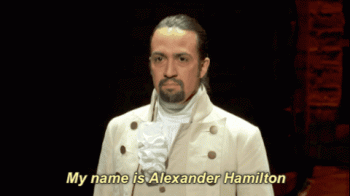
Can you imagine having only five minutes to get a point across, inspire hundreds of people, and keep your message grounded in the work? Yeah, me neither. But I did my best in the video below.
At this point, I was in the third of four presentations for that weekend in San Antonio. Special shout-out to the folks at Math Forum and NCTM for getting me there, of course.
I didn’t know what I would say until three hours before this presentation. But, if you’ve been following me for the last few months, you also know I’ve been obsessed with the Hamilton soundtrack and all that comes with it.
I do have slides to share upon request, but in the meantime, please enjoy and leave comments below.
The post A Mathematical Five-Minute Tribute to Hamilton the Musical appeared first on The Jose Vilson.
May 21, 2017
Vivid Dreams and Hard Work
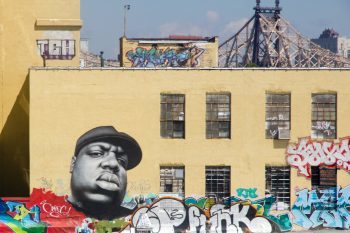
“My dreams is vivid, work hard to live it …” – Christopher “Biggie” Wallace on Shaq’s “You Can’t Stop The Reign”
My kids call Biggie old school. That floors me every time I hear it. I’ve heard that said for the last 12 years. Every so often, I catch myself rhyming a Biggie lyric aloud to them, which always astonishes them. I get nasal right around “You heard of us, the murderous, most shady …” while the horns get blaring underneath. The young eyeballs turn to me, but I barely notice because I’m simultaneously keeping up with Mr. Wallace and bleeping out his curses. I don’t use the b-word; he does. I’m not better than him. I exhale after the verse is over and wait for a student to put me onto something they’d like to karaoke. Upon request, I might do another depending on how far back they’d like to go. They’re playing the hype people, finishing off every line.
It’s those non-academic moments that keep me doing the arduous work of making the seemingly irrelevant (to them) doable and accessible.
When I was their age, I admired the boom-bap in Biggie’s intonations, the authority with which he grabbed the mic. Contrary to the sublime raps of today, it seemed like my favorite rappers of yesteryear had every intention of demolishing equipment with their voices. He didn’t allow for the beat to take over his voice. There was little symbiosis. He gave us two options: either listen to him on this beat or don’t listen at all. While I enjoy Biggie’s discography, my students point to songs like “Suicidal Thoughts” and “Juicy” in a way I only understood recently.
For a multitude of reasons, they look at Ready To Die as a direct ancestor to the everyman raps of Future, Drake, and J. Cole. It’s weird. continue reading
The post Vivid Dreams and Hard Work appeared first on The Jose Vilson.
May 7, 2017
The Trump In All Of Us
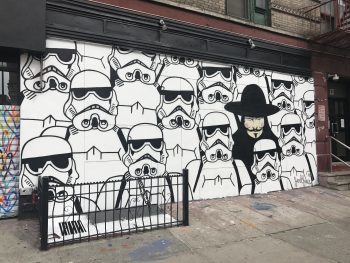
At EduCon, a group of EduColor folks sat around a table at a Chinese restaurant. This idea comforted me. Generations of activists, from veterans of the teaching activism game to an infant with her fist raised. We sat there, saddened by those who couldn’t join us, excited at possibilities for resistance, and united under this thing we call a movement. What loomed over us, however, was this strange sense that we were each dispossessed of something post-election. Maybe our communities felt less safe. Maybe our bodies felt more vulnerable. Maybe our schools felt like the foundations would shake from under us at any given moment.
But in times of uncertainty and vulnerability, it’s important to have communities of folks that want to address the danger of Trump head on.
What kept nagging at me throughout that fateful January was how flawed and vulnerable human beings would so easily embrace messages of separatism and fascism even while fighting for their own respective humanity. The president-elect might have dog-whistled to white nationalists all over the world, but he also whispered tweet nothings in the form of isolation, authority, and toxicity. He would be the president for anyone who believed in closing the borders on anyone who didn’t fit his line of thinking. He would be the president for anyone who thought they were the one representative for a specific ideology. He would be the president of “That’s just x being x” without accountability towards the ways that those flaws bully and harangue fellow community members.
In short, he is not just the President of the United States. He’s also the symbol for those who secretly cheered his approach, even if they don’t believe in his ideas. continue reading
The post The Trump In All Of Us appeared first on The Jose Vilson.
April 16, 2017
Why Are You Looking For The Living Among The Dead?
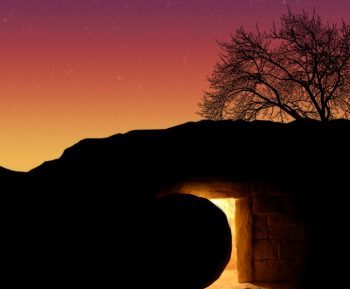
“While they were puzzling over this, suddenly two men in radiant apparel stood beside them. As the women bowed their faces to the ground in terror, the two men asked them, “Why do you look for the living among the dead? He is not here; He has risen!” – The Gospel According to Luke, 24:5
Double down on living.
I was always curious about the idea of a man dying on a cross and, three days later, rolling right out a cement bed. I was baptized, did my communion and confirmation over four years at Saturday school, and went to Catholic school for six consecutive years. In that time, I attended plenty of Easter Masses, each with different priests, homilies, and interpretations of the passage above. As a teenager, I watched The Undertaker do a mock resurrection a billion times over in wrestling matches, but that was mere resuscitation. The difference is that, with resuscitation, you expect complete death at some point in the future. Resurrection, on the other hand, promised life after having lived forever and a day.
For believers and non-believers alike, it also holds important lessons about the way we live.
Too many of us are asked to live in order to die. Our work often becomes a job, and not a passion. Our chores become ticks on a scoreboard, counting down to an eternal darkness. Nas once said “Sleep is the cousin of death,” a sure sign that our nervousness to close our eyes means we’re one day closer to involuntary shut-eye. It’s scary, too, because we seek the meaning of life from templates that have already lived. We mistake living for survival and vice versa.
Then, if and when we get to retire, we tell ourselves we’ve lived long enough to live our lives.
The resurrection suggested to so many of us that, when we look towards life, we can reorient ourselves in living to live, not living to die. So many of our worries and fears are death adjacent. People who haven’t seen real love in themselves and with others in a substantive way kill us in increments with mandates, insults, threats, and obfuscation. They thrust their hurt upon us, often in more ostensible ways like racism, sexism, and homophobia. They build up walls without realizing upon whose backs those walls are built.
These are the ways we’ve learned to kill each other without physical weapons.
Actual living means taking into account all that keeps us from our fullest humanity and tapping into it. Yes, it leaves us vulnerable. No, it is not easy. Yes, it is more internal work. Yes, it is still worth it. What’s more, living for living’s sake allows us, especially those of us who are educators, to take this work as it comes. We get so exhausted thinking years down the future that we lose out on the moments that lift us. We need to draw ourselves closer to the joy that actually gives us purpose, not wait for purpose to bring us joy.
We keep looking for the living among the dead. If we’re willing to live, we never worry about dying. We can be risen.
The post Why Are You Looking For The Living Among The Dead? appeared first on The Jose Vilson.
April 11, 2017
A Story About The High Expectations Conversation [The Art of the Professional Insult]
“Mr. Vilson, how do you feel about us opting out because I’m thinking about it.”
“Let me tell y’all something, and this is real talk: if you have good grades and decide to opt out of this test, I ain’t mad at you …”
A student grumbled, knowing he had failed almost all of his grades throughout the school year.
“Now wait a minute. If you don’t have good grades and decide to opt out of the test, I’m not mad at you either. You haven’t been given a fair shot to succeed on this test. I’m going to do my absolute best to push you from here on out, but you gotta work with me here. But if you still don’t feel comfortable and opting out if something you and your parent make a conscientious decision about, please do.”
The students, all with different grades, had taken a series of mock tests demanded from on high to give students a sense of how the test might go. Instead of using the time to teach, I’d been asked to give a fake test in preparation for the forthcoming, very real and still fake test. The test might tell me whether they know the answers to the questions given on this test, but, until I see the questions on the test, I have little confidence that it’s assessing what I’m teaching and what they’re learning. Modern-day eugenicists love to say that standardized tests hold us (teachers and students) accountable like never before, but I was under the impression that students and parents do a good job of that already.
Because I don’t teach in ways that satisfy the test-prep advocates, does that make my work here any less urgent? continue reading
The post A Story About The High Expectations Conversation [The Art of the Professional Insult] appeared first on The Jose Vilson.
April 2, 2017
In Defense Of Our Dreams
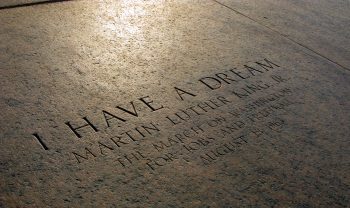
Testing season always feels like a surreal time-out from normal proceedings. Covered bulletin boards and gridded desk alignments make every classroom feel still, like an overextended ceremony of allegiance to standardized tests. Before they begin, a student asks me questions like “Why do you have to cover up your charts and boards?” to which I reply “Because they’re in English, and this is an English test.”
Logic also takes a vacation, too. For hours on end, both the test-takers and the reluctant proctor stunt their imaginations for the explicit purpose of state assessment.
While the students’ pencils gentle scratch against their exams, however, I dream of a world where their evaluators will see their value as human beings. Their test scores wouldn’t matter as much as their intellect, their wit, and their youthful joy. The state would grant them opportunities to show these qualities off. The students would feel less like their school holds them captive, but that their ambition and passions move the institution to love them for them. Yes, their school would make them feel safe, and we would find to adjust our ways and means to get every student to learn.
And, what’s more, higher-ups in our district would see my children as equally capable of success as full-fledged citizens in this country, worthy of the fullest gifts our Earth bears. In defense of our dreams, we must keep dreaming. continue reading
The post In Defense Of Our Dreams appeared first on The Jose Vilson.