Jose Vilson's Blog, page 19
January 4, 2017
How This Educator Handles Trolls (Bob and Weave Em)
Last week, #EduColor had a chat on education research. It seems like a benign topic outside of the education sphere. Most folks in this chat should be people genuinely interested in talking about higher education. Mildred Boveda and Grace Chen put together the questions, prompting people to rethink praxis from PK-12 and beyond.
Yet, because it reached #8 on Twitter worldwide, we also unwillingly hosted a plethora of trolls, vagabonds, and also-rans, the usual folks who want to make America great again or whatever.
At first, my reaction was “Who are you and why are y’all always up in the conversations?” My second thought was “BLOCK, REPORT, BLOCK BLOCK BLOCK REPORT!” My third thought was “Let’s see if they can stand the heat.” So while Mildred and Grace graciously hosted, I played provocateur in the hashtag. An hour after the chat was over, I was still having to tell these hooligans to read books and watch anything other than FOX News. Friends would refer to my legendary patience as Jedi-like. I laughed from this side of the screen.
No one should feel obligated to volunteer their tweets for the service of people intent on rejecting their humanity, but I looked at my watch and said I got time for this today. If the education field has taught me anything, it’s that anyone can catch a lesson given the proper teacher. continue reading
The post How This Educator Handles Trolls (Bob and Weave Em) appeared first on The Jose Vilson.


December 29, 2016
Top Posts of 2016, According To You [Year In Review]

As the year closes, I’d like to thank each and every one of you for reading. You’ve made me a better writer, a better teacher, and, sometimes, a better failure.
I’m glad that I get to fail in public for an occupation and a hobby. I win often, but I fail at life too. This is good because I take those failures as lessons. Each time I fail, I’m blessed to get to try it over again. I’ve also gained a lot: perspective on fatherhood, relationships with students, community with other adults in this and over spaces. This platform transformed my life, and I’m hoping it’s had a similar effect for the education community.
At least those of you who thought colorblindness was the answer. Nah, chill.
Here are the top 10 posts of the year, according to you:
Five Ways To Show Students You Care
Choosing A School For My Son In A Segregated State
The Trump Voters In Our Classrooms
Who Are The Rest of Y’all? (On Dr. Emdin’s For White Folks …)
The Kids Can’t Read, But They Can Read You
What Happens When My Student Curses At Me [Teaching Tolerance]
Three Ways To Reclaim Your Joy As A Teacher
The Beautiful Teacher Struggle
Justice Scalia, Affirmative Action, and Why Shame Is Not An Option
Gritting My Teeth Over Grit
And two guests posts made it onto the top 10, so shouts to Kurt Ostrow and Kelly Wickham.
Let’s finish 2016 with love. We got this.
The post Top Posts of 2016, According To You [Year In Review] appeared first on The Jose Vilson.
December 27, 2016
Why I Never Let A Statue Tell Me How Nice I Am [2016 In Review]

One of the few tracks I put on when I hop on a train, a plane, or any automobile is A Tribe Called Quest’s “Award Tour.” Something about the rotating electric guitar sample and Dave’s (Trugoy of De La Soul) vocal butter chorus puts me in the mindset to make ideas and conversations flourish. That buh-duh-DUH-duh-duh-duh duhduhduhDA. It also contains one of Phife Dawg’s finest verses:
When was the last time you heard the Phifer sloppy
Lyrics anonymous, you’ll never hear me copy
Top notch baby, never coming less
Sky’s the limit, you gots to believe up in Quest
Sit back, relax, get up out the path
If not that, here’s a dance floor: come move that ass
Non-believers, you can check the stats
I roll with Shaheed and the brother Abstract
Niggas know the time when Quest is in the jam
I never let a statue tell me how nice I am …
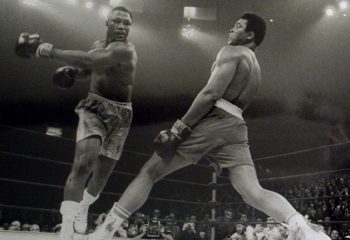
I’ve been pondering this as some of the greatest visionaries of my lifetime passed on: Prince, David Bowie, Afeni Shakur, George Michael, Muhammad Ali, Gwen Ifill, Gene Wilder, Juan Gabriel, Attrell Cordes, Pat Conroy, Carrie Fisher, and Harper Lee, among too many others who I never met, but who left us so many of their gifts. The hits came faster than the bob and weaves we’d see in those old MSG boxing matches. But Phife Dawg hit me particularly hard. I only met him once, as a teenager taking a stroll past Madison Square Garden here in NYC. He and Ali Shaheed were shopping at the MSG store. In my giddiness, I ran up on him and told him I wanted to salute one of my music heroes. I remember them saying “Thank you” and giving me pound.
He had no reason to be humble after the monster album that was Midnight Marauders, and here he was, giving this random kid a pound. It was his personal day to just be the grown-up kid from Queens, the sports fanatic. But also, someone’s rap idol. continue reading
The post Why I Never Let A Statue Tell Me How Nice I Am [2016 In Review] appeared first on The Jose Vilson.
December 22, 2016
A Reaction To Mayor de Blasio’s Equity and Excellence Plan [Math for America]
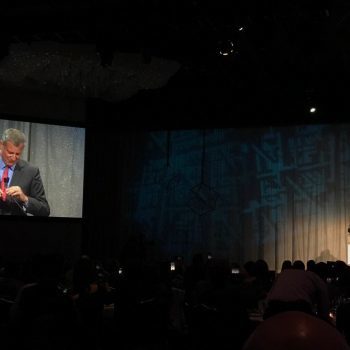
My third essay of the week was published on Math for America’s Teacher Voices blog. I wrote about my time at Math for America’s Fall Function where New York City Mayor Bill de Blasio was the keynote. I had a few things to say that was fairly representative of the people in the room:
At the same time, we must recognize the challenges of doing this work from an equity framework. Our best and brightest are working in both elite schools and “low-achieving” schools as well. The latter usually have a majority black and brown student population, and that’s worth acknowledging. We should get beyond conversations of closing the achievement gap and, instead, focus on closing the opportunity gap. These reforms point directly to this gap, and STEM teachers have been a long-neglected part of this equation.
For more, read more here. Let me know what you think. Thank you!
The post A Reaction To Mayor de Blasio’s Equity and Excellence Plan [Math for America] appeared first on The Jose Vilson.
December 21, 2016
Becoming National Board Certified (Third Time’s The Charm) [The Standard]
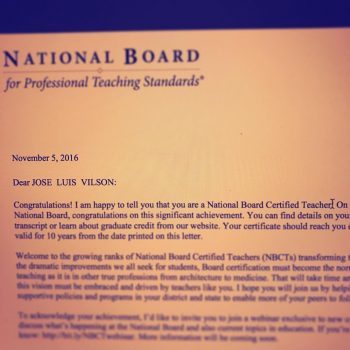
I wrote for the National Board of Professional Teaching Standards blog (a.k.a. The Standard) about my experience becoming National Board certified. I got the chance to shout out the folks who originally inspired me to become NBCT, and interweave equity and the future work for educators. Here’s some of it:
What drives us is the growth of the profession. As a Black / Latino male educator, I represent only 3% of the teaching profession. As someone who gets the opportunity to share my voice nationally, I am deeply humbled to represent that 3% of folks who don’t get to share, whose voices get ignored, and whose professionalism often comes into question. Since so many teachers of color are in schools that script their lessons, militarize their students, and strip autonomy, the NBCT label represents a lever for equity and opportunity for me and so many others. The idea that an organization has allowed for the best and brightest among them to develop standards for their own careers and evaluate their peers on rubrics they created represents an ideal. This grassroots thinking cultivates voice in a way that allows for educators like me to have ownership that we don’t have in our own schools.
For more, read here. Let me know what you think.
The post Becoming National Board Certified (Third Time’s The Charm) [The Standard] appeared first on The Jose Vilson.
December 18, 2016
Let’s Unpresident Trump [The Progressive]

I’ve been on a writing tear in the last week or so. The first is a piece I did for the Progressive, reflecting on the incoming President-elect. Here’s some of the post:
Forget fear in classrooms. My students were texting their parents and siblings at home to make sure there’s a back-up plan in case of danger. My students, who come from different racial, ethnic, and religious backgrounds, understand that there are no safe spaces. The election of Trump has only solidified the reality of a hateful America I had seen burgeoning after President Obama’s election. I mean the trolls who popped up in my mentions on Twitter after people like Trayvon Martin, Sandra Bland, and Eric Garner became hashtags. They were also the judges, juries, and district attorneys who didn’t press charges and acquitted people like Daniel Panteleo, Daniel Wilson, and, most recently, Michael Slager. They were the fifth of American Federation of Teachers’ members and third of National Education Association members who deeply resented Randi Weingarten and Lily Eskelsen-Garcia’s enthusiasm for Secretary Clinton.
They were the voters who saw my students and our futures as expendable.
For more, please read and let me know what you think. I appreciate y’all. More to come soon.
The post Let’s Unpresident Trump [The Progressive] appeared first on The Jose Vilson.
November 20, 2016
Politics Are Always At Play In Our Classrooms
On the Wednesday after Election Day 2016, I told myself to maintain my composure. For three weeks, I heard my mostly South and Central American students excoriate the President-Elect for his racist, sexist, xenophobic, Islamophobic comments over the last year. My students call out malicious behaviors quicker than many in mainstream media. Outlets like CNN and MSNBC choose more benign qualifiers like “controversial” and “inappropriate.” Now, I had to walk into my students’ classrooms and gauge a collective vibe.
These students, mostly stirred, had a hard time concentrating on math. There was no comfort in my routines and rituals that day, just a lesson plan and some numbers that I barely remembered.
Lately, many articles from educators for “unity” for the president-elect suggest that educators shouldn’t instill fear into children. (NB: Clinton’s popular vote lead continues to grow past 1.6M … and counting.) In their minds, these liberal-minded teachers are indoctrinating our children with trepidation over a president who called for unity. Liberal parents irrationally stir fears into their children for no good reason. The underlying assumption is also that true social justice is one in which every child aces standardized tests, and they have the content knowledge to meet and surpass expectations as set by the state. The emotive expressions of lefty educators isn’t necessary because the president-elect needs time and patience to truly see if he’ll follow through on his ominous promises.
What’s more, teachers are supposed to be apolitical. In their minds, it’s a violation of trust for educators to inject fear and depression into children because children ought to think for themselves.
For one, these opinions assume that mainstream media doesn’t already go for attention-grabbing headlines as often as possible. This past weekend, many of our mainstream outlets gave more play to the president-elect’s comments about vice president-elect’s time at the Broadway play Hamilton than it did the president-elect’s $25M Fraud University Settlement. It also assumes that there haven’t been over 700 election related hate crimes since the election where students literally fear for their lives, and the president-elect’s name has become code for white supremacy. The president-elect’s nominations for his Cabinet are dubious at best.
Furthermore, everyone from former Mayor Rudy Giuliani to Senator Bernie Sanders (and everyone in between) have said that they’ll “work” with the new presidential administration despite / because of his hateful and petulant remarks. The Obama administration, which has deported more people than any previous administration, has promised to tutor the incumbent president on the inner workings of government. Two of the most notorious school leaders of the 21st century met with president-elect even as they’ve used civil rights in their rhetoric. As if. Where in any of this would give any number of groups a sense of safety and trust in their incumbent government? Why should this not make students and their families fearful in this country?
Something about winning seems to expose a lack of principles.
Most importantly, politics are at play in classrooms. Everything from the number and composition of students in our classrooms to the adults who end up in front of them and the buildings they’re situated in are political positions. What would make us impervious to the body politic? Don’t our racial attitudes affect our interactions with students and parents regularly? Don’t our school rituals and routines reflect the political beliefs of a handful of people in the building? For every teacher who gets put on leave for comparing the president-elect with Hitler, there’s a teacher who can’t wait for him to come into office so he can deport anyone that doesn’t look American.
“Identity politics” is an ahistorical pejorative for saying “People of color don’t belong in white men’s business.” The “wait and see” technique of political orientation is tantamount to admitting that our current set of institutions protect the waiters and seers.
Most educators that work with a social justice framework don’t “indoctrinate” their students. They’re actually quicker to ask questions, challenge assumptions, and let students bring their knowledges to the table. On a personal level, I do my best to respect every child’s humanity, even those I fiercely disagree with. I do so through conversations and empathy, not forcefulness. Students come to me crying. I help develop an environment where they can emote. Students fear for their parents, their sisters and brothers, and share that with me. I don’t prompt them to be fearful. Do we not believe in student agency?
Also, are you more nervous about teachers who say we should care about our students or people who hop on message boards calling the president-elect a deity and emperor? Great message of unity, absolutely wrong target.
I might wish that educators were better equipped to handle the sociopolitical challenges that we don’t feel the liberty to express. Hopefully, we create vehicles for hope. Giving students an opportunity to process jumbled thoughts and sentiments through their own critical lenses is more important than academic attrition.
The latter is only as pertinent as the former allows.
So, after the students left, I had my own moments to reflect. I called up a few friends and shared with them how difficult it was to look at my kids in the eye. I wish I could have done more. I took the time to process what I felt from my students, my neighbors, and my colleagues. As far as unity, I’m united with my students and creating a better future for them.
Teaching is politics, because too many people would prefer that my students not know what they know too well.
The post Politics Are Always At Play In Our Classrooms appeared first on The Jose Vilson.
November 6, 2016
The Trump Voters In Our Classrooms
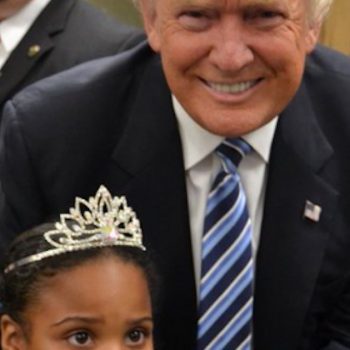
Recently, I was asked to do an emergency coverage for an English class. It wasn’t my classroom, so I had none of my materials, but it was one of my classes, so I naturally wanted to follow what they were doing. Their English teacher had assigned them a lesson on presidential candidates. I assumed they would do research on the four notable presidential candidates (Hillary Clinton, Donald Trump, Jill Stein, Gary Johnson) and make an informed vote based on their given platforms.
Yet, because I felt the need to provoke, I told my students, “I’m voting for Trump. Convince me otherwise.”
They probably knew I was joking (I hope), but the responses were sharp. This set of English language learners, predominantly from countries that Trump disparages, immediately rattled off reasons I would proffer: he’s racist, sexist, inarticulate, and just a straight up liar. He would seek the removal of their family members and friends from across the country. He’d find ways to break down the country and embarrass anyone who’s left in his wake. They didn’t get to discuss his religious intolerance, lack of respect for social safety nets, or his unmitigated hubris on just about every subject known to us.
But I did give it to the kid who said, “You know what my little sister says? That he’s just a poopyhead!” I conceded defeat right then and there. He’s definitely a poopyhead.
As they scrolled their iPads looking for primary sources and images for their arguments, I couldn’t help but think of all the adults who they’ve entrusted with their brains. How many people who come into contact with our most vulnerable children will cast their vote for Trump, Pence, and everything they stand for? I’ve gotten into plenty of arguments over the merits of each candidate. There are deep flaws that the candidates (and their supporters) would necessarily need to point out to make a valid case for their presidency.
Yet, it’s a peculiar set of folks who truly unnerve me, and they just happen to be voting for Trump.
The idea of educators voting for Donald Trump is not a stretch, either. We have plenty of educators who think that public education is a right only for their descendants. Much ado was made by the rank-and-file of the American Federation of Teachers and the National Education Association about Randi Weingarten and Lily Eskelsen-Garcia’s lightning-quick endorsement of Hillary Clinton. But many of the Trump supporters I know feel disaffected by our major teachers unions, even when they may not be represented by an actual union. They use “government intrusion” and “ObamaCore” for the new wave of standards and the plethora of documents, rubrics, and frameworks that were thrown their way as of late. They see the racial and cultural diversity in their classroom as a disservice, because it means the “others” are getting access to the same resources as their own. They consider non-Christian traditions as America losing its way, and children of color who get in trouble as degenerates who need to take personal responsibility for their failings.
To reiterate, they believe education is a privilege, not a right, for non-white children. They revel in “telling it like it is,” even when the status quo includes treating various people with utter disrespect. They talk about kids who come to school to live off the system, but never look at their own pensions and benefits as a systemic benefit fought for by divergent thinkers and doers. They treat our LGBTQ students as a problem for them and their classroom, yet don’t reflect on their cancerous relationships they have with colleagues who don’t think like them. They leave right at the bell, too, not because of personal matters or union rules, but because they feel like they’ve been casted a bad lot teaching thugs and thuggettes of non-white varieties.
They think Trump might keep them in their classrooms and get rid of the cretins and vagabonds that just don’t want to learn from them. Or else.
This attitude is so pervasive that, to anyone who doesn’t inquire, it’s hard to tell who actually supports Trump given my aforementioned tenets. Indeed, every Trump supporter I’ve encountered embraces all that comes with his candidacy, but not every racist / sexist / classist is a Trump supporter. Our students these days seem more ready to confront these systemic issues in a way adults won’t. Our students are both powerful and disenfranchised. When given the option to hear students’ opinions, too many adults find ways to cut their voices by the roots.
Of course, this attitude is pervasive. Even those of us voting for / siding with a more liberal candidate like Clinton, Sanders, or Stein can still believe in the very tenets that allow for Trump-like ideologies to exist. Some educators get uber-fascist in the face of people of color *real* quick. They’ll say all students matter when they don’t actually believe it. The mere mention of empathy and humanity gives some of my colleagues hives, a scary prospect given what so many of our students must face on a daily basis.
But it’s my colleagues who’ve proudly proclaim their allegiance to Trump that should give us pause to reflect on those that tacitly support his methods. If we’re not willing to repudiate these symptoms, how, then, can we push back against the constituency exposed by Trump’s candidacy? Can we fight like hell to make sure Donald Trump doesn’t win and keep fighting the good fight if / when Hillary Clinton wins?
Can we do the daily work of assuring that social justice, love, and empathy reign over any and all classrooms where our kids learn?
Until then, teachers who vote for Trump will boast loudly about how they almost got rid of those Muslim kids with their votes. They’ll boast about almost getting rid of every suspected “illegal immigrant” from this country in 24 hours and building a wall right behind them. (Note bene: President Obama has deported more people than any other president in United States history.) They’ll make derogatory comments about their female colleagues, deriding objections as folks getting their “panties in a bunch.” They’ll have a sea of other adults who, at once, voted for Clinton or Stein and won’t disavow their colleagues in the name of collegiality and unity. Whatever that means.
They’ll get called out, side-eyed, and shouted down by students who don’t want to behave for them. They’ll want to make America great again. They’re right; we’ll make it great. The minute they step out of our classrooms, America will be greater for it.
The post The Trump Voters In Our Classrooms appeared first on The Jose Vilson.
October 23, 2016
Three Ways To Reclaim Your Joy As A Teacher

This weekend, I had the joy and pleasure of keynoting the ECET2MA2016 conference in Cambridge, MA. Weird wasn’t even the word. I was a Yankee fan in the middle of Red Sox town and had a Macbook in a Microsoft building. I’ve railed on a number of occasions against the founder of the company that hosted this company. Yet, a space where two or more educators are gathered is a space I need to be in. I always appreciate the passion that any set of educators have for coming in on a weekend to professionally develop each other.
The creators of our school system didn’t have joy, collaboration, and creativity in mind, especially in the spaces where our most marginalized students need that from the adults the most. As complicated as it was for me to go there, I know that is part of the work we do collectively. continue reading
The post Three Ways To Reclaim Your Joy As A Teacher appeared first on The Jose Vilson.
October 16, 2016
A Few Questions With Marylin Zuniga (An Interview)
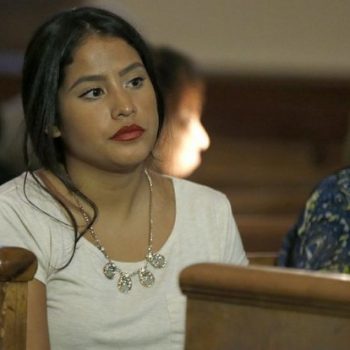
For the better part of a decade, I’ve been exploring the idea of social justice education. While not a new idea, it’s picked up steam over the last couple of years with the Black Lives Matter movements, ethnic studies initiatives, and the need for diversifying the teaching profession. In the crossroads of these different movements stand a subset of educators who identify as social justice educators, thinking through their pedagogy and curriculum in the hopes of pointing their content towards making students into change agents for a better world.
Even though most people push social justice curricula in the middle and high school grades, not much has been said in the way of early childhood education (ECE). Whereas most assume that children won’t get concepts about social change in their pre-teen years, there’s been evidence from a plethora of teachers who’ve undertaken this work that this is possible and necessary. Rather than waiting for children to get activated in their teenage years, social justice ECE do masterful work with our youth through inquiry and passion.
Recently, I asked good friend and social justice educator Marylin Zuniga her thoughts on what social justice means and why we need social justice in the early childhood education. She now teaches children in Oakland, CA. Also, y’all probably recognize her from these pieces here.
Jose Vilson: Who are you, how do you identify, and what brought you into this work?
Marylin Zuniga: I am a daughter of two beautiful human beings, and a sister to many. I am an educator who grew up hating every minute of my schooling. That’s what brought me to this work. I never connected to the curriculum, teachers, or students in my schools. Being a Latina growing up in a Peruvian immigrant household amid white, wealthy suburbia exposed me to inequality at an early age. However, it wasn’t until my college years that I connected my experiential knowledge to my profession. It was in a classroom at Montclair State University that I learned about social justice in the classroom. continue reading
The post A Few Questions With Marylin Zuniga (An Interview) appeared first on The Jose Vilson.