Michael May's Blog, page 98
August 13, 2017
Southern Charm | Dolly Parton, Paper Clips, and Hushpuppies

Photo via Vanity Fair
Jody and I begin the episode talking about Dolly Parton and her efforts to poke holes in the hillbilly stereotype while also embracing that part of her heritage. Then we move on to a similar story of the middle school kids in Whitwell, Tennessee who created the Paper Clip Project, a memorial to the Holocaust victims of Nazi Germany. Finally, we wrap up with a recipe for hushpuppies and I learn that they're not just a ketchup delivery mechanism.
Intro Music: "Kiss an Angel Good Mornin'" by Charley Pride
Outro Music: "Jolene" by Dolly Parton (33 rpm version)
Also featured: "To Make You Feel My Love" by Mike Reid, "Jubilee" by Alison Krauss, and "Swing and Turn, Jubilee" by Carolyn Hester.


August 9, 2017
Greystoked | Tarzan and His Mate (1934)

Noel and I are joined by my pal and fellow Nerd Lunch Star Wars panelist Kay ( Fan Girl Blog , Hyperspace Theories) to talk about MGM's second Tarzan film. Inspired by King Kong and a pivotal film in the history of the Hays Code, Tarzan and His Mate offers a lot to discuss and we dig in good.

August 8, 2017
Thundarr Road | Secret of the Black Pearl

Thundarr's journey begins in New York City where he, Ariel, and Ookla meet Gemini, arguably the most iconic of the series' villains. Noel, David, and I cover the episode in detail with focus on characterization, world-building, backstory, and the rules of magic.

August 7, 2017
7 Days in May | Revisiting 2016 favorites and '80s unfavorites
Jane Got a Gun (2015)
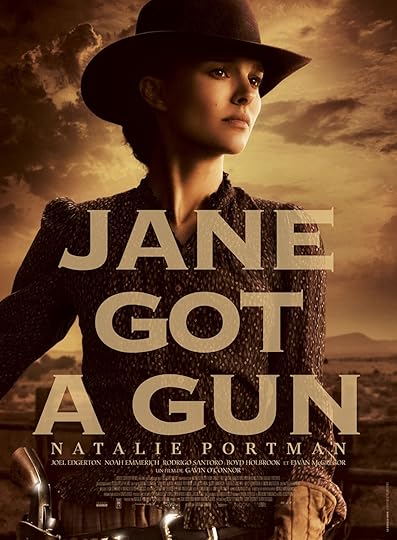
Spent some time this week revisiting some of my favorite movies from 2016. Some of them were new to David and Diane, but all of them I wanted another look it.
I was especially eager to watch Jane Got a Gun again. I loved it last year, but lukewarm reviews by other folks made me wonder if I just wasn't in a really good mood when I watched it the first time. The answer is: nope! It's great.
I love how it unfolds in three different time periods with everything leading to a big showdown between Natalie Portman and Ewan McGregor. Joel Edgerton helps Portman, but where most movies would have had him take over and become the hero, Jane lets Portman hold onto that role. She is awesome and the movie is awesome. Glad I put it in my Top 5 last year.
The Legend of Tarzan (2016)
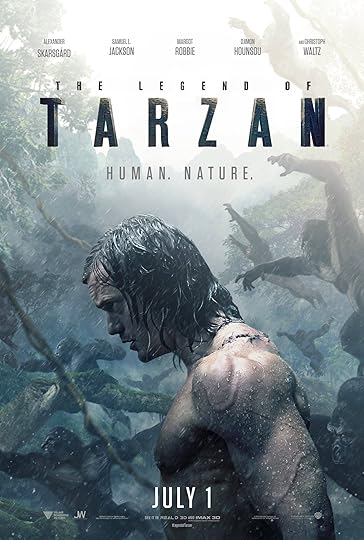
Liked it even better the second time. Alexander Skarsgård is an excellent Tarzan; probably the best ever, though we'll need to finish Greystoked before I can make that claim. Legend isn't a faithful adaptation of a Burroughs novel and it even changes some basic elements of Tarzan lore, but each change is considered and smart and exactly what's needed to keep the legend fresh and alive.
My only complaint is that the CG animals could be more convincing, but I'm thrilled with the story and the characters.
Star Trek Beyond (2016)
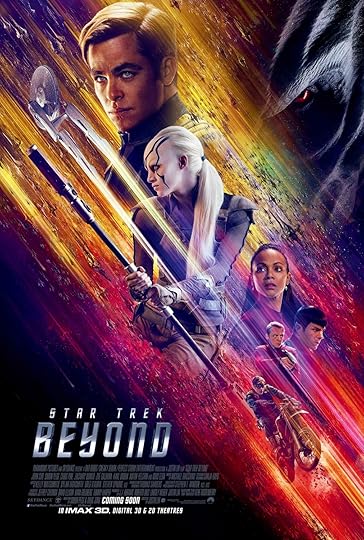
My favorite Kelvin Star Trek movie. That's not saying anything in comparison to Into Darkness, but I'm a big fan of the 2009 reboot and this is better. These are the characters - not growing into the people that I know and love - but already as I know and love them. Plus Jaylah. Plus everyone is 300% more kickass than they were in the original series. (And that's not because the original series wasn't kickass. It totally was. But not everyone got to do it back then and they certainly didn't get to do it directed by Justin Lin.)
Hunt for the Wilderpeople (2016)
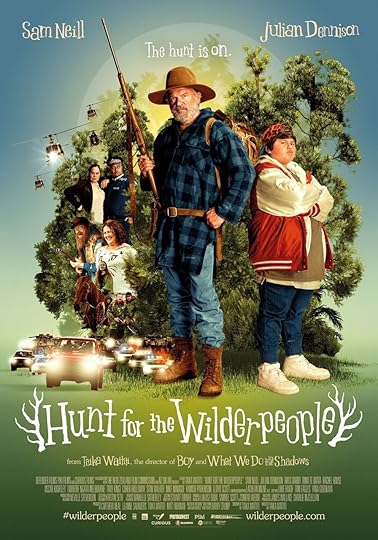
After watching this again and loving it just as much, I realized that it's directed by the same guy who's directing Thor: Ragnarok. Which makes me 1000x more excited for that movie than I already was. Taika Waititi knows how to make stuff funny, but also full of heart. If I ever meet him, I'm going to have someone take a selfie of us.
The Island (1980)
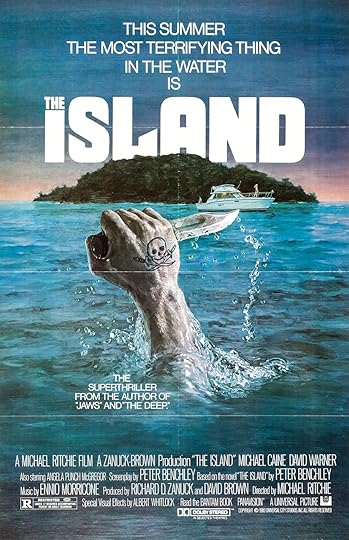
This has been on my list for so long. Michael Caine in a horror/thriller about modern-day pirates who dress as Golden Age pirates? And written by Peter Benchley? Yes, please.
It starts well enough with some scary and gruesome boat attacks. Caine plays a reporter named Blair Maynard who wants to investigate the disappearances, but he gets stuck with his kid for the weekend and has to take the boy along. Maynard's a pretty lousy dad, but Caine plays him with charm and it's clear that he loves his son Justin, even if he doesn't really know what to do with him. The movie is pretty good while it's about the pair of them traveling around the Caribbean and trying to bond. In a cruel twist of fate, it's not until the pirates show up that the movie sucks.
I can see how this could be a fun adventure novel, but putting them on screen makes it impossible to take the pirates seriously as a threat. They're bloodthirsty and dangerous, but also unbelievable and goofy. How their civilization has been able to survive all of these centuries is never seriously addressed, so they come off as deadly historical reenactors. It's as silly as it sounds.
Also silly is the drama around Justin's joining the pirate gang. There's a great story to be told about a kid who deserts the already shaky relationship he has with his father to do some horrible things with a bunch of new friends. How far can a child go before a parent gives up hope of bringing them back? Unfortunately, this isn't that story. Justin's transformation from normal kid to Lord of the Flies is way too quick and the movie doesn't really care whether we believe it or not.
Yellowbeard (1983)
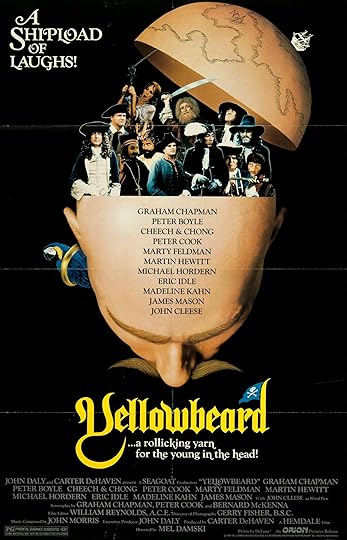
The '80s were full of pirate movies that didn't work as well as they should have. I'm sure I'll get back around to some more of them later, but Yellowbeard showed up on my TiVo, so I gave it another look.
I was so disappointed back in the day. You take most of Monty Python and put them in a movie with Cheech & Chong and most of the cast of Young Frankenstein. I don't care what the movie's about, that's got to be hilarious. Making it about pirates is bonus. But Yellowbeard isn't as funny as its individual parts promise. And when I first saw it years ago, the letdown was unrecoverable. I hated it.
Watching it again, I laughed quite a bit. As Stacia says at She Blogged By Night, "Yellowbeard is a complete disaster, but it’s a funny disaster." She has a great analysis of what went wrong (and what went right) and links to still further information from Yellowbeard's director, so I highly recommend checking out her review. I'll probably never watch it again, but I'm glad to have it redeemed at least a little in my memory.
High Road to China (1983)
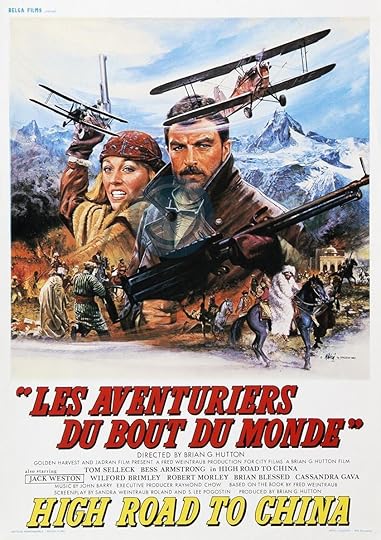
Another one that I wanted to like back in the day better than I did. It suffered by getting compared to Raiders of the Lost Ark. It's a comparison that the marketing of the movie asked for, but it's not the best way of approaching the film. I haven't done an exhaustive history of it, but I have no doubt that it was greenlit thanks to Raiders' success. High Road had been in development since the late '70s though, so it's conception was inspired by neither Indiana Jones nor '30s movie serials. High Road is an homage to a later genre: mid-century war/adventure movies.
It's telling that it was originally going to be directed by John Huston and was ultimately directed by Brian Hutton, because it has way more in common with The African Queen and Kelly's Heroes than The Adventures of Smilin' Jack. I still don't completely love High Road to China, because I never really care about whether Selleck and Armstrong get together, but I do appreciate it as a globe-trotting adventure with a war movie finale.
Argoman, the Fantastic Superman (1967)
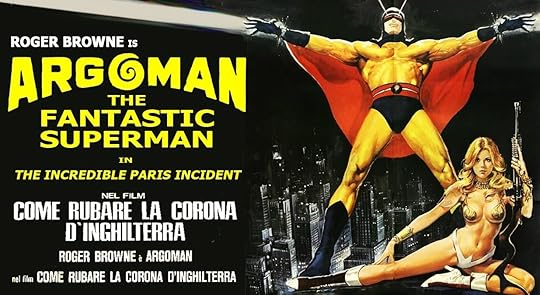
Went to see Mystery Science Theater 3000 Live and this was the movie. I'm probably breaking some kind of social contract by telling you, because it was billed as a Secret Surprise Film. (There were two shows - an early and a late - and because of schedules, Diane went to the early one - which was Eegah - and I went to the late. David went to both.) Joel Hodgson was there to MC and he said that he wanted the second film to be a secret because he feels the show works best when the audience doesn't know anything about the movie. I'm only telling you, because the chances are really, really tiny of someone reading this who also has tickets to an upcoming late show of the tour. If I've spoiled it for you, I'm sorry. You're in for a great show, though.
It's hard to judge Argoman the Fantastic Superman in The Incredible Paris Incident on its own merits outside of the experience of the show that I saw it in, but I think it's safe to say that it's awful. It's a late '60s Italian film inspired by James Bond and Adam West's Batman. Mostly Bond, if Bond was the millionaire playboy secret-identity of a superhero. (Unlike Batman, Argoman the Fantastic Superman actually has powers. They're not defined very well, but telekinesis is part of it. And also unlike '60s Batman, it took me a long time to decide if Argoman was a good guy or a bad guy. That's probably the Bond influence again.) Calling it "camp" implies some intentionality that I'm not sure was there, but let's give it the benefit of the doubt. If you like horrible Italian cinema from the '60s, it's bonkers enough to make it worth tracking down - whether or not you have wisecracking robots to watch it with.
Windjammer (1937)
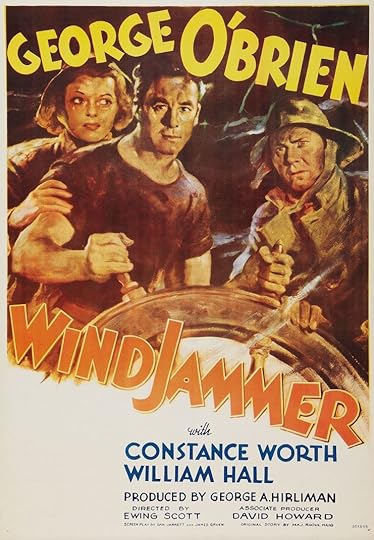
It's a decent idea. A lawyer finagles his way onto a yacht to serve a subpoena to a well-protected tycoon who's leaving the country on a race across the Pacific. The execution is miserable though, with the lawyer's seeming super ineffectual and the tycoon's being infuriatingly entitled in a way that I think is supposed to seem whimsically charming. Maybe. I had a hard time telling what kind of tone the movie's going for.
Complicating things is the tycoon's equally entitled daughter who hates the lawyer for obvious reasons until she suddenly doesn't and we enter romantic comedy territory. I think maybe the whole movie is supposed to be a romantic comedy? That would explain why it doesn't really care about how horrible the woman's dad is. Anyway, I'm sorry I watched it.
Johnny Angel (1945)
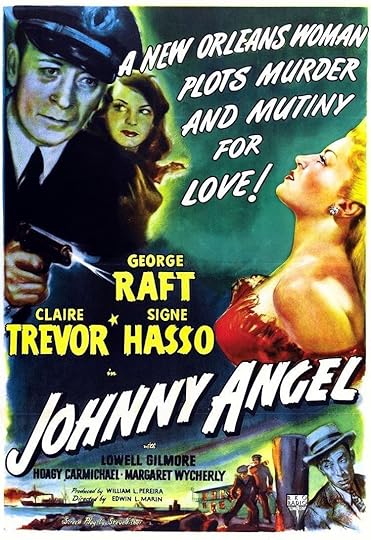
A case study on why genres are important. I've got a few wishlist searches on my TiVo, so sometimes I record things and I don't really remember why. I bet I grabbed this one because it's about a sea captain investigating the death of his sea captain father and there's gold involved. But that's all I knew about it, so going in I was expecting some kind of adventure story. Which means that I got impatient with how slowly and moodily the story was unfolding.
When that happens, I usually stop the movie for a minute and do some research. Learning that Johnny Angel is a film noir (that just so happens to be about a sea captain and some gold in New Orleans) made all the difference in the world. I started it up again, confident that I could enjoy it for what it was. Expectations are weird.
It's pretty good. None of the cast is especially remarkable except Hoagy Carmichael as a really cool cabbie, but the mystery is good and the movie is awesomely atmospheric. I like how the mystery unfolds, too, with some pleasant (if not especially shocking) twists.
Black Bart (1948)
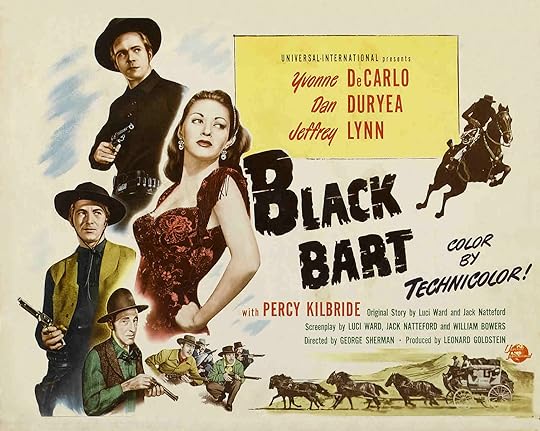
Between this and Frontier Gal , I'm pretty much done with Yvonne De Carlo Westerns. Or at least with seeking out Westerns specifically because she was in them. She may be Lily Munster - and she's certainly gorgeous - but man does she play some miserable characters. Black Bart isn't focused on rape the way that Frontier Gal was, but it's still about a supposedly strong-willed woman who bends to a man's wishes simply because he's the man.
In this case, the man is a stagecoach robber named Black Bart. He's kind of a Zorro character except that he deserves to be an outlaw. In fact, his master plan for robbing stagecoaches really puts him in the supervillain category. And yet I think we're supposed to find it tragic when he gets what's coming to him. I don't know. If he's supposed to be charming and likable, then the movie makes a huge miscalculation, because he's a boring weasel. I'm glad to see him fall and only sorry that he drags De Carlo into it. I guess it doesn't actually end too badly for her, but that's only because the movie completely forgets about her at some point and never comes back to her again.
Fort Apache (1948)
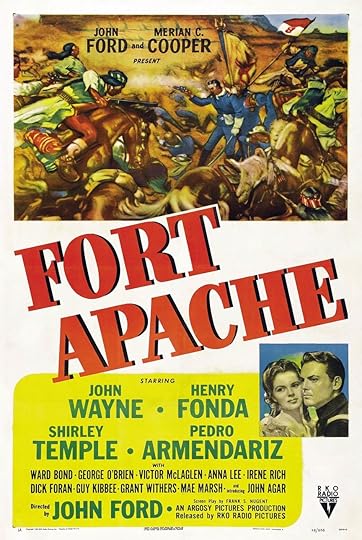
Got interested in watching John Ford's "Cavalry Trilogy" as a trilogy. I've seen Fort Apache before and She Wore a Yellow Ribbon, but I have no memory of Rio Grande. Or maybe I've seen it, but I'm getting it confused with the million other Westerns named after rivers. Anyway, I've certainly never watched the three movies close together enough to understand why people consider them a trilogy, so I'm gonna work on that.
Fort Apache is good, if frustrating. It's frustrating in the same way that Mutiny on the Bounty is. I don't have patience for rigid, narrow-minded characters who have authority over more level-headed people. The fear of that scenario playing out in real life is a big reason that I'd never fit well into a military organization. But Fonda is great at the role and the script gives him some humanizing moments in addition to the maddeningly bull-headed ones. I end up feeling bad for the guy, which is remarkable considering how much I dislike him.
Shirley Temple sure is a joy, though, as Fonda's daughter. And I like John Agar more in this than I usually do. John Wayne is typically watchable, too. So as this kind of military drama goes, Fort Apache is the best I've seen.
The Bribe (1949)
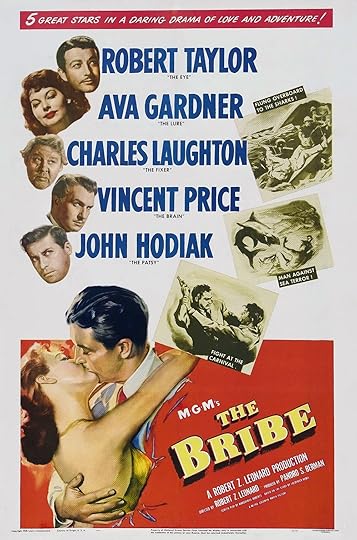
Finally, I checked off another Vincent Price noir movie with The Bribe. Robert Taylor plays a government agent investigating a ring of airplane engine smugglers (?!) and Price is the (not really a spoiler, because it's Vincent Price) mastermind behind the operation. Ava Gardner and her husband (John Hodiak) are suspects, but Taylor gets too close to Gardner and his loyalties are compromised. Charles Laughton is Price's front man in the operation; mostly there to give voice to Taylor's conundrum by reminding everyone of the stakes as often as possible.
Taylor is never a compelling lead. He even makes Ivanhoe boring, for goodness sake. I don't know that I've ever seen Ava Gardner in anything else, so I don't want to judge her too harshly for The Bribe. She's dull too, but that might be Taylor's rubbing off on her. Vincent Price is great, but he's barely in the thing, which leaves Laughton to do all the hard work. His character is purely there for exposition (and I guess a red herring, if you're super gullible), but he does fantastic things with it.
Kudos also to directors Robert Leonard and Vincente Minnelli for giving a mediocre story tons of style. The final showdown between Taylor and Price is unforgettable and there's a good reason that The Bribe was one of the movies edited into Dead Men Don't Wear Plaid.
Song of the Week: "Goodbye" by Echosmith
I love the guitar in this and the chorus is amazing and hilarious: "When you finally find yourself... tell him I said, 'Goodbye.'"


Spent some time this week revisiting some of my favorite movies from 2016. Some of them were new to David and Diane, but all of them I wanted another look it.
I was especially eager to watch Jane Got a Gun again. I loved it last year, but lukewarm reviews by other folks made me wonder if I just wasn't in a really good mood when I watched it the first time. The answer is: nope! It's great.
I love how it unfolds in three different time periods with everything leading to a big showdown between Natalie Portman and Ewan McGregor. Joel Edgerton helps Portman, but where most movies would have had him take over and become the hero, Jane lets Portman hold onto that role. She is awesome and the movie is awesome. Glad I put it in my Top 5 last year.
The Legend of Tarzan (2016)

Liked it even better the second time. Alexander Skarsgård is an excellent Tarzan; probably the best ever, though we'll need to finish Greystoked before I can make that claim. Legend isn't a faithful adaptation of a Burroughs novel and it even changes some basic elements of Tarzan lore, but each change is considered and smart and exactly what's needed to keep the legend fresh and alive.
My only complaint is that the CG animals could be more convincing, but I'm thrilled with the story and the characters.
Star Trek Beyond (2016)

My favorite Kelvin Star Trek movie. That's not saying anything in comparison to Into Darkness, but I'm a big fan of the 2009 reboot and this is better. These are the characters - not growing into the people that I know and love - but already as I know and love them. Plus Jaylah. Plus everyone is 300% more kickass than they were in the original series. (And that's not because the original series wasn't kickass. It totally was. But not everyone got to do it back then and they certainly didn't get to do it directed by Justin Lin.)
Hunt for the Wilderpeople (2016)

After watching this again and loving it just as much, I realized that it's directed by the same guy who's directing Thor: Ragnarok. Which makes me 1000x more excited for that movie than I already was. Taika Waititi knows how to make stuff funny, but also full of heart. If I ever meet him, I'm going to have someone take a selfie of us.
The Island (1980)

This has been on my list for so long. Michael Caine in a horror/thriller about modern-day pirates who dress as Golden Age pirates? And written by Peter Benchley? Yes, please.
It starts well enough with some scary and gruesome boat attacks. Caine plays a reporter named Blair Maynard who wants to investigate the disappearances, but he gets stuck with his kid for the weekend and has to take the boy along. Maynard's a pretty lousy dad, but Caine plays him with charm and it's clear that he loves his son Justin, even if he doesn't really know what to do with him. The movie is pretty good while it's about the pair of them traveling around the Caribbean and trying to bond. In a cruel twist of fate, it's not until the pirates show up that the movie sucks.
I can see how this could be a fun adventure novel, but putting them on screen makes it impossible to take the pirates seriously as a threat. They're bloodthirsty and dangerous, but also unbelievable and goofy. How their civilization has been able to survive all of these centuries is never seriously addressed, so they come off as deadly historical reenactors. It's as silly as it sounds.
Also silly is the drama around Justin's joining the pirate gang. There's a great story to be told about a kid who deserts the already shaky relationship he has with his father to do some horrible things with a bunch of new friends. How far can a child go before a parent gives up hope of bringing them back? Unfortunately, this isn't that story. Justin's transformation from normal kid to Lord of the Flies is way too quick and the movie doesn't really care whether we believe it or not.
Yellowbeard (1983)

The '80s were full of pirate movies that didn't work as well as they should have. I'm sure I'll get back around to some more of them later, but Yellowbeard showed up on my TiVo, so I gave it another look.
I was so disappointed back in the day. You take most of Monty Python and put them in a movie with Cheech & Chong and most of the cast of Young Frankenstein. I don't care what the movie's about, that's got to be hilarious. Making it about pirates is bonus. But Yellowbeard isn't as funny as its individual parts promise. And when I first saw it years ago, the letdown was unrecoverable. I hated it.
Watching it again, I laughed quite a bit. As Stacia says at She Blogged By Night, "Yellowbeard is a complete disaster, but it’s a funny disaster." She has a great analysis of what went wrong (and what went right) and links to still further information from Yellowbeard's director, so I highly recommend checking out her review. I'll probably never watch it again, but I'm glad to have it redeemed at least a little in my memory.
High Road to China (1983)

Another one that I wanted to like back in the day better than I did. It suffered by getting compared to Raiders of the Lost Ark. It's a comparison that the marketing of the movie asked for, but it's not the best way of approaching the film. I haven't done an exhaustive history of it, but I have no doubt that it was greenlit thanks to Raiders' success. High Road had been in development since the late '70s though, so it's conception was inspired by neither Indiana Jones nor '30s movie serials. High Road is an homage to a later genre: mid-century war/adventure movies.
It's telling that it was originally going to be directed by John Huston and was ultimately directed by Brian Hutton, because it has way more in common with The African Queen and Kelly's Heroes than The Adventures of Smilin' Jack. I still don't completely love High Road to China, because I never really care about whether Selleck and Armstrong get together, but I do appreciate it as a globe-trotting adventure with a war movie finale.
Argoman, the Fantastic Superman (1967)

Went to see Mystery Science Theater 3000 Live and this was the movie. I'm probably breaking some kind of social contract by telling you, because it was billed as a Secret Surprise Film. (There were two shows - an early and a late - and because of schedules, Diane went to the early one - which was Eegah - and I went to the late. David went to both.) Joel Hodgson was there to MC and he said that he wanted the second film to be a secret because he feels the show works best when the audience doesn't know anything about the movie. I'm only telling you, because the chances are really, really tiny of someone reading this who also has tickets to an upcoming late show of the tour. If I've spoiled it for you, I'm sorry. You're in for a great show, though.
It's hard to judge Argoman the Fantastic Superman in The Incredible Paris Incident on its own merits outside of the experience of the show that I saw it in, but I think it's safe to say that it's awful. It's a late '60s Italian film inspired by James Bond and Adam West's Batman. Mostly Bond, if Bond was the millionaire playboy secret-identity of a superhero. (Unlike Batman, Argoman the Fantastic Superman actually has powers. They're not defined very well, but telekinesis is part of it. And also unlike '60s Batman, it took me a long time to decide if Argoman was a good guy or a bad guy. That's probably the Bond influence again.) Calling it "camp" implies some intentionality that I'm not sure was there, but let's give it the benefit of the doubt. If you like horrible Italian cinema from the '60s, it's bonkers enough to make it worth tracking down - whether or not you have wisecracking robots to watch it with.
Windjammer (1937)

It's a decent idea. A lawyer finagles his way onto a yacht to serve a subpoena to a well-protected tycoon who's leaving the country on a race across the Pacific. The execution is miserable though, with the lawyer's seeming super ineffectual and the tycoon's being infuriatingly entitled in a way that I think is supposed to seem whimsically charming. Maybe. I had a hard time telling what kind of tone the movie's going for.
Complicating things is the tycoon's equally entitled daughter who hates the lawyer for obvious reasons until she suddenly doesn't and we enter romantic comedy territory. I think maybe the whole movie is supposed to be a romantic comedy? That would explain why it doesn't really care about how horrible the woman's dad is. Anyway, I'm sorry I watched it.
Johnny Angel (1945)

A case study on why genres are important. I've got a few wishlist searches on my TiVo, so sometimes I record things and I don't really remember why. I bet I grabbed this one because it's about a sea captain investigating the death of his sea captain father and there's gold involved. But that's all I knew about it, so going in I was expecting some kind of adventure story. Which means that I got impatient with how slowly and moodily the story was unfolding.
When that happens, I usually stop the movie for a minute and do some research. Learning that Johnny Angel is a film noir (that just so happens to be about a sea captain and some gold in New Orleans) made all the difference in the world. I started it up again, confident that I could enjoy it for what it was. Expectations are weird.
It's pretty good. None of the cast is especially remarkable except Hoagy Carmichael as a really cool cabbie, but the mystery is good and the movie is awesomely atmospheric. I like how the mystery unfolds, too, with some pleasant (if not especially shocking) twists.
Black Bart (1948)

Between this and Frontier Gal , I'm pretty much done with Yvonne De Carlo Westerns. Or at least with seeking out Westerns specifically because she was in them. She may be Lily Munster - and she's certainly gorgeous - but man does she play some miserable characters. Black Bart isn't focused on rape the way that Frontier Gal was, but it's still about a supposedly strong-willed woman who bends to a man's wishes simply because he's the man.
In this case, the man is a stagecoach robber named Black Bart. He's kind of a Zorro character except that he deserves to be an outlaw. In fact, his master plan for robbing stagecoaches really puts him in the supervillain category. And yet I think we're supposed to find it tragic when he gets what's coming to him. I don't know. If he's supposed to be charming and likable, then the movie makes a huge miscalculation, because he's a boring weasel. I'm glad to see him fall and only sorry that he drags De Carlo into it. I guess it doesn't actually end too badly for her, but that's only because the movie completely forgets about her at some point and never comes back to her again.
Fort Apache (1948)

Got interested in watching John Ford's "Cavalry Trilogy" as a trilogy. I've seen Fort Apache before and She Wore a Yellow Ribbon, but I have no memory of Rio Grande. Or maybe I've seen it, but I'm getting it confused with the million other Westerns named after rivers. Anyway, I've certainly never watched the three movies close together enough to understand why people consider them a trilogy, so I'm gonna work on that.
Fort Apache is good, if frustrating. It's frustrating in the same way that Mutiny on the Bounty is. I don't have patience for rigid, narrow-minded characters who have authority over more level-headed people. The fear of that scenario playing out in real life is a big reason that I'd never fit well into a military organization. But Fonda is great at the role and the script gives him some humanizing moments in addition to the maddeningly bull-headed ones. I end up feeling bad for the guy, which is remarkable considering how much I dislike him.
Shirley Temple sure is a joy, though, as Fonda's daughter. And I like John Agar more in this than I usually do. John Wayne is typically watchable, too. So as this kind of military drama goes, Fort Apache is the best I've seen.
The Bribe (1949)

Finally, I checked off another Vincent Price noir movie with The Bribe. Robert Taylor plays a government agent investigating a ring of airplane engine smugglers (?!) and Price is the (not really a spoiler, because it's Vincent Price) mastermind behind the operation. Ava Gardner and her husband (John Hodiak) are suspects, but Taylor gets too close to Gardner and his loyalties are compromised. Charles Laughton is Price's front man in the operation; mostly there to give voice to Taylor's conundrum by reminding everyone of the stakes as often as possible.
Taylor is never a compelling lead. He even makes Ivanhoe boring, for goodness sake. I don't know that I've ever seen Ava Gardner in anything else, so I don't want to judge her too harshly for The Bribe. She's dull too, but that might be Taylor's rubbing off on her. Vincent Price is great, but he's barely in the thing, which leaves Laughton to do all the hard work. His character is purely there for exposition (and I guess a red herring, if you're super gullible), but he does fantastic things with it.
Kudos also to directors Robert Leonard and Vincente Minnelli for giving a mediocre story tons of style. The final showdown between Taylor and Price is unforgettable and there's a good reason that The Bribe was one of the movies edited into Dead Men Don't Wear Plaid.
Song of the Week: "Goodbye" by Echosmith
I love the guitar in this and the chorus is amazing and hilarious: "When you finally find yourself... tell him I said, 'Goodbye.'"
August 4, 2017
Star Begotten: A Monstrous Rebuttle [Guest Post]
By GW Thomas
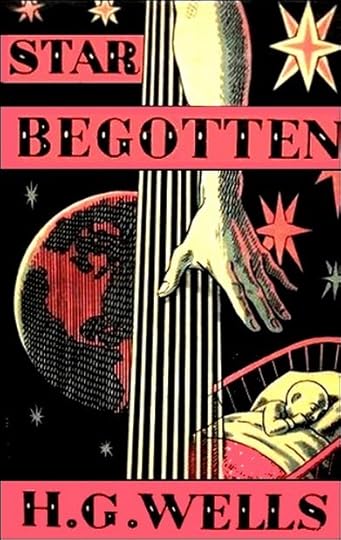 Star Begotten by HG Wells is one of those novels that you rarely see. The science fiction people tend towards the early stuff: The Time Machine, Island of Dr. Moreau, The Invisible Man, and The War of the Worlds, while the sociological types prefer the later books like Men Like Gods, The Sleeper Wakes, and The World Set Free. Lastly, the literary types ignore the SF altogether (write it off as a passing phase) and focus on the novels like Wheels of Chance, Ann Veronica, or The Secret Places of the Heart. I can honestly say I am not any of these. I am a monster fan. And Star Begotten is an interesting book to me.
Star Begotten was written in 1937, nine years before Wells’ death. Wells’ reputation by this time was not what it was in 1898 or even 1915. By the late 1920s, he was reprinting his glory days in pulps like Weird Tales and Amazing Stories. He must have seemed pretty old fashioned to many. George Orwell described him as being too sane for the mad world of the 20th Century. With the events of the Russian Revolution and afterwards, his socialist ideas were becoming unpopular. (He does address this and many others things in the novel.) I suppose I shouldn’t be surprised that Star Begotten came and went, only to be resurrected by Manor Books during the 1970s SF paperback boom. (This is the edition I keep encountering in second-hand stores.)
The plot of Star Begotten is easy to describe because there is so little of it. Basically, we follow an idea that a writer comes up with, that Martians are bombarding humanity with cosmic rays in an attempt to “Martianize” us. Wells debates the idea in several long “talking heads” sessions between writers, doctors, and other learned men, but never puts the idea into action. (There is a subplot about how the writer Davis realizes his wife is one of the “Martainized” people and his newborn son is likely one, too.) This static “idea story” had become the norm for him after abandoning the more plot-driven adventures of his early career for dystopic lectures in his later books. As GK Chesterton put it, "Mr Wells is a born storyteller who has sold his birthright for a pot of message..." The exciting moments of the first SF tales - like the descent into the Morlocks’ tunnels, encountering the beast men, fleeing the invisible man, or crossing the devastation of the Martians’ conquered Earth - are not here. Star Begotten is a mental book, filled with many big ideas on humankind, civilization, media, and art. It is as such that we must approach it: Wells’ summing up all his work and ideas.
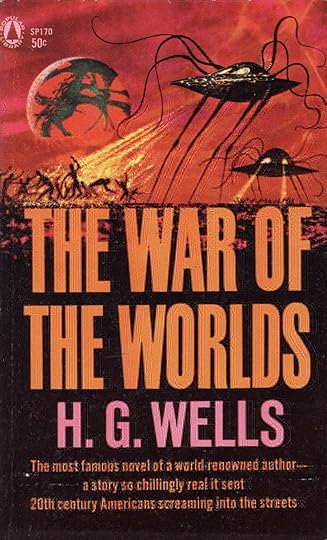 Now I have been accused of minimizing Wells’ greatness in previous articles. I make no apology for this. I am not a scholar of great literature. I have nothing to add there. I am a student of monsterdom. So if you are looking for tracts on Socialism or Literature or any other higher ideas, move on. I am a monster fan and that is what I do. And here is why Star Begotten is interesting to other monster fans: In this book, Wells gets to look back at his earlier work, The War of the Worlds in particular, (he pokes fun at himself with: “Some of you may have read a book called The War of the Worlds - I forget who wrote it - Jules Verne, Conan Doyle, one of those fellows”) and address how readers took that book, and to rethink the monsters he used in that classic. It’s not often that writers get to do this.
Through the debates on the theoretical Martians, Wells redesigns them. He discards the cruel squidgies with tentacles and blood injections, and instead presents a kinder, gentler Martian:
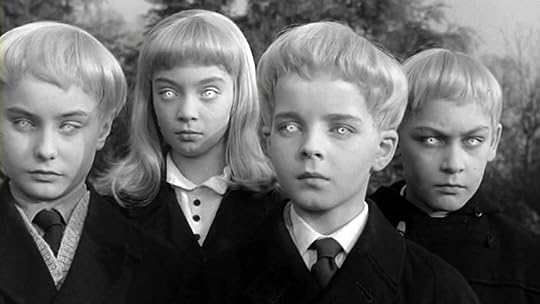 The obvious stepchild of Star Begotten is John Wyndham’s The Midwich Cuckoos (1957). Many know it better by its film title, Village of the Damned (1960, and the John Carpenter remake in 1995). Unlike Wells, Wyndham makes the plot move with some energy. The UFO craze of the 1950s supplies the aliens with a more direct access to humanity, visiting the village one night and impregnating all the viable females. The children born of this night are mutants with very similar hair and telepathic abilities. Wyndham does a great job of exploring how humans would feel when homo superior shows up and it is their own children. Wells suggest the idea but never runs with it. Like many 1950s SF films, the subtext seems to be about Communist infiltrators.
As I said at the beginning, Star Begotten has largely been ignored by science fiction and monster fans. But not all writers were unaware of it. One who was familiar is Nigel Kneale in Quatermass and the Pit (1957) in which the discovery of fossils proves that humans were mutated by a dying Martian race. Another is Manly Wade Wellman in Sherlock Holmes’ War of the Worlds (1975) who chooses Wells’ redesigned Martians (or aliens) over the squidgies of 1898. Star Begotten is not the influential masterwork that The War of the Worlds is, but I can recommend it to any writer interested in how to create an alien by extrapolation, or how to re-design one you’ve already created.
GW Thomas has appeared in over 400 different books, magazines and ezines including The Writer, Writer's Digest, Black October Magazine and Contact. His website is gwthomas.org. He is editor of Dark Worlds magazine.
 Star Begotten by HG Wells is one of those novels that you rarely see. The science fiction people tend towards the early stuff: The Time Machine, Island of Dr. Moreau, The Invisible Man, and The War of the Worlds, while the sociological types prefer the later books like Men Like Gods, The Sleeper Wakes, and The World Set Free. Lastly, the literary types ignore the SF altogether (write it off as a passing phase) and focus on the novels like Wheels of Chance, Ann Veronica, or The Secret Places of the Heart. I can honestly say I am not any of these. I am a monster fan. And Star Begotten is an interesting book to me.
Star Begotten was written in 1937, nine years before Wells’ death. Wells’ reputation by this time was not what it was in 1898 or even 1915. By the late 1920s, he was reprinting his glory days in pulps like Weird Tales and Amazing Stories. He must have seemed pretty old fashioned to many. George Orwell described him as being too sane for the mad world of the 20th Century. With the events of the Russian Revolution and afterwards, his socialist ideas were becoming unpopular. (He does address this and many others things in the novel.) I suppose I shouldn’t be surprised that Star Begotten came and went, only to be resurrected by Manor Books during the 1970s SF paperback boom. (This is the edition I keep encountering in second-hand stores.)
The plot of Star Begotten is easy to describe because there is so little of it. Basically, we follow an idea that a writer comes up with, that Martians are bombarding humanity with cosmic rays in an attempt to “Martianize” us. Wells debates the idea in several long “talking heads” sessions between writers, doctors, and other learned men, but never puts the idea into action. (There is a subplot about how the writer Davis realizes his wife is one of the “Martainized” people and his newborn son is likely one, too.) This static “idea story” had become the norm for him after abandoning the more plot-driven adventures of his early career for dystopic lectures in his later books. As GK Chesterton put it, "Mr Wells is a born storyteller who has sold his birthright for a pot of message..." The exciting moments of the first SF tales - like the descent into the Morlocks’ tunnels, encountering the beast men, fleeing the invisible man, or crossing the devastation of the Martians’ conquered Earth - are not here. Star Begotten is a mental book, filled with many big ideas on humankind, civilization, media, and art. It is as such that we must approach it: Wells’ summing up all his work and ideas.
 Now I have been accused of minimizing Wells’ greatness in previous articles. I make no apology for this. I am not a scholar of great literature. I have nothing to add there. I am a student of monsterdom. So if you are looking for tracts on Socialism or Literature or any other higher ideas, move on. I am a monster fan and that is what I do. And here is why Star Begotten is interesting to other monster fans: In this book, Wells gets to look back at his earlier work, The War of the Worlds in particular, (he pokes fun at himself with: “Some of you may have read a book called The War of the Worlds - I forget who wrote it - Jules Verne, Conan Doyle, one of those fellows”) and address how readers took that book, and to rethink the monsters he used in that classic. It’s not often that writers get to do this.
Through the debates on the theoretical Martians, Wells redesigns them. He discards the cruel squidgies with tentacles and blood injections, and instead presents a kinder, gentler Martian:
'Yes, Mars was cool long before earth was. A longer past, a hotter summer and a harder winter—the year of Mars is twice the length of ours—a larger body and a larger brain. With more room for memories—more and better memories—and more space for ideas, more and better ideas. And so the problem comes down to this. What sort of mind would a man have if he had a longer ancestry, an ampler memory, a less hurried Life?'The gentle giants of Mars are redefined as “quite nice monsters.” Wells no longer wants to shock and horrify as he did in the early years of 1894-8, that great monster-spawning instinct that gave us intelligent ants, killer squid, communal spiders, and a host other great creatures. Instead he wants to extrapolate scientifically, thinking of what Mars was like and how evolution would have sculpted the Martians both mentally and physically. Only after this, once the nominal hero of the story accepts that the Martians exist, do we finally get to see how it affects him. The final chapter confronts a writer who sees all his previous work as misguided nonsense, who destroys his unfinished masterpiece and finally realizes he need not be depressed about the coming new race. Not only is his wife and child part of this new, better kind of human, but he is one of them too.
 The obvious stepchild of Star Begotten is John Wyndham’s The Midwich Cuckoos (1957). Many know it better by its film title, Village of the Damned (1960, and the John Carpenter remake in 1995). Unlike Wells, Wyndham makes the plot move with some energy. The UFO craze of the 1950s supplies the aliens with a more direct access to humanity, visiting the village one night and impregnating all the viable females. The children born of this night are mutants with very similar hair and telepathic abilities. Wyndham does a great job of exploring how humans would feel when homo superior shows up and it is their own children. Wells suggest the idea but never runs with it. Like many 1950s SF films, the subtext seems to be about Communist infiltrators.
As I said at the beginning, Star Begotten has largely been ignored by science fiction and monster fans. But not all writers were unaware of it. One who was familiar is Nigel Kneale in Quatermass and the Pit (1957) in which the discovery of fossils proves that humans were mutated by a dying Martian race. Another is Manly Wade Wellman in Sherlock Holmes’ War of the Worlds (1975) who chooses Wells’ redesigned Martians (or aliens) over the squidgies of 1898. Star Begotten is not the influential masterwork that The War of the Worlds is, but I can recommend it to any writer interested in how to create an alien by extrapolation, or how to re-design one you’ve already created.
GW Thomas has appeared in over 400 different books, magazines and ezines including The Writer, Writer's Digest, Black October Magazine and Contact. His website is gwthomas.org. He is editor of Dark Worlds magazine.
August 3, 2017
What Movie Are You?

Playing along with Siskoid's game:
Look up movies that came out on your year of birth. Select NOT the one you like best, but RATHER the one that best represents your life in terms of mood, theme, incident and characters.
(Tips: Google "Movies YEAR" and you should have the most popular possibilities to scroll through at the top. For cinephiles or if you find nothing useful, the first link is usually an IMDB list of all films from that year. Down a link or two is a Wikipedia page that lists some films' release dates.)
Man-child wants to stay in the jungle and be a shiftless, stupid jungle bum, but eventually has to face reality and learns that it isn't so bad after all. Yep!

August 2, 2017
Hellbent for Letterbox | The Outlaw (1943)

Pax and I discuss the weird relationships and mega misogyny of Howards Hughes and Hawks' The Outlaw. It's Billy the Kid vs Doc Holliday with Jane Russell and a horse as the prizes (and Pat Garrett kind of crying in the corner with a gun in his hand).
Also: Pony Express mail and quick reviews of The Undertaker and Hombre Rosa comics and the movie Three Godfathers (1936).


August 1, 2017
Introducing: Thundarr Road

Ooh! New podcast!
On Thundarr Road, Noel Thingvall (Masters of Carpentry, Greystoked), David (Dragonfly Ripple, Mystery Movie Night, 'Casting Off) and I explore the episodes and cities of the Thundarr the Barbarian cartoon in geographical order. Since Thundarr episodes almost always featured post-apocalyptic versions of real places, we aren't covering them in the sequence that they were produced or aired, but as Thundarr, Ariel, and Ookla would have experienced them traveling across the country.
In this introductory episode, we start with the history of the cartoon and our own, personal histories with the show.

July 31, 2017
7 Days in May | Valerian, Underworld, and Hidden Figures
Valerian and the City of a Thousand Planets (2017)

I was a little nervous about Valerian. The trailers looked fantastic and I like the two leads quite a bit, but I'm never sure what I'm going to get from Luc Besson. That's especially true when he's only producing, but he also directed Lucy and I hated that movie. I was getting a similar vibe about Valerian that I did about Jupiter Ascending, another attempt at a bold space opera by unpredictable (in the sense that I can't predict whether I'm going to like any given film of theirs) filmmakers. I enjoy Jupiter Ascending, but it wasn't as cool or cohesive as I'd hoped it would be. And I was concerned that I'd feel the same way about Valerian.
I didn't love Valerian, but I like it quite a bit and it works a lot better than Jupiter Ascending. People seem to be divided on Dane DeHaan and Cara Delevingne as the leads, but I love both those guys. DeHaan was an effective Harry Osborne in Amazing Spider-Man 2 and I'm a huge fan of The Cure for Wellness that also had him in it. I hear the complaints that he's channeling '90s Keanu Reeves and I'm not going to say that it's not true. What I do push back on is that this is a bad thing for a big, fun adventure movie. I'm not as familiar with Delevingne's work, but she brings a lot of personality to Laureline and totally works for me as the soul of this movie.
I agree with the criticism that there isn't a lot of romantic heat between the two leads. That's the film's biggest weakness. There's a big chunk of backstory missing in which Valerian has supposedly turned from a Bond-level womanizer to being ready to settle down in a committed relationship with his current work partner. The movie tells me that this is true and eventually convinces me that Valerian at least believes it to be true, but I never see it or feel it myself. And since I don't quite believe it, I wonder why Laureline does. That's the only thing that keeps me from full-heartedly loving the film, though. The rest is awesome.
It's gorgeous and every scene change brings new ideas and things I've never seen before. It may be the only time that I've ever watched a movie in 2D (always my preference) and thought that I should go back and watch it again in 3D. I want to immerse myself in the world even more.
The movie is also funny and exciting and I love how it's about overcoming fear and selfishness with love and compassion. As I watch it more, I expect that my problems with the central romance will become less important. I may not care whether Valerian and Laureline smooch, but I'm fully on board with their work relationship. They make a great team and I want more.
Underworld: Blood Wars (2017)
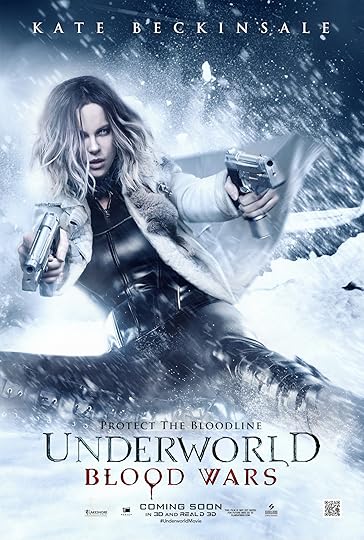
I'm a big fan of the Underworld series. Kate Beckinsale is one of my favorite actors anyway, but a big, action-packed soap opera set against a centuries-long war between vampires and werewolves is also totally my bag. One of the problems that the series keeps running into though is major characters played by actors who decide not to return for their roles. The movies have been very creative about working around this (never just killing off these characters, but using them as MacGuffins to build whole movies around), but at some point, the story and I have to face the fact that we're never going to see these characters again. And that's disappointing.
But one thing the series does well is anchoring itself in Beckinsale's Selene. The other characters can come and go, regardless of how important they are, because the story's honest about how their coming and going affects Selene. That's especially true in Blood Wars.
It's easily the weakest entry in the series so far. We've seen all of these politics multiple times before and there are big questions that feel like they should be answered in this film, but aren't. The movie introduces a new group of vampires to the world, though, and they're really cool. And I just generally like spending time with Selene in this world. It's not a great film, but it's good enough for fans.
Hidden Figures (2016)
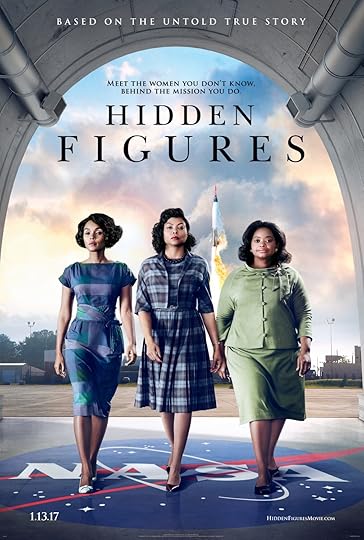
Trying to get caught up on some movies we missed from the beginning of the year. Hidden Figures is as powerful as everyone says. Simultaneously uplifting and frustrating in exactly the ways that it's trying to be.
What's cool though is that it's also frustrating in some surprising ways. In addition to stories of casual, systemic racism (which are always more powerful to me than the overt, aggressive kind), the movie makes a rather depressing statement about what spurs the white characters towards progress. Since NASA is literally about reaching for the stars and making scientific progress, I guess I expected the movie to depict social progress as some kind of natural result of that.
That's very much not the case though and the film spends quite a bit of time reminding us that the '60s space race was a product of the Cold War. Whatever justice the main characters experience by the end isn't a product of compassion, but fear. It takes the common enemy of the Soviets to motivate the establishment and help it see the value of its non-white allies. Progress is made and that's why Hidden Figures is an encouraging story, but I like that the movie complicates, rather than romanticizes what sparks that change.
One Crazy Summer (1986)
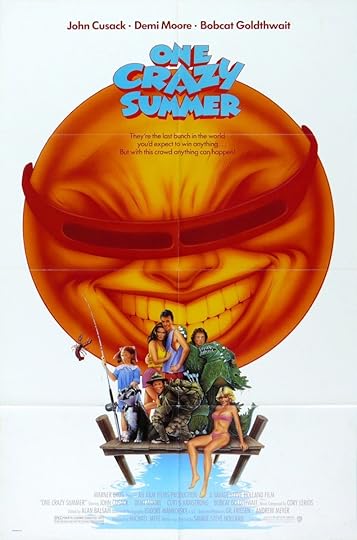
Continuing to introduce David to '80s John Cusack. This one's from the same director as Better Off Dead and it has Demi Moore and Bobcat Goldthwait. It's more even than Better Off Dead and funnier too, in general. I love Better Off Dead, but there are parts that bore me or make me groan. Much less of that in One Crazy Summer and the Godzilla gag - which takes its time to build and then pays off spectacularly - is awesome and hilarious.
Out of Bounds (1986)
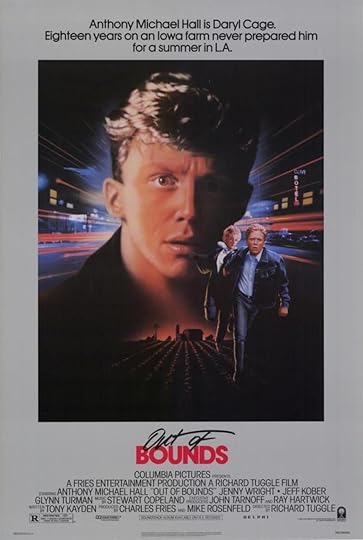
I didn't care for this that much in the '80s, but the soundtrack was on regular rotation in my boom box and I wanted to revisit it as long as we're watching a lot of Brat Pack movies.
It's still not so great. Anthony Michael Hall is trying really hard to leave behind his nerd image from Sixteen Candles and The Breakfast Club. And he succeeds, but at the cost of any humor - or really, humanity - whatsoever. His character Daryl Cage is a deadpanned cipher and it's impossible to like or care about him.
The movie is almost saved by Jenny Wright (Near Dark, Young Guns II) as Dizz. She's a lot of fun, but it's impossible to see why she sticks with Daryl for more than a few seconds. I was invested in seeing her make it through the movie, though.
And the soundtrack is still pretty awesome. Siouxsie and the Banshees actually appear in the movie singing "Cities in Dust" and I think that Out of Bounds was probably my introduction to them. Likewise The Cult, who's "Electric Ocean" gets played. There's some Smiths and Belinda Carlisle in there, too, and Stewart Copeland and Adam Ant team up for the title song. Copeland also does the score and if you like his stuff on the Equalizer TV series, you'll love this.
Managed Money (1934)
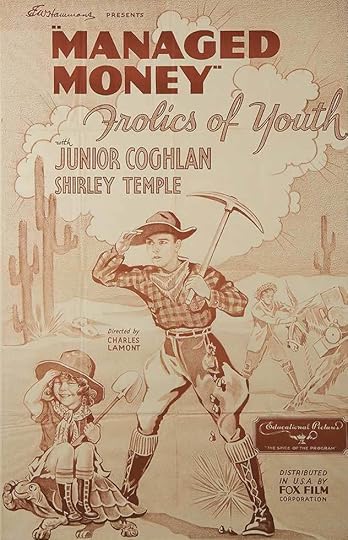
Sometime last year I found a DVD of Shirley Temple movies that we picked up somewhere. I started working my way through it and totally saw why the country was so charmed by her. She was cute and precocious and just generally pretty awesome.
A few of the movies were in the series of shorts she did with fellow child actor Junior Coghlan (Billy Batson in the Adventures of Captain Marvel serial). Coghlan was the star of the films, playing a high school kid, and Temple was his little sister. I liked them. At only 20 minutes each, they reminded me of a family sitcom and were actually pretty funny.
Anyway, my DVD set only had three of the four shorts on it for some reason, but Amazon Prime has the last one, so I finally watched that this week. Coghlan and a pal are trying to prospect for gold so that they can afford tuition at a local military school. Temple stows away on the trip and hilarity ensures. It's minor fun, but it's still fun.
My Darling Clementine (1946)
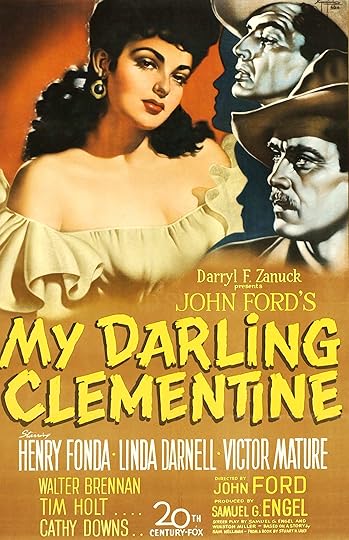
I sort of watched this earlier this year, but needed to come back for a closer look. We covered Tombstone and Wyatt Earp on Hellbent for Letterbox, so I got curious about other versions of the same story. My Darling Clementine is a big one, because John Ford directed it and Henry Fonda plays Wyatt. But I was shocked by how little it has to do with actual events. It's a "highly fictionalized" account of the Tombstone story in the way that The Outlaw is of Billy the Kid and Pat Garrett's. Which is to say that it's pretty much just taking the names and doing it's own thing with them. I wanted to watch it again without having the more historically interested films fresh in my mind; just so that I could appreciate it on its own merits.
It still bugs me that these unrecognizable characters have such recognizable names. And I don't really care about Wyatt's interest in Doc Holliday's (Victor Mature) ex-girlfriend Clementine Carter (Cathy Downs). Fonda is pretty dull as Wyatt, actually, and the script doesn't help by delaying his vengeance for an early tragedy way too long. But a couple of things make the movie worthwhile.
One is the gorgeous black-and-white photography by Joe MacDonald. Ford has moved Tombstone to the opposite end of Arizona to take advantage of Monument Valley and MacDonald shoots it wonderfully.
But the other cool thing about the film is Mature as Doc. It's really Doc's movie, down to the title. Wyatt falls in love with Clementine, but he's not the "my." That's Doc, who used to love Clementine before giving up his surgeon's practice (he's no dentist in this version), moving West, and becoming a wreck. Clementine represents all that he's given up while Linda Darnell's saloon gal represents what he's currently settling for. Mature gives a good performance and it's effective if not exactly heart-wrenching.
Overland Riders (1946)
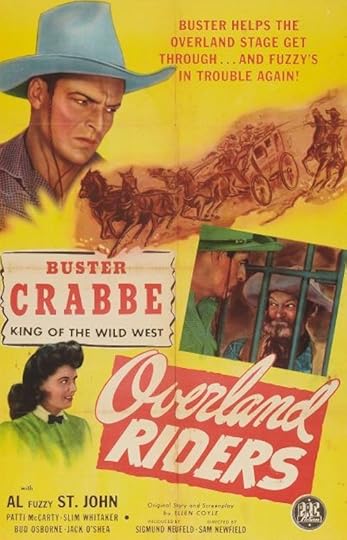
After we covered Tarzan the Fearless for Greystoked, I got interested in seeing some more Buster Crabbe. Especially a Western. This was the first one I could get my hands on, and I'll probably skip watching any others. Crabbe is great in it; he's good-looking and charming and I loved every second that he was on screen. But good-looking, charming cowboys are easy to come by and Crabbe can't save the mediocre script about yet another land-grab by a ruthless rich dude who's just dumb enough to get caught in under an hour.
Treasure of the Sierra Madre (1948)
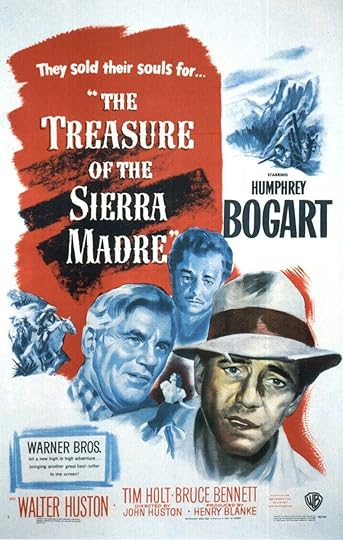
It's embarrassing that I've lived this long without seeing Treasure of the Sierra Madre, but that's finally corrected now. Not what I expected.
I keep seeing it on lists of Westerns, but it doesn't belong there. Even if you open the genre to include films like The Lusty Men and Hell or High Water that are set in modern times, those movies are at least interested in the same themes as traditional Westerns. Sierra Madre is doing something totally different, which is to its benefit.
I also hear it described as an adventure film, but that's misleading, too. It has one or two exciting scenes, but it's much more interested in the drama between the three leads as they (to varying degrees) become corrupted by the gold that they're pulling out of the ground. I expected way more shootouts and defending the claim and not nearly so much looking suspicious and talking to yourself.
Which brings me to Humphrey Bogart's character who I assumed would be the hero of film. Heh!
So it subverted my expectations for it in almost every way and I admit that I had to jog a little to keep up. But I did and I like it. In fact, part of the fun was figuring out just what kind of movie I was watching. It's a great script full of memorable, hugely dramatic moments and the actors are all up to making the most of them. Bogart's awesome and draws my attention every time I see him, but Walter Huston is a total scene-stealer and Tim Holt sticks in there and quietly holds his own, too.
Song of the Week: "Everything Now" by Arcade Fire
I was gonna throw on something from Out of Bounds, but I can't stop listening to this song. It's catchy as hell and I love the message.


I was a little nervous about Valerian. The trailers looked fantastic and I like the two leads quite a bit, but I'm never sure what I'm going to get from Luc Besson. That's especially true when he's only producing, but he also directed Lucy and I hated that movie. I was getting a similar vibe about Valerian that I did about Jupiter Ascending, another attempt at a bold space opera by unpredictable (in the sense that I can't predict whether I'm going to like any given film of theirs) filmmakers. I enjoy Jupiter Ascending, but it wasn't as cool or cohesive as I'd hoped it would be. And I was concerned that I'd feel the same way about Valerian.
I didn't love Valerian, but I like it quite a bit and it works a lot better than Jupiter Ascending. People seem to be divided on Dane DeHaan and Cara Delevingne as the leads, but I love both those guys. DeHaan was an effective Harry Osborne in Amazing Spider-Man 2 and I'm a huge fan of The Cure for Wellness that also had him in it. I hear the complaints that he's channeling '90s Keanu Reeves and I'm not going to say that it's not true. What I do push back on is that this is a bad thing for a big, fun adventure movie. I'm not as familiar with Delevingne's work, but she brings a lot of personality to Laureline and totally works for me as the soul of this movie.
I agree with the criticism that there isn't a lot of romantic heat between the two leads. That's the film's biggest weakness. There's a big chunk of backstory missing in which Valerian has supposedly turned from a Bond-level womanizer to being ready to settle down in a committed relationship with his current work partner. The movie tells me that this is true and eventually convinces me that Valerian at least believes it to be true, but I never see it or feel it myself. And since I don't quite believe it, I wonder why Laureline does. That's the only thing that keeps me from full-heartedly loving the film, though. The rest is awesome.
It's gorgeous and every scene change brings new ideas and things I've never seen before. It may be the only time that I've ever watched a movie in 2D (always my preference) and thought that I should go back and watch it again in 3D. I want to immerse myself in the world even more.
The movie is also funny and exciting and I love how it's about overcoming fear and selfishness with love and compassion. As I watch it more, I expect that my problems with the central romance will become less important. I may not care whether Valerian and Laureline smooch, but I'm fully on board with their work relationship. They make a great team and I want more.
Underworld: Blood Wars (2017)

I'm a big fan of the Underworld series. Kate Beckinsale is one of my favorite actors anyway, but a big, action-packed soap opera set against a centuries-long war between vampires and werewolves is also totally my bag. One of the problems that the series keeps running into though is major characters played by actors who decide not to return for their roles. The movies have been very creative about working around this (never just killing off these characters, but using them as MacGuffins to build whole movies around), but at some point, the story and I have to face the fact that we're never going to see these characters again. And that's disappointing.
But one thing the series does well is anchoring itself in Beckinsale's Selene. The other characters can come and go, regardless of how important they are, because the story's honest about how their coming and going affects Selene. That's especially true in Blood Wars.
It's easily the weakest entry in the series so far. We've seen all of these politics multiple times before and there are big questions that feel like they should be answered in this film, but aren't. The movie introduces a new group of vampires to the world, though, and they're really cool. And I just generally like spending time with Selene in this world. It's not a great film, but it's good enough for fans.
Hidden Figures (2016)

Trying to get caught up on some movies we missed from the beginning of the year. Hidden Figures is as powerful as everyone says. Simultaneously uplifting and frustrating in exactly the ways that it's trying to be.
What's cool though is that it's also frustrating in some surprising ways. In addition to stories of casual, systemic racism (which are always more powerful to me than the overt, aggressive kind), the movie makes a rather depressing statement about what spurs the white characters towards progress. Since NASA is literally about reaching for the stars and making scientific progress, I guess I expected the movie to depict social progress as some kind of natural result of that.
That's very much not the case though and the film spends quite a bit of time reminding us that the '60s space race was a product of the Cold War. Whatever justice the main characters experience by the end isn't a product of compassion, but fear. It takes the common enemy of the Soviets to motivate the establishment and help it see the value of its non-white allies. Progress is made and that's why Hidden Figures is an encouraging story, but I like that the movie complicates, rather than romanticizes what sparks that change.
One Crazy Summer (1986)

Continuing to introduce David to '80s John Cusack. This one's from the same director as Better Off Dead and it has Demi Moore and Bobcat Goldthwait. It's more even than Better Off Dead and funnier too, in general. I love Better Off Dead, but there are parts that bore me or make me groan. Much less of that in One Crazy Summer and the Godzilla gag - which takes its time to build and then pays off spectacularly - is awesome and hilarious.
Out of Bounds (1986)

I didn't care for this that much in the '80s, but the soundtrack was on regular rotation in my boom box and I wanted to revisit it as long as we're watching a lot of Brat Pack movies.
It's still not so great. Anthony Michael Hall is trying really hard to leave behind his nerd image from Sixteen Candles and The Breakfast Club. And he succeeds, but at the cost of any humor - or really, humanity - whatsoever. His character Daryl Cage is a deadpanned cipher and it's impossible to like or care about him.
The movie is almost saved by Jenny Wright (Near Dark, Young Guns II) as Dizz. She's a lot of fun, but it's impossible to see why she sticks with Daryl for more than a few seconds. I was invested in seeing her make it through the movie, though.
And the soundtrack is still pretty awesome. Siouxsie and the Banshees actually appear in the movie singing "Cities in Dust" and I think that Out of Bounds was probably my introduction to them. Likewise The Cult, who's "Electric Ocean" gets played. There's some Smiths and Belinda Carlisle in there, too, and Stewart Copeland and Adam Ant team up for the title song. Copeland also does the score and if you like his stuff on the Equalizer TV series, you'll love this.
Managed Money (1934)

Sometime last year I found a DVD of Shirley Temple movies that we picked up somewhere. I started working my way through it and totally saw why the country was so charmed by her. She was cute and precocious and just generally pretty awesome.
A few of the movies were in the series of shorts she did with fellow child actor Junior Coghlan (Billy Batson in the Adventures of Captain Marvel serial). Coghlan was the star of the films, playing a high school kid, and Temple was his little sister. I liked them. At only 20 minutes each, they reminded me of a family sitcom and were actually pretty funny.
Anyway, my DVD set only had three of the four shorts on it for some reason, but Amazon Prime has the last one, so I finally watched that this week. Coghlan and a pal are trying to prospect for gold so that they can afford tuition at a local military school. Temple stows away on the trip and hilarity ensures. It's minor fun, but it's still fun.
My Darling Clementine (1946)

I sort of watched this earlier this year, but needed to come back for a closer look. We covered Tombstone and Wyatt Earp on Hellbent for Letterbox, so I got curious about other versions of the same story. My Darling Clementine is a big one, because John Ford directed it and Henry Fonda plays Wyatt. But I was shocked by how little it has to do with actual events. It's a "highly fictionalized" account of the Tombstone story in the way that The Outlaw is of Billy the Kid and Pat Garrett's. Which is to say that it's pretty much just taking the names and doing it's own thing with them. I wanted to watch it again without having the more historically interested films fresh in my mind; just so that I could appreciate it on its own merits.
It still bugs me that these unrecognizable characters have such recognizable names. And I don't really care about Wyatt's interest in Doc Holliday's (Victor Mature) ex-girlfriend Clementine Carter (Cathy Downs). Fonda is pretty dull as Wyatt, actually, and the script doesn't help by delaying his vengeance for an early tragedy way too long. But a couple of things make the movie worthwhile.
One is the gorgeous black-and-white photography by Joe MacDonald. Ford has moved Tombstone to the opposite end of Arizona to take advantage of Monument Valley and MacDonald shoots it wonderfully.
But the other cool thing about the film is Mature as Doc. It's really Doc's movie, down to the title. Wyatt falls in love with Clementine, but he's not the "my." That's Doc, who used to love Clementine before giving up his surgeon's practice (he's no dentist in this version), moving West, and becoming a wreck. Clementine represents all that he's given up while Linda Darnell's saloon gal represents what he's currently settling for. Mature gives a good performance and it's effective if not exactly heart-wrenching.
Overland Riders (1946)

After we covered Tarzan the Fearless for Greystoked, I got interested in seeing some more Buster Crabbe. Especially a Western. This was the first one I could get my hands on, and I'll probably skip watching any others. Crabbe is great in it; he's good-looking and charming and I loved every second that he was on screen. But good-looking, charming cowboys are easy to come by and Crabbe can't save the mediocre script about yet another land-grab by a ruthless rich dude who's just dumb enough to get caught in under an hour.
Treasure of the Sierra Madre (1948)

It's embarrassing that I've lived this long without seeing Treasure of the Sierra Madre, but that's finally corrected now. Not what I expected.
I keep seeing it on lists of Westerns, but it doesn't belong there. Even if you open the genre to include films like The Lusty Men and Hell or High Water that are set in modern times, those movies are at least interested in the same themes as traditional Westerns. Sierra Madre is doing something totally different, which is to its benefit.
I also hear it described as an adventure film, but that's misleading, too. It has one or two exciting scenes, but it's much more interested in the drama between the three leads as they (to varying degrees) become corrupted by the gold that they're pulling out of the ground. I expected way more shootouts and defending the claim and not nearly so much looking suspicious and talking to yourself.
Which brings me to Humphrey Bogart's character who I assumed would be the hero of film. Heh!
So it subverted my expectations for it in almost every way and I admit that I had to jog a little to keep up. But I did and I like it. In fact, part of the fun was figuring out just what kind of movie I was watching. It's a great script full of memorable, hugely dramatic moments and the actors are all up to making the most of them. Bogart's awesome and draws my attention every time I see him, but Walter Huston is a total scene-stealer and Tim Holt sticks in there and quietly holds his own, too.
Song of the Week: "Everything Now" by Arcade Fire
I was gonna throw on something from Out of Bounds, but I can't stop listening to this song. It's catchy as hell and I love the message.
July 28, 2017
Mystery Movie Night | Singles (1992), Young Guns II (1990), and Back to the Future (1985)

Lots of cool guests on this one as Dan Taylor and Ron Ankeny (Starmageddon, N3rd World) and Paxton Holley (Nerd Lunch, Cult Film Club, Hellbent for Letterbox) join Dave, David, and I to talk grunge, guns, and gigawatts.