Michael May's Blog, page 101
May 10, 2017
Monsters Chasing Monsters [Guest Post]
By GW Thomas
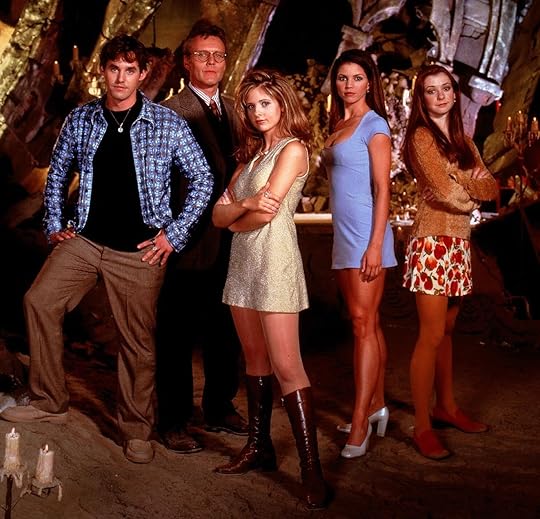 The history of the ghostbreaker changed on March 10, 1997 when Joss Whedon's Buffy the Vampire Slayer aired for the first time. (The movie doesn't count.) Whedon's popular character Angel split from the cast for his own show on October 5, 1999 to begin his own campaign against the darkness. And ever since then, most ghostbreakers have been supernatural beings.
Now, let's be fair. Whedon wasn't the first. Even Blade, created by Marv Wolfman, predates Angel. But Joss made them big business. The current "paranormal romance" trend starts with Buffy. By the end of the Buffy run they had dozens of slayers, two vampires, a werewolf, an ex-demon, a lounge-lizard demon, and a witch all pursuing evil. Despite this, the best characters (in my opinion) were Xander, Giles, Fred (pre-transformation), and Wesley. The humans. And perhaps Joss Whedon would nod his head and smile. Because that’s what he planned all along. The humans act as a mirror to his super-beings, whether they are ghostbusters or traveling around in space or fighting super-beings in the Marvel Universe. This is a Whedon thing. But it opened a door to another kind of Hell Mouth – the Monster That Fights Monsters. (It reminds me of that classic Gahan Wilson cartoon where a monster is running after another monster and the human observers says: “It one god-damned thing after another!”)
A 2009-2010 comic book shows just how far this monster-busters thing has gone: Casper and the Spectrals (Arden Entertainment, written by Todd Dezago and drawn by Pedro Delgad). Imagine cute little Casper who never had any friends because people always ran away saying "A g-g-g-ghost!" is now teamed up with Wendy and Hot Stuff as a monster-fighting team. It's well done but, really? Not even that One Percenter D-Bag Richie Rich to bring a little humanity to the gang.
 I have to admit I'm old school. Call me a Kolchakian traditionalist if you like. I don't like my vamps to be good guys. I like my Scully and Mulders to be human. I have enjoyed Buffy, Angel, and Blade. I'm not slagging these shows, only pointing out a trend I don't care for. But the over-all effect of this type of ghostbreaker is too akin to a superhero showdown rather than a more Mystery approach a la Carnacki, John Silence, or even Jules de Grandin.
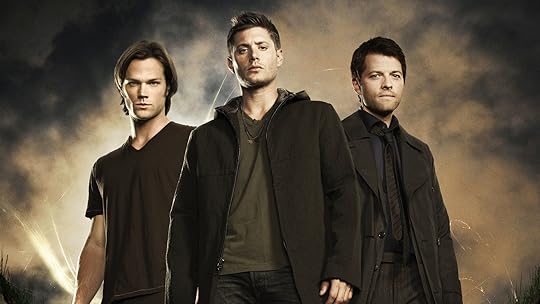
A show I really enjoyed in the first six seasons was Supernatural with its culture of Hunters: humans who prowl the night, protecting humanity. (The show took a left turn I couldn’t endure after this, forgetting about ghostbreaking and becoming a soap opera about a war between Heaven and Hell. Sigh.) The early episodes were more my speed, rather than someone trying to hook up with a vampire. (My favorite line is when Dean Winchester says, "Suck this, Twilight" and blows away a vamp.) The story lines I have enjoyed the most are those when the boys hunt, rather than consort with Satan and angels, and save/destroy the world. I wish the producer McG would create a spin-off show called Tales of the Hunters (or something better) in which we don't go off to save the world each week but just hunt. Kind of a CSI-Supernatural.
This is something X-Files might have done if it hadn't turned into a soap opera about UFOs. (Why does this keep happening?) The Kolchak remake, The Dresden Files, Constantine, and The Exorcist tried, but all were met with cancellation. Perhaps my dream is simply too uncommercial? Doesn’t anyone want a show about humans surrounded by monsters, trying to save humanity from the darkness? Well, besides The Walking Dead? (As long as Rick and his friends are never joined by a zombie sidekick, there might be hope.) Robert Kirkman’s Outcast is another bright light (odd phrase for such a dark show). Kyle Barnes and the Rev certainly are old school, but the show is limited in its scope. It wouldn’t work with new kinds of threats showing up each week.
So I sigh and keep hoping for a truly old school ghostbreaker show to appear. This may show my "raised in rural Canada" background, but all I can say is, "Let's hunt!"
GW Thomas has appeared in over 400 different books, magazines and ezines including The Writer, Writer's Digest, Black October Magazine and Contact. His website is gwthomas.org. He is editor of Dark Worlds magazine.
 The history of the ghostbreaker changed on March 10, 1997 when Joss Whedon's Buffy the Vampire Slayer aired for the first time. (The movie doesn't count.) Whedon's popular character Angel split from the cast for his own show on October 5, 1999 to begin his own campaign against the darkness. And ever since then, most ghostbreakers have been supernatural beings.
Now, let's be fair. Whedon wasn't the first. Even Blade, created by Marv Wolfman, predates Angel. But Joss made them big business. The current "paranormal romance" trend starts with Buffy. By the end of the Buffy run they had dozens of slayers, two vampires, a werewolf, an ex-demon, a lounge-lizard demon, and a witch all pursuing evil. Despite this, the best characters (in my opinion) were Xander, Giles, Fred (pre-transformation), and Wesley. The humans. And perhaps Joss Whedon would nod his head and smile. Because that’s what he planned all along. The humans act as a mirror to his super-beings, whether they are ghostbusters or traveling around in space or fighting super-beings in the Marvel Universe. This is a Whedon thing. But it opened a door to another kind of Hell Mouth – the Monster That Fights Monsters. (It reminds me of that classic Gahan Wilson cartoon where a monster is running after another monster and the human observers says: “It one god-damned thing after another!”)
A 2009-2010 comic book shows just how far this monster-busters thing has gone: Casper and the Spectrals (Arden Entertainment, written by Todd Dezago and drawn by Pedro Delgad). Imagine cute little Casper who never had any friends because people always ran away saying "A g-g-g-ghost!" is now teamed up with Wendy and Hot Stuff as a monster-fighting team. It's well done but, really? Not even that One Percenter D-Bag Richie Rich to bring a little humanity to the gang.
 I have to admit I'm old school. Call me a Kolchakian traditionalist if you like. I don't like my vamps to be good guys. I like my Scully and Mulders to be human. I have enjoyed Buffy, Angel, and Blade. I'm not slagging these shows, only pointing out a trend I don't care for. But the over-all effect of this type of ghostbreaker is too akin to a superhero showdown rather than a more Mystery approach a la Carnacki, John Silence, or even Jules de Grandin.
A show I really enjoyed in the first six seasons was Supernatural with its culture of Hunters: humans who prowl the night, protecting humanity. (The show took a left turn I couldn’t endure after this, forgetting about ghostbreaking and becoming a soap opera about a war between Heaven and Hell. Sigh.) The early episodes were more my speed, rather than someone trying to hook up with a vampire. (My favorite line is when Dean Winchester says, "Suck this, Twilight" and blows away a vamp.) The story lines I have enjoyed the most are those when the boys hunt, rather than consort with Satan and angels, and save/destroy the world. I wish the producer McG would create a spin-off show called Tales of the Hunters (or something better) in which we don't go off to save the world each week but just hunt. Kind of a CSI-Supernatural.
This is something X-Files might have done if it hadn't turned into a soap opera about UFOs. (Why does this keep happening?) The Kolchak remake, The Dresden Files, Constantine, and The Exorcist tried, but all were met with cancellation. Perhaps my dream is simply too uncommercial? Doesn’t anyone want a show about humans surrounded by monsters, trying to save humanity from the darkness? Well, besides The Walking Dead? (As long as Rick and his friends are never joined by a zombie sidekick, there might be hope.) Robert Kirkman’s Outcast is another bright light (odd phrase for such a dark show). Kyle Barnes and the Rev certainly are old school, but the show is limited in its scope. It wouldn’t work with new kinds of threats showing up each week.
So I sigh and keep hoping for a truly old school ghostbreaker show to appear. This may show my "raised in rural Canada" background, but all I can say is, "Let's hunt!"
GW Thomas has appeared in over 400 different books, magazines and ezines including The Writer, Writer's Digest, Black October Magazine and Contact. His website is gwthomas.org. He is editor of Dark Worlds magazine.


May 8, 2017
7 Days in May | Guardians of the Galaxy, Vol 2 and The Circle
Guardians of the Galaxy, Vol. 2 (2017)
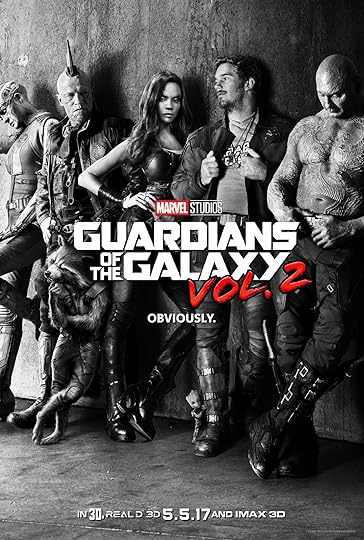
I liked it better than the first one. It's just as funny and visually interesting and the music is just as cool, but it has a better villain and some really great (and truly touching) development for at least three characters. And awesome cameos.
The Circle (2017)
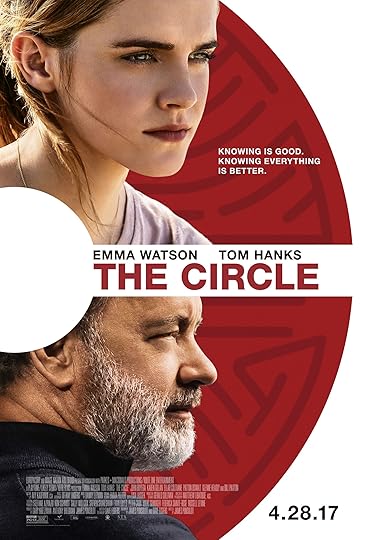
I'm going to spoil some things, but you shouldn't watch The Circle, so feel free to keep reading. This movie is so disappointing.
I love the cast and the concept is intriguing, but The Circle does a lousy job of making whatever point it's trying to communicate. There's one good scene that raises worthwhile questions about a) the relationship between truth and transparency, and b) the tension between those things and privacy. But I don't know what the rest of the movie is about.
It's not the thriller that the marketing wants you to think it is. Mae (Emma Watson) is never in any physical danger and the only stakes are that if she leaves her job then she also loses the awesome health insurance that's finally getting her dad (Bill Paxton) some help with his MS. That's okay, though. It's enough to put her in an interesting quandary. Should she stay with an employer that has a ridiculous lack of boundaries when it comes to employees' personal lives (and apparently no HR department at all)? The movie could have explored that more fully and I wouldn't have missed the lack of fights and chases. But it's not really about that, either.
I can't tell if Mae is ever skeptical about the Circle's participation policies. I assumed that she was and that her "yeah, yeah, no problem" attitude towards them was simply an attempt not to make waves in her cool, new job. But she never really puts up a fight; not even when senior employee Ty Kalden (John Boyega) decides to entrust her with some concerning information. And after that she's just one bad evening and a pep talk from Tom Hanks away from completely buying what the Circle is selling.
She says some truly stupid things in that section, too. She calls watching videos of other people's experiences "a basic human right," for instance. And says that it's selfish not to post experiences online for everyone to see. She hasn't just swallowed Eamon Bailey's (Tom Hanks) Kool-Aid; she's swallowed the pitcher itself and the entire soft drink aisle. I kept expecting that at some point she would reveal that she was faking it and was really working with Kalden the whole time, but that moment never came.
There's of course a confrontation between Mae and Bailey by the end, but there are two huge problems with it. First, the movie never reveals what it is exactly that Bailey is doing wrong. He's full of terrible, harmful ideas, but there's no explicit indication that he's actually planning to use his collected data for evil purposes. The potential is certainly there and I wanted to see him stopped, but his final unmasking is nothing more than a revelation that he has secrets just like everyone else. Nor does the movie care about telling what those are. So the climactic showdown between him and Mae doesn't have any punch, because it's never clear what would happen if Bailey won.
The second huge problem with the final confrontation is that Mae's ideas are now just as harmful as Bailey's. She still believes in total transparency. Her problem with Bailey is just that he wants to be exempt from it. So I'm not exactly rooting for her, either.
It's not wrong that the movie ends with no clear answers. What I don't like is the way it phrases the question. It presents two, horrible solutions and asks which is preferable. There's some discussion that can be had around that, but the discussion would be so much richer if the film took its dilemma seriously and offered a couple of actually reasonable perspectives for its viewers to contemplate.
Charlie Chan at the Olympics (1937)
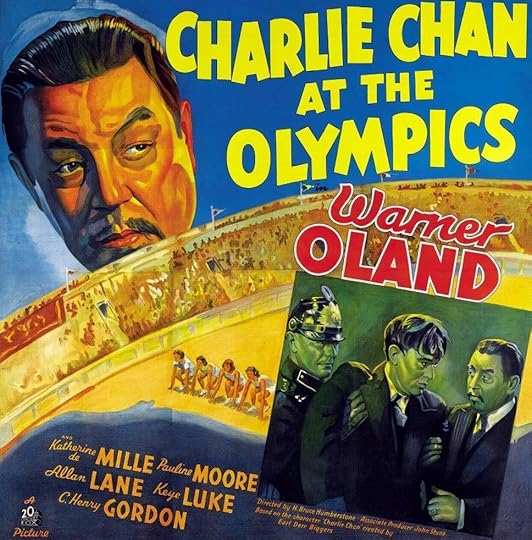
I like Warner Oland's Charlie Chan movies, but this is a minor entry. All the detective work is loaded toward the front with as much passion as Law & Order. It's just trying to get through that as quickly as possible so that it can move on to the spy story that it really wants to tell. And sadly, even though it's set at the 1936 Summer Olympics in Berlin, it's not at all interested in the political situation at the time. There's never even a mention of Hitler or the Nazi party.
Zorro (1957-61)
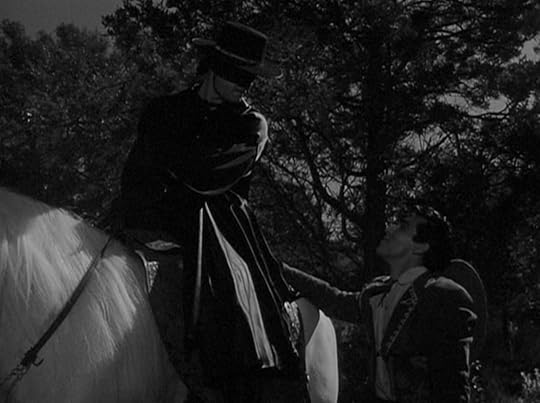
A few more episodes into Season 2 and Zorro's still in Monterey. I had to look ahead at descriptions of future episodes to make sure he doesn't permanently relocate there. He doesn't, but it'll be a while before he gets home.
The excuse for now is that he needs to stay and deal with another rebel against oppression. Unlike the original novel and the 1920 Douglas Fairbanks film, the Californian government in the Disney show isn't depicted as completely corrupt. But the governor isn't as wise or careful as he should be either, so his underlings are often able to get away with cruel activities. When that starts to happen in Monterey, a hotheaded local named Joaquin Castenada rises up in defiance. But while Zorro appreciates the young man's passion, he disagrees with the brutality of his methods. It's an interesting conflict, but one that I hope is wrapped up soon.
The Young Indiana Jones Chronicles (1992-93)
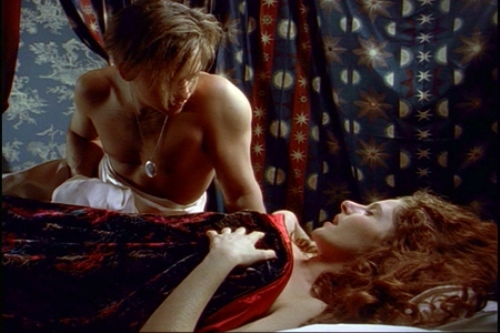
The first of the two episodes I watched last week had Indy working as a motorcycle courier, running messages between the French military HQ and the front lines. It's a heavy-handed commentary on the disconnect between the fighting men and the leaders who command them, but it's good in that it puts some cracks in Indy's view of the war. He abandoned the Mexican Revolution when it became complicated, then avoided the Irish Revolution for similar reasons. Both times he set himself resolutely towards Europe to fight the Germans who had ruthlessly invaded Belgium to get to France. Seemed like an uncomplicated bad guy to fight, but as he learns in this episode, the cause of World War I is pitiful and extremely complicated. Unfortunately, it's too late for him to get out now.
In the second episode (written by Carrie Fisher!), Indy is given leave to visit a friend of his father in Paris. The friend is played by Ian McDiarmid, so there's a double Star Wars connection, but the episode is actually about Indy's hooking up with Mata Hari. It's about relationships, so I enjoyed it more than the previous one even though there's not much plot to it. It has some great insights on love and jealousy and the lies we tell early in romances.
Underground (2016-present)
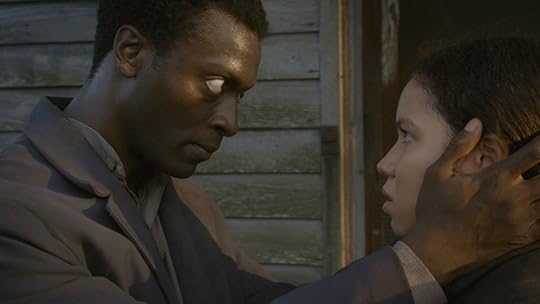
After the big event of an entire episode about Harriet Tubman's speech, the next couple of episodes get back to the main story around Rosalee and Noah's plan to free Rosalee's family. Of course that doesn't go as planned and everything falls apart. But that's just in time for the last couple of episodes (the finale airs this week) to hopefully bring it back around. Hopefully.
I'm very invested in these characters and the way last season ended gives me encouragement that this one will go out on some kind of victory. But the show is nothing if not surprising.
Jam of the Week: "Shout" by Tears for Fears
I love these guys in a way that isn't healthy and I'm finally seeing them live this Thursday, so I've been all about them this past week. They have many excellent songs and I'd love to feature a deeper cut here, but there's no better song than "Shout." Probably by any band.


I liked it better than the first one. It's just as funny and visually interesting and the music is just as cool, but it has a better villain and some really great (and truly touching) development for at least three characters. And awesome cameos.
The Circle (2017)

I'm going to spoil some things, but you shouldn't watch The Circle, so feel free to keep reading. This movie is so disappointing.
I love the cast and the concept is intriguing, but The Circle does a lousy job of making whatever point it's trying to communicate. There's one good scene that raises worthwhile questions about a) the relationship between truth and transparency, and b) the tension between those things and privacy. But I don't know what the rest of the movie is about.
It's not the thriller that the marketing wants you to think it is. Mae (Emma Watson) is never in any physical danger and the only stakes are that if she leaves her job then she also loses the awesome health insurance that's finally getting her dad (Bill Paxton) some help with his MS. That's okay, though. It's enough to put her in an interesting quandary. Should she stay with an employer that has a ridiculous lack of boundaries when it comes to employees' personal lives (and apparently no HR department at all)? The movie could have explored that more fully and I wouldn't have missed the lack of fights and chases. But it's not really about that, either.
I can't tell if Mae is ever skeptical about the Circle's participation policies. I assumed that she was and that her "yeah, yeah, no problem" attitude towards them was simply an attempt not to make waves in her cool, new job. But she never really puts up a fight; not even when senior employee Ty Kalden (John Boyega) decides to entrust her with some concerning information. And after that she's just one bad evening and a pep talk from Tom Hanks away from completely buying what the Circle is selling.
She says some truly stupid things in that section, too. She calls watching videos of other people's experiences "a basic human right," for instance. And says that it's selfish not to post experiences online for everyone to see. She hasn't just swallowed Eamon Bailey's (Tom Hanks) Kool-Aid; she's swallowed the pitcher itself and the entire soft drink aisle. I kept expecting that at some point she would reveal that she was faking it and was really working with Kalden the whole time, but that moment never came.
There's of course a confrontation between Mae and Bailey by the end, but there are two huge problems with it. First, the movie never reveals what it is exactly that Bailey is doing wrong. He's full of terrible, harmful ideas, but there's no explicit indication that he's actually planning to use his collected data for evil purposes. The potential is certainly there and I wanted to see him stopped, but his final unmasking is nothing more than a revelation that he has secrets just like everyone else. Nor does the movie care about telling what those are. So the climactic showdown between him and Mae doesn't have any punch, because it's never clear what would happen if Bailey won.
The second huge problem with the final confrontation is that Mae's ideas are now just as harmful as Bailey's. She still believes in total transparency. Her problem with Bailey is just that he wants to be exempt from it. So I'm not exactly rooting for her, either.
It's not wrong that the movie ends with no clear answers. What I don't like is the way it phrases the question. It presents two, horrible solutions and asks which is preferable. There's some discussion that can be had around that, but the discussion would be so much richer if the film took its dilemma seriously and offered a couple of actually reasonable perspectives for its viewers to contemplate.
Charlie Chan at the Olympics (1937)

I like Warner Oland's Charlie Chan movies, but this is a minor entry. All the detective work is loaded toward the front with as much passion as Law & Order. It's just trying to get through that as quickly as possible so that it can move on to the spy story that it really wants to tell. And sadly, even though it's set at the 1936 Summer Olympics in Berlin, it's not at all interested in the political situation at the time. There's never even a mention of Hitler or the Nazi party.
Zorro (1957-61)

A few more episodes into Season 2 and Zorro's still in Monterey. I had to look ahead at descriptions of future episodes to make sure he doesn't permanently relocate there. He doesn't, but it'll be a while before he gets home.
The excuse for now is that he needs to stay and deal with another rebel against oppression. Unlike the original novel and the 1920 Douglas Fairbanks film, the Californian government in the Disney show isn't depicted as completely corrupt. But the governor isn't as wise or careful as he should be either, so his underlings are often able to get away with cruel activities. When that starts to happen in Monterey, a hotheaded local named Joaquin Castenada rises up in defiance. But while Zorro appreciates the young man's passion, he disagrees with the brutality of his methods. It's an interesting conflict, but one that I hope is wrapped up soon.
The Young Indiana Jones Chronicles (1992-93)

The first of the two episodes I watched last week had Indy working as a motorcycle courier, running messages between the French military HQ and the front lines. It's a heavy-handed commentary on the disconnect between the fighting men and the leaders who command them, but it's good in that it puts some cracks in Indy's view of the war. He abandoned the Mexican Revolution when it became complicated, then avoided the Irish Revolution for similar reasons. Both times he set himself resolutely towards Europe to fight the Germans who had ruthlessly invaded Belgium to get to France. Seemed like an uncomplicated bad guy to fight, but as he learns in this episode, the cause of World War I is pitiful and extremely complicated. Unfortunately, it's too late for him to get out now.
In the second episode (written by Carrie Fisher!), Indy is given leave to visit a friend of his father in Paris. The friend is played by Ian McDiarmid, so there's a double Star Wars connection, but the episode is actually about Indy's hooking up with Mata Hari. It's about relationships, so I enjoyed it more than the previous one even though there's not much plot to it. It has some great insights on love and jealousy and the lies we tell early in romances.
Underground (2016-present)

After the big event of an entire episode about Harriet Tubman's speech, the next couple of episodes get back to the main story around Rosalee and Noah's plan to free Rosalee's family. Of course that doesn't go as planned and everything falls apart. But that's just in time for the last couple of episodes (the finale airs this week) to hopefully bring it back around. Hopefully.
I'm very invested in these characters and the way last season ended gives me encouragement that this one will go out on some kind of victory. But the show is nothing if not surprising.
Jam of the Week: "Shout" by Tears for Fears
I love these guys in a way that isn't healthy and I'm finally seeing them live this Thursday, so I've been all about them this past week. They have many excellent songs and I'd love to feature a deeper cut here, but there's no better song than "Shout." Probably by any band.
May 5, 2017
You can't take the 'cast from me

A whole lot of podcasting going on this past week, On Hellbent for Letterbox, Pax and I dove back into the world of spaghetti westerns with Lee Van Cleef in the bonkers Sabata. We also discussed Gregory Peck in The Bravados, Matt Wagner and Francesco Francavilla's Zorro, and Robert Conrad and Ross Martin in The Wild Wild West.

Then over on Dragonfly Ripple, we talked sci-fi and politics. Carlin and I start with a discussion of how we introduce our kids to politics and then get into some sci-fi TV with political elements with the kids. We start with the two V mini-series from the 1980s and then move on to Firefly. Plus, on Jetpack Tiger, Carlin and Dash talk about their experience with Star Wars Celebration.

And finally, there are a couple of recent Starmageddon episodes I have't told you about yet. In the first one, Dan talks about finally finishing Clone Wars, Ron and Dan discuss their addiction to the Star Wars Galaxy of Heroes mobile game, and we share our thoughts on the most recent Star Trek: Discovery casting: Jason Issacs as the captain and Rainn Wilson as our favorite Star Trek rogue, Harry Mudd.
Then in the latest episode, we're joined by David Spell to discuss all of the exciting news from Star Wars Celebration, including the Last Jedi trailer, the upcoming Star Wars Battlefront II video game, and the girl-friendly Forces of Destiny.

May 4, 2017
FCCQ | Stranger Things
Here's something new I want to try. CT from Nerd Lunch recently gave the podcast's website a new look and one of the cool updates is the Fourth Chair Army page. You can search for episodes by particular guests (like me, for instance) and there's also a section at the bottom that randomizes a Fourth Chair Carryover Question (FCCQ). If you're not familiar with the show, that's the part where a guest one week leaves a question for the following week's guest to answer. It's super fun and there have been a lot of great discussion questions over the years.
So, with the blessing of the fellas, I'm going to occasionally pull up an FCCQ and answer it here. Starting now.
Way back on Episode 51, Rondal Scott of Strange Kids Club asked appropriately, "What's the strangest thing you remember doing as a kid?"
It's always tough for me to know what weird things I did as a kid that were unique to me and what was just me being a regular kid. For instance, I was narcissistic enough to imagine that I was starring in my own reality show and I didn't dream that other people fantasized about the same thing until The Truman Show brought us all out of the closet to talk about it.
I also know that I wasn't the only kid to cast myself in my own adventures and secretly roleplay my way through the day, but I don't know to what extent other kids did it. So I always suspected that the length and details of my imaginary adventures were a little strange.
They got especially involved anytime we went on vacation. Changes in scenery and new things to do were exciting, so I would try to create a story that tied the whole trip together. Growing up in Florida in the '70s and early '80s was a treat, because Disney World was close and not as expensive as it is today. And I had a recurring story that I would replay every time we went.
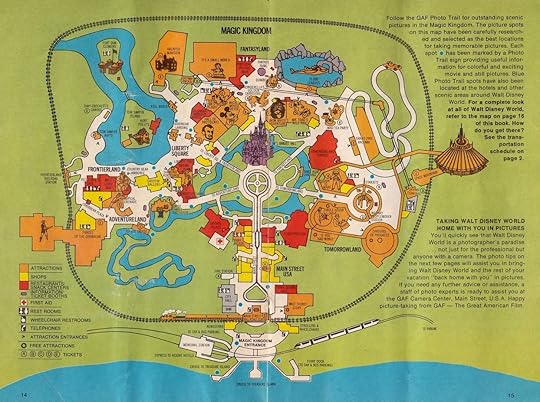
It was a simple story. I was some kind of space/time-traveling cop on the hunt for a criminal mastermind. But my time machine wasn't a slow, klunky TARDIS; it was a personal device that either fit in my pocket or I would wear on my wrist or something. And it would allow me to instantly transport from one time period or part of the world to another. So I'd chase him from Main Street's turn-of-the-century US to the jungles and seas of Adventureland and then I'd pop over to the American West in Frontierland to track him some more. Then through a haunted mansion and on to Medieval Europe in Fantasyland and finally we'd end up in the "present" of my story: Tomorrowland. Which of course culminated in a wild race through the stars via Space Mountain. Later, my man safely in custody, I'd chill back at my hotel while waiting for my next assignment.
You can tell me if that's strange. Maybe I was a normal kid after all. But please also tell me what's the strangest thing you remember doing as a kid?
Disney World map scan from MousePlanet.com.
So, with the blessing of the fellas, I'm going to occasionally pull up an FCCQ and answer it here. Starting now.

Way back on Episode 51, Rondal Scott of Strange Kids Club asked appropriately, "What's the strangest thing you remember doing as a kid?"
It's always tough for me to know what weird things I did as a kid that were unique to me and what was just me being a regular kid. For instance, I was narcissistic enough to imagine that I was starring in my own reality show and I didn't dream that other people fantasized about the same thing until The Truman Show brought us all out of the closet to talk about it.
I also know that I wasn't the only kid to cast myself in my own adventures and secretly roleplay my way through the day, but I don't know to what extent other kids did it. So I always suspected that the length and details of my imaginary adventures were a little strange.
They got especially involved anytime we went on vacation. Changes in scenery and new things to do were exciting, so I would try to create a story that tied the whole trip together. Growing up in Florida in the '70s and early '80s was a treat, because Disney World was close and not as expensive as it is today. And I had a recurring story that I would replay every time we went.
It was a simple story. I was some kind of space/time-traveling cop on the hunt for a criminal mastermind. But my time machine wasn't a slow, klunky TARDIS; it was a personal device that either fit in my pocket or I would wear on my wrist or something. And it would allow me to instantly transport from one time period or part of the world to another. So I'd chase him from Main Street's turn-of-the-century US to the jungles and seas of Adventureland and then I'd pop over to the American West in Frontierland to track him some more. Then through a haunted mansion and on to Medieval Europe in Fantasyland and finally we'd end up in the "present" of my story: Tomorrowland. Which of course culminated in a wild race through the stars via Space Mountain. Later, my man safely in custody, I'd chill back at my hotel while waiting for my next assignment.
You can tell me if that's strange. Maybe I was a normal kid after all. But please also tell me what's the strangest thing you remember doing as a kid?
Disney World map scan from MousePlanet.com.
May 3, 2017
Turok, Son of Plants [Guest Post]
By GW Thomas
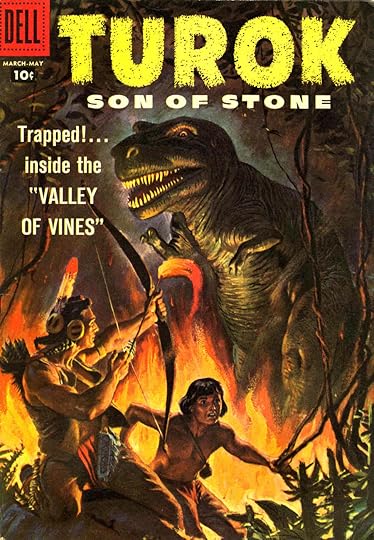 Looking at all the comic books that have used plant monsters, one title stands far above the others for monstrous plants. Now to be clear, I have dismissed series like Batman that feature villains like Poison Ivy on an irregular basis. What I am looking for is a comic series that featured different stories with different monsters, not recurring villains or heroes such as Swamp Thing or Man-Thing. The comic that used so many plant monsters was Western Publishing's Turok, Son of Stone. While anthologies like House of Mystery and Adventures into the Unknown had their share, it was Turok and his sidekick, Andar that met the most villainous plants.
And different plants too, not a recurring appearance of the same jungle vine or stalking tree. In the course of one hundred thirty-three issues, Turok saw five different plant encounters from issue #11 to 122. Over those twenty-one years, Turok and Andar encountered one plant fiend for every five years. That's pretty impressive when you consider how long most comics last.
The first green terror appeared in "The Valley of the Vines" (Turok, Son of Stones #11, March-May 1958). The duo are escaping a T-Rex and become trapped in a valley where the vines will allow you to come in but not go back out. The thorns are all on one side, keeping animals in, I presume as a food source.
 Turok and Andar are enveloped by one of the pods of the plants after arriving in the valley. They are freed by cavemen who have been trapped in the valley for a long while. They befriend Ulf, but make a mortal enemy of his rival, Dal. The pods release their prey if struck at the base.
When the T-Rex that chased them into the valley becomes trapped as well, Turok sees his way out. Using fire arrows, Turok and Andar drive the gigantic dinosaur through the deadly thorns. The saurian dies at the end, making a bridge for Ulf and his tribesmen to climb out of the valley. They escape and Ulf's leadership is reaffirmed.
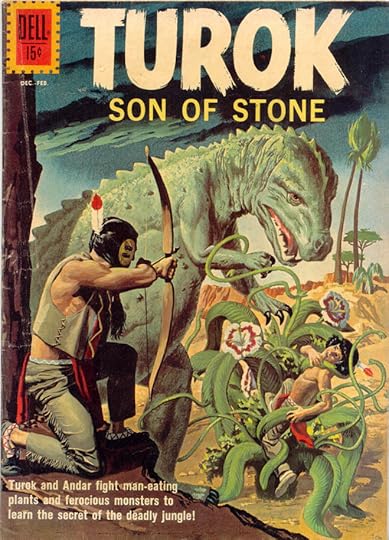
"The Deadly Jungle" (Turok, Son of Stone #26, December 1961-February 1962) has the two friends encounter predatory vines and pods they call "plant-traps". Turok claims, "I have never seen plants like these..." which of course we know is wrong. Only thirteen issues ago he had, but let's not quibble.
Turok learns there is a tribe of cavemen nearby who know of a seed that, when ground into a powder, will release the vines. They won't share the location of the seeds. Andar spies on them that night but is discovered. He ends up in the vine trap and Turok must go in search of the seeds. The cavemen know of two spots where the red flowers grow, but direct Turok to the more dangerous location. The flowers grow near a pterodactyl nest and Turok has to do some fancy shooting to escape. With the powder, he rescues Andar but also releases an allosaurus by accident. He tricks the dinosaur back into the vines.
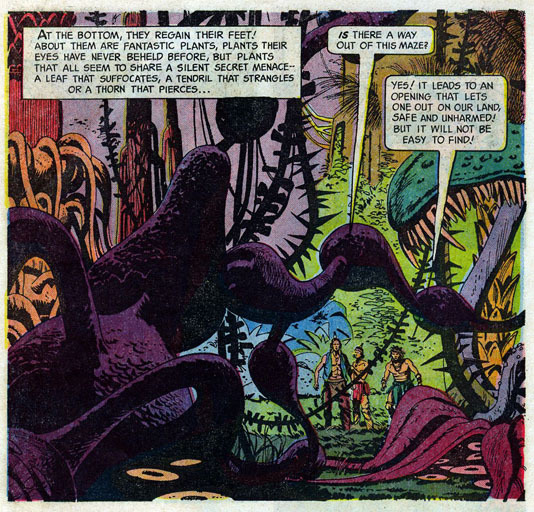 "The Land of the Plant People: The Deadly Maze" (Turok, Son of Stone #45, May 1965) really pulled out all the stops, featuring a half dozen different plant monsters. Turok and Andar discover a living wall of thorns in a canyon. Beyond the wall is a race of men who call themselves the Plant People. This is a good name for they have plants for many uses besides the thorn wall, which can be activated to open and close. They also have plants that act as alarms, seed pods which capture people, others that contain sleeping gas, thorn spikes that thrust upward and kill dinosaurs for food.
The best thing the Plant People have is a gauntlet known as the Maze. Anyone who can make it through is declared innocent of a crime. Turok and Andar are accused of killing a man they found dying. In the Maze there are the usual strangling vines, as well as giant Venus flytraps, acid sprayers, cacti that shoot spines, "Moon Plants" that cast a radiance and make it easier for the sentries to see you. Turok saves them both by setting one type of plant against another. He uses fire to drive off certain plants. The duo make it out of the Maze, but the Plant People won't let them go. Turok uses his new knowledge to set the plants against his captors.
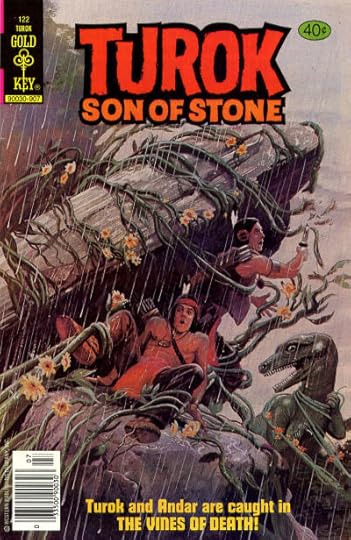 Turok took a decade long break before encountering another plant monster. After "The Deadly Maze" what was there left to do? Turok and Andar's return to the deadly jungle proves disappointing to say the least. "Where Honkers Fear to Go" (Turok, Son of Stone #98, August 1975) has Turok and Andar chased into a grove by a herd of stampeding triceratops. They encounter creeping vines, biting pods, even vines in the river, and spend the entire story fleeing from them. That's about it. No real plot, just plants and they get away. It's a greatest hits from "The Deadly Maze" without much plot. Not surprising, the second story in the issue got the cover.
The final plant tale is a sad good-bye. "The Vines of Death" (Turok, Son of Stone #122, July 1979) proves even less interesting. Aggressive cavemen stop following the duo, saying, "They'll die when the rains come." Killer vines shoot up after a rainstorm and try to grab the hunters. Turok uses fire to hold them off until the vines wither in the heat. (Turok learned this and many other tricks back in The Maze but seems to have forgotten after fourteen years.) Again nothing new, no real plot. Somebody phoned this one in, remembering the good old days of 1965.
GW Thomas has appeared in over 400 different books, magazines and ezines including The Writer, Writer's Digest, Black October Magazine and Contact. His website is gwthomas.org. He is editor of Dark Worlds magazine.
 Looking at all the comic books that have used plant monsters, one title stands far above the others for monstrous plants. Now to be clear, I have dismissed series like Batman that feature villains like Poison Ivy on an irregular basis. What I am looking for is a comic series that featured different stories with different monsters, not recurring villains or heroes such as Swamp Thing or Man-Thing. The comic that used so many plant monsters was Western Publishing's Turok, Son of Stone. While anthologies like House of Mystery and Adventures into the Unknown had their share, it was Turok and his sidekick, Andar that met the most villainous plants.
And different plants too, not a recurring appearance of the same jungle vine or stalking tree. In the course of one hundred thirty-three issues, Turok saw five different plant encounters from issue #11 to 122. Over those twenty-one years, Turok and Andar encountered one plant fiend for every five years. That's pretty impressive when you consider how long most comics last.
The first green terror appeared in "The Valley of the Vines" (Turok, Son of Stones #11, March-May 1958). The duo are escaping a T-Rex and become trapped in a valley where the vines will allow you to come in but not go back out. The thorns are all on one side, keeping animals in, I presume as a food source.
 Turok and Andar are enveloped by one of the pods of the plants after arriving in the valley. They are freed by cavemen who have been trapped in the valley for a long while. They befriend Ulf, but make a mortal enemy of his rival, Dal. The pods release their prey if struck at the base.
When the T-Rex that chased them into the valley becomes trapped as well, Turok sees his way out. Using fire arrows, Turok and Andar drive the gigantic dinosaur through the deadly thorns. The saurian dies at the end, making a bridge for Ulf and his tribesmen to climb out of the valley. They escape and Ulf's leadership is reaffirmed.
"The Deadly Jungle" (Turok, Son of Stone #26, December 1961-February 1962) has the two friends encounter predatory vines and pods they call "plant-traps". Turok claims, "I have never seen plants like these..." which of course we know is wrong. Only thirteen issues ago he had, but let's not quibble.
Turok learns there is a tribe of cavemen nearby who know of a seed that, when ground into a powder, will release the vines. They won't share the location of the seeds. Andar spies on them that night but is discovered. He ends up in the vine trap and Turok must go in search of the seeds. The cavemen know of two spots where the red flowers grow, but direct Turok to the more dangerous location. The flowers grow near a pterodactyl nest and Turok has to do some fancy shooting to escape. With the powder, he rescues Andar but also releases an allosaurus by accident. He tricks the dinosaur back into the vines.
 "The Land of the Plant People: The Deadly Maze" (Turok, Son of Stone #45, May 1965) really pulled out all the stops, featuring a half dozen different plant monsters. Turok and Andar discover a living wall of thorns in a canyon. Beyond the wall is a race of men who call themselves the Plant People. This is a good name for they have plants for many uses besides the thorn wall, which can be activated to open and close. They also have plants that act as alarms, seed pods which capture people, others that contain sleeping gas, thorn spikes that thrust upward and kill dinosaurs for food.
The best thing the Plant People have is a gauntlet known as the Maze. Anyone who can make it through is declared innocent of a crime. Turok and Andar are accused of killing a man they found dying. In the Maze there are the usual strangling vines, as well as giant Venus flytraps, acid sprayers, cacti that shoot spines, "Moon Plants" that cast a radiance and make it easier for the sentries to see you. Turok saves them both by setting one type of plant against another. He uses fire to drive off certain plants. The duo make it out of the Maze, but the Plant People won't let them go. Turok uses his new knowledge to set the plants against his captors.
 Turok took a decade long break before encountering another plant monster. After "The Deadly Maze" what was there left to do? Turok and Andar's return to the deadly jungle proves disappointing to say the least. "Where Honkers Fear to Go" (Turok, Son of Stone #98, August 1975) has Turok and Andar chased into a grove by a herd of stampeding triceratops. They encounter creeping vines, biting pods, even vines in the river, and spend the entire story fleeing from them. That's about it. No real plot, just plants and they get away. It's a greatest hits from "The Deadly Maze" without much plot. Not surprising, the second story in the issue got the cover.
The final plant tale is a sad good-bye. "The Vines of Death" (Turok, Son of Stone #122, July 1979) proves even less interesting. Aggressive cavemen stop following the duo, saying, "They'll die when the rains come." Killer vines shoot up after a rainstorm and try to grab the hunters. Turok uses fire to hold them off until the vines wither in the heat. (Turok learned this and many other tricks back in The Maze but seems to have forgotten after fourteen years.) Again nothing new, no real plot. Somebody phoned this one in, remembering the good old days of 1965.
GW Thomas has appeared in over 400 different books, magazines and ezines including The Writer, Writer's Digest, Black October Magazine and Contact. His website is gwthomas.org. He is editor of Dark Worlds magazine.
May 1, 2017
7 Days in May | Robert Langdon and Señorita Scorpion
The Da Vinci Code (2006)
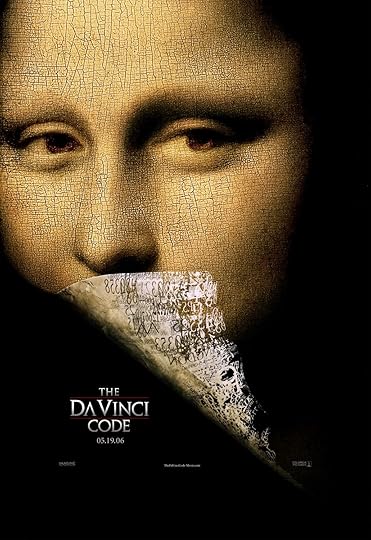
I never got around to seeing the new Dan Brown/Robert Langdon movie last fall, so I decided to do that and introduce David to the whole series at the same time. I'm not a huge fan of these, but I do like puzzles and scavenger hunt stories in general, so my base-level interest in these is always going to be enough to get me to look.
The reason I'm not a huge fan is that the Langdon series takes itself so extremely seriously. If I'm going to watch a grown person run around solving puzzles, I prefer the lighter-hearted approach of the National Treasure movies. The Langdon movies have fun plots, but they compete with the joylessness of their hero. I like Robert Langdon - he's a kind person who wants to help whenever he's asked, regardless of what it will cost him - but I don't enjoy him.
Da Vinci Code is my least favorite of the series. I like that the stakes are personal in it, but the plot is all over the place. It's driven by Langdon's being hunted and trying to prove his own innocence, so there's not a lot to contain it. He and his story are able to meander and it's difficult to keep track of how the various clues he's chasing connect to each other. If they even all do.
Angels & Demons (2009)
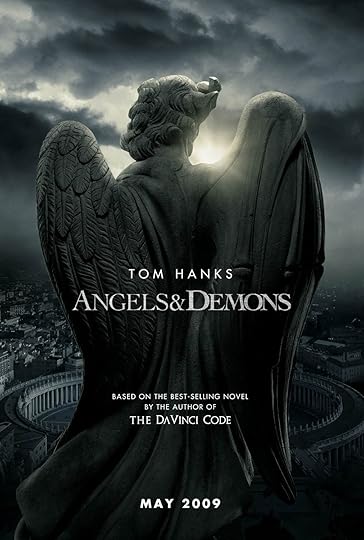
This is my favorite in the series. I still don't love it, but the narrative is straightforward with a single, clear objective and smaller objectives along the way that are clear about how they fit into the larger one. It also has a ticking clock element that I like. Most of all though, this one makes the most sense as to why there's a scavenger hunt in the first place. In Da Vinci Code and Inferno, there's not a great reason for anyone to have created the elaborate trail of clues. In Angels & Demons, I understand the thinking that went into them.
Inferno (2016)
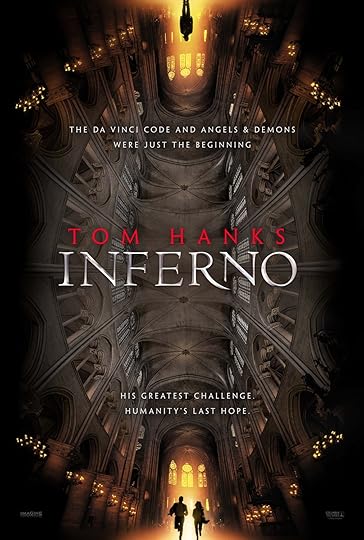
Like Angels & Demons, there's a straightforward objective and a ticking clock element to Inferno, but those don't do as good a job at keeping the story on track. There's no real reason for the scavenger hunt to exist in the first place and the movie over-complicates itself by questioning everyone's motives. It's trying to introduce paranoia to the adventure, but even while it's doing that it hangs big surprises on the assumption that viewers have unquestioningly trusted some things. I don't think you can have it both ways.
For all that, I still like the movie. That's hugely thanks to Irrfan Khan as the head of a mysterious organization whose objectives I won't spoil. He injects humor and charm into what normally would have been a generic villain. I also very much enjoyed Sidse Babett Knudsen (the Westworld TV series) as the chief representative of the World Health Organization on the case. Her character is a suspect, so I don't want to specify the spoilery things I liked about her, but she made me believe in her (even while I don't believe how her story wraps up).
Chimes at Midnight (1965)
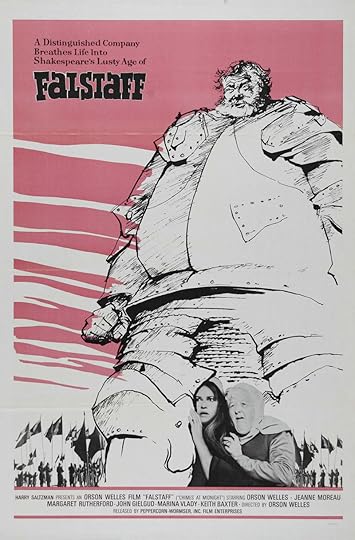
Having watched the Hollow Crown adaptation of Shakespeare's Henriad, I also wanted to check out Orson Welles' condensed version. I love Welles both as a filmmaker and an actor and this reminded me of why. Chimes at Midnight tells the story primarily from Falstaff's point of view with some other scenes included for context. Welles brings the right mix of humor and sadness to the part, making me feel sorry for him while simultaneously feeling like he's getting exactly what he's earned.
There's a thesis paper to be written about how Welles sets up shots in this thing, but the movie rewards even a superficial look with beautiful, fascinating compositions and gorgeous black-and-white cinematography. Chimes of Midnight is no substitute for the full plays, but it's a great companion piece to them.
Zorro (1957-61)
I started Season 2 of Disney's Zorro and it may be wearing on me a little. I'm still enjoying it, but I'm also aware that I'm pushing through it. If I took a break now, I don't know when I'd get back to it.
Some of what's dampening my enthusiasm is a major change in location. Instead of taking place in Los Angeles, the action's been moved to Monterey where a patriotic trader is trying to gather money for a massive supply shipment. Spain is at war, so the Spanish citizens of California see it as their duty to support their homeland by keeping up business. The trouble is that shipments of investment capital from all over California are being intercepted by bandits, so Don Diego has traveled to Monterey to oversee delivery of the money from LA. Four episodes in and he's still there.
He's accompanied by Bernardo and has also been joined by Sgt Garcia and Cpl Reyes, so the best characters from the first season are still there. But I'm hoping that this storyline wraps up quickly and everyone returns to LA. The locations were such an important part of Season One that I'm not ready to let them go.
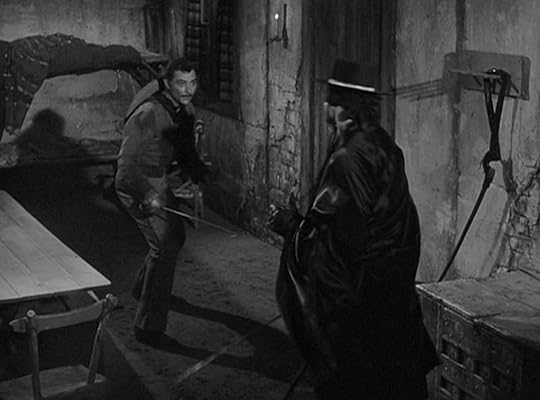
One really cool thing though is that Lee Van Cleef plays one of the bandits in the first episode. That's him fighting Zorro in the image above.
The Young Indiana Jones Chronicles (1992-93)
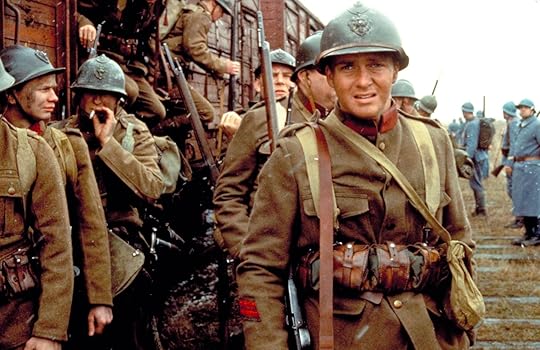
Indy has finally gone to war in the two episodes I watched this week. In the first, he's already been embroiled in trench warfare for a few months and there's dissension in the ranks. All of the officers in his unit have been killed and Indy suspects one of the men of murder. Indy's already showing some leadership skills though and has become the unofficial leader of the group until they're reassigned to serve temporarily under French command. Most of the episode is about the horrors of trench warfare as the French try to capture a chateau under German control.
The episode ends with Indy's being taken captive with another soldier (Jason Flemyng), which leads into the next about POW camps. The tone moves from All Quiet on the Western Front to The Great Escape and I enjoyed both genres.
Underground (2016-present)
The episode "Minty" from a couple of weeks ago was the one where Underground went from being Really Cool Adventure Show About a Serious Topic to Holy Crap This Is Important and Potentially Life Changing.
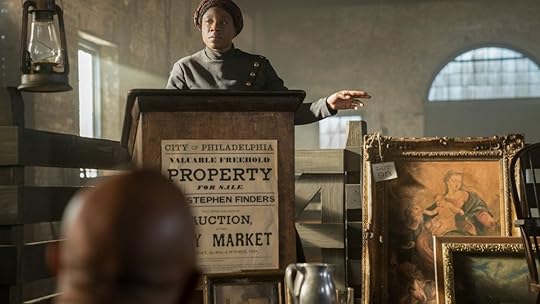
As I've mentioned before, one of the enormous strengths of the show is its ability to shift genres as it changes focus from character to character. The entire run time of "Minty" is nothing but Harriet Tubman (Aisha Hinds) talking to a roomful of fellow Abolitionists about her story for an hour. Hinds has been compelling in the role all season, but she carries this entire episode with very few speaking parts from any other characters. It's a great speech and Hinds delivers it masterfully. There's humor, horror, and hope all wrapped into it, but most importantly there are Ideas.
One of the subplots of the show has been about the proper response of Abolitionists to slavery. Some are content to quietly rebel by assisting on the Underground Railroad. Others see the conflict as all out war and want to act accordingly. So far, Jessica De Gouw's Elizabeth has been the character to most struggle with this, but in "Minty" we learn that Tubman has been wrestling, too, and has come to a decision.
I'm a huge pacifist, but that speech stirred me up and made me rethink my posture towards war. Knowing that the metaphorical war that the Abolitionists are talking about will ultimately lead to very literal war, I think about where my country would be right now if people had just kept quietly rebelling and the Civil War never happened. I'm not ready to pick up arms and I don't believe that Underground is suggesting that we do (though it is very pointed in drawing comparisons between the time of the show and today). What it's extremely successful at though is making me want to take some kind of action. And those who know me best know how difficult a thing that is to accomplish.
"The Brand of Señorita Scorpion" by Lee Savage, Jr.
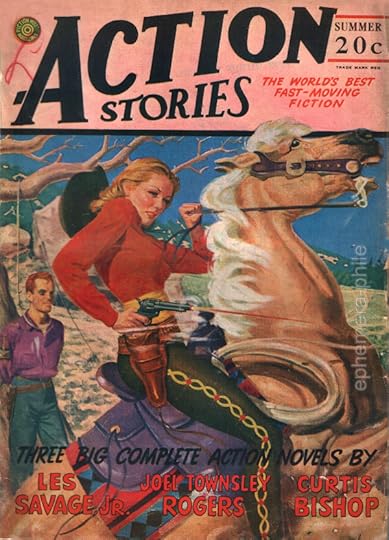
Read another Señorita Scorpion story from a collection I picked up last year. I was looking forward to more adventures of the female Western hero, especially since the first story was mostly told from the perspective of a male character who falls in love with the mysterious heroine. Sadly, that's also the case here. The Señorita doesn't even get mentioned by her cool name; she's just a damsel in distress for the love-struck cowboy to rescue. It's an exciting enough tale, but not what I wanted.
There are two more in the collection, so I'll keep going, but I'm predicting that I don't pick up the second volume.
Jam of the Week: "Foot of the Mountain" by a-ha
It always irritates me when people refer to a-ha as a one-hit wonder. Forgetting for a second the moderate success that their second album had in the US, the dudes had a freaking James Bond theme song. They're not just "Take On Me."
Still, I understand why a lot of folks are surprised that the band had a long and successful (if sporadic) career after the '80s. This is one of my favorites of their recent stuff, which is as good if not better than their earlier hits. It's eight years old (geez, how time does fly), but there was another album in 2015 with yet another (of live, acoustic versions of their songs) rumored for later this year.


I never got around to seeing the new Dan Brown/Robert Langdon movie last fall, so I decided to do that and introduce David to the whole series at the same time. I'm not a huge fan of these, but I do like puzzles and scavenger hunt stories in general, so my base-level interest in these is always going to be enough to get me to look.
The reason I'm not a huge fan is that the Langdon series takes itself so extremely seriously. If I'm going to watch a grown person run around solving puzzles, I prefer the lighter-hearted approach of the National Treasure movies. The Langdon movies have fun plots, but they compete with the joylessness of their hero. I like Robert Langdon - he's a kind person who wants to help whenever he's asked, regardless of what it will cost him - but I don't enjoy him.
Da Vinci Code is my least favorite of the series. I like that the stakes are personal in it, but the plot is all over the place. It's driven by Langdon's being hunted and trying to prove his own innocence, so there's not a lot to contain it. He and his story are able to meander and it's difficult to keep track of how the various clues he's chasing connect to each other. If they even all do.
Angels & Demons (2009)

This is my favorite in the series. I still don't love it, but the narrative is straightforward with a single, clear objective and smaller objectives along the way that are clear about how they fit into the larger one. It also has a ticking clock element that I like. Most of all though, this one makes the most sense as to why there's a scavenger hunt in the first place. In Da Vinci Code and Inferno, there's not a great reason for anyone to have created the elaborate trail of clues. In Angels & Demons, I understand the thinking that went into them.
Inferno (2016)

Like Angels & Demons, there's a straightforward objective and a ticking clock element to Inferno, but those don't do as good a job at keeping the story on track. There's no real reason for the scavenger hunt to exist in the first place and the movie over-complicates itself by questioning everyone's motives. It's trying to introduce paranoia to the adventure, but even while it's doing that it hangs big surprises on the assumption that viewers have unquestioningly trusted some things. I don't think you can have it both ways.
For all that, I still like the movie. That's hugely thanks to Irrfan Khan as the head of a mysterious organization whose objectives I won't spoil. He injects humor and charm into what normally would have been a generic villain. I also very much enjoyed Sidse Babett Knudsen (the Westworld TV series) as the chief representative of the World Health Organization on the case. Her character is a suspect, so I don't want to specify the spoilery things I liked about her, but she made me believe in her (even while I don't believe how her story wraps up).
Chimes at Midnight (1965)

Having watched the Hollow Crown adaptation of Shakespeare's Henriad, I also wanted to check out Orson Welles' condensed version. I love Welles both as a filmmaker and an actor and this reminded me of why. Chimes at Midnight tells the story primarily from Falstaff's point of view with some other scenes included for context. Welles brings the right mix of humor and sadness to the part, making me feel sorry for him while simultaneously feeling like he's getting exactly what he's earned.
There's a thesis paper to be written about how Welles sets up shots in this thing, but the movie rewards even a superficial look with beautiful, fascinating compositions and gorgeous black-and-white cinematography. Chimes of Midnight is no substitute for the full plays, but it's a great companion piece to them.
Zorro (1957-61)

I started Season 2 of Disney's Zorro and it may be wearing on me a little. I'm still enjoying it, but I'm also aware that I'm pushing through it. If I took a break now, I don't know when I'd get back to it.
Some of what's dampening my enthusiasm is a major change in location. Instead of taking place in Los Angeles, the action's been moved to Monterey where a patriotic trader is trying to gather money for a massive supply shipment. Spain is at war, so the Spanish citizens of California see it as their duty to support their homeland by keeping up business. The trouble is that shipments of investment capital from all over California are being intercepted by bandits, so Don Diego has traveled to Monterey to oversee delivery of the money from LA. Four episodes in and he's still there.
He's accompanied by Bernardo and has also been joined by Sgt Garcia and Cpl Reyes, so the best characters from the first season are still there. But I'm hoping that this storyline wraps up quickly and everyone returns to LA. The locations were such an important part of Season One that I'm not ready to let them go.
One really cool thing though is that Lee Van Cleef plays one of the bandits in the first episode. That's him fighting Zorro in the image above.
The Young Indiana Jones Chronicles (1992-93)

Indy has finally gone to war in the two episodes I watched this week. In the first, he's already been embroiled in trench warfare for a few months and there's dissension in the ranks. All of the officers in his unit have been killed and Indy suspects one of the men of murder. Indy's already showing some leadership skills though and has become the unofficial leader of the group until they're reassigned to serve temporarily under French command. Most of the episode is about the horrors of trench warfare as the French try to capture a chateau under German control.
The episode ends with Indy's being taken captive with another soldier (Jason Flemyng), which leads into the next about POW camps. The tone moves from All Quiet on the Western Front to The Great Escape and I enjoyed both genres.
Underground (2016-present)

The episode "Minty" from a couple of weeks ago was the one where Underground went from being Really Cool Adventure Show About a Serious Topic to Holy Crap This Is Important and Potentially Life Changing.
As I've mentioned before, one of the enormous strengths of the show is its ability to shift genres as it changes focus from character to character. The entire run time of "Minty" is nothing but Harriet Tubman (Aisha Hinds) talking to a roomful of fellow Abolitionists about her story for an hour. Hinds has been compelling in the role all season, but she carries this entire episode with very few speaking parts from any other characters. It's a great speech and Hinds delivers it masterfully. There's humor, horror, and hope all wrapped into it, but most importantly there are Ideas.
One of the subplots of the show has been about the proper response of Abolitionists to slavery. Some are content to quietly rebel by assisting on the Underground Railroad. Others see the conflict as all out war and want to act accordingly. So far, Jessica De Gouw's Elizabeth has been the character to most struggle with this, but in "Minty" we learn that Tubman has been wrestling, too, and has come to a decision.
I'm a huge pacifist, but that speech stirred me up and made me rethink my posture towards war. Knowing that the metaphorical war that the Abolitionists are talking about will ultimately lead to very literal war, I think about where my country would be right now if people had just kept quietly rebelling and the Civil War never happened. I'm not ready to pick up arms and I don't believe that Underground is suggesting that we do (though it is very pointed in drawing comparisons between the time of the show and today). What it's extremely successful at though is making me want to take some kind of action. And those who know me best know how difficult a thing that is to accomplish.
"The Brand of Señorita Scorpion" by Lee Savage, Jr.

Read another Señorita Scorpion story from a collection I picked up last year. I was looking forward to more adventures of the female Western hero, especially since the first story was mostly told from the perspective of a male character who falls in love with the mysterious heroine. Sadly, that's also the case here. The Señorita doesn't even get mentioned by her cool name; she's just a damsel in distress for the love-struck cowboy to rescue. It's an exciting enough tale, but not what I wanted.
There are two more in the collection, so I'll keep going, but I'm predicting that I don't pick up the second volume.
Jam of the Week: "Foot of the Mountain" by a-ha
It always irritates me when people refer to a-ha as a one-hit wonder. Forgetting for a second the moderate success that their second album had in the US, the dudes had a freaking James Bond theme song. They're not just "Take On Me."
Still, I understand why a lot of folks are surprised that the band had a long and successful (if sporadic) career after the '80s. This is one of my favorites of their recent stuff, which is as good if not better than their earlier hits. It's eight years old (geez, how time does fly), but there was another album in 2015 with yet another (of live, acoustic versions of their songs) rumored for later this year.
April 28, 2017
Mystery Movie Night | The Music Man (1962), Men in Black (1997), and Mulan (1998)

Erik, David, Dave, and I discuss Robert Preston's cons, Barry Sonnenfeld's creatures, and where Mulan fits into the Disney canon. And of course, the top secret connection that ties them all together.
00:00:49 - Review of The Music Man
00:30:45 - Review of Men in Black
00:54:28 - Review of Mulan
01:11:00 - Guessing the Connection

April 26, 2017
It’s Time for the Jedi to End

Shortly before The Force Awakens came out, I wrote an article trying to get my head around the Star Wars saga up to that point. It's a long read, but the brief version is that I rethought a lot of things, including my feelings about the Jedi and my interpretation of the prophecy about the Balance of the Force. For the Balance, I realized that as portrayed in the prequels, the Light and Dark sides of the Force are not actually about Good and Evil, but about Reason and Passion. Which means that the Jedi of the prequels were not the defenders of Good, but advocates for Reason. And as it turns out, rather complacent, arrogant, and narrow-minded ones.
Seen this way, balancing the Force starts to make sense as a worthwhile goal. Why would anyone want to balance Good and Evil? That's ridiculous. We want that scale tipped all the way over to the Good side. But balancing Reason and Passion isn't just beneficial, it's crucial. And as I argued in the previous article, that's what Luke does.
The teaser trailer for The Last Jedi supports this idea and makes me extremely excited for the new movie. It not only prominently mentions the Balance as a theme; it also suggests how Balance might be achieved.
If the Jedi aren't champions of Good, but of Reason, then theirs is just one way of relating to the Force. It's been the dominant way for however long (I'm not clear on the timeline since it was rebooted), but Rogue One in particular goes to great lengths to show that the Jedi Way is not the only "good" way. I am one with the Force. The Force is with me.
The Force Awakens does this too, but more subtly. For better or worse, it comes out especially clearly in interviews with JJ Abrams when he talks about going back to a vision of the Force as suggested in the original Star Wars.
"I’m not someone who quite understands the science of the Force. To me Star Wars was never about science fiction — it was a spiritual story. And it was more of a fairytale in that regard. For me when I heard Obi-Wan say that the Force surrounds us and binds us all together, there was no judgement about who you were. This was something that we could all access. Being strong with the force didn’t mean something scientific, it meant something spiritual. It meant someone who could believe, someone who could reach down to the depths of your feelings and follow this primal energy that was flowing through all of us. I mean, thats what was said in that first film!"We see Rey tap into that with no Jedi training whatsoever (that she can remember, anyway) and Leia's another good example with her raw supernatural connection to Luke in Empire and Return of the Jedi. There are also suggestions that Finn may be Force-sensitive if you want to read some things a certain way. And Kylo has also taken an unconventional approach to mastering the Force. He rejected Luke's Jedi teaching, but it's also clear that whatever Snoke's teaching him isn't precisely Sith, either.

With all that in mind, the very title The Force Awakens takes on an added layer of meaning. Until recently, I assumed that the Force had been sleeping only since Luke shut down his failed Jedi school. But what if the Force has been sleeping for much, much longer than that? Like, since the Jedi codified it and turned it into something specific and scientific. It's not that the Jedi weren't using the Force, but they'd limited it. And now, with Rey's awakening to it, we're seeing the Force awakened as well so that it can be used in new and different ways.
In the Last Jedi trailer, Luke tells Rey to reach out and tell him what she sees. "Light," she says. "Darkness." And finally, "The Balance." And Luke says, "It's so much bigger." Because the Force encompasses so much more than just the traditional Light and Dark sides. The Balance negates the extremes and throws off the limiting definitions that the Jedi imposed on it, so that Force is not just awakened, but now also allowed to grow and flourish.
Luke recognizes this, which is why he also says, "I only know one truth. It's time for the Jedi to end." He's not training Rey to be a Jedi, he's training her to use the Force in this new way, balancing Reason and Passion. Thanks to the way that the Last Jedi was titled in some non-English translations, there was some speculation that the Jedi in the title is plural, but Rian Johnson has clarified that - for him at least - it's singular. "They say in Force Awakens that [Luke] has gone to find the last Jedi temple and Luke's the last Jedi."
And I couldn't be happier about that.


April 24, 2017
7 Days in May | Fate of the Furious and Jack Reacher: Never Go Back
The Tall T (1957)
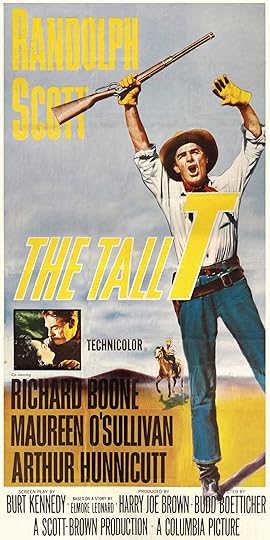
A while back, Pax and I talked about Ride Lonesome on Hellbent for Letterbox. I like that movie a lot and some of our listeners recommended a few other Budd Boetticher/Randolph Scott films, so I picked up a DVD set of six Scott Westerns, four of which were directed by Boetticher. The Tall T is the second of them I've seen now (counting Ride Lonesome) and it promises good things for the rest of the collection.
I have no idea what the title means, but it's based on an Elmore Leonard story, so there's a heavy crime thriller element to it. Scott plays a guy who winds up hostage with some other people to a gang of ruthless bad guys. Mostly the movie is about that captivity and who will survive it, with Maureen O'Sullivan (Jane in the classic MGM Tarzan movies) as a notable (but married) ally for Scott. There's a lot of tension and a lot of trying to figure out how to get out of it. I had a great time.
The Mark of Zorro (1920)
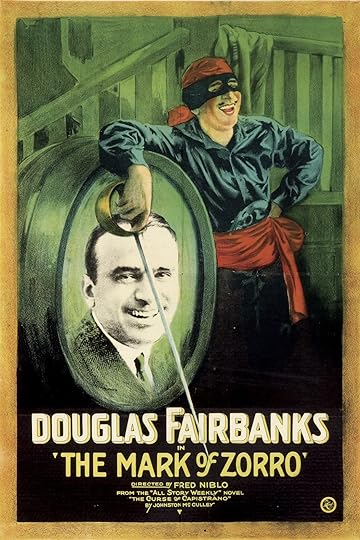
Since I finished Season 1 of Disney's Zorro show last week, I took a break to watch the first Zorro movie. I've seen it a few times by now and it's a very faithful adaptation, but I wanted to watch it again right after reading The Curse of Capistrano to remind myself how it handled parts of McCulley's novel. For instance, Zorro's mute assistant Bernardo is a huge part of the Disney show (played by the lovely and charming Gene Sheldon), but the character is in the novel so little that I actually wondered what the point was of having him there at all. The Mark of Zorro includes the character and gives him a lot more to do, including allowing him to hear (the novel's Bernardo is deaf as well as mute). Disney's version is borrowing from Fairbanks' movie, not the book. And that's a good thing.
Another thing I was interested in was how Mark of Zorro handles the secret identity. I was surprised that the novel saves the reveal until the very end, so the reader finds out at the same time as everyone else. I couldn't remember if the movie does the same thing. It was possible that the movie kept that a secret, but that I filled in the knowledge because of my familiarity with the character. But no, that's not it. Mark of Zorro lets viewers in on the deception right away.
That's cool because it means we get to peek at parts of Zorro's life that the book keeps hidden. Like how Zorro comes in and out of his house. Underneath his mansion, he's got a cave with a couple of hidden entrances. There's a shrub covered, horse-sized outer passage, and in the house there's a secret door disguised as a grandfather clock. Everyone knows that Batman was inspired by Zorro, but sometimes we forget how much. It's all based on Fairbanks' version though, not the novel.
Batman could take some more lessons from Fairbanks' Zorro on playing the idle playboy, though. Fairbanks' performance as Don Diego is brilliant. He always looks exhausted and bored, only perking up when he's irritating someone with an unwanted handkerchief trick. In the Disney version, you kind of have to overlook that no one's figured out that Guy Williams' Diego and Zorro are the same guy. It's about as believable a disguise as George Reeves' Clark Kent. But with Douglas Fairbanks, I totally see why people are fooled. And that impressive bit of acting is nothing compared to the unbelievable acrobatic work that Fairbanks pulls off in Zorro mode: leaping around and climbing over sets like he's inventing parkour.
The Young Indiana Jones Chronicles (1992-93)
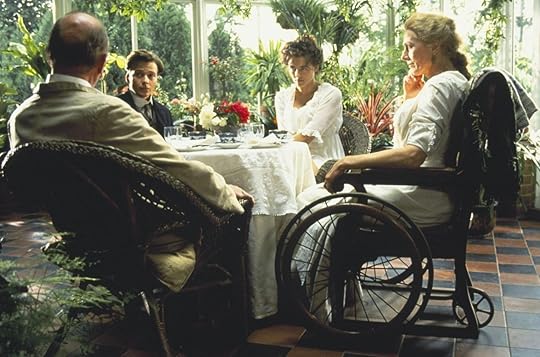
Watched two episodes that were basically Young Indy in Love. As he and his friend Remy are trying to get to London to join the Belgian army, they stop off in Ireland to work and raise money for the final leg of their trip. Indy meets a girl who seems to like him, but she's under the impression that he's rich and she always brings along her girlfriend on dates. I feel like it's supposed to be some kind of life lesson for Indy, but after the relative maturity of the relationship back in Princeton that he totally blew off, I wasn't able to believe in Indy's investment in this one at all.
More effective was the story around the girl's brother, a passionate young man who's interested in freeing Ireland from English control. The brother becomes involved in the Easter Rebellion and I wondered briefly is Indy would be tempted to join up, too. After the easy way in which he was persuaded to join the Mexican Revolution and then enter WWI, he seems like a sucker for this kind of thing. But he doesn't join the Irish fight and the show is smart about why. In contrast to the brother, Indy also meets the playwright Seán O'Casey (Juno and the Paycock) who has his own ideas about what Irish independence means. One of the lessons that Indy learned in Mexico is that war is often messy and that everyone has different ideas on what it's about. It makes sense that he'd pass up Ireland's battles in order to fight a more objective evil (so he believes) on the European continent. It'll be interesting to see how long he holds on to that belief.
In the second episode, Indy and Remy reach London and join the Belgian army. They have some time before they leave though, so they split up: Remy to hook up with a war widow and Indy to go visit his childhood governess in Oxford. Before Indy takes off for Oxford though, he meets a young woman played by Elizabeth Hurley and gets involved in the cause of women's suffrage. This romance is way more believable and touching than the Irish one and I'm as heartbroken as Indy when it doesn't work out (for equally believable and touching reasons). I buy that this was the love of Indy's life and it makes some sense out of his lack of commitment to anyone in the later films. In fact, I kind of don't like that he marries Marion anymore. But I expect I'll get over that when I rewatch the movies.
Underground (2016-present)
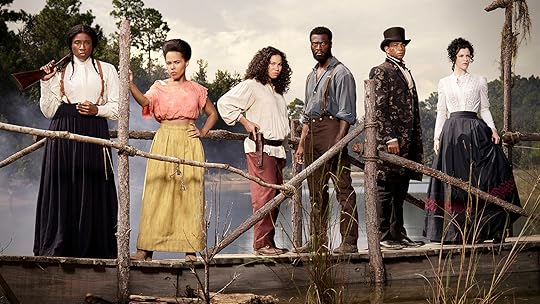
One of the things I love about this show is how it has enough characters that it can split its focus from episode to episode and depending on the characters its dealing with, can even change genres. So in the Season 2 episodes I watched this week, one was a Revenant-style survival tale while the other was a cat-and-mouse drama between two old rivals. And every episode just seems to open up more potential for future storylines. There's no end to the breadth of stories possible in this setting. And that most of them feature utterly badass women makes me extremely happy.
The Fate of the Furious (2017)
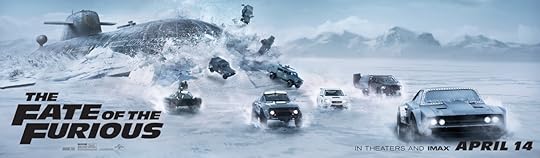
SPOILERS. SERIOUSLY.
As much as I'm a fiend for this series, F8 (as it should have been called) didn't even crack my 20 Most Anticipated Movies of the year. That was due to the hackneyed suggestion in the trailer that Dom's going rogue and betraying his team. Since there was 0% chance that his defection was real, I rebelled at the whole concept. And I wasn't crazy about the promise of Jason Statham's Han-killing character joining the family, either. I went into F8 with arms crossed and needing to be won over.
And it was rough-going for a lot of the movie. Charlize Theron is wasted as a super-serious and self-important hacker who growls the worst dialogue I've heard in a few years. "Did you ever think you'd betray your family the way you did today?" And even though I'm all for previous movies' tossing cars between skyscrapers and parachuting them out of airplanes, I found the complications around the New York car chase ridiculous and unbelievable, but still not as fun as skyscraper jumping and automotive skydiving. And Statham's transition to the good guys' side was as clunky as I feared it would be.
But about the time that Helen Mirren showed up, I decided to just jump on board. She's awesome, her relationship to the other characters is awesome, the final chase across the ice lake is awesome (confusingly shot at times, but still awesome), and Jason Statham is the most awesome of all. Enough so that I forgive the movie for making him a good guy, even if I don't completely forgive him for murdering one of my favorite characters. There's a devastating missed opportunity when he doesn't dive out of the airplane with a baby in pursuit of Theron, but oh well. This isn't one of the best Fast/Furious movies, but it's good enough and I ended up having a really good time.
Jack Reacher: Never Go Back (2016)
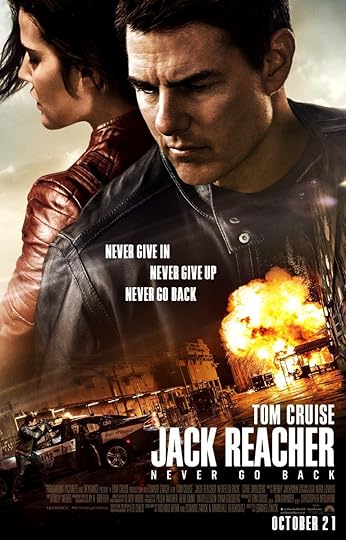
I enjoyed Jack Reacher and had been looking forward to the sequel, but negative reviews of Never Go Back lessened my enthusiasm and I decided to wait for home video. I'm okay with not having seen it in the theater, but I do like it a lot more than the critical consensus did.
There are some tropy elements like introducing a potential love interest and a possible daughter. And it seems a little weird and unexplained that Reacher is willing to "go back" in the first place. Also, this is far from the first military contractor we've seen go rogue.
But as clumsily as the relationships are introduced, I bought into them once they got going. Cobie Smulders is good as a high-ranking officer who still struggles with sexism and doesn't feel like dealing with it from Reacher, however unintentional his might be. I don't see a lot of stories that deal with systemic and ingrained, but involuntary sexism. Seeing it here made me think about my own actions and attitudes in a way that stories about blatant chauvinists can't.
Danika Yarosh is great as the teenager who may or may not be Reacher's kid. She reminds me a lot of young Anna Paquin and I love how smart and resourceful and tough, yet deeply vulnerable her character is.
And finally, I just got a kick out of Underground's Aldis Hodge as the MP officer tracking down Reacher and Company. Never Go Back isn't as good as the first Jack Reacher movie, but I found a lot worthwhile about it.
Jam of the Week: "High Ticket Attractions" by The New Pornographers
Shut up and dance.


A while back, Pax and I talked about Ride Lonesome on Hellbent for Letterbox. I like that movie a lot and some of our listeners recommended a few other Budd Boetticher/Randolph Scott films, so I picked up a DVD set of six Scott Westerns, four of which were directed by Boetticher. The Tall T is the second of them I've seen now (counting Ride Lonesome) and it promises good things for the rest of the collection.
I have no idea what the title means, but it's based on an Elmore Leonard story, so there's a heavy crime thriller element to it. Scott plays a guy who winds up hostage with some other people to a gang of ruthless bad guys. Mostly the movie is about that captivity and who will survive it, with Maureen O'Sullivan (Jane in the classic MGM Tarzan movies) as a notable (but married) ally for Scott. There's a lot of tension and a lot of trying to figure out how to get out of it. I had a great time.
The Mark of Zorro (1920)

Since I finished Season 1 of Disney's Zorro show last week, I took a break to watch the first Zorro movie. I've seen it a few times by now and it's a very faithful adaptation, but I wanted to watch it again right after reading The Curse of Capistrano to remind myself how it handled parts of McCulley's novel. For instance, Zorro's mute assistant Bernardo is a huge part of the Disney show (played by the lovely and charming Gene Sheldon), but the character is in the novel so little that I actually wondered what the point was of having him there at all. The Mark of Zorro includes the character and gives him a lot more to do, including allowing him to hear (the novel's Bernardo is deaf as well as mute). Disney's version is borrowing from Fairbanks' movie, not the book. And that's a good thing.
Another thing I was interested in was how Mark of Zorro handles the secret identity. I was surprised that the novel saves the reveal until the very end, so the reader finds out at the same time as everyone else. I couldn't remember if the movie does the same thing. It was possible that the movie kept that a secret, but that I filled in the knowledge because of my familiarity with the character. But no, that's not it. Mark of Zorro lets viewers in on the deception right away.
That's cool because it means we get to peek at parts of Zorro's life that the book keeps hidden. Like how Zorro comes in and out of his house. Underneath his mansion, he's got a cave with a couple of hidden entrances. There's a shrub covered, horse-sized outer passage, and in the house there's a secret door disguised as a grandfather clock. Everyone knows that Batman was inspired by Zorro, but sometimes we forget how much. It's all based on Fairbanks' version though, not the novel.
Batman could take some more lessons from Fairbanks' Zorro on playing the idle playboy, though. Fairbanks' performance as Don Diego is brilliant. He always looks exhausted and bored, only perking up when he's irritating someone with an unwanted handkerchief trick. In the Disney version, you kind of have to overlook that no one's figured out that Guy Williams' Diego and Zorro are the same guy. It's about as believable a disguise as George Reeves' Clark Kent. But with Douglas Fairbanks, I totally see why people are fooled. And that impressive bit of acting is nothing compared to the unbelievable acrobatic work that Fairbanks pulls off in Zorro mode: leaping around and climbing over sets like he's inventing parkour.
The Young Indiana Jones Chronicles (1992-93)

Watched two episodes that were basically Young Indy in Love. As he and his friend Remy are trying to get to London to join the Belgian army, they stop off in Ireland to work and raise money for the final leg of their trip. Indy meets a girl who seems to like him, but she's under the impression that he's rich and she always brings along her girlfriend on dates. I feel like it's supposed to be some kind of life lesson for Indy, but after the relative maturity of the relationship back in Princeton that he totally blew off, I wasn't able to believe in Indy's investment in this one at all.
More effective was the story around the girl's brother, a passionate young man who's interested in freeing Ireland from English control. The brother becomes involved in the Easter Rebellion and I wondered briefly is Indy would be tempted to join up, too. After the easy way in which he was persuaded to join the Mexican Revolution and then enter WWI, he seems like a sucker for this kind of thing. But he doesn't join the Irish fight and the show is smart about why. In contrast to the brother, Indy also meets the playwright Seán O'Casey (Juno and the Paycock) who has his own ideas about what Irish independence means. One of the lessons that Indy learned in Mexico is that war is often messy and that everyone has different ideas on what it's about. It makes sense that he'd pass up Ireland's battles in order to fight a more objective evil (so he believes) on the European continent. It'll be interesting to see how long he holds on to that belief.
In the second episode, Indy and Remy reach London and join the Belgian army. They have some time before they leave though, so they split up: Remy to hook up with a war widow and Indy to go visit his childhood governess in Oxford. Before Indy takes off for Oxford though, he meets a young woman played by Elizabeth Hurley and gets involved in the cause of women's suffrage. This romance is way more believable and touching than the Irish one and I'm as heartbroken as Indy when it doesn't work out (for equally believable and touching reasons). I buy that this was the love of Indy's life and it makes some sense out of his lack of commitment to anyone in the later films. In fact, I kind of don't like that he marries Marion anymore. But I expect I'll get over that when I rewatch the movies.
Underground (2016-present)

One of the things I love about this show is how it has enough characters that it can split its focus from episode to episode and depending on the characters its dealing with, can even change genres. So in the Season 2 episodes I watched this week, one was a Revenant-style survival tale while the other was a cat-and-mouse drama between two old rivals. And every episode just seems to open up more potential for future storylines. There's no end to the breadth of stories possible in this setting. And that most of them feature utterly badass women makes me extremely happy.
The Fate of the Furious (2017)

SPOILERS. SERIOUSLY.
As much as I'm a fiend for this series, F8 (as it should have been called) didn't even crack my 20 Most Anticipated Movies of the year. That was due to the hackneyed suggestion in the trailer that Dom's going rogue and betraying his team. Since there was 0% chance that his defection was real, I rebelled at the whole concept. And I wasn't crazy about the promise of Jason Statham's Han-killing character joining the family, either. I went into F8 with arms crossed and needing to be won over.
And it was rough-going for a lot of the movie. Charlize Theron is wasted as a super-serious and self-important hacker who growls the worst dialogue I've heard in a few years. "Did you ever think you'd betray your family the way you did today?" And even though I'm all for previous movies' tossing cars between skyscrapers and parachuting them out of airplanes, I found the complications around the New York car chase ridiculous and unbelievable, but still not as fun as skyscraper jumping and automotive skydiving. And Statham's transition to the good guys' side was as clunky as I feared it would be.
But about the time that Helen Mirren showed up, I decided to just jump on board. She's awesome, her relationship to the other characters is awesome, the final chase across the ice lake is awesome (confusingly shot at times, but still awesome), and Jason Statham is the most awesome of all. Enough so that I forgive the movie for making him a good guy, even if I don't completely forgive him for murdering one of my favorite characters. There's a devastating missed opportunity when he doesn't dive out of the airplane with a baby in pursuit of Theron, but oh well. This isn't one of the best Fast/Furious movies, but it's good enough and I ended up having a really good time.
Jack Reacher: Never Go Back (2016)

I enjoyed Jack Reacher and had been looking forward to the sequel, but negative reviews of Never Go Back lessened my enthusiasm and I decided to wait for home video. I'm okay with not having seen it in the theater, but I do like it a lot more than the critical consensus did.
There are some tropy elements like introducing a potential love interest and a possible daughter. And it seems a little weird and unexplained that Reacher is willing to "go back" in the first place. Also, this is far from the first military contractor we've seen go rogue.
But as clumsily as the relationships are introduced, I bought into them once they got going. Cobie Smulders is good as a high-ranking officer who still struggles with sexism and doesn't feel like dealing with it from Reacher, however unintentional his might be. I don't see a lot of stories that deal with systemic and ingrained, but involuntary sexism. Seeing it here made me think about my own actions and attitudes in a way that stories about blatant chauvinists can't.
Danika Yarosh is great as the teenager who may or may not be Reacher's kid. She reminds me a lot of young Anna Paquin and I love how smart and resourceful and tough, yet deeply vulnerable her character is.
And finally, I just got a kick out of Underground's Aldis Hodge as the MP officer tracking down Reacher and Company. Never Go Back isn't as good as the first Jack Reacher movie, but I found a lot worthwhile about it.
Jam of the Week: "High Ticket Attractions" by The New Pornographers
Shut up and dance.
April 21, 2017
Hellbent for Letterbox | 100 Rifles (1969)

In the most recent Hellbent, Pax and I deal with the shock of realizing that Tom Gries' 100 Rifles is not the light-hearted heist movie that we expected from the cast of Jim Brown, Raquel Welch, and Burt Reynolds. But before we get to that, there's some discussion of the TV show Rawhide, the comic book Brimstone, and the 1965 film Cat Ballou. Closing music for this episode by Daniel Pemberton from his score to The Man from UNCLE (2015).