Michael May's Blog, page 164
February 10, 2014
Casino Royale by Ian Fleming
 When people talk about how they came to know James Bond, the story I most often hear is that they were introduced to the movies by an older relative. When I was a kid in the pre-cable, pre-home video ‘70s, that meant catching the old movies as they aired on network TV. I remember those commercials well and my being intrigued about the suave hero who’d been around long enough to be played by multiple actors and whose adventures had awesome titles like Thunderball and Live and Let Die. The Bond films were family viewing for a lot of folks and it didn’t matter that they were only available sporadically and in whatever order the network chose to show them. There was no way to marathon the entire series in those days, but no one cared. They fell in love with Bond anyway.
I didn’t get to know Bond that way though. My folks were pretty strict about what we watched and the sexual nature of Bond’s exploits kept him off our TV. It wasn’t until I was 16 and able to drive myself to the movie theater that I saw my first Bond film. But long before then, I was able to enjoy his adventures in a different format.
For whatever reason, my folks never policed my books. If I could find it in the library, they were okay with my reading it. So while I was unable to satisfy my curiosity about the Bond films, the world of Ian Fleming’s novels were completely open to me and that’s how I met the superspy. And since I was a compulsive nerd about continuity even then, I had to start with the first book, Casino Royale. It blew me away.
 Even today, having lost count how many times I’ve read it, I’m still amazed and impressed by the structure of the novel. It starts with Bond already on mission, then flashes back to the mission briefing, then flashes back again to what set that up. It doesn’t have a conventional ending either. The climax of the mission happens maybe two-thirds into the story and then has several chapters dealing with the aftermath. That ending shouldn’t work, but it absolutely does.
 A couple of other things about Fleming’s style are also immediately noticeable. First, the man knows how to write chapters. This is an old trick by modern standards, but he was one of the first writers I encountered who wrote short, fast-paced chapters that always ended on some kind of cliffhanger – physical or emotional – to pull me into the next one. Casino Royale is a difficult book to put down.
The other thing people always talk about with Fleming’s writing is his attention to detail. The reason that the movie Bond seems to know everything about every subject from booze to butterflies is because Fleming writes with such confidence about those kinds of things, especially food and drink.
As Bond’s hanging out in the hotel before his mission’s really got started, Fleming doesn’t just have him eat breakfast, but explains that he consumes “half a pint of iced orange juice, three scrambled eggs and bacon, and a double portion of coffee without sugar.” There’s more food porn later in the book when “Vesper busied herself with a delicious homemade liver paté and helped them both to the crisp French bread and the thick square of yellow butter set in chips of ice.” Turns out that she and Bond are both foodies with strong opinions about what they eat.
 As well known as Bond is for alcohol, it’s mostly just a part of his food consumption in the novel. Fleming doesn’t give it a lot of extra attention, except of course that Bond’s invented his own Martini that he later suggests naming the Vesper. Other than that though he’s as likely to drink orange juice or an Americano as champagne or whiskey on the rocks. “Shaken not stirred” isn’t a thing yet and I’m curious to see when it becomes one. Part of the instructions for making a Vesper is to “shake it very well until it’s ice-cold,” so maybe that’s it? I’ll keep an eye out.
Another place where Fleming employs a lot of detail is describing Bond’s gambling, especially the game of baccarat. It’s an easy enough game, but Fleming has Bond explain it very well and I remember teaching it to my brothers after reading Casino Royale. Fleming’s not just indulging himself though; the game is important in the novel. The Daniel Craig movie follows the book’s plot pretty closely, so anyone who’s seen that has the gist of it. I won’t go into the differences until I get to the movie later on, but in the novel Le Chiffre is a Russian agent who’s made some failed investments with his organization’s funds. He now has to make back the money before his bosses learn what’s happened, and he plans to do that by gambling at the Casino Royale in the south of France. The British government gets wind of the plan and – with the cooperation of the French and US secret agencies – sends Bond to make sure Le Chiffre loses. Knowing the rules of baccarat is crucial to following the drama.
Fleming’s descriptions extend to his characters, too. His villains are almost always physically grotesque and that starts right here with Le Chiffre. He’s overweight and has a lot of nasty habits, but Fleming adds to the monstrousness with metaphors like comparing Le Chiffre to an octopus under a rock as he watches Bond from across the gaming table.
By the way, it’s thanks to Le Chiffre that we get a couple of tropes that are well-known in the movies: the henchmen and gadgets. Le Chiffre employs a number of helpers, but his two closest are a short, greasy guy Bond refers to as the Corsican, and a tall, thin man named Basil. They’re both dangerous, but Basil is especially so and sort of a prototype for future goons like Odd Job and Jaws. Since Le Chiffre is so gross and out of shape, he needs a guy like Basil who can take Bond on physically.
 If Basil is the first real henchman though, it’s the Corsican who employs the first Bond gadget: a gun disguised as a cane. The camouflage is necessary to sneak the weapon into the casino and threaten Bond with it when it looks like he’s going to succeed. The other gadget is Le Chiffre’s: a car with a trick trunk that drops a carpet of spiked chain mail to blow out the tires of pursuing vehicles. Both gadgets feel very real and possible the way Fleming describes them, not at all like the fantastical craziness that Q Branch comes up with in the films. It’ll be interesting to see if Fleming’s gadgets stay that way.
Bond’s only gadgets are his guns. Not the famous Walther PPK at this point, Bond carries a “very flat .25 Beretta automatic with a skeleton grip.” He also hides a .38 Colt Police Positive under his pillow and carries a long-barreled Colt Army Special .45 in a concealed holster under the dashboard of his car. The car itself isn’t a gadget either. It’s a battleship-gray, convertible Bentley that Fleming describes as “Bond’s only hobby.” He’s had it modified for speed, but that’s about Bond’s personal pleasure, not the business of catching bad guys.
In writing about the vehicle, Fleming also reveals that Bond lives in a flat in Chelsea, not too far from the London mechanic who services the vehicle. Other than that, we don’t learn a lot about Bond’s personal life. He seems to love cold showers and he tells Mathis, the French agent assigned to his mission, that getting a Double O number simply means that you’ve had to commit cold-blooded murder in the line of duty. There’s nothing about it being a license to kill, so I wonder if that’s a movie thing or if it comes up in a different book.
Speaking of whether things are Fleming or movie inventions, Bond introduces himself to his CIA ally Felix Leiter as “Bond, James Bond,” so that classic line is all Fleming.
 Fleming does tell us a little about Bond’s looks. He’s a good-looking guy and Fleming says that he has a black comma of hair on his forehead that he can’t do anything with. Vesper remarks at one point that Bond reminds her of singer Hoagy Carmichael, but she doesn’t actually say Bond looks like him and Bond rejects the comparison later on.
I usually try to imagine actors as the characters when I’m reading a book, but Bond novels are hard for me to cast. The only character I was able to nail down was Felix Leiter, who would be played perfectly by Matthew McConaughey. None of the movie Bonds adequately capture the emotional mess of Bond in this novel and I can’t think of a large actor who would be able to disappear into the role of Le Chiffre. We’ve already had our perfect M. in Bernard Lee, so I can’t imagine anyone else in that role.
Young Lois Maxwell was an accurate Moneypenny, not that Fleming spends much time on her. She “would have been desirable but for eyes which were cool and direct and quizzical.” In other words, she’s a knock out, but has too much going on upstairs for Fleming to be attracted to her. I’m going to try to refrain from commentary about Fleming’s personal life, but his idiosyncrasies do keep popping up, especially as Bond relates to women. There’s no flirtation between Bond and Moneypenny yet, but I don’t remember if Fleming builds their relationship as the series progresses or if that’s entirely a movie thing.
Of course, the most interesting woman in Casino Royale is Vesper Lynd. She’s the first “Bond girl” (a diminutive term I kind of hate) and I have to admit falling a little in love with her the way Fleming describes her early on. She’s a no-nonsense woman with a simple hairstyle and no makeup or nail polish. I don’t know if that matched tastes that I’d already developed as a young teenager or directly helped to form what I would come to find attractive, but I could relate to Bond’s being into her. Eva Green looks the part and is certainly “no-nonsense,” but she expresses it differently from Fleming’s Vesper.
 Like the movie Vesper, Fleming’s is also quickly able to put Bond in his place, but she uses a different approach. She doesn’t have the disdain for Bond or his mission that movie Vesper does, but she does appear to be detached and unemotional about it. That intrigues Bond and calms the irritation he felt when he first heard that he’d been assigned a woman to assist him. (More on Bond’s misogyny shortly, I promise.) Once Bond warms up to her, she continues proving that she’s got a mind of her own. When he makes a presumptuous suggestion about what they should both drink, she’s amused rather than impressed. Hilariously, that kind of hurts Bond’s feelings.
There’s none of the verbal sparring from the movie, but this is still a woman – at least at first – who’s confident enough to call Bond out on his chauvinism. In most ways, she controls the relationship and I especially like a scene after the game where she’s cooled towards Bond and he can’t figure out why. I’ve been on dates like that and know Bond’s frustration there. In fact, I can relate a lot to his generally not being able to figure her out and being even more attracted to her because of it.
As Bond and Vesper’s relationship heats up, the sexuality in Casino Royale isn’t what movie fans are used to. In the aftermath of the mission, Bond and Vesper vacation at a seaside hotel, but get separate rooms. I know it’s the ‘50s, but I was surprised that they didn’t simply lie and say they were married. And as soon as they’re alone, the sexual tension that’s been building between them the entire novel is released by mad, furious… French kissing. It wears them both out and Vesper needs a cigarette afterward, but it’s awfully tame by modern standards. Then again, when they do get serious, Fleming isn’t shy about describing swelling buttocks and hard nipples, so he’s not a prude.
The confusion about sex fits well with Bond and Vesper’s relationship. She may have confidence and power early on, but once Le Chiffre has been defeated she changes quickly and becomes all about wanting to please Bond. There’s a reason for it, but I don’t know how satisfying it is. I think it makes sense, but I missed the old Vesper.
 Bond’s not any more consistent with his feelings. He’s an emotional guy who seems to fall for Vesper quickly when the job is done. He calls her sappy things like “my love” and “my darling,” and while swimming he fantasizes about erupting from the ocean in a shower of spray for her to see. Hard to imagine Daniel Craig doing that.
Of course, by this time Bond’s been through hell. The torture scene from the movie is only slightly modified from the book and its affect on Bond is serious. He cries when it’s over and threatens to resign from the secret service. The experience has made him question his conviction and his world has become less black and white. In the midst of that uncertainty is Vesper, who feels responsible for Bond’s being captured and desperately wants to make it up to him.
It’s clear that they were attracted to each other earlier in the case, but Bond’s torture has turned sexual curiosity into full-blown co-dependence. Vesper wants to atone to Bond for screwing up; Bond is looking for something else to anchor to now that he’s uncertain about his job. It’s not a recipe for a great relationship, even if there weren’t other factors coming along to complicate things.
Besides some plot stuff, one of the biggest complications is Bond’s selfishness. He gets criticized a lot for his misogyny – and rightly so – but it’s just a symptom of a deeper problem. Fleming writes about the first days of Bond’s recovery after being tortured and how he accidentally hurt Vesper’s feelings by refusing the flowers she’d sent. “Flowers seemed to ask for recognition of the person who had sent them, to be constantly transmitting a message of sympathy and affection. Bond found this irksome.” Fleming goes on to clarify, “Bond was bored at the idea of having to explain some of this to Vesper.” Bond’s problem with women is that he can’t see past his own ego enough to consider someone else’s feelings. It’s made him an utter failure at relationships in the past, and I suspect that’ll be his downfall in relationships going forward. He appearsto have real feelings for Vesper, but it’s an illusion created by his frantic need for something to replace MI-6.
 Early in the book, Fleming writes that Bond “was honest enough to admit that he had never yet been made to suffer by cards or by women. One day, and he accepted the fact, he would be brought to his knees by love or by luck. When that happened he knew that he too would be branded with the deadly question-mark he recognized so often in others, the promise to pay before you have lost.” That’s a great line: “the promise to pay before you have lost.” It’s about the lack of confidence that comes after you’re deeply, emotionally wounded for the first time. And that’s something that Bond’s never experienced. That’s really fascinating to me.
Usually, when we read about a character as emotionally cold as Bond, it’s because of some past hurt. His confidence is a mask for deeper pain. That’s not the case with Bond though. Fleming explicitly points out that Bond’s never been seriously, emotionally hurt. That makes his coldness and confidence not entirely human. He’s able to relax around and connect with other men, so he’s not a sociopath. It’s just that he doesn’t need to experience emotional loss for himself in order to see its effect on other people and to decide that he doesn’t want that. So he never lets himself become attached to women. Or hasn’t by the time Casino Royale takes place.
I argue that he doesn’t get there in Casino Royale either. He gets there later in the series, but not with Vesper. Look how quickly he gets over her with that famous, perfect last line of the novel. She hasn’t brought him to his knees in any permanent way. She left him before that damage could truly be done. He hadn’t even gotten around to resigning from his job yet, so all he has to do is go back to it. After all, that’s what the novel is really about. It’s not a love story; it’s a story about Bond’s crisis of faith in his occupation. Vesper is just an option he plays with while he’s working through those issues. I think that becomes even clearer in the next book, Live and Let Die.
What’s cool though is that Mathis presents Bond with another solution that he doesn’t take, at least not right away. As Bond is recovering and visiting with Mathis, his friend tells him, “Surround yourself with human beings, my dear James. They are easier to fight for than principles.” That’s a fascinating thesis statement for the rest of the series and I’m extremely curious to see if Bond’s able to do that and if so whether the result will be as Mathis predicted. One of my favorite themes in books and movies is disengaged people learning to connect. I’m going to enjoy watching that at work in these books.


February 7, 2014
Me, Myself, and James Bond

James Bond has been on my mind a lot lately.
It's due to a couple of things that have fed off each other. First, I love introducing my son to awesome things and have always impatiently looked forward to a time when he could appreciate stuff that didn't necessarily have giant reptiles in it so that I could introduce him to Bond. This past year he watched Commando with me and liked in in spite of its lack of dinosaurs or kaiju, so I started thinking that he might be ready. He was only 11 though, and in my head I was waiting for him to turn 13, so I held off for a bit.
But in the last part of last year a couple of Bond podcasts started and I've been listening to them. Pod, James Pod is run in part by my pal CT from Nerd Lunch and is a fun if meandering discussion of the Bond films in more or less random order. Then there's Nerdist's James Bonding with Matts Gourley and Mira, an only slightly more structured look at the films that started at both ends of the series (first Dr. No, then Skyfall) and is working towards the middle. All this Bond talk got me interested in watching the films again, so I sped up my time table with David and we've been watching them in order with Diane. Which has me wanting to talk about them myself. I don't have a podcast, but I do have this blog, so I thought maybe I'd write a series of James Bond posts as sort of a follow up to last year's Tarzan celebration.
Since I won't be working through a book like Tarzan: The Centennial Celebration, the format will be different for this. I'm going to read the books and watch the movies and write about all of them in the order they were produced. That means that I won't be able to make this a weekly thing at first while I'm in the novels, because I'm a very slow reader. Once we get to the movies though, things should pick up.
I'd planned to use this particular post to talk about my own background with Bond and explain the format for the reviews, but I think that I'll save both of those things for later as we get into it. I'm really looking forward to this and am going to make it as comprehensive as I can. See you Monday with a discussion of the first Bond novel, Casino Royale.

February 5, 2014
Captain Phillips (2013)

Paul Greengrass has constructed an exciting thriller out of real-life events, which isn’t always easy. Though I’d be lying if I said thatCaptain Phillips maintains its tension for its entire run time, it joins Ben Affleck’s Argo in keeping me glued to the story even though I knew how it was going to end.
I love the realism of the film too. It’s not surprising that Tom Hanks keeps Phillips from becoming an action hero, but I didn’t expect the level of humanity he brought to the character. I’m thinking about one scene in particular that I don’t want to spoil (the last one in which Hanks appears onscreen), but it goes beyond simply playing the part the way I expect people to act in these situations. Phillips does things I didn’t anticipate, but when I saw them I thought, “Well, of course.”
That said, the movie doesn’t let me get to know any of its characters super well. It reveals enough to make me care about what’s happening to them, but I don’t really know what makes any of them tick. The opening scene is a conversation between Phillips and his wife that I imagine is supposed to reveal the stakes for Phillips, but it’s the weakest part of the film and doesn’t actually disclose anything more than it would to just show a picture of his family on his desk.
The most remarkable thing about Captain Phillips though is that it gives the Somali pirates as much attention as it does Phillips and his crew. That means that I didn’t get a lot of detail about their lives before these events, but I got enough to make me care. The pirates aren’t a cookie-cutter band of cutthroats; they each have individual personalities and – I presume – reasons for doing what they’re doing. I would have loved to have seen some of those reasons on the screen, but it’s notable that the film makes real characters out of them at all, going so far as to draw specific parallels between them and their victims.
That comes out in a couple of amazing scenes between Phillips and the leader of the pirates, a man named Muse. In the first, Muse is bragging about a Greek ship he took the previous year that was worth six million dollars. “Six million dollars?” Phillips asks him. “So what are you doing here?” The expression on Muse’s face says everything. That’s not his money.
The second scene is later on when everything has started to go wrong for the pirates. Muse is bemoaning that the result was supposed to be much different and Phillips asks why he kept at it even when they had an easy way out earlier. “I got bosses,” says Muse. “They got rules.” Phillips’ reply is kind of heartbreaking: “We all got bosses.”
What’s heartbreaking about it is the realization that this life and death struggle between all of these men is actually about someone else’s profit. The Somali warlords and the shipping company that employs Phillips are the ones who have created this situation, but its Muse and Phillips and their men who have to play it out.
I said earlier that it’s kind of remarkable to pay this much attention to the pirates, but it’s not so unusual for a Paul Greengrass film. I’m reminded of Green Zone, a movie that I didn’t enjoy as much as Captain Phillips, but was also able to make me think in a new way about people in a different part of the world. As Matt Damon searches for WMDs in Iraq, most of the focus is on the stakes for the United States and its allies. But there’s a moment late in the film where Damon’s Iraqi ally Freddy talks about his reasons for helping with the mission. Damon thinks it’s because he’s paying Freddy, but that makes Freddy upset. He makes it clear that he’s doing it not for the US and he's not doing it for pay, but because he cares about his country. His people have no water, he says. They have no electricity. “Whatever you want here,” he says, “I want more than you want. I want to help my country.”
I love that. Whatever Damon thinks is at stake, it’s nothing compared to the people who still have to live in Iraq once the US has left. Even though I knew that intellectually, that scene hit me in a powerful way and made me remember that when nations get involved in each other’s business, there’s much more at stake than politics.
In its own way, Captain Phillips reminds me of that too.

February 3, 2014
Dawn of Time

I've had Michael Stearns' webcomic Dawn of Time bookmarked to read for a while now and have finally had a chance to finish it. This post isn't a full review, but it's definitely a recommendation.
The strip is about a prehistoric girl named Dawn who hangs out with a triceratops named Blue. It's not just a bunch of cute adventures (though it has those, too), but Stearns builds an actual, epic story featuring Victorian time travelers, alien gods, and the relatively more civilized people of Dawn's world. It's fantasy, not science-based (as if her living side by side with dinosaurs isn't clue enough), but that's a big part of what keeps it fun. Since Stearns' imagination trumps everything else, anything can happen and usually does.
It's a complete strip - Stearns wrapped it up in 2011 - and there's enough to it to make it worth investing time in, but there's not so much material to make it daunting to start from the beginning. It's a really great read, so do yourself a favor and check it out.

January 29, 2014
Ultra really was an awesome Superman villain

It's been months since I last blogged about Golden Age Superman, but I'm going to get back into it. I left off at Action Comics #20, when Superman's first (and at the time, only) recurring villain was the mad scientist, Ultra (formerly the Ultra-Humanite, but I guess that was too unwieldy a name). Ultra had transplanted his brain into a young actress, intentionally choosing that body and becoming a transgender character. In the next issue, Action #21, she seduces a male scientist in order to steal his atomic disintegrator technology. Siegel and Shuster never indicated what Ultra's sexuality was before he changed gender, so it's easy to imagine that he always identified as female and was attracted to men. That's pretty amazing for a comic from 1941.
I suppose we could dismiss it since Ultra's a villain and not meant to be a role model, but I think it's also important that the comic never condemns or even comments at all on Ultra's change. It's very matter-of-fact; not at all presented as evidence of depravity. I mean, Ultra is clearly insane, but no one ever talks about that being connected to her changing gender. Was that assumed or implied? Maybe, I guess. Golden Age comics were always light on explanations and motivation. Readers had to fill in a lot of blanks themselves. But that's one of the things I love about the Golden Age and it's awesome to be able to read about a transgender character where that's just a part of who she is. I'd love to know what grown-up readers of the day thought about that, if anything. Were Superman comics such works of fantasy that no one wondered about these kinds of questions?
As fascinating as Ultra's gender identity is, it's not the only thing the character had going for her. Also in Action #21, Superman learns that she's built a domed city inside an extinct volcano and has populated it with giant robots as guards.
Guys, why is nobody using this character anymore?

January 27, 2014
Jack Ryan: Shadow Recruit (2014)

My expectations for the new Jack Ryan movie were really stinking low. I've enjoyed the couple of Tom Clancy novels I've read (Clear and Present Danger and Without Remorse), but I wouldn't exactly call myself a fan of the books. I loved the first three movies based on them though. Hunt for Red October is a great thriller and Alec Baldwin's Jack Ryan is a different kind of hero: an analyst who prefers to think his way out of problems rather than use violence. Hiring middle-aged Harrison Ford for Patriot Games and Clear and Present Danger made a lot of sense then, letting the character continue to be an intellectual instead of an action star.
I never saw Sum of All Fears, partly because I'm not super fond of Ben Affleck as an actor, but also because I hated the concept of de-aging Jack Ryan. I was afraid that he'd become just another actiony superspy. I still have no idea if that was true for Sum of All Fears, though no one's ever recommended it to me as a must-watch, but it was also my fear for Jack Ryan: Shadow Recruit. It felt like such a cynical gimmick for Paramount to reboot the series, like they wanted their own Bond or Bourne series and this was the way they were going to get it. If it hadn't been for the cast, I wouldn't have even bothered with it.
I can take or leave Chris Pine, but Keira Knightley and Kenneth Branagh are people I love. I'll watch pretty much anything with either of them in it. I'm also interested in Kevin Costner at this stage of his career. I was hot and cold on him in early days (mostly cold except for The Untouchables and maybe Bull Durham), but in spite of the huge problems I had with the way Pa Kent was written in Man of Steel, there were no issues with the way Costner played him. I was looking forward to seeing him mentor Pine in Jack Ryan.
To my pleased surprise, Pine's Jack Ryan isn't a natural action hero. There are a couple of stunts that nudge him into that territory (and I assume that if there are sequels, there will be even more of that), but for the most part he's Alec Baldwin's analyst character who gets thrust into events that he's not ready for. Costner does a nice job coaching him through the roughest spots and giving orders to the team of agents who support Ryan's activities. I liked their relationship a lot.
Knightley also does a great job as Ryan's girlfriend who doesn't know what his real job is and has to deal with finding out. There's some nice stuff for her to work with as she struggles with trusting Ryan even though he's been doing some really suspicious stuff. I've seen that scenario play out in a bunch of other spy films, but Knightley made me feel it in a way I usually don't, and the script gives her lots to do even after she's gone through that process. She's not just a complication in the hero's life; she's a real character with her own thoughts and ideas and she contributes to solving the mystery.
If you've seen the trailer for Jack Ryan, that last paragraph may feel like a spoiler, but it's not. The marketing makes it seem like maybe someone close to Ryan (ie Knightley or Costner) will betray him, but there's never a hint of that in the film. There's one main villain (Branagh) and the mystery that Ryan and Company are trying to solve doesn't depend on misdirection to keep the viewer's attention. We know who the bad guy is right away, but we don't know exactly what he's up to or how he plans to pull it off.
That said, the plot's pretty straightforward and once Ryan's figured it out, the movie just has to go through the motions of resolving it. That makes the movie pretty mediocre in terms of plot and there's not a lot in it that I hadn't seen before in other films. What makes it good for me are the performances. Branagh's not doing anything interesting with his generic Russian bad guy and Pine is Pine, but Knightley and Costner make the movie for me. Rather than seeing a sequel to Shadow Recruit, I'd much prefer a spinoff where Costner trains Knightley to be a secret agent.

January 20, 2014
Her (2013)

I've heard from several people that they have a hard time getting past the premise of Her. That's fair enough; it's about a dude who develops romantic feelings for his phone. If that's all you have to go on, it's a tough concept to buy into. Even if you accept the main character's feelings, how are you supposed to relate to them? Fortunately for me, I had several other ways into the film.
First is the cast. I love every one of the people mentioned on that poster. Joaquin Phoenix is one of the finest actors working today, as is Amy Adams. Rooney Mara and Olivia Wilde are also very talented and I have good feelings about them from Side Effects and House respectively. And even though Scarlett Johansson's face never appears in the movie, she's also a great actor and I love her voice. Then there's Spike Jonze, an ambitious filmmaker with interesting things to say and powerful ways to say them. And finally, there was hardly a Top 10 list for 2013 that didn't include Her on it. I knew it would be about much more than a creepy relationship and I was right.
Her does have some things to say about the relationship between people and our technology. That's actually the least insightful commentary it offers though. It's not profound to suggest that we love our phones and computers, but Her goes much deeper than that. It's about relationships in general. What do we want from them? How much work are we willing to put in?
The nice thing about technology is that it serves our needs without demanding anything of us. If I want, I can spend all day on the Internet, reading people's opinions and learning new information without ever having to interact with the people sharing it. I can carefully control my social interactions, liking and retweeting what I want, not responding to things that make me uncomfortable or that I just don't feel like I have time for right then. When I'm dealing with someone in person though, it gets messy. There's no such thing as politely ignoring someone who's right there in front of me, waiting for me to respond. Technology provides an attractive buffer; that's part of what makes it so seductive.
For Theodore Twombly (Phoenix), who's going through a painful divorce with Rooney Mara's character, real relationships aren't worth it. He has some good friends (Amy Adams's character and her husband) and gets set up on dates (with Olivia Wilde, for instance), but he's profoundly skittish about real connection and that's made him a lonely person. When a new AI operating system comes out for his computer and phone, he buys it and finds he enjoys the company of the OS (voiced by Johansson).
What starts out as a really cool piece of technology quickly develops into something more. Johansson's Samantha isn't Siri. She responds like a real person, taking breaths, stammering for the right word, learning to create art and music. It's easy to see how Theodore falls for her. It's like talking to someone on the phone. And that's where the parallels to real relationships begin.
If you've ever been in a long-distance relationship, you know what I'm talking about. It's the sense that you're deeply connected to someone who isn't there physically. When you're talking to the person, everything feels right and fine. There's an ache for physical connection, but in the moment, the voice feels like enough. It's not sustainable though and when you're not actually talking to her or him, doubts start to creep in. Jealousy begins to form. And then you talk again and all that goes away and success feels possible.
Amazingly, Her made me feel all of that. When Theodore and Samantha are talking, it feels like a real relationship and I rooted for them. When they weren't, I wondered how this was ever going to last, and even if I wanted it to last. It's ridiculous, a man in a romantic relationship with his operating system. But then they'd talk again and I had images of him at 70, still in love with Samantha, who was still in love with him, and why is that so wrong? Just because they can't touch or have children, why is that any less of a real relationship than all the physical, but unhappy relationships that countless other people have?
Ownership seems to play a part in the answer to that question, but the movie addresses that too. Theodore may have purchased Samantha at the store, but he doesn't own her. The film makes it clear that these new OSs are smart and self-aware enough that they can reject unwanted relationships with their owners. Samantha isn't programmed to pretend to be in love with Theodore; she has agency and falls in love with him every bit as hard as he does with her. She only belongs to him in the sense that my wife belongs to me. Or conversely, the way I belong to my wife and Theodore in turn belongs to Samantha. As far as ownership and control goes, Theodore and Samantha have a real relationship. With all the complications that implies.
If Samantha were only acting according to her programming, Theodore would be a sad character who's simply unwilling to have a real relationship with a human being. And that's what he seems to be looking for when he first starts opening up to her. When he doesn't understand how much agency she has, she's easy to talk to. Revealing secret thoughts to her is no more threatening that writing in a journal. As the relationship progresses though, and as Samantha continues to learn and evolve, rejection by her feels more and more like a possibility. Fights occur; jealousies arise. It's not at all what Theodore thought he was getting into with her, but in most ways that count, he finds himself in a real relationship with a real person, disembodied though she may be.
I wouldn't dream of spoiling how the film ends, so I'll just say that by the finish I was completely invested in the relationship; hoping it could last while fearing that it wouldn't. Days after leaving the theater, I'm still haunted by Theodore and Samantha the way I am about some of my own past relationships, sorry that I no longer have direct contact, but loving the memory of the experience.

January 13, 2014
My Top 10 movies of 2013
10. Admission

It's not difficult for a romantic comedy to crack my Top 10 as long as it's good. I love a good romantic comedy, but there are so few good ones that when one does comes along I cherish it. I've said before that I'm a big fan of Paul Rudd; I also enjoy Tina Fey in most things. Admission is a fine example of their doing what they do best while paying attention to one of my favorite themes: letting other people into your life. It probably wouldn't make my list of Top 10 romantic comedies of all time (there's an idea for a post), but it was the best of the genre this year and that's why it sneaks into 2013's Top 10 for me.
9. The Secret Life of Walter Mitty
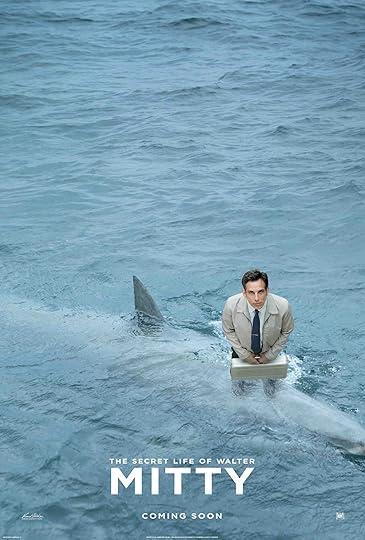
Not anywhere near the first movie Ben Stiller's directed, but it's arguably the most beautiful and imaginatively shot. And it's all about another of my favorite themes recently: abandoning safety for adventure. The stuff shot in Iceland is gorgeous and Sean Penn is wonderful and perfect in his small, but important role.
Had Stiller and Kristen Wiig's acting been on the same level as the rest of the film, it would have probably would have cracked my Top 5. They don't do a bad job by any definition, but I also didn't connect with either of them the way I wanted to. I've become a cry baby at a lot of movies lately, but not this one and I think it's the fault of the two leads.
8. Iron Man 3
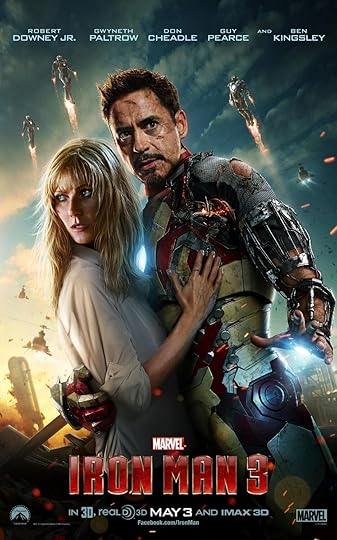
It took me a second viewing to appreciate Iron Man 3. The first time, I thought it was funny and entertaining, but that it didn't have enough superheroics for a superhero movie. In other words, not enough Iron Man for a movie called Iron Man. But of course that's entirely it's point. Tony Stark doesn't need the armor to be Iron Man. The suit isn't the hero and the person inside isn't interchangeable. Not only is that a valid theme for the Iron Man series, it's a message I actually needed to hear. I wouldn't want all Iron Man films to be like this one, but it's a bold move that makes an intelligent movie and I'm really glad it exists.
7. Zero Dark Thirty
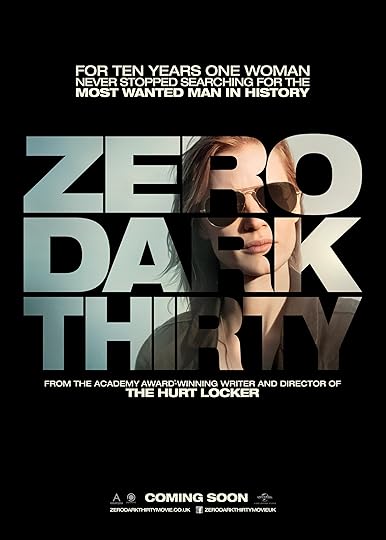
I tend to think of this as a 2012 movie (as did the Oscars), but it wasn't officially, widely released until 2013. It may suffer a little from my having seen it so long ago and not remembering its impact, so perhaps it should be higher on my list. It wasn't perfect, but it was very effective and harrowing and I liked the point it made so powerfully at the end, even if it was a bit on the nose.
6. The Kings of Summer
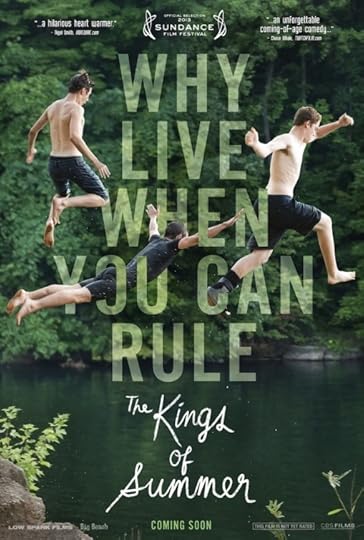
A fantastic coming-of-age story with some of my favorite TV comedians (especially Nick Offerman, Megan Mullaly, Mary Lynn Rajskub, and Tony Hale) in supporting roles. The stars of course are the three, young men in the title roles as a trio of friends who run away from home for a summer to hang out in a handmade cabin in the woods. Though the film never loses its sense of humor, I love that the boys' disappearance and their parents' worry are played rather straight. It's all about the relationships - between them, their folks, and girls they like - and those are all honest and real. But also extremely funny.
5. Gravity
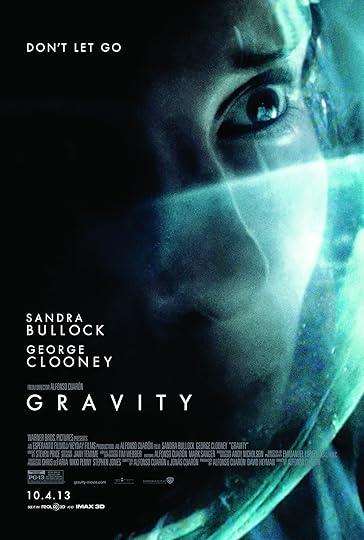
If I were just judging these movies based on my experience in the theater, Gravity would be number one. I told as many people as would listen that they should see this in 3D and on as a big a screen as possible. I'm normally not an advocate for 3D, but this was a unique experience. The movie is also a fine thriller, but I don't know how interested I am in seeing it again at home. If it didn't look and feel so amazing in the theater, I probably would've ranked Gravity a lot lower (though still in my Top 20).
4. Thor: The Dark World

Steve Murray nicely sums up my thoughts on Thor: The Dark World in the article he wrote for the National Post about how Thor is the new Superman. "Thor smiles; naturally, even. The new Superman smiles with sad eyes, like it’s a bone thrown to the audience to let them know that this isn’t just a flying Batman. Thor battles the bad guys with a sense of fun, even though, and here’s the interesting part, he’s a warrior who surely kills people." There's more to it than that and Murray explains it really well. You should read the whole article; it's short.
Basically though, Thor: The Dark World is the fun superhero movie I wanted all year. Iron Man 3 went more serious than it's predecessors (though not totally serious) and it worked. Man of Steel went way serious and it didn't work. Dark World didn't go serious at all, though it does have some lovely moments of gravity, especially with Loki, whom I'm astonished not to be tired of yet. It was exactly what I needed.
3. Side Effects

The word "Hitchcockian" gets thrown around entirely too easily, but it applies to Side Effects. Steven Soderbergh has created a compelling mystery/thriller about a character who's in the wrong place at the wrong time and tries to get out of the deadly situation that results. Soderbergh is extremely versatile and I wouldn't change that about him, but I also wouldn't mind if he made some more movies like this one.
2. The Spectacular Now

A wonderful coming-of-age movie about a high school student who's on a dark path without realizing it. My favorite thing about it is that it didn't hit me over the head with the direction of this kid's life, but let me figure it out along with him and then hold my breath while I waited to see if he could change it.
I also love that while there's a girl involved in his journey, she's not a Manic Pixie Dream Girl sent from the writer's brain to fix the dude. She's a normal girl; a real person who's not very popular, but also not super nerdy. That's how the film handles its high school characters in general. They're all people, not cliquey stereotypes. That means that Aimee (Shailene Woodley, who was almost Mary Jane in The Amazing Spider-Man 2 and now I'm sorry she isn't) can influence the main character Sutter, but she's not responsible for his salvation.
1. The Hunger Games: Catching Fire

I was trying to avoid giving the standard disclaimer about how this list is my own favorites and not an objective ranking of the best movies of the year, but seeing Catching Fire ahead of so many other wonderful movies makes me think I should.
It's not that I naturally feel defensive about Catching Fire, but that even though it's mostly loved, I've heard criticism that it doesn't stand up all that well by itself for people who haven't read the books. I've also heard from people who haven't read the books and loved Catching Fire, but I think the first criticism is valid. In fact, I found myself welling up at least twice during the film not because of what I was seeing, but because of what it reminded me that I'd read. In other words, because I already knew why people were doing what they were doing, it made their actions more emotionally powerful to me than if I had been experiencing them on the screen for the first time.
So, I have no idea how to rate this movie as someone who doesn't already know the story, but as someone who does, it was exciting and touching and it powerfully communicated the theme suggested by its title. It combined genre action and humanity in a way that no other movie did for me this year, and that's why it's at the top of my list.

It's not difficult for a romantic comedy to crack my Top 10 as long as it's good. I love a good romantic comedy, but there are so few good ones that when one does comes along I cherish it. I've said before that I'm a big fan of Paul Rudd; I also enjoy Tina Fey in most things. Admission is a fine example of their doing what they do best while paying attention to one of my favorite themes: letting other people into your life. It probably wouldn't make my list of Top 10 romantic comedies of all time (there's an idea for a post), but it was the best of the genre this year and that's why it sneaks into 2013's Top 10 for me.
9. The Secret Life of Walter Mitty

Not anywhere near the first movie Ben Stiller's directed, but it's arguably the most beautiful and imaginatively shot. And it's all about another of my favorite themes recently: abandoning safety for adventure. The stuff shot in Iceland is gorgeous and Sean Penn is wonderful and perfect in his small, but important role.
Had Stiller and Kristen Wiig's acting been on the same level as the rest of the film, it would have probably would have cracked my Top 5. They don't do a bad job by any definition, but I also didn't connect with either of them the way I wanted to. I've become a cry baby at a lot of movies lately, but not this one and I think it's the fault of the two leads.
8. Iron Man 3

It took me a second viewing to appreciate Iron Man 3. The first time, I thought it was funny and entertaining, but that it didn't have enough superheroics for a superhero movie. In other words, not enough Iron Man for a movie called Iron Man. But of course that's entirely it's point. Tony Stark doesn't need the armor to be Iron Man. The suit isn't the hero and the person inside isn't interchangeable. Not only is that a valid theme for the Iron Man series, it's a message I actually needed to hear. I wouldn't want all Iron Man films to be like this one, but it's a bold move that makes an intelligent movie and I'm really glad it exists.
7. Zero Dark Thirty

I tend to think of this as a 2012 movie (as did the Oscars), but it wasn't officially, widely released until 2013. It may suffer a little from my having seen it so long ago and not remembering its impact, so perhaps it should be higher on my list. It wasn't perfect, but it was very effective and harrowing and I liked the point it made so powerfully at the end, even if it was a bit on the nose.
6. The Kings of Summer

A fantastic coming-of-age story with some of my favorite TV comedians (especially Nick Offerman, Megan Mullaly, Mary Lynn Rajskub, and Tony Hale) in supporting roles. The stars of course are the three, young men in the title roles as a trio of friends who run away from home for a summer to hang out in a handmade cabin in the woods. Though the film never loses its sense of humor, I love that the boys' disappearance and their parents' worry are played rather straight. It's all about the relationships - between them, their folks, and girls they like - and those are all honest and real. But also extremely funny.
5. Gravity

If I were just judging these movies based on my experience in the theater, Gravity would be number one. I told as many people as would listen that they should see this in 3D and on as a big a screen as possible. I'm normally not an advocate for 3D, but this was a unique experience. The movie is also a fine thriller, but I don't know how interested I am in seeing it again at home. If it didn't look and feel so amazing in the theater, I probably would've ranked Gravity a lot lower (though still in my Top 20).
4. Thor: The Dark World

Steve Murray nicely sums up my thoughts on Thor: The Dark World in the article he wrote for the National Post about how Thor is the new Superman. "Thor smiles; naturally, even. The new Superman smiles with sad eyes, like it’s a bone thrown to the audience to let them know that this isn’t just a flying Batman. Thor battles the bad guys with a sense of fun, even though, and here’s the interesting part, he’s a warrior who surely kills people." There's more to it than that and Murray explains it really well. You should read the whole article; it's short.
Basically though, Thor: The Dark World is the fun superhero movie I wanted all year. Iron Man 3 went more serious than it's predecessors (though not totally serious) and it worked. Man of Steel went way serious and it didn't work. Dark World didn't go serious at all, though it does have some lovely moments of gravity, especially with Loki, whom I'm astonished not to be tired of yet. It was exactly what I needed.
3. Side Effects

The word "Hitchcockian" gets thrown around entirely too easily, but it applies to Side Effects. Steven Soderbergh has created a compelling mystery/thriller about a character who's in the wrong place at the wrong time and tries to get out of the deadly situation that results. Soderbergh is extremely versatile and I wouldn't change that about him, but I also wouldn't mind if he made some more movies like this one.
2. The Spectacular Now

A wonderful coming-of-age movie about a high school student who's on a dark path without realizing it. My favorite thing about it is that it didn't hit me over the head with the direction of this kid's life, but let me figure it out along with him and then hold my breath while I waited to see if he could change it.
I also love that while there's a girl involved in his journey, she's not a Manic Pixie Dream Girl sent from the writer's brain to fix the dude. She's a normal girl; a real person who's not very popular, but also not super nerdy. That's how the film handles its high school characters in general. They're all people, not cliquey stereotypes. That means that Aimee (Shailene Woodley, who was almost Mary Jane in The Amazing Spider-Man 2 and now I'm sorry she isn't) can influence the main character Sutter, but she's not responsible for his salvation.
1. The Hunger Games: Catching Fire

I was trying to avoid giving the standard disclaimer about how this list is my own favorites and not an objective ranking of the best movies of the year, but seeing Catching Fire ahead of so many other wonderful movies makes me think I should.
It's not that I naturally feel defensive about Catching Fire, but that even though it's mostly loved, I've heard criticism that it doesn't stand up all that well by itself for people who haven't read the books. I've also heard from people who haven't read the books and loved Catching Fire, but I think the first criticism is valid. In fact, I found myself welling up at least twice during the film not because of what I was seeing, but because of what it reminded me that I'd read. In other words, because I already knew why people were doing what they were doing, it made their actions more emotionally powerful to me than if I had been experiencing them on the screen for the first time.
So, I have no idea how to rate this movie as someone who doesn't already know the story, but as someone who does, it was exciting and touching and it powerfully communicated the theme suggested by its title. It combined genre action and humanity in a way that no other movie did for me this year, and that's why it's at the top of my list.
January 9, 2014
11 movies I really dug in 2013
Counting down the 2013 movies I saw, from worst to best.
20. Machete Kills
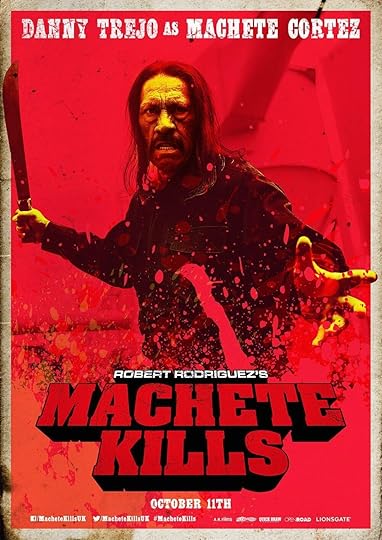
What separates Machete Kills from the action flicks on Monday's list is love. It's not demonstrably better crafted than say 2 Guns or Homeland, but what it lacks in finesse it makes up in passion. I don't love everything about Machete Kills, but I love a lot about it, and I especially love that Robert Rodriguez is able to make exactly the kinds of movies he wants and that his enthusiasm is all over the screen.
19. The Heat
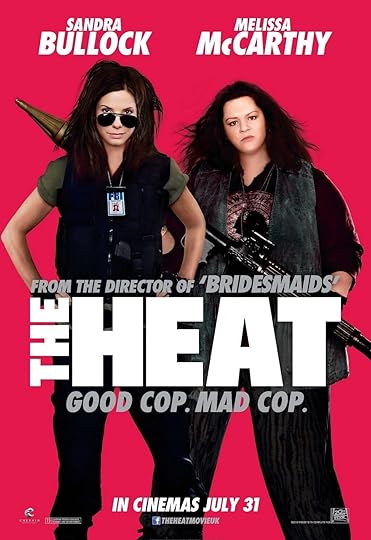
I'm a fan of both of these women. I also dig a funny buddy-cop movie with heart. The Heat isn't doing anything super original with the genre (other than the gender twist), but it's a worthy entry in it and I laughed a lot.
18. Ender's Game
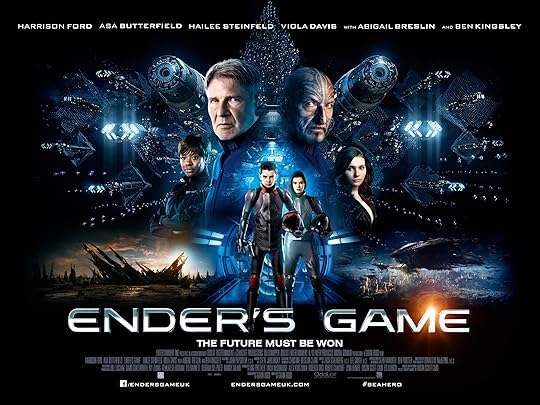
This is a difficult movie to talk about, because the conversation around it is about so much more than the film. Orson Scott Card's bigotry makes it difficult to appreciate the story on its own, and even if that weren't a factor there would still be the inevitable discussion about whether the movie lives up to the novel it's based on. I've never read the novel, so that makes it easier for me to separate the film from that, but I have to work harder to separate it from its author's homophobia. I think I'm up to it though.
Ender's Game should have been much higher on my list. It had the potential to be a brilliant, important movie with some harsh, but true things to say about war. Unfortunately, it flinches at the end and lets its audience off the hook. Instead of leaving viewers to think about and wrestle with what the characters have done, the film closes with its focus on what they may do in a potential sequel. That's a wasted opportunity in an otherwise very good film.
17a. Saving Mr. Banks
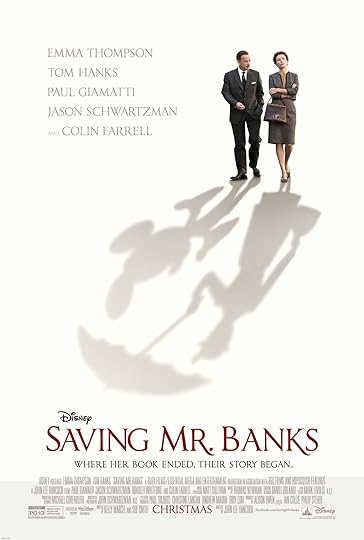
Saving Mr. Banks gets to be 17a because it's a late addition to my list and was going to throw off my numbering. I included it in the movies I missed this year, but got a chance to see it after I made that list. And I liked it a lot.
The trailer hooked me by showing a scene where Walt Disney is trying to figure out how the prim, humorless Mrs. Travers created such a fanciful, beloved character as Mary Poppins. He complains, "'No whimsy or sentiment!' says the woman who sends a flying nanny with a talking umbrella to save the children." She gives him a long, sad look and responds, "You think Mary Poppins is saving the children, Mr. Disney? Oh dear." And she walks away.
The real object of salvation is rather unsubtly right there in the title, but the promise of exploring that theme is what got me into the theater. One of my favorite parts of Disney's Mary Poppins is the scene where Dick Van Dyke explains his feelings about George Banks. "Begging your pardon," he tells the children, "but the one my heart goes out to is your father. There he is in that cold, heartless bank day after day, hemmed in by mounds of cold, heartless money. I don't like to see any living thing caged up." The kids (and, to be fair, the movie that far) have made a heartless villain of Mr. Banks, but in that moment he's repainted as a victim; a prisoner in need of deliverance. It's a powerful moment and has made me much more a fan of Mary Poppins as an adult than I ever was as a kid.
Saving Mr. Banks goes over that same territory, but ties it into events from Travers' past in a really touching way. It also sets up a fascinating mystery: the same one that Disney noticed in the trailer. How and why did the miserable Mrs. Travers create Mary Poppins? What was it about her relationship with her own father that led her to write those books?
I'm not sure that Saving Mr. Banks answers those questions. If it does, it does so with a lot of subtlety. It's clear that there is a connection, but it's a connection that's more easily felt than figured out. I was very emotionally invested in the salvation of everyone who needed it in this movie, including Disney and Mrs. Travers themselves. But though the film acts like they all got it, my rational self isn't satisfied that they all in fact did, and that nags at me.
17. Pain & Gain
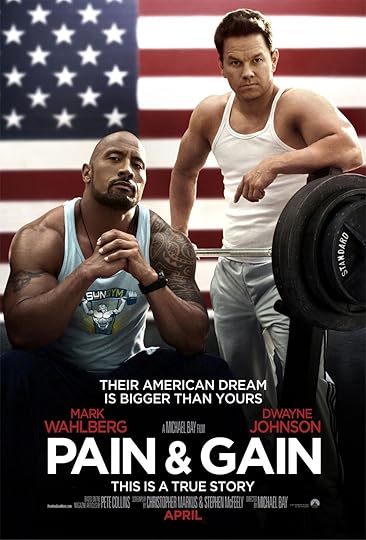
Mostly I'm just shocked that Michael Bay was able to make a movie I liked. It's a funny script performed by great, charismatic actors and shot in an entertaining, compelling way. What's more, it has valuable things to say about entitlement and the American Dream. It hasn't single-handedly turned me into a fan of Michael Bay, but it has made it impossible for me to simply dismiss him anymore.
16. The Wolverine
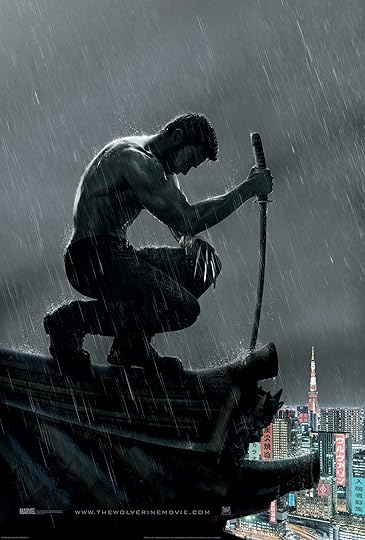
The first two-thirds are perfect and exactly what I wanted in a Wolverine movie: Logan as a tragic loner who struggles between his stated desire for solitude and his hidden longing for connection. It's a very human story, wonderfully acted and beautifully shot with great action sequences. Then comes the finale that devolves into standard superhero tropes, but in this case, "mostly perfect" is good enough for me.
15. Stoker
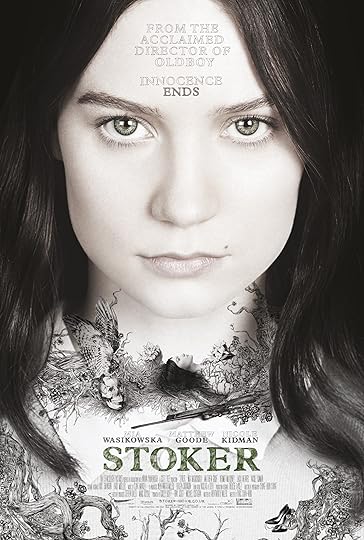
Great, unique exploration of the creation of a monster. The subject matter will probably keep me from revisiting it often, but I highly recommend seeing it at least once.
14. Hansel & Gretel: Witch Hunters
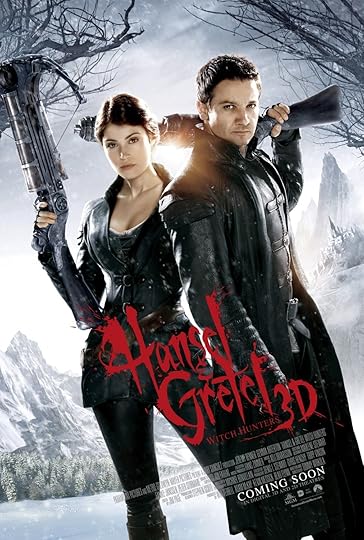
Pure pulp. Jeremy Renner and Gemma Arterton are great fun as Hansel and Gretel, but Famke Janssen steals the show as the leader of the witches they're fighting. I had a blast with it.
13. Pacific Rim
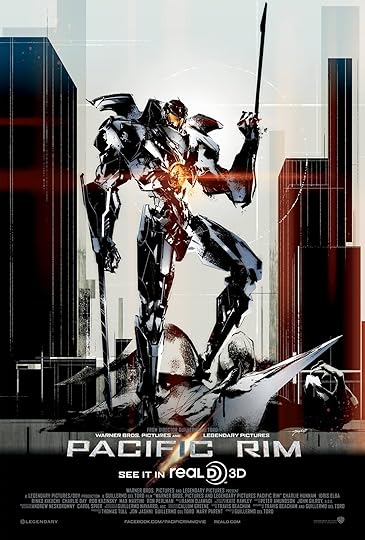
I already wrote a longer review, but the gist of it is that I loved the world-building and some of the supporting characters, but wish I'd been able to get more invested in the leads.
12. Fast & Furious 6
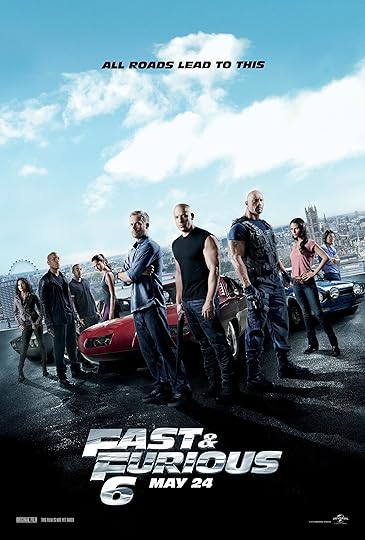
It's unbelievable that the Fast and Furious series is the best movie franchise around right now, but here we are. It knows exactly what its fans want and it gives it to them. I was skeptical about its future even before Paul Walker died (a new director and a rushed production schedule make me really nervous), but 6 was a perfect entry and made me excited for the possibilities of 7.
11. The Hobbit: The Desolation of Smaug

I'm struggling a bit with the Hobbit trilogy so far. As a fan of the Lord of the Rings extended editions, I have no problem with Peter Jackson's throwing as much extra stuff and detail into these movies as he wants. They could be four hours a piece and I'd eat it up like second breakfast.
What I wrestle with is the tone. Jackson's obviously trying to make a new trilogy that will fit seamlessly with Lord of the Rings, not just in plot, but also in feel. That means that he's purposely jettisoned a lot of the whimsy of The Hobbit - not all of it, but a great deal - and I miss it. I love it for what it is, but I'm not as into it as I expected to be.
My big problem with Desolation of Smaug though - and why it didn't make my Top 10 - is a huge SPOILER, SO BEWARE OF THE NEXT PARAGRAPH if you haven't seen it.
The trouble is with the ending. It would have been very easy to close after the death of Smaug. It's a natural stopping place and would have helped Desolation feel like a whole story in the same way that Unexpected Journey did. Instead, we have a cliffhanger. It reminds me of how I felt at the end of The Empire Strikes Back. It was a lot of fun, but incomplete.
20. Machete Kills

What separates Machete Kills from the action flicks on Monday's list is love. It's not demonstrably better crafted than say 2 Guns or Homeland, but what it lacks in finesse it makes up in passion. I don't love everything about Machete Kills, but I love a lot about it, and I especially love that Robert Rodriguez is able to make exactly the kinds of movies he wants and that his enthusiasm is all over the screen.
19. The Heat

I'm a fan of both of these women. I also dig a funny buddy-cop movie with heart. The Heat isn't doing anything super original with the genre (other than the gender twist), but it's a worthy entry in it and I laughed a lot.
18. Ender's Game

This is a difficult movie to talk about, because the conversation around it is about so much more than the film. Orson Scott Card's bigotry makes it difficult to appreciate the story on its own, and even if that weren't a factor there would still be the inevitable discussion about whether the movie lives up to the novel it's based on. I've never read the novel, so that makes it easier for me to separate the film from that, but I have to work harder to separate it from its author's homophobia. I think I'm up to it though.
Ender's Game should have been much higher on my list. It had the potential to be a brilliant, important movie with some harsh, but true things to say about war. Unfortunately, it flinches at the end and lets its audience off the hook. Instead of leaving viewers to think about and wrestle with what the characters have done, the film closes with its focus on what they may do in a potential sequel. That's a wasted opportunity in an otherwise very good film.
17a. Saving Mr. Banks

Saving Mr. Banks gets to be 17a because it's a late addition to my list and was going to throw off my numbering. I included it in the movies I missed this year, but got a chance to see it after I made that list. And I liked it a lot.
The trailer hooked me by showing a scene where Walt Disney is trying to figure out how the prim, humorless Mrs. Travers created such a fanciful, beloved character as Mary Poppins. He complains, "'No whimsy or sentiment!' says the woman who sends a flying nanny with a talking umbrella to save the children." She gives him a long, sad look and responds, "You think Mary Poppins is saving the children, Mr. Disney? Oh dear." And she walks away.
The real object of salvation is rather unsubtly right there in the title, but the promise of exploring that theme is what got me into the theater. One of my favorite parts of Disney's Mary Poppins is the scene where Dick Van Dyke explains his feelings about George Banks. "Begging your pardon," he tells the children, "but the one my heart goes out to is your father. There he is in that cold, heartless bank day after day, hemmed in by mounds of cold, heartless money. I don't like to see any living thing caged up." The kids (and, to be fair, the movie that far) have made a heartless villain of Mr. Banks, but in that moment he's repainted as a victim; a prisoner in need of deliverance. It's a powerful moment and has made me much more a fan of Mary Poppins as an adult than I ever was as a kid.
Saving Mr. Banks goes over that same territory, but ties it into events from Travers' past in a really touching way. It also sets up a fascinating mystery: the same one that Disney noticed in the trailer. How and why did the miserable Mrs. Travers create Mary Poppins? What was it about her relationship with her own father that led her to write those books?
I'm not sure that Saving Mr. Banks answers those questions. If it does, it does so with a lot of subtlety. It's clear that there is a connection, but it's a connection that's more easily felt than figured out. I was very emotionally invested in the salvation of everyone who needed it in this movie, including Disney and Mrs. Travers themselves. But though the film acts like they all got it, my rational self isn't satisfied that they all in fact did, and that nags at me.
17. Pain & Gain

Mostly I'm just shocked that Michael Bay was able to make a movie I liked. It's a funny script performed by great, charismatic actors and shot in an entertaining, compelling way. What's more, it has valuable things to say about entitlement and the American Dream. It hasn't single-handedly turned me into a fan of Michael Bay, but it has made it impossible for me to simply dismiss him anymore.
16. The Wolverine

The first two-thirds are perfect and exactly what I wanted in a Wolverine movie: Logan as a tragic loner who struggles between his stated desire for solitude and his hidden longing for connection. It's a very human story, wonderfully acted and beautifully shot with great action sequences. Then comes the finale that devolves into standard superhero tropes, but in this case, "mostly perfect" is good enough for me.
15. Stoker

Great, unique exploration of the creation of a monster. The subject matter will probably keep me from revisiting it often, but I highly recommend seeing it at least once.
14. Hansel & Gretel: Witch Hunters

Pure pulp. Jeremy Renner and Gemma Arterton are great fun as Hansel and Gretel, but Famke Janssen steals the show as the leader of the witches they're fighting. I had a blast with it.
13. Pacific Rim

I already wrote a longer review, but the gist of it is that I loved the world-building and some of the supporting characters, but wish I'd been able to get more invested in the leads.
12. Fast & Furious 6

It's unbelievable that the Fast and Furious series is the best movie franchise around right now, but here we are. It knows exactly what its fans want and it gives it to them. I was skeptical about its future even before Paul Walker died (a new director and a rushed production schedule make me really nervous), but 6 was a perfect entry and made me excited for the possibilities of 7.
11. The Hobbit: The Desolation of Smaug

I'm struggling a bit with the Hobbit trilogy so far. As a fan of the Lord of the Rings extended editions, I have no problem with Peter Jackson's throwing as much extra stuff and detail into these movies as he wants. They could be four hours a piece and I'd eat it up like second breakfast.
What I wrestle with is the tone. Jackson's obviously trying to make a new trilogy that will fit seamlessly with Lord of the Rings, not just in plot, but also in feel. That means that he's purposely jettisoned a lot of the whimsy of The Hobbit - not all of it, but a great deal - and I miss it. I love it for what it is, but I'm not as into it as I expected to be.
My big problem with Desolation of Smaug though - and why it didn't make my Top 10 - is a huge SPOILER, SO BEWARE OF THE NEXT PARAGRAPH if you haven't seen it.
The trouble is with the ending. It would have been very easy to close after the death of Smaug. It's a natural stopping place and would have helped Desolation feel like a whole story in the same way that Unexpected Journey did. Instead, we have a cliffhanger. It reminds me of how I felt at the end of The Empire Strikes Back. It was a lot of fun, but incomplete.
January 6, 2014
10 movies I liked just fine in 2013
Counting down the 2013 movies I saw, from worst to best. These are the ones I'd grade in the C to B- range.
30. G.I. Joe: Retaliation

Dumps the over-the-top fun of the first G.I. Joe movie in favor of gravitas, which is something I didn't feel I needed. But having said that, there are some amazing action sequences and I liked all the good guys. It's pretty much G.I. Joe in name only, but still a fine action movie.
29. Riddick

The way Riddick is structured, it's more like three, interconnected shorts than a single film. There's a survival story, then an action thriller, and finally a monster movie. It works - and Katee Sackhoff gets to be tough and kick booty, which is great - but the story gets more and more predictable as it progresses.
28. Escape Plan
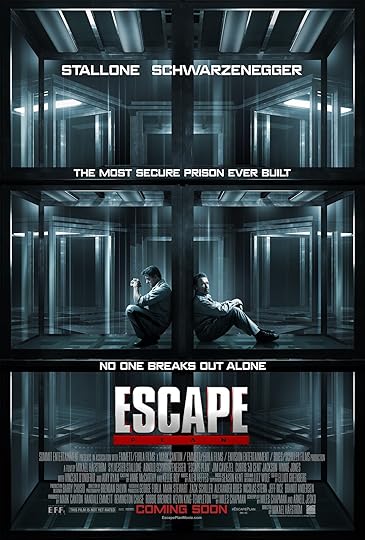
Schwarzenegger's not in the Expendables movies enough for me to consider them his first real team-up with Sylvester Stallone. That's this movie and it's worth seeing if only for that. The story was just interesting enough to keep me engaged, but most of my enjoyment came from seeing these two icons working together.
27. Oz the Great and Powerful
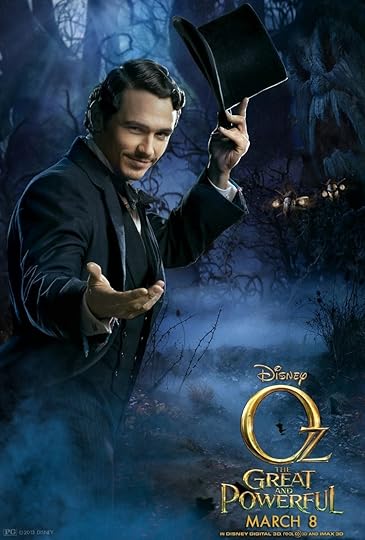
There's a line in Frank L. Baum's The Wonderful Wizard of Oz that really bothers me. The Wizard says something like, "I'm really a very good man, but I'm a very bad wizard." Frankly, I agree with Dorothy's first assessment that he's actually a bad man and that becomes more obvious the more Baum reveals about his time in Oz. So, I was curious to see what Oz the Great and Powerful would make of him and ended up quite liking the story of the flawed, selfish charlatan who is somehow able to come around and do something good. Sadly, I absolutely hated the origin story of the Wicked Witch of the West, which is why this movie isn't higher on my list.
26. Much Ado About Nothing
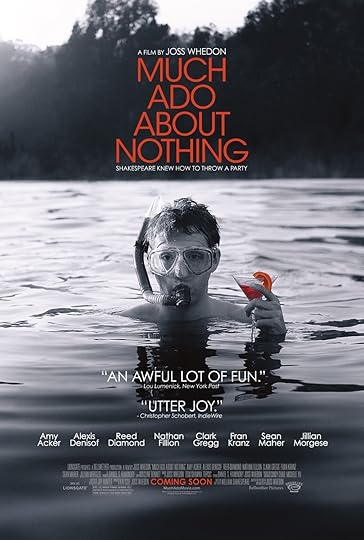
I agree with the quote on the poster that Joss Whedon's presentation of Much Ado is an awful lot of fun. "Utter joy" is going a bit far, but I always enjoy seeing new adaptations of Shakespeare and there are some thought-provoking performances. Reed Diamond and Sean Maher are particularly good as Dons Pedro and John, and Amy Acker makes some nice choices as Beatrice. I also quite like how Whedon made Conrade a woman who's in a sexual relationship with Don John, and her partner-in-crime Borachio is secretly in love with Hero, which gives him an extra interest in splitting up her and Claudio. Of course Nathan Fillion is wonderful as Dogberry, and I also have to mention the music, especially the beautiful version of "Sigh No More" by Jed Whedon and Maurissa Tancharoen.
What kept me from falling in love with it is that I'm already in love with Kenneth Branagh's definitive version. It's not fair - Whedon's really deserves to stand on it's own - but I can't help it. I do feel justified a little though when I compare Alexis Denisof's bland performance as Benedick with Branagh's lively one.
25. The World's End

Not as funny as Sean of the Dead or Hot Fuzz, but I appreciated what Edgar Wright was trying to say about not being able to go home again. He says it imperfectly and I have big problems with the end, but the movie still raises some good questions and is a lot of fun.
24. This Is the End
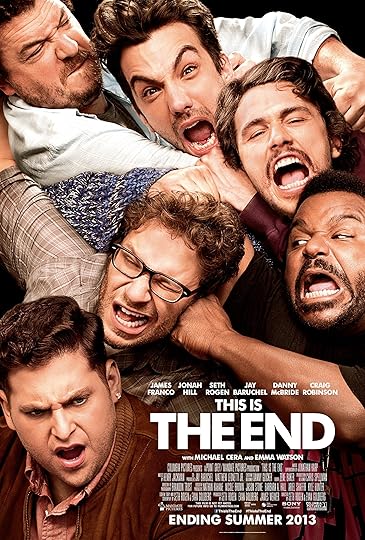
I laughed out loud a lot. It's cruder than I typically go for, but there's no arguing with the results and I like what it has to say about not being a selfish jerk.
23. Red 2
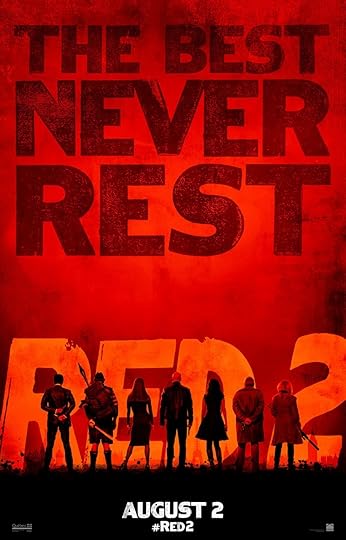
A great sequel in that it's more of what I liked about the first one. Not at all revolutionary, but everyone in it seems to be having a good time and that's contagious.
22. 2 Guns
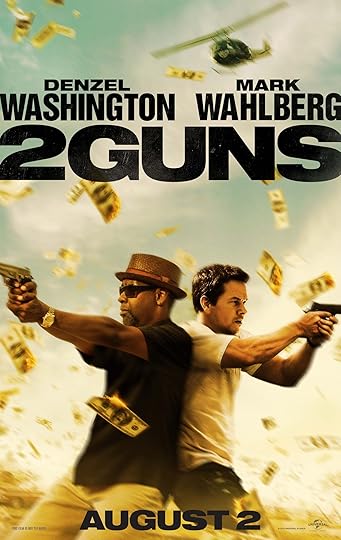
A fine action movie with a sense of humor and a clever twist that I won't spoil (even though it's in the trailer). This is Denzel Washington and Mark Wahlberg doing what they do best in a plot that gives them plenty to work with. Like Red 2, it's nothing ground-breaking, but I have no complaints.
21. Homefront

I was surprised by how much I liked Homefront. Jason Statham isn't the pickiest actor when it comes to what he'll be in, so I never know what I'm going to get in one of his movies. I like James Franco though and was looking forward to seeing Winona Ryder, and I was deeply interested in the setting of a small town in Louisiana bayou country.
Franco ends up being a great villain in that he's never supposed to be Statham's equal physically, but is instead a cold-hearted - though oddly charming - catalyst for bringing in a more deadly threat. Ryder plays a drug-addicted prostitute instead of her usual type of character and Kate Bosworth is amazing as an awful local woman used to bullying people so that she can get her way. I absolutely hated her at first (as the movie wanted me to), then warmed up to her as I got to know her better. Clancy Brown is also excellent as the local sheriff, who's a far more complicated character than this type of movie usually asks of that role.
My only beef with the film is that Statham withholds important information from his daughter. One could argue that he's doing it to protect her, but he actually gets her in more trouble and damages his relationship with her, so he's either a bad parent in that regard or the script is simply cheating a little to push the story in a particular direction. Still, that's a minor complaint in a remarkably good action movie.

30. G.I. Joe: Retaliation

Dumps the over-the-top fun of the first G.I. Joe movie in favor of gravitas, which is something I didn't feel I needed. But having said that, there are some amazing action sequences and I liked all the good guys. It's pretty much G.I. Joe in name only, but still a fine action movie.
29. Riddick

The way Riddick is structured, it's more like three, interconnected shorts than a single film. There's a survival story, then an action thriller, and finally a monster movie. It works - and Katee Sackhoff gets to be tough and kick booty, which is great - but the story gets more and more predictable as it progresses.
28. Escape Plan

Schwarzenegger's not in the Expendables movies enough for me to consider them his first real team-up with Sylvester Stallone. That's this movie and it's worth seeing if only for that. The story was just interesting enough to keep me engaged, but most of my enjoyment came from seeing these two icons working together.
27. Oz the Great and Powerful

There's a line in Frank L. Baum's The Wonderful Wizard of Oz that really bothers me. The Wizard says something like, "I'm really a very good man, but I'm a very bad wizard." Frankly, I agree with Dorothy's first assessment that he's actually a bad man and that becomes more obvious the more Baum reveals about his time in Oz. So, I was curious to see what Oz the Great and Powerful would make of him and ended up quite liking the story of the flawed, selfish charlatan who is somehow able to come around and do something good. Sadly, I absolutely hated the origin story of the Wicked Witch of the West, which is why this movie isn't higher on my list.
26. Much Ado About Nothing

I agree with the quote on the poster that Joss Whedon's presentation of Much Ado is an awful lot of fun. "Utter joy" is going a bit far, but I always enjoy seeing new adaptations of Shakespeare and there are some thought-provoking performances. Reed Diamond and Sean Maher are particularly good as Dons Pedro and John, and Amy Acker makes some nice choices as Beatrice. I also quite like how Whedon made Conrade a woman who's in a sexual relationship with Don John, and her partner-in-crime Borachio is secretly in love with Hero, which gives him an extra interest in splitting up her and Claudio. Of course Nathan Fillion is wonderful as Dogberry, and I also have to mention the music, especially the beautiful version of "Sigh No More" by Jed Whedon and Maurissa Tancharoen.
What kept me from falling in love with it is that I'm already in love with Kenneth Branagh's definitive version. It's not fair - Whedon's really deserves to stand on it's own - but I can't help it. I do feel justified a little though when I compare Alexis Denisof's bland performance as Benedick with Branagh's lively one.
25. The World's End

Not as funny as Sean of the Dead or Hot Fuzz, but I appreciated what Edgar Wright was trying to say about not being able to go home again. He says it imperfectly and I have big problems with the end, but the movie still raises some good questions and is a lot of fun.
24. This Is the End

I laughed out loud a lot. It's cruder than I typically go for, but there's no arguing with the results and I like what it has to say about not being a selfish jerk.
23. Red 2

A great sequel in that it's more of what I liked about the first one. Not at all revolutionary, but everyone in it seems to be having a good time and that's contagious.
22. 2 Guns

A fine action movie with a sense of humor and a clever twist that I won't spoil (even though it's in the trailer). This is Denzel Washington and Mark Wahlberg doing what they do best in a plot that gives them plenty to work with. Like Red 2, it's nothing ground-breaking, but I have no complaints.
21. Homefront

I was surprised by how much I liked Homefront. Jason Statham isn't the pickiest actor when it comes to what he'll be in, so I never know what I'm going to get in one of his movies. I like James Franco though and was looking forward to seeing Winona Ryder, and I was deeply interested in the setting of a small town in Louisiana bayou country.
Franco ends up being a great villain in that he's never supposed to be Statham's equal physically, but is instead a cold-hearted - though oddly charming - catalyst for bringing in a more deadly threat. Ryder plays a drug-addicted prostitute instead of her usual type of character and Kate Bosworth is amazing as an awful local woman used to bullying people so that she can get her way. I absolutely hated her at first (as the movie wanted me to), then warmed up to her as I got to know her better. Clancy Brown is also excellent as the local sheriff, who's a far more complicated character than this type of movie usually asks of that role.
My only beef with the film is that Statham withholds important information from his daughter. One could argue that he's doing it to protect her, but he actually gets her in more trouble and damages his relationship with her, so he's either a bad parent in that regard or the script is simply cheating a little to push the story in a particular direction. Still, that's a minor complaint in a remarkably good action movie.