Michael May's Blog, page 139
June 14, 2015
7 Days in May | Aloha, Clone Wars
Aloha (2015)
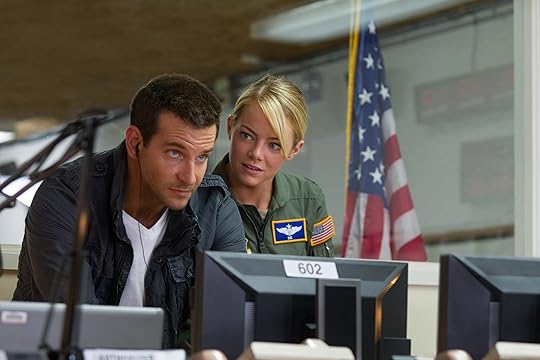
I was geared up for Cameron Crowe's new movie from the first time I heard about it. I'm not the world's biggest Crowe fan, but I like more of his stuff than I don't. The real attraction to me was the cast and Hawaii as not only the setting, but a crucial element of the movie. It couldn't be set anywhere else and be the same story.
Unfortunately, early buzz wasn't good, starting with former Sony co-chairman Amy Pascal, who wrote in a leaked email that it "never not even once ever works." From there, the critics piled on. And I get it. I understand why a lot of people don't like Aloha. There's a lot going on in it, many of the characters don't act in believable ways, and it can feel preachy at times. But I like it a lot.
Mostly I love the actors. That helps me root for the characters and want to defend their story, so maybe that's why I don't see as many problems with the film as other people do. Yeah, there's a lot going on in the movie, but I disagree with the critics who interpret that as Crowe's inability to fine tune his tale. I think it's intentional. There's a lot going on for Brian Gilcrest (Bradley Cooper) and the chaotic activity around him reflects that. It wasn't always a pleasant experience, but the structure of the story helped me get into his head.
And I don't think the movie is actually preachy. There are characters who aren't shy about sharing their very strong opinions, but I don't believe that those opinions are the point the movie's making. The point is about how Gilcrest reacts to those opinions. The major conflict is around a satellite that's being launched from Hawaii. There are people in the movie who think that's a very bad thing, but the movie itself isn't about whether or not it's inherently okay to launch a satellite. In fact, the people against it don't even completely agree on why it's a bad idea. What the movie cares about is that Gilcrest has made some assurances to these people - either directly or by implication - that there is no satellite, and when he finds out that oops there actually is... well, that's where the drama comes from.
Gilcrest is a messed up, very confused dude. One character tells him that he's sold his soul so many times that no one's even interested in buying it anymore. Maybe it's because I like Bradley Cooper, but I wanted to see this guy finally do the right thing and maybe be rewarded for it. That was the hook for me. I'm not going to spill what ends up happening, but that was plenty to keep me invested.
As for characters not always acting like real people: it's true that some of them behave in pretty strange ways. None of these actions are impossible though; they just seem unlikely. John Krasinski's character for instance is mostly defined by his inability to communicate with his wife (Rachel McAdams) using words. I've never met someone as dramatically closemouthed as he is. No one in real life actually behaves that way. The movie exaggerates that trait partly for comedy; partly to show how annoying it really is. I've seen plenty of movies with extremely reserved characters and my reaction is usually, "Hey, everybody. Leave the poor guy alone." This time, my reaction was, "Dude! Say something!" I think that same tactic of "exaggeration to form an impression" applies to a lot of the other characters, too. It's a tricky tactic though and we're seeing in audiences' reactions how polarizing it can be.
And that pretty much describes the whole movie.
The Disappearance of Eleanor Rigby: Him and Her (2013)
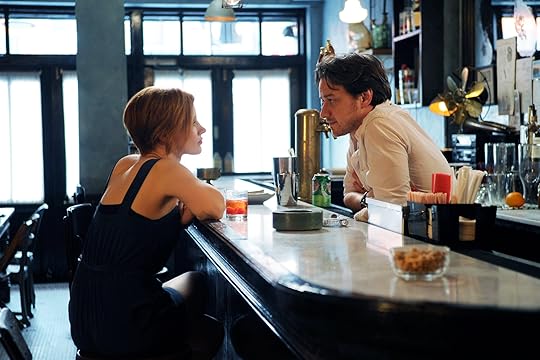
Speaking of experiments, Ned Benson's The Disappearance of Eleanor Rigby is a very cool one. The history behind it is that Jessica Chastain apparently was a fan of one of Benson's short films, so he showed her the first draft for Disappearance and asked if she'd be interested in playing Eleanor. She was, but not as the character was written in that script. That led Benson to create a different version, telling the same story, but from the woman's point of view. The original version more or less became The Disappearance of Eleanor Rigby: Him, while the revised version got the subtitle Her.
When the movies were introduced on the film festival circuit, they were shown as a double-feature with one admission price. But when the Weinstein Company offered to distribute it, they weren't interested in showing it that way. They didn't believe regular audiences would want to sit through both films, much less pay for each of them separately. So the Weinsteins insisted on a third version, The Disappearance of Eleanor Rigby: Them that edited the two into a more traditional narrative.
I was interested in seeing them the way that Benson intended and fortunately we can do that now on Netflix. Ideally, you're supposed to be able to watch them in any order, but I went with the way they were written and presented at the festivals: Him first and then Her. I recommend that approach, but maybe that's because I'm a dude.
Of the two films, I identified most with Him. Big shocker. It's the story of a man named Conor (James McAvoy) who's marriage is dissolving completely outside of his control. The death of the couples' child has affected both him and his wife (Chastain), but Eleanor is severely depressed and needs to disappear for a while to figure out who she is and where she wants to go. She tells him that she's leaving, and then she does, and he feels as resistant to, but helpless about the whole thing as I imagine that I would. Him does a great job of running Conor through a variety of difficult decisions and conflicting emotions, showing how fragile our lives are and how they can be so quickly changed by the choices of another person if we're deeply enough connected to her.
Having been through Him, and knowing a little about the origin of Her, my expectation for Her was that I would be challenged to then relate to Eleanor as much as I had to Conor. Surprisingly, that never happened. Her doesn't offer a rational explanation for Eleanor's behavior. It's not even trying to. Because there is no rational explanation. Making sense has nothing to do with it. She is - justifiably - an emotional wreck. Her life has been radically changed as well and though she and Conor both lost their child, they've dealt with it in different ways. What Her does is to let us see the aftermath of this from her point of view so that we can see just how confused and ungrounded it's left her. In Him, her leaving is something she did to Conor. In Her, it's something she's done to herself and it's no less painful. Neither version is interested in keeping score of who's hurting more though. And that's what I love most about them.
Star Wars: The Clone Wars (2008 TV show)
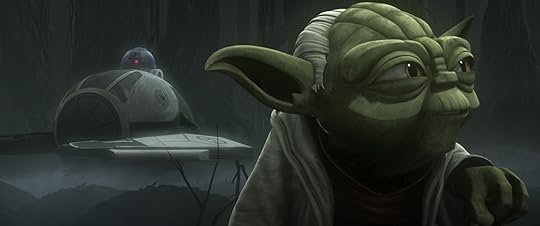
We finally finished The Clone Wars. It was a rocky ride.
Season One was mostly about enjoying some fun and adventure in the Star Wars galaxy again after the darkness of the prequels. Season Two was also a kick, mostly focused on doing Star Wars riffs on other kinds of stories like The Seven Samurai, murder mysteries, or King Kong and Godzilla.
Seasons Three and Four got to be a slog though. They introduce some cool bounty hunter characters, but that's a problem when the show has to power down the Jedi in order to make the weaker villains seem like a credible threat. The Jedi characters were constantly forgetting to use their powers and it seemed like any bad guy could pick up a lightsaber and competently fight a Jedi with it.
Seasons Five and Six picked up again though. Season Five had longer story arcs that showcased some new and interesting characters, like a group of younglings that Ahsoka's helping to train, or a squadron of droids that R2 joins for a special mission. Season Six then starts to move purposefully towards Revenge of the Sith, with storylines that hint about things that happen in that movie and beyond. I'm extremely pleased with the last beats of the final episode.
As much as I liked Seasons Five and Six though, I found myself getting increasingly frustrated with the Jedi. They started using their powers again, but they - and especially the Jedi Council - were continually making bad decisions. At first I thought this was just bad writing, but it became so consistent that I realized it had to be on purpose. And I realized that it was also consistent with how the Council had acted in Phantom Menace (refusing to train Anakin, for example) and Attack of the Clones (easily getting sucked into the Separatist conflict, creating a situation where Anakin and Padme have to marry in secret, etc.). In the movies though, I'd always made excuses for the Council. "That's just their way," I thought. I might not agree with them, but I figured that was part of my responsibility in suspending disbelief. I bought that they were supposed to be wise, without ever questioning it. The Clone Wars made me question it. And by the end, I was actually ready to see the Jedi wiped out.
Star Wars: Clone Wars (2003 TV show)
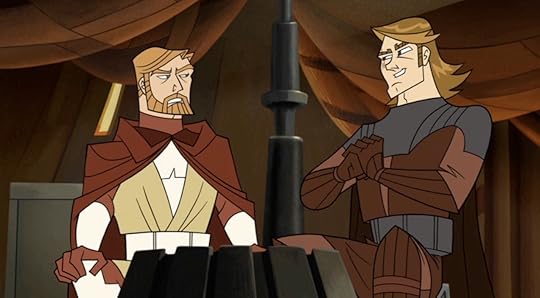
We also went back and finished the Genndy Tartakovsky cartoon. Watching the shows in chronological order, we started with Tartakovsky and watched it to a certain point in the second episode of Season Three. That episode covers a lot of time, so if you stop it right after Anakin returns to Padme with the new scar on his eye, there's time for the entire Dave Filoni series to fit. Picking up after that scene in the Tartakovsky episode, Anakin looks like he does in Revenge of the Sith and the rest of the Tartakovsky series takes you right up to the opening scene of Sith.
We like both Clone Wars cartoons for different reasons. The Filoni show is strong on characterization and created versions of these characters (and completely new characters like Ahsoka) that we fell in love with. But its CG animation is limited in how fast it can move, which gives Tartakovsky's an advantage over it. Tartakovsky's show can't touch Filoni's for characters, but it is way more action-packed and full of awesome. Everyone is tough and amazing; good guys and bad guys alike.
The Revenge of the Sith (2005)
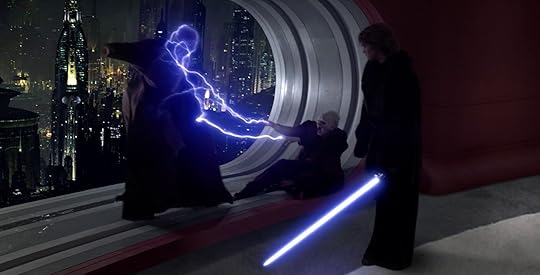
My hope for watching Filoni's The Clone Wars was that it would somehow make Revenge of the Sith better. My biggest issue with Sith has always been that I don't believe Anakin's transition to the Dark Side. I get the logical arguments that Palpatine presents to Anakin, but I've never felt what Anakin's supposed to be feeling. So I wanted The Clone Wars to help with that. I figured I was probably asking too much of it, but I want to like Sith more than I do, so I hoped.
And it does help. Quite a bit actually, but not in the way I imagined. Instead of showing Anakin get progressively angrier, The Clone Wars undermines his faith in the Jedi. One of the major ways that Palpatine tricks Anakin in Sith is to convince him that the Jedi are out to take over the Republic. Attack of the Clones set some groundwork for this by showing Anakin's impatience for all the deliberating that the Senate and the Jedi do. He believes that a just, all-powerful ruler is the answer the Republic needs. But feeling that way is a long leap from actually distrusting Obi-Wan, Yoda, and the rest of the Jedi.
What The Clone Wars does is call that whole organization into question. The Council isn't wise, they've never made good choices, and they're actually not to be trusted. They look to protect themselves and maintain the status quo. Exactly what Palpatine accuses them of. Phantom Menace and Attack of the Clones both support this interpretation, but The Clone Wars makes it abundantly clear. So that, plus the chance to save Padme's life, are reason enough for Anakin to put some faith in Palpatine.
When Mace Windu and Palpatine are fighting and Anakin is forced to pick a side, this time I bought why Anakin backed Palpatine. Mace Windu is the absolute worst of the Jedi Council. He's a great warrior (especially in the Tartakovsky show), but he's also arrogant, foolish, and blind to both of those faults. And once Anakin chooses Palpatine and plays a role in Windu's death, he's forced to be all in. There's no going back for him after that; the first domino has fallen. His only option is to delude himself into believing Palpatine's lies, which leads him to march on the Jedi temple and murder everyone there, which drives him insane with grief and anger.
I still have some big problems with Sith. But now the largest of them is the way Padme dies. Could they not have at least left open the possibility that there were complications in childbirth instead of specifically stating that there was nothing physically wrong with her? I don't understand that at all. I'm glad to finally be able to believe in Anakin's transformation though. That's a major issue solved.

I was geared up for Cameron Crowe's new movie from the first time I heard about it. I'm not the world's biggest Crowe fan, but I like more of his stuff than I don't. The real attraction to me was the cast and Hawaii as not only the setting, but a crucial element of the movie. It couldn't be set anywhere else and be the same story.
Unfortunately, early buzz wasn't good, starting with former Sony co-chairman Amy Pascal, who wrote in a leaked email that it "never not even once ever works." From there, the critics piled on. And I get it. I understand why a lot of people don't like Aloha. There's a lot going on in it, many of the characters don't act in believable ways, and it can feel preachy at times. But I like it a lot.
Mostly I love the actors. That helps me root for the characters and want to defend their story, so maybe that's why I don't see as many problems with the film as other people do. Yeah, there's a lot going on in the movie, but I disagree with the critics who interpret that as Crowe's inability to fine tune his tale. I think it's intentional. There's a lot going on for Brian Gilcrest (Bradley Cooper) and the chaotic activity around him reflects that. It wasn't always a pleasant experience, but the structure of the story helped me get into his head.
And I don't think the movie is actually preachy. There are characters who aren't shy about sharing their very strong opinions, but I don't believe that those opinions are the point the movie's making. The point is about how Gilcrest reacts to those opinions. The major conflict is around a satellite that's being launched from Hawaii. There are people in the movie who think that's a very bad thing, but the movie itself isn't about whether or not it's inherently okay to launch a satellite. In fact, the people against it don't even completely agree on why it's a bad idea. What the movie cares about is that Gilcrest has made some assurances to these people - either directly or by implication - that there is no satellite, and when he finds out that oops there actually is... well, that's where the drama comes from.
Gilcrest is a messed up, very confused dude. One character tells him that he's sold his soul so many times that no one's even interested in buying it anymore. Maybe it's because I like Bradley Cooper, but I wanted to see this guy finally do the right thing and maybe be rewarded for it. That was the hook for me. I'm not going to spill what ends up happening, but that was plenty to keep me invested.
As for characters not always acting like real people: it's true that some of them behave in pretty strange ways. None of these actions are impossible though; they just seem unlikely. John Krasinski's character for instance is mostly defined by his inability to communicate with his wife (Rachel McAdams) using words. I've never met someone as dramatically closemouthed as he is. No one in real life actually behaves that way. The movie exaggerates that trait partly for comedy; partly to show how annoying it really is. I've seen plenty of movies with extremely reserved characters and my reaction is usually, "Hey, everybody. Leave the poor guy alone." This time, my reaction was, "Dude! Say something!" I think that same tactic of "exaggeration to form an impression" applies to a lot of the other characters, too. It's a tricky tactic though and we're seeing in audiences' reactions how polarizing it can be.
And that pretty much describes the whole movie.
The Disappearance of Eleanor Rigby: Him and Her (2013)

Speaking of experiments, Ned Benson's The Disappearance of Eleanor Rigby is a very cool one. The history behind it is that Jessica Chastain apparently was a fan of one of Benson's short films, so he showed her the first draft for Disappearance and asked if she'd be interested in playing Eleanor. She was, but not as the character was written in that script. That led Benson to create a different version, telling the same story, but from the woman's point of view. The original version more or less became The Disappearance of Eleanor Rigby: Him, while the revised version got the subtitle Her.
When the movies were introduced on the film festival circuit, they were shown as a double-feature with one admission price. But when the Weinstein Company offered to distribute it, they weren't interested in showing it that way. They didn't believe regular audiences would want to sit through both films, much less pay for each of them separately. So the Weinsteins insisted on a third version, The Disappearance of Eleanor Rigby: Them that edited the two into a more traditional narrative.
I was interested in seeing them the way that Benson intended and fortunately we can do that now on Netflix. Ideally, you're supposed to be able to watch them in any order, but I went with the way they were written and presented at the festivals: Him first and then Her. I recommend that approach, but maybe that's because I'm a dude.
Of the two films, I identified most with Him. Big shocker. It's the story of a man named Conor (James McAvoy) who's marriage is dissolving completely outside of his control. The death of the couples' child has affected both him and his wife (Chastain), but Eleanor is severely depressed and needs to disappear for a while to figure out who she is and where she wants to go. She tells him that she's leaving, and then she does, and he feels as resistant to, but helpless about the whole thing as I imagine that I would. Him does a great job of running Conor through a variety of difficult decisions and conflicting emotions, showing how fragile our lives are and how they can be so quickly changed by the choices of another person if we're deeply enough connected to her.
Having been through Him, and knowing a little about the origin of Her, my expectation for Her was that I would be challenged to then relate to Eleanor as much as I had to Conor. Surprisingly, that never happened. Her doesn't offer a rational explanation for Eleanor's behavior. It's not even trying to. Because there is no rational explanation. Making sense has nothing to do with it. She is - justifiably - an emotional wreck. Her life has been radically changed as well and though she and Conor both lost their child, they've dealt with it in different ways. What Her does is to let us see the aftermath of this from her point of view so that we can see just how confused and ungrounded it's left her. In Him, her leaving is something she did to Conor. In Her, it's something she's done to herself and it's no less painful. Neither version is interested in keeping score of who's hurting more though. And that's what I love most about them.
Star Wars: The Clone Wars (2008 TV show)

We finally finished The Clone Wars. It was a rocky ride.
Season One was mostly about enjoying some fun and adventure in the Star Wars galaxy again after the darkness of the prequels. Season Two was also a kick, mostly focused on doing Star Wars riffs on other kinds of stories like The Seven Samurai, murder mysteries, or King Kong and Godzilla.
Seasons Three and Four got to be a slog though. They introduce some cool bounty hunter characters, but that's a problem when the show has to power down the Jedi in order to make the weaker villains seem like a credible threat. The Jedi characters were constantly forgetting to use their powers and it seemed like any bad guy could pick up a lightsaber and competently fight a Jedi with it.
Seasons Five and Six picked up again though. Season Five had longer story arcs that showcased some new and interesting characters, like a group of younglings that Ahsoka's helping to train, or a squadron of droids that R2 joins for a special mission. Season Six then starts to move purposefully towards Revenge of the Sith, with storylines that hint about things that happen in that movie and beyond. I'm extremely pleased with the last beats of the final episode.
As much as I liked Seasons Five and Six though, I found myself getting increasingly frustrated with the Jedi. They started using their powers again, but they - and especially the Jedi Council - were continually making bad decisions. At first I thought this was just bad writing, but it became so consistent that I realized it had to be on purpose. And I realized that it was also consistent with how the Council had acted in Phantom Menace (refusing to train Anakin, for example) and Attack of the Clones (easily getting sucked into the Separatist conflict, creating a situation where Anakin and Padme have to marry in secret, etc.). In the movies though, I'd always made excuses for the Council. "That's just their way," I thought. I might not agree with them, but I figured that was part of my responsibility in suspending disbelief. I bought that they were supposed to be wise, without ever questioning it. The Clone Wars made me question it. And by the end, I was actually ready to see the Jedi wiped out.
Star Wars: Clone Wars (2003 TV show)

We also went back and finished the Genndy Tartakovsky cartoon. Watching the shows in chronological order, we started with Tartakovsky and watched it to a certain point in the second episode of Season Three. That episode covers a lot of time, so if you stop it right after Anakin returns to Padme with the new scar on his eye, there's time for the entire Dave Filoni series to fit. Picking up after that scene in the Tartakovsky episode, Anakin looks like he does in Revenge of the Sith and the rest of the Tartakovsky series takes you right up to the opening scene of Sith.
We like both Clone Wars cartoons for different reasons. The Filoni show is strong on characterization and created versions of these characters (and completely new characters like Ahsoka) that we fell in love with. But its CG animation is limited in how fast it can move, which gives Tartakovsky's an advantage over it. Tartakovsky's show can't touch Filoni's for characters, but it is way more action-packed and full of awesome. Everyone is tough and amazing; good guys and bad guys alike.
The Revenge of the Sith (2005)

My hope for watching Filoni's The Clone Wars was that it would somehow make Revenge of the Sith better. My biggest issue with Sith has always been that I don't believe Anakin's transition to the Dark Side. I get the logical arguments that Palpatine presents to Anakin, but I've never felt what Anakin's supposed to be feeling. So I wanted The Clone Wars to help with that. I figured I was probably asking too much of it, but I want to like Sith more than I do, so I hoped.
And it does help. Quite a bit actually, but not in the way I imagined. Instead of showing Anakin get progressively angrier, The Clone Wars undermines his faith in the Jedi. One of the major ways that Palpatine tricks Anakin in Sith is to convince him that the Jedi are out to take over the Republic. Attack of the Clones set some groundwork for this by showing Anakin's impatience for all the deliberating that the Senate and the Jedi do. He believes that a just, all-powerful ruler is the answer the Republic needs. But feeling that way is a long leap from actually distrusting Obi-Wan, Yoda, and the rest of the Jedi.
What The Clone Wars does is call that whole organization into question. The Council isn't wise, they've never made good choices, and they're actually not to be trusted. They look to protect themselves and maintain the status quo. Exactly what Palpatine accuses them of. Phantom Menace and Attack of the Clones both support this interpretation, but The Clone Wars makes it abundantly clear. So that, plus the chance to save Padme's life, are reason enough for Anakin to put some faith in Palpatine.
When Mace Windu and Palpatine are fighting and Anakin is forced to pick a side, this time I bought why Anakin backed Palpatine. Mace Windu is the absolute worst of the Jedi Council. He's a great warrior (especially in the Tartakovsky show), but he's also arrogant, foolish, and blind to both of those faults. And once Anakin chooses Palpatine and plays a role in Windu's death, he's forced to be all in. There's no going back for him after that; the first domino has fallen. His only option is to delude himself into believing Palpatine's lies, which leads him to march on the Jedi temple and murder everyone there, which drives him insane with grief and anger.
I still have some big problems with Sith. But now the largest of them is the way Padme dies. Could they not have at least left open the possibility that there were complications in childbirth instead of specifically stating that there was nothing physically wrong with her? I don't understand that at all. I'm glad to finally be able to believe in Anakin's transformation though. That's a major issue solved.


June 13, 2015
The Spy Who Loved Me (1977) | Music
John Barry wasn't available to work on the music for The Spy Who Loved Me, apparently not for scheduling or creative reasons, but because of his tax status with the UK at the time. To replace him, Broccoli hired Marvin Hamlisch, who had already won Oscars and Grammys for his work on The Sting and The Way We Were. He was an interesting choice because he was super talented, but not known for big action movies. And his theme song reflects that.
"Nobody Does It Better" is the first Bond theme song not to be named after its movie, though the movie title is included in the lyrics. Hamlisch wrote it with lyricist Carole Bayer Sager, who'd had a big hit in the '60s with "A Groovy Kind of Love." True to the styles of both artists, it's a mellow song, what we used to call Easy Listening. I'm not sure if there is a modern equivalent of Easy Listening, which was more or less comprised of pop ballads that used orchestral music.
To record it, they got Carly Simon, who had only a slightly more rocking style. The result is a gorgeous ballad that was a huge hit, especially in the US. Like so much else in The Spy Who Loved Me, it would go on to influence the theme songs for the next several movies. And it's a truly great song in every way from the way it builds musically, to the sensual - but not crass - lyrics, to Simon's sultry voice. It's sexy, but it's also classy.
To go over the song, Maurice Binder doubled down on the silhouettes that had long been a feature of his title sequences, but usually in conjunction with other images. This time, they're the focus, with the only other image being a Union Jack at one point. For the most part, the silhouettes play against a solid background of slowly changing colors and light effects. There are plenty of female silhouettes of course, all naked and mostly performing acrobatic acts like jumping on a trampoline, doing cartwheels, and going through gymnastic routines on the barrel of a giant gun.
What's different this time is how often a man shows up. We've seen that before, but it's a major element in this sequence. Playing off the idea of enemies becoming lovers, Binder has the woman repeatedly threatening Bond with a gun before making out with him. (To make sure we know who he is, we even see a black-and-white representation of Roger Moore's face.) He also has a line of naked women marching with Soviet hats and then Bond (who's always fully clothed, strangely enough) tips them over. Hooray for Britain! Snottiness aside though, I do like how minimalistic the credits sequence is compared to the busyness of previous movies.
For the rest of the soundtrack, Hamlisch uses the "Nobody Does It Better" tune as a love theme, but also comes up with a cool, stringy theme for Stromberg and Atlantis. He also uses Bach and Mozart for key Stromberg/Atlantis scenes, further supporting the villain's pretense at sophistication.
The soundtrack gets weird in a couple of places though. There's a goofy fanfare that plays as Bond and Amasova drive Jaws' ruined van across the desert, but even worse is the bombastic men's chorus that belts out "Nobody Does It Better" at the end like it's some kind of bawdy show tune. Both of those moments are the car jump slide whistles of The Spy Who Loved Me.
For the most part though, it's a great soundtrack and it uses the Bond Theme more and better than any other movie so far. Hamlisch arranged his own disco version of it that plays over lots of action sequences from the teaser's ski chase to the Lotus' battles with helicopters and underwater villains, to the good guys' taking over Stromberg's tanker. He uses the traditional version too though: when Bond drives the Lotus up onto the beach out of the water, when he's riding the camera with a bomb to blow open Stromberg's command center on the tanker, and when he's riding the WetBike to go rescue Amasova. There's also a nice orchestral version of the Bond Theme when Bond and Amasova are in the Egyptian ruins looking for Jaws. This is how the Bond Theme ought to be used. Not sparingly like Barry, but creatively.
Top Ten Theme Songs
1. The Spy Who Loved Me ("Nobody Does It Better")
2. On Her Majesty's Secret Service
3. Diamonds Are Forever
4. You Only Live Twice
5. From Russia With Love (John Barry instrumental version)
6. Live and Let Die
7. Dr No
8. Thunderball
9. Goldfinger
10. From Russia With Love (Matt Monro vocal version)
Top Ten Title Sequences
1. On Her Majesty's Secret Service
2. Dr No
3. Thunderball
4. Goldfinger
5. From Russia With Love
6. The Spy Who Loved Me
7. Diamonds Are Forever
8. Live and Let Die
9. The Man with the Golden Gun
10. You Only Live Twice

June 12, 2015
The Spy Who Loved Me (1977) | Villains

Karl Stromberg has all the makings of what should be my favorite Bond villain. He's what I'd want to be if I was a bad guy; from his cool, webbed fingers to his giant, submersible headquarters. The HQ is even called Atlantis and is appropriately located in the Mediterranean.
It's too bad then that Curt Jurgens plays him so lethargically. On the one hand, it makes him seem very powerful that he doesn't have to do much for himself. But on the other, it's dull to watch. It's not only that he's physically inactive; it's that he just looks so bored.
His plan isn't original either. He's basically copying SPECTRE's scheme from You Only Live Twice, but stealing submarines instead of space capsules. (That's even sadder when you know that the Spy villain was actually going to be SPECTRE through most of the writing process until Kevin McClory reminded everyone that he had the rights to that organization.) What saves Stromberg's plot from being totally derivative is his motivation. Instead of using the threat of nuclear war to make money, Stromberg means to just go ahead and blow the place up so he can start the human race over in an underwater civilization. There's a great moment when this confuses Bond, who thinks he's dealing with another Blofeld. It's a great twist; it's just too bad it gets repeated in the very next movie. But let me not get ahead of myself.
Stromberg's also pretty smart. He does leave a dead woman's arm in the shark tank where any visitor can see it, so that's kind of lazy and dumb. But that's not a fatal mistake. Bond's already onto him by then. The only way anyone catches on to Stromberg's plans is because he's betrayed from within his organization. Once that happens, Stromberg's pretty powerless to stop it even though he sends his assassins out to try to clean things up.
I even like how Stromberg captures the US sub with Bond on it even though he doesn't need it to complete his plan. Stromberg has no idea that Bond's on there, but it's obvious that the sub is tracking Stromberg, so it's smart to try to neutralize it before it can do anything to stop him.

Jaws is iconic, but he doesn't do anything for me. He's strong and ridiculously tough, but he's also slow. That would be a fine weakness for Bond to exploit, except that the movie likes to pretend that Jaws is fast enough to go head to head with Bond. I'd much rather see Jaws as a smarter villain who has to accommodate for his lack of speed by tricking Bond into getting within reach. That said, there are some great, effective moments with him, like when he's tearing apart the van and when he's fighting Bond in a confined railroad cabin.

It's interesting to me that Jaws and Sandor are a team and that Jaws is in charge. Jaws is never portrayed as very bright, but that doesn't mean he's dumb and I like that his leadership role implies that there's more going on there than we're seeing.
Of course, it could just mean that Sandor is even dumber, which is kind of born out when he meets Bond. He shoots once, kills Felicca, then runs as soon as Bond draws a gun. Even though Sandor has great cover and plenty of bullets left, he takes off and leads Bond to the roof for a hand to hand fight. Even if Sandor is really confident of his hand to hand ability, why give up the easy kill in the bedroom?

Naomi introduces herself as Stromberg's assistant, but she's also a helicopter pilot and assassin. I wish she had a bigger role in the movie, but it might be because she's so sparingly used that she's cool and mysterious.
Top Ten Villains
1. Auric Goldfinger (Goldfinger)
2. Ernst Stavro Blofeld (From Russia With Love and Thunderball)
3. Ernst Stavro Blofeld (On Her Majesty's Secret Service)
4. Francisco Scaramanga (The Man with the Golden Gun)
5. Dr. Kananga (Live and Let Die)
6. Doctor No (Dr. No)
7. Karl Stromberg (The Spy Who Loved Me)
8. Emilio Largo (Thunderball)
9. Rosa Klebb (From Russia With Love)
10. Kronsteen (From Russia With Love)
Top Ten Henchmen
1. Baron Samedi (Live and Let Die)
2. Fiona Volpe (Thunderball)
3. Grant (From Russia with Love)
4. Nick Nack (The Man with the Golden Gun)
5. Naomi (The Spy Who Loved Me)
6. Oddjob (Goldfinger)
7. Jaws (The Spy Who Loved Me)
8. Irma Bunt (On Her Majesty's Secret Service)
9. Miss Taro (Dr. No)
10. Tee Hee (Live and Let Die)

June 11, 2015
The Spy Who Loved Me (1977) | Women

Maybe because the film makes Bond wait so long to get into bed with Amasova, it gives him plenty of other women to spend time with early on, starting with an enemy agent in Switzerland. We don't know anything about her or even Bond's mission there, but she tries to delay him until a group of Soviets can arrive to either kill him or take him in. We're not even sure if Bond knows she's a bad guy, but she's not able to keep him there once he gets the extraction order from M.

The next woman is troubling, because she's a slave to Bond's old buddy from Cambridge. The sheik gives her to Bond for the night, meaning that Bond is going to have sex with a woman against her will. Sadly, that's not exactly out of character for him.

Bond never has a chance to get in bed with Felicca, the woman at Fekkesh's house whose job it is to "entertain" Bond while Fekkesh is off meeting Amasova about the microfilm. Felicca's not on screen long, but she's an intriguing character. What's her relationship to Fekkesh? Is she an employee? His wife or lover? She seems very okay with her job to keep Bond distracted with sex. Is that because Bond's a handsome man or because she does this sort of thing a lot for Fekkesh? You can read it either way.
It's too bad that her death scene is so clumsily shot and edited. It's hard to tell whether Sandor murders her on purpose or if he's trying to kill Bond and she gets in the way. We're used to Bond's being the target in these situations, but the only thing that makes sense to me is that Sandor is trying to kill Felicca.
His orders from Stromberg are to murder everyone who knows about the microfilm. That possibly includes Bond, but it for sure has to include Felicca. And even if he's trying to shoot Bond first, there are only two explanations for Felicca's taking the bullet. Either she purposely jumps in front of it or Bond spins her around, purposely killing her to save himself. There's no reason that she'd be loyal enough to Bond to want to die for him. And as horrible as Bond is to women, I can't imagine his murdering one in cold blood, especially when she's just warned him that someone's about to shoot. That means that Felicca's got to be the first target. Bond probably would have been next if he hadn't drawn his own gun.
At any rate, it's almost certainly Felicca's murder that makes Bond pissed enough to kill Sandor in cold blood up on the roof.

It seems like every actress who plays a "Bond Girl" talks about how her character is going to be different from the stereotype. Frankly, I'm not even sure what the stereotype is, because they're all pretty different when you look closely at them, but Anya Amasova does have something special about her. Unlike Bond's previous co-stars, Amasova is also a superspy. She's his equal, up to a point.
Barbara Bach isn't a great actress, but she plays "amused" well and that's Amasova's defining characteristic. As long as she's supposed to be lightly entertained by Bond's shenanigans, she's great, and that's a lot. It's when other emotions are supposed to come up that she's not so hot. That's a big problem when the story calls for her to discover that Bond murdered her lover. That should be a powerful, dramatic moment where Amasova struggles with anger, regret, and vengeance, but Bach just goes with "mildly pissed."
On the other hand, maybe her reaction is entirely plausible. She refers to her dead boyfriend as "the man I loved," but she hasn't exactly been grieving over him in the three weeks since his death. She's been first flirting and then fooling around with Bond. She's moved on.
I think what's happening when she finds out that Bond killed her boyfriend is that she's as angry at herself as she is at Bond. The kill-or-be-killed speech Bond gives her is heartfelt by him, but not necessary for her. She knows this stuff already and that's why she's not grieving super strongly. But then she feels bad about not grieving and declares that she's going to take it out on Bond. Her heart's not in it though, which is why she drops her vendetta against him like a hot potato at the end. It's an anticlimactic way for the script to resolve that storyline, but it makes sense.
Amasova never turns dumb at any point, but the movie does lose interest in her as a character once Stromberg captures her. The movie cheats by moving from that to her being all tied up in a chair at Stromberg's HQ. There had to have been about twelve different times in between those two scenes where the Amasova from early in the film could have gotten herself out. Instead, Spy sets her aside and has her wait around for Bond to rescue her. There may be a perfectly valid reason that she wasn't able to escape, but I wish the movie cared enough about her to show it to me. She's cool enough to crack the Top Ten, but this lame bit at the end keeps her low on the list.
My Favorite Bond Women
1. Tracy Bond (On Her Majesty's Secret Service)
2. Paula Caplan (Thunderball)
3. Tatiana Romanova (From Russia With Love)
4. Fiona Volpe (Thunderball)
5. Domino Derval (Thunderball)
6. Mary Goodnight (The Man with the Golden Gun)
7. Andrea Anders (The Man with the Golden Gun)
8. Honey Rider (Dr. No)
9. Anya Amasova (The Spy Who Loved Me)
10. Sylvia Trench (Dr. No and From Russia With Love)

June 10, 2015
The Spy Who Loved Me (1977) | Bond
Actors and Allies
The script for The Spy Who Loves Me gives Roger Moore a lot more to do than the previous films did and he's totally up for it. I mentioned yesterday that there are a couple of great moments for him. One is when Anya Amasova (Agent XXX) brings up the death of Tracy Bond and he suddenly turns hurt and serious, dropping the banter and ending that line of conversation.
The second is towards the end of the movie when she realizes that he may be the one who killed her boyfriend. She questions him about it and he gravely reminds her about the hazards of their job. He could have been flippant about it, but as he talks about the kill-or-be-killed nature of espionage, he makes me feel it. I replay that exciting teaser sequence in my mind and I realize that it wouldn't be all that fun for Bond. Roger Moore always plays it like it is fun, but this brief conversation reveals that that his self-confidence in those moments is at least partly an act.
Back to the fun though, Moore is never funnier than he is in The Spy Who Loved Me. It's not even the quips; it's the way he acts around Amasova. People give Barbara Bach's performance a hard time and it's true that she's not a great actress, but I do think she's serviceable as Amasova and her amused reactions to Moore do help build some chemistry between them. I don't know if that's what I'm noticing or if it's the fact that she and Bond begin as adversarial colleagues so he's not actively hitting on her in every scene. Instead, he's able to just relax and joke and it's a pleasure to see.
Moore really does have great comic timing. One of my favorite moments is one that I screen-captured at the top of yesterday's post when they're in the back of Jaws' van and Amasova falls asleep on Bond's shoulder. He puts his arm around her, but the van jolts and she wakes up, looking at him like, "What the hell do you think you're doing?" His faked innocence as he pulls back his arm his hilarious. Another fantastic moment is when she tries to take the van and abandon him, but he shows her that he has the keys. It's all about his expression.
Moore's facial expressions are what makes a lot of his quips so funny too. Connery got a lot of humor out of grimacing at his own jokes. Moore delivers them perfectly deadpan, but sometimes with a look at the end to see if anyone got it. Both ways work great.
On to Bond's allies, M is a lot more relaxed about Bond this time. Instead of being constantly annoyed by him, M refers to Bond as his "best man" and (like I said yesterday) even enjoys Bond's know-it-all behavior when it looks like Bond's showing up the Soviets.
M is on a first name basis with General Gogol who's introduced in this movie. I don't think this is the first time M's been called Miles in the series, but I'm not remembering the circumstances where it happened before. Maybe it is the first time? Fleming revealed M's full name - Vice Admiral Sir Miles Messervy KCMG - in the novel The Man with the Golden Gun. (Similarly, Amasova calls Q, "Major Boothroyd," cementing him as the same character who gave Bond his Walther PPK in Dr. No.)
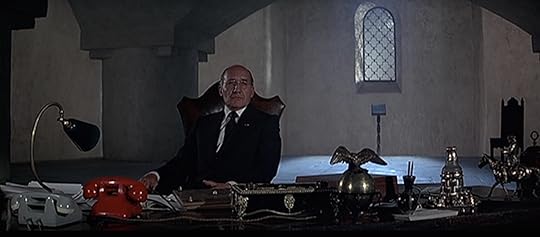
Gogol is a great character and it's easy to see why they kept bringing him back. He's the head of the Soviet secret service, so he's not strictly an ally, but he's also not a villain. It would have been so easy to make him a cliché; a repeat of Rosa Klebb, for instance. But he's humanized right away. After the credits, the movie opens on him in a dramatic, somber pose in his office. He's preparing himself to brief Amasova, but he also has bad news about her boyfriend and he's sympathetic towards her. This is cool, bold stuff for an action movie made in the middle of the Cold War.
I don't know what this is about, but there's no flirting with Moneypenny this time. She and Bond are all business. I don't think I like that. I don't want her to be hopelessly smitten with him, but I do enjoy their friendly relationship and I miss it in Spy.
Best Quip
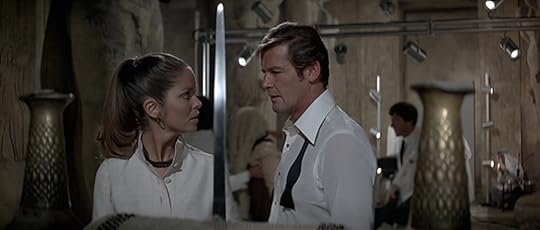
"Bring tears to your eyes?" To Amasova as they're touring Q-Branch's Cairo facility, looking at Q's weird stuff. Makes me laugh out loud every single time. I'm laughing now just remembering it.
Worst Quip
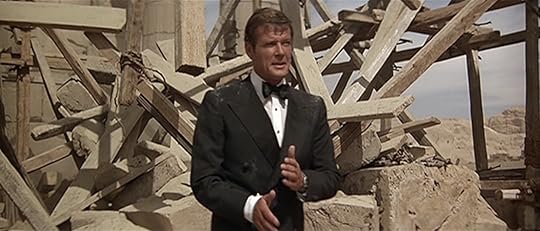
"Egyptian builders..." After some ruins come crashing down on top of Jaws. I'm not even sure what this means. Is he implying that Egyptians don't know how to build? Because they're kind of known for exactly the opposite of that.
Gadgets
Broccoli got over whatever gadgetphobia he had in The Man with the Golden Gun and lets Bond get fully outfitted in Spy. In the teaser, he receives instructions to leave Switzerland via label-maker watch, then uses a ski pole rocket to kill Amasova's boyfriend.
After he and Amasova recover the microfilm from Jaws, Bond reads it with a contraption made by assembling a cigarette case and lighter in a particular way. And of course there's the WetBike prototype that he uses to rescue Amasova at the end, but I don't tend to count real-life tech as gadgets.
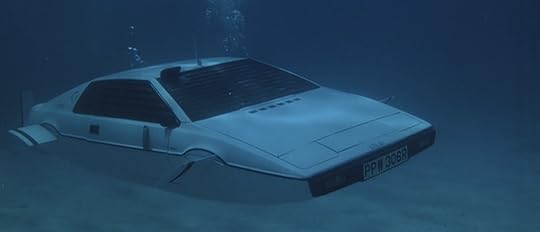
The jewel of the movie is the Lotus Esprit outfitted with oil spray, rockets, mines, and - most importantly - turns into a submarine. Because of the underwater factor and the car's sleek lines, I like it even more than the Aston Martin DB5. I know that's heresy in some Bond circles, but there you go.
Top Ten Gadgets
1. Lotus Esprit (The Spy Who Loved Me)
2. Aston Martin DB V (Goldfinger and Thunderball)
3. Jet pack (Thunderball)
4. Little Nellie (You Only Live Twice)
5. Rocket cigarettes (You Only Live Twice)
6. Ski pole rocket (The Spy Who Loved Me)
7. Magnetic buzzsaw watch (Live and Let Die)
8. Attaché case (From Russia with Love)
9. Propeller SCUBA tank with built-in spearguns (Thunderball)
10. Rebreather (Thunderball)
Bond's Best Outfit
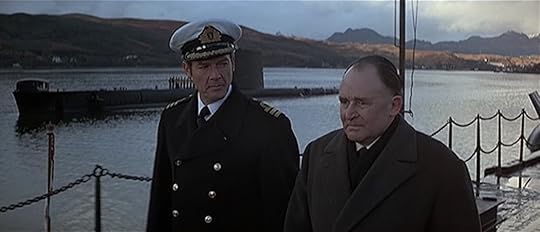
Love a man in uniform.
Bond's Worst Outfit
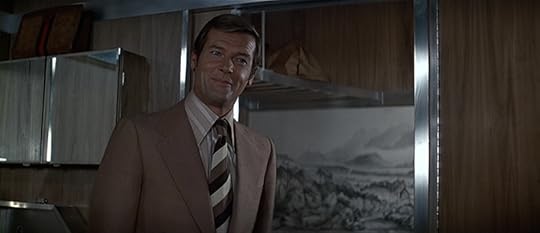
Nothing too horrid, but I'm not a fan of brown in general (unless you're Indiana Jones) and that's too many stripes for my taste.

The script for The Spy Who Loves Me gives Roger Moore a lot more to do than the previous films did and he's totally up for it. I mentioned yesterday that there are a couple of great moments for him. One is when Anya Amasova (Agent XXX) brings up the death of Tracy Bond and he suddenly turns hurt and serious, dropping the banter and ending that line of conversation.
The second is towards the end of the movie when she realizes that he may be the one who killed her boyfriend. She questions him about it and he gravely reminds her about the hazards of their job. He could have been flippant about it, but as he talks about the kill-or-be-killed nature of espionage, he makes me feel it. I replay that exciting teaser sequence in my mind and I realize that it wouldn't be all that fun for Bond. Roger Moore always plays it like it is fun, but this brief conversation reveals that that his self-confidence in those moments is at least partly an act.
Back to the fun though, Moore is never funnier than he is in The Spy Who Loved Me. It's not even the quips; it's the way he acts around Amasova. People give Barbara Bach's performance a hard time and it's true that she's not a great actress, but I do think she's serviceable as Amasova and her amused reactions to Moore do help build some chemistry between them. I don't know if that's what I'm noticing or if it's the fact that she and Bond begin as adversarial colleagues so he's not actively hitting on her in every scene. Instead, he's able to just relax and joke and it's a pleasure to see.
Moore really does have great comic timing. One of my favorite moments is one that I screen-captured at the top of yesterday's post when they're in the back of Jaws' van and Amasova falls asleep on Bond's shoulder. He puts his arm around her, but the van jolts and she wakes up, looking at him like, "What the hell do you think you're doing?" His faked innocence as he pulls back his arm his hilarious. Another fantastic moment is when she tries to take the van and abandon him, but he shows her that he has the keys. It's all about his expression.
Moore's facial expressions are what makes a lot of his quips so funny too. Connery got a lot of humor out of grimacing at his own jokes. Moore delivers them perfectly deadpan, but sometimes with a look at the end to see if anyone got it. Both ways work great.
On to Bond's allies, M is a lot more relaxed about Bond this time. Instead of being constantly annoyed by him, M refers to Bond as his "best man" and (like I said yesterday) even enjoys Bond's know-it-all behavior when it looks like Bond's showing up the Soviets.
M is on a first name basis with General Gogol who's introduced in this movie. I don't think this is the first time M's been called Miles in the series, but I'm not remembering the circumstances where it happened before. Maybe it is the first time? Fleming revealed M's full name - Vice Admiral Sir Miles Messervy KCMG - in the novel The Man with the Golden Gun. (Similarly, Amasova calls Q, "Major Boothroyd," cementing him as the same character who gave Bond his Walther PPK in Dr. No.)
Gogol is a great character and it's easy to see why they kept bringing him back. He's the head of the Soviet secret service, so he's not strictly an ally, but he's also not a villain. It would have been so easy to make him a cliché; a repeat of Rosa Klebb, for instance. But he's humanized right away. After the credits, the movie opens on him in a dramatic, somber pose in his office. He's preparing himself to brief Amasova, but he also has bad news about her boyfriend and he's sympathetic towards her. This is cool, bold stuff for an action movie made in the middle of the Cold War.
I don't know what this is about, but there's no flirting with Moneypenny this time. She and Bond are all business. I don't think I like that. I don't want her to be hopelessly smitten with him, but I do enjoy their friendly relationship and I miss it in Spy.
Best Quip

"Bring tears to your eyes?" To Amasova as they're touring Q-Branch's Cairo facility, looking at Q's weird stuff. Makes me laugh out loud every single time. I'm laughing now just remembering it.
Worst Quip

"Egyptian builders..." After some ruins come crashing down on top of Jaws. I'm not even sure what this means. Is he implying that Egyptians don't know how to build? Because they're kind of known for exactly the opposite of that.
Gadgets

Broccoli got over whatever gadgetphobia he had in The Man with the Golden Gun and lets Bond get fully outfitted in Spy. In the teaser, he receives instructions to leave Switzerland via label-maker watch, then uses a ski pole rocket to kill Amasova's boyfriend.
After he and Amasova recover the microfilm from Jaws, Bond reads it with a contraption made by assembling a cigarette case and lighter in a particular way. And of course there's the WetBike prototype that he uses to rescue Amasova at the end, but I don't tend to count real-life tech as gadgets.
The jewel of the movie is the Lotus Esprit outfitted with oil spray, rockets, mines, and - most importantly - turns into a submarine. Because of the underwater factor and the car's sleek lines, I like it even more than the Aston Martin DB5. I know that's heresy in some Bond circles, but there you go.
Top Ten Gadgets
1. Lotus Esprit (The Spy Who Loved Me)
2. Aston Martin DB V (Goldfinger and Thunderball)
3. Jet pack (Thunderball)
4. Little Nellie (You Only Live Twice)
5. Rocket cigarettes (You Only Live Twice)
6. Ski pole rocket (The Spy Who Loved Me)
7. Magnetic buzzsaw watch (Live and Let Die)
8. Attaché case (From Russia with Love)
9. Propeller SCUBA tank with built-in spearguns (Thunderball)
10. Rebreather (Thunderball)
Bond's Best Outfit

Love a man in uniform.
Bond's Worst Outfit

Nothing too horrid, but I'm not a fan of brown in general (unless you're Indiana Jones) and that's too many stripes for my taste.
June 9, 2015
The Spy Who Loved Me (1977) | Story

Plot Summary
British and Soviet submarines with nuclear missiles go missing, so Bond teams up with Soviet agent XXX (sigh) to discover who has the technology to track and capture the subs. Will the rival agents find love? Or will a tragic link in their past bring out a need for vengeance?
Influences
I always hear that The Man with the Golden Gun was a flop, but it made money. In fact, it made more money than On Her Majesty's Secret Service (which wasn't a flop either) or either of the first two Connery films. What it didn't do was meet expectations.
That was bad timing for Harry Saltzman who was in financial trouble thanks to some bad investments outside of Bond. He was also irritating everyone on the Bond team, but it was mostly the money that made him sell his stake in the series to United Artists. This left Cubby Broccoli as the sole producer, but with UA having a bigger say in the creative side. Pressure was on for the next movie to be a huge hit.
In Saltzman's absence, Broccoli's stepson Michael Wilson came in to help with some of the production duties. They settled on The Spy Who Loved Me as the next book to adapt and Broccoli himself came up with the idea of flipping the title so that Bond is the "Me" and the "Spy" is a Soviet agent. Beyond that though, the story took forever to bring together and involved a dozen or so writers pitching ideas and reworking each other's drafts.
Securing a director was also a problem. They originally went with Guy Hamilton, who'd directed the previous three films, but he pulled out to work on something else. While Hamilton was attached, traditional Bond screenwriter Richard Maibaum was working on what everyone hoped was the final draft of the script. But when Hamilton was replaced by Lewis Gilbert (who'd directed You Only Live Twice), Gilbert brought in his own guy, Christopher Wood, to do one last pass.
With so many cooks in the kitchen, it wouldn't have been surprising had The Spy Who Loved Me been a hot mess. Shockingly, it not only holds together extremely well, it hit 1977 screens with guns blazing and completely revitalized the Bond series as popular entertainment. It's easily my favorite of the Moore films that embrace his style (as opposed to For Your Eyes Only, which is my most favorite of his movies, but precisely because it's the least Moore-like).
The villain's scheme is right out of You Only Live Twice and I used to call Spy a remake of that movie, but that's not really fair. There's a significant change in motive and the rest of the plot is totally different.
The biggest external influence on the movie was Jaws. In fact, Broccoli apparently approached Steven Spielberg about directing Spy, but wouldn't agree to all the creative control that Spielberg wanted. Instead of having the actual guy, Spy settles for the ocean theme and a henchman named after the shark movie. There's even a Jaws vs Jaws scene when the assassin falls into a shark tank.
In accordance with tradition, Spy also includes some new technology from the time period. Jet skis had been around for a few years, but the smaller WetBike brand makes its debut in Spy. It wouldn't go on the market until the following year; Bond is riding the actual prototype in the film.
How Is the Book Different?
The Spy Who Loved Me is famous for discarding almost the entire novel that it's based on, but it does pay homage to Fleming's story with Stromberg's assassins, Jaws and Sandor. The novel features two thugs named Horror and Sluggsy. Horror is a tall guy with steel-capped teeth (though not weaponized like Jaws) and Sluggsy is a short, bald guy.
Other than that though, we're in entirely new territory.
Moment That's Most Like Fleming

Roger Moore's Bond isn't known for being ruthless, but that quality does show up from time to time. Like when he gets the information he needs from Sandor, then lets the guy fall to his death. It's not entirely cold-blooded, but it's close.
Moment That's Least Like Fleming

Jaws' teeth may have been inspired by a Fleming character, but the rest of him is a cartoon. His method of killing is unnecessarily weird and he's invulnerable to the point of ridiculousness. Fleming had some strange villains, but Jaws is over the top.
Cold Open

Like the previous Moore teasers, Spy's is not only connected to the story, it sets it up. We see a British sub go missing in a nicely tense, mysterious way, then hear that a Soviet sub has also disappeared. The Soviets assign XXX to the case and there's a nice fake out when it looks like XXX is a man, but then turns out to be the woman he's in bed with. (The man, by the way, is played by Michael Billington, who was Broccoli's top choice to play Bond had Roger Moore not been available for Live and Let Die. In fact, Billington tested for Bond three more times after Spy when Moore's contract went movie-by-movie and his returning wasn't always a sure thing. Looking at Billington in Spy, it's easy to imagine him as Bond, though we don't get any sense of his personality.)
Meanwhile, M assigns the submarine case to Bond who is already on assignment in the Swiss Alps. Bond extricates himself, but not before a team of Soviet agents show up, led by XXX's boyfriend. An awesome ski chase ensues, beating out the one in On Her Majesty's Secret Service for thrills. There are gadgets, there are stunts, and of course there's the Disco Bond Theme (a source of controversy among Bond music fans, but it gets zero complaints from me). All of this culminates in arguably the best stunt from any Bond movie: skiing off a cliff and escaping via Union Jack parachute. In the process, Bond kills XXX's boyfriend, setting up a conflict for later in the movie.
Easily the best cold open so far and it raised the bar for future teasers to an almost impossible level.
Top 10 Cold Opens
1. The Spy Who Loved Me
2. Thunderball
3. On Her Majesty's Secret Service
4. Goldfinger
5. The Man with the Golden Gun
6. From Russia With Love
7. Diamonds Are Forever
8. You Only Live Twice
9. Live and Let Die
10. TBD
Movie Series Continuity

The Spy Who Loved Me really ushers in the Moore era in a proper way. Not only does it give us the first huge teaser sequence, it also introduces both General Gogol and the British Minister of Defense who will become recurring characters in the next several films. Though M makes the initial call to activate Bond, it's the MoD who actually briefs him. Not the last time that'll happen either.
M doesn't disappear though. He continues to pop up, even in the field, which is still a habit of his. He, Q, and Moneypenny all hang out in the Cairo office for major chunks of the movie. Q is also present at the field briefing, offering technical consult on how the missing subs were possibly tracked.
Bond's time at Cambridge is mentioned again. In You Only Live Twice he mentioned that he studied Oriental langagues there and in Spy we meet one of his former classmates, a sheik named Hosein.
Bond is a know-it-all about a couple of things in this one, but has some holes poked in his omniscience. His knowledge of Carl Stromberg's activities (which gets an appreciative comment from the usually annoyed M) is proven incomplete by XXX. And Bond knows enough about fish to pose as a marine biologist in front of Stromberg, but isn't totally confident pulling up that information.
The jokey tone of the movie gives us a couple of gags that will recur in future films. When Bond drives the Lotus out of the water and onto the beach, he scares the crap out of a dog and gets a drunk to think twice about the bottle he's been consuming. The drunk shows up in the next couple of films and the dog sets a precedent for an even more ridiculous animal reaction in Moonraker.
Finally, when XXX is reciting Bond's dossier back to him, she gets to his marriage and his wife's death before he interrupts her, clearly hurt by the memory. It's one of a couple of great, dramatic moments in the movie. It also makes it obvious that Moore is playing the same character that George Lazenby did, who was playing the same character that Connery did. The James Bond Is a Code Name Theory doesn't hold up.

June 8, 2015
Supergirl: A Shotgun to the Face [Guest Post]
By GW Thomas
 Superhero TV is all the rage. Which is a good thing. The latest entry is DC's Supergirl starring Melissa Benoist. Watching the first episode made me realize what separates Joss Whedon's Avengers from the dog's breakfast that is Supergirl. It's one simple factor. Just one. A team of superheroes must stop an invasion of extra-dimensional baddies from taking over the Earth, or a single hero must face a gang of cons escaped from Krypton's worst prison. Looking at these two scenarios I can't see anything that jumps out and says one will be a massive hit and the other a quickly dwindling mistake. They are both improbable and "comic book." So what is the difference?
First off, is it fair to compare a movie series with a TV series? In this case, yes, because the problem isn't budget, special effects, or star power. Daredevil (which I talked about a few posts ago) had none of these, and it was probably the best superhero show of the year. Money is not the issue. It's something else.
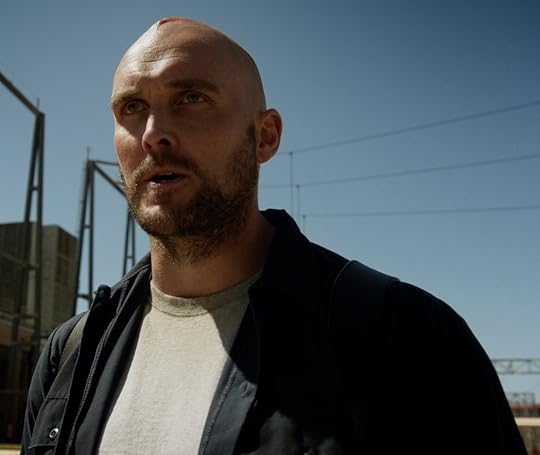
In this pilot you meet eight important characters: Kara, her sister Alex, her sister's boss Hank Henshaw, Kara's boss Cat Grant, Kara's work buddy and confidante Winn, Jimmy Olsen, and two major villains. And you don't have time to get to know any of them. Which is a huge mistake. Take Calista Flockhart as Kara's bitch-boss, the rich and eccentric Cat Grant. We don't get any hint of a redeeming quality or something of interest in her. None. You just want to punch her in the face and you hope she dies. Which is more than you can say for almost all the other characters. They don't even get that much frisson. The entire cast (with the exception of Jimmy Olsen, perhaps) could be wiped off the face of the Earth and you'd not care. You might even cheer. And the villains: cardboard, replaceable, non-entities. The main antagonist this first episode was Vartox (Owain Yeoman), an ax-swinging bad-ass from the Krypton prison. I enjoyed seeing Yeoman out of nostalgia for his Rigsby character on The Mentalist, but not much else.
 So what's this singular problem? It's pace. This first episode goes off like a shotgun in your face, with too many characters, too much back story, too little genuine feeling. If the show had taken four or five episodes to reveal this much information you might have something. Don't give away you are a superhero to your work buddy half way through the first episode! Don't reveal your sister's secret life before the first commercial. Give us time to get to know and like (and dislike) the characters. Kara could have told her boss to go #$%& herself at any point and it wouldn't matter. Make it matter (making the temp assistant feel she is responsible for saving the jobs of the entire bullpen was a nice try, but logically doesn't fly). Daredevil made you interested in Kingpin's life even if you didn't cheer for him. Gotham spent an entire season getting to know all the villains. Arrow and The Flash both assembled teams to support the hero, but not in one episode. Supergirl tries to set it all up in forty minutes, leaving them with nothing to do for the rest of the season except throw new villains at her each week or descend into soap opera. I felt bored with it after one episode.
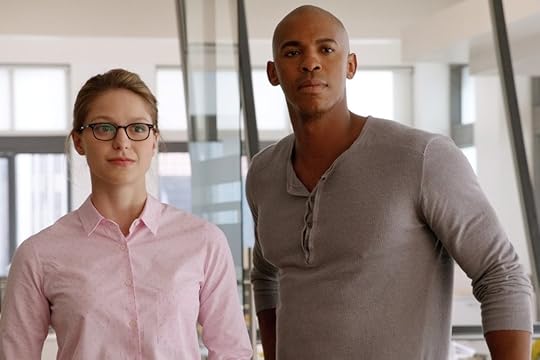 Pace. This has been Joss Whedon's magic. He makes these characters into people you want to follow. He gives them problems and struggles and wins and losses. And he knows pace. He knows it takes time to do all this. A great example was Agent Phil Coulson in The Avengers. What should have been an anonymous government stooge proved to be one of the great death scenes in fantasy film. (We'll ignore the fact that people other than Whedon decided to milk that success, revive him and give him a TV show.) Why? Because Whedon took the time to make you care about him, and then dared to actually do something interesting with him.
Pace. That's all they needed to change. The cast is good. Benoist has the right blend of innocence and strength. Jimmy Olsen (Mehcad Brooks) was good as the guy saving Kara from being fired, but slipped as he revealed his secret mission. Again, good stuff for later in the season. The special effects were great, with Kara having to divert a jet plane through a bridge. The fight scenes were pretty standard, reminding me of the Christopher Reeve Superman movies. All the material was there. All of it. Kaboom!
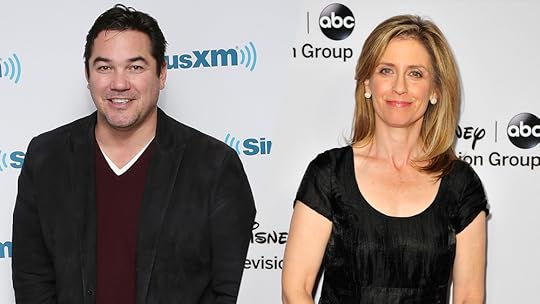 I suppose the one redeeming feature I have to praise: no Oliver Queen-style, drive you crazy, go get a soda flashbacks. Ah, there was that. The short glimpse of Kara's life with adopted parents, the Danvers, was a fun cameo for Dean Cain (who played Superman on Lois and Clark) and Helen Slater (who played Kara in the 1984 Supergirl film that followed the Reeve movies). I suppose the producers didn't want to do more than suggest this part of Kara's life because they didn't want to go down the Smallville road. (Or as Sheldon Cooper puts it, ten seasons to see a man who can fly, fly.) Personally, I would have welcomed more from these two and perhaps that is the plan, to bring them in as recurring roles?
GW Thomas has appeared in over 400 different books, magazines and ezines including The Writer, Writer's Digest, Black October Magazine and Contact. His website is gwthomas.org. He is editor of Dark Worlds magazine.
 Superhero TV is all the rage. Which is a good thing. The latest entry is DC's Supergirl starring Melissa Benoist. Watching the first episode made me realize what separates Joss Whedon's Avengers from the dog's breakfast that is Supergirl. It's one simple factor. Just one. A team of superheroes must stop an invasion of extra-dimensional baddies from taking over the Earth, or a single hero must face a gang of cons escaped from Krypton's worst prison. Looking at these two scenarios I can't see anything that jumps out and says one will be a massive hit and the other a quickly dwindling mistake. They are both improbable and "comic book." So what is the difference?
First off, is it fair to compare a movie series with a TV series? In this case, yes, because the problem isn't budget, special effects, or star power. Daredevil (which I talked about a few posts ago) had none of these, and it was probably the best superhero show of the year. Money is not the issue. It's something else.
In this pilot you meet eight important characters: Kara, her sister Alex, her sister's boss Hank Henshaw, Kara's boss Cat Grant, Kara's work buddy and confidante Winn, Jimmy Olsen, and two major villains. And you don't have time to get to know any of them. Which is a huge mistake. Take Calista Flockhart as Kara's bitch-boss, the rich and eccentric Cat Grant. We don't get any hint of a redeeming quality or something of interest in her. None. You just want to punch her in the face and you hope she dies. Which is more than you can say for almost all the other characters. They don't even get that much frisson. The entire cast (with the exception of Jimmy Olsen, perhaps) could be wiped off the face of the Earth and you'd not care. You might even cheer. And the villains: cardboard, replaceable, non-entities. The main antagonist this first episode was Vartox (Owain Yeoman), an ax-swinging bad-ass from the Krypton prison. I enjoyed seeing Yeoman out of nostalgia for his Rigsby character on The Mentalist, but not much else.
 So what's this singular problem? It's pace. This first episode goes off like a shotgun in your face, with too many characters, too much back story, too little genuine feeling. If the show had taken four or five episodes to reveal this much information you might have something. Don't give away you are a superhero to your work buddy half way through the first episode! Don't reveal your sister's secret life before the first commercial. Give us time to get to know and like (and dislike) the characters. Kara could have told her boss to go #$%& herself at any point and it wouldn't matter. Make it matter (making the temp assistant feel she is responsible for saving the jobs of the entire bullpen was a nice try, but logically doesn't fly). Daredevil made you interested in Kingpin's life even if you didn't cheer for him. Gotham spent an entire season getting to know all the villains. Arrow and The Flash both assembled teams to support the hero, but not in one episode. Supergirl tries to set it all up in forty minutes, leaving them with nothing to do for the rest of the season except throw new villains at her each week or descend into soap opera. I felt bored with it after one episode.
  Pace. This has been Joss Whedon's magic. He makes these characters into people you want to follow. He gives them problems and struggles and wins and losses. And he knows pace. He knows it takes time to do all this. A great example was Agent Phil Coulson in The Avengers. What should have been an anonymous government stooge proved to be one of the great death scenes in fantasy film. (We'll ignore the fact that people other than Whedon decided to milk that success, revive him and give him a TV show.) Why? Because Whedon took the time to make you care about him, and then dared to actually do something interesting with him.
Pace. That's all they needed to change. The cast is good. Benoist has the right blend of innocence and strength. Jimmy Olsen (Mehcad Brooks) was good as the guy saving Kara from being fired, but slipped as he revealed his secret mission. Again, good stuff for later in the season. The special effects were great, with Kara having to divert a jet plane through a bridge. The fight scenes were pretty standard, reminding me of the Christopher Reeve Superman movies. All the material was there. All of it. Kaboom!
 I suppose the one redeeming feature I have to praise: no Oliver Queen-style, drive you crazy, go get a soda flashbacks. Ah, there was that. The short glimpse of Kara's life with adopted parents, the Danvers, was a fun cameo for Dean Cain (who played Superman on Lois and Clark) and Helen Slater (who played Kara in the 1984 Supergirl film that followed the Reeve movies). I suppose the producers didn't want to do more than suggest this part of Kara's life because they didn't want to go down the Smallville road. (Or as Sheldon Cooper puts it, ten seasons to see a man who can fly, fly.) Personally, I would have welcomed more from these two and perhaps that is the plan, to bring them in as recurring roles?
GW Thomas has appeared in over 400 different books, magazines and ezines including The Writer, Writer's Digest, Black October Magazine and Contact. His website is gwthomas.org. He is editor of Dark Worlds magazine.
June 7, 2015
7 Days in May | Spy-ron Man 3 (Sorry)
Spy (2015)

I didn't have high hopes for Spy. I love spy movies and I love Melissa McCarthy/Paul Feig team-ups, but the trailers focused on the awkwardness of her humiliating disguises and that's not what I wanted to see. I should've trusted Feig more, because that's only a running gag early in Susan Cooper's (McCarthy) mission. It doesn't take too long for her to take control and start doing things her own way. That includes dropping her timid demeanor and becoming more like Mullins from The Heat than Sookie from Gilmore Girls. (Hey, I love Sookie, but she ain't no spy.) If the movie had been marketed more like it is on the Entertainment Weekly cover, I would've been more excited for it, but I'm thrilled it exceeded my expectations.
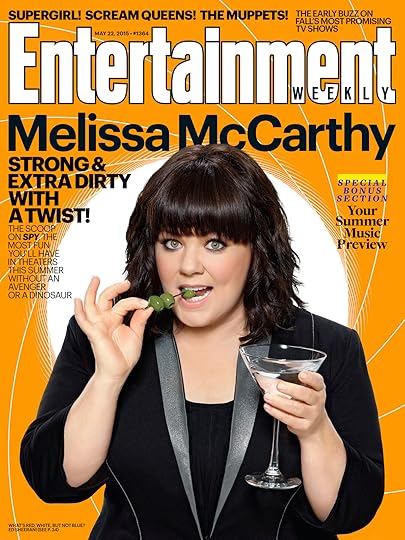
In addition to McCarthy's being hilarious, Spy is also the best Jason Statham movie I've seen in years. He's playing a parody of himself, but it's the perfect amount of over the top. He's the funniest part of a movie that's already full of really funny parts.
Iron Man 3 (2013)
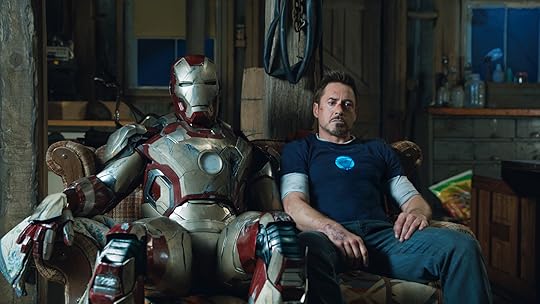
The Merry Marvel Rewatch continues with Iron Man 3, a movie I enjoy more and more every time I see it. I liked it well enough the first time, but it was different than I expected. I thought I'd learned everything I was going to learn about Tony Stark, but that wasn't the case. It's still an exciting film, but it's surprisingly character-driven, dealing with Tony's paralyzing fear after the events of Avengers. There's nothing in the way of furthering the overall plot of the series; no Infinity Stones or anything like that. It's more epilogue to Marvel's Phase 1 than it is the first film in Phase 2, but that's fine with me. I'm definitely going to have to come back and do a full series on the Marvel movies at some point, concentrating on the characters.
In the meantime, I'm about to give Agents of SHIELD another shot, so we'll see how that goes next week.

I didn't have high hopes for Spy. I love spy movies and I love Melissa McCarthy/Paul Feig team-ups, but the trailers focused on the awkwardness of her humiliating disguises and that's not what I wanted to see. I should've trusted Feig more, because that's only a running gag early in Susan Cooper's (McCarthy) mission. It doesn't take too long for her to take control and start doing things her own way. That includes dropping her timid demeanor and becoming more like Mullins from The Heat than Sookie from Gilmore Girls. (Hey, I love Sookie, but she ain't no spy.) If the movie had been marketed more like it is on the Entertainment Weekly cover, I would've been more excited for it, but I'm thrilled it exceeded my expectations.

In addition to McCarthy's being hilarious, Spy is also the best Jason Statham movie I've seen in years. He's playing a parody of himself, but it's the perfect amount of over the top. He's the funniest part of a movie that's already full of really funny parts.
Iron Man 3 (2013)

The Merry Marvel Rewatch continues with Iron Man 3, a movie I enjoy more and more every time I see it. I liked it well enough the first time, but it was different than I expected. I thought I'd learned everything I was going to learn about Tony Stark, but that wasn't the case. It's still an exciting film, but it's surprisingly character-driven, dealing with Tony's paralyzing fear after the events of Avengers. There's nothing in the way of furthering the overall plot of the series; no Infinity Stones or anything like that. It's more epilogue to Marvel's Phase 1 than it is the first film in Phase 2, but that's fine with me. I'm definitely going to have to come back and do a full series on the Marvel movies at some point, concentrating on the characters.
In the meantime, I'm about to give Agents of SHIELD another shot, so we'll see how that goes next week.
June 6, 2015
The Man with the Golden Gun (1974) | Music
For the Man with the Golden Gun title sequence, Maurice Binder took inspiration from the Southeast Asian setting as well as the gold accouterments of the title character. You Only Live Twice was also set in Asia and Binder used volcano imagery from SPECTRE's headquarters. This time, the motif is water: gently rippling, sprinkled with rain, or with strategically placed lilies over submerged, naked women. The water doesn't evoke anything specific from the movie (not like it will in, say, The Spy Who Loved Me); it looks like Binder just chose it as generally evocative of the setting. Into this calmness, he inserts images of the Golden Gun, but also the cigarette box that Lazar uses to deliver bullets to Scaramanga. And of course, silhouettes of naked women.
There's a funny story about shooting the silhouettes that Steven Jay Rubin tells in his book The Complete James Bond Movie Encyclopedia. Binder was filming that bit on the movie stage and Rubin writes:
Conscious of ratings codes and censors, he noted that from a certain angle the woman's privates were a little too noticeable on camera. When the model refused to shave, Binder realized that the only way to make the shot work was to brush her pubic hair into place and use Vaseline to hold it there. "You do it," she said, and Binder dutifully got down on his knees and put things right. At that exact moment, Roger Moore and Cubby Broccoli walked onto the stage. Roger turned to Cubby and said, "I thought you were the producer on this picture." And Cubby replied, "It doesn't seem right, does it?"By the time The Man with the Golden Gun was made, Harry Saltzman had worn out his welcome as one of the series' producers. He'd always been a voice of dissent, but where that had once spurred people to new, creative solutions, it was now just irritating. He and Broccoli weren't even getting along and had started taking turns producing the films. Saltzman had done Live and Let Die, which partially explains John Barry's absence from that movie. For The Man with the Golden Gun, Broccoli produced and Barry came back.
Barry brought with him Don Black, who'd written the theme songs for Thunderball and Diamonds Are Forever. Saltzman had taken issue with the Diamonds Are Forever theme, saying that it's lyrics were too raunchy. He would have had an even bigger issue with The Man with the Golden Gun. For this song, Black goes back to the Goldfinger/Thunderball approach of just describing the movie's villain, but with lots of innuendo around the gun and how love "comes just before the kill."
Barry brought in Scot singer Lulu (who'd become famous singing Black's theme song from To Sir with Love) to record it. It's a catchy song, but no one's favorite. It feels like it's trying too hard. It's oomph isn't cool; it's desperate. And that goes for Lulu's performance as well as the orchestration.
In general, Barry wasn't happy with the Golden Gun soundtrack. He only had three weeks to do it and he would later say in an interview that it never came together for him. That explains why one musical cue completely ruins an otherwise awesome moment. When Bond jumps his car over a ruined bridge in a perfect spiral, Barry interrupts the Bond Theme with a stupid, comical slide whistle.
One great use of the Bond Theme though is when Sheriff Pepper recognizes Bond in Thailand. It's a great way to show that Pepper knows who Bond is and is remembering their previous encounter in Louisiana.
The Bond Theme also comes up when Bond and Hip are spying on Hai Fat's compound and when Bond is just tooling around the river after losing his pursuers in a boat chase.
Top Ten Theme Songs
1. On Her Majesty's Secret Service
2. Diamonds Are Forever
3. You Only Live Twice
4. From Russia With Love (John Barry instrumental version)
5. Live and Let Die
6. Dr No
7. Thunderball
8. Goldfinger
9. From Russia With Love (Matt Monro vocal version)
10. The Man with the Golden Gun
Top Ten Title Sequences
1. On Her Majesty's Secret Service
2. Dr No
3. Thunderball
4. Goldfinger
5. From Russia With Love
6. Diamonds Are Forever
7. Live and Let Die
8. The Man with the Golden Gun
9. You Only Live Twice
10. TBD

June 5, 2015
The Man with the Golden Gun (1974) | Villains

The highlight of The Man with the Golden Gun is Christopher Lee's appearance as Scaramanga. The brings ruthlessness to the role, naturally, but he also seems to be enjoying himself. It's not just that Lee's having fun, but Scaramanga himself loves his job. One of my favorite scenes is when he shoots the cork out of a champagne bottle that Bond's standing next to. It freaks Bond out, but Scaramanga's grinning ear to ear as he jumps out from behind the rock he was hiding behind. He apologizes, but he's totally not sorry.
He not only loves marksmanship and murder, but he's also never lost his flair for performing. I don't think he cares about entertaining other people, but he finds ways to keep himself amused. Hence the deadly fun house. That also could explain why he kidnaps Goodnight at the end, even though he doesn't know she has the Solex. Finding the Solex has nothing to do with that action; it's all about drawing Bond to the island.
Scaramanga's arrogant conviction of his own invulnerability is of course where he goes wrong. He's actually winning the "duel," which makes him even more cocky. But then Bond makes it to his lookalike mannequin and retrieves its gun. I don't think it's stupidity on Scaramanga's part to leave a loaded gun on the Bond mannequin; it's a calculated risk. An extra chance for his victims and an extra reason for him to be careful. The problem is that he's not that careful and doesn't check the mannequin's fingers.
Like in the novel, Scaramanga begins the story as a glorified henchman, but the movie lets him move past that by killing his employer and taking over the scheme. Which leads us to Hai Fat.

Hai Fat is the film's actual villain for most of the story and he's an excellent one... until he isn't.
The first time we meet him, he's very quick. He sees immediately that Bond is trying to impersonate Scaramanga, but he plays it totally cool. He lets Bond think he's fooled, drawing information from Bond and arranging to have him come back when Hai Fat is more prepared to deal with him.
When Bond does return, I understand why Hai Fat doesn't want him killed on the estate. But I don't understand why the dojo is a better place for it. The dojo is connected to Hai Fat, too, and Bond's dying there would be difficult to explain. It's not necessarily a dumb move on Hai Fat's part - I can see why it's at least preferable to having Bond killed at the house - but it is odd.
Where Hai Fat goes wrong is in turning on Scaramanga. I had to process this a bit, because at first it seems like Hai Fat's anger is misdirected. He's frustrated that Bond has escaped and now knows all about Hai Fat's involvement, but Scaramanga had nothing to do with the escape. However, it was Scaramanga who indirectly led Bond to Hai Fat and Hai Fat knows it. After all, Bond showed up at Hai Fat's house disguised as Scaramanga.
But still, it's Hai Fat's other henchmen who failed to kill Bond (and Hai Fat's wanting to have it done at the dojo in the first place), so he's more pissed at Scaramanga than he should be. I don't know if Scaramanga would have eventually murdered Hai Fat and taken over the operation anyway, but it's definitely Hai Fat's hissy fit that makes Scaramanga do it when he does. And it may even be what puts it into Scaramanga's mind.

Nick Nack is awesome. We get no backstory on him, but I imagine that he met Scaramanga in the circus. He jokes about being disloyal, but never is. In fact, he's so loyal that he becomes another in the line of villains who try to kill Bond after his boss is defeated.
That trend started in Diamonds Are Forever where it didn't make any sense and continued in Live and Let Die where it was more believable. It's most right in Golden Gun, but I'm getting tired of the trope. It's just a way to get a cheap sting in at the end, perhaps trying to recreate the ending of On Her Majesty's Secret Service in some lesser way. I'll be glad when the scripts cut that out.

Dojo-favorite Chula is barely a henchman and not that good, but he's cocky and funny and I like him enough to want to mention him. I just wish his fighting was as good as his set up.

This creepy dude is apparently named Kra, though I don't remember its being mentioned in the movie. He's in charge of running Scaramanga's Solex equipment and leering at Goodnight. His leering actually becomes touching and stroking until Goodnight beats him up and throws him into a vat of liquid helium. I like that she gets her own henchman to beat up and quip about, even if I don't like him.
Top Ten Villains
1. Auric Goldfinger (Goldfinger)
2. Ernst Stavro Blofeld (From Russia With Love and Thunderball)
3. Ernst Stavro Blofeld (On Her Majesty's Secret Service)
4. Francisco Scaramanga (The Man with the Golden Gun)
5. Dr. Kananga (Live and Let Die)
6. Doctor No (Dr. No)
7. Emilio Largo (Thunderball)
8. Rosa Klebb (From Russia With Love)
9. Kronsteen (From Russia With Love)
10. Hai Fat (The Man with the Golden Gun)
Top Ten Henchmen
1. Baron Samedi (Live and Let Die)
2. Fiona Volpe (Thunderball)
3. Grant (From Russia with Love)
4. Nick Nack (The Man with the Golden Gun)
5. Oddjob (Goldfinger)
6. Irma Bunt (On Her Majesty's Secret Service)
7. Miss Taro (Dr. No)
8. Tee Hee (Live and Let Die)
9. Professor Dent (Dr. No)
10. Whisper (Live and Let Die)