
Angela Grey's Blog, page 7
March 7, 2022
Book review for Atlas of the Heart: Mapping Meaningful Connection and the Language of Human Experience by Brené Brown

The author writes about how most people do not have the emotional language to name all the emotions experienced which can lead to mental, physical, and spiritual health problems. The fact that everyone faces stressors daily but feel it based on our thoughts not body reaction. Her research identifying emotions asked people to name the ones they experienced. The average number of answers was only three. That limited vocabulary, she says, can result in a crisis.
She delves into how envy and jealousy are different, and jealousy is more acceptable to say even though its envy being shown; but jealousy can have more dire consequences. Brown states that we can all use freudenfreude as a form of support for ourselves and others and how resentment is about ourselves not being able to have or do like others, not the other person’s fault. Freudenfreude is finding joy in other people’s success which is beneficial to our mental health, as opposed to schadenfreude which is finding joy in another’s misfortune and a cause of shame and guilt because of the insecurity and cruelty that was sparked.
I found it interesting how she shared her concept of resentment as partly cause of an unwanted identity which is one of the most powerful elicitors of shame and bitterness. She goes into comparison being a “pervasive social phenomenon” that we do that affects our well-being, self-concept and level of aspiration. It’s a creativity kill that tries to force us into conformity.
While delving into regret, expectations, disappointment, resignation, and boredom, she notes how it can leave us either wound up or lethargic based on our control of the situation then goes into the mild discomfort or deep pain that can lead to a disconnect followed by regret and feeling vulnerable. She says self-awareness is asking for and understanding why we need it.
With wonder, awe, curiosity, confusion, surprise and interest Brown notes that we can be overwhelmed by the expanse of something that is almost incomprehensible, how confusion can lead to motivation to trigger problem solving which is effortful and effective then a brief swoop into the shortest duration emotion which is surprise.
The often-conflicting emotions of amusement, nostalgia, cognitive dissonance, bittersweetness, irony, paradox, and sarcasm have an air of familiarity but what if two of them are contradictory and venture into complexity. Our willingness to stay in that confusing emotion can be a teaching moment while nostalgia isn’t always truthful, and we must recognize the inconsistencies so as not to be disconnected or fall into rumination. Cognitive dissonance is when one holds two inconsistent cognitions thereby creating tension and justification. The opposite is paradox because there the conflicting ideas inform the other.
Anguish, despair, grief, hopelessness, and sadness are discussed in comparisons with anguish never truly fading away. Hopelessness and despair are both emotions and experiences and can result in self-blame. When hopelessness and sadness flood our emotional landscape, despair is the result. Knowing sadness is life and it makes the connection to other people a collective “us.” Grief, being different has the elements of loss, longing, and feeling lost; and has to be shared to work through the process of grieving.
Compassion, empathy, comparative suffering, pity, sympathy, and boundaries lends into the debate about whether struggling souls deserve compassion or empathy which is a skill that connects us with humanity. Empathy is about connection while sympathy is a form of disconnection, a distant concern which the author takes one step further to discuss boundaries and the need for autonomy.
In the chapter on shame, perfectionism, self-compassion, humiliation, guilt, and embarrassment led into the author’s research on the connection between violence and humiliation. She says shame is based on the self, not a behavior. Guilt is a behavior. Humiliation occurs at our belittlement and feeling that we do not deserve the unworthiness making it different from shame which based on her research thrives on secrecy, judgment, and silence. On perfectionism the author notes that acceptance and approval are at its core. Guilt then happens when we fall short of expectations set for ourselves.
Belonging, connection, fitting in, insecurity, invisibility, disconnection, and loneliness are discussed with belonging (diversity, inclusion, and equity) being first and its essential nature for humans despite its vulnerability. Stronger connected individuals are said to be happier, healthier, and better able to handle stress. Loneliness she says is more dangerous to health that excessive drinking. Insecurity goes deeper than self-doubt and she notes that we can have insecurity despite having high self-esteem because of a self-critical nature. She ends that chapter with the dehumanization and disconnection that leads to the painful human experience of invisibility.
Love, heartbreak, lovelessness, self-trust, trust, defensiveness, betrayal, and hurt are brought up next. Love cannot be given or gained but instead is nurtured and grown. We can only love others as much as we love ourselves and is damaged by betrayal as well as, shame, blame, and disrespect. Brokenhearted are the bravest among us because of the trust they lent. Betrayal, the violation of trust, can be healed but it is rare the author says because it requires healing, strength and vulnerability.
Joy is a sudden, internal, short-lived, higher intensity, spiritual, less-effort version of happiness, which is self-focused, circumstantial, and external trait, not a state. Foreboding joy is about being afraid to partake in wonderful moments because you live in fear of the bad things that can happen. Relief the author says is tension leaving the body while calm is about managing emotional reactivity, is intentional, and contagious.
Pride (a feeling of pleasure), humility (openness and accurate assessments of personal contributions), and hubris (inflated sense of ones abilities along with a need for dominance) are differentiated by pride’s positive connotation with self-esteem, hubris negative correlation to narcissism and lack of care what others think, and humility meaning groundedness that’s genuine, quiet, and powerful and the key to confidence and healthy social interactions.
Anger (an action emotion healthy in the short term) exists on a continuum from mild to rage by activating the nervous system which affects our health over time. Fear, betrayal, injustice, shame, vulnerability were noted by the author’s research participants when asked about anger which thereby is seen as a secondary emotion. Contempt, criticism, stonewalling, and defensiveness are damaging communication patters. Disgust comes about as an aversion toward something we find offensive whether identified through senses or ideas. Disgust towards people protects us from contamination of the soul as opposed to toxins that would hurt our body. Left unchecked, disgust leads to dehumanization which closes us off and removes empathy. Finally, hate is harder to do the closer you are to people and can only be minimized by seeing things from the other persons point of view.
This book on self-actualization is replete with studies, theories, and examples that must be read in its entirety to achieve the maximum benefit, particularly the notes on Martin Seligman on resilience and its personalization, permanence, and pervasiveness. I highly recommend this easy read that informs us on how we can be physically, mentally, and spiritually changed by understanding the information delivered in this book. Get it here.
Until my next post, why not check out my YA novels about mental illness, memoir writing, or even my Native American mystery series on Amazon, or follow me on Twitter, Instagram, Facebook, Goodreads, LinkedIn, Bookbub , BookSprout, or AllAuthor.


March 6, 2022
Book review: The Subtle Art of Not Giving a F*ck: A Counterintuitive Approach to Living a Good Life by Mark Manson
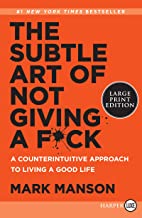
The author proffers some important lessons such as: values that are uncontrollable are bad, improving takes letting go of assumptions, and focusing on leaving a legacy can be detrimental.
The key takeaways are:
Avoid the constant pursuit of satisfaction because true happiness consists in only worrying about the essentials because you can only create positive experiences by experiencing the negative ones. Stop believing that you are unique because it leads to being entitled without sacrifice, i.e., grandiose narcissism bases itself on the belief that you deserve special treatment, and victim narcissism takes into account I’m bad and everyone else is great, so I deserve special treatment. Both lead to complacency. Accept reality as it is; don’t fall subject to self-help books promise of constant happiness and take responsibility for your own emotions and realize that dealing with negative ones is a daily struggle. Don’t avoid the problems. Happiness is a science (values are hypotheses, action are experiences and results are data) which requires smart decision making based on results not fear. Values are prerequisite to happiness and the ones you fight for define yourself.Take responsibility to focus your energies on improving your life.Choose how to react to life because we control our emotional response to problems.Doubt your beliefs because then you’ll steadily improve over time.Reduce your ego so you can improve by asking yourself what if I’m wrong, what would it mean if i was wrong, and would an error have a better or worse problem than my current problem?Failure is the key to improvement; instead of worrying about it and becoming stagnant, try it again.Better to do something that nothing because it leads to motivation.Say no so you can say yes so you can truly stand up for one thing even though you are denying another issue.He also goes into the 3 lessons you need to know which are: only hold values that you can control, certainty hampers growth, and don’t obsess over leaving a legacy.
All in all, it’s an astounding book that backs its statement up with studies and facts about prominent people. While it defies the self-help industry, many of those books leave you wanting something elusive that you’re missing. It’s a good, albeit tedious read at certain points, but worth the effort. Get it here.
Until my next post, why not check out my YA novels about mental illness, memoir writing, or even my Native American mystery series on Amazon, or follow me on Twitter, Instagram, Facebook, Goodreads, LinkedIn, Bookbub , BookSprout, or AllAuthor.
March 5, 2022
Memoir Writing for Mental Health (Details—Part Three) Mapping Out Memories
Where do you get the details to put in a memoir? How do you remember things from so long ago? Which ones are the correct memories to use? How do I connect them?
[image error]Pexels.com" data-medium-file="https://angelagrey.files.wordpress.co..." data-large-file="https://angelagrey.files.wordpress.co..." src="https://angelagrey.files.wordpress.co..." alt="" class="wp-image-2913" width="243" height="364" srcset="https://angelagrey.files.wordpress.co... 243w, https://angelagrey.files.wordpress.co... 486w, https://angelagrey.files.wordpress.co... 100w, https://angelagrey.files.wordpress.co... 200w" sizes="(max-width: 243px) 85vw, 243px" />Photo by Taryn Elliott on Pexels.comYou will now gather the particular details and make them universal so your reader can connect with the words you write. Use one part exertion to one part grace as you engage all your senses and summarize the events when you need to pick up pace and intersperse narration with scenes, dialogue, and action to allow the reader to experience your life through their eyes. Be sophisticated and subtle but don’t get preachy.
First things first, let’s set out your timeline of important events in your life.
Aha momentsMy wake-up callsEvent that I’ve survivedWhat I know now that I’d wish I’d known back thenThink eight-word loglineMoments of epiphanyWhat you’d be willing to sacrifice to protect your deepest truthsWhat would you die for?Times of crisis, losing all hope and how you recoveredExperiences that have shaken your sense of meaningWhat you must buryDon’t forget to add local and world events to give the reader a sense of history. Our timeline (time + space) is our setting. Use your chosen theme to find elements to illuminate your setting then sprinkle the elements of plot. Don’t forget that an easy life is a dull life so add turning points or obstacles or conflict that caused us to scurry in a new direction. These trials and tribulations where your life didn’t run smoothly give your story flavor. Allow your character passions and obsessions reveal your theme. Remember that you’re not writing an autobiography (life to death) but a memoir (highlight of a given time). You want to be deep yet selective. On this timeline, you’ll determine where to start your story, which point of view to use to emphasize plot, eliminating backstory and focusing on plot, where to sprinkle flashbacks and memories, emotional pacing, and where to end your story. Begin with 5-8 key points and then turns those into 40-50 scenes.
Keep in mind that you can tell the story in a linear fashion (moving forward through time), begin with the ending and work backwards, the twist where we invert expectations we’ve been building all along, a sequence of events moving through fascinating experiences, a story within a story, or non-linear (moving between past and present). While you proceed in the way you chose, remember to tease with tension (foreshadowing events, deadlines, warnings, premonitions, withholding information, building anticipation, and surprises or secrets) to keep your reader on their toes.
Now use your universal voice to gather those details to emotionally activate your reader. The first thing we write is our gateway to delve into our truth or felt experiences, where it may even be scary to say out loud, instead take a risk, and make your heart race. Use your opening lines to hook your reader, make them care, and feel they are in a reliable storyteller’s hands. Shock, grip, or compel them to fascinate in your words. If you lose your way, the real work starts, and your journey begins. Examine the complexity of multifaceted events (great, tragic, desperate, and undetermined). Use your voice to create a connection from your personal to the universal so your reader will understand the significant meaning. Feel deeply to evoke the emotional experience. Allow the reader to connect their own stories with our experience.
Now it’s time to tighten and trim your manuscript by editing it. Analyze the pace, setting, point of view, structure, plot holes, character arcs, and voice. Then it comes the time to seek out constructive feedback. Let it go and it will come back to you with suggestions that will put it in a new light. It was a long, tenuous road but you mapped it out which made it easier. Voila!
March 4, 2022
Things I Have Learned from My Mental Illness
It sometimes feels really unfair when coming out of psychosis (the depths of a mental illness). Why me? But in order put spin some positivity regarding it, I’d like to mention some things it has taught me about myself. Here are reasons I’m grateful for certain aspects of living with a mental illness.
Being grateful for the little or mundane thingsSense of achievementA better sense of selfEmpathy towards otherLearning strength of selfEspecially when I’ve come out of psychosis, I’ve noticed things with better clarity. The trees are greener, the flowers more vivid, the laughter of a child or anyone for that matter is so musical. I’m grateful for life. Doing the dishes, laundry, swiffering, or cleaning the windows even doesn’t seem like a chore. I lived through the tough moments and treasure the ability to do them.
I’ve got an incredible sense of achievement for struggling through something terrifying and coming out on the other end. I pick myself up by my bootstraps and dust myself off and continue with my responsibilities with an air of accomplishment. That’s because I did something not everyone can say they muddled through and won for the time being.
I have this enhance sense of self that realizes while I have limitations, I can challenge them. My confidence is earned, and I set the bar for future endeavors higher. It makes me more in tune with my personality.
[image error]Pexels.com" data-medium-file="https://angelagrey.files.wordpress.co..." data-large-file="https://angelagrey.files.wordpress.co..." src="https://angelagrey.files.wordpress.co..." alt="" class="wp-image-2920" width="375" height="249" srcset="https://angelagrey.files.wordpress.co... 375w, https://angelagrey.files.wordpress.co... 747w, https://angelagrey.files.wordpress.co... 150w, https://angelagrey.files.wordpress.co... 300w" sizes="(max-width: 375px) 85vw, 375px" />Photo by Andres Ayrton on Pexels.comMy empathy towards others fighting similar battles is more attuned. It’s heartening to learn of others mightily fighting MS or cancer and appreciating their strength to get through each day. I even see the anger or rage in strangers and wonder who or what hurt them so badly that they need to have such a sour demeanor.
While I feel pathetic and weak when I’m coming out of psychosis, I gradually learn how strong and confident I am to tackle the little things to the big things. I’m resilient. Heart palpitations, sweaty hands, trembling body, and nauseousness are merely bumps in the road. I’ve been to the depths of madness and inched my way back. And I’m grateful for the experience to be more attuned to the world around me and have the strength to help others who make mountains out of molehills see the other side of things.
March 3, 2022
Sleep Quality and Mental Health
[image error]Pexels.com" data-medium-file="https://angelagrey.files.wordpress.co..." data-large-file="https://angelagrey.files.wordpress.co..." src="https://angelagrey.files.wordpress.co..." alt="" class="wp-image-2861" width="330" height="219" srcset="https://angelagrey.files.wordpress.co... 330w, https://angelagrey.files.wordpress.co... 657w, https://angelagrey.files.wordpress.co... 150w, https://angelagrey.files.wordpress.co... 300w" sizes="(max-width: 330px) 85vw, 330px" />Photo by Ivan Oboleninov on Pexels.comThe brain basis of a mutual relationship between sleep and mental health is not yet completely understood. But neuroimaging and neurochemistry studies suggest that a good night’s sleep helps foster both mental and emotional resilience, while chronic sleep deprivation sets the stage for negative thinking and emotional vulnerability.
Harvard Medical School
Sleep hygiene: taking a soothing bath before bedtime, dressing in light loose clothes, getting a massage, reading a book and meditation are only a handful of the things you can do to get better quality sleep. But we must also take note that many mental health problems are associated with sleeping.
Sleep is the golden chain that ties health and our bodies together.
Thomas Dekker
Sleep plays a vital role in brain function and systemic physiology across many body systems. For example, the link between sleep, eating, and weight loss: What you need to know is that when you improve your sleep, your body produces leptin which fills nutritional gaps that have kept you hungry and brought about overeating. According to the Oxford Dictionary, “leptin is a protein produced by fat cells that is a hormone acting mainly in the regulation of appetite and fat storage.”
And eat supper earlier if you plan on consuming carbs along with micronutrient dense options as well. Avoid greasy, spicy, or MSG heavy foods. Also keep your insulin from spiking in the first part of your day by either fasting until lunch or eating a superfood breakfast of eggs, steak, or salmon, some cooked or raw veggies, avocado, coconut, olives, nuts or seeds, along with healthy fat supplements such as omega-3. If you have to have that smoothie, make it a green smoothie with spinach, berries, protein powder, almond butter, cacao powder, cinnamon, unsweetened almond milk and a half a banana or stevia to make it taste better.
[image error]Pexels.com" data-medium-file="https://angelagrey.files.wordpress.co..." data-large-file="https://angelagrey.files.wordpress.co..." src="https://angelagrey.files.wordpress.co..." alt="" class="wp-image-2865" width="210" height="314" srcset="https://angelagrey.files.wordpress.co... 210w, https://angelagrey.files.wordpress.co... 420w, https://angelagrey.files.wordpress.co... 100w, https://angelagrey.files.wordpress.co... 200w" sizes="(max-width: 210px) 85vw, 210px" />Photo by Daria Shevtsova on Pexels.comStruggling to give up your smartphone or laptop at night? Here are some ways to ditch screens. First use an alarm clock instead of your phone. The ones with the full shut off dinner are especially helpful. Put that phone in another room so the vibration and notifications are out of earshot. Keep the tv screen out of your bedroom, too, and don’t watch it sooner than 90 minutes prior to sleep. Either have a conversation, meditate, or read a book. Science suggests that you should keep all electronics, including air conditioners, stereos, and laptops at least six feet away from your sleeping self.
True silence is the rest of the mind, and is to the spirit what sleep is to the body, nourishment and refreshment.
William Penn
The relationship between caffeine intake, mental health, and sleep quality is well known. If you’re wired on caffeine then you can’t get any quality sleep.. Even drinking it on the drive home from work is close enough for it to affect your sleep. Think: curfew. Don’t allow it to be a vicious cycle of sleep deprived so need caffeine then can’t sleep so reach for coffee and over, again. And caffeine, in addition to affecting your nervous system also causes your adrenal glands to produce 2 anti-sleep hormones: adrenaline and cortisol which along with the spike comes a crash. In addition, headaches, lower energy, and lack of focus are also on that downside of caffeine consumption. So don’t get caught on that hamster wheel and limit caffeine.
[image error]Pexels.com" data-medium-file="https://angelagrey.files.wordpress.co..." data-large-file="https://angelagrey.files.wordpress.co..." src="https://angelagrey.files.wordpress.co..." alt="" class="wp-image-2863" width="275" height="182" srcset="https://angelagrey.files.wordpress.co... 273w, https://angelagrey.files.wordpress.co... 546w, https://angelagrey.files.wordpress.co... 150w, https://angelagrey.files.wordpress.co... 300w" sizes="(max-width: 275px) 85vw, 275px" />Photo by Acharaporn Kamornboonyarush on Pexels.comIs the eight hours of sleep rule a myth? Eight hours is optimal for most people (some can handle fewer, but many require more) but the important thing is to get it covering the quality hours of 10am-2am or aim to fall asleep within a few hours of it getting dark outside. That’s when we get the most beneficial hormone secretions, therefore the most rejuvenating effects occur. Sleeping less than eight hours increases your risk of hypertension and heart disease. And maintain that bedtime schedule and don’t stray from it too often to keep your body rhythms in check. Napping during the day for a brief bit is okay but just don’t do it in your bedroom. Always equate that room as your sleep sanctuary. See below.
The best temperature for getting a solid night of sleep is 60°-68°F. According to Wikipedia, thermoregulation is the ability of an organism to keep its body temperature within certain boundaries, even when the surrounding temperature is very different. It can be a physiological challenge should your room temperature be too high. And the warmer you are can lead to a higher state of arousal and therefore a struggle to fall asleep. A warm bath will have your temperature fall accordingly by the time you hit the sheets. Even cooling pads, pillows, and mattresses will aid your internal thermostat. While its best to sleep barefooted, if you have circulation problems, wear a pair of socks.
[image error]Pexels.com" data-medium-file="https://angelagrey.files.wordpress.co..." data-large-file="https://angelagrey.files.wordpress.co..." src="https://angelagrey.files.wordpress.co..." alt="" class="wp-image-2867" width="279" height="186" srcset="https://angelagrey.files.wordpress.co... 279w, https://angelagrey.files.wordpress.co... 558w, https://angelagrey.files.wordpress.co... 150w, https://angelagrey.files.wordpress.co... 300w" sizes="(max-width: 279px) 85vw, 279px" />Photo by Andrea Piacquadio on Pexels.comNow, how to switch your sleep position to maintain the integrity of your spine to end back pain, better regulate heart function and blood pressure, and aid in muscular function and healing. Despite snoring and sleep apnea, back sleeping is the safest for the spine and place a pillow under your knees. Ditch the high pillows that cause neck pain, back pain or worse. And make sure your butt is supported and doesn’t sink into an old worn-out mattress. Wash linens weekly in hot water to cut back on dust mites. If you sleep on your stomach, lift a knee up to your hips and get rid of the pillow. Side sleepers do best with a soft pillow between your knees. Again, don’t use too high a pillow. Perhaps choose an orthopedic pillow instead.
Most of us are already aware of the fact that exercise and weight training can help us feel tired enough at the end of the day, fall asleep faster and stay asleep. Getting sunlight and vitamin D is also beneficial to your body clock. Melatonin, valerian, chamomile, and the types of good sleep nutrients (selenium, tryptophan, potassium, magnesium, probiotics and prebiotics, etc.) that you consume also make a difference.
Lastly, making you bedroom a sleep sanctuary with blackout curtains to keep streetlights, neighbors porch lights, or passing car lights at bay, opening the window a crack or having an air purifier, decorating with air purifying plants, limiting alcohol, using a lavender spritz, citrus-scented essential oils, or even playing nature sounds on a timer at least six feet away from your sleeping self can make a world of difference. If silence is more your thing, wear earplugs. My downfall is not having Fido sleep with you. I think he actually calms me as do my cats. But nevertheless, we’re not supposed to allow it.
The best bridge between despair and hope is a good night’s sleep.
E. Joseph Cossman
These are just a sampling of information I received from attending multiple classes at Pathways Crisis Resource Center in uptown Minneapolis. Those of us that have mental illnesses or are in crisis with a physical illness are triggered by so many things during the day that we need to cherish every moment of peaceful sleep we get to get through a new day with vitality and clarity that a good night’s (longer and more soundly) sleep offers us.
End the day with gratitude. There is someone, somewhere that has less than you.
Zig Ziglar
March 2, 2022
Some Reasons Why There Is Such a Stigma Around Mental Health Problems
Fear of being hurt by the sufferer is one such reason there is stigma about mental health issues. Most people with mental illness aren’t dangerous. And if they are, it’s a danger to themselves. My psychiatrist once said that mental illness doesn’t cause a person to be violent if they didn’t already have that trait.
Contagiousness is another aspect of stigma. People don’t want to catch the mental illness. Sure, they know they can’t catch it, but they worry something similar or lesser may happen to them if they have to think about it. That’s not how a chemical imbalance in the brain works. It’s nature and part nurture that determine if you’ll have mental illness issues. If you see someone with severe depression or mania and then come down with it yourself, it’s because of genetics and/or your environment that brough it on.
[image error]Pexels.com" data-medium-file="https://angelagrey.files.wordpress.co..." data-large-file="https://angelagrey.files.wordpress.co..." src="https://angelagrey.files.wordpress.co..." alt="" class="wp-image-2926" width="180" height="269" srcset="https://angelagrey.files.wordpress.co... 180w, https://angelagrey.files.wordpress.co... 360w, https://angelagrey.files.wordpress.co... 100w, https://angelagrey.files.wordpress.co... 200w" sizes="(max-width: 180px) 85vw, 180px" />Photo by cottonbro on Pexels.comNews stories are another trigger of stigma. When there is a shooting or other major crime, the first person the public point fingers at is the people with mental illness such as schizophrenia. That’s farthest from the truth that the mentally ill are inclined to do such damage to others. Those with schizophrenia seek to hide their condition from others and go out of their way to distance themselves from scrutiny so it does not shine the light on their illness. Like I said above, if a person with mental illness is violent, that trait was already there before they were diagnosed which means that shooting or other major crime could’ve been committed by non-sufferers just as likely.
March 1, 2022
Depression vs. Expression
I attended a class at Pathways Mental Health Crisis Center in uptown Minneapolis about healing the body from trauma, judgment, guilt, pain, anger, or resentments. I learned many things like you need to liberate yourself from guilt and shame by embracing the pain because you battled it and won. For example, if you were abused, acknowledge the vulnerable remains within your body and move forward. According to one of the many texts we delved into was The Secret by Rhonda Byrne who says something to the effect of what you pay attention to grows stronger so acknowledge the guilt and shame but don’t drown yourself in pain. If its grief holding you back, acknowledge that life is for the living and the spirit of those that have passed stays with you. So, they are never far away; they bathe you in strength.
[image error]Pexels.com" data-medium-file="https://angelagrey.files.wordpress.co..." data-large-file="https://angelagrey.files.wordpress.co..." src="https://angelagrey.files.wordpress.co..." alt="" class="wp-image-2902" width="307" height="204" srcset="https://angelagrey.files.wordpress.co... 307w, https://angelagrey.files.wordpress.co... 612w, https://angelagrey.files.wordpress.co... 150w, https://angelagrey.files.wordpress.co... 300w" sizes="(max-width: 307px) 85vw, 307px" />Photo by Andrea Piacquadio on Pexels.comIf there’s a project, illness, or relationship that makes you feel confined address it then return with the attitude of awareness and cooperation even if it isn’t the case. You can’t make “them” or “it” liberate you; you must do it yourself. That doesn’t mean quit, ignore your body, or leave the other person, just be aware and mentally cooperate with the tension. If it leaves you frustrated, imagine your utmost self thriving and evolving. Refuse to be stunted, welcome growth and new change.
[image error]Pexels.com" data-medium-file="https://angelagrey.files.wordpress.co..." data-large-file="https://angelagrey.files.wordpress.co..." src="https://angelagrey.files.wordpress.co..." alt="" class="wp-image-2910" width="-55" height="-82" />Photo by Liza Summer on Pexels.comDon’t live in distress because it causes the body to remain in a state of depression or regression and it can cause or agitate illness. If it’s stress, embrace the experience and grow from it. If it’s an irrational, obnoxious, or arrogant person, step back and think about what has their presence in your life sought to teach you. Refuse to judge negatively whether it be a person, thing, or experience. Confront any suffering and liberate yourself from the pain afterward.
[image error]Pexels.com" data-medium-file="https://angelagrey.files.wordpress.co..." data-large-file="https://angelagrey.files.wordpress.co..." src="https://angelagrey.files.wordpress.co..." alt="" class="wp-image-2906" width="201" height="134" srcset="https://angelagrey.files.wordpress.co... 201w, https://angelagrey.files.wordpress.co... 402w, https://angelagrey.files.wordpress.co... 150w, https://angelagrey.files.wordpress.co... 300w" sizes="(max-width: 201px) 85vw, 201px" />Photo by Ann H on Pexels.comUse resilience to avoid being stuck in denial and delusion because it’s temporary and you’re strong enough to see that truth. Think about how far you’ve come and refuse to be discouraged with what you accomplished. Greet the future you with hopeful curiosity. Imagine any anger as if it’s standing before you and battle it until it disappears then forgive it, whether it’s a person, an illness, or an experience. Just because you forgive doesn’t mean that you have to subject yourself to any further drama or pain by keeping them or the pain in your life. If you were abused or harmed in any way, forgive the abuser then forget the judgment. Don’t be a victim because what happened is in the past. Write it down succinctly then tear it up. It’s not you anymore. Let your resilience express gratitude for what the person, illness, or experience has taught you, built you up, made you the best self that you are despite their effect on your life.
[image error]Pexels.com" data-medium-file="https://angelagrey.files.wordpress.co..." data-large-file="https://angelagrey.files.wordpress.co..." src="https://angelagrey.files.wordpress.co..." alt="" class="wp-image-2908" width="284" height="188" srcset="https://angelagrey.files.wordpress.co... 282w, https://angelagrey.files.wordpress.co... 564w, https://angelagrey.files.wordpress.co... 150w, https://angelagrey.files.wordpress.co... 300w" sizes="(max-width: 284px) 85vw, 284px" />Photo by Yan Krukov on Pexels.comHeal the bad feelings by meditating, doing yoga, or by doing a body scan which is where you lie down and focus on one part of the body and acknowledge how it feels. Start with your head and go to toes and really feel the tension, sadness, or anger and release it. Move onward and upward and refuse to neglect yourself anymore, instead express yourself. Sit with dignity!
February 28, 2022
Memoir Writing for Mental Health (Details—Part Two)
What type of memoir do you choose to write? Thematically based or on a particular timeframe. Some common themes are death of a loved one, career, marriage, childbirth, moving to a new home or town, etc. What are the important moments that stand out for you with the chosen theme or timeframe?
Once you understand how plot, character, and theme all work together, chances are good that, if you get one of them right, you’ll get all three right.
K.M. Weiland, Creating Character Arcs: The Masterful Author’s Guide to Uniting Story Structure, Plot, and Character Development
Let’s take a moment to figure out the story arc of the main character: you. Why? Because over the span of your memoir, you change, people change. Where you begin isn’t the same place as where you end. How did you change? Stronger, happier, married, divorced, alone, wiser, or maybe more resilient? Did you escape abuse and are stronger for it? After a bad marriage, did you find the love of your life? Was that challenging career that you had to sacrifice family time for worth it? Did you prove a naysayer wrong and succeeded at something? Or was it rags to riches? How did your personality change? How did you change? That is your character arc.
If you can’t recite your elevator pitch at the drop of a hat, stay home.
Aliza Licht, Leave Your Mark
Now lets take your chosen type of memoir and add it to the character arc. What do you get? Your memoir logline or its elevator pitch that describes what your memoir is about in a brief paragraph or even a couple of sentences?
Did you run yourself from riches to rags in a span of a few years by being a shopaholic? What did that teach you? Did you work as a missionary in Africa during your twenties? Were you a doula in Guatemala for a brief time? Did you serve in the military and saw combat? Are you a cancer survivor? If so, how did that make you grow as a person? You should have your logline (elevator pitch) by now.
The scariest moment is always just before you start.
Stephen King, On Writing: A Memoir of the Craft
So, let’s get to the outline. You can use Writer’s Blocks software and title each column a chapter head, a spreadsheet, or even use a sheet of paper to list the chapter numbers down one side. Titling the chapters with important events from the thematically based or timeframe-based memoir that you chose above gives you a starting point as to what each chapter will be about. It’s best to start with a small number of chapters like ten which gives you a good place to begin. Then write 2-4 smaller events or scenes that occurred under each chapter heading. When your done with that go one step further and note 3 even minor events that occurred under those headings. It’s perfectly okay to have some blank lines. You’ll fill those in later. Voila! You have your outline. (If your using Writer’s Blocks software, hit the manuscript transfer to outline format tab and you’ll have your outline typed up for you.) With Writer’s Blocks you can drop and drag your events into a different order or altogether different chapters, and you can expound on your notes or headings. You can expound on an major or minor event of even subtract from it. It’s completely up to you about how much information you wish to share or keep to yourself.
 Syd Field’s 3-act Structure
Now let’s get to the structure. I use Syd Field’s paradigm story structure worksheet. It’s meant for screenplays but it will work for any type of book structure with a beginning, middle, and end. You can find a pdf of that here. (If you’re interested in an example of how to fill out the paradigm you can click here.) But for the memoir project, the paradigm structure is to show you the story arc. If you want to break it down further, you can look into the 4-act structure as is in Larry Brooks’ Story Engineering. If you clicked on that page, you could also check out Rachael Herron’s books, one of which is on memoir building.
 Larry Brooks’ 4-act Structure
Now on your outline, divide up the chapters according to either the 3-act structure or 4-act structure. Think: beginning, middle, and end. If you want even further instruction, you can check out Blake Snyder’s Beat Sheet. It breaks down the 3-act structure into 15-points or beats, think scenes or minor events. Again, it’s meant for movie screenplays but can easily be adapted for our purpose: memoir.
I suggest before you begin writing your memoir, according to the structure you chose from above that you plan your writing out on a calendar to keep you accountable and motivated. Cross out the days as you see your results. Some days will be better than others as is life. Whatever you do, don’t stop caring. Because when you do, the readers will stop reading. It’s easy to tell when an author gets bored say somewhere in the middle. Try to keep your motivation up.
Every ending is arbitrary, because the end is where you write The end. A period, a dot of punctuation, a point of stasis.
Margaret Atwood, The Robber Bride
TIP: Why not write the beginning then the ending? You already know what it is because you lived it. This makes it easier to fill in the rest, or at least to break it down into more manageable bites. Then write to prompt a reaction. Make the reader care, cry, laugh, or empathize. When you’re excited about your writing, so are we. It comes through each page. Just like when you talk on the phone and you can sense the person is smiling, reading the written word is similar. Have you ever read David Sedaris’ work such as Me Talk Pretty One Day or Holidays on Ice? You can just sense the smile on his face as he recounts certain scenes in his life.
Now before you go off to write that memoir that world is waiting to read, here are some other suggestions to help you get to the pulp of the matter. Writers Helping Writers Series (8 book series) that includes such titles as The Emotion Thesaurus, The Conflict Thesaurus, and The Emotional Wound Thesaurus, plus more are extremely helpful during the writing process.
 Writers Helping Writers Series
Just think how far you’ll be and how soon you’ll finish if you write just one page a day. That’s 182 pages in half a year which is close to the size of most readable memoirs. If you go to 365 you’re having the reader make a big commitment learning about your life. But if you’ve got that much to say, go for it. There’s always time to edit it down to a manageable size during revision.
For now, write quickly. Get those thoughts out of your mind and down on paper. You can always come back later. But you can’t edit a blank page. So, get to it. And check back for my book reviews of such memoir writing titles as Writing Life Stories: How to Make Memories into Memoirs, Ideas into Essays and Life into Literature by Bill Roorbach, or The Truth of Memoir: How to Write about Yourself and Others with Honesty, Emotion, and Integrity by Kerry Cohen.
The point is, you never know what you can do until you really put yourself out there and try. Do it. Whatever it is. Challenge yourself. If you can’t imagine the finish line, the first step is to just show up. And don’t worry about what everyone else is doing. Run your own race.
Angie Martinez, My Voice: A Memoir
Enjoyed this post? Why not check out my YA novels about mental illness, my memoir writing, or even my Native American mystery series on Amazon, or follow me on Twitter, Instagram, Facebook, Goodreads, LinkedIn, Bookbub , BookSprout, or AllAuthor.
February 27, 2022
Memoir Writing for Mental Health (Details—Part One)
According to memoirist, Jack Gantos, “Don’t be that writer who waits all day for the perfect first sentence,” he advises, “or you will grow old while learning to hate yourself and writing.”
Writing a memoir helps us understand who we are, where we come from and where we are going. It creates a legacy. It strengthens the bond with your family down through the generations. It’s a way to leave a memory of us for our loved ones. Anyone can capture their family’s pivotal moments, favorite vacations, family get-togethers, family history delineating individual members and experiences, and conduct solid research to produce a compelling book re-creating your past and that of your loved ones.
Rich, funny, and moving personal narratives depend on a few key moments in time, experiences, lessons learned, failures, triumphs, poignant memories, little snippets of action or humor to anchor the story and give it impact. Is it coming of age, maybe confessional, or even spiritual? Writing a memoir can also suit to reconcile your past’s painful moments and allow your personal growth to create new goals.
As I wrote in the previous post, you first need to determine what aspect of your life you want to write about such as childhood, teen years, young adult and so on. But chronological writing may come across as boring or read like a record of your family’s genealogy. Instead, you want to capture the spirit of moments that surprise or make you cry. Let’s get down to the basics:
Who is this book for? Is it a gift of your milestones for your descendants to treasure? Is it simply for your eyes only to put pains on paper to release them from the mental hold they have on you? Is it to understand life in hindsight? Sorting out timelines and events may unwrap the jumble of memories that our lives entail and allow us clarity and purpose. We need to find your “them” who you’ll be writing to in order to amplify the basics. Sight, sound, touch, taste, and smell: recall experiences through all your senses. Delve into the confidants, support structure, or acquaintances of the past. Why did they come into your life? And what did they teach you?
Stay true and reminisce. Listen to music from that era in order to get the writerly juices flowing. Write what happened and how you perceived it. Heal yourself. But also question yourself: how much truth should you and do you want to tell? Every painful moment in life is a story waiting to be told but do you want to do that? It goes back to who this book is for and what is the intent.
How many secrets can be exposed? Again, who will see it? There are also legal ramifications here like libel or defamation, should you decide to send it out into the public. What if the truth is not as you remember it? Whose account do you reveal? Look for conflict to find your story. Write freely, with humor, and often. What reactions do you want to stoke in your readers? Focus on humility, tolerance, and wisdom. Believe in what you are doing. Sometimes no one else will but you need to persevere. Spilling secrets may have repercussions. For example, will you be revealing past abuse, an affair, a teen pregnancy and subsequent adoption that your kids know nothing about, or alcoholism in the family. Be mindful of the words you choose to use. Avoid sarcasm and hyperbole; instead use irony and humor. Keep your attitude and tone in check. As you end your memoir, maybe look at your spiritual side, or look towards the next chapter in your life.
If you’re looking for solid memoir writing manuals, I strongly suggest you first read Stephen King’s book, On Writing: A Memoir of the Craft. It is insightful and humorous. Then, perhaps Mary Karr’s, The Art of Memoir is a good second suggestion. If your goal is travel writing in your memoir, Lavinia Spalding’s Writing Away: A Creative Guide to Awakening the Journal-writing Traveler, is a good choice and offers tips for writing in general. Lastly, I’d suggest reading Why We Write About Ourselves: Twenty Memoirists on Why They Expose Themselves (and Others) in the Name of Literature.
Enjoyed this post? Why not check out my YA novels about mental illness, memoir writing, or Native American mystery series on Amazon, or follow me on Twitter, Instagram, Facebook, Goodreads, LinkedIn, Bookbub , BookSprout, or AllAuthor.
Book review for On Writing: A Memoir of the Craft by Stephen King

If anybody has the right to give writerly advice based solely on success, Stephen King is one of them. With so many novels and short stories under his belt, King offers the collected wisdom, both learned and discovered. King’s memoir is part life story or memoir and part writing manual. The field guide is smart, instructive, and often amusing. It’s full of wise advice from the viewpoint of a seasoned veteran of the work. King’s writing shines through in both places. He can tell a good story, and he can make potentially boring writing guidelines fun to read.
The opening half is a look back on major events that helped to shape King as a writer, and you can see how even the little things, things seemingly unimportant or silly, can influence somebody and really leave a mark on them. From silly stories to ones that make you laugh or even cringe, the first half of this book is a treasure trove of personal experience. Many authors write books about writing, but King emphasizes memoir in this piece of nonfiction.
The second part of this book offers answers to commonly asked questions. King tells us several secrets about writing, which mistakes it’s okay to make and which ones you should avoid at all costs. For example, it’s not good if everything is described in passive by you. King describes writing as a toolbox. You fill it with different useful things like grammar, vocabulary and others. Then, you use them to express your ideas. But don’t let the toolbox get too big or it might as well lose its value as a toolbox! What I liked the most in the book was that it managed to continue being interesting throughout itself.
Anyone who reads King will appreciate this book for the backstory of several of King’s more popular novels. What an unexpected pleasure it was to read this book! I must say I was hesitant to pick it up years ago, but a fellow bookseller recommended it to me. I’m not a big fan of Stephen King’s novels (not really the horror and gore genre I usually read). However, this book was lots of fun, informative, and interesting. I enjoyed learning about Stephen’s curious childhood antics and how his writing developed over time. It is highly recommended for a budding writer.



![[image error]Pexels.com](https://angelagrey.files.wordpress.com/2022/03/pexels-photo-5405596.jpeg)
![[image error]Pexels.com](https://angelagrey.files.wordpress.com/2022/03/pexels-photo-6551298.jpeg)
![[image error]Pexels.com](https://angelagrey.files.wordpress.com/2022/02/pexels-photo-935777.jpeg)
![[image error]Pexels.com](https://angelagrey.files.wordpress.com/2022/02/pexels-photo-1554188.jpeg)
![[image error]Pexels.com](https://angelagrey.files.wordpress.com/2022/02/pexels-photo-1028741.jpeg)
![[image error]Pexels.com](https://angelagrey.files.wordpress.com/2022/02/pexels-photo-923310.jpeg)
![[image error]Pexels.com](https://angelagrey.files.wordpress.com/2022/03/pexels-photo-4057766-1.jpeg)
![[image error]Pexels.com](https://angelagrey.files.wordpress.com/2022/03/pexels-photo-3812757.jpeg)
![[image error]Pexels.com](https://angelagrey.files.wordpress.com/2022/03/pexels-photo-6383267.jpeg)
![[image error]Pexels.com](https://angelagrey.files.wordpress.com/2022/03/pexels-photo-11142239.jpeg)
![[image error]Pexels.com](https://angelagrey.files.wordpress.com/2022/03/pexels-photo-4457936.jpeg)
![[image error]Pexels.com](https://angelagrey.files.wordpress.com/2022/02/pexels-photo-1251834.jpeg)