Angela Grey's Blog, page 2
September 28, 2025
When Characters Refuse to Stay Secondary: The Day One Draft Split Into Three Lives


Some stories begin with a single spark. For me, it was a scene in a psych ward where Nico and Zibby from The Cartography of First Love found themselves alongside Abigail Whimsy from Whimsy and Bliss and Aspen James from Shadows We Carry. At first, they shared the same space—four voices pressed together by circumstance, four fragile hearts mapping escape routes in whispers. But as I wrote, each one began to grow beyond the walls I had built, demanding not just a role in a shared narrative but the full breath of their own.
What began as one writing endeavor quickly branched into three novels. I realized I loved each of them too much to let them be shadows in someone else’s story. Nico and Zibby’s romance needed its own compass. Whimsy’s dreamlike adventures deserved to unfurl before her diagnosis became part of her arc. And Aspen’s haunted sketches needed the weight of silence and discovery only their own narrative could hold. By giving them individual pages, I gave them the freedom to tell me who they really were.
The backstories I first drafted in that shared ward became scaffolding—notes, fragments, hints of a life I would later let bloom fully. For Whimsy and Aspen, I wrote them at a point before hospitalization, while their lives were still luminous with magic and not yet marked by diagnosis, though Whimsy’s epilogue eventually folds that thread in. It was the only way to honor their wonder as much as their struggle. For Nico and Zibby, I leaned into the familiar rhythms of the ward itself—the routines, the hush, and the clamor—because their love story was inseparable from that claustrophobic yet strangely tender landscape.
Each character is close to my heart because their beginnings trace back to my own. I was hospitalized repeatedly between the ages of 13 and 15 for an eating disorder. I remember the unlikely friendships, the long hours, and the way we mapped impossible escape plans—California always our imagined salvation. Those memories, both heartrending and inspiring, found new breath through Zibby, Nico, Whimsy, and Aspen. What started as one shared room became three worlds, each carrying a piece of that past and reshaping it into a story.


September 25, 2025
Interview for ReaderViews.com
September 16, 2025 Post a Comment
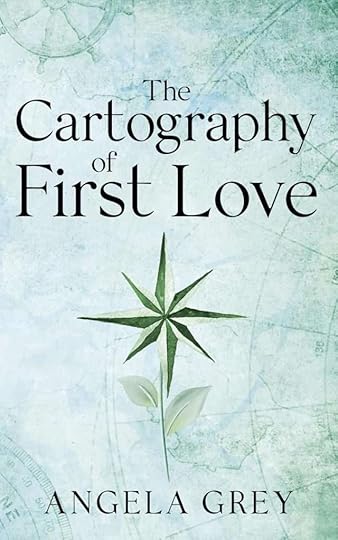 Read our review of “The Cartography of First Love.”
The Cartography of First Love
Angela Grey
Shady Oak Press (2025)
ISBN: 978-1961841444
Angela Grey is an Indigenous novelist, poet, and painter whose work explores the intersections of memory, identity, and healing. She studied creative writing as well as spirituality and healing at the University of Minnesota, where she deepened her commitment to storytelling as both art and medicine. Alongside her writing, Angela finds balance in yoga and mindfulness practices, particularly Mindfulness-Based Stress Reduction (MBSR), which shape the reflective quality of her work. She lives in Eden Prairie, Minnesota, with her husband, one spirited pup, and four cats. When she’s not writing, she enjoys camping, budget travel to places like Maine, Oregon, and the coastal Carolinas, and gathering with family around a BBQ grill.
Welcome to Reader Views, Angela. What is The Cartography of First Love about, and what was your inspiration behind the story?
 Angela Grey
The Cartography of First Love is about two teens who fall for each other in a psych ward and, years later, collide again by chance, discovering that first love leaves the deepest coordinates on the heart. I drew inspiration from my own first love, Timothy, and the way certain people map us forever, no matter how much time or distance passes.
The book uses the language of geography, such as maps, coordinates, fault lines, and grids as a recurring motif. What drew you to this metaphor, and how did it shape Zibby and Nico’s story?
I’ve always believed that first love is like a map that’s messy, unfinished, and yet it guides you long after you’ve left that place. With Zibby and Nico, the metaphor became their heartbeat: every moment they shared, every scar and smile, became a kind of coordinate. Even when life pulls them apart, the map they drew together continues to shape the routes they take back to themselves and, ultimately, to each other.
What did telling the story from both Zibby and Nico’s perspectives allow you to show that might have been missed if it came from only one of them?
Telling the story from both Zibby and Nico’s perspectives allowed me to show how first love is never just one-sided; instead, it’s a dialogue of hearts, where each carries their own fears, hopes, and unspoken longings. Their alternating voices reminded me of my own first love with Timothy, how two people can remember the same moment differently, yet together those memories form a map that’s more complete, more tender, and more true.
Zibby’s eating disorder and Nico’s depression are handled with both honesty and sensitivity. What guided you in portraying these struggles in a way that felt true to teen readers?
What guided me most was the memory of my own teen years living with an eating disorder, anxiety, and depression. I remember how isolating it felt, how every day was a negotiation between silence and survival, and how desperately I wished to see characters who mirrored that reality without judgment or cliché. Writing about Zibby and Nico, I drew from those struggles, but also from the fragile beauty I found in connection during that time, such as the way even small moments of kindness could feel like lifelines. I wanted teen readers to feel seen, to recognize themselves in the honesty of the pain, but also to believe in the possibility of love and healing that can grow even in the hardest places.
The ward setting with its sterile walls, tiled floors, and glass windows defines Zibby and Nico’s daily life. What guided your choices in bringing that environment to life on the page?
The ward setting came from a very personal place, my own hospitalization as a teen for an eating disorder. I remember the way the sterile walls and glass windows could feel both suffocating and strangely safe, how the rhythm of medication rounds and group sessions became a backdrop against which fragile connections bloomed. I wanted Zibby and Nico’s world to carry that same duality: a place of restriction and routine, but also one where small rebellions such as passing a note, planting something green, laughing at the wrong moment, could feel like acts of freedom. Writing those details was my way of honoring how, even in the most controlled environments, first love and hope find a way through the cracks.
Zibby and Nico’s bond is often expressed without words—through touch, puzzles, and greenhouse afternoons. Ordinary activities also take on extraordinary meaning in the ward. Why did you want their connection and healing to grow out of these quiet, everyday moments?
Because in a place where everything is monitored and spoken words can feel heavy, it’s the quiet, ordinary moments that become extraordinary. For Zibby and Nico, healing wasn’t about grand declarations; it was about finding love in the small spaces where hope could breathe.
The plant named Atlas is one of the most powerful recurring images. What does Atlas symbolize for you within the story? For me, Atlas is both a burden and a prayer in that he carries the gravity of pain, yet in his fragile leaves and quiet growth, he shows how love can turn even the heaviest weight into a living map toward hope.
“Absence” becomes a theme Zibby confronts throughout the story. How did you want readers to think about absence, loss, and the presence that lingers behind?
I wanted readers to feel that absence is never truly empty because it leaves a shape, a breath, a lingering presence that continues to guide us, like a map traced in negative space. In Zibby’s world, loss becomes its own kind of presence, reminding her, and us, that love endures even in what’s missing.
Many young adult romances end when the couple parts ways, but you carried the story through separation, silence, and even a ten-year reunion. What compelled you to extend their map beyond the hospital walls?
Because first love doesn’t end at goodbye; instead, it lingers, shaping every road we take afterward. I wanted to show that Zibby and Nico’s map wasn’t just drawn inside the hospital walls, but continued through distance, silence, and time, proving that some coordinates remain etched in the heart until fate brings you back to them.
The epilogue introduces a “map legend” with entries like “Tiles,” “Cracks,” and “Coordinates.” How did you envision this legend as a closing note to the novel?
The legend is a map of absences as much as presences, where even cracks and silences become markers or proof that love leaves traces long after the moment has passed.
Readers might see Zibby and Nico as ‘two broken kids,’ yet your story shows another side of what it means to endure. How do you define strength in the context of their relationship?
For me, the strength in Zibby and Nico’s relationship isn’t about being unbreakable; instead, it’s about choosing to reach for each other even in their most fragile moments. They teach us that endurance isn’t the absence of pain, but the courage to let love in, to share the weight of what feels unbearable, and to believe that two so-called “broken” hearts can still map out something whole together.
Family, whether present or absent or in the background, shapes both characters deeply. How did you decide how much of their family lives to bring into the novel?
I wanted family to be like a shadow in the story that’s sometimes heavy, sometimes faint, but always shaping how Zibby and Nico move through the world. By showing just enough of their families, I could reveal the fractures and absences that made them vulnerable, while leaving space for the found family they create in each other. In that way, family becomes both the wound and the soil from which their love takes root.
The Cartography of First Love is lyrical, often more like poetry than straightforward prose. What role does style play in how you tell such a tender but heavy story?
The lyrical style lets the story breathe by turning silence, touch, and small moments into poetry, so Zibby and Nico’s love feels as tender as it is heavy.
You dedicate the novel both to your husband and to your first love. How did your own experiences of love influence the emotional landscape of this book?
My own experiences of love gave the book its emotional compass. My first love taught me the intensity and fragility of being truly seen for the first time and the way those early feelings etch themselves into you forever. My husband has shown me what it means for love to endure, to grow deeper with time, and to hold both joy and struggle. Together, those experiences shaped the novel’s landscape: the passion of first love, the ache of loss, and the hope of finding a love that lasts.
Art in the form of sketches, puzzles, and drawings, along with movement such as counting tiles, tracing cracks, or standing in an airport, gives the story texture. How do creative expression and place tie into your idea of recovery and love?
Art and place are the coordinates of healing, like each sketch, crack, and step is a reminder that love maps itself onto the world as we learn to recover.
Young adult readers often look for themselves in fiction. What do you hope a teen facing struggles with mental health or belonging might take away from Zibby and Nico’s journey?
I hope a teen reading this story feels less alone. Zibby and Nico are proof that you don’t have to be “fixed” to be worthy of love or belonging and that even in the middle of struggle, you can still laugh, create, connect, and dream. My wish is that readers carry away the sense that their story isn’t over, that healing isn’t linear, and that the coordinates of first love, friendship, and hope can guide them forward no matter how heavy things feel.
There’s something unforgettable about the emotions of first love. How did you work to capture that fleeting intensity on the page?
To me, first love feels like a spark that lights up everything around it, even if only for a moment, and I wanted the language to carry that same glow. I leaned into the fleeting intensity: the way a brush of a hand can feel seismic, or how a single glance can echo louder than a thousand words. By writing with that kind of urgency and tenderness, I tried to bottle the impossibility of first love like the way it vanishes and yet marks you forever.
The book closes with a kind of map legend, almost like a guide to memory. What do you hope readers carry with them after finishing the story?
I hope readers carry away the truth that first love is never lost because it simply becomes a compass, guiding the heart forward.
Do you have another piece of work in mind after you finish promoting The Cartography of First Love?
Yes, while I was writing The Cartography of First Love, I was also working on another novel, Whimsy and Bliss, over the span of ten years. In some ways, the two books grew up alongside each other: Cartography carries the raw intensity of first love, while Whimsy and Bliss leans into memory, family, and the thin places where the ordinary brushes against the extraordinary. Now that Cartography is stepping into the world, I’m excited to give Whimsy and Bliss the attention it deserves and to share how the two stories, though different, echo each other in the ways they explore love, loss, and belonging.
Is there anything else you’d like to add for our readers today?
Only that I’m deeply grateful to every reader who picks up The Cartography of First Love. This story was born out of my own struggles and first love, but it belongs just as much to anyone who’s ever felt fragile, out of place, or overwhelmed by the intensity of their heart. If readers walk away feeling seen, less alone, and reminded that love, whether first love, lasting love, or the love we’re still searching for, can guide us forward, then I’ve given the book all I hoped it could be.
agoraphobia anxiety bipolar disorder book review chronic mental illness cognitive behavioral therapy delusions depression eating disorders exercise grandiosity grief group therapy hallucinations how to write a memoir intrusive thoughts Journaling meditation memoir writing tips mental health mental illness mindfulness nature therapy nutrition OCD psychosis psychotherapy PTSD schizophrenia self-harm social anxiety disorder social withdrawal stigma stress stress reduction suicide support group support group work writing suggestions writing therapy YA fiction YA fiction about mental illness YA novel YA novel about mental illness YA romance
Indigenous Fiction


Angela Grey is an Indigenous novelist, poet, and painter whose work explores the intersections of memory, identity, and healing. She studied creative writing, as well as spirituality and healing, at the University of Minnesota, where she deepened her commitment to storytelling as both an art and a form of medicine. Alongside her writing, Angela finds balance in yoga and mindfulness practices, particularly Mindfulness-Based Stress Reduction (MBSR), which shape the reflective quality of her work. She lives in Eden Prairie, Minnesota, with her husband, one spirited pup, and four cats. When she’s not writing, she enjoys camping, budget travel to places like Maine, Oregon, and the coastal Carolinas, and gathering with family around a BBQ grill.

agoraphobia anxiety bipolar disorder book review chronic mental illness cognitive behavioral therapy delusions depression eating disorders exercise grandiosity grief group therapy hallucinations how to write a memoir intrusive thoughts Journaling meditation memoir writing tips mental health mental illness mindfulness nature therapy nutrition OCD psychosis psychotherapy PTSD schizophrenia self-harm social anxiety disorder social withdrawal stigma stress stress reduction suicide support group support group work writing suggestions writing therapy YA fiction YA fiction about mental illness YA novel YA novel about mental illness YA romance
Some Species of Outsider-ness
agoraphobia anxiety bipolar disorder book review chronic mental illness cognitive behavioral therapy delusions depression eating disorders exercise grandiosity grief group therapy hallucinations how to write a memoir intrusive thoughts Journaling meditation memoir writing tips mental health mental illness mindfulness nature therapy nutrition OCD psychosis psychotherapy PTSD schizophrenia self-harm social anxiety disorder social withdrawal stigma stress stress reduction suicide support group support group work writing suggestions writing therapy YA fiction YA fiction about mental illness YA novel YA novel about mental illness YA romance
The Cartography of First Love


agoraphobia anxiety bipolar disorder book review chronic mental illness cognitive behavioral therapy delusions depression eating disorders exercise grandiosity grief group therapy hallucinations how to write a memoir intrusive thoughts Journaling meditation memoir writing tips mental health mental illness mindfulness nature therapy nutrition OCD psychosis psychotherapy PTSD schizophrenia self-harm social anxiety disorder social withdrawal stigma stress stress reduction suicide support group support group work writing suggestions writing therapy YA fiction YA fiction about mental illness YA novel YA novel about mental illness YA romance
Whimsy and Bliss

agoraphobia anxiety bipolar disorder book review chronic mental illness cognitive behavioral therapy delusions depression eating disorders exercise grandiosity grief group therapy hallucinations how to write a memoir intrusive thoughts Journaling meditation memoir writing tips mental health mental illness mindfulness nature therapy nutrition OCD psychosis psychotherapy PTSD schizophrenia self-harm social anxiety disorder social withdrawal stigma stress stress reduction suicide support group support group work writing suggestions writing therapy YA fiction YA fiction about mental illness YA novel YA novel about mental illness YA romance
Dreamcatcher: A Hidden World Fairy Tale Fantasy

agoraphobia anxiety bipolar disorder book review chronic mental illness cognitive behavioral therapy delusions depression eating disorders exercise grandiosity grief group therapy hallucinations how to write a memoir intrusive thoughts Journaling meditation memoir writing tips mental health mental illness mindfulness nature therapy nutrition OCD psychosis psychotherapy PTSD schizophrenia self-harm social anxiety disorder social withdrawal stigma stress stress reduction suicide support group support group work writing suggestions writing therapy YA fiction YA fiction about mental illness YA novel YA novel about mental illness YA romance
Long Since Buried: A Dakota Killer Thriller

Angela Grey anger anti-psychotic anxiety bipolar disorder book review chemical imbalance chronic worrying delusional disorder depression diet doubt exercise grandiosity grief group therapy hallucinations healing health realization hospitalization Journaling Kindle Book meditation memoir mental health mental illness Mental Illness fiction mind, thought and consciousness mindfulness nutrition paranoia Print Book psychosis psychotherapy PTSD resiliency approach schizophrenia social anxiety disorder social withdrawal stigma suicide support group therapeutic landscapes therapy YA novel
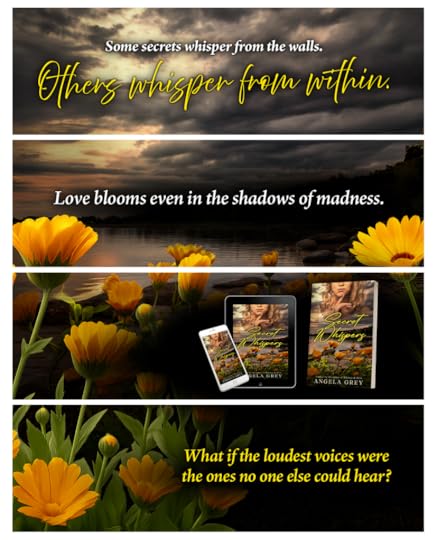
Secret Whispers book trailer
agoraphobia anxiety bipolar disorder book review chronic mental illness cognitive behavioral therapy delusions depression eating disorders exercise grandiosity grief group therapy hallucinations how to write a memoir intrusive thoughts Journaling meditation memoir writing tips mental health mental illness mindfulness nature therapy nutrition OCD psychosis psychotherapy PTSD schizophrenia self-harm social anxiety disorder social withdrawal stigma stress stress reduction suicide support group support group work writing suggestions writing therapy YA fiction YA fiction about mental illness YA novel YA novel about mental illness YA romance
December 5, 2023
Regarding Letters to the Author

There’ve been a few letters from young adults that I’ve put on the back burner over the last six months, but the similarities between them don’t seem to decrease, as with the latest of this week. With this latest one, I wanted to strongly encourage anyone going through similar situations to talk to an adult or call a helpline and speak to anyone who will listen. The National Sexual Assault Hotline has confidential (anonymous) help 24/7 and can be reached at 1.800.656.4673 or find them at online.rainn.org.
My story revealed in the above two books only ended after intervention with kindhearted first responders and social workers. There is a way out of that dysfunction, and it might not be the way those involved in your situation may be suggesting, so please call the National Sexual Assault Hotline.
Regarding the recurring theme of forgiveness, I believe I’ve forgiven my stepfather(s) and my mother for choosing him and turning her back on her daughter. As it was pointed out in two of the letters from you readers that I received earlier this year, if I genuinely forgave them, then I should be able to reconnect with my birth family. I’ve heard that before, too. That’s not always the case. I wish all of them the best and that the light of God/Creator shines down on them abundantly. I just don’t have the mental fortitude to put myself in their presence or that environment. Each person in similar situations will be able to handle things better or worse to varying degrees. Just because they tell you to forgive them and get over it doesn’t mean you can or should without outside intervention in the form of the National Sexual Assault Hotline, teachers, therapists, or social workers, especially not if you’re underage. And yes, seventeen is still a minor. Don’t listen to anyone that tells you that you’re an adult and should buck up.
I appreciate the letters and emails I receive about the wide variety of topics and apologize for not addressing this subject matter sooner. Mental fortitude affected my lack of words to tackle the weight of this matter until this most recent connection made it a necessity.