
Ksenia Anske's Blog, page 14
August 31, 2018
How to use repetition—the rule of three
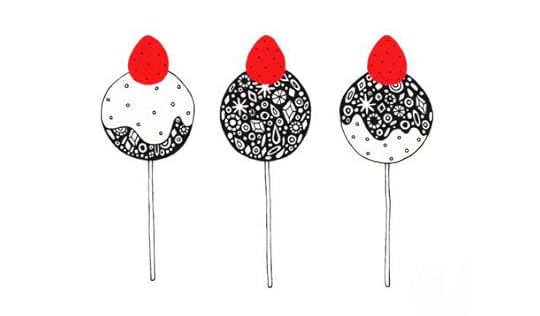
The golden rule of repetition is three. It’s like ice cream. The first scoop you eat and delight in. The second scoop is still yummy, but somehow not so much. The third scoop all of a sudden makes you want to gag. Nothing changed, right? The ice cream is the same. What changed is your perception. Too much of a good thing can make you sick.
Same with writing.
There are times when you should avoid repetition altogether (if you want to make a strong impact) and times when you need repetition...


August 30, 2018
Writing is like acting—it takes time to get into character
Be patient with yourself and give yourself time to slide into your story. Use whatever crutches you have: play atmospheric music, or songs, or watch a movie that gets you in the mood, or read a book or a script or a poem. Or look at art. If you have only 1 hour to write, or less, it might be tricky to switch gears and snap into your story, but as you practice, you’ll get better.
It’s like acting. At first it’ll take you days to get into character. Then it’ll be hours. Then minutes. Then se...
August 29, 2018
Anger is a good motivator for writing
Terry Pratchett once told Neil Gaiman that he’s very angry, angry at the stupid things people do, at the state of the world we live in, and so on, and that to cope with his anger he writes it all out into his books, and laughs at it. That’s why he wrote so many of them, and why they’re so funny. His humor drips with satire and sarcasm and hidden fury. It was this fury that powered his writing. I’m paraphrasing this, of course.
Read about it in more detail in this article, where Nail Gaiman...
August 28, 2018
Learn to recognize days when it’s better not to write
You might be writing like me, every day. Or you might be writing only on the weekends, when you have time off work. Or maybe in the evenings. Or maybe sporadically, an hour here, an hour there. Regardless of your writing schedule, some days you’re so distracted by life that whatever you write won’t be any good.
Learn to spot those days (or hours) and take them off instead. And by “off” I don’t mean fill them up with other tasks, no. I mean, take them off to think about your story.
Spotting t...
August 27, 2018
Give yourself an unstructured day to remember how you fell in love with writing
We often forget how we first fell in love with writing, and it was for the fun of it, for the freedom of saying whatever you wanted to say, without the fear of being told to shut up.
Because you’re worth it, and because it’ll reignite your imagination, your drive, and your ambition, pick a day and clear it of all commitments, ALL OF THEM, then just write.
Write anything and everything, or just stare at blank paper. Allow yourself to just be, and pretend like it’s your first time writing. What...
August 26, 2018
Bad writing day? Walk away until you’re calm
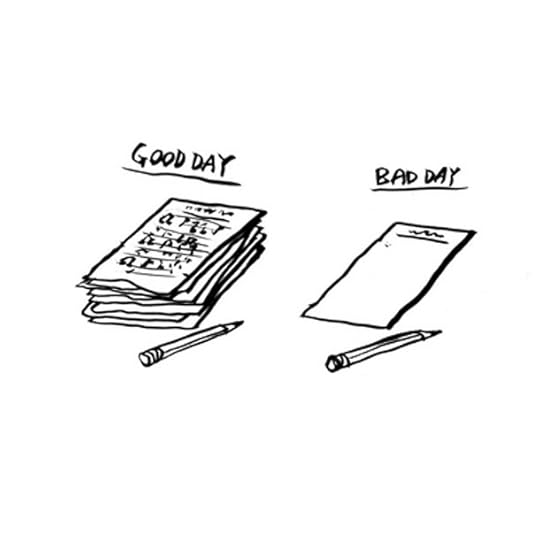
There are two types of writing: non-commercial and commercial. Or you can call them journaling (non-structured) and plotting (structured). Or some other names.
The difference between the two is: the first one is WRITING FOR PLEASURE (makes you feel better, allows you to vent emotions, entertains you, etc.) and the second one is WRITING FOR MONEY (gets you a paycheck for an article, a short story, a novel, etc.).
Then there are bad writing days and good writing days.
When you have a bad day an...
August 25, 2018
Start your writing day by watching a movie (no, I’m not crazy)
I know what you’re thinking.
However, this trick has helped me many a time when I didn’t feel like writing. Or was blocked. Or was just not in the mood. Here is why.
I love watching movies. I’ve loved watching movies since I was a kid, but the only TV in our apartment was in my great grandmother’s room, and it was also the only room that could be locked with a key, so I only had access to it when she allowed me to, and I could only watch movies if I was lucky enough to catch them (the times be...
August 24, 2018
Bounce around your plotting levels to produce the best story
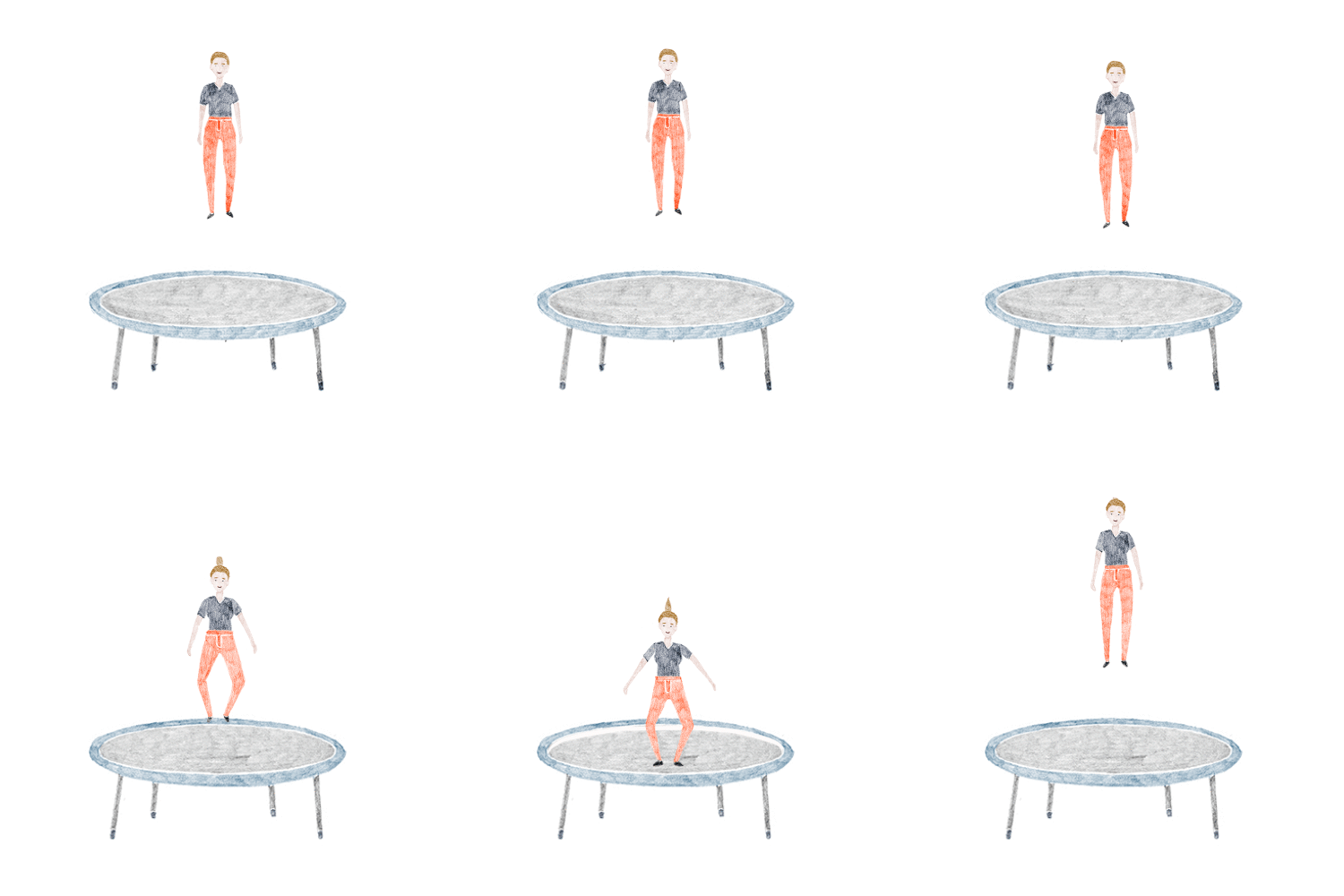
The danger of diving too deep into your story’s details, or soaring too high-up into your story plotting, is staying stuck at the same level for too long.
To write the best story possible you have to bounce around—jump up and down the levels, from the bird’s eye view of the entire story to the main columns (parts of acts, in conventional terms), to the individual scenes, to the littlest bits of the scenes—beats—and then back up again, high into the sky.
This takes practice. And patience. And p...
August 23, 2018
Let go of your discarded writing—it’s dead weight
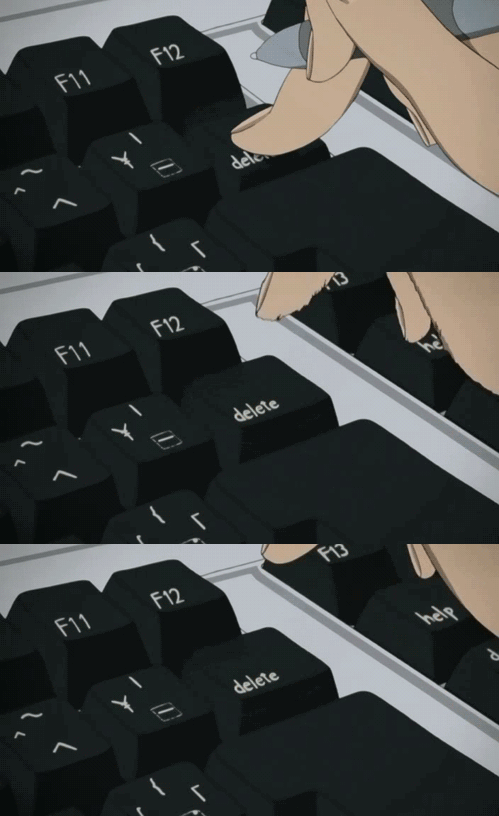
Since I dumped 6 drafts of T.U.B.E. (2+ years worth of work), I get comments like these quite often: “Don’t delete your words! Save them for reusing!” And I considered this sage advice, but 6 years of writing have shown me that I NEVER return to the writing I’ve discarded. And when I do, it holds me down like a dead weight. (All T.U.B.E. drafts are saved, but I never even look at them. They’re saved purely for downloads on my site for those curious about the process.)
It’s very tempting to ho...
August 22, 2018
Imagine your scene as a movie
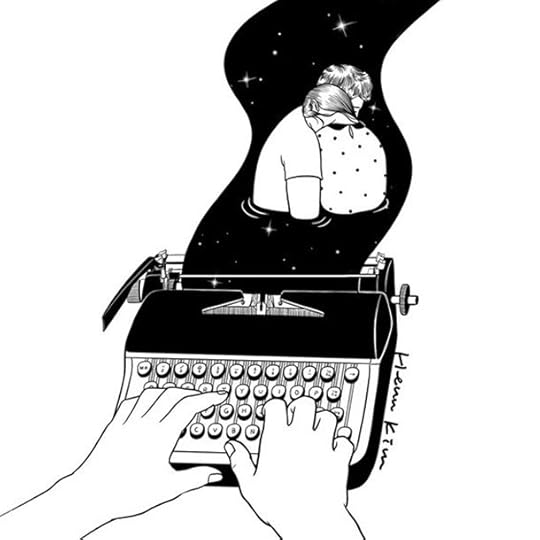
One of the simplest solutions to all your writing problems is imagining what you write though the viewfinder of the camera. Think for a second that you’re not a writer but a DP (Director of Photography), and your job is to convey the story in the least amount of shots with the most impact.
When you can’t figure out what to write next, imagine what it would look like if it were a movie—if you saw it on the screen.
This is a great technique that eliminates a lot of needless blah-blah-blah from...


