
Ksenia Anske's Blog, page 67
May 11, 2013
Starting to write a novel is EASY
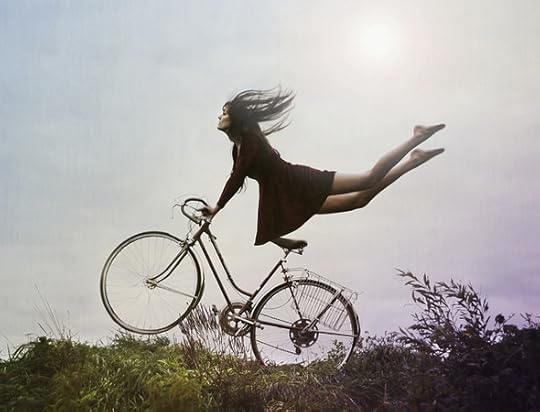
Photo by Karrah Kobus
This is actually a very timely blog post for me, as I'm starting to write ROSEHEAD, my 2nd novel, on Monday. But it was one of my Twitter followers, Olly Cromack, who asked me to blog about this. Blog about how does one start writing a novel. And I, of course, oblige. I know you're probably expecting an extensive list of things and to-dos that will prepare you for such an arduous task as writing a novel. On the contrary. There is nothing simpler than starting to write a novel. In fact, it's so easy that anyone can do it. What, you don't believe me? Well, before you will turn your back and saunter off, all hurt, let me demonstrate to you how simple it is, if only one knows where to look.
Start from the deepest pain you harbor. That's it. This is the key to you starting, the key to selecting that 1 idea out of 20 whirling about in your head, that true inspiration that you've been searching for. It's there, in the darkest corner of your psyche, hidden and covered and tucked away, lest it tries to disturb your daily equilibrium. Because to write a novel, this is precisely what you need to do to yourself. To rock your boat. To dig deep where you didn't dare looking for years, maybe even decades, to find that one thing that maybe you haven't told anyone about, not even your best friend. That is the hard part. That is why, once you find it, it's easy. Once you puncture it, it will flow, no, it will gush out, it will spill so fast that you won't be able to type fast enough, because it's pain you always wanted to talk about and couldn't. Well, presto. Now you can! Because in your novel you can exaggerate it all you want, you can speak up through your characters, you can show what it's like, and it will be all disguised as fiction, but the source of your story will be a very real emotion, so it will ring true to you reader. The question you have to ask yourself is, are you willing to go there? Because, as easy as it will be writing it all down, it's extremely painful to cut a hole in your soul. It will hurt. This is the hardest part.
Write the first thing that comes to mind. Literally, once you decided that you want to talk about your pain, once you touched those forgotten feelings, you will feel a jolt, and an image or two will pop into your head, I can guarantee you this. Quickly, grab a pen or your laptop and start typing away, describing in detail what you see. Don't worry about grammar, or story structure, or plot, or characters, nothing of the sort. Just write what you see with your inner eye. Here the key is to never stop, until you're done with 1st draft. Not even pause. Of course, it's impossible, you have to sleep and eat and go to work (if you don't write full time). I mean, don't pause for longer than a day or two. Before you start writing your novel, make sure you have a place dedicated to your writing and time set aside, something that you can maintain for months, maybe even for a year, because this is how long it will take you. I personally rely on a very rigid schedule. I don't know how you decide to do it, but you simply can't be interrupted when you're writing down your 1st draft. You can't look back or rewrite what you've written the day before. Because as soon as you slow down, doubt will settle in. The longer you wait, the worse it gets, until your drive will be lost. It's very fragile. It took me 6 weeks to bang out 1st draft of Siren Suicides. if I can do it, you can do it.
Abandon everything you learned and go crazy. This is again one of those things that stops many beginning writers to write a novel. They want to learn how to do it, before attempting it. They study books, go to courses, dabble in short stories, to test the waters. Wrong. It's not how you learn. You learn by doing. And you learn by having fun. Meaning, you don't worry about what will come out in the end, you go crazy and write down things that make no sense but feel right. The worst thing you can do is think that your 1st draft will look like a finished book. Nope, it won't. It will look like shit, and it's okay. It should look like shit, it's the purpose of 1st drafts. So this is why you have to go crazy, because if you won't be afraid of how it will look in the end, you will be able to access those layers of your memory that you wouldn't be able to otherwise, without cutting loose. Pretend you're five and are learning how to bike. Pretend you have no idea how to do it, you take off, and for a few seconds of balance, you have this fool's bliss, unaware that soon you will fall, and cry, and your knees will be bloody. Starting on your novel is like that, like those first few seconds of complete exhilaration, without fear or doubt. It's the only way to sail through it without getting stuck in writers block. Don't worry, you will cut out the crazy parts in later drafts, but for now it's the liberty to be nuts that will keep you going.
Read your most favorite books. Many people told me in the past that they don't like reading while writing their novels, just so that they won't be influenced by another writer's style. This is a strange idea. Reading will fuel your writing. So I suggest you read books that leave you in awe. Read your absolute favorites, read your favorite authors. When you start writing your first novel, it's not the time to discover someone new, it's the time to rely on old and trusted fun. I will be doing it too, by the way. I'm starting to write ROSEHEAD on Monday, and on Monday I'm starting to reread the entire Harry Potter series. Because I loved the books when they came out, and I am dying to dive into potterland non-stop and see what it does to me. I know what. It will inspire me to keep moving forward. It will inspire you too. I bet you have a bunch of those books that made you catch your breath and exclaim, "I want to write a story like that!" Yeah, read those. You will see what I mean.
This is really all there is to it. Look for your deepest pain. Drag it out from your subconscious to your conscious. Quickly write down what you see. Don't stop writing until your entire 1st draft is done. Write the first things that come to mind, without any structure, simply because they come to you. Go crazy. Oh, and don't forget to create for yourself a writing cave, both place and time, where you can go into your inner world, where it can thrive. Don't start on your novel unless you have that established, because otherwise you will be at the risk of being interrupted and you'll will never finish. Now, why are you still reading this? Shoo! Go! Start! I know your novel is aching to get out. It told me.


May 8, 2013
Art is not about COPYRIGHT, it's about COLLABORATION
Photo by Joel Robison
I think ever since I posted an excerpt to SIREN SUICIDES Draft 4 on my blog, I've been getting private messages from people wondering if it's a bad idea to post an excerpt, worrying about copyright issues, about someone stealing their idea, asking me for advice. I even wrote a blog post on forgetting everything you ever heard about copyright in favor of sharing your work. This post is an expansion on that idea, and it's going even further. Art is not about sweating over it in fear of it being stolen, it's about giving it away and collaborating with others to create more art. For example, right now two of my twitter followers, Adam Silke and Lori Lesko are collaborating on writing a screenplay based on SIREN SUICIDES. The book is not published yet, but they are both my Beta Readers who have already read it and wanted to try and adapt it, because many people are nudging me about how cool it would be to make it into a movie. So I said, go for it! Do it! In fact, I will post Word files of all SIREN SUICIDES drafts here, on my site, so you can futz around with them any way you want. Write fanfic, short stories, novels, screenplays, songs, anything that strikes your fancy. Do you think I'm crazy? I'm not. Here is why you should do the same.
Stories are meant to be shared. Ever since mankind started speaking, we have been processing the world around us through stories, trying to make sense of lightning, famines, diseases, and other things that were unexplainable. Stories became a vehicle to share our experiences and learn from each other, without having to witness the actual events. They took root in one mind, changed in another, transformed in the third, and sometimes didn't look like the original story when the forth person was telling it. But that didn't matter. What mattered was the fact that a certain message was passed around, and it changed and grew and adapted as it did so. We changed with it. Any art works this way. A painter looks at a painting and gets an idea. A musician listens to a piece of music and hears a new tune forming. A writer reads a book and gets inspired to write a new one. It's even more inspiring for an artist to witness another artist create something, participate, walk away and create something new in turn. It's like a chain of events. It's how we feel connected to each other, making sense of this crazy life together, like we used to when sitting around the fire after a hunt, processing the world around us. Give yourself away, give your art away, and you will inspire others to create, who in turn will inspire you again, and you will never feel stuck anymore. Forget about writer's block. Only imagine being able to watch another writer write. I know, because I did a live writing session and people who tuned in said that they felt like they wanted to write too. Together with me. So give, share, inspire.
Books are no longer the product. I know for this many of you will pelt me with rotten tomatoes. Go ahead. I will still say it. Look at the music industry. Look what happened to CD's. CD's used to be the product for sale. Not anymore. CD's are promotional material now. Musicians make their money from doing concerts and other various performances and appearances. What do you think is happening with the book market? Do you see the signs? Why are big publishers merging? Why are we flooded with books from self-published authors? Why are book prices falling? Yes, you get my drift. The book industry is moving in the same direction. Books are less and less the actual product that sells. Don't yell at me, don't roll your eyes, let me finish my thought here. What I mean is this. Digital books are given away for free or sold for very little money, for readers to taste them, to like a particular author, and then the actual physical copy of the book becomes a souvenir, a collectible item, something a reader would buy after she or he has already read the book and simply wants to own it, to reread it over and over again. Authors travel extensively on book tours, teach classes, give lectures, for all of which they get paid. With the advent of eBooks, book piracy will be on the rise. It's merely a digital file that can be downloaded and stolen. Then why not simply give it away? Why not give people a chance to support you as an author, rather than make them pay for your books, which they can download off of the internet for free anyway? I propose a new model for making money as a writer. Don't make your readers pay for your work, let them support you. Let them donate, or pay what they want, after they have read your book, not before.
Unlock a million new ideas in your head. Imagine never having to experience writer's block ever again. Imagine never being stuck pondering what to write about next. Imagine never having a problem to finish what you have started, never having to shelve your half-done novel because you don't know where it's going and are stuck. That would be nice, wouldn't it? Well, collaboration will do this for you. Here you can shout obscenities at me all you want, but I actually, for once, know exactly what I'm talking about. I have created a collaboration community with my readers, primarily on Twitter, but also on Facebook and Google+, and there people have unblocked others simply through sharing their experiences, in short bursts of ideas, tips, tricks, and hand-holding that has nothing to do with professional advice you get from experts, but is simply an outreach from one human being to another via shared emotions. And that support alone has moved people. Ever since I started doing it last year and since it really took off several months ago (I suppose it tipped, as Malcolm Gladwell would have said), people have been sending me numerous messages on how they got back to writing simply because they saw someone else struggle with the same issue. I went further than that. I have created flash fiction chain story events on my blog, where I called on 10 to 20 writers at a time, and they wrote a chapter each, weaving one story together. Together. You know what that did to people? People who never wrote in their life before, are writing their first novels now. You know how powerful this is? This is what collaboration does.
I could go on and on with examples, because this is a hot topic for me. Growing up, I tried writing but was always told my writing is awful. I wouldn't have even started, if not for my boyfriend who believed in me. It was he who urged me to post my except on my blog, because I was scared shitless. And it was the tremendous amount of comments from people that kept me going, and it was messages from my Beta Readers that made me a better writer. Some people call it crowdsourcing, I call it collaboration and the sharing of love. It wouldn't have happened if I didn't share my art with people. I would still have been hidden in my cave, slaving over my art, and maybe by now I would've given up. So, open up, let people support you, and you will be one happy writer.
May 4, 2013
My novel number 2. ROSEHEAD.
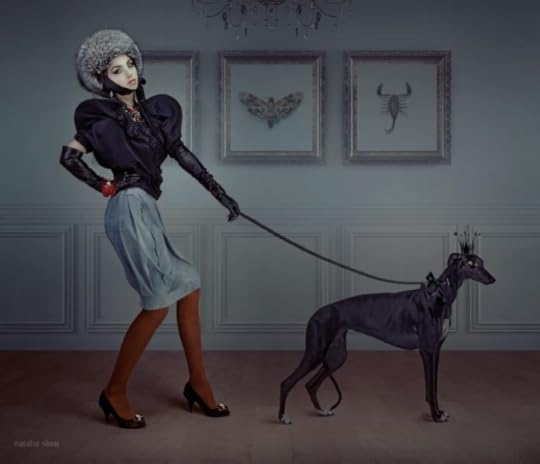
Photo by Natalie Shau
While finishing Draft 5 of Siren Suicides, my 1st novel, I was having a hard time holding back complete scenes that would come to me from Rosehead, my 2nd novel. "Why?" I thought. "Why is this bugging me, when such deep pain of mine is seeking an outlet in the shape of my 1st story?" It was puzzling, until one day I realized that the reason these scenes come to me is because I was ready to move on. I guess in any artistic endeavor there comes a point when you know you're done. You need to stop. You need to start something new. I learned how to write better dialogue, and I couldn't wait to try it out. I learned how to plan and plot and weave in suspension, and I wanted to test it out on a new idea. Above all, I was holding back all the bizarre and macabre and circus-like and extravagant things that I witnessed, the fabric of my childhood, where violence mixed with extreme intelligence, neglect went step in step with exquisite meals, designer dresses, and dance classes. And I wanted to create a character very different from Ailen, (the main character in Siren Suicides), not a raw emotional teenager, but a very polite and quiet preteen who is incredibly smart and broken on the inside. That would be Lilith Bloom, the main character in Rosehead.
WARNING: THE FOLLOWING CONTAINS DISTURBING IMAGERY.
Why Rosehead as a title? I must step back here and give a little bit of backstory. Where did the idea come from? Well, like I said on my editor Colleen Albert's blog, my ideas come from my past which was so rich with odd eccentricities and simple-minded brutal force, that at times I didn't know what reality I belonged to, utterly confused. In short, I grew up in Soviet Russia where all normal girls would wear the same dress that every other girl in USSR wore because it was the type of dress that all state malls sold. In contrast to that, I would be wearing crocheted concoctions made by my great grandmother (I still have that dress, by the way). Or I would wear exceptionally cute hats that my mother would knit for me (she was and still is a starving struggling artist back in Russia, knitting amazing things that she doesn't know how to sell). I remember being invited over to a friend's house, and hearing my friend roll on the floor in hysterics as soon as the front door was closed (I was leaving) and yelling at her mother that she wants a hat like mine. On top of it, my aunt has cut my hair to a French bob, and almost none of the other girls in class had their hair like mine, they all had braids, or their hair was in long pigtails. This is not all. One of my grandmother's sisters sent me real wooden clogs from Holland, and I think every girl wanted to kill me from envy. That was Soviet Russia. I was aloof and didn't understand why girls didn't like me, so I hung out with boys. Rosehead is the name for a many-sided pyramidal head upon a nail or a nail with such a head. I had severe ADD and PTSD and I want to write about what it feels like to be inside the head of a child like that.
The double world of abuse. Now comes the not so pleasant part. Ever since I remember myself, and I don't remember much, because most of it is blocked out, I was abused in all possible variety of ways, from being constantly yelled at, to being pulled from under bed (where I liked to hide) and beaten, to being painfully smacked on my forehead with a table spoon to make me eat (or having soup turned over my head in punishment), to the most horrific experiences that I only started piecing together about 5 years ago, after launching into a series of panic attacks and becoming suicidal again (I ran away from home at 16 and wanted to kill myself then). I was sexually abused by the second husband of my grandmother, my step-grandfather, a butcher and an alcoholic who just got out of prison for stealing. It was done mostly at his dacha, one of those summer houses everyone in Russia flees to, to escape the scolding heat of the city. They were neighbors, and my grandmother frequently left me with him. My mother was mostly absent from my life, which is a whole another story. I was also sexually abused by my father. He was (and is) a prominent writer and an intellectual who took me for visits once in a while (my parents divorced when I was 4) and taught me lessons, as he would say it, so I wouldn't turn out like my mother, which, in his view, was a prostitute. His plan was to root out of me any sexual desire, which he indeed managed to do, for many many years. He would go into these violent fits and after all done, would kiss my hair and wonder why I was crying, saying I'm silly because he loves me. I escaped into my head. So here again is my wish to describe the double world of a very sensitive child who has to flee reality for one reason or another.
The richness of appearance against the poverty of soul. The juxtaposition of my mother showing up at home once or twice a month, teaching me how to properly eat a grapefruit, how to slice it and sprinkle it with sugar and spoon out the flesh, and then disappearing again, leaving me to being constantly hungry (there wasn't much food in the house, I rather needed chicken and potatoes, not a grapefruit). The juxtaposition of dirt and filth and piles of grimy dishes in the kitchen in the apartment I lived, to handmade amazing knit dresses that I wore. The juxtaposition of my father reading to me out loud the poems of such Russian masters like Pushkin, Akhmatova, and Blok, even Chekhov's stories, and then painfully pinching me, forcefully sticking his fingers between my buttocks for fun, and slapping my face, and then later sexually abusing me when we were alone, claiming later to everyone that I'm a drama queen, an actress, and a liar, that I have my mother's genes and will turn out a whore, when I grow up. All of this often left me in such state of confusion that I couldn't tell up from down or left from right. Literally, I remember trying to burn into my brain which of my arms is left and which is right, and I remember it slipping me. Thus Lilith in Rosehead will be in the world of shifting rooms, appearing and disappearing doors, growing houses and spinning gardens. Since I was a loner, she will be too, with her pet whippet Panther for company (I grew up in that filthy apartment with 4 dogs, 3 cats, rats, mice, and even a hedgehog... oh, and cockroaches).
Sarcasm as a cover for pain. One of the ways I survived all of this was, actually, something that my father's side of the family taught me. Humor. Sarcasm. On the positive side, whenever something drastic happened, there was always a good joke to go with it, and this is what I'm dying to write about in Rosehead, spicing up the dialogue with bitter biting funny sarcasm, the type that hides layers and layers of people's personalities and their life experiences. I mean, I'm itching, I can't wait. Each of the characters will be a grossly inflated version of that or another person I've been in touch with, but they also will be their own people, as opposed to characters in Siren Suicides, who are closely tied to my own relationship with my father. Hence, I can't wait to start on Rosehead because I have no restrictions anymore. It will be drawn from that exuberance of experiences that I had growing up, the macabre, the horrific, the rich, the beautiful, the eccentric, the... the... I'm catching my breath here to stop. To summarize, it will be a feast.
Well, I suppose I need to give a one-liner for Rosehead here. Rosehead is a story about 12 year old Lilith Bloom, who travels from her American hometown to Berlin, Germany, for a big family reunion in her grandfather's house (I lived in Berlin for 4 years in my teens). With the help of her pet whippet Panther she discovers that her grandfather is not just a famous rose grower, but a murderer. He kills women and turns them into roses, hence his incredible success.
May 1, 2013
MY TWITTER ROUTINE, or how I got 44,000+ followers
Photo by Pandiyan
Almost every day I get a direct message on Twitter, a public tweet, an email, all asking me the same thing. Hey, how did you get so many followers? Hey, are you famous or something? Hey, can you give me the secret? Hey, how do you do it, do you do it all by hand? Automatically? Are you a robot? Do you sleep? And on, and on, and on. You can imagine various juicy questions I didn't include here. Honestly, I wanted to write this blog post for a while, but simply didn't have the time. I'm done with SIREN SUICIDES now (it's off to my editor), so I can do it! Plant your palms on your knees, sit up straight, hold your breath. Here is how.
Wake up with Twitter on your mind. That's what I do. The first thing I do is post an update while I'm still in bed. Actually, sometimes I reach for my phone with my eyes still closed, thinking about what to post. And, please, don't do the typical "Good morning!" It's boring. Nobody wants to hear that. It's what we hear every day. It's not what Twitter is about. Twitter is about going away from everyday life and expressing how you feel without any filters, and, at the same time, giving value to people in those 140 characters. So, my tactic is, being funny. I always try to come up with something that is true to how I feel yet will bring a smile to someone reading it, like: "I thought I had my brain yesterday, but I can't seem to be able to find it this morning..." Now, this is me. Very much me. You need to be you. Very much you. Ask your friends, if you have to. Who are you? What makes people like you? Don't copy anyone, don't be artificial. Be yourself.
Tweet all day until you go to bed. Yes, Twitter is the very last thing I do before closing my eyes, in bed, again. I used to tweet about 20 times a day when I was starting out, but about a year ago, when I began writing full time, I started tweeting more, and today I average about 100 tweets a day. That's a lot, and I don't suggest you do the same, but I can tell you that if you do less than 20 tweets, then Twitter might not be a choice platform for you to talk to your readers, you'll be better off on Facebook. Seriously. Don't torture yourself, think about it very carefully. Have you thought about it? Still want to do Twitter? Okay, let's talk about the content of your tweets.
Promote others, encourage, give. This will be a hard pill to swallow for many writers who are used to blasting a gazillion tweets a day about their book or how awesome it is. Please, don't. Not only will you turn me off, you will also make sure that I won't pick up your book any time in the future. Why? Because I don't know you, and when I don't know you as an author, I want you to simply be a nice human being. Why would I want to read your book if you're constantly shoving it under my face when I didn't ask for it? So please turn off you automatic DM's (annoying), stop talking about how great your book is, and let your readers do the job. Or people who know you. For this, I use Hootsuite, which might be a new word for you, but I used to do social media for companies in the past, and I highly recommend you play with it. There you can create a search column with your name and the name of your book/books, and retweet it any time anyone mentions it. What, nobody mentions you? No problem. Mention others. Start actively seeking out authors on Twitter, read their books, review their blogs, and tweet about them. Here is the catch, though. NEVER EVER ASK THEM FOR ANYTHING IN RETURN. And I mean, print this out and stick it on the wall in front of your computer. This is what giving is about. Just wait. People will give back. Because we love to help each other, but afraid to make the 1st step. It's up to you to make it.
Retweet, mention, quote, answer. If you simply populate your Twitter stream with yourself, it will look a bit, how to say it politely... you don't need me to explain it, do you? Good. You see my point. Twitter is about conversation. So state something, then see what others respond with, find a great response that you like and retweet it, answer people's tweets, quote them, but make sure that you don't pollute your conversation and are not too random. That will turn people off too. If you look at my stream, you will see that I watch my content with an eagle's eye, always making sure that there are clumps of conversations on the same topic, before moving on to the next. So people who are late to the party can catch up easily. And, of course, when you talk to people, same rules apply. Be polite, be nice, be funny, deflect anger with humor, play the underdog, and, in general, be that person that you yourself would have liked to follow. One more thing I do. I never answer tweets with simple "Yeah!" or "Nope!" or "Cool!" This is also boring and pollutes my feed. I try to answer each tweet in a way that if someone happened to read it, separately from the person who originally tweeted to me, they would get the idea of what it is we are talking about.
Follow and unfollow every couple of days. If you think you will be sitting there and new followers will simply fall into your lap, you're mistaken. Other people follow you, yes, but you also have to get out there and follow new people. Unless you're Neil Gaiman, of course. I use JustUnfollow tool, and every couple of days (I used to do it every day, actually, but the amount of my followers is simply too large now) I would go there and unfollow people who unfollowed me and follow new people, mostly other writers, because I'm a writer. Why every couple of days? Because if you followed someone and they are not following you back within 2-3 days, chances are they never will. The way Twitter works, you can't follow others without any limit. So in order to follow new people, you have to unfollow some. Now, if you look closely at the tool, what you will see is the option that says Copy Followers. I will explain how it works. I used to chit-chat with a writer, and if we liked each other, I used to go and see if other writers followed her, and then would follow those people by hand. I can no longer do it without using some kind of a tool, having to manage my 44K+ followers. The tool allows me to do it faster, simply because it's my choice to follow everyone back. At the moment I get 250-500 new followers a day, depending on the day, and I think soon I will have to abandon my policy of following everyone back simply because I won't be able to. You can't follow more than 1,000 new people a day. Also, I do everything by hand, I don't use the automatic follow everyone back feature. There are a lot of spammers out there you don't want to follow.
Post pictures, videos, links of interest. Try to spice it up with things that would also be interesting to your followers. Links to great articles, pictures that you took, that somebody else took, videos that are somehow relevant to what you're talking about. In short, try to make the whole experience as close to real life as possible, if these people happened to meet you on the street and you started taking about common interests. And you happened to have the same shoes, OMG, how awesome! Or same purse. Or same makeup. Sorry, guys, let's see here... same car? You got it. The idea is, share yourself unreservedly, and people will share themselves back in return.
To summarize, be human. Be you. Be real. Be humble. Be funny. Be there every day and connect as much as you can. Admit to your failures, if you have any, and share your successes, if you have any. That's really all there is to it. I could, of course, attempt to give you my 8+ years of marketing experience here, but my blog will burst. Ask questions in the comments, and I'll answer as best I can!
Oh, and here is what you SHOULD NOT DO ON TWITTER.
P.S.: I wrote this post yesterday, and now that I'm rereading it before publishing, two more things need to be mentioned. One, don't think that if you do what I do, you will suddenly get a crazy following, and don't come back screaming at me that it didn't work for you. When I started out last year, I had 2,000 followers. This growth took me by surprise. I didn't think anyone would be interested in the stuff I had to say. Two, go out there and try things. Don't be afraid to fail. Let people catch you. There is so much love out there, if only you will allow people to hold your hand, you will feel it. And Twitter happens to be the best platform for it, I think. I love it. And I love every single one of my followers, they make my day, every day.
April 27, 2013
THE MAGIC of moving from your 1st novel to your 2nd
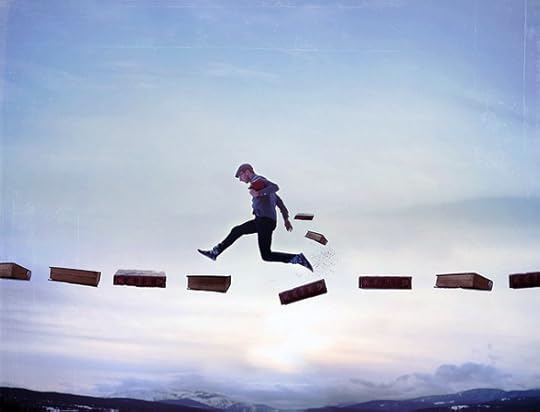
Photo by Joel Robison
Yesterday I finished the last, 5th, Draft of SIREN SUICIDES, my 1st novel. I felt like everything in me turned upside down. Let me try to describe it. It was a mixture of terror, terror of failure, and some maddening exaltation, to the point of wanting to run around the house and jump up and down like crazy, and a sense of loss, sweet loss, like you experience when you fall in love and your object of adoration vanishes from your eyesight. Like a part of you is gone, but also that empty spot is ready to grow something new within you. A certain creative vacuum, if you will. I would want to add twenty more elaborate sentences here in an attempt to capture what it felt like, but I would rather you experience it for yourself. Because writing and completing your 1st novel does magic. Seriously, I'm not being corny here. Here is what's different, magically different, about starting to write your 2 novel (as opposed to your 1st).
My fear of the 1st Draft is gone. I simply know that it will be shit, and I know it's part of the process. Actually, if it will turn out anything but shit, I would be worried. I also know that the first thing that comes to mind is the right one, having been through 5 drafts and having come full circle. Some ideas I planted in the 1st draft, took out in the 2nd, forgot about in the 3rd, was reluctant to add in the 4th, eventually made their way back to the 5th one. Go figure. So now I'm jotting down short scenes that come to me about ROSEHEAD (title of my next novel) as they are, without any squirming or moaning over them or doubting or anything of the sort. What should I name my main character? I thought one morning. Lilith was the first name that came to mind. Done! Who should be her sidekick? A pet, a dog, a whippet. Done! What would be his name? Oh, he will be black and he will be... Panther. Done! I mean, it's incredible, the freedom that came to me. I know that I won't know what the story is really about until I'm done with Draft 1, so I'm free to start writing tomorrow, if I wanted, which brings me to the next point.
I'm free of the tyranny of planning. Okay, so with SIREN SUICIDES I freaked out about continuity, about character bios, complete with their dates of births and places they grew up and such other elaborate nonsense. I won't be doing it this time around, because now I know that no matter how many notes I take, how much stuff I plan, how meticulous I am and how many hours I spend on research, it will be all a huge gigantic enormous waste of time. Because all of it will change, and it will not change in the direction I will be able to predict. Hurray! The freedom! I can simply let it evolve and pick details out of the air as I go, without dreading the correct setting details, of the proper plot development, or the like. Who said anything about writer's block? I'm almost tempted to say that a way to conquer it is to drag yourself through writing your 1st book by the hair. Because it seems like each following book is easier and easier to write.
I can't wait to indulge in dialogue. Now, this won't make sense to those of you who don't know me. Those of you who do and who have read a bunch of my blog posts will know that one of my biggest fears is writing dialogue. Here are my favorite excuses. Ready? 1. Oh, English is not my first language, how can I! 2. Oh, I don't have a musical ear, I don't know how people talk! 3. Oh, (this is my favorite), my dialogue just sucks! If you were to ask me why, I would say, it just sucks because I said it sucks! And I would promptly run away, lest you poke any more holes in my carefully built up defenses. Now, I can tell you, all of these excuses are utter bullshit, because suddenly in sketching quick scenes for ROSEHEAD I found myself eager to dive into dialogue to cook in my own sarcasm there, making it sound biting and funny. I surprised myself. What the hell??? I can tell you what. SIREN SUICIDES was very personal to me, so I was locked into translating in my head from Russian to English to capture the flavor of spoken ideas that I grew up with in Russia. I did the best I could, but it would't let me go away from it and practice actual spoken English from ground zero. I feel like I can do it now, in my 2nd novel. Oh, I can't wait! (See how different this sounds from excuses above? Yeah...)
I already know how my 2nd novel will end. This instability in not knowing how SIREN SUICIDES will end until I finished Draft 4 was maddening. Not so with 2nd novel. Once I grasped the concept from a few disjointed scenes that I already sketched out, it became clear, and I didn't dismiss it like I did in my 1st novel. I'm not even mentioning my 3rd novel here (not true, I just did!) because I already have that too, with a title, main characters, beginning and end, all planned out in 1 day after an inspirational talk over coffee with Michael Gruber, an awesome local author of 25+ novels. What does this tell you? It tells you that writing your 1st novel is like a wall that has to be broken, for the flood to flow. At least it's how I feel. And the most important part is, I won't need to complete as many drafts as I did with my 1st, because instantly the search for the end of the book is over. Isn't it nice? I think it is. I'm totally grinning right now.
I stopped trying to impress. This has been a terrible thing in Draft 4 of SIREN SUICIDES, and I honestly don't know how my poor Beta Readers read through it and even said that they liked it. I tried so hard to describe certain things, tried so desperate to be poetic, that I confused the hell out of people in places, going on some insurmountable tangents 1 or 2 paragraphs long, when 1 sentence was all that was needed. No more. I calmed down. For ROSEHEAD, I simply write down what happens, and it flows, it doesn't hiccup, it doesn't feel forced. I'm almost too afraid of this easy feeling, I want my writing angst back! Well, I think it will be back once I start, but my state of my mind is much more peaceful than it was while writing my 1st novel.
I better stop here. It seems like there are at least 10 more awesome things that happened, like believing that I can actually write, and knowing how long it will take me, and scheduling my time so that I can write it fast while it's fresh, and what kinds of books I want to read, to fuel my own writing, and more. But then I will bore you to tears with total self-indulgence. I hope the above was helpful? In convincing you to finish that 1st novel no matter what? Is that a yes I hear? Okay. And if you have written a bunch of novels already, tell me, am I off the mark here? Is this how you felt too?


