M.J. Blehart's Blog, page 32
December 7, 2022
Do Your Chosen Paths Require Anyone Else’s Approval?
No, only your approval is necessary. The approval of others is unnecessary.
 Photo by Sophie Lavoie on Unsplash
I intended to blog regularly when I started Pathwalking in the first week of 2012. That it would grow to be my life philosophy, and an idea I think might benefit others, was not how I thought it would go.
To be the best me that I can be, I have read, listened to, and gone over lots of different programs, books, blogs, podcasts, and the like. Topics have included lots of self-help, self-actualization, mindfulness, money and financial mindfulness, spirituality, consciousness, psychology, physics, and more.
I’ve studied both modern and ancient gurus, various texts, and worked hard to be the best me that I can be.
But who is that, and what does that mean?
Who, what, where, how, and why I am is known only by me, in full. Elements of myself get shared along the way – sometimes via these posts, sometimes through personal interactions, my podcast, and the like. But the whole story, the in-depth knowledge of me is known to me alone.
Selfish? No, because likewise the only you who knows the whole, complete, and total in-depth story of who, what, where, how, and why you are is you. No matter what or how much you share, only you truly know you.
And this is why you don’t need the approval of anyone but yourself.
Still, as social animals, this can be challenging.
You desire to be liked and acceptedTo a greater or lesser extent, most people have the desire to be liked. And with that, a desire to be accepted.
Liked can be as simple as regard and acknowledgment or as complex as constant reassurance and possibly narcissism. Accepted can be as simple as not risking getting kicked off the island of humankind or as complex as needing thousands of likes on social media.
Even the most introverted people I know still desire to be liked and accepted – they just prefer that that includes being left alone as desired, too.
If you choose to take a path in life different from the norm in any way – you risk acceptance. Or at least, it feels that way sometimes.
When I received the opportunity to pursue my writing as a career full-time, I took it. And for the past 5 years or so, I’ve made a great deal of it. I published 3 books in 2020 and 6 more books in 2021. Beyond that, I’ve finished 4 more books, have others in various states of active development, and have been blogging 4-6 days a week.
In my mind, this makes me a full-time writer.
But others don’t approve.
Various parties, friends and family alike – all of whom I know mean well – feel that I’m wasting myself. That I’m taking advantage of my wife’s incredible generosity allowing me to work like this, and should give up this silly dream, grow up, and get a real job.
I can’t argue that I haven’t as much to show for my work as I’d like. But if I lived only for the approval of others, who would I be? And would I be content with that life?
Would you?
 Photo by aisvri on UnsplashApproval is unnecessary
The truth is that you don’t need anyone else to approve of you, your plans, your goals, your life choices, or anything else you do for yourself. The only person’s approval you need is your own.
What lights you up? What do you do that makes you feel the most empowered, excited, and energized to live your life experience?
Whatever that might be – you alone need to approve of it. Because it’s your life, and your experience – and the approval of others truly has no impact. It might feel as though it does, but it doesn’t.
No, this isn’t a permission slip to act like an entitled ass or otherwise mistreat other people. You most likely desire kindness, compassion, empathy, and gratitude from others. And you must give it to get it.
The importance of recognizing why you don’t need the approval of others is that it frees you to stop worrying about whether other people approve of your life choices.
Likewise, it frees you to give less time and attention to the choices of others. And that they don’t need your approval, either.
There is, of course, an important caveat to this. If you share your life with someone – like a spouse, and/or children, and/or act as a caregiver for a parent, relative, or such – they must be factored in. This is not the same as approval – but if you have a shared experience, and they will be impacted by all that you do, it’s a matter of kindness, compassion, and empathy to include them in the choices of your life paths.
Approval or not, please observe rule number oneOne of the biggest issues I have with The Secret and notions like various prosperity gospels is how they imply you can create from a vacuum. With little to no effort and just the right amount of mystical energies, you can manifest this, that, or the other thing.
Further, they imply you can manifest and consciously create the reality of and for others. This is utterly untrue, however. How you see the world is not the same as how I see it. My reality and yours might have shared elements, but like each of us, they’re different.
The only person you can control in any way, shape, or form, is yourself. You can do nothing for anyone else apart from yourself. Thus, you can’t do anything for anyone else because you cannot live anyone’s life but your own.
This is part of why getting the approval of other people isn’t important when all is said and done. Because you can only live life for you.
But there’s still a very important rule that my friends and I often have referred to as Rule #1. That rule? Don’t be a dick.
Even if you find that crude, I think when you look at the world today, a lot of problems we have come from someone simply being a dick. And other words using stronger language.
Be the kind of person you prefer to interact with in your life. Because the only approval you need is your own. And if you are being genuine and true to yourself and the life paths you desire – your approval of yourself should be easy to obtain.
Be kind, compassionate, and empathetic along your life paths – and please don’t be a dick.
Can you see how the approval of others can be a trap?This is the five-hundred and seventy-second exploration of my Pathwalking philosophy. These weekly essays are my ideas for – and experiences with – using mindfulness and positivity to walk along a chosen path of life to consciously create reality.
I share this journey as part of my desire to make a difference in this world and empower as many people as I can with conscious reality creation.
Thank you for joining me. Feel free to re-post and share this.
The first year of Pathwalking, including expanded ideas, is available here. Check out Amazon for my published fiction and nonfiction works.
Please take a moment to subscribe to my mailing list. Fill in the info then click the sign-up button to the right and receive your free eBook. Thank you!
The post Do Your Chosen Paths Require Anyone Else’s Approval? appeared first on The Ramblings of the Titanium Don.


December 5, 2022
How Much True Positivity is Too Much Positivity?
Unless it’s toxic positivity, there’s never too much to be had.
 Photo by Alvaro Reyes on Unsplash
Positivity has gotten a bad name of late.
This is largely due to the many and loud proponents of toxic positivity.
If you aren’t familiar with the term – toxic positivity is positive to the point of ignoring, disregarding, and pretending that all negatives don’t exist. Deny the bad, don’t even look at it. Keep a positive mindset and a positive attitude and all will be well.
If you live in the real world, then you know that this is total bullshit.
Nobody is positive all the time. Anyone who claims otherwise is probably trying to sell you something.
Bad things happen to everyone. All the people you know experience the death of loved ones, get fired from jobs, get dumped from relationships, lose friendships, contend with unexpected expenses, gain weight, lose hair, and the list goes on and on. Nobody experiences a negativity-free life.
And the truth is – you need negatives in your life. Why? Because you can’t appreciate positives without them. This is a world of paradox, yin and yang, and opposite extremes. Most of who and what you are in relation to them is somewhere in the middle.
How does that work?
The flexible cylinder between extremesVeritably everything you can think of has an opposite. Those things are extremes, often compared to one another as opposite sides of the coin.
Extremes include things like up and down, black and white, good and evil, short and tall, on and off, positive and negative, good and bad, and on and on. There are lots and lots of extremes out there.
To me, these are not on a coin with a thin space between one side and the other. They are, instead, a cylinder – and quite a lot of space between one end and the other.
What’s more – the cylinder is flexible. Why? Because sometimes the extremes shift. Today’s bad is tomorrow’s good. If you give this just a little thought, I’d bet you can come up with an example of something or someone you considered on the bad end of the extremes having become the good end instead.
You most likely do not exist at one extreme or another. At least, not all the time. There will be situations where you’ll find yourself happy or sad, positive or negative, light or heavy, or mostly affiliated with a given extreme. But even then, you’re likely not entirely at that extreme, either.
Everyone exists between extremes. Some are more towards one than the other. Some people look more in one direction than the other. And some people just go with it – and haven’t a clue where they fall.
This is why toxic positivity is so damned toxic. Because the world is a dichotomy, a paradox. The opposite extremes will always exist because they simply are. So, positivity without recognition of negativity is toxic, especially when it denies the existence of the negative.
What’s more, the negative can often spark the positive.
Positivity arising from negativityLots of entrepreneurs have a story similar to this: After I got fired from my job, I was really depressed for a while. But then, I realized I could take the opportunity to learn that skill I’d always wanted, and with that, I started my own company and am now my own boss.
Why did they become their own boss? Because something negative happened. And after that happened, it became the impetus for positive change.
There are many instances you’ll find where people used a negative experience to create something more positive. Losing the job led to starting a business. Getting dumped provided lessons about mistakes that were made, and the next relationship led to a happy marriage. Losing that loved one led to spending more time with and cherishing other loved ones. And so on.
Toxic positivity utterly neglects that negativity can be an even more powerful conscious reality creator than positivity. And sometimes you need negativity to spur you to better things, people, places, actions, and whatnot.
But like the fact that you need to have and experience negativity in your life, you need to experience positivity, too. And there is no such thing as too much positivity.
 Photo by Marek Studzinski on UnsplashNever too much
Positivity, in its truest form, is not toxic. That’s because it is self-referential, and you can recognize it as the opposite of another extreme. Likewise, toxic positivity is recognizable because it neglects, ignores, and denies that it’s an extreme opposite of negativity.
What’s more, because you and I live in a fear-based society, negativity tends to get more attention than positivity. That’s why social media, news outlets, and other media tend to focus on and share mostly negative things. Negativity sells.
Genuine positivity is looking for the good in the bad. Seeing possibility and potential rather than difficulties and struggles. Looking for solutions rather than placing blame. Choosing to try and do rather than give up.
True positivity, in its recognition and acknowledgment of negativity, can never be too much. That’s because it’s an attitude, a choice to face the positive end of the flexible cylinder between the extremes. True positivity is not an end-all-be-all cure or solution, but a regular, ongoing choice you get to make.
And it’s alright to feel negative. Sometimes it happens. You can’t control that, avoid it, deny it, or escape it. Negativity is a natural, normal occurrence in your life – and everyone’s life.
And that’s the other reason there can never be too much positivity. Because with all the messages of negativity constantly bombarding you, the choice of positivity is never easy. Having more options and abilities to see the positive end of the spectrum is harder than seeing the negative.
Hence, there is never too much.
Recognizing true positivity over toxic positivity isn’t hardIt’s all about working with mindfulness of your thoughts, feelings, and intentions to direct your actions.
When you experience positivity that lacks any acknowledgment of negativity – or tells you that negative thoughts and feelings are undesirable – you can see that you’re dealing with toxic positivity. Knowing that true positivity is a reaction or active counter to negativity – and not a denial of it – you can use your conscious awareness (genuine mindfulness), here and now, to choose to face towards positivity rather than negativity for what best suits your life.
This empowers you – and in turn, your empowerment can empower others around you. That can expand to change the bigger picture matters, too.
Choosing thoughts, feelings, actions, and intentions for yourself employs positivity for realizing amazing potential and possibilities for your life.
Taking an approach to positivity and negativity – from the vast cylinder that exists between them – shifts matters in a way to open more dialogue. In that form, you can explore and share where you are between the extremes and how that impacts you here and now.
Lastly, the better aware you are of yourself in the now, the more you can do to choose and decide how your life experiences will be. When that empowers you, it can also open those around you to their own empowerment.
To me, that’s a worthwhile endeavor to explore and share.
Thank you for coming along on this journey.
This is the four hundred-and-sixty-first entry of my Positivity series. I hope that these weekly messages might help spread positive energies for everyone. Feel free to share, re-blog, and spread the positivity.
Please visit here to explore all my published works – both fiction and non-fiction.
Please take a moment to sign up for my newsletter. Fill in the info and click the submit button to the right and receive a free eBook.
The post How Much True Positivity is Too Much Positivity? appeared first on The Ramblings of the Titanium Don.
November 30, 2022
If You’re Feeling Alone, You’re Never As Alone As You Might Fear
Feeling alone is unpleasant – but what if you’re never truly alone?
 Photo by Luke Leung on Unsplash
You are never alone. Why? Because you always have yourself.
Ok, before you quit reading, let me further explain. Whether you engage it consciously or not, you have an inner dialogue. Consciously or subconsciously, it’s running in the background of your life, no matter what you’re doing.
Inside your subconscious mind are numerous beliefs, values, and habits. Some have been there more or less all your life. Others have been formed and created by your environment, life experiences, education, associations, and whatever else you’ve been exposed to or engaged with.
Most of the time, it just is. Your subconscious is just that – subconscious and passive. It’s akin to the OS on your phone, tablet, or computer. Similarly, you can only engage it when you actively, consciously do so.
When you choose to look into and engage your subconscious, you’re likely to find the source of most of what makes you feel lonely. Because despite the many messages that loneliness and alone are products of the world outside of you – they originate within you.
Who are you, really?When you look in the mirror, who do you see? Is the person in the mirror who you are?
Not even close. The person in the mirror is barely a fraction of the person within. And I am not writing about internal organs and the like – this is about your mind, heart, and soul. The thinking, feeling, intending, engaging person that is at your core and is your inner being.
It doesn’t matter who you are, where you come from, or anything else – this is the truth for everyone. You and everyone else on the planet are not the person in the mirror – but the person deep beneath the surface, made of energy and indestructible.
So what? So, most of the reason we tend to be lonely and feel alone is because of messages from movies, TV, games, books, and other outside sources. Messages that if you don’t have a close friend, close family, lovers, a pet, friendly coworkers, sentimental objects, and numerous other external bits and pieces – you’re disconnected and alone.
That’s all advertising is, really. Buy this product or that service, and you will attract people to your awesomeness and never be alone. But you’ll be even less alone when you buy the $45k car instead of the more fuel-efficient and practical $20k car.
Everywhere you turn, there are messages that the only way to not be lonely is to fill your life with people and things. Look outside of yourself for the answers.
But the truth is that feeling alone begins within.
What and how you feel is valid no matter what it is. Rational or not, nobody but you can be the true judge of that. The only person in your head, heart, and soul is you.
This is why you are the only one who can know who you truly are – and it’s far, far deeper than the reflection in the mirror.
The ego is closer – but still not who you truly areEgo is both how you project yourself to the outside world and reflect back into yourself, too.
But ego is not your conscious self. It’s a bridge between your conscious and subconscious. As such, it’s a construct and often comprised of beliefs, values, and ideas that aren’t entirely who you are or desire to be.
This is important to understand and acknowledge because it’s easy to believe that your egoic self is your true self. But it’s not. It’s another construct. And a large part of its nature is to protect you from change.
Hence, its message is often all about how you are or will be alone if you change.
That’s not the truth, though.
 Photo by Geoffroy Hauwen on UnsplashKnowing who you are, you’re not alone
Feeling lonely and alone is natural. Part of that is because humans are social creatures. You desire to make connections, friendly, intimate, or whatever.
But connections between you and other people are fleeting. They’re not ever going to feel complete because they can’t be. Why? Because you can’t get into anyone else’s head, heart, or soul. Just like nobody else can get into yours, either.
But you always have a deeper sense of self than you consciously are connected to. And when you practice mindfulness, and are consciously aware – here and now – of your thoughts, feelings, actions, and intentions – you gain greater self-awareness.
That opens you to better knowing who you are, at your deepest core.
BUT – and this is important – you are not all the beliefs, values, and habits in your subconscious. Not if they have ceased to serve you. By working on mindfulness, you open the way to see into your subconscious – and initiate changes and alterations if needs be.
When you dig deeper into yourself and find yourself more thoroughly, you make a connection that lessens loneliness – and feeling alone. Because you always have yourself.
When you are more aware of yourself on this level, you’ll feel less alone. Because that is a connection to your constant spiritual, invisible, truest energetic being.
And that is who you genuinely, really truly, are.
Alone is valid, but…There are certainly times when you are and will be alone. And that feeling, and the gnawing discomfort that comes with it, is utterly valid.
However – remaining with that feeling, like any feeling, is a choice. And it starts from within. This is why getting to know yourself and how you’re never alone is empowering and helpful in this matter.
The what and how of feelings are often triggered by events, random happenstance, the unexpected, and other factors outside your control. The visceral, immediate, animal reaction therein isn’t to be rationed with nor made logic of in the moment. But, after a time – and that’s variable from person to person – you can choose to change the feeling.
Mindfulness is the key to this. When you ask, here and now, what you’re thinking, what and how you’re feeling, what your intentions are, and why you’re taking or not taking action, you become consciously aware. That conscious awareness opens you to change any of these elements of mindfulness.
You always have yourself and are never truly alone. But what’s more – sometimes alone is good and healthy. Because there are certainly times being with and by yourself is the best way to grow, change, and be empowered. It’s how you can find and/or choose new paths in life so that you can live it to the fullest.
I won’t lie to you. This might read as utter hooky-spooky bullshit, and it’s not subject to a quick fix. But when you learn that you’re never really alone – because you always have yourself – tons of potential and possibilities will present themselves to you. If you choose to allow them.
Can you see how you are never truly alone?
This is the five-hundred and seventy-first exploration of my Pathwalking philosophy. These weekly essays are my ideas for – and experiences with – using mindfulness and positivity to walk along a chosen path of life to consciously create reality.
I share this journey as part of my desire to make a difference in this world and empower as many people as I can with conscious reality creation.
Thank you for joining me. Feel free to re-post and share this.
The first year of Pathwalking, including expanded ideas, is available here. Check out Amazon for my published fiction and nonfiction works.
Please take a moment to subscribe to my mailing list. Fill in the info then click the sign-up button to the right and receive your free eBook. Thank you!
The post If You’re Feeling Alone, You’re Never As Alone As You Might Fear appeared first on The Ramblings of the Titanium Don.
November 28, 2022
Are Your Feelings – Positive or Negative – Always Valid?
Yes, your feelings are always valid. But understanding them is another matter.
 Photo by Sir Manuel on Unsplash
You’ve probably been in a situation where you had an emotional response someone deemed inappropriate or disproportional. You were overreacting, taking it too hard, overthinking it, or what-have-you.
It did not help your situation, did it? Chances are it increased it, or made you more stubborn and deepened the feeling.
What’s more, they might have been correct. You were overreacting, taking it too hard, overthinking it, or whatever. You couldn’t reach that conclusion immediately because you were in the throes of feeling what you were feeling.
That’s because your feelings, positive or negative, are always valid.
Why? Because they belong to you and you alone. There is nobody else inside your head, heart, or soul. Ergo, nobody but you can feel for you. Plain and simple.
However, that doesn’t mean you understand what you’re feeling. Or even why you feel it to the depth that you do.
That doesn’t make it any less valid. But recognizing and acknowledging this fact goes a long way toward greater peace of mind, self-awareness, and mindfulness. And that leads to more empowerment and control.
Visceral reactions are hard to understandWhen something happens that evokes a visceral reaction, it’s immediate and impactful. Mental, physical, emotional, spiritual, or all the above – visceral means deep feeling. It’s the most base, animal, crude emotional response, utterly lacking in logic, reason, or intellect.
Understanding when it comes to emotions in and of themselves is a challenge. Emotions – feelings – are complex entities. They’re comprised of both a what and a how that can vary from situation to situation.
Take anger, for example. Anger is the what. But how you feel it will differ depending on the cause. It could be red hot or ice cold. It could be a slow burn or an immediate explosion.
A visceral reaction is pure feeling, with zero intellect. It happens in the moment as a result of something. It occurs when you get into a car accident, get dumped, are fired from a job, learn of the death of a loved one, lose a competition, get into a heated argument, trip over nothing and stumble, or any other trigger you can and can’t imagine.
That’s one of the two issues with visceral reactions. What triggers them is frequently unknown. The second is that what they look like and how the feelings take shape is unpredictable.
They’re hard to understand because they defy understanding. There is little to no reason or logic in visceral reactions.
And you are not the only one who has them. Everyone does, from time to time.
They are feelings. They’re your feelings. And thus, they’re perfectly valid, reasonable or not.
Your feelings belong to youGood, bad, neutral, or otherwise – what and how you feel is what and how you feel. The only person in your head, heart, and soul is you. Ergo, you’re it. Only you think, feel, intend, and act for you. Nobody else can.
Hence, any feelings you have are just as valid as any thoughts, intentions, and actions you take. Whatever you choose to do is valid.
But that doesn’t mean it’s right, good, or healthy. It just means it is, and that it’s yours.
Feelings are complex entities. And they are rooted in subconscious beliefs, values, and habits. Because they’re partially products of the subconscious, they can be utterly lacking in clarity or understanding.
Why? Because you haven’t examined the habits, beliefs, or values connected to the feelings you have. The subconscious is like background noise. You don’t notice it most of the time – until something shifts that draw your attention.
This is why understanding feelings is part of mindfulness. Because only via conscious awareness are you truly aware. Specifically, self-aware.
 Photo by Florencia Viadana on UnsplashMindfulness of yourself
Mindfulness in this context is conscious awareness. It’s being present, in the here and now, and consciously aware of your mindset/headspace/psyche self. Or in other words – your mind, body, and soul.
When you’re practicing mindfulness, you can ask and answer questions of self-awareness. Questions like what you’re thinking, what and how you’re feeling, your intentions, and the actions you take connected to all that.
When you’re not being mindful and consciously aware, you’re most likely operating subconsciously via habitual rote and routine. When you do that – and in this world of mass distraction that’s super easy to do – you lose sight of your conscious awareness.
That can lead to visceral reactions. Those involve deep feelings that in and of themselves are challenging to understand.
Mindfulness, however, is the key to understanding your feelings. Because they might seem detached from all else – but they’re not. It’s just that the layers of complexity that feelings include defy logic, reason, and understanding.
Like I’ve said for a long time now – the head and heart (thought and feeling) speak different languages. That can lead to conflict and misunderstanding even within yourself.
Mindfulness can be achieved by pausing, asking in-the-moment questions, and being present here and now. You don’t need to meditate to be mindful – even a minute or two of intentional deep breathing leads to mindfulness.
That, in turn, helps awaken logic, reason, and understanding.
Nobody else can validate youFinally – no matter what it is you feel – positive or negative – nobody can validate it or you.
That runs contradictory to many society’s beliefs. Everyone is evaluated and judged. Look at how celebrities are raked over the coals, scrutinized, and treated. That’s done to normal people, too.
You are the only one who can be you. Nobody else knows what’s best for you, let alone what’s right or wrong for you.
Please respect that that’s not carte blanche for you to be an asshole or maltreat other people. You get what you give to the universe. If you desire kindness, compassion, and empathy, you must give them.
The point is that what and how you’re feeling is always valid. But that doesn’t mean you understand it, especially in the moment of whatever causes it. Understanding it requires mindfulness, here and now.
Feelings are always valid. But they aren’t always right. Mindfulness helps you know if you are, in fact, overreacting, taking it too hard, overthinking it, or what-have-you. Then, if you are – mindfulness gives you the power to change that.
You’re worthy and deserving of being the best you that you can be. Whatever and however that looks to and for you. You alone can feel and validate your feelings. And you alone can control and change them, too.
Recognizing your feelings and the validity of them isn’t hardIt’s all about working with mindfulness of your thoughts, feelings, and intentions to direct your actions.
When you recognize and understand that feelings are complex and can utterly lack logic and reason, you can use mindfulness to examine and understand them. Knowing that mindfulness makes you consciously aware, here and now, gives you the power to explore, alter, and change any feelings you’re experiencing – while also recognizing they’re valid because they’re yours and yours alone.
This empowers you – and in turn, your empowerment can empower others around you. That can expand to change the bigger picture matters, too.
Choosing for yourself employs positivity for realizing amazing potential and possibilities for your life.
Taking an approach to positivity and negativity – from the vast cylinder that exists between them – shifts matters in a way to open more dialogue. In that form, you can explore and share where you are between the extremes and how that impacts you here and now.
Lastly, the better aware you are of yourself in the now, the more you can do to choose and decide how your life experiences will be. When that empowers you, it can also open those around you to their own empowerment.
To me, that’s a worthwhile endeavor to explore and share.
Thank you for coming along on this journey.
This is the four hundred-and-sixtieth entry of my Positivity series. I hope that these weekly messages might help spread positive energies for everyone. Feel free to share, re-blog, and spread the positivity.
Please visit here to explore all my published works – both fiction and non-fiction.
Please take a moment to sign up for my newsletter. Fill in the info and click the submit button to the right and receive a free eBook.
The post Are Your Feelings – Positive or Negative – Always Valid? appeared first on The Ramblings of the Titanium Don.
November 23, 2022
Why Should You Admit To Being Selfish When You Are?
Everyone will be selfish from time to time – and admitting to it is empowering.
 Photo by Nadine Shaabana on Unsplash
You most likely strive to be a decent human being.
It doesn’t matter if you have lofty goals and huge ambitions – or just want to live a life you’re more often content than miserable with. Odds are, you’re a decent person.
Sure, you’re flawed. We all are. Nobody is perfect, save that everyone is perfectly imperfect. That means you will mess up, fail, get it wrong, make mistakes, and possibly even fuck it all up sometimes.
Unless you knowingly set out with bad intentions, knowingly hurt or harm other people, intentionally take in a way you know causes someone else lack or scarcity – you’re not a selfish person. Nor are you a bad person.
While people tend to overuse selfishness and to see things as selfish that aren’t in the harmful/hurtful/intentional sense, everyone does act selfishly from time to time. You make choices and decisions that you know are selfish and will cause hurt and/or harm.
This is unavoidable. Why? Because nobody exists in a void. No matter how introverted you might be, you still interact with other people from time to time. That means that you will act in a way that you are aware is selfish.
There’s not much to do for this. Save admitting that you were or are selfish – and going from there.
Sometimes you need to be selfish for yourselfYour mental, emotional, spiritual, and even physical health is best known by and to you. You’re the only one in your head, heart, and soul. Ergo, you alone know what you need to live as best you can.
In all likelihood, you have relationships with people in your life that will change. When that happens, those relationships might fray, crack, and even come apart. You can do lots of work to keep them together – but eventually, that might no longer serve you or the other person(s) involved.
Then you have a choice. Say no, walk away, and make a clean break for your wellness and wellbeing? Or stick it out, keep suffering, and negatively impact your self-care?
The choice will not be consequences-free. Ending a long-term relationship, closing off contact with family, and choosing yourself over them (whoever they are) will cause hurt and harm. And you know it, and you know it’s selfish, too.
Yet sometimes, you need to put yourself first.
Why? Because you can’t be someone that you’re not. It’s impossible to live contentedly, and experience optimum health, wellness, and wellbeing when you are being someone that you’re not. Even for somebody else.
The line that exists with this kind of intentional selfishness involves good intentions. If you have spite, anger, hate, or any negativity in your heart and head – your selfishness doesn’t serve anyone. Negativity of intent is bad intent – and that’s not going to serve you, either. Why? Because what you put out into the Universe you get right back.
Selfish acts in the process of self-care are still caring. But you have zero control over the impact on others. The only control you have is of yourself.
Why does admitting to selfishness matter?Have you noticed how few of the leaders in the world take any accountability or responsibility for anything? They’re great at blaming, but admitting fallibility and being accountable? Not so much.
Some forms of self-care come with acts of selfishness. Yet for your health, wellness, and wellbeing, they’re still necessary. You can’t swim in a new direction along life’s currents, or grow and evolve when you are anchored by a person, place, or thing that is weighing you down.
What’s more – neither can they grow. It might hurt to set a boundary where none existed before and cause harm when you stop catering to a narcissistic loved one. But so long as you stay in that bad situation – they can’t grow, either.
But nothing exists in a vacuum. There’s cause and effect, and the only person in control of your thoughts, feelings, intentions, and actions is you. Nobody can think for you, feel for you, intend for you, or act for you. You’re it.
So, when you do something selfish – you must admit to it. Why? To be accountable to yourself for it.
The worst person you can lie to is yourself. Because you know you’re lying and destroying trust in yourself along the way. With that, you’re disempowering yourself.
When you are accountable for your actions – selfless, selfish, neutral, or otherwise – you’re empowered. That knowledge is part of mindfulness. And mindfulness is how you control the narrative of your life and the paths you walk along in it.
 Photo by Maria Lupan on UnsplashHow does it empower you to admit to being selfish?
Here’s my experience with this.
I was faced with two events on the same weekend. One was a gathering of friends and chosen family I had paid for that I’d been looking forward to for months. The other was a last-minute family gathering that they’d had ages to plan – but didn’t – until days away.
Even after explaining the situation, rather than accept I didn’t want to lose the money I’d spent, I was guilted heavily, told that this was family and I should drop everything for them, and that I should do right by them and change my plans.
Were my feelings taken into consideration when they made last-minute plans with the foreknowledge that I had something to do at the same time? Did anyone care?
I admitted flat-out I was being selfish. And I did what I had already planned to do. It caused some hurt and harm just as I knew it would.
But I was empowered. Why? Because I didn’t experience the resentment, bitterness, and other negatives I would have if I’d given in to what I considered unreasonable. Yes, it was selfish of me. Burt my health, wellness, and wellbeing were maintained – rather than negatively impacted – because I made the choice I made.
Have you experienced something like this? If you have, you might have found not admitting to the selfishness caused a sense of disempowerment, of loss, of a lack of control. But if you did admit to being selfish, you probably felt empowered, in control, and better for the choice you made.
It’s seldom black or white.
Honesty is the best policy – especially with yourselfWhen you recognize and acknowledge that you are being selfish – not the negative, angry, ugly, spiteful selfish but self-caring selfish – you’re empowered.
From your empowerment, you can help empower others. We’re all perfectly imperfect. Sometimes that lovingly selfish act spurs a necessary conversation. Before you know it, you’re taking a wholly new generative approach to a broken situation.
Everyone will be selfish from time to time – and admitting to it is empowering. That’s because when you admit to your own accountability and responsibility, you’re being honest with yourself. And that is a huge element of conscious awareness, mindfulness, and all that goes into manifesting an incredible life experience.
How do you know loving selfishness from bad selfishness? Can you honestly say you were genuinely looking out for yourself – or were you spiteful, angry, hurt, or otherwise doing the selfish thing you did from a place of negativity? That’s how you can know.
And you are worthy and deserving of caring for your overall health, wellness, and wellbeing on any paths you choose to take in this life.
Have you experienced the empowerment that comes from admitting to being selfish?
This is the five-hundred and seventieth exploration of my Pathwalking philosophy. These weekly essays are my ideas for – and experiences with – using mindfulness and positivity to walk along a chosen path of life to consciously create reality.
I share this journey as part of my desire to make a difference in this world and empower as many people as I can with conscious reality creation.
Thank you for joining me. Feel free to re-post and share this.
The first year of Pathwalking, including expanded ideas, is available here. Check out Amazon for my published fiction and nonfiction works.
Please take a moment to subscribe to my mailing list. Fill in the info then click the sign-up button to the right and receive your free eBook. Thank you!
The post Why Should You Admit To Being Selfish When You Are? appeared first on The Ramblings of the Titanium Don.
November 21, 2022
What Are You Grateful For and Why Does Gratitude Matter?
Gratitude is the key to everything good and great.
 Photo by Hanny Naibaho on Unsplash
I’ll bet that you can easily point to things that you’re lacking.
You might have insufficient money, debt, relationship problems, aren’t thin enough, can’t satisfy familial expectations, and so on. Your home isn’t big enough, your car isn’t new enough, tech is outdated, and so forth.
There is nobody to blame for this, per se. But it should come as no surprise given that we live in a fear-based society. Often, the fear of missing out (what has been renamed/rebranded as FOMO), fear of suffering, and fear of appearing to be lacking are beamed into your brain everywhere you turn.
Radio, social media, tv, billboards, and everywhere there’s advertising will tell you if you don’t buy this product or that service, you’ll miss out, suffer, and appear lacking. Get it/do it or you will suffer unimaginable consequences!
The truth is that, for the most part, we need a lot fewer goods and services than we think we do. Sure, it can be nice to have those things – but at what cost? People stress out, overwork, and freak out because of the suffering they most fear that will result from missing out or appearing to lack.
Unless you live in a cave, are off the grid, or utterly avoid the modern world – this is frequently bombarding you. And if you are not practicing mindfulness and conscious awareness, this is impacting your subconscious mind. That means it can seep into your habits, beliefs, and values.
But you can counter it. And it’s relatively easy. All you need is gratitude.
But first, let’s talk about the real fear that’s the elephant in the room.
Suffering is what you most fearIt doesn’t matter what the fear is – most fear is less about the thought or feeling you’re afraid of and more about suffering resulting from it. More often than not, the suffering you fear is far worse than what actually will occur.
What does that look like? Let’s say that there have been layoffs at your work. The boss has been calling everyone into the office to tell them if they have a job or are being let go.
Fearing that you will be laid off, you imagine how you’ll suffer. The bills will pile up, you’ll lose the respect of your friends and family, you’ll never find a job that pays as well, and your whole world will come crashing down if you’re fired.
Yes, that’s terrifying. But chances are – if you get laid off, it won’t be nearly so bad. Nobody is going to disrespect you, you can file for unemployment, you can apply for a better job with better pay, and the world keeps turning as it has been even if you get laid off. It will suck, but it’s not nearly as bad as you most feared.
Fear of suffering tends to focus on worst-case scenarios. Since worst-case scenarios are literally the worst – of course, you envision horrific suffering as a result.
When you allow your subconscious mind to do the driving, fear gets an open door to walk through. But when you choose to be consciously aware and work with mindfulness – you can actively counter fear.
How? Gratitude is the ultimate counter to fear.
The power of gratitudeGratitude is one of the most powerful tools you have to counter fear. By being grateful for anything – tangible or intangible – you chase fear in the same way that turning on a light chases away darkness.
How does this work? Gratitude is empowering, when given and received, while fear is disempowering.
To be fair – there are times fear can give you the necessary fuel to make changes and do necessary things. But that’s also a matter of mindfulness, and gratitude for the impetus to change is additionally empowering.
Why is gratitude so powerful? Because whether given or received, gratitude is ALWAYS positive. Always.
Real, genuine, true gratitude is a blend of thought, feeling, intent, and action that’s positive. It is one of the only things I can think of that’s a construct of every element of mindfulness.
Let’s say you’re grateful for a person. Thinking about them makes you feel good and thanking them (action) shares that they make you feel that way (intent).
Given or received, gratitude is positive. Your thoughts, feelings, actions, and intentions align to face the positive end of the flexible cylinder between the extremes (negative and positive).
When you say or hear “thank you”, and it’s real, it will always create a positive experience.
That’s why gratitude is both powerful and empowering. And expressing it can help put you in a better place mentally, physically, emotionally, and spiritually.
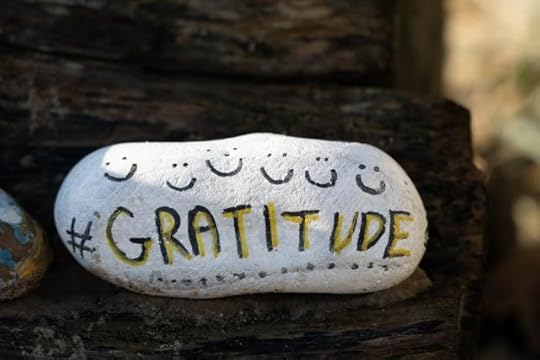 Photo by Nick Fewings on UnsplashExpress what you’re grateful for frequently
There’s a simple, universal truth at work here. When you give gratitude, you get gratitude.
Hence, when you express gratitude for the things you have – tangible or intangible – you draw more things to you to be grateful for.
This is conscious reality creation in its purest, most unadulterated form.
When you see lack, scarcity, and insufficiency – and give it energy and attention – it will dominate your consciousness. But when you use your mindfulness to be thankful, here and now, for what you have – that is abundance energy that will draw more abundance to you.
Most of all – there is nothing bad about being grateful and giving thanks. For anything. Gratitude is only positive, and that can go a long way towards you having more amazing, incredible life experiences – and build your life how you most desire it to be.
Think, feel, and say thank you frequently, joyfully, wholeheartedly, and unreservedly. Allow gratitude to flow – because giving it will get it in return. And you are worthy and deserving of whatever you’re working to create for your life.
Thank you.
Expressing gratitude for anything tangible or intangible isn’t hardIt’s all about working with mindfulness of your thoughts, feelings, and intentions to direct your actions.
When you say thank you, and genuinely give gratitude for what you already have – tangible and/or intangible – you create more things to be grateful for. Knowing gratitude is an always positive conscious reality creator, you can be more thankful and find and/or create even more to be grateful for.
This empowers you – and in turn, your empowerment can empower others around you. That can expand to change the bigger picture matters, too.
Choosing for yourself employs positivity for realizing amazing potential and possibilities for your life.
Taking an approach to positivity and negativity – from the vast cylinder that exists between them – shifts matters in a way to open more dialogue. In that form, you can explore and share where you are between the extremes and how that impacts you here and now.
Lastly, the better aware you are of yourself in the now, the more you can do to choose and decide how your life experiences will be. When that empowers you, it can also open those around you to their own empowerment.
To me, that’s a worthwhile endeavor to explore and share.
Thank you for coming along on this journey.
This is the four hundred-and-fifty-ninth entry of my Positivity series. I hope that these weekly messages might help spread positive energies for everyone. Feel free to share, re-blog, and spread the positivity.
Please visit here to explore all my published works – both fiction and non-fiction.
Please take a moment to sign up for my newsletter. Fill in the info and click the submit button to the right and receive a free eBook.
The post What Are You Grateful For and Why Does Gratitude Matter? appeared first on The Ramblings of the Titanium Don.
November 16, 2022
When the Ongoing Work Gets Tedious Is It All Still Worthwhile?
Despite the ongoing work feeling never-ending and tedious – yes, it’s still worth it.
 Photo by Magnet.me on Unsplash
Who I am today has taken me a long time to forge.
What’s more, there’ve been numerous false starts, mistakes, errors, and total fuck-ups. Yet here I am – who, what, how, and why I desire to be.
But that’s not the end of the story. It’s never the end of the story until literally, the end – as in the death of the current meatsuit (body). Life is an ongoing work in progress.
No matter what you’re doing – letting life live you, curling up in a ball and lamenting life/awaiting death, or striving to take the wheel and do the driving – life goes on.
There is never One True Way, utter and total perfection, nor reaching the ultimate height and having nowhere else to go. Nope, there’s always ongoing work – for as long as we live.
Some days feel really tedious. The process of living can be challenging to variable degrees depending on people, places, circumstances, environment, and more. Often there’s no single thing you can put your finger on – you just feel off and wrong.
Just to add insult to injury – something that worked yesterday might not work today. That just adds a level of frustration.
Why am I bringing this up? Because I’m feeling frustrated with a few elements of my life just now. Writing them out is both cathartic – and shares a process and experience I’m 100% certain I am not alone in.
My tedious BS issuesI’ve been exploring Pathwalking, mindfulness, and striving to live the fullest possible life on MY terms for years now. Along the way, I’ve been happier and more content with my life overall and experienced some really cool stuff as such.
But I’ve also had ongoing frustrations. Not to put too fine a point it – this tends to be about finances.
Part of the frustration comes from this being an utterly first-world problem on my part. I’m not hurting, and we’re not wanting for basics. All of the financial concerns are about retirement savings and more stability here-and-now.
(I am not going to write certain words here in the interest of conscious reality creation. Focusing on and thinking about certain negatives just empowers them. Phrasing matters.)
And that right there is the single biggest issue I have. Reframing thoughts and feelings that I know don’t serve me. I get so caught up in where I am now – but would prefer not to be – and how I got here that I neglect my own mindfulness practices.
It’s too easy to get caught up in the tedious BS. And that makes the ongoing work that much more frustrating.
Is it still worth it? Yes. Because when I sit back and consider where I am in my life, I’m in a genuinely good place. Sure, it could be better – and there’s discomfort. But that’s why it’s called a comfort zone – because it’s comfortable, and leaving it is not.
Long story short (too late) I must get out of my head more – and let it go and keep moving forward when I don’t.
The ongoing work is workLet’s face a couple of important facts here.
One – there is never a genuine, true, quick-fix solution to anything. Every quick fix either misses something important – or requires more maintenance than it lets on. But it’s never one-and-done and set as such.
Two – Very, very few things in this life are one-and-done. Fine, you got ‘X’ done and succeeded at something. But now there’s ‘Y’ and ‘Z’. One-and-done might seem awesome and desirable – but there’s still often a catch and something more to consider.
Three – One-Size-Fits-All nearly never does. There are 8 billion people on this planet, and we are all variable in more ways than easily counted. So just because something worked for that person doesn’t mean it will work the same for you.
Ongoing work is more or less the literal definition of life.
Every day is new. Similar, maybe. But new and different nonetheless. That means every day you have choices and decisions before you.
Yes, everyone needs a day off from time to time. We all need to breathe, take breaks, and relax. What’s more, we all have off days, bad days, and unfortunate occurrences.
No matter what happens – we’re always empowered to choose our life experiences. But it’s perfectly normal for the ongoing work to feel tedious and frustrating sometimes. Recognizing and acknowledging this empowers us to work with it – rather than allow it to work us over.
 Photo by Naassom Azevedo on UnsplashKeep getting up
No matter how many times you trip, stumble, fall, or crash – you keep getting up.
Sure, sometimes it’s with no vigor and zero enthusiasm. But so long as you’re living, part of the ongoing work of life is to keep getting up.
As the Japanese proverb says,
“Fall down seven times, get up eight.”
We all know people who don’t choose this. They literally or figuratively stop getting up, lament life, and await death in one way or another.
Here’s the thing. You can accept that life just is, and neutrally go wherever the currents of it take you. Or you can believe life is a piece of shit and not worth the effort, and negatively go wherever the currents of it take you. Or you can view life as full of potential, possibility, and unique challenges – and positively swim the currents as you prefer to choose.
You will do all of these. That’s human nature. Nobody is 100% neutral, positive, or negative. Human beings are constantly changing because change is the only universal constant.
The reality is this – despite the ongoing work feeling never-ending and tedious – yes, it’s still worth it. Because you get to choose it.
Ongoing work always changesI have chosen to walk my own path in this life because I desire to experience life as fully as possible. I want to see who I can be, where I can go, what I can do, and learn as much as I can along the way.
This is frequently challenging. But when I just let the flow carry me along and I don’t act in my own best interest, it’s even more tedious and frustrating.
I have gotten out of my head before. I can do so again. My tedious BS issues are mine to resolve. And I know that I am more than capable of doing so.
I also know that just because today might suck, tomorrow might be amazing. For every negative and neutral day, there can always be a new positive. Rather than lament this and fall prey to rote, routine, and tedium – I can choose how to face it.
It’s worth it – because I get one shot in this meatsuit to live this life as I know it. And I figure why just exist when it’s possible to experience and thrive? I’d rather work with change than rail against it. And I’d rather make choices and decisions myself than have them made for me.
How do you approach the ongoing work in your life experience?
This is the five-hundred and sixty-ninth exploration of my Pathwalking philosophy. These weekly essays are my ideas for – and experiences with – using mindfulness and positivity to walk along a chosen path of life to consciously create reality.
I share this journey as part of my desire to make a difference in this world and empower as many people as I can with conscious reality creation.
Thank you for joining me. Feel free to re-post and share this.
The first year of Pathwalking, including expanded ideas, is available here. Check out Amazon for my published fiction and nonfiction works.
Please take a moment to subscribe to my mailing list. Fill in the info then click the sign-up button to the right and receive your free eBook. Thank you!
The post When the Ongoing Work Gets Tedious Is It All Still Worthwhile? appeared first on The Ramblings of the Titanium Don.
November 14, 2022
Why Is It Important and Positive to Be Yourself?
Because yourself is the only person you can be. What that looks like, however, is up to you.
 Photo by Nijwam Swargiary on Unsplash
I had to put a great deal of work into becoming who I am.
That’s not to say in any way, shape, or form that I’m fully-formed or perfect. Nope, I’m still a work in progress. But the choice to be myself – and to work on what that means – was mine.
It’s really important to be yourself. Why? Because who else can you be?
It might seem like a stupid question. But really, it’s not.
I’ve tried to be someone else. I emulated another person’s way of being and attempted to be more like them than me.
Do you know how that worked out? Poorly. Why? Because I wasn’t them.
Here’s the thing. The only person in your head, heart, and soul is you. Nobody else can think, feel, act, intend, nor use your six senses to know the world around them – but you. And only you.
Are we ever taught to recognize and understand this? No, not in formal schooling. But as children, when we’re just interacting with our environment and the people around us – we’re only ourselves. Because that’s all we know how to be.
Then, as we get a bit older, society starts measuring us against one another. We’re compared, contrasted, and given expectations from friends, family, teachers, leaders, and even random strangers.
Unchecked, this leads to us seeking outside validation – as well as becoming something to reflect what’s expected of us – over our own self-born expectations.
What we’re told isn’t trueWe’re often told that person ‘x’ is amazing, has it totally together, and we should be more like them. They’re better looking, wiser, smarter, more popular, and richer. Thinner, have better hair, and I could go on and on with a ludicrous list of other ways we’re given this message.
This simply isn’t true. How do I know? Because you can be only you, just as he can only be him, she can only be her, they can only be them, and so on. Ergo, just because you’ve been told to be more like them – you can do so only in an utterly superficial way.
No matter how much we think it would be good or better to be that other person – or be more like that other person – that’s an unfair and unrealistic comparison.
Why? Because that person is the only one in their head, heart, and soul. For all you know – just as you compare or are being compared to them – they might compare or are being compared to you. And you can’t know this or not because you’re not them. You’re yourself.
Yourself is who you are and who you will always be. And there’s nothing wrong with this – in fact, it’s a ginormous positive.
Even if you dislike who you are in various ways – you can change. Change being the one and only constant in the Universe – you can control it.
That’s a matter of practical mindfulness – as in active conscious awareness of yourself.
Be yourself – everyone else is takenWhen Oscar Wilde said this, he was not wrong. But more than that – you, yourself, are pretty damned amazing.
Sure, you might not feel that way. There might be things you’d like to change about yourself. Welcome to the club.
But to choose change, you need to accept yourself for yourself.
This is easier said than done, particularly in the face of so many messages to the contrary. Just about every advertisement tries to sell you on something lacking in yourself that the given product or service will repair/replace.
I know there’s room for improvement in who I am. Mentally, emotionally, physically, and even spiritually – there’s room for growth, change, and improvement. However, underlying this – I’ve come to like who I am, warts and all.
Yeah, I’m imperfect. Sometimes I’m more opinionated than I should be. There are times I’ve worn my heart on my sleeve only to open myself to it being ripped away. More often than I care to admit, my inner demons and brain weasels get in the way of my being my best self.
The thing is – that’s just being human. That’s life. In being myself, that’s my experience.
When you are yourself, you might experience something similar. I can’t know for sure, since I can’t be in your head, heart, or soul. But I do know that all of us have fears, doubts, discomfort, and occasional dislike of ourselves.
When we recognize and acknowledge this, however, we open ourselves to better work with it. Through conscious awareness – and applied mindfulness – we can get comfortable as ourselves, and/or make adjustments and changes.
 Photo by Mike Juarez on UnsplashNothing is set in stone
Who you are – within and without – is changeable. Transformation is one of the greatest powers human beings possess.
Often, we mostly focus on what outside of ourselves we can change. But more importantly, we’re empowered to make incredible changes to ourselves. For ourselves.
And sometimes – change simply isn’t as necessary nor as positive as just recognizing, acknowledging, and being ourselves. Being yourself.
No matter the challenges you face, the struggles you have, nor the imperfections, difficulties, or whatnot – you, yourself, are an amazing being. Perhaps you don’t feel that all too often – but that doesn’t make it any less true.
Why? Because every single human being on this planet is unique. All the nearly 8 billion of us on this planet have our own individual, unique talents, skills, abilities, personalities, bearings, and so on. Every single one of us can build and create amazing things within and without.
You, yourself, included.
If you’re dissatisfied with any element of who you are – it can be changed. Nothing about you is written in stone. You’re transmutable, changeable, and malleable to your own inner desires. And who you desire to be – so long as you have no intent to hurt, harm, or thwart others in the process – is worthy and deserving of you.
Being yourself is massively positive because it empowers you to choose. To choose who, what, where, how, and why you are. To change as you desire for your own betterment.
When you are as genuine and true to yourself as possible – you’re empowered. And that means you can do nearly anything you can imagine.
And that is why it’s both important and positive to be yourself. So that you can have and make use of all your power to the best of your ability.
Recognizing why it’s important and positive to be yourself isn’t hardIt’s all about working with mindfulness of your thoughts, feelings, and intentions to direct your actions.
When we actively work to be ourselves – whether by getting to know ourselves or making active changes to ourselves – we’re doing something positive for our lives. Knowing that you, yourself are the only one in your head, heart, and soul, you can use that to your advantage to be the most genuine, true, best you that you can be.
This empowers you – and in turn, your empowerment can empower others around you. That can expand to change the bigger picture matters, too.
Choosing for ourselves employs positivity for realizing amazing potential and possibilities for our lives.
Taking an approach to positivity and negativity – from the vast cylinder that exists between them – shifts matters in a way to open more dialogue. In that form, we can explore and share where we are between the extremes and how that impacts us here and now.
Lastly, the better aware we are of ourselves in the now, the more we can do to choose and decide how our life experiences will be. When that empowers us, it can also open those around us to their own empowerment. And that is, to me, a worthwhile endeavor to explore and share.
Thank you for coming along on this journey with me.
This is the four hundred-and-fifty-eighth entry of my Positivity series. I hope that these weekly messages might help spread positive energies for everyone. Feel free to share, re-blog, and spread the positivity.
Please visit here to explore all my published works – both fiction and non-fiction.
Please take a moment to sign up for my newsletter. Fill in the info and click the submit button to the right and receive a free eBook.
The post Why Is It Important and Positive to Be Yourself? appeared first on The Ramblings of the Titanium Don.
November 9, 2022
Can You Bring Other People Along on Your Life Path?
Yes – but no. Traveling companions on your life path are also on their own path.
 Photo by Jonathan Pendleton on Unsplash
I’ve been married since May 2015. My wife and I have been together since the spring of 2011. I can’t imagine my life without her as a part of it.
While in many ways we’re traveling along the same path – we’re not. Yes, we live together, do lots of different activities together, and are a partnership in this life. Yet still, our paths are not the same.
How in the hell does that work?
The reality is much simpler than many people credit it with being. For starters – we might be a couple, yet we’re utterly individuals first and foremost. For all that we share, we’re also considerably different. She’s an extreme introvert with introverted preferences and tendencies. I’m an ambivert, an introvert with extroverted tendencies. I love summer and the warmth of the sun; she loves winter and the cold.
Still, we walk this life together, despite – and to some degree because of – our differences. Yet we still are on different life paths.
The truth is – so’s everyone. No two people are ever on the same life path. Similar? Absolutely. The same? No.
Recognizing and accepting this truth goes a long way toward stronger, better relationships of every kind. It also can help lessen disagreements and take the sting out of perfectly natural differences.
Let’s start by delving more into shared individuality.
We’re all individualsOne of the biggest mistakes I think some romantic partners make – as well as close friends and codependent families – is neglecting their individuality.
No matter how much we desire and act to connect to and with others – we’re individuals. That’s because you alone are in your head, heart, and soul. Nobody else can think, feel, intend, or act for you or even through you. You’re it.
To some, that’s deeply distressing and the cause of anxiety and loneliness. But it doesn’t need to be. You can make peace with it. When you don’t, you will live your life always wanting.
I know. I’ve been there. The longing for connection – and the right connection – was so deep, even when I had a partner I still sought more.
Somewhere along the way – before I could quantify Pathwalking as a philosophy – I realized I wasn’t bad company for myself. I could be comfortable in my own skin.
When I began to practice that more, I found a partner also comfortable in her own skin.
When we got together, we discovered we were an amazing partnership.
But we both recognize and respect one another’s individual being. I don’t try to change her, she doesn’t try to change me.
Everyone is in the same situation. No matter what type of partnership you form with others – you’re still an individual when all’s said and done.
You cannot traverse the same paths because you’re not the same people. But you can take complementary paths.
Together on complementary pathsMy wife is an accomplished, brilliant, and respected project manager. She has 2 decades of experience, and majorly kicks ass at what she does. Additionally, give her yarn and she will crochet or knit something beautiful and amazing.
I’ve held many different jobs in multiple fields, am a published author seeking broader exposure, and am a storyteller still largely unknown to the world at large.
As you can read above, we’re not on the same life paths. I seek to be a speaker, subject matter expert, and best-selling author. She seeks to be excellent at what she does while saving for retirement and doing well without showing off.
We’re a married couple and a partnership as such. Clearly, we’re on different life paths. How can we travel together?
Our paths are complementary.
What’s that mean? It means they intertwine, wrap around run another, and often run perfectly parallel to the point of appearing to be one. But they remain separate and equal to each of us and our desired lives.
I support her and her path – and vice versa. Though sometimes we don’t get one another’s perspectives – we still respect them.
That’s what complementary paths are. They might vary to a greater or lesser degree – but they still complement one another.
 Photo by Hubert Buratynski on UnsplashAny path can be complementary to any other
No matter how different our paths in life might be – they can still be totally complementary.
How does that work? By being mindful of ourselves, and then expanding that out to the world outside of ourselves. Additionally, by offering all the kindness, compassion, and empathy we desire to receive.
Recognizing and accepting that all of us are individuals – we can work together to build together. Our paths, though different, can be complementary to one another.
Like two caravans crossing a dessert and meeting in the middle – one will have what the other needs and probably vice-versa. This is true of every single human being on this planet.
Unfortunately, we’re frequently bombarded by messages of lack, scarcity, and insufficiency that get attached to “others.” “They” will take what’s yours, are going to hurt you, and there isn’t enough – so grab it before they do and/or protect what you already have.
Look familiar? That’s the message of nearly every politician. And it’s not at all true. But empowered people don’t need leaders in the same way the disempowered do – so too many leaders weaponize our fears against us.
The reality is that any two paths can be complementary. But to make that so, we need to let go of competition, fear of the “other”, and beliefs in perfect pairings.
We can walk similar, complementary, and/or parallel paths together – but we must accept that they are still as different and individual as we are.
A similar path – but not the same – is goodYou can travel together on parallel paths with others – but you can’t bring them on your path with you.
When more people recognize and acknowledge this, they’re better equipped to handle how we differ. They’re also better able to work with differences.
One of the biggest mistakes our culture makes today is trying to shoehorn us into a one-size-fits-all format. This notion creates unnecessary conflict – and that’s probably its intent since it’s aimed to disempower to keep people in the same line.
But that’s not real. That’s not how we work. We’re each individuals – and have our own life paths. But they are not in competition with one another.
In truth, when all is said and done, all life paths are complementary. But recognizing and working with that requires mutual respect, kindness, compassion, and empathy.
It’s also imperative that you never try to force anyone to your path. Given that you likely dislike it if someone were to do that to you – don’t do it to others.
Complementary paths can be vastly different. But then, so are you, me, him, her, them, and all the nearly 8 billion of us worldwide. Individuality empowers us because we are incredible conscious reality creators far different from the other animals of this world.
We can’t be on the same path – but recognizing and sharing complementary paths is even better. That takes nothing away – it just builds something greater. Also – you can share complementary paths with multiple people.
And we are all worthy and deserving of the life paths of our choosing.
Are you on a complementary path with other people in your life?
This is the five-hundred and sixty-eighth exploration of my Pathwalking philosophy. These weekly essays are my ideas for – and experiences with – using mindfulness and positivity to walk along a chosen path of life to consciously create reality.
I share this journey as part of my desire to make a difference in this world and empower as many people as I can with conscious reality creation.
Thank you for joining me. Feel free to re-post and share this.
The first year of Pathwalking, including expanded ideas, is available here. Check out Amazon for my published fiction and nonfiction works.
Please take a moment to subscribe to my mailing list. Fill in the info then click the sign-up button to the right and receive your free eBook. Thank you!
The post Can You Bring Other People Along on Your Life Path? appeared first on The Ramblings of the Titanium Don.
November 7, 2022
Can You Practice Self-Care While Still Caring About Others?
Yes, you absolutely can practice self-care while still caring about others.
 Photo by Erik Brolin on Unsplash
I’d like to debunk a few myths here.
First – self-care is NOT selfish. Period, end of story. Yes, elements of self-care might appear selfish from without. Saying “no” for your mental health, refusing to participate in the drama of others, and no longer doing things that hurt you mentally and emotionally will appear selfish to others.
Note – true selfishness involves intent. Malice of forethought. An action taken knowing you’re harming another unnecessarily – i.e., taking more than your fair share and leaving someone without as such.
Second – self-care is not done to the exclusion of all else. When you practice self-care, you’re not ignoring, disregarding, or otherwise avoiding other people and their needs. It’s a matter of making certain you have sufficient energy and fuel to be the best that you can be – without unnecessarily sacrificing your health, wellness, and/or wellbeing.
Third – self-care doesn’t involve the neglect of others and their plight. It’s a matter of permitting yourself to have enough physical, mental, emotional, and spiritual presence to have more for yourself while you give more to others, too.
Self-care is in no way to the exclusion of others. You can still care about other people.
In fact, I’d argue that caring for the self is paramount to caring for others.
You don’t matter more than anyone elseAnother myth of self-care is that it’s done because you believe that you matter more than others.
But that’s utterly not true. It’s just that if you don’t care for yourself first, you limit what you can give to others.
There is nobody else in your head, heart, or soul. You’re it. Thus, you’re wholly responsible for your thoughts, feelings, actions, and intentions. That’s what drives all that you are as well as all you could be.
Right now, we are being collectively bombarded with messages from selfish people trying to convince us they’re standing for us. Even those I might agree with are not very pleasant to pay any attention to.
But the worst of them are normalizing not caring about anyone but yourself in the most selfish ways. They imply that “they” are out to get you, ruin your life, and make matters that are presently bad (and in truth, completely disconnected) even worse.
Self-care doesn’t neglect, take away from, or disregard other people in the world. Because when all is said and done, we’re all one anyhow. But I’ll get to that a bit later.
I am not more important than you. You’re not more important than me. We’re not more important than them. They’re not more important than us. Every single person on this planet is worthy and deserving of kindness, compassion, and empathy. Hell, even those who deny that to others demand it for themselves, don’t they?
Nobody is more or less important than anyone else. Self-care might put you first – but not because you’re more important. It’s recognition of the equality of your importance when it comes to the subject of care.
Care for self is care for allAs I wrote earlier, we are all one.
What’s that mean? It means that while we wear different meat-suits as we live this life, when we go deep into our greatest depths we’re all the same. The energy that makes me, me is no different than the energy that makes you, you.
When you intentionally hurt others – you hurt yourself. This is true whether it’s physical, mental, emotional, spiritual, or any or all of these combined. The harm we do to others we do to ourselves.
Why else do think being unkind, uncompassionate, and unempathetic always bites the person acting that way in the ass? Why else do you think those people tend to be miserable and unpleasant? Because what they give, they get.
Self-care is fuel and energy on every level of health, wellness, and wellbeing. When you give yourself enough, you have enough to more easily share with others. What’s more, it’s easier to recognize it and share it from that position.
When we don’t practice self-care, we do ourselves a disservice. We don’t give ourselves the kindness, compassion, or empathy we desire from others.
That’s the thing about self-care. It’s not some grandiose notion of treating yourself like some sort of god, or other uber-worthy individual. Neither is it extreme luxury or pampering like massages and blowing off the world to chill on the beach with a Mai-Tai in hand. Self-care is caring for our own basic health, wellness, and wellbeing.
Self-care is an act of positivity because it empowers.
 Photo by Adrià Crehuet Cano on UnsplashCaring for others is self-care
Even the most introverted people on the planet don’t live in a vacuum. Everyone interacts with others.
I’d even argue that introverts desire kindness, compassion, and empathy the most – since they want people to understand how and why they interact as little as they do.
All of us interact with other people. Teachers, students, employers, employees, random strangers at the convenience store, other drivers on the road, and more. There are many we’ll never meet or have direct interaction with. But we should still care that we give them that which we desire for ourselves.
There is no collective “they” who are out to get you. The immigrants aren’t coming for your job, the LGBTQA+ community isn’t coming from your kids, atheists aren’t coming for your belief in god, liberals aren’t coming for your guns, and all the like. Do you know what their collective agenda is? The same as yours – to be treated with kindness, compassion, empathy, respect, and overall caring.
Practicing genuine self-care is practicing mindfulness. Mindfulness is conscious awareness of who, what, why, where, and how we are. From that knowledge, we’re better equipped to give of our time, our energy, kindness, compassion, empathy, and love. Both within and without.
All of this is cyclical. But without self-care, we’re massively limiting our capacity to give. That’s why it’s not selfish, why it matters, and how it doesn’t in any way, shape, or form take away from our caring for others.
Recognizing how self-care includes caring for others isn’t hardIt’s all about working with mindfulness of our thoughts, feelings, and intentions to direct our actions.
When we practice genuine self-care, we’re giving ourselves sufficient fuel to do more both for ourselves and for others. Knowing that self-care isn’t selfish, exclusionary, and/or neglectful, we can use it to maximize our health, wellness, and wellbeing so that we have more kindness, compassion, and empathy to share.
This empowers you – and in turn, your empowerment can empower others around you. That can expand to change the bigger picture matters, too.
Choosing for ourselves employs positivity for realizing amazing potential and possibilities for our lives.
Taking an approach to positivity and negativity – from the vast cylinder that exists between them – shifts matters in a way to open more dialogue. In that form, we can explore and share where we are between the extremes and how that impacts us here and now.
Lastly, the better aware we are of ourselves in the now, the more we can do to choose and decide how our life experiences will be. When that empowers us, it can also open those around us to their own empowerment. And that is, to me, a worthwhile endeavor to explore and share.
Thank you for coming along on this ride with me.
This is the four hundred-and-fifty-seventh entry of my Positivity series. I hope that these weekly messages might help spread positive energies for everyone. Feel free to share, re-blog, and spread the positivity.
Please visit here to explore all my published works – both fiction and non-fiction.
Please take a moment to sign up for my newsletter. Fill in the info and click the submit button to the right and receive a free eBook.
The post Can You Practice Self-Care While Still Caring About Others? appeared first on The Ramblings of the Titanium Don.