M.J. Blehart's Blog, page 34
September 28, 2022
How Is It Worthwhile to Adjust Our Mindset/Headspace/Psyche Selves?
It’s worthwhile because it’s the only thing we can genuinely control.
 Photo by Sarah Brown on Unsplash
Ever find yourself thinking about something utterly outside of your control?
I don’t just mean a random, passing thought. What I’m on about is giving deep, analytical thought towards something over which you have zero control.
For example – politics. Apart from voting, protests, phone calls and letters to our representatives – there’s nothing we can do. When it comes to the world stage, there’s even less that we can do.
Similarly – celebrity gossip. The weather. How and why our friends made choices we cannot understand – but we still endlessly question and mull over.
Chewing on these thoughts and digging into them doesn’t serve us. Why? Because they are not in our control.
The truth is that there’s very little we truly, genuinely control. What’s more, we’re frequently presented with examples of “control” on the parts of politicians, religious leaders, business moguls, and the like. The vast majority of any arguments they make are all about the things they believe that they can control.
Control, however, doesn’t need to go beyond ourselves. In fact, it can’t. The truth is, Elon Musk, Donald Trump, Vladimir Putin, and Joe Biden only influence – but don’t control anyone or anything. If you don’t believe that – all you have to do is look at where and how they can’t make what they desire to come into being via their “control”.
What do we control?Every single person on Planet Earth can control only one thing. Themselves.
We can’t even control everything about ourselves. Genetics dictates certain elements of ourselves that we can do nothing about. We can’t control where and when we were born. And though we can create new families, communities, and the like – we can’t control where we came from at the start.
Often, we look without for control. But the genuine place where we exert any control is within.
To be fair, we can control our appearance to a certain degree. We choose how to dress, the way we wear our hair, and with greater difficulty focus on our body size and muscle mass (but not our height unless we wear platform shoes/boots).
When we get deep into it, all that we can control is ourselves, here and now. More specifically – we can control our mindset/headspace/psyche.
In other words – we can control our thoughts, feelings, intentions, and actions.
However, to take that control, we must exert it first. That frequently requires wrestling it away from our subconscious.
Our subconscious minds are akin to a computer hard drive. They are where our operating systems, data storage, and programs are saved.
What are our subconscious operating systems, data storage, and programs?Our operating systems are our values and beliefs. They’re the foundation on which we run. And like computer operating systems, sometimes we’re running an outdated OS.
Old values and beliefs are in our subconscious. And until we seek them out to replace or remove them – they are still driving our system.
Our data storage is thoughts and feelings that might be disconnected until a program or the operating system engages them. For example – that time your best friend forgot your birthday. Or that time you hurt a lover via some unfortunate act. It might be that time you were embarrassed when you flubbed that speech and made everyone laugh at you.
Consciously, we tend to be unaware of these. Something triggers them – and then the data storage of our subconscious impacts our mindset/headspace/psyche unexpectedly.
Finally, what are our programs? Our habits. That which we do by rote and routine, habitually, are our programs. Habits can be utterly subconscious because they are so deeply ingrained and might have been engaged for eons.
How do we gain control of our subconscious? We can’t – unless we intentionally dive into it. And that is where conscious awareness and mindfulness of our mindset/headspace/psyche becomes utterly worthwhile.
 Photo by Franciele da Silva on UnsplashWhy it’s worthwhile to adjust our mindset/headspace/psyche selves
Not to put too fine a point on it – but it’s worthwhile because our mindset/headspace/psyche selves are the only thing we truly, genuinely control.
Who is in your head? Just you. Maybe there are voices of past loves, old friends, parents, teachers, and others that sometimes seem to talk to you. But the truth is they aren’t there – only you are.
Each of us is all alone in our heads. Nobody else can get inside – no matter how much access we grant them.
Our mindset/headspace/psyche selves are our conscious awareness. In the here and now, it’s conscious awareness of what we’re thinking, what and how we’re feeling, the intentions we hold, and the actions we do and don’t take based on them.
How do we take control of them? Mindfulness.
Mindfulness is the practice of being present, here and now, and consciously aware therein.
When we are mindful, and actively working to be consciously aware of our mindset/headspace/psyche selves, we ultimately empower ourselves.
How? Because when we know – here and now – our thoughts, feelings, actions, and intentions, we can take control of them.
Rather than allow rote, routine, and our subconscious habits, beliefs, and values to control us – mindfulness takes the wheel and puts us directly in control.
That’s why it’s worthwhile to adjust our mindset/headspace/psyche selves. Because adjusting is taking control – the only genuine control we have of our lives.
A caveat – the egoThe ego is not simply the braggart showing off his muscles or taking endless selfies of herself and showing them on TikTok. The ego is a construct that exists in a space between the conscious and subconscious mind.
It can appear that the ego is driving – but it does so in the same way as the subconscious. Without conscious awareness and the associated control that makes it worthwhile.
What is the ego? It’s how we project ourselves to the world without. But it’s also a mirror reflection of who we believe we are – warts and all.
Often, the ego has been largely constructed via subconscious habits, beliefs, and values. Sometimes that’s neutral, but often it’s more a projection of positivity or negativity.
It’s a construct because it’s not a product of the here and now, and thus not truly who, what, where, how, and why we are. Unlike our conscious mindset/headspace/psyche selves.
Likewise, mindfulness gives us the ability to recognize and take control back from the ego in much the same way it does from the subconscious. But know that the ego tends to be more active rather than passive. Hence, it might resist you in ways your subconscious can’t.
If your subconscious is your computer hard drive, your ego is the RAM. Sometimes we need more to process everything better.
Adjusting our mindset/headspace/psyche selves is always worthwhileThat’s because we have the power to take that control and make it so.
This, in truth, is the only genuine control we can exert over ourselves.
That’s why doing so is worthwhile. Because that action is empowering. And when we’re empowered, we’re more capable of amazing things.
That’s how we control ourselves to make the choices and decisions to find and/or create our paths in life. That, to me, is utterly worthwhile on so many levels.
It may not seem like much – but it’s everything, and more than enough when all is said and done.
We each get just one chance around in these bodies. One life experience. Shouldn’t we give ourselves what control we can to make it as amazing as possible?
Can you see how it’s worthwhile to be in control of our mindset/headspace/psyche selves?
This is the five-hundred and sixty-second exploration of my Pathwalking philosophy. These weekly essays are my ideas for – and experiences with – using mindfulness and positivity to walk along a chosen path of life to consciously create reality.
I share this journey as part of my desire to make a difference in this world and empower as many people as I can with conscious reality creation.
Thank you for joining me. Feel free to re-post and share this.
The first year of Pathwalking, including expanded ideas, is available here. Check out Amazon for my published fiction and nonfiction works.
Please take a moment to subscribe to my mailing list. Fill in the info then click the sign-up button to the right and receive your free eBook. Thank you!
The post How Is It Worthwhile to Adjust Our Mindset/Headspace/Psyche Selves? appeared first on The Ramblings of the Titanium Don.


September 26, 2022
It’s Not a Limited Pie – There’s More Than Enough for Everyone
There are more than enough of the things we desire most.
 Photo by FitNish Media on Unsplash
Everybody wants things.
Some are basic necessities – like food, clothing, and shelter. Others are modern necessities like a mobile phone, wifi connections, transportation, and the like that we could live without – but prefer not to.
And then there are the bigger, better, faster, more desirable things we would like to have – but are not entirely necessary. Newer cars and mobile phones, faster computers, better wardrobes, smaller waistlines, better hair, and the like.
This is where things tend to get convoluted. Why? Because we have been led to believe that there is lack, insufficiency, and not enough.
True, there are some things made in limited quantities to make their value artificially high. Limited edition collectibles and such. And then, some things are artificially withheld or controlled to maintain their value, like diamonds. Further, there are resources that potentially are finite, such as petroleum.
Apart from these things, however, there is no true lack, scarcity, or insufficiency (and all of those things can be replaced with alternatives, of course). There is enough and more than enough of this, that, or the other thing to go around.
When it comes to the intangible and immaterial, they are infinite. They are never scarce, lacking, or insufficient. It is only due to our individual beliefs, values, experiences, prejudices, biases, and such that we think or feel that they’re lacking.
There is more than enough for everyone. How do I know this? Because we live in an abundant Universe.
In other words, the pie isn’t limited to a few slices for a chosen few people. It’s infinite and can feed everyone.
The artifice of lack and scarcityThe vast majority of the lack, scarcity, and insufficiencies of the tangible and material we come to believe are bullshit. They’ve been created artificially by a few “in power” to disempower the masses.
How many politicians use the threat of “the other” taking away what belongs to certain people? How many religious leaders claim those not of their faith will take away all that belongs to the faithful? These play on fear and doubt to disempower the masses and create the artificial lack, scarcity, and insufficiency of both the material and immaterial alike.
Why? Greed, narcissism, and insecurity on the part of the “haves” in attempts to control the uncontrollable. Or put another way – doing whatever they can to control other people.
But we can’t control other people. Period. The only person over which you and I have any control is ourselves.
Still, lack and scarcity are weaponized to disempower and create insecurity. This is a huge part of why we live in a fear-based society.
What’s more – it’s even more false when it comes to the intangible and immaterial.
There’s more than enoughWhile everybody wants things – what we truly desire, more than things, are intangibles.
We want good feelings, positive emotions, great experiences, contentment, and joy. People desire to be balanced, settled, and comfortable mentally, emotionally, and spiritually – even more than physically.
There are more than enough intangibles in the Universe. They’re infinite, and the pie can be sliced into billions of trillions of large, satisfying pieces. It’s not limited, it doesn’t belong to a chosen few, the gifted, or some unknowable rightfulness – it is more than enough for ALL.
Often, the material gets tied to the immaterial. Sometimes this is benign, while other times it’s blatant and nasty. Watch almost any advertisement for any product and see how they imply the product will make your life better and increase your good thoughts and feelings. Do they hint at it subtly, or hit you over the head with a message of “do this/buy this or you’re a loser”?
For the most part, as I wrote earlier, even the material is not lacking or scarce. Yes, sometimes there are real challenges to acquiring it. But those tend to be wholly artificial.
Take money, for example. All of us would like to have more money. Most of us, I suspect, aren’t seeking to buy yachts and private aircraft – what we seek is comfort, freedom from debt, and the ability to want for nothing and be content.
Money was once backed by something material – gold or silver, for example, and used to be wholly material. Now? Money is backed by governments and promises of its value, belief in its power, and is wholly invented from the void – and equally immaterial. All lack and scarcity of it are artificial.
Like all things intangible, there is more than enough.
 Photo by Helena Lopes on UnsplashMindfulness empowers us
To recognize the truth of our abundant Universe, we need to be more self-aware.
Simple as that. When we are more consciously aware of ourselves, we become more empowered. We can see the artifices for what they are.
What’s more, conscious awareness through mindfulness puts us more in touch with what we truly desire – emotionally, mentally, and spiritually. That’s how mindfulness empowers us.
The notion of limited slices of pie is false. When we are more in our conscious mind rather than our subconscious or our ego, this becomes more apparent.
To gain conscious awareness, the practice of mindfulness is asking ourselves what we’re thinking, what and how we’re feeling, what intentions we have, and what actions we do or don’t take through this. Conscious awareness of our mindset/headspace/psyche selves.
Simple? Yes. But – in a quick-fix, instant gratification society such as ours, the challenge is that this isn’t one and done. It’s a constant act to be mindful. And it’s all too easy to let our subconscious beliefs and values drive us by rote and routine.
When we pause and take even a few minutes to practice mindfulness, we can see for ourselves the artifice of lack, scarcity, and insufficiency. That clarity can help drive us to act, and make choices and decisions based on logic and reason to disallow fear. That action cuts slices of the infinite pie – and shows us how it’s never running out, no matter what “they” try to tell us.
Where else would “pie in the sky” come from? An infinite universe of more than enough – be it tangible or intangible.
Recognizing there’s more than enough of everything isn’t hardIt’s all about working with mindfulness of our thoughts, feelings, and intentions to direct our actions.
When we recognize that most lack and scarcity we believe in are artificial, we acknowledge that we have been duped. Knowing that this is an abundant universe, and the immaterial we most desire for our lives is infinite – and there is more than enough pie for everyone – we can make choices and decisions to give ourselves what we desire without fear of running out.
This empowers us – and in turn, our empowerment can empower others around us. That can expand to change the bigger picture matters, too.
Choosing for ourselves employs positivity for realizing amazing potential and possibilities for our lives.
Taking an approach to positivity and negativity – from the vast cylinder that exists between them – shifts matters in a way to open more dialogue. In that form, we can explore and share where we are between the extremes and how that impacts us here and now.
Lastly, the better aware we are of ourselves in the now, the more we can do to choose and decide how our life experiences will be. When that empowers us, it can also open those around us to their own empowerment. And that is, to me, a worthwhile endeavor to explore and share.
Thank you for coming along on this ride with me.
This is the four hundred and fifty-first entry of my Positivity series. I hope that these weekly messages might help spread positive energies for everyone. Feel free to share, re-blog, and spread the positivity.
Please visit here to explore all my published works – both fiction and non-fiction.
Please take a moment to sign up for my newsletter. Fill in the info and click the submit button to the right and receive a free eBook.
The post It’s Not a Limited Pie – There’s More Than Enough for Everyone appeared first on The Ramblings of the Titanium Don.
September 21, 2022
Why Is Maintaining an Abundance Mindset So Challenging?
An abundance mindset often stands against real and imagined aspects of reality.
 Photo by Marcos Paulo Prado on Unsplash
I recognize and acknowledge that my life is good.
Not to brag, but in the grand scheme of things, my life is good. I have an incredible partner, jobs I like, a career I love, friends, a roof over my head, and many things above and beyond basics.
For this, I am deeply grateful. So many people in the world are not in this position.
There’s room for improvement. But that’s largely true of life overall. We grow, evolve, and shift our paths and desires because nobody is meant to be stagnant. Also – change is the only constant in the entire Universe.
Along this line, I am seeking to create greater abundance in my life. Allow me to be more specific. I’m not looking for tremendous wealth, luxury, popularity, or anything like that. What I seek is an abundance of financial stability, time, self-care, peace, friendships, and love.
All of us are worthy and deserving of such things. But faced with a fear-based society and frequent messages of lack, scarcity, and insufficiency – maintaining an abundance mindset is challenging.
But in the interest of choosing our own paths in life – an abundance mindset is utterly necessary.
What’s more, an abundance mindset is a great counter to our fear-based society’s collective consciousness.
To begin, we must acknowledge that the Universe is one of almost unimaginable abundance.
How is the Universe abundant?This is often hard to see because our immediate surroundings frequently contradict this notion.
We see people struggling to make ends meet, hear about shortages and “supply-chain issues”, lack of this, that, or the other thing, constantly.
But the truth is that all of those are built on artifices.
Take money, for example. The dollar is not real. It’s been accepted by fiat as currency. It’s backed by nothing – save the US government. It might be paper or digital – but in either case, our legal tender is totally made up and artificial.
That’s why money always manages to be found in the billions for crises, bailouts, subsidies, and whatnot.
All of this comes down to the tangible. Even the digital dollar appears on the apps for our bank accounts and credit card statements.
At the root of all of it – and absolutely everything in the Universe – is energy. And it is abundant beyond our comprehension.
Every single atom and all the stars in the cosmos are made of energy. There are something like 6.5 octillion atoms in a human body and about 200 billion trillion stars in the Universe. If that’s not direct proof of abundance and an abundant Universe – I don’t know what is.
The measure of it all is in numbers far, far beyond human capacity. That’s how abundant the Universe really is. And that’s proof of how the Universe is abundant.
How does an abundance mindset work?In the simplest terms – this is a choice.
And it’s a particularly challenging choice when up against the overwhelming messages of lack, scarcity, and insufficiencies in our world today.
To be fair – there are issues in the supply chain and other world problems impacting specific things. But a lot of that is still artificial. I don’t know a good specific example to cite here – but given history and how today’s world works, it’s a safe bet.
An abundance mindset has very little to do with material abundance. That might be a result of it – but not how it works.
Simply put, an abundance mindset is one of potential, possibility, positivity, options, and the like. An abundance mindset looks at the world with wonder and creativity because you see abundance in all that’s available to us.
Its opposite is a lack mindset. That’s a mindset of impossibility, uncertainty, negativity, misfortune, and the like. A lack mindset looks at the world in fear and disorganization because you see lack and scarcity of both the material and immaterial.
That’s a choice we get to make. All the time.
Yes, I know sometimes lack is real. When there are 8 slices of pizza and 10 of you, 2 will go without. However, an abundance mindset would choose to cut in half two slices so that everyone gets some.
Choice is how any mindset at all works.
 Photo by Alexander Schimmeck on UnsplashWhat’s the challenge?
Nobody is “on,” sharp, or otherwise 100% every single day. We all have off days, lousy days, circumstances and happenstances that catch us unprepared and unaware.
Welcome to the human race. We all have days of struggle when maintaining an abundance mindset in the face of so many messages of lack, scarcity, and insufficiency is nearly impossible.
It’s also extra challenging when a bill is due and your bank account is empty, when your calendar is double or triple booked, or when two things you deeply desire to do are happening at exactly the same time.
Likewise, it’s extra challenging when you get dumped, have a car accident, lose your home to a flood or fire, or otherwise experience an unexpected negative.
Each of these challenges can bring lack, scarcity, insufficiency, and negativity to the forefront of your mindset. Which makes maintaining an abundance mindset particularly challenging.
As good as my life is at present overall – some elements are not as abundant as I desire for them to be. Rather than reminding myself of what there IS – for which I should be grateful – the lack creeps in.
If I allow myself to read news and spend too much time on social media – even just reading news headlines – the lack mindset starts to become overwhelming. And – for added fun – there’s a sense of guilt.
Guilt? Yes, guilt. Overall, as stated at the beginning of this, my life is good. Especially compared to anyone under Putin’s invasion of Ukraine, women in states enacting laws removing their body autonomy, and any black person who gets pulled over – and has no idea if their life is now on the line.
All of this is a challenge to an abundance mindset. What can we do about it?
Mindfulness of an abundance mindsetConscious awareness is the only way to truly know our mindset, as well as our headspace/psyche/self.
To be consciously aware we must be mindful.
Mindfulness is conscious awareness of what we’re thinking, what and how we’re feeling, our intentions, and the actions we take connected to that. When we practice being mindful, we allow our conscious mind to do the driving.
When we’re not mindful – our subconscious and/or our ego will do the driving. Both can operate by rote and routine – and get sucked down lack mindsets when we’re not being consciously aware of ourselves.
When we’re more self-aware we’re more aware of the world around us, too. And that’s why self-care, self-awareness, and everything related to them isn’t selfish.
An abundance mindset is a builder. A lack mindset is a destroyer. I’d rather build better than destroy what is. Particularly when it comes to my own paths and my life experience.
Things might be removed or destroyed as we walk our mindfully chosen paths in life. But this is about choice – and an abundance mindset, mindfully chosen, lets us be amazing builders for better things.
Finally – destruction wrought via a lack mindset is usually about undoing, changing, or redoing the past. That’s not possible – which is why a lack mindset and the idea of destroying for better defies logic and reason.
Working with and from an abundance mindset can consciously create an incredible reality and manifest seemingly miraculous things. There’s more than enough good to go around – and we’re all worthy and deserving of having and receiving it.
Do you work with an abundance mindset to face and overcome life’s challenges?This is the five-hundred and sixty-first exploration of my Pathwalking philosophy. These weekly essays are my ideas for – and experiences with – using mindfulness and positivity to walk along a chosen path of life to consciously create reality.
I share this journey as part of my desire to make a difference in this world and empower as many people as I can with conscious reality creation.
Thank you for joining me. Feel free to re-post and share this.
The first year of Pathwalking, including expanded ideas, is available here. Check out Amazon for my published fiction and nonfiction works.
Please take a moment to subscribe to my mailing list. Fill in the info then click the sign-up button to the right and receive your free eBook. Thank you!
The post Why Is Maintaining an Abundance Mindset So Challenging? appeared first on The Ramblings of the Titanium Don.
September 19, 2022
How Are We More Capable via Genuine, Non-Toxic Positivity?
Genuine, non-toxic positivity opens us to empowerment, potential, and possibilities.
 Photo by Jordan Donaldson | @jordi.d on Unsplash
Unless you live under a rock, no doubt you feel that the world has gone slightly mad.
I could provide lots of examples here – but it’s not necessary. Our fear-based society seems hell-bent on providing more reasons every day to feel uncertain, concerned, distressed, and generally negative.
This means that every day we get to choose if we’ll let the fear-base in the collective consciousness of the world dominate us.
Or not.
Combatting this is easier than we think. But it goes against the grain, and because too many of our so-called leaders prefer us as disempowered as possible – lots of false narratives exist around positivity, self-care, self-assurance, selfishness, and everything else about our individual selves.
The truth is that we are ALL more capable via positivity than we believe.
Before I dig deeper into my claim, let’s address the elephant in the room.
Toxic positivity versus genuine positivityThe idea of positivity has been thoroughly abused over the years. So abused, in fact, that whole swaths of the concept have become utterly toxic.
Just using the word “positivity” causes many people to cringe. Because the toxic version is just as bad as that which it intends to combat.
Why? Because toxic positivity and its proponents deny, neglect, disparage, and wear blinders towards negativity and even neutrality. They spew their messages of positivity in denial of all else – above and better than all else – and create a false narrative of negativity and neutrality as the bad guys.
But the truth is that there will ALWAYS be negativity. What’s more – we need it. The negative often is the impetus for growth and change. You see a problem, a negative, and something inside you becomes inspired to fix it.
Likewise, neutrality is a point that’s neither positive nor negative – but the initial state of anything and everything. Apart from the extremes on either end of the flexible cylinder (rather than a coin), everything and everyone begins at neutral in the center.
Genuine positivity recognizes and acknowledges negativity. Yin and yang. Necessary opposites in a paradoxical universe.
Genuine positivity doesn’t deny, neglect, disparage, or wear blinders towards negativity. Instead, genuine positivity recognizes and acknowledges the negative (and the neutral) – while invoking the choice aspect of positivity.
Because genuine positivity – and using it for our benefit – is a choice.
What is genuine, non-toxic positivity?Actual, factual positivity is the choice to face the direction of positivity for empowerment to take control and make change in our lives.
First, genuine positivity recognizes the far broader spectrum between the extremes. Positivity and negativity are those extremes. But they are not simply the either/or inherent in toxic positivity.
Hence, my explanation of these extremes – and many others – existing as opposite ends of a flexible cylinder rather than two sides of a coin. The space between the extremes isn’t coin-thin. It’s a much wider cylinder.
All of us exist between the extremes of the cylinder. And it’s flexible because so many things in life, the universe, and everything, are relatively flexible. Very few people, places, and/or things are one extreme or the other all the time. They might mostly be one or the other – but they still have episodes of opposite extremes.
Take the desert, for example. Most of us think of deserts as incredibly hot, dry, arid places on the Earth. Yet at night – they can be freezing cold. And, once in a while, they even get rain. Hence, almost nothing is just in a single state or extreme all the time.
Positivity and negativity are the same. Sometimes something that started positive turns negative – and sometimes something that started negative turns positive.
From the cylinder between these extremes, we all choose and decide towards which we face. That is genuine, non-toxic positivity. It’s the choice of which way we face in any given time, place, situation, etc.
 Photo by Dusty on UnsplashHow does genuine positivity make us more capable?
Lots and lots of forces want you and I disempowered. That’s why we live in a fear-based society. Fear tends to overwhelm reason, logic, and our capacity for empowerment.
Genuine positivity – as opposed to toxic positivity – recognizes and acknowledges that this is a fear-based society. Pretending it’s not – like toxic positivity tends to do – helps nobody and doesn’t empower us.
Recognizing the manipulative forces of our fear-based society – benevolent or malevolent – opens us to choices and decisions.
When we are making our own choices and decisions for our life experiences – we’re automatically made more capable. Genuine positivity is a key to this.
How does it work? Let’s say, for example, that you lose your job. Not only have you lost your income, but you’ve lost your health care benefits (likely this is a USA-specific issue). It sucks and can be deeply frustrating, upsetting, depressing, and a cause of self-doubt and a whole host of negative thoughts and emotions.
Genuine positivity is choosing to accept this reality – and from that, deciding to act. Positive action – like seeking out a new and better job or starting that business you always dreamed of. Perhaps you use the time you have to write that novel, sell everything and go backpack around Europe, or otherwise choose a positive despite the negative.
This doesn’t deny you will need income and health insurance. But it presents an empowered choice. Hence, non-toxic positivity.
Or – you can make no choices and decisions, and potentially sink into depression, lose hope, and be enveloped in our fear-based society and see naught but bad victimization.
While it’s perfectly normal AND acceptable to feel that way from time to time – due to circumstances and happenstance – you can choose for how long.
That’s how genuine positivity makes us more capable.
Mindfulness turns the keyMindfulness is how we start the engine of genuine, non-toxic positivity.
This is not the buzzword notion of mindfulness. This is true, conscious awareness mindfulness. Recognizing ourselves and our inner thoughts, feelings, intentions, mindset/headspace/psyche conscious selves.
Conscious awareness is a thing of the present. It’s recognition and acknowledgment in the here-and-now of what we’re thinking, what and how we’re feeling, our intentions, and the actions we take related to that.
Thus, we see our negativity and the things making us think and feel towards that end of the cylinder.
With that knowledge, we’re empowered to change direction. And that is what genuine, non-toxic positivity is. It recognizes and acknowledges the downward spiral – but chooses and decides to pull up and out of it rather than sink deeper into it and crash.
With this, we are all more capable than we realize. Of what? Everything. When we’re empowered, we can choose and decide how our lives can be. We can take control of our inner beings and use that to direct our lives.
This is not selfish or ruinous as those who prefer us to be disempowered imply. It may go against the grain – but unless you’re knowingly, intentionally causing others hurt or harm, this is not selfish or destructive. But empowerment of the individual takes away the control too many so-called leaders hoard with genuine selfishness.
Non-toxic, genuine positivity doesn’t ignore, deny, or avoid negativity. It’s a choice and decision of empowerment to take control of our life experiences. And it’s not selfish unless we’re knowingly, intentionally hurting, and harming others to better ourselves.
If you are true and genuine, I doubt you desire to hurt anyone to improve your life experience. That’s how genuine, non-toxic positivity works and makes us all more capable.
Employing genuine, non-toxic positivity isn’t hardIt’s all about working with mindfulness of our thoughts, feelings, and intentions to direct our actions.
When we recognize the difference between genuine positivity and toxic positivity, we open ourselves to the potential and possibilities for growth and change this represents. Knowing that genuine, non-toxic positivity is a choice along the broad cylinder between the extremes – and one that doesn’t ignore or deny neutrality or negativity – we become more capable of almost anything we set our minds to.
This empowers us – and in turn, our empowerment can empower others around us. That can expand to change the bigger picture matters, too.
Choosing for ourselves employs positivity for realizing amazing potential and possibilities for our lives.
Taking an approach to positivity and negativity – from the vast cylinder that exists between them – shifts matters in a way to open more dialogue. In that form, we can explore and share where we are between the extremes and how that impacts us here and now.
Lastly, the better aware we are of ourselves in the now, the more we can do to choose and decide how our life experiences will be. When that empowers us, it can also open those around us to their own empowerment. And that is, to me, a worthwhile endeavor to explore and share.
Thank you for coming along on this journey with me.
This is the four hundred and fiftieth entry of my Positivity series. I hope that these weekly messages might help spread positive energies for everyone. Feel free to share, re-blog, and spread the positivity.
Please visit here to explore all my published works – both fiction and non-fiction.
Please take a moment to sign up for my newsletter. Fill in the info and click the submit button to the right and receive a free eBook.
The post How Are We More Capable via Genuine, Non-Toxic Positivity? appeared first on The Ramblings of the Titanium Don.
September 14, 2022
How Do We Stand Up to Fear and Uncertainty Along Our Paths?
Genuine mindfulness lets us recognize fear and uncertainty and how to handle them on our paths.
 Photo by Jakob Owens on Unsplash
Fear takes many forms. Often, it’s disguised as uncertainty, trepidation, self-doubt, general doubt, brain weasels, and the like.
Fear isn’t necessarily a bad thing. It has served the human race well in protecting us from harm. But the things we needed fear to protect us from have changed. A lot.
We are no longer prey to anything but other human beings. Fear that protected us from tangible dangers has lessened considerably throughout history.
But fear has changed, not gone away. Now, fear and uncertainty are almost always about intangibles. Generally, not so much the consequences but the suffering that is possible.
Nobody desires to suffer. We all desire to be comfortable, content, and even happy. But fear that suffering will occur – particularly attached to uncertainty – unnerves many.
We need to recognize and acknowledge fear. However, many false narratives suggest instead fearlessness, ignoring fear, and otherwise disregarding it.
The truth is that we can’t. Really, we need fear. Because fear – even of the intangible – is still a teacher. It helps us get to know ourselves in the face of adversity. Fear and uncertainty, when recognized, acknowledged, and faced, can make us stronger mentally, emotionally, spiritually, and even physically.
No matter what paths we take – chosen actively, passively, or subconsciously – fear and uncertainty will present themselves to us.
How do we stand up to them?
Recognize and acknowledge fear and uncertaintyWe all live in the same world. Yet every person perceives reality differently. As Einstein said,
“Reality is merely an illusion, albeit a very persistent one.”
The illusion is based on our individual perception. While there are shared perceptions of reality that the collective consciousness permeating the world largely agrees on, a great deal is totally individual. Also – the “collective” elements of our collective consciousness vary by region, sex, environment, and other factors that are similar but dissimilar around the world.
Thus, the collective consciousness of North America is not the same as the collective consciousness of Australia. And these are incredibly broad examples.
Collective consciousness notwithstanding – fear and uncertainty exist in everyone everywhere.
The bravest, most fearless person you know still has fears. And to you, they might be unreasonable. What makes one person braver than another? How do they recognize, acknowledge, and then deal with their fears and uncertainty?
We all know people who lash out when fearful and uncertain. That’s usually a sign of not recognizing nor acknowledging it for what it is.
By recognizing and acknowledging fear and uncertainty as inescapable, we empower ourselves.
How is that empowering? Because when you recognize and acknowledge fear you gain knowledge, experience, and understanding. That is the key to standing up to it.
The real issue – sufferingI’m not ashamed to admit that my greatest fear is that of abandonment. Utter, total, and complete abandonment by everyone and everything that I value, love, or care about.
This fear, however, tends not to manifest directly. Instead, it manifests in other, more insidious ways. Fear of failure and fear of success, for example.
What does that look like? If I fail, I will be discarded and abandoned. Conversely, if I succeed, I will be disregarded, shunned, and abandoned.
Same suffering – opposite happenstances.
I know, intellectually, it’s not the abandonment itself I’m afraid of. It’s the suffering.
As Paulo Coelho puts it so perfectly in The Alchemist,
“Tell your heart that the fear of suffering is worse than the suffering itself.”
I know this to be true. Even the worst suffering I’ve experienced – physically, mentally, emotionally, and spiritually – was not as bad as the suffering I feared I would experience.
Most of what we fear has nothing to do with the fear itself. What we fear is suffering.
Likewise, uncertainty works the same. When we utterly do not know what is happening or what is next to come – uncertainty becomes fear. More often than not – fear of suffering.
Take the pandemic for example. As COVID-19 spread in the first quarter of 2020, the fear of suffering most of us experienced was utterly terrifying. And the uncertainty about it worsening, mutating, or getting more deadly made the fear of suffering from it * and the uncertainty around it – even worse.
(Note – those that got sick from COVID and/or lost people to it have legitimately suffered. That’s worse than the fear of suffering those who have not become ill or lost people to the disease have experienced. I want to acknowledge that for what it is.)
 Photo by Usman Yousaf on UnsplashStanding up to fear and uncertainty
When we recognize and acknowledge fear and uncertainty – and that suffering tends to be the overarching issue – we empower ourselves to stand up to them.
How? Be practicing practical mindfulness and reason.
Practical mindfulness is being consciously aware and present in the now. It’s a matter of knowing what we’re thinking, how and what we’re feeling, what our intentions are, and how we’re acting. By being consciously aware we become mindful.
Hence, we know our conscious self – our mindset/headspace/psyche self. Rather than be driven by our subconscious or fooled by our ego – we know ourselves.
When we are present and aware, we become capable of seeing reason. We can look more clearly at the inner elements of ourselves in our control, and then use them to stand up to fear and uncertainty.
For example – I know that my fear of abandonment is all about suffering. When I’m mindful, I can reason that I’ve been alone before – and I was fine. Lonely, maybe – but did I truly suffer? No. Reason takes root – and I can see that while I might suffer – more than likely, what I fear is worse than what will actually happen.
With that, I stand up to my fear and uncertainty – and keep writing these posts. I’m seeking new ways to promote my work as an author and move forward with becoming a speaker on this topic, too.
I’m still afraid. But I know that this is all about the uncertainty of suffering, and within reason, I know and feel it will be worse if I don’t take action as I desire to. Down this path of my choosing I go.
Your experience is your ownYour fears and uncertainties are not mine. And the suffering might be just as real as you fear. But only when reason and mindfulness are applied can you know.
Life is not meant to be lived utterly safely. We are not meant to be staid and stagnant. Human beings have infinite potential and possibilities. That’s why unlike every other animal on this planet, we can live anywhere we desire to. Humans can forge tools to tame the elements and shelter us from danger and unpredictable environments. We can be incredibly creative and build amazing things and equally unimaginative and destructive.
It’s all a matter of choices and decisions. Fear and uncertainty ruling our lives is a choice. Allowing them to be our dominant experience is a decision.
With mindfulness, we can see reason – and stand up to fear and uncertainty. It is empowering, and we are all worthy and deserving of overcoming fear and uncertainty – then learning what they can teach us to make us better/stronger/wiser.
You can do it. I believe in you.
Will you use mindfulness and reason to stand up to fear and uncertainty so that they don’t rule your paths in life?
This is the five-hundred and sixtieth exploration of my Pathwalking philosophy. These weekly essays are my ideas for – and experiences with – using mindfulness and positivity to walk along a chosen path of life to consciously create reality.
I share this journey as part of my desire to make a difference in this world and empower as many people as I can with conscious reality creation.
Thank you for joining me. Feel free to re-post and share this.
The first year of Pathwalking, including expanded ideas, is available here. Check out Amazon for my published fiction and nonfiction works.
Please take a moment to subscribe to my mailing list. Fill in the info then click the sign-up button to the right and receive your free eBook. Thank you!
The post How Do We Stand Up to Fear and Uncertainty Along Our Paths? appeared first on The Ramblings of the Titanium Don.
September 12, 2022
How Do I Do Better At Not Being My Own Greatest Obstacle?
What do I do to get out of my own way when I know I’m my greatest obstacle?
 Photo by Erik Mclean on Unsplash
Sometime back in the late 1990s, I began to explore what many deem the hooky-spooky. Energies, Reiki, conscious reality creation, manifestation, positivity, and general mindful self-awareness.
Through all of that, I started to really get to know myself better. I saw both who I was and who I desired to be. To that end, I made more conscious decisions and choices, then worked to alter my attitude and approach to better control the things that I could.
There were a lot of fits and starts, half-baked attempts, failures, challenges, successes, frustrations, thoughts, feelings, actions, and intentions. Particularly in the last 10 years, I’ve really worked to be the most ideal me that I could be.
And yet – there is still a lot of lack, doubt, sense of insufficiency, and other negatives in my head and heart. Keeping my eye turned towards the positive end of the flexible cylinder between positive and negative isn’t easy.
On further analysis, I can see that it always comes down to the same problem. I am my own greatest obstacle.
What does being my own greatest obstacle mean?Life is seldom a straight, easy, smooth, challenge-free path. It’s full of twists and turns, bumps, ruts, difficulties, and obstacles. Lots of things happen outside my control regularly that speak to this (and that’s true for everyone).
What if the greatest obstacle of all, though, is me?
Like everyone else, I absorb and have absorbed a lot of information subconsciously. As a child, how my parents and other authority figures acted made an impression in my subconscious mind. Those impressions, when reinforced, became unwitting beliefs and values.
What are unwitting beliefs and values? Ideas and concepts that we accept as truth subconsciously without actively, consciously being aware of them.
For example – my mom (meaning well) often expounded upon the idea that the greatest money-makers were doctors, lawyers, merchant-chiefs, and the like. To be a success and make all the money, that was the gateway.
Along with this idea that I heard or was otherwise exposed to multiple times as an impressionable child – other notions of insufficiency were attached to it.
I did not choose that path for myself. Becoming a doctor or lawyer held zero appeal, and unwitting impressions about business chiefs and the like from my father made that an unappealing path, too.
But rather than choose a path – I allowed confusion, uncertainty, and doubt to drive me for about two decades.
Once I learned this and began to work with conscious awareness to make new choices and decisions to change – I came across the obstacles of my own making I’d placed in my way.
My subconscious beliefs and values are deeply rooted. Hence, when they present an obstacle, it is not immediately obvious. Thus, doubt, uncertainty, and self-sabotage become all-too-frequent obstacles.
How do I overcome these obstacles?To be perfectly blunt – this is a major challenge.
However – I have a pretty good idea of the process required to make this happen so I can overcome the obstacles.
It looks something like this:
Be here, now. The first step to any active action in my life must be mindfulness. Unless I am practicing conscious awareness of my thoughts, feelings, actions, and intentions – my subconscious is doing the driving. And then those deep-seated unwitting beliefs and values become obstacles.Identify what I’m thinking and feeling. This will make me be here, now, and let me see the obstacles.Identify the obstacles. Once seen, the obstacles need to be identified. Am I expressing lack and insufficiency with my thoughts and feelings? Am I self-sabotaging? What in my head, heart, and soul is causing me distress?Address the obstacles. Recognizing and acknowledging the obstacles lets me address them and mindfully take new actions to work with them for change.Disconnect the obstacles from my ego. The unwitting beliefs and values that become obstacles cling to the ego. They become part of how we project ourselves to the world without as well as to our inner selves. Conscious awareness of them allows us to disconnect from them.Thank them for protection. Most of the time our obstacles have been protecting us – that’s the egotistical attachment. We need to thank them to release them.Consciously choose anew. Conscious choices and active decisions are necessary to overcome self-made obstacles.Easy? No. Worthwhile? Absolutely. Mindfulness is the only way to know my thoughts, feelings, intentions, and how they drive my actions. Hence, mindfulness is the only way to remove the obstacles of my own making.
 Photo by Ben Wicks on UnsplashActively make choices and decisions
It is very, very easy to live subconsciously. Let the rote and routine of daily life do the driving. And I do not doubt that for some people this is perfectly satisfactory.
But not me. No, I have a desire to live my life on my terms. But the only way to do that is by practicing practical mindfulness.
Rather than being subconscious and letting life just happen, I must make active choices and decisions. However – if I do so from a place of lack, scarcity, and/or insufficiency – I’m already working at a deficit. That’s because lack, scarcity, and insufficiency are negatives that disempower.
That’s how advertisers sell us shit we don’t need. They convince us the lack of ‘x’, or the scarcity of ‘y’ should matter to us and the impression we make on others.
But similarly, this is how we sell ourselves on shit we don’t desire. If I don’t do ‘x’ I am lacking; when I don’t do ‘y’ I am insufficient. Which is how we make ourselves into our own greatest obstacles.
I know that what I do is not the “norm”. But this is who I am. When I accept the not-positive (because they are not actively negative, per se) subconscious beliefs and values, I make them obstacles. Hence, I must make more active, mindful choices and decisions to recognize, acknowledge, then overcome the obstacles.
And this is an ongoing process. This means just because I succeed once – it won’t necessarily get easier the next time. It might require just as much work – or more – to succeed again.
But recognizing this is how I do better at not being my own greatest obstacle. And if I can do it – so can you.
Recognizing when I’m my own greatest obstacle isn’t hardIt’s all about working with mindfulness of thoughts, feelings, and intentions to direct actions.
When I am having a difficult time making a change I desire – or living life on my preferred terms – I need to work with mindfulness to better recognize and acknowledge the obstacles that I have subconsciously created. Knowing that they are of my own making, I can use conscious awareness – here and now – of my thoughts, feelings, and intentions to alter my actions to do what I must to overcome these subconsciously placed, ego-reinforced obstacles. And you can do the same.
This empowers us – and in turn, our empowerment can empower others around us. That can expand to change the bigger picture matters, too.
Choosing for ourselves employs positivity for realizing amazing potential and possibilities for our lives.
Taking an approach to positivity and negativity – from the vast cylinder that exists between them – shifts matters in a way to open more dialogue. In that form, we can explore and share where we are between the extremes and how that impacts us here and now.
Lastly, the better aware we are of ourselves in the now, the more we can do to choose and decide how our life experiences will be. When that empowers us, it can also open those around us to their own empowerment. And that is, to me, a worthwhile endeavor to explore and share.
Thank you for coming along on this ride with me.
This is the four hundred and forty-ninth entry of my Positivity series. I hope that these weekly messages might help spread positive energies for everyone. Feel free to share, re-blog, and spread the positivity.
Please visit here to explore all my published works – both fiction and non-fiction.
Please take a moment to sign up for my newsletter. Fill in the info and click the submit button to the right and receive a free eBook.
The post How Do I Do Better At Not Being My Own Greatest Obstacle? appeared first on The Ramblings of the Titanium Don.
September 7, 2022
Accepting Ourselves Means We Must Accept Both The Good and The Bad
Nobody goes through life without both good and bad. Accepting that is empowering.
 Photo by Zohre Nemati on Unsplash
I’ve done some stupid, foolish, even selfish things in my life.
From many, I learned valuable lessons. From others, I learned what not to do in certain situations. Truth be told, from some of the stupid, foolish, selfish things I gleaned no lesson I can put a finger on.
Guess what? I’ll make more stupid, foolish, and selfish choices in my life. No matter what and how much I study, or the effort to do good I put out – I’ll fuck it up along the way.
This is not my truth. This is true for everybody. That’s because every single person on the planet makes mistakes, does stupid, foolish, and even selfish things from time to time.
No matter the lessons we learn from those occurrences – we might well repeat the same bad things again. Circumstances likely will be different – but we’ll still screw up.
That’s just part of being human. We’re all perfectly imperfect. We’re also messy, rude, screwy, unusual, and do things nobody else understands.
Despite this truth, there are numerous people – gurus, “experts” both legit and full of BS, professionals, doctors, and more – trying to sell you cures for this. Do this program and never screw up again. Take this pill and let it wash your foul moods away. Concentrate on this mantra repeatedly and you’d have anything and everything you desire.
Lots of these ideas can and will help us. But none of them can erase the bad and replace it with good.
Accepting this – especially in ourselves – doesn’t weaken us. In fact, it empowers us.
What does accepting ourselves mean?Almost everyone I know seeks to better themselves in one way or another.
Some people work on active self-improvement of one stripe or another. Some people take classes, study things, and more formally work on bettering their mind, body, spirit, or some combo therein. And then, some people are on diets, exercise routines, or follow some plan or other for their betterment.
There is nothing wrong with working on self-improvement in any form at all. The issue that does crop up from time to time is rejecting the bad and negatives along the way.
Toxic positivity is toxic because it ignores, neglects, and disregards negativity. For similar reasons, many people roll their eyes at the idea of self-helpery because of its rah-rah see-no-evil attitude.
We are all a paradox of yin and yang, good and bad, right and wrong, and on and on. We can’t erase, negate, ignore, or otherwise disregard our bad aspects.
Frequently, we reject this. Or if we don’t reject it, we take paths that attempt to reject it. And lots of the notions for self-improvement out there suggest pushing against and away from all bad, negatives, and so on.
We are all perfectly imperfect mixes of good and bad. All of us have our positives and our negatives. And when we accept this – we empower ourselves.
 Photo by Jonas Vincent on UnsplashHow does acceptance empower us?
The world is a complicated place. With technology instantly connecting us across the globe, we’re constantly overwhelmed by information.
Much of what we see and take in is useless to us. What can you do with knowledge of the latest celebrity gossip? Other data we absorb is nothing but entertainment and distraction. Cat videos on YouTube and shows on Netflix, Hulu, Amazon Plus, and the like are perfect examples of this.
All that information overwhelming us disempowers us. Mixed in with information we seek – like things to better ourselves – discerning useful from useless is extra challenging.
How do we know what we should and shouldn’t bother paying attention to?
Mindfulness lets us see – here and now – what we’re thinking, what we’re feeling, how we’re feeling, what we’re doing, and what our intentions are. That knowledge opens us to see who, what, where, how, and why we are.
This will not just show us our good – but our bad, too. Then that knowledge empowers us because we now possess it.
How often do you just go with the flow and let your subconscious mind do the driving? When you do that for a while – and then become present and consciously aware – do you feel as if you’ve let something slip? Like you ceded control, time, or some other intangible?
Most people live subconsciously a lot more than consciously. I believe part of why is because doing so means they don’t need to be accountable.
But in not being accountable – and not accepting both our good and bad – we disempower ourselves.
Hence why acceptance empowers us.
Accepting is more powerful than toleratingWords matter. This is why I’ve written before about the power of want versus desire – the implication and position of a given word will have an impact on its meaning.
But more than that – what we choose and make decisions about is a lot more powerful and empowering than just letting whatever happens, happen.
As such – there have been lots and lots of messages out there about tolerance. How we need to be more tolerant of other cultures, different people, and dissimilar lifestyles than what we’re familiar with.
However – tolerance, to me, still carries with it judgment. The implied judgment is that isn’t right for me – but I will tolerate it from or for you. And nobody should be arbitrarily judged as such.
Accepting means exactly what it says. We recognize, acknowledge, and accept this, that, or whatever it is. Not blindly, not just because – but due to a choice or decision. I accept this.
When it comes to ourselves – this is utterly empowering. Why? Because accepting ourselves for all that we are means we can choose new options to be other, more, different, etc. By accepting ourselves as we are – warts and all – we’re empowered to alter this as we see fit.
Nobody goes through life without both good and bad. Accepting that is empowering because when we accept ourselves for all that we are – we can more easily make choices and decisions for how we can best live our lives.
In this way – we can see both the good and bad of the paths we’re on – and more easily make changes if necessary and desired.
Do you acknowledge both your good and your bad qualities?
This is the five-hundred and fifty-ninth exploration of my Pathwalking philosophy. These weekly essays are my ideas for – and experiences with – using mindfulness and positivity to walk along a chosen path of life to consciously create reality.
I share this journey as part of my desire to make a difference in this world and empower as many people as I can with conscious reality creation.
Thank you for joining me. Feel free to re-post and share this.
The first year of Pathwalking, including expanded ideas, is available here. Check out Amazon for my published fiction and nonfiction works.
Please take a moment to subscribe to my mailing list. Fill in the info then click the sign-up button to the right and receive your free eBook. Thank you!
The post Accepting Ourselves Means We Must Accept Both The Good and The Bad appeared first on The Ramblings of the Titanium Don.
September 5, 2022
Does Your Morning Routine Set the Tone for Your Day?
How does your morning routine – or lack thereof – impact you?
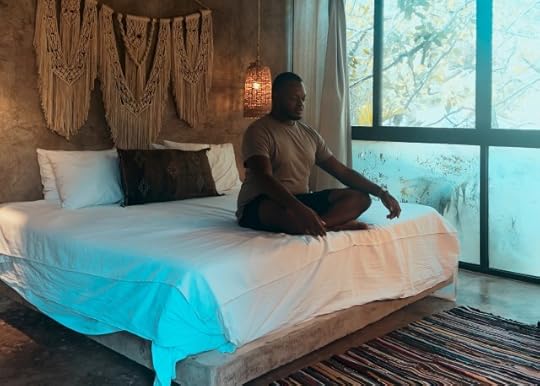 Photo by Jonathan Mueller on Unsplash
Everyone sleeps. Some people sleep better and more deeply than others.
Because everyone sleeps – everyone has a “morning” when they wake up from their slumber.
It might not be the standard “morning” time. But I postulate that the time immediately after you wake up – be it 6am, 12pm, 10pm, or whenever – is your morning.
Many self-help, mindfulness, and other spiritual gurus and similar expound on the benefit of this morning routine versus that morning routine. And these are incredibly variable.
Some suggest getting up at 5am, doing vigorous exercise, taking cold showers, and similar. Others tell you to awaken naturally with the sun, spend the first hour of your morning in meditation, avoid caffeine, and the like. Still others will tell you to get right to work on whatever you must, make an entry in your dream journal, do profound reading, specific diet and exercise practices, and so on.
Each of these will tell you they are the “best” or “most effective” means to make your day.
To be fair – I’m sure they’re perfect for certain people. But here’s the thing – you are one of almost 8 billion people on this planet. Each of us – all 8,000,000,000 of us – has different, unique perceptions of reality. With that, we all have different aspirations, experiences, and yadayadayada.
In other words – there is never One True Way . No matter who suggests their morning routine – nor its success for them and others – it might not be for you.
Instead, let’s look at the difference between no routine at all, unhealthy routines, and potentially beneficial morning routines in a broader context.
What is a morning routine?In the simplest of terms, a morning routine is habitual, rote, and routine practices that include awakening, getting out of bed, and time between that and “starting your day” by going to work, going to school, or whatever else your given day entails.
For example – your alarm goes off at 6am. You get up, use the bathroom, make your bed, get the newspaper, make coffee, then sit and read while drinking your coffee for the next 45 minutes. Then you take a walk, come home and shower, get dressed, and leave for the office by 8:30am.
That’s a morning routine. It can be that simple.
There are numerous variations on this theme that can and will produce positive and negative effects. But before I get into this, let’s look at the alternative to a morning routine.
What does no routine look like?How can someone have no routine? I’m not wholly certain that there is ever no routine at all to a given morning. But not having one in place – like the above example – can and does happen.
For example – your alarm goes off at 6am. Then you hit snooze from 2 to 6 times. Or you don’t bother with an alarm at all. Sometimes you get up and go for a run. Other times you get up and sack out on the couch flipping through random TV. Maybe you go back to bed. Perhaps you get online either via a smartphone, tablet, or computer.
No two days are alike. You get up when and how you do, without any regular set pattern, rote, routine, or habit. One morning you brush your teeth, one morning you don’t, and another morning you brush your teeth with beer.
To me, this looks really chaotic. And since it’s not my experience, I don’t know if it is – but I suspect anyone who lives this way lives chaotically overall.
No judgment here – if this is you, and you are living your life to the fullest and enjoying the ride – you do you, boo.
For me, my morning routine has had both negative and positive impacts on my life experiences.
 Photo by Vinicius “amnx” Amano on UnsplashMaking habitual choices for good or ill
What matters more than the specifics of a morning routine is if doing so adds or takes away value in your life.
For years, I had a rather uninspiring morning routine. My alarm went off around 6:30am. I got up, started the coffee, and went to my computer. There I sat – with an interruption or two for coffee – for a good hour or so. I surfed the ‘net, played my uninspiring Facebook games, read emails, and generally goofed off.
When I started my day, I did so feeling like I had wasted some time. I frequently felt as though I could have made more of my morning before getting to work.
What better way could I start my day? How might I improve my morning routine?
I gave this consideration, and in time made a new choice. I either awaken with my wife’s alarm or naturally with the sun (typically I’m up between 5:45 and 7am). Then, I get up, make the bed, start the coffee – and sit to read books. I read at least 1 chapter of fiction and 1 chapter of nonfiction every day.
Then I go and post my blog. After that, I go for a walk. Then I take my shower and start my day (usually by writing the next day’s blog).
I chose to change my morning habit and create a new morning routine. And I believe that what I am doing is good for me and how I set the tone for my day.
Your morning routine can set the tone for your dayMy old morning routine started me out uncertain, directionless, and with a feeling like I wasted the start of my day. Now, my morning routine feels good and sets the tone for a more productive and effective day.
There are lots and lots of messages out there from various celebrities, gurus, medical professionals, and various other experts for the “perfect” morning routine. One of these could be perfect for you.
Odds are, however, that they might serve you best as a guideline. Perhaps some of what they recommend resonates with you and might seem apropos for impacting the start of your day. But given that there’s no One Size Fits All solution, it’s best to approach these ideas with an open mind.
Look to morning routines others present to you as ideas that you can apply as best suits you. But if what you do now works for you – why change a good thing?
If it doesn’t, however – take some steps to mindfully change your morning routine. Begin one morning by asking yourself what you are thinking, what and how you’re feeling, what you’re doing, and what intentions might lie behind that. This opens you to mindfulness and conscious awareness. When you recognize and acknowledge that – you can analyze and change it as you desire.
This applies to any and all habits, behaviors, and so on. The main reason I see to be mindful of your morning routine is because it can and will set the tone for the rest of your day.
I don’t know about you – but I prefer when I set a positive tone for a given day than no tone at all or a negative one.
How does your morning routine – or lack thereof – impact you?
Recognizing how our morning routine impacts us isn’t hardIt’s all about working with mindfulness of our thoughts, feelings, and intentions to direct our actions.
When we become familiar with our morning routine – and if it has a negative or positive impact, if any, on us – we can use mindfulness to alter it in whatever way seems right for us. Knowing that there is no One True Way to start the day – but plenty of options for creating new habits and behaviors – we can positively impact how we start our morning to choose the tone for the rest of our day.
This empowers us – and in turn, our empowerment can empower others around us. That can expand to change the bigger picture matters, too.
Choosing for ourselves employs positivity for realizing amazing potential and possibilities for our lives.
Taking an approach to positivity and negativity – from the vast cylinder that exists between them – shifts matters in a way to open more dialogue. In that form, we can explore and share where we are between the extremes and how that impacts us here and now.
Lastly, the better aware we are of ourselves in the now, the more we can do to choose and decide how our life experiences will be. When that empowers us, it can also open those around us to their own empowerment. And that is, to me, a worthwhile endeavor to explore and share.
Thank you for coming along on this ride with me.
This is the four hundred and forty-eighth entry of my Positivity series. I hope that these weekly messages might help spread positive energies for everyone. Feel free to share, re-blog, and spread the positivity.
Please visit here to explore all my published works – both fiction and non-fiction.
Please take a moment to sign up for my newsletter. Fill in the info and click the submit button to the right and receive a free eBook.
The post Does Your Morning Routine Set the Tone for Your Day? appeared first on The Ramblings of the Titanium Don.
September 1, 2022
Turning 50 – Where Am I Now and Where Am I Going?
 Photo by Joyce Adams on Unsplash
When I turned 30 in 2002, I freaked out about it.
I was (mostly) single, working a lame-ass job, and largely discontent with my lot in life.
What’s more, I was much more prone to believing the messages about how my life was supposed to look. At 30, as far as I knew, I was supposed to be at least in a serious relationship, following a real career path, and doing other things that “normal” 30-year-olds did.
I have never been good at normal. Though I had recovered from the injuries I’d received after being hit by a car while crossing a street, my life was still wrought with uncertainty, and I had no clue who I was, where I was going, what I desired to do, and so on.
I spent most of my 20s and 30s in this way.
Ten years later, when I turn 40 in 2012, I was in a very different mindset. I’d begun to develop my Pathwalking life philosophy – as well as to work on living it. Rather than resist the pull of a life in a very different direction, I was actively making choices and decisions about the journey.
At 40, I was living with my future wife, working a job I liked, and was increasingly becoming content with my lot in life.
A far cry from who, where, what, why, and how I was only 10 years before that.
Now, in 2022, I’m turning 50. Half a century. Reflecting on who I was versus who I am now – I approach this milestone not with dread nor trepidation – but with cautious optimism and excitement for what is possible.
Learning the power of conscious choiceOver the last 10 years, I’ve been working on living mindfully. Rather than just letting life live me – or just going with whatever – I’ve been making conscious choices for who, what, where, how, and why I am.
Let me be perfectly honest here – this has not been easy. I’ve still had many struggles and challenges along this path. Lots of mundane issues – largely around finances and interpersonal family matters. What’s more, I need to acknowledge my privilege here. Were I not living in an affluent state in a generally liberal and accepting part of the USA I don’t know how this would be.
But this has been the best decade of my life overall.
Why? Because I’ve increasingly become my truest, most genuine self.
No pretenses. I’m not hiding my geek, shying away from a road less traveled, and doing all I can to walk the walk as well as talk the talk.
I’ve been more content with my life these past 10 years than I ever recall being before. The doubt and uncertainty of my 20s and 30s have been far less prevalent. I’ve accepted my true, genuine self – and in doing so am striving to live that life as fully as possible.
How have I gotten here? Conscious choice.
I learned long ago that consciousness creates reality. Yet even if you don’t fully buy that – or the Law of Attraction, for that matter – I’ve seen its real power. And that’s conscious choices and active decisions for all the questions of living life.
Working on conscious awareness of myself – who, what, where, how, and why I am – has been illuminating.
Using practical mindfulness to learn and growMindfulness is a product of conscious awareness. Real, genuine mindfulness is conscious awareness of my inner self. Specifically, conscious awareness of my thoughts, feelings, actions, and intentions.
When I have been better aware of myself, I’m better aware of the world around me. That’s shown me how I can choose to be a beacon of light in an often dark world.
Mindfulness has allowed me to better recognize and employ my gifts to share my stories with the world. I use this to be empowered – and also to help empower others.
Being genuine and truer to all the elements of myself has massively improved my mental, emotional, physical, and spiritual health, wellness, and wellbeing.
Overall, the general contentedness I’m feeling is wonderful.
But life is never just one way or one thing. There are bad days, frustrations, challenges, and discontent, too.
That’s the human condition. But as I have been working on conscious reality creation and mindfulness, I’ve been more regularly in the here-and-now.
The present. The only time that’s truly real.
Hence, while I’m reflecting on the past half-century of my life – it’s important to be in the now to reflect on that past.
 Photo by Seyedeh Hamideh Kazemi on UnsplashReflecting on where I am – without nostalgia
Nostalgia kills.
Not to put too fine a point on it – but people often let nostalgia for times gone by dictate their lives. And frequently those times their nostalgic for were nothing like the reality of them.
I give you the Trumpster MAGA cultists as Exhibit A.
I am reflecting on my past, but not with nostalgic longing or any desire to return to that life. Hell no. Where I am now is where I desire to be (for the most part). What I seek in reflecting on my past is an understanding of the lessons I’ve learned.
I’ve lived for almost 5 decades. Over that half a century, I’ve had some surreal and amazing experiences. I’ve met incredible people, seen amazing places and things, and experienced highs, lows, and everything in between. That’s impacted me in so many ways.
I reflect on that to see where I’ve been relative to where I am now.
By knowing where I am now – as well as who, what, and why I am – I open myself to potential and possibilities going forward.
Expanding on my true, genuine selfTurning 30 made me uncomfortable – and set in motion a turbulent decade for my life. Then, turning 40 was a calmer, more tolerant, and overall good experience. Hence, turning 50, I go forward with acceptance of cautious optimism for realizing more of my potential and possibilities. Why? To live the fullest life I possibly can.
I’m reflecting on who I’ve been and all I’ve learned along the way these past 50 years. That is a product of the here-and-now, conscious awareness of the present. Because only from the present can I move forward.
What does turning 50 mean to me? It means I have leveled up, gained experience points, and am better able to handle whatever comes my way. What’s more, I am more intentional about all that I am and everything I do.
Thus do I expand upon my truest, most genuine self. And I am sharing this not to brag but to offer positive thought and realistic idealism in a world where fear, uncertainty, and negativity tend to dominate.
Thank you for reading. Thanks, in turn, for taking part in the celebration of my birthday – and my reflecting on my past to see better where I am now and where I desire to be going forward.
(My 50th birthday that I am exploring here is on September 2nd)
The post Turning 50 – Where Am I Now and Where Am I Going? appeared first on The Ramblings of the Titanium Don.
August 31, 2022
Do We Age Like a Fine Wine or Outdated Computer Hardware?
How we age – and perceive aging – is a choice we get to make.
 Photo by Scott Warman on Unsplash
Birthdays can be a mixed bag for most people.
I’m going to generalize here – but most people have 1 of 3 responses to their birthday:
JoyDreadUtter nonchalanceI’ve seen all of the above among my friends and family. Hell, I’ve shifted between these myself.
My 30th birthday freaked me out. But my 40th simply occurred. My 50th is upon me – and I phase between utter nonchalance and joy towards it.
Overall, I love my birthday. It’s a personal New Year’s celebration as far as I’m concerned. That’s exciting – it means that there is new potential, possibilities, and a whole new year unfolding.
Most people react particularly strongly to major birthday years. Any age ending in 0 (i.e. 30, 50, 70) or ages ending in 5 (i.e. 25, 65, 75).
Society and the collective consciousness have a lot to say about aging. And because of “milestone” ages and expectations for achievement by a certain age – this can cause the joy, dread, or utter nonchalance people have towards their birthdays.
A lot of it has to do with how we age. Some people look and act younger than they are, others older. The process of aging impacts us all differently, too. Hence my question – do we age like a fine wine or outdated computer hardware?
How we age is a choiceWhile it’s true that genetics will play a part in the aging process – I firmly believe a great deal of aging is based in choices. Like the ability we possess to heal ourselves via conscious reality creation and mindfulness – how we age is part of that, too.
You’re probably familiar with the phrase “young at heart”. Keeping that in mind – I think it’s a large part of our overall attitude towards aging.
Some people see aging as a slow march to death. Others see aging as more learning, more understanding, and more life experiences under our belts. And to be certain – some people don’t give this any real thought at all.
There is no right or wrong here. But consider this:
While our souls are infinite, the meatsuits we experience this life in are not. On average, we get about 8 decades of life in the here and now.
This is why how we age is a choice. If we look to negativity and dread with every new year – consciousness creates reality. New pains, new age-related issues, less mobility, lack, scarcity, and other negatives will dominate.
Choosing nonchalance and joy, however, ages us quite differently.
Consciousness creates reality. Approach your birthday with joy or without giving it much attention and it’s likely to not impact you much at all – or for the good.
This is how we choose how we age. Biologically our bodies get older – but we are not just our bodies. We are made of physical, mental, emotional, and spiritual elements.
Mindfully how we choose our approach impacts our aging.
This leads to my question today.
Are you a fine wine or outdated computer hardware?What’s the difference?
One of the oldest bottles of wine is at least 1650 years old. It is believed this is still completely drinkable. A Domaine de la Romanée – Conti 1945 bottle of wine was sold in 2018 for $558,000. Fine wine increases with value as it ages.
Some people see themselves in much the same way.
My first computer was an Apple IIe that I got in 1985. The desktop computer I am using to write this article was purchased 2 years ago and is having trouble keeping up with my work. Recently, I upgraded from an iPhone 8 to the 13 because my battery wasn’t holding a charge long and I was running out of memory. Computer hardware becomes outdated increasingly quickly and loses value distressingly fast.
Some people see themselves in much the same way.
As Jen Sincero puts it – “self-perception is a zoo”.
Everybody ages. It’s an unavoidable aspect of the human condition. No matter who you are or how good your genetics are – you age.
Why? Because the one and only constant in the Universe is change. Change is the key to evolution – and part of that is aging. We gain knowledge and experience as we get older. How that impacts us – and if we see ourselves as a fine wine versus outdated computer hardware – is a choice.
How do we make that choice? Like we make any choice. Mindfulness.
 Photo by KIM DAEYOUNG on UnsplashMindfulness and your age
One of the greatest joys I have is fencing against 20-somethings. People who have been living in their meatsuits for less time than I have been practicing the arte of defense.
What’s more – I’m not built like an athlete. I’m short and heavyset. And the single best mistake I love a newer, younger fencer to make is to presume I don’t move fast or have much in the way of reaction time.
Please make that mistake. It just lets me finish the bout in my favor that much faster.
My body will remind me that I am twice the age of these fencers – or more. Yet I do not let that be my truth. Mindfully, I choose to think, feel, intend, and act like I am both younger and in better shape than I am.
However, in the meantime – I am proud of all that I have learned and achieved during the almost 5 decades of my life. Like a fine wine, I age – and have accepted the grey hairs and creakier joints that come with this. Yet, by practicing mindfulness, I make choices and decisions to work to remain in this healthy, positively aimed mindset.
Practicing mindfulness is how we make the choice between aging like a fine wine or outdated computer hardware. By taking charge of our thoughts, feelings, actions, and intentions, we can choose the paths we take – even that of our aging.
You will age whether you like it or not. But you can choose if you perceive that as a positive or a negative.
Yes, there will be bad days where it feels like the choice isn’t ours – but then the sun sets, and we reach a new day. With it comes new choices and decisions.
Mindfulness is the key.
You and your choices matterSelf-care often falls by the wayside. What’s more, we’ve too many examples of awful, narcissistic, selfish people we in no way desire to emulate.
The final – and arguably most important aspect of how we choose to age – comes down to how we treat ourselves. Do we revel in ourselves and act as though we’re worth a fortune and akin to a fine wine? Or do we abuse ourselves, let everything fall apart, and discard what we can like outdated computer hardware?
Self-care is not massages, plastic surgery, or extravagant vacations. Instead, self-care is daily practices like sufficient sleep, meditation, doing joyful things, and giving ourselves sufficient time to enjoy our lives however we can.
Sometimes that will look selfish to others. Saying “no” for our health, wellness, and wellbeing might appear to others to be self-serving. But sacrificing who, what, and why we are all the time for the sake of others is not healthy.
If we don’t take care of our minds, bodies, and souls – they will march towards obsolescence like computer hardware. But when we do care for them properly, they improve and become better with age like that fine wine.
You are worthy and deserving to age well. We all deserve to age like fine wine. The choices and decisions we make matter – just as much as we do.
And we are empowered to choose and decide our approaches to life, the Universe, and everything – including how we perceive how we age.
How do you choose to age – like a fine wine or outdated computer hardware?This is the five-hundred and fifty-eighth exploration of my Pathwalking philosophy. These weekly essays are my ideas for – and experiences with – using mindfulness and positivity to walk along a chosen path of life to consciously create reality.
I share this journey as part of my desire to make a difference in this world and empower as many people as I can with conscious reality creation.
Thank you for joining me. Feel free to re-post and share this.
The first year of Pathwalking, including expanded ideas, is available here. Check out Amazon for my published fiction and nonfiction works.
Please take a moment to subscribe to my mailing list. Fill in the info then click the sign-up button to the right and receive your free eBook. Thank you!
The post Do We Age Like a Fine Wine or Outdated Computer Hardware? appeared first on The Ramblings of the Titanium Don.