R.L. Stedman's Blog, page 15
August 3, 2014
War and Peace
This is a kind of interlude post - a ramble on today's events, before I move into a new series.
Today is the centenary of World War One. The New Zealand Government has poured a great deal of money into its commemoration, funding special exhibitions at Te Papa (the Museum of New Zealand), parades, fly-overs and other state occasions.
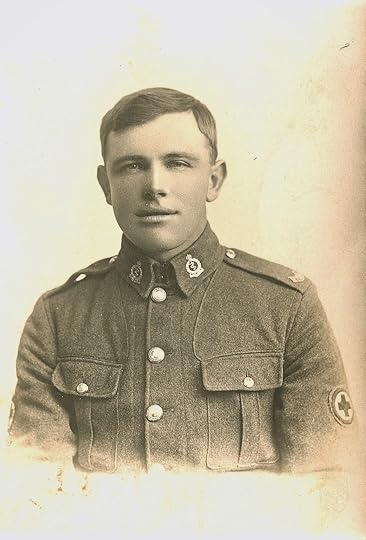
My grandfather served in World War One, but not as a combatant. Rather, he went as a conscientious objector - as a stretcher bearer. Twenty-three when he was called up, he would not fight. Deeply religious, he followed the Bible. And the Bible said - 'You shall not kill.'
I think he would absolutely hate that state money is being spent on commemorating the blood-bath of WW1. I'm sure he would rather that the funding went to schools, hospitals, refugee re-settlement. My uncle, now in a rest home, told my father off for purchasing and wearing a poppy. 'Dad would be turning in his grave to see you wearing that.' It was kind of amusing to see my father look abashed.
Granddad was brave, so brave. At night he stood on the deck of the troop ship, watching the Southern Cross slip below the horizon and wondering would he ever see it again. Yet the other men that went, the men and women who fought and died only because their country demanded it - they were brave, too.
My father wrote a story about his father for my son - which sounds complicated, but really isn't - and I adapted it and sent it to the School Journal. It was published as a short story in 2012, and it's kind of cool to see children reading it and commenting on it online. A refreshing counterweight to the heroic commemorations funded by the state.
You can access teacher notes for this story here: Silas the Stretcher Bearer
When I hear of the conflicts in Gaza, in the Ukraine, in Sudan, I wish there were more people in the world like my Grandad.
Today is the centenary of World War One. The New Zealand Government has poured a great deal of money into its commemoration, funding special exhibitions at Te Papa (the Museum of New Zealand), parades, fly-overs and other state occasions.
My grandfather served in World War One, but not as a combatant. Rather, he went as a conscientious objector - as a stretcher bearer. Twenty-three when he was called up, he would not fight. Deeply religious, he followed the Bible. And the Bible said - 'You shall not kill.'
I think he would absolutely hate that state money is being spent on commemorating the blood-bath of WW1. I'm sure he would rather that the funding went to schools, hospitals, refugee re-settlement. My uncle, now in a rest home, told my father off for purchasing and wearing a poppy. 'Dad would be turning in his grave to see you wearing that.' It was kind of amusing to see my father look abashed.
Granddad was brave, so brave. At night he stood on the deck of the troop ship, watching the Southern Cross slip below the horizon and wondering would he ever see it again. Yet the other men that went, the men and women who fought and died only because their country demanded it - they were brave, too.
My father wrote a story about his father for my son - which sounds complicated, but really isn't - and I adapted it and sent it to the School Journal. It was published as a short story in 2012, and it's kind of cool to see children reading it and commenting on it online. A refreshing counterweight to the heroic commemorations funded by the state.
You can access teacher notes for this story here: Silas the Stretcher Bearer
When I hear of the conflicts in Gaza, in the Ukraine, in Sudan, I wish there were more people in the world like my Grandad.


July 18, 2014
End of the Adventure
I started this sequence of blog posts with the aim of Writing a [Good] Novel in Six months.
I thought I may as well share this process with someone, even if that someone was just my computer. Kind of like a blog-cum-diary. Somewhat to my surprise, other people have been reading these posts too....I hope you've enjoyed it!
Have I Achieved my Goal?
After beginning life as a rather slow-moving story entitled 'The Trouble with Genes', the novel has transformed into a tightly written YA contemporary thriller called 'Inner Fire'. A big thank you to the readers on my Facebook Page who voted on the title.
After starting at 70,000 words, the editorial process chopped it down to 57,000 words. It's amazing how you can lose words without damaging the narrative. (Actually, less words usually means a better story.)
I felt very proud of myself!
Then, just two weeks ago, I took another look at the manuscript. And I realised there was one major flaw. I had written Inner Fire in the wrong tense! While I'd started in the present tense ("I am, he is, they are"), on re-reading I realised the story sounded much better in the past ("I was, he was, they were").
OMG, talk about not practising what you preach.
So I've just re-edited it again, and tidied up the beginning and the ending, and now it looks much better. At the moment, I'm sitting on it, like a hen on a special egg, worrying about whether or not it will ever hatch. (I hope I haven't used that metaphor before....)
I'm nervous about sending the manuscript out into the wide world. What if people don't like it?
So right now, I'm tossing up between self-publishing or seeking agent representation, but life's pretty busy for me at the moment, so this might take some time.
Pause for ThoughtI'm going to take a break at this point in my blog narrative.
I'll let you know the next stage of Inner Fire's life once I've decided what to do with it. In the meantime, if you want to learn a little more about what the novel is about, feel free to have a look at the pinterest board I've developed.
Lessons Learned
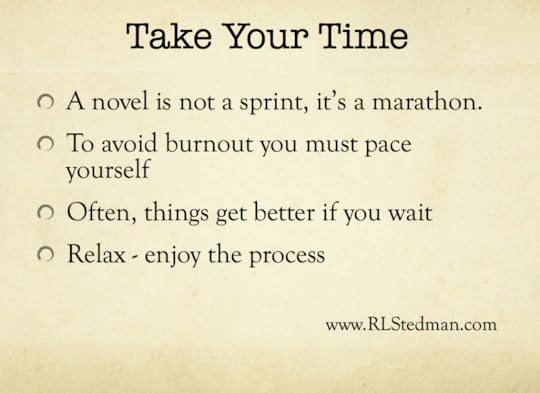
I think, in retrospect, that six months was too short. For the next novel I'll allow myself a year. A novel is not a sprint; it's a marathon, and just like a marathon, you have to pace yourself so you don't burn out before the finish line.
So, the moral of this blog post, is - don't be afraid of taking your time. Things sometimes get better if you wait a while.
PS: Watch this SpaceThe next novel? What will it be about, you ask? Um, I'm not quite sure yet. At the moment I have an idea for something about faith, and self-belief and finding one's way in the world. I guess you'll just have to watch this space ....
I thought I may as well share this process with someone, even if that someone was just my computer. Kind of like a blog-cum-diary. Somewhat to my surprise, other people have been reading these posts too....I hope you've enjoyed it!

Have I Achieved my Goal?
After beginning life as a rather slow-moving story entitled 'The Trouble with Genes', the novel has transformed into a tightly written YA contemporary thriller called 'Inner Fire'. A big thank you to the readers on my Facebook Page who voted on the title.
After starting at 70,000 words, the editorial process chopped it down to 57,000 words. It's amazing how you can lose words without damaging the narrative. (Actually, less words usually means a better story.)
I felt very proud of myself!
Then, just two weeks ago, I took another look at the manuscript. And I realised there was one major flaw. I had written Inner Fire in the wrong tense! While I'd started in the present tense ("I am, he is, they are"), on re-reading I realised the story sounded much better in the past ("I was, he was, they were").
OMG, talk about not practising what you preach.
So I've just re-edited it again, and tidied up the beginning and the ending, and now it looks much better. At the moment, I'm sitting on it, like a hen on a special egg, worrying about whether or not it will ever hatch. (I hope I haven't used that metaphor before....)
I'm nervous about sending the manuscript out into the wide world. What if people don't like it?
So right now, I'm tossing up between self-publishing or seeking agent representation, but life's pretty busy for me at the moment, so this might take some time.
Pause for ThoughtI'm going to take a break at this point in my blog narrative.
I'll let you know the next stage of Inner Fire's life once I've decided what to do with it. In the meantime, if you want to learn a little more about what the novel is about, feel free to have a look at the pinterest board I've developed.
Lessons Learned
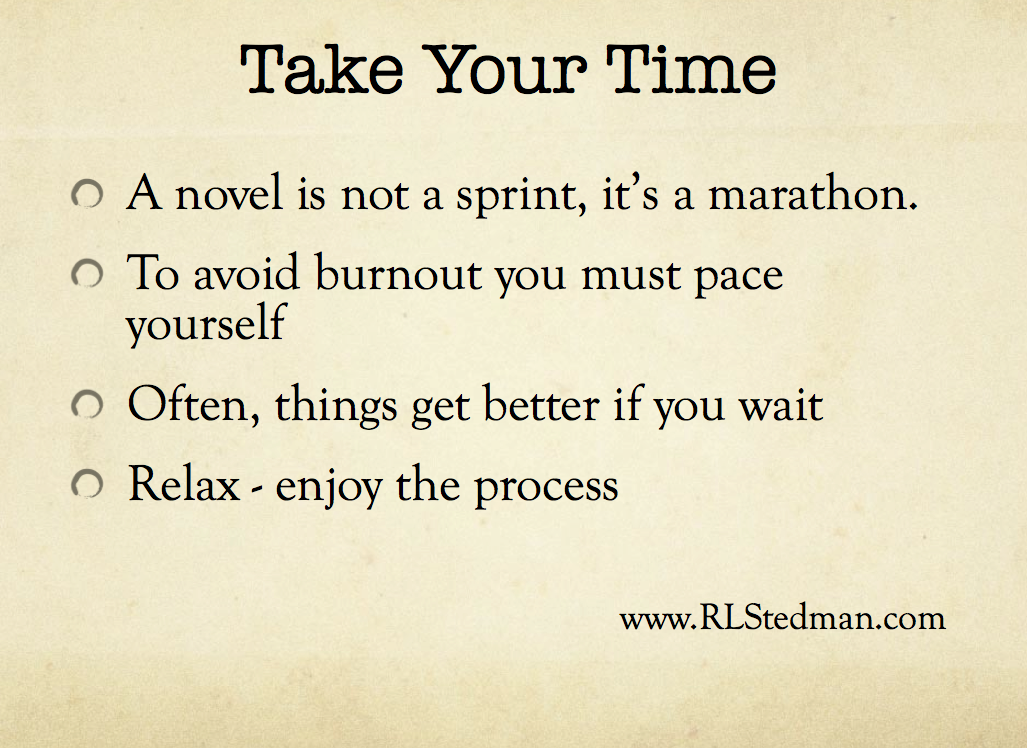
I think, in retrospect, that six months was too short. For the next novel I'll allow myself a year. A novel is not a sprint; it's a marathon, and just like a marathon, you have to pace yourself so you don't burn out before the finish line.
So, the moral of this blog post, is - don't be afraid of taking your time. Things sometimes get better if you wait a while.
PS: Watch this SpaceThe next novel? What will it be about, you ask? Um, I'm not quite sure yet. At the moment I have an idea for something about faith, and self-belief and finding one's way in the world. I guess you'll just have to watch this space ....
July 5, 2014
Getting Published
How Can I Get Published?
 These days, you don't need to wait for the agent fairy or the publisher to come knocking. You can do it yourself. But what most people actually mean: How can I see my work in print?
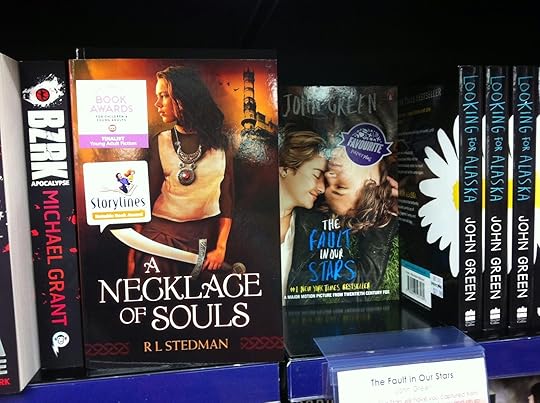
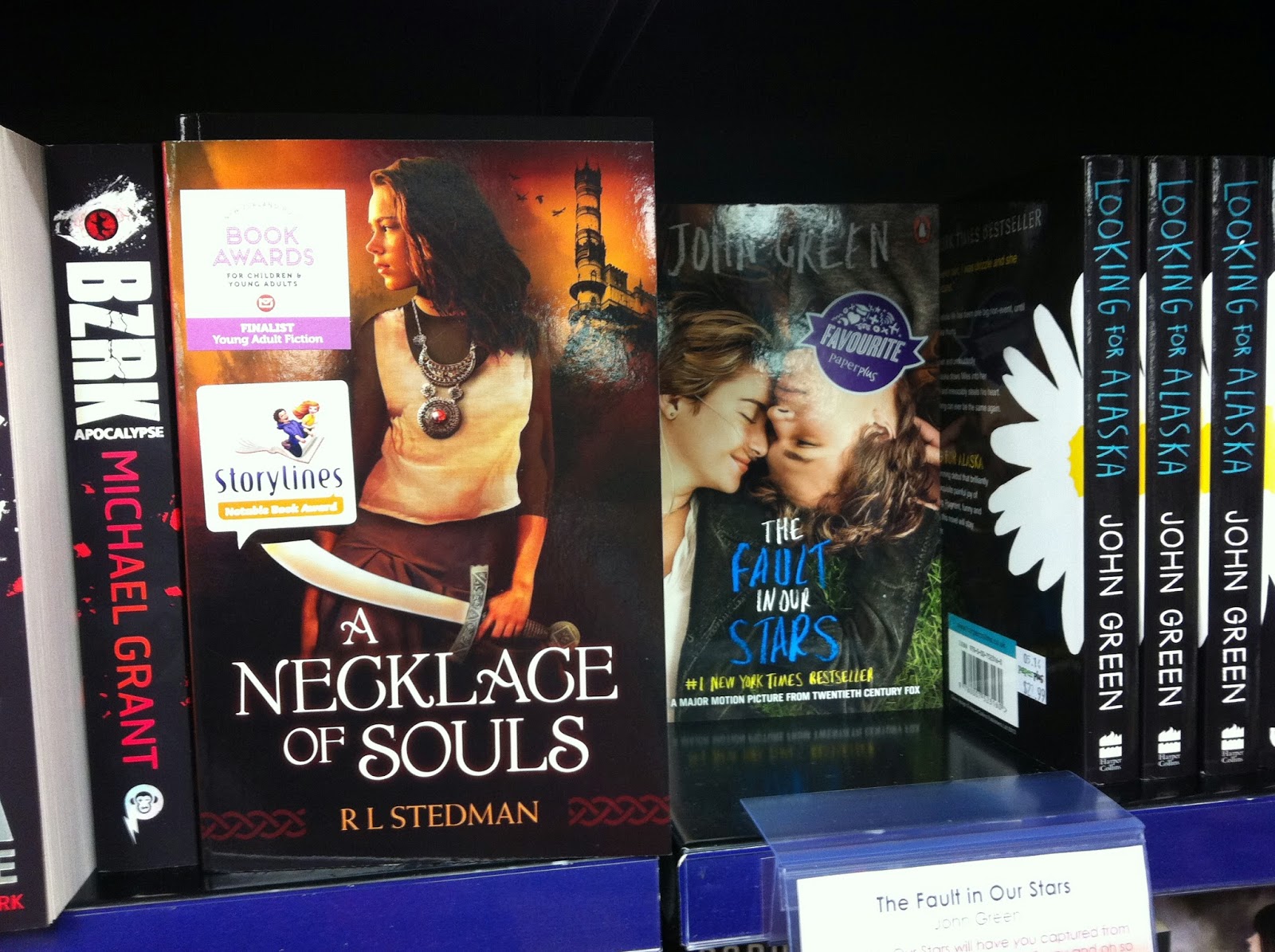
It is a buzz to see your book at the bookshop. I take photos of my baby, and post them on my website. How sad is that?
If this your dream, it can happen. Just don't expect it to be quick, or easy. Here's what worked for me...
9 Things That Worked for Me:
A ton of hard work. I wrote on and off for about ten years before I got an acceptance. Over that time I wrote one novella, one novel, and many, many short stories.Write for free. I edited a professional magazine which gave me experience in working with deadlines, keeping to word counts, formatting documents. Join a writer's association. I joined the New Zealand Society of Authors. Associations like the NZSA often have mentoring programmes for new writers, or access to grants and competitions.Complete some formal training. I did a Certificate in Creative Writing at a local polytechnic. The polytec then closed the course (it didn't fit with their 'core direction', whatever that was), although my teacher has continued the classes privately. Here's the link to her site and no, she's not paying me!Develop networks. This sounds cheesy, but often in life it's not what you know, it's who you know.Submit to e-zines and small journals - see my last postEnter competitions. Comps can be expensive, so now I only enter those with that offer the opportunity to get my script read by a publisher, or that provide direct feedback on my script. The Romance Writers of America has some good ones, and my lucky break was with StorylinesKeep writing. Evaluate critically. Write some more. When you feel it's good enough - and only then - begin submitting to agents or publishers. And finally, and this isn't something you can ever predict, you need to get lucky. Why was A Necklace of Souls accepted, when another person's might have been equally as good? I don't know. Maybe the commissioning editor liked fantasy. Maybe they were looking for a novel with a strong female protagonist. Maybe the stars had aligned.
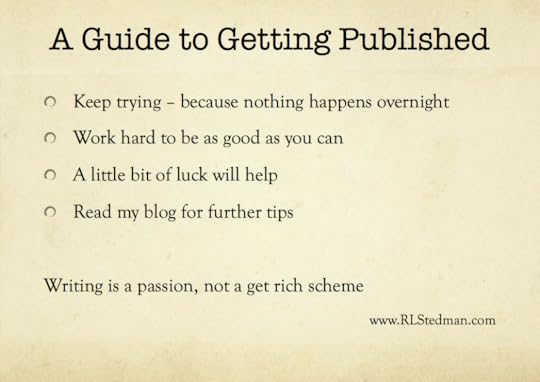
So the key message here is:
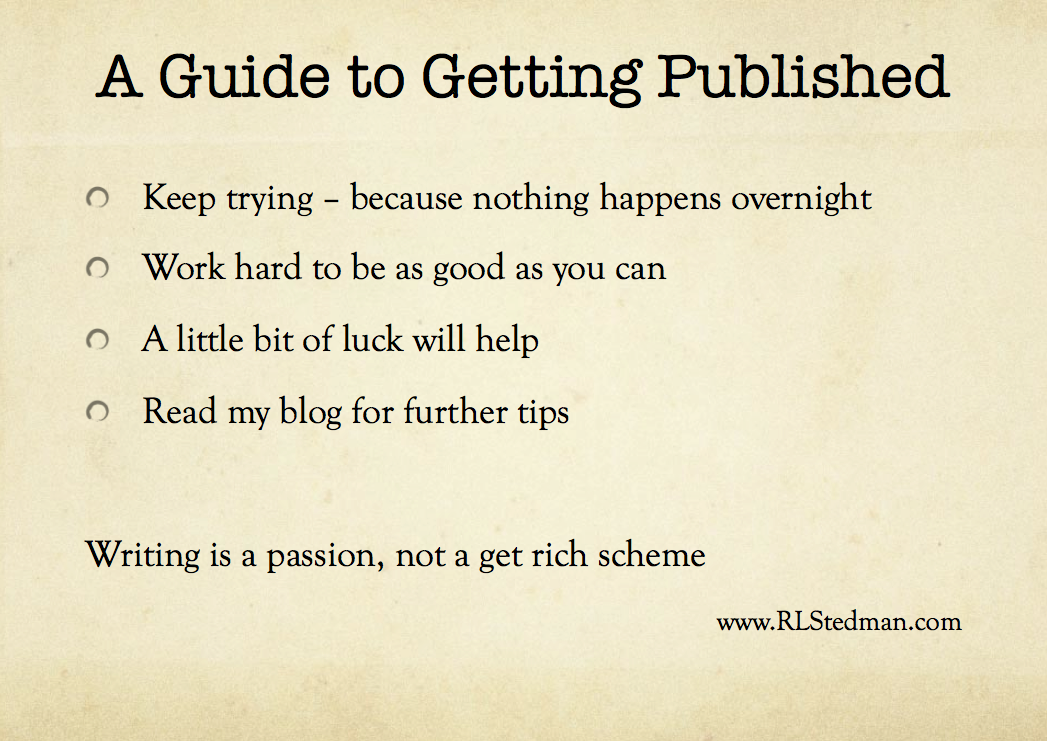
PersistanceBe as good as you canA little bit of luck.
Finally, don't expect overnight success.
Actually, don't expect to make a living wage from writing, period. Treat it like a passion and then anything's a bonus.
 These days, you don't need to wait for the agent fairy or the publisher to come knocking. You can do it yourself. But what most people actually mean: How can I see my work in print?
It is a buzz to see your book at the bookshop. I take photos of my baby, and post them on my website. How sad is that?
If this your dream, it can happen. Just don't expect it to be quick, or easy. Here's what worked for me...
9 Things That Worked for Me:
A ton of hard work. I wrote on and off for about ten years before I got an acceptance. Over that time I wrote one novella, one novel, and many, many short stories.Write for free. I edited a professional magazine which gave me experience in working with deadlines, keeping to word counts, formatting documents. Join a writer's association. I joined the New Zealand Society of Authors. Associations like the NZSA often have mentoring programmes for new writers, or access to grants and competitions.Complete some formal training. I did a Certificate in Creative Writing at a local polytechnic. The polytec then closed the course (it didn't fit with their 'core direction', whatever that was), although my teacher has continued the classes privately. Here's the link to her site and no, she's not paying me!Develop networks. This sounds cheesy, but often in life it's not what you know, it's who you know.Submit to e-zines and small journals - see my last postEnter competitions. Comps can be expensive, so now I only enter those with that offer the opportunity to get my script read by a publisher, or that provide direct feedback on my script. The Romance Writers of America has some good ones, and my lucky break was with StorylinesKeep writing. Evaluate critically. Write some more. When you feel it's good enough - and only then - begin submitting to agents or publishers. And finally, and this isn't something you can ever predict, you need to get lucky. Why was A Necklace of Souls accepted, when another person's might have been equally as good? I don't know. Maybe the commissioning editor liked fantasy. Maybe they were looking for a novel with a strong female protagonist. Maybe the stars had aligned.
So the key message here is:
PersistanceBe as good as you canA little bit of luck.
Finally, don't expect overnight success.
Actually, don't expect to make a living wage from writing, period. Treat it like a passion and then anything's a bonus.
June 27, 2014
Writing is a Roller Coaster Ride.
Some You Win...
Thus far my agent quest has been unsuccessful. I have met with a resounding silence from almost all agents. Not even a rejection letter. Rejection letters are better than silence.
In the old days you used to get a stock rejection letter, printed on a slip of paper and sent in the post. All writers who've been writing for more than ten years will be familiar with the heart-sink moment of a slim, self-addressed envelope. Sometimes I didn't even open it.
The History of My Early Publications.
My first ever acceptance was to an e-zine; a story about a star-ship captain who had lost his ship. I was paid ten dollars for this piece! So exciting! And then, quite shortly afterwards, another e-zine accepted me. This made a total of two! I was on a roll! And I was earning money - well, only ten dollars, because the second e-zine didn't pay, but still...
Then came the School Journal, which accepted two stories in quick succession and rejected two more, equally as quickly. USA based Stories for Kids accepted two more. I would be paid for all these pieces. I would be rich!
And then - nothing. For ages. I finished the novel I'd been working on for five years, and sent it off to a competition. And just for fun, I sent off another novel. Meanwhile, the School Journal stopped accepting submissions, Stories for Kids shut down and both e-zines closed.
I began to feel that I was cursed.
Getting Published
And then, one day, I got a call from Storylines saying that I'd been shortlisted for not one, but both novels. A month or so later I had another call - while I'd been unsuccessful with one story, I had actually won the competition with the other. I was flown to Auckland and harperCollins presented me with the Tessa Duder Award and a contract.
A year later my novel was published, and very quickly (and somewhat to my surprise) gained positive reviews! I was on a roll! I was shortlisted for some major awards...
And then...Yes. harperCollins didn't actually close. They down-sized. Restructured. Most of the people I'd been working with had their jobs disestablished. And they no longer wanted my sequel.
Fame and Glory?
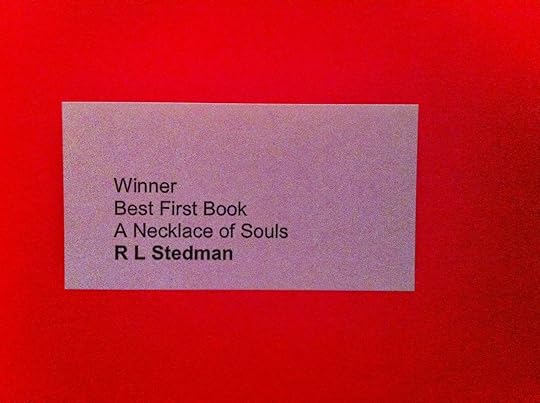 This week I was flown up to Auckland again. This time for a glittering literary event - the New Zealand Post Book Awards. It's the major award for New Zealand's children's writing. Held at the Town Hall, Ministers and Members of Parliament attend, as well as publishers, writers and various industry figures.
Somewhat to my surprise, I was awarded Best First Book for A Necklace of Souls. I received an actual financial prize!
Awards Do Not Mean Success.
However, harperCollins have confirmed they don't want the sequel. I've had contact from one agent who thinks 'I'm a wonderful writer' but she just don't have the demand for my sort of work right now. And nothing from the others.
But: Just Keep Swimming.
Last week, I got a call from an editor at the newly incarnated School Journal. It hadn't actually closed, it had just reincarnated under a different publisher. She was interested in a short story that I'd sent in nearly two years ago.
I signed the contract yesterday. I'm not sure when the piece will come out - sometimes it can be a year, sometimes it can be a month. I'll post a link to it on my website when it's published.
And I made contact with my wonderful, wonderful editor, who worked with me on Necklace. Together, we're working on a final draft of my new YA novel, which will be called Inner Fire. (More about this project later.)
What is the Point?
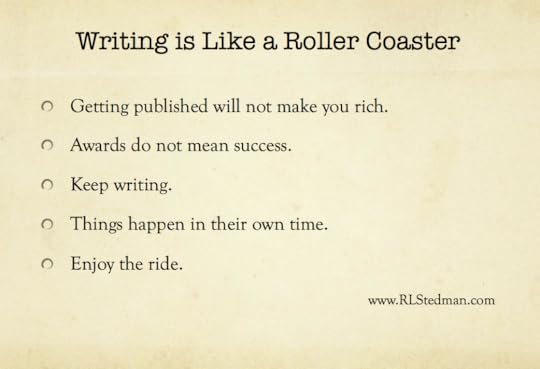
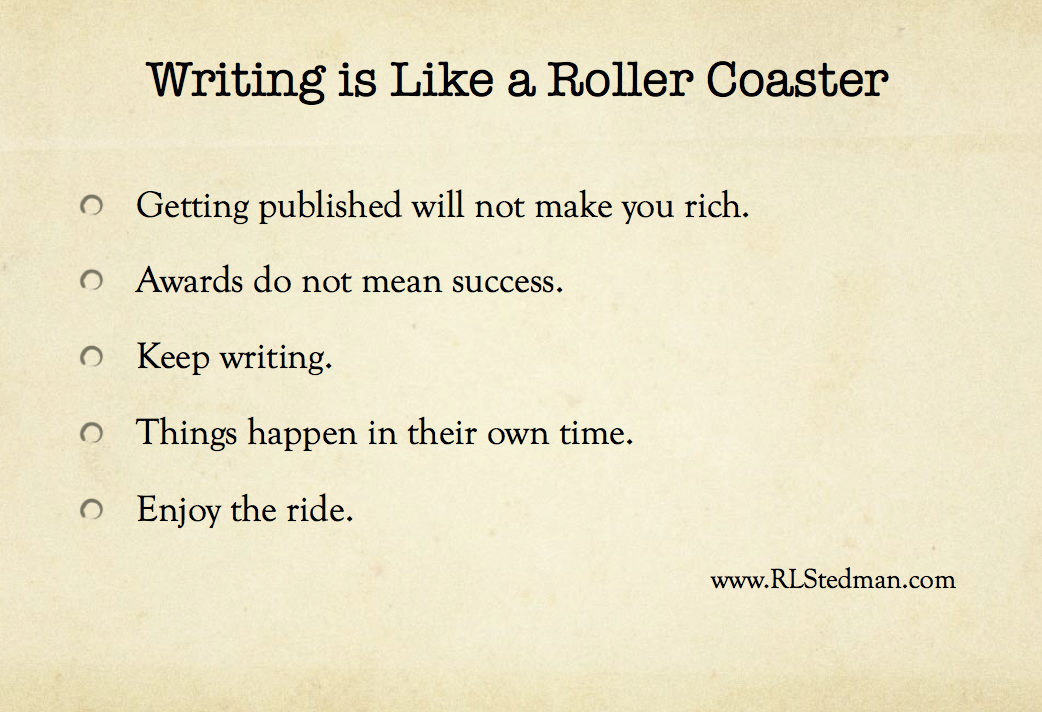
The point to this post is - Don't worry about rejections. Just keep writing.
Things happen in their own time.
Writing is like riding an uncertain roller coaster. Fun, exciting, terrifying and never, ever feeling certain about tomorrow.
Thus far my agent quest has been unsuccessful. I have met with a resounding silence from almost all agents. Not even a rejection letter. Rejection letters are better than silence.
In the old days you used to get a stock rejection letter, printed on a slip of paper and sent in the post. All writers who've been writing for more than ten years will be familiar with the heart-sink moment of a slim, self-addressed envelope. Sometimes I didn't even open it.
The History of My Early Publications.
My first ever acceptance was to an e-zine; a story about a star-ship captain who had lost his ship. I was paid ten dollars for this piece! So exciting! And then, quite shortly afterwards, another e-zine accepted me. This made a total of two! I was on a roll! And I was earning money - well, only ten dollars, because the second e-zine didn't pay, but still...
Then came the School Journal, which accepted two stories in quick succession and rejected two more, equally as quickly. USA based Stories for Kids accepted two more. I would be paid for all these pieces. I would be rich!
And then - nothing. For ages. I finished the novel I'd been working on for five years, and sent it off to a competition. And just for fun, I sent off another novel. Meanwhile, the School Journal stopped accepting submissions, Stories for Kids shut down and both e-zines closed.
I began to feel that I was cursed.
Getting Published
And then, one day, I got a call from Storylines saying that I'd been shortlisted for not one, but both novels. A month or so later I had another call - while I'd been unsuccessful with one story, I had actually won the competition with the other. I was flown to Auckland and harperCollins presented me with the Tessa Duder Award and a contract.
A year later my novel was published, and very quickly (and somewhat to my surprise) gained positive reviews! I was on a roll! I was shortlisted for some major awards...
And then...Yes. harperCollins didn't actually close. They down-sized. Restructured. Most of the people I'd been working with had their jobs disestablished. And they no longer wanted my sequel.
Fame and Glory?
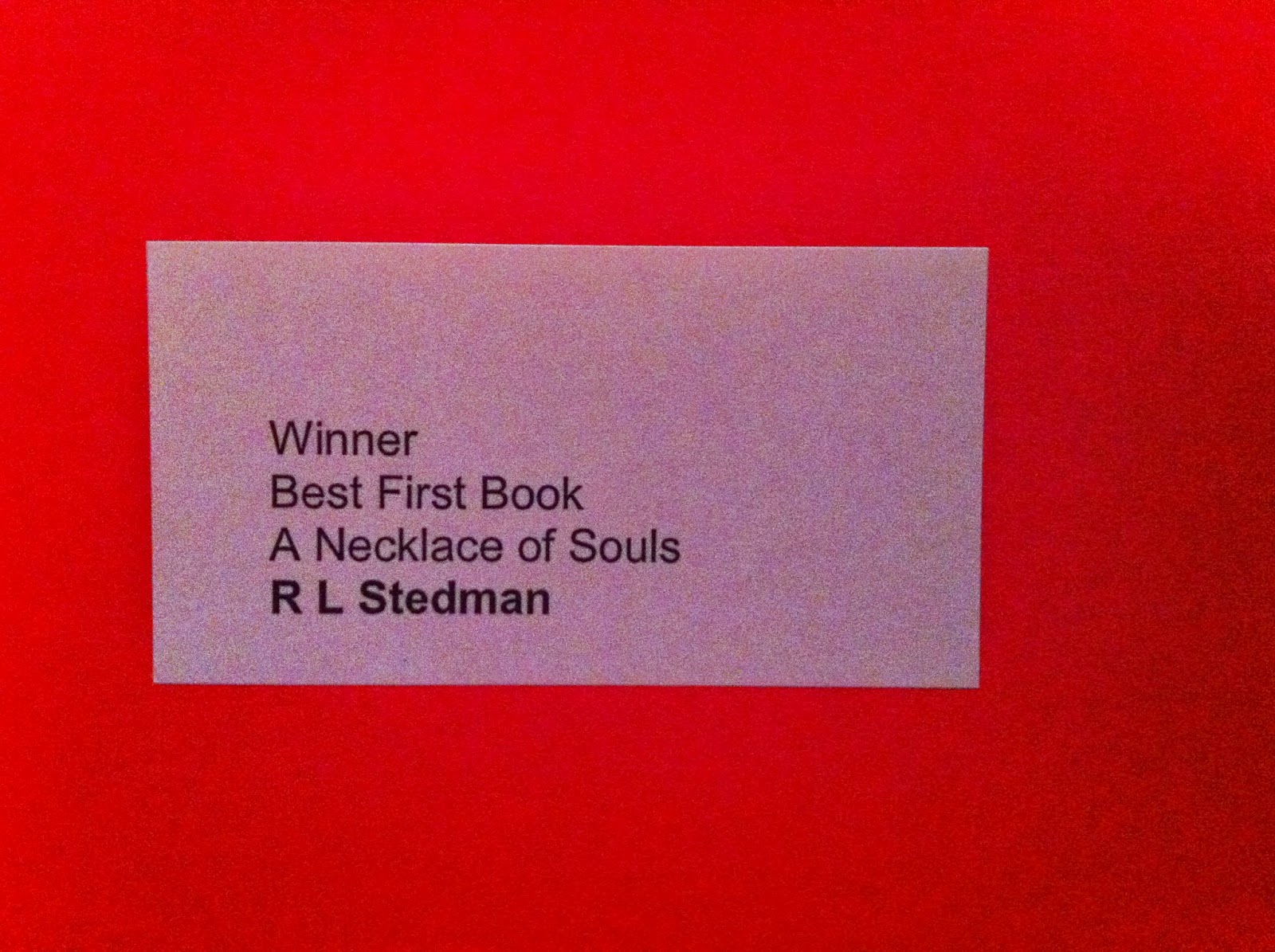 This week I was flown up to Auckland again. This time for a glittering literary event - the New Zealand Post Book Awards. It's the major award for New Zealand's children's writing. Held at the Town Hall, Ministers and Members of Parliament attend, as well as publishers, writers and various industry figures.
Somewhat to my surprise, I was awarded Best First Book for A Necklace of Souls. I received an actual financial prize!
Awards Do Not Mean Success.
However, harperCollins have confirmed they don't want the sequel. I've had contact from one agent who thinks 'I'm a wonderful writer' but she just don't have the demand for my sort of work right now. And nothing from the others.
But: Just Keep Swimming.
Last week, I got a call from an editor at the newly incarnated School Journal. It hadn't actually closed, it had just reincarnated under a different publisher. She was interested in a short story that I'd sent in nearly two years ago.
I signed the contract yesterday. I'm not sure when the piece will come out - sometimes it can be a year, sometimes it can be a month. I'll post a link to it on my website when it's published.
And I made contact with my wonderful, wonderful editor, who worked with me on Necklace. Together, we're working on a final draft of my new YA novel, which will be called Inner Fire. (More about this project later.)
What is the Point?
The point to this post is - Don't worry about rejections. Just keep writing.
Things happen in their own time.
Writing is like riding an uncertain roller coaster. Fun, exciting, terrifying and never, ever feeling certain about tomorrow.
June 6, 2014
The Agent Quest Continues...
So you've finished your final draft? Congratulations!
Now it's time to sit on it, like a hen on an egg, and just wait. Patiently, patiently. or, if you 're like me, not so patiently. I always think the moment I've finished my drafting, polishing and polishing the first pages that The Work is perfect.
No such luck. Because when I have another look at it, it surely won't be.
To fill in the time, I research agents, draft a synopsis and construct a query letter. And after I've done that (takes about two weeks), I re-read the first pages of my draft again.
So this post is about finding an Agent.
Do You Need an Agent?
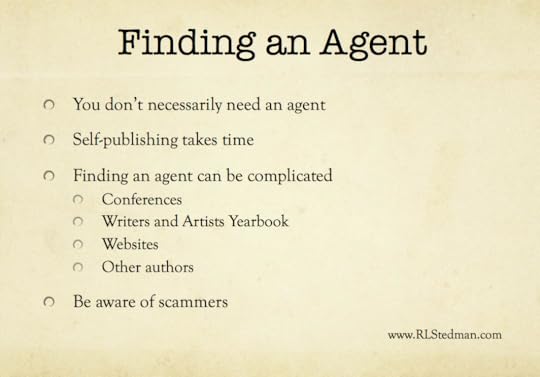
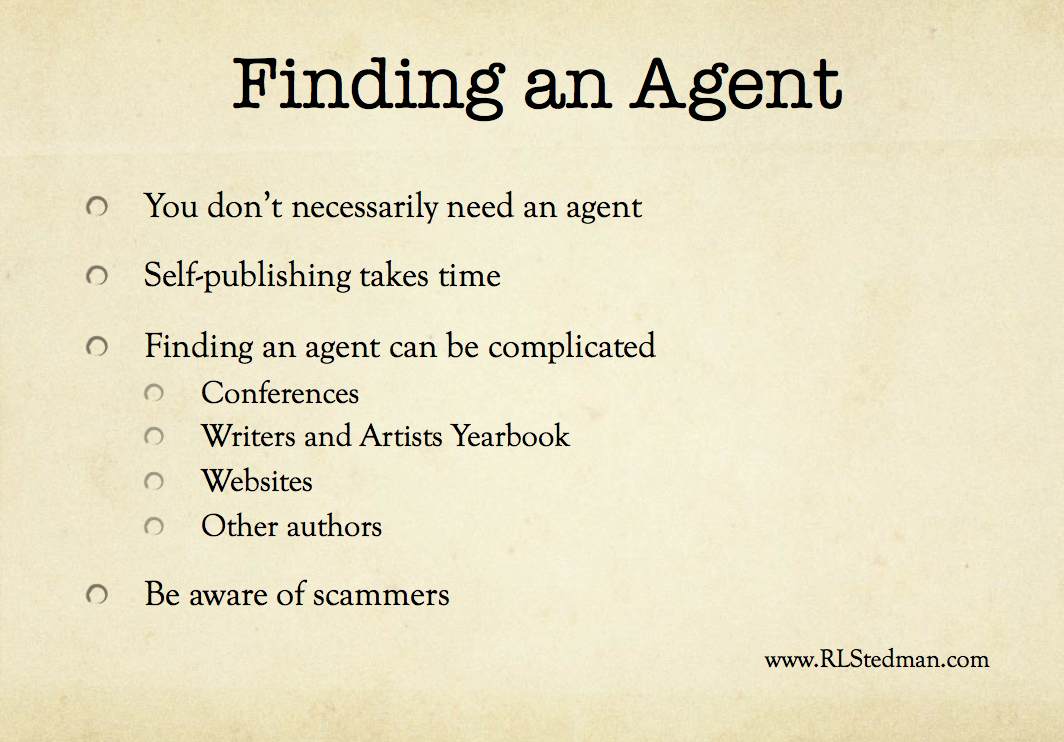
Not necessarily. A Necklace of Souls, my first novel, was published by harperCollins New Zealand and I never had an agent. However, I will be unlikely to take print versions of Necklace out of New Zealand. This means I will be unlikely to make as many sales as if my book had been published by a non-New Zealand publisher.
I know, harperCollins is international, so what's the problem? The problem is the RIGHTS. If NZ holds the international rights, England isn't interested, because it's an extra cost to put the book on the shelf.
So to access print off-shore, I will probably need an (off-shore) agent.
If your work is non-fiction, or an incredibly niche subject, or you can't be bothered with the extra cost of an agent (they don't come free), then you can approach a publisher directly. More and more publishers are accepting direct queries. Just be aware that you will have to take ownership of contract negotiation yourself. You may not always know enough to get the best terms. However, an agent will.
Which raises another question: Do you need to put your book in print?
No. You can publish yourself, via kindle direct, smashwords or ibooks. I've not done this yet, but I will one day, because I like the idea of total control. Ask my kids - I'm a control freak!
But just right now, I'm too busy. I have a day job and kids and a very time consuming hobby called writing, so I'm always short of hours. Self-publishing takes a lot of time. Just at the moment, I'd prefer to go through traditional routes, if I can. If you're an agent, please get in touch!!
How do you get an agent?
Hell, I don't know! I haven't got one yet. Here's how other people do it:
Talk to agents at conferences. Have an elevator pitch ready - a thirty-second snappy little summary of your book. I am rubbish at this. My stories are usually complex, multi-layered pieces that don't condense down well.Have a friend recommend an agent. Most of them won't. A good agent is like gold and seems to be a very closely guarded secret.Send a submission letter. Are there agent directories?
On-line searches are usually not too helpful, because of all the ads created by dodgy agencies (see Caution, below). Here are three more reliable ways:
Read Writer's and Artist's Yearbook (Actually, try the website, it's got a lot of useful writerly tips on it). The Yearbook is a comprehensive guide to all the literary agents in the UK and some international agencies. I purchased the Yearbook last year, but I have to say: don't. Read it at your library - it's normally held in the reference section. The problem with the Yearbook is that it's in print and therefore dates quickly. Hint to the Yearbook: A digital version would be so much better...Look at Writer's Digest's Guide to Literary Agents - a comprehensive blog with new agencies popping up on it all the time (US based only)Approach agents of authors you like. Most of the time authors will sing a song of praise to their agents at the end of the book.
A final cautionThere are a lot of scams in this industry. A lot. An awful lot. Before you send out anything, read Writer Beware.
In my next post I'll talk about query letters and synopsis construction. But just be aware it might take me a while to get to this - did I mention I'm time poor?
Now it's time to sit on it, like a hen on an egg, and just wait. Patiently, patiently. or, if you 're like me, not so patiently. I always think the moment I've finished my drafting, polishing and polishing the first pages that The Work is perfect.
No such luck. Because when I have another look at it, it surely won't be.
To fill in the time, I research agents, draft a synopsis and construct a query letter. And after I've done that (takes about two weeks), I re-read the first pages of my draft again.
So this post is about finding an Agent.
Do You Need an Agent?
Not necessarily. A Necklace of Souls, my first novel, was published by harperCollins New Zealand and I never had an agent. However, I will be unlikely to take print versions of Necklace out of New Zealand. This means I will be unlikely to make as many sales as if my book had been published by a non-New Zealand publisher.
I know, harperCollins is international, so what's the problem? The problem is the RIGHTS. If NZ holds the international rights, England isn't interested, because it's an extra cost to put the book on the shelf.
So to access print off-shore, I will probably need an (off-shore) agent.
If your work is non-fiction, or an incredibly niche subject, or you can't be bothered with the extra cost of an agent (they don't come free), then you can approach a publisher directly. More and more publishers are accepting direct queries. Just be aware that you will have to take ownership of contract negotiation yourself. You may not always know enough to get the best terms. However, an agent will.
Which raises another question: Do you need to put your book in print?
No. You can publish yourself, via kindle direct, smashwords or ibooks. I've not done this yet, but I will one day, because I like the idea of total control. Ask my kids - I'm a control freak!
But just right now, I'm too busy. I have a day job and kids and a very time consuming hobby called writing, so I'm always short of hours. Self-publishing takes a lot of time. Just at the moment, I'd prefer to go through traditional routes, if I can. If you're an agent, please get in touch!!
How do you get an agent?
Hell, I don't know! I haven't got one yet. Here's how other people do it:
Talk to agents at conferences. Have an elevator pitch ready - a thirty-second snappy little summary of your book. I am rubbish at this. My stories are usually complex, multi-layered pieces that don't condense down well.Have a friend recommend an agent. Most of them won't. A good agent is like gold and seems to be a very closely guarded secret.Send a submission letter. Are there agent directories?
On-line searches are usually not too helpful, because of all the ads created by dodgy agencies (see Caution, below). Here are three more reliable ways:
Read Writer's and Artist's Yearbook (Actually, try the website, it's got a lot of useful writerly tips on it). The Yearbook is a comprehensive guide to all the literary agents in the UK and some international agencies. I purchased the Yearbook last year, but I have to say: don't. Read it at your library - it's normally held in the reference section. The problem with the Yearbook is that it's in print and therefore dates quickly. Hint to the Yearbook: A digital version would be so much better...Look at Writer's Digest's Guide to Literary Agents - a comprehensive blog with new agencies popping up on it all the time (US based only)Approach agents of authors you like. Most of the time authors will sing a song of praise to their agents at the end of the book.
A final cautionThere are a lot of scams in this industry. A lot. An awful lot. Before you send out anything, read Writer Beware.
In my next post I'll talk about query letters and synopsis construction. But just be aware it might take me a while to get to this - did I mention I'm time poor?
May 18, 2014
Final Draft? - Enough is Enough
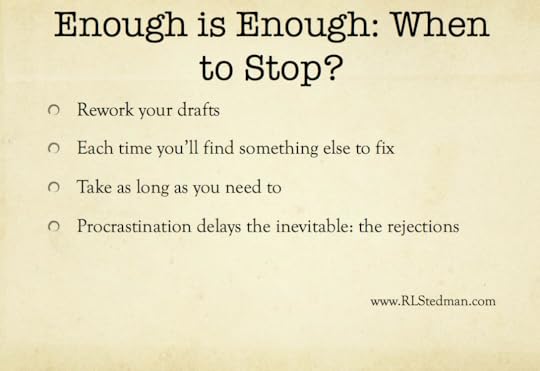
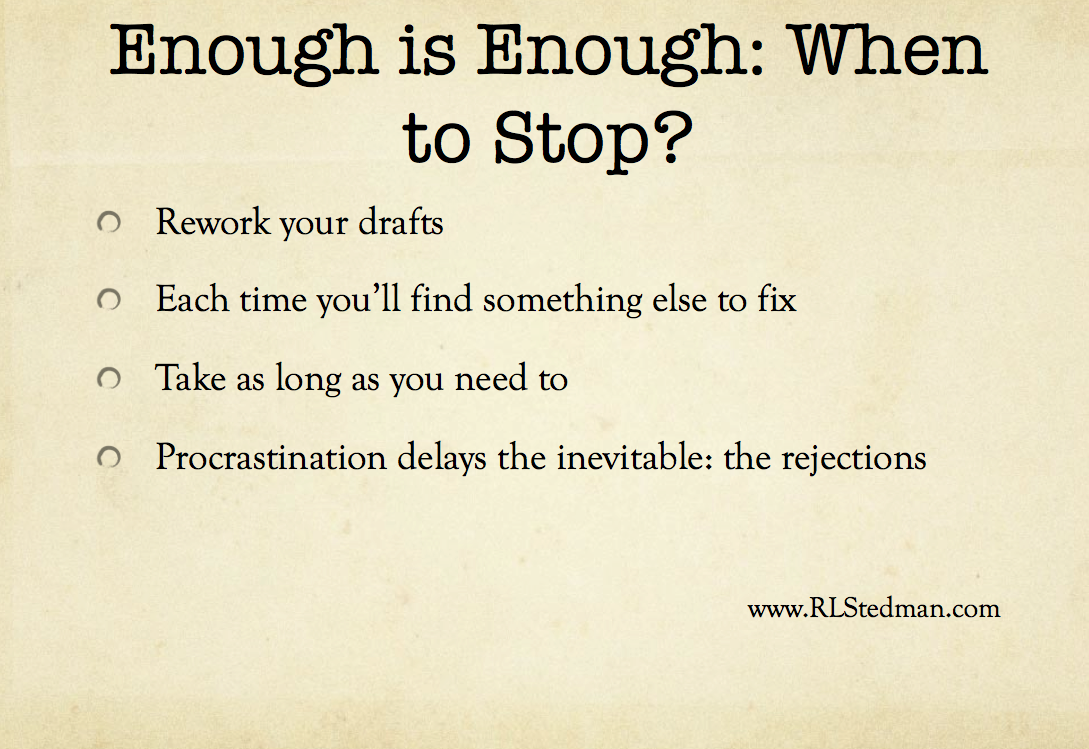
It's hard to know when you've finished a creative work. How many times do you continue polishing, hoping to improve what went before? When do you ever finish?
Answer: As many times as it takes.
For me, I normally do about five 'Final Drafts'. It's crazy. Each time, I save the next draft as 'Draft_FINAL' and it never is. There's Draft_FINAL One'; 'Draft_FINAL Two' and so on. My personal favourite? 'Draft FINAL_FINAL'.
Each time I review a draft, I find more errors, or more room for improvement. Each re-draft takes less time than the one before, but each re-draft is harder, more freaky, because each time I re-read it I realist that there's still so much wrong.
So I suppose for me, a piece is finished is when I can't bear to read it again. When I reach that point, that's when I feel: time to stop.
In a way, that's the hardest part of writing - the time when I think - I cannot bear it any longer. If I work on this story anymore I will go insane.
And then I take a deep breath, package my finely crafted work up and sit it on it for four to six weeks.
I dread the next part, the sending it out into the wide wide world. Because as soon as that happens, I start getting rejections.
Rejections are almost inevitable. But, oh, how they hurt. So instead, I keep working on a story, trying to make it perfect, trying to delay the inevitable pain.
Answer: As many times as it takes.
For me, I normally do about five 'Final Drafts'. It's crazy. Each time, I save the next draft as 'Draft_FINAL' and it never is. There's Draft_FINAL One'; 'Draft_FINAL Two' and so on. My personal favourite? 'Draft FINAL_FINAL'.
Each time I review a draft, I find more errors, or more room for improvement. Each re-draft takes less time than the one before, but each re-draft is harder, more freaky, because each time I re-read it I realist that there's still so much wrong.
So I suppose for me, a piece is finished is when I can't bear to read it again. When I reach that point, that's when I feel: time to stop.
In a way, that's the hardest part of writing - the time when I think - I cannot bear it any longer. If I work on this story anymore I will go insane.
And then I take a deep breath, package my finely crafted work up and sit it on it for four to six weeks.
I dread the next part, the sending it out into the wide wide world. Because as soon as that happens, I start getting rejections.
Rejections are almost inevitable. But, oh, how they hurt. So instead, I keep working on a story, trying to make it perfect, trying to delay the inevitable pain.
May 4, 2014
Third Draft Woes
Where are we now?
you know your story premiseyour characters are all fleshed outyou know what will happen to themyou know who narrates your storyyou've written your first draft. [Quickly, or slowly: either way, it doesn't really matter - although there was a time limit on the title of this sequences of blog posts, so I've been a little bit under pressure. Because - did I say this? - dear reader, I'm doing this along with you.]you've edited your first draftyou've shuffled your story around, creating your second draft
And Now: Time for the really meaty bit: THIRD DRAFT.
For me, third draft is about copy-editing. Tightening the words, so everything is succinct, where the writing is powerful and immediate and interesting. Third draft makes sure the right word is in the right place.
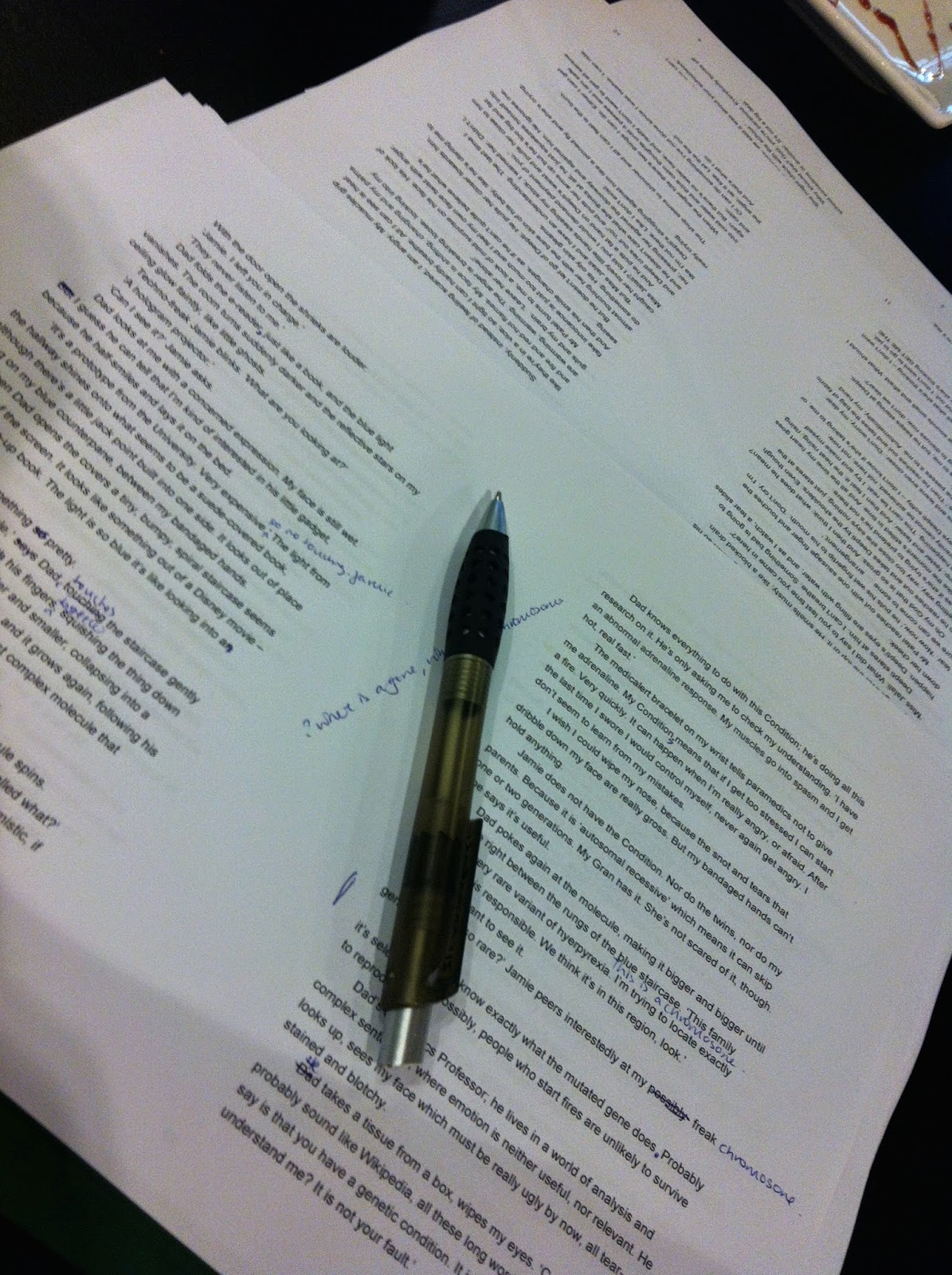
I like doing my third draft. I work in hard copy, sliding a ruler under each line, and read line by line down the page, following the ruler. This stops me skimming, makes sure I consider each word carefully. I often do this in a cafe, just for a change of scene.
I save my draft two file, make a new one, called 'Draft Three' - duh - and type up the changes. It's time consuming, of course, but it's also fun, because it's a chance to see if the premise and themes I dreamt of so long ago are coming together, that the story kind of hums along.
The big problem that I have is the continual second-guessing. Oh, but will this appeal to a reader? To an agent? To a publisher?
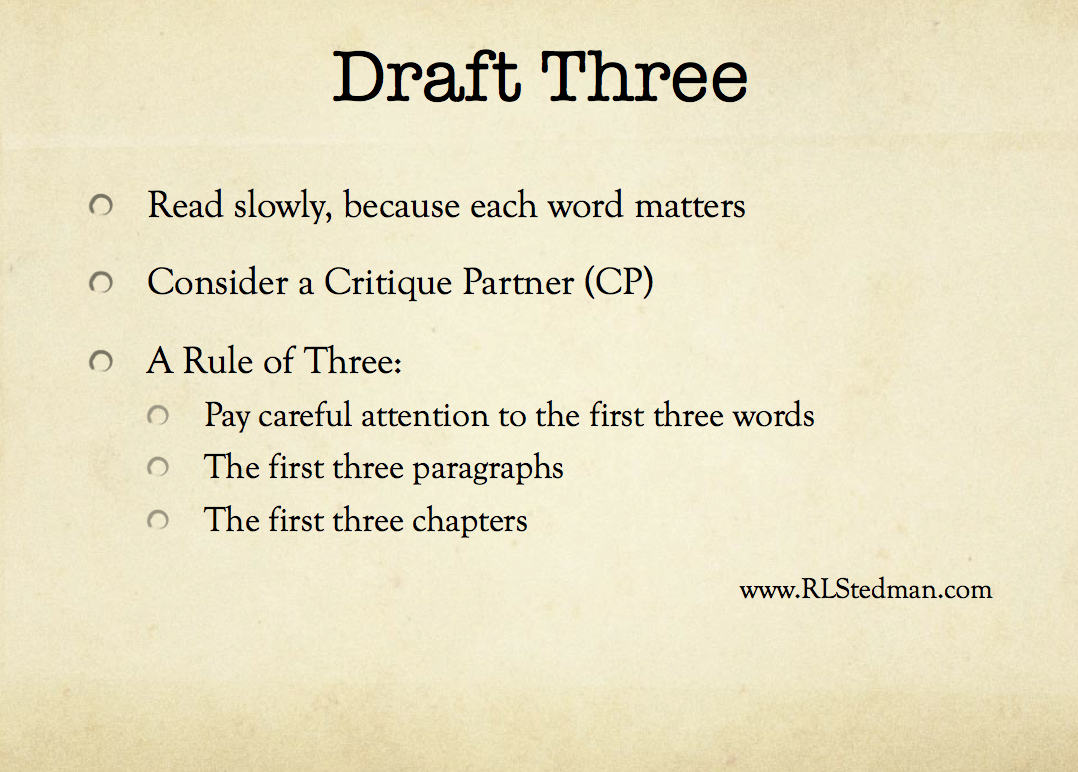
 Which is where I introduce an important little tip: at third draft stage, it's helpful to consider a Critique Partner (CP).
 A CP is someone who reviews and comments on your chapters. preferably, someone who will be brutally honest, without fair of reprisals. Don't use a family member, or a neighbour, or a friend. You need someone to tell you the parts that are boring, or which scenes don't make sense.
Personally, I don't find it too useful to have a CP until draft three, because up until this point, there's so many changes. But after draft three, it's invaluable. Especially for the all-important first three chapters.
Why are The First Three Chapters so Important?
Because these are the ones read by agents, editors and readers. Actually, the first three words, the first three paragraphs, the first three chapters. If you spend time polishing anything, polish these parts of your story.
Where Can I Find a CP?
If you're doing a creative writing course, well then, it's obvious. You'll have more than enough eyes on your manuscript. You can join a writing group. Google writer's groups + [the town you live in]. Or look up your local Writer's Society. Here's the link to the New Zealand Society of AuthorsYou can join a special interest group - such as a Romance Writers AssociationOr - and here's a special tip from me to you - you can join Ladies Who Critique - and no, they're not paying me. LWC is kind of like a speed dating service for writers, matching writers with critique partners. I've found it useful and its a good way to chat with other writers, all from different parts of the world, with varying experiences. Ignore the 'ladies' bit. They welcome men, too. :)
Finally: A Warning.
You will probably lose a lot of words in draft three. I usually lose about 10 - 20 percent. This means that if I'm aiming for a final word count of say 50,000 (average for a YA novel), I need to write about 75,000 to ensure I still have enough words for my manuscript to stand half a chance of acceptance.
And at the end of Draft Three - will my (good) novel finally be finished?
It's up to you. If you are happy with it, then yes, perhaps. But for me - no. I will keep going on redrafting for quite a little longer.
And Lastly: An Apology
I now have a job that pays me ACTUAL MONEY. Unlike writing, which doesn't. So blog posts will be infrequent for a time. But don't worry, I'm still writing, just much slower than before.
April 17, 2014
Draft Two
Okay, so hopefully your first draft is finished, and you're quietly (or not so quietly) celebrating.
The good news?
Finishing the first draft is a massive milestone; an exercise in tenacity and sheer bloody-mindedness. Word after word joining chapter after chapter, until finally you have enough content to make a book.
For me, the first draft is the fun part, where the story-telling happens. I'm not bound up with grammar or word-appropriateness or even too much plot. In the first draft I am feeling my way into the story.
The bad news?
The hard work is just about to start.
Beauty and Murder
So this is what I do. At the end of the draft one - which takes anywhere between six weeks and five years, depending on number of words and time and circumstances and life just getting in the way - I put the manuscript aside. Usually for about four to six weeks. For some reason this seems to coincide with other breaks, like school holidays or Christmas or something, so this has never been too much of a problem.
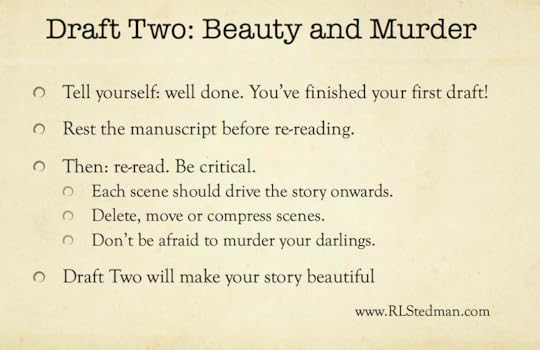
Once the six weeks is over, I re-read it in hard copy with a critical eye. I try not to get too bogged down in the words at this stage (although of course I do, a little), but for me, draft two is all about STRUCTURE. What goes where. The point of Draft Two is to kill your darlings. Heighten the tension. Compress the narrative. I find it a very hard process.
In Draft Two I shuffle scenes about. Sometimes I write in the margin - 'Compress.' 'Tighten.' 'This drags.' 'Do I need this scene?' If I think a scene should be somewhere else, I circle it in pen, draw a big arrow to where it needs to go.
You can do this in other ways. Some people use post-it notes, drafting a short, cryptic summary on each, and putting them on a big wall. Some use index files, or software. The point of any method is always to ensure that everything in your story has a purpose; that each scene drives the story onwards. Do whatever works for you. It's not like there's a right and a wrong here - it's the outcome that matters, not how you manage your process.
When I've ruthlessly torn through the manuscript, I start back on the computer. I make another file called 'Draft Two' and work through the marked-up edit points. I start a file called 'leftover' and anything I'm not sure about deleting I cut from Draft Two and paste into the leftover. Most of the time I won't need this pasted material, but it's like a security blanket, just in case. It's pretty hard to let my darlings go completely.
I find Draft Two the hardest stage. It's when I realise that my shining gem of a first draft is actually only a damaged pebble.
Although even a pebble has beauty; Draft Two is about exposing that beauty.
The good news?
Finishing the first draft is a massive milestone; an exercise in tenacity and sheer bloody-mindedness. Word after word joining chapter after chapter, until finally you have enough content to make a book.
For me, the first draft is the fun part, where the story-telling happens. I'm not bound up with grammar or word-appropriateness or even too much plot. In the first draft I am feeling my way into the story.
The bad news?
The hard work is just about to start.
Beauty and Murder
So this is what I do. At the end of the draft one - which takes anywhere between six weeks and five years, depending on number of words and time and circumstances and life just getting in the way - I put the manuscript aside. Usually for about four to six weeks. For some reason this seems to coincide with other breaks, like school holidays or Christmas or something, so this has never been too much of a problem.
Once the six weeks is over, I re-read it in hard copy with a critical eye. I try not to get too bogged down in the words at this stage (although of course I do, a little), but for me, draft two is all about STRUCTURE. What goes where. The point of Draft Two is to kill your darlings. Heighten the tension. Compress the narrative. I find it a very hard process.
In Draft Two I shuffle scenes about. Sometimes I write in the margin - 'Compress.' 'Tighten.' 'This drags.' 'Do I need this scene?' If I think a scene should be somewhere else, I circle it in pen, draw a big arrow to where it needs to go.
You can do this in other ways. Some people use post-it notes, drafting a short, cryptic summary on each, and putting them on a big wall. Some use index files, or software. The point of any method is always to ensure that everything in your story has a purpose; that each scene drives the story onwards. Do whatever works for you. It's not like there's a right and a wrong here - it's the outcome that matters, not how you manage your process.
When I've ruthlessly torn through the manuscript, I start back on the computer. I make another file called 'Draft Two' and work through the marked-up edit points. I start a file called 'leftover' and anything I'm not sure about deleting I cut from Draft Two and paste into the leftover. Most of the time I won't need this pasted material, but it's like a security blanket, just in case. It's pretty hard to let my darlings go completely.
I find Draft Two the hardest stage. It's when I realise that my shining gem of a first draft is actually only a damaged pebble.
Although even a pebble has beauty; Draft Two is about exposing that beauty.

April 8, 2014
Awards Season: or Getting Drunk on Fiction
Writing is like Wine
This post is a digression from my 'How to Write a [Good] Novel Series, so if you're looking for writing tips, please just check my earlier posts, or wait for a week and then I'll be back to normal.
The Big One
I would just like to say: this week has been a big week for me. I'm currently negotiating a job offer and, after much patient waiting, I am finally allowed to crow about The Big One.
There are three major awards in New Zealand for my kind of writing. These are:
- The Sir Julius Vogel Awards for Science Fiction and Fantasy Writing
- The Storylines Notable Book Awards
and (the Big One) - the New Zealand Post Book Awards.
My first novel (indeed, my only novel, so far) has been shortlisted for all three, and last week, was awarded one. A Necklace of Souls is now a Notable Book.
What does this mean, you ask? Surely, now you'll be rich, Ms RL Stedman? You'll be like JK Rowling, won't you - after all, she had two initials?
Ah, no. It doesn't work like that.
It means there's a sticker on my book.
Like a supermarket wine. You know how they have stickers on them, to say they've won gold or silver at a competition? No doubt winning the competition meant a great deal to the winemaker who put their heart and soul into the wine's crafting. But to the purchaser, it means; this wine must be good because look - there's a sticker!
Which brings me to the Deep Part of the Blog: Why Do We Write?
I've had to think about this a lot recently. And if you're venturing on a writing journey, you should too.
As a writer, you should never assume that awards equal profit. Sure, they might help. But is profit the reason for writing?
I write because I love telling stories. Other people write for posterity, to craft images that will outlast them. Some writers love playing with words, with metre and rhyme and seeing how prose looks on a page. Some have something burning to say. And others just want to make a living.
So before you get any further into your novel writing process, take some time and think, why do I want to do this?
Because once you're sure in your own mind about why you are writing, it helps deal with disappointments, like rejections or criticism or poor sales or reviews. And it helps you enjoy the process more.
Stickers on a book are nice, and so are good reviews and sales, but in the end it's what you think of your own work that matters.
This post is a digression from my 'How to Write a [Good] Novel Series, so if you're looking for writing tips, please just check my earlier posts, or wait for a week and then I'll be back to normal.
The Big One
I would just like to say: this week has been a big week for me. I'm currently negotiating a job offer and, after much patient waiting, I am finally allowed to crow about The Big One.
There are three major awards in New Zealand for my kind of writing. These are:
- The Sir Julius Vogel Awards for Science Fiction and Fantasy Writing
- The Storylines Notable Book Awards
and (the Big One) - the New Zealand Post Book Awards.
My first novel (indeed, my only novel, so far) has been shortlisted for all three, and last week, was awarded one. A Necklace of Souls is now a Notable Book.
What does this mean, you ask? Surely, now you'll be rich, Ms RL Stedman? You'll be like JK Rowling, won't you - after all, she had two initials?
Ah, no. It doesn't work like that.
It means there's a sticker on my book.
Like a supermarket wine. You know how they have stickers on them, to say they've won gold or silver at a competition? No doubt winning the competition meant a great deal to the winemaker who put their heart and soul into the wine's crafting. But to the purchaser, it means; this wine must be good because look - there's a sticker!
Which brings me to the Deep Part of the Blog: Why Do We Write?
I've had to think about this a lot recently. And if you're venturing on a writing journey, you should too.
As a writer, you should never assume that awards equal profit. Sure, they might help. But is profit the reason for writing?
I write because I love telling stories. Other people write for posterity, to craft images that will outlast them. Some writers love playing with words, with metre and rhyme and seeing how prose looks on a page. Some have something burning to say. And others just want to make a living.
So before you get any further into your novel writing process, take some time and think, why do I want to do this?
Because once you're sure in your own mind about why you are writing, it helps deal with disappointments, like rejections or criticism or poor sales or reviews. And it helps you enjoy the process more.
Stickers on a book are nice, and so are good reviews and sales, but in the end it's what you think of your own work that matters.
April 2, 2014
Feel the Fear and Do It Anyway.
More About the First Draft.
The first draft is the most important part of your writing. Why? Because without words on a page, there will be no story.
If you find the first draft hard work, it's worth thinking: Does the problem lie within?
Personality Barriers to Finishing the First DraftImpatience. If you are the sort of person who likes things to happen fast, you'll have to adjust your expectations. A novel appears slowly: word after word, page after page. Sure, you can read a book quickly. But writing one takes time.Commitment. If you are serious about your writing, you will have to make space for it. Not just physical space, although that helps - but time. Turn off your phone, ditch your job, whatever. It won't happen if you don't let it. Words do not appear by magic.Inadequacy. For me, this is the biggest block. Sometimes, writing a novel is like jumping off a cliff; feel the fear, but do it anyway
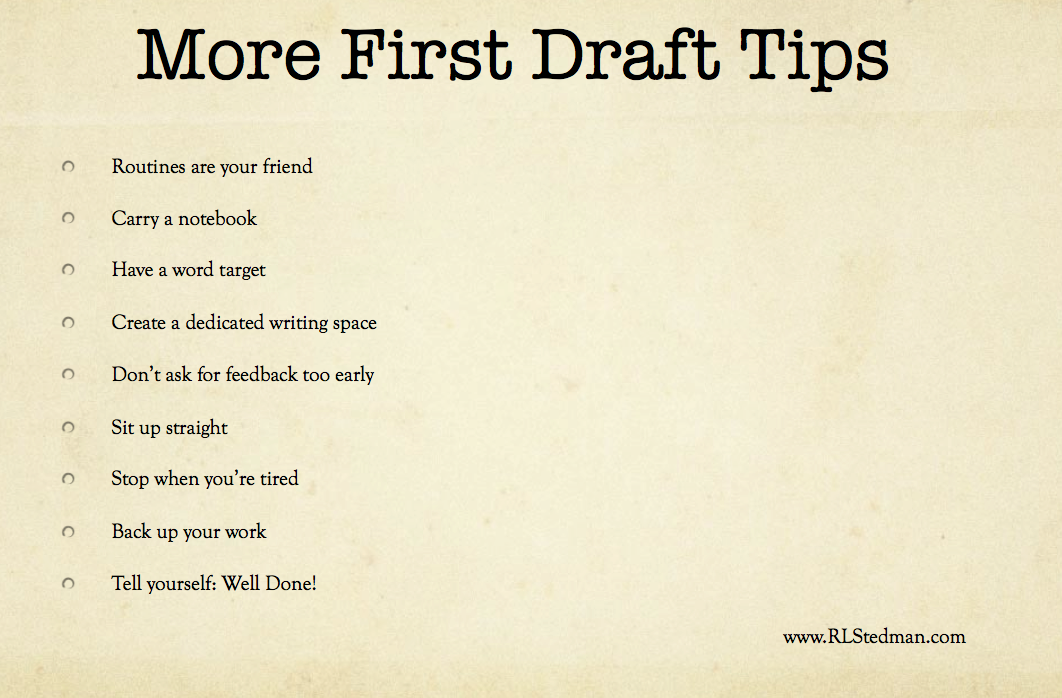
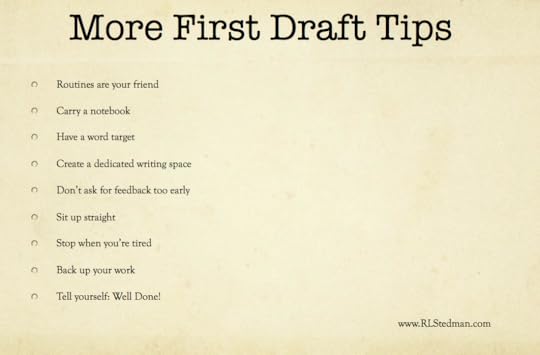
More Practical Tips.Routines are a writer's friend. Get up early, write late, when your kid has a nap, when you get home from school. Doesn't matter. Important thing is - that you write.Carry a notebook with you. That way, you can squeeze in writing at down times - when your son's late from his tennis lesson, or when you're at lunch. For short-burst writing, I find notebooks easier than electronics. Transcribing is quicker than creating, though, so once it's in your book, you only have to type it up. (Some people find an iPad works for this too, but I find the keyboard annoying.)Have a word target. I've said this before, and believe me, it really helps.Create a dedicated writing space. Because you know where everything is, a special writing place saves you time.Don't ask for feedback too early - remember, first drafts are not polished gems.Watch your back and your posture. Getting repetitive strain injury will slow you down. And give yourself regular breaks from your keyboard.More is not necessarily better. I can only do about two hours on a first draft piece. After that time, the creative part of my brain gets tired and sluggish. When that happens, it's time to walk away.Most importantly: Back up your work.
And tell yourself - "Well Done!"
The first draft is the most important part of your writing. Why? Because without words on a page, there will be no story.
If you find the first draft hard work, it's worth thinking: Does the problem lie within?
Personality Barriers to Finishing the First DraftImpatience. If you are the sort of person who likes things to happen fast, you'll have to adjust your expectations. A novel appears slowly: word after word, page after page. Sure, you can read a book quickly. But writing one takes time.Commitment. If you are serious about your writing, you will have to make space for it. Not just physical space, although that helps - but time. Turn off your phone, ditch your job, whatever. It won't happen if you don't let it. Words do not appear by magic.Inadequacy. For me, this is the biggest block. Sometimes, writing a novel is like jumping off a cliff; feel the fear, but do it anyway
More Practical Tips.Routines are a writer's friend. Get up early, write late, when your kid has a nap, when you get home from school. Doesn't matter. Important thing is - that you write.Carry a notebook with you. That way, you can squeeze in writing at down times - when your son's late from his tennis lesson, or when you're at lunch. For short-burst writing, I find notebooks easier than electronics. Transcribing is quicker than creating, though, so once it's in your book, you only have to type it up. (Some people find an iPad works for this too, but I find the keyboard annoying.)Have a word target. I've said this before, and believe me, it really helps.Create a dedicated writing space. Because you know where everything is, a special writing place saves you time.Don't ask for feedback too early - remember, first drafts are not polished gems.Watch your back and your posture. Getting repetitive strain injury will slow you down. And give yourself regular breaks from your keyboard.More is not necessarily better. I can only do about two hours on a first draft piece. After that time, the creative part of my brain gets tired and sluggish. When that happens, it's time to walk away.Most importantly: Back up your work.
And tell yourself - "Well Done!"