Mike Vardy's Blog, page 81
October 16, 2015
How To Be Productive Again After Vacation

Carina Parry-Stevens is class of 2014 graduate in Broadcast, Journalism and Media Communication. She loves communicating with people through articulate speech, vision and writing. Engage with her on Linkedin here.
Now that you’ve taken some time to relax, it’s time to go back to the office. You sit down and fire up your computer as a feeling of nervousness washes over you. Your mind starts to drift toward the emails waiting in your inbox.
We’ve all been there! It can be challenging going back to work after a break. How can you get back to the “productive” you?
Here are four tips to help you get back to work:
1. Rest Is Best
Make sure you are getting enough sleep or you will not be doing your best work. You will have more focus and more discipline. You know producing anything worthwhile on a drained-brain is near-impossible. Sleep will increase your mental alertness while also lifting your general mood. Aim for at least eight hours of sleep before going back to work after vacation.
Pay close attention to your diet–especially your caffeine intake–so you can get as much rest as possible. If you know you are tired, consider taking a short nap in the afternoon. Also, don’t forget about physical exercise. When you exercise, your body feels more energetic and you sleep better.
2. Know Your Flow
Organizing your workflow by managing time accordingly is always worthwhile as it puts you in good stead for keeping on top of tasks. When you know what to expect from your day, you are less likely to feel overwhelmed following your return from vacation.
Self awareness is essential as you know how you work best. If you have the most energy in the afternoon, plan your schedule accordingly. This will make those first few days much more focused and productive.
3. Give Yourself Space
During your first few days back, arrive at least twenty minutes early to account for any outstanding tasks left before your vacation or to catch up with work colleagues. You’ll thank yourself later when you feel more relaxed, organized and on top of your tasks all day long.
4. Perspective Is Key
Coming back from vacation is a great thing because you’ve had valuable time away to look at your working landscape differently. When you return from vacation, you’re likely full of ideas. Take note of those little changes you would like to see that could improve the business.
Until Next Time…
Remember, your attitude drives everything you do. Wherever you are, make the most of it. Sure, the first few days after vacation are likely more challenging than most, but you know you’re up for the challenge. Enjoy your breaks as a time to recharge, but also make the most out of every day.
Share your thoughts!
I’m interested to know how you stay motivated after vacation. What really gets your productive juices flowing when you get back in the saddle again?
The post How To Be Productive Again After Vacation appeared first on Productivityist.


October 15, 2015
The Productivityist Podcast Episode 61: The Power of Focus with Shawn Blanc
This week on the show I welcome my friend Shawn Blanc, creator of The Focus Course. We have a deep discussion about intentionality, being attentive, the creative process, productivity, and – fittingly – focus.
Relevant Links
The Awareness Building Class
The Focus Course
Tools and Toys
Delight is in the Details
2 Experts Share Exactly How to Use a Productivity Journal (& Increase Productivity by 23%) | The Fizzle Show 99
Shawn Blanc (@shawnblanc) | Twitter
This week’s episode is brought to you by Transpose, a free, fully integrated, customizable application to manage your work, no matter where you are. I’ve been putting Transpose through the paces for several weeks now and really love what it has to offer. I’m sure you will too. Head over to Transpose.com now to experience it for yourself!
Enjoy the podcast and want to help make it even better? Then become a patron The Productivityist Podcast through our Patreon campaign! Check out The Productivityist Podcast’s Patreon page and take a look at all of the perks – including regular Productivity Pack deliveries sent every January, May, and September – available only to Patreon supporters!
The post The Productivityist Podcast Episode 61: The Power of Focus with Shawn Blanc appeared first on Productivityist.


October 14, 2015
Goodbye Tabbed Browsing, Hello Focus

I have a confession to make: I am the king of tabbed browsing. I have the unique ability to crash any browser within minutes.
Click here and click there and suddenly there are countless tabs staring back.
I bet you know what I’m talking about, right?
For me, tabbed browsing is a lot like being an unsupervised kid in the candy store.
Instead of stuffing myself with sugary treats, I fill myself with information and content. Inevitably, this leads to a loss of focus.
Fed up with this pattern of frustration, I decided to give up tabbed browsing altogether.
I use Google Chrome, so I decided to use the extension called Tab-less which disables all tabbed browsing features. After using this tool for several months now, I can confidently state this approach has given me improved levels of focus as it allows me to be more intentional with my browsing habits.

I know this may sound extreme to some, but here’s the thing: I’m a collector. When I’m at work on a project, I try to collect as much helpful information as possible. I love to dig around and find the hidden gems on the web.
But this approach can quickly become a very sneaky form of procrastination. Steven Pressfield would even call it resistance.
That’s why in his fantastic book called Do The Work Pressfield says “You’re allowed to read three books on your subject. No more. I’m putting you on a diet.”
Research can feel like work. But it’s not the REAL work.
For me, saying goodbye to tabbed browsing is a way to give myself an intentional boundary.
I’m a rule breaker by nature, so I typically hate boundaries.
But boundaries are good and very healthy.
A page has edges. A book has a word count.
Without some form of boundary, a project rarely gets finished.
Not having tabbed browsing enabled is the boundary I need.
Now I must ask myself two key questions when I click on something:
1. Am I finished with this information?
2. Do I really need this information?
This makes me much more aware of what I’m doing and allows me to return to work in a much quicker fashion without a bunch of tabs stacked one after the other.
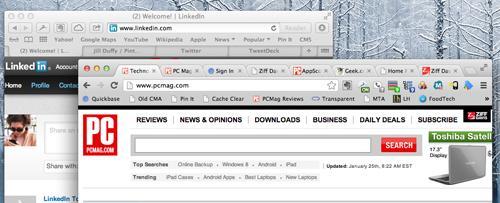
Now I must confess, I still leave more than one webpage open. Here’s a screenshot from the other day and I had six things open. I just use the window menu to switch between the browser windows. (The Mac automatically sorts any open windows alphabetically in the menu which is a very handy feature.)

Was this an easy transition for me? No, it wasn’t.
And maybe you have your tab browsing in control.
If so, that’s great.
The key is to minimize activities or tasks that you know drain your focus.
Pay attention to little things that deplete your focus and do something about them.
Want even more help with focus?
You can pick up my ebook Hit The Mark for free at Noisetrade. It’s full of practical tips for how you can improve your focus, boost your energy and make the most of your time.
The post Goodbye Tabbed Browsing, Hello Focus appeared first on Productivityist.


October 12, 2015
Why I Am Writing Two Books At Once (and How I Am Doing It)
This piece was originally published in The Productivityist Weekly. Not signed up for the newsletter yet? Click here and you’ll get it delivered to your inbox every week and receive a copy of The Way of The Productivityist Manifesto absolutely FREE!”
I’ve got two ideas for a book that have been eating at me for a while now.
Two ideas and neither will go away.
Now if both weren’t pulling at me, this wouldn’t be a problem. I would just figure out which one to work on next and go from there. But each of these ideas is both strong and compelling. One is like The Immovable Object and the other is like The Irresistible Force.
I’ve found myself struggling with which one to devote more attention to and which one to put on the backburner. As a result, both projects are placed on the backburner. No matter what technique I use to decide which one to move forward on, I just couldn’t shake the other one I’ve left behind.
So I came up with a solution.
I’m going to work on both at the same time.
At first this might sound like multi-tasking, but it isn’t. It also might sound like I’m not giving full focus to one over the other, but that is not the case. I’ve developed a strategy to make measurable progress on both over the next few months so neither of them languishes on the idea vine.
Before I share with you the strategy I’m using to make that happen, I’d like to dive deeper into why I’m working on two books at once.
Why two books at once?
Well, the first book is planned for traditional publishing. Simple as that. I think it’d work well for that purpose and I’m not willing to let it wait while I work on the other one. So I’ve got my mind set on the fact this book is designed for traditional publishing.
The second book will be self-published (or possibly distributed with a smaller imprint), perhaps even with some crowdfunding involved. The first book will take much longer to write. The second one won’t require as much time and has several other components that will make it become much more than a book.
Taking on both of these massive projects is something I’m doing also because I’m inspired by others who are moving forward with multiple big projects at once. I’m inspired by the likes of Omar Zenhom and Nicole Baldinu of Business Republic, who just launched their new podcast, The Webinar Ninja Podcast, this week to go along with everything else they’re doing.
(I’m a massive fan of what Omar and Nicole deliver on a regular basis, and they certainly have done it again with The Webinar Ninja Podcast. I’m all about effectiveness and efficiency, and this show fits the bill when it comes to showing you how to connect with your audience and deliver the goods time and time again. You can check out this stellar new show here.)
But beyond the different mandates for each book and being inspired by others tackling challenging projects in tandem, I had to figure out how to make this happen. My solution is based on two approaches :
1. Taking theming to a different level
I’ve written and spoken about my love for theming, but for these two projects I actually need to theme my weeks by week and not just by day of the week. On The NOW Year Calendar, there is a place to write weekly themes. I have decided to use those to their fullest for these two books.
I’m focusing on each book on alternating weeks to start. Since one of them is set to be proposed for traditional publishing, I need to draft up a book proposal. With that in mind, I chose that book as the one to focus on the first week. During the second week, my other book received the focus, which allowed me to map out the outline for it and organize my research to date so I can move forward with it with more clarity and focus. Then in the third week of this month (which is actually this week), the theme returned to the first book as I began to craft sample chapters and a more comprehensive outline.
At some point, the proposal will be finished and sent off to my agent. Then my I’ll simply replace the first book with something Productivityist-related during the weeks that are no longer themed. Once the need arises to start working on the first book again (which I have almost no control over), I’ll bring it back into my weekly theming plans.
2. Segmenting out my tools
I wanted to make sure that each of my tools was used in a way that allowed for laser focus, so I started to segment them out for the book-writing process.
I created notebooks in Evernote for each book. I created Scrivener projects for each book. But I didn’t just segment out my tools for writing my book, I did the same for my other tasks and projects.
I started using more specific contexts for writing so that I knew where I needed to be to work on certain writing activities. For example, when I was writing for Productivityist and other blogs that I guest post for form time to time, I created the label in Todoist called @desk.pm because I use Desk.pm for writing blog posts now. I used to write them in Scrivener, but because I want Scrivener to be purely dedicated to my books, I had to make the shift.
What’s interesting is that since I’ll be traveling for the latter part of this week to San Francisco to the Dad 2.0 Summit is that I won’t have my MacBook Pro with me to work on the first book proposal. So I’ve also created two labels in Todoist: @scrivener and @evernote. When I’m away from my MacBook Pro, my mind knows to go to Evernote to work on book stuff because Scrivener isn’t available. It’s not the most elegant solution, but it works well for me. And that’s what I need to move these projects forward on a consistent basis.
By setting up this strategy before I started these two books, I’ve set myself up to succeed. Now it’s just up to me to make sure I keep the ball rolling…or the ballpoint pen rolling in this case.
Now it’s your turn
Do you have any questions for me regarding this workflow? How do you tackle multiple massive projects at once and make measured progress? Let’s chat about it in the comments!
The post Why I Am Writing Two Books At Once (and How I Am Doing It) appeared first on Productivityist.


October 9, 2015
Try Working In A New Space To Be More Productive

I got a lot of great feedback on Twitter about how important health is to productivity. It’s not something people tend to think about, but it’s something that we can all improve to find great gains.
So I’m back with another suggestion. This is also a bit unexpected, but it works; get a room.
But not just any room—get a hotel room to work in. Adam McKay has said that he and Will Ferrell will get a hotel room and write there. McKay says there are fewer distractions, so he feels guilty if he pays for a room but does not get much done.
Why hotel rooms are good for work
There are two main reasons hotel rooms are good for work. First, they aren’t part of your office. Adam McKay has a work office and home office, but still invests in a hotel room. A change of scenery can improve focus and creativity. Think about it: if you are stuck and need a new perspective, you can pick up your computer or physical notebook and work in a new space.
Home and work are full of distractions. People drop in. Urgent but unimportant tasks need to be done. Your printer is out of paper (and ink). Hotel rooms have none of these problems.
Second, hotel rooms cost money. This attaches consequences to your actions. When Taylor Pearson was on the podcast, he noted that people don’t think about the value they provide at work. We get paychecks, but don’t ask what we did to earn them. This oversight is leading to changes in work argues Pearson.
When you fork over the cash to get a hotel room, it forces you to acknowledge this. You have to explain why you paid $200 to work in a room when you could have worked anywhere. It focuses your attention on things that actually create value and that people will pay for.
This is why hotel rooms are great to work in but this doesn’t address that they are expensive and inconvenient. The great news is that you can get most of the results for a fraction of the cost.
Take this one step further
Hotel rooms work because they are a new space to work in and they provide financial costs you need to justify. Here are three ideas for how to apply these concepts that fits any budget.
Work at the public library. It’s a quiet place to work with good resources like WiFi, books and copy machines. To make this approach even more effective, pay someone to clean your house this attaches a financial consequence to your workspace. (As a bonus you have a clean house. Pretty awesome, right?)
Work at a coffee shop. You likely have several different coffee shops in town, so find a place where you can be inspired yet also conduct normal business. For the financial incentive, pay for your groceries to be delivered and then invest time saved into getting more important work done.
Work at a coworking space. For $200 a month and up, you can get a desk somewhere. It also opens up the opportunity for serendipity to strike. Before you leave for the day, order takeout to take home.
Remember, you have the ability to change your environment so it increases your productivity. Hotel rooms provide quiet places with limited distractions and a financial cost.
Anyone can apply these ideas to find a new productive workspace. But I would love to have your input: the closest coffee shop and coworking space is a hundred miles away from me. What would you recommend I do to get more work done?
The post Try Working In A New Space To Be More Productive appeared first on Productivityist.


October 8, 2015
The Productivityist Podcast 60: Less Doing with Ari Meisel
This week on the show I’m joined by Ari Meisel of Less Doing. We talk about what task management app Ari uses (the answer will surprise you), the art of optimization, automation, and outsourcing, and more tips and tricks you can use to help you make more great things happen by doing less.
Relevant Links
Less Doing | Ari Meisel
Evernote
FollowUp.cc
Slack
IFTTT
Zapier
Less Doing Live
Blue Blocking Sunglasses | Amazon
A Complimentary Less Doing Coaching Call
Cylon Compendium
This week’s episode is brought to you by Transpose. Check out that everything Transpose has to offer by visiting Transpose.com today!
The Productivityist Podcast is released weekly, so keep your eyes here on the blog (or subscribe to get it directly using one of the methods mentioned above) to make sure that you don’t miss a single episode!
The post The Productivityist Podcast 60: Less Doing with Ari Meisel appeared first on Productivityist.


October 7, 2015
Escaping The Noise And Leveraging The Quiet
This piece was originally published in The Productivityist Weekly. Not signed up for the newsletter yet? Click here and you’ll get it delivered to your inbox every week and receive a copy of The Way of The Productivityist Manifesto absolutely FREE!
As I write this, everyone else in the house is sleeping. I’m looking out at a great view, but the only things I can hear are my inner thoughts and the clacking of the keyboard. To be honest, my inner thoughts are much louder than the keyboard clacking.
You see, the daytime is loud. So many inputs being filled with stuff. There are so many disruptions.
So much noise.
Too much noise.
The noise is hard to escape, and it follows me as long as it can. But when I make an effort to embrace the silence, I’m no longer running away from anything. Instead, I’m still. And that’s where the magic starts to happen.
More often than not, the magic starts for me during the later hours of the day.
This is the time when I can really think and process everything that has happened throughout the day. It’s when I can sit down and really map out the day to come. It’s when I have the clarity I need to ensure my intentions are being met and are getting the attention they deserve.
This – the quiet – is why I’m a night owl.
The quiet is where I am able to do my best work. For some, the quiet can happen in the early morning or in the late evening.
The quiet serves me because I listen to what’s held within it. The quiet helps me move forward when I feel I’m stuck in one place.
I know I wouldn’t value the quiet without having to deal with the noise in the first place. But I’m sure glad I’ve figured out how to find the quiet when I need it.
I haven’t just figured how to find the quiet, I’ve also found out how to leverage it. I journal at night because the quiet gives me the ability to log my day with purpose. I write at night because I have the focus to do my craft justice.
I also plan at night because I think clearer at this point in the day. This serves me the next day when I’m simply not able to focus on anything of great depth or importance as soon as I get out of bed.
If you want to leverage the quiet to be more productive, then I encourage you to pick up The Night Owl Action Plan. You’ll get The Night Owl Action Plan Guide, a 40 minute audio Program, an Evening Quickstart Guide, and additional bonus materials through regular updates all for just $10. Click here to start levelling up your late nights tonight!
The post Escaping The Noise And Leveraging The Quiet appeared first on Productivityist.


October 5, 2015
Developing the Ideal Productivity System When You Have ADHD

Ryan McRae is the author of Ordering the Chaos: Simple Ways to Organize Your ADHD Life. He writes at the blog The ADHD Nerd, is a technology addict, and loves everything pumpkin flavored.
When I look at the newest productivity system or the latest time management tool, I get very excited. I look at the boxes that can be checked, the grid system, or the priority matrix, etc.
So I order this new system.
And soon—very soon—I discard it.
This is a common trait among individuals with ADHD like myself. I have an issue when it comes to “executive function,” which is just a fancy way of saying I don’t have a natural organizer in my mind. My brain very rarely reminds me of something I should be doing. I miss appointments. I forget the milk all the time. So when I see a system that might solve this I’ll pump my fist in the air and say, “Yes, this is the answer!”
And then the new solution is discarded after a while when my ADHD quickly grows tired of the system.
So then I move past it. Not because it’s a bad system; it just no longer works for me.
So what do ADHDers need out of a productivity system?
Flexibility
If a productivity system creates tasks to do or multiple tasks, I will soon give up. If a system requires constantly checking boxes, making little graphs, or having multiple pages to flip back and forth through, most with ADHD will move on.
The system I’ve adopted is using a simple Field Notes book. I simply write in it what I plan on doing that day. Three categories: NOW, SOON, and LATER. Then I let my ADHD take the wheel and put everything I need to do that week in the list.
NOW:
Call/text Frank back about going to a movie
Head to Trader Joes
Pay that parking ticket
Decide on: what day you are cleaning the house, if/when you are asking for a raise.
SOON:
Plan the trip to Vegas
Look for a local gym
Review your finances
LATER:
Check out reviews for the best backpack at carryology.com
Donate clothes
Pick out 10 books to donate
First, I get all the NOWs ticked off. Then if I can hit a SOON, that’s awesome. Anything left over in the SOON category gets moved to tomorrow’s NOW. All the LATERs get recorded on another page. I have a list of LATERs and I hit those when I can. I review them about once a week and see if anything jumps out at me. I’ll also put them in Evernote because I tend to lose stuff.
This system works because my ADHD knows what’s coming. My ADHD loves crossing all those NOW tasks off the list.
I carry my Field Notes book wherever I go because I think they are perfect and sturdy. (Mike Vardy will disagree—he likes Baron Fig. I haven’t tested their smaller ones yet. Just find what works well for you.) I learned the notebook habit from C.C. Chapman in his book Amazing Things Will Happen. I carry that notebook wherever I go.
Capture
My ADHD mind is constantly spitting out information and reminders. Don’t forget to call Jack because you have to find out if the birthday party is happening. If it’s not, you should read that Oliver Sacks book you’ve been wanting to dive into and if you’re going to do that, you should get some snacks, maybe some tea, but not all carb-y because you need to work out more and. . . .
On and on my mind churns out things like that. When that happens I bust out my notebook and on a page I’ll write: Call Jack, Oliver Sacks book, workout tomorrow, get some snacks.
The ADHD voice cuts out because I no longer need a reminder. My ADHD is the kid in the backseat on a road trip: “Are we there yet?! Can we get there?! How long?!” Once I let my ADHD know that I’m not going to forget, and that it’s eventually going to get done, I am no longer distracted.
Sure I could put this information in my phone, but I find that using the phone tends to bog me down and disconnect me, but I do use it for other tasks.
Location Reminders
I work close to Trader Joe’s, but when I get home I realize that I forgot to stop and get groceries.
Swearing ensues.
So I have an alert on my phone that shows up every time I leave work that says, “Need to go to Trader Joe’s?”
I don’t need to go every day, but I’d rather decline the request then drive all the way back and get groceries while frustrated (and then buying chocolate to calm down).
Two Things At Once
Netflix helps my productivity like you wouldn’t believe.
Here’s how: when I’m watching something that doesn’t need my constant attention to follow, I’ll go through my notebook, tear out pages, put stuff in Evernote that needs remembering (stuff from my LATER, documents I need to capture and then shred), and get a new notebook going for the week. If I sit in silence, my ADHD brain rebels. So Netflix preoccupies my ADHD brain by giving it something to listen to while I compile all of these random scribbles into actionable items.
I listen to podcasts when I’m doing something that doesn’t have to do with words. If I’m emptying the dishwasher, doing laundry, I listen to a podcast. I actually feel more productive and I don’t look at doing laundry like something rote and boring; I can learn Spanish while I fold the towels! ¡Hola!
Developing a System
I didn’t develop this system overnight. I just kept at it, figuring out what worked and what didn’t. If I kept with a system for more than two weeks, I knew it worked. If I found I abandoned it, I figured out why I didn’t want to continue using it.
I continually tracked what was working and what wasn’t at the end of the day. I kept a watchful eye for when I was spinning my wheels doing something that was either not productive at all or something I could tweak and be more productive (like listening to podcasts while I do chores.)
Now I have a system that I love and it keeps me on task, helping me spend my time on the important and vital parts of the day.
Want more tips on productivity and ADHD right now?
I’ve created a free e-book titled Finding Focus with an ADHD Mind. It helps people with ADHD (and non-ADHDers) to quickly find focus and get that project you’ve wanted to start get finished.
Just click the icon to download a free copy.
The post Developing the Ideal Productivity System When You Have ADHD appeared first on Productivityist.


CommentsI started reading this article because the title triggered my ... by Khürt Williams
October 1, 2015
The Productivityist Podcast 59: The Habits of a Happy Brain with Loretta Breuning
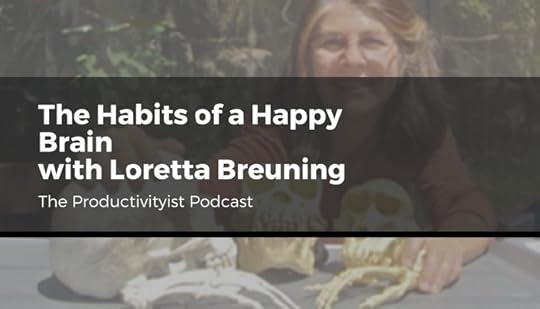
In this episode of The Productivityist Podcast, I speak with Dr. Loretta Breuning from the Inner Mammal Institute. We talk about how you can retrain your brain, including some tactics and tips so that you can start building a happier and healthier brain.
We dive into how to build new neural circuits, discuss the four chemicals that affect our behaviour, and how to tap into the animal inside of you so that you can embrace your “inner mammal” and craft more positive experiences.
Links
Blinkist
Habits Of A Happy Brain: Retrain Your Brain to Boost Your Serotonin, Dopamine, Oxytocin, & Endorphin Levels by Loretta Graziano Breuning PhD | Amazon
The Happiness Advantage: The Seven Principles of Positive Psychology That Fuel Success and Performance at Work by Shawn Achor | Amazon
The Happiness Project: Or, Why I Spent a Year Trying to Sing in the Morning, Clean My Closets, Fight Right, Read Aristotle, and Generally Have More Fun by Gretchen Rubin | Amazon
The Power of Habit: Why We Do What We Do in Life and Business by Charles Duhigg | Amazon
David Attenborough | Wikipedia
Inner Mammal Institute: making peace with the animal inside
Inner Mammal Inst (@innermammal) | Twitter
Enjoy the podcast and want to help make it even better? Then support The Productivityist Podcast by becoming a patron! Click here to visit The Productivityist Podcast’s Patreon page and choose from a wide variety of perks – including monthly 20 minute coaching sessions with yours truly available only to Patreon supporters!
The post The Productivityist Podcast 59: The Habits of a Happy Brain with Loretta Breuning appeared first on Productivityist.


September 30, 2015
Good Health and Productivity Go Together

There is no doubt there are many great applications out there to help you boost your productivity. And, in most cases, less time in your email inbox is a good thing. But the most productive thing I do each day has nothing to do with traditional productivity.
Choosing to live a healthy lifestyle is by far the most productive thing I do.
Over time, I’ve found the healthy habits that work for me. Now I’m 32, physically fit, and a father of two. I like to go to bed and wake up early. I’m no night owl (and proud of it).
I know this because I have taken the time to experiment. This is the only way to figure out how you can be the most healthy and productive. In the same way that you may prefer using a desktop to cloud email or pen and paper to Evernote, you can figure out a healthy life the same way.
Here are some places to begin your experiments.
Sleep
Working instead of sleeping is often the default move to get more work done; this may do more harm than good. Sleep is important and the amount needed varies on an individual level. Bill Clinton claims he only needs five hours per night. Winston Churchill napped as often as a cat. Each of us is different; take some time to see what works best for you.
The good news is you can figure this out easily. Try an app like Sleep Cycle to see how much sleep you need. Not only that, but you can enable Sleep Notes on the app to keep track of what affects your sleep.
I sleep better on days I walk around a lot. I sleep longer, but not better, after two or more alcoholic drinks. I sleep more on the weekends. The right amount of sleep allows me to be more productive while I’m work.
Activity
This could be a bit harder to track; feel free to use any necessary tools available to help keep you informed. A Fitbit can be a good tool to help you see how active you are. Maybe you need to start tracking your time as well with an app like Toggl. However you do it, you should have some idea about how active you are in a day and what that means.
In many cases, you should start with a walk. Charles Dickens and Beethoven both took long afternoon walks. Not only were they active, but it also helped them brew ideas. Dickens passed the countryside for ideas. Beethoven would scribble notes with a pen and paper he carried with him.
Other people praise more physically demanding exercises. Good for them. The real question is, what works for you? Take some time and see. I need to walk every day if I don’t run, swim, or bike. I use this time to catch up on podcasts or books or brew some ideas. Even when you’re not doing work, you can still be productive.
Stand
There has been more and more news stating that it is unhealthy to sit down too much. Who knew?
The good news is there’s an easy way to stand more, create a standing desk. I have two. One is a bookshelf with the top cleared off. The other is a stack of boxes.
Try something like the Pomodoro method, sit for one work period of 25 minutes. Stand for the next. Repeat. How often and how long you stand will depend on you. If I sit for more than two hours, my thoughts become as sedentary as my body. So when I work, I sit for the first hour. Then I stand until lunch or my knees begin to hurt, and sit until my kids return home from school.
Food
I love to eat. It’s one of my favorite things. When I work from home though, it becomes a temptation. My favorite meal is a giant bowl of carbohydrates topped with refined carbohydrates. But instead I have a salad.
It may not taste as good – though my salads have gotten quite good – but it is a definite gain in productivity. I think more clearly. I have more energy. I am more awake. I am a much better version of myself.
I notice this most directly with my writing. When I eat healthy foods, I can write for longer periods of time and also make fewer mistakes. My sentences are more crisp. There’s less desire to take a nap or get coffee and the desire to get things done burns inside me.
I’ve had success with a diet of mostly plants, meat, and fats. Add in the occasional (but not until after work) bowl of ice cream, and this is how I am most productive.
Try something new to see if it works for you.
Whatever it is you do, do something.
You may plan your day perfectly. You might have all the right email filters. You could turn off the alerts on your phone. But, if you don’t have the energy to follow through, what have you really done?
So what is one healthy habit you will choose to do?
Start tracking your sleep. Exercise during your lunch hour. Have a salad for lunch every other day.
I’m always up for a new experiment, so hop into the comments – or on Twitter @MikeDariano – and tell me what your “experiment” is. If you’d like, we can do it together.
The post Good Health and Productivity Go Together appeared first on Productivityist.