Mike Vardy's Blog, page 79
December 2, 2015
Busy Work vs. Real Work.
This is a guest post by Paul Ellsworth. He’s a writer and teacher and his passion lies in watching you reach your full potential. You can connect with him on his website here or on Twitter @paultellsworth
At one time, I had my morning routine down to a science.
I would set my alarm in the bathroom the night before. I’d put out my clothes, set the coffee to brew, and have my work space ready.
When the alarm went off, I would pop up out of bed and turn it off before it woke anyone else.
The next step was to throw cold water on my face. Then, I would drink a glass of water and do 15 minutes of exercise. Then I would read for 30 minutes. Then I would sit down to finally do what I loved to do; I would write.
However, there was a glitch in my system.
At the beginning of the week, I would sit down and prepare my weekly goals. By the end of the week, I would realize that I would have nothing done.
How is that possible? How is it possible that I was waking up early, working for a couple hours and still had nothing done at the end of the week?
The answer is simple:
There is a major difference between busy work and real work.
Busy work is the work that makes us feel like we are moving quickly, but in reality you’re not. Busy work is like running on a treadmill when what you really want to do is run cross country.
What does busywork look like?
Checking Facebook ten times a day.
Checking my email to make sure my inbox is at zero.
Reading books and articles about the activity you SHOULD be doing.
Upgrading from Windows 8 to Windows 10.
Cleaning your desk or workspace.
Organizing the files on your computer laptop.
There are many more examples, but you get the point.
Notice that all of those things are not necessarily bad things. In fact, many of those are important and have to be done at some point. The only problem is that they are not what I actually sat down to do. They are not actually writing.
Calling out distraction.
Distraction likes to creep in. It is very subtle. And honestly, it comes naturally in the creative process–that is whenever you have some work to do.
“The amateur fears solitude and silence because she needs to avoid, at all costs, the voice inside her head that would point her toward her calling and her destiny. So she seeks distraction. The amateur prizes shallowness and shuns depth. The culture of Twitter and Facebook is paradise for the amateur.” Steven Pressfield
Real work is the work that matters. It is usually hard, and many times does not have quick rewards, but it is the work that you set out to do in the first place.
Here is what REAL WORK looks like (at least for me):
Write.
Do number 1 again.
Repeat.
Not too complicated, is it? That’s the real work that is required of me. I need to write. Obviously this is a bit oversimplified as I also need to edit and market my art, but the fact of the matter is writing is the main thing that I need to do. Writing is the main course. Everything else is just dessert.
I can guarantee that you can narrow your work down to one or two things that are real work. Those need to be your focus. The problem is that busywork is important (although not more important than REAL WORK). For example, although writing is my most important part of my work, I do need to check my email and get organized and market my work.
Getting back on track.
So, the real question is, how do you give REAL WORK priority, but still get some busy work done?
I am a practical guy, so here are a few ways to get the busy work done.
Schedule a 5-minute time to plan your day. This needs to be early in the morning or late at night for the next day. Use this time to make a To Do list for your work. Actually making time for this should be the most important item on you to do list. I have gone through many times in my life where I have spent hours figuring out a new method to get my work done, and then at the end of the day, I don’t go back and use that method. By actually taking 5 minutes, you will have a greater chance of success.
Make a high priority to-do list. You need to write down everything that is on your mind to do.
Here is a simple and effective way to make a prioritized list.
First Step: Write every task that is on your mind down on paper (or on your computer. I personally use Wunderlist). Get it all out of your brain. Write everything down.
Second Step: Identify the 3 most important things on the list. These should be the things that are the REAL work. The work you originally set out to do.
Note: if you want more info on prioritized to do lists, check out this site here.
Don’t do anything else on the list until the top 3 most important things are done.
When you go to plan again the next day, ask yourself if you really did the work, then adjust you list accordingly.
You will be amazed at how much work you will actually get done when you sit and do the REAL work instead of busywork. You will make real progress, and I have found that when I do the stuff that really matters, I find the time for the busywork as well.
I don’t want you to be stuck doing busywork.
As a first step, please share in the comments below two actions that you consider to be real work.
The post Busy Work vs. Real Work. appeared first on Productivityist.


November 30, 2015
The Best Thing You Can Do to Get More of What You Need and Want Done
I’ve discovered several things in my years of studying productivity and time management. But one that always comes back around again and again is the amount of effort it takes to do what you need to do versus what you want to do.
You’d think that they would be equal – or close to being equal – but we tend to complicate that equation more often than not. That’s because we do the one thing we should never do to get what we need and want.
We settle.
We settle for less of the right stuff and more of the wrong stuff. We settle for the quick fix and compromise the long game in the process. We snack on small wins instead of feeding on big wins.
And this is what keeps us from really getting what we need and want.
Imagine if you stepped back and planned out your week with your partner at home, spending an hour every week on a meeting where you focus on three core components of household life: finance, food, and family. If you did that every week, you’d be able to map out your spending and savings. You’d be able to plan meals based on schedules and avoid the last-minute runs to the supermarket or fast food restaurant. And you’d know who had what going on – basketball practice, book club, a late night at the office – which would allow you to be prepared when those things arrived instead of deal with them ad-hoc. And you’d be able to spend the highly-recommended date night actually enjoying each other’s company rather than figuring out the grocery budget.
All of the above would keep you from settling. Settling on possible last-minute meals. Settling on unexpected expenditures that put a dent in the pocketbook. Settling on half-assed date nights because in the back of your head you are thinking about the business of the household.
There’s no need to settle if you set things up with a framework in advance that promotes importance over urgency. So find that framework (perhaps it’s The NOW Year Way that can serve you). Explore tools that will help you have that weekly meeting (WorkLife is great for meeting agendas and the new Meeting Makeover program works for both home and work meetings).
Don’t settle.
Long term needs can’t be fulfilled in the short term. You need to stack them upon each other over time. Eating healthy today and then not doing so tomorrow only served the short-term need. (That’s why people say eating better isn’t a dietary choice but more of a lifestyle choice.) Programs like The Miracle Morning and The Night Owl Action Plan are designed to fulfill the needs of those who either want to make the most out of their mornings (The Miracle Morning) or designed to fulfill the needs of those who are wired (or forced) to stay up late (The Night Owl Action Plan).
Long term wants are even more reliant on willpower because they aren’t necessarily a requirement for you to survive. Sure, they will help you thrive but these short term wants are an easier “get” so they have an even greater chance of derailing you.
You want to get in shape but you also want that soda pop
You want to write that book proposal but you also want to see what’s going on Twitter
You want to take your family to Disneyland but you also want to take them to McDonald’s tonight (because you don’t want to cook)
The more you combat the short term list, different challenges pop up. If you are winning the battle of one particular long term want (saving for a trip), the opportunity to buy something for yourself or your family that you feel you need comes along.
So how do you fight it? How do you keep from settling?
Give Each Month A Theme
The reason I theme my months and days is so short term wants and needs don’t push me off course. My brain has waypoints it can latch onto and those keep me from heeding the siren of short term stuff. Give your mind something simple and durable to attach itself to so that you can ward off the short term needs and wants when they don’t serve you.
Stay On Track Each Day
The Daily Themes pull me back into the overarching focus of each day. The Monthly Themes guide my daily activity so that I can make measurable progress on the larger goals I’ve set over a longer timeframe. Working by mode allows me to move multiple projects forward consistently, so nothing gets stale that serves either a long term need or a long term want. My mind doesn’t think about everything I need or want to do because it has indicators along the way that help it gravitate towards those things naturally – and I can use my energy to keep my focus on the bigger picture and use my willpower accordingly.
What does all of this mean? It means I do everything in my power to not settle for anything less than what I ultimately need and want to do.
That’s what we should be using all of these frameworks for in the first place…to do more of the right stuff for us. Right?
Ask yourself if you are investing time on making your long term needs and wants a reality or if you’re spending it on short term needs and wants that keep you further away from where – and who – you really want to be.
If you are settling for less than you deserve, then it’s time to put processes in place to help you stop. It doesn’t need to be complicated, it just needs to be put in place. And it needs to be put in place now.
Because another day where you settle for less means one less day where you can’t be more.
The post The Best Thing You Can Do to Get More of What You Need and Want Done appeared first on Productivityist.

November 27, 2015
The Productivityist Podcast 68: Military Time with Julie Sheranosher
On this episode I chat with military veteran and fellow productivity professional Julie Sheranosher. We talk about the story behind her developing a passion for productivity, the lessons she learned in the military that she uses today in her new profession, and the various other time and task management tactics that she explores…and employs.
Relevant Links
I’m Julie | Julie Sheranosher
Tony Robbins explains how he stays energetic | Business Insider
3 Things You Should Put On Your Calendar | Productivityist
TPP #9: Modes, Themes, MAPS & Late Nights with Mike Vardy | Paul Minors
Time Savings Toold | I’m Julie
Energy, Time, Priority, Work/Life: 4 New Ways To Organize Your To-Do List | 99u
Julie Sheranosher (@ImJulieTweets) | Twitter
Enjoy the podcast and want to help make it even better? Then become a patron The Productivityist Podcast through our Patreon campaign! Check out The Productivityist Podcast’s Patreon page and take a look at all of the perks – including regular Productivity Pack deliveries sent every January, May, and September – available only to Patreon supporters!
The post The Productivityist Podcast 68: Military Time with Julie Sheranosher appeared first on Productivityist.

November 25, 2015
How To Have 26 Hours In A 24 Hour Day.

Did you know you can add more hours to your day?
Well, not in the traditional sense–but hear me out.
Does thinking about productivity in a new format change how we view productivity?
When you start to think about time as it relates to money, your approach to productivity changes. When you think about modes as they relate to tasks, your productivity changes.
What if you look at how you spend each hour of the day? Can you improve productivity there?
Award winning filmmaker and founder of Beme, Casey Neistat shared this video about his average day. Neistat uses dominos to show that his average day looks like this:
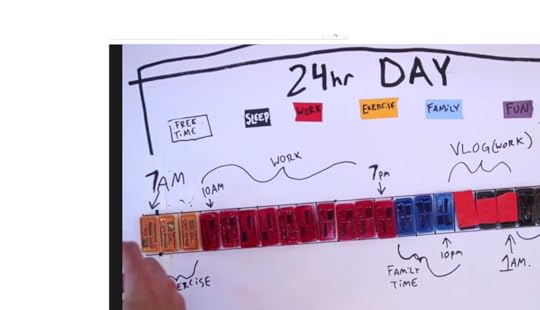
My guess is that this is a bit exaggerated, but the details here don’t matter. You and I can’t match our day to his day, and even if we could, it wouldn’t do us any good.
Instead, I would like to dive deeper into the details and ask some questions such as: Can I think like this? What if I arranged my day like dominos? What would that look like? Would I like that?
So I set out to answer those questions.
I discovered that when I think about things in a new way, I am able to solve problems I’ve been stuck on.
For example, if I missed a workout because I was busy with work, I used to just chalk it up as a loss. But I realized that I can “stack” a workout onto another part of my day. If I thought about hours at the end of the day, I noticed the best type of work I did.
Neistat’s schedule is different from my schedule, which is different from your schedule. Don’t feel you have to replicate what you see here. Instead, use this as inspiration to find a new way to think about your day.
What did I miss? How many things can you stack into your day?
The post How To Have 26 Hours In A 24 Hour Day. appeared first on Productivityist.


November 23, 2015
The Now Movement
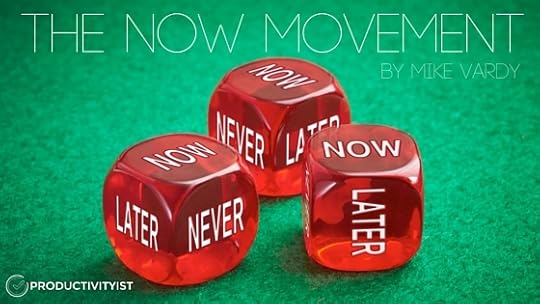
I’d normally reserve this kind of piece for The Productivityist Weekly, but I decided to send this out for all of the Productivityist audience to see because it just feels right to do so. So here goes…
I’ve been in the midst of a lot of deep work lately. Because of this, I’ve not been as active on social media and I’ve definitely let some of my blog writing slip (hence all of the content that was initially run first in The Productivityist Weekly landing on the blog as of late). At first, I felt bad about this. Now…not so much.
That’s because I have some really big things planned and I have been making measured progress on those things.
NOWvember was initially conceived to be a month where I delivered a ton of content for the audience here at Productivityist. The first iteration of this program didn’t go the way I’d planned. Instead of delivering the content, I’ve been creating it. I’ve been setting up the future of Productivityist in NOWvember rather than displaying the beginnings of that future. At first, I felt bad about this. Now…not so much.
That’s because I am setting myself up for what’s next, instead of putting myself out there in a way that isn’t congruent with where I want to go.
Derek Sivers recently unveiled what he dubbed his “/now page.” I love this idea. While we haven’t created one at Productivityist yet (because Productivityist isn’t just about me now – it’s much bigger than that) I did create one for myself right here. This /now page shares what I’m working on and also tells me what I’m supposed to be working on. It creates accountability and also ensures that my actions are in alignment with my goals. And it creates it now.
Now is such an interesting term. Now can be this very second or take up a much larger capacity, depending on perspective. Yet now doesn’t stick around…forever. It goes as quickly as it comes. It isn’t even really a state of time; it’s a state of being.
Right now I’m writing the first blog post I have written in a long time. In fact, it’s the first bit of personal writing I’ve done (outside of my daily journal) that I’ve done in over three weeks. At first, I felt bad about this. Now…not so much.
Why?
It’s because I’ve laid the groundwork in NOWvember for a better future for myself. A future of deeper work that can help even more people with their productivity problems and pitfalls. A future where I am more present than ever before – both at home and at work. A future where I am even more aligned with my values and vision of where I want to go and who I want to be.
And that future starts now.
I’m challenging all of you to start your own Now Movement. Start small, but start now. Whether it’s by the simple act of journaling for 5 minutes every day or by pairing your intentions with your attention even deeper. You can start doing one thing now that can lead to an even better now tomorrow – and it doesn’t take a herculean effort to do so. You already have the way. It just takes the will.
I want to hear your story. I want to help you make your Now Movement the best it can be. Email me at now@productivityist.com and share with me what you plan to do to make things better now.
The post The Now Movement appeared first on Productivityist.


CommentsLoved this, Mike. Couldn't have been more timely for me, as I'm ... by Laura McClellan
November 20, 2015
The Productivityist Podcast 66: A Doer Who Likes To Be with Michael Townsend Williams
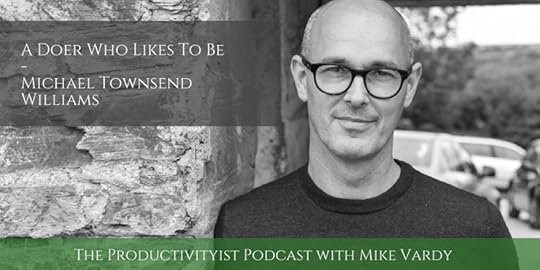
This episode of the podcast features a conversation with Michael Townsend Williams, who is known as “A doer who likes to be.” He’s the founder of Breathe Sync™ and the author of the book Do Breathe…and he’s a big believer in mindful productivity. We talk about that very subject, yoga, and a lot more. Enjoy!
Relevant Links
Stillworks
Getting Things Done with David Allen | The Productivityist Podcast
The DO Lectures | Michael Townsend Williams
Do Breathe by Michael Townsend Williams
Breathe Sync™
How I Organize Evernote: A Peek Inside My Personal System | Michael Hyatt
Things by Cultured Code
Clear by Realmac Software
Michael T Williams (@mtownsendw) | Twitter
Enjoy the podcast and want to help make it even better? Then support The Productivityist Podcast by becoming a patron! Click here to visit The Productivityist Podcast’s Patreon page and choose from a wide variety of perks – including monthly 20 minute coaching sessions with yours truly available only to Patreon supporters!
The post The Productivityist Podcast 66: A Doer Who Likes To Be with Michael Townsend Williams appeared first on Productivityist.


November 18, 2015
The Power Of A New Start

This is a guest post by Johan D’Haeseleer. His passion lies helping others grow in personal effectiveness by maximizing your time and maximizing your life. You can connect with him on his website here or on Twitter @johandhaeseleer.
Have you ever been asked the question “If you could start over—knowing what you know now—what would you do differently?”
Quite the question isn’t it.
Would you do everything over again, or would you take a different fork in the road?
When I hear people say, “I would do the same all over again.” I am often surprised. Haven’t they made any mistakes? Or do they want to make the same mistakes all over again?
In most cases, I have to face some lessons multiple times before I understand them correctly and before I implement those lessons into my life.
A Different Approach
One thing I would wish for is deeper insight in the area of personal effectiveness. How I use limited resources to achieve my goals remains a continuous task for me.
To become more effective, I test different approaches to find a shorter path often helps me change behavior. One form of procrastination which often feels noble is thinking that I need to know more. Most of the time knowledge—for me—is not the best approach.
Rather, it is in doing things differently and embracing change that I get different results.
It’s Time to Start Something New
Think about it: who has ever taught us to start well? No one.
If we want to start, we usually have to clean up the mistakes of our past. It always seems as if the past catches up with us or weighs us down.
Remember when you subscribed to that one magazine? You read it for a couple of months, and then you lost your interest in the topic. But at the end of your subscription, you have a new balance to pay.
This is a simple way you can restart now. You know you want to change, and simple decisions will help you build confidence to make the big decisions. Just cancel that subscription and move on to something else that interests you.
Starting With A Clean Slate
There is a lot of power when you have a fresh start. Not just a reboot or picking back up, but to start all over again. Start again from scratch.
With each new start, you have the opportunity to build a better version of yourself. And your past serves as the foundation.
Look around and see where you encounter this principle in your world in different ways.
Have you changed employers? Not just another job with the same employer, but when you go to work for a new employer and you can start with a clean slate.
When a football game starts, there are two zeros on the scoreboard. The results of the previous game have no importance anymore. With every new game, every team starts at the same starting point.
Create Your Ideal Week
Each week I start with a blank page to prepare my ideal week and I fill it with the priorities for the coming week.
But just taking this step of crafting my week is an absolute game changer.
When something does not line up with my week, I move it to the “incubation list.” This specific list is filled with things I’d like to do at some point in the future.
The truth is there are some activities that simply won’t fit in your life at this moment. But they can fit later.
This step makes my to-do list much more effective and gives me a chance to win.
I know I will lose if I try to do too much.
Do you give yourself a weekly chance to win your to-do list?
No? Then take a long look at your todo list.
Clear everything off that is not really important to you.
Go create a new one.
Give yourself a fresh start.
Do you have any suggestions for how you give yourself a fresh start? Please share in the comments.
The post The Power Of A New Start appeared first on Productivityist.


November 16, 2015
Less

Note from Mike: I’m in the midst of NOWvember planning so I’m offering up another post that was originally published in The Productivityist Weekly. Not signed up for the newsletter yet? Click here and you’ll get it delivered to your inbox every week and receive a copy of The Way of The Productivityist Manifesto absolutely FREE!
I’ve been doing a lot lately. Too much of a lot lately, actually.
I pride myself on being able to handle multiple things and yet not multitask. Josh Long and Drew Wilson call it being “multi-minded” in their book EXECUTE, and I like that idea. I’m definitely multi-minded, but I’m not into multitasking.
Even still, I need to do less. Because then I can do better.
Here’s something that my friend Patrick Rhone said on his now-defunct enough podcast:
“Life ends. Don’t wait to begin it.”
Which reminded me of another quote:
“In the end, it’s not the years in your life that count. It’s the life in your years.” – Abraham Lincoln
I’m not saying that I don’t think I’m doing what Lincoln suggests. But I also don’t think I’m leaving enough room as of late for that life to take place within my years.
I was having my regular coffee date with my pal Jim to break away from my usual “productivityist” space. Because of this, I was able to really hone in on what I really need to do now. I need to plan what’s next. Not do what’s next, but plan what’s next.
Why?
Because I have the awareness to plan, but not the energy to do.
The phrase “less is more” is one worth heeding. Less makes sense because it is more manageable and more focused. More is less manageable and less focussed.
Indeed, less really is more.
So I need to shift gears, and go from doing to planning – even if only for a short while in order to recharge my batteries. Then I can do better once that’s done. What I’ve done will still keep going (and bringing in income) and anything low energy that needs doing will get done.
But the big stuff — the stuff that will require a lot of energy, time, and space — won’t. At least not yet. When I’ve reduced my workload from more to less through proper planning, then it will get done.
And it will get done exceptionally well.
The post Less appeared first on Productivityist.


November 13, 2015
The Productivityist Podcast 65: Money and Minimalism with Cait Flanders
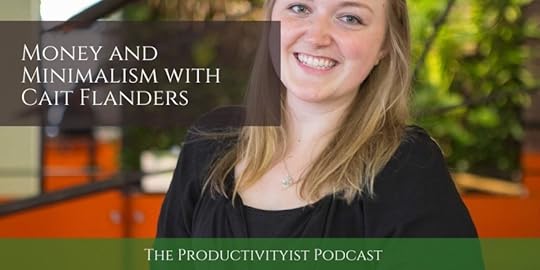
In this episode I speak with the woman behind Blonde on a Budget, Cait Flanders. We talk about managing money wisely, why she imposed a one year shopping ban on herself, how minimalism plays an important role in her life, and much more.
This episode of the podcast is brought to you by Transpose. Transpose is the smart, collaborative, and customizable way to manage information. Want to learn more? Check out Transpose today!
Relevant Links
Blonde on a Budget
The Mindful Budgeting Program
Why I Budget Monthly, Semi-Monthly and Weekly | Blonde on a Budget
The Year I Embraced Minimalism and Completed a Yearlong Shopping Ban | Blonde on a Budget
What We Appreciate Appreciates
Why I Focus on Simplicity (and How You Can Simplify Your Life in 2016) | Blonde on a Budget
Enjoy the podcast and want to help make it even better? Then become a patron The Productivityist Podcast through our Patreon campaign! Check out The Productivityist Podcast’s Patreon page and take a look at all of the perks – including regular Productivity Pack deliveries sent every January, May, and September – available only to 10 Patreon supporters in total…so take advantage of this perk while you can!
The post The Productivityist Podcast 65: Money and Minimalism with Cait Flanders appeared first on Productivityist.


November 11, 2015
How To Keep Doing It Right (More Often Than Not)

This piece was originally published in The Productivityist Weekly. Not signed up for the newsletter yet? Click here and you’ll get it delivered to your inbox every week and receive a copy of The Way of The Productivityist Manifesto absolutely FREE!
I’ve long said that it’s not about doing things – it’s about doing the right things. But this thought doesn’t stop there.
You also have to work hard to do the right things, well, right.
Doing whatever it is you want to do right takes time, but that time is largely spent honing the craft of doing those things really well. Malcolm Gladwell says it takes 10,000 hours to get it right. Josh Kaufman says the first 20 hours spent are the most critical in the process.
Regardless, doing things right is not something that can happen overnight.
I’m pretty good at doing things right, but I’m also still learning. Sometimes I misjudge the time it will take to make things happen and deliver the goods. There are times that I think I’ve taken on just the right amount of projects and it turns out I’ve taken on too many. Sometimes things out of my control occur, such as getting sick. Those things take me off course and are unavoidable. They definitely make doing things right more challenging.
So how can you keep doing it right more often than not? Here are two things you can start doing today to send you down the right path.
1. Keep it Quiet
I’ve written about how I turn things down, but saying no isn’t the only thing you need to do in order make sure you stay on course and get the right things done well. I’ve made the mistake of announcing my intention to do something before being able to give it the proper attention – and that can have some real consequences. Last summer, I made an announcement that I’d have a new look and feel to my website, but I ran into a serious problem. Because of other things I had on my plate, I didn’t have the capacity to redesign my website at a level I would be proud of. By publicly stating I was going to unveil a new website design, I put myself in a position to ship instead of deliver, and that’s not what I want to do. Learn from my mistake and consider how much is on your plate before you add more to it.
I discuss more about this in a past appearance on Erik Fisher’s Beyond The To-Do list podcast, which you can check out here.
2. Get Outside Perspective
If you are not sure you’re hitting all the right notes with your work and your life, ask someone you trust. That person can be a partner, a close friend, or a trusted colleague. Just make sure you ask them to be honest with you and to offer up any constructive criticism they may have. One of my old managers at Costco used to say to me that if I came to him with a problem that I should also have a solution in mind. Ask your confidant to do the same. An outside eye can be a real asset that gives you perspective that you just can’t get yourself. Why? Generally it’s because you are just too close to the situation. Sometimes it’s because you’re not being completely honest with yourself. It may even be that you just don’t have the knowledge, skill set, or wisdom to be able to decipher the concerns fully.
An eye and ear from the outside can be a real asset in helping you do things better. You may even want to consider a coach to help you in this manner. If you’re interested in productivity coaching, I’m more than happy to help out.
I’ve learned through experience – as well as trial and error – what makes doing it right more the rule than the exception. There are many factors that play into this, but if you take the two mentioned above and work at tackling those, you’ll find that you’ll do it right a lot more often than not.
The post How To Keep Doing It Right (More Often Than Not) appeared first on Productivityist.