August McLaughlin's Blog, page 64
April 22, 2013
Broken Mirrors: Lessons in Self-Perception
“Love is what we were born with. Fear is what we learned here.” – Marianne Williamson
I learned a lot about fear from anorexia. It’s a terrifying disease that robs the sufferer of the ability to think or feel as herself, lies to and for her and, if given the opportunity, swallows up her entire life. Not until I reached my own full recovery did I realize how horrific its scariest moments can truly be.
I was living in Paris, weeks before a loss of consciousness led me to diagnosis and proper care, and working as a model. One day while working out at a local gym, I became mesmerized by a woman’s legs. Reflected in the mirror on an adjacent wall, they were long and thin—so thin that her knees bulged out like burls on trees. I felt an odd mix of envy and concern as I watched, part wishing I had the genes or “skills” to obtain such a physique, part worried for her wellbeing. From the angle, I figured she was running several treadmills to my right, and longed to see the rest of her. Instead, I continued exercising, fixating on fat and calorie burn as per usual.
Once finished, I stepped off of the treadmill, walked toward the drinking fountain on the mirror-topped wall and spotted the woman again. Those legs! Those long, lithe legs… Drawing closer, I observed bruises on her knees, like mine—exactly like mine. I stopped walking. She stopped walking. I started again, as did she.
In a fraction of a second, reality struck—or my sickened version of it. The woman wasn’t thin at all. Her thighs bulged outward even more than her knocky knees, below a round, bloated abdomen. Approaching the mirror, I confirmed the now obvious. The woman wasn’t thin; she was just plain, chubby me.

Had I imagined her? Wished so hard to be her that she’d appeared? Deep in my gut, I knew, or at least suspected, that I’d watched my own legs, and that my “reality” wasn’t real at all. It was a sickening, frightening thought, but not as scary as I found my body. A glance down at my flesh assured me: Whether I’d seen her or not, there was zero chance that Ms. Thin had been me.
Self-perception is a powerful, potentially terrifying thing. I’m grateful that when I look in the mirror today, I no longer see shape, size and mistakes. I make it a point to peer into my eyes with respect, whether I feel at my physical best or not. Most often, I simply see me—a soul in a body I’ve learned to embrace.
I don’t know if I see myself physically as others do (does any woman?), but I’ve learned not to care. I want to feel and appear attractive, like most folks, but the scale no longer measures my self-worth. And my thoughts and energy fuel worthy pursuits. These are some of the gifts healing from an eating disorder can bring—a realm of self-acceptance I feel too few people reach.
At its core, anorexia isn’t about aesthetics, but a desperate need to achieve and succeed, to compensate for inadequacy, to maintain control amidst chaos or to simply disappear. Like all eating disorders, it’s a complicated illness, influenced heavily by cultural standards and the role models we have or lack. Sadly, these issues have grown universal, and reach far beyond the grasp of full-fledged disease.
I was reminded of my Paris/mirror experience last week, when a friend alerted me to a video produced by Dove. I won’t ruin it for those of you who haven’t seen it. I can only say WATCH IT! Please.  I have a feeling you’ll not only relate, but feel inspired.
A mere four percent of women worldwide deem themselves beautiful, according to Dove. I imagine that many of the remaining 96 percent of us aren’t merely shunning our looks when we look in the mirror, but our selves.
Throughout my recovery, I’d often look in the mirror and spout affirmations, whether I believed them in my heart or not. I love you, You’re beautiful, and so forth. Over time, they felt less like lies, and more like promises. Eventually, they felt true. I can’t help but wonder if most women would benefit from similar practices, not simply in regard to physical appearance, but life. Many of us see ourselves as “less than,” flawed or not fully capable. If we let them, doubt and insecurity can really hold us back.
I’m grateful to Dove for reminding me that no matter how wonderful others might perceive us, it matters little if we fail to see the wonder ourselves. Simply knowing that, reminding ourselves of that, can go a long way toward personal empowerment. If there’s one thing that help heal our broken “mirrors” and allow us to reach our full potential, having a blast in the process, I’m pretty sure it’s that.
What experiences have led you to ponder or shift your self-perception? What’s your take on the Dove experiment? I love hearing your thoughts. ♥



April 18, 2013
The 500 Hats of Blog-tholomew Cubbins: Reducing Social Media Stress
Have you ever read The 500 Hats of Bartholomew Cubbins? It’s a Dr. Seuss story, set in feudal times, featuring a poor boy named Bartholomew. One day while riding through a market, he removes his hat to abide by the law. Once he does, another hat appears in its place. The same thing happens repeatedly, each hat appearing more extravagant than the last, until eventually, the king offers him reprieve and riches for the spiffy 500th. Finally, the boy can breathe easy! The prize was worth the stress and confusion.
Bartholomew reminds me of modern-day writers. Each time we move forward in our careers, we expose more of ourselves, gaining riches and, very often, stress. Every achievement—finishing a draft, landing representation, publishing—seems to invite an additional part-time, or even full-time, job. But we still only have one head!
As some of you know, I first delved deep into social media engagement upon my agent’s suggestion. And holy schmoley, did it feel like a ton of work. I researched the various platforms like crazy and raced through Kristen Lamb’s books in two days, spending the little sleep I could manage in between dream-tweeting. I’m pretty sure I looked something like this:

Since then, I’ve learned ways to fit social media into my writing life without going padded-wall crazy. Over time, it’s felt less like enigmatic work, and more like an enjoyable blessing. I’m sure many of you can relate.
As with most aspects of our careers, it’s important to utilize social media practices that work for us individually. I thought I’d share practices that seem to work well for me, and invite you all to chime in with your fabulous thoughts.
The following habits help keep me productive and sane—pretty simple and straightforward:
1) Save social media for warmups, breaks and cool downs. Social media is for authors what stretching is for marathoners. Our blogs, Twitter and Facebook shouldn’t rule our time, or take precedence over our primary writing. Saving social media for downtime and breaks helps on multiple levels. Shifting gears helps keep our other brains and work fresh; engaging in social media can bring respite, support and fun.
2) Write your most important work when your brain works best. I went into detail on this topic in an earlier post. Basically, working hardest mentally during our “golden hour,” or when we tend to feel the sharpest and most creative allows us to make the most of our time. (I’d personally rather wake up at 5am and work like crazy until mid-day than write at night, when my brain is somewhat mushy.)
3) Take breaks from it ALL. This has been a tough one for me to master, but I’ve learned that working non-stop doesn’t help anything. We can be more productive, creative and efficient if we allow ourselves wiggle room and, you know, that thing called life. Music, friends and my dog help me stay semi-balanced. I’m super grateful for that.
4) Learn to say ‘no.’ This is a biggie. Saying ‘yes’ to too many other tasks or events says ‘no’ to writing time. While breaks and days off are invaluable, they won’t do much if we have scarce work-time left over. If you’re overextended, try cutting back, or ask others for help. If you feel guilty, remind yourself that self-care makes us more enjoyable to be around. (Totally true for me.)
5) Be yourself. Aiming for popularity rather than authenticity doesn’t work well on-line, in my opinion. If we view social media as an extension of ourselves, we don’t have to try so hard—which can stressful and time consuming. Since people tend to recognize and appreciate authenticity, being ourselves naturally attracts engagement and support. If you’re like most writers I know, you enjoy supporting others. So if for no other reason—of which there are many—do that, too.
6) Savor the path. Back to Bartholomew: the prize is in the bedazzled journey. If we enjoy the process, and aren’t crippled by fear or self-doubt, our treasures will only brighten. Sure, we might (okay, will) get criticized along the way. But if we take it all in stride, write because we love writing and remain gentle with ourselves, we’ll reap less stress and more joy. Every day may not be sparkly, but embracing the whole shebang can make it all worthwhile.
Related links you may find helpful:
5 Quick Facebook Tips for the Busy and Shy, by Gene Lempp
25 Things Writers Should Know About Social Media, by Chuck Wendig
I is for Introvert: How Do You Know if You’re an Introvert or an Extrovert? (and how it affects blogging), by Jenny Hansen
Have you found ways to manage social media without feeling stressed or lost for time? What works best for you?


April 15, 2013
Kissing: Firsts and Fabulousness
Did you know that our lips hold 100 times as many nerves as our fingertips? This is one reason that kissing before, during and after sex can be intensely gratifying, says sex pro., Krista Bloom PhD. Kissing can also be nerve-wracking, the first time around…

With my parents’ first kiss, my dad apparently missed—the result of nerves plus a foot-plus height difference. A friend of mine accidentally bit a guy (I’m not kidding). My first gooey-licious, tongue-explorative kiss took place not in the most likely of contexts. I was a sophomore in high school, and had just landed my first lead in a musical—Sargeant Sarah Brown, in Guys and Dolls. Moments after spotting my name on the cast list, a self-proclaimed coolio senior spoke up from behind me.
“You’ll have kissing scenes. Have you even kissed anyone before?”
“Of course,” I told her, aiming for nonchalance.
Only I hadn’t, unless you count my first husband, Brandon. At the ripe young age of four, we donned dandelion rings and wed in my backyard before a congregation of teddy bears. From the little I’d gleaned from soap operas, I knew that hot couples kissed. So I read books to him, making him peck me at the ends of sentences. This grownup lip-lock fiasco was a whole different story. Would all I’d learned from Teen magazine pay off?
“Sky,” the male lead, and I wouldn’t smooch until the last week of rehearsals. Too slowly and soon, it arrived. Palms sweating and nerves buzzing like fireflies on Red Bull, I decided to simply go for it. RAR!
And did I. Ever. I charged at Sky, then plunged my tongue into his mouth as though searching for lost treasure. He nearly fell over.
“Sorry. Was that okay?” I asked.
“Uh… yeah.”
I didn’t realize until after the play ended just how overblown my smooches were. While watching the video of our production at a cast party, everyone burst into giggles. As the camera zoomed in on our (my very) first kiss, we all saw a whole lot of my tongue. Apparently stage kisses are usually more, shall we say, surface-level—particularly in high school theater.
I still don’t know if my cast-mates knew that those were my first sensual kisses, but they sure delighted in teasing us thereafter. My embarrassment was extremely short-lived. I mean, talk about awesome practice! Practice I cherished for six performances, and have looked back on, laughing, since. Kissing has since remained one of my all-time favorite hobbies. I’m undoubtedly far from alone.
More fun facts about kissing:

1. When we French kiss, our sex hormone levels rise, according to a University of Albany study, revving our libido.
2. Kissing matters more to women, says an eHarmony study; we’re twice less likely to have sex with a bad kisser than men.
3. And yet, 40 percent of men say that a long, steamy kiss will get them immediately ready for sex, according to a 2009 Cosmo poll. So if you’re in the mood and your guy isn’t, consider starting there. (Thirty percent prefer crotch-grabbing, in case you were wondering.)
4. Kissing helps us determine compatibility. “At the moment of the kiss, there are hard-wired mechanisms that assess health, reproductive status and genetic compatibility,” says Gordon G. Gallup Jr., a professor of evolutionary psychology in Albany, New York. “Therefore, what happens during that first kiss can be a make-or-break proposition.”
5. Kissing relaxes us, by boosting our levels of feel-good chemicals oxytocin and endorphins. When our tongues tangle, our dopamine levels rise, according to a Woman’s Day report, increasing feelings of romantic attachment. (Yum.)
What was your first kiss like? What about your best? Or worst? Would you have sex with a bad kisser?
For more #GirlBoner fun, join me on Twitter and the new GB Facebook page.


April 11, 2013
My Thriller and Folk Tunes: Gifts For You
“What do you want to be when you grow up?” Do you remember the first time you were asked that? And your answer?
I do. I was in the kindergarten when my teacher, Mrs. Webster, asked us to draw the answer. I sketched a smiling, yellow-haired girl, clutching a microphone. I’m not even sure why—though I did have a thing for Barbie and the Rockers’ mega-hit “Born with a Mic In Your Hand.” And, I still have a thing for microphones…

It’s kind of a sickness.
Regardless, the idea of using my voice has stuck with me through many shifted dreams and career paths. Now that I’m a writer, I feel as though some part of me knew where I was headed all along.
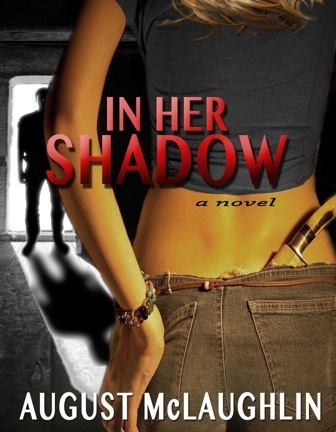
Since music is so precious to me, and my songwriting long preceded my book-writing, I’ve decided to give away MP3s of a couple of my originals. Why now? Because the Kindle version of my novel, IN HER SHADOW, is FREE today through Saturday. I’d love your support, if you’re so willing.
Here’s how you can participate:
1) Download IN HER SHADOW for Kindle today or tomorrow, and/or gift it to someone else. You can also purchase the paperback, which is currently discounted: $12.95, instead of $13.95.
2) Email a copy of your purchase confirmation(s) to: august at augustmclaughlin dot com
3) For one download/purchase, you’ll receive my song, “Cinderella.” For two downloads/purchases, you’ll receive “Cinderella” and “Solitude (Mr. Ground) – LIVE.”
You can also Tweet this giveaway event to your friends and/or post it on Facebook. Tag me, and I’ll add your name to a drawing for a $20 Amazon.com gift card. Feel free to use the sample tweet below, make it your own, or simply share my blog link.
Psych thriller IN HER SHADOW is #FREE on #Kindle – 3 days only: http://www.amazon.com/In-Her-Shadow-ebook/dp/B00APOODTA/ @AugstMcLaughlin
Easy, right? Thanks in advance for any support you’re inclined to share.
What did you first want to be when you grew up? Do you have more than one creative outlet? What projects are your working on or promoting? I’d love to cheer you on. ♥


April 9, 2013
Living Well to Write Well When Feeling @%$#-y
Illness is part of wellness, and strikes all of us on occasion. If only we could choose the timing…

I caught a nasty bug last week, while up against a tight deadline. Like many writers, I have multiple work-streams and projects ongoing. The assignment plunked down like an elephant on that pile.
Some years ago, I would have worked my butt off, eaten low-cal foods and hit the gym while sick. I’m so glad I’ve learned since then. I now appreciate the fact that food fuels the body and brain, and that during sickness, it needs ample glucose. Since we only have one source of glucose (carbohydrates), eating enough (if possible) and at regular time intervals is vital. So is rest, since glucose also fuels activity. While enduring illness or injury, our glucose should fuel recovery instead.
Rather than fight the virus with stubborn ignorance, I hit the pause button. For the first day, I barely moved from the sofa—sans laptop—other than to grab food and such. The next day, fueled up with rest and nourishment, I completed the assignment. While it may not have been my greatest work, it turned out significantly better than it would have, practicing my former habits.
Back-flat on the sofa afterward, I couldn’t help but marvel at the way our brains and bodies work. They not only respond to self-nurturing, but help and heal themselves—given the proper TLC. (I don’t know about you, but that seems super power-esque to me.)
The experience reminded me of a few things. First, the work we do as writers takes a lot of energy. Second, the healthy habits needed to overcome illness promote writing health (sharp brain function, productivity and creativity) as well. And third, we can’t starve away illnesses, regardless of what old adages say.
If you’re feeling under-the-weather, or simply bogged down by the pressures of a hectic life, you may find the following tips useful. They’re far from revolutionary, but guess what. They work!  If you’re like me, you can use the occasional reminder.
Living Well to Write Well When Feeling &%^#-y
1. Try to get enough sleep. I can hear some of you groaning. This isn’t my strong suit, either. But sharp thinking and creativity are some of the first things to go when we’re sleep deprived. The key, I feel, is trying to stick to a healthy sleep routine, and allowing time for our brain and body to decompress before bed. (This means turning off light-up everythings.) A positive sleep environment—dark and comfortable—also helps.
2. Eat well. In general, this means eating balanced meals and snacks at reasonable time intervals, and emphasizing whole, natural foods. Remember, the brain needs more carbohydrates than any other nutrient. Rather than skimp on carbs, emphasize healthy sources, such as whole grains, vegetables and fruit. Lean protein sources, like fish and legumes, and essential fat sources, such as nuts and seeds, promote positive brain function in other ways. We should also limit processed and low-nutrient food and avoid dieting; both can damage our work and wellness.
3. Balance rest with activity. When we’re ill, easing up on all activity is important. If you’re up against a deadline or have other obstacles tinkering with your rest, short breaks are better than none. Ask for more time or for help. (We may seem super-human, but…) Even when we aren’t sick, working our typing fingers into the grindstone 24/7 does little to help our work quality or health. When we’re well enough, routine exercise is important.
4. Breathe. Stress and illness can cause our bodies to tense up, disrupting breathing. Regardless of ailments, we women often suck our bellies in, attempting to appear thinner. This makes proper breathing near impossible. Pausing to inhale and exhale slowly—using our diaphragm, not our chest or shoulders—can help reduce stress, increase energy levels and enhance healing. Breathing exercises can also help.
5. Seek support. As writers, many of us are used to going it alone. We not only run the ship, but build it, clean it, repair it, renovate it, market it, Tweet about it and—you get the picture. Learning to rely on others and cutting ourselves some slack may not come naturally, but it can be lifesaving, particularly when we’re down and out. There’s no shame in asking, and plentiful reward in self-care.
Do you work or rest your way through illness? Which of these tips have you mastered? Which are works-in-progress? Happy to put on my nutritionist cap if you have food-related questions. (Yep, I love you that much!)


April 4, 2013
#GirlBoner Bonus: 5 Steps to Stronger Orgasms
“You have your way. I have my way. As for the right way, the correct way, and the only way, it does not exist.” – Friedrich Nietzsche
Put another way, there’s “no wrong way to eat a Reese’s.” And another, there’s no one, best or right way for women to orgasm. The important thing, in my opinion, is that we do.

As I explained in an earlier post, I don’t recall my first orgasm, but I do remember when they grew fabulously frequent and intense. I’d been studying female sexuality and working hard to release long-held negative beliefs about myself. Speaking openly about sex affected me like Viagra on Viagra. In fact, I may have first said the term Girl Boner out loud back then. (My incredibly old-fashioned boyfriend wasn’t exactly amused; that’s another story.)
After breaking up with BF #1—let’s call him “Max”—I started dating someone less old-fashioned. “Kevin,” the tattooed rocker by night, telephone technician by day, welcomed me and my Girl Boner with open arms—among other parts. I must’ve been overly enthused, as the first few times we were about to be intimate, his eyes would widen and he’d cower slightly, as though facing a gigantic, ready-to-pounce cheetah.

Okay, not quite like that.
Then he’d release this amused laugh, ease back onto the bed and just lie there. Sure, he kissed me back, and may have held onto my arms or back at some point, but for the most part, Kevin lay naked on his back, his raging erection in firm salute as I rode, and rode, and…rode. Unlike Max, he didn’t mind if I made ample noise (though I can’t speak for my neighbors), which only intensified matters. Throughout our relationship, we had sex at random times during the day, always with me as pilot. It seemed somewhat selfish, but whenever I asked him if he wanted to try something new, he claimed he was perfectly content. And so, in regards to the bedroom, he remained my living, breathing sex toy. Also like toys, he helped me learn a great deal about my body and sexuality.
According to numerous sex experts, the protocol Kevin and I shared set the stage for intense orgasms. (I can vouch for that.) If you’re lacking in the big O department, you may want to consider the following:
1. Do it before you’re exhausted. Just before nightly sleep is a common time to have sex, but it isn’t the best time, according to Laura Mintz, PhD, author of A Tired Woman’s Guide to Passionate Sex. By the day’s end, we’re typically tired and, if we’ve had a hectic day, high in the stress hormone cortisol. Cortisol excesses can halt our sex drive. Women and men have higher levels of testosterone and feel-good brain chemicals during morning hours. So take advantage of those AM woodies! Afternoon and early evening are also great sex and orgasm times, and may even help facilitate restfulness and quality sleep later on.
2. Treat him like a sex object (sort of). This doesn’t mean objectifying, exploiting or ignoring him, but being a bit more selfish. While I personally believe that valuing a partner’s pleasure is vital, it can go too far, says Joel Block, PhD, coauthor of Sex Comes First. “Women spend too much energy worrying about turning a guy on,” he told Cosmo. If you find yourself stuck on your own “flaws” or other insecurities, try ogling his body and imagining the pleasure it can bring. Welcome saucy thoughts and inclinations. Act on them. It isn’t selfish if it pleases you both. Fixating on our insecurities, however, can be.
3. Make joyful noise! Woo hoo! I just knew shutting up wasn’t useful. Super secret stealth sex, also hot. But by withholding sound, we tense up our bodies, lowering our chances of satisfaction and climax. Heavy breathing, sighing and moaning during sex stimulate our central nervous system, says Mintz. Talking during sex has a similar effect, and allows for communication. (He/she may not know what is or isn’t working if we don’t speak up.)
4. Don’t stop until you come. It always seems lame to me in TV and movies when the man orgasms then turns over, snoring, beside an unsatisfied woman. If he finishes first and you want to orgasm (and I hope you do), keep going. Unless he has narcolepsy, I doubt ejaculating functions like intravenous Ambien. Mintz suggests making it clear that your needs are important; otherwise, we risk not only dissatisfaction, but resentment. Ask him to help you orgasm. Or hand him a dildo or vibrator.
5. Don’t rush it. Here’s where Kevin and I were lacking, unless you consider staring at each other over dinner foreplay. Women typically require 10 to 20 minutes of stimulation to be aroused enough for orgasm, says Ian Kerner, PhD, author of She Comes First. And a little time benefits both parties. “Seeing a woman aroused boosts his testosterone levels, turning him on even more,” Kerner explains. To further enhance foreplay, or if you find yourself not maintaining or increasing personal arousal, try fantasizing. Mid-sex fantasies increase arousal, making us more orgasm-ready.
We’ll be back on our usual Girl Boner Monday schedule shortly, with more orgasm glory. I hope you’ll stay tuned!
Have you ever had a partner like Kevin—or another partner who helped you learn about your O nature? Which orgasm step most resonates with you? Any favorite tips to add? I love hearing from you. ♥


April 1, 2013
Gorilla Love: When April Fools’ Day Goes Right-ish
“If I get married, I want to be very married.” — Audrey Hepburn

Audrey may’ve stolen that quote from my mom.
I was seven when my parents celebrated 15 years of marriage. If we’d already been blessed with my youngest sister Cora, the ever-wise now psychologist, we might have celebrated the milestone somewhat differently. (Cora is skilled at spotting fires before they’ve been set.)
My three siblings and I had decided that year 15, being a huge, fancy-sounding number, was worthy of an equally huge and fancy party. Pooling together any allowance we hadn’t yet spent and coins from between couch cushions, we came up with enough money to fund what we deemed the perfect gift. I mean, who wouldn’t want a surprise party, embellished with a singing, hula-dancing gorilla? Two examples spring immediately to mind: my humble, attention-not-preferred parents.
While some folks averse to such surprises might flee at the sight of Luau Layla and her illustrious leis, or shun the party-throwers thereafter, my parents smiled, blushed and indulged—anything for their kidlets. They are still the same darn way. Luckily, they also share a great sense of humor.
When my dad celebrated his 60th birthday two years ago, my brother Aaron and I decided to fly in and, with our Minnesota-residing siblings, recreate that beloved event—only this time, with Aaron and I as the gorillas. (Some lessons are learned, apparently; others, ignored.) And play, we did. From keeping the two of us hidden at our sisters’ places to scoping out Craig’s List and costume shops for gorilla suits after the “suits” I ordered from Amazon turned out to be gorilla torsos—over-the-shoulder fur featuring plump, rubber nipples—the five of us made like the children we used to be, and probably remain, to an extent. Though we didn’t adorn Dad with flowers or force him and Mom to wiggle their hips before loved ones as Ms. Layla had, the blushing, appreciation and absence of “How could you?!?” were eerily similar.

Oh, how we’ve matured!
I’ve learned a great deal from my parents about love, respect, patience and perseverance. They’ve taught me to follow my heart, to treat others with kindness, to value togetherness over “things,” to celebrate music and concoct a mean batch of Indian curry. And though they’ve had their share of bumps along the way, as most of us have, they’ve never let go of each other or the bond that they share. As an adult, I’ve watched it grow and tighten, along with their individuality; two full-halves making a more wondrous whole. My mother is quick to call my dad her soulmate (and “hot lips,” but I won’t go there today), and my dad continues to romance her with flowers, cards and thoughtfully-planned dates. And even when particular offspring have made life chaotic challenging interesting, they’ve remained strong, as parents and a pair. Not a day has passed that any one of us kids hasn’t known that we are deeply loved.
Looking back on our gorilla fests, the original and the sequel, it’s clear to me that the ability to step out of the presumable comfort zone, laugh at life’s surprises and accept gifts, even when we feel slightly misunderstood, are pretty key to a lasting, happy marriage. Or perhaps it’s getting married in a snowstorm on April Fools’ Day, after getting locked out of the church. (Another true story. I imagine they were laughing then, too.)
For all of my curiosities about true love and marriage, I’ve no doubt that my parents have done it right.
Happy 41st anniversary, Mom and Dad! We promise to stick to jeans and t-shirts this year.
For my mom’s thoughts on marriage, check out my interview with her here.
What April Fools’ Day sticks out in your mind? Any anniversary hilarity to share? Do you regress as much as I do on the home front?


March 26, 2013
The Blurt Diary: Bralessness and Nipple Love
Do you ever sit down to write a particular thing and something entirely different pops out? (I’m not talking about nipples—yet.) That happens to me often, being a pantser, and to varying degrees. This post took on a blurt-style alien life form. (I plead jet lag.) Rather than trash or “normalize” it, I’ve decided to launch a new series that will appear at its own sporadic will. Welcome to my blurt diary…
Entry #1
I spent the greater part of the past week in Minnesota, and had a wonderful time. As I ease back into the “usual” (whatever that is) grind, I’d planned on sharing profound thoughts and words that struck me throughout the trip. And I probably will, soon. Today, however, I have bras on the brain. Here’s why:
I was at a cafe today, wearing my least comfortable bra. (It’s laundry day, so I made do.) As I squirmed about, one hand on my latte, the other on the digging-into-me strap, my friend Katie shot me a “go out in public much?” look. “I hate bras, especially this one,” I told her.
“So take it off,” she said.
So I did. With a swift move, I undid the clutch in the back and slipped it through out the bottom of my shirt then stuffed it in my purse—in all of three seconds. “Ah… Better.”
“You didn’t,” she said.
I flashed her the crumpled Hanes in my purse.
Her eyes widened. “How the heck did you do that? Must be a modeling trick.”
Everyone guesses that, I explained, but it’s more like the opposite. Growing up in a modest family and community, I was pretty shocked to learn that in the fashion world, most models simply strip. Sure, you might have a dressing room, but more often than not, numerous folks are nearby as you bare it all. Runway shows in particular leave little time for modesty. I learned this while being prepped for my first show in Minneapolis. My dresser, to my shock and horror, was Mrs. Bigsley—a woman from my parents’ church. Her head was inches away from my sheer panties when she looked up and introduced herself: “I just saw them at Prayer Circle the other day!”
AGH! I’m sure I spoke back, but I don’t recall the conversation. How can one chit chat comfortably when someone who recites scripture with your parents is all over your nakedness, arranging your nylons and taping your bra in place?!? I got over the strip-down eventually. And a few months later, after I’d moved from Minneapolis to New York, I was grateful that Mrs. Bigsley had de-virginized me.
One of my first jobs in the Big Apple made me blush like one—the male models, worse so. In the name of Calvin Klein undies, 12 of us stood smashed together in a tiny area, the six guy models behind us gals. We all wore only bottoms, and the guys’ hands were our “bras.” To maintain the underwear, um, smoothness, cold fans blew on the guys. (Perhaps that’s why the males seemed the least comfortable.)
Back then, my breasts had shrunken down with my body size. And regardless, I’ve always had muscular breasts—more medium than large, making bralessness easy. The undergarments soon became a needless accessory, and an article of clothing seldom seen on shoot sets. I wish that that had carried over into all circles in my life. If I were to show up at a professional event sans bra, it’s easy to guess where eyes would land—not because female nipples are bad or unusual (obviously), but viewed by our society as risque and off-limits in public.

This more recent shot was featured in a Brazilian mag. Sad that I’m inclined to cover parts that Brazilians celebrate.
I was reminded today of how liberating and refreshing it is bid the boob-holster farewell. Sometimes, it’s necessary. (Just ask Natalie Hartford.) I’ve yet to find a bra that fits so wonderfully that my not-huge breasts are happier with than without. Honestly, what’s the point of nipple covers? Somewhere along the line I developed sneaky ways to to away with them as needed. If our culture wasn’t so dang nipple phobic, I’d go sans brassiere all the time.
I realize that bras are essential for some and for most women at particular times. I just wonder why we have to be so darn nipple conscious. Nipples, to me, are beautiful—mens’ and womens’. I love their shape, their sensitivity, the way they enlarge and harden when aroused. I love seeing and feeling them through shirts—um, not in a stalker/gawker way.
For those of you who agree with me to some extent, prepare to be aggravated. State reps in North Carolina introduced a bill this year that would make female nipple exposure a criminal offense, worthy of jail time. With the exception of nursing mothers, the proposed bill would make it a felony to expose “external organs of sex and of excretion, including the nipple, or any portion of the areola, of the human female breast.”
I’m not suggesting that women should run around topless, but I do think that a bit of nipple respect is in order.
How do you feel about bras? What about nipples? Do your breasts long for breathing room as much as mine do? Ever removed uncomfy underwear in public? How do you feel about the nipple bill in North Carolina? All respectful blurts welcome.


March 20, 2013
Blogging Commandments: What Works for Me
I’ve attended a variety of writing events over the past few months, and have engaged in some interesting discussions on blogging. To blog or not to blog? Is it effective for authors? What works and what doesn’t? These are just a few of the common blog-related questions writers face—questions with no simple or all encompassing answers.

Okay, so that’s only part of it…
Through research and experience, we can find those answers for ourselves. My roughly 1.5 years of blogging has taught me a heck of a lot—both through manning my own blog and learning from fabulous others. Toward that end, I thought I’d share some of the guidelines that tend to work well for me.
My 7 Commandments of Blogging
1. Thou shalt never prioritize blogging over book writing.
Like many writers, I started blogging to build my author platform (and because my agent suggested I do). I’ve enjoyed many unexpected benefits since—fabulous friendships, fun social media interaction and more. These perks could easily take up most of my time and energy if I let them. I might even have fun in the process. But before long, I’d be sad—deeply sad, because writing (stories, namely) is my heart and, quite often, my sanity. And an ungratified heart hurts, big time. Then there’s that little thing called money; without book and article writing, I wouldn’t have any. Unless we want to be bloggers who write manuscripts on the side, working blogging into a healthy writing lifestyle that supports our craft first and foremost is vital. If you struggle with social media time-suck, save it for warmups, cool-downs and breaks. (Think of it as snacks and dessert, versus the fruits, veggies and entree.)
2. Thou shalt aim for consistency.
I’m a pantser through and through. I don’t outline, loathe schedules and use calendars primarily as wall decor. And yet, blogging if or when the spirit moves me seems unwise.* I feel that my readers deserve more than that. Plus, posting because we’re committed to doing so—not necessarily inspired—builds writer-strength. We work that get-it-done muscle, and learn that inspiration will come if we simply sit our butts down and write. I aim for two posts per week, generally on Mondays and Thursdays, but without holding myself to either with an iron fist. (Again, book work comes first.)
*I know several awesome bloggers who don’t use even loose posting schedules. If consistent inconsistency works for you, so be it! The key is finding what works for us.
3. Thou shalt write what you’re compelled to.
This might sound somewhat contrary to the above, but it isn’t. (What if we’re not compelled to write a post by post day?) We’re all compelled to discuss, share or explore ideas. It’s part of what makes us writers. Rather than write about something that seems marketable or stats-boosting, or because it’s easy—i.e., we’re expert in it, I prefer to write with my heart and gut. It lends itself to stronger, more enjoyable-to-write and share posts, and reader appreciation; they can sense authenticity and complacency.
4. Thou shalt listen to and respect your readers.
I’ve been happily surprised by how helpful readers can be in terms of shaping my content and helping me grow as a writer. Interacting with readers via blog comments and elsewhere on social media shows that we care, and provides an opportunity to understand what strikes them most. Such engagement may also reveal related topics or angles they’d like explored further—which may compel you to do so. If you want to know more about your readers, ask questions. The more engagement, the better, in my opinion.
5. Thou shalt support other bloggers and writers.
Supporting others benefits us in a variety of ways. First, it feels good. (It’s far more fun to tell Twitter and Facebook friends that they’ve “got to read this post/book!” when it’s someone else’s post/book—not ours.) Second, bloggers we support often reciprocate—though I don’t think that this should be the primary reason behind liking, commenting and sharing; give to give. Some bloggers take such support even further. Gene Lempp and Reetta Raitanen post thoughtful mashups on their blogs. Susie Lindau throws awesome promote-your-stuff/mingle with other bloggers parties. It doesn’t have to be overly time consuming, and can be a lot of fun. In addition to the support factor, hosting mashups, guest bloggers and author interviews can save us time.
6. Thou shalt proof read.
Going back through some of my early posts can be horrifying nauseating offsetting, as I haven’t always taken time to proofread my posts. (Shhh!) It’s ironic, as many of us start out nervous about blogging because we’re used to perfecting our other work. But how can we perfect blog posts and do everything else? When I started out, I tried to fit too much in too soon. “Perfection” isn’t necessary, but making sure we’ve made a solid effort at fixing grammatical errors and the like is important. For particularly important posts, I often ask my dear friend—and skilled writer/editor—Bill Parker for his expert once over. (Not sure I’ve met anyone who can read and spot typos so quickly.) Blog posts are meant to be more casual than our other writing, but they go out into the world, and we never know who might see it. We should aim to put our best blogging foot forward. If that means cutting back from three to two posts per week or delaying a post a day or two, as I have, do it.
7. Thou shalt have fun. Blogging because we feel we should, yet loathe it, isn’t likely to breed success in any arena of our lives. If it isn’t fun, or as fun as you’d like it to be, consider changing things up. I’m pretty sure I could build a sizable blogging platform in the realm of nutrition, but I’m a health writer. Endless posts about what I’m already covering elsewhere would feel like needless homework, or gratuitous “I just want higher stats!” posts. So, I cover food-related topics when I’m compelled to (sick of that word yet???). Otherwise I stick to topics that light my fire, like Girl Boners, music and thrillers.
Speaking of fun, if you haven’t checked out social media jedi master Kristen Lamb’s blog and books, what rock have you been hiding under? you should. I thought Twitter was the lamest thing since size 0 jeans until I read her stuff. Be forewarned—it’s addictive. If you’re brand spankin’ new to blogging, check out Ginger Calem’s Building a Blog in April. She’ll help you up onto your feet, and one of her lucky graduates will win a spot in Kristen’s more advanced blogging class through WANA International. For more from yours truly, and many other authors and speakers, I hope you’ll consider attending the OWFI Conference in May. I’ll be sharing insight on blogging for building an author platform (without going crazy!), and a teaching a workshop on hybrid author-hood, or going indie with an agent. (Excited!)
We’ve got to do what works best for us if we want to grow and thrive as writers. The above guidelines have helped me expand my writing, gained me some pretty nifty freelance and speaking gigs, and helped nurture my feeble “Will anyone read this?!?” blog into one with a pretty solid and steadily growing readership. The rest of my personal blogging growth (and I’m sure many of you can relate) boils down to trial and error, instinct and simply keeping on. And while I don’t have a specified breakdown, I have no doubt that my online platform has played a role in my book sales—a valuable one. I hope that wherever you are in your journey, you’ll continually find what rocks your writing world.
Do any of these resonate with you? What similar or vastly different commandments make your list? Any questions, challenges or related thoughts to share?


March 17, 2013
Tunes that Turn Us On
“Music gives a soul to the universe, wings to the mind, flight to the imagination
and life to everything.” — Plato

As many of you know, here at Girl Boner Central we believe that sexuality goes far beyond what happens between the proverbial sheets, and is far more prevalent in the air we breathe and our connectedness with others than what we see in pop culture. Every once in a while, however, a film comes along that seems to truly capture sensuality, or parts of it. I saw one the other day that did so in the most unconventional—and controversial—of ways.
In Stoker, a psychological thriller written by Wentworth Miller, the teenage India (played by Mia Wasikowska) grapples with the sudden and troubling presence of an uncle she never knew existed, just after her father’s death. In one of the most riveting scenes, India plays a piano duet with her uncle. As they play, palpable emotions rise up in India, her fervor crescendoing with the electrified song. It is, in a word, orgasmic. Really orgasmic.
What I loved about the scene wasn’t the familial sexual synergy, of course, but all that was felt and conveyed through music. It was more sexual than most nude-on-nude scenes I’ve seen, though no clothes were shed, and more sensual than many romance flicks, though their lips never touched. In fact, the scene barely involved the uncle at all. Through the ivory keys, India allows herself to be swept up into a state of hungry euphoria, perhaps discovering parts of herself for the first time.
I’ve often thought that music is the closest we can get to sex without having it. Melodies, harmonies, rhythms and lyrics can take us to entirely different realms, convey ideas and emotions where words might fail and touch places within us that can seem unreachable. I’m not ashamed to admit that Adele’s voice has tickled my Girl Boner, or that live concerts have turned me on equally or more than the ex-boyfriends I shared them with. Apparently I’m not alone.
A recent Spotify study I mentioned in a previous post showed that music is 40 percent more sexually stimulating than touch. The study involved thousands adults ages 18 to 91, about half women, half men. Without scrolling down or Googling, guess what the top sexually-stimulating music choice was for men and women.
A) Dirty Dancing soundtrack
B) Watermark, Enya
C) Sexual Healing, Marvin Gaye
D) I’m Too Sexy, Right Said Fred
E) Criminal, Fiona Apple
F) Here With Me, Dido
G) Who Let The Dogs Out?, Baha Men

The answer is…A! Are you as surprised as I was? If my husband blasted Dirty Dancing mid-foreplay, I might burst out laughing. Then again, I do see the GB potential in She’s Like the Wind, the most popular track in the study. Otherwise, I’d probably prefer Dido or Fiona.
Sexual Healing and Criminal both made the Cosmo’s “Best Songs to Have Sex To” list, along with R&B hits Cockiness, by Rihanna, and Usher’s Love is in This Club, and acoustic rock numbers, like Dave Matthews Band’s Crash Into Me. Other artists popular in the Spotify results include Ravel, The Righteous Brothers, Whitney Houston, Celine Dion and Aerosmith.
I suppose Girl Boner music functions like other aspects of sexuality. Personal preference plays a big role; what puts you in the mood might zap another’s, and vice versa. I also imagine that variety can help, by showing us what we and our partners enjoy and inspiring us to venture into new terrain. And no music, tantalizing or terrible, can make or break a sex life. Music is one of many potentially valuable tools.
If it works, use it! How funny/awesome would it be if a particular song made us boogie and strip? Or prowl around, arched and purring like Cat Woman? No song can likely make us do anything, obviously—even under hypnosis, unless we want that result. But I definitely believe that music can help us slip into more gratifying eroticism and rev good sex up to mind-blowing intensity.
This sexy music chit chat inspired another Ally McBeal flashback. If Barry White can boost “The Biscuit’s” confidence…
What songs illuminate your GB? Do you use music often during sex? Does it turn you on in general? I love hearing your respectful thoughts, so share, share away!