
Steven Colborne's Blog, page 99
March 15, 2015
A response to Richard Dawkins on the absurdity of the crucifiction
There’s a lot that I don’t agree with Richard Dawkins about. But he once said this in an interview:
“It’s a horrible idea that God, this paragon of wisdom and knowledge and power, couldn’t think of a better way to forgive us our sins than to come down to Earth in his alter ego as his son and have himself hideously tortured and executed so that he could forgive himself.”
This strikes a chord with me and seems to encapsulate something rather absurd about the Christian faith. I think the central point here is one that I discuss often in my books and on this blog – the problem of free will. Christians might argue that in the act of Jesus’ crucifiction God is not forgiving himself but sinful human beings.
When Dawkins talks about God ‘forgiving himself’, the implication is that God is in control of sin and therefore that we don’t have free will, which is also what I believe. If we don’t have free will then the whole notion of forgiveness is absurd, because human beings can have done nothing freely that would need forgiving. In this light the story of the crucifiction is very strange indeed.
The reason why I don’t believe we have free will is because I believe in a God who is omnipotent, omniscient, and omnipresent. Everything that exists is a part of God, and this means that God must be in control of everything that happens, including what is referred to as ‘sin’.
The following quote from Epicurus is apposite here:
Is God willing to prevent evil, but not able?
Then he is not omnipotent.
Is he able, but not willing?
Then he is malevolent.
Is he both able, and willing?
Then whence cometh evil?
Is he neither able nor willing?
Then why call him God.
My response to Epicurus would be that God is able to prevent evil, but not willing. But I disagree that this necessarily makes God malevolent. It may be that God has very good reasons for creating evil in the world. Perhaps, if God himself suffers terribly, then He creates evil to give us a taste of what ultimate reality is like for him. In what way does God suffer? I have explored that question here.
In summary, then, Richard Dawkins has highlighted that if God is in control of our existence (as I believe He is), the story of human redemption through Jesus’ crucifiction makes very little sense.
What do you think about the quote from Richard Dawkins?
Is God responsible for sin?


February 20, 2015
Afraid of Death, Terrified of Suffering
When I was a Christian I had great faith that there would be a place in heaven waiting for me when I died. This faith gave me the confidence to live more freely and fearlessly. There are many things I miss about being a Christian, and this confidence in a blissful afterlife is one of them.
The reason I couldn’t continue being a Christian is because I found deep flaws in the theology of the church (explained in detail in my book Ultimate Truth). I don’t believe in free will. Instead, I believe God is actively in control of everything that happens in the universe. This means ideas like sin, judgment, and the devil, make no sense to me. These are deeply significant ideas and problems that I could not overcome, even after lengthy discussions with Christian friends and pastors and priests. I simply had to leave the faith and live with my new understanding.
Since I have turned away from Christianity, the problem of death has become a little more complex. These days, despite extensive exploration of different faith groups, I do not associate myself with any particular religion. So there are no scriptures to comfort me and no pastors to tell me how to live in order to achieve that great prize of Christian faith – a place in heaven.
I know there is a God and I believe there will be an afterlife for everyone, regardless of their beliefs. I believe this because my intuition tells me consciousness, by it’s very nature, is eternal. It is impossible to not exist. There has never been a time when I haven’t existed, and there will never be an ending to my existence. Instead, there are simply transitions into different states. I believe this because we are all expressions of God, and part of God’s nature is existence. It is impossible for God (and therefore us) to stop existing.
Living for eternity seems appealing but what really frightens me is suffering. I am frightened of suffering whether it be in this life or during the event of death or in the afterlife. Believing as I do that God is in control of all, I am constantly and fervently praying and reaching out to God as I desperately don’t want to suffer hellish experiences. Through my spiritual journey and mental illness I have had a small taste of suffering, and I know how much worse things could be. I even believe hell is possible.
But having said all this I still have a good amount of hope. I believe that God is ultimately merciful and although He might give us a terrible taste of suffering, that suffering is always under control, and limited. Unlike many Christians, Muslims, and Jews, I believe that God is in control of all our suffering, and I explain why God might cause us to suffer here and in more depth in my book Ultimate Truth.
Death is to be feared, as the unknown is always frightening. But most fearful of all is suffering, as we live under the control of an infinitely powerful God who could drag us through hell if He so chose. I suggest that we all need to pray fervently to God for mercy, and to try to come to a deeper understanding of why it is that God causes us to suffer.


February 13, 2015
A response to Pope Francis on children
Speaking in St Peter’s Square recently, the pope made some comments that were rather controversial. He said, “A society with a greedy generation, that doesn’t want to surround itself with children, that considers them above all worrisome, a weight, a risk, is a depressed society. The choice to not have children is selfish. Life rejuvenates and acquires energy when it multiplies: It is enriched, not impoverished.”
I would take issue with the idea that deciding not to have children is selfish. There is lot to consider, and many people are not equipped for the huge responsibility that comes with having a child.
I have no children, and at this point in my life I have no intention of changing that. I have a serious mental health condition, and I need to focus on staying well and not ending up in hospital again. Contrary to the pope’s position, I feel that if I decided to have children, that would actually be more selfish than deciding not to. If I’m really thinking about the welfare of the child, I would have to argue that it’s unfair for me to become a father when I can’t necessarily offer the stability that a child needs.
The decision of whether or not to have a child is a very personal and complex one, and there are many factors to consider. I feel that giving the impression that it’s always good to have children is wrong.
What do you think?
Is it selfish to not have children?


February 12, 2015
Suffering, Death, and the Afterlife
When I was a Christian I had great faith that there would be a place in heaven waiting for me when I died. This faith gave me the confidence to live more freely and fearlessly. There are many things I miss about being a Christian, and this confidence in a blissful afterlife is one of them.
The reason I couldn’t continue being a Christian is because I found deep flaws in the theology of the church (explained in detail in my book Ultimate Truth). I don’t believe in free will. Instead, I believe God is actively in control of everything that happens in the universe. This means ideas like sin, judgment, and the devil, make no sense to me. These are deeply significant ideas and problems that I could not overcome, even after lengthy discussions with Christian friends and pastors and priests. I simply had to leave the faith and live with my new understanding.
Since I have turned away from Christianity, the problem of death has become a little more complex. These days, despite extensive exploration of different faith groups, I do not associate myself with any particular religion. So there are no scriptures to comfort me and no pastors to tell me how to live in order to achieve that great prize of Christian faith – a place in heaven.
I know there is a God and I believe there will be an afterlife for everyone, regardless of their beliefs. I believe this because my intuition tells me consciousness, by it’s very nature, is eternal. It is impossible to not exist. There has never been a time when I haven’t existed, and there will never be an ending to my existence. Instead, there are simply transitions into different states. I believe this because we are all expressions of God, and part of God’s nature is existence. It is impossible for God (and therefore us) to stop existing.
Living for eternity seems appealing but what really frightens me is suffering. I am frightened of suffering whether it be in this life or during the event of death or in the afterlife. Believing as I do that God is in control of all, I am constantly and fervently praying and reaching out to God as I desperately don’t want to suffer hellish experiences. Through my spiritual journey and mental illness I have had a small taste of suffering, and I know how much worse things could be. I even believe hell is possible.
But having said all this I still have a good amount of hope. I believe that God is ultimately merciful and although He might give us a terrible taste of suffering, that suffering is always under control, and limited. Unlike many Christians, Muslims, and Jews, I believe that God is in control of all our suffering, and I explain why God might cause us to suffer here and in more depth in my book Ultimate Truth.
Death is to be feared, as the unknown is always frightening. But most fearful of all is suffering, as we live under the control of an infinitely powerful God who could drag us through hell if He so chose. I suggest that we all need to pray fervently to God for mercy, and to try to come to a deeper understanding of why it is that God causes us to suffer.
February 8, 2015
A response to ‘Stephen Fry on God’
You may have seen a recent video clip that went viral in which Stephen Fry makes some very stark criticisms of God. I have embedded the clip below this article in case you haven’t seen it. In the clip Fry is answering the question of what he would say to God if he came face to face to with Him after death.
Fry responds by referencing the “theodicy” question, which simply put means “why would an all-powerful God permit (or create) suffering and evil?” Fry proceeds to give a couple of examples of terrible evils, before describing God as “utterly, utterly evil” and as “a capricious, mean-minded, stupid God, who creates a world which is so full of injustice and pain.”
I can sympathise with Stephen’s views, and the theodicy question is one that I have spent a lot of time pondering. It certainly seems as though there is horrendous suffering in the world, and if God is all-powerful, which I firmly believe He is, why does He create such suffering?
My response to Fry’s comments takes a bit of explaining, but bare with me and please consider seriously what I have to say. I believe that in order to answer the theodicy question we need to look to God’s own nature, and the way in which God may Himself suffer.
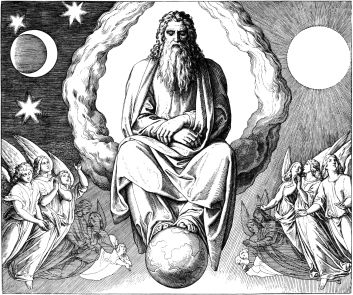 I believe there are two important ways in which God could be said to suffer. Firstly, I believe God is omnipresent. This means God is all that exists. We can expand on this and say, in ultimate terms, God is totally alone. I realise the world contains apparently separate beings, but if God is alone and omnipresent, then we are all expressions of God, controlled and guided by God. Life is like a puppet show, with God in control. I would argue that God creates such a diversity of creatures, including human beings with all our various beliefs and ways of life, because being supremely alone is a kind of suffering and created beings are as close as God can get to experiencing relationship. Might it be true that God experiences a hellish loneliness?
There is another way in which God could be said to suffer. An aspect of God’s nature is existence. This is an existence which is eternal; without beginning or end. God is necessarily alive. For God, there is never an ending. There is no option of suicide. There is no chance to ’switch off’. God must live endlessly even if He doesn’t want to. Why must that be like? Isn’t that a kind of hell?
So we can see that there are several ways in which God might experience hellish suffering or agony. In light of this, we might better understand why God creates such suffering in His creatures. Perhaps God wants to give us a taste of “the real thing”; of what ultimate reality is like for Him. If God experiences both good and evil as aspects of His own being, then why shouldn’t He give us a taste of all this as part of our own lives and deaths?
I’m aware that this view is one that is not compatible with the core beliefs of the Abrahamic religions (Christianity, Islam, and Judaism), because, unlike those religions, I believe God is in control and therefore we don’t have free will. I have written various articles on this blog about this (e.g. this one).
If you’re interested in my line of thought, I go into more depth about the nature of God and the nature of suffering in my latest book, entitled Ultimate Truth: God Beyond Religion. The book is available from my online store here, or you can find it on Amazon or via most major book retailers.


February 4, 2015
‘Revolution’ by Russell Brand (book review)
 This is the first book by comedian and author Russell Brand that I have read. This book appealed to me more than his previous three titles because I’ve become more aware of what Russell believes over the last few months. Through his YouTube channel “The Trews” and a BBC 3 documentary entitled “End the Drugs War” I felt I began to get a deeper perspective about Russell’s life and beliefs, a perspective you wouldn’t get from simply seeing snapshots of his antics in the ‘Gossip’ pages of the tabloids.
Being interested in spirituality, philosophy, and mental health myself, I feel that Russ and I have a few things in common. Just like him, I have been fascinated by Eastern and Western spirituality, dabbled in some challenging spiritual practices, done some yoga and a lot of meditation, and experimented with some drugs, although I should add that I have never experienced addiction to the extent Russell has.
The thing that really grabbed my attention about Russell’s perspective was his view that drugs should be decriminalised and addiction treated as an illness. This seems entirely right to me – compassion should be the driving force when dealing with people who are addicts.
The book ‘Revolution’ skips around between autobiography and the presentation of ideas for a proposed revolution. Russell quotes from a variety of contemporary anti-establishment thinkers, include Noam Chomsky and Naomi Klein, both of whom I have read in the past. On the more spiritual side, Russ quotes Eckhart Tolle, and I can admit to having read several of Tolle’s books and been fascinated by his ‘Living In The Now’ spirituality in the past.
Despite all the quotes from high profile revolutionary thinkers, this is not an academic book (which in my view is a good thing). It’s simple to read and entertaining. It’s interesting; Russell writes pretty much exactly as he talks, and it’s hard to read his work without actually hearing the comedian’s voice in your head as your read! Is this annoying? Only if you get wound up by Russell’s frenetic style of speech. I actually find it quite endearing.
I agree with a lot of what Russell says in ‘Revolution’. I agree that large corporations and banks are making a mockery of our supposed democracy, and I agree that things need to change. I agree that spirituality is important, and I believe in God as Russ does. I believe that wealth and resources in society should be distributed more fairly. I believe starvation and homelessness are indefensible in the face of huge corporate profits.
Having spent a lot of time myself going on spiritual retreats and getting involved quite deeply in the whole ‘new age spirituality’ scene, I am very familiar with a lot of the language Russell uses when talking about spiritual matters. I must admit, I hate it when I read words like ‘vibration’ or ‘frequency’ in relation to ‘the self’ because although they might sound clever they are completely vacuous. I think in truth I’ve been over-exposed to this way of talking and now it sickens me a little.
But mentions of ‘vibrations’ and ‘frequency’ aside, this is a good read. I admire Brand for writing a book which does offer some alternatives to contemporary capitalism, and I think he is very brave to appear on Question Time and Newsnight and take on the likes of Peter Hitchens and Nigel Farage. Before buying this book I would recommend checking out Russell’s YouTube channel and getting a feel for what the man believes. I’ve embedded a video below to get you started:


September 28, 2014
Pray for a Miracle
There is too much suffering in the world. There is the suffering that makes the headlines; conflict in Iraq and Syria or the Ebola virus for instance. Then there is the suffering that we don’t read about in the newspapers; the homeless woman in central London or the young man with cancer. Every day there are countless people suffering in hospital, in psychiatric hospital, in prison, on the street, at work, and in their homes. So many people experience fear, pain, depression, anxiety, panic, hopelessness and despair. This is the agonising truth of life on earth.
And then there is the God, who I know is real, who is above all of these problems. The one true God of all creation has all the power in the universe, and could stop all of this terrible suffering in an instant if He so wished. I know that a breakthrough is possible. I know that God hears our prayers and so I often pray for a miracle, whether it be the return of Jesus or something else, that will lead to peace and joy for all God’s creatures on Earth. Do you believe that a breakthrough is possible?
It is hard to understand why God creates such suffering in our world. I have offered some possible explanations elsewhere on this blog and in my books. But it is clear to me that God is in control, and so I call on you my friends to say a prayer each day for a breakthrough – a miracle – that will bring peace to every creature on earth. Please, let us hope and pray. The stakes are too high not to give it a try. Thank you.


July 28, 2014
Dimensions of Reality
What follows is an extract from the book ‘Ultimate Truth: God Beyond Religion‘ by Steven Colborne.
Dimensions of Reality
It is possible to view reality as though there are two separate dimensions. The first we will call the God dimension, and the second the human dimension (other creatures experience life in their own dimensions). The God dimension represents absolute awareness, which we can presume that God has all the time. Everything in the universe, in the microcosm and the macrocosm, is present to God, and he perpetually coordinates the interaction of all the universe’s various parts. The power and awareness necessary for this coordinating activity is immense, but it is right to assume that our Creator has that power.
We might imagine that within the God dimension of reality, everything is clear and vibrant. In the human dimension, we get a snapshot of the total reality. Although we are an expression of the God dimension and are contained within it, our consciousness has limitations, such as those imposed by the body and its senses. The organism that is the body is a reality–limiting organism – it is as though we are only able to perceive things on a certain wavelength that is just a small part of the total spectrum of reality. Everything that we experience during human life occurs in the human dimension, but is also perceived by God in the ultimate dimension.
It is quite right to assume that things go on in the world all the time without us being aware of them. When I am writing these words there must be countless processes going on both in my body, and in the world at large, that I am not aware of. It is God’s infinite consciousness that is aware of the complete picture; we are only given a glimpse into what is going on at any one time.
Attributes of the human dimension include this limited awareness and also embodied emotions, sense perception, physical sensations, and thought. Attributes of the God dimension include those described in the previous chapter entitled ‘the Nature of God’; omnipotence, omnipresence, omniscience, and so on.
It is possible that in the event of death, awareness expands from the human dimension to the God dimension. One could imagine this experience would be accompanied by a sense of relief, a kind of ‘coming home’ feeling, where once again the bigger picture is visible and everything makes sense.
Life in the human body never makes perfect sense. There is never a feeling that everything is perfectly OK, because we always have the problems of suffering and death to contend with. I would suggest that when our awareness expands from the human dimension to the God dimension in the event of death, the boundaries of human existence are seen to be illusory, and the beginning and ending of human life is seen in its right perspective, which is that really there is no birth and no death, only a continuation of a consciousness that has always existed and always will exist.
To buy ‘Ultimate Truth: God Beyond Religion’ visit Steven’s online store here.


July 11, 2014
Life After Death
I believe that consciousness is eternal. What I mean by this is that there never was or will be a time when you were/are not alive. Just because we don’t remember being babies doesn’t mean we weren’t once babies, and in the same way, I believe we existed long before birth, but do not have a recollection of that time.
In order for you to understand why I believe this I need to say something about my conception of God. I believe God is all there is. All creatures and even material things are a part of God. God is omnipresent, so there is not one atom in the cosmos that is separate from God. An attribute of God’s nature is existence. This being so, it is impossible for God to cease existing, even for a moment, in all eternity. Because we are all part of God, we share in that nature, and therefore exist eternally.
It is a mystery to me what exactly happens before birth and after death. God has not given me a revelation or insight into what happens. But I am quite sure there is a continuation of consciousness, and I believe we probably enter into another realm. The experience of waking up from life into death might be akin to waking up from a long dream into our present waking state.
I am curious about what we might be able to do in order to prepare ourselves for life after death. Not being a Christian or a person of any other particular faith, there are not any particular doctrines that I adhere to concerning the afterlife. There may well be a heaven-like realm, but how do we get there? If you are a Christian, then faith in Jesus is of course central. If you are a Muslim, then good works in accordance with the guidance of the Qur’an are of paramount importance. But if you do not adhere to a particular faith, how do you prepare for life after death?
To be honest, I don’t know the answer to this question, and I would very much appreciate your views. I often pray to God asking Him to help me to use this life in order to prepare for the infinitely longer next one, but I am yet to receive a revelation of what I need to do. I have spent years exploring philosophy and spirituality, but the question remains unanswered.
I do have some reassurance, however. I believe that God is in control of all action in the cosmos, including all human action. So there is no free will. In a sense, this takes the pressure off, because I can have faith that God will unfold every aspect of my life in perfect accordance with His divine will. So you could say it is ultimately up to God how I behave in this life, and how I prepare for the next life.
Do you believe in life after death?
How should we prepare for the next life?


April 22, 2014
Dimensions of Reality
What follows is an extract from the book ‘Ultimate Truth: God Beyond Religion‘ by Steven Colborne.
Dimensions of Reality
It is possible to view reality as though there are two separate dimensions. The first we will call the God dimension, and the second the human dimension (other creatures experience life in their own dimensions). The God dimension represents absolute awareness, which we can presume that God has all the time. Everything in the universe, in the microcosm and the macrocosm, is present to God, and he perpetually coordinates the interaction of all the universe’s various parts. The power and awareness necessary for this coordinating activity is immense, but it is right to assume that our Creator has that power.
We might imagine that within the God dimension of reality, everything is clear and vibrant. In the human dimension, we get a snapshot of the total reality. Although we are an expression of the God dimension and are contained within it, our consciousness has limitations, such as those imposed by the body and its senses. The organism that is the body is a reality–limiting organism – it is as though we are only able to perceive things on a certain wavelength that is just a small part of the total spectrum of reality. Everything that we experience during human life occurs in the human dimension, but is also perceived by God in the ultimate dimension.
It is quite right to assume that things go on in the world all the time without us being aware of them. When I am writing these words there must be countless processes going on both in my body, and in the world at large, that I am not aware of. It is God’s infinite consciousness that is aware of the complete picture; we are only given a glimpse into what is going on at any one time.
Attributes of the human dimension include this limited awareness and also embodied emotions, sense perception, physical sensations, and thought. Attributes of the God dimension include those described in the previous chapter entitled ‘the Nature of God’; omnipotence, omnipresence, omniscience, and so on.
It is possible that in the event of death, awareness expands from the human dimension to the God dimension. One could imagine this experience would be accompanied by a sense of relief, a kind of ‘coming home’ feeling, where once again the bigger picture is visible and everything makes sense.
Life in the human body never makes perfect sense. There is never a feeling that everything is perfectly OK, because we always have the problems of suffering and death to contend with. I would suggest that when our awareness expands from the human dimension to the God dimension in the event of death, the boundaries of human existence are seen to be illusory, and the beginning and ending of human life is seen in its right perspective, which is that really there is no birth and no death, only a continuation of a consciousness that has always existed and always will exist.
To buy ‘Ultimate Truth: God Beyond Religion’ visit Steven’s online store here.

Steven Colborne's Blog

- Steven Colborne's profile
- 16 followers

