Michaela Haas's Blog, page 5
May 7, 2013
Restoring Balance: Women's Wisdom for the Modern World
Recently ,His Holiness the Fourteenth Dalai Lama made headlines when he enthusiastically supported the idea of choosing a female successor.
The first Western Buddhist woman who swore to attain enlightenment in a female body was Jetsunma Tenzin Palmo, who became famous worldwide through Vicki Mackenzie's book "Cave in the Snow" that chronicled Tenzin Palmo's quest to attain realization as a woman. Born as a fishmonger's daughter in London, Tenzin Palmo (born Diane Perry) has set an unprecedented example of following in the footsteps of the most dedicated Tibetan yogis by spending 12 years in solitary retreat in a cave in Ladakh, immersing herself so deeply in this tradition that she has earned the unabashed respect of traditional Asian teachers and modern Westerners alike. She is the most senior Western Tibetan Buddhist nun alive and has just realized her heartfelt aspiration: Her nunnery is solely dedicated to offering the nuns optimal opportunities to study, debate and meditate -- a privilege usually reserved for monks.
"Even Tibetan masters are beginning to realize, if you want real devotion and focus, you have to look to the nuns," Tenzin Palmo says proudly in the new book "Dakini Power." "I tell my girls, now you are given all the opportunities, you can accomplish whatever you want!"
In this interview by Ronny Novick at Ten Directions Productions for Dakini Power, she speaks about how to use daily life as a spiritual practice, restoring the world that is out of balance, and our true nature.
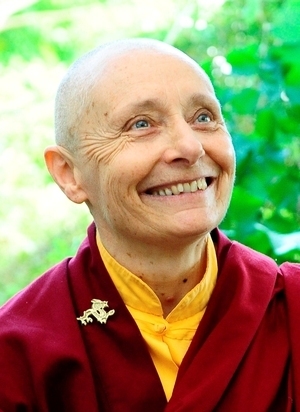
Jetsunma Tenzin Palmo. Photo: Dongyu Gatsal Ling Nunnery
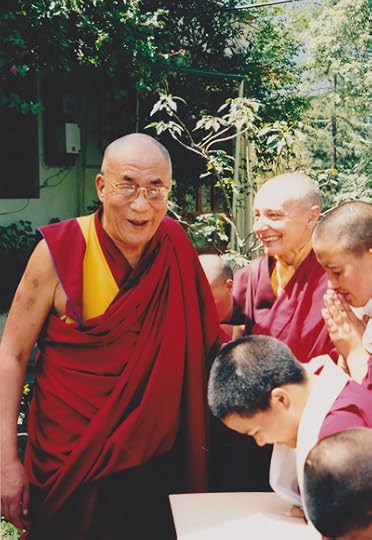
His Holiness the Fourteenth Dalai Lama with Jetsunma Tenzin Palmo and her nuns in North India. Photo: Dongyu Gatsal Ling Nunnery
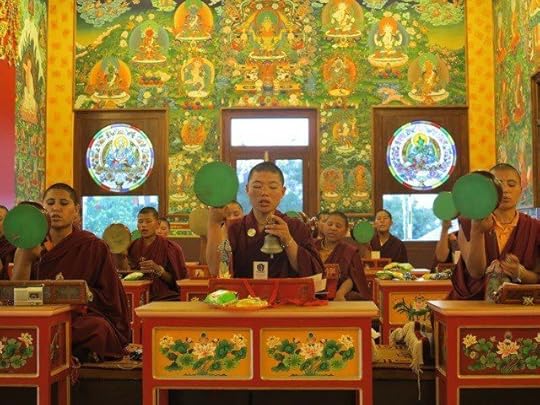
An image from the recent consecration of Tenzin Palmo's temple in North India. Photo: Dongyu Gatsal Ling Nunnery
The first Western Buddhist woman who swore to attain enlightenment in a female body was Jetsunma Tenzin Palmo, who became famous worldwide through Vicki Mackenzie's book "Cave in the Snow" that chronicled Tenzin Palmo's quest to attain realization as a woman. Born as a fishmonger's daughter in London, Tenzin Palmo (born Diane Perry) has set an unprecedented example of following in the footsteps of the most dedicated Tibetan yogis by spending 12 years in solitary retreat in a cave in Ladakh, immersing herself so deeply in this tradition that she has earned the unabashed respect of traditional Asian teachers and modern Westerners alike. She is the most senior Western Tibetan Buddhist nun alive and has just realized her heartfelt aspiration: Her nunnery is solely dedicated to offering the nuns optimal opportunities to study, debate and meditate -- a privilege usually reserved for monks.
"Even Tibetan masters are beginning to realize, if you want real devotion and focus, you have to look to the nuns," Tenzin Palmo says proudly in the new book "Dakini Power." "I tell my girls, now you are given all the opportunities, you can accomplish whatever you want!"
In this interview by Ronny Novick at Ten Directions Productions for Dakini Power, she speaks about how to use daily life as a spiritual practice, restoring the world that is out of balance, and our true nature.

Jetsunma Tenzin Palmo. Photo: Dongyu Gatsal Ling Nunnery
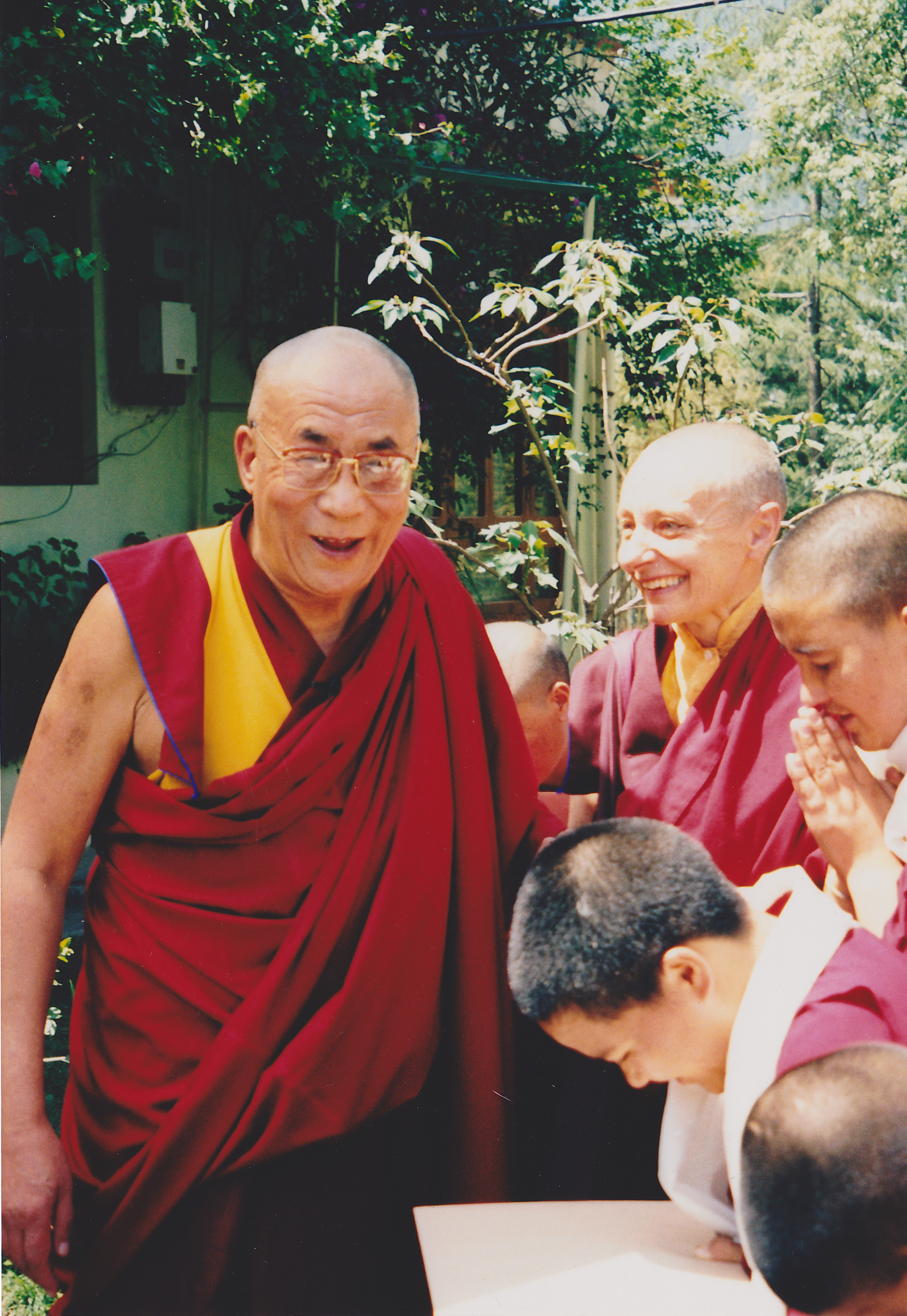
His Holiness the Fourteenth Dalai Lama with Jetsunma Tenzin Palmo and her nuns in North India. Photo: Dongyu Gatsal Ling Nunnery
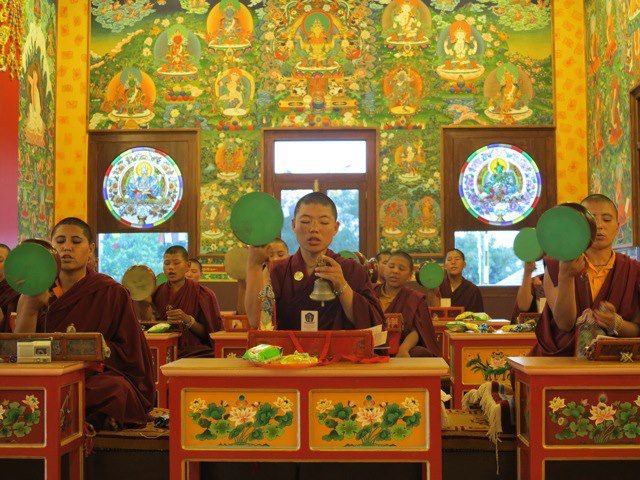
An image from the recent consecration of Tenzin Palmo's temple in North India. Photo: Dongyu Gatsal Ling Nunnery


April 19, 2013
The True Meaning of Forgiveness: Women's Wisdom for the Modern World
Venerable Thubten Chodron is the author of "Buddhism for Beginners" and founding abbess of Sravasti Abbey in Washington State, the first Tibetan Buddhist monastery for Westerners in America. Thubten Chodron gave this short teaching well before the Boston Marathon Tragedy, but her words about "The True Meaning of Forgiveness" could not be more timely. If we hold on to anger, we hurt ourselves the most, and the violence will never end.
Thubten Chodron is renowned for her extraordinary ability to present even the most profound spiritual teachings simply and directly to Western audiences. With her characteristic warmth and humor, she skilfully weaves together traditional teachings with practical advice for modern women and men.
She grew up as a "nice Jewish girl" near Los Angeles before exploring the counterculture of the Seventies and discovering the Buddhist path in Nepal. She has been ordained as a Buddhist nun since 1977. She is dedicated to using the Buddha's teachings on how to work with emotions in a contemporary context. In this short video, Venerable Chodron speaks about the true meaning of forgiveness. Venerable Chodron clarifies how forgiveness really means letting go of our own anger, which enables us to go through life without holding on to resentment and grudges. She highlights how this is a necessary first step before we can cultivate compassion for others. Her most recent publication is "Don't Believe Everything You Think," and her own life story is featured in more detail in the new book "Dakini Power."
We will post a series of precious words of wisdom from the female Buddhist teachers over the next few weeks.
Thubten Chodron is renowned for her extraordinary ability to present even the most profound spiritual teachings simply and directly to Western audiences. With her characteristic warmth and humor, she skilfully weaves together traditional teachings with practical advice for modern women and men.
She grew up as a "nice Jewish girl" near Los Angeles before exploring the counterculture of the Seventies and discovering the Buddhist path in Nepal. She has been ordained as a Buddhist nun since 1977. She is dedicated to using the Buddha's teachings on how to work with emotions in a contemporary context. In this short video, Venerable Chodron speaks about the true meaning of forgiveness. Venerable Chodron clarifies how forgiveness really means letting go of our own anger, which enables us to go through life without holding on to resentment and grudges. She highlights how this is a necessary first step before we can cultivate compassion for others. Her most recent publication is "Don't Believe Everything You Think," and her own life story is featured in more detail in the new book "Dakini Power."
We will post a series of precious words of wisdom from the female Buddhist teachers over the next few weeks.
April 15, 2013
A Female Dalai Lama? Why It Matters
There is no hope for a female pope, but there might be one for a female Buddhist leader.
When Pope Francis washed the feet of two young women during Easter, this provoked the criticism of conservative Catholics who pointed out that the liturgies only allow men's feet to be washed, and cheers of progressives who saw it as an omen for a change in the Church's stance toward women. Many hope that the new pope will be a little more inclusive, especially when it comes to women's issues and questions concerning sexuality and contraception. More than 70 percent of American Catholics want the new pope to ordain women, approve the use of contraception and let priests get married. The Bible demands that the pontiff has "clean hands and a pure heart." Theoretically, any Catholic male can be elected pope, but women are the only group categorically excluded. I happen to have been born in a Bavarian village not far from Pope Benedict XVI's. In my elementary school a crucified Jesus adorned every classroom, and I am intimately familiar with the reasoning why Catholic bishops think allowing women into their ordained ranks will forever remain impossible. The statements about women were, in fact, one of the reasons I left the Catholic Church as a young women when my world views clashed with the rules I learned from my local priest.
When I became a Buddhist almost 20 years ago, I was initially enthusiastic to learn that the Buddha was the first religious founder after the Jains who allowed women into the ranks of his order -- a revolutionary decision at the time, more than 2.500 years ago. The historical Buddha clearly encouraged nuns and lay women along with men to be the pillars of his community. But practically speaking, over the centuries, women were not allowed to participate equally there either. For instance, throughout Asia, women rarely had equal access to education. After studying Buddhism for a decade in India and Nepal I couldn't fail to notice that all my teachers were men. Where were all the women? If Buddhism is based on the equality of all beings and gender didn't matter, why then was there such a huge imbalance? I started to seek out female Buddhist teachers and found myself in the middle of a sea change.
Every time Buddhism migrated from its place of origin in India to other countries, whether Sri Lanka, Burma, Japan, China or Tibet, the philosophy, customs and rituals transformed as well. Not surprisingly, Buddhism's relocation to the West comes with a sea change of emphasis and culture. In Tibet, revered masters might isolate themselves in remote caves, sometimes for decades, in deep meditation. In the West, teachers reach thousands instantly by streaming their wisdom on podcasts. In many Asian Buddhist communities, open dissent is unthinkable, while in academia, critical discourse is crucial.
Of all these changes that we are watching Buddhism undergo in the West, the most momentous may be that women are playing an equal role. As I describe in my new book, "Dakini Power," more and more Buddhist women are now rising as teachers in their own right who understand their responsibility: to invigorate and bolster women to hold up "half the sky" as spiritual seekers and teachers. Just as in business and politics, religious women demand to be acknowledged in the many leadership roles they assume. Feminist Buddhist scholar Rita Gross points out in her book Buddhism After Patriarchy, "The single biggest difference between the practice of Buddhism in Asia and the practice of Buddhism in the West is the full and complete participation of women in Western Buddhism." The 14th Dalai Lama has acknowledged this by pointing out that his next incarnation could be a woman. "I call myself a feminist," he said. "Isn't that what you call someone who fights for women's rights?" Despite the complex historical, religious and political factors surrounding the selection of incarnate masters in the exiled Tibetan tradition, the Dalai Lama is open to change. Why not? What's the big deal?
"The lamas can't ignore this any longer," says Western nun Karma Lekshe Tsomo, the founder of the most important international organization for Buddhist women, Sakyadhita ("Daughters of the Buddha").
That women then also become teachers, abbesses and even Dalai Lamas is only a natural evolution.
The current transformation of Buddhism in the 21st century is stunning on so many levels, and women play a role in this endeavor as prime agents. The Himalayas were always a nursery for accomplished female practitioners and to some extent still are. "There were certainly many great female practitioners in Tibet," British nun and abbess Jetsunma Tenzin Palmo writes in her book "Reflections on a Mountain Lake."
While iconic archetypes of feminine enlightenment were erected on shrines, few women in Tibet were actually emboldened to follow in their footsteps. Despite an encouraging quote of Padmasambhava, the eighth century pioneer of Tibetan Buddhism, that women's potential to attain liberation is supreme, most Buddhist cultures throughout the centuries perceived women as lesser beings. The few encouraging statements are outnumbered by plenty of passages that lament the hardships of womanhood. Commonly used Tibetan words for woman, lümen or kyemen, literally mean "inferior being" or "lesser birth." Some orthodox masters doubt to this day if women can attain realization at all, and age-old liturgies have women pray for a better rebirth in a male body. To this day nunneries in Asia usually lack the resources the monasteries get, and full ordination for women is currently not a possibility in the Tibetan tradition, though many monks and nuns, including the Dalai Lama, are working toward a change.
The Dalai Lama has spoken out many times about the need for resolving the issue. "Two thousand five hundred years ago, the Buddha was preaching in a male-dominated society," he stated in an interview. "If he stressed feminist viewpoints, nobody would have listened to him. The important thing is that now, for the past thirty years, we have worked to change that."
This is a challenge all religions in the 21st century face in one form or another. Any organization that categorically excludes 50 percent of their brightest, most capable and compassionate people from its leadership suffers and won't be able to escape change forever. The papacy won't be a mamacy any time soon, but at least we know that Her Holiness is an option.
When Pope Francis washed the feet of two young women during Easter, this provoked the criticism of conservative Catholics who pointed out that the liturgies only allow men's feet to be washed, and cheers of progressives who saw it as an omen for a change in the Church's stance toward women. Many hope that the new pope will be a little more inclusive, especially when it comes to women's issues and questions concerning sexuality and contraception. More than 70 percent of American Catholics want the new pope to ordain women, approve the use of contraception and let priests get married. The Bible demands that the pontiff has "clean hands and a pure heart." Theoretically, any Catholic male can be elected pope, but women are the only group categorically excluded. I happen to have been born in a Bavarian village not far from Pope Benedict XVI's. In my elementary school a crucified Jesus adorned every classroom, and I am intimately familiar with the reasoning why Catholic bishops think allowing women into their ordained ranks will forever remain impossible. The statements about women were, in fact, one of the reasons I left the Catholic Church as a young women when my world views clashed with the rules I learned from my local priest.
When I became a Buddhist almost 20 years ago, I was initially enthusiastic to learn that the Buddha was the first religious founder after the Jains who allowed women into the ranks of his order -- a revolutionary decision at the time, more than 2.500 years ago. The historical Buddha clearly encouraged nuns and lay women along with men to be the pillars of his community. But practically speaking, over the centuries, women were not allowed to participate equally there either. For instance, throughout Asia, women rarely had equal access to education. After studying Buddhism for a decade in India and Nepal I couldn't fail to notice that all my teachers were men. Where were all the women? If Buddhism is based on the equality of all beings and gender didn't matter, why then was there such a huge imbalance? I started to seek out female Buddhist teachers and found myself in the middle of a sea change.
Every time Buddhism migrated from its place of origin in India to other countries, whether Sri Lanka, Burma, Japan, China or Tibet, the philosophy, customs and rituals transformed as well. Not surprisingly, Buddhism's relocation to the West comes with a sea change of emphasis and culture. In Tibet, revered masters might isolate themselves in remote caves, sometimes for decades, in deep meditation. In the West, teachers reach thousands instantly by streaming their wisdom on podcasts. In many Asian Buddhist communities, open dissent is unthinkable, while in academia, critical discourse is crucial.
Of all these changes that we are watching Buddhism undergo in the West, the most momentous may be that women are playing an equal role. As I describe in my new book, "Dakini Power," more and more Buddhist women are now rising as teachers in their own right who understand their responsibility: to invigorate and bolster women to hold up "half the sky" as spiritual seekers and teachers. Just as in business and politics, religious women demand to be acknowledged in the many leadership roles they assume. Feminist Buddhist scholar Rita Gross points out in her book Buddhism After Patriarchy, "The single biggest difference between the practice of Buddhism in Asia and the practice of Buddhism in the West is the full and complete participation of women in Western Buddhism." The 14th Dalai Lama has acknowledged this by pointing out that his next incarnation could be a woman. "I call myself a feminist," he said. "Isn't that what you call someone who fights for women's rights?" Despite the complex historical, religious and political factors surrounding the selection of incarnate masters in the exiled Tibetan tradition, the Dalai Lama is open to change. Why not? What's the big deal?
"The lamas can't ignore this any longer," says Western nun Karma Lekshe Tsomo, the founder of the most important international organization for Buddhist women, Sakyadhita ("Daughters of the Buddha").
"In most Buddhist centers, look into the kitchen -- all women. Look into the offices, who does the administration? Mostly women. Who does the driving and organizing, the cleaning and the correspondence, the shopping and managing? Mostly women."
That women then also become teachers, abbesses and even Dalai Lamas is only a natural evolution.
The current transformation of Buddhism in the 21st century is stunning on so many levels, and women play a role in this endeavor as prime agents. The Himalayas were always a nursery for accomplished female practitioners and to some extent still are. "There were certainly many great female practitioners in Tibet," British nun and abbess Jetsunma Tenzin Palmo writes in her book "Reflections on a Mountain Lake."
"But because they lacked a background of philosophical training, they could not aspire to write books, gather disciples, go on Dharma tours, and give talks. When we read the histories, we will notice that nuns are distinguished by their absence. But this doesn't mean they weren't there."
While iconic archetypes of feminine enlightenment were erected on shrines, few women in Tibet were actually emboldened to follow in their footsteps. Despite an encouraging quote of Padmasambhava, the eighth century pioneer of Tibetan Buddhism, that women's potential to attain liberation is supreme, most Buddhist cultures throughout the centuries perceived women as lesser beings. The few encouraging statements are outnumbered by plenty of passages that lament the hardships of womanhood. Commonly used Tibetan words for woman, lümen or kyemen, literally mean "inferior being" or "lesser birth." Some orthodox masters doubt to this day if women can attain realization at all, and age-old liturgies have women pray for a better rebirth in a male body. To this day nunneries in Asia usually lack the resources the monasteries get, and full ordination for women is currently not a possibility in the Tibetan tradition, though many monks and nuns, including the Dalai Lama, are working toward a change.
The Dalai Lama has spoken out many times about the need for resolving the issue. "Two thousand five hundred years ago, the Buddha was preaching in a male-dominated society," he stated in an interview. "If he stressed feminist viewpoints, nobody would have listened to him. The important thing is that now, for the past thirty years, we have worked to change that."
This is a challenge all religions in the 21st century face in one form or another. Any organization that categorically excludes 50 percent of their brightest, most capable and compassionate people from its leadership suffers and won't be able to escape change forever. The papacy won't be a mamacy any time soon, but at least we know that Her Holiness is an option.
April 2, 2013
The Killing Fields of Today: Cambodia's Landmine Problem Rages On
On April 4, 2013, the world will mark the 8th annual United Nations International Day of Mine Awareness, a global observance designed to grow the movement to ban anti-personnel landmines, promote disarmament and clearance, and provide victim services. Lotus Outreach International, a 501(c)(3) nonprofit dedicating to enhancing education and economic opportunity for marginalized communities in Cambodia, is marking the occasion by drawing attention to the intergenerational effects of landmines on children in this war-torn nation.
Anti-personnel landmines -- which are specifically designed to explode upon contact with a person -- have killed or maimed an estimated 100 million people worldwide, with at least 63,000 victims in Cambodia alone. Cambodia's notorious landmine problem is the product of a civil war that spanned three decades, culminating in a genocide in the late 1970s that claimed the lives of up to three million people, or one-third of the entire population. Today, 40,000 people -- one out of every 290 Cambodians -- are amputees, the vast majority of whom are men and thus the traditional heads of household.
"Tragically, landmine clearance is an incredibly expensive and laborious undertaking," shares Lotus Outreach Executive Director Erika Keaveney. "It is estimated that a single landmine -- which costs just $3 manufacture -- will cost upwards of $1,000 to identify and safely remove. Even the most optimistic estimates suggest Cambodia won't meet its landmine clearance goals for another five years. In the meantime, thousands of families struggle to survive in the face of the devastation landmines have inflicted on their lives. Lotus Outreach is working to ensure these families can meet their most basic needs and keep their kids in school."
The intergenerational effect of landmines is profoundly evident in the life of 16-year-old Tuon Samphea, the sole caretaker of her father who stepped on a landmine while foraging for bamboo shoots for food. The explosion cost him several of his fingers and both eyes, and he lay bleeding and disfigured alone in a field for ten hours before anyone found him. Today Samphea, an only child, looks after his every need including preparing meals and bathing him. Despite these demands on her time, Samphea is able to continue to go to school each day as a result of a scholarship provided by Lotus Outreach's Girls' Access to Education (GATE) program. In addition to providing school supplies, uniforms, and tutoring support, the GATE program provides Samphea and her father with a large bag of rice each month to ensure they will not go hungry if Samphea attends school instead of working. "One of my main ambitions in life is to ensure my daughter can be educated. Without the scholarship and rice support, this wouldn't be possible," shares Samphea's father.
The father of Tum Sokpheak likewise lost his leg to a landmine while foraging for food to feed his seven children (one child since died of dengue fever). With Sokpheak's parents unable to work, the family survives on a $55 monthly pension and the $25 monthly rice stipend provided by the GATE program, which has enabled them to keep all of the children in school for now. "Education is very important to us but it is difficult to pay for the cost of schooling and get enough to eat," shares Sokpheak's mom. "We want our children to have a good future and will try very hard to keep them in school. The rice support is enabling us to do that now." A GATE participant for seven years, Sokpheak is slated to graduate high school this summer and hopes to enter a four-year medical program at Battambang University shortly thereafter. Despite her family struggles, she ranks third in her class of 47 students.
The severe penury confronting Sokpheak and Samphea is not exceptional among GATE scholars, who are selected based on a comprehensive criteria including income, family size, and parental disability. But households with landmine victims face unique challenges, foremost among them the constrained ability to secure food. Though a full third of Cambodians live below the national poverty line of $1.25 per day, households with a landmine victim are 40 percent more likely to face difficulty securing food than the population at large. This is not only the result of the lost labor of the landmine victim, but the lost labor of his or her primary caretaker which translates into higher opportunity costs for sending children to school. Further, 61 percent of landmine victims report going into debt to pay for their initial medical treatment, exacerbating their poverty trap.
By addressing the intersecting problems of food security and children's education for these families, Lotus Outreach is working to halt the transmission of poverty through future generations, thus bringing Cambodia one step closer to healing from the scars of the past. To learn more about Cambodia's ongoing legacy of landmines and other explosive remnant of war, visit http://www.cmac.gov.kh/.
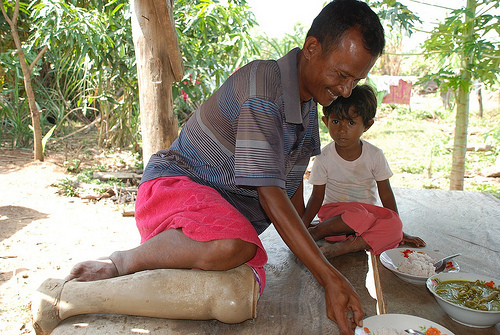
Sokpheak's father. Many NGOs in Cambodia provide prosthetic limbs to landmine victims, but they are still unable to engage in heavy manual labor or agricultural work, the main thrust of rural economies in Cambodia.

Sokpheak (center right) at school: Sokpheak has been in the GATE program for seven years. She will graduate soon, and hopes to continue on to university. She currently ranks third of 47 students in her class.
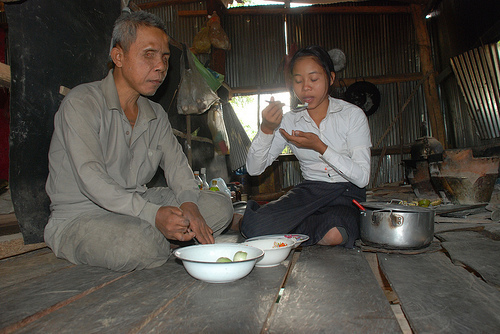
Samphea and her father: Samphea's father was foraging for bamboo shoots when he stumbled on a landmine. His leg was badly injured, he lost both eyes and his hand was disfigured. He was not found until 10 hours after the incident.
All Photos: Copyright Lotus Outreach
Watch a short video of Thuo Somphea preparing a meal for her father:
Lotus Outreach is a California-based 501 (c)(3) dedicated to ensuring the education, health, and safety of vulnerable women and children in the developing world. GATE is one of several successful development programs it operates in Cambodia today.
Anti-personnel landmines -- which are specifically designed to explode upon contact with a person -- have killed or maimed an estimated 100 million people worldwide, with at least 63,000 victims in Cambodia alone. Cambodia's notorious landmine problem is the product of a civil war that spanned three decades, culminating in a genocide in the late 1970s that claimed the lives of up to three million people, or one-third of the entire population. Today, 40,000 people -- one out of every 290 Cambodians -- are amputees, the vast majority of whom are men and thus the traditional heads of household.
"Tragically, landmine clearance is an incredibly expensive and laborious undertaking," shares Lotus Outreach Executive Director Erika Keaveney. "It is estimated that a single landmine -- which costs just $3 manufacture -- will cost upwards of $1,000 to identify and safely remove. Even the most optimistic estimates suggest Cambodia won't meet its landmine clearance goals for another five years. In the meantime, thousands of families struggle to survive in the face of the devastation landmines have inflicted on their lives. Lotus Outreach is working to ensure these families can meet their most basic needs and keep their kids in school."
The intergenerational effect of landmines is profoundly evident in the life of 16-year-old Tuon Samphea, the sole caretaker of her father who stepped on a landmine while foraging for bamboo shoots for food. The explosion cost him several of his fingers and both eyes, and he lay bleeding and disfigured alone in a field for ten hours before anyone found him. Today Samphea, an only child, looks after his every need including preparing meals and bathing him. Despite these demands on her time, Samphea is able to continue to go to school each day as a result of a scholarship provided by Lotus Outreach's Girls' Access to Education (GATE) program. In addition to providing school supplies, uniforms, and tutoring support, the GATE program provides Samphea and her father with a large bag of rice each month to ensure they will not go hungry if Samphea attends school instead of working. "One of my main ambitions in life is to ensure my daughter can be educated. Without the scholarship and rice support, this wouldn't be possible," shares Samphea's father.
The father of Tum Sokpheak likewise lost his leg to a landmine while foraging for food to feed his seven children (one child since died of dengue fever). With Sokpheak's parents unable to work, the family survives on a $55 monthly pension and the $25 monthly rice stipend provided by the GATE program, which has enabled them to keep all of the children in school for now. "Education is very important to us but it is difficult to pay for the cost of schooling and get enough to eat," shares Sokpheak's mom. "We want our children to have a good future and will try very hard to keep them in school. The rice support is enabling us to do that now." A GATE participant for seven years, Sokpheak is slated to graduate high school this summer and hopes to enter a four-year medical program at Battambang University shortly thereafter. Despite her family struggles, she ranks third in her class of 47 students.
The severe penury confronting Sokpheak and Samphea is not exceptional among GATE scholars, who are selected based on a comprehensive criteria including income, family size, and parental disability. But households with landmine victims face unique challenges, foremost among them the constrained ability to secure food. Though a full third of Cambodians live below the national poverty line of $1.25 per day, households with a landmine victim are 40 percent more likely to face difficulty securing food than the population at large. This is not only the result of the lost labor of the landmine victim, but the lost labor of his or her primary caretaker which translates into higher opportunity costs for sending children to school. Further, 61 percent of landmine victims report going into debt to pay for their initial medical treatment, exacerbating their poverty trap.
By addressing the intersecting problems of food security and children's education for these families, Lotus Outreach is working to halt the transmission of poverty through future generations, thus bringing Cambodia one step closer to healing from the scars of the past. To learn more about Cambodia's ongoing legacy of landmines and other explosive remnant of war, visit http://www.cmac.gov.kh/.
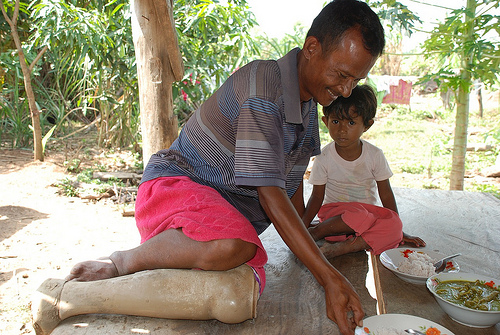
Sokpheak's father. Many NGOs in Cambodia provide prosthetic limbs to landmine victims, but they are still unable to engage in heavy manual labor or agricultural work, the main thrust of rural economies in Cambodia.
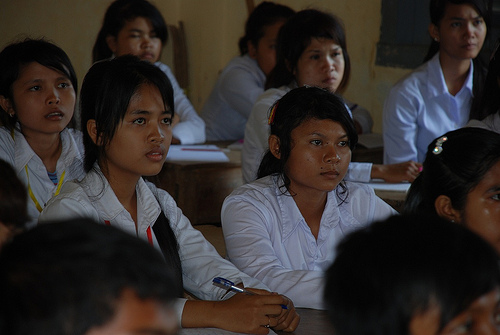
Sokpheak (center right) at school: Sokpheak has been in the GATE program for seven years. She will graduate soon, and hopes to continue on to university. She currently ranks third of 47 students in her class.

Samphea and her father: Samphea's father was foraging for bamboo shoots when he stumbled on a landmine. His leg was badly injured, he lost both eyes and his hand was disfigured. He was not found until 10 hours after the incident.
All Photos: Copyright Lotus Outreach
Watch a short video of Thuo Somphea preparing a meal for her father:
Lotus Outreach is a California-based 501 (c)(3) dedicated to ensuring the education, health, and safety of vulnerable women and children in the developing world. GATE is one of several successful development programs it operates in Cambodia today.
March 20, 2013
10 Tibetan Buddhist Women You Need to Know
Many of us dream of exchanging our day-to-day responsibilities for a heartfelt life full of purpose, but few of us ever get around to doing something about it. The women featured here are the exception. They followed their intuition against all odds, made dramatic and unusual decisions and sometimes had to fight for their survival in order to lead the lives they envisioned. While iconic archetypes of feminine enlightenment (dakinis in the ancient language of Sanskrit) were erected on shrines, few women in Asia were actually emboldened to follow in their footsteps. That women participate equally is probably the single biggest change with Buddhism being established in the West. Here are ten extraordinary female teachers of Tibetan Buddhism, who have transformed the way Buddhism is viewed in America (more information in the new book "Dakini Power: Twelve Extraordinary Women Shaping the Transmission of Tibetan Buddhism in the West").
1. Jetsun Khandro Rinpoche
"If being a woman is an inspiration, use it. If it is an obstacle, try not to be bothered by it."
Her Eminence Jetsun Khandro Rinpoche's position in the Buddhist world is entirely unique. She is one of the very few fully trained female Rinpoches ("precious masters") in the Tibetan tradition. Born in 1967 as the daughter of the late Kyabjé Mindrolling Trichen, she, her younger sister and her mother were the only women growing up among 400 monks at her father's monastery in India. The Mindrolling lineage is one of the rare Tibetan traditions that do not distinguish between male and female heirs.
Now one of the most influential and vibrant women teachers, Khandro Rinpoche travels tirelessly between her late father's monastery and her own two nunneries in India, her American headquarters, Lotus Garden, in the Shenandoah Mountains in Virginia, and an ever-increasing number of Buddhist communities. In addition to receiving the traditional training usually reserved for male teachers, she also studied journalism, business management, homeopathy and sciences.
With her unparalleled training, she has built a reputation as a sharp-witted and unconventional teacher who is never afraid to "rock the boat" as she continues to question the responsibility and role of women in the Buddhist society. Educating and empowering women is at the core of her work: "Maybe I can be a medium through which more women become confident, dynamic leaders."
2. Dagmola Kusho Sakya
First Tibetan woman ever to immigrate to America.
Dagmola Sakya is one of the very few senior Tibetan ladies who were born in pre-Communist Tibet, but are now recognized as outstanding teachers and live in America. Together with her husband, the renowned Dagchen Rinpoche, she established a beautiful monastery in Seattle and teaches around the world.
A combination of the most unlikely circumstances enabled Dagmola to become one of the first Tibetan women to teach in the West. Born 1936 in a tiny village in East Tibet, she was the only girl allowed to go to school. Instead of complying with the established system of arranged marriages, Dagchen Rinpoche fought for her hand. After barely escaping the Communist prosecution in Tibet with her family, she made a new home in Seattle in the '60s with her five boys, while holding down a 9-to-5 job at a blood bank.
Her experience as a working mother of five resonates with many women. When students ask her for advice on how to combine a spiritual path with the stress of modern life, she does not need to put herself in their shoes -- she knows the challenges only too well.
"Practice is in every day life, not just sitting on the cushion," Dagmola says. "Every move, every breath, every thought is practice."
3. Jetsunma Tenzin Palmo (Diane Perry):
"I took the vow to attain enlightenment in a female body."
Jetsunma Tenzin Palmo (Diane Perry) became famous worldwide through Vicki Mackenzie's book "Cave in the Snow," which chronicled Tenzin Palmo's quest to attain realization in a female body. Born as a fishmonger's daughter in London, Tenzin Palmo has set an unprecedented example of following in the footsteps of the most dedicated Tibetan yogis by spending 12 years in solitary retreat in a cave in Ladakh, immersing herself so deeply in this tradition that she has earned the unabashed respect of traditional Asian teachers and modern Westerners alike. She is the most senior Western Tibetan Buddhist nun alive. She is currently realizing her heartfelt aspiration: to build a nunnery solely dedicated to offering the nuns optimal opportunities to study, debate and meditate -- a privilege usually reserved for monks.
"Even Tibetan masters are beginning to realize, if you want real devotion and focus, you have to look to the nuns," Tenzin Palmo says proudly. "I tell my girls, now you are given all the opportunities, you can accomplish whatever you want!"
4. Pema Chödrön (Deirdre Blomfield)
Most successful female Western Buddhist teacher.

Pema Chödrön, most beloved female Western Buddhist teacher. Collage: Noa P. Kaplan
Facing what scares us is Pema Chödrön's signature topic. A glance at her book and audio titles provides a first-aid kit for handling life: When Things Fall Apart, we have No Time to Lose so that we Start Where We Are, Don't Bite the Hook, and go to the Places That Scare You for Taking the Leap. These slogans from her bestselling books, encapsulate Pema's heart advice. "Dakini Power" describes her own transformation from the Catholic elementary school teacher named Deirdre Blomfield-Brown into a student of Chögyam Trungpa Rinpoche and one of the most successful Western Buddhist teachers. She has established the Pema Chödrön Foundation and is the principal teacher at Gampo Abbey in Nova Scotia.
When asked how she got into Buddhism, she always says half-jokingly: "Because I was so angry with my husband."
5. Ven. Thubten Chödron (Cherry Greene)
An innovative abbess.
Venerable Thubten Chödron is the author of "Buddhism for Beginners" and founding abbess of the innovative Sravasti Abbey in Washington State, the first Tibetan Buddhist monastery for westerners in America. She is renowned for her extraordinary ability to present even the most profound spiritual teachings simply and directly to Western audiences. With her characteristic warmth and humor, she skilfully weaves together traditional teachings with practical advice for modern Western women and men. In "Dakini Power," she speaks about her upbringing as Cherry Greene, a "nice Jewish girl," her years of exploring the counterculture of the '70s, her prison work and her dedication to using the Buddha's teachings on how to work with emotions in a contemporary context. She is faced with the irony that she is perceived as a liberal in traditional Tibetan circles, while some Westerners automatically see her as part of the "hierarchical" monastic institution because of her robes.
Chodron comments, unfazed, "Curiously, while women's issues are at the forefront of discussion in Western Buddhism, once a woman becomes a monastic, she is seen as 'conservative and traditional.'"
6. Ven. Karma Lekshe Tsomo (Patricia Zenn)
Surfing to realization.
Venerable Karma Lekshe Tsomo already had a religion when growing up in Malibu: surfing. But being constantly teased by her classmates about her family name, Zenn ("Are you Buddhist or what?"), she borrowed a book about Buddhism to find out what this was all about and instantly knew that this was it.
Ordained in 1977, she quickly realized that conditions for Tibetan Buddhist nuns were dire. Almost 30 years ago, she single-handedly started a movement to give nuns access to education, at a time when this idea was, at best, treated as a waste of time, or even frowned upon by the established monasteries. She is the co-founder of Sakyadhita ("Daughters of the Buddha"), the most important international association of Buddhist women, and the founding director of Jamyang Foundation, a non-profit dedicated to the education of Himalayan women. In a way, the California girl has come full circle: now she lives in California again, where she is a professor teaching Buddhist philosophy at the University of San Diego. But whenever she can, she goes to see "her" nuns in the 15 study centers dotted all over the Himalayas that would not exist without her untiring efforts.
7. Sangye Khandro (Nanci Gustafson)
"Enlightenment is a full-time job."
Sangye Khandro has translated and mastered some of the most profound Buddhist teachings. One of her renowned translator colleagues says she might be the Western woman who has received more teachings and transmissions than anybody else. She lives on the beautiful 100 acres of Tashi Chöling, a retreat and teaching center in the mountains near Ashland that she founded together with her husband and teacher, Gyatrul Rinpoche. She has translated for the finest Tibetan teachers. Despite receiving many invitations, she rarely agrees to teach, preferring a reclusive lifestyle focusing on translations and retreats. Together with her partner, Lama Chönam, she has founded the wonderful translation committee Light of Berotsana.
8. Lama Tsultrim Allione (Rosmanière Ewing)
The enlightened feminist.
Lama Tsultrim Allione, charismatic Western teacher and bestselling author of "Women of Wisdom" and "Feeding Your Demons," was recognized and enthroned as an emanation of one of the most beloved female Tibetan saints, the 11th century dakini Machik Labdrön. She balances the commitments for her family and three kids with the passion to bring century old healing practices to the West. Once among the first American women ordained as a nun, she has since given back her vows to raise a family and integrate her spiritual values into a lay practitioner's life. The radical life change led Lama Tsultrim to question: How exactly did motherhood fit in with Buddhism? When she looked at the life stories of the great saints of her lineage, almost all of them were male, and the few women had either abandoned their children or were celibate nuns.
"I had no role models for women in my position, no stories to follow," she says. Her newly built temple, Tara Mandala in Colorado, is dedicated to the "enlightened feminine."
9. Chagdud Khadro (Jane Dedman)
A perfect example.
Chagdud Khadro is the title her late husband, Chagdud Rinpoche (1930-2002), gave to Jane Dedman after several years of marriage. Khadro and Chagdud Rinpoche were married for 23 years, until his passing in 2002. Now in her '60s, Chagdud Khadro spends most of her time near Três Coroas on the East Coast in Brazil, in a Buddhist center that bears her name -- Chagdud Khadro Ling. She is especially renowned for her teachings on phowa, the traditional Tibetan transference of consciousness at the time of dying. Her students all stress her impeccable work ethic and humility. Dzongsar Khyentse Rinpoche, whom Chagdud Rinpoche asked to help guide his centers, calls her "a perfect example of a lama's wife. She puts all the others to shame, even the Tibetans."
10. Elizabeth Mattis-Namgyel
The power of open questions.
Elizabeth Mattis-Namgyel, the author of "The Power of an Open Question," grew up as the daughter of a communist record manager in Santa Monica, yet amid the anarchistic debates at home, she was eaten up by a yearning question: "What should I do with my life?" A vivid dream during her college years inspired her to travel to Nepal where she met her teacher and husband, Dzigar Kongtrul Rinpoche. She became his first Western student. Under his guidance she has studied and practiced Buddhism for more than 25 years. She spent seven years in solitary retreat in the Rocky Mountains in Colorado while raising her son at the same time. She seems to effortlessly juggle her many commitments as a retreat master, teacher, author, mother and student, and speaks openly about the challenges of implementing Buddhist practices in a modern world.
"It is like an unspoken rule that we don't talk about our doubts or unresolved questions," she says, "and I question that."
Read more life stories of dakinis ("female messengers of wisdom") here and contribute your own experiences and stories of inspiring Buddhist women in the comments!
Click through for a slideshow of other inspiring Buddhist women:
1. Jetsun Khandro Rinpoche
"If being a woman is an inspiration, use it. If it is an obstacle, try not to be bothered by it."
Her Eminence Jetsun Khandro Rinpoche's position in the Buddhist world is entirely unique. She is one of the very few fully trained female Rinpoches ("precious masters") in the Tibetan tradition. Born in 1967 as the daughter of the late Kyabjé Mindrolling Trichen, she, her younger sister and her mother were the only women growing up among 400 monks at her father's monastery in India. The Mindrolling lineage is one of the rare Tibetan traditions that do not distinguish between male and female heirs.
Now one of the most influential and vibrant women teachers, Khandro Rinpoche travels tirelessly between her late father's monastery and her own two nunneries in India, her American headquarters, Lotus Garden, in the Shenandoah Mountains in Virginia, and an ever-increasing number of Buddhist communities. In addition to receiving the traditional training usually reserved for male teachers, she also studied journalism, business management, homeopathy and sciences.
With her unparalleled training, she has built a reputation as a sharp-witted and unconventional teacher who is never afraid to "rock the boat" as she continues to question the responsibility and role of women in the Buddhist society. Educating and empowering women is at the core of her work: "Maybe I can be a medium through which more women become confident, dynamic leaders."
2. Dagmola Kusho Sakya
First Tibetan woman ever to immigrate to America.
Dagmola Sakya is one of the very few senior Tibetan ladies who were born in pre-Communist Tibet, but are now recognized as outstanding teachers and live in America. Together with her husband, the renowned Dagchen Rinpoche, she established a beautiful monastery in Seattle and teaches around the world.
A combination of the most unlikely circumstances enabled Dagmola to become one of the first Tibetan women to teach in the West. Born 1936 in a tiny village in East Tibet, she was the only girl allowed to go to school. Instead of complying with the established system of arranged marriages, Dagchen Rinpoche fought for her hand. After barely escaping the Communist prosecution in Tibet with her family, she made a new home in Seattle in the '60s with her five boys, while holding down a 9-to-5 job at a blood bank.
Her experience as a working mother of five resonates with many women. When students ask her for advice on how to combine a spiritual path with the stress of modern life, she does not need to put herself in their shoes -- she knows the challenges only too well.
"Practice is in every day life, not just sitting on the cushion," Dagmola says. "Every move, every breath, every thought is practice."
3. Jetsunma Tenzin Palmo (Diane Perry):
"I took the vow to attain enlightenment in a female body."
Jetsunma Tenzin Palmo (Diane Perry) became famous worldwide through Vicki Mackenzie's book "Cave in the Snow," which chronicled Tenzin Palmo's quest to attain realization in a female body. Born as a fishmonger's daughter in London, Tenzin Palmo has set an unprecedented example of following in the footsteps of the most dedicated Tibetan yogis by spending 12 years in solitary retreat in a cave in Ladakh, immersing herself so deeply in this tradition that she has earned the unabashed respect of traditional Asian teachers and modern Westerners alike. She is the most senior Western Tibetan Buddhist nun alive. She is currently realizing her heartfelt aspiration: to build a nunnery solely dedicated to offering the nuns optimal opportunities to study, debate and meditate -- a privilege usually reserved for monks.
"Even Tibetan masters are beginning to realize, if you want real devotion and focus, you have to look to the nuns," Tenzin Palmo says proudly. "I tell my girls, now you are given all the opportunities, you can accomplish whatever you want!"
4. Pema Chödrön (Deirdre Blomfield)
Most successful female Western Buddhist teacher.

Pema Chödrön, most beloved female Western Buddhist teacher. Collage: Noa P. Kaplan
Facing what scares us is Pema Chödrön's signature topic. A glance at her book and audio titles provides a first-aid kit for handling life: When Things Fall Apart, we have No Time to Lose so that we Start Where We Are, Don't Bite the Hook, and go to the Places That Scare You for Taking the Leap. These slogans from her bestselling books, encapsulate Pema's heart advice. "Dakini Power" describes her own transformation from the Catholic elementary school teacher named Deirdre Blomfield-Brown into a student of Chögyam Trungpa Rinpoche and one of the most successful Western Buddhist teachers. She has established the Pema Chödrön Foundation and is the principal teacher at Gampo Abbey in Nova Scotia.
When asked how she got into Buddhism, she always says half-jokingly: "Because I was so angry with my husband."
5. Ven. Thubten Chödron (Cherry Greene)
An innovative abbess.
Venerable Thubten Chödron is the author of "Buddhism for Beginners" and founding abbess of the innovative Sravasti Abbey in Washington State, the first Tibetan Buddhist monastery for westerners in America. She is renowned for her extraordinary ability to present even the most profound spiritual teachings simply and directly to Western audiences. With her characteristic warmth and humor, she skilfully weaves together traditional teachings with practical advice for modern Western women and men. In "Dakini Power," she speaks about her upbringing as Cherry Greene, a "nice Jewish girl," her years of exploring the counterculture of the '70s, her prison work and her dedication to using the Buddha's teachings on how to work with emotions in a contemporary context. She is faced with the irony that she is perceived as a liberal in traditional Tibetan circles, while some Westerners automatically see her as part of the "hierarchical" monastic institution because of her robes.
Chodron comments, unfazed, "Curiously, while women's issues are at the forefront of discussion in Western Buddhism, once a woman becomes a monastic, she is seen as 'conservative and traditional.'"
6. Ven. Karma Lekshe Tsomo (Patricia Zenn)
Surfing to realization.
Venerable Karma Lekshe Tsomo already had a religion when growing up in Malibu: surfing. But being constantly teased by her classmates about her family name, Zenn ("Are you Buddhist or what?"), she borrowed a book about Buddhism to find out what this was all about and instantly knew that this was it.
Ordained in 1977, she quickly realized that conditions for Tibetan Buddhist nuns were dire. Almost 30 years ago, she single-handedly started a movement to give nuns access to education, at a time when this idea was, at best, treated as a waste of time, or even frowned upon by the established monasteries. She is the co-founder of Sakyadhita ("Daughters of the Buddha"), the most important international association of Buddhist women, and the founding director of Jamyang Foundation, a non-profit dedicated to the education of Himalayan women. In a way, the California girl has come full circle: now she lives in California again, where she is a professor teaching Buddhist philosophy at the University of San Diego. But whenever she can, she goes to see "her" nuns in the 15 study centers dotted all over the Himalayas that would not exist without her untiring efforts.
7. Sangye Khandro (Nanci Gustafson)
"Enlightenment is a full-time job."
Sangye Khandro has translated and mastered some of the most profound Buddhist teachings. One of her renowned translator colleagues says she might be the Western woman who has received more teachings and transmissions than anybody else. She lives on the beautiful 100 acres of Tashi Chöling, a retreat and teaching center in the mountains near Ashland that she founded together with her husband and teacher, Gyatrul Rinpoche. She has translated for the finest Tibetan teachers. Despite receiving many invitations, she rarely agrees to teach, preferring a reclusive lifestyle focusing on translations and retreats. Together with her partner, Lama Chönam, she has founded the wonderful translation committee Light of Berotsana.
8. Lama Tsultrim Allione (Rosmanière Ewing)
The enlightened feminist.
Lama Tsultrim Allione, charismatic Western teacher and bestselling author of "Women of Wisdom" and "Feeding Your Demons," was recognized and enthroned as an emanation of one of the most beloved female Tibetan saints, the 11th century dakini Machik Labdrön. She balances the commitments for her family and three kids with the passion to bring century old healing practices to the West. Once among the first American women ordained as a nun, she has since given back her vows to raise a family and integrate her spiritual values into a lay practitioner's life. The radical life change led Lama Tsultrim to question: How exactly did motherhood fit in with Buddhism? When she looked at the life stories of the great saints of her lineage, almost all of them were male, and the few women had either abandoned their children or were celibate nuns.
"I had no role models for women in my position, no stories to follow," she says. Her newly built temple, Tara Mandala in Colorado, is dedicated to the "enlightened feminine."
9. Chagdud Khadro (Jane Dedman)
A perfect example.
Chagdud Khadro is the title her late husband, Chagdud Rinpoche (1930-2002), gave to Jane Dedman after several years of marriage. Khadro and Chagdud Rinpoche were married for 23 years, until his passing in 2002. Now in her '60s, Chagdud Khadro spends most of her time near Três Coroas on the East Coast in Brazil, in a Buddhist center that bears her name -- Chagdud Khadro Ling. She is especially renowned for her teachings on phowa, the traditional Tibetan transference of consciousness at the time of dying. Her students all stress her impeccable work ethic and humility. Dzongsar Khyentse Rinpoche, whom Chagdud Rinpoche asked to help guide his centers, calls her "a perfect example of a lama's wife. She puts all the others to shame, even the Tibetans."
10. Elizabeth Mattis-Namgyel
The power of open questions.
Elizabeth Mattis-Namgyel, the author of "The Power of an Open Question," grew up as the daughter of a communist record manager in Santa Monica, yet amid the anarchistic debates at home, she was eaten up by a yearning question: "What should I do with my life?" A vivid dream during her college years inspired her to travel to Nepal where she met her teacher and husband, Dzigar Kongtrul Rinpoche. She became his first Western student. Under his guidance she has studied and practiced Buddhism for more than 25 years. She spent seven years in solitary retreat in the Rocky Mountains in Colorado while raising her son at the same time. She seems to effortlessly juggle her many commitments as a retreat master, teacher, author, mother and student, and speaks openly about the challenges of implementing Buddhist practices in a modern world.
"It is like an unspoken rule that we don't talk about our doubts or unresolved questions," she says, "and I question that."
Read more life stories of dakinis ("female messengers of wisdom") here and contribute your own experiences and stories of inspiring Buddhist women in the comments!
Click through for a slideshow of other inspiring Buddhist women:
March 19, 2013
Shit Happens: Breaking the Silence on Fecal Contamination
On 20th Anniversary of World Water Day, Lotus Outreach Works to Increase Awareness on Linkages Between Waterborne Illness and Open Defecation, Poor Hygiene in Rural Cambodia
On May 22, 2013, the international community marks the 20th anniversary of World Water Day, established at the 1992 United Nations Conference on Environment and Development as a global day to celebrate fresh water. Lotus Outreach International is marking the occasion by working to increase awareness on a widely ignored, and taboo, barrier to freshwater access in the developing world: fecal contamination of water sources caused by poor hygiene and open defecation.
According to the World Health Organization, diarrhea alone kills 2.2 million people each year, and causes 8.5% of all deaths in Southeast Asia--with children under five being disproportionately affected. Other waterborne disease caused primarily by fecal contamination of food and water sources include typhoid and cholera, both of which have been largely eradicated from the developed world, but infect around 20 million people in the Global South each year.
"The development community is all over water access--building wells, distributing water filters and even handing out water purification drinking straws--but few organizations are willing to have a candid discussion about the real culprit in waterborne disease: human fecal contamination," shares Lotus Outreach's Executive Director Erika Keaveney. "When we allow our discomfort to censor the discussion, we do a great disservice to the communities we serve. The fact is most people in our target villages in rural Cambodia simply do not understand that germs are transmitted via human feces."
Despite significant progress in the past few decades across the spectrum of human development indicators--including life expectancy, education, and maternal health--open defecation is still widespread in Cambodia, with 72% of the rural population engaging in the practice in 2010 (compared to 89% in 1990). Further, hygienic behaviors such as hand-washing after defecation and before food preparation are rarely practiced, with Lotus Outreach community surveys placing the rate of people who wash their hands after defecation at as low as 5% in the mountainous villages of the Pursat province.
Lotus Outreach attributes these troubling statistics to lack of information on preventative health practices: "behavioral change starts with knowledge, which is actually quite easy and inexpensive to spread," shares Keaveney. "We literally bring a microscope into a village, and show moms and kids--for the first time in their lives--what a germ looks like, and explain how they are spread. We also conduct public awareness sessions on hygiene and sanitation--including the importance of hand washing after going to the bathroom and the risks associated with open defecation."
As a part of its hygiene and sanitation programs, Lotus Outreach additionally installed 24 toilets for "model families" in Pursat, with the goal of sparking a cultural shift in toilet use. Indeed, at the beginning of the project in 2009, only 31 families (about 3% of 1,059 total) had toilets. At the end of project in 2012, 200 toilets were installed in the area with 33% of the population reporting using toilets on a regular basis.
Lotus Outreach is not alone in its push to break the silence on the topic of fecal contamination. In August of last year, the Bill and Melinda Gates Foundation announced a $3M grant project to spawn innovation in toilet models that can function without water, electricity or a sewage system--necessary features in the push to expand toilet use in the developing world.
"Our goal is not to minimize the importance of water access," states Keaveney. "Indeed, we have been running critical water access projects since 2007. Our goal this World Water Day is rather to bring attention to an unsexy problem that is largely ignored by the media."

A Cambodian boy enjoying clean water. Photo copyright: Lotus Outreach
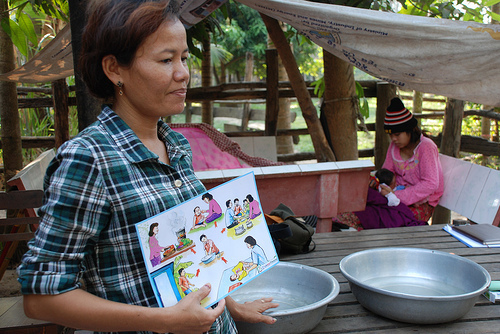
A public education session on water in Cambodia. Photo copyright: Lotus Outreach
About Lotus Outreach: Lotus Outreach is a California-based 501 (c)(3) dedicated to ensuring the education, health and safety of vulnerable women and children in the developing world.
On May 22, 2013, the international community marks the 20th anniversary of World Water Day, established at the 1992 United Nations Conference on Environment and Development as a global day to celebrate fresh water. Lotus Outreach International is marking the occasion by working to increase awareness on a widely ignored, and taboo, barrier to freshwater access in the developing world: fecal contamination of water sources caused by poor hygiene and open defecation.
According to the World Health Organization, diarrhea alone kills 2.2 million people each year, and causes 8.5% of all deaths in Southeast Asia--with children under five being disproportionately affected. Other waterborne disease caused primarily by fecal contamination of food and water sources include typhoid and cholera, both of which have been largely eradicated from the developed world, but infect around 20 million people in the Global South each year.
"The development community is all over water access--building wells, distributing water filters and even handing out water purification drinking straws--but few organizations are willing to have a candid discussion about the real culprit in waterborne disease: human fecal contamination," shares Lotus Outreach's Executive Director Erika Keaveney. "When we allow our discomfort to censor the discussion, we do a great disservice to the communities we serve. The fact is most people in our target villages in rural Cambodia simply do not understand that germs are transmitted via human feces."
Despite significant progress in the past few decades across the spectrum of human development indicators--including life expectancy, education, and maternal health--open defecation is still widespread in Cambodia, with 72% of the rural population engaging in the practice in 2010 (compared to 89% in 1990). Further, hygienic behaviors such as hand-washing after defecation and before food preparation are rarely practiced, with Lotus Outreach community surveys placing the rate of people who wash their hands after defecation at as low as 5% in the mountainous villages of the Pursat province.
Lotus Outreach attributes these troubling statistics to lack of information on preventative health practices: "behavioral change starts with knowledge, which is actually quite easy and inexpensive to spread," shares Keaveney. "We literally bring a microscope into a village, and show moms and kids--for the first time in their lives--what a germ looks like, and explain how they are spread. We also conduct public awareness sessions on hygiene and sanitation--including the importance of hand washing after going to the bathroom and the risks associated with open defecation."
As a part of its hygiene and sanitation programs, Lotus Outreach additionally installed 24 toilets for "model families" in Pursat, with the goal of sparking a cultural shift in toilet use. Indeed, at the beginning of the project in 2009, only 31 families (about 3% of 1,059 total) had toilets. At the end of project in 2012, 200 toilets were installed in the area with 33% of the population reporting using toilets on a regular basis.
Lotus Outreach is not alone in its push to break the silence on the topic of fecal contamination. In August of last year, the Bill and Melinda Gates Foundation announced a $3M grant project to spawn innovation in toilet models that can function without water, electricity or a sewage system--necessary features in the push to expand toilet use in the developing world.
"Our goal is not to minimize the importance of water access," states Keaveney. "Indeed, we have been running critical water access projects since 2007. Our goal this World Water Day is rather to bring attention to an unsexy problem that is largely ignored by the media."
A Cambodian boy enjoying clean water. Photo copyright: Lotus Outreach
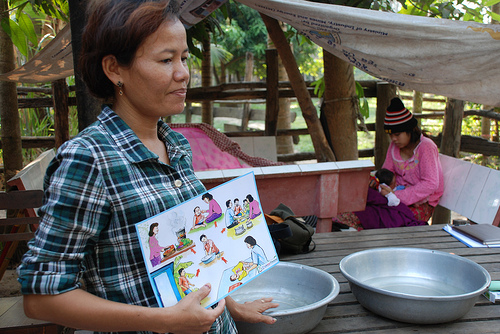
A public education session on water in Cambodia. Photo copyright: Lotus Outreach
About Lotus Outreach: Lotus Outreach is a California-based 501 (c)(3) dedicated to ensuring the education, health and safety of vulnerable women and children in the developing world.
March 18, 2013
Why Is There No Female Dalai Lama?
There is no hope for a female pope, but there might be one for a female Buddhist leader. Read the full article in the Washington Post: http://www.washingtonpost.com/nationa...
March 14, 2013
Cure for Environmental Fatigue: A Conference on Pathways to 100% Renewable Energy
A recent global poll by UK-based research firm Globescan suggests that when it comes to environmental crises, people around the world are becoming less worried. Oddly, the general level of concern in the 22 countries polled seems to be going down, just as the problems are rising. Air pollution, water pollution, species loss, automobile emissions, fresh water shortages, and climate change are getting worse, but people seem to care less.
The New York Times concludes the world has been struck with a case of environmental warning fatigue.
Dr. Hermann Scheer was among the seers warning of this years ago. Former German Parliamentarian and a pioneering architect of Germany's clean energy policies, Scheer sharply criticized the environmental movement for cultivating despair and urged instead a focus on solutions, the cornerstone of which he advocated was transitioning to 100% renewable energy. Many of the world's existential crises after all, including all those mentioned above, are largely or entirely rooted in dependence on non-renewable fossil and nuclear energy sources.
Results of latest polls tracking support for renewable energy suggest maybe Scheer and his ilk were on to something. Recent polls from the U.S. and Europe show desire for replacing conventional energy with renewables is on the rise. The support seems to cross party lines in states like North Carolina, and some believe interest in the issue helped swing the 2012 Presidential election. Even in Germany, where reports have lately blasted the country's aggressive renewable energy program as unpopularly expensive, polls suggest most citizens actually favor the change to renewables.
"I think it's human nature to burn out dwelling on problems, no matter how urgent they are, and to get inspired about solving them," says Diane Moss, Founding Director of the non-profit Renewables 100 Policy Institute, of which Dr. Scheer was a founder before passing away in 2010.
Moss has observed growing enthusiasm for renewable energy development from where she sits. "When we first started Renewables 100 in 2007, our 100% renewable mission was radical. Now among many cities, regions, and businesses, it's becoming the new normal. The international interest we're seeing in the upcoming conference on pathways to 100% renewable energy tells me that the 100% renewable concept is becoming a hot ticket."
Maybe there is a lesson in all this for those trying to address the environmental ills of the world: put a strong dose of solutions in your wake up call or you may end up tiring people out.

Rooftops with Solar Panels in Freiburg, Germany. Photo Copyright: Paul Gipe/wind-works
The New York Times concludes the world has been struck with a case of environmental warning fatigue.
Dr. Hermann Scheer was among the seers warning of this years ago. Former German Parliamentarian and a pioneering architect of Germany's clean energy policies, Scheer sharply criticized the environmental movement for cultivating despair and urged instead a focus on solutions, the cornerstone of which he advocated was transitioning to 100% renewable energy. Many of the world's existential crises after all, including all those mentioned above, are largely or entirely rooted in dependence on non-renewable fossil and nuclear energy sources.
Results of latest polls tracking support for renewable energy suggest maybe Scheer and his ilk were on to something. Recent polls from the U.S. and Europe show desire for replacing conventional energy with renewables is on the rise. The support seems to cross party lines in states like North Carolina, and some believe interest in the issue helped swing the 2012 Presidential election. Even in Germany, where reports have lately blasted the country's aggressive renewable energy program as unpopularly expensive, polls suggest most citizens actually favor the change to renewables.
"I think it's human nature to burn out dwelling on problems, no matter how urgent they are, and to get inspired about solving them," says Diane Moss, Founding Director of the non-profit Renewables 100 Policy Institute, of which Dr. Scheer was a founder before passing away in 2010.
Moss has observed growing enthusiasm for renewable energy development from where she sits. "When we first started Renewables 100 in 2007, our 100% renewable mission was radical. Now among many cities, regions, and businesses, it's becoming the new normal. The international interest we're seeing in the upcoming conference on pathways to 100% renewable energy tells me that the 100% renewable concept is becoming a hot ticket."
Maybe there is a lesson in all this for those trying to address the environmental ills of the world: put a strong dose of solutions in your wake up call or you may end up tiring people out.

Rooftops with Solar Panels in Freiburg, Germany. Photo Copyright: Paul Gipe/wind-works
March 7, 2013
The Government Has Guns, She Has A Pen: Tibetan Poet Tsering Woeser
This International Women's Day, First Lady Michelle Obama and Secretary of State John Kerry will honor ten courageous women, some of which have risked their lives to expose abuse and injustice. Among these women is one fearless Tibetan poet, Tsering Woeser. Read the full blog here: http://www.huffingtonpost.com/michael...
The Government Has Guns, She Has A Pen: Tibetan Poet Tsering Woeser
This International Women's Day, First Lady Michelle Obama and Secretary of State John Kerry will honor ten courageous women, some of which have risked their lives to expose abuse and injustice.
Among these women is one fearless Tibetan poet, Tsering Woeser. As the U.S. Department of State acknowledges: "In a period marked by increasing self-immolations and protests in Tibetan areas of China, Tsering Woeser has emerged as the most prominent Mainland activist speaking out publicly about human rights conditions for China's Tibetan citizens." Tsering Woeser, however, will be unable to accept the award in person, as she has been placed under house arrest again. Just like before, for instance, when she was honored with the Prince Claus Awards in 2011, the Chinese government has refused her request to receive the award.
Born in Lhasa, Tsering Woeser has documented the unrest and self-immolations in Tibet for many years. She has famously said, "You have the guns, I have the pen." Her website, Invisible Tibet, together with her poetry and non-fiction and her embrace of social media platforms like Twitter, have given voice to millions of ethnic Tibetans who are prevented from expressing themselves to the outside world due to government efforts to curtail the flow of information. The English translation of her blog has become a primary source for information about Tibet. She is married to Wang Lixiong, a Chinese scholar and Tibetologist, who has become one of the most outspoken dissidents in China.
The State Department praises Tsering Woeser in the awards statement with these words:
"The International Women of Courage Award represents due recognition of Woeser's courageous efforts to champion justice and rights in Tibet and China," said Mary Beth Markey, President of the International Campaign for Tibet. "This award is not only an acknowledgment of Woeser's personal accomplishments, but also an affirmation of the U.S. government's concern for the Tibetan people in their struggle for rights and dignity."
Among these women is one fearless Tibetan poet, Tsering Woeser. As the U.S. Department of State acknowledges: "In a period marked by increasing self-immolations and protests in Tibetan areas of China, Tsering Woeser has emerged as the most prominent Mainland activist speaking out publicly about human rights conditions for China's Tibetan citizens." Tsering Woeser, however, will be unable to accept the award in person, as she has been placed under house arrest again. Just like before, for instance, when she was honored with the Prince Claus Awards in 2011, the Chinese government has refused her request to receive the award.
Born in Lhasa, Tsering Woeser has documented the unrest and self-immolations in Tibet for many years. She has famously said, "You have the guns, I have the pen." Her website, Invisible Tibet, together with her poetry and non-fiction and her embrace of social media platforms like Twitter, have given voice to millions of ethnic Tibetans who are prevented from expressing themselves to the outside world due to government efforts to curtail the flow of information. The English translation of her blog has become a primary source for information about Tibet. She is married to Wang Lixiong, a Chinese scholar and Tibetologist, who has become one of the most outspoken dissidents in China.
The State Department praises Tsering Woeser in the awards statement with these words:
Despite the constant surveillance of security agents and routinely being placed under house arrest during periods deemed to be politically sensitive, Tsering Woeser bravely persists in documenting the situation for Tibetans, noting that "to bear witness is to give voice to," and asserting that "the more than 100 Tibetans who have expressed their desire to resist the forces of oppression by bathing their bodies in fire are the reason why I will not give up, and why I will not compromise.
"The International Women of Courage Award represents due recognition of Woeser's courageous efforts to champion justice and rights in Tibet and China," said Mary Beth Markey, President of the International Campaign for Tibet. "This award is not only an acknowledgment of Woeser's personal accomplishments, but also an affirmation of the U.S. government's concern for the Tibetan people in their struggle for rights and dignity."