Michaela Haas's Blog, page 4
March 10, 2014
Women's Wisdom for the Modern World: Translating the age-old Tibetan Buddhist Wisdom Into a Pragmatic Path for Western Women
How exactly does motherhood fit in with Buddhism? This is a question many women face when juggling a family life, a job and the sincere aspiration to follow a spiritual path. The charismatic American Buddhist teacher Lama Tsultrim Allione raised this question when she found herself, as she puts it, "cooking in the cauldron of motherhood" as the mother of three after the death of her twin daughter from sudden infant death (SIDS).
Coming from an illustrious East coast academic and publishing family (her grandmother was one of the first women to get a Ph.D. from Harvard-Radcliffe, and her father served as a judge for the Pulitzer Prize in Journalism) she was one of the very first American women ordained as a nun in the Tibetan Buddhist tradition in Nepal in 1970. But after returning from Asia to America, she gave back her vows to raise a family.
The historical Buddha Shakyamuni clearly encouraged nuns and lay women along with men to be the pillars of his community. He was the first religious founder after the Jains who allowed women into the ranks of his order -- a revolutionary decision at the time, more than 2,500 years ago. Yet, he left his infant son and wife in order to search for nirvana.
After the death of her infant daughter, when Tsultrim looked at the life stories of the great saints of her lineage, almost all of them were male, and the few women had either abandoned their children or were celibate nuns. "I had no role models for women in my position, no stories to follow," she says in the new book Dakini Power. "It seemed that because of my choice of disrobing, I had lost my path."
When she could find no comfort in the traditional texts, she made a decision, "Okay, I have to create this for myself and for all the women in a similar situation." In her groundbreaking book Women of Wisdom she sought out six biographies of female Tibetan masters, longing to discover "some thread that would help me in my life -- which was, of course, very different than the lives of the ancient yoginis and yet I felt, their stories would begin to feed me." She connected with the Buddhist principle of the powerful feminine, the Dakini, and she established an impressive retreat center on 700 acres in Colorado, Tara Mandala, which is dedicated to the "enlightened feminine."
She now balances the commitments for her family, three adult married children, and four grandchildren, with the passion to bring century old healing practices to the West.
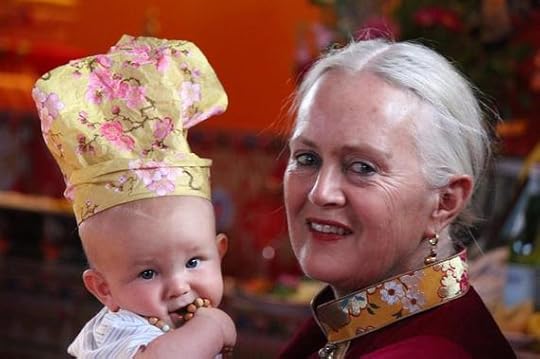
Photo: Tara Mandala
"Women need to become aware of what practices are adapted to our energies and our life situations," she writes in Women of Wisdom. "We cannot be satisfied with just doing something because it is supposed to lead to enlightenment or blindly obeying the edicts of teachers and administrators. We need to observe what actually works."
Starting this spring, Lama Tsultrim Allione has launched "Dakini Wisdom," a multi-lineage collaboration seeking to enhance the understanding of the sacred feminine as expressed through Buddhism's female heritage, wisdom practices and female deities. "More than just a conference, we want to ignite a movement! Dakini Wisdom workshops will be held all over the country, during the next two years, culminating in the Dakini Wisdom Conference in July 2016 at Tara Mandala."
Check out the trailer for the Dutch documentary film about her life! Feeding Your Demons: The Life and Work of Lama Tsultrim Allione will screen this spring in N.Y.C., Los Angeles, Bay Area, Seattle and Boulder.
Coming from an illustrious East coast academic and publishing family (her grandmother was one of the first women to get a Ph.D. from Harvard-Radcliffe, and her father served as a judge for the Pulitzer Prize in Journalism) she was one of the very first American women ordained as a nun in the Tibetan Buddhist tradition in Nepal in 1970. But after returning from Asia to America, she gave back her vows to raise a family.
The historical Buddha Shakyamuni clearly encouraged nuns and lay women along with men to be the pillars of his community. He was the first religious founder after the Jains who allowed women into the ranks of his order -- a revolutionary decision at the time, more than 2,500 years ago. Yet, he left his infant son and wife in order to search for nirvana.
After the death of her infant daughter, when Tsultrim looked at the life stories of the great saints of her lineage, almost all of them were male, and the few women had either abandoned their children or were celibate nuns. "I had no role models for women in my position, no stories to follow," she says in the new book Dakini Power. "It seemed that because of my choice of disrobing, I had lost my path."
When she could find no comfort in the traditional texts, she made a decision, "Okay, I have to create this for myself and for all the women in a similar situation." In her groundbreaking book Women of Wisdom she sought out six biographies of female Tibetan masters, longing to discover "some thread that would help me in my life -- which was, of course, very different than the lives of the ancient yoginis and yet I felt, their stories would begin to feed me." She connected with the Buddhist principle of the powerful feminine, the Dakini, and she established an impressive retreat center on 700 acres in Colorado, Tara Mandala, which is dedicated to the "enlightened feminine."
She now balances the commitments for her family, three adult married children, and four grandchildren, with the passion to bring century old healing practices to the West.
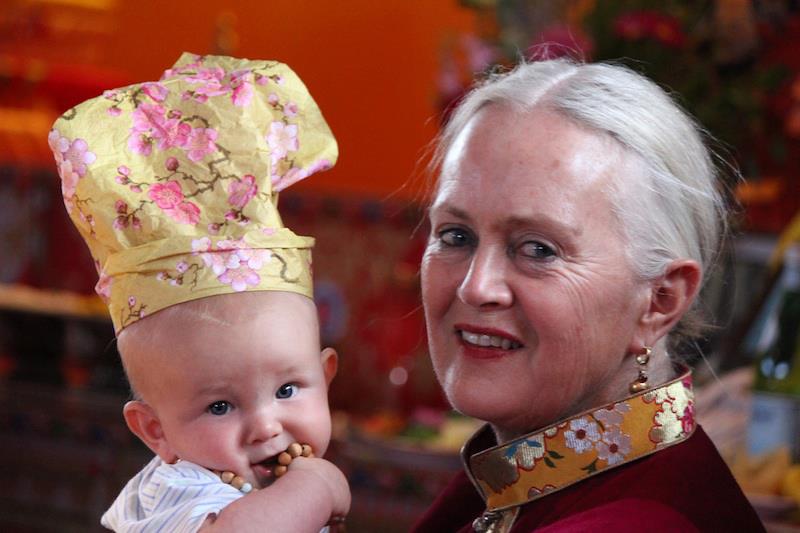
Photo: Tara Mandala
"Women need to become aware of what practices are adapted to our energies and our life situations," she writes in Women of Wisdom. "We cannot be satisfied with just doing something because it is supposed to lead to enlightenment or blindly obeying the edicts of teachers and administrators. We need to observe what actually works."
Starting this spring, Lama Tsultrim Allione has launched "Dakini Wisdom," a multi-lineage collaboration seeking to enhance the understanding of the sacred feminine as expressed through Buddhism's female heritage, wisdom practices and female deities. "More than just a conference, we want to ignite a movement! Dakini Wisdom workshops will be held all over the country, during the next two years, culminating in the Dakini Wisdom Conference in July 2016 at Tara Mandala."
Check out the trailer for the Dutch documentary film about her life! Feeding Your Demons: The Life and Work of Lama Tsultrim Allione will screen this spring in N.Y.C., Los Angeles, Bay Area, Seattle and Boulder.


July 29, 2013
'Radically Working With Your Own Mind': Women's Wisdom by Ven. Robina Courtin
What I find most inspiring about accomplished Buddhist teachers is how they live Buddhist wisdom in everyday life, how they carry themselves not only on the teaching throne, but in personally challenging situations, how they deal with the messy stuff. What can we learn from them?
Ven. Robina Courtin, a dynamic and renowned Australian teacher, has had a particularly turbulent life. Growing up as a Catholic girl in a violent, even abusive family, in Australia, she trained as a classical singer before embarking on a journey searching for "truth, the big picture, a coherent worldview, and freedom." She joined black politics in London, became a radical lesbian separatist feminist, and an accomplished martial arts fighter, before she found her calling: In the late 1970s, at age 31, she ordained as a Buddhist nun.
Since then she has worked full time for the Foundation for the Preservation of the Mahayana Teachings (FPMT). She has served as editorial director of Wisdom Publications, editor of Mandala Magazine, and the executive director of the Liberation Prison Project. She does not really have a home, but travels tirelessly to teach around the world. "I'm just the same radical person," she said in our interview for Dakini Power when I asked about her radical political past. "I'm radically working on my own mind. Not believing in the way things appear to us: you can't get more radical than that. I want to uproot the causes of all suffering, which are mental. In that, I am more radical than ever."

Robina Courtin (right, with her sister Jan) transformed from being a radical hippie.... (Photo Copyright Courtin Family Collection)
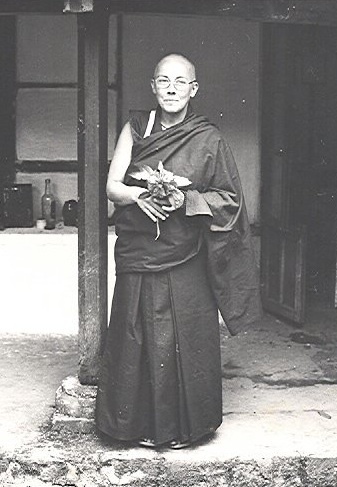
To becoming a Buddhist nun in 1978 (Photo Copyright Courtin Family Collection).
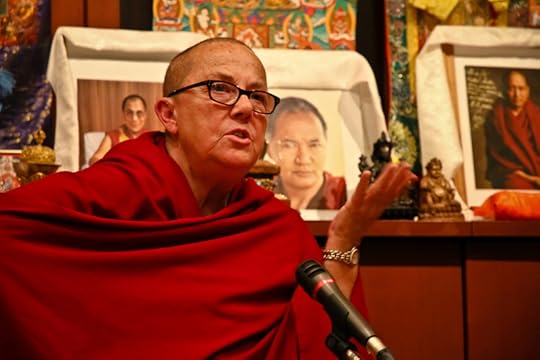
Renowned Buddhist teacher Ven. Robina Courtin
She learned to face even violent encounters with clarity and fearlessness. "Learning to be fearless is what practice is all about, isn't it?" Quoting her teacher, Lama Zopa, she says, "When we've realized emptiness, there is no fear." Also, when we have developed genuine love and compassion we would be fearless. The logical consequence of practice is to go beyond fear. And what would this practice look like? Easy. If every day we happily welcome the things that make us angry, isn't this becoming fearless? If we forgive the person who harms us, isn't that becoming fearless? If we praise instead of criticize, isn't that becoming fearless? It's not complicated. It's just difficult, because we're addicted to giving in to ego, which is what perpetuates fear."
Her amazing life, and her work with prisoners have been featured in the documentary film Chasing Buddha by her nephew Amiel Courtin-Wilson, which has just been newly released on DVD.
Ven. Robina Courtin, a dynamic and renowned Australian teacher, has had a particularly turbulent life. Growing up as a Catholic girl in a violent, even abusive family, in Australia, she trained as a classical singer before embarking on a journey searching for "truth, the big picture, a coherent worldview, and freedom." She joined black politics in London, became a radical lesbian separatist feminist, and an accomplished martial arts fighter, before she found her calling: In the late 1970s, at age 31, she ordained as a Buddhist nun.
Since then she has worked full time for the Foundation for the Preservation of the Mahayana Teachings (FPMT). She has served as editorial director of Wisdom Publications, editor of Mandala Magazine, and the executive director of the Liberation Prison Project. She does not really have a home, but travels tirelessly to teach around the world. "I'm just the same radical person," she said in our interview for Dakini Power when I asked about her radical political past. "I'm radically working on my own mind. Not believing in the way things appear to us: you can't get more radical than that. I want to uproot the causes of all suffering, which are mental. In that, I am more radical than ever."
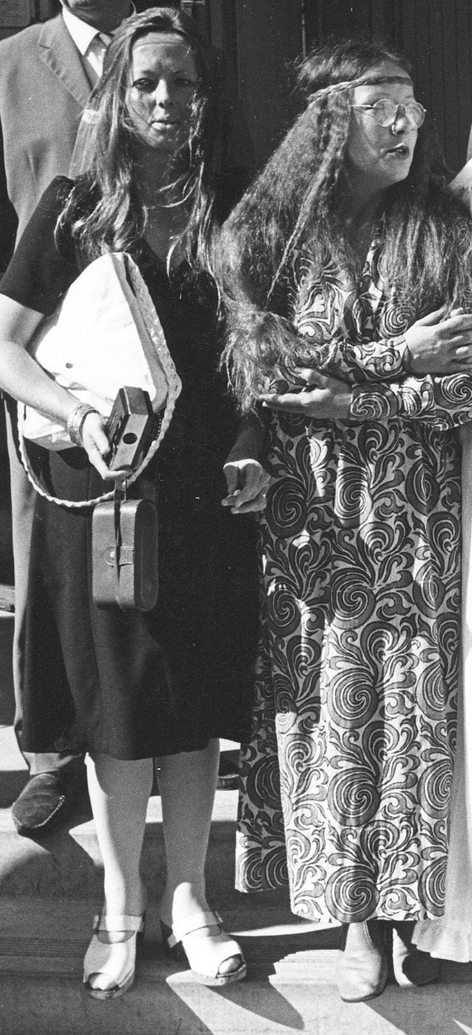
Robina Courtin (right, with her sister Jan) transformed from being a radical hippie.... (Photo Copyright Courtin Family Collection)
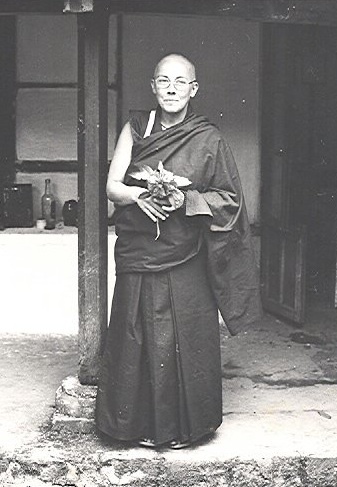
To becoming a Buddhist nun in 1978 (Photo Copyright Courtin Family Collection).
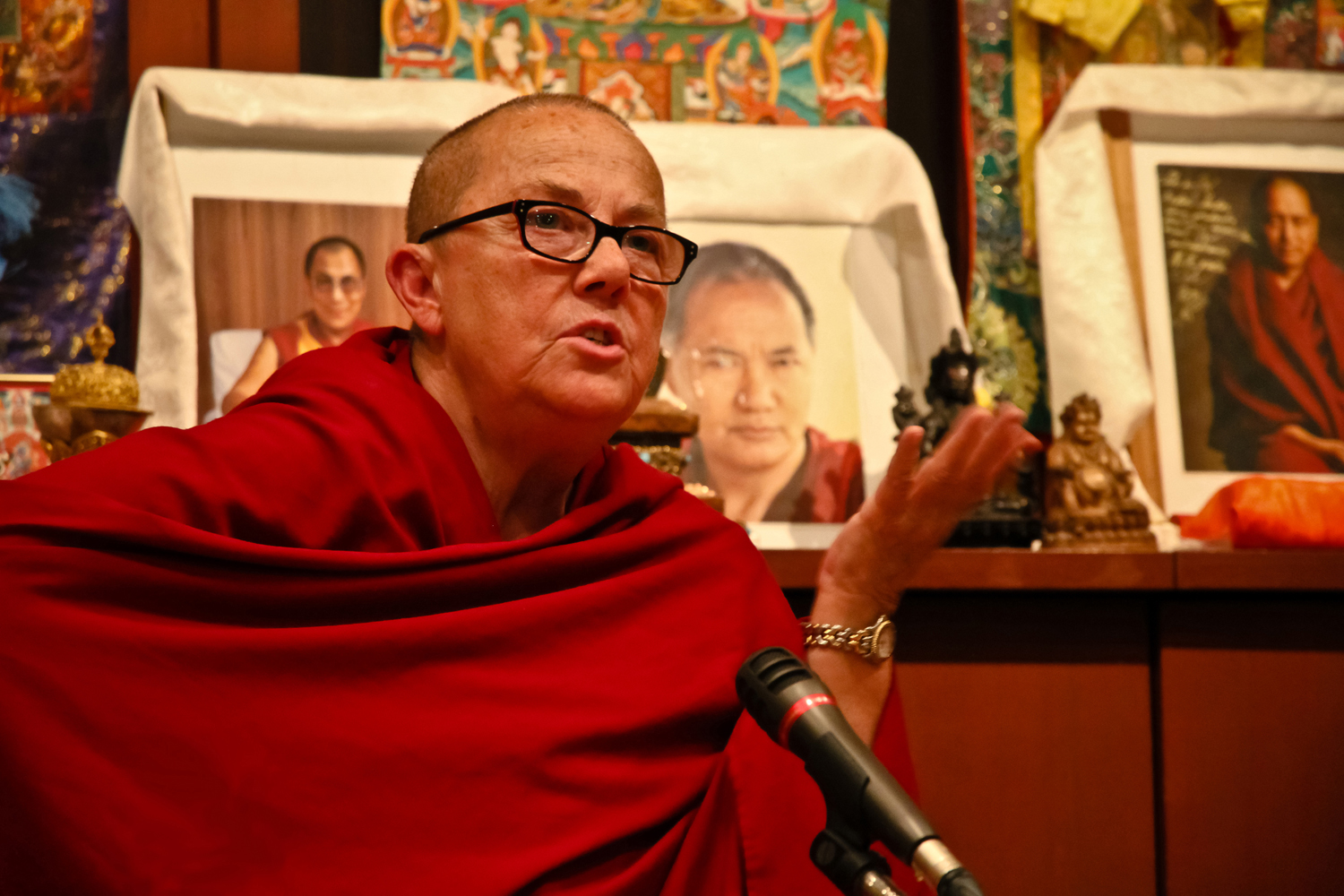
Renowned Buddhist teacher Ven. Robina Courtin
She learned to face even violent encounters with clarity and fearlessness. "Learning to be fearless is what practice is all about, isn't it?" Quoting her teacher, Lama Zopa, she says, "When we've realized emptiness, there is no fear." Also, when we have developed genuine love and compassion we would be fearless. The logical consequence of practice is to go beyond fear. And what would this practice look like? Easy. If every day we happily welcome the things that make us angry, isn't this becoming fearless? If we forgive the person who harms us, isn't that becoming fearless? If we praise instead of criticize, isn't that becoming fearless? It's not complicated. It's just difficult, because we're addicted to giving in to ego, which is what perpetuates fear."
Her amazing life, and her work with prisoners have been featured in the documentary film Chasing Buddha by her nephew Amiel Courtin-Wilson, which has just been newly released on DVD.
July 27, 2013
The Buddhist woman bridging worlds: Jetsun Khandro Rinpoche
To condense more energy in five feet, two inches is unimaginable. Like a high-powered, nimble, compact car, Jetsun Khandro Rinpoche zoomed through the Verizon Center in Washington, D.C. at top speed. With the resolute gestures of a seasoned choirmaster, she directed 175 volunteers, shepherding them into a smiling army of ushers. During the multiple day visit of His Holiness the Fourteenth Dalai Lama to the Capital in 2011, she and her team worked around the clock behind the scenes to make his rare Kalachakra event in the West a success. Lack of sleep never slows Khandro Rinpoche down. “Being available; helping whenever, wherever, whomever” is how she defines Buddhism in action.
The Verizon Center provided a fitting snapshot of what Khandro Rinpoche is all about: making a difference without making a fuss; being of service while escaping the limelight. “Service” might be the word she uses most, and rather than just preaching, she lives it. “She used to be like an AK47, just boom boom boom, getting things done,” her sister Jetsun Dechen Paldron quips. “She thinks she has mellowed out, but while she might have become more focused, she is still just so much energy one person almost cannot contain it.”
Read the full post in the Washington Post
http://www.washingtonpost.com/blogs/o...
The Verizon Center provided a fitting snapshot of what Khandro Rinpoche is all about: making a difference without making a fuss; being of service while escaping the limelight. “Service” might be the word she uses most, and rather than just preaching, she lives it. “She used to be like an AK47, just boom boom boom, getting things done,” her sister Jetsun Dechen Paldron quips. “She thinks she has mellowed out, but while she might have become more focused, she is still just so much energy one person almost cannot contain it.”
Read the full post in the Washington Post
http://www.washingtonpost.com/blogs/o...
July 18, 2013
The Dalai Lama: 'This Century Should Be the Century of Love and Compassion'
Sangye Khandro has translated and mastered some of the most profound Buddhist teachings. Born as a Mormon in Oregon as Nanci Gay Gustafson, she became one of the earliest Americans to explore the community of Tibetan refugees in North India in the early seventies. Many times I have heard her translate some of the most complex topics from the Tibetan language with a seemingly effortless grace. Her well-known translator colleague B. Alan Wallace remarked that she might be the Western woman who has received more Tibetan Buddhist teachings and transmissions than anybody else.
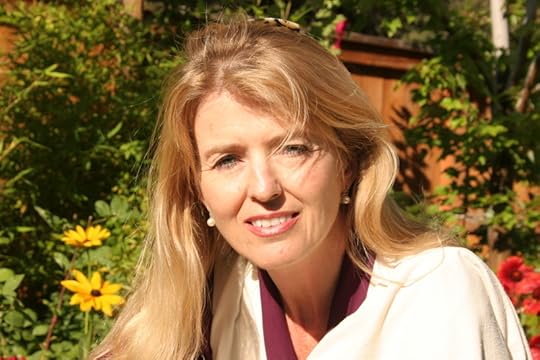
Sangye Khandro in Tashi Chöling, Oregon. Photo Copyright David Gordon
Now in her late fifties, she is strikingly beautiful by any definition, but you will likely first notice her vibrant, spacious blue eyes. She lives on the beautiful 100 acres of Tashi Chöling, a retreat and teaching center in the mountains near Ashland that she founded together with her husband and teacher, Gyatrul Rinpoche. She has translated for the finest Tibetan teachers, including Dudjom Rinpoche, Thinley Norbu Rinpoche, Penor Rinpoche, and Khenpo Namdrol Rinpoche. Despite receiving many invitations, she rarely agrees to teach, preferring a reclusive lifestyle focusing on translations and retreats. Together with her partner, Lama Chönam, she has founded the renowned translation committee Light of Berotsana. Among her many published translations is the biography of Mandarava, the Indian consort of Padmasambhava who is credited with establishing Vajrayana Buddhism in Tibet. In my new book Dakini Power, she speaks candidly about her personal path, her relationships with her teacher, and "the mistaken notion that Vajrayana is male-oriented."
In this beautiful video by Vimala Video she shares her insight into what it takes to translate the Buddhist teachings authentically, quoting the Dalai Lama`s recent remarks that "this century should be the century of love and compassion."
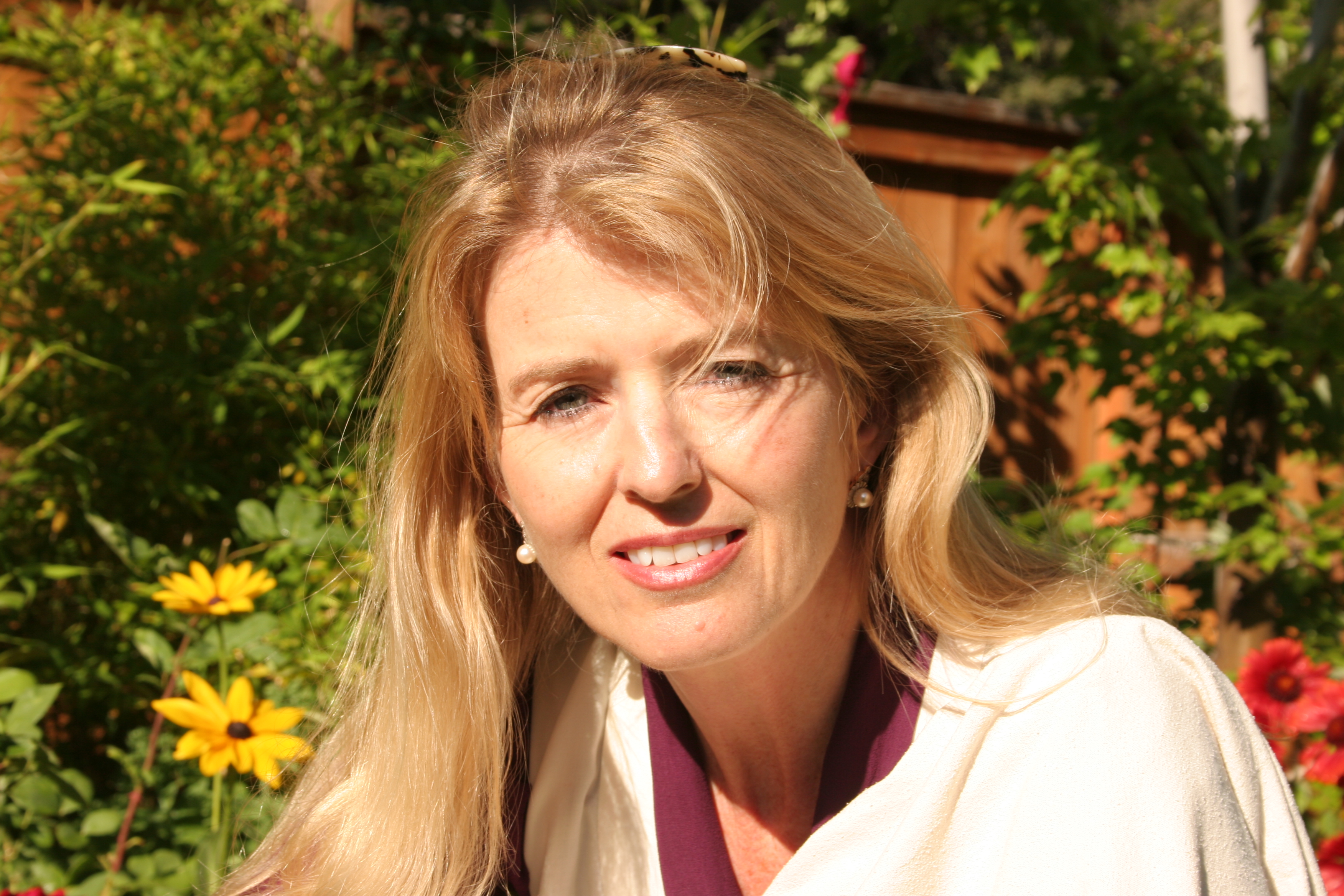
Sangye Khandro in Tashi Chöling, Oregon. Photo Copyright David Gordon
Now in her late fifties, she is strikingly beautiful by any definition, but you will likely first notice her vibrant, spacious blue eyes. She lives on the beautiful 100 acres of Tashi Chöling, a retreat and teaching center in the mountains near Ashland that she founded together with her husband and teacher, Gyatrul Rinpoche. She has translated for the finest Tibetan teachers, including Dudjom Rinpoche, Thinley Norbu Rinpoche, Penor Rinpoche, and Khenpo Namdrol Rinpoche. Despite receiving many invitations, she rarely agrees to teach, preferring a reclusive lifestyle focusing on translations and retreats. Together with her partner, Lama Chönam, she has founded the renowned translation committee Light of Berotsana. Among her many published translations is the biography of Mandarava, the Indian consort of Padmasambhava who is credited with establishing Vajrayana Buddhism in Tibet. In my new book Dakini Power, she speaks candidly about her personal path, her relationships with her teacher, and "the mistaken notion that Vajrayana is male-oriented."
In this beautiful video by Vimala Video she shares her insight into what it takes to translate the Buddhist teachings authentically, quoting the Dalai Lama`s recent remarks that "this century should be the century of love and compassion."
July 16, 2013
Learning to Break Free: Women's Wisdom for the Modern World by Khandro Rinpoche
A young Tibetan uses her unique status to empower Buddhist women in the East and West.
Jetsun Khandro Rinpoche's position in the Buddhist world is entirely unique. She is one of the very few fully trained female incarnations in the Tibetan tradition. Born in 1968 as the daughter of the late Kyabjé Mindrolling Trichen, she, her younger sister and her mother were the only women growing up among 400 monks at her father's monastery in India. With her unparalleled upbringing and training, she has built a reputation as an uncompromising, sharp-witted and unconventional teacher who is never afraid to "rock the boat" as she continues to question the responsibility and role of women in the Buddhist society. Though Khandro Rinpoche downplays her own significance, her influence both in the East and West can hardly be overstated. Educating and empowering women is at the core of her work. In the book Dakini Power, she opens up about her upbringing, her family and her vision: "Maybe I can be a medium through which more women become confident, dynamic leaders."
The Mindrolling lineage is one of the rare Tibetan traditions that do not distinguish between male and female heirs. Now one of the most influential and vibrant women teachers, Khandro Rinpoche jetsets tirelessly between her late father's monastery and her own two nunneries in India, her American headquarters Lotus Gardens in the Shenandoah Mountains in Virginia, and an ever-increasing number of Buddhist communities who are keen to benefit from her sharp acumen. In addition to receiving the traditional training usually reserved for male teachers, she also studied journalism, business management, homeopathy and sciences.
Why are there not more women like her, not more female Tibetan Buddhist teachers? Khandro Rinpoche points out that there were many realized female practitioners in Tibet, "but they stayed away from the great monasteries, the powerhouses." Even if they did not assume lofty titles or hold court in monasteries, the Tibetans revered them. At the same time, she agrees that the need for female teachers is immense."
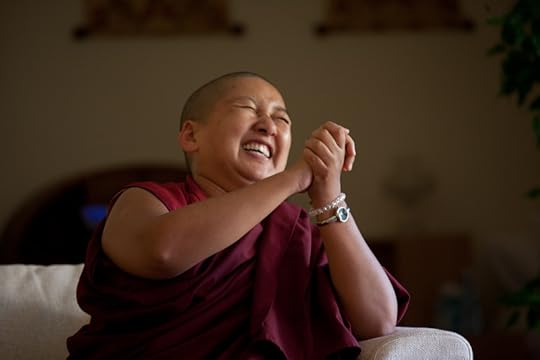
Khandro Rinpoche. Photo Copyright Volker Dencks
In this interview with Dutch filmmaker Babeth VanLoo, Khandro Rinpoche speaks about encouraging strong female leaders: "You have to learn to break free. You have to learn to be a little less predictable."
The trailer is part of a longer documentary for the Buddhist Broadcasting Foundation:
Jetsun Khandro Rinpoche's position in the Buddhist world is entirely unique. She is one of the very few fully trained female incarnations in the Tibetan tradition. Born in 1968 as the daughter of the late Kyabjé Mindrolling Trichen, she, her younger sister and her mother were the only women growing up among 400 monks at her father's monastery in India. With her unparalleled upbringing and training, she has built a reputation as an uncompromising, sharp-witted and unconventional teacher who is never afraid to "rock the boat" as she continues to question the responsibility and role of women in the Buddhist society. Though Khandro Rinpoche downplays her own significance, her influence both in the East and West can hardly be overstated. Educating and empowering women is at the core of her work. In the book Dakini Power, she opens up about her upbringing, her family and her vision: "Maybe I can be a medium through which more women become confident, dynamic leaders."
The Mindrolling lineage is one of the rare Tibetan traditions that do not distinguish between male and female heirs. Now one of the most influential and vibrant women teachers, Khandro Rinpoche jetsets tirelessly between her late father's monastery and her own two nunneries in India, her American headquarters Lotus Gardens in the Shenandoah Mountains in Virginia, and an ever-increasing number of Buddhist communities who are keen to benefit from her sharp acumen. In addition to receiving the traditional training usually reserved for male teachers, she also studied journalism, business management, homeopathy and sciences.
Why are there not more women like her, not more female Tibetan Buddhist teachers? Khandro Rinpoche points out that there were many realized female practitioners in Tibet, "but they stayed away from the great monasteries, the powerhouses." Even if they did not assume lofty titles or hold court in monasteries, the Tibetans revered them. At the same time, she agrees that the need for female teachers is immense."
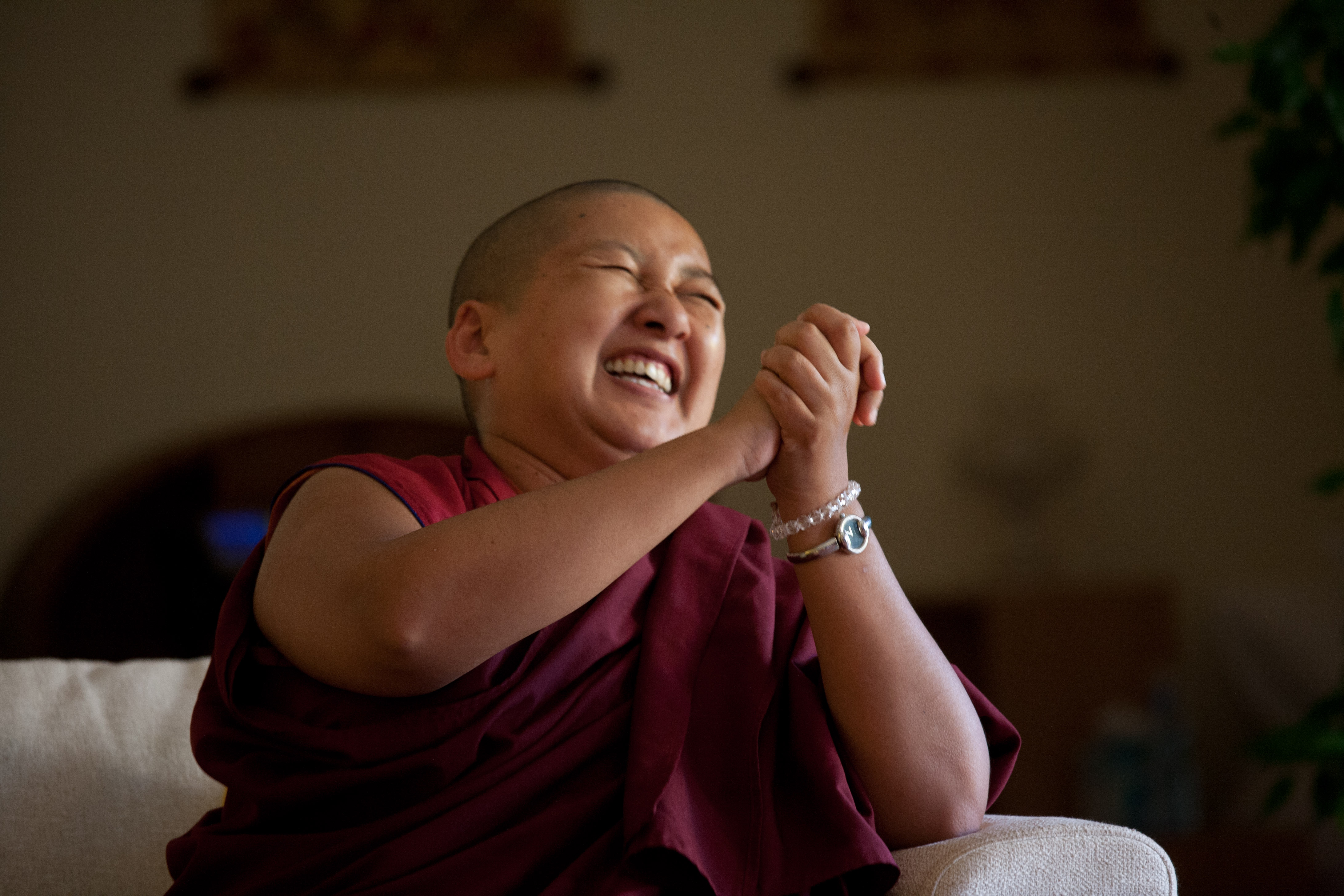
Khandro Rinpoche. Photo Copyright Volker Dencks
In this interview with Dutch filmmaker Babeth VanLoo, Khandro Rinpoche speaks about encouraging strong female leaders: "You have to learn to break free. You have to learn to be a little less predictable."
The trailer is part of a longer documentary for the Buddhist Broadcasting Foundation:
July 3, 2013
Why Buddhists Should Support Gay Marriage
The Supreme Court decision on marriage equality has ignited a renewed debate among religious leaders. Predictably, some conservative religious leaders have protested against the decision to recognize same-sex marriages. As a Buddhist author, I often get asked by colleagues and students: What did the Buddha say about homosexuality? The short answer is simple: nothing. As far as we know, he never mentioned it, and some scholars regard this as a quiet acceptance on his part. But many of his followers in the centuries afterwards voiced strong opinions.
Read the whole article in the Washington Post: http://www.washingtonpost.com/blogs/o...
Read the whole article in the Washington Post: http://www.washingtonpost.com/blogs/o...
June 18, 2013
Women's Wisdom, Part 3: Pema Ch��dr��n's Birthday Wish -- Practicing Peace
Facing what scares us is Pema Chödrön's signature topic. A glance at the book and audio titles of the most beloved female Western Buddhist teacher provides a first-aid kit for handling life: When Things Fall Apart, we have No Time to Lose so that we Start Where We Are, and go to the Places That Scare You. These slogans encapsulate Pema's heart advice. Where everybody else tells us to run away, to distract ourselves, to seek comfort, or even to retaliate, Pema Chödrön always nudges us to stay in the present moment where it hurts -- raw, naked, and uncomfortable.
The first sentence in her most successful book, When Things Fall Apart, reads: "Embarking on the spiritual journey is like getting into a very small boat and setting out on the ocean to search for unknown lands." Where other teachers might promise their students that meditation will make them feel better, more peaceful, and more grounded, Pema breaks the bad news (or good news, if you're fond of the truth) right at the beginning: There is no solid ground to be found, at least not in Buddhism, certainly not in her teachings, nor anywhere else.
The first time I met Pema, about ten years ago, in the Colorado mountains, she was not sitting on a stage or wearing robes. In an old pair of work pants and a worn maroon pullover, she was lounging on the wooden bench in front of the tool shed at the retreat center of her teacher Dzigar Kongtrul Rinpoche. This is where she spends the bulk of her time now: in retreat, either in Colorado or in Nova Scotia at the monastery Gampo Abbey that she helps guide. She is probably the first American Tibetan Buddhist nun who became fully ordained and has established the Pema Chödrön Foundation to support her monastic community, yet she teaches no more than two or three public programs per year, with opportunities to meet her in person becoming exceedingly rare. In fact, she has worked hard to be left alone for most of the time and just spent another year entirely in retreat despite the urgent wish of millions to connect with her. "It is a popular notion that people choose to live in a monastery to escape or hide from the world," Pema says about life at Gampo Abbey, "In reality, the intensity and simplicity of abbey life demand that we become more intimately involved with life, a life not driven by personal concerns or habitual patterns."
Pema's teachings are a rare gift, and what I love most about her is that her success is surely also grounded in the fact that she herself embodies her own advice. "The first step is to develop unconditional friendship with yourself," she taught at a weekend in the Bay Area. "Unconditional friendship means staying open when you want to shut down, when it is just too painful, too embarrassing, too unpleasant, too hateful what you see in yourself. The first step is looking at yourself with a feeling of gentleness and kindness."
This is a precise description of Pema Chödrön herself. She is extremely easy to be with; everything is simple and straightforward around her, with no posturing necessary. I had the good fortune of spending some time with her in the mountains, which sparked the research for a chapter about her in my book Dakini Power that describes the lessons she learned when her own life fell apart, and her transformation from the Catholic elementary school teacher named Deirdre Blomfield-Brown into a student of Chögyam Trungpa Rinpoche and one of the most successful Western Buddhist teachers. She is the teacher I am personally most indebted and grateful to.
She often teaches about curiosity as the key ingredient of her spiritual life, and she does indeed appear to look out on life constantly wondering, open minded, with an almost childlike curiosity. She never forgets to thank anybody who does her the smallest favor, and despite being a successful bestselling author and teacher, she has no detectable arrogance whatsoever. When I carried a few propane tanks to her retreat cabin, she gave me a color painting of a joyful nun as a gift, with one of her favorite lines from the Buddhist teachings: "Always keep only a joyful mind!" It still hangs above my desk, because it reminds me of her: Even when weighed down with back pain or other sorrows, she lives up to that slogan, keeping a joyful spirit.
With her 77th birthday approaching next month, she has made a birthday wish: practicing peace. We can`t work for peace in the world unless we practice it within ourselves, right? Pema has recorded a teaching just for this occasion for the people participating in the world wide retreat, offering advice, encouragement, and meditation instruction for anyone willing to share her birthday wish. Last year, 11.000 people participated. Her deepest hope is that this will help us plant the seed of peace in our own hearts, in our homes and in our communities Happy birthday, Pema!

An eye-twinkling comparison of Pema Chödrön with an icon from a different era
Copyright by the artist Noa P. Kaplan who offered this collage to Pema at the Smile at Fear Retreat in the Bay Area
Here is an example of her teaching on what it means to be fully alive:
The first sentence in her most successful book, When Things Fall Apart, reads: "Embarking on the spiritual journey is like getting into a very small boat and setting out on the ocean to search for unknown lands." Where other teachers might promise their students that meditation will make them feel better, more peaceful, and more grounded, Pema breaks the bad news (or good news, if you're fond of the truth) right at the beginning: There is no solid ground to be found, at least not in Buddhism, certainly not in her teachings, nor anywhere else.
The first time I met Pema, about ten years ago, in the Colorado mountains, she was not sitting on a stage or wearing robes. In an old pair of work pants and a worn maroon pullover, she was lounging on the wooden bench in front of the tool shed at the retreat center of her teacher Dzigar Kongtrul Rinpoche. This is where she spends the bulk of her time now: in retreat, either in Colorado or in Nova Scotia at the monastery Gampo Abbey that she helps guide. She is probably the first American Tibetan Buddhist nun who became fully ordained and has established the Pema Chödrön Foundation to support her monastic community, yet she teaches no more than two or three public programs per year, with opportunities to meet her in person becoming exceedingly rare. In fact, she has worked hard to be left alone for most of the time and just spent another year entirely in retreat despite the urgent wish of millions to connect with her. "It is a popular notion that people choose to live in a monastery to escape or hide from the world," Pema says about life at Gampo Abbey, "In reality, the intensity and simplicity of abbey life demand that we become more intimately involved with life, a life not driven by personal concerns or habitual patterns."
Pema's teachings are a rare gift, and what I love most about her is that her success is surely also grounded in the fact that she herself embodies her own advice. "The first step is to develop unconditional friendship with yourself," she taught at a weekend in the Bay Area. "Unconditional friendship means staying open when you want to shut down, when it is just too painful, too embarrassing, too unpleasant, too hateful what you see in yourself. The first step is looking at yourself with a feeling of gentleness and kindness."
This is a precise description of Pema Chödrön herself. She is extremely easy to be with; everything is simple and straightforward around her, with no posturing necessary. I had the good fortune of spending some time with her in the mountains, which sparked the research for a chapter about her in my book Dakini Power that describes the lessons she learned when her own life fell apart, and her transformation from the Catholic elementary school teacher named Deirdre Blomfield-Brown into a student of Chögyam Trungpa Rinpoche and one of the most successful Western Buddhist teachers. She is the teacher I am personally most indebted and grateful to.
She often teaches about curiosity as the key ingredient of her spiritual life, and she does indeed appear to look out on life constantly wondering, open minded, with an almost childlike curiosity. She never forgets to thank anybody who does her the smallest favor, and despite being a successful bestselling author and teacher, she has no detectable arrogance whatsoever. When I carried a few propane tanks to her retreat cabin, she gave me a color painting of a joyful nun as a gift, with one of her favorite lines from the Buddhist teachings: "Always keep only a joyful mind!" It still hangs above my desk, because it reminds me of her: Even when weighed down with back pain or other sorrows, she lives up to that slogan, keeping a joyful spirit.
With her 77th birthday approaching next month, she has made a birthday wish: practicing peace. We can`t work for peace in the world unless we practice it within ourselves, right? Pema has recorded a teaching just for this occasion for the people participating in the world wide retreat, offering advice, encouragement, and meditation instruction for anyone willing to share her birthday wish. Last year, 11.000 people participated. Her deepest hope is that this will help us plant the seed of peace in our own hearts, in our homes and in our communities Happy birthday, Pema!

An eye-twinkling comparison of Pema Chödrön with an icon from a different era
Copyright by the artist Noa P. Kaplan who offered this collage to Pema at the Smile at Fear Retreat in the Bay Area
Here is an example of her teaching on what it means to be fully alive:
Women's Wisdom, Part 3: Pema Chödrön's Birthday Wish -- Practicing Peace
Facing what scares us is Pema Chödrön's signature topic. A glance at the book and audio titles of the most beloved female Western Buddhist teacher provides a first-aid kit for handling life: When Things Fall Apart, we have No Time to Lose so that we Start Where We Are, and go to the Places That Scare You. These slogans encapsulate Pema's heart advice. Where everybody else tells us to run away, to distract ourselves, to seek comfort, or even to retaliate, Pema Chödrön always nudges us to stay in the present moment where it hurts -- raw, naked, and uncomfortable.
The first sentence in her most successful book, When Things Fall Apart, reads: "Embarking on the spiritual journey is like getting into a very small boat and setting out on the ocean to search for unknown lands." Where other teachers might promise their students that meditation will make them feel better, more peaceful, and more grounded, Pema breaks the bad news (or good news, if you're fond of the truth) right at the beginning: There is no solid ground to be found, at least not in Buddhism, certainly not in her teachings, nor anywhere else.
The first time I met Pema, about ten years ago, in the Colorado mountains, she was not sitting on a stage or wearing robes. In an old pair of work pants and a worn maroon pullover, she was lounging on the wooden bench in front of the tool shed at the retreat center of her teacher Dzigar Kongtrul Rinpoche. This is where she spends the bulk of her time now: in retreat, either in Colorado or in Nova Scotia at the monastery Gampo Abbey that she helps guide. She is probably the first American Tibetan Buddhist nun who became fully ordained and has established the Pema Chödrön Foundation to support her monastic community, yet she teaches no more than two or three public programs per year, with opportunities to meet her in person becoming exceedingly rare. In fact, she has worked hard to be left alone for most of the time and just spent another year entirely in retreat despite the urgent wish of millions to connect with her. "It is a popular notion that people choose to live in a monastery to escape or hide from the world," Pema says about life at Gampo Abbey, "In reality, the intensity and simplicity of abbey life demand that we become more intimately involved with life, a life not driven by personal concerns or habitual patterns."
Pema's teachings are a rare gift, and what I love most about her is that her success is surely also grounded in the fact that she herself embodies her own advice. "The first step is to develop unconditional friendship with yourself," she taught at a weekend in the Bay Area. "Unconditional friendship means staying open when you want to shut down, when it is just too painful, too embarrassing, too unpleasant, too hateful what you see in yourself. The first step is looking at yourself with a feeling of gentleness and kindness."
This is a precise description of Pema Chödrön herself. She is extremely easy to be with; everything is simple and straightforward around her, with no posturing necessary. I had the good fortune of spending some time with her in the mountains, which sparked the research for a chapter about her in my book Dakini Power that describes the lessons she learned when her own life fell apart, and her transformation from the Catholic elementary school teacher named Deirdre Blomfield-Brown into a student of Chögyam Trungpa Rinpoche and one of the most successful Western Buddhist teachers. She is the teacher I am personally most indebted and grateful to.
She often teaches about curiosity as the key ingredient of her spiritual life, and she does indeed appear to look out on life constantly wondering, open minded, with an almost childlike curiosity. She never forgets to thank anybody who does her the smallest favor, and despite being a successful bestselling author and teacher, she has no detectable arrogance whatsoever. When I carried a few propane tanks to her retreat cabin, she gave me a color painting of a joyful nun as a gift, with one of her favorite lines from the Buddhist teachings: "Always keep only a joyful mind!" It still hangs above my desk, because it reminds me of her: Even when weighed down with back pain or other sorrows, she lives up to that slogan, keeping a joyful spirit.
With her 77th birthday approaching next month, she has made a birthday wish: practicing peace. We can`t work for peace in the world unless we practice it within ourselves, right? Pema has recorded a teaching just for this occasion for the people participating in the world wide retreat, offering advice, encouragement, and meditation instruction for anyone willing to share her birthday wish. Last year, 11.000 people participated. Her deepest hope is that this will help us plant the seed of peace in our own hearts, in our homes and in our communities Happy birthday, Pema!
An eye-twinkling comparison of Pema Chödrön with an icon from a different era
Copyright by the artist Noa P. Kaplan who offered this collage to Pema at the Smile at Fear Retreat in the Bay Area
Here is an example of her teaching on what it means to be fully alive:
The first sentence in her most successful book, When Things Fall Apart, reads: "Embarking on the spiritual journey is like getting into a very small boat and setting out on the ocean to search for unknown lands." Where other teachers might promise their students that meditation will make them feel better, more peaceful, and more grounded, Pema breaks the bad news (or good news, if you're fond of the truth) right at the beginning: There is no solid ground to be found, at least not in Buddhism, certainly not in her teachings, nor anywhere else.
The first time I met Pema, about ten years ago, in the Colorado mountains, she was not sitting on a stage or wearing robes. In an old pair of work pants and a worn maroon pullover, she was lounging on the wooden bench in front of the tool shed at the retreat center of her teacher Dzigar Kongtrul Rinpoche. This is where she spends the bulk of her time now: in retreat, either in Colorado or in Nova Scotia at the monastery Gampo Abbey that she helps guide. She is probably the first American Tibetan Buddhist nun who became fully ordained and has established the Pema Chödrön Foundation to support her monastic community, yet she teaches no more than two or three public programs per year, with opportunities to meet her in person becoming exceedingly rare. In fact, she has worked hard to be left alone for most of the time and just spent another year entirely in retreat despite the urgent wish of millions to connect with her. "It is a popular notion that people choose to live in a monastery to escape or hide from the world," Pema says about life at Gampo Abbey, "In reality, the intensity and simplicity of abbey life demand that we become more intimately involved with life, a life not driven by personal concerns or habitual patterns."
Pema's teachings are a rare gift, and what I love most about her is that her success is surely also grounded in the fact that she herself embodies her own advice. "The first step is to develop unconditional friendship with yourself," she taught at a weekend in the Bay Area. "Unconditional friendship means staying open when you want to shut down, when it is just too painful, too embarrassing, too unpleasant, too hateful what you see in yourself. The first step is looking at yourself with a feeling of gentleness and kindness."
This is a precise description of Pema Chödrön herself. She is extremely easy to be with; everything is simple and straightforward around her, with no posturing necessary. I had the good fortune of spending some time with her in the mountains, which sparked the research for a chapter about her in my book Dakini Power that describes the lessons she learned when her own life fell apart, and her transformation from the Catholic elementary school teacher named Deirdre Blomfield-Brown into a student of Chögyam Trungpa Rinpoche and one of the most successful Western Buddhist teachers. She is the teacher I am personally most indebted and grateful to.
She often teaches about curiosity as the key ingredient of her spiritual life, and she does indeed appear to look out on life constantly wondering, open minded, with an almost childlike curiosity. She never forgets to thank anybody who does her the smallest favor, and despite being a successful bestselling author and teacher, she has no detectable arrogance whatsoever. When I carried a few propane tanks to her retreat cabin, she gave me a color painting of a joyful nun as a gift, with one of her favorite lines from the Buddhist teachings: "Always keep only a joyful mind!" It still hangs above my desk, because it reminds me of her: Even when weighed down with back pain or other sorrows, she lives up to that slogan, keeping a joyful spirit.
With her 77th birthday approaching next month, she has made a birthday wish: practicing peace. We can`t work for peace in the world unless we practice it within ourselves, right? Pema has recorded a teaching just for this occasion for the people participating in the world wide retreat, offering advice, encouragement, and meditation instruction for anyone willing to share her birthday wish. Last year, 11.000 people participated. Her deepest hope is that this will help us plant the seed of peace in our own hearts, in our homes and in our communities Happy birthday, Pema!
An eye-twinkling comparison of Pema Chödrön with an icon from a different era
Copyright by the artist Noa P. Kaplan who offered this collage to Pema at the Smile at Fear Retreat in the Bay Area
Here is an example of her teaching on what it means to be fully alive:
June 10, 2013
Pomp & Circumstance in Rural Cambodia
Empowering girls to access higher education, Lotus Outreach works to replenish educated citizenry 30 years after it was decimated during Khmer Rouge genocide and celebrates its first graduating class of college students in Cambodia, marking a turning point in Cambodia's decades-long tumultuous history.
This June, approximately 800,000 college seniors will be conferred bachelor's degrees in the United States, joining the ranks of the 30 percent of Americans to possess baccalaureate education. Higher educational attainment is strongly correlated with increased earning potential, with median earnings jumping an astonishing 60 percent for those with bachelor's degrees (compared to those with only high school diplomas). It is thus no surprise that many developed nations make higher education a priority -- be it through subsidized grants and loans or public universities -- in their pursuit of economic growth and development.
There is perhaps a deeper social benefit to promoting higher education, however, and one does not need to look further than Cambodia to see what happens when a nation is robbed of its educated citizenry. Today, only 26 percent of Cambodians will graduate high school as a direct result of a genocide which took place in the mid to late 1970s. When the Khmer Rouge overtook Cambodia in 1975, it abolished currency and the banking system, shut down the public education system, evacuated urban centers and forced the entire population into the countryside to dig irrigation canals and till land. It wasn't long before disease and starvation took hold, and hundreds of thousands of people perished.
The Khmer Rouge eliminated all remnants of "old society" through deadly purges of the intellectual class. Religious figures, doctors, teachers, lawyers, professionals, and even people who wore eye glasses were targets. In just four short years, the entire country's educated class was systematically murdered and thrown into mass graves -- including 90 percent of the country's teachers. Of the educated class members that survived, the majority fled the country never to return.
Today, Cambodia is only beginning to heal from the scars left by the Khmer Rouge. An entire generation missed out on public education, and today only 2 percent of women in the country have baccalaureate education. This dearth of professionals is directly linked to infant and maternal mortality, poor education quality and sluggish growth of the white collar sector. Further, the legacy of poverty left by the genocide means the very people who promise to help Cambodia develop -- its future doctors, lawyers, bankers and businesspeople -- are unable to reach their potential for want of a few dollars each month in school-related expenses.
Take 20-year-old Mealea. Her illiterate parents were survivors of the Khmer Rouge genocide and were forced by poverty and high-interest debt to migrate illegally to Thailand in search of work, leaving Mealea and her five siblings -- all under the age of 13 -- alone to fend for themselves. Though Mealea struggled to help feed and care for her siblings, she always placed a high value on her education. "When I was in the fourth grade, I started to work making rice wine and feeding pigs," she shares. "I often got to school late because of those chores and the long distance from home to school. However, my school performance was not bad; I was always among the top 10 in my class."

Mealea
Recognizing both her aptitude and her precarious situation, the international non-profit Lotus Outreach began providing Mealea with a GATE scholarship in junior high school to prevent her from dropping out. This scholarship not only covered Mealea's school fees, supplies, healthcare, books, uniforms, bicycle and lunch money, but provided her with a large bag of rice each month to ensure her young siblings wouldn't go hungry if Mealea continued going to school instead of work.
Lotus Outreach shared Mealea's pride when she passed rigorous exams to graduate high school in 2010, and was admitted on a full tuition scholarship to the Vanda Institute in the capital, Phnom Penh. Mealea continues to receive support from Lotus Outreach for her living expenses, food, travel and school supplies through the organization's GATEways university program, and looks forward graduating this summer with a degree in accounting. In the meantime, she continues to excel in her studies and has expressed a deep and passionate commitment to helping other children in Cambodia. In addition to studying full-time, working part-time to help pay down her parents' debt and learning English on the weekends, Mealea volunteers at her school as well as with the Cambodian Women's Crisis Center.
"I feel very deep gratitude to the donors for supporting me," shares Mealea. "When I was sick, Lotus Outreach cared for me. When my bicycle broke and I couldn't get to school, they helped me fix it. Lotus Outreach educated me and offered me every opportunity they could. They have been like my parents, and I will not be satisfied until I have been able to repay their generosity by helping others!"

Mealea at her College Library
Mealea is not alone. Since 2010, Lotus Outreach International has been providing scholarships to poor young women from the Cambodian countryside, and this year's graduation season will witness the conferment of higher degrees in nursing, accounting and pedagogy to eight of the approximately 100 girls currently under scholarship support. In addition, nearly 150 girls will graduate high school this summer as a result of scholarship support provided through Lotus Outreach's flagship program in Cambodia, GATE (Girls' Access to Education). Lotus Outreach will mark the occasion with our third annual graduation ceremonies to be held in remote villages of Banteay Meanchey and Siem Reap, the Cambodian provinces from which the girls hail. Many, if not most, of the GATE girls express a desire to give back to their communities through studying to become nurses, midwives, lawyers, teachers, economists, agronomists and NGO workers. It costs just $100 a month to fully support the university education of a girl like Mealea, bringing her family, community and nation one step closer to healing from the scars of the past.
Watch a short video about the GATE scholarship:
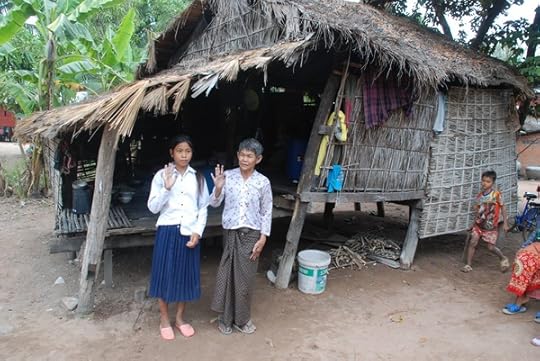
A GATE scholar at her home
All photos copyright Lotus Outreach
About Lotus Outreach
Lotus Outreach is a California-based 501 (c)(3) dedicated to ensuring the education, health and safety of vulnerable women and children in the developing world. The GATE Women and Youth Scholarship program is one of several successful projects it operates in Asia today.
This June, approximately 800,000 college seniors will be conferred bachelor's degrees in the United States, joining the ranks of the 30 percent of Americans to possess baccalaureate education. Higher educational attainment is strongly correlated with increased earning potential, with median earnings jumping an astonishing 60 percent for those with bachelor's degrees (compared to those with only high school diplomas). It is thus no surprise that many developed nations make higher education a priority -- be it through subsidized grants and loans or public universities -- in their pursuit of economic growth and development.
There is perhaps a deeper social benefit to promoting higher education, however, and one does not need to look further than Cambodia to see what happens when a nation is robbed of its educated citizenry. Today, only 26 percent of Cambodians will graduate high school as a direct result of a genocide which took place in the mid to late 1970s. When the Khmer Rouge overtook Cambodia in 1975, it abolished currency and the banking system, shut down the public education system, evacuated urban centers and forced the entire population into the countryside to dig irrigation canals and till land. It wasn't long before disease and starvation took hold, and hundreds of thousands of people perished.
The Khmer Rouge eliminated all remnants of "old society" through deadly purges of the intellectual class. Religious figures, doctors, teachers, lawyers, professionals, and even people who wore eye glasses were targets. In just four short years, the entire country's educated class was systematically murdered and thrown into mass graves -- including 90 percent of the country's teachers. Of the educated class members that survived, the majority fled the country never to return.
Today, Cambodia is only beginning to heal from the scars left by the Khmer Rouge. An entire generation missed out on public education, and today only 2 percent of women in the country have baccalaureate education. This dearth of professionals is directly linked to infant and maternal mortality, poor education quality and sluggish growth of the white collar sector. Further, the legacy of poverty left by the genocide means the very people who promise to help Cambodia develop -- its future doctors, lawyers, bankers and businesspeople -- are unable to reach their potential for want of a few dollars each month in school-related expenses.
Take 20-year-old Mealea. Her illiterate parents were survivors of the Khmer Rouge genocide and were forced by poverty and high-interest debt to migrate illegally to Thailand in search of work, leaving Mealea and her five siblings -- all under the age of 13 -- alone to fend for themselves. Though Mealea struggled to help feed and care for her siblings, she always placed a high value on her education. "When I was in the fourth grade, I started to work making rice wine and feeding pigs," she shares. "I often got to school late because of those chores and the long distance from home to school. However, my school performance was not bad; I was always among the top 10 in my class."

Mealea
Recognizing both her aptitude and her precarious situation, the international non-profit Lotus Outreach began providing Mealea with a GATE scholarship in junior high school to prevent her from dropping out. This scholarship not only covered Mealea's school fees, supplies, healthcare, books, uniforms, bicycle and lunch money, but provided her with a large bag of rice each month to ensure her young siblings wouldn't go hungry if Mealea continued going to school instead of work.
Lotus Outreach shared Mealea's pride when she passed rigorous exams to graduate high school in 2010, and was admitted on a full tuition scholarship to the Vanda Institute in the capital, Phnom Penh. Mealea continues to receive support from Lotus Outreach for her living expenses, food, travel and school supplies through the organization's GATEways university program, and looks forward graduating this summer with a degree in accounting. In the meantime, she continues to excel in her studies and has expressed a deep and passionate commitment to helping other children in Cambodia. In addition to studying full-time, working part-time to help pay down her parents' debt and learning English on the weekends, Mealea volunteers at her school as well as with the Cambodian Women's Crisis Center.
"I feel very deep gratitude to the donors for supporting me," shares Mealea. "When I was sick, Lotus Outreach cared for me. When my bicycle broke and I couldn't get to school, they helped me fix it. Lotus Outreach educated me and offered me every opportunity they could. They have been like my parents, and I will not be satisfied until I have been able to repay their generosity by helping others!"

Mealea at her College Library
Mealea is not alone. Since 2010, Lotus Outreach International has been providing scholarships to poor young women from the Cambodian countryside, and this year's graduation season will witness the conferment of higher degrees in nursing, accounting and pedagogy to eight of the approximately 100 girls currently under scholarship support. In addition, nearly 150 girls will graduate high school this summer as a result of scholarship support provided through Lotus Outreach's flagship program in Cambodia, GATE (Girls' Access to Education). Lotus Outreach will mark the occasion with our third annual graduation ceremonies to be held in remote villages of Banteay Meanchey and Siem Reap, the Cambodian provinces from which the girls hail. Many, if not most, of the GATE girls express a desire to give back to their communities through studying to become nurses, midwives, lawyers, teachers, economists, agronomists and NGO workers. It costs just $100 a month to fully support the university education of a girl like Mealea, bringing her family, community and nation one step closer to healing from the scars of the past.
Watch a short video about the GATE scholarship:

A GATE scholar at her home
All photos copyright Lotus Outreach
About Lotus Outreach
Lotus Outreach is a California-based 501 (c)(3) dedicated to ensuring the education, health and safety of vulnerable women and children in the developing world. The GATE Women and Youth Scholarship program is one of several successful projects it operates in Asia today.
June 7, 2013
Buddhist Nun Professors or None?
Buddhist women are celebrating a landmark victory: For the first time in the history of Tibetan Buddhism, 27 nuns have gathered in North India for their exams for the Tibetan equivalent of a Ph.D., the so-called Geshe-title. To understand the impact and range of this decision, take a moment to imagine what it would be like if until now only men had been allowed to pass their doctorate exams. As many American students are preparing for their final exams and graduation celebration during these weeks, picture what this would look like if girls were excluded. This was the situation for women in the Himalayas—and it is about to change!
So, why is this such a big deal and why did it take so long? Read the full article in the Washington Post:
http://www.washingtonpost.com/blogs/o...
So, why is this such a big deal and why did it take so long? Read the full article in the Washington Post:
http://www.washingtonpost.com/blogs/o...