Michaela Haas's Blog, page 2
January 27, 2016
An Interview With the Unabomber's Brother
"After Ted was arrested and we were haunted by the media, I got quite depressed and I went through this 'poor-me' phase, because the government had betrayed us. They had assured us nobody would ever know that it was us who identified my brother as the Unabomber."


January 12, 2016
The Ghetto Swinger: The Incredible Story of Jazz Star Coco Schumann Who Played in Auschwitz For His Life
"We feigned a normal life. We tried to forget that there was an impenetrable fence all around."
December 16, 2015
What Cheryl Strayed Would Do If She Were President of the US (Hint: It Involves Pajamas, the F-word, and Guns)
An interview with the bestselling author of Wild about her new book Brave Enough, post-traumatic growth and running for president.
December 3, 2015
What to Do After a Mass Shooting
An interview with internationally renowned grief coach and bestselling author Dr. Ken Druck
Three years ago, on December 14, 2012, 20 children and 6 adult staff members were killed at Sandy Hook Elementary School in Newtown, Connecticut ��� the deadliest shooting at a grade school in U.S. history. Yesterday we witnessed the worst mass shooting since Sandy Hook in San Bernardino, California. The question how we can find healing and hope after witnessing senseless violence and experiencing loss, is all the more pertinent. I spoke with Ken Druck who has worked on the front lines with families in the aftermath of 9-11, Columbine, and Sandy Hook. Dr. Druck, author of The Real Rules of Life, is an internationally recognized authority on traumatic loss, building resilience, and turning adversity into opportunity. His life changed dramatically in 1996, when his 21 year-old daughter Jenna was killed in a bus accident while studying abroad in India. To honor his daughter, Ken founded the Jenna Druck Center to help bereaved families and young women, like Jenna, who are visionary leaders.
Michaela Haas: I am reaching you in Newtown, Connecticut. You have visited the families of the Sandy Hook victims many times over the past several years. Too often there is an initial outpouring of goodwill when a tragedy like this happens, and then people are eager to move on and get back to their regular lives, while the victims and their families continue to need support.
Ken Druck: I was initially invited by a bereaved mother whose son was killed, and she set up a workshop with the other parents. From there, my involvement grew to also supporting the other families, parents whose children were traumatized, teachers, first responders and community leaders. I have had the honor of being able to work with many of those who were at the epicenter of this unspeakable tragedy.
With the recent attacks in mind, what kind of support is most needed in the immediate aftermath? And how do these needs change?
In the beginning, everybody is in "survival mode," the medical equivalent of being in the ICU on life support. Standing with people who are in shock, for whom the line between their own life and death is very thin means helping them get from one breath to the next, one day to the next. In some way, part of them has died and they are standing in the ashes of Plan A. There`s a sense of reality and un-reality; it`s surreal and all too real; it`s overwhelming and confounding. The initial shock and denial help victims and survivors modulate some of the excruciating pain and sorrow. But the denial eventually begins to wear out, and the reality sets in that somebody we love is not coming back, and that the life as we knew it has ended. The families in Paris are walking around without any skin on. Their pain is so excruciating that they cannot imagine why anybody would want to live out the rest of their live in an inescapable, choiceless hell. As people practice self-care, they come out of survival mode. As they surround themselves with the support of trusted confidants, they begin to fight their way back into life.
Do you find certain approaches to dealing with such a tragedy are more helpful than others?
People who have been avoidant and run away from adversity their whole lives, have the greatest challenges. Trying to summon the strength and courage to stand in a moment of inescapable sorrow can be extremely difficult. Developing tools and coping skills to survive can be a daunting challenge.
People who have been eminently resourceful and figuring out and fixing everything also face a difficult challenge when they realize they cannot fix the loss of someone you love. Healing is more of a matter of showing ourselves patience, kindness, encouragement, support, and understanding. And having the faith in ourselves to find a way to go on in life, broken heart and all. Many people find it helpful to change from an "either/or" to a "both/and" perspective. We are simultaneously broken and whole. Our loved ones are gone and with us forever. The paradoxical nature of what it is to be human is critical when it comes to feeling safe to hurt when we're hurting, to not know when we're feeling lost, to feel empty when we feel empty and allow ourselves moments of revelation, blessedness, humility, surrender, and gratitude for the blessings in our lives.
With your deep understanding of grief, you have helped my sister-in-law Tami after she lost her only child. Just like Tami, what many grieving people have found enormously helpful is to be there for others and prevent other senseless deaths. For instance, one of the women in my book, Cindi Lamb, co-founded Mothers Against Drunk Driving (MADD) with Candace Lightner after losing her daughter to a drunk driver. You established the Jenna Druck Center. How helpful is it to channel our grief into meaningful action?
We discover that our trip to the bottom of pain is not for naught when we learn about real suffering and develop compassion. We hate what we know and would never wish it upon our worst enemy, but we can pay forward the love, empathy and support we received and what we learned about what it really means to be there for others who are just beginning their "dark night of the soul."
After losing Jenna, there was an opportunity to use everything I had learned to help other families who were going through a similar tragedy. Being a grief literate person and creating a safe judgment-free zone where people are met with respect, understanding, sensitivity, and compassion is a form of honoring. Learning to walk with someone and helping them find it within themselves to find meaning in their lives again is a noble thing. Paying it forward has been the core element of our Families Helping Families program where our facilitators were bereaved parents themselves who acted as complement to the professionals we also made available to families.
I think it is important to mention that even after the worst tragedies, we can experience not only posttraumatic stress, but also posttraumatic growth. I have researched posttraumatic growth for Bouncing Forward: Transforming Bad Breaks into Breakthroughs, and Real Rule 12 in your book The Real Rules of Life is: "A Breakdown Can be a Breakthrough".
Each of us has an opportunity to transform our losses into the better, smarter, more compassionate, courageous, and understanding version of ourselves. Families and individuals who allow themselves to process their own grief become more alive and resilient. When we hide, deny, repress, avoid and self-medicate our sorrows, we become a dulled-down version of ourselves. Taking the path of avoidance, trying to outrun/outeat/outdrink/outgamble/outwork our emotions, whatever form of it might take, the debt inevitably comes due. Finding trusted confidants, allowing ourselves to live free of harsh self-judgment, keeping our hands of support on our hearts and allowing the healthy expression of our sorrow are all formulas for posttraumatic growth and healing.
Entire communities, cities or countries can share posttraumatic growth. Referring to the Tucson shooting, Gabrielle Gifford's rabbi, Stephanie Aaron, said, "Even in the midst of this troubling year, the healing, the courage that we have experienced in our community--each one of us can notice how our cups overflow with the blessings of our lives." Do you see something similar happening in the Sandy Hook community? I am particularly inspired by the group "Sandy Hook Promise", who pledge to "turn our tragedy into a moment of transformation by providing programs and practices that protect children and prevent the senseless, tragic loss of life."
We see people doing extraordinary things, creating forward movement, teaching and reaching out to other people in the aftermath of tragedy. For most of us, it's a process ��� two steps forward and one step back. Some of us are wired in such a way that we struggle horribly, beating ourselves up for not being "more resilient." After a loss, we need permission to be real and human. It`s okay to be feeling OK one day and crying the next. It`s okay to have faith that we will one day see beauty again and laugh - and to feel lost and alone the next. More than anything, it helped me to know I was on a roller coaster.
Can you share what helped you in your darkest hours? What makes you stronger?
Having navigated the dark night of the soul, I understand a little more about how we come out of periods of darkness and back into the light. And how we find our way back to joy. In her epic poem, "Dear Heart Comes Home," poet Mary Oliver tells us,
"there was a time before maps
when pilgrims traveled by the stars."
it is time for the pilgrim in me
to travel in the dark,
to learn to read the stars
that shine in my soul.
We need to learn to travel by the dim light of the stars in those dark moments.
Read the full interview on www.michaelahaas.com
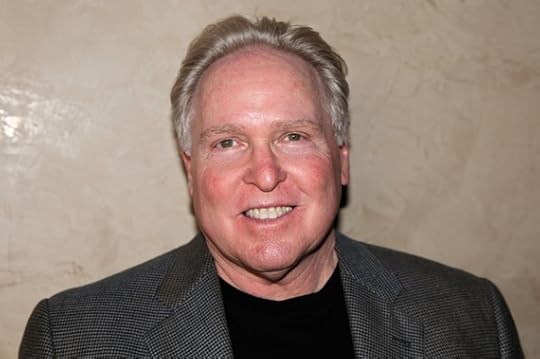
Dr. Ken Druck. Photo courtesy of Dr. Ken Druck
Three years ago, on December 14, 2012, 20 children and 6 adult staff members were killed at Sandy Hook Elementary School in Newtown, Connecticut ��� the deadliest shooting at a grade school in U.S. history. Yesterday we witnessed the worst mass shooting since Sandy Hook in San Bernardino, California. The question how we can find healing and hope after witnessing senseless violence and experiencing loss, is all the more pertinent. I spoke with Ken Druck who has worked on the front lines with families in the aftermath of 9-11, Columbine, and Sandy Hook. Dr. Druck, author of The Real Rules of Life, is an internationally recognized authority on traumatic loss, building resilience, and turning adversity into opportunity. His life changed dramatically in 1996, when his 21 year-old daughter Jenna was killed in a bus accident while studying abroad in India. To honor his daughter, Ken founded the Jenna Druck Center to help bereaved families and young women, like Jenna, who are visionary leaders.
Michaela Haas: I am reaching you in Newtown, Connecticut. You have visited the families of the Sandy Hook victims many times over the past several years. Too often there is an initial outpouring of goodwill when a tragedy like this happens, and then people are eager to move on and get back to their regular lives, while the victims and their families continue to need support.
Ken Druck: I was initially invited by a bereaved mother whose son was killed, and she set up a workshop with the other parents. From there, my involvement grew to also supporting the other families, parents whose children were traumatized, teachers, first responders and community leaders. I have had the honor of being able to work with many of those who were at the epicenter of this unspeakable tragedy.
With the recent attacks in mind, what kind of support is most needed in the immediate aftermath? And how do these needs change?
In the beginning, everybody is in "survival mode," the medical equivalent of being in the ICU on life support. Standing with people who are in shock, for whom the line between their own life and death is very thin means helping them get from one breath to the next, one day to the next. In some way, part of them has died and they are standing in the ashes of Plan A. There`s a sense of reality and un-reality; it`s surreal and all too real; it`s overwhelming and confounding. The initial shock and denial help victims and survivors modulate some of the excruciating pain and sorrow. But the denial eventually begins to wear out, and the reality sets in that somebody we love is not coming back, and that the life as we knew it has ended. The families in Paris are walking around without any skin on. Their pain is so excruciating that they cannot imagine why anybody would want to live out the rest of their live in an inescapable, choiceless hell. As people practice self-care, they come out of survival mode. As they surround themselves with the support of trusted confidants, they begin to fight their way back into life.
Do you find certain approaches to dealing with such a tragedy are more helpful than others?
People who have been avoidant and run away from adversity their whole lives, have the greatest challenges. Trying to summon the strength and courage to stand in a moment of inescapable sorrow can be extremely difficult. Developing tools and coping skills to survive can be a daunting challenge.
People who have been eminently resourceful and figuring out and fixing everything also face a difficult challenge when they realize they cannot fix the loss of someone you love. Healing is more of a matter of showing ourselves patience, kindness, encouragement, support, and understanding. And having the faith in ourselves to find a way to go on in life, broken heart and all. Many people find it helpful to change from an "either/or" to a "both/and" perspective. We are simultaneously broken and whole. Our loved ones are gone and with us forever. The paradoxical nature of what it is to be human is critical when it comes to feeling safe to hurt when we're hurting, to not know when we're feeling lost, to feel empty when we feel empty and allow ourselves moments of revelation, blessedness, humility, surrender, and gratitude for the blessings in our lives.
With your deep understanding of grief, you have helped my sister-in-law Tami after she lost her only child. Just like Tami, what many grieving people have found enormously helpful is to be there for others and prevent other senseless deaths. For instance, one of the women in my book, Cindi Lamb, co-founded Mothers Against Drunk Driving (MADD) with Candace Lightner after losing her daughter to a drunk driver. You established the Jenna Druck Center. How helpful is it to channel our grief into meaningful action?
We discover that our trip to the bottom of pain is not for naught when we learn about real suffering and develop compassion. We hate what we know and would never wish it upon our worst enemy, but we can pay forward the love, empathy and support we received and what we learned about what it really means to be there for others who are just beginning their "dark night of the soul."
After losing Jenna, there was an opportunity to use everything I had learned to help other families who were going through a similar tragedy. Being a grief literate person and creating a safe judgment-free zone where people are met with respect, understanding, sensitivity, and compassion is a form of honoring. Learning to walk with someone and helping them find it within themselves to find meaning in their lives again is a noble thing. Paying it forward has been the core element of our Families Helping Families program where our facilitators were bereaved parents themselves who acted as complement to the professionals we also made available to families.
I think it is important to mention that even after the worst tragedies, we can experience not only posttraumatic stress, but also posttraumatic growth. I have researched posttraumatic growth for Bouncing Forward: Transforming Bad Breaks into Breakthroughs, and Real Rule 12 in your book The Real Rules of Life is: "A Breakdown Can be a Breakthrough".
Each of us has an opportunity to transform our losses into the better, smarter, more compassionate, courageous, and understanding version of ourselves. Families and individuals who allow themselves to process their own grief become more alive and resilient. When we hide, deny, repress, avoid and self-medicate our sorrows, we become a dulled-down version of ourselves. Taking the path of avoidance, trying to outrun/outeat/outdrink/outgamble/outwork our emotions, whatever form of it might take, the debt inevitably comes due. Finding trusted confidants, allowing ourselves to live free of harsh self-judgment, keeping our hands of support on our hearts and allowing the healthy expression of our sorrow are all formulas for posttraumatic growth and healing.
Entire communities, cities or countries can share posttraumatic growth. Referring to the Tucson shooting, Gabrielle Gifford's rabbi, Stephanie Aaron, said, "Even in the midst of this troubling year, the healing, the courage that we have experienced in our community--each one of us can notice how our cups overflow with the blessings of our lives." Do you see something similar happening in the Sandy Hook community? I am particularly inspired by the group "Sandy Hook Promise", who pledge to "turn our tragedy into a moment of transformation by providing programs and practices that protect children and prevent the senseless, tragic loss of life."
We see people doing extraordinary things, creating forward movement, teaching and reaching out to other people in the aftermath of tragedy. For most of us, it's a process ��� two steps forward and one step back. Some of us are wired in such a way that we struggle horribly, beating ourselves up for not being "more resilient." After a loss, we need permission to be real and human. It`s okay to be feeling OK one day and crying the next. It`s okay to have faith that we will one day see beauty again and laugh - and to feel lost and alone the next. More than anything, it helped me to know I was on a roller coaster.
Can you share what helped you in your darkest hours? What makes you stronger?
Having navigated the dark night of the soul, I understand a little more about how we come out of periods of darkness and back into the light. And how we find our way back to joy. In her epic poem, "Dear Heart Comes Home," poet Mary Oliver tells us,
"there was a time before maps
when pilgrims traveled by the stars."
it is time for the pilgrim in me
to travel in the dark,
to learn to read the stars
that shine in my soul.
We need to learn to travel by the dim light of the stars in those dark moments.
Read the full interview on www.michaelahaas.com
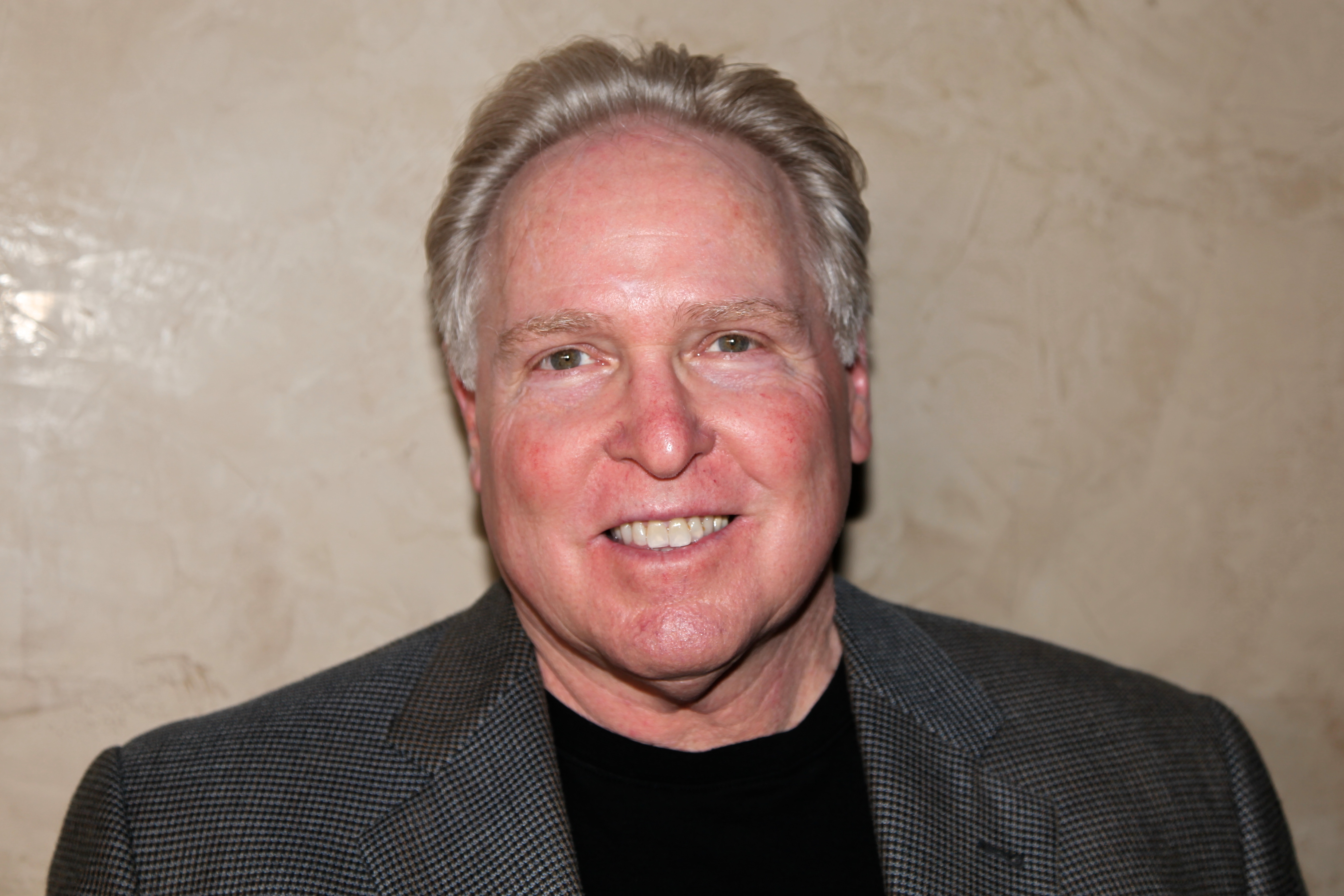
Dr. Ken Druck. Photo courtesy of Dr. Ken Druck
What to Do After a Mass Shooting
The question how we can find healing and hope after witnessing senseless violence and experiencing loss, is all the more pertinent. I spoke with Ken Druck who has worked on the front lines with families in the aftermath of 9-11, Columbine, and Sandy Hook.
November 23, 2015
No Deadline on Rape: Bill Cosby or Cosby-Bill?
On Saturday, dozens gathered at Bill Cosby`s star on the Hollywood Walk of Fame to remember his legacy - just not the legacy he likes to be known for. Some of the women who accused him of rape and their supporters met to call attention to their plight that we need to change the law.
November 22, 2015
No Deadline on Rape: Bill Cosby or Cosby-Bill?
How Bill Cosby's tactics keep traumatizing women, why silence makes trauma worse, and why we need a Cosby-Bill
On Saturday, dozens gathered at Bill Cosby's star on the Hollywood Walk of Fame to remember his legacy - just not the legacy he likes to be known for. Some of the women who accused him of rape and their supporters met to call attention to their plight that we need to change the law. Their rally cry: "No deadline on rape!" Why now? Why there? Because Cosby's star of fame has remained untouched - not only on the sidewalk, but also in the eyes of the law. The protesters are rallying to change the current California statute of limitations, because it leaves most rape victims no legal recourse ten years after the crime.
Here are the facts:
- Four dozen women have accused Bill Cosby, now 78, of sexual assault. More than 35 of them were courageous enough to tell their stories showing their faces.
- Bill Cosby has not been charged with a crime and states that all sexual encounters were consensual. Yet in a disposition ten years ago he did admit to using drugs and deceit.
- Because most of the alleged crimes happened decades ago, the statute of limitations has expired, and the women cannot press charges.
As a journalist, I have to assume Cosby's innocence as long as he has not been convicted of a crime. However, as an author and advocate for trauma survivors, the lack of understanding for the victims leaves me frustrated: I have spoken with countless survivors of sexual abuse who struggled for decades before they found the courage to speak about their pain. Self-blame, guilt, and fear are powerful emotions and extremely common after sexual assault. "It takes rape survivors time to weather the storm of shame and victimization," one of Cosby`s accusers, filmmaker Lili Bernard, said at the rally, "It's unfair that once you're ready to talk, you can't."
We can only begin to heal trauma when we express it, articulate it, and share it. We can only find safe ground when we find compassionate allies who believe us and walk this difficult path with us. And it is much easier to find closure when justice has been served and the perpetrator has been forced to take responsibility for his crimes.
Several of the women who accuse Cosby of rape did try to speak about what happened to them at the time, but they were rebuffed and ridiculed. Cosby was at the height of his fame, a moral bedrock of American conscience, a powerful figure in entertainment, a man with a pristine, fatherly public image.
When 14 women accused Cosby of rape ten years ago, they were not taken seriously. Nobody believed them, because Cosby had a powerful ally: us, the public. And well-paid attorneys who shamed the accusers.
Serial perpetrators often choose their victims "wisely" and prey on the vulnerable. They take their position of power to intimidate dependents. Each of the accuser's story is specific, but taken together, they also show frightening similarities: the Quaaludes, the intimidation, the abuse of power.
Lili Bernard says that Cosby threatened to kill her. "I was terrified that he would kill me," she said in Hollywood. When she finally found the courage to come forward, "I was barred because I was just a few month outside the statute of limitations."
One of the women who accuses Cosby of rape, Victoria Valentino, attended the rally to share how the entertainer comforted her in 1996 after the death of her 6-year-old son, but says he then went on to drug and rape her. "I was a grieving mother," Valentino told the Los Angeles Times , "That`s the kind of compassion these people have. None."
Changes are on the way: State Senator Connie Leyva has promised to introduce a bill to eliminate the statute of limitations for crimes such as rape, sodomy, and sexual abuse of minors. I`m calling it the Cosby-Bill. Because this might the only good that comes out this tragedy: that we get a new law that serves justice.
We need this bill. For the victims to get closure. For the rapists so that we can force them to take responsibility. And for all of us, because otherwise we leave perpetrators on the lam to commit more crimes and we will never know the truth.
We now need to be the allies of the survivors.
On Saturday, dozens gathered at Bill Cosby's star on the Hollywood Walk of Fame to remember his legacy - just not the legacy he likes to be known for. Some of the women who accused him of rape and their supporters met to call attention to their plight that we need to change the law. Their rally cry: "No deadline on rape!" Why now? Why there? Because Cosby's star of fame has remained untouched - not only on the sidewalk, but also in the eyes of the law. The protesters are rallying to change the current California statute of limitations, because it leaves most rape victims no legal recourse ten years after the crime.
Here are the facts:
- Four dozen women have accused Bill Cosby, now 78, of sexual assault. More than 35 of them were courageous enough to tell their stories showing their faces.
- Bill Cosby has not been charged with a crime and states that all sexual encounters were consensual. Yet in a disposition ten years ago he did admit to using drugs and deceit.
- Because most of the alleged crimes happened decades ago, the statute of limitations has expired, and the women cannot press charges.
As a journalist, I have to assume Cosby's innocence as long as he has not been convicted of a crime. However, as an author and advocate for trauma survivors, the lack of understanding for the victims leaves me frustrated: I have spoken with countless survivors of sexual abuse who struggled for decades before they found the courage to speak about their pain. Self-blame, guilt, and fear are powerful emotions and extremely common after sexual assault. "It takes rape survivors time to weather the storm of shame and victimization," one of Cosby`s accusers, filmmaker Lili Bernard, said at the rally, "It's unfair that once you're ready to talk, you can't."
We can only begin to heal trauma when we express it, articulate it, and share it. We can only find safe ground when we find compassionate allies who believe us and walk this difficult path with us. And it is much easier to find closure when justice has been served and the perpetrator has been forced to take responsibility for his crimes.
Several of the women who accuse Cosby of rape did try to speak about what happened to them at the time, but they were rebuffed and ridiculed. Cosby was at the height of his fame, a moral bedrock of American conscience, a powerful figure in entertainment, a man with a pristine, fatherly public image.
When 14 women accused Cosby of rape ten years ago, they were not taken seriously. Nobody believed them, because Cosby had a powerful ally: us, the public. And well-paid attorneys who shamed the accusers.
Serial perpetrators often choose their victims "wisely" and prey on the vulnerable. They take their position of power to intimidate dependents. Each of the accuser's story is specific, but taken together, they also show frightening similarities: the Quaaludes, the intimidation, the abuse of power.
Lili Bernard says that Cosby threatened to kill her. "I was terrified that he would kill me," she said in Hollywood. When she finally found the courage to come forward, "I was barred because I was just a few month outside the statute of limitations."
One of the women who accuses Cosby of rape, Victoria Valentino, attended the rally to share how the entertainer comforted her in 1996 after the death of her 6-year-old son, but says he then went on to drug and rape her. "I was a grieving mother," Valentino told the Los Angeles Times , "That`s the kind of compassion these people have. None."
Changes are on the way: State Senator Connie Leyva has promised to introduce a bill to eliminate the statute of limitations for crimes such as rape, sodomy, and sexual abuse of minors. I`m calling it the Cosby-Bill. Because this might the only good that comes out this tragedy: that we get a new law that serves justice.
We need this bill. For the victims to get closure. For the rapists so that we can force them to take responsibility. And for all of us, because otherwise we leave perpetrators on the lam to commit more crimes and we will never know the truth.
We now need to be the allies of the survivors.
November 20, 2015
How to Make This the Best Thanksgiving Ever -- With One Key Ingredient From Maya Angelou
The single best practice to lift our spirit is to keep a gratitude journal. Counting our blessings is one of the simplest and most powerful means to throw an anchor in the midst of chaos. Especially when we are walking in the dark, we need to count every star.
November 11, 2015
Our Duty on Veterans Day: Resiliency Is a Team Effort
When army surgeon Rhonda Cornum came to, it was pitch dark and strangely silent. She wondered, Am I alive? Her Black Hawk helicopter had been shot down over the Iraqi desert in 1991. She crawled out of the wreck, away from her five deceased colleagues, only to see five Iraqi soldiers towering above her with pointed rifles. Cornum, dazed from the blood loss and with both arms broken, was helpless when her captors subjected her to a mock execution, sexually assaulted her, and kept her prisoner in a bunker for a week. Her experience included many of the elements psychiatric manuals list as likely causes for post-traumatic stress, and yet, after her release, she surprised the psychiatrists by reflecting on the things that had improved. "I became a better doctor, a better parent, a better commander, probably a better person." For the first time in her life did she experience what it means to be utterly helpless, and the near-death experience brought her to explore a new spiritual perspective.
Only a decade later did she suddenly find a name for her experience when she discovered the research of University of North Carolina psychologists Richard Tedeschi and Lawrence Calhoun: post-traumatic growth -- the surprising benefits trauma survivors from all walks of life find in overcoming traumatic events. Contrary to public opinion, Tedeschi and Calhoun have found that post-traumatic growth is much more common than post-traumatic stress disorder (PTSD) and can even occur simultaneously with post-traumatic stress. [1] In fact, the stress functions as the catalyst for the growth. As many as 90 percent of survivors report at least one aspect of post-traumatic growth, such as a renewed appreciation for life, deeper compassion, or an intensified connection to their heart's purpose. [2] This does not happen immediately or easily, and rarely by itself. We need to actively work towards positive change, and we need the right tools and support in order to transform a bad break into a breakthrough.
Therefore Brigadier General Rhonda Cornum made it her life's mission to help other soldiers heal from traumatic experiences. More than ever before, the U.S. Army is dealing with staggering numbers of soldiers who come back from war depressed, angry, and anxious. According to the Department of Veterans Affair we are losing more soldiers to suicide than to war, so we better figure out urgently how to help them.
Together with resilience specialists, Rhonda initiated the Comprehensive Soldier Fitness Program in 2009, shifting away from a focus on physical fitness to an emphasis on psychological resilience. Every single U.S. Army soldier participates in the $160-million program and trains in strategies such as self-awareness, self-regulation, optimism, mental agility, strength of character, and connection.
When I attended the army resilience boot camp in Philadelphia for my book Bouncing Forward, I was surprised to watch the soldiers start the day with mindfulness meditation. Because the most common PTSD treatments -- medication and psychotherapy -- only work for about half of the soldiers, the army is experimenting with alternative methods, and meditation has proven to be one of the most promising pathways to significantly reducing PTSD symptoms.
But even more importantly, the program calls for a tectonic shift of perception. The army has recognized the dangers of projecting only strength and has ditched much of its old Rambo rhetoric that a soldier needs to be invincible and invulnerable. In fact, a significant part of the training consists of teaching the soldiers to communicate openly, admit fears, and reach out to seek help. Trying desperately "to get it together" can be fatal.
The soldiers are more than happy that the issues are addressed, but they shared with me quite specific concerns about their mission: "The American people are totally disconnected from the reality of the war and the price we pay."
I can't help but think this plays a role in the results: After running the resilience program for five years, the surveys show a significant decline in substance abuse, and an uptick in optimism, good coping, adaptability, and character strength. It's a success, but according to the Armys own evaluation the correlation between resilience training and a decline in PTSD or depression has not proven solid.
Psychologist Ann Masten, who grew up in an army family, cautions, "Resilience depends on the systems we are connected to, the military as a whole, our families. A lot of what makes the difference for people is the support they are receiving."
Realistically, there are bigger issues at play here than a boot camp can solve: While Rhonda Cornum was able to find meaning in her mission, several of the soldiers I spoke with signed up with the army after 9/11, motivated to defend their country, but they now find themselves in a riot of doubt. What exactly did they risk their lives for? Their anger is palpable. Vietnam vets suffered from similar frustration; some said getting spit at by Americans after their return was more traumatizing than being shot at in the war. Yet this "meaning-making," as Tedeschi calls it, is crucial for integrating our experiences. If our suffering makes sense, we are much more able to not only bear it, but grow from it.
So resilience and post-traumatic growth are not just tasks for the soldier's psyche (or any survivor's, for that matter). That we, as a country, leave alone the very soldiers we sent into war makes us "complicit in a plague of American disengagement," as the New York Times wrote. [3] How we, as a culture, as friends and family welcome, support, and integrate the survivors matters hugely.
This is significant on Veterans Day and on every day: to help our soldiers and our fellow survivors to bounce forward. In fact, this is our duty after they've done theirs.
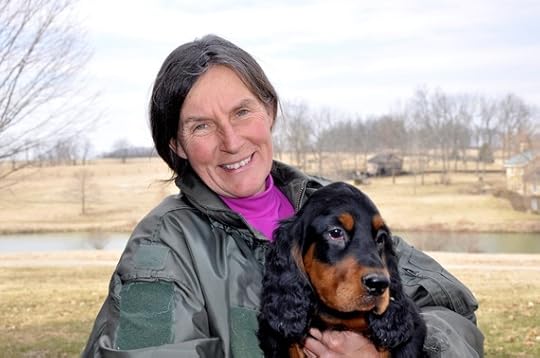
Retired Brigadier General Rhonda Cornum on her farm in Kentucky. Photo copyright: Michaela Haas
Sources:
[1] Michaela Haas. Bouncing Forward: Transforming Bad Breaks into Breakthroughs, Atria/Enliven, 2015 and Calhoun, Lawrence G. and Richard G. Tedeschi. Posttraumatic Growth in Clinical Practice. New York: Routledge, 2012. Kindle edition.
[2] Richard G. Tedeschi and Lawrence G. Calhoun, "The Posttraumatic Growth Inventory: Measuring the Positive Legacy of Trauma," Journal of Traumatic Stress 9 (1996): 455-471.
[3] Jennifer Percy, "The Wake of Grief," New York Times, February 22, 2015.
___________________
If you -- or someone you know -- need help, please call 1-800-273-8255 for the National Suicide Prevention Lifeline. If you are outside of the U.S., please visit the International Association for Suicide Prevention for a database of international resources.
For more information on mental health support for veterans, visit http://www.mentalhealth.va.gov/
Only a decade later did she suddenly find a name for her experience when she discovered the research of University of North Carolina psychologists Richard Tedeschi and Lawrence Calhoun: post-traumatic growth -- the surprising benefits trauma survivors from all walks of life find in overcoming traumatic events. Contrary to public opinion, Tedeschi and Calhoun have found that post-traumatic growth is much more common than post-traumatic stress disorder (PTSD) and can even occur simultaneously with post-traumatic stress. [1] In fact, the stress functions as the catalyst for the growth. As many as 90 percent of survivors report at least one aspect of post-traumatic growth, such as a renewed appreciation for life, deeper compassion, or an intensified connection to their heart's purpose. [2] This does not happen immediately or easily, and rarely by itself. We need to actively work towards positive change, and we need the right tools and support in order to transform a bad break into a breakthrough.
Therefore Brigadier General Rhonda Cornum made it her life's mission to help other soldiers heal from traumatic experiences. More than ever before, the U.S. Army is dealing with staggering numbers of soldiers who come back from war depressed, angry, and anxious. According to the Department of Veterans Affair we are losing more soldiers to suicide than to war, so we better figure out urgently how to help them.
Together with resilience specialists, Rhonda initiated the Comprehensive Soldier Fitness Program in 2009, shifting away from a focus on physical fitness to an emphasis on psychological resilience. Every single U.S. Army soldier participates in the $160-million program and trains in strategies such as self-awareness, self-regulation, optimism, mental agility, strength of character, and connection.
When I attended the army resilience boot camp in Philadelphia for my book Bouncing Forward, I was surprised to watch the soldiers start the day with mindfulness meditation. Because the most common PTSD treatments -- medication and psychotherapy -- only work for about half of the soldiers, the army is experimenting with alternative methods, and meditation has proven to be one of the most promising pathways to significantly reducing PTSD symptoms.
But even more importantly, the program calls for a tectonic shift of perception. The army has recognized the dangers of projecting only strength and has ditched much of its old Rambo rhetoric that a soldier needs to be invincible and invulnerable. In fact, a significant part of the training consists of teaching the soldiers to communicate openly, admit fears, and reach out to seek help. Trying desperately "to get it together" can be fatal.
The soldiers are more than happy that the issues are addressed, but they shared with me quite specific concerns about their mission: "The American people are totally disconnected from the reality of the war and the price we pay."
I can't help but think this plays a role in the results: After running the resilience program for five years, the surveys show a significant decline in substance abuse, and an uptick in optimism, good coping, adaptability, and character strength. It's a success, but according to the Armys own evaluation the correlation between resilience training and a decline in PTSD or depression has not proven solid.
Psychologist Ann Masten, who grew up in an army family, cautions, "Resilience depends on the systems we are connected to, the military as a whole, our families. A lot of what makes the difference for people is the support they are receiving."
Realistically, there are bigger issues at play here than a boot camp can solve: While Rhonda Cornum was able to find meaning in her mission, several of the soldiers I spoke with signed up with the army after 9/11, motivated to defend their country, but they now find themselves in a riot of doubt. What exactly did they risk their lives for? Their anger is palpable. Vietnam vets suffered from similar frustration; some said getting spit at by Americans after their return was more traumatizing than being shot at in the war. Yet this "meaning-making," as Tedeschi calls it, is crucial for integrating our experiences. If our suffering makes sense, we are much more able to not only bear it, but grow from it.
So resilience and post-traumatic growth are not just tasks for the soldier's psyche (or any survivor's, for that matter). That we, as a country, leave alone the very soldiers we sent into war makes us "complicit in a plague of American disengagement," as the New York Times wrote. [3] How we, as a culture, as friends and family welcome, support, and integrate the survivors matters hugely.
This is significant on Veterans Day and on every day: to help our soldiers and our fellow survivors to bounce forward. In fact, this is our duty after they've done theirs.
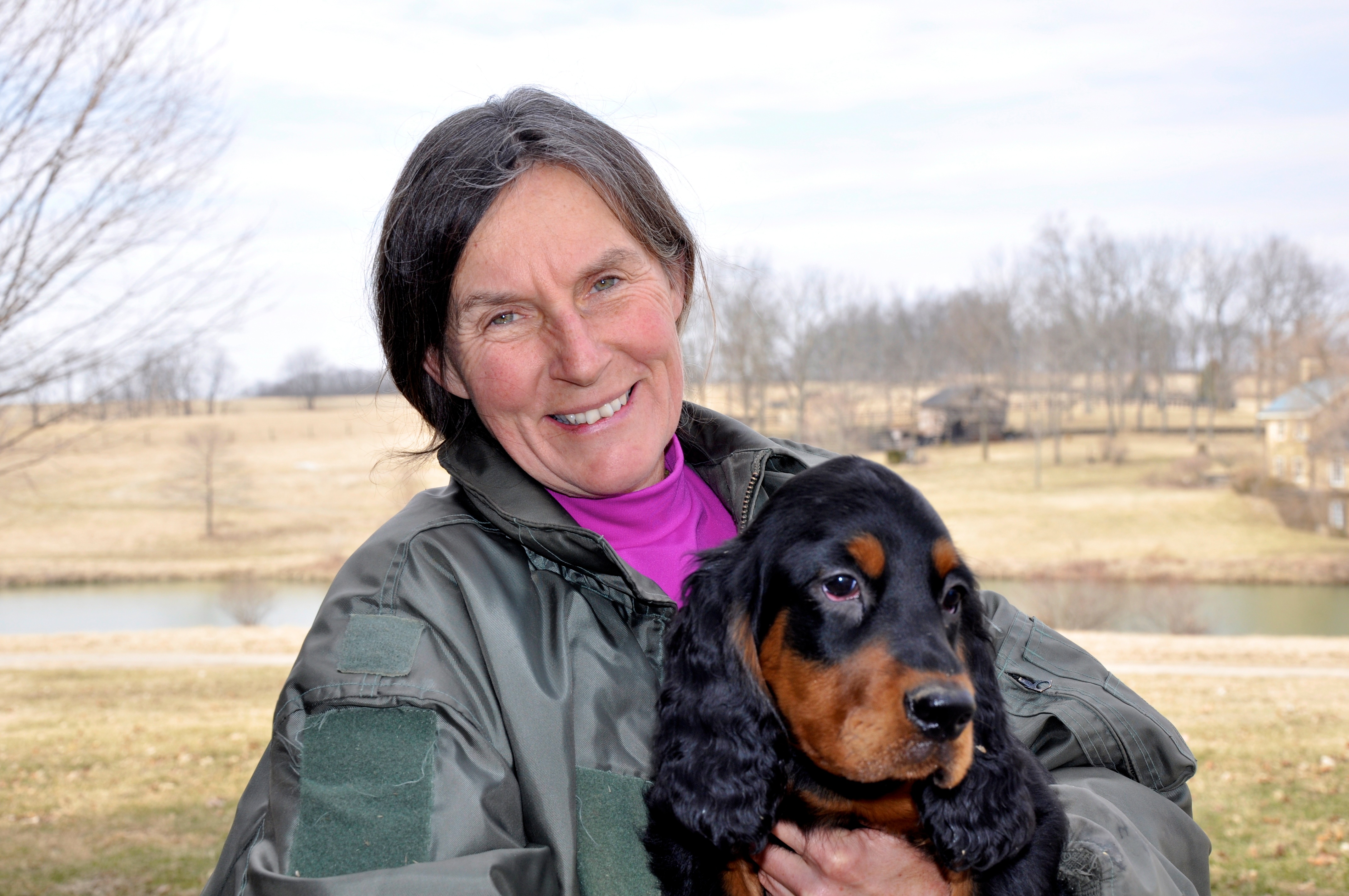
Retired Brigadier General Rhonda Cornum on her farm in Kentucky. Photo copyright: Michaela Haas
Sources:
[1] Michaela Haas. Bouncing Forward: Transforming Bad Breaks into Breakthroughs, Atria/Enliven, 2015 and Calhoun, Lawrence G. and Richard G. Tedeschi. Posttraumatic Growth in Clinical Practice. New York: Routledge, 2012. Kindle edition.
[2] Richard G. Tedeschi and Lawrence G. Calhoun, "The Posttraumatic Growth Inventory: Measuring the Positive Legacy of Trauma," Journal of Traumatic Stress 9 (1996): 455-471.
[3] Jennifer Percy, "The Wake of Grief," New York Times, February 22, 2015.
___________________
If you -- or someone you know -- need help, please call 1-800-273-8255 for the National Suicide Prevention Lifeline. If you are outside of the U.S., please visit the International Association for Suicide Prevention for a database of international resources.
For more information on mental health support for veterans, visit http://www.mentalhealth.va.gov/
Our Duty on Veterans Day: Resiliency Is a Team Effort
This is significant on Veterans Day and on every day: to help our soldiers and our fellow survivors to bounce forward. In fact, this is our duty after they've done theirs.