
Pamela Richards's Blog, page 6
March 11, 2013
The Beatitudes: Links to Each
 Recently, we completed a look at the Beatitudes through the eyes of Greek culture. It seems readers could use a more direct way to access material on each Beatitude, so the Beatitudes are listed below with a link to the associated blog entry.
 "Blessed are the poor in spirit, for theirs is the kingdom of Heaven"
"Blessed are those who mourn, for they will be comforted"
"Blessed are the meek, for they shall inherit the earth"
"Blessed are those who hunger and thirst for righteousness, for they shall be filled"
"Blessed are the merciful, for they shall obtain mercy"
"Blessed are the pure in heart, for they will see God"
"Blessed are the peacemakers, for they will be called the sons of God."
“Blessed are you when people insult you, persecute you and falsely say all kinds of evil against you because of me. Rejoice and be glad because great is your reward in heaven, for in the same way they persecuted the prophets who were before you."
Here is the introduction to the study
Here is the listof resources used in the study
Best blessings,
Pam


February 22, 2013
Song for the Meek
Today three women of faith share their stories of finding freedom following abuse.
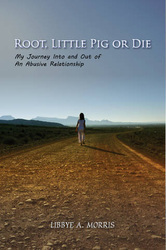
Libbye Morris is the author of a memoir about escaping abuse entitled, "Root, Little Pig, or Die." She reccomends a resource which she has found helpful, the website for RAINN, found here . In "Root, Little Pig or Die," after the author's father becomes disabled from multiple sclerosis, her overwhelmed mother admonishes the author and her four siblings to "Root, little pig or die" - in other words, to fend for themselves and leave their mother alone. . . .(more)
Kathleen Pooler is a contibutor to The Woman I've Become, in which 37 women share their journeys from toxic relationships to self- empowerment. She currently has two memoirs in progress. The first to be published will be Choice and Chances: a Ragged Journey to Self. Opening with her escape from her second husband due to fear of physical abuse, it chronicles her journey up to that point through a previous failed marriage. As it concludes, a she has finally found her voice. She recommends this resource on domestic violence.
Pam Richards is the author of Singing from Silence, the story of her friendship with creative genius Rich Mullins, in which she shares the back stories of many of his well-loved songs. Which of his songs centered on the topic of domestic abuse? That would be Richard's song for the meek, "I Will Sing." She claims she's not a great singer, so she intends to find ways to go on giving a voice to the meek in her own way.
All three of these women of faith are contributing to this blog today to support others, known or unknown, who need compassion, help, and God's guidance in dealing with domestic abuse in their homes. The offer their prayers and the work of their hands and hearts as they pass along their song for the meek. You can join the song by sharing this URL with those you care about. Your efforts are appreciated.
See the information at the end of the post about three books to be given away at random to those who add comments at the end of this blog entry. The drawing will take place on March 15. We'd all love to hear from you!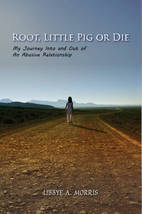 Q: Was there a moment when you knew you would come forward with your story?
Libbye: My realization came 30 years after I got out of the abusive relationship. I wrote the book to promote my own healing; I decided to publish it in the hopes that it could help even one woman exit an abusive relationship.
Kathy: It took many years of writing before I decided to share my story of abuse. I think abuse comes in many forms and while I did not incur bruises or broken bones, I subjected myself to years of mental and emotional abuse at the hands of two different husbands. The key for me was not establishing healthy boundaries for myself and relying on the other person to change. I hadn't found my voice. When I felt physically threatened by my second husband, I escaped in the middle of the day with my two children. it wasn't until after I left my second husband that I realized that I had subjected myself and my children to not just one but two abusive relationships.That was in 1989. When I started writing a memoir in 2000, it was to be about dealing with my alcoholic son. As I wrote, I realized that I couldn't tell his story until I told my own. The theme that has emerged in 2013 is one of the consequences of not embracing your inner voice that tells you something is not quite right.
Pam: Singing from Silence began as a very personal project. It gave me a way to explain to Richard why I couldn't get in touch with him at the end of his life. I'd never had a chance to tell him what was going on with me while he was alive. When he died, I had so many unresolved feelings. I threw myself into writing both the parts of the story he knew, and the parts he'd never heard--the things no one else could tell him because they were my own perspectives. I was uncertain about what to do with the book until I asked for his decision. It became clear to me that he would have wanted me to publish. That's when I knew I would bring it out, regardless of the personal cost to me.
2) Can you describe what catalyzed your commitment?
Libbye: I can’t point to a specific catalyst, but once I started working on my book, it became somewhat of an obsession for me to finish it. I attended one memoir writers’ workshop or conference every year for 13 years. Publishing my story became my number one bucket-list priority.
Kathy: In both cases, the welfare of my two children was an overriding concern that guided me out of two abusive relationships. Though it seemed to take much longer than, in retrospect, I wished it had taken, I was able to extract myself from both marriages before any more damage was done.
Pam: Not long ago, a woman I know was threatened by a domestic partner. He threatened to take one of his guns and kill her, himself, and two of her family members. I was with her when she showed the text message to police, when she filed the paperwork for a restraining order, and when she went before a judge and got her temporary order. And I was with her just a few weeks later, when she learned he'd carried out his threat of suicide. It was a tragic loss, but thankfully no one else was harmed. I prayed with gratitude that God has put her on the path of peace, and kept her and her family out of harm's way.
Ever since then, I can't consider staying silent when I know so many lives are at stake, and that God has a place for all of us in his plan. With Richard, I will sing for the meek.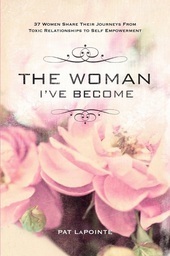 3) Q: What role did your faith in God play in ending your abusive situation?
Libbye: Not only was my faith in God a monumental comfort to me as I endured the relationship; He gave me the strength to get out of the relationship. He also sent people into my life at strategic times to help bolster my self-esteem and show me a better way to live. They appeared mysteriously whenever I needed them.
Kathy: I always had a faith in God and yet, it wasn’t until I was a single parent with two school-aged children after my first divorce that I found God in a personal way. However, I must have lost sight of that connection, for a few years after, when I met my second husband ,I seemed to be driven by a need to be an intact family again. It turned out to be at a steep cost
Pam: I finally figured out that God's grace applied to my hopeless marriage. I was trying to live by the letter of the law, and it had never worked. I felt I really needed God's forgiveness to end my marriage and get my children out of danger. Once I accepted that grace, I knew I was on the path God wanted me to follow.
4) Q: What was the single most important factor in getting to safety?
Libbye: For me, it was building self-esteem, which developed over a period of several years. I had none, and I think that is why I was vulnerable to entering and staying in the relationship. Once I realized that I am a creation of God and that I deserved better, that new-found self-esteem helped me resolve to leave the relationship.
Kathy: First, awareness and acknowledgement that you are indeed in an abusive situations (denial can play a big role as it did for me) and need to get out and second, develop a support system and an escape plan ahead of time. Have your bags packed. This can only happen when you admit you’ve made a mistake and need to act on your fears .Also, you need to love yourself enough to want something better for yourself. Again, listen to, honor and embrace your inner voice.
Pam: For me, it was having a friend--just one--who believed in me and helped me face the red tape needed to carry out my safety plan.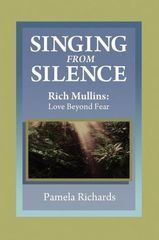 5) Q: What would you say to someone who is going through what you went through?
Libbye: Know your worth. Find a safe way to leave, and don’t waste another minute of your life trying to please an abuser who will always find something else to become angry about. Ask for help; those who love you will help you get out of it; they won’t judge you for staying in it. So many times, people in abusive relationships don’t ask for help because they have defended the perpetrator for so long, and they feel like they can’t all of a sudden tell a loved one, “He has been abusive all these years.” But you can, and you must do so!
Kathy: Don’t put up with unacceptable, hurtful behavior, whether it be mental, emotional or physical. The first time another person violates your boundaries, take action to protect yourself. No excuses and don’t listen to their excuses. Do not accept unacceptable behavior from anyone. Ever.
Pam: Forget your reputation. Don't worry about the lies people are inclined to tell about you: just tell your truth as only you know it. Ultimately, Jesus is the truth, and he sets us free. If you have made every effort on your part to make peace in your home and your community and it's still not working, then recognize that some things are beyond your control. God gave me a great gift when he taught me that inner peace is actually within our control. Almost nothing else is.
Learn to prioritize the peace within your heart that no one can take from you. There is no better family name than child of God, no better reputation.
"Blessed are the peacemakers, for they will be called sons of God."
6) Q: What safety measures would all of us be wise to follow?
Libbye: Listen to your gut, in any situation. Our instincts can help us recognize when danger is encroaching. But we have to pay attention to those instincts and heed the warnings. We have to be assertive about taking the action necessary to exit a bad situation.
Kathy: As I mentioned earlier, establishing a support system of family, friends, community agencies with phone numbers, safe places to go. Most important, do not isolate yourself. Seek counseling if you find yourself in an abusive relationship to understand your own role in attracting and allowing abusive people.
Pam: Know the high-risk factors. Stop denying it--those conditions mean you're in trouble. Have a safety plan. Follow it!
7) Q: How do you look at life and God differently now than you did before you experienced an abusive relationship?
Libbye: I am so grateful for a peaceful existence, void of the constant fear and dread that I used to feel. Also, I have developed a low tolerance for bad behavior. I used to be longsuffering and would tolerate poor treatment from anyone—boyfriends, servers, school bullies—but now I don’t tolerate it. I stand up for myself, and it is empowering!
Kathy: With counseling, faith, supportive friends and family, I have been able to see my role in allowing abusive relationships and to forgive myself for subjecting myself and my children to unacceptable behavior. I am very grateful that I was able to extract myself from two abusive marriages and learn from my mistakes. In finding my voice, I found a life of joy, peace and gratitude. I finally feel deserving of all the gifts God wanted for me all along. It is very empowering for I know I am in charge of my choices.
Pam: Rich Mullins was a very introspective person, and through my friendship with him, God taught me the value of examining myself and challenging myself to grow. The experience of my failed marriage has opened me up to the need to keep growing, and never to expect to ride on a plateau of self-satisfaction in my personal growth.
I learned that we may think we're making peace by escaping conflict or avoiding it, but nothing is further from the truth. Conflict postponed is conflict multipled. Sometimes despite our efforts, the resolution of conflict is outside of our control. When our safety is compromised, that must be addressed immediately. But unresolved inner conflict can still entangle us and steal peace from our hearts. We may even begin to want to retaliate. It may take time, but instead we need to let go of those injuries which are outside of our control so we can find peace within. When we do, we can begin to see that jealously, or abuse, or lying, or gossip are universal human ills. We don't have to take them personally.
There is no personal battlefield unless we ourselves march onto it with weapons in hand.
God wasn't on the beach, watching a mountain sunrise, or dreaming by a babbling brook when he said those words he spoke. He was on a battlefield:
"Be still, and know that I am God."
Book Giveaway:
 Comment on this blog entry any time between today and March 15, and your name will be entered to recieve one of the three books above. Winners will be chosen by random selection. We will contact winners to inform them which book they won, and to request a postal address to send it to. All names, addresses and contact information will remain confidential.
Libbye Morris is the author of a memoir about escaping abuse entitled, "Root, Little Pig, or Die." She reccomends a resource which she has found helpful, the website for RAINN, found here . In "Root, Little Pig or Die," after the author's father becomes disabled from multiple sclerosis, her overwhelmed mother admonishes the author and her four siblings to "Root, little pig or die" - in other words, to fend for themselves and leave their mother alone. . . .(more)
Kathleen Pooler is a contibutor to The Woman I've Become, in which 37 women share their journeys from toxic relationships to self- empowerment. She currently has two memoirs in progress. The first to be published will be Choice and Chances: a Ragged Journey to Self. Opening with her escape from her second husband due to fear of physical abuse, it chronicles her journey up to that point through a previous failed marriage. As it concludes, a she has finally found her voice. She recommends this resource on domestic violence.
Pam Richards is the author of Singing from Silence, the story of her friendship with creative genius Rich Mullins, in which she shares the back stories of many of his well-loved songs. Which of his songs centered on the topic of domestic abuse? That would be Richard's song for the meek, "I Will Sing." She claims she's not a great singer, so she intends to find ways to go on giving a voice to the meek in her own way.
All three of these women of faith are contributing to this blog today to support others, known or unknown, who need compassion, help, and God's guidance in dealing with domestic abuse in their homes. The offer their prayers and the work of their hands and hearts as they pass along their song for the meek. You can join the song by sharing this URL with those you care about. Your efforts are appreciated.
See the information at the end of the post about three books to be given away at random to those who add comments at the end of this blog entry. The drawing will take place on March 15. We'd all love to hear from you!
Q: Was there a moment when you knew you would come forward with your story? Libbye: My realization came 30 years after I got out of the abusive relationship. I wrote the book to promote my own healing; I decided to publish it in the hopes that it could help even one woman exit an abusive relationship.
Kathy: It took many years of writing before I decided to share my story of abuse. I think abuse comes in many forms and while I did not incur bruises or broken bones, I subjected myself to years of mental and emotional abuse at the hands of two different husbands. The key for me was not establishing healthy boundaries for myself and relying on the other person to change. I hadn't found my voice. When I felt physically threatened by my second husband, I escaped in the middle of the day with my two children. it wasn't until after I left my second husband that I realized that I had subjected myself and my children to not just one but two abusive relationships.That was in 1989. When I started writing a memoir in 2000, it was to be about dealing with my alcoholic son. As I wrote, I realized that I couldn't tell his story until I told my own. The theme that has emerged in 2013 is one of the consequences of not embracing your inner voice that tells you something is not quite right.
Pam: Singing from Silence began as a very personal project. It gave me a way to explain to Richard why I couldn't get in touch with him at the end of his life. I'd never had a chance to tell him what was going on with me while he was alive. When he died, I had so many unresolved feelings. I threw myself into writing both the parts of the story he knew, and the parts he'd never heard--the things no one else could tell him because they were my own perspectives. I was uncertain about what to do with the book until I asked for his decision. It became clear to me that he would have wanted me to publish. That's when I knew I would bring it out, regardless of the personal cost to me.
2) Can you describe what catalyzed your commitment?
Libbye: I can’t point to a specific catalyst, but once I started working on my book, it became somewhat of an obsession for me to finish it. I attended one memoir writers’ workshop or conference every year for 13 years. Publishing my story became my number one bucket-list priority.
Kathy: In both cases, the welfare of my two children was an overriding concern that guided me out of two abusive relationships. Though it seemed to take much longer than, in retrospect, I wished it had taken, I was able to extract myself from both marriages before any more damage was done.
Pam: Not long ago, a woman I know was threatened by a domestic partner. He threatened to take one of his guns and kill her, himself, and two of her family members. I was with her when she showed the text message to police, when she filed the paperwork for a restraining order, and when she went before a judge and got her temporary order. And I was with her just a few weeks later, when she learned he'd carried out his threat of suicide. It was a tragic loss, but thankfully no one else was harmed. I prayed with gratitude that God has put her on the path of peace, and kept her and her family out of harm's way.
Ever since then, I can't consider staying silent when I know so many lives are at stake, and that God has a place for all of us in his plan. With Richard, I will sing for the meek.
3) Q: What role did your faith in God play in ending your abusive situation? Libbye: Not only was my faith in God a monumental comfort to me as I endured the relationship; He gave me the strength to get out of the relationship. He also sent people into my life at strategic times to help bolster my self-esteem and show me a better way to live. They appeared mysteriously whenever I needed them.
Kathy: I always had a faith in God and yet, it wasn’t until I was a single parent with two school-aged children after my first divorce that I found God in a personal way. However, I must have lost sight of that connection, for a few years after, when I met my second husband ,I seemed to be driven by a need to be an intact family again. It turned out to be at a steep cost
Pam: I finally figured out that God's grace applied to my hopeless marriage. I was trying to live by the letter of the law, and it had never worked. I felt I really needed God's forgiveness to end my marriage and get my children out of danger. Once I accepted that grace, I knew I was on the path God wanted me to follow.
4) Q: What was the single most important factor in getting to safety?
Libbye: For me, it was building self-esteem, which developed over a period of several years. I had none, and I think that is why I was vulnerable to entering and staying in the relationship. Once I realized that I am a creation of God and that I deserved better, that new-found self-esteem helped me resolve to leave the relationship.
Kathy: First, awareness and acknowledgement that you are indeed in an abusive situations (denial can play a big role as it did for me) and need to get out and second, develop a support system and an escape plan ahead of time. Have your bags packed. This can only happen when you admit you’ve made a mistake and need to act on your fears .Also, you need to love yourself enough to want something better for yourself. Again, listen to, honor and embrace your inner voice.
Pam: For me, it was having a friend--just one--who believed in me and helped me face the red tape needed to carry out my safety plan.
5) Q: What would you say to someone who is going through what you went through? Libbye: Know your worth. Find a safe way to leave, and don’t waste another minute of your life trying to please an abuser who will always find something else to become angry about. Ask for help; those who love you will help you get out of it; they won’t judge you for staying in it. So many times, people in abusive relationships don’t ask for help because they have defended the perpetrator for so long, and they feel like they can’t all of a sudden tell a loved one, “He has been abusive all these years.” But you can, and you must do so!
Kathy: Don’t put up with unacceptable, hurtful behavior, whether it be mental, emotional or physical. The first time another person violates your boundaries, take action to protect yourself. No excuses and don’t listen to their excuses. Do not accept unacceptable behavior from anyone. Ever.
Pam: Forget your reputation. Don't worry about the lies people are inclined to tell about you: just tell your truth as only you know it. Ultimately, Jesus is the truth, and he sets us free. If you have made every effort on your part to make peace in your home and your community and it's still not working, then recognize that some things are beyond your control. God gave me a great gift when he taught me that inner peace is actually within our control. Almost nothing else is.
Learn to prioritize the peace within your heart that no one can take from you. There is no better family name than child of God, no better reputation.
"Blessed are the peacemakers, for they will be called sons of God."
6) Q: What safety measures would all of us be wise to follow?
Libbye: Listen to your gut, in any situation. Our instincts can help us recognize when danger is encroaching. But we have to pay attention to those instincts and heed the warnings. We have to be assertive about taking the action necessary to exit a bad situation.
Kathy: As I mentioned earlier, establishing a support system of family, friends, community agencies with phone numbers, safe places to go. Most important, do not isolate yourself. Seek counseling if you find yourself in an abusive relationship to understand your own role in attracting and allowing abusive people.
Pam: Know the high-risk factors. Stop denying it--those conditions mean you're in trouble. Have a safety plan. Follow it!
7) Q: How do you look at life and God differently now than you did before you experienced an abusive relationship?
Libbye: I am so grateful for a peaceful existence, void of the constant fear and dread that I used to feel. Also, I have developed a low tolerance for bad behavior. I used to be longsuffering and would tolerate poor treatment from anyone—boyfriends, servers, school bullies—but now I don’t tolerate it. I stand up for myself, and it is empowering!
Kathy: With counseling, faith, supportive friends and family, I have been able to see my role in allowing abusive relationships and to forgive myself for subjecting myself and my children to unacceptable behavior. I am very grateful that I was able to extract myself from two abusive marriages and learn from my mistakes. In finding my voice, I found a life of joy, peace and gratitude. I finally feel deserving of all the gifts God wanted for me all along. It is very empowering for I know I am in charge of my choices.
Pam: Rich Mullins was a very introspective person, and through my friendship with him, God taught me the value of examining myself and challenging myself to grow. The experience of my failed marriage has opened me up to the need to keep growing, and never to expect to ride on a plateau of self-satisfaction in my personal growth.
I learned that we may think we're making peace by escaping conflict or avoiding it, but nothing is further from the truth. Conflict postponed is conflict multipled. Sometimes despite our efforts, the resolution of conflict is outside of our control. When our safety is compromised, that must be addressed immediately. But unresolved inner conflict can still entangle us and steal peace from our hearts. We may even begin to want to retaliate. It may take time, but instead we need to let go of those injuries which are outside of our control so we can find peace within. When we do, we can begin to see that jealously, or abuse, or lying, or gossip are universal human ills. We don't have to take them personally.
There is no personal battlefield unless we ourselves march onto it with weapons in hand.
God wasn't on the beach, watching a mountain sunrise, or dreaming by a babbling brook when he said those words he spoke. He was on a battlefield:
"Be still, and know that I am God."
Book Giveaway:
Comment on this blog entry any time between today and March 15, and your name will be entered to recieve one of the three books above. Winners will be chosen by random selection. We will contact winners to inform them which book they won, and to request a postal address to send it to. All names, addresses and contact information will remain confidential.
February 20, 2013
Song for the Meek Book Giveaway
On Friday, Feb 22, 2013, three women of faith will share their stories of finding freedom following domestic abuse.
Libbye Morris is the author of a memoir about escaping abuse entitled, "Root, Little Pig, or Die." She reccomends a resource which she has found helpful, the website for RAINN, found here . In "Root, Little Pig or Die," after the author's father becomes disabled from multiple sclerosis, her overwhelmed mother admonishes the author and her four siblings to "Root, little pig or die" - in other words, to fend for themselves and leave their mother alone. . . . (more)
Kathleen Pooler is a contibutor to The Woman I've Become, in which 37 women share their journeys from toxic relationships to self- empowerment. She currently has two memoirs in progress. The first to be published will be Choice and Chances: a Ragged Journey to Self. Opening with her escape from her second husband due to fear of physical abuse, it chronicles her journey up to that point through a previous failed marriage. As it concludes, she has finally found her voice. She reccomends this resource on domestic violence.
Pam Richards is the author of Singing from Silence, the story of her friendship with creative genius Rich Mullins, in which she shares the back stories of many of his well-loved songs. Which of his songs centered on the topic of domestic abuse? That would be Richard's song for the meek, "I Will Sing." She claims she's not a great singer, so she intends to go on giving a voice to the meek in her own way.
All three of these women of faith will be contributing to a panel discussion, "Song for the Meek" to air this Friday, February 22, 2013. This post is designed to to support others, known or unknown, who need compassion and help dealing with domestic abuse in their homes. These authors offer their prayers and the work of their hands and hearts as they pass along their song for the meek. You can join the song by sharing this URL with those you care about. Your efforts are appreciated.
Each of these authors has contributed one copy of her book. Each of these three books are to be given away at random to those who add their comments to Friday's blog entry, February 22. The drawing will take place on March 15. We'd all love to hear from you!
Comment on Friday's blog entry any time after it is posted on Friday, February 22 up until March 15, and your name will be entered to recieve one of the three books named above. Winners will be chosen by random selection. We will contact winners to inform them which book they won, and to request a postal address. All names, addresses and contact information will remain confidential and will not be used for any other purpose.
Libbye Morris is the author of a memoir about escaping abuse entitled, "Root, Little Pig, or Die." She reccomends a resource which she has found helpful, the website for RAINN, found here . In "Root, Little Pig or Die," after the author's father becomes disabled from multiple sclerosis, her overwhelmed mother admonishes the author and her four siblings to "Root, little pig or die" - in other words, to fend for themselves and leave their mother alone. . . . (more)
Kathleen Pooler is a contibutor to The Woman I've Become, in which 37 women share their journeys from toxic relationships to self- empowerment. She currently has two memoirs in progress. The first to be published will be Choice and Chances: a Ragged Journey to Self. Opening with her escape from her second husband due to fear of physical abuse, it chronicles her journey up to that point through a previous failed marriage. As it concludes, she has finally found her voice. She reccomends this resource on domestic violence.
Pam Richards is the author of Singing from Silence, the story of her friendship with creative genius Rich Mullins, in which she shares the back stories of many of his well-loved songs. Which of his songs centered on the topic of domestic abuse? That would be Richard's song for the meek, "I Will Sing." She claims she's not a great singer, so she intends to go on giving a voice to the meek in her own way.
All three of these women of faith will be contributing to a panel discussion, "Song for the Meek" to air this Friday, February 22, 2013. This post is designed to to support others, known or unknown, who need compassion and help dealing with domestic abuse in their homes. These authors offer their prayers and the work of their hands and hearts as they pass along their song for the meek. You can join the song by sharing this URL with those you care about. Your efforts are appreciated.
Each of these authors has contributed one copy of her book. Each of these three books are to be given away at random to those who add their comments to Friday's blog entry, February 22. The drawing will take place on March 15. We'd all love to hear from you!
Comment on Friday's blog entry any time after it is posted on Friday, February 22 up until March 15, and your name will be entered to recieve one of the three books named above. Winners will be chosen by random selection. We will contact winners to inform them which book they won, and to request a postal address. All names, addresses and contact information will remain confidential and will not be used for any other purpose.
February 17, 2013
Q: Why is the book called, Singing from Silence?
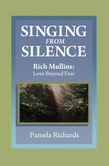 Just added to the FAQ about
Singing from Silence:
Just added to the FAQ about
Singing from Silence:Q: Why is the book called Singing from Silence?
A: I can think of two--more, maybe five reasons I chose that title.
1) Richard's spiritual background was Quaker, a group that practices silence in worship. Yet he was a musical genius, a brilliant performer who used song to touch his audiences.
2) His creative process during the years I knew him involved a lapse of communication--just a few days, sometimes less--while he'd be working out a new song. . . . (more)
February 15, 2013
Beyond Explanation: Love
 The contemplation of love leaves us speechless.
There be three things which are too wonderful for me, yea, four which I know not:
The way of an eagle in the air; the way of a serpent upon a rock; the way of a ship in the midst of the sea; and the way of a man with a maid. --Proverbs 30: 18,19
Singing from Silence reviews
February 5, 2013
Resources Used in this Word Study of the Beatitudes
 I'm no great scholar, but I've been interested in the Beatitudes for a long time now. Here are a few of the resources I've used in the word study just completed:
A Greek-English Interlinear New Testament online
Background notes on the Decapolis, the origin of Christ's audience for the Sermon on the Mount
Material about the four humours used in ancient medicine, and the eight Church Modes used by the early Church
A documentary about the Greeks, specifically centering on Athens
If you'd like to read this study from the beginning, here's the first post:
A study of the Beatitudes from the perspective of Athens begins with this blog post.
Hope you enjoy your study! Your remarks are welcome.
Righteousness, Descending and Ascending
 In ancient Greek medicine, eight conditions of human illness are recognized. Each of the eight beatitudes describe one of these extreme conditions. The first four Beatitudes are based on an absence of air, water, fire and earth. The second four center on an excess, in the same order: air, water, fire and earth.
The first Beatitudes, each exhibiting an absence of one of the four elements, illustrate aspects of our personal relationship with God. By contrast, the second four focus on an overflow of these same elements. The excess of these elements are illustrated in four attributes which affect others, allowing us to share with those around us the benefits of a restored relationship with God.
If you're just joining us, the study begins here.
The Eighth Beatitude
"Blessed are those who are persecuted because of righteousness, for theirs is the kingdom of heaven."
"Blessed are you when people insult you, persecute you, and falsely say all manner of evil against you because of me. Rejoice and be glad, because great is your reward in heaven, for in the same way they persecuted the prophets who were before you."
For those who are curious, these verses contain many Greek terms of interest. I am limiting my study here to a few simple words that give the thrust of this Beatitude. Greek is a language that makes extensive use of a sense of movement, space and direction. There are two distinct spatial directions outlined in these verses: downwards into the earth, and upwards into the skies. These two directions by themselves suggest the medical condition described by an overabundance of earth, whose remedy was thought to be the sky element, ether.
oneidizo--cast in one's teeth
kath--down
dioko--righteous, innocent
chairo--rejoice exceedingly
agalliao--jump for joy, leap up
ouranois--to the skies
Roughly Jesus said, "Most highly favored are the innocent ones whose righteousness is cast down in their teeth. Rejoice, leap up into the sky! Generous will be your reward."
Among the great celebrities of Athens known for wisdom, Socrates (469-399 BC) stands out as a man of humility. He never called himself wise, stating the whole of his wisdom: "Only God is wise." He did, however, make every attempt to live righteously. He followed his conscience--the voice that he said warned him which actions to avoid--right to the grave.
Socrates couldn't have been a Christian: chronology prevented it.
Christian or not, few people appreciate righteousness for what it is. It always seems our best motives are the most easily misunderstood. Our most unselfish actions are in doubt because it would never have occured to our detractors to be so generous. Athens objected to the actions Socrates experienced as righteous.
Socrates was put to death on account of false accusations, as her citizens eventually realized. Like a prophet, he'd been trying to warn Athens and protect her from unrighteousness for years. Most historians agree Socrates was scapegoated for the fall of Athens--thrown under the bus.
Athens judged her people for crimes against their state by popular vote. Citizens cast either white or black stones to mark their "aye" or "nay." Each stone was counted to establish the majority's decision. The democratic system of Athens sentenced Socrates to death for the crime of "corrupting the young."
When the dust had settled during the generations following his execution in 399 BC, Socrates had become a new kind of hero to the Athenians: a hero of conscience.
But God does not give us gold stars for passing judgement, and the popular vote does not determine righteousness. It never has, and never will. Neither is righteousness a competition, nor a prize we can win by our own effort. Our reconciliation with God depends on the righteousness of Christ, not our own. When we truly enjoy the benefits of that reconciliation, we share it generously, we do not try to exclude others from it with lies.
For those who are curious, these verses contain many Greek terms of interest. I am limiting my study here to a few simple words that give the thrust of this Beatitude. Greek is a language that makes extensive use of a sense of space and direction. There are two distinct spatial directions outlined in these verses: downwards into the earth, and upwards into the skies. These two directions by themselves suggest the medical condition described by an overabundance of earth, whose remedy was thought to belong to the starry element, ether.
oneidizo--cast in one's teeth
kath--down
dioko--to pursue in a hostile manner
chairo--rejoice exceedingly
agalliao--jump for joy, leap up
ouranois--to the skies
Athens judged Socrates in this life, but it's not for you and me to judge what Socrates faces in the afterlife. There is only one judge. What Socrates gladly anticipated, as he stated in his defense recorded by Plato, was the greatest reward he could imagine--the opportunity to meet and converse with his heroes, the wisest men who had ever lived, and the "sons of gods." To gain this reward, he drank freely the hemlock the executioner handed him. Even so, we now know that the wisdom and the righteousness of Socrates could never have gotten him into heaven. If we meet him there, it will be because he shares with the rest of us a thirst to drink freely from the waters of life.
January 29, 2013
Fall of the Empire, Rise of the Kingdom
 In ancient Greek medicine, eight conditions of human illness are recognized. Each of the eight beatitudes describe one of these extreme conditions. The first four Beatitudes are based on an absence of air, water, fire and earth. The second four center on an excess, in the same order: air, water, fire and earth.
The first Beatitudes, each exhibiting an absence of one of the four elements, illustrate aspects of our personal relationship with God. By contrast, the second four focus on an overflow of these same elements. The excess of these elements are illustrated in four attributes which affect others, allowing us to share with those around us the benefits of a restored relationship with God.
If you're just joining us, the study begins here.
The Seventh Beatitude:
"Blessed are the peacemakers, for they will be called the sons of God."
If you're tracking the elements that apply to the Greek concept of medicine, the seventh beatitude, to be consistent with the other six, would need to describe an excess of fire. This isn't easily reconciled with our current concept of peacemaking, but the ancient Athenians thought of peace in a very different way than we do. War was a constant state in Athens; peace was an interruption of war.
The theme of Athenian culture and values runs strongly through the Beatitudes; so much so, that I began to wonder why. When I looked up "Decapolis"--, and "Athens" I found there was a distinct conection. These ten cities of Judea represented in the audience of the Sermon on the Mount were all part of the Delian league--military allies of Athens whose cities shared a strong tendency toward Athenian culture. It's a good argument that Jesus knew his audience; still, it's probably no coincidence that Jesus chose to address cultural norms that still affect us today.
We may never have touched foot in Athens, but the teachings of the Beatitudes can stop us in our tracks even so.
It was the Jews, not the Athenians, who greeted one another, "Shalom!" meaning "peace," and then wished peace to one another again on departing. The psalmist taught that to drop our weapons is to "be still"--to empty our hands of our defences, and know God.
'9 He makes wars cease
to the ends of the earth.
He breaks the bow and shatters the spear;
he burns the shields with fire.
10 He says, “Be still, and know that I am God;
I will be exalted among the nations,
I will be exalted in the earth.”' --Psalm 46
The destruction of weapons is an efficient means of ending war. The Spartan general Lysander marked the fall of the Athenian Empire and the end of the Peleponnesian Wars by torching the Athenian navy in 404 BC.
The very wealthiest and most influential in Greek society--those who excelled--the best of the best, or as they thought,the most favored by the gods--were described as "makarioi." This is the same word that Jesus used for "blessed."
The word Jesus uses for peace, "eirene," is often used as a greeting in the New Testament--but nearly as often, it is used to describe harmony between groups of people. In the Greek language, the word doubles for the name of the goddess of peace, Eirene, who is often pictured setting fire to large piles of weapons. She was thought by the Greeks to be a child of the gods.
In the seventh Beatitude, Jesus calls us to place our allegiance not with the declining empire, but as members of God's own family with the ascending Kingdom of Heaven.
January 25, 2013
Divine Vision
 In ancient Greek medicine, eight conditions of human illness are recognized. Each of the eight beatitudes describe one of these extreme conditions. The first four Beatitudes are based on an absence of air, water, fire and earth. The second four center on an excess, in the same order: air, water, fire and earth.
The first Beatitudes, each exhibiting an absence of one of the four elements, illustrate aspects of our personal relationship with God. By contrast, the second four focus on an overflow of these same elements. The excess of these elements are illustrated in four attributes which affect others, allowing us to share with those around us the benefits of a restored relationship with God.
If you're just joining us, the study begins here.
The sixth Beatitude:
"Blessed are the pure in heart, for they shall see God."
I've been looking forward to writing about this, one of my favorite Beatitudes, for a while. Finally, I get to talk about an Athenian celebrity, the philosopher Aristotle (384-322 BC). First, I'd like to apologize for the need to call down Aristotle, who is thought to be one of the most advanced thinkers of all time. I don't think Jesus had anything against Aristotle personally, or against any of the Athenian figures the Beatitudes bring to mind. I believe he loved them, but he saw their weaknesses. I think Jesus may have been gently drawing our attention to his own agenda, which confilcts with much of the worldly wisdom of Athens.
Athens wanted us to become godlike through our own efforts.
Jesus realized the Athenian plan wouldn't work. In fact, his work can only begin in us when each of us realizes the same thing. His teaching in the fifth Beatitude is both deep and subtle.
Aristotle, along with his teacher Plato, and Plato's teacher, Socrates, believed that the greatest activity God can engage in is thinking. God, to them, was pure thought. Flesh was impure, filthy, and needed to be cleansed so the spirit could be free to return to a godly state. The Greeks loved to make hairline distinctions between spirit and soul by defining them thus, and thus, and pinpointing their presumed locations in the human frame. They believed God was pure mind, so they devoted themselves to pure thought to become godlike.
Christ, who was both divine and human, was known more for action than for comtemplation. He was a living contradiction to Plato's philosophy. God does not just think, his life cried out. He intends to restore. And he carries out his intention.
The activity of thought or spirit in the Greek system was located in the head. The activity of intention, on the other hand, was located in the center of the human body, which was considered the heart.
Aristotle is known for his systems of ethics, particularly the Nicomachean ethics. I won't take the time to compare and contrast them with the Beatitudes in detail, but this system of ethics is composed of eight virtues. Aristotle's ideal is not to live out the extreme, but rather to obtain perfect balance. He presumes those who are ethical are also wealthy: his ethics begin with "Blessed. . . " but the Greek word which he uses, translated in English as blessed, is "eudamonia," which applies to earthly bliss. Christ uses the same eight-item format beginning with "blessed" in the Beatitudes, but he presumes human brokenness and substitutes a much stronger word for blessed, "makarioi," which indicates divine bliss.
Jesus is more extreme than Aristotle: he stoops lower, and he aims higher.
Purity is associated with rituals of cleansing: in this verse, the medical term "katharoi" is used, describing the primary means of healing the sick in Greek medicine. The idea was to flush out impurities to bring health to the body. In both Greek and Hebrew ritual, washing with water was a usual preparation to enter the divine presence.
Luke shared an important teaching of Jesus about the heart: that which is intended inwardly is displayed outwardly. "The good man brings good things out of the good stored up in his heart, and the evil man brings evil things out of the evil stored up in his heart." Luke 6.
How often is the evil we see in others simply a reflection of our own unkindness? The work of the sixth Beatitude is to purify our hearts with an overflowing of water, even to let the living water spill over to cleanse our perceptions of those around us. When we enter God's presence with a pure heart and clear vision, we will see ourselves surrounded not by evil, but by goodness. We are taught that a man cannot see God and live. But God will show himself to us through his children, who reflect his likeness. This is how we humans are able to percieve God.
January 24, 2013
Compassion: I'll Show You Mine. . .
 In ancient Greek medicine, eight conditions of human illness are recognized. Each of the eight beatitudes describe one of these extreme conditions. The first four Beatitudes are based on an absence of air, water, fire and earth. The second four center on an excess, in the same order: air, water, fire and earth.
The first Beatitudes, each exhibiting an absence of one of the four elements, illustrate aspects of our personal relationship with God. By contrast, the second four focus on an overflow of these same elements. The excess of these elements are illustrated in four attributes which affect others, allowing us to share with those around us the benefits of a restored relationship with God.
If you're just joining us, the study begins here.
The Fifth Beatitude
"Blessed are the merciful, for they shall obtain mercy."
Its taken me longer than I had hoped to post about the fifth Beatitude. I managed to catch some sort of virus that's going around--the sniffles kind, not the computer kind. The delay in posting has been a disappointment, if only to me. Do you know anyone who expects to go on working despite health problems, who won't see a doctor until they're seriously impaired, or someone who won't take a flu shot because they'd rather let nature take its course? I do. Sometimes I get a glimpse of one of those people in the mirror.
This post is part of a series which study the Beatitudes of Matthew 5 from the perspective of ancient Greek Culture. The influence of Greek culture shows in people who do these things--folks who deprive themselves healing in the name of virtue, people like me and maybe you, too. The philospher Zeno (334 BC- 262 BC) taught Stoicism in Athens, based on the importance of virtue and living in harmony with nature. His harmony with nature was so great that Laertius wrote of his death:
"As he was leaving the school he tripped and fell, breaking his toe. Striking the ground with his fist, he quoted the line from the Niobe: "I come, I come, why dost thou call for me?" and died on the spot through holding his breath."
When we follow a rigid standard of self-denial like Zeno's, once in a while we overlook the limitations of others, assuming that everyone is equally equipped. When we slip, we jump back up and hope no one was watching. We try to forget such failures. But everyone needs mercy, because everyone falls: the young because they're young, the old because they're old, and everyone in between because of gravity.
The very wealthiest and most influential in Greek society--those who excelled--the best of the best, or as they thought,the most favored by the gods--were described as "makarioi." This is the same word that Jesus used for "blessed."
In keeping with the theme of illness and health, the words "eleemones" and "eleethsontai," translated "merciful" and "(obtain) mercy," are specifically used of those who are afflicted--impaired by severe health conditions.
Although there is no specific reference to air/breath/spirit in the language of this beatitude, the concept applies nevertheless. When a group of people responds to someone who is severely ill, we urge one another to back off from the afflicted--to "give him air!" It's often the only practical thing we can do for the friend or the stranger who has fallen.
"The godlike bliss of those who show compassion to the afflicted, for the same compassion will be shown to them!"
When our friends fall, we need to remember the times we ourselves have fallen. We can keep them in prayer and give them some space to breathe. High expectations and harsh judgements will not help any of us learn to stand on our feet.


