
Pamela Richards's Blog, page 3
September 10, 2014
Singing from Silence Goodreads Giveaway
.goodreadsGiveawayWidget { color: #555; font-family: georgia, serif; font-weight: normal; text-align: left; font-size: 14px; font-style: normal; background: white; } .goodreadsGiveawayWidget img { padding: 0 !important; margin: 0 !important; } .goodreadsGiveawayWidget a { padding: 0 !important; margin: 0; color: #660; text-decoration: none; } .goodreadsGiveawayWidget a:visted { color: #660; text-decoration: none; } .goodreadsGiveawayWidget a:hover { color: #660; text-decoration: underline !important; } .goodreadsGiveawayWidget p { margin: 0 0 .5em !important; padding: 0; } .goodreadsGiveawayWidgetEnterLink { display: block; width: 150px; margin: 10px auto 0 !important; padding: 0px 5px !important; text-align: center; line-height: 1.8em; color: #222; font-size: 14px; font-weight: bold; border: 1px solid #6A6454; border-radius: 5px; font-family:arial,verdana,helvetica,sans-serif; background-image:url(https://www.goodreads.com/images/layo... background-repeat: repeat-x; background-color:#BBB596; outline: 0; white-space: nowrap; } .goodreadsGiveawayWidgetEnterLink:hover { background-image:url(https://www.goodreads.com/images/layo... color: black; text-decoration: none; cursor: pointer; } Goodreads Book Giveaway
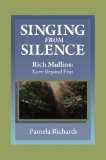 Singing from Silence Rich Mullins by Pamela Richards
Singing from Silence Rich Mullins by Pamela Richards Giveaway ends October 21, 2014.
See the giveaway details at Goodreads.
Enter to win

September 7, 2014
The Game of Cups, Revisited
Rich Mullins was the first ever to set the cup game as the percussion for a recorded song, Screen Door. As performed with the Ragamuffins in Lufkin, Texas, below: Decades later, the rhythm game rose to international attention when paired with this Irish song, sung here in Gaelic. More on the history of the cups game/song:
September 4, 2014
Forty Years Have Passed
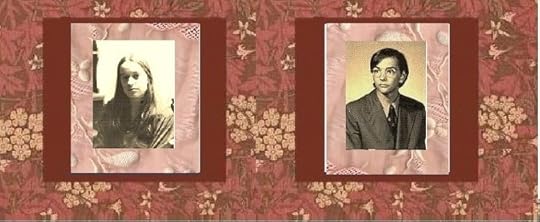 The author on the left, Richard Wayne Mullins on the right. Both photos were taken in 1974 Just this weekend, I came across some scraps of the dress I was wearing when Richard and I first laid eyes on each other in August of 1974. I recalled the first words out of his mouth, "I like your dress." It was the beginning of a friendship that taught me so much more about God than I'd dreamed of learning. I don't have many souvenirs of that time of my life, and if you've ever read Singing from Silence you know why. But I count this song among my memories of our early friendship: I would like to acknowledge Beth Snell Lutz for her faithful preservation of Richard's early music, and for being there for him so many times when I was not. Thank you, Beth!
August 17, 2014
Classical Mullins
Rich Mullins was learning to play classical piano music while he was still in elementary school. Richard's first big hit, Sing Your Praise to the Lord, later recorded by Amy Grant, demonstrated his classical roots. Amy left out the song's bridge, but in this performance at Wheaton College, Richard leaves it in:
Richard could play both of the complete works heard below and many others, but he didn't perform them for the public because his greatest musical strength was improvisation, which led him to combine phrases from the two classical works below into his own song introduction, above. You will find Richard's opening phrase at 1:38-1:47 Richard follows up with a few bars borrowed from Tchaikovsky's Piano Concerto #1. You can hear it starting at 8:12-8:20
Richard could play both of the complete works heard below and many others, but he didn't perform them for the public because his greatest musical strength was improvisation, which led him to combine phrases from the two classical works below into his own song introduction, above. You will find Richard's opening phrase at 1:38-1:47 Richard follows up with a few bars borrowed from Tchaikovsky's Piano Concerto #1. You can hear it starting at 8:12-8:20
August 8, 2014
What is Pure Joy?
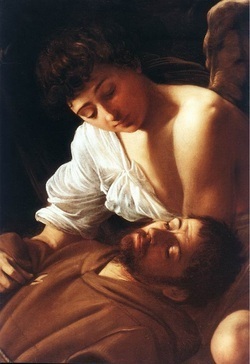 One of my favorite Quaker elders, who is a great storyteller, recently shared this story with me. The original version she had discovered in The Little Flowers of St. Francis:
One winter day St. Francis and Leo were walking together to their abbey. As they continued on their way, Francis would quiz his brother Leo:
"If I spoke with a silver tongue and sang like an angel, would that be pure joy, Leo?"
Uncertain how to reply, Leo echoed the question back: "Would that be pure joy?"
Francis answered his own question firmly:
"No!"
"No?" asked Leo.
Next, Francis asked Leo,
"If I healed the sick and raised the dead, would that be pure joy?"
"I don't know, Brother Francis. Would it?" came Leo's reply.
"No!" said Francis, more strongly than before.
Again, Francis queried Brother Leo,
"If I converted all the crowned heads of Christendom to our cause, Leo, would that be pure joy?"
"No?" asked Leo.
St. Francis nearly shouted his answer:
"No!!"
Timidly, Brother Leo asked Francis, "What, dear brother, then is pure joy?"
"If we were to arrive at our beloved abbey and, when we knocked on the door hungry and covered in sleet, the doorkeeper stared us in the face and said, 'I do not recognize you. Begone, liars, thieves, and murderers,' then beat us and threw us into a ditch full of freezing slush, that would be pure joy."
The elder who told me this story paused for effect. In fact, she stopped altogether. That was the end of her story. Encountering trials is such a common experience to those who follow the path of Jesus that nearly anyone in such audience would be able to make an application of this story to their own lives. I loved this story and re-told it several times over the next few weeks, although I didn't show the elder's restraint when I encountered blank stares. In a few instances I couldn't help but suggest interpretations to those I told it to, because many find it confusing or harsh.
Without interpretation, though, the story sinks in deeply and we work on it like a puzzle that remains unsolved. I think it's really better that way.
July 30, 2014
Hearing God's Voice, Doing His Work
Hearing God's Voice, Doing His Work: Beyond the Ragamuffin Gospel
"Everyone should be quick to listen, slow to speak, and slow to become angry." --James 1:9
These observations are from my own experiences in the past three years of membership in an unprogrammed Quaker Community. Unprogrammed Quakers have no pastors, typically worship in silence until anyone among them is called by Spirit to speak, and usually function in committees to conduct the activities a pastor would normally perform. I am trying to express simply some of the practices these Quakers use to move from contemplative listening to God's voice to acting as his hands and feet in the world. The following statements about Quaker practices are only based on my experiences and from instruction and eldering I have recieved, and at this time have not been endorsed by representative Quaker groups. I am conveying them here as an invitation to those who are unfamiliar to discover more about Quaker traditions.
The Ragamuffin film frames Richard Mullins' life in terms of his struggles, and while it pretty much affirms he could be a jerk--and who isn't, sometimes? it falls short of describing how he became such an effective agent for God in a fallen world. I hope to convey an alternate way of viewing some of the practical steps of service taken by Rich Mullins, who has recently been discovered to have had Quaker immigrant ancestry on both his mothers' and his fathers' sides.* Perhaps you will recognize his one-on-one style of listening in love, his "step by step" approach to following God's call, his accountability to a committee very much like the "anchoring committees" described here, his habit of traveling paired with a spiritual partner--like Christ's disciples, like St. Francis, like the seventeenth century Quakers, and more recently, like contemporary Quakers.
Present-day Quakers are beginning to re-discover the profound effectiveness of carrying out these spiritual practices of seventeenth-century Quakers--steps, which we hope, may lead to bringing the Kingdom of Heaven down to Earth more fully. It's not necessary to be a Quaker to learn from these practices. Perhaps you will find something useful here, too.
The Quaker practice of listening begins with listening in silence for Spirit, our Inner Teacher, to speak to our hearts. When all the distractions of media, cell phones, texting and facebook scream for our attention so loud we barely have time to hear God, that's when we need silence the most. Quakers practice silent listening both at home during the week and at their morning meetings on First Day (that's Sunday).
Next, we listen to one another in spiritual friendship, This relationship between Friends is kept free of hierarchy or competition--we don't consider either of us more important than the other, acknowledging that God speaks to all of us. We can hear him through our spiritual friends if we are open to his presence "wherever two or more are gathered in his name." Quakers highly prefer face-to-face listening to telephone conversations or other means of contact. Deep listening is practiced by clearing space.
When we are clearing space, we let go of all our preconceptions and expectations when we listen to our spiritual friend. We disregard any personal gain, status or benefit we might derive from our spiritual friend so we can remain objectively open to God's call. We are effectively clearing space when our inner vision begins to unfold the wonder of a universe full of potential. We don't give our friend direction at these times, but by gentle questioning prompt him or her to listen to the "Teacher Within."
Over time, the friend who is practicing listening in silence and deep listening with another friend may begin to experience a concern.
When we have a concern, our attention begins to focus more and more on some practical matter not right with the world. Our intention moves toward taking steps to counter this obstacle to bring God's kingdom more fully to earth. Still, it requires more discernment, the contributing gifts of others, and often much time, to determine which gifts we are to use on our journey and to discover the practical steps we need to take.
Clearness committees will be assembled at the request of a friend to assist in discernment. The committee's contributions seldom offer specific direction. Instead the members of the committee offer open-ended queries which refer the friend to his or her inner teacher. Sometimes, the individual who has called the committee becomes convinced over time of a particular leading--a specific calling by God--to act on his or her concern.
The key to acknowledging and unfolding the individual's spiritual gifts to be used for the benefit of the Quaker community or the larger world is eldering, a term more descriptive of specific incidents of activity than permanent status or hierarchy. Any man or woman in the Quaker community can act as an elder, as long as the person taking on the role is known to have a gift for it. Occasionally eldering involves correcting, but more consistently, the productive work of an elder is to recognize and verbally acknowledge the gifts of individuals within the community. This is not a long-winded or highly directive discourse. More often, an elder in a public setting will look into a friend's eyes and briefly announce, "You have a gift," leaving the friend to further reflect and commune with Spirit. Sometimes the gift is named more specifically, either publicly or privately. The elder also extends oversight to a friend who is in the process of learning to use a gift. Elders temporarily selected for the role also accompany traveling ministers and provide practical, emotional, and spiritual support during their journey. If vocal ministry is to be given, the elder will be present to sit and hold the minister in prayer during this time.
Quakers have anchors, too, in the form of a committee called an anchoring committee. A friend whose calling is acknowledged by his local Quaker community, and whose work will take him to distant areas, is called a traveling minister. He or she can request an anchoring committee to work with him on understanding and acting on his calling, and carrying it out. The anchoring committee will hold the traveling minister accountable for his or her work in the world, manage financial details of the ministry, and support the work of the traveling minister in silent prayer and deep listening. The anchoring committee does not often offer direction in decision-making, but refers the traveling minister to the Teacher Within and asks him/her questions to help surface the next steps to be taken in the ministry. Quaker traveling ministers are not sent alone, but like Christ's disciples, travel by twos. The traveling minister will be sent out with an elder appointed by the anchoring committee. Traditionally, traveling ministers do not accept financial compensation from the Quaker communities they visit, other than reimbursement for the cost of travel. This frees the traveling minister to speak at the direction of Spirit unhampered by the need to placate the more wealthy members of the distant community.
*Richard's immigrant ancestors would have followed these practices, and although he may have learned them from oral tradition in his family, many Indiana Quaker meetings hired ministers following the Great Awakening.
 This Quaker woman has been moved by the Spirit to give a message. These Quakers are wearing plain dress.
Contemporary Quakers, with few exceptions, wear contemporary clothing, and men and women sit together in meeting. We sit in a circle or a rectangle facing inward, to indicate our belief that all are equal in God's eyes, and all alike can be called to speak by Spirit. Meeting Houses are still typically unadorned, to focus us within.
"Everyone should be quick to listen, slow to speak, and slow to become angry." --James 1:9
These observations are from my own experiences in the past three years of membership in an unprogrammed Quaker Community. Unprogrammed Quakers have no pastors, typically worship in silence until anyone among them is called by Spirit to speak, and usually function in committees to conduct the activities a pastor would normally perform. I am trying to express simply some of the practices these Quakers use to move from contemplative listening to God's voice to acting as his hands and feet in the world. The following statements about Quaker practices are only based on my experiences and from instruction and eldering I have recieved, and at this time have not been endorsed by representative Quaker groups. I am conveying them here as an invitation to those who are unfamiliar to discover more about Quaker traditions.
The Ragamuffin film frames Richard Mullins' life in terms of his struggles, and while it pretty much affirms he could be a jerk--and who isn't, sometimes? it falls short of describing how he became such an effective agent for God in a fallen world. I hope to convey an alternate way of viewing some of the practical steps of service taken by Rich Mullins, who has recently been discovered to have had Quaker immigrant ancestry on both his mothers' and his fathers' sides.* Perhaps you will recognize his one-on-one style of listening in love, his "step by step" approach to following God's call, his accountability to a committee very much like the "anchoring committees" described here, his habit of traveling paired with a spiritual partner--like Christ's disciples, like St. Francis, like the seventeenth century Quakers, and more recently, like contemporary Quakers.
Present-day Quakers are beginning to re-discover the profound effectiveness of carrying out these spiritual practices of seventeenth-century Quakers--steps, which we hope, may lead to bringing the Kingdom of Heaven down to Earth more fully. It's not necessary to be a Quaker to learn from these practices. Perhaps you will find something useful here, too.
The Quaker practice of listening begins with listening in silence for Spirit, our Inner Teacher, to speak to our hearts. When all the distractions of media, cell phones, texting and facebook scream for our attention so loud we barely have time to hear God, that's when we need silence the most. Quakers practice silent listening both at home during the week and at their morning meetings on First Day (that's Sunday).
Next, we listen to one another in spiritual friendship, This relationship between Friends is kept free of hierarchy or competition--we don't consider either of us more important than the other, acknowledging that God speaks to all of us. We can hear him through our spiritual friends if we are open to his presence "wherever two or more are gathered in his name." Quakers highly prefer face-to-face listening to telephone conversations or other means of contact. Deep listening is practiced by clearing space.
When we are clearing space, we let go of all our preconceptions and expectations when we listen to our spiritual friend. We disregard any personal gain, status or benefit we might derive from our spiritual friend so we can remain objectively open to God's call. We are effectively clearing space when our inner vision begins to unfold the wonder of a universe full of potential. We don't give our friend direction at these times, but by gentle questioning prompt him or her to listen to the "Teacher Within."
Over time, the friend who is practicing listening in silence and deep listening with another friend may begin to experience a concern.
When we have a concern, our attention begins to focus more and more on some practical matter not right with the world. Our intention moves toward taking steps to counter this obstacle to bring God's kingdom more fully to earth. Still, it requires more discernment, the contributing gifts of others, and often much time, to determine which gifts we are to use on our journey and to discover the practical steps we need to take.
Clearness committees will be assembled at the request of a friend to assist in discernment. The committee's contributions seldom offer specific direction. Instead the members of the committee offer open-ended queries which refer the friend to his or her inner teacher. Sometimes, the individual who has called the committee becomes convinced over time of a particular leading--a specific calling by God--to act on his or her concern.
The key to acknowledging and unfolding the individual's spiritual gifts to be used for the benefit of the Quaker community or the larger world is eldering, a term more descriptive of specific incidents of activity than permanent status or hierarchy. Any man or woman in the Quaker community can act as an elder, as long as the person taking on the role is known to have a gift for it. Occasionally eldering involves correcting, but more consistently, the productive work of an elder is to recognize and verbally acknowledge the gifts of individuals within the community. This is not a long-winded or highly directive discourse. More often, an elder in a public setting will look into a friend's eyes and briefly announce, "You have a gift," leaving the friend to further reflect and commune with Spirit. Sometimes the gift is named more specifically, either publicly or privately. The elder also extends oversight to a friend who is in the process of learning to use a gift. Elders temporarily selected for the role also accompany traveling ministers and provide practical, emotional, and spiritual support during their journey. If vocal ministry is to be given, the elder will be present to sit and hold the minister in prayer during this time.
Quakers have anchors, too, in the form of a committee called an anchoring committee. A friend whose calling is acknowledged by his local Quaker community, and whose work will take him to distant areas, is called a traveling minister. He or she can request an anchoring committee to work with him on understanding and acting on his calling, and carrying it out. The anchoring committee will hold the traveling minister accountable for his or her work in the world, manage financial details of the ministry, and support the work of the traveling minister in silent prayer and deep listening. The anchoring committee does not often offer direction in decision-making, but refers the traveling minister to the Teacher Within and asks him/her questions to help surface the next steps to be taken in the ministry. Quaker traveling ministers are not sent alone, but like Christ's disciples, travel by twos. The traveling minister will be sent out with an elder appointed by the anchoring committee. Traditionally, traveling ministers do not accept financial compensation from the Quaker communities they visit, other than reimbursement for the cost of travel. This frees the traveling minister to speak at the direction of Spirit unhampered by the need to placate the more wealthy members of the distant community.
*Richard's immigrant ancestors would have followed these practices, and although he may have learned them from oral tradition in his family, many Indiana Quaker meetings hired ministers following the Great Awakening.
This Quaker woman has been moved by the Spirit to give a message. These Quakers are wearing plain dress.Contemporary Quakers, with few exceptions, wear contemporary clothing, and men and women sit together in meeting. We sit in a circle or a rectangle facing inward, to indicate our belief that all are equal in God's eyes, and all alike can be called to speak by Spirit. Meeting Houses are still typically unadorned, to focus us within.
June 19, 2014
Shir Hashirim
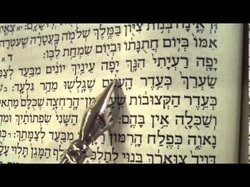
When I was invited by the Illinois Yearly Meeting (a Quaker gathering) to present a study of the Song of Songs, I knew I wanted Paulette Meier to travel there with me. She had the talent, creativity, and chops to learn the opening lines of the Song of Songs in Hebrew for us to a tune of her composition. I am posting her song here, with a link to her website below. A thousand thanks, Paulette!
www.paulettemeier.com
June 9, 2014
Here Be Dragons
 In the beginning, God divided the light from the dark. And the light he called Day, and the darkness he called Night. When God, the creator of worlds, made man in his image, he imbued his creatures with the ability to become creators of their own worlds--and the creativity became a trait that defines humanity.
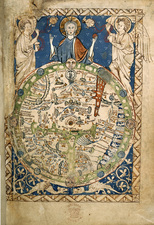
The art of mapping, recording and detailing known geography is cartography, best accomplished in ancient times by daylight. All maps of the medieval world began with Jerusalem as the center of the world and moved outwards toward parts unknown. On the vague corners of their maps, medieval cartographers inscribed, "Here be dragons." Back then, some of us thought we knew what dragons were, and where. At least in the light of day.
In light we find inspiration, illumination, life, love, truth. In darkness, we face mysteries. If light is the gateway of revelation, darkness is the womb of the unknown. Here in the confines of time and space, we see through a glass, darkly. Hereafter we see face to face. Only then do we know fully, even as we are fully known.
In Signing from Silence, I told the story of my brief glimpse of "face to face." It probably amounted to no more than two minutes of clock time. There wasn't as much detail in my vision as that experienced by the little boy who nearly died, went to heaven for half an hour, and spent the next ten years teaching his father the theology he'd learned face to face. In my own two minutes of face to face time, all the barriers to love and forgiveness felt in a lifetime burned away. I only have a scrap of a map of heaven, but not being as advanced as a little child, I guess God knows it holds all the theology I can handle for now.
Not a map, but a dark mirror is the surface that shows us the mystery of the unknown. "Here be:" the unnameable, the unspeakable, the invisible. If light is the gateway to revelation, darkness is the womb of imagination and the unknown. In darkness we find shadows, moonlight, wolves, stars, and exultant choirs of angels who know that their effect on mankind is to provoke deep fear.
It is difficult for me to look back into that dark mirror now, to revisit my memories of Richard's anguish and fears. Back when Rich Mullins was alive, when he looked into that dark mirror, sometimes it was a werewolf he saw looking back at him. Not literally--that's a medical condition--but metaphorically. The darkness, anguish, the fear of repeating the primary loss that drove his destructive behavior appeared to Richard in that form.
Art arises so consistently from pain that some believe anguish is as indispensable a component of the creative process as fire is to alchemy. Pain, like the need to love and be loved, is a great universal. No one living escapes it--we can count on everyone to share it to some degree.
Richard seemed to experience more than his share of pain, and the fear of it. But when God gives us weightier talents like prodigy and creative genius, perhaps he gifts us too with deeper thorns of the flesh.
Excerpt from the work in progress Let the Mountains Sing by Pam Richards
May 12, 2014
Bringing Stained Glass to Life
 Rose Window, Notre Dame Cathedral An excerpt from Let the Mountains Sing:
"To some, art is freedom of expression of all kinds, and its means and objectives are myriad.
To my friend Richard Wayne Mullins, art had a specific purpose. He never questioned whether art was meant to communicate; hypothetical discussions of the merit of non-communicative schools of art made him chuckle. Which communicated pretty clearly what he thought.
Richard's art communicated, and not subtly. He wanted it to; he insisted that it do so. He honed and tinkered and shaped songs into sculptor's tools. He preferred to baptize those songs with the tears of their first hearers before he took them on the road. Until they took on life of their own and began to move audiences, his ideas for songs were carefully put up with the dozens of others which still revolved through his mind in a fluid state of progress.
To find the source of the artist's technique, we ponder what is in his heart. Out of a man's heart, the mouth speaks; or, in Richard's case, sings.
Richard's heart was full of longing, and even in the mid- to late- seventies, his mind was fully furnished with the world of twelfth-century thought seen through the eyes of saints and sinners. How did he discover a way to touch his modern audience--convey his heart full of sunlight and shadow--through the stained glass prism of eight-century old conventions?
It helped that Richard was thoroughly fascinated with people. He studied them as a painter studies the juxtaposition of color, probably studied them harder than the textbooks at Bible College during the years I knew him. He found equal fascination with historic people as living ones. In studying people, he found the same constants of the human condition as King David had millennia before: downcast or darkened aspects of the wounded soul in a world of imperfection, a separation from God, a need to love, a longing for love, redemption, a reunion with God, praise for perfection found in God. These responses describe a cycle of transformation we all may travel through many times in a lifetime, or during a personal crisis, many times in a single day.
Rich Mullins cited Scriptures extensively in his liner notes, but rarely lifted the language of Scripture for his songs. He knew and respected the power of that language, but he knew that even more than making pretty or powerful or scriptural Christian songs, he needed to experience Christ in his life. He strove to convey Christ in his songs to precisely the degree he experienced Jesus in his life. By remaining true to his experiences, Richard blessed his audience with permission to struggle through the process of living out their faith--just as he did. "
--Pam Richards, from the work in progress Let the Mountains Sing
"Someday I shall be a great saint - like those you see in the windows of magnificent cathedrals. I will have a soul made of sunlight and skin as clear as the stained glass panels that make their skin, and I will shine like they do now - I will shine with the glory that comes over those who rise up early and seek the Lord. . . "
". . . But I do not shine so now - especially not in the morning. In fact, I grimace until noon, I would never be mistaken for a stained glass saint, though at 7 AM I might be grey and grotesque as a gargoyle. By faith I accept that 'God's commands are not burdensome,' but right now, I am not grown in that measure of grace that frees me to exalt in this particular command to seek Him 'early in the morning.'" -- Richard Mullins
April 14, 2014
Transcendence
From FAQ about Rich Mullins:
Q. How would you describe your relationship with Rich Mullins in one word?
A: There have been many times I thought Richard was such a creative genius, that he invented a new category of relationship just for us. There does not seem to be a term that can encompass all of it. Friend? Really, much more than that. Girlfriend? Both less and more. Fiancee? No, that's someone else. Inamorata? It's an uncommon word, but perhaps. But like many descriptive terms for love, it may imply physical intimacy. Those who search for one word to describe the relationship between Richard and me need look no farther than "transcendent."
Transcendent:
1) of, relating to, or being part of a reality beyond the observable physical universe
2) being so extraordinary or abnormal as to suggest powers which violate the laws of nature
-- definition by Merriam-Webster
From FAQ about Singing from Silence:
Q: You refuse to describe yourself as Richard's fiancee. Why would I want to know more about a relationship that was never defined, never resolved, and never resulted in marriage or children?
A: The intensity of a relationship which cannot be described in simple words breathes in our hopes, inhabits our dreams, and takes flight in our songs, our poetry, and literature.
You could argue that fulfilled marriage is the only significant relationship between a man and a woman, but you would be arguing against several millennia of songwriting tradition, starting with the Song of Solomon--written about love between a couple who have yet to consummate their marriage. The Song of Songs offers the metaphor of God's love for his intended bride, humanity--suggesting love is a mystical journey which permits the lover and the beloved to experience the love of God through even unfulfilled and imperfect human relationships.
If you know Richard died unmarried, you already know what our relationship was not.
The mystery remains in what it was; hence the book, Singing from Silence.
Q. How would you describe your relationship with Rich Mullins in one word?
A: There have been many times I thought Richard was such a creative genius, that he invented a new category of relationship just for us. There does not seem to be a term that can encompass all of it. Friend? Really, much more than that. Girlfriend? Both less and more. Fiancee? No, that's someone else. Inamorata? It's an uncommon word, but perhaps. But like many descriptive terms for love, it may imply physical intimacy. Those who search for one word to describe the relationship between Richard and me need look no farther than "transcendent."
Transcendent:
1) of, relating to, or being part of a reality beyond the observable physical universe
2) being so extraordinary or abnormal as to suggest powers which violate the laws of nature
-- definition by Merriam-Webster
From FAQ about Singing from Silence:
Q: You refuse to describe yourself as Richard's fiancee. Why would I want to know more about a relationship that was never defined, never resolved, and never resulted in marriage or children?
A: The intensity of a relationship which cannot be described in simple words breathes in our hopes, inhabits our dreams, and takes flight in our songs, our poetry, and literature.
You could argue that fulfilled marriage is the only significant relationship between a man and a woman, but you would be arguing against several millennia of songwriting tradition, starting with the Song of Solomon--written about love between a couple who have yet to consummate their marriage. The Song of Songs offers the metaphor of God's love for his intended bride, humanity--suggesting love is a mystical journey which permits the lover and the beloved to experience the love of God through even unfulfilled and imperfect human relationships.
If you know Richard died unmarried, you already know what our relationship was not.
The mystery remains in what it was; hence the book, Singing from Silence.


