
Michael Matthews's Blog, page 145
August 9, 2013
Cool Stuff of the Week #8: Bond 50, KettlePizza, Ender’s Game, and More…
I’m not ashamed to admit that I’m kind of a sucker for cool stuff. I like nifty gadgets, quirky decoration pieces, nice clothes (and shoes!), good books, and fun games.
In this series of weekly posts, I share whatever currently has my fancy. Maybe some of it will catch yours as well!
VIDEO OF THE WEEK:
GERMAN VS. OTHER LANGUAGES
The harshness of the German language is played up hilariously in this video from the Copy Cat Channel.
BOND 50: THE COMPLETE 22 FILM COLLECTION

This awesome Blu-ray collection takes you through 50 years of Bond, with all 22 films up to Skyfall (which it doesn’t include), and over 130 hours of bonus footage.
If you’re a Bond fan, you’re going to want to add this to your collection.
Buy now
AmazonAmazon UK
THE EPIC BAR

I’m generally not a fan of protein bars, but I like what EPIC Bar is doing.
Their protein bars are 100% grass-fed animal based, and are designed to be paleo friendly, gluten free, and low in sugar.
They currently offer bison, beef, and turkey bars, and each have a few extra ingredients thrown in that help with taste, such as bacon, cranberries, walnuts, and almonds.
Buy now
EPIC Bar
KETTLEPIZZA

If you’ve ever tried to bake a pizza in a charcoal grill, you know how annoying it can be. If you’re lucky, you can come away with a smoky, crispy pizza that a traditional oven can’t deliver…but usually your pizza just ends up charred and ruined.
Enter the KettlePizza, which turns a 18.5- or 22.5-inch kettle-shaped charcoal grill into a pizza oven capable of delivering consistently delicious pizza.
The contraption helps maintain a constant grill temperature, and gives you easy access to your pizza. It also comes with a stone to cook your pizza on, and a wooden pizza peel.
Buy now
AmazonAmazon UK
BOOKS OF THE WEEK:
ENDER’S GAME & ENDER’S SHADOW

I first read Ender’s Game as a teenager and loved it. With the movie coming out soon, I thought it a good excuse to re-read the book, and I’m glad I did.
Whether you like sci-fi or not (I’m generally lukewarm for the genre), chances are you’re going to like this Hugo and Nebula Award–winning novel.
The Amazon.com review summarizes the plot nicely:
Aliens have attacked Earth twice and almost destroyed the human species. To make sure humans win the next encounter, the world government has taken to breeding military geniuses — and then training them in the arts of war… The early training, not surprisingly, takes the form of ‘games’… Ender Wiggin is a genius among geniuses; he wins all the games… He is smart enough to know that time is running out. But is he smart enough to save the planet?
The biggest strength of the book is its characters though, which Card develops brilliantly. You really come to love some and hate others, and can’t help but to fantasize what it would be like if you were among them in Battle School.
If you haven’t read this classic and are hunting for your next read, or if you have but read it a while ago, make Ender’s Game next on your list. It won’t disappoint.
Buy now
AmazonAmazon UK

Ender’s Shadow is a “parallel novel” to Ender’s Game, meaning it re-tells the story of Ender’s Game, but this time from the viewpoint of another character, Bean, who becomes Ender’s lieutenant despite the fact that he is the smallest and youngest of the Battle School students.
Here’s a plot summary from Amazon’s review:
Bean is the central character of Shadow, and we pick up his story when he is just a 2-year-old starving on the streets of a future Rotterdam that has become a hell on earth. Bean is unnaturally intelligent for his age, which is the only thing that allows him to escape–though not unscathed–the streets and eventually end up in Battle School. Despite his brilliance, however, Bean is doomed to live his life as an also-ran to the more famous and in many ways more brilliant Ender. Nonetheless, Bean learns things that Ender cannot or will not understand, and it falls to this once pathetic street urchin to carry the weight of a terrible burden that Ender must not be allowed to know.
I wasn’t sure what to think before reading this book. Was it going to be a boring traipse through familiar territory–merely an easy way for Card to cash in on the success of Ender’s Game–or did it actually have something unique to offer?
Well, I was hooked within the first 10 pages and found Bean’s tale equally enthralling as Ender’s. Card’s characterization is as good as ever, and he does a great job taking the plot whose milestones you already know, and infusing it with new mysteries and suspense.
Simple put, if you liked Ender’s Game, you’ll find Shadow an equally worthwhile read
Buy now
AmazonAmazon UK
What do you think of this week’s picks? Have anything you’d like to add? Let me know in the comments below!


August 7, 2013
How to Be the Gym Idiot
Working out at a gym is so much more than mere “me” time to improve our health and physiques.
It’s a social experience unlike any other, where we get to see ridiculous people doing even more ridiculous things.
The Gym Idiot is one of the best types of people the gym has to offer, capable of providing endless hours of cringe-worthy entertainment.
How does he work, exactly?
Well, let’s take a journey through his mind, and learn his code…
Take excessively long breaks in between your sets, and make sure you’re occupying the bench/station the entire time.
Everyone knows that it requires 6+ minute breaks in between sets to make gainz, so make sure you apply this basic training principle.
Wannabe Gym Idiots use this time to zone out and stare at the ceiling, but a real Gym Idiot makes good use of this time. He performs the Rest Set, and it goes like this:
Stare at yourself in the mirror for several seconds. Focus on flexing your chest and biceps, and talk to them. If you’ve named each bicep and pectoral muscle, I won’t hold it against you.
Make up stories to your bros about how hard the fly honeys were mirin‘ at the club last weekend. They just can’t resist the shred.
Switch to a new flex position so you can better see your biceps. Point out your peak to whoever is around you.
After several minutes of the above, suddenly yell out a battle cry like “WELCOME TO THE TERRORDOME” and begin your next set.
By executing proper Rest Sets, you not only maximize your protein photosynthesis, you assert your alpha status to everyone else in the gym.
They might sneer at you, but they know who runs this shit. They know.
Stack the plates and do assisted half-reps.
Betas love to use form as an excuse for why they put up weak ass lifts.
225 on bench but the bar touched your chest? Bitch please, not a single weight was even lifted that day.
It’s very simple…
If the bar ain’t bending, you’re just pretendin’. You establish gym dominance by stacking plates on plates on plates, and you announce your dominion by doing it as loudly as possible.
Fist-bumping your bros and flexing your chest and biceps helps as well.
Then, when it’s time to hit the weekly PR, all that really matters is you get the weight off the rack. Haven’t you ever heard of Dynamic Stabilization Overload Training?? Every elite powerlifter does it. Read a book.
Here’s an example of a shredded Gym Idiot doing it right, going for the PR, but being foiled by a moronic beta spotter:
Every day is chest day.
Just kidding. Gotta shred up the biceps and abs too.
Monday: Chest, Biceps, & Abs
Tuesday: Chest, Biceps, & Abs
Wednesday: Chest, Biceps, & Abs
Thursday: Chest, Biceps, & Abs
Friday: Chest, Biceps, & Abs
Saturday: Chest, Biceps, & Abs
Sunday: Chest, Biceps, & Abs
This is the optimal way to train.
Everyone knows that HBBs are genetically programmed to have sex with guys that have shredded chests, biceps, and abs. No other muscle groups matter.
That’s not the only reason to train properly, though. You can’t forget the importance of stuntin‘ on the haters, and the bench press is the only lift that anyone actually cares about.
If a guy asks anything other than “how much do you bench?” it’s only because he’s intimidated by your massive chest and biceps and ashamed of his frail ass physique.
The proper answer to questions like “how much do you squat” or “how much do you deadlift” is simply “I bench 355 bro. Do you even lift?”
Here are two examples of the typical assholes that will ask about your squat and deadlift:
Use the word bro at least once in every sentence.
Here’s a snippet from an actual conversation I heard among Gym Idiots the other day:
“Bro, you know what I was thinking bro? I never see our teachers in here bro. Do they even lift?”
I wanted to run up to him yelling broooooo! and go for a high-five, but once I saw his chest and biceps, I quickly lost heart. I wasn’t worthy.
A real Gym Idiot uses bro at least once in every sentence for several reasons:
It helps maintain your mental pump in between sets. Gotta keep that mind swole bro.
It repels betas, ensuring that all of the benches remain free for your multi-station drop sets. Do you even advanced pyramid lift bro?
The horny cardio bunnies love it. It’s the foundation of all good gym game.
Some people would say that obsessive, repetitive use of bro makes you sound like a moron but let’s face it:
They’re jelly of the chest and biceps.
Do they even lift?
Game, set, match. Bro.
Offer everyone advice on how to train and diet.
If you’re bigger than someone else, you have a duty to tell him how to train and diet.
By doing this, you not only help nerds make gains, but you uphold an ancient Gym Idiot tradition…
The ceremonial passing of the Torch of Broscience.
Generation after generation of Gym Idiots have passed their unfounded tips on how to get huge down to their bros, and thanks to them, we now know more about building our chests and biceps than ever before.
This cumulative wisdom comprises the Gospel of Gainz, and as a Gym Idiot, it gives you great power…but also great responsibility.
So when you see that skinny dude squatting, make sure he knows it will blow out his knees. Deadlifting? That’s a hernia waiting to happen. Going past parallel on the bench press? Goodnight, sweet rotator cuffs. Eating carbs after 3 PM? Bro not when you’re cutting.
Before we move on, my bro Dom has something to say about this:
Grunt, yell, and groan every rep.
Whether you like it or not, your grunt says a lot about who you are as a human being. It’s your callsign in the gym.
So make it loud, guttural, growl that says, “I’m about to lift enough weight to move Mount Brolympus.”
There’s more to grunting, though.
Science has proven that sound has force, and what happens when we increase force while lifting? That’s right–we hit a new PR on the bench.
Don’t, however, grunt on just any set. You need to reserve your grunts for your heavy sets of assisted half-reps.
These are the sets that everyone needs to see, and proper grunting makes it clear that some serious shit is going down.
What else do Gym Idiots do? Have anything else you’d like to share? Let me know in the comments below!
August 5, 2013
How to Improve Shoulder Flexibility and Mobility
Inflexible shoulders get in the way of quite a few of your major lifts: namely the squat, military press, and bench press.
Shoulder pain, problems, and injuries are also pretty prevalent among weightlifters, primarily to improper form on the bench press and shoulder presses, and an imbalance between chest and back training. (Many guys focus too much on their chest training and neglect their backs, which results in the pectorals pulling the shoulders down and inward.)
Fortunately, you can overcome shoulder pain and inflexibility fairly easily if you address it properly.
Whether you’re new to lifting or experienced, and whether you’re currently experiencing shoulder problems or not, I recommend that you start doing stretching exercises every week. If you’re currently dealing with shoulder impairments, they will improve symptoms; if you’re not, they will help you maintain optimal shoulder health and function, as well as help prevent future injury.
Before we get to the flexibility and mobility routine, though, let’s assess your current level of shoulder flexibility.
A Simple Shoulder Flexibility Test
Here’s an easy way to test your current shoulder flexibility:
If you get into the arms-up position and someone at your side can’t see your eyes (if your arm is in the way and you can’t move it back enough to reveal your ear), your training will benefit greatly from improving your shoulder flexibility.
The Best Shoulder Flexibility Exercises
If you’re lacking shoulder flexibility, you should focus on two things to improve it:
Ensure you’re not neglecting your back muscles in your training, as an imbalance between the chest and back development is the most common cause of shoulder problems.
Do shoulder flexibility exercises several times per week.
If you do both of these things, you can get rid of nagging shoulder issues you might be dealing with, and prevent them if you’re not currently having any problems.
Now, regarding the exercises, there are a few points that you must keep in mind:
Don’t stretch before your weightlifting as this can increase the risk of shoulder injury. Stretch after your weightlifting, or at another time altogether.
Don’t try to push through tightness. Don’t approach flexibility exercises like weightlifting–don’t try to blast through sticking points, as this can cause injury.
Stop at tightness, hold for 5 seconds, and release. You have to be patient when you’re working on increasing mobility.
Take it slow at first, especially if you’re nursing an injury. Again, building up flexibility takes time and patience, especially if you’re recovering from an injury. Even minor strains can take several weeks to fully heal when cared for properly, and much longer if continually aggravated.
A good place to start is to pick three exercises below for your routine, and perform 2 sets of 10 reps, with 60 seconds of rest in between each set. Do this twice per week. As your flexibility improves, you can add in more exercises and/or sets as desired.
Shoulder Dislocations
Don’t worry–this doesn’t result in dislocated shoulders.
It’s actually a great all-around shoulder mobility exercise, and very simple to do.
The tightness of your shoulders will dictate how wide your grip needs to be. The tighter they are the wider you’ll need to make your grip. As flexibility improves, however, you will be able to gradually narrow your grip.
People that are very flexible will be able to perform the exercise with their hands at less than two shoulder-widths apart.
Wall Extensions
Wall Extensions are a very simple way to improve shoulder flexibility. Here’s how they’re done:
Here’s what he’s doing, just in case it’s not totally clear:
Stand with your back and heels against a flat wall.
Extend your arms straight out to your sides, with your palms facing out (the backs of your hands against the wall).
Bend your arms to move your forearms into an upright position (move your arms to a 90-degree angle).
Carefully raise your arms above your head, keeping them flat against the wall.
Good flexibility allows you to fully extend your arms and touch your hands together while keeping your arms, elbows, and wrists touching the wall at all times.
Around the World
This is a great exercise for not only improving shoulder flexibility, but for strengthening the rotator cuffs as well.
Start with a 25 lb plate if necessary and work your way up to a 45 lb plate.
Doorway Stretch
The Doorway Stretch is an effective way to stretch your shoulders, and your anterior deltoids in particular.
Here’s a one-arm variation:
My Shoulder Flexibility Routine
Here’s what I do twice per week:
2 sets of Shoulder Dislocations
2 sets of Around the Worlds
2 sets of Door Stretches
This keeps my shoulders flexible and the joint tight and in alignment. I rarely ever experience shoulder pain or problems, and have been strain-free for years now (knock on wood).
What do you do to avoid shoulder pain and problems? Have anything else you’d like to add? Let me know in the comments below!
August 3, 2013
Recipe of the Week: Roasted Garlic Twice-Baked Potato
The good old baked potato is a staple side dish in American cuisine, and when it’s done properly, it can be outstanding.
This quick-and-easy recipe is from my cookbook, The Shredded Chef, and it’s a delicious twist on the plain Jane baked potato.
I particularly like it because you get a lot of taste from a rather modest macronutritional profile. (I prefer to go high-carb on my cheat meals as opposed to high-fat. If you’d like to know why, read my article on carbohydrates and weight loss).
This recipe makes 6 baked potatoes, which is perfect for cooking larger batches of food that you can refrigerate the leftovers of, and enjoy several times throughout the week.
Servings
6
Calories Per Serving
216
Protein Per Serving
6 grams
Carbohydrates Per Serving
39 grams
Fat Per Serving
5 gram
Ingredients
6 medium-sized baking potatoes
1 whole garlic bulb
1 teaspoon extra-virgin olive oil
2 tablespoons unsalted butter, softened
1/2 cup skim milk
1/2 cup low-fat buttermilk
1 1/2 teaspoons fresh rosemary, minced
1/2 teaspoon salt
1/2 teaspoon ground black pepper
dash of paprika
Instructions
Place the potatoes on a baking sheet and bake at 400°F for 45-55 minutes, or until tender.
Meanwhile, remove the outer papery skin from garlic, drizzle with oil and wrap in 2 sheets of heavy-duty foil. Add the garlic to the oven for 30-35 minutes or until softened. Let garlic and potatoes cool for about 10 minutes.
Once cool enough to handle, cut a thin slice off the top of each potato and discard. Scoop out the pulp until just a thin shell remains, place the pulp in a large mixing bowl, add the softened butter and mash.
Cut the top off of the garlic head, leaving the root intact, and squeeze the softened garlic into the bowl with the potatoes, add the milk, buttermilk, rosemary, salt, and pepper and mix well.
Spoon the potato mixture back into the shells and place back on the baking sheet. Bake at 425°F for 20-25 minutes, or until heated through. Remove from oven and add a dash of paprika to each top.
What You Get to Eat

August 2, 2013
Cool Stuff of the Week #7: Bose SoundLink, Beatbox Brilliance, Shakespearean Star Wars, and more…
I’m not ashamed to admit that I’m kind of a sucker for cool stuff. I like nifty gadgets, quirky decoration pieces, nice clothes (and shoes!), good books, and fun games.
In this series of weekly posts, I share whatever currently has my fancy. Maybe some of it will catch yours as well!
VIDEO OF THE WEEK:
BEATBOX BRILLIANCE
Armed with just a microphone, Thum pushes the limits of the human voice to create incredible soundtracks of impossible beats and phenomenal sounds, with scratched vinyl, the Michael Jackson back-catalogue, the didgeridoo and an entire fifties jazz band amongst his vocal repertoire.
BOSE SOUNDLINK BLUETOOTH SPEAKER

If you want an ultra-portable, high-quality Bluetooth speaker, then the Bose Soundlink is what you want ($199).
As it’s Bose, you expect a good product, but this little speaker really delivers. It fits in the palm of your hand yet pumps out surprisingly loud, crisp. full-range sound, including deep lows. It connects wirelessly to your smartphone, tablet, or other Bluetooth device.
Buy now
AmazonAmazon UK
PUMP-ACTION OUTLAW SHOTGUN RUBBER BAND GUN
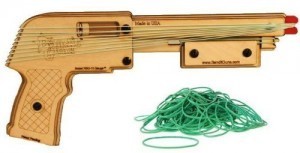
Remember the good old days of rubber band wars? Relive them with the Bandit Gun Rubber Band Outlaw Shotgun ($25).
This pump-action rubber band shooter allows you to fling your stretchy ammo up to 25 feet via three different firing modes: single shot and rapid fire.
Buy now
Amazon
MACHINE ERA WALLET

The Machine Era Wallet is a stylish way to carry your cash ($28-$45).
It’s crafted from a solid piece of metal and measures in at a mere quarter inch of thickness. The aluminum version comes in a matte black finish, and the brass in an unfinished condition to allow the metal to age.
Buy now
Kickstarter
BOOK OF THE WEEK:
WILLIAM SHAKESPEARE’S STAR WARS

I find it easy to nerd out on Star Wars, so I’m biased, but this book is just great.
It’s an incredibly good adaptation of Star Wars Episode IV: A New Hope, using authentic Elizabethan grammar and diction while remaining true to the jargon and storytelling of Star Wars. It’s actually meant more for its literary value than for a few laughs.
If you’re into iambic pentameter just as much as you’re into the battle between the Light and Dark Side, buy this book now. You’re going to love it.
Buy now
AmazonAmazon UK
What do you think of this week’s picks? Have anything you’d like to add? Let me know in the comments below!
July 31, 2013
The Ultimate Bodyweight Workout Routine
There are three questions I often get asked when it comes to bodyweight workout routines:
Is bodyweight training as effective as weightlifting?
Can you build muscle and strength with bodyweight exercises alone?
Should you combine bodyweight exercises with your weightlifting?
Well, in this article I want to address these points, as well as share with you what I feel is the “ultimate” bodyweight workout routine.
Bodyweight Workouts vs. Weightlifting:
Which is Best For Building Muscle Size and Strength?
Bodyweight workouts have big pluses:
You can do them at home, in your hotel room, at work, etc.
You save money on a gym membership and on expensive home gym equipment.
You save time that would normally be spent driving to the gym, waiting for equipment, etc.
You don’t have to deal with pervy guys staring you down (ladies), gymbros sizing you up (fellas), or worse.
There’s no doubt about it: bodyweight workouts are an affordable, effective way to get fit. A good bodyweight routine will help you build muscle and strength and lose fat.
BUT…bodyweight workouts have their limitations.
The first limitation is related to how much muscle and strength you can build. In this regard, a proper weightlifting routine is far more effective.
Why?
Because of something researchers call the “strength-endurance continuum,” which is a fancy-sounding phrase for a simple concept:
By lifting heavy weights for fewer repetitions, you force your muscle cells to adapt to what is known as “overload.” The primary method of adapting to overload is to grow larger muscle fibers.
By lifting lighter weights for many repetitions, you force your muscle cells to adapt to fatigue. The primary method of adapting to fatigue is to improve various metabolic functions, but not to grow larger muscle fibers.
This is why there are guys that can do a bajillion push-ups, but have small chests. And why guys can bench 300+ pounds but fail to impress in the push-up showdowns.
This is also why people find that bodyweight workouts provide diminishing returns. From my experience, they’ll usually notice gradual improvements in their bodies for the first several months, and then everything seems to grind to a halt. No more muscle growth, and minimal improvements in strength.
What’s happening is when they start such a program, most bodyweight exercises actually function as high-weight, low-repetition training. Do you remember how hard it was to do just 10 chin-ups when you first started? By having to work in that lower repetition range (4-6 for most people), you were overloading your muscles and they were responding by growing larger and stronger.
But then, as you do more workouts, and the chin-ups get easier and easier. Before you know it, you’re banging out 20+ at a time. Well, you’ve now left the “strength” part of the continuum and are training in the “endurance” end of the spectrum. That is, the stimulus no longer qualifies as “overload,” and the response changes to improved aerobic power and time-to-exhaustion, but not growth in size.
To kickstart the muscle growth you would have to bring your training back into the “strength” area. That is, you would need to increase the overload on the muscles–the sheer amount of weight that they have to move.
You can accomplish this with bodyweight workouts, which I will address soon, but for now just know that this aspect of “progressive overload” is absolutely crucial in all resistance training. It’s what causes muscles to grow.
And this is why weightlifting beats bodyweight workouts in the long run when it comes to building maximum strength and size: it’s just easier to overload all the muscles in your body with a proper weightlifting routine.
There just aren’t true bodyweight equivalent of lifts like the Squat, Deadlift, Bench Press, Barbell Row, and Military Press, and you simply can’t recreate the experience of moving hundreds of pounds of metal against gravity with a bodyweight exercise.
That said, you can build larger and stronger muscles with bodyweight training, and the routine I share below will do this. But you should know that if you’re looking to gain size and strength as quickly as possible, a bodyweight workout routine really isn’t the best way to get there.
Combining Weightlifting and Bodyweight Exercises
Many guys looking to build size and strength ask about this, and the answer is simple:
Adding bodyweight exercises to your weightlifting routine is worth it if the exercises allow for proper overload of the muscles.
That is, I don’t really see any point in finishing my chest workout with burnout sets of 100+ push-ups, but I do end most of my back workouts with weighted wide-grip pull-ups, which I perform in the 4-6 rep range (I use enough weight to allow for at least 4, but not more than 6, repetitions).
This approach naturally narrows the bodyweight exercises that would be worth adding to your weightlifting routine, but it doesn’t rule all of them out. Look over my routine below and if you want to give any of the exercises a go, do it
The Ultimate Bodyweight Workout Equpiment
As you’ll see, the primary goal of the bodyweight workout routine I’m going to share is to enable you to continually overload your muscles. It’s not your typical routine of set after set of high-repetition work, and it’s suitable for both men and women.
To do this effectively, you will need some equipment. Fortunately, you won’t have to spend more than a few hundred bucks, and this is all you will ever need to make great gains on the workout routine itself.
Let’s go over each piece that you’ll need and why.
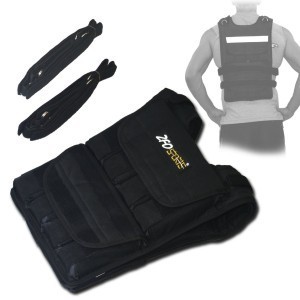
Weighted Workout Vest
This vest allows you to add up to 40 lbs to your body, which allows you to get more “miles” out of the workouts due to the progressive overload theory talked about earlier.
For instance, you will work on your wide-grip pull-ups until you can do 8-10, and then you will add 10-15 lbs using this vest, which will bump you back down to the 5-rep range, and you will continue from there.
I recommend that both men and women get this before they begin the program. Men will use it for push, pull, and legs training right off the bat, and women will use it for leg training.
The following vest from ZFO Sports allows you to add up to 60 lbs to your body.
Buy now
Amazon
Push-Up Bars
The bulk of a weighted vest restricts your push-up form. To get around this, you can use kettlebells (listed below) as in the featured image of this post, or use push-up bars.

Dip Belt and Kettlebells
Eventually the weighted vest won’t be enough for dips and pull-ups, and at this point, I recommend you add a dip belt.

Buy now
AmazonAmazon UKBodybuilding.com
You’ll also need some weights to go with the belt. I prefer kettlebells because you can hang them off the belt and also use them for arms and shoulder training.
I recommend that both men and women get kettlebells before they begin the program. Get a 20 lb one, 35 lb one, and another 35lb or two 50 lb ones for squatting and lunging.

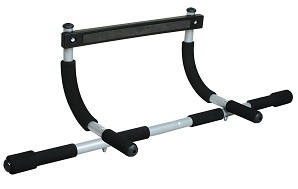
Power Tower or Pull-Up Bar and Dip Station
A good bodyweight workout program includes pull-ups and dips, and a “Power Tower” kills both birds with one stone. It also allows you to do hanging and Captain’s Chair leg raises, which are great ab exercises.
It’s kind of expensive ($200), but well worth it. If you can afford it, I recommend both men and women get this before they begin the program.

If that’s too expensive right now, then I recommend both men and women start with a pull-up bar, and add a dip station when they have a little extra cash.
Buy now
AmazonAmazon UK

Buy now
AmazonAmazon UK
Ab Wheel
The ab wheel is a simple, effective way to train your abs, and it’s cheap.
I recommend both men and women get this before starting the program.

Weighted Workout Ball
Weighted ab training is an important part of building a great core, and a weighted workout ball is a good tool for this.
Two of my favorite ab exercises are hanging and Captain’s Chair leg raises, and you can turn them into weighted exercises by snatching a medicine ball in between your feet.
This is an optional item, but a nice addition for both men and women. I recommend getting the heaviest one available (12 lbs on Amazon.com, 9 kg on Amazon.co.uk).

Workout Mat
I recommend putting down some foam matting in your workout area. It’s cheap, and if you’re setting everything up inside, it will protect your floor from scuffs and dents. If you’re setting up everything in a garage, it’s nice for doing push-ups and on-the-floor ab work.

Battle Rope or Workout Bar
These are optional items, but nice additions because they allow you to do a great version of a row exercise for your back. The bar can also be used to add a little weight to your squats.
Choose one or the other, unless you really want both (the rope for the rows, and the bar for adding weight to your squats).


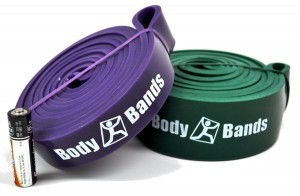
Workout Bands
Workout bands have various uses, as you know, but the primary use of them in this program will be to assist with your pull-ups and dips.
That said, this is an optional item. If you don’t want to buy it, you can build up your pull-up and dip strength without it.
The Ultimate Bodyweight Workout Routine
Okay, now that you know the equipment you’ll need, let’s get to the program itself!
There are two, very simple ground rules for the program:
You’re shooting to work in the 6-10 rep range for everything but abs (which I will explain below). That means that you want to weight the exercises so you can get at least 6 reps, but no more than 10. Whenever you can do more than 10 reps in a given set, you add weight to your next set. I will explain how to do this as we go.
You will need to keep a workout journal to record your progress. This way you know what you did each week, and can strive to do more each following week.
Eventually you will run out of methods to increase the “overload” effect of certain exercises (weight and positional variations). When this occurs, you simply work with maximum resistance until failure for those sets.
And if you reach this point and really want to build more strength and muscle, I highly recommend you switch to a traditional weightlifting routine, such as my Thinner Leaner Stronger or Bigger Leaner Stronger programs. You can even do them at home by adding a bit of equipment.
You rest 1-2 minutes in between each set. This is to allow you to regain your strength. This is not circuit training where you superset everything.
You train 5 days per week, and rest 2. You’ll see how to stagger your training and rest days.
If you want to include cardio, I recommend doing high-intensity interval training, and doing it completely separate to your resistance training. If that’s not possible, do it after your resistance training, not before.
That’s it. Your goal every week is to do more reps with the same weights as the week prior, and to eventually hit 10 reps so you can add more weight.
Day 1
Push
3 Sets of Regular Push-Ups
The regular push-up is one of the staples of your push routine.
Men:
If you can do more than 10 unweighted push-ups, strap on your weighted vest and add enough weight to limit yourself to 6 reps, and you will work with this over the following weeks until you can do 10 reps, and then you will add more weight.
Women:
If you can’t do at least 6 proper push-ups, start on your knees. If you can’t get 6 knee push-ups, do what you can and you will build your strength as time goes on (a spotter can help here too). Eventually you will be doing proper push-ups, and actually weighting them.
3 Sets of Decline Push-Ups
Unlike the decline bench press, which targets your lower chest and which I’m not a fan of, the decline push-up targets your upper chest.
Here’s how to do it:
(Obviously you don’t need the step-up bench–just grab anything lying around.)
Men:
If you can do more than 10 unweighted decline push-ups, strap on your weighted vest and add enough weight to limit yourself to 6 reps, and you will work with this over the following weeks until you can do 10 reps, and then you will add more weight.
Women:
If you can’t do at least 4 proper decline push-ups, do 3 more sets of regular knee push-ups. Once you can do at least 4 decline push-ups, start doing them instead.
3 Sets of Dips
The dip is an extremely effective chest exercise used by bodybuilders and bodyweight lifters alike.
Men:
If you can do more than 10 unweighted dips, strap on your weighted vest and add enough weight to limit yourself to 6 reps, and you will work with this over the following weeks until you can do 10 reps, and then you will add more weight.
Eventually you will need more weight than your vest can provide, and that’s where the dip belt and kettlebells come into play.
Women:
If you can’t do at least 4 dips, use bands to assist you. Here’s how:
Eventually you will be able to “wean off” the bands and do full, unassisted dips, and even add weight!
3 Sets of Side Lateral Raises
This exercise requires that you have kettlebells.
While push-ups and dips target the front muscle in your shoulders, lateral raises are a great exercise for developing the sides. While these aren’t techincally bodyweight exercises, they’re effective and important as the side deltoids are quite hard to train and develop.
Ab Training
You’re going to end your workout with some ab training. What you do will depend on what equipment you have.
The training protocol for abs is to start with 3 sets of weighted work, if possible, which is then followed by 6 sets of unweighted work. All weighted work is kept in the 8-10 rep range, and all unweighted work is done until failure.
You do all the exercises back-to-back (do them all as a “circuit”), and you rest for 90 seconds in between each circuit.
If you have a Power Station, do the following:
3 sets of weighted (if possible) Captain’s Chair Leg Raises. (.) You can also increase the difficulty of this exercise by straightening your legs.
3 sets of Hanging Leg Raises. (.)
3 sets of Air Bicycles. (.)
Here’s how you do these exercises:
1 set of Captain’s Chair Leg Raises, immediately into 1 set of Hanging Leg Raises, immediately into 1 set of Air Bicycles. You then rest 90 seconds, and do it all again. You do 3 of these “circuits.”
If you don’t have a Power Station, do the following:
3 sets of weighted (if possible) Hanging Leg Raises.
3 sets of Air Bicycles.
Do them in the same way as explained above
Day 2
Pull
3 Sets of Pull-Ups
The pull-up builds a great back, and should be a part of everyone’s routine.
Men:
If you can’t do at least 4 unweighted pull-ups, use bands for assistance (if you have them), or a spotter (someone to hold your knees and help you up).
Here’s how to use your workout bands for this:
If you don’t have bands or a spotter, start with 3 sets of chin-ups instead (and then do 3 more as your next exercise).
If you can do at least 4 unweighted pull-ups, start with these. If you can do more than 10, throw on your weighted vest and add weight until you can do 6 reps and work from there.
Women:
Unless you’re already incredibly strong, you’re going to start with chin-ups, and you will probably need to start with some assistance (bands or a spotter to hold your knees and help you up).
3 Sets of Chin-Ups
The chin-up targets both the back and the biceps, with additional emphasis on the biceps.
3 Sets of Inverted Rows
The inverted row is a great exercise for training your back. There are a couple different ways to do it, depending on what equipment you have.
Here’s how to do it if you have a workout bar. (You simply elevate the bar using chairs so you can hang from it.)
Palms in is easier than palms out, and feet on the ground is easier than feet elevated.
Here’s how to do it with battle ropes:
Again, feet on the floor is easier than feet elevated.
Men:
Start with your palms out (if you’re using a bar), and feet on the floor.
If you can do more than 10 reps with your feet on the floor, elevate your feet. If you can do more than 10 reps of these, don your weighted vest and add weight until you can only do 6 reps and work from there, adding weight to the vest as needed.
Women:
Start with your palms in (if you’re using a bar), and feet on the floor.
If you can do 10 reps of these, switch to palms out. From here, elevate your feed to make it more difficult. Once you can do 10 reps with your feet elevated, don your weighted vest and add weight until you can only do 6 reps and work from there, adding weight to the vest as needed.
Day 3
Legs
6 Sets of Full Squats
The squat is the core of every leg routine, bodyweight or otherwise. It works your entire leg (and hamstring in particular) as well as your butt.
I want you to do a variation of the above, though, which is known as the Full Squat. The Full Squat has you squat as deep as you can go, until your butt almost touches your calves.
Men:
If you can do more than 10 reps, don your weighted vest and add weight until you can only do 6 reps. If you need more weight, grab your kettlebells or weighted workout bar.
When it comes time to use kettlebells to add weight, start with one and do Goblet Squats.
Click here to learn how to do the Goblet Squat properly
Once you outgrow this, simply hold two kettlebells in the Goblet Squat position and squat.
Women:
If you can do more than 10 reps, don your weighted vest and add weight until you can only do 6 reps. If you need more weight, grab your kettlebells or weighted workout bar.
When it comes time to use kettlebells to add weight, start with one and do Goblet Squats. Once you outgrow this, simply hold two kettlebells in the Goblet Squat position and squat.
3 Sets of Lunges
The lunge is another great legs exercise. It targets the quadriceps a bit more than the squats, and is great for your butt.
Men:
If you can do more than 10 reps, don your weighted vest and add weight until you can only do 6 reps. If you need more weight, grab your kettlebells or weighted workout bar.
Women:
If you can do more than 10 reps, don your weighted vest and add weight until you can only do 6 reps. If you need more weight, grab your kettlebells or weighted workout bar.
Ab Training
You repeat your first day’s ab workout again.
Day 4
Rest
No exercise at all on this day. Rest is very important!
Days 5, 6, and 7
You now repeat the same routine again, pushing yourself to do more reps than the week before, and raising weight/resistance whenever possible.
If you want to train 4 or 5 days per week and not 6, you use your 4th and 5th training days to focus on the parts of your physique that need the most improvement.
Most guys will want to train push and/or pull again, and most women will want to train legs again, and can alternate each week between an additional push and pull day (push, legs, rest one week; pull, legs, rest the next; and so forth).
What do you think of this workout routine? Have anything you think I should add? Let me know in the comments below!
July 30, 2013
Muscle for Life Podcast Episode 2: Spotting fake natties, training weak points, diet cravings, and more…
In this podcast I talk about…
How to spot a fake natural
Why sodium and water manipulation aren’t that important
How to target weak points in your training
How to deal with cravings while dieting
My upcoming line of supplements
And more…
Articles I reference in the video:
WAYS TO IMPROVE HUNGER CONTROL
If you like the podcast, I’ll be doing one every week or two. You can keep up with them by subscribing to my YouTube channel, or to my iTunes podcast channel.
What do you think of the episode of the podcast? Let me know in the comments below!
July 29, 2013
The Ultimate Fitness Plan for Women
Most women desire the same type of body.
They want to be lean but not too skinny. They want to have some muscle definition, particularly in their arms, stomach, and legs, and they want to have a bubbly butt that fills their jeans. And, amen! I’m all for that.
But what’s the best way to achieve this type of physique?
Conventional “wisdom” has women basically starving themselves while grinding away on the treadmill every day and working out with three-pound dumbbells (anything heavier and they might get bulky!).
And anyone that has given this approach a serious go can attest to the fact that it does not give the promised results, it is not sustainable over the long haul, and it can actually harm your health.
So, what’s the real “secret” of female fitness? What does it really take to have a strong, lean, athletic body that you can easily maintain year in, year out?
The Worst Fitness Plan For Women
You shouldn’t be surprised to learn that much of the mainstream diet and training advice for women is almost the exact opposite of what they should actually be doing.
What am I referring to exactly? Well, here’s the common recipe for physical disaster:
Excessive steady-state cardio.
Light weightlifting only, and usually done as part of a high-intensity circuit.
Long workout periods, both for cardio and weightlifting (1.5-2 hours).
Excessive amounts of exercise (exercising 6-7x per week, 1-2x per day).
Very-low-calorie diets, which are often low in both protein and carbohydrates.
Very restrictive nutrition rules that disallow many types of foods.
The end result of such advices is a constant feeling of overtraining, and the dreaded “skinny-fat” look.
Why?
Because heavy calorie restriction and excessive amounts of cardio burn away large amounts of muscle along with fat, and muscle is what powers your metabolism and gives your body shape and definition.
You see, 15% body fat on a woman with little-to-no muscle to speak of looks VERY different than 15% on a woman with well-developed muscles. The former is likely to look skinny-fat (thin but with no muscle definition or curves, and with everything soft and squishy to the touch), whereas the latter can look like a fitness cover model.
To really drive this home, look at the following picture:

And now look at this:

Realize that both of these women are at approximately the same body fat percentage! The major difference is muscle. The first woman has very little, and the second has a lot.
And even if you think the second woman is “too bulky,” realize that it’s muscle that gives you curves, shape, and definition when you’re lean. The question isn’t IF you should have muscle, it’s just HOW MUCH. That is, how curvy and “ripped” do you want to be?
What I’m talking about here is known as changing your “body composition.” That is, decreasing the amount of fat in your body and increasing the amount of muscle. When done correctly, the transformation can be shocking.
Want an example? Consider the following:

Here’s the shocker: she weighs the same in each of these pictures. That’s the power of losing fat and adding muscle, not just “losing weight.”
Another point you should realize is that you must be lean to have that athletic shape and definition. If your body fat percentage is too high (above ~22%), your stomach will always look flabby, your legs will never look tight, and your arms will forever lack definition.
So, if the common diet and workout advice isn’t the way to go, what is the best way for women to achieve their ideal physiques?
The Ultimate Fitness Plan for Women
The “magic formula” for stunning female physiques is low body fat percentage (under 20%), with enough muscle to have a round, perky butt; a tight, flat stomach; lean, sculpted legs; and toned, defined arms.
What many women don’t realize is how lean they have to be, and how much muscle they have to add to actually achieve that look. For most, it will mean losing about 10 pounds of fat and replacing it with muscle (yup, gaining weight but looking better!). And while losing 10 pounds of fat can be accomplished in a few months, it can take upwards of a year of proper weightlifting to add 10 pounds of muscle!
How to Use Diet to Lose Fat Easily, Without Also Losing Muscle
Now, reducing body fat percentage is mainly just a function of diet. If you consume less energy–calories–than you burn every day, you will lose fat. There are right and wrong ways to go about this though.
As you know, eating far fewer calories (energy) than you burn every day causes too much muscle loss and leaves you feeling miserable. The key to proper fat loss is eating enough to feel good and fuel your workouts, while ensuring that you’re in enough of a “caloric deficit” (eating less than you burn) to allow for about 1 pound of fat loss per week.
There are various ways to calculate this number, but in my book Thinner Leaner Stronger, I recommend you start with a very simple formula for losing fat:
1.2 grams of protein per pound per day
1 gram of carbohydrate per pound per day
.2 grams of fat per pound per day
So, if you weigh 150 pounds, you start with about 180 grams of protein per day, 150 grams of carbs per day, and 30 grams of fat per day (0r about 1,600 calories). You then adjust this up or down if necessary, as explained in the book.
Let’s now move on to building muscle. What’s the best way to do it?
How to Lift Weights Properly to Build a Lean, Toned Physique
Lifting weights is the most effective way to build muscle. But there’s more: lifting heavy weights is the most effective way.
I can already hear you disagreeing. Women shouldn’t lift heavy weights because they don’t want to get bulky, right? Wrong. It’s incredibly difficult for a woman to ever reach the point of looking bulky, regardless of how hard or often she trains.
Why?
Because the hormone that most directly regulates muscle growth is testosterone, and an average woman’s testosterone levels are a mere 5–10% of an average man’s. If you’re a woman, I PROMISE you that you will never wake up one day disgusted with your bulky physique if you lift heavy weights and stay lean. Getting to the point of having large, protruding muscles is a very gradual, grueling process that you would have to consciously work at every day, and it would take years.
The circumstance in which weightlifting, or any form of resistance training really, does not help how you look is if your body fat percentage is too high. If you’re 25% body fat and start lifting weights, you’re going to build muscle, which is going to simply make you look a little bit bigger. This is the big mistake that women make with weightlifting.
In terms of achieving your ideal physique, getting your body fat percentage under 20% is just as important as building the muscle that will give you the shape and muscle definition that you desire.
The benefits of weightlifting and building muscle go way beyond looks, though. According to a study conducted by the University of Texas, here’s what happens to your body when you lift weights regularly:
Your chances of developing diseases like diabetes, metabolic syndrome, and cancer are significantly reduced.
Your bones become stronger.
Your metabolism speeds up because muscle, even when idle, burns energy. This makes it easier to stay lean.
Your life expectancy increases.
Your immune system becomes stronger.
Maintaining a strong, well-muscled body helps you age better. Research has shown that greater muscle mass percentage in older women is associated with better mobility, lower body weight, and lower body fat levels.
Now, earlier I recommend heavy weightlifting for women. What does this mean?
Well, I recommend that women train with weights that allow for at least 8 repetitions, but no more than 10. Once you can do 10 repetitions with any given weight, you increase it by 5-10 lbs, which will drop you to around 6-8 repetitions. You then work with that weight over the next couple of weeks until you can do 10 repetitions, move up in weight, and so forth.
This “progressive overload” of the muscles is crucial to improving your physique. This is what makes muscles grow.
And in terms of exercises, you can’t beat an intense workout of “boy exercises” such as barbell squats, Romanian deadlifts, and barbell lunges for your legs and butt; deadlifts and barbell rows for your arms and back; and dumbbell and barbell curls and bench press for your arms.
How to Use Cardio to Speed Up Your Fat Loss
Last but not least, let’s address cardio. While cardio doesn’t become necessary for weight loss until you’re lean and want to get super-lean, it does help speed the process up.
The best form of cardio for weight loss is known as “high-intensity interval training.” This is a form of cardio that has you do short, all-out sprints, followed by 1-2 minute low-intensity “recovery periods.” You simply alternate between these high- and low-intensity bouts.
To learn more about how to do this and why it’s best, check out my article on why high-intensity interval training is best for fat loss.
What are your favorite ways to stay in shape? Have anything else you’d like to add? Let me know in the comments below!
July 26, 2013
Cool Stuff of the Week #6: Thunderspace, Chromecast, Custom Ray-Bans, and more…
I’m not ashamed to admit that I’m kind of a sucker for cool stuff. I like nifty gadgets, quirky decoration pieces, nice clothes (and shoes!), good books, and fun games.
In this series of weekly posts, I share whatever currently has my fancy. Maybe some of it will catch yours as well!
VIDEO OF THE WEEK:
RORY VS. THE ROBOT
If golf were like this, I would watch it. 
THUNDERSPACE

I like ambient noise for falling asleep, and especially thunderstorms.
There are many good ambient noise apps out there, but Thunderspace ($1) takes the cake for rain.
It features true-to-life, stereoscopic (3D sound) audio recordings of real thunderstorms, which makes it sound like you’re actually listening to a storm outside. Check out the preview on their website to hear how high quality the recordings are.
Buy now
Thunderspace
CHROMECAST

The Google Chromecast ($35)you wirelessly stream content from a Chrome browser-equipped laptop, smartphone (iOS or Android), or tablet to your HDTV.
Yup, that means you can stream services like Netflix and YouTube, and also Chrome itself to your HDTV in full 1080P HD, with 5.1 surround sound. They’re also kicking in a free month of Netflix.
Buy now
Amazon
RAY-BAN REMIX SUNGLASSES

Custom Ray-Ban sunglasses? Yes, please!
With this new service from Ray-Ban ($160-210), you start with a base style and then can customize everything–the front, temples, lenses, monograms, and even your case. Special options include tortoise, various colors and gradients for the front and temples, and lenses are available in over a dozen colors, and can be polarized as well.
Buy now
Ray-Ban
BOOK OF THE WEEK:
CONFESSIONS OF AN ECONOMIC HITMAN

This book caused quite a stir when it was published in 2004. It rocketed up the New York Times list, and Perkins–the author–was praised by some as a brave whistleblower, and vilified by others as a shameless liar.
Perkins, a former chief economist at Boston strategic-consulting firm Chas. T. Main, says he was an “economic hit man” for 10 years, helping U.S. intelligence agencies and multinationals cajole and blackmail foreign leaders into serving U.S. foreign policy and awarding lucrative contracts to American business.
Perkins writes that his economic projections cooked the books Enron-style to convince foreign governments to accept billions of dollars of loans from the World Bank and other institutions to build dams, airports, electric grids, and other infrastructure he knew they couldn’t afford. When their governments couldn’t do so, as was often the case, the U.S. or its henchmen at the World Bank or International Monetary Fund would step in and essentially place the country in trusteeship, dictating everything from its spending budget to security agreements and even its United Nations votes.
I found it a fascinating read, and would not be surprised one bit if the global scam that Perkins reveals is more or less true. If history has shown us anything about governments and the super-elite, it’s that they always succumb to egregious greed and corruption.
Buy now
AmazonAmazon UK
What do you think of this week’s picks? Have anything you’d like to add? Let me know in the comments below!
July 25, 2013
Recipe of the Week: High-Protein Peach Cobbler
A great peach cobbler is one of my favorite desserts.
It not only tastes outstanding, but it’s mainly just carbohydrates and protein, which is best for cheating as high-fat meals are more readily stored as body fat than high-protein, high-carb meals.
(Want to learn more about why carbohydrates aren’t your enemy? Check out my article on carbohydrates and weight loss to find out.)
This easy-to-make recipe is from my cookbook, The Shredded Chef, and is one I find myself coming back to again and again when I want a high-protein, healthy, homemade dessert. Pair it with some low-fat ice cream and enjoy.
Servings
8
Calories Per Serving
164
Protein Per Serving
11 grams
Carbohydrates Per Serving
25 grams
Fat Per Serving
1 gram
Ingredients
3 tablespoons blueberry, raspberry, strawberry, or mixed-fruit preserves
1 can (15 ounces) diced peaches in water or 100% juice, drained
1/2 cup low-fat cottage cheese
1/2 cup water
2 scoops vanilla whey protein powder
1/4 cup all-purpose flour
2 packets (2 grams) stevia or other sugar alternative
1/2 cup quick cooking oats
1 tablespoon honey

Instructions
Preheat the oven to 350°F.
Pour the fruit preserves into an 8 x 8 inch baking dish and spread evenly. Add the peaches, spread evenly.
In a mixing bowl, add the cottage cheese, water, protein powder, flour, and stevia. Mix well and pour over the peaches, spreading evenly.
In a small mixing bowl, mix together the oats and honey. Pour over the cheese mixture.
Bake for 30 minutes, let sit 20 minutes before serving.
What You Get to Eat


