
Michael Matthews's Blog, page 124
April 28, 2014
How Insulin Really Works: It Causes Fat Storage…But Doesn’t Make You Fat
Insulin has been taking quite a beating these days.
If we’re to listen to some “experts,” it’s an evil hormone whose sole goal is making us fat, type 2 diabetics.
Furthermore, we’re told that carbohydrates also are in on the conspiracy. By eating carbs, we open the insulin floodgates and wreak havoc in our bodies.
How true are these claims, though? Does it really make sense that our bodies would come with an insidious mechanism to punish carbohydrate intake?
Let’s find out.
What is Insulin, Anyway?
Insulin is a hormone, which means it’s a substance the body produces to affect the functions of organs or tissues, and it’s made and released into the blood by the pancreas.
Insulin’s job is a very important one: when you eat food, it’s broken down into basic nutrients (protein breaks down into amino acids; dietary fats into fatty acids; and carbohydrates into glucose), which make their way into the bloodstream.
These nutrients must then be moved from the blood into muscle and fat cells for use or storage, and that’s where insulin comes into play: it helps shuttle the nutrients into cells by “telling” the cells to open up and absorb them.
So, whenever you eat food, your pancreas releases insulin into the blood. As the nutrients are slowly absorbed into cells, insulin levels drop, until finally all the nutrients are absorbed, and insulin levels then remain steady at a low, “baseline” level.
This cycle occurs every time you eat food: amino acids, fatty acids, and/or glucose find their way into your blood, and they’re joined by additional insulin, which ushers them into cells. Once the job is done, insulin levels drop to “normal” and the pancreas waits for us to eat food again and repeat the process.
What’s the Problem With Insulin, Then?
When explained like that, insulin sounds like an alright dude. We can’t live without it.
Why, then, is it viciously attacked by mainstream diet “gurus”? Why are we told it makes us fat and sick?
Because one of insulin’s vital roles in the body relates to fat storage: it inhibits the breakdown of fat cells and stimulates the creation of body fat. That is, insulin tells the body to stop burning its fat stores and instead, absorb some of the fatty acids and glucose in the blood and turn them into more body fat.
This makes it an easy target and scapegoat, and this is why the carbohydrate is often pilloried right next to it. The “logic” goes like this:
High-carb diet = high insulin levels = burn less fat and store more = get fatter and fatter
And then, as a corollary:
Low-carb diet = low insulin levels = burn more fat and store less = stay lean
At first glance, these statements sound plausible. Simple explanations are popular.
But they’re based on myths and pseudoscience.
Insulin Triggers Fat Storage…But It Doesn’t Make You Fat
One of the common charges against carbohydrates and insulin is that by eating a lot of carbs every day, your insulin levels will remain chronically high. This, in turn, (supposedly) causes weight gain because your body will constantly be in “fat storage mode” and rarely in “fat burning mode.”
It sounds good, but it’s a myth.
It’s true that insulin causes fat cells to absorb fatty acids and glucose and thus expand, but that’s not what causes you to get fatter over time…overeating does. (Click here to tweet this!)
If that doesn’t make sense to you, let’s quickly review how energy balance relates to fat gain and loss. Energy balance refers to the amount of energy you burn every day versus the amount you give your body via food.
If you give your body a bit more energy than it burns every day, a portion of the excess energy is stored as body fat, and thus you gain weight slowly
If you give your body a bit less energy than it burns every day, it will tap into fat stores to get the additional energy it needs, and thus you lose weight slowly
You see, any any given time, your body requires a certain amount of glucose in the blood to stay alive. This is vital fuel that every cell in the body uses to operate, and certain organs like the brain are real glucose hogs.
Now, when you eat food, you give your body a relatively large amount of energy (calories) in a short period of time. Glucose levels rise far above what is needed to maintain life, and instead of “throwing away” or burning off all excess energy, a portion is stored as body fat for later use.
Scientifically speaking, when your body is absorbing nutrients eaten and storing fat, it’s in the “postprandial” state (post meaning “after” and prandial meaning “having to do with a meal”). This “fed” state is when the body is in “fat storage mode.”
Once the body has finished absorbing the glucose and other nutrients from the food (amino acids and fatty acids), it then enters the “postabsorptive” state (“after absorption”), wherein it must turn to its fat stores for energy. This “fasted” state is when the body is in “fat burning mode.”
Your body flips between “fed” and “fasted” states every day, storing fat from food you eat, and then burning it once there’s nothing left to use from the meals. Here’s a simple graph from Weightology that shows this visually:
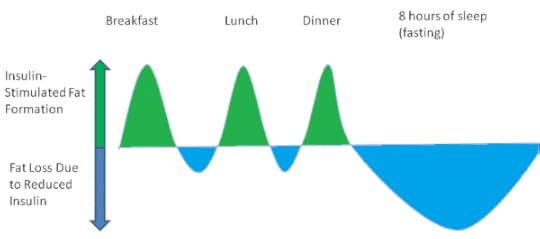
The green portions are the periods where your body has excess energy due to food having been eaten. The blue portions are the periods when the body has no energy left from food and thus has to burn fat to stay alive.
If the green and blue portions balance out every day–if you store just as much fat as you burn–your weight stays the same. If you store more fat than you burn (by overeating), you get fatter. And if you burn more fat than you store, you get leaner.
This is the fundamental mechanism underlying fat storage and fat loss and it takes precedence over anything related to insulin or any other hormones in the body.
Simply put, you can’t get fatter unless you feed your body more energy than it burns, and you can’t get leaner unless you feed it less energy than it burns.
It doesn’t many how many carbohydrates you eat or how high your insulin levels are throughout the day–this is the first law of thermodynamics at work. Fat stores can’t be increased without the provision of excess energy, nor can they be reduced without the restriction of energy.
That’s why research has shown that so long as they’re eating less energy than they’re burning, people lose fat equally well on high-carbohydrate or low-carbohydrate diets. That’s why professor Mark Haub was able to lose 27 pounds on a “convenience store diet” consisting mainly of Twinkies, Little Debbie cakes, Doritos, and Oreos: he simply fed his body less energy than it was burning.
The bottom line is your insulin levels and the amount of carbs you eat have little to do with losing or gaining weight–energy balance is the key.
(If you want to know more about carbohydrates and weight loss, and when low-carb dieting is actually better, check out this article.)
Insulin Isn’t the Only Substance That Triggers Fat Storage
You already know that insulin causes fat cells to absorb glucose and fatty acids. Well, there’s another reason it’s charged with causing weight gain.
Your fat cells contain an enzyme called hormone-sensitive lipase (HSL), which helps break down body fat into fatty acids to be burned. Insulin suppresses the activity of HSL, and thus is believed to further promote weight gain.
Well, something carb- and insulin-haters like to ignore is the fact that dietary fat also suppresses HSL, and thanks to an enzyme called acylation stimulating protein, your body doesn’t need high levels of insulin to store dietary fat as body fat.
This is why you can’t just eat as much dietary fat as you want and lose weight. And why research has shown that separating carbs and fats doesn’t affect weight loss (eating carbs and fats together or separately doesn’t change anything).
Once again, it comes back to energy balance–regularly give your body more energy than it burns, whether in the form of protein, carbohydrate, or fat, and you’ll get fatter.
Protein Stimulates Insulin Production Too
This is another fact low-carb “gurus” like to avoid.
High-protein, low-carbohydrate meals can cause more insulin to be released than high-carbohydrate meals. Whey protein in particular has been shown to be more insulinogenic than white bread. Beef stimulates just as much insulin release as brown rice.
And in case you think the insulin response to protein is more moderate and prolonged (as if this were somehow better), it’s not–protein causes a rapid rise in insulin followed by a rapid decline, just like carbs.
Ironically, a high-protein, high-fat meal causes more immediate fat storage than a high-carbohydrate meal because dietary fats are stored very efficiently as body fat.
Insulin Doesn’t Stimulate Hunger–It Does the Opposite
This is another myth bandied about, but it’s been disproved by clinical research.
In fact, research has demonstrated that the more insulinogenic a meal, the more full you feel as a result. This correlates with research demonstrating that high-carbohydrate meals induce more satiety (fullness) than high-fat meals.
Insulin Helps You Build Muscle
While insulin doesn’t directly induce protein synthesis like amino acids do, it does have anti-catabolic properties.
What that means is when insulin levels are elevated, the rate at which muscle proteins are broken down decreases. This, in turn, creates a more anabolic environment in which muscles can grow larger quicker.
That sounds good in theory, right? But does it pan in out clinical research? Yes, it does.
There are several studies that conclusively show that high-carbohydrate diets are superior to low-carbohydrate varieties for building muscle and strength.
Researchers at Ball State University found that low muscle glycogen levels (which is inevitable with low-carbohydrate dieting) impair post-workout cell signaling related to muscle growth.
A study conducted by researchers at the University of North Carolina found that when combined with daily exercise, a low-carbohydrate diet increased resting cortisol levels and decreased free testosterone levels. (Cortisol, by the way, is a hormone that breaks tissues, including muscle, down. In terms of maximizing muscle growth, you want low resting cortisol levels and high free testosterone levels.)
These studies help explain the findings of other research on low-carbohydrate dieting.
For example, a study conducted by researchers at the University of Rhode Island looked at how low- and high-carbohydrate intakes affected exercise-induced muscle damage, strength recovery, and whole body protein metabolism after a strenuous workout.
The result was the subjects on the low-carbohydrate diet (which wasn’t all that low, actually—about 226 grams per day, versus 353 grams per day for the high-carbohydrate group) lost more strength, recovered slower, and showed lower levels of protein synthesis.
In this study, researchers at McMaster University compared high- and low-carbohydrate dieting with subjects performing daily leg workouts. They found that those on the low-carbohydrate diet experienced higher rates of protein breakdown and lower rates of protein synthesis, resulting in less overall muscle growth than their higher-carbohydrate counterparts.
All this is why I never drop my carbohydrate intake lower than about .8 grams per pound of body weight when cutting (and yes I get to 6% body fat eating this many carbs per day), and I’ll go as high as 2 to 2.5 grams per pound when bulking.
Insulin Isn’t the Problem…Being Overweight and Sedentary Is
The bottom line with carbohydrate intake and insulin levels is this:
If you’re overweight and sedentary, regular intake of large amounts of carbohydrates is going to cause problems in the long run. Your body is going to have more and more trouble dealing with insulin, which can, over time, even develop into Type 2 diabetes, and you’re going to be at greater risk for heart disease.
If you stay lean, exercise regularly, and eat at least a reasonably sensible diet, you’ll never have these problems. You’ll maintain insulin sensitivity and your body will have plenty of use for the carbs you eat.
What did you think of this article on how insulin works? Have anything else to share? Let me know in the comments below!
How to get lean and build serious muscle and strength, faster than you ever thought possible…
Depending on how you eat, train, and rest, building muscle and losing fat can be incredibly easy or incredibly hard. Unfortunately, most people make many different mistakes that leave them stuck in a rut.
And that’s why I wrote Bigger Leaner Stronger for men, and Thinner Leaner Stronger for women: they lay out EVERYTHING you need to know about diet and training to build muscle and lose fat effectively…
Buy Now
Amazon
Amazon UK
Amazon AU
Amazon CA
Audible Audiobook
BN
iBooks
iBooks Audiobook
Kobo
Google Play
Buy Now
Amazon
Amazon UK
Amazon AU
Amazon CA
Audible Audiobook
BN
iBooks
iBooks Audiobook
Kobo
Google Play


April 26, 2014
Recipe of the Week: Curry Potatoes and Cauliflower
This delicious dish from my bestselling cookbook The Shredded Chef has a lot going for it:
It’s easy and fast to make
It tastes outstanding–the addition of curry really adds a nice touch
It keeps well–you can make a large batch once per week and portion it out daily and reheat
It’s packed full of a wide variety of vitamins and minerals
It’s relatively low-calorie and extremely filling, thanks to the potato
Give it a try. You won’t be disappointed!
Servings
4
Calories Per Serving
234
Protein Per Serving
10 grams
Carbohydrates Per Serving
50 grams
Fat Per Serving
1 gram
Ingredients
1 cauliflower head (2 – 3 pounds), cut into florets
1 pound (around 3 medium) potatoes, peeled and cut into 1-inch cubes
1 medium onion, chopped
2 cloves garlic, crushed
2 tablespoons garam masala or curry powder
1 cup low-sodium vegetable broth
2 cups frozen peas
Instructions
1. Bring a pot of lightly salted water to a boil. Add the cauliflower and potatoes and cook for 4 – 5 minutes. Drain.
2. Meanwhile, coat a Dutch oven in cooking spray and place over medium heat. Add chopped onion and garlic and cook 2 – 3 minutes, or until the onions are softened. Add the garam masala and stir for 1 minute.
3. Add the cooked potatoes and cauliflower and stir well, coating in the onion mixture, add the vegetable broth and use it to deglaze (scrape the bottom of the Dutch oven and remove any stuck bits). Cover and let simmer for 10 minutes. Add the peas, mix well, and cover for another 5 – 7 minutes.
What You Get to Eat

What did you think of this week’s recipe? Let me know in the comments below!
Want more delicious, easy-to-make recipes like this?If you like this recipe, then you’ll love the bestselling cookbook it came from! My own The Shredded Chef!
In this book you’ll find 120 healthy, flavorful recipes specifically designed for athletes that want to build muscle or lose fat. Regardless of your fitness goals, this book has got you covered.
Buy this book now to forever escape the dreadful experience of “dieting” and learn how to cook nutritious, delicious meals that make building muscle and burning fat easy and enjoyable!
Buy Now
Amazon
Amazon UK
Amazon AU
Amazon CA
BN
iBooks
Kobo
Google Play
Vegan and vegetarian dishes are great sources of micronutrients, and even if you’re a meat eater, they’re great for changing things up in your meal plan.
And in my cookbook, Eat Green Get Lean, you’ll find 100 of my favorite vegetarian and vegan dishes, carefully balanced for our high-protein, healthy needs!
Buy this book now to forever escape the dreadful experience of “dieting” and learn how to cook nutritious, delicious vegetarian and vegan meals that make building muscle and burning fat easy and enjoyable!
Buy Now
Amazon
Amazon UK
Amazon AU
Amazon CA
BN
iBooks
Kobo
Google Play

April 25, 2014
Cool Stuff of the Week: Linchpin, Battlestar Galactica, 360Fly Camera, and More…
I’m not ashamed to admit that I’m kind of a sucker for cool stuff. I like nifty gadgets, quirky decoration pieces, nice clothes (and shoes!), good books, and fun games.
In this series of weekly posts, I share whatever currently has my fancy. Maybe some of it will catch yours as well!
VIDEO OF THE WEEK:
THE CRAZY NASTYASS HONEY BADGER
I were an animal, I’d want to be a honey badger. With over 67 million views, chances are you’ve seen this video. That’s okay though. You’ll laugh again. 
360FLY

The 360Fly Camera films in 360 degrees horizontally, and 240 degrees vertically, capturing the entirety of what’s going on around you. With the ability to attach to helmets, tripods, bikes, boards, and more, it’s the perfect way to preserve all of life’s memories. And since it’s compatible with both iOS and Android, and works with apps for both, you can view video as it’s captured, instantly edit it, and share it on the web with your friends.
ANDROID RK3188 MINI PC

If you want an affordable computer to surf the Web, blast audio and video–including streaming music and movies–download and use Android apps, and play games, then you should check out the Android RK3188.
Hook the this little guy up to an HDTV and desired wireless accessories, and you’ll be able to do all the above and more. It runs on Android 4.2 Jelly Bean and has a Quad-core 1.6GHz CPU, 2GB of RAM, and an 8GB flash drive. Ports include a standard HDMI female, 3.5mm headset jack (mic embedded), Micro USB, USB, and SD card. Its WiFi is also fast–each unit has been tested with at least a 10M download speed for zippy browsing and lag-free streaming.
Buy Now
Amazon
GORUCK GYM BAGS

I love GORUCK’s military-issued style, and their rugged, roomy gym bag is awesome. It comes a few sizes and the larger one makes a nice overnight bag as well.
Buy Now
GORUCK
QUIRKY PLUCK YOLK EXTRACTOR

I love simple, useful things like this. Check it out:
‘Nuff said.
Buy Now
Amazon
Amazon UK
BOOK OF THE WEEK:
LINCHPIN

When it comes to boiling important business insights down into simple, easily digested morsels, Seth Godin is the man.
I’ve read quite a few of his books but wanted to recommend Linchpin this week because I feel its message is particularly relevant given our current economic “instability.”
A linchpin is someone that is extraordinary in the workplace. They give their all with whatever they do because it just feels right to them, and this habit extends to all areas of their lives. This type of person is the person that is never out of work, always in demand. This type of person is indispensable in any organization.
That’s what this book is about–becoming a linchpin. It’s not going to try and sell you on quitting your job or striking out on your own, but instead on, as Godin puts it, “being the artist you already are.” It wants to sell you on making a difference; on standing for something; on getting the respect and security you deserve. And I think it does a damn good job of it.
Linchpin is short, simple, and fun, and it delivers an elegant, inspiring message. Enjoy.
TV SHOW OF THE WEEK:
BATTLESTAR GALACTICA

I’m a pretty picky TV watcher. Most shows just aren’t that compelling to me–within a few episodes I just don’t care anymore and would rather read a book.
Well, Battlestar Galactica was not one of those shows. In fact, like the first seasons of Lost, Dexter, and 24, BSG basically usurped my mind and I ended up binge-watching the entire series over Christmas break a few years ago.
BSG is a remake of the 1970s series that tells the story of humanity’s demise at the hand of intelligent robots it created (the inspiration for Terminator), and it just has that magical combination of superb casting, acting, and writing that immediately sucks you in, regardless of whether they’re a sci-fi fan or not. Hence, the long list of awards and honors.
What particularly impressed me was how well the 5-season story arc was unfurled. No jumping the shark, no “where the hell are we even going with this?” (cough, Lost seasons 2+), and very few filler episodes, and never-ending tension and forward motion…it’s just an outstanding piece of storytelling.
Give the first episode a gander and let the fun begin.
Buy Now
Amazon
Amazon UK
Watch now
Amazon US Instant VideoAmazon UK Instant Video
What do you think of this week’s picks? Have anything you’d like to share? Let me know in the comments below!
April 24, 2014
7 Gluten-Free Recipes That Taste Amazing
Gluten-free dieting is really trendy right now, and is becoming nearly synonymous with “clean eating.”
I’ll be addressing this fad in more detail in an upcoming in-depth post, but the bottom line is this: so long as you don’t have celiac disease or known wheat allergy or gluten sensitivity, you don’t have to worry about eliminating gluten from your diet.
Gluten doesn’t make you fat or unhealthy, and it doesn’t wreck your brain. In fact, swearing off gluten entirely can make it more difficult to get nutrients like fiber, folic acid, and iron.
That said, gluten-free dieting is an effective way to reduce carbohydrate intake (and thus calories) without sacrificing taste. I hope you enjoy the recipes!
Broccoli Protein Bread

Image courtesy of Protein Pow
Most bread is made from wheat flour, but did you know the main ingredients in bread can actually be protein powder, eggs, and a vegetable?
Steamed broccoli is the secret to this protein-packed bread, which is able to be sliced up and turned into sandwiches.
Serves 5 / Makes 10 slices
Ingredients
1/2 cup steamed broccoli
1/2 cup unflavored whey isolate
1/2 cup pea protein powder
1 tsp. salt
1/2 cup egg whites
2 whole eggs
1/2 Tbsp. herbes de Provence (or another seasoning blend)
Instructions
1. Preheat the oven to 320°F (160°C), and steam the broccoli.
2. In a medium bowl, mix together the two protein powders and salt, and add all eggs. Stir to combine. With a blender, process with the steamed broccoli. The finished dough will be thin.
3. Transfer to a standard loaf pan, and bake for about 40 minutes.
Nutrition Facts (Per Serving)
Calories: 121
Protein: 23 grams
Carbs: 27 grams
Fat: 3 grams
Cauliflower “Mac” & “Cheese”

Picture courtesy of That Was Vegan?
This one will trick you in two ways: taste and texture. If your only concern is gluten-free, there are pastas made of rice flour, but if you also want to reduce the calories of the meal, you can chop up some fresh cauliflower instead. When cooked, it becomes soft yet firm just like cooked pasta.
The “cheese” in this is actually made from almond milk, yeast, and seasonings, but you can also use this method to replace pasta with cauliflower in your family’s favorite recipe.
Serves 4
Ingredients
4 cups cauliflower
1/4 cup unsweetened almond milk
6 Tbsp. nutritional yeast
1 tsp. coconut oil
1/2 tsp. ground mustard
1/4 tsp. garlic powder
Salt and pepper to taste
1 Tbsp. ground flaxseed (or almond meal)
Instructions
1. Chop up the cauliflower into small pieces. Cook them in a pan over medium heat until semi-translucent. Transfer to a large bowl.
2. Mix together almond milk, yeast, coconut oil, mustard, garlic powder, salt and pepper until well combined. Pour over the cauliflower, and mix well.
3. Preheat the oven to 350°F. Pour the mixture into a large baking dish or Dutch oven, and sprinkle ground flax over the top. Bake for about 15 minutes, and for a crisp golden crust, finish for a couple minutes on broil.
Nutrition Facts (Per Serving)
Calories: 101
Protein: 10 grams
Carbs: 13 grams
Fat: 3 grams
Sweet Potato and Herb Meatloaf

Picture courtesy of Paleo Fondue
By name alone, meatloaf sounds like pure protein. But aside from the ground beef and pork, the loaf part of the equation traditionally comes from breadcrumbs, making this classic dinner a gluten-free challenge.
You can choose to use rolled oats, but this recipe goes the more modern route with almond flour and shredded sweet potato.
Serves 6
Ingredients
1/2 cup chopped onion
1 Tbsp. olive oil
1 lb. ground pork
1 lb. lean ground beef
2 large eggs
1/4 cup tomato paste
1 cup + 1/4 cup unblanched almond meal
1 cup sweet potato, shredded
1/2 cup fresh basil leaves, chopped
1/4 cup fresh thyme leaves
2 tsp. cinnamon
1 tsp allspice
1 tsp. garlic powder
1/2 tsp. salt
1/2 tsp. pepper
Instructions
1. Preheat the oven to 400°F. Coat the bottom of a loaf pan with 1/4 cup of almond flour.
2. In a pan over medium heat, cook the diced onion in olive oil for two or three minutes, until translucent.
3. Mix together all ingredients in a large bowl. Transfer to the loaf pan, pressing the mixture into the bottom layer of almond flour.
4. To prevent cracking, wet your fingers under running water, and gently rub them over the top of the meatloaf.
5. Bake for 40 to 45 minutes, until the internal temperature is 160°F.
6. Leave to cool for 10 minutes, and then turn out onto a serving platter.
Nutrition Facts (Per Serving)
Calories: 460
Protein: 51 grams
Carbs: 17 grams
Fat: 22 grams
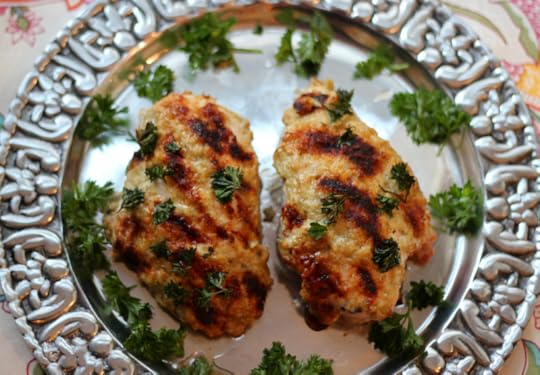
Baked Chicken Babaganoush
Picture courtesy of Gluten-Free Nosh
Most of the time, chicken breast gets flavor from a simple marinade of olive oil and seasonings. But even with the best free-range chicken, that can get old after a while.
Mix it up with a topping of this popular eggplant dip, which will keep the meat juicy while adding some Mediterranean flavor.
Serves 2
Ingredients
2 boneless, skinless chicken breasts, 4 oz. each
1/2 cup babaganoush
1/4 tsp. paprika
1/4 cup fresh parsley, chopped
Instructions
1. Preheat the oven to 400°F.
2. In a large baking dish, lay the chicken breasts, and spoon babaganoush on top. Sprinkle with paprika and most of the parsley.
3. Bake for about a half hour, until chicken is cooked through. Garnish with remaining parsley.
Nutrition Facts (Per Serving)
Calories: 378
Protein: 33 grams
Carbs: 5 grams
Fat: 25 grams
Pistachio Garlic Mint Quinoa Pilaf

Picture courtesy of Simply Gluten-Free
Gluten-free main dishes aren’t hard to come across. All you need is a simple meat dish, like the one above. But what can be tricky is coming up with a delicious side to serving along with the entrée.
Here’s one so flavorful it’ll make even the plainest steak or chicken breast feel complete. Plus, it’s the perfect match for Baked Chicken Babaganoush.
Serves 6
Ingredients
1/2 cup shelled, roasted, salted pistachios
2 Tbsp. olive oil
1 shallot or 1/4 small red onion, finely chopped
3 cloves garlic, minced
1 1/2 cups pre-rinsed quinoa
2 1/4 cups water
1 tsp. kosher or fine sea salt
1 1/2 cups fresh mint leaves, loosely packed
Instructions
1. To toast the pistachios, heat a covered skillet over medium. Add nuts, and remove when fragrant, about 4 minutes. Let cool in the bowl of a food processor.
2. Heat olive oil in the pan, and add the diced shallot. Cook for a couple minutes, and then add garlic and quinoa. When the quinoa is starting to turn brown, about 3 minutes, add the water and salt. Leave to simmer on medium-low heat for about 15 minutes.
3. Once the quinoa has absorbed all the liquid, remove from heat and cover. Let sit for 5 minutes so the quinoa can continue softening.
4. Roughly chop up the pistachios by pulsing the food processor. Add the mint, and continue pulsing until the leaves are integrated.
5. Add the mint-pistachio mix into the quinoa, and fluff with a fork. Serve.
Nutrition Facts (per serving)
Calories: 230
Protein: 8 grams
Carbs: 30 grams
Fat: 10 grams
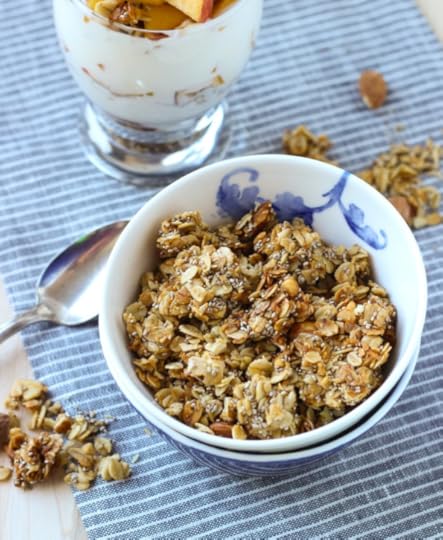
Honey Almond Chia Granola
Picture courtesy of Making Thyme for Health
A versatile pantry staple, granola triples as a nutritious breakfast, pre-workout snack, and guilt-free dessert when layered with creamy Greek yogurt. But the good stuff can be pricy in grocery stores, especially if you need to find guaranteed gluten-free.
Make your own, and you’re not only able to control the ingredient but cut costs. This recipe has all the best basic flavors to build on – coconut, almond, and vanilla – with minimal add carbs in the way of sugar.
Serves 12 / Makes about 24 oz.
Ingredients
2 cups rolled oats
3/4 cups raw almonds, roughly chopped
1/2 cup chia seeds
1/2 cup unsweetened coconut, shredded
1/3 cup honey
1/3 cup coconut oil
1 Tbsp. coconut sugar
1/2 tsp. salt
1 tsp. vanilla extract
2 Tbsp. egg white (one egg’s worth)
Instructions
1. Line a large baking sheet with parchment paper, and preheat the oven to 300°F.
2. Mix together the rolled oats, almonds, chia seeds, salt, and shredded coconut in a large bowl.
3. In a separate bowl, blend the honey, coconut oil, coconut sugar, vanilla extract, and egg whites.
4. Pour the wet ingredients into the dry, and stir well. Spread out onto the baking sheet.
5. Bake for a half hour, stir, and return to the oven for another 15 minutes.
Nutrition Facts (per serving)
Calories: 204
Protein: 5 grams
Carbs: 22 grams
Fat: 13 grams
Peanut Butter Protein Cookies

Picture courtesy of Dashing Dash
The beauty of a gluten-free cookie isn’t what it doesn’t have, but what it does. These are as nutritionally balanced as it gets with near-equal amounts of protein, fat, and carbs.
Plus, these use stevia so you can also skip out on the sugar while satisfying your sweet tooth.
Serves 12 / Makes 24 small cookies (about 2” diameter)
Ingredients
1 cup all-natural peanut butter
1 large egg
1 egg white
2 Tbsp. unsweetened applesauce
1 scoop vanilla whey protein
1 cup rolled oats
1/2 cup baking stevia
1 tsp. baking soda
Pinch of salt
2 Tbsp. mini chocolate chips
Instructions
1. Preheat the oven to 350°F. Line a baking sheet with parchment paper, or lightly grease with coconut oil.
2. In a medium-sized bowl, beat the egg and egg white, and mix in peanut butter and applesauce.
3. In a separate bowl, combine the vanilla protein powder, rolled oats, stevia, baking soda, and salt.
4. Add the dry ingredients into the wet, and stir until almost integrated. Pour the chocolate chips over top, and fold in.
5. Wet hands so the dough doesn’t stick, and form it into two dozen balls. Arrange evenly spaced on the baking sheet, and press down with a fork to make a cross.
6. Bake for 8 to 10 minutes, until starting to brown. Let cool for 10 minutes, and enjoy.
Nutrition Facts (Per Serving)
Calories: 182
Protein: 10 grams
Carbs: 9 grams
Fat: 12 grams
What do you think of these gluten-free recipes? Have anything else to share? Let me know in the comments below!
Want more delicious, easy-to-make recipes like these?If you like these recipes, then you’ll love my bestselling cookbook The Shredded Chef!
In this book you’ll find 120 healthy, flavorful recipes specifically designed for athletes that want to build muscle or lose fat. Regardless of your fitness goals, this book has got you covered.
Buy this book now to forever escape the dreadful experience of “dieting” and learn how to cook nutritious, delicious meals that make building muscle and burning fat easy and enjoyable!
Buy Now
Amazon
Amazon UK
Amazon AU
Amazon CA
BN
iBooks
Kobo
Google Play
Vegan and vegetarian dishes are great sources of micronutrients, and even if you’re a meat eater, they’re great for changing things up in your meal plan.
And in my cookbook, Eat Green Get Lean, you’ll find 100 of my favorite vegetarian and vegan dishes, carefully balanced for our high-protein, healthy needs!
Buy this book now to forever escape the dreadful experience of “dieting” and learn how to cook nutritious, delicious vegetarian and vegan meals that make building muscle and burning fat easy and enjoyable!
Buy Now
Amazon
Amazon UK
Amazon AU
Amazon CA
BN
iBooks
Kobo
Google Play
April 23, 2014
You’ll Stop Worrying About Sugar After Reading This Article
“Sugar is toxic and addictive!”
“Sugar turns directly into fat in the liver!”
“Sugar destroys your immune system and warps your brain chemistry!”
“Sugar causes massive insulin spikes that make you fatter and fatter!”
“Eat enough sugar you can wind up with Type 2 diabetes!”
These are just a few of the many damn near hysterical claims made against sugar.
If we’re to listen to mainstream “wisdom,” sugar is one of the worst things we can put in our bodies, and regular intake is up there with smoking and alcoholism as far as unhealthy habits go.
Well, whenever you hear such extreme statements made about anything, you should immediately be skeptical.
Sometimes rather alarming statements for or against certain types of supplements and foods pan out and are supported by good science, such as the benefits of creatine and the health issues surrounding regular trans fat intake, but more often than not, these extreme positions are based on flawed evidence and reasoning.
Witness the “cult of clean eating“…
Witness the ever-popular anti-carb dogmas…
Witness the proponents of starvation diets…
Witness the “I get all the protein I need from broccoli” crowd…
People have arrived at these positions by piling one incorrect assumption on another, slowly building dietary crosses they believe they have to bear for the rest of their lives.
Well, the “you can’t eat sugar if you want to be fit” crowd is just as deluded, and this article, we’ll discuss why.
And as a little disclaimer, I’m not going conclude by telling you that you can eat all the sugar you want and look and feel great. That isn’t true either. But as you’ll see, eating sugar, especially when part of a proper diet, just isn’t nearly as problematic as many people think.
So let’s start at the beginning with answering the question of what “sugar” really is…
De-Mystifying the Heinous Sugar Molecule
“Sugar” has become a vague term encompassing all kinds of things, ranging from fruit to honey to candy.
Some people make distinctions between “natural” sugars such as those found in fruit and raw maple syrup and “processed” sugars such as table sugar and high-fructose corn syrup. (And oftentimes these people will say the natural sugars are okay but the processed sugars are evil.)
So let’s get more specific here and shed some light on this mysterious chemical “sugar.”
First, all sugars are forms of carbohydrate, and their primary role in the body is energetic (the body uses them to produce cellular energy).
There are three forms of sugars:
Monosaccharides
Oligosaccharides
Polysaccharides
Let’s look at each separately.
Monosaccharides
Monosaccharides are often called simple sugars because they have a very simple structure. Mono means one and saccharide means sugar. So, one sugar.
The monosaccharides are…
Glucose
Fructose
Galactose
Glucose is a type of sugar also known as blood sugar, which is found in our blood and produced from the food we eat (most dietary carbohydrates contain glucose, either as the sole form of sugar or combined with the other two simple sugars given above). When people talk about “blood sugar levels,” they’re talking about the amount of glucose floating around in the blood.
Fructose is a type of sugar naturally found in fruit, and also found in processed products like sucrose (table sugar) and high-fructose corn syrup, both of which are about 50% fructose and 50% glucose. Fructose is converted into glucose by the liver and then released into the blood for use.
Galactose is a type of sugar found in dairy products and it’s metabolized similarly to fructose.
Oligosaccharides
Oligosaccharides are molecules that contain several monosaccharides linked together in chain-like structures. Oligos is Greek for a few, so a “few” sugars.
These sugars are one of the components of fiber found in plants, which our bodies are able to partially break down into glucose (leaving the fibrous, indigestible parts behind to do good things in our guts).
Many vegetables also contain fructo-oligosaccharides, which are short chains of fructose molecules. These are metabolized accordingly (the “chains” are broken and the individual fructose molecules, which are then converted into glucose for use).
Another common form of oligosaccharide that we eat is raffinose, which is comprised of a chain of galactose, glucose, and fructose (called a trisaccharide), and which can be found in beans, cabbage, brussels sprouts, broccoli,asparagus, other vegetables, and whole grains.
Galactooligosaccharides round out the list of oligosaccharides, and are short chains of galactose molecules. These are indigestible but play a role in stimulating healthy bacteria growth in the gut.
Polysaccharides
Polysaccharides long chains of monosaccharides, usually containing ten or more monosaccharide units.
Starch (the energy stores of plants) and cellulose (a natural fiber found in many plants) are two examples of polysaccharides we often eat. Our bodies are able to easily break starches down into glucose, but not cellulose–it passes through our digestive system intact (thus, a source of dietary fiber).
There’s a Pattern Here…They All End Up as Glucose
You’ve probably already noticed this pattern, but I want to call attention to it because it’s very important for understanding the bigger picture.
All forms of carbohydrate we eat are either metabolized into glucose or are left indigested, serving as dietary fiber.
Our body can’t distinguish between the natural sugar found in fruit, honey or milk, and the processed sugar found in a Snickers bar. They’re all digested in the same way: they’re broken down into monosaccharides, which are then turned into glucose, which is then shipped off to the brain, muscles, and organs for use.
Yes, in the end, the candy bar turns into glucose just like the cup of peas. Sure, the candy bar turns into glucose faster, but that’s the only difference. The candy bar has a bunch of monosaccharides that are quickly metabolized whereas the peas have a bunch of oligosaccharides that take longer.
Now, I’m not saying peas = candy bars, so dump the veggies and bring on the Snickers. There’s more to this story, so let’s continue.
The Truth About “Good” and “Bad” Sugars
As you can see, it’s basically impossible to avoid sugars. Unless you follow a ketosis diet, you’re eating sugars every day in one form or another.
Most people know that the sugars found in fruit and vegetables aren’t harmful unless consumed in obscene, next-to-impossible amounts. Only the most nutritionally ignorant would argue that eating a few apples and servings of asparagus every day is going to harm your health.
Table sugar (sucrose) and high-fructose corn syrup are heavily maligned, however. These are the molecules, we’re told, that cause obesity, dysfunction, and disease. These are the “added sugars” that we must avoid at all costs.
But, why exactly?
Chemically speaking, they’re pretty simple.
Table sugar, or sucrose, is a disaccharide (two sugars) consisting of one part fructose and one part glucose.
Sucrose occurs in natural foods like pineapples, sweet potatoes, beets, sugar cane, and even walnuts, pecans, and cashews. It’s also added to foods to make them sweeter.
High-fructose corn syrup (HFCS) is chemically similar, usually consisting of about 55% fructose and 45% glucose.
HFCS isn’t found in nature–it’s artificially produced–the only difference between it and sucrose is the fructose and glucose aren’t chemically bonded, which means the body has to do even less work to metabolize it into glucose.
Now, when viewed that way, neither seem all that nefarious.
The sucrose found in a pineapple is no different chemically than the sucrose in our favorite type of dessert. And high-fructose corn syrup is chemically similar to sucrose.
What’s the big deal, then? Why are we told that eating the sucrose in a pineapple is okay but the chemically identical sucrose in the chocolate bar is disastrous? Why is high-fructose corn syrup often vilified as the ultimate metabolic miscreant when it’s pretty dang similar to sucrose?
Well, these are good questions. And while it would take thousands of words to directly address all the myths out there surrounding sugar intake, let’s hone in on two areas you’re probably most interested in: your body fat percentage and health.
Do we get fatter and unhealthier with each and every gram of sucrose and HFCS that we consume?
Sugars Don’t Make You Fat…Overeating Does
Hi, I’m Mike and I eat hundreds of grams of sugars per day. I must have good genetics.
When things aren’t going our way in one area of life or another, we tend to look for scapegoats. We want something or someone to blame other than ourselves.
Sugar is that scapegoat for many. It’s about as popular a patsy as genetics. “I’m just fat because my body can’t process sugars,” they say.
Well, while it’s true that some people’s bodies do better with carbohydrate (all forms) than others, it’s simply not true that sucrose or even HFCS are especially fattening. As you now know, these two molecules just aren’t that special. They are just a source of glucose for the body like any other carbohydrate.
And in fact, carbohydrates (in all forms) aren’t stored as body fat as efficiently as dietary fats are. Yes, strictly speaking, olive oil is more fattening than table sugar.
What is especially fattening, then? Overeating. That is, feeding your body more energy than it needs every day, regardless of what foods are providing the excess energy.
Don’t believe me? Well, let’s look at some research.
In this study, researchers from The Sugar Bureau in the UK set out to determine if there should be a guideline for daily sugar consumption. They found that increased sugar intake was associated with leanness, not obesity, and concluded that there simply wasn’t enough evidence to warrant a quantitative guideline for sugar consumption.
This study, conducted by researchers at the University of Hawaii, is an extensive review of sugar-related literature. Here’s a quote from the paper:
“It is important to state at the outset that there is no direct connection between added sugars intake and obesity unless excessive consumption of sugar-containing beverages and foods leads to energy imbalance and the resultant weight gain.”
Overconsumption and energy imbalance are the keys here.
You see, it’s a known fact that over the past couple of decades Americans have been increasing the amount of calories they eat every day, and much of this increase is in the form of carbohydrates, primarily from soft drinks.
The more carbohydrates you eat, the more energy (calories) you put into your body. The more energy you give your body, the more energy you have to burn to prevent fat storage.
You see, if you give your body a lot more energy than it needs every day, whether from excess amounts of protein, carbohydrate, or dietary fat, you’ll get fatter. This has been conclusively proven in clinical research. There is no debating this fact.
And this is where we get to the actual problem with sugar intake and getting/staying fat: the more you eat foods with added sugars, the easier it is to overeat.
This is especially true of liquid carbohydrates, including beverages with added sugar. If you love caloric beverages, you’ll probably stay fat forever. You can drink 1,000 calories and be hungry an hour later, whereas eating 1,000 calories of food, including a good portion of protein and fiber, will probably keep you full for 5 to 6 hours.
Sugars Don’t Ruin Your Health…Unless You Eat Like an Idiot and Refuse to Exercise
High, long-term intake of simple sugars (disaccharides like sucrose and high-fructose corn syrup) has been associated with an increased risk of heart disease and Type 2 diabetes.
Many “experts” will use a factoid like that as definitive evidence that simple sugars ruin our health. But that’s misleading. There are other factors to consider.
One is the fact that the effects of these simple sugars varies greatly among individuals depending on how fat and active they are. Overweight, sedentary bodies don’t deal with simple sugars nearly as well as lean, physically active ones do.
Furthermore, when you mix carbohydrates (all forms) with other forms, the insulin response is mitigated. That is, eating a couple tablespoons of sucrose on an empty stomach causes a larger insulin reaction in the body than eating a couple tablespoons of sucrose as a part of a mixed meal (contained in a dessert, for example).
That said, even as part of a mixed meal, simple sugars still do elevate insulin levels higher than more complex forms of carbohydrate, such as the polysacchrides found in vegetables.
From this we can derive a sensible recommendation: if you’re overweight and don’t exercise, you shouldn’t be eating a bunch of simple sugars every day. You will be harming your health.
On the other hand, if you exercise regularly and aren’t overweight, your body can deal with simple sugars just fine. You’re not going to get diabetes or ruin your heart by eating a bit more sugar than necessary every day.
One other health-related concern is the fact that eating a lot of foods with added sugars can reduce the amount of micronutrients your body gets and thus cause deficiencies. Many foods with added sugars just don’t have much in the way of essential vitamins and minerals.
The solution here is obvious: get the majority of your daily calories from healthy (nutrient-dense) foods and you’ll be fine.
Personally, I never get more than 10% of my daily calories from added sugars simply because I cook my own meals and don’t have a sweet tooth. Considering how much micronutrient-dense food I eat and how much I exercise, this low level of sugar intake will never cause me any problems.
High-Fructose Corn Syrup is Just More of the Same
As you know, HFCS is chemically similar to sucrose. Yes, it has a bit more fructose, but this doesn’t make it particularly fattening like many people claim.
We’ve already gone over a lot so I won’t belabor this point. Instead, I’ll leave you with a couple of quotes. The first comes from an extensive review of HFCS literature published in 2008:
“Sucrose, HFCS, invert sugar, honey an many fruits and juices deliver the same sugars in the same ratios to the same tissues within the same time frame to the same metabolic pathways. Thus…it makes essentially no metabolic difference which one is used.”
Here’s one from an HFCS literature review published in 2007:
“Based on the currently available evidence, the expert panel concluded that HFCS does not appear to contribute to overweight and obesity any differently than do other energy sources.”
And yet another from yet another literature review published in 2008:
“The data presented indicated that HFCS is very similar to sucrose, being about 55% fructose and 45% glucose, and thus, not surprisingly, few metabolic differences were found comparing HFCS and sucrose. That said, HFCS does contribute to added sugars and calories, and those concerned with managing their weight should be concerned about calories from beverages and other foods, regardless of HFCS content.”
The bottom line is HFCS is just another simple sugar, and as far as we can currently tell, it can only harm us when over-consumed.
Sugars Aren’t Addictive…Unless You Want Them to Be
I don’t know how many times I’ve had people chalk up their lack of dietary willpower as “addiction.” They’re just “addicted” to the junk food. It’s not their fault.
Well…no. They’re just weak willed.
Chemically speaking, sugar doesn’t cause physical addiction like drugs do. Yes, it can make you feel good, but so can eating many other types of food or sailing a boat or winning a prize or kissing a girl. Our pursuit of pleasure is not equal to physical addiction.
I like sugars as much as the next person. I eat plenty naturally occurring sugars every day and a bit of added sugar as well. I never have to fight with myself to stop eating or randomly binge myself into despair.
Why?
Because I have willpower and discipline, and I take responsibility for my actions. I know when enough is enough and I don’t “bargain” with myself.
In my experience, people that feel “addicted” to food, sugar, video games, or anything else unhealthy in large amounts are just struggling with mental barriers. They lack the ability to control their actions and, in many cases, this is evidenced in other areas of their lives.
I don’t want to dive into the psychology of addiction here, but I do want to press one message home:
If you’ve been using “physical addiction” as an excuse to chronically overeat, whether with sugar or just food in general, stop bullshitting yourself and get your shit together.
Work out a proper meal plan and stick to it. Stay away from sweets if you know that one taste sends you into a frenzy. Over time, you’ll chill out and be okay with having a little bit here and there.
Make a real decision and take real actions to get your “addiction” under control, and you’ll no longer struggle with it.
What’s your take on these sugar facts? Have anything else to share? Let me know in the comments below!
How to get lean and build serious muscle and strength, faster than you ever thought possible…
Depending on how you eat, train, and rest, building muscle and losing fat can be incredibly easy or incredibly hard. Unfortunately, most people make many different mistakes that leave them stuck in a rut.
And that’s why I wrote Bigger Leaner Stronger for men, and Thinner Leaner Stronger for women: they lay out EVERYTHING you need to know about diet and training to build muscle and lose fat effectively…
Buy Now
Amazon
Amazon UK
Amazon AU
Amazon CA
Audible Audiobook
BN
iBooks
iBooks Audiobook
Kobo
Google Play
Buy Now
Amazon
Amazon UK
Amazon AU
Amazon CA
Audible Audiobook
BN
iBooks
iBooks Audiobook
Kobo
Google Play
April 22, 2014
Sun Tzu’s “Heavy Ground” and Marketing Strategy
Sun Tzu’s magnum opus, The Art of War, is one of the oldest and greatest books on military strategy ever written and its principles have been borrowed by many other subjects and activities such as business tactics, leadership, sales and even poker.
Today I want to show you how the principle of “Heavy Ground” applies to marketing, because it’s very powerful.
Sun Tzu’s “Heavy Ground”
One way to win a war is to go deep into enemy territory before attacking. You catch your enemy by surprise and use this shock to gain a decisive victory. Sun Tzu calls this ground deep in the enemy territory “Heavy Ground.”
My favorite metaphor for marketing is that it’s a war for your prospect’s mind. The conflict is obvious: with your marketing efforts, you are trying to persuade him that your product or service is worth his attention and he is trying to tune you out. By thinking of marketing in this way, we can open a whole new world of possibilities and ideas.
More on that in a minute…Let’s go back to Sun Tzu.
He defines eight types of ground on which combat can occur. Of those, two are of great interest to us in our marketing efforts: Deadly Ground and Heavy Ground.
A Deadly Ground battle occurs when two forces meet with no escape route for either. This is a pure fight-or-die battle; one force will win and the other will perish. Whoever has the most firepower will win this battle and he will take heavy casualties.
Sun Tzu says, correctly, that this is the worst way to fight a battle. Allowing a Deadly Ground battle to happen reflects badly on the commander.
Compare this to the Heavy Ground battle in which you strive for surprise, deception and a strong advantage. A Heavy Ground battle allows a weak force to paralyze a stronger force simply by gaining the strategic advantage.
Heavy Ground vs. Deadly Ground in Marketing Strategy
Imagine a Deadly Ground battle in your marketing–it’s you versus your prospects in a fight to the death where you hope to conquer their resistance. Who do you think has the upper hand in this battle–you or them?
Well, you show them an ad and at that moment the win/lose scenario is set up. Either you win by defeating their natural resistance and convincing them to take some sort of action or respond or they defeat you by ignoring you.
It’s pretty clear that you’re at a significant disadvantage here.
He can ignore you with no negative effects. In fact, he may even save a couple of bucks by ignoring you. The odds against you are great because today’s consumers have a very low tolerance for advertising. They’ve all seen so many ads that nothing is exciting anymore.
This is a Deadly Ground battle and it should be avoided at all costs. You, the marketer, will lose almost every time. You fire your primary weapon–your ad–and it just bounces off your prospect’s defenses.
The stronger combatant will always win the Deadly Ground battle and your prospects are always stronger than you in the battle for their minds.
How to Win the Battle for Your Prospect’s Mind
You don’t fight on Deadly Ground…you fight on Heavy Ground and only then do you have a chance of winning. But how do you fight a marketing war on Heavy Ground? How do you gain the element of surprise?
We learned that fighting a Deadly Ground battle with a prospect’s natural anti-advertising defenses is a battle we can’t win. More often than not, when a consumer sees printed material that looks like an advertising circular, into the trash it goes. We have to get out of that Deadly Ground battle.
Sun Tzu said, “Warfare is the way of deception. Therefore, if able, appear unable. If active, appear inactive. If near, appear far. If far, appear near. Attack where they are not prepared, go out to where they do not expect.”
These teachings apply to marketing–the battle for your prospect’s mind–just as much as traditional warfare.
Success in any type of warfare depends greatly on our ability to recognize “cues” in people’s behavior and then learn how to take advantage of those observations.
In the Vietnam War, the Viet Cong would sneak out at night and rattle the trees around our soldiers’ fox holes. This woke the GIs up and put everyone on alert for the ensuing hours. The Viet Cong would run away laughing about how much sleep our soldiers were losing.
This game would continue several times a night for a few nights in a row, frustrating the GIs more and more. Eventually the sleep deprivation would get to “Joe” and he’d throw in the towel and the next night, ignore the ruckus. “Charlie’s up to his old tricks again,” he’d think. “I’m going to get some sleep.”
Of course, when our soldiers finally surrendered their vigilance, the VCs would sneak in and kill them in their sleep.
The point is, we all become conditioned to react certain ways to particular cues. The North Vietnamese studied the way our soldiers reacted to particular cues and then adapted their strategies accordingly.
The only way to succeed in marketing is to do the same (adapt, not kill!). We have to realistically look at the skeptical, cynical way prospects act and react and create a strategy that will penetrate their defenses.
Good Marketing Strategy Requires “Ethical Deception”
Let’s talk about newsletters real quick. Many are more or less devoid of valuable content and instead just pummel us with advertising. It doesn’t take long for us to realize there there’s no point in reading them.
Most of us probably go through our inboxes every day with our finger poised over the “delete” key to eliminate the garbage. As marketers, it’s essential that we recognize this behavior and plan for it.
First, get rid of any cues that your newsletters are junk mail or content-free newsletters. Don’t fill them with ads. Instead get clever about how you can weave product recommendations into real, valuable information. And make that information so valuable that your recipients actually welcome its arrival. Address it to the person in a personal, interesting way.
In short, look for all the ways you can change it from being perceived as a thinly-veiled grab for your prospect’s wallet to being perceived as great advice from a trusted expert.
This is what I call “ethical deception.” You’re not deceiving your prospects as to what you can offer–you’re using “deception” to control your prospect’s perception and attention in order to further a legitimate sales process.
The “Foot in the Door Phenomenon”
Getting someone to agree to a small thing is the first, and most essential step of getting them to agree to something larger.
It’s called the “Foot in the Door Phenomenon” and when properly applied it can exponentially increase your effectiveness in marketing, a field where you’re always a toss or a mouse click away from rejection.
Door-to-door salesmen are the masters of this. If you ever have one ring your doorbell, don’t slam the door in his face. Let him go through his song and dance and learn some lessons.
Let’s take the vacuum cleaner salesman, for example. If someone walks up to a strange house and asks the residents if they’d like to buy a vacuum cleaner, they wouldn’t get their foot in the door. They’d get a door in the face.
But the salesmen know that. The effective ones will say, “Excuse me, ma’am. We’re here today helping people out in the neighborhood. Would you mind if we vacuumed your living room carpet? It’s free of charge and there’s no obligation.” (Or sometimes cold calls are made to inform people that they’ve “won” a free carpet cleaning.)
Once the salesman gets his foot in the door, the show begins. The free cleaning is actually a presentation of the vacuum itself. And once he’s in your home, your instinct to be hospitable kicks in and you feel reluctant to ask him to leave empty-handed. You’d be surprised how frequently these door-to-door professionals get sales.
The easiest way to get your foot in the door with your prospects is to offering something valuable for free.
I can’t stress “something valuable” enough. If you couldn’t otherwise sell it, you shouldn’t be giving it away for free. Make sure it provides real value and whets their appetite for more. Get the person’s name and contact information (e-mail address, usually) in exchange for the free item and ensure it’s part of a strategy that smoothly walks the person from “free” to “close.”
The great Internet marketers are masters of this process. They provide valuable free “teasers” and then present “one-time offers,” follow-up offers, cross-sells, upsells, etc. They really push the “free line” and give away great content, which leads to think, “Wow, if the FREE stuff is this good…how good is the PAID stuff?”
Summary
Use ethical deception to control your prospect’s perception of your advertising, offer some truly valuable for free and plug your products subtly. Build a real sales process that gets your foot in the door with the free offering and then, hidden amongst great, expert advice, leads to a close.
What did you think of this take on marketing strategy? Have anything else to share? Let me know in the comments below!
April 21, 2014
MFL Podcast #11: Why “clean eating” isn’t everything and why patience is key
In this podcast, I talk about why “clean” eating isn’t the key to building muscle and losing fat, and what to expect in terms of the overall experience of “getting ripped” (and why 75% of the time you’re wondering if you’ll ever get there or not).
You can also find this podcast in iTunes and the Windows Phone Podcasts Store:


ARTICLES RELATED TO THIS PODCAST
Why “Clean Eating” Isn’t the Key to Weight Loss or Muscle Growth
The Definitive Guide to Effective Meal Planning
How to Speed Up Your Metabolism for Easier Weight Loss
The Best Way to Gain Muscle Without Getting Fat
What did you think of the podcast? Have any requests or suggestions? Let me know in the comments below!
April 19, 2014
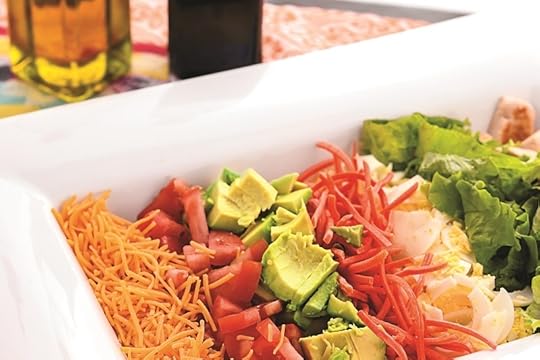
Recipe of the Week: Classic Cobb Salad
If you like fast, yummy meals, this all-American dish is for you. It might look boring, but the combination of avocado, egg, chicken, and cheese with some vinegar really makes it pop.
I’ve left out the bacon to keep the calories in check, but you can use turkey bacon if you’d like (which adds even more protein!).
Enjoy!
Servings
2
Calories Per Serving
494
Protein Per Serving
54 grams
Carbohydrates Per Serving
20 grams
Fat Per Serving
23 grams
Ingredients
1 small head iceberg lettuce, chopped
2 boneless, skinless chicken breasts (6 ounces each), cooked, and cut into small cubes
2 hardboiled eggs, chopped
2 medium tomatoes, chopped
1 avocado, sliced
1 cup carrots, grated
1/4 cup low-fat mild cheddar cheese, shredded
Instructions
1. Evenly divide the lettuce between two large bowls.
2. Toss in the rest of the ingredients and serve with dressing of your choice (go with a high-quality balsamic or red wine vinegar if you want to minimize additional calories)
What You Get to Eat
What did you think of this week’s recipe? Let me know in the comments below!
Want more delicious, easy-to-make recipes like this?If you like this recipe, then you’ll love the bestselling cookbook it came from! My own The Shredded Chef!
In this book you’ll find 120 healthy, flavorful recipes specifically designed for athletes that want to build muscle or lose fat. Regardless of your fitness goals, this book has got you covered.
Buy this book now to forever escape the dreadful experience of “dieting” and learn how to cook nutritious, delicious meals that make building muscle and burning fat easy and enjoyable!
Buy now
AmazonAmazon UKAmazon AUAmazon CABNiBooksKoboGoogle Play
Vegan and vegetarian dishes are great sources of micronutrients, and even if you’re a meat eater, they’re great for changing things up in your meal plan.
And in my cookbook, Eat Green Get Lean, you’ll find 100 of my favorite vegetarian and vegan dishes, carefully balanced for our high-protein, healthy needs!
Buy this book now to forever escape the dreadful experience of “dieting” and learn how to cook nutritious, delicious vegetarian and vegan meals that make building muscle and burning fat easy and enjoyable!
Buy now
AmazonAmazon UKAmazon AUAmazon CABNiBooksKoboGoogle Play
April 18, 2014
Cool Stuff of the Week: SITU Smart Food Scale, Powerqube, Bravo Two Zero, and More…
I’m not ashamed to admit that I’m kind of a sucker for cool stuff. I like nifty gadgets, quirky decoration pieces, nice clothes (and shoes!), good books, and fun games.
In this series of weekly posts, I share whatever currently has my fancy. Maybe some of it will catch yours as well!
VIDEO OF THE WEEK:
THE WORLD’S WORST WHEEL OF FORTUNE CONTESTANT
Wait…did he just miss out on winning $1 million by mispronouncing Achilles?
RUNGU JUGGERNAUT

Whether you want to ride on asphalt, sand dunes, or snow, the Rungu Juggernaut Bike can do it all.
It takes the “fat tire” bike to the next level by adding a third wheel with dual forks and a lightweight aluminium frame. Its hydraulic rear brakes and dual front disk brakes provide amazing stopping power, and it even includes an e-bike kit for transforming it into an electric vehicle.
SITU SMART FOOD SCALE
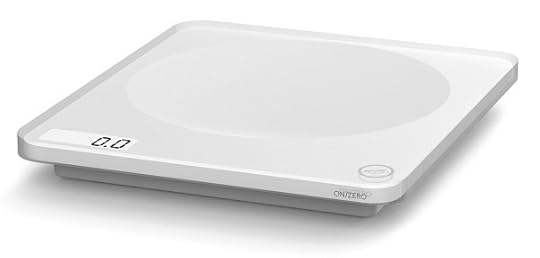
I don’t post many Kickstarter projects because of how ridiculously delayed many wind up being, but I’m going to make an exception for the SITU because it’s awesome.
SITU is a simple food scale with a Bluetooth chip that talks to your iPad or Android tablet. You can place virtually any food item on SITU and view the exact nutrition information for that amount of food on the companion SITU app.
Something like this would be extremely useful for meal planning and diet compliance.
Buy now
Kickstarter
AVENGERS USB STICKS

If you’re a nerd and you know it, you might want to store your digital stuff in these fun USB sticks. And even if you don’t love all things Marvel, admit it, Iron Man’s eyes lighting up when it’s plugged in is pretty cool.
Buy now
Amazon
POWERQUBE

The Powerqube allows you to charge and power up to nine devices simultaneously. It features three USB ports and six electrical outlets, and enables each USB port to independently negotiate with each device that plugs into it.
Cue the intense marketing video…
Buy now
Amazon
BOOK OF THE WEEK:
BRAVO TWO ZERO

I used to read a lot of military stories and Bravo Two Zero was one of my favorites.
Based on a true story, this story places you among eight members of the elite SAS regiment who infiltrated into Iraq in 1991 to seek and destroy mobile Scud launchers. Within days of arriving, their location was compromised and after their first major encounter with enemy forces, they had to flee toward the Syrian border to survive. Things only get worse from here: hypothermia and other injuries, capture, torture, and death. Only the author made it out alive, and this is his story.
This is one of those books that just grabs you by the gut. It’s a roller-coaster fride from beginning to end and is an example of how just how freaking tough some people are. Definitely puts our petty problems into perspective.
MOVIE OF THE WEEK:
THE INTOUCHABLES

The Intouchables is also based on a true story, and it’s just one of those experiences that was meant to be told to the world.
As the descendant of two prominent French families and director of one of the world’s most celebrated champagne houses, Philippe Pozzo di Borgo was not someone in the habit of asking for help. Then, in 1993, right on the heels of his wife being diagnosed with a terminal illness, a paragliding accident left him a quadriplegic.
Passing his days hidden behind the high walls of his Paris townhouse, Philippe found himself the modern equivalent of an “untouchable”—unable to reach out to others, as others were afraid to reach out to him. The only person who seemed unaffected by Philippe’s condition was someone who had been marginalized his entire life—Abdel, the unemployed, uninhibited Algerian immigrant who would become his unlikely caretaker. In between dramas and jokes, he sustained Philippe’s life for the next ten years.
Like The Blind Side, this movie will touch you. The characters’ circumstances and interactions just tap into an emotional wellspring in all of us, and although our lives couldn’t be more different, we can all relate to the themes explored: the nature of friendship, happiness, and fulfillment.
Buy now
AmazonAmazon UK
Watch now
Amazon US Instant VideoAmazon UK Instant Video
What do you think of this week’s picks? Have anything you’d like to share? Let me know in the comments below!
April 17, 2014
7 Healthy Pancake Recipes That Will Blow Your Mind
A healthy lifestyle doesn’t mean you have to sacrifice your favorite foods (and pancakes are definitely one of my favorites!). Not only are these pancakes healthy, but they’ll please even the pickiest palates.
Whether your favorite ingredients are almonds, coconuts, or carrots, there’s a pancake recipe here for you. Or, mix up your meal plan with a whole new twist on pancakes like chickpea crepes.
Want to up the amount of protein? Add your protein powder of choice to the mix, but leave out half the flour. And if you’re looking for more flavor without a lot of butter or sugar, add in a dash of cinnamon, a little lemon zest, or a sprinkle of candied ginger.
Oh and a little pancake protip: get some silicone pancake rings for making thick, moist flapjacks.
Banana Protein Pancakes
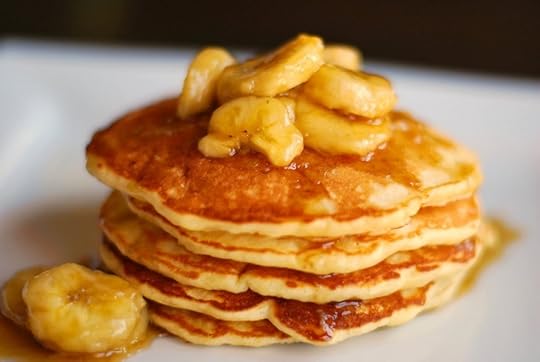
Picture courtesy of The Deseret Housewife
These could not be easier or better for you. All you need to do is mash a banana with a couple ingredients, and you’ll be eating in mere minutes.
Once you see how easy these are to make, you’ll never go without a well-balanced breakfast again. These pancakes are also the perfect base for mix-ins: crushed nuts, ground flax, blueberries – you name it.
Serves 1 / Makes 2
Ingredients
1 ripe banana
1 scoop protein powder
1 large egg
Dash of cinnamon (optional)
1 tsp. coconut oil
Instructions
1. In a small bowl, beat the large egg with a fork. Add the banana, and mash together. Mix in protein powder.
2. Heat the coconut oil in a pan, and spoon batter into two pancakes.
3. Cook for a couple minutes, flip, and remove from the pan after another minute. The outside of the pancakes will brown, but the inside will be soft and moist.
Nutrition Facts (Per Serving)
Calories: 298
Protein: 33 grams
Carbs: 32 grams
Fat: 10 grams
Wheat Germ Pancakes
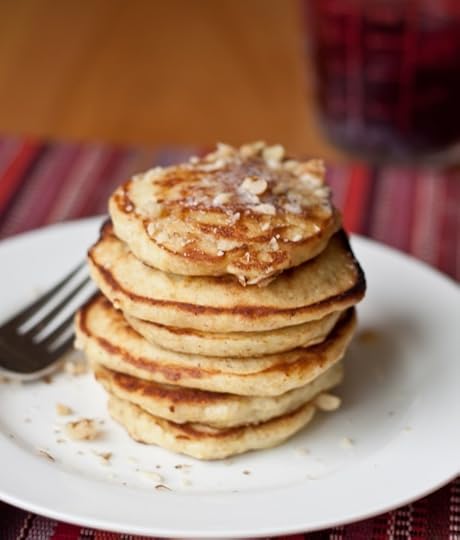
Picture courtesy of Blogging Over Thyme
These taste like a traditional pancake, but they have an added crunch on the outside from the wheat germ. But that extra ingredient lends more than texture; wheat germ is chock full of vitamin B, fiber, and
Serves 6 / Makes 12
Ingredients
1 cup whole wheat pastry flour
1 1/2 scoops vanilla whey protein isolate
1 Tbsp. baking powder
1/2 tsp. salt
1 large banana
1/2 cup almond milk (more if needed to thin batter)
2 Tbsp. honey
2 Tbsp. coconut oil, melted
2 eggs
6 tsp. wheat germ
Instructions
1. Combine flour, protein powder, baking powder, and salt in a medium bowl. Whisk well.
2. Mash the banana, and mix in the almond milk. Beat in the honey, coconut oil, and eggs.
3. Pour the wet ingredients into the dry, and whisk together.
4. Heat griddle or large frying pan, and grease with cooking spray. Spoon enough batter to make one pancake, and sprinkle 1/2 tsp. of wheat germ on top. Cook until the bottom browns and bubbles start to appear in the batter, and then flip to finish. Repeat to make 12 pancakes.
Nutrition Facts (Per Serving)
Calories: 268
Protein: 12 grams
Carbs: 29 grams
Fat: 11 grams
Coconut Flour Pancakes
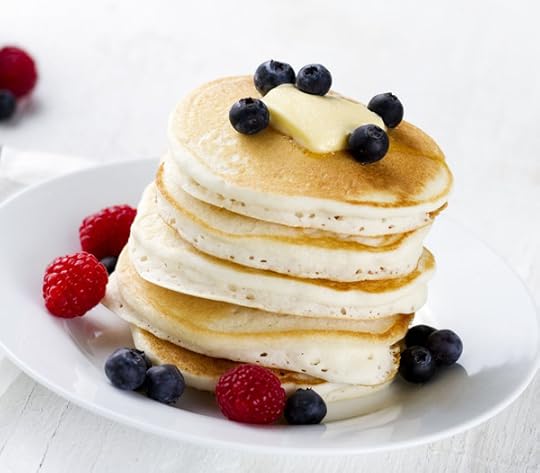
Picture courtesy of Bob’s Red Mill
Anything with coconut is all the rage. With coconut water, sugar, oil, milk and flour now readily available, it would seem coconut has conquered all the staple ingredients.
But what makes coconut flour so much better than traditional all-purpose? It has a lot of fiber, contains few carbs, and compared to almond flour, has surprisingly little fat. The two tablespoons in this recipe add 4 grams of fat, 5 grams of protein, and 17 grams of carbohydrates – 11 grams of which are insoluble fiber.
Serves 2 / Makes 2
Ingredients
3/4 cup vanilla protein powder
2 Tbsp. coconut flour
2 packets stevia
1/4 tsp. cinnamon
3/4 cup egg whites
1/4 cup water
Instructions
1. Mix together protein powder, coconut flour, stevia, and any spices.
2. Stirring slowly, add the egg whites and water to the bowl. If you desire thinner pancakes, stir in an extra 1/4 cup of water.
3. Heat a nonstick pan, and grease with cooking spray. Add 1/4 cup of batter to the pan at a time, making about two pancakes total (four if thinning the batter). Cook on one side for three minutes, flip, and continue for two more minutes, or until golden brown.
Nutrition Facts (Per Serving)
Calories: 180
Protein: 31 grams
Carbs: 12 grams
Fat: 3 grams
Whole Wheat Pancakes
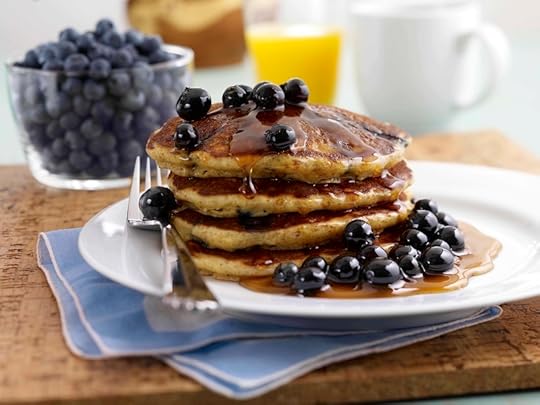
Picture courtesy of Babble
These are pretty much the version of Saturday morning breakfast that you grew up with, but there are a few key changes to make them a lot less guilt-inducing.
Most importantly, swap the white flour for whole wheat. If you don’t like the rougher texture, look for the bag labeled “whole wheat pastry flour.” Ground from the soft wheat berry, it has lower protein content but makes a fluffier pancake.
Serves 3 / Makes 6
Ingredients
1 cup low-fat milk
1 Tbsp. vinegar
1 cup whole wheat pastry flour
1 packet Stevia
1/2 tsp. baking powder
1/4 tsp. baking soda
1/4 tsp. salt
1 egg
2 Tbsp. non-fat Greek yogurt
1 Tbsp. unsalted butter
Instructions
1. In a cup or bowl, mix the milk and vinegar together. Let sit. Alternatively, you can use low-fat buttermilk.
2. Whisk together all dry ingredients in a large bowl. Separately, beat the egg, and stir in yogurt and milk/buttermilk.
3. Add the wet mixture into the dry, and stir until just combined. There will be lumps remaining in the batter.
4. Heat the butter in a skillet or on the griddle, and spoon batter to make about six pancakes. Cook on one side until bubbles start to rise up, about 2 to 3 minutes, and then flip to continue cooking until golden brown.
Nutrition Facts (Per Serving)
Calories: 249
Protein: 11 grams
Carbs: 36 grams
Fat: 7 grams
Chickpea Crepes
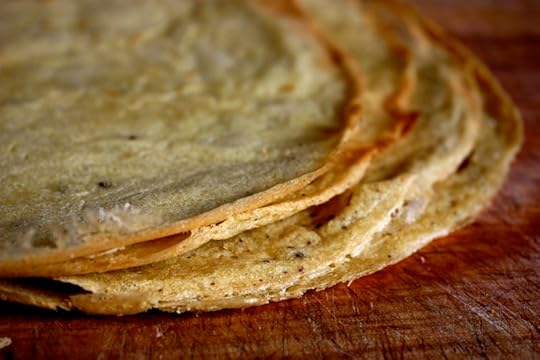
Picture courtesy of My Own Private Kitchen
These pudla are nothing like the pancakes you grew up with. Instead, this Indian-style pancake made with chickpea flour is thinner like a crepe, and it goes well with savory flavors.
Top with chutney and yogurt, or go global by making a burrito-style wrap with black beans, bell peppers, ground turkey, and fresh salsa.
Serves 4 / Makes 8
Ingredients
1 1/3 cups chickpea flour
2 teaspoons salt
1/2 teaspoon chili powder
1 green finger chili, minced
1 cup fresh cilantro leaves, chopped
1 inch fresh ginger
1 cup water
Oil cooking spray
Instructions
1. Mix together chickpea flour, salt, and chili powder in a large bowl. Toss in the fresh green chili and cilantro leaves.
2. Grate the ginger over the top, pour in water, and mix well using your clean hands. Let sit for a couple hours, at least 30 minutes.
3. Place a greased frying pan over high heat. Once hot, reduce heat a little, and ladle a spoonful of batter into the middle of the pan. Tilt the pan in a circle to gently swirl the crepe until it’s an even thickness. Cook for 10 seconds, flip with a long spatula, and cook briefly on the other side.
4. Before you make more chickpea crepes, drizzle or spray oil on the edges of the pan. Continue cooking until the batter is all gone, making about 8 crepes. Serve hot.
Nutrition Facts (Per Serving)
Calories: 149
Protein: 8 grams
Carbs: 25 grams
Fat: 4 grams
Fluffy Almond Flour Pancakes
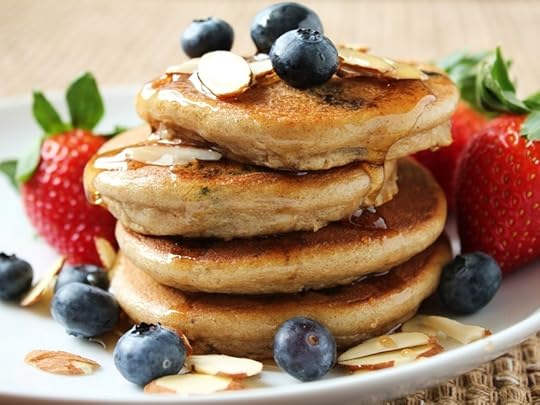
Picture courtesy of Delicious as it Looks
This is a Paleo pancake recipe, but really it’s for anyone who enjoys almonds or unbelievably pillowy pancakes. And if you can never get enough of your favorite nut, take this recipe one step further by spreading roasted almond butter all over the top.
Serves 4 / Makes 20 small pancakes
Ingredients
3 large eggs, room temperature
1/4 cup unsweetened almond milk (more if desired for thickness)
1 Tbsp. coconut oil, melted
1 Tbsp. pure maple syrup
1 tsp. pure vanilla extract
1 1/2 cups blanched almond flour
1/2 tsp. baking soda
1/4 tsp. sea salt
Instructions
1. Preheat your griddle to medium, or spray a nonstick frying pan with oil before placing it over medium heat.
2. Add all ingredients to a blender, layering in the liquids first with the dry goods on top. Cover, and blend on low until beginning to integrate. Increase to high, and continue blending for a minute or two.
3. Ladle a few silver dollar-sized pancakes onto the pan or griddle, and cook for a couple minutes. Once the bottoms are browning and edges are drying, flip them to finish for another few minutes. Keep a close eye on these as they can burn easily.
4. Repeat until all batter has been used. Serve hot.
Nutrition Facts (Per Serving)
Calories: 386
Protein: 14 grams
Carbs: 13 grams
Fat: 31 grams
Carrot Cake Pancakes

Picture courtesy of Minimalist Baker
Cake for breakfast? Yes, you can . . . as long as you keep this vegan recipe on hand.
With only 7 grams of sugar, there’s no reason to feel bad about sitting down to a decadent brunch when you’re having these pancakes topped with coconut whipped cream or whipped mascarpone and a dash of cinnamon.
Take it totally over the top with a garnish of thin carrot chips and plump raisins.
Serves 3
Ingredients
1 cup whole wheat pastry flour
2 Tbsp. turbinado sugar
1/4 cup desiccated coconut
1/2 Tbsp. baking powder
Pinch of sea salt
1 cup unsweetened almond milk
1 Tbsp. Earth Balance buttery spread, melted
1/2 cup finely grated carrot
1 tsp. pure vanilla extract
2 Tbsp. crushed walnuts (topping)
Instructions
1. Whisk flour, sugar, coconut, baking powder, and sea salt together in a large bowl.
2. Mix together almond milk, melted non-dairy butter, and vanilla extract. Pour into the dry ingredients, and stir until just combined. Add carrot, and set batter aside.
3. Heat a nonstick pan over medium, and spray with cooking spray. Spoon 1/4 cup of the batter into the pan at a time, making about 9 total. Sprinkle with walnuts. Cook for a few minutes. After bubbles appear and the edges begin to dry, flip the pancakes, and leave in the pan for a couple more minutes.
4. Serve warm.
Nutrition Facts (Per Serving)
Calories: 277
Protein: 6 grams
Carbs: 40 grams
Fat: 10 grams
What did you think of these healthy pancake recipes? Have anything else to share? Let me know in the comments below!
Want more delicious, easy-to-make recipes like these?If you like these recipes, then you’ll love my bestselling cookbook The Shredded Chef!
In this book you’ll find 120 healthy, flavorful recipes specifically designed for athletes that want to build muscle or lose fat. Regardless of your fitness goals, this book has got you covered.
Buy this book now to forever escape the dreadful experience of “dieting” and learn how to cook nutritious, delicious meals that make building muscle and burning fat easy and enjoyable!
Buy now
AmazonAmazon UKAmazon AUAmazon CABNiBooksKoboGoogle Play
Vegan and vegetarian dishes are great sources of micronutrients, and even if you’re a meat eater, they’re great for changing things up in your meal plan.
And in my cookbook, Eat Green Get Lean, you’ll find 100 of my favorite vegetarian and vegan dishes, carefully balanced for our high-protein, healthy needs!
Buy this book now to forever escape the dreadful experience of “dieting” and learn how to cook nutritious, delicious vegetarian and vegan meals that make building muscle and burning fat easy and enjoyable!
Buy now
AmazonAmazon UKAmazon AUAmazon CABNiBooksKoboGoogle Play


