Jason Lewis's Blog, page 2
June 6, 2021
Moksha Gets a Makeover
Some of you might remember Moksha’s high vis orange paint job for Expedition 360, and the names of hundreds of individual supporters printed either side of the hull.
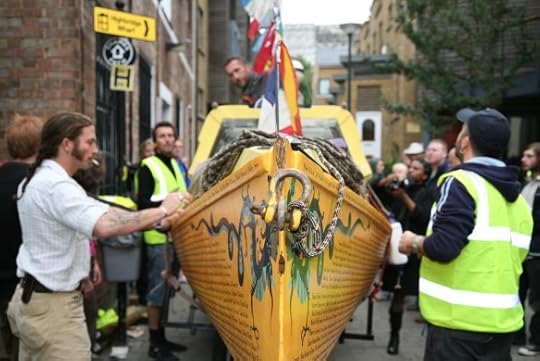
That was then. Now for our #GB360 series of expeditions officially starting around Wales next week, we’ll be working with artists we meet along the way on a graphic series entitled “Fading from View.” The project aims to highlight lesser known animal and plant species indigenous to the UK that are literally fading from existence due to the overbearing pressure of just one species – our own.
We’ll be discussing why these organisms are important, both to overall biodiversity and our own ability to survive longterm as a species. Ultimately it is the little things that run the world, fragile lifeforms to which our own fate is inextricably linked.
Over the last week we got to work with wildlife artist @Eilbhe Donovan from @sevenheadsstudio on the first round of threatened species celebrated on Moksha’s hull.
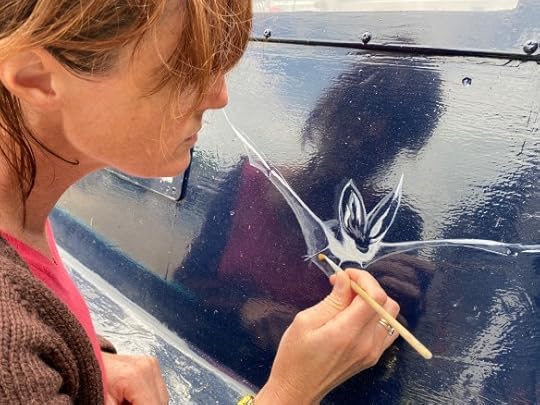
The Grey Long-Eared Bat (Plecotus austriacus) is one of the UK’s rarest mammals. They are intelligent animals that hunt for moths and other insects by night over wildflower meadows along the south coast of England. They are long-lived and social, the females giving birth to their single babies in maternity roosts. But there could be as few as 1,000 of these bats left, and we know their numbers are still falling.
Why are they endangered?
Due to industrial farming practises, the grassland these bats need has been lost from most of our countryside in the last century, making it difficult for them to find safe routes between their roosts and the places where they can find food.
Why are they important?
Bats eat flies, moths and other insects and thereby control insect populations very effectively. Some bats also serve as pollinators and help distribute the seeds of important plants, so they can reproduce and create more fruit for us humans to eat and enjoy. Without pollinating and seed-dispersing bats, many ecosystems would gradually die.
Want to help?
The Back from the Brink project, led by the Bat Conservation Trust, is working with landowners to retain precious habitat. You can volunteer to help monitor the Grey Long-eared Bats in your local area to ensure they have the habitat they desperately need.
LINKS:
How you can help
https://ptes.org/get-informed/facts-figures/grey-long-eared-bat/
https://www.wildlifetrusts.org/wildlife-explorer/mammals/grey-long-eared-bat
https://www.bats.org.uk/about-bats/what-are-bats/uk-bats
https://www.nationalgeographic.com/animals/article/rare-photos-gray-big-eared-bats-england
Click to access AEF-notes-17-10-17-Grey-long-eared-bat-talk.pdf
The post Moksha Gets a Makeover appeared first on Jason Lewis.


April 30, 2021
Back to the Future of Sustainable Food
How do we build a sustainable food future, especially in light of supply chain weaknesses exposed by Covid?
For the last 30 years, former dairy farmer Gerald Miles and his family have pioneered an alternative way of producing food, one centred around organic, community-based agriculture that is good for the farmer, good for the customer, and good for the planet.
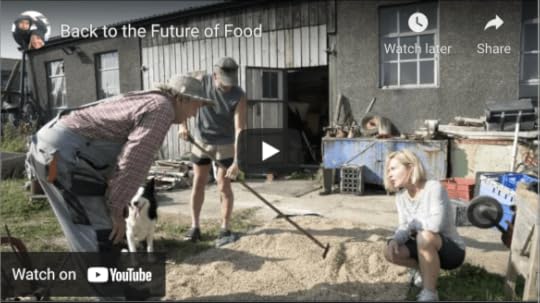
“There’s no food miles, no packaging, it’s local, and you’re supporting your local growing farmer,” Gerald told us. “It ticks all the boxes.”
Ten years ago, Gerald formed Wales’ first CSA* at Caerhys Farm and now supplies organic veg to over 60 local families.
“Industrial farming has been driven because the price per unit of milk or vegetables being produced doesn’t justify the time spent and the cost of growing it. How we live now is not sustainable.”
Gerald showed us how he collects his own seed during harvesting, a response to GM crops, which he campaigns against. “It takes more time [to collect, sort, and plant], but these ancient grains are more resilient to disease, and they’re healthier for us humans.”
“We can help to stop climate change … We need to bring respect back to farmers, and bring respect back to food.”
Gerald exemplifies our belief that transition to a sustainable future starts with ordinary people taking local action and driving change from the bottom up.
One Person. One Action.
* Community Support Agriculture (CSA) is a partnership between farmers and consumers in which the responsibilities, risks and rewards of farming are shared.
All Rights Reserved © 2021
The post Back to the Future of Sustainable Food appeared first on Jason Lewis.
March 9, 2021
Seagrass Superheroes
Seagrass. Grass that grows in the sea. Doesn’t sound particularly impressive, does it? And yet this innocuous looking plant possesses superpowers that can help humanity fight climate breakdown and reach global sustainability before we pass the point of no return.
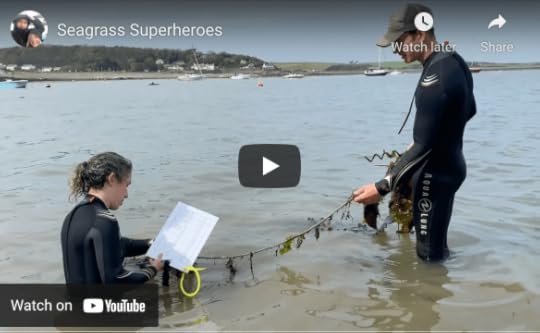
Marine biologists Evie Furness and Sam Rees inspect their seagrass plantings
On climate change alone, seagrass can absorb and store carbon 35x faster than a tropical rainforest. Moreover, it protects coastlines and homes from storm damage and the effects of rising sea levels. For the fishing industry and biodiversity in general, healthy seagrass meadows act as nurseries for myriad species of fish, crustaceans, and even marine mammals, helping support our vital food systems and secure local jobs, including tourism. Then there’s nutrient cycling, improved water quality, stabilisation of sediment. The list goes on…
All told, seagrass meadows along with mangroves and coral reefs are estimated to be worth $125 trillion per year in ecosystem services to humanity*. This figure represents the cost of manmade solutions performing equivalent tasks, such as sucking carbon from the atmosphere through direct capture or building coastal fortifications out of concrete.
But there’s a problem. Due to a variety of pressures over the last century, including nutrient pollution from sewage discharges, agricultural run off, and boat traffic, we’ve lost around 92 percent of seagrass meadows worldwide. As we discovered in our films on illegal river pollution by water companies and rubbish dumped in coastal waters, these issues are all interconnected. A sustainable future requires a holistic plan of action tackling problems in concert, not in isolation.
Enter seagrass champion Evie Furness and her team of superhero marine biologists from Project Seagrass out of the University of Swansea, who are spearheading the UK’s first seagrass restoration site on the Pembrokeshire coast. Tammie and I pedalled Moksha down to their planting site in Dale Bay, where volunteers have already planted 750,000 seedlings out of a total of 1m. The plan is to use Dale as a showcase to elicit funding from both government and the private sector to scale up seagrass restoration nationally to help the country meet its carbon reduction targets for 2030 and 2050.
Evie and her crew of seagrass champions exemplify our belief that transition to a sustainable future starts with ordinary people taking local action and driving change from the bottom up. Like Evie says, “[seagrass] is something that needs shouting about. This is something everybody should know about.”
So let’s get the word out there. Please comment and share!
One Person. One Action.
* Living Planet Report 2018 by the Zoological Society of London and the WWF.
In partnership with: Pembrokeshire Coastal Forum, the Crown Estate, Visit Wales, Port of Milford Haven, Sky Ocean Rescue, and the WWF.
All Rights Reserved © 2021
The post Seagrass Superheroes appeared first on Jason Lewis.
February 13, 2021
Adventures in Sustainability
Our mission with Adventures in Sustainability is to use zero carbon expeditions to meet pioneers of a sustainable future, ordinary people driving grassroots change from the bottom up.
Check out our latest trailer from Rob Murray of Wild Nature films. Drone footage by David Richardson of DPR Scotland. Producer Astrid Edwards.
Please join us!
The post Adventures in Sustainability appeared first on Jason Lewis.
February 8, 2021
Our Diving is Rubbish
You’ve heard of ocean plastics, but the grim reality is our seas are being used to dump many other forms of non-biodegradable waste. Fishing equipment, electrical goods, vehicle tyres, shopping trolleys – you name it. Even entire cars wind up being ditched into the briny.
It’s part of the “out of sight, out of mind” mindset that typifies our unsustainable, disposable culture.
Refuse such as electronics causes toxic pollution, leaching dangerous chemicals into the water. Larger items trap fish and other marine organisms, leading to needless suffering and death.
Frustrated by government inaction, local plumber and part-time dive instructor David Kennard set up the UK’s first underwater clean-up group in 2005. Neptune’s Army of Rubbish Cleaners (NARC) has since carried out over 2,000 underwater clean-ups and inspired other dive groups in the UK and abroad to take action.
Once salvaged, the rubbish is sorted for recycling or even up-cycling into new products.
“As much as governments are the key to these problems, we can’t wait for them to sit down and make an agreement.” —David Kennard, NARC
David and his team of volunteers exemplify our belief that transition to a sustainable future starts with ordinary people taking local action and driving change from the bottom up.
One Person. One Action
All Rights Reserved © 2021
The post Our Diving is Rubbish appeared first on Jason Lewis.
January 12, 2021
The Great English Sewage Scandal
Ever heard of “sewage fungus”? Probably not. But it’s something to be aware of next time you feel like taking a dip in an English river.
Chances are you’ll be swimming in a toxic soup of untreated sewage that includes human excrement, condoms, sanitary pads, and toilet paper, not to mention microplastics and antibiotic resistant bacteria.
This according to The Guardian newspaper, who recently revealed that England’s nine water companies dumped raw sewage into rivers and watercourses on 204,134 occasions in 2019, totalling 1.53m hours. The discharges caused widespread fish kills, habitat destruction, and endangered human health with deadly diseases such as leptospirosis.
The Environment Agency currently permits pollution discharges under special circumstances, typically during wet weather, to keep homes from being flooded with sewage back flow. These increasingly common events are compounded by years of underinvestment by the water companies (“sweating the assets,” as it’s known in industry circles), rendering existing infrastructure, such as holding tanks, unable to cope with surges in sewage and waste water.
But here’s the thing: since privatisation 30 years ago, these same companies have managed to net a profit of £58 billion from tax payer’s money. The new CEO of Thames Water alone will make £12m over three years, including a £3m “golden hello” in compensation for loss of bonuses at her former employer.
Fed up with decades of regulatory failure and lack of industry transparency, Oxfordshire resident Ash Smith formed a local pressure group, Windrush Against Sewage Pollution (WASP), to hold Thames Water to account for thousands of illegal discharges into the River Windrush and Thames. We met Ash, who had no former experience in the water industry, and fellow activist Alex Heffernan in August 2020 while pedalling our boat Moksha down the River Thames – part of our #GB360 expedition around Wales.
Ash and Alex exemplify our belief that transition to a sustainable future starts with ordinary people taking local action and driving change from the bottom up.
One Person. One Action.
All Rights Reserved © 2021
FIND OUT MORE:
Sewage (Inland Waters) Bill 2019-21
Guardian article with interactive map of sewage dumps
https://www.theguardian.com/environment/2020/jul/01/water-firms-raw-sewage-england-rivers
Exclusive: water firms discharged raw sewage into England’s rivers 200,000 times in 2019
https://www.gov.uk/government/publica...
https://www.itv.com/news/2019-08-22/england-s-rivers-are-dumping-grounds-for-sewage
The post The Great English Sewage Scandal appeared first on Jason Lewis.
August 26, 2020
Wales Expedition Launch
[image error]A new look for pedal boat Moksha following an extensive refit
Thirteen years ago, pedal boat Moksha and I arrived back at Greenwich after completing the first human-powered circumnavigation of the planet – without using fossil fuels. A week ago, following an extensive refit, Moksha and I set off on a new journey, this time with actress, animal rescuer, and first-time adventurer Tammie Stevens, who also happens to be my wife.
As a proof of concept for #GB360 (postponed until next year), the aim over the next seven weeks is to complete a 750 mile, zero carbon trip around Wales via river, canal, and ocean, documenting examples of sustainable living along the way. In partnership with Squire Studio and director producer Astrid Edwards, we’ll be exploring how coastal communities on the frontline of climate change are transitioning to the UK’s net zero carbon targets for 2050.
[image error]
There is, however, one slight problem. Tammie can barely swim and is terrified of water.
[image error]Our route around Wales
Follow the journey via Instagram or #GB360:
@explorer_jason or @therealtammiestevens
The post Wales Expedition Launch appeared first on Jason Lewis.
June 27, 2017
Dark Waters adapted for Young Adults
It’s 10 pages lighter without the coarse language and bad behaviour, but the trade-off is we now have a version of the Expedition 360 story suitable for Young Adults, published June 1 by BillyFish Books. Supplemented with an educator discussion guide, the first volume in The Expedition trilogy is aimed at 13 through 18-year-olds (although there’s no reason why anyone of any age can’t enjoy it, including grandparents).
Inevitably, this meant the Plumb Line story from day 92 of the Atlantic crossing (think pus thirsty maggots and sensitive body parts) had to be axed, along with several other anecdotes likely to raise the eyebrows on a concerned parent or teacher. But there’s still enough raw adventure in there to (hopefully) hold the attention of the average fifteen-year-old.
Dark Waters (adapted for Young Adults) is available worldwide through local bookstores and online retail outlets. Here’s a list, or search under ISBN 9780984915576.
* * *
All Rights Reserved – © 2017 Jason Lewis
The post Dark Waters adapted for Young Adults appeared first on Jason Lewis.
November 14, 2016
Micro Earths – Exploring Skills Opportunity
“We live in a disposable society. It’s easier to throw things out than to fix them. We even give it a name – we call it recycling.”―NEIL LABUTE
One of the biggest obstacles to global sustainability is the rapid extraction of raw materials to produce the stuff we consume (and ultimately throw away in a traditional linear economy).

A few innovators are beginning to design goods with a circular lifecycle, meaning the items can either be disassembled at the end of their service life and returned to the Earth or the constituent materials be endlessly recycled and made into other products. However, we’re still decades away from such products being the norm.
In the meantime, until the business world catches up (and let’s not even mention the political world), we end consumers can take matters into our own hands by keeping our belongings in use for as long as possible, which means learning how to repair them when they break or stop working. This is a skill that Micro Earths inhabitants, being cut off from the outside world, have refined out of necessity.
We will relearn from these people the lost art of mending our own stuff.
More at http://microearths.com/
* * *
All Rights Reserved – © 2016 Jason Lewis
The post Micro Earths – Exploring Skills Opportunity appeared first on Jason Lewis.
September 12, 2016
Micro Earths – Exploring Clean Mobility
“Nothing compares to the simple pleasure of riding a bike.”―JOHN F KENNEDY
If current trends continue, private car ownership worldwide will triple to 2 billion vehicles by 2050, increasing road emissions by 80%.

As it is, transport is responsible for 22% of energy-related greenhouse gas emissions, pumping 8.07 billion tonnes of CO2 into the atmosphere in 2015—cars being the worst offenders. To prevent the Earth’s climate warming beyond 2°C, the Intergovernmental Panel on Climate Change (IPCC) has stated that global CO2 emissions must be cut by at least 50% by 2050.
With a business-as-usual mind-set, there’s little hope of this happening.
Or we can choose a different future for ourselves. The average personal vehicle emits around 5.23 tonnes of CO2 each year, enough to fill 2 hot air balloons. While the commercial sector catches up with cleaner and more efficient fuels and technologies, each of us can make a difference by modifying how we get around.
Human power is a common theme throughout all thriving Micro Earths. We’ll explore how this simple, low-stress mode of propulsion can improve health, quality of living, and keep money in a person’s pocket.
More at http://microearths.com/
* * *
All Rights Reserved – © 2016 Jason Lewis
The post Micro Earths – Exploring Clean Mobility appeared first on Jason Lewis.