
Michael Lopp's Blog, page 44
April 5, 2014
20th Anniversary of Netscape
I was part of the Netscape Navigator engineering team. Lots of great stories regarding the early days of the Internet. One of my favorites was the origin of the hand icon for links:
Even small innovations at the time seem bigger in retrospect. For example, it was Mittelhauser who came up with the hand icon for links: “It was really, really easy to change the icon on Windows. It was a single call. So, I’m like, “Oh, when it goes over a hyperlink it’s sort of Windows standard; you change to the hand icon to indicate you can click on it.” That was five minutes of work. And then of course that forced everybody else to go do it because it was a good idea and it was popular. There was often a competitive aspect of trying to come up with the cool thing; get it done first.”


March 31, 2014
Complete Honesty is the Access to Ultimate Power
Rebekah Campbell via the New York Times:
A study by the University of Massachusetts found that 60 percent of adults could not have a 10-minute conversation without lying at least once. The same study found that 40 percent of people lie on their résumés and a whopping 90 percent of those looking for a date online lie on their profiles. Teenage girls lie more than any other group, which is attributed to peer pressure and expectation. The study did not investigate the number of lies told by entrepreneurs looking for investment capital, but I fear we would top the chart.
Also:
Peter maintains that telling lies is the No. 1 reason entrepreneurs fail. Not because telling lies makes you a bad person but because the act of lying plucks you from the present, preventing you from facing what is really going on in your world. Every time you overreport a metric, underreport a cost, are less than honest with a client or a member of your team, you create a false reality and you start living in it.
Drink a cup of coffee before reading this one.
March 26, 2014
Practical Advice for the Obsessive Compulsive Traveler
I’m at peak travel right now. I’ve been elsewhere for three of the past four weeks and that means I’m optimized for travel. I’ve already documented how I optimize moving my crap hither and fro in A Bag of Holding, but it’s during this peak travel that I’ve noticed a handful of helpful behaviors that decrease travel friction. These tips are large and small, but all essential for the traveler who would prefer to be hiding in their Cave, far from all people.
Count the Days. Standing in my closet and staring at collared shirts, pants, shoes, t-shirts, coats and a bevy other other clothing is daunting. I panic. Where do I start?
I start by building around a simple number. How many days will I be traveling? I need at least one outfit for each of these days, and a daily outfit is a shirt, jeans, socks, and underwear. Simple. One outfit. One day. Don’t overthink it, just put each outfit on the floor where you can see it.
Next, there are special events and situations, plus weather, that affect this particular trip. Fancy dinner? Suit. Extreme cold? Long underwear, gloves, a hat, and a scarf. Workout opportunities? T-shirt and shorts. These one-offs are easy to add to the growing pile on the floor. These items can also represent a set of other things that can be helpful on multiple days with multiple outfits: coats, sweaters, collared shirts, shoes, belts, etc.
I finish my daily pile of outfits with a small buffer. To account for random inevitable disasters, I add a pair of extra socks, underwear, and two t-shirts.
Five Days. That’s It. My rule of thumb is to pack for no more than five days. This simple prime number first constrains the number of clothing-related decisions that I need to make, but, more importantly, it reduces complexity.
My current main piece of luggage is a Tumi. Yes, it’s spendy, but having destroyed two similarly-sized pieces of luggage in the last four years, I’m taking the same approach with my luggage that I’m taking with my backpack. Sturdy – like take a bullet sturdy. During a recent long walk in Heathrow, the roller handle on a prior piece of luggage snapped off in my hand as I walked down the stairs. Watching my bag roll and bounce down the stairs reminded me: you get what you pay for.
This particular Tumi model has the usual array of handy, well-placed, and various-sized pockets. The zippers are solid and feel unbreakable. There is also a clever internal sleeve for shirts and coats that does an impressive job of keeping pressed clothing pressed. It’s slightly heavier than my prior bag, but that’s because I’m paying for sturdiness. I don’t want to be chasing my runaway bag down a set of stairs in Heathrow.
The final property of this bag is the most important. While I appreciate Tumi’s sturdiness, I need its size. This Tumi is designed to fit in the overhead bins of most planes, which means I rarely check my bag. I almost always have my luggage at my side. My five-day rule is partly designed around this constraint – I do have limited space. If my trip is longer, there is always a way to get laundry done, but what I’m really avoiding is, again, complexity.
For reasons I don’t understand, when something goes wrong during travel, it is usually accompanied by one or two other similarly-sized disasters. When I’m sitting on the tarmac and they announce “We’re having some mechanical difficulties” I’m both concerned about the aforementioned mechanical difficulties, but also the unpredictable implications of those difficulties.
Travel is complex. When you’re traveling, you’re moving amongst multiple large (and hopefully optimized) systems that are designed to get you from here to there with minimal fuss. When there is a failure in one of these systems, there is a cascading shitstorm effect that travels through all systems. For example: when it rains at JFK, you’re screwed on multiple levels. First, weather-related congestion in the sky, but also the taxis lose their minds as well. Things fall apart.
Every single investment I make in reducing complexity gives me an opportunity to avoid system failures around me. I rarely check my luggage, regardless of where I travel, because it prevents anyone from losing my baggage except me.
Pre-compiled Accessories Another complexity reducing maneuver involves sub-bags. I have a small cord bag that contains everything I need for an average day of technology and convenience. iPhone cable, small headphones, MiFi, nail clippers, a cloth to clean my screen, and that’s it. I use a Tom Bihn Clear Organizer pouches that are transparent on one side so I can see what the hell is in there at a moment’s notice.
Second, I use a Tom Bihn Snake Charmer bag for when I’m either traveling internationally or speaking – or both. This bag contains a power brick, all video connectors necessary to project anywhere on the planet, my presentation clicker, and back-up iPhone cables – just in case.
Lastly, there’s my toiletry bag. Like the bags above, it’s never unpacked and is ready to go at a moment’s notice. Yes, I duplicate everything I need that’s already in my bathroom, but unless I’m traveling without luggage or my backpack, the ready availability of all of these bags means the packing of my gear for any type of trip takes seconds. When you combine this with my superhuman clothing packing skills, packing for a week has turned into a 15-minute stress-free affair.
For this most recent trip, I replaced the toiletry bag I’ve been using for years. I bought one that was 50% smaller than my prior bag, which was already uncomfortably full. This leads me to the next tip.
Constantly Throw Shit Away. A tube of shampoo exploded in my toiletry bag during the most recent trip to Vegas. It wasn’t a disaster, but as I was cleaning the items I realized that 50% of the items in the bag were unnecessary. Let’s stop there for a second.
I’m someone who is allergic to cruft. Ask my wife. Ask my wife what happens when she puts something on my couch in my Cave. What’s that? What’s it doing there? When’s it leaving? I am a maddening jerk when it comes to cruft, yet here I am sitting in the bathroom at the Wynn cleaning shampoo off cruft I simply don’t need.
My travel tip is this: every three months, sit down on the floor of your office, take whatever bags accompany you around the planet, open them, and pour the contents on your floor. From there, you are making two piles: shit you need and shit you think you need. My advice: obvious need is easy, and if there is any question in your mind regarding need, put it in the other pile.
You will be shocked at what this simple selection process will do for the stuff you are dragging around the planet. Bonus tip: try this tidying exercise with desk drawers, crap on your desk, and friendships – your mileage may vary.
Tidiness pays off when you least expect it On recent flight back from Australia, I missed a connecting flight in Sydney because a prior flight was late. It was close enough that I had hope, but when I walked up to the counter and they immediately told me I missed my flight, I lost my shit.
Traveling is work for me. I remain in a constant state of stress because I’m fully expecting these types of system breakdowns where it is painfully obvious I have no control over the situation.
This is why I carefully wrap my cords and cables.
Wait, what?
If you go through my Smart Alec backpack, you’ll notice that each pocket is tidy. There is the pen pocket – 5 pens (Zebra Sarasa .5mm) – all tip down. The passport pocket, an internal easy-to-access pocket, also contains similarly shaped rectangular objects. There’s the side pocket, which contains three Field Notes, one of which is actively in use. I can figure out which one this is with the tips of my fingers because I clip a pen to it.
Inside all of the sub-bags, you will notice delightful tidiness. iPhone cables are carefully wrapped in circles. The power brick in the Snake Charmer bag is carefully ensconced in a well-defined cable. Everything is tucked away with purpose.
All of this obsessive compulsive tidiness serves a valuable point: as with my cruft purge tip, I’m fighting entropy. If I fail to put stuff back in the correct pocket, if I neglect cords and cables and shove them haphazardly in a random bag, I’m letting chaos win. One tangled cord means all cords will be tangled. When things are falling apart, the simple task of not being able to find a pen feels like a disaster. Why not avoid that stress and focus on the actual disaster?
Lines are System Failures. During a recent visit to New York, it was raining. It wasn’t hard rain, but it was enough to drive the taxis crazy. As I walked through baggage claim towards the taxi line, I gasped. The line for taxis criss-crossed through the terminal two or three times. This was easily a two-hour commitment to pay for the privilege of getting to Manhattan. This situation was solved elegantly with Uber, but is a good example of one of my most hated system failures: lines.
It’s an efficiency argument. My time is valuable, and standing in what I consider to be an unreasonable line gives me proportional rage. The irrational story I’m telling myself is that someone somewhere made a poor design decision that has resulted in me standing in this here line. Rage.
My current favorite line avoidance maneuver is Global Entry. This program in the USA allows “low risk” travelers to skip much of the security on USA-based outbound and inbound flights. Leave your shoes on, leave your computer in your bag, and less radiation. Bonus.
Inbound international flights are where Global Entry really shines. There are no forms to fill out; you just walk up to a kiosk, get your picture taken, scan your fingerprints, and you’re bypassing the line the flight crew stands in. When you combine this move with the fact that my luggage is at my side, elapsed time in customs usually decreases from 45 minutes to 5.
Global Entry is $100 for five years. You need to fill out an application and eventually schedule an interview, for which you need to travel to a regional office, which is usually at your local airport. You may have concerns regarding the government knowing more about you via this process, but if this is your concern, I suggest getting off the Internet.
Your Travel Life
I started this piece at the San Francisco airport. I wrote the majority of it in the city of Leicester. I found the ending sitting in the park at Soho Square, and I finished it somewhere over northern Canada at 32,000 feet. That’s five days. That’s 5,654 miles and counting. This might not be your travel life, but these could be your travel tips.
Many of these practices: pre-compiled accessories, purging, and tidiness – they take both up-front and ongoing investment, but all of the work serves a clear purpose. When you travel, you are guaranteed to end up somewhere strange and unfamiliar. But whether you travel for work or pleasure, you are on an adventure, and there will be new faces, strange accents, and unexpected circumstances. The less you have to think about the simple things you should be taking for granted, the more you can enjoy the adventure.
March 23, 2014
Time to Take Back Email
I’ve been mostly ignoring the hubbub about companies reading my email. I’ve always assumed that part of not paying for a service means that I’m indirectly paying for it in other ways, but the closing line of this CNN piece somehow put me over the edge.
In a move that might be deemed ironic, Microsoft will now add its own internal searches to its biannual transparency reports on government surveillance.
Marco has been pushing for FastMail for a long time – might be time.
Drift
As I’ve written about before, Saturday morning is sacred. In weeks full of meetings, travel, people, and other productive distractions, having four consecutive hours to actually think is precious time – it’s time for writing.
As a nerd afflicted with a decent case of NADD, this time can be problematic. It’s hard for me to focus because there is much interesting in the world to discover. Over the years, I’ve developed a process by which I channel my focus, build mental velocity and find my creativity. This process leads to a state I call Drift.
The Data Shovel
A quick reminder about the nerd mindset. We are naturally interested in everything because the acquisition of new data allows us to better understand the world. See, as system thinkers, we’re trying to build a model that, well, explains everything. To assist in our discovery of everything, we’ve built ingenious ways of gathering data. Whether it’s a feed reader, a set of bookmark tab groups, Facebook, Twitter, or a news aggregator, we’ve constructed a personal machine that allows us to rapidly consume information. I call mine a data shovel and the shovel is how I start Drifting.
When I sit down on Saturday morning and starting digging, I’ve started a significant mental exercise that looks like this:
Do I care about this item? No? Skip. Yes? Keeping reading.
Do I care about this more than the headline? No? Skip. Yes? Keep reading.
Do I care more than the first paragraph? No? Skip. Yes? Keep reading.
If an item makes it through the checklist, I’ll either read the entire piece or watch the short video or bookmark for consumption at the end of my shoveling.
The process of consuming all this data gives my mind mental velocity, but it’s not just the rate of consumption that gets me mentally limber, it’s the map I’m constantly building and refining. I’m exercising and developing my Relevancy Engine. I’m instantly evaluating everything I know and comparing this item to that impression. This tells me – quickly – how much I might care about this item.
I’m also adding this new data to my model of everything. Twitter blocked in Turkey? Why? How? Isn’t that hard to do? Crimea annexed? I know nothing about Crimea, but it feels like I should. Also, isn’t this how World Wars start? Note to self: go read about how World Wars start. Might be relevant.
It reads exhausting, but I do these relevancy checks and model updates in an instant. Over and over again. The process leaves me in an ideal state of Drift.
Connection and Insight
Drift is both a state and a time. The high volume of information consumption has forced my brain into high gear to process and analyze it. Analysis is the catalyst that opens the door to creativity. Drift is the time that I’m moving from consumption into creation, and writing.
When Drifting from intense data shoveling, I’m in a unique state to write. I’m in a heightened state of questioning, I’m able to make bizarrely useful connections between unrelated topics, and I’m finding insight at an impressive rate. Yes, I am talking about the Zone, but the Zone is a place where you arrive and Drift is how you get there.
I usually have a single article that I’m working on, but come Saturday morning with good solid Drift, I’ll often look at several draft of other articles and see what the Relevancy Engine thinks. How does it decide? The answer is a confusing:
I have no fucking clue.
Intuition is compiled experience and Drift is intuition on steroids. Writing involves long periods of discipline with infrequent brilliant flashes of inspiration. Mapping one distant idea to another. Finding the perfect metaphor. Discovering the perfect word that strangely just fits. These magical, slippery mental events are as precious as they are unpredictable.
Drifting into writing won’t help with your discipline, but I believe it will nurture connection and insight because after years of Saturday mornings staring at my mental discoveries on the page, I believe that Drift catalyzes creativity.
Drift Risk
Drift is full of risk. There’s the case where you start shoveling the data and simply become addicted to consumption and never start building. Yup, been there… this morning. How about when I excitedly Drift into an article, but can never channel hard earned potential energy into the piece? Yeah, turns out writing is more work than magic.
As with many of the nerd tendencies I’ve documented over the years, you accept that there is a modicum of risk pushing your brain to a mental fringe, but it’s fringe where you’ll find the unexpected and that’s why I Drift.
March 19, 2014
Very Emotional Things, Coins
Jason Karaian in Quartz:
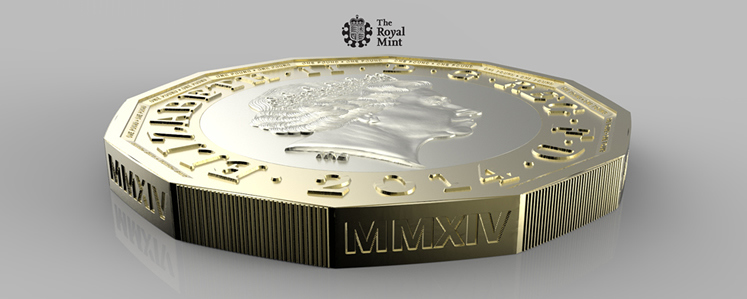
For the numismatists, the new coin will mark Britain’s return to the dodecagonal fold. The design was inspired by the threepenny bit, which was used from 1937 to 1971. Polygonal coins in active circulation are relatively rare, phased out in the name of circular uniformity and found mostly as small-batch commemorative coins.
I couldn’t stop reading dodecagonal as dogecoin.
March 18, 2014
On Ethically Questionable Applications
Tim Fernholz in Quartz:
So if you’re an ardent believer in anonymity, be careful: If you reveal something important enough to be legally protected on one of these platforms, your anonymity might not be secure. The only secrets you can safely reveal on these platforms (and even then, only as long as they’re not crimes) are your own.
March 16, 2014
Designing for Gullible
This article started when I once again became frustrated with notifications in iOS 7. I glanced at my phone and the screen was full of them. I sighed and I scrolled and – for an instant – half-saw a notification that piqued my interest. So, knee-jerk, I automatically unlocked the phone and realized I didn’t know where the notification was from. I relocked the phone and, of course, the notification was gone, but to where?
Unlocking the phone again, I swiped from the top and started to surf the notification view, which is organized into two buckets: ALL and MISSED. It is at this point that my notification rage re-engaged. The ALL bucket contains all my notifications, sorted by applications I both care and don’t care about, so I was scrolling a lot. Wait, what about MISSED? Nope, the notification wasn’t there, and to this day this I have no idea what inclusion in the MISSED bucket means. Missed because I didn’t see it? What does “missed” mean? How I do I UNMISS something?
With my rage amplifying, I fired up Notifications in Settings, where I discovered that there are three separate views related to notifications that need management: the lock screen, the notification view, and per application preferences. This realization, combined with the fact that there were 50+ applications currently included under my list of applications with notifications enabled, resulted in an epiphany.
Notifications are intended to be designed for the user’s ease of use, but the system is actually designed (perhaps unintentionally) for the advantage of business. The moment you see this flawed design pattern, you fucking see it everywhere.
Aggregated Profitable Cruft
Your first reaction to my notification rage is basically correct: “Rands, you should not have enabled all of those notifications.” It’s true. I’m suffering through a sea of notifications because my initial policy is to enable them. I’m curious and gullible, but I’m not entirely to blame.
The enable-notification transaction goes something like this. You install a new app and either at first launch or early in the use of the application, the application asks, “Hey you. New user! You are smart, discerning, and handsome. We know you are going to like this new app, so DON’T MISS OUT ON ALL THIS COOL NEW HOTNESS. ENABLE NOTIFICATIONS.”
Ok, sure. Why not. It’s true, I am discerning.
But I am mostly gullible.
My design issue is not with this initial transaction. Per application notifications can serve a distinct and useful purpose, but the fact that I’m ill-equipped to make this decision early in my usage of an application is the beginning of my issue. Why am I making a notification decision when I know the least about a new app? It’s because application developers know three things:
They have an incredibly short period of time to make an impression on me. They need to teach me about their app and make sure I know what is going on. My current commitment is likely a function of the amount of investment I’ve made, which is somewhere between FREE and $0.99.
They understand that if they convince me to enable notifications on their application they might have further opportunities to remind me that their application exists.
They know that notifications may be an important feature of their application.
When a new application asks to enable notifications, I quickly assess:
Based on what little I know about the application, could notifications make my experience better?
Do I have a sense at all whether they’ll use these notification for good or evil? If the application is social in nature, notifications seem like a good idea. If a game is telling me it needs notifications, I am suspect.
On an app by app basis, I am making choices to enable notifications. I’m making this choice with little actual data about the value of the application, but I’m doing it on a micro-level. What’s it going to cost me to enable notifications? The answer on a micro-level is: “Not a lot.” The answer on the macro-level is what gives me rage.
Macro Design Rage
Remember, I’m gullible. I’d also say I’m curious, but the fact that I’ve got dozens of applications that I never use, but with notifications enabled, tells me that application developers are doing a fine job of convincing me that the potential value of their application will be increased if I turn on notifications. Even though I have a decent case of fear-of-missing-out, I suspect there are a lot of people who are far worse off than I.
My macro design rage starts when I attempt to un-fuck myself from my notification choices. Here’s the Notifications Center screen in iOS 7.1:
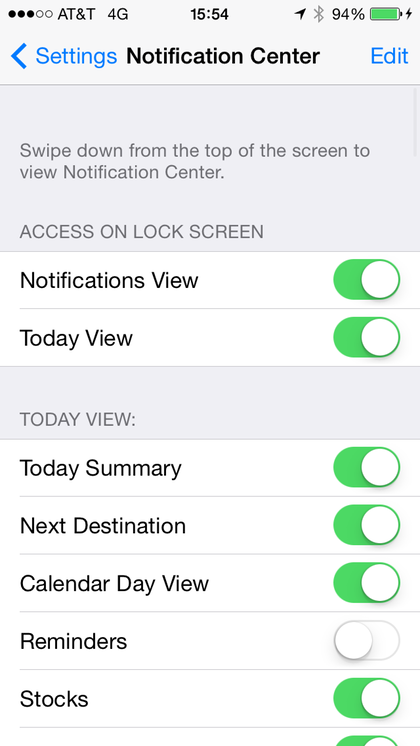
I realize the suggestion I’m about to make is possibly ridiculous, but how do I turn off all notifications short of turning off the phone? Where is the big huge button that allows me to take control back from the bevy of applications that – yes, with my permission – are spamming me with reminders I don’t actually care about? To achieve this goal, I need to go app by app through the list and turn them off. Sounds simple right? Here’s the notifications screen for Google Maps, which is the default notification screen for most applications:
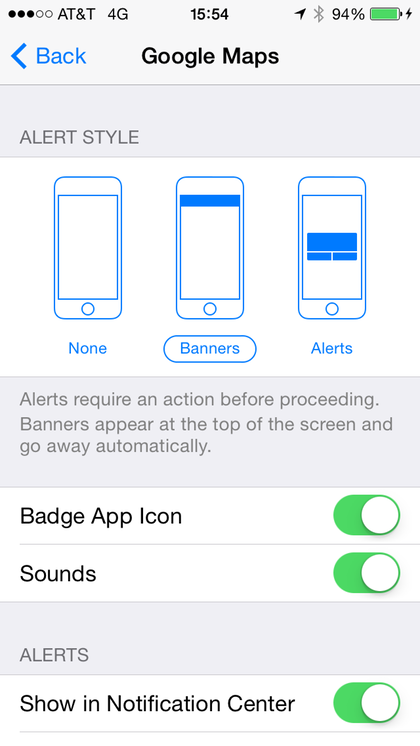
Same suggestion, how do I turn off all notifications for this app? Does an alert style of NONE mean they’re off? Nope. What if I remove them from the Notification Center? Go ahead, take some time and figure it out for yourself. It’s not obvious.
I don’t believe that Apple designed notification management to be user hostile. My belief is that they haven’t figured out a holistic user-friendly model for both notification consumption and management. The design was built from the application up and not from the user’s experience down, which means they considered what was best for the application, not the user.
It’s not a bad approach, but it doesn’t design for the case where every app developer gets what they want: notifications enabled to make sure that I don’t forget about their application in the sea of applications on my phone. This design pattern makes it easy to opt in, but difficult to opt out.
This is by no means the most egregious or evil use of the design pattern. Have you ever tried to cancel a credit card online? Or your cable service? Businesses have little incentive to make it frictionless to allow you to do this because they know if they make it hard or require you to talk to a human that they greatly increase the chance you’ll become frustrated and stop before you finish.
Here’s another: How do I unfriend everyone that I haven’t interacted with in the last year? If I want to find ten new friends, it’s really simple. There’s an intuitive interface that makes finding new friends trivial. In fact, as part of writing this piece, I found six new folks that I should be following. Unfollows? Zero.
I understand that whether we’re talking notifications or friends that I’ve made choices that left me with numerous notifications and significant friend updates. I understand that on a case-by-case basis that I can fix my situation, but my design rage comes from the fact that when my interests aren’t in line with the business’s interests, the design becomes high-friction. Facebook has little incentive to allow me to unbuild my network of friends because my value is likely defined by the amount of data I generate. The larger my network, the larger my set of data.
The Design of Why
I don’t buy Apple hardware and software because it’s pretty – it doesn’t hurt that it’s pretty – but the reason I buy it is the same reason I lusted after the Mac 30 years ago. The design is deliberate. It works how I expect it to work. Not how Apple expects it to work – how I expect it. It’s clear that those brighter than I made choices to make my favorite acts of building contain less friction.
Notifications in iOS are still bad. They’ve improved significantly since the release of iOS, but while they’ve increased their usefulness and visibility, notifications’ usefulness are inversely proportionate to the number of notifications in use.
I expect high friction design patterns when I leave the beaten path of Facebook because I’m paying for it with my data. For Apple, I paid for the products, so I expect to not be punished for being gullible.
March 15, 2014
Elon Musk Talks with New Jersey
I appreciate when Elon Musk takes the time to explain the strategy of Tesla. It reminds me of the infrequent notes from Steve Jobs regarding Apple strategy:
The reason that we did not choose to do this is that the auto dealers have a fundamental conflict of interest between promoting gasoline cars, which constitute virtually all of their revenue, and electric cars, which constitute virtually none. Moreover, it is much harder to sell a new technology car from a new company when people are so used to the old. Inevitably, they revert to selling what’s easy and it is game over for the new company.
Michael Lopp's Blog

- Michael Lopp's profile
- 144 followers

