
Luisa Weiss's Blog, page 7
November 21, 2016
Classic German Baking in Berlin
Berliners, this is just a quick note to let you know that I'm hosting a baking demo, a Q&A and book signing for Classic German Baking this Wednesday at The Store in Mitte.
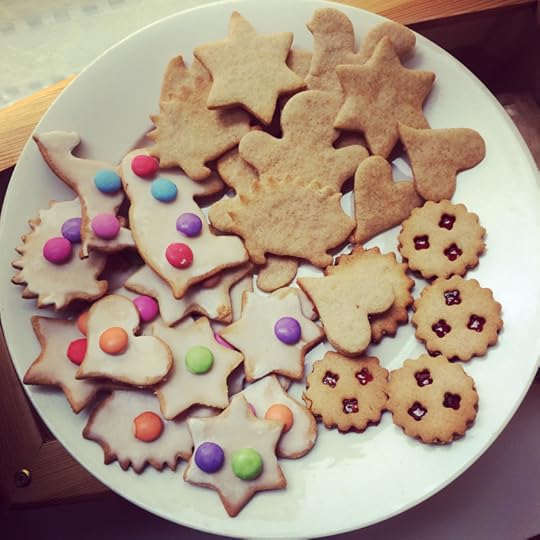
The baking demo starts at 3:00 pm and costs ���25. We'll be making Elisenlebkuchen and talking about all things baking - like which cookies you'll be making for Christmas! (Maybe the Weihnachtspl��tzchen in the photo above?) To register, send an email to clare@fakepr.de.
The book talk is open to the public and starts at 6:00 pm; it'll be followed by an audience Q&A and signing. Copies of Classic German Baking will be for sale there, or you can bring your own. So looking forward to seeing you!
Save
Save


November 1, 2016
Classic German Baking Goes to New York
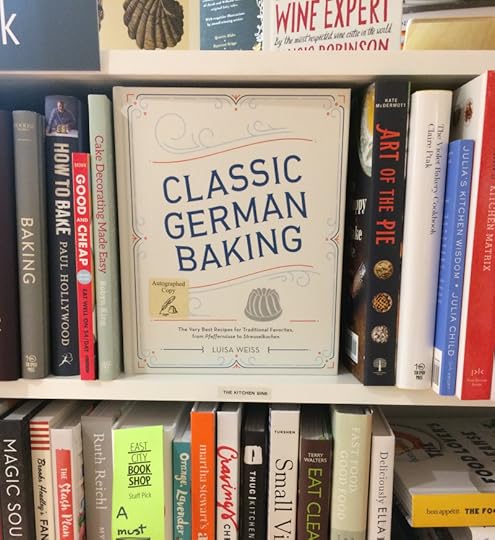
The Classic German Baking tour rolls on! After a wonderful kick-off event at the utterly charming East City Bookshop in DC (where the above photo was snapped), I baked up a storm for the crowd at Boston's Goethe-Institut on Sunday. (If you weren't able to get in due to the full guest list, the Institut has several signed copies of the book for purchase - just stop by at 170 Beacon Street. Update: Sorry, all gone!)
And right now I'm on a train to New York, where I'll be launching Classic German Baking at Powerhouse Arena tomorrow at 7:00 pm together with David Lebovitz, who is in from Paris! We'll be chatting about German baking, blogging and everything else, and after a huge response, the guest list has been expanded, so if you'd like to come, please rsvp here. Can't wait to see you!
October 18, 2016
Classic German Baking, Out Now!
Today is the publication day of Classic German Baking! I woke up this morning feeling like a child on Christmas morning, all full of the jitters and happy adrenaline. What an incredible journey it's been, from signing the contract in the spring of 2014, through all the months of testing and writing and testing again and writing some more, getting through the cover design, up through today. I poured my heart and soul into the book and feel so honored to be bringing not just these recipes but all this information about the wonderful German baking culture and its inherent coziness and comfort to readers everywhere. Those of you who pre-ordered your book online should be receiving it today or at least this week. As of today, you can find the book in stores. On Goodreads, you can read the first reader reviews. And next week, I start my book tour in the US. Dearest readers, I hope you love the book!
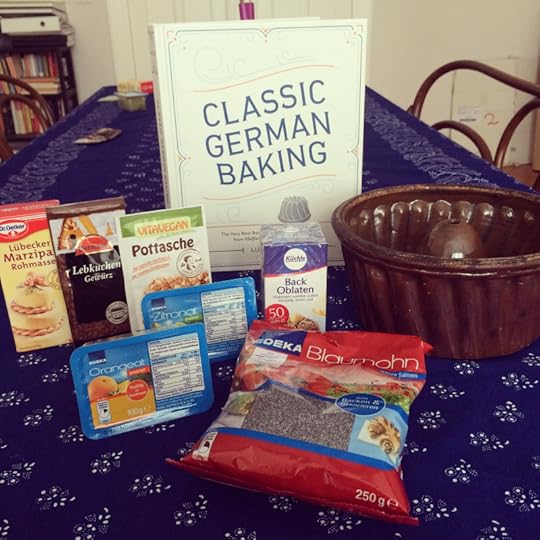
In honor of today, I'm doing a giveaway on Instagram, so head on over there to enter (click!). The winner receives a copy of the book, an antique stoneware Gugelhupf pan, and a little starter kit of specialty ingredients for German baking, which I hope is especially useful with Christmas baking lurking just around the corner. The kit includes almond paste (a recipe for which is in the book), poppy seeds, candied citron and orange peel, Lebkuchen mixed spice (a recipe for which is in the book), baking wafers for Elisenlebkuchen, baker's ammonia (not pictured, because I still have to track it down!), and potash (also known as sodium bicarbonate or sodium carbonate). Sources for all of these ingredients and more are in the book, on page 270.
As I mention in the book's acknowledgments, I could not have written the book without the essential help I received from Maja Welker, a home baker extraordinaire who assisted me throughout all the entire recipe testing process. It's no exaggeration to say that finding Maja felt like some kind of cosmic fate. I quite literally could not have found a better person to work with on this particular book. Maja kept me company in the kitchen and as I researched, got as excited about leavener variations as I did (more even, maybe?), contributed some of her favorite recipes (her Marmorkuchen, marble cake, is the best version of marble cake I've ever had), never lost steam, even in the face of nearly 10 rounds of Pfeffern��sse testing, pinch-hit on our photo re-shoot day when I was actually delirious with the flu, and generally has been an amazing friend and inspiration throughout. Which is why, on this marvelous day, I'd like to publish a little interview I did with Maja, so you can read more about the person who practically overnight became such an integral part of the book.
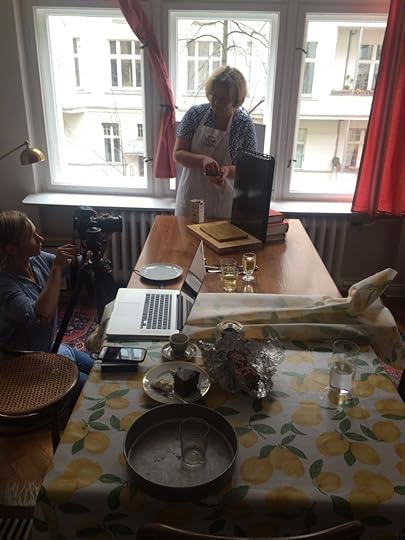 Maja and Aubrie Pick, the photographer, on the day we re-shot ten (!!) recipes for the book in my apartment.
1. So, Maja, where in Germany are you originally from?
I grew up in Uelzen, a small town south of Hamburg in the L��neburger Heide, where Heidesand (Almond Sugar Cookies, page 15) and Heidjertorte (Lingonberry Buckwheat Cream Torte, page 119) originate from.
2. And how did you end up in Berlin?
My husband got a job here seven years ago and since I still worked as a freelance translator back then, I just packed up my desk and followed him.
3. What got you to answer my (desperate) call for help?
I had stumbled upon your blog relatively recently (on the day of the Cold Summer Borscht to be exact - where normal people have a visual or auditory memory, I have a culinary one), but was instantly hooked. Within a couple of weeks I had read your entire blog from end (= the most recent recipe) to beginning. When I saw your "Help Wanted" post it seemed as if you had tailored it just for me - but moreover, I felt we had a common style. The recipes on your blog came from real life, were meant for everyday cooking and baking and not just for show. It would have felt difficult to work in the kitchen with someone who wanted every dish and every cake to be perfect and a masterpiece. Since I had gotten tired of the solitary translator work and my other job at Pfefferkontor, a small mail-order spice shop, only kept me occupied three days a week, I decided to jump at it.
4. How old were you when you started baking?
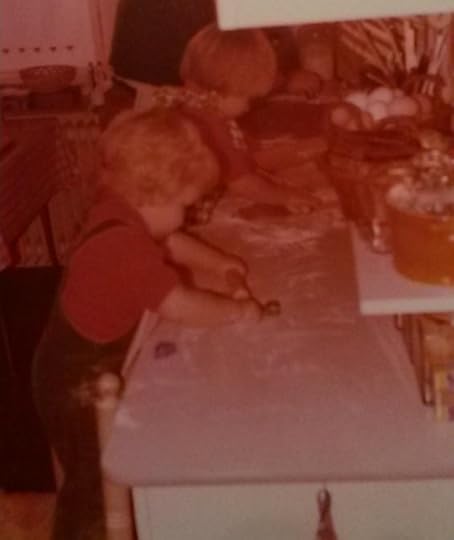
I actually can't remember NOT baking. There is photographic evidence of me at 20 months standing next to my older sister, both of us on chairs to be able to reach the work top, rolling out dough and cutting out cookies. I actually still have some of these cookie cutters and use them every Christmas!
5. Okay, so I guess that partially explains how you got to be so incredibly good at it!
It certainly helped that I like to eat! As you can see above, we were encouraged to help in the kitchen early on. I had barely learned to read when I fell in love with cookbooks (which I still read like novels, picture books and encyclopedias) and whenever I wasn't lying on the living room couch or my bed with an actual novel or a food magazine, I could be found in the kitchen baking. All in all, I spend quite some time there: braiding rich yeasted loaves for Easter breakfast, swirling Marmorkuchen for birthdays, building gingerbread houses during Christmas time - but it almost never feels like a chore. And when you find yourself with your apron on so often and loving it, you can't help but become good at it.
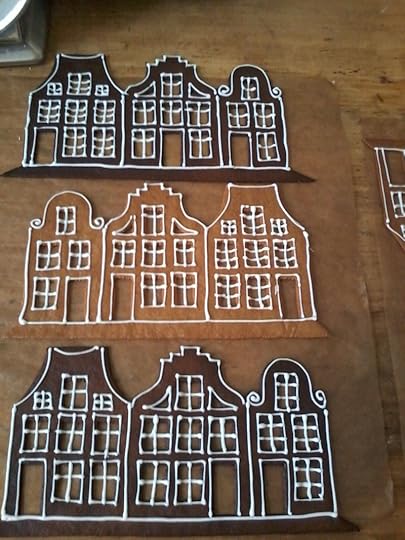 Maja and Bertram's homemade Lebkuchen houses. I mean!!!
5. What role did baking play in your childhood?
My mother was a wonderful cook and baker and we always had home-baked cake or cookies for Nachmittagskaffee (yes, we had some kind of baked goods and tea or coffee every single afternoon!). My father loved cake so much that every time he went grocery shopping he returned with at least one additional package of yeast "just in case you ladies were in the mood for baking a yeasted plum cake or Swedish cinnamon buns". What a shame it would have been to be out of yeast then!
6. And so what role does baking play in your life today?
Somehow, baking is therapy for me: punching and pummeling a yeasted dough, the comforting reliability of a sponge cake, the fascination of Pfitzauf (a Swabian cousin to Yorkshire pudding) rising in the oven - it always works wonders! Plus I discovered that you can make other people really happy by baking for them. In recent years we have basically stopped buying "real" birthday or hostess gifts, and make cookies instead. I had never thought about it becoming an obvious routine until I heard our friends' 5-year-old son say to his parents, "I TOLD you Maja and Bertram would bring cookies." Luckily, Bertram loves to eat and bake as well (although I'd say he has more of a normal person's approach to baking as opposed to my obsession). There are a couple of recipes in our household that he is always responsible for, like Zupfkuchen (Chocolate Quark Cheesecake, page 54), Quarkstollen (Quark-Almond Sweet Bread, page 256) or Nusskuchen (Toasted Hazelnut Loaf Cake, page 42).
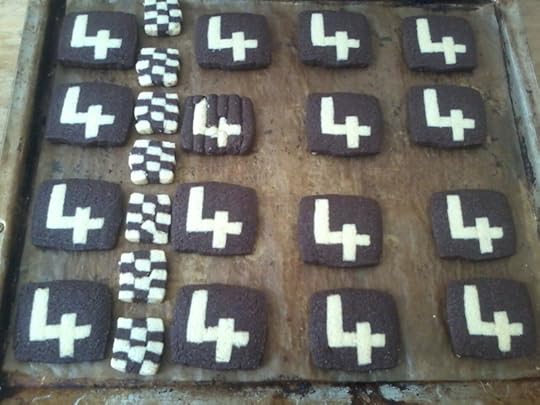 A gift for a 4-year-old's birthday...
7. What was your favorite thing about working on Classic German Baking?
Working with someone who didn't take the German cake culture for granted but recognized it for something worth writing home about! And I loved that you are as excitable about small things as I am: the flaky crust of our very first Pflaumenstrudel (and the second! and the third!!), the soft, yielding texture of a well-kneaded yeast dough,... this list could go on for a while.
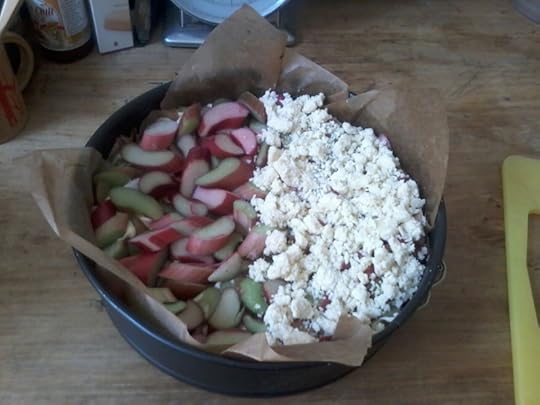 Testing rhubarb cake with and without Streusel.
8. And, I have to ask...what was your least favorite thing (ack!)?
Having to drop some recipes! It wasn't so hard with a couple of them (a truly disappointing applesauce cake or some of the blander Linzer tortes) but the Rhubarb Meringue Cake? Apfelbrot? Wei��e Lebkuchen? None of them made it into the final selection, but they were all delicious in their own right and I will definitely give them second (or third) chances! Oh, and sometimes it was difficult to remember to measure everything carefully. And things like, "How much longer did we bake this version of the cake until the filling finally set?" or "How much cinnamon did I add to this next batch, because the flavor of the last one was much too weak?" I guess I learned that testing recipes for a cookbook is quite different from impulsive home-baking...
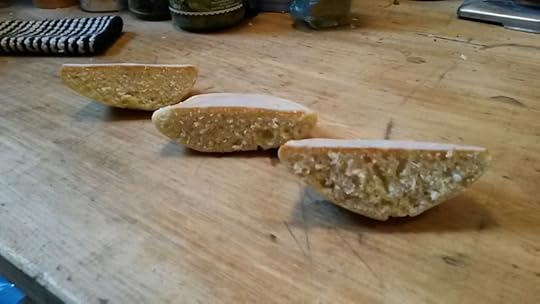 Testing Amerikaner with different raising agents.
9. Do you have a favorite recipe in the book?
No chance! I couldn't even pick one favorite from each chapter, so I won't try.
10. Which of the recipes in Classic German Baking have become favorites in your home now?
Some of them were favorites even before (like Marmorkuchen (Marble Cake, page 72), Zwiebelkuchen (Savory Onion Cake, page 152) or Schwarz-Weiss-Geb��ck (Checkerboard Cookies, page 16). But I have definitely added Quarkbr��tchen (Sweet Quark Rolls, page 188), Schw��bischer Prasselkuchen (Swabian Streusel-Jam Slices, page 34) and Salzekuchen (Hessian Potato Cake, page 156) to my monthly rota!
 Testing Mohnh��rnchen on a weekend.
11. Okay, now the really important questions: First of all, when do you start baking for Christmas?
As we always get together with my sister on the first Advent weekend, I try to have at least 5 or 6 different homemade cookies for our Adventskaffeetrinken ready by then. To be able to achieve this, I usually start preparing different doughs sometime in early November and stash them in the freezer. Nussstangen (Hazelnut-Almond Batons, page 238) are always among these! Other cookies have to ripen anyway, so I start baking Lebkuchen in the middle of November.
12. And what are you planning on baking for Advent and Christmas this year?
The usual: some new recipes, some old ones (the old ones being traditional cookies from Bertram's family, or from my family, the better ones in the "new" category from recent years - it's an ever-growing list!). I never manage to bake all of the different cookies I write down on my "to-bake" list sometime in November, but we usually have between 14 and 18 different kinds. Plus I really want delve into Lebkuchen a bit more this year. And yes, Christmas in our home is mostly cookies - plus Linzer Torte (page 134) and maybe a Baumkuchen (page 259).
As usual, Maja, I'm in awe. Thank you, thank you, thank you for everything!
Save
Save
Save
Save
Save
Save
Save
Save
October 10, 2016
The Classic German Baking Book Tour
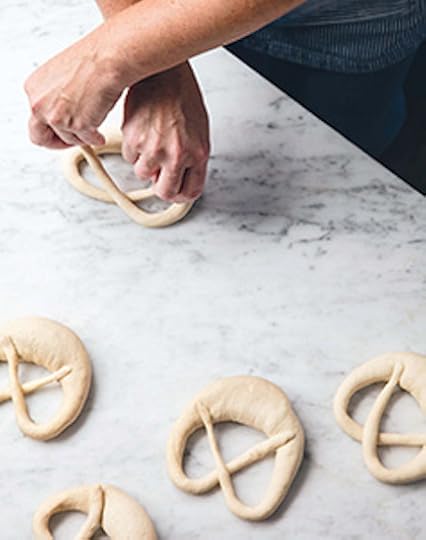
Photo by Aubrie Pick.
My dear readers,
I'm here with an update on the book tour for Classic German Baking! I had originally planned a bi-coastal tour with stops in Chicago and Austin too, but my pregnancy put a little (heh) wrinkle in those plans. I'll be 7 months pregnant soon and I'm pretty uncomfortable already and it just felt like too much travel to do it all. So I'll only be doing events in Boston, New York, Washington, DC and Austin, Texas this time. It was a really hard decision and I'm so very sad to miss out on all of you in California, the Pacific Northwest and Chicago, but it feels like the most sensible thing right now. Oh, motherhood and your compromises! A melancholy sigh from over here.
For those of you in those cities I will be visiting, here are the details for your (and your friends' and families'!) date book:
On Thursday October 27th, at 6:30 pm, I'll be at the East City Bookshop in Washington, D.C. for a baking demo and signing.
More here.
On Sunday October 30th, at 4:00 pm, I'll be at the Goethe Institut in Boston, MA for a baking demo and signing. Tickets cost $5, but there will be lots of cake!
For more info and to buy tickets, click here.
On Tuesday, November 2nd at 7:00 pm, I'll be at Powerhouse Arena in Brooklyn, NY for an event with a very, very special guest, more to be announced on that shortly.
An RSVP is appreciated, to do so and for more information, click here.
And then I'll be flying to the Texas Book Festival in Austin! I've never been to Texas before, and I'm so honored to have been invited to the festival along with so many amazing authors. (Also, I cannot wait to finally try some real Texas barbecue...and tacos!)
On Saturday, November 5th at 2:30 pm, I'll be doing a baking demo at the festival's Cooking Tent.
On Sunday, November 6th at 1:00 pm, I'll be sharing the stage with the lovely Jenny Rosenstrach of Dinner A Love Story for a chat about our work.
For more info about the festival (and the incredible line-up), click here.
And now there's only one more week until publication; have you pre-ordered your copy yet? The book is number one in its category on Amazon now (aaaah! eeeeh! thank you!), so how about the pretzel recipe from the book to celebrate?
I can't wait to get going and see you all!
xo
Save
September 12, 2016
Kevin West's Damson Butter with Bay and Ginger
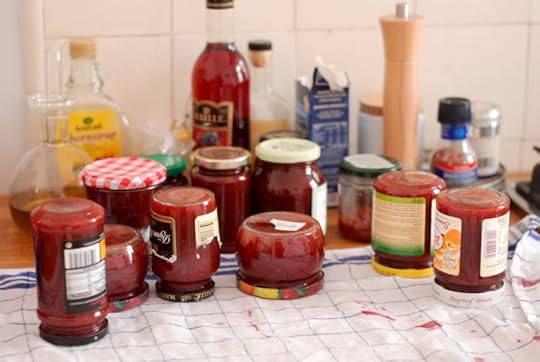
After lunch on Saturday afternoon, we spontaneously decided to go apple-picking with friends. But when we got to the U-pick orchard just outside of Berlin, we discovered that the apple variety we'd set out to pick, Pinova, wasn't ready yet. Other varieties of apples, pears, and plums were ready, so we contented ourselves with those. Now I have several kilos of each in my kitchen; the pears still need a few weeks of ripening, the apples are delicious and crunchy out of hand, but the plums, well, those have already been turned into jam. Quick work!
I love making jam - apple butter in falll, Seville orange in winter, blueberry-lime (make sure to reduce the sugar a bit) in summer - but this year, the cookbook work kept me from any jam-making. I figured I wouldn't much miss my little pots and jars in the pantry that much and contented myself with store-bought jams instead, but they were always too sweet and insipid compared to the things I made myself. (The jam I most regret skipping was the Seville orange marmalade, which when homemade is so incredibly superior to anything you can buy - even fancy, high-quality brands - that I have sworn to myself that even though our baby is due right before Seville orange season, I'm not going to skip it again this year. Wish me luck! I'm pretty sure I will be cursing this resolution in early February when I'm knee-deep in nipple cream and sleep deprivation.) So I'm back at the jam-making station now, easing myself in with Damson plums, a supremely satisfying and easy fruit to preserve.
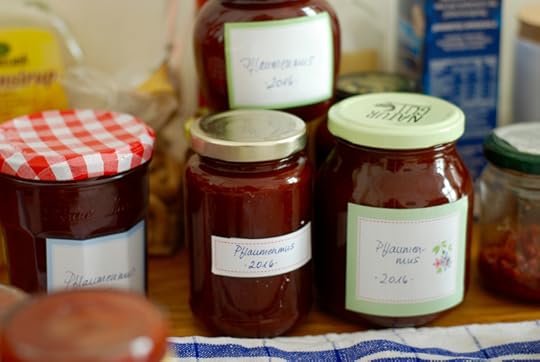
Damson plums are high in pectin, which means that when cooked with sugar they thicken and gel beautifully without any added help. They're also easy to pit, which makes them very appealing to work with, especially when you're confronted with 4 kilos of them after not even half an hour spent in the plum orchard. I turned half of my Damsons into Pflaumenmus, a thick plum butter spiced with cinnamon and cloves that is also known as Powidl in Austria and is an essential element in the German and Austrian kitchen. An easy and reliable recipe for Pflaumenmus is in both My Berlin Kitchen and Classic German Baking. Traditional Pflaumenmus is actually made without any sugar at all, but your plums must be very ripe and sweet for it to turn out nicely. Since the ones I had were still quite firm and sweet-tart, I used my recipe, which contains sugar.
For the remaining of my Damsons, I turned to a recipe from Kevin West, the author of Saving the Season. West cooks his Damsons with bay leaves and ginger first, then forces them through a sieve (I used an immersion blender instead), adding the sugar and lemon juice only at this point before finishing the cooking. West is a genius with flavorings; he seems to have an uncanny sense of which herbs and spices pair best with fruit to bring out their best flavors. To my taste, his jams are often too sweet, so I reduced the sugar in the Damson butter, but you might find you prefer a sweeter jam, as he does. The ginger and bay give the plum butter a gentle fillip of spice and savoriness, but not too much of one. This is still a fruit butter that will do gloriously on a piece of morning buttered toast.
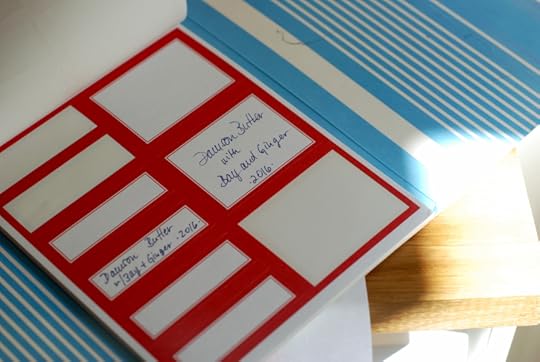
As soon as the pears are ready to go, I'm going to be turning to this fantastic and inspiring little book for my next batch of fruit butter, a silky concoction of pears, apples and maple syrup. I'm trolling the markets for the season's very last plum tomatoes so I can make Kevin's savory tomato jam with smoked paprika (!). And like I said, I'm counting the weeks until Seville orange season. I can't wait to have a pantry full of homemade treats again.
Kevin West's Damson Butter
Adapted from Saving the Season
Note: If you would prefer to preserve your Damson butter the American way, once the jars are filled and tightly closed, process them in a boiling water bath for 10 minutes. Marisa McLellan is an excellent resource on this subject. I do not process any of my jams in this way. The cooking time, the relatively high sugar levels, the high acidity of the fruit, the spotlessly clean jars, and the upside-down cooling method, which gives the jars an airtight seal, are enough for me and all European jam-makers I know.
4 pounds Damson plums, pitted
1/2 cup water
2 bay leaves
1-inch piece of ginger, peeled
2 cups sugar (the original recipe calls for 3 1/4 cups)
1 1/2 tablespoons lemon juice
1. Put the fruit, water, bay and ginger in a large, heavy pot. Bring to a boil over high heat, then reduce heat to low and simmer, covered, for 30 minutes, stirring occasionally.
2. Take the pot off the heat and remove the bay and ginger (discard). Using an immersion blender, pur��e the plums until smooth. Add the sugar and lemon juice and stir well.
3. Bring the mixture to a simmer over medium heat, then reduce to low and simmer, uncovered, for 15 minutes, stirring. Take the pot off the heat and ladle the hot butter into spotlessly clean or sterilized jars. Immediately cap the jars and turn them over upside-down to cool completely. The jars will keep, unopened, for a year. Once open, the Damson butter should be consumed within a few weeks.
Save
Save
Save
August 26, 2016
Lucky Peach's Miso Claypot Chicken (No Claypot)
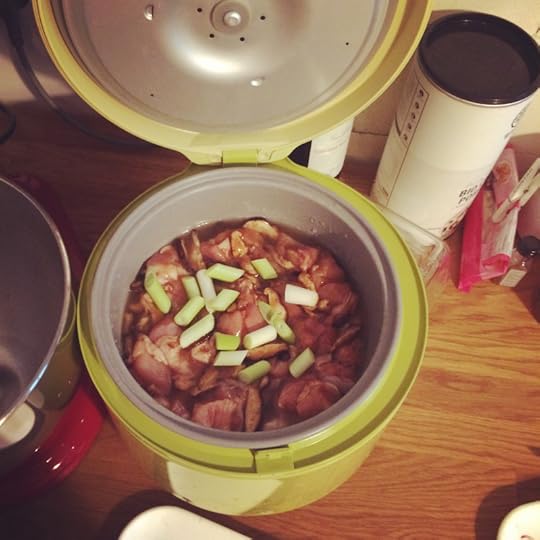
I made dinner in my rice cooker last night.
... insert blinking-in-disbelief emoji face ...
Let me repeat that.
I MADE DINNER. In my RICE COOKER. And no, not just the rice, mind you, the WHOLE DINNER.
(Well, except for the salads, but let's not split hairs.)
It may have been the greatest discovery of my year in food.
First things first, do you have a rice cooker? If not, GET YOURSELF ONE WHAT ARE YOU WAITING FOR FOR THE LOVE OF PETE. I like the Korean Cuckoo brand. (Berliners, the tiny Korean shop on Spandauer Damm just past Klausener Platz sells Cuckoo rice cookers.) My model is very simple - it only has a "warm" and "cook" setting. Nothing special, no bells and whistles. (Unlike my friend Joe's rice cooker, which SPEAKS TO HIM IN KOREAN for crying out loud.) I honestly can't say specifically why I find the rice cooker such a transformative appliance in the kitchen, but not having to worry about getting rice (and other grains) cooked perfectly has actually improved my cooking life in ways other appliances just haven't.
Now that that's out of the way, you can focus on getting DINNER COOKED IN YOUR FLIPPING RICE COOKER WHY AM I SO EXCITED. The recipe I used comes from Lucky Peach Presents 101 Easy Asian Recipes that my friend Florian loaned to me after I had dinner at his house a few weeks ago and had to restrain myself from swallowing the entire serving bowl of spicy celery salad in front of the other guests' horrified eyes. (While pregnant with Hugo, I craved crunchy, salty things, like tortilla chips and pretzel sticks. But this pregnancy has me wild-eyed over crisp vegetables and vinegar. In fact, I've eaten my weight in salad since May, literally guzzling the dressing out of the bowl when we're done. The other night, I actually found myself drinking olive brine from the jar. SO GOOD.)
The whole book is great - it thoroughly demystifies various Asian grocery items, the goofy photo styling is funny and refreshing, and it's full of easy recipes for things you want to eat right now. Like "Economy Noodles", a simple Malaysian noodle dish that apparently takes about 7.5 minutes to make, hot-and-sour soup from Boston's Joanne Chang, char siu pork and miso-glazed eggplant (though I have yet to find Japanese eggplant in this fair city of mine), not to mention the spicy celery salad. But the recipe which is alone worth the price of the book is this one, for Miso Claypot Chicken (No Claypot), though of course you can make it in a Dutch oven if for some reason you still don't have a rice cooker. (GET ON THAT.)
For the No Claypot Chicken you make a really simple marinade of soy sauce, oyster sauce (which I replaced with hoisin sauce with spectacular results), Shaoxing wine, miso paste, salt, sugar, pepper and sesame oil. Into the marinade go sliced shiitakes and chunks of chicken thigh meat. While this sits for a minute, you put rice, water or stock and a single ginger slice in the rice cooker, then you scrape the chicken mixture on top of the rice and then put chopped scallions on top.
THAT IS IT! (I still can't get over it.)
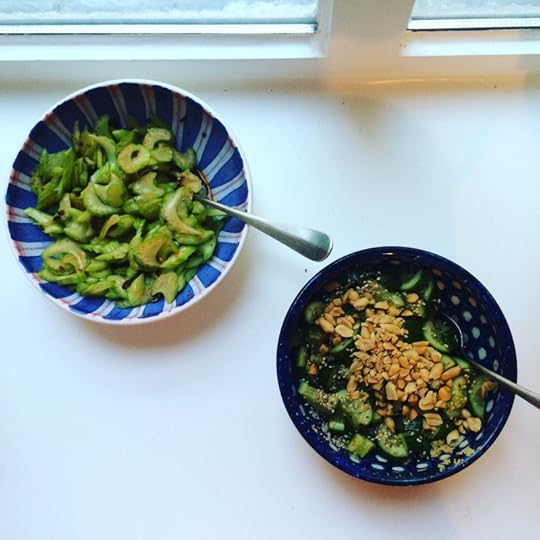
One cycle of my rice cooker was enough to cook the meal completely - the chicken incredibly tender and moist, the mushrooms silky and fragrant, the rice sticky and savory and a deep mahogany brown on the bottom. Consistency-wise, it's sort of like the sticky rice filling of stuffed lotus leaves at a dim sum restaurant, and actually flavor-wise, too, except this meal is richer and more savory. We scooped out the steaming chicken and rice directly from the bowl and ate it with the aforementioned spicy celery and a cucumber salad with peanuts and cilantro.
Weeknight dinner jackpot!
Now tell me, good-people-who-already-own-rice-cookers: are you all doing a collective face palm because you've been making delectable meals in your rice cookers for years and I'm only now finally catching up? If so, what other dinnertime miracles await me? Give me your best rice cooker recipes, please!
1. In a large bowl, whisk together the soy sauce, hoisin sauce, wine, miso, salt, sugar, sesame oil, and a few grinds of white pepper. Add the chicken and mushrooms and fold to coat.
2. Combine the rice, stock, and ginger in a rice cooker or a small Dutch oven.
For a rice cooker: Scrape the chicken mixture and all of the marinade on top of the rice. Scatter with scallions. Cover, start the rice cooker, and cook until the cycle is done. Open the lid and check the chicken for doneness. Depending on your model, the chicken may need a couple more minutes to cook through. If it does, set the rice cooker for another cycle, press start, and check again in 5 minutes.
For a Dutch oven: Place over medium heat and cook for 5 minutes, until just simmering. Reduce the heat to low and cook until all the liquid is absorbed and the chicken is cooked through, about 25 minutes. Fluff the rice, scraping up the crust from the bottom of the pot.
3. Scoop out and serve by the bowlful, or eat it straight out of the rice cooker.
Save
Save
Save
Save
Save
Save
Cook the Farm
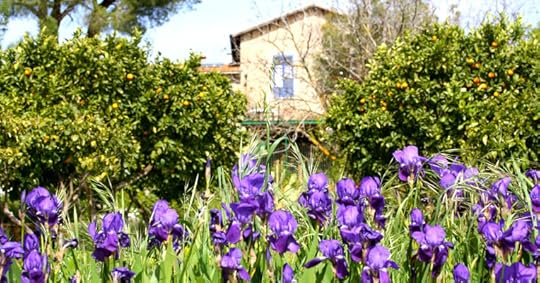
That little blue window up there is from the room where I first stayed when I came to the Anna Tasca Lanza Cooking School on the Regaleali estate in 2015. I was there to teach a writing class with Rachel for a week and promptly fell in love with the place. We spent that week with our students wandering in and out of the garden, where flowering capers, fragrant rosemary and almond trees grew next to neat rows of chickpeas, tomatoes, eggplants, pumpkins and countless other plants in the vegetable garden. The school is an incredible place; founded over 25 years ago by Anna Tasca Lanza as a way to share Sicilian cooking with the world and now run by Anna's daughter Fabrizia, who has educational ambitions beyond the kitchen.
The school now hosts writing workshops and illustration workshops, in addition to their traditional cooking classes, but Fabrizia's desire to keep Sicilian culinary traditions alive as well as offer a deeper understanding into the way the Sicilian land is farmed and tended has given rise to her latest and most ambitious program, Cook the Farm. Cook the Farm is an ambitious 10-week immersive program where students - chefs, farmers or food professionals - live with Sicilian families or in the town next to the school and spend each week studying everything from olive oil production to horticulture, culinary anthropology to cheese-making. The Wall Street Journal recently wrote about the program here, saying
"On a spring afternoon at the Anna Tasca Lanza cooking school���set on 1,300 acres of vineyard in the green hills of Sicily���preparations are underway for a celebration marking the conclusion of Cook the Farm, its new residential program at the intersection of agriculture, academics and cooking. At the farmhouse kitchen of this rural wine estate, a two-hour drive southeast of Palermo, students scurry about as they assemble a mix of dishes from home and recipes learned during the 10-week program. In a window nook across from a neat row of the school���s branded jams (made from sour cherries, figs and mandarins grown on the property) hang framed photos of the Marchesa Anna Tasca Lanza di Mazzarino, 'Sicily���s culinary ambassador to the world,' as the James Beard Foundation has called her. Photographs taken during the school���s early days show her posing with visiting dignitaries like Robert Mondavi and Julia Child (more recent guests include chefs Grant Achatz and Alice Waters). In the 27 years since the school���s launch, the region has emerged as an epicurean destination, with the marchesa, one of the first Sicilians to open her cloistered upper-crust life to outsiders, helping to set the stage for a new generation of chefs and winemakers."
If you would like to be a part of this exciting and groundbreaking program, the school is accepting applications for the course, which runs from January 21 to March 28, 2017, until September 15, three weeks from now. To apply, click here. For more on Cook the Farm, watch this video.
August 22, 2016
An End-of-Summer Catch-Up
My dearest readers, you have been so patient with me! My last post was almost three entire months ago. Eek! I didn't fully intend to take such a long break, but I really, really needed it. In early May, I sent off the very last book-edit-related email and it suddenly went very quiet around here. After all those endless months of recipe testing and writing, it felt like a huge weight had come off my shoulders. I was exhausted, and also in a sort of recovery from several months of really bad health, including two bouts of the flu, pneumonia, not to mention the discovery of an under-active thyroid condition.
So in May, I rested.
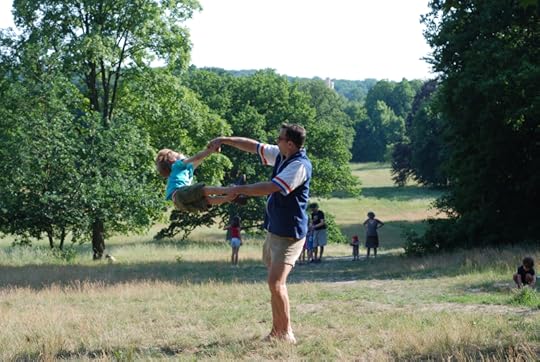
In June, we celebrated Joanie's annual birthday picnic, and Hugo turning four (four!), before I left to teach the second annual Language of Food writing workshop at the Anna Tasca Lanza Cooking School in Sicily together with Rachel. It was an incredibly intense and rewarding week. I'm already looking forward to next year's workshop, which will take place from June 26 to June 30, 2017. As soon as booking for the workshop opens, I'll let you know.
From Sicily, I flew up to meet Max and Hugo at my mother's house in Italy. We attended a big and beautiful Italian-Hawaiian wedding in Urbino (remember my friend Alessandro, he of the bruschetta di pomodori gratinati?) Hugo got to spend time with his adorable Modenese cousins. Max became an expert acacia-hunter on my mother's property, clad in gardening gloves and constantly casting his exacting German eye about for another sucker to rip out of the ground. (Now we can't walk two blocks in Berlin without him pointing out another offending specimen - I see a new career in the municipal landscaping department on the horizon.) I immersed myself in mastering the art of classic lasagna, as taught by my beloved friend Gabriella, who you already know about from here and here, for the October issue of Harper's Bazaar Germany, and I promise to share the recipe with you soon, too.
In August, Hugo's daycare closed for their summer break, so we escaped to the Baltic with friends, discovered new playgrounds, and tried to find ways to pass the time. Let's face it, there was also a lot of Peppa Pig.
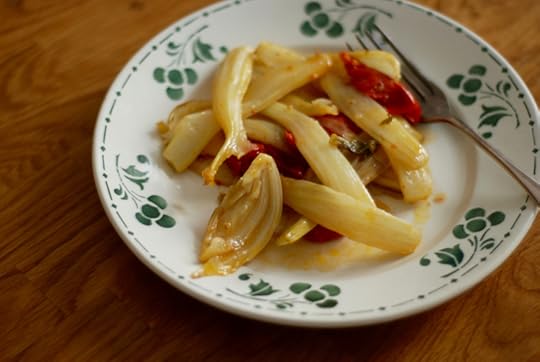
Besides dipping my toe into the murky, mysterious world of sourdough in the spring, mostly following this recipe, and becoming obsessed with roasting fennel and tomatoes together (cut one bulb of fennel into wedges, halve a handful of cherry tomatoes and combine in one roasting pan, then sprinkle with salt and drizzle with olive oil before roasting at 400F/200C for about 35 minutes - or longer - until tender and delicious), I did very little cooking of note. In fact, I'm still trying to figure out how to get a better system in place for our dinners that leaves me more time to do other things, like cooking in bulk in advance or meal planning or whatever. Very boring stuff, but apparently this is life as a nearly-middle-aged working mother. What a sexy beast adulthood can be!
This catches us all the way up to today, which just happens to be the eleventh anniversary of this blog. Happy birthday to it! At this point, I'm almost embarrassed to say how old the blog is and celebrating feels a bit out of place after not having even written a word here in nearly three months, but so be it. Eleven! The Wednesday Chef would be a middle schooler by now.
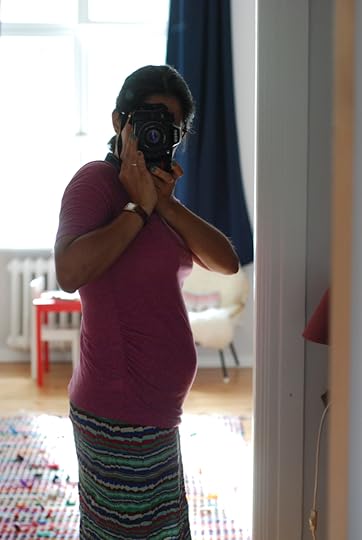
The truth is, if we're going to talk about celebrating, I've got something much better than a blog birthday to celebrate and that is that we're having another baby! It's a little boy due in late January and after a rough first four months, it's all starting to get very real and exciting around here. Hugo is over the moon to finally get the baby brother he's been longing for and we can't wait to have another darling child in our arms to love. So, yes, this might also have contributed to my silence around here, but I hope you understand. Gestating is no picnic! I'm glad to finally be feeling better.
I'll be back with more on our writing workshop, the aforementioned lasagna, a little report on this cookbook, and this one, and of course a lot more on Classic German Baking, which just received its first review, from Publisher's Weekly, no less! See you very soon.
Save
May 31, 2016
The Cover of Classic German Baking
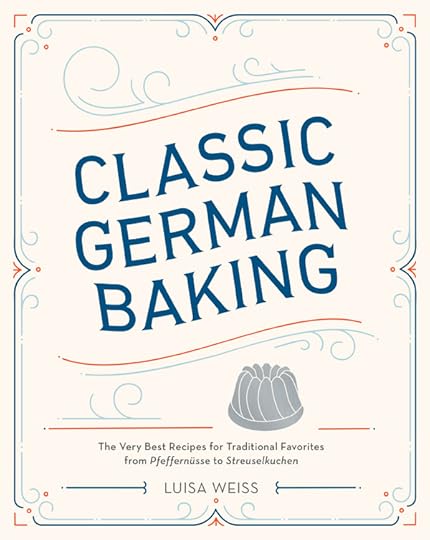
Without further ado, I present to you the cover of Classic German Baking! When you hold the book in your hands, you'll see and feel that the title is embossed and that the cute little cake pan is both embossed and in matte foil.
Getting to a final cover on any book can be a lengthy, dramatic process, but especially so with illustrated books like cookbooks. Still, I had a feeling that Ten Speed Press, my amazing publisher, wouldn't disappoint me and I was right. I knew pretty early on that I didn't want a photo on the cover of the book and I'm still so happy and grateful that the publisher, my editor and the designer were game to try some other options. To help the designer along, I sat down at my desk one morning and spent about seven hours doing Google Image searches for everything relating to German and Austrian baking, culinary history, historical lifestyle items and ingredient packaging. I collected the best and most beautiful - and relevant - image links into one very long email and sent it off (hoping that the designer wouldn't think I was the most annoying, meddlesome author ever). It was really important to me to call attention to the kind of visual information that Germans and Austrians take for granted but that feels so integral to the subject. For example, the fact that blue and white are emblematic of the German kitchen, the elegance of the script that adorns antique porcelain kitchen canisters, or the Bauhaus-ian colors and patterns on my beloved Bollhagen ceramics.
A few months later, a variation on the cover above appeared in my inbox. I felt that the illustrator had nailed the design almost on the first try. There were just a few small tweaks to be done before it was final, like getting everyone to agree on the right reddish orange color of the line elements, figuring out which illustration would be the best (the first go-around featured a slice of a fancy torte with a cup of tea, then it changed to a braided, sugar-spangled loaf that I was quite partial to, but we finally settled on the classic cake mold you see on the cover now), and ironing out the minutiae of the dots, whirls and lines. What I like best about the cover now is how well the design straddles the old-fashioned and the contemporary. It feels classic without being fusty and, my most fervent hope, will age well.
A final funny anecdote about the title and subtitle: Agreeing on the title was surprisingly painless. We played around with a few options, but both my editor and I separately - and simultaneously - came to the conclusion that for this book, the simplest, most declarative title would be best. We felt so accomplished! A title without any blood, sweat and tears - amazing. And then, dear reader, and then: the subtitle. I think that a minimum of 38 emails were exchanged in our attempts to nail the subtitle. Oh, the variations we tried! For example, just agreeing on "Pfeffern��sse to Streuselkuchen" - hoo! Which were the German recipe names that would resonate most with potential readers, which ones were most traditional and therefore wouldn't irritate or alienate a native speaker for whom the subtle regional differences could be quite glaring, and which ones, quite simply, were the easiest to pronounce? Then there was the construct of the sentence itself. It wasn't just me and my editor working on this one, no, the sales and marketing team had their brainstorming caps on, too, and so back and forth, back and forth it went until one day - not even so long ago! - we finally lit upon the formulation you see on the cover above.
It's always so funny, at the end of a long, involved project like this one, to look back and see which decisions ended up being the most difficult ones and which ones were surprisingly easy. I would have never guessed that the subtitle would be the source of so much angst. Still, all those back-and-forths were worth it to get a cover, title, and subtitle that all feel just right. What do you think? I so hope you like it.
You can pre-order the book on Amazon or Barnes & Noble or if you prefer supporting independent bookstores, at Powells or at Indiebound. And thank you so, so much for all your support and enthusiasm.
May 30, 2016
Amandeep's Butter Chicken
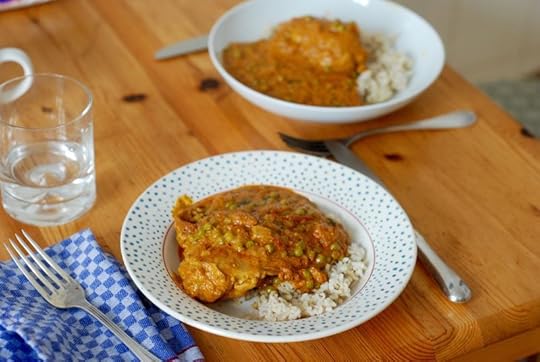
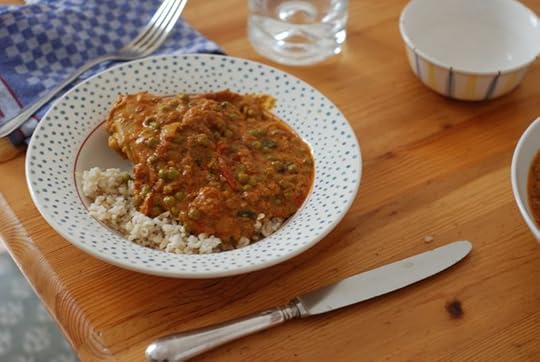
I may have been at this blogging thing for almost eleven (gulp gasp whuut) years, but I have still not figured out how to make gravy look good. In my defense, I swear I wouldn't inflict these photos on you if it wasn't for a good cause, namely your dinner. Maybe even your dinner tonight!
The recipe comes from a "young kitchen hand" at a restaurant in Melbourne called Attica. Amandeep - we are not told his last name, hrmm - made (makes?) it for staff meal. Well, if this is the restaurant's staff meal, I can only imagine the restaurant's actual offerings. It's totally luxurious - chicken bathed in a thick and creamy yogurt marinade, cooked in copious amounts of butter, then finished with heavy cream. Ground almonds thicken the creamy, nicely spiced sauce, which is almost better than the chicken itself. You will want to eat every last drop of it. Luckily, the recipe makes a lot of sauce. (I left out the chiles in the vain hopes that my child would join us in eating this delectable dish, but he was not having it, no sirree, though I will hardly complain about that, because it just meant more butter chicken for me and his father. Next time, ooh, next time, I cannot wait to use the chiles and really let this baby rip.)
The only (other) change I made to the recipe, which really is absolutely perfect as is, was to add frozen peas at the end so that I wouldn't have to also make a vegetable for dinner. Yes, I am lazy! I am also a broken record. Forgive me. (Eleven years, people.)
And with that I leave you to your shopping lists and Memorial Day cookouts. But tomorrow, the official cover of Classic German Baking awaits you! See you then.
Amandeep's Butter Chicken
Adapted from the NY Times
Serves 4
1 �� cups full-fat Greek yogurt
2 tablespoons lemon juice
1 �� tablespoons ground turmeric
2 tablespoons garam masala
2 tablespoons ground cumin
3 pounds chicken thighs, on the bone
�� pound unsalted butter
4 teaspoons neutral oil, like vegetable or canola oil
2 medium-size yellow onions, peeled and diced
4 cloves garlic, peeled and minced
3 tablespoons fresh ginger, peeled and grated or finely diced
1 tablespoon cumin seeds
1 cinnamon stick
2 medium-size tomatoes, diced
2 red chiles, like Anaheim, or 1 jalape��o pepper, seeded and diced
Kosher salt to taste
��� cup chicken stock, low-sodium or homemade
1 �� cups cream
1 �� teaspoons tomato paste
3 tablespoons ground almonds, or finely chopped almonds
�� bunch cilantro leaves, stems removed
1. Whisk together the yogurt, lemon juice, turmeric, garam masala and cumin in a large bowl. Put the chicken in, and coat with the marinade. Cover, and refrigerate (for up to a day).
2. In a large pan over medium heat, melt the butter in the oil until it starts to foam. Add the onions, and cook, stirring frequently, until translucent. Add the garlic, ginger and cumin seeds, and cook until the onions start to brown.
3. Add the cinnamon stick, tomatoes, chiles and salt, and cook until the chiles are soft, about 10 minutes.
4. Add the chicken and marinade to the pan, and cook for 5 minutes, then add the chicken stock. Bring the mixture to a boil, then lower the heat and simmer, uncovered, for approximately 30 minutes.
5. Stir in the cream and tomato paste, and simmer until the chicken is cooked through, approximately 10 to 15 minutes.
6. Add the almonds, cook for an additional 5 minutes and remove from the heat. Garnish with the cilantro leaves.


