John A. Heldt's Blog, page 13
March 15, 2019
A meet-and-greet for March
Experts advising authors rarely stray from the message. If you want to sell books in a highly competitive marketplace, they say, you have to get out there and interact. You have to meet and greet. Engage.
It's not bad advice. Even in a world where millions of books are sold through online retailers like Amazon.com, there is no substitute for face-to-face marketing. So on Saturday, March 23, I will do just that.
Along with fifty-nine other authors from southern Nevada, I will participate in the Henderson Libraries Local Author Showcase. The sixth annual event, at the Paseo Verde Library, begins at 10 a.m.
I plan to bring copies of my first six novels to the event, which is sponsored by the National Endowment for the Arts and the Nevada Arts Council. I encourage readers in the area to drop by and say hello.
In meantime, I hope to finish the first draft of my current work in progress. Caitlin's Song, the fourth novel in the five-book Carson Chronicles series, is still set for a summer release.
It's not bad advice. Even in a world where millions of books are sold through online retailers like Amazon.com, there is no substitute for face-to-face marketing. So on Saturday, March 23, I will do just that.
Along with fifty-nine other authors from southern Nevada, I will participate in the Henderson Libraries Local Author Showcase. The sixth annual event, at the Paseo Verde Library, begins at 10 a.m.
I plan to bring copies of my first six novels to the event, which is sponsored by the National Endowment for the Arts and the Nevada Arts Council. I encourage readers in the area to drop by and say hello.
In meantime, I hope to finish the first draft of my current work in progress. Caitlin's Song, the fourth novel in the five-book Carson Chronicles series, is still set for a summer release.


February 1, 2019
Finding inspiration in music
Writers are notoriously quirky creatures. James Joyce, I recently read, liked to write while lying on his stomach. Lewis Carroll preferred to scribe in purple ink. Agatha Christie fueled her inspiration with apples. Dan Brown reportedly cures writer's block by hanging upside down.
I don't do any of those things. When I turn thoughts into words, I sit in bed or a chair, stare at my laptop, and type. As a writer and an editor, I am as conventional as they come.
No so as a book plotter. When I lay the foundation for a work of historical fiction, I seek inspiration in movies, television, and especially music. Before writing a single word, I immerse myself in a historical era by listening to that era's music. I create an iTunes playlist that is as representative of the time as people who lived through it.
I have done so since the start. When planning The Mine , Mercer Street , Hannah's Moon , and Indian Paintbrush , my World War II books, I listened to a lot of Glenn Miller, Tommy Dorsey, and Big Band music. When plotting The Journey , set during the 1979-80 school year, I dug out the tunes I listened to in high school. When preparing The Mirror and Class of '59 , I downloaded the Beatles, Buddy Holly, Elvis, and enough Motown to fill an American Top 40 program.
In January, I did more of the same. I added Chubby Checker, Sam Cooke, and the Shirelles to my vast music library and upgraded my Beach Boys and Four Seasons holdings. Using old Billboard charts as a guide, I created a virtual jukebox that would have been right at home in Boulder, Colorado, in 1962, the setting of my next novel.
I admit that building this playlist was a lot of fun. Some of the best American popular music -- including tunes immortalized in movies like American Graffiti and Animal House -- came out of the early 1960s. So did the some of the best dances and most memorable, if sometimes cringeworthy, traditions, fads, and fashions.
I hope to draw on least a little of that cultural heritage in creating the fourth Carson Chronicles book, tentatively set for an August release. Until then, I will turn the volume up and listen to some of the finest music from yesteryear. Quirky or not, it's a habit worth keeping.
I don't do any of those things. When I turn thoughts into words, I sit in bed or a chair, stare at my laptop, and type. As a writer and an editor, I am as conventional as they come.
No so as a book plotter. When I lay the foundation for a work of historical fiction, I seek inspiration in movies, television, and especially music. Before writing a single word, I immerse myself in a historical era by listening to that era's music. I create an iTunes playlist that is as representative of the time as people who lived through it.
I have done so since the start. When planning The Mine , Mercer Street , Hannah's Moon , and Indian Paintbrush , my World War II books, I listened to a lot of Glenn Miller, Tommy Dorsey, and Big Band music. When plotting The Journey , set during the 1979-80 school year, I dug out the tunes I listened to in high school. When preparing The Mirror and Class of '59 , I downloaded the Beatles, Buddy Holly, Elvis, and enough Motown to fill an American Top 40 program.
In January, I did more of the same. I added Chubby Checker, Sam Cooke, and the Shirelles to my vast music library and upgraded my Beach Boys and Four Seasons holdings. Using old Billboard charts as a guide, I created a virtual jukebox that would have been right at home in Boulder, Colorado, in 1962, the setting of my next novel.
I admit that building this playlist was a lot of fun. Some of the best American popular music -- including tunes immortalized in movies like American Graffiti and Animal House -- came out of the early 1960s. So did the some of the best dances and most memorable, if sometimes cringeworthy, traditions, fads, and fashions.
I hope to draw on least a little of that cultural heritage in creating the fourth Carson Chronicles book, tentatively set for an August release. Until then, I will turn the volume up and listen to some of the finest music from yesteryear. Quirky or not, it's a habit worth keeping.
January 4, 2019
Book trivia for the new year
Like a lot of people, I am a fan of trivia. I find it difficult to skip a book, article, or web site filled with interesting, if otherwise unimportant, details and facts. There is something particularly appealing about information that is intended to be read but not necessarily remembered.
So it was with considerable interest that I recently read one blogger's annual reading roundup. Among other things, the reviewer listed the shortest book she had read in 2018 and the longest. The longest, I am happy to say, was The Memory Tree .
TMT, as I sometimes call it, is my longest book too. At 140,000 words, it is slightly longer than River Rising (139K) and Indian Paintbrush (128K) and nearly double the length of The Journey (77K), my shortest work. For those keeping count, 140,000 words is about 650 print pages or more than half a million keystrokes on a MacBook Air.
As a writer, I am usually too busy to notice or dwell on such statistics. When one attempts to sell books in a competitive marketplace, one tends to focus more on sales, borrows, and subscribers. Not so this week. Instead of running the numbers in anticipation of tax season, I took a more imaginative look at my thirteen novels and learned a few things. Some might make fodder for a round of trivia.
Among other things, I learned, or perhaps rediscovered, that I like putting twins in my stories. In addition to Ginny and Katie Smith, the protagonists of The Mirror , there are Cody and Caitlin of the Carson Chronicles series, Edith and Lucy Green of The Show , and Kurt and Karl Schmidt of Mercer Street . Even Mike Hayes, a major character in The Mirror , is a twin who lost his brother as a child.
I also like employing many points of view, though this was not always the case. In The Journey , only two characters, Shelly Preston and her older self, Michelle Richardson, provide their insights. In Indian Paintbrush , readers hear directly from ten different characters -- the original Carson family and three significant others from the past.
Among the characters with their own chapters, thirty-one are male (including repeats) and forty-two female. The youngest are the Carson twins, age 17. The oldest is Katherine Kobayashi Saito, who is eighty years old in The Show . Seven are journalists, six are teachers, five are librarians, and more than a dozen are high school or college students. Two male characters, including Ron Rasmussen, a Navy ensign in Hannah's Moon , are active or retired military.
Readers who like romantic and family themes may appreciate that there are ten engagements (three for Grace Vandenberg Smith alone) in my novels, eight marriages, and several pregnancies. Two toddlers, Hannah Rasmussen and Lizzy Wagner, get star billing in Hannah's Moon and Mercer Street . Joel Smith evolves from a two-year-old boy to a 43-year-old grandfather in the Northwest Passage series.
Not all of my characters are fictional. Some are very real people cast in fictional roles. Albert Einstein and Eleanor Roosevelt appear in Mercer Street , while Marilyn Monroe ( Class of '59 ), Mark Twain ( River Rising ), Bob Hope, Orson Welles, and Rita Hayworth ( Indian Paintbrush ) interact with a few of my protagonists in later books.
California is by far my most popular setting. Eight books are set, at least partially, in the Golden State, followed by five in Washington and four in Oregon. At least one chapter is set in thirty-two other states, the District of Columbia, France, and Mexico. One book, The Mirror , is set entirely within one state -- Washington. Three books -- September Sky , Hannah's Moon , and The Memory Tree -- feature chapters set at sea.
On occasion, I am asked how long it takes produce a book. The answer varies with the work. I needed nearly ten months to research, write, and revise Mercer Street , but only three months to create The Show .
I intend to take most of 2019 creating the fourth book in the Carson Chronicles series. Research for the novel, set in Boulder, Colorado, in the autumn of 1962, is already under way.
So it was with considerable interest that I recently read one blogger's annual reading roundup. Among other things, the reviewer listed the shortest book she had read in 2018 and the longest. The longest, I am happy to say, was The Memory Tree .
TMT, as I sometimes call it, is my longest book too. At 140,000 words, it is slightly longer than River Rising (139K) and Indian Paintbrush (128K) and nearly double the length of The Journey (77K), my shortest work. For those keeping count, 140,000 words is about 650 print pages or more than half a million keystrokes on a MacBook Air.
As a writer, I am usually too busy to notice or dwell on such statistics. When one attempts to sell books in a competitive marketplace, one tends to focus more on sales, borrows, and subscribers. Not so this week. Instead of running the numbers in anticipation of tax season, I took a more imaginative look at my thirteen novels and learned a few things. Some might make fodder for a round of trivia.
Among other things, I learned, or perhaps rediscovered, that I like putting twins in my stories. In addition to Ginny and Katie Smith, the protagonists of The Mirror , there are Cody and Caitlin of the Carson Chronicles series, Edith and Lucy Green of The Show , and Kurt and Karl Schmidt of Mercer Street . Even Mike Hayes, a major character in The Mirror , is a twin who lost his brother as a child.
I also like employing many points of view, though this was not always the case. In The Journey , only two characters, Shelly Preston and her older self, Michelle Richardson, provide their insights. In Indian Paintbrush , readers hear directly from ten different characters -- the original Carson family and three significant others from the past.
Among the characters with their own chapters, thirty-one are male (including repeats) and forty-two female. The youngest are the Carson twins, age 17. The oldest is Katherine Kobayashi Saito, who is eighty years old in The Show . Seven are journalists, six are teachers, five are librarians, and more than a dozen are high school or college students. Two male characters, including Ron Rasmussen, a Navy ensign in Hannah's Moon , are active or retired military.
Readers who like romantic and family themes may appreciate that there are ten engagements (three for Grace Vandenberg Smith alone) in my novels, eight marriages, and several pregnancies. Two toddlers, Hannah Rasmussen and Lizzy Wagner, get star billing in Hannah's Moon and Mercer Street . Joel Smith evolves from a two-year-old boy to a 43-year-old grandfather in the Northwest Passage series.
Not all of my characters are fictional. Some are very real people cast in fictional roles. Albert Einstein and Eleanor Roosevelt appear in Mercer Street , while Marilyn Monroe ( Class of '59 ), Mark Twain ( River Rising ), Bob Hope, Orson Welles, and Rita Hayworth ( Indian Paintbrush ) interact with a few of my protagonists in later books.
California is by far my most popular setting. Eight books are set, at least partially, in the Golden State, followed by five in Washington and four in Oregon. At least one chapter is set in thirty-two other states, the District of Columbia, France, and Mexico. One book, The Mirror , is set entirely within one state -- Washington. Three books -- September Sky , Hannah's Moon , and The Memory Tree -- feature chapters set at sea.
On occasion, I am asked how long it takes produce a book. The answer varies with the work. I needed nearly ten months to research, write, and revise Mercer Street , but only three months to create The Show .
I intend to take most of 2019 creating the fourth book in the Carson Chronicles series. Research for the novel, set in Boulder, Colorado, in the autumn of 1962, is already under way.
December 30, 2018
The blessings of getting older
I remember the morning of my twelfth birthday like it happened yesterday. After delivering the Seattle Times between four thirty and six, when the biting Western Washington cold was at its worst, I raced into my kitchen, where breakfast and — more important — an unopened box of cereal awaited. I did so not because I was particularly hungry but rather because I wanted to fetch the prize inside the box before my siblings awoke from their Sunday slumber and beat me to it.
Those of us who grew up in the 1960s and 1970s may recall that boxes of cereal were no small things back in the day. Manufacturers often put prizes inside the boxes and 45-rpm records on the boxes themselves. Box tops were as valuable as currency, thirty-day offers as good as gold. Breakfast wasn't just a meal back then. It was an opportunity.
So I opened the box that morning, retrieved a forgettable plastic trinket, and had what may have been my first Eureka moment. Rather than celebrate my good fortune, I lamented the fact that an era — my pleasantly simple and carefree childhood — was coming to an end.
I realized that while it was perfectly acceptable for sixth-grade boys to get excited about prizes in cereal boxes, it was not so for teenagers. I was mindful, even then, of the looming specter of junior high. Within months, I would turn my attention from childish things to music and movies and clothes -- and girls. Though the prospect was troubling at first, it was also exciting. Very exciting. The future was out there.
That is the way of life. Most of us spend our years anticipating the next great thing. A driver's license. High school. College. Careers. Marriage. Children. Birthdays like 16, 18, 21, and even 30 call to us like mischievous sirens. As we proceed toward these milestone dates, we think only about what we are gaining and not about what we are losing.
Most of us, after all, do not regret leaving childhood or young adulthood — until, of course, we are no longer children or young adults. Then we want time to slow down. We pine for the times when everything was new, opportunities were limitless, and the future was a vast, empty canvas, waiting to be filled with vivid, memorable images.
And so it is with me. At age 57, I am wistful about days gone by but also hopeful about what the coming years may bring. As I should be.
If I have learned nothing about observing the long and productive lives of others, from notables like the late President Bush to my own grandfather, who remained active for almost all of his ninety-nine years, it's that birthdays are guide posts and not stop signs. They are tools that allow us to measure, evaluate, and sometimes recalibrate.
As an author, a new grandfather, and a restless spirit, I remain as optimistic about possibilities as I was on the morning of December 30, 1973. There are more books to write, places to see, and things to do.
The prize, for me, is still in the box.
Those of us who grew up in the 1960s and 1970s may recall that boxes of cereal were no small things back in the day. Manufacturers often put prizes inside the boxes and 45-rpm records on the boxes themselves. Box tops were as valuable as currency, thirty-day offers as good as gold. Breakfast wasn't just a meal back then. It was an opportunity.
So I opened the box that morning, retrieved a forgettable plastic trinket, and had what may have been my first Eureka moment. Rather than celebrate my good fortune, I lamented the fact that an era — my pleasantly simple and carefree childhood — was coming to an end.
I realized that while it was perfectly acceptable for sixth-grade boys to get excited about prizes in cereal boxes, it was not so for teenagers. I was mindful, even then, of the looming specter of junior high. Within months, I would turn my attention from childish things to music and movies and clothes -- and girls. Though the prospect was troubling at first, it was also exciting. Very exciting. The future was out there.
That is the way of life. Most of us spend our years anticipating the next great thing. A driver's license. High school. College. Careers. Marriage. Children. Birthdays like 16, 18, 21, and even 30 call to us like mischievous sirens. As we proceed toward these milestone dates, we think only about what we are gaining and not about what we are losing.
Most of us, after all, do not regret leaving childhood or young adulthood — until, of course, we are no longer children or young adults. Then we want time to slow down. We pine for the times when everything was new, opportunities were limitless, and the future was a vast, empty canvas, waiting to be filled with vivid, memorable images.
And so it is with me. At age 57, I am wistful about days gone by but also hopeful about what the coming years may bring. As I should be.
If I have learned nothing about observing the long and productive lives of others, from notables like the late President Bush to my own grandfather, who remained active for almost all of his ninety-nine years, it's that birthdays are guide posts and not stop signs. They are tools that allow us to measure, evaluate, and sometimes recalibrate.
As an author, a new grandfather, and a restless spirit, I remain as optimistic about possibilities as I was on the morning of December 30, 1973. There are more books to write, places to see, and things to do.
The prize, for me, is still in the box.
December 13, 2018
A December to remember
I admit that December is not my most productive month. Like a lot of people, I typically set aside nonessential tasks and save them for January, February, or later — after the holidays and a seemingly endless parade of distractions have passed. Not so this December.
 Inspired in part by a positive early reception for
Indian Paintbrush
, released November 26, I decided to move ahead with plans to convert the book to audio and incorporate it into a three-volume boxed set. I had previously set aside both projects for early March.
Inspired in part by a positive early reception for
Indian Paintbrush
, released November 26, I decided to move ahead with plans to convert the book to audio and incorporate it into a three-volume boxed set. I had previously set aside both projects for early March.
Allyson Voller, who produced the The Mirror and Hannah's Moon for Audible, will again narrate one of my books. The veteran voice artist will begin work on Indian Paintbrush sometime in January.
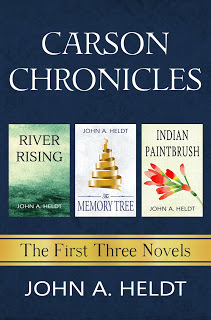
And thanks to the speedy work of cover designer Laura Wright LaRoche, who has created or modified all but one of my covers, I was able to release the boxed set this week. Featuring River Rising , The Memory Tree , and Indian Paintbrush , the Carson Chronicles collection is my largest compilation of Kindle books to date.
I also intend to publish at least two more print books before the year is out. The Journey should be available in paperback in the next few days and The Show sometime before Christmas. I plan to convert the entire Northwest Passage series to print before starting my next novel.
As the holidays approach, I give many thanks to those who have supported my work over the years. These people include countless contributors, readers, reviewers, and bloggers who have helped to bring my books to the attention of the reading public. Some, such as the fine folks at the Reading Cafe, who posted a lengthy review and interview on their popular site today, have been particularly helpful. A special giveaway on the Canadian blog continues through December 18.
I wish a Merry Christmas and a Happy New Year to all!
 Inspired in part by a positive early reception for
Indian Paintbrush
, released November 26, I decided to move ahead with plans to convert the book to audio and incorporate it into a three-volume boxed set. I had previously set aside both projects for early March.
Inspired in part by a positive early reception for
Indian Paintbrush
, released November 26, I decided to move ahead with plans to convert the book to audio and incorporate it into a three-volume boxed set. I had previously set aside both projects for early March.Allyson Voller, who produced the The Mirror and Hannah's Moon for Audible, will again narrate one of my books. The veteran voice artist will begin work on Indian Paintbrush sometime in January.
And thanks to the speedy work of cover designer Laura Wright LaRoche, who has created or modified all but one of my covers, I was able to release the boxed set this week. Featuring River Rising , The Memory Tree , and Indian Paintbrush , the Carson Chronicles collection is my largest compilation of Kindle books to date.
I also intend to publish at least two more print books before the year is out. The Journey should be available in paperback in the next few days and The Show sometime before Christmas. I plan to convert the entire Northwest Passage series to print before starting my next novel.
As the holidays approach, I give many thanks to those who have supported my work over the years. These people include countless contributors, readers, reviewers, and bloggers who have helped to bring my books to the attention of the reading public. Some, such as the fine folks at the Reading Cafe, who posted a lengthy review and interview on their popular site today, have been particularly helpful. A special giveaway on the Canadian blog continues through December 18.
I wish a Merry Christmas and a Happy New Year to all!
November 28, 2018
The Carsons in transition
As I pondered possible titles for this book, the third in the
Carson Chronicles
series, I occasionally considered something flippant and direct. I considered The Siblings Take a Break or The Carsons Take a Breather, because, in many respects, the protagonists do just that.
 After fleeing floods, fires, wars, corrupt officials, and vengeful gunmen in 1889 and 1918, the five time travelers, ages 18 to 28, attempt to refresh and regroup in the 1940s. They seek safety and peace of mind in their native Arizona as they continue their search for their missing parents -- college professors they have followed through time for a year.
I went with another title, one with more symbolic meaning, because I quickly realized that the siblings' respite was not a respite at all. In Indian Paintbrush , the Carsons, young adults from the modern day, merely find new trouble. They encounter challenges and change amid the deceptive calm of America's home front during the Second World War.
For Natalie and Caitlin, the two sisters, change means starting romances with wartime airmen. For Cody, the youngest brother, it means fighting injustice at a camp for Japanese Americans. For Adam and Greg, the oldest brothers, it means building new families with wives from other eras. For all, it means burying old ghosts, accepting new realities, and confronting mortal threats in a time when possessing knowledge of the future could get you killed.
Though Indian Paintbrush is much different than most of my earlier works, it offers many of the same trappings. There are car chases, celebrity encounters, coming-of-age moments, and a thorough examination of a day gone by. Fans of The Mine , Mercer Street , and Hannah's Moon , my other World War II books, may appreciate the glimpse of the war at home. Readers who enjoyed The Mine , The Show , and The Mirror may like watching a vibrant family grow.
Set mostly in Phoenix, Arizona, in the winter and spring of 1944, Indian Paintbrush continues a sweeping historical saga that began with River Rising and The Memory Tree and will continue with at least two more books. The novel, available in Kindle format, goes on sale today at Amazon.com and its twelve international sites.
 After fleeing floods, fires, wars, corrupt officials, and vengeful gunmen in 1889 and 1918, the five time travelers, ages 18 to 28, attempt to refresh and regroup in the 1940s. They seek safety and peace of mind in their native Arizona as they continue their search for their missing parents -- college professors they have followed through time for a year.
I went with another title, one with more symbolic meaning, because I quickly realized that the siblings' respite was not a respite at all. In Indian Paintbrush , the Carsons, young adults from the modern day, merely find new trouble. They encounter challenges and change amid the deceptive calm of America's home front during the Second World War.
For Natalie and Caitlin, the two sisters, change means starting romances with wartime airmen. For Cody, the youngest brother, it means fighting injustice at a camp for Japanese Americans. For Adam and Greg, the oldest brothers, it means building new families with wives from other eras. For all, it means burying old ghosts, accepting new realities, and confronting mortal threats in a time when possessing knowledge of the future could get you killed.
Though Indian Paintbrush is much different than most of my earlier works, it offers many of the same trappings. There are car chases, celebrity encounters, coming-of-age moments, and a thorough examination of a day gone by. Fans of The Mine , Mercer Street , and Hannah's Moon , my other World War II books, may appreciate the glimpse of the war at home. Readers who enjoyed The Mine , The Show , and The Mirror may like watching a vibrant family grow.
Set mostly in Phoenix, Arizona, in the winter and spring of 1944, Indian Paintbrush continues a sweeping historical saga that began with River Rising and The Memory Tree and will continue with at least two more books. The novel, available in Kindle format, goes on sale today at Amazon.com and its twelve international sites.
November 25, 2018
The road from Kindle to print
Since February 2012, when I released
The Mine
, my first novel, I have put the cart before the horse. While many authors, traditionally published and independent alike, publish books in print before migrating to audio, ebooks, and other media, I did just the opposite.
 After publishing
The Mine
as a Kindle book nearly seven years ago, I let it sit for more than a year before converting it to audio through Podium Publishing. I let another four years pass before bundling the novel with
The Journey
and
The Show
in the
Northwest Passage
boxed set.
After publishing
The Mine
as a Kindle book nearly seven years ago, I let it sit for more than a year before converting it to audio through Podium Publishing. I let another four years pass before bundling the novel with
The Journey
and
The Show
in the
Northwest Passage
boxed set.
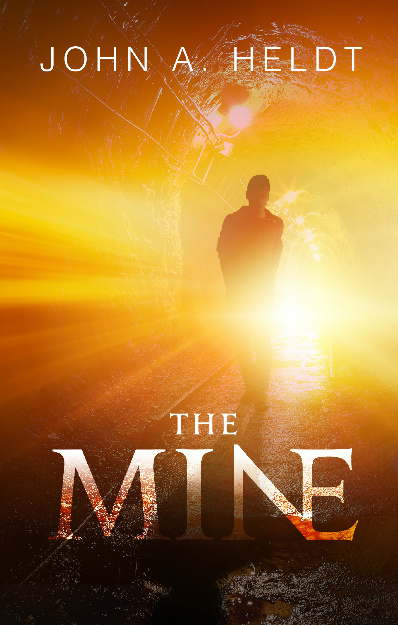
It wasn't until this month that I decided to do what I probably should have done in the beginning. At the urging of two readers, I converted my oldest manuscript into my newest print book. The Mine is now something I can put on a shelf.
I hope to follow through with the remaining four books of the Northwest Passage series this winter and then convert the American Journey and Carson Chronicles novels to print (and audio) by the middle of 2020.
In the meantime, I will still put the cart before the horse and release new Kindle books as fast as time and circumstances allow. The next one, Indian Paintbrush, comes out later this week.
 After publishing
The Mine
as a Kindle book nearly seven years ago, I let it sit for more than a year before converting it to audio through Podium Publishing. I let another four years pass before bundling the novel with
The Journey
and
The Show
in the
Northwest Passage
boxed set.
After publishing
The Mine
as a Kindle book nearly seven years ago, I let it sit for more than a year before converting it to audio through Podium Publishing. I let another four years pass before bundling the novel with
The Journey
and
The Show
in the
Northwest Passage
boxed set.It wasn't until this month that I decided to do what I probably should have done in the beginning. At the urging of two readers, I converted my oldest manuscript into my newest print book. The Mine is now something I can put on a shelf.
I hope to follow through with the remaining four books of the Northwest Passage series this winter and then convert the American Journey and Carson Chronicles novels to print (and audio) by the middle of 2020.
In the meantime, I will still put the cart before the horse and release new Kindle books as fast as time and circumstances allow. The next one, Indian Paintbrush, comes out later this week.
November 11, 2018
Remembering the Great War
In one of the most poignant scenes in
The Show
, featured on BookBub today, time traveler Grace Vandenberg tells a distant relative that World War I will end on "the eleventh hour of the eleventh day of the eleventh month." Spoken in October 1918, in the waning weeks of what was then the most destructive war in history, the words comfort a woman who is worried about the fate of a brother fighting in France.
Today marks the hundredth anniversary of that day, when the Allies and Germany put down their guns, cooled their rhetoric, and began the arduous and unpleasant work of settling a conflict that claimed more than nine million combatants and seven million civilians.
Those who know the history of Veterans Day, observed in the United States tomorrow, know that the important holiday resulted from the armistice signed in a private railroad car on November 11, 1918. Though the name and even the observation date have changed over the years, the significance of the holiday has not.
I chose to set two novels -- The Show and The Memory Tree -- in the autumn of 1918 because I consider that time period both fascinating and relevant to what's going on today. Despite a hundred years of armed confrontations, including the biggest one of all, nations still struggle to resolve their differences in peaceful ways.
(Today's date also has some personal relevance. A beloved uncle, my father's oldest brother and a veteran himself, was born on November 11, 1918, and given the middle name Peace.)
Though my contributions cover the home front in 1918, many other works focus on the war itself. I highly recommend Jeff Shaara's To the Last Man and Joseph Persico's Eleventh Month, Eleventh Day, Eleventh Hour , in addition to several classics on the war. One of the best lists of these works can be found at Barnes & Noble.
Those more interested in Hollywood portrayals of what contemporaries called the War to End All Wars may want to consider the list of iMDB's ten best World War I movies. I would recommend numbers 1, 4, 5, and 10 on that list and throw in Flyboys for good measure.
A photo essay of the western front, published last May in The Atlantic , offers readers a glimpse of the war zone today. I encourage anyone interested in this period of history to check these resources out.
Today marks the hundredth anniversary of that day, when the Allies and Germany put down their guns, cooled their rhetoric, and began the arduous and unpleasant work of settling a conflict that claimed more than nine million combatants and seven million civilians.
Those who know the history of Veterans Day, observed in the United States tomorrow, know that the important holiday resulted from the armistice signed in a private railroad car on November 11, 1918. Though the name and even the observation date have changed over the years, the significance of the holiday has not.
I chose to set two novels -- The Show and The Memory Tree -- in the autumn of 1918 because I consider that time period both fascinating and relevant to what's going on today. Despite a hundred years of armed confrontations, including the biggest one of all, nations still struggle to resolve their differences in peaceful ways.
(Today's date also has some personal relevance. A beloved uncle, my father's oldest brother and a veteran himself, was born on November 11, 1918, and given the middle name Peace.)
Though my contributions cover the home front in 1918, many other works focus on the war itself. I highly recommend Jeff Shaara's To the Last Man and Joseph Persico's Eleventh Month, Eleventh Day, Eleventh Hour , in addition to several classics on the war. One of the best lists of these works can be found at Barnes & Noble.
Those more interested in Hollywood portrayals of what contemporaries called the War to End All Wars may want to consider the list of iMDB's ten best World War I movies. I would recommend numbers 1, 4, 5, and 10 on that list and throw in Flyboys for good measure.
A photo essay of the western front, published last May in The Atlantic , offers readers a glimpse of the war zone today. I encourage anyone interested in this period of history to check these resources out.
October 19, 2018
Review: Beneath a Scarlet Sky
For as long as I can remember, I have been drawn to books about World War II. From Gordon Prange's
At Dawn We Slept
, which I read in college, to Laura Hillenbrand's
Unbroken
, which I listened to last year, I have consumed more than thirty works on the war.
So I did not need much motivation this month to add another title to that list. I needed even less to listen to a celebrated novel that covers several aspects of the war from an unlikely perspective.
In Beneath a Scarlet Sky , author Mark Sullivan has created an all-encompassing work that is reminiscent of All the Light We Cannot See and The Nightingale . Based on a true story of a forgotten hero, it is a gripping novel that raises the bar in its genre.
Set mostly in northern Italy, the book details the trials and triumphs of Pino Lella, who, as a teenager from 1943 to 1945, fought the occupying Germans -- first as a mountaineer guiding Jews over the Alps to Switzerland, then as a spy posing as the driver for a Nazi general, and finally as a reluctant Italian partisan.
Despite a violent political environment that pits Italians against each other, Pino maintains his ties with family and friends and finds love with the beautiful Anna, a woman six years his senior.
Though the novel is large at 524 pages, it never feels large. In Beneath a Scarlet Sky , Sullivan tells a riveting tale that holds the reader's attention from the start. Will Damron, narrator of the nearly 18-hour audiobook, does justice to the author's epic work.
I would recommend the book to anyone who loves World War II history, suspense, and stories of courage. Rating: 5/5.
So I did not need much motivation this month to add another title to that list. I needed even less to listen to a celebrated novel that covers several aspects of the war from an unlikely perspective.
In Beneath a Scarlet Sky , author Mark Sullivan has created an all-encompassing work that is reminiscent of All the Light We Cannot See and The Nightingale . Based on a true story of a forgotten hero, it is a gripping novel that raises the bar in its genre.
Set mostly in northern Italy, the book details the trials and triumphs of Pino Lella, who, as a teenager from 1943 to 1945, fought the occupying Germans -- first as a mountaineer guiding Jews over the Alps to Switzerland, then as a spy posing as the driver for a Nazi general, and finally as a reluctant Italian partisan.
Despite a violent political environment that pits Italians against each other, Pino maintains his ties with family and friends and finds love with the beautiful Anna, a woman six years his senior.
Though the novel is large at 524 pages, it never feels large. In Beneath a Scarlet Sky , Sullivan tells a riveting tale that holds the reader's attention from the start. Will Damron, narrator of the nearly 18-hour audiobook, does justice to the author's epic work.
I would recommend the book to anyone who loves World War II history, suspense, and stories of courage. Rating: 5/5.
September 3, 2018
Another day, another draft
"Writing the last page of the first draft," author Nicholas Sparks once observed, "is the most enjoyable moment in writing. It’s one of the most enjoyable moments in life, period."
I must agree. As one who has experienced that moment more than a dozen times in the past seven years, I can honestly say it's pretty special. Finishing even the roughest of rough drafts is an achievement worth celebrating — if only for a while.
Early Saturday morning I finished the last page of my latest first draft. Indian Paintbrush, the third novel of the five-book Carson Chronicles series, is now, officially, a full-size work in progress.
Set mostly in Phoenix, Arizona, in the winter and spring of 1944, the story follows the five time-traveling Carson siblings as they build new families and chase their parents through the twentieth century.
Much attention is given to sisters Natalie and Caitlin, their relationships with wartime aviators, and brother Cody's experiences as a regular visitor to a Japanese American internment camp.
I hope to publish the 88-chapter book, the sequel to River Rising and The Memory Tree , by the middle of December.
I must agree. As one who has experienced that moment more than a dozen times in the past seven years, I can honestly say it's pretty special. Finishing even the roughest of rough drafts is an achievement worth celebrating — if only for a while.
Early Saturday morning I finished the last page of my latest first draft. Indian Paintbrush, the third novel of the five-book Carson Chronicles series, is now, officially, a full-size work in progress.
Set mostly in Phoenix, Arizona, in the winter and spring of 1944, the story follows the five time-traveling Carson siblings as they build new families and chase their parents through the twentieth century.
Much attention is given to sisters Natalie and Caitlin, their relationships with wartime aviators, and brother Cody's experiences as a regular visitor to a Japanese American internment camp.
I hope to publish the 88-chapter book, the sequel to River Rising and The Memory Tree , by the middle of December.