John A. Heldt's Blog, page 12
August 12, 2019
Returning to the capital
To be sure, Washington, D.C. has changed in the last 35 years.
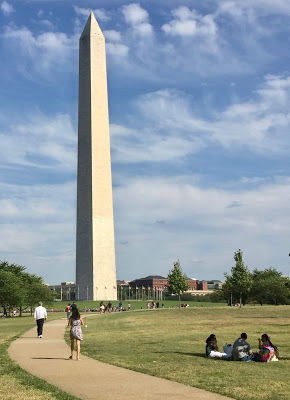 Construction fences and security barriers surround everything from the White House and the Washington Monument to various parks and tourist attractions. The traffic, both vehicular and pedestrian, is heavier, and the subway system is more advanced. New museums and monuments, like the ones honoring Holocaust victims, African Americans, and veterans of the Korean War and World War II, have joined more established ones.
Even so, the nation's capital, in its 230th year, is much as I left it in the summer of 1984, when I interned for a congressman and got a close look at a city and a government at work.
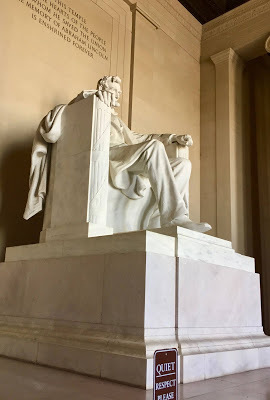 I visited the area this past weekend while seeing my son, Matthew, who graduated from the U.S. Marine Corps Officer Candidates School, and youngest daughter, Amy, who recently started a job in the city.
I found both the District of Columbia and northern Virginia, places brimming with reminders of our historical and cultural heritage, as interesting as I had the first time I saw them. Both will serve as backdrops for the first book in my next series. Set in late 1864 and early 1865, in the closing months of the Civil War, the novel will follow a modern American family as it begins a journey through time.
Though the series will have much in common with the Carson Chronicles series, it will differ in many ways. It will feature more history, adventure, and science fiction and follow a family that, for the most part, sticks together. Like my first three series, it will consist of five interrelated novels and feature multiple points of view.
I hope to start the new series in March. In the meantime, I will bring the Carson saga, a three-year labor of love, to a conclusion. I recently finished the first draft of Camp Lake. The fifth and final book of the Carson Chronicles series is still set for a January release.
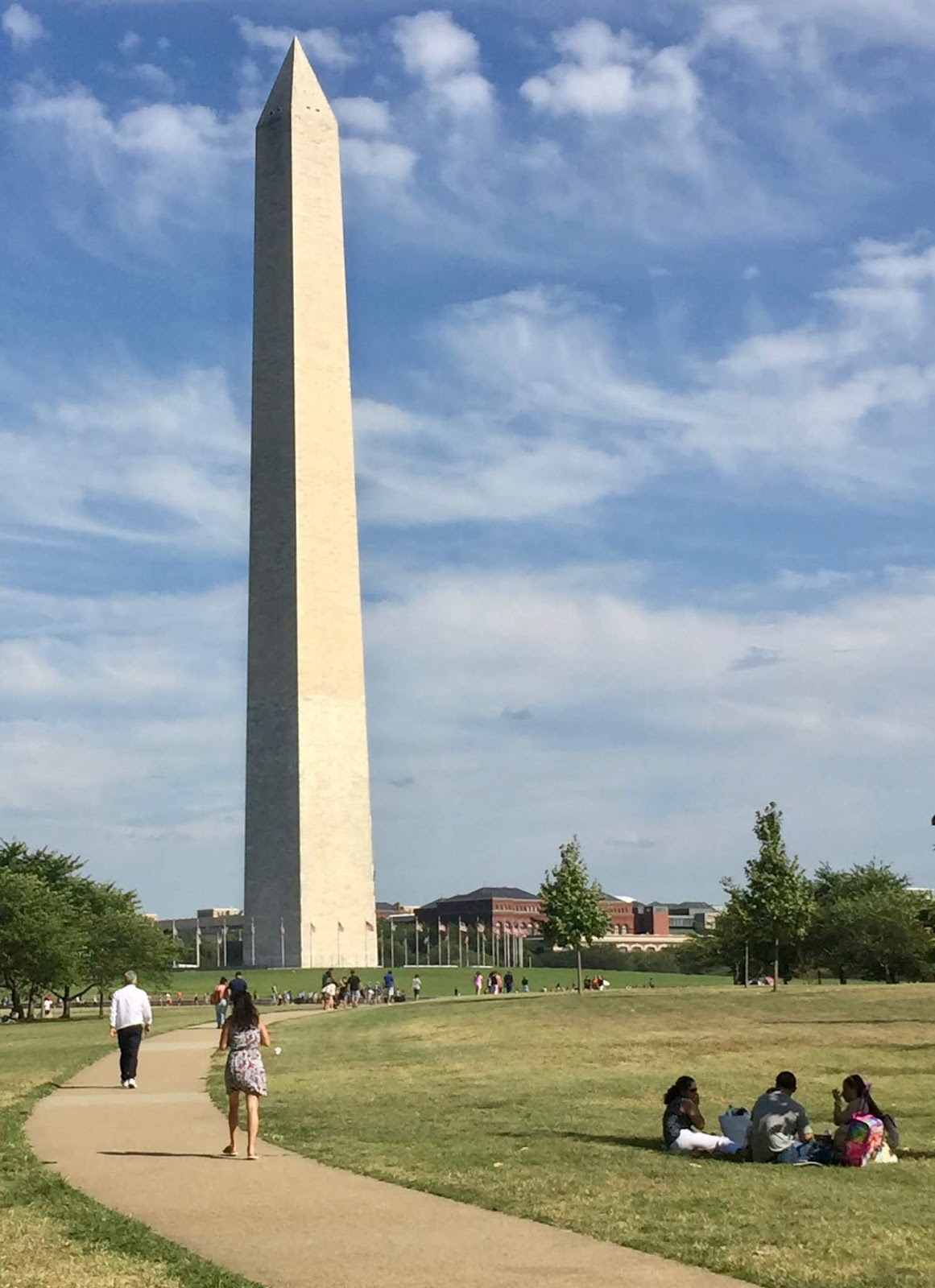 Construction fences and security barriers surround everything from the White House and the Washington Monument to various parks and tourist attractions. The traffic, both vehicular and pedestrian, is heavier, and the subway system is more advanced. New museums and monuments, like the ones honoring Holocaust victims, African Americans, and veterans of the Korean War and World War II, have joined more established ones.
 Even so, the nation's capital, in its 230th year, is much as I left it in the summer of 1984, when I interned for a congressman and got a close look at a city and a government at work.
 I visited the area this past weekend while seeing my son, Matthew, who graduated from the U.S. Marine Corps Officer Candidates School, and youngest daughter, Amy, who recently started a job in the city.
 I found both the District of Columbia and northern Virginia, places brimming with reminders of our historical and cultural heritage, as interesting as I had the first time I saw them. Both will serve as backdrops for the first book in my next series. Set in late 1864 and early 1865, in the closing months of the Civil War, the novel will follow a modern American family as it begins a journey through time.
Though the series will have much in common with the Carson Chronicles series, it will differ in many ways. It will feature more history, adventure, and science fiction and follow a family that, for the most part, sticks together. Like my first three series, it will consist of five interrelated novels and feature multiple points of view.
I hope to start the new series in March. In the meantime, I will bring the Carson saga, a three-year labor of love, to a conclusion. I recently finished the first draft of Camp Lake. The fifth and final book of the Carson Chronicles series is still set for a January release.


July 11, 2019
A visit to Molar City
I am what you might call an American homebody. Though I have visited forty-seven states and plan to visit the remaining three -- Alaska, Hawaii, and North Dakota, I know where you live -- I have ventured beyond the borders of the United States only nine times.
 On all but one occasion, I made a short trip, a day trip, to Victoria or Vancouver, Canada. My exotic world travels were limited to two cities in British Columbia.
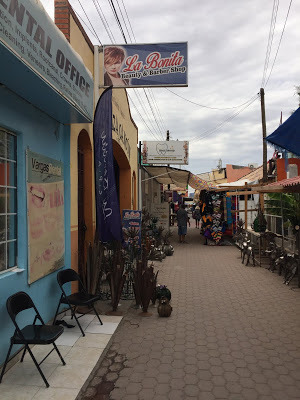
This week, I branched out and added a country. I visited Los Algodones, Mexico, a postage stamp of a town tucked in the far northeast corner of Baja California. Located about ten miles west of Yuma, Arizona, just south of Interstate 8, it is one of the most accessible and interesting communities on the U.S.-Mexico border.
Known as Molar City, Algodones has one of the highest concentration of dentists in the world. More than 350 dentists operate in the town of 5,000 people, as well as numerous plastic surgeons, optometrists, and pharmacies. One can not walk ten feet in the city's downtown without seeing a sign, a building, or a person touting dental services.
Though I passed up a molar extraction and root canal on this visit, I did not pass up many of the shops, restaurants, and cantinas. When in Rome, you order authentic beef tacos and milkshake-sized margaritas and give the street vendors' shiny wares a second look.
I hope to return to this little corner of Mexico sometime when the temperature is below 110 degrees and the city, which had largely shut down for the summer, puts on its winter face. Until then, there are more places to visit and bucket-list items to check.
 On all but one occasion, I made a short trip, a day trip, to Victoria or Vancouver, Canada. My exotic world travels were limited to two cities in British Columbia.
This week, I branched out and added a country. I visited Los Algodones, Mexico, a postage stamp of a town tucked in the far northeast corner of Baja California. Located about ten miles west of Yuma, Arizona, just south of Interstate 8, it is one of the most accessible and interesting communities on the U.S.-Mexico border.
Known as Molar City, Algodones has one of the highest concentration of dentists in the world. More than 350 dentists operate in the town of 5,000 people, as well as numerous plastic surgeons, optometrists, and pharmacies. One can not walk ten feet in the city's downtown without seeing a sign, a building, or a person touting dental services.
Though I passed up a molar extraction and root canal on this visit, I did not pass up many of the shops, restaurants, and cantinas. When in Rome, you order authentic beef tacos and milkshake-sized margaritas and give the street vendors' shiny wares a second look.
I hope to return to this little corner of Mexico sometime when the temperature is below 110 degrees and the city, which had largely shut down for the summer, puts on its winter face. Until then, there are more places to visit and bucket-list items to check.
July 1, 2019
Remembering a summer
The best summer of my life began on a winter day. Like countless other Oregon college students in 1983, I spent much of that winter looking for interesting summer employment, and on February 11, I found it. That's when I received an offer to work at a boys camp in Maine.
Never mind that I had never traveled east of the Rockies or that the pay barely covered my travel expenses. I wanted to head east in search of adventure. So I did. In June, I boarded a jet (another first), flew to New England, and began an experience I would never forget.
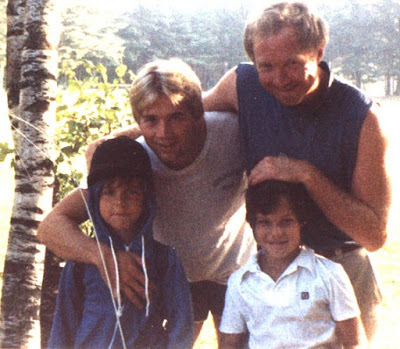
The camp itself was a sight. With more than fifty buildings, including cabins, offices, a dining hall, activity shacks, and a pavilion for movies and stage performances, it was a small city. During the summer, campers and counselors could participate in dozens of activities, including archery, karate, scuba, sailing, waterskiing, and golf.
Then there was the staff. More than eighty counselors, representing 28 states and six countries, including Australia, South Africa, and Britain, came to Maine that summer. So did several hundred boys, ages 6 to 16, who came from some of the wealthiest families in the Northeast.
Most counselors were specialists who led activities and programs. Others, like me, were general counselors who escorted groups of campers from station to station. All of us managed cabins, with one to three other counselors, during the course of the eight-week session.
Though 36 years have passed since that summer, when I participated in several campouts, operated a sailboat for the first time, and finally got up on skis, it remains fresh in my mind. I made friends from around the world, tried a host of new activities, and mentored boys who looked up to their counselors like the big brothers many did not have.
Many of our efforts went unrewarded. Others did not. Later that year, just before Christmas, a New York woman, the mother of a deeply introverted nine-year-old boy, thanked me for teaching her son to ride a bike. Her letter remains one of my most treasured possessions.
This summer I will honor that summer by putting countless memories to thousands of words. I hope to finish a first draft of Camp Lake, set mostly in Maine in 1983, by Labor Day. The fifth and final novel in the Carson Chronicles series is still set for a January 2020 release.
Never mind that I had never traveled east of the Rockies or that the pay barely covered my travel expenses. I wanted to head east in search of adventure. So I did. In June, I boarded a jet (another first), flew to New England, and began an experience I would never forget.
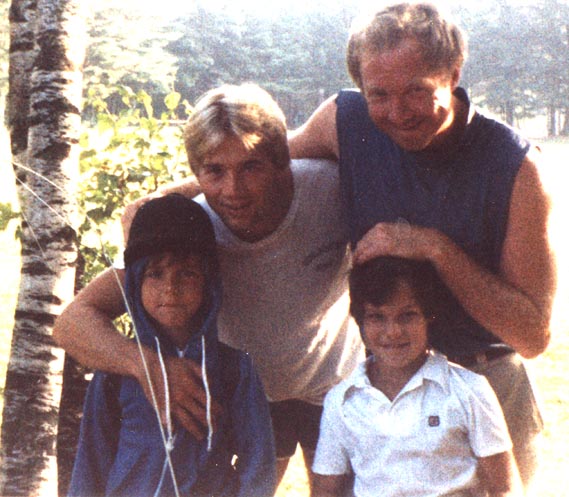
The camp itself was a sight. With more than fifty buildings, including cabins, offices, a dining hall, activity shacks, and a pavilion for movies and stage performances, it was a small city. During the summer, campers and counselors could participate in dozens of activities, including archery, karate, scuba, sailing, waterskiing, and golf.
Then there was the staff. More than eighty counselors, representing 28 states and six countries, including Australia, South Africa, and Britain, came to Maine that summer. So did several hundred boys, ages 6 to 16, who came from some of the wealthiest families in the Northeast.
Most counselors were specialists who led activities and programs. Others, like me, were general counselors who escorted groups of campers from station to station. All of us managed cabins, with one to three other counselors, during the course of the eight-week session.
Though 36 years have passed since that summer, when I participated in several campouts, operated a sailboat for the first time, and finally got up on skis, it remains fresh in my mind. I made friends from around the world, tried a host of new activities, and mentored boys who looked up to their counselors like the big brothers many did not have.
Many of our efforts went unrewarded. Others did not. Later that year, just before Christmas, a New York woman, the mother of a deeply introverted nine-year-old boy, thanked me for teaching her son to ride a bike. Her letter remains one of my most treasured possessions.
This summer I will honor that summer by putting countless memories to thousands of words. I hope to finish a first draft of Camp Lake, set mostly in Maine in 1983, by Labor Day. The fifth and final novel in the Carson Chronicles series is still set for a January 2020 release.
June 1, 2019
Visiting the venues, Part II
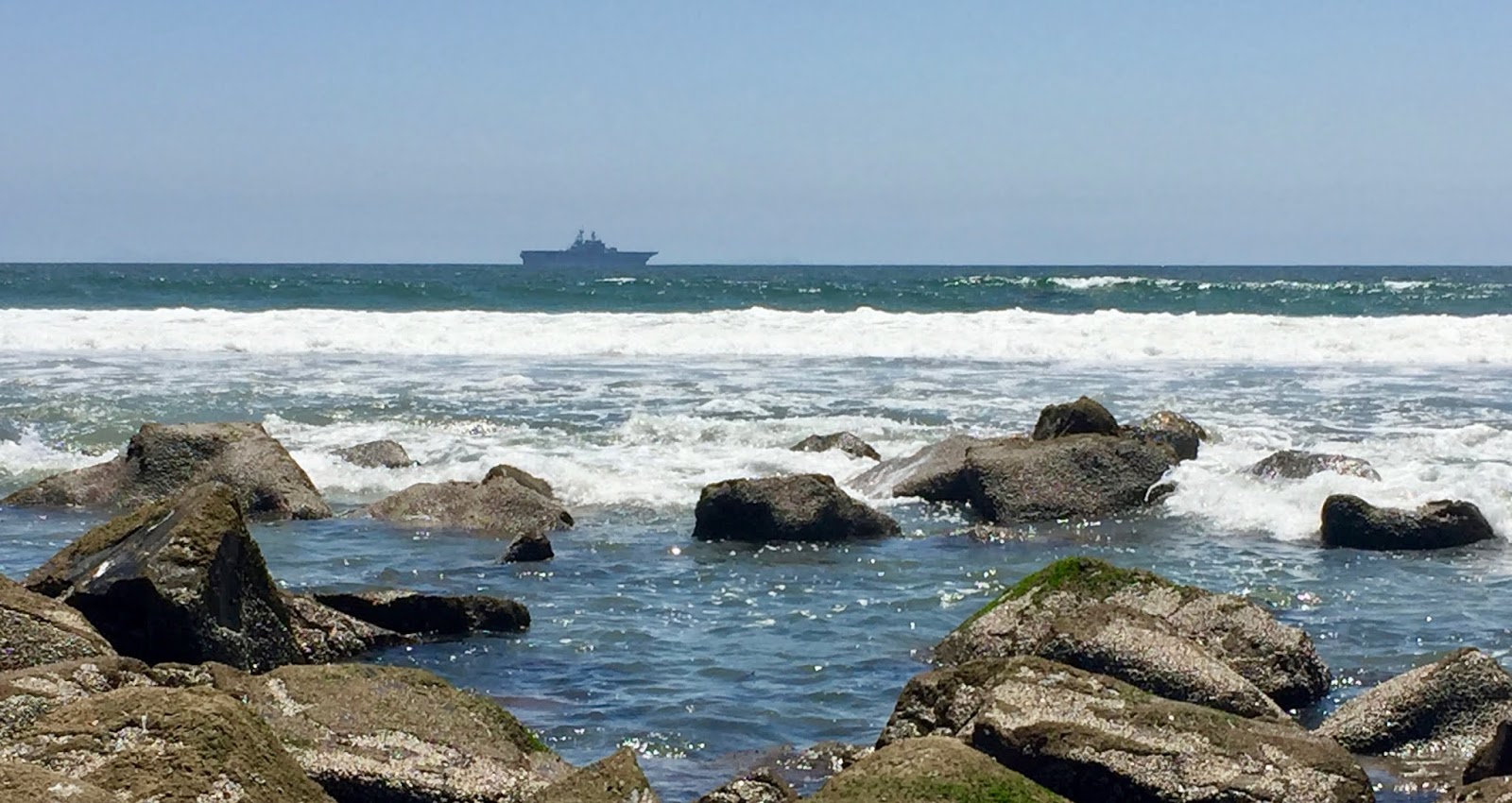
 The steady sea breeze was as brisk as I thought it would be. The scents of the blooming trees and flowers were just as enticing. And though Coronado, California, has changed a lot in the past several decades -- like Boulder, Colorado, which I visited earlier in May -- it is still very much the spirited Navy town I described in
Caitlin's Song
.
The steady sea breeze was as brisk as I thought it would be. The scents of the blooming trees and flowers were just as enticing. And though Coronado, California, has changed a lot in the past several decades -- like Boulder, Colorado, which I visited earlier in May -- it is still very much the spirited Navy town I described in
Caitlin's Song
.I had a chance to visit the city this week, along with several other venues in the greater San Diego area, and enjoyed every minute. When you see places in person that previously existed only in movies, literature, and your mind, you develop a special appreciation for them. Such was the case with San Diego County, a major setting in not only Caitlin's Song but also The Memory Tree .
I found Coronado particularly inviting. Situated at the north end of Coronado Island on the west side of San Diego Bay, it is a trendy city with a small-town feel -- one where Craftsman houses with porches and white picket fences outnumber coffee shops and souvenir stores. Only the cultivated rose gardens, fence-climbing honeysuckle, and jacaranda trees, with their rough trunks and indigo flowers, could compete.
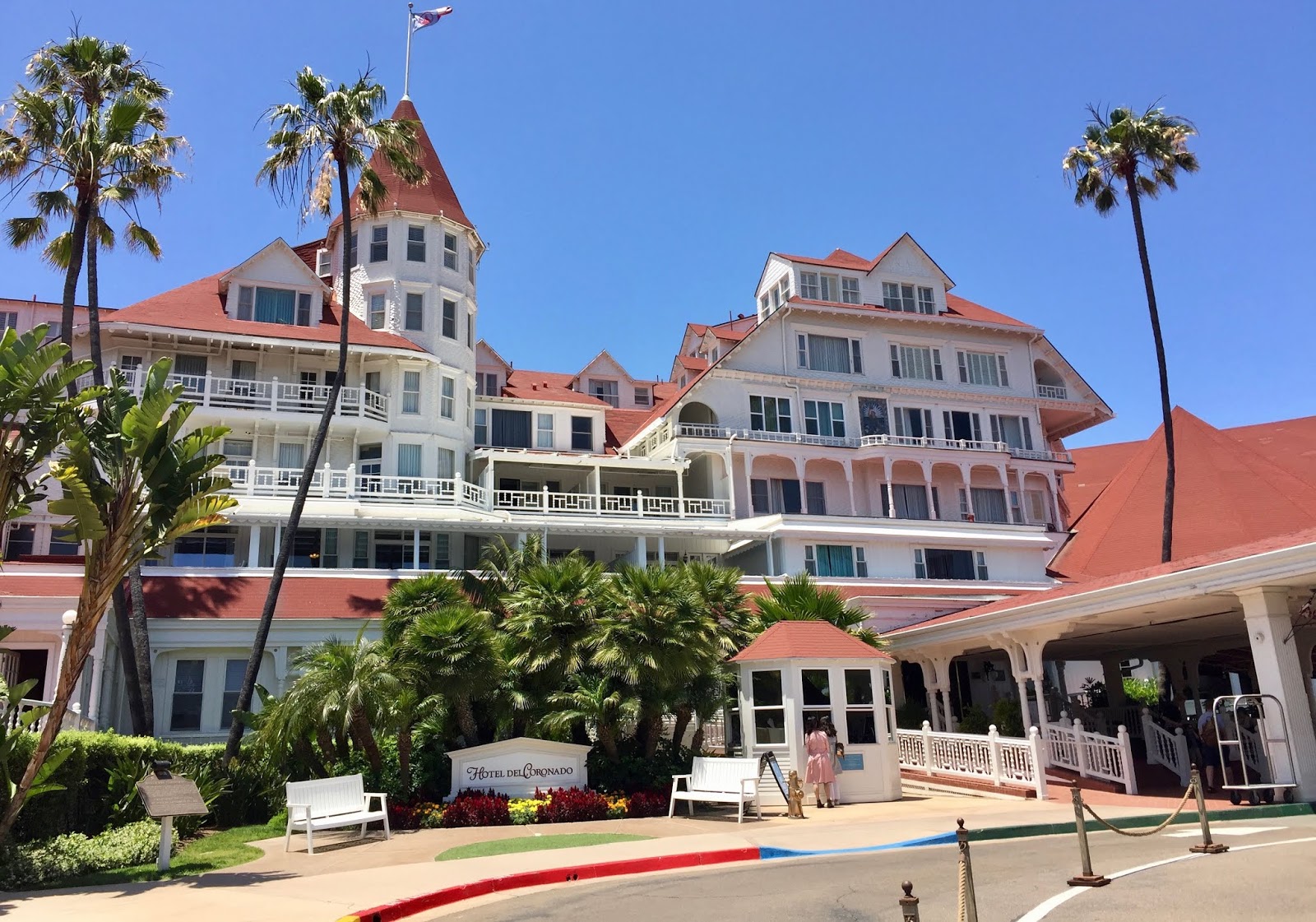
Nothing in Coronado, of course, commands attention like the opulent Hotel del Coronado, a Victorian fusion of turrets, balconies, and courtyards that has greeted visitors since 1887 and was the inspiration for a hotel featured in both novels. Located between the bay and the ocean, it is as impressive today as it was a century ago.
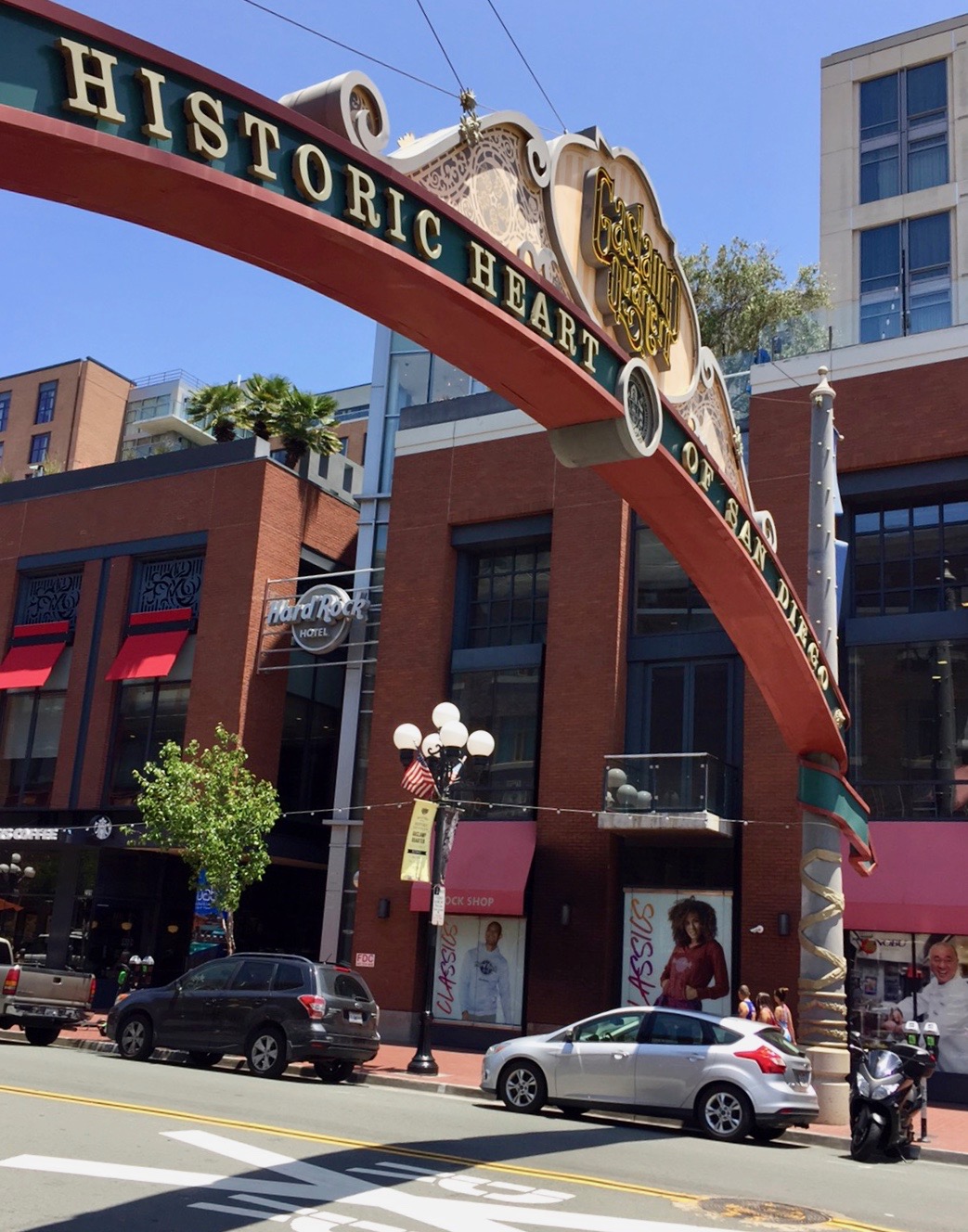 I did not see as much of San Diego, the more prominent city with the famous zoo and aquatic park, but I did see enough to appreciate its charm. The Gaslamp Quarter, a sixteen-block nod to the late 1800s, is alone worth a trip to California's second-largest city, as are its storied waterfront and countless museums.
I don't know if I'll set another book in this appealing corner of the United States, but I do know I'll be back. Coronado and San Diego, like many of the settings in my novels, are worth a second look.
(Photos from top: Jacaranda tree in bloom, Hotel del Coronado, Navy ship off Coronado beach, entrance to the Gaslamp Quarter.)
May 22, 2019
May update and giveaway
Since getting the bright idea a few months ago to convert my Kindle collection to print, I have made steady progress toward doing just that. Today, I am happy to report that all but the newest of my fourteen novels is now available in paperback form on Amazon.com. I hope to add
Caitlin's Song
, released this month, to that list by the end of July.
 Thanks to the speedy work of narrator Allyson Voller, all but one of the books are also available in audio format. The most recent,
Indian Paintbrush
, my third project with the talented voice artist, went live on Audible.com and Amazon last week.
Thanks to the speedy work of narrator Allyson Voller, all but one of the books are also available in audio format. The most recent,
Indian Paintbrush
, my third project with the talented voice artist, went live on Audible.com and Amazon last week.
Voller also narrated The Mirror and Hannah's Moon . To promote the audiobooks and show my appreciation to longtime readers and listeners, I am giving away ten audiobooks. All of my Audible titles, with the exception of The Mine , which was produced by Podium Publishing in 2014, are available.
Interested listeners can request an Audible book through May 25 by emailing me at jaheldt@excite.com.
 Thanks to the speedy work of narrator Allyson Voller, all but one of the books are also available in audio format. The most recent,
Indian Paintbrush
, my third project with the talented voice artist, went live on Audible.com and Amazon last week.
Thanks to the speedy work of narrator Allyson Voller, all but one of the books are also available in audio format. The most recent,
Indian Paintbrush
, my third project with the talented voice artist, went live on Audible.com and Amazon last week.Voller also narrated The Mirror and Hannah's Moon . To promote the audiobooks and show my appreciation to longtime readers and listeners, I am giving away ten audiobooks. All of my Audible titles, with the exception of The Mine , which was produced by Podium Publishing in 2014, are available.
Interested listeners can request an Audible book through May 25 by emailing me at jaheldt@excite.com.
May 7, 2019
Returning to a golden age
At least once a year, I am asked, usually by someone who suspects I'm a time traveler, which era I would most like to visit if I could. Each time, I give the same answer: the late 1950s to early 1960s, when cars were classic, rock and roll was young, and rockets were all the rage.
 For that reason, I enjoyed writing
The Mirror
, set in Seattle in 1964, and
Class of '59
, set in Los Angeles in 1959. I loved exploring an era that has been immortalized many times in movies, TV, and literature.
For that reason, I enjoyed writing
The Mirror
, set in Seattle in 1964, and
Class of '59
, set in Los Angeles in 1959. I loved exploring an era that has been immortalized many times in movies, TV, and literature.
In Caitlin's Song , I take one more bite of the apple. In the fourth and pivotal book of the Carson Chronicles series, I send most of my time travelers to 1962, the year of John F. Kennedy, John Glenn, the Seattle World's Fair, and the Cuban Missile Crisis.
Like The Mirror , Class of '59 , and even The Journey , set in 1979 and 1980, Caitlin's Song is coming-of-age story about young adults in a simpler, more innocent time. Unlike the earlier books, it is also a murder mystery — one with a critical time component and circumstances that put one Carson in mortal danger and test the resolve of two others.
As the title suggests, Caitlin's Song is Caitlin's book. From the first chapter to the last, the youngest member of the original Carson clan is the center of attention and the focus of the plot. Now nineteen and a college freshman in Boulder, Colorado, Caitlin seeks peace and fulfillment just months after losing her first love in a plane crash.
Others also shine. Cody Carson, Caitlin's twin and alter ego, finds romance, freedom, and fun as a student, while his parents, Tim and Caroline, assume their most important roles to date. The professors, separated from their children for more than two years, try desperately to prevent a horrific crime that will alter their family forever.
Set in 1941, 1972, and 1983, as well as 1962, Caitlin's Song follows the Carsons from coast to coast as they search for answers, opportunity, and each other in some of America's most memorable eras. The novel, available in Kindle format, goes on sale today at Amazon.com.
 For that reason, I enjoyed writing
The Mirror
, set in Seattle in 1964, and
Class of '59
, set in Los Angeles in 1959. I loved exploring an era that has been immortalized many times in movies, TV, and literature.
For that reason, I enjoyed writing
The Mirror
, set in Seattle in 1964, and
Class of '59
, set in Los Angeles in 1959. I loved exploring an era that has been immortalized many times in movies, TV, and literature.In Caitlin's Song , I take one more bite of the apple. In the fourth and pivotal book of the Carson Chronicles series, I send most of my time travelers to 1962, the year of John F. Kennedy, John Glenn, the Seattle World's Fair, and the Cuban Missile Crisis.
Like The Mirror , Class of '59 , and even The Journey , set in 1979 and 1980, Caitlin's Song is coming-of-age story about young adults in a simpler, more innocent time. Unlike the earlier books, it is also a murder mystery — one with a critical time component and circumstances that put one Carson in mortal danger and test the resolve of two others.
As the title suggests, Caitlin's Song is Caitlin's book. From the first chapter to the last, the youngest member of the original Carson clan is the center of attention and the focus of the plot. Now nineteen and a college freshman in Boulder, Colorado, Caitlin seeks peace and fulfillment just months after losing her first love in a plane crash.
Others also shine. Cody Carson, Caitlin's twin and alter ego, finds romance, freedom, and fun as a student, while his parents, Tim and Caroline, assume their most important roles to date. The professors, separated from their children for more than two years, try desperately to prevent a horrific crime that will alter their family forever.
Set in 1941, 1972, and 1983, as well as 1962, Caitlin's Song follows the Carsons from coast to coast as they search for answers, opportunity, and each other in some of America's most memorable eras. The novel, available in Kindle format, goes on sale today at Amazon.com.
May 5, 2019
Springtime in the Rockies
The first thing you need to know about Boulder, Colorado, is that it is prettier in person. From the University of Colorado to the quaint residential districts to the mountains that loom in the west, it is as pretty as a postcard and as inviting as a Rocky Mountain stream.
I visited the town this weekend because it is the primary setting for Caitlin's Song , the fourth novel in the Carson Chronicles series. As with Wallace, Idaho, in 2013; Galveston, Texas, in 2014; Princeton, New Jersey, in 2015; Evansville, Indiana, and Chattanooga, Tennessee, in 2016; Johnstown, Pennsylvania, in 2017; and Sedona, Arizona, in 2018, I wanted to get a firsthand look at a place I was writing about.
I'm glad I did. Nestled at the base of the Front Range on the edge of the Denver metro area, Boulder is a community that comes as advertised.
I visited CU first, of course. I suspected that the university would be alive on the Friday before spring commencement -- and it was. From the Norlin Quadrangle and the Hill to the University Memorial Center and a buffalo-shaped outdoor swimming pool, the sprawling 786-acre campus was a happening place.
Then there was the city itself. Like a lot of college towns, Boulder is cultural gem, complete with dozens of museums, libraries, parks, restaurants, and entertainment venues -- including more than a few aimed at the college crowd. It is even more appealing in the spring, when flowers and trees begin to bloom, hillsides turn green, and residents and tourists, particularly those in the historic Pearl Street walking mall, are at their festive best. If I learned anything about Boulder on my three-day visit, it was that this is a town that knows how to have fun. Even the municipal bus system, with routes called Hop, Skip, and Jump, projects community spirit.
For me, though, the highlight was visiting venues mentioned in Caitlin's Song , including the stone bridge at Varsity Lake, the student union ballroom, the quadrangles, Baseline Road, and Chautauqua Park, a green space in the shadow of the Flatirons and Flagstaff Mountain. Though these sites have changed since 1962, when the book is set, I could easily imagine what they were like almost sixty years ago.
Readers will have a similar opportunity this week. Caitlin's Song , my fourteenth novel, will be officially released on Tuesday.
I visited the town this weekend because it is the primary setting for Caitlin's Song , the fourth novel in the Carson Chronicles series. As with Wallace, Idaho, in 2013; Galveston, Texas, in 2014; Princeton, New Jersey, in 2015; Evansville, Indiana, and Chattanooga, Tennessee, in 2016; Johnstown, Pennsylvania, in 2017; and Sedona, Arizona, in 2018, I wanted to get a firsthand look at a place I was writing about.
I'm glad I did. Nestled at the base of the Front Range on the edge of the Denver metro area, Boulder is a community that comes as advertised.
I visited CU first, of course. I suspected that the university would be alive on the Friday before spring commencement -- and it was. From the Norlin Quadrangle and the Hill to the University Memorial Center and a buffalo-shaped outdoor swimming pool, the sprawling 786-acre campus was a happening place.
Then there was the city itself. Like a lot of college towns, Boulder is cultural gem, complete with dozens of museums, libraries, parks, restaurants, and entertainment venues -- including more than a few aimed at the college crowd. It is even more appealing in the spring, when flowers and trees begin to bloom, hillsides turn green, and residents and tourists, particularly those in the historic Pearl Street walking mall, are at their festive best. If I learned anything about Boulder on my three-day visit, it was that this is a town that knows how to have fun. Even the municipal bus system, with routes called Hop, Skip, and Jump, projects community spirit.
For me, though, the highlight was visiting venues mentioned in Caitlin's Song , including the stone bridge at Varsity Lake, the student union ballroom, the quadrangles, Baseline Road, and Chautauqua Park, a green space in the shadow of the Flatirons and Flagstaff Mountain. Though these sites have changed since 1962, when the book is set, I could easily imagine what they were like almost sixty years ago.
Readers will have a similar opportunity this week. Caitlin's Song , my fourteenth novel, will be officially released on Tuesday.
April 1, 2019
In defense of plain language
It is a question every writer faces at some point: Should I dazzle or communicate? Or, put another way, should I try to craft the perfect sentence or write the perfect story? In an ideal world, writers could do both every time, all the time. In the world of writer's block and rigid circumstances, they must sometimes make hard choices.
For years I have generally favored simple over complicated and substance over style. Driven by old habits formed in my newspaper days, when I was advised by editors to report events in language a layman could understand, I have erred on the side of clarity.
This approach, which some liken to the Hemingway style, certainly has its supporters. Mark Twain once quipped: “Don't use a five-dollar word when a fifty-cent word will do.” Stephen King says much the same today. In the fifth of his famous twenty rules for writers, he advises others not to obsess over perfect grammar. “Language," he says, "does not always have to wear a tie and lace-up shoes."
Hugh Howey, author of the bestselling WOOL series and the patron saint of self-published scribes, echoes this sentiment. He writes that "readers prefer the clear and concise delivery of an exciting story more than the flowery and sublime delivery of utter ennui."
I believe this is true not only with flowery language but also with things like jargon, slang, and acronyms. Even though I have not read a Tom Clancy book in more than a decade, I can still remember wading through terms like CINC-PAC, DDCI, and NORAD.
I take two steps to improve clarity in my books. The first is to explain unusual references at least once in the context they are made. The second is to run them past my beta readers, who have different backgrounds, life experiences, and areas of expertise.
If one reader does not understand a word or a phrase, I give the term a closer look. If two or more have an issue with the same item, I strike it from the text. I assume readers will be similarly perplexed.
It's not a perfect approach, but it is one that works for me. In the ongoing effort to entertain and inform, it helps me find a balance.
For years I have generally favored simple over complicated and substance over style. Driven by old habits formed in my newspaper days, when I was advised by editors to report events in language a layman could understand, I have erred on the side of clarity.
This approach, which some liken to the Hemingway style, certainly has its supporters. Mark Twain once quipped: “Don't use a five-dollar word when a fifty-cent word will do.” Stephen King says much the same today. In the fifth of his famous twenty rules for writers, he advises others not to obsess over perfect grammar. “Language," he says, "does not always have to wear a tie and lace-up shoes."
Hugh Howey, author of the bestselling WOOL series and the patron saint of self-published scribes, echoes this sentiment. He writes that "readers prefer the clear and concise delivery of an exciting story more than the flowery and sublime delivery of utter ennui."
I believe this is true not only with flowery language but also with things like jargon, slang, and acronyms. Even though I have not read a Tom Clancy book in more than a decade, I can still remember wading through terms like CINC-PAC, DDCI, and NORAD.
I take two steps to improve clarity in my books. The first is to explain unusual references at least once in the context they are made. The second is to run them past my beta readers, who have different backgrounds, life experiences, and areas of expertise.
If one reader does not understand a word or a phrase, I give the term a closer look. If two or more have an issue with the same item, I strike it from the text. I assume readers will be similarly perplexed.
It's not a perfect approach, but it is one that works for me. In the ongoing effort to entertain and inform, it helps me find a balance.
March 24, 2019
Review: TURN
As I have written at least a few times, I don't watch much television. Aside from news, sports, and an occasional movie, I simply don't find it worth the time. Every now and then, though, I make an exception to the rule and latch onto something like a sci-fi junkie binging on Star Wars films or a romance fan exhausting the Hallmark catalog.
This month, I took a turn at TURN . For three weeks, I watched all four seasons of the AMC series, currently available on Netflix, and immersed myself in the American Revolution. Based loosely on the exploits of the Culper Ring, an unlikely group of citizen spies based in Setauket, New York, TURN: Washington's Spies gives viewers an unvarnished look at colonial America from 1776 to 1781.
In the series, we see not only the cunning cabbage farmer Abraham Woodhull, the focus of the production, but also his childhood friends, such as the diligent Major Benjamin Tallmadge and the folksy smuggler Caleb Brewster. Women, including Woodhull's wife (Mary), his former fiancée and confidante (Anna Strong), Peggy Shippen Arnold, and her servant Abigail, play equally compelling roles.
I appreciated the series' even-handed approach. Though AMC gives us the nastiest villain I've seen in decades in Lt. Colonel John Simcoe, it provides sympathetic portrayals of other British officers, including John André and Edmund Hewlett, and nuanced treatments of George Washington, Benedict Arnold, Charles Lee, and other patriot leaders. It gives us far more gray than black and white.
Though TURN does take a few liberties with the historical record, it more than compensates with a realistic depiction of the times. Viewers can smell the smoke and carnage on the battlefield and the stench of a prisoner ship. They can see the fear on the faces of men as they shed their uniforms and step behind enemy lines.
I would recommend TURN to any fan of history and drama. As compelling television, it does not get better than this. Rating: 5/5.
This month, I took a turn at TURN . For three weeks, I watched all four seasons of the AMC series, currently available on Netflix, and immersed myself in the American Revolution. Based loosely on the exploits of the Culper Ring, an unlikely group of citizen spies based in Setauket, New York, TURN: Washington's Spies gives viewers an unvarnished look at colonial America from 1776 to 1781.
In the series, we see not only the cunning cabbage farmer Abraham Woodhull, the focus of the production, but also his childhood friends, such as the diligent Major Benjamin Tallmadge and the folksy smuggler Caleb Brewster. Women, including Woodhull's wife (Mary), his former fiancée and confidante (Anna Strong), Peggy Shippen Arnold, and her servant Abigail, play equally compelling roles.
I appreciated the series' even-handed approach. Though AMC gives us the nastiest villain I've seen in decades in Lt. Colonel John Simcoe, it provides sympathetic portrayals of other British officers, including John André and Edmund Hewlett, and nuanced treatments of George Washington, Benedict Arnold, Charles Lee, and other patriot leaders. It gives us far more gray than black and white.
Though TURN does take a few liberties with the historical record, it more than compensates with a realistic depiction of the times. Viewers can smell the smoke and carnage on the battlefield and the stench of a prisoner ship. They can see the fear on the faces of men as they shed their uniforms and step behind enemy lines.
I would recommend TURN to any fan of history and drama. As compelling television, it does not get better than this. Rating: 5/5.
March 23, 2019
A first draft for novel fourteen
I needed seven weeks and enough keystrokes to fulfill two NaNoWriMos, but I got it done. Hours before the vernal equinox, an occasional time-travel catalyst in the Carson Chronicles series, I finished the first draft of the fourth CC book and forwarded it to the first of ten beta readers. I intend to publish Caitlin's Song, set primarily in Boulder, Colorado, in 1962, by the middle of June.
 In the meantime, I hope to convert more Kindle-only books to audio and print. I sent the print edition of
Mercer Street
to Amazon today for final approval and plan to process at least one more American Journey book before returning to my current work in progress.
In the meantime, I hope to convert more Kindle-only books to audio and print. I sent the print edition of
Mercer Street
to Amazon today for final approval and plan to process at least one more American Journey book before returning to my current work in progress.
Seven of my fourteen novels, including the entire Northwest Passage series, are now in print. Twelve are available in audio format. Indian Paintbrush , narrated by Allyson Voller, is set for a spring release.
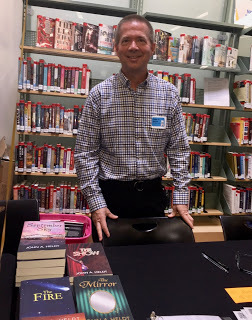
Fortuitously for me, I had the chance to discuss spring releases and older books today at the Sixth Annual Henderson Libraries Local Author Showcase. The extravaganza, which drew sixty authors and hundreds of book lovers from around southern Nevada, was a resounding success. I hope to do more such events in the future.
 In the meantime, I hope to convert more Kindle-only books to audio and print. I sent the print edition of
Mercer Street
to Amazon today for final approval and plan to process at least one more American Journey book before returning to my current work in progress.
In the meantime, I hope to convert more Kindle-only books to audio and print. I sent the print edition of
Mercer Street
to Amazon today for final approval and plan to process at least one more American Journey book before returning to my current work in progress.Seven of my fourteen novels, including the entire Northwest Passage series, are now in print. Twelve are available in audio format. Indian Paintbrush , narrated by Allyson Voller, is set for a spring release.
Fortuitously for me, I had the chance to discuss spring releases and older books today at the Sixth Annual Henderson Libraries Local Author Showcase. The extravaganza, which drew sixty authors and hundreds of book lovers from around southern Nevada, was a resounding success. I hope to do more such events in the future.