John A. Heldt's Blog, page 2
April 17, 2025
Building another bridge
The middle book in a series almost always gets lost in the shuffle. It is like the sixth floor of a ten-story building or the third leg in a mile relay. It is the Jan Brady of literature. When done right, though, it can do more than continue a series. It can serve as a vital bridge. It can connect elements of a saga in ways the first and last books cannot.
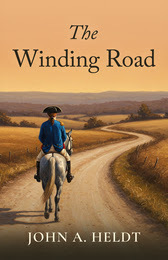 The Winding Road
is my latest bridge. Set in Pennsylvania, New Jersey, New York, and Connecticut from 1777 to 1779, it serves as the centerpiece of a family saga that began with
The Patriots
and will end with the third book in the Stone Shed trilogy.
The Winding Road
is my latest bridge. Set in Pennsylvania, New Jersey, New York, and Connecticut from 1777 to 1779, it serves as the centerpiece of a family saga that began with
The Patriots
and will end with the third book in the Stone Shed trilogy.
In the novel, Noah and Jake Maclean, time travelers from 2024, settle in the 1770s. The brothers commit to a time they have called home for sixteen months. They chart new courses during the thick of the American Revolution.
Noah, now 23, joins the cause. Driven by patriotism and a sense of duty, he enlists in the Continental Army as it retreats to Valley Forge. He brings modern weapons, medicines, and knowledge of the future. He takes tools he hopes will help him survive the rebellion and return to fiancée Abigail Ward, the lovely older daughter of Samuel Ward, a furniture maker who gave the brothers jobs and a home.
Jake, 16, stays behind. He helps Sam and his wife, Elizabeth, resettle in rural Gulph Mills after the British seize Philadelphia and drive patriots from their homes. As he does, he strengthens his relationship with Rachel Ward, Sam and Elizabeth's mischievous younger daughter.
Meanwhile, Douglas and Donna Maclean clean up a mess in 2024. The retirees try to convince police, reporters, and relatives that Noah and Jake vanished on a hike in Colorado. Unwilling to reveal their nephews' whereabouts or the existence of the time portal that sent them to the past, they carry out a ruse. They attempt to manage a crisis in the present while keeping track of the boys through the lens of history.
As in The Patriots , readers will get their fill of history. Noah will befriend George Washington, fight in the Battle of Monmouth, and work with Caleb Brewster, a member of the Culper spy ring. Jake and Rachel will have a run-in with Benedict Arnold and Peggy Shippen.
New figures will enter the series, including British General Henry Clinton; Jasper Jennings, an American cavalry officer; and British tracker Malachi Maine, a villain worthy of Silas Bain and Hans Weber, the bad boys of the Time Box and Second Chance series. Along with characters from the first book, they will propel a story that chronicles the deceptively quiet middle years of the American Revolution.
At 110 chapters and 140,600 words, The Winding Road is my longest book by chapters and second-longest by words, trailing only The Patriots . The Kindle edition goes on sale today at Amazon.com and its international marketplaces. I hope to publish the paperback in May.
 The Winding Road
is my latest bridge. Set in Pennsylvania, New Jersey, New York, and Connecticut from 1777 to 1779, it serves as the centerpiece of a family saga that began with
The Patriots
and will end with the third book in the Stone Shed trilogy.
The Winding Road
is my latest bridge. Set in Pennsylvania, New Jersey, New York, and Connecticut from 1777 to 1779, it serves as the centerpiece of a family saga that began with
The Patriots
and will end with the third book in the Stone Shed trilogy.In the novel, Noah and Jake Maclean, time travelers from 2024, settle in the 1770s. The brothers commit to a time they have called home for sixteen months. They chart new courses during the thick of the American Revolution.
Noah, now 23, joins the cause. Driven by patriotism and a sense of duty, he enlists in the Continental Army as it retreats to Valley Forge. He brings modern weapons, medicines, and knowledge of the future. He takes tools he hopes will help him survive the rebellion and return to fiancée Abigail Ward, the lovely older daughter of Samuel Ward, a furniture maker who gave the brothers jobs and a home.
Jake, 16, stays behind. He helps Sam and his wife, Elizabeth, resettle in rural Gulph Mills after the British seize Philadelphia and drive patriots from their homes. As he does, he strengthens his relationship with Rachel Ward, Sam and Elizabeth's mischievous younger daughter.
Meanwhile, Douglas and Donna Maclean clean up a mess in 2024. The retirees try to convince police, reporters, and relatives that Noah and Jake vanished on a hike in Colorado. Unwilling to reveal their nephews' whereabouts or the existence of the time portal that sent them to the past, they carry out a ruse. They attempt to manage a crisis in the present while keeping track of the boys through the lens of history.
As in The Patriots , readers will get their fill of history. Noah will befriend George Washington, fight in the Battle of Monmouth, and work with Caleb Brewster, a member of the Culper spy ring. Jake and Rachel will have a run-in with Benedict Arnold and Peggy Shippen.
New figures will enter the series, including British General Henry Clinton; Jasper Jennings, an American cavalry officer; and British tracker Malachi Maine, a villain worthy of Silas Bain and Hans Weber, the bad boys of the Time Box and Second Chance series. Along with characters from the first book, they will propel a story that chronicles the deceptively quiet middle years of the American Revolution.
At 110 chapters and 140,600 words, The Winding Road is my longest book by chapters and second-longest by words, trailing only The Patriots . The Kindle edition goes on sale today at Amazon.com and its international marketplaces. I hope to publish the paperback in May.


April 1, 2025
Drafting the drafts
As I wrote here in February 2015, I'm a plotter, not a pantser. I plan every book — and every series — in great detail before writing a word. I cannot even fathom producing a novel "by the seat of my pants."
I am similarly meticulous with drafts. In each of my five drafts, I try to do different things. I attempt to build on what came before.
In the first, or original, draft, I tell the story. I throw everything and the kitchen sink into the manuscript, in case I forget to include something later. And I try to do it within ninety days. As Stephen King notes in his Top 20 rules for writers, an author should complete his first draft within three months lest it look a bit unfamiliar when he is done.
In the second draft, I mold the clay. I usually do this without the assistance of others because I want the first beta readers to get something resembling my best work. At this stage, I attempt to pull random thoughts together and clean up prose that is often rough and foreign. I try to make more than 100,000 words make sense.
I give the third draft to my editor and early beta readers, the ones with subject expertise in medicine, the military, horses, law enforcement, education, and even modern youth culture. I work closely with these folks and even outside sources to remedy my knowledge gaps and fix big problems, like plot holes, that might come back to bite me.
In the fourth draft, I clean up the prose, check facts, and correct inconsistencies not only within the novel but also within its series. If a character has blond hair and brown eyes in one book, she cannot have red hair and green eyes in another. I cannot count the times I have found discrepancies or even plot holes at the eleventh hour.
Most of my beta readers consider the fourth draft or the fifth. They catch the typos and missing words my bleary eyes miss and occasionally offer new and useful insights. They are the people who note the most inconspicuous flaws before the train leaves the station.
I am now several chapters into the fourth draft of The Winding Road, the middle book of the Stone Shed trilogy. I hope to publish the finished novel, which is weeks ahead of schedule, by the end of April.
I am similarly meticulous with drafts. In each of my five drafts, I try to do different things. I attempt to build on what came before.
In the first, or original, draft, I tell the story. I throw everything and the kitchen sink into the manuscript, in case I forget to include something later. And I try to do it within ninety days. As Stephen King notes in his Top 20 rules for writers, an author should complete his first draft within three months lest it look a bit unfamiliar when he is done.
In the second draft, I mold the clay. I usually do this without the assistance of others because I want the first beta readers to get something resembling my best work. At this stage, I attempt to pull random thoughts together and clean up prose that is often rough and foreign. I try to make more than 100,000 words make sense.
I give the third draft to my editor and early beta readers, the ones with subject expertise in medicine, the military, horses, law enforcement, education, and even modern youth culture. I work closely with these folks and even outside sources to remedy my knowledge gaps and fix big problems, like plot holes, that might come back to bite me.
In the fourth draft, I clean up the prose, check facts, and correct inconsistencies not only within the novel but also within its series. If a character has blond hair and brown eyes in one book, she cannot have red hair and green eyes in another. I cannot count the times I have found discrepancies or even plot holes at the eleventh hour.
Most of my beta readers consider the fourth draft or the fifth. They catch the typos and missing words my bleary eyes miss and occasionally offer new and useful insights. They are the people who note the most inconspicuous flaws before the train leaves the station.
I am now several chapters into the fourth draft of The Winding Road, the middle book of the Stone Shed trilogy. I hope to publish the finished novel, which is weeks ahead of schedule, by the end of April.
March 2, 2025
George Washington slept here
The saying 'George Washington slept here' has long morphed into a cliché. Tourism officials and realtors use it to lure visitors to their sometimes out-of-the-way venues. Writers have both praised and lampooned it. Warner Brothers turned it into a comedy film in 1942.
I did something else. I followed the slogan to several online resources that explore the subject at length. Then I used a few of General Washington's favorite haunts in The Winding Road, my latest work in progress and the second book in the Stone Shed trilogy.
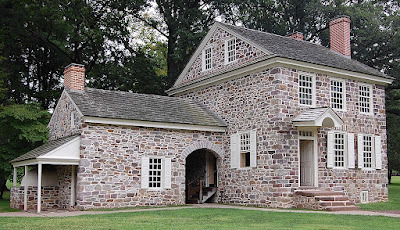 One of the most important was the Isaac Potts House, Washington's headquarters at Valley Forge, Pennsylvania. Built in the 1750s, the three-story structure was a palace compared to the wooden huts that housed most of the Continental Army in the winter of 1778.
Another site, an overnighter, was Beers Tavern, the best place to eat, drink, and sleep in New Haven, Connecticut, in the 1770s. Washington stayed at the roadhouse on June 28, 1775, while traveling from Philadelphia to Boston. Two major characters in my book will stay there in October 1778. They will experience some of the magic Washington left behind for nearly ten years as he waged war on the British.
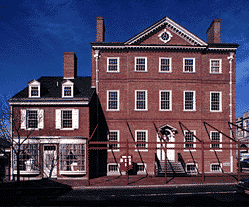 Philadelphia's City Tavern, where the general stretched his legs for several days in 1777, will again take a star turn. It was a significant venue in
The Patriots
, the first book in the Stone Shed series.
Philadelphia's City Tavern, where the general stretched his legs for several days in 1777, will again take a star turn. It was a significant venue in
The Patriots
, the first book in the Stone Shed series.
The Founding Father moved nearly 300 times between July 2, 1775, and December 4, 1783, when he bid farewell to his officers at the end of the war. He moved a lot because he had to. Unlike British generals William Howe and Henry Clinton, who turned Philadelphia and New York City into vacation rentals, he had to secure resources, maintain communications, and stay one step ahead of an enemy that wanted to put a noose around his neck. Like the people who signed the Declaration of Independence, the general was a wanted man.
Washington will play a small but important role in The Winding Road. Though he will mostly remain in the background, as a larger-than-life figure, he will on occasion inject himself into the affairs of Noah Maclean, his aide-de-camp and my novel's chief protagonist.
As readers follow Noah, they will also follow Washington, his staff, his army, and the places they called home between November 1777 and August 1779, The Winding Road's chronological bookends.
I know I followed him. When consulting Wikipedia's detailed, illustrated compendium of Washington's headquarters, I learned a lot about the general, his digs, and his interesting times. I used the comprehensive resource as a starting point, a springboard for further discovery.
As I noted here on Saturday, I have finished the first draft of The Winding Road. I hope to publish the completed novel by May 31.
Photos: Top: The Isaac Potts House, where George Washington lived at Valley Forge from December 19, 1777, to June 19, 1778. Bottom: City Tavern, part of Independence National Historical Park in Philadelphia. Both images are courtesy of Wikimedia Commons.
I did something else. I followed the slogan to several online resources that explore the subject at length. Then I used a few of General Washington's favorite haunts in The Winding Road, my latest work in progress and the second book in the Stone Shed trilogy.
 One of the most important was the Isaac Potts House, Washington's headquarters at Valley Forge, Pennsylvania. Built in the 1750s, the three-story structure was a palace compared to the wooden huts that housed most of the Continental Army in the winter of 1778.
Another site, an overnighter, was Beers Tavern, the best place to eat, drink, and sleep in New Haven, Connecticut, in the 1770s. Washington stayed at the roadhouse on June 28, 1775, while traveling from Philadelphia to Boston. Two major characters in my book will stay there in October 1778. They will experience some of the magic Washington left behind for nearly ten years as he waged war on the British.
 Philadelphia's City Tavern, where the general stretched his legs for several days in 1777, will again take a star turn. It was a significant venue in
The Patriots
, the first book in the Stone Shed series.
Philadelphia's City Tavern, where the general stretched his legs for several days in 1777, will again take a star turn. It was a significant venue in
The Patriots
, the first book in the Stone Shed series. The Founding Father moved nearly 300 times between July 2, 1775, and December 4, 1783, when he bid farewell to his officers at the end of the war. He moved a lot because he had to. Unlike British generals William Howe and Henry Clinton, who turned Philadelphia and New York City into vacation rentals, he had to secure resources, maintain communications, and stay one step ahead of an enemy that wanted to put a noose around his neck. Like the people who signed the Declaration of Independence, the general was a wanted man.
Washington will play a small but important role in The Winding Road. Though he will mostly remain in the background, as a larger-than-life figure, he will on occasion inject himself into the affairs of Noah Maclean, his aide-de-camp and my novel's chief protagonist.
As readers follow Noah, they will also follow Washington, his staff, his army, and the places they called home between November 1777 and August 1779, The Winding Road's chronological bookends.
I know I followed him. When consulting Wikipedia's detailed, illustrated compendium of Washington's headquarters, I learned a lot about the general, his digs, and his interesting times. I used the comprehensive resource as a starting point, a springboard for further discovery.
As I noted here on Saturday, I have finished the first draft of The Winding Road. I hope to publish the completed novel by May 31.
Photos: Top: The Isaac Potts House, where George Washington lived at Valley Forge from December 19, 1777, to June 19, 1778. Bottom: City Tavern, part of Independence National Historical Park in Philadelphia. Both images are courtesy of Wikimedia Commons.
March 1, 2025
Another day, another draft
Lao Tzu, a Chinese philosopher, once said, "A journey of a thousand miles begins with a single step." I can relate. One does not go far without taking a first step, whether walking around the neighborhood, as I do two to three times a day, or writing a gargantuan novel.
This week, I did a little of both. I finished my "workouts" and finished my book, at least the first draft. On Friday morning, I dotted the last 'I" on The Winding Road, my twenty-fifth novel and the second book in the Stone Shed trilogy, a Revolutionary War saga. At 110 chapters, it is my biggest work by chapters. At 142,000 words, it is my second-biggest by length. Either way, it is a monster I was all too happy to tame.
I will now revise the draft, edit it, and send it to others for their thoughtful consideration. I still hope to have the finished book out by May 31.
This week, I did a little of both. I finished my "workouts" and finished my book, at least the first draft. On Friday morning, I dotted the last 'I" on The Winding Road, my twenty-fifth novel and the second book in the Stone Shed trilogy, a Revolutionary War saga. At 110 chapters, it is my biggest work by chapters. At 142,000 words, it is my second-biggest by length. Either way, it is a monster I was all too happy to tame.
I will now revise the draft, edit it, and send it to others for their thoughtful consideration. I still hope to have the finished book out by May 31.
February 14, 2025
Saying goodbye to Dad
It was different this time. Instead of getting an early morning telephone call that took me by surprise, I got one I expected. I learned that my father had passed away after a long history of health struggles.
James Heldt, who died this week at age 93, had long battled mental and physical decline. He spent the last several years in assisted living and the last three without my mother, his loving wife of 70 years.
It was difficult watching him fail. When I last saw him, on January 17, he did not recognize me. Nor was he able to speak in sentences. He was not able to do much of anything in the twilight of his life.
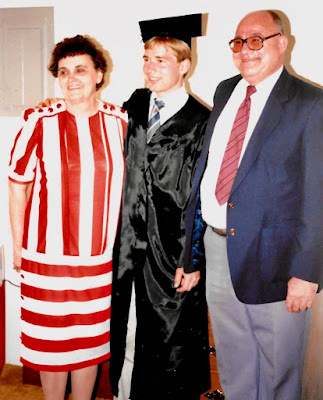 That is not the man I will remember. I will remember instead the younger man, the father who supported a family, succeeded in business, and set a wonderful example for his four sons, two daughters, and ten grandchildren.
Born on the Nebraska plains at the start of the Great Depression, Dad learned responsibility, hard work, and patience at an early age. The youngest of six sons, he moved to Eastern Oregon as a boy and became active in his church, his rural community, and his high school, where he served a year as student body president.
After attending a year of college and marrying my mother, he started a family and a career in small business, mostly as the manager of Sherwin-Williams and Montgomery Ward stores in Oregon and Washington. He won numerous business awards, the respect of his colleagues, and the loyalty of countless customers.
He also invested time in his family. Though he did not have much time to give, he gave it generously. He attended the games, the church programs, and the school activities and crowed about his kids at every opportunity. He took pride in raising thoughtful human beings.
Though Dad was generally a serious man, he had a quirky side. He loved playing Santa Claus at Christmas, watching comedies on television, and showing off Pepper, his beloved Dachshund.
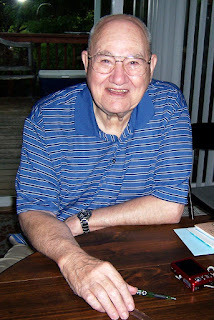 I will remember him for the little things, such as the times he taught me to drive, took me to pro sports events, secured my first job, and drove me to and from college. He beamed in 1985 when I graduated from the University of Oregon and did something he had wanted to do but could not because of family and economic circumstances.
Though I have many stories of Dad, one will always stand out. It will because of what happened and because of what did not.
In July 1976, we went fishing. We pursued salmon off Westport, Washington, with a dozen others from our church. No other family members attended. It was a father-and-ninth-grade-son sort of thing. Dad didn't make it an hour before giving up his early breakfast to the creatures of the sea. He didn't catch fish either, at least at first. Like most of the others on our small charter boat, he set his line at twenty yards, as the skipper had instructed, and waited patiently for a bite.
I didn't wait for a thing. Convinced that the fish, like all fish, congregated at the bottom, I dropped my line another ten yards. Never mind that we were 20 miles offshore. I dropped my line — right into a large school of salmon. Within minutes, I reeled in 38-, 33-, 31-, and 28-pound kings. The others on the boat soon did the same. They lowered their lines and drained the Pacific of tasty fish. Dad and I each caught four and gave our extras to others. We brought home 200 pounds of salmon. My biggest fish was the third largest caught off Westport that day and would have netted $750 had I invested a measly buck in a fishing derby.
Sadly, I don't have photographs of that day. I didn't take my Kodak, and my usually trusty Bell & Howell movie camera jammed. No others on the boat took pictures. One of the best moments of my adolescence went unrecorded. My "big fish" story exists only in memories.
I would give almost anything for snapshots of that trip. I would love to see the salmon and Dad's happy face as we weighed our catch.
But I don't need the photos. I know we caught the fish and had the experience of a lifetime. If Dad was not present in pictures, he was still present in person. Like so many other times in my life, he was there, supporting me, encouraging me, and sharing the fun.
I hope things are better now, Dad. Say hello to Mom. Thanks for the support and the memories. I love you. I miss you. Until we meet again.
James Heldt, who died this week at age 93, had long battled mental and physical decline. He spent the last several years in assisted living and the last three without my mother, his loving wife of 70 years.
It was difficult watching him fail. When I last saw him, on January 17, he did not recognize me. Nor was he able to speak in sentences. He was not able to do much of anything in the twilight of his life.
 That is not the man I will remember. I will remember instead the younger man, the father who supported a family, succeeded in business, and set a wonderful example for his four sons, two daughters, and ten grandchildren.
Born on the Nebraska plains at the start of the Great Depression, Dad learned responsibility, hard work, and patience at an early age. The youngest of six sons, he moved to Eastern Oregon as a boy and became active in his church, his rural community, and his high school, where he served a year as student body president.
After attending a year of college and marrying my mother, he started a family and a career in small business, mostly as the manager of Sherwin-Williams and Montgomery Ward stores in Oregon and Washington. He won numerous business awards, the respect of his colleagues, and the loyalty of countless customers.
He also invested time in his family. Though he did not have much time to give, he gave it generously. He attended the games, the church programs, and the school activities and crowed about his kids at every opportunity. He took pride in raising thoughtful human beings.
Though Dad was generally a serious man, he had a quirky side. He loved playing Santa Claus at Christmas, watching comedies on television, and showing off Pepper, his beloved Dachshund.
 I will remember him for the little things, such as the times he taught me to drive, took me to pro sports events, secured my first job, and drove me to and from college. He beamed in 1985 when I graduated from the University of Oregon and did something he had wanted to do but could not because of family and economic circumstances.
Though I have many stories of Dad, one will always stand out. It will because of what happened and because of what did not.
In July 1976, we went fishing. We pursued salmon off Westport, Washington, with a dozen others from our church. No other family members attended. It was a father-and-ninth-grade-son sort of thing. Dad didn't make it an hour before giving up his early breakfast to the creatures of the sea. He didn't catch fish either, at least at first. Like most of the others on our small charter boat, he set his line at twenty yards, as the skipper had instructed, and waited patiently for a bite.
I didn't wait for a thing. Convinced that the fish, like all fish, congregated at the bottom, I dropped my line another ten yards. Never mind that we were 20 miles offshore. I dropped my line — right into a large school of salmon. Within minutes, I reeled in 38-, 33-, 31-, and 28-pound kings. The others on the boat soon did the same. They lowered their lines and drained the Pacific of tasty fish. Dad and I each caught four and gave our extras to others. We brought home 200 pounds of salmon. My biggest fish was the third largest caught off Westport that day and would have netted $750 had I invested a measly buck in a fishing derby.
Sadly, I don't have photographs of that day. I didn't take my Kodak, and my usually trusty Bell & Howell movie camera jammed. No others on the boat took pictures. One of the best moments of my adolescence went unrecorded. My "big fish" story exists only in memories.
I would give almost anything for snapshots of that trip. I would love to see the salmon and Dad's happy face as we weighed our catch.
But I don't need the photos. I know we caught the fish and had the experience of a lifetime. If Dad was not present in pictures, he was still present in person. Like so many other times in my life, he was there, supporting me, encouraging me, and sharing the fun.
I hope things are better now, Dad. Say hello to Mom. Thanks for the support and the memories. I love you. I miss you. Until we meet again.
February 3, 2025
Review: 1923
I did not need much coaxing. When I learned that a companion series to
1883
and
Yellowstone
was streaming, I put the offering on my watch list. When I discovered that the eight-episode production featured Harrison Ford and Helen Mirren, I promptly subscribed to Paramount Plus.
I am glad that I did. I found 1923 as riveting as the other series and far more visually pleasing. Set primarily in western Montana, where I lived for fourteen years, it exceeded even my lofty expectations.
Though Ford and Mirren star as Jacob and Cara Dutton, the patriarch and matriarch of a dynastic ranching family, others also shine in stories that are tied in some way to the larger narrative. They include Spencer Dutton, the dashing WWI vet who escapes to Africa, and Jack Dutton Jr., the young buck who helps Jacob and Cara run the ranch. The nephews find love in the form of Alexandra, a British royal searching for adventure, and Liz Strafford, a feisty local looking to belong.
There are, of course, villains galore, starting with Banner Creighton, a Scottish sheepherder, and Donald Whitfield, a sadistic business tycoon played by Timothy Dalton of James Bond fame. Both men conspire to wrest the Yellowstone Ranch from the Duttons. Each employs violent and underhanded means to gain control of a lucrative valley.
Then there is Teonna Rainwater, the rebellious Native American girl who escapes a residential school run by cruel priests and nuns. As she fights for her freedom and dignity, she provides an unsettling but welcome perspective on the rough-and-tumble Montana of Prohibition.
Though the violence and sexual content in 1923 are sometimes over the top, the series never strays far from its main storyline or 1883 , its celebrated television prequel. It offers first-rate acting, a compelling narrative, a glimpse of an interesting time period, and cinematography of Montana and East Africa that is worthy of an IMAX theater.
Season 1 of 1923 aired in 2022-23. Season two begins February 23 on Paramount Plus. I, for one, will be watching. Rating 5/5.
I am glad that I did. I found 1923 as riveting as the other series and far more visually pleasing. Set primarily in western Montana, where I lived for fourteen years, it exceeded even my lofty expectations.
Though Ford and Mirren star as Jacob and Cara Dutton, the patriarch and matriarch of a dynastic ranching family, others also shine in stories that are tied in some way to the larger narrative. They include Spencer Dutton, the dashing WWI vet who escapes to Africa, and Jack Dutton Jr., the young buck who helps Jacob and Cara run the ranch. The nephews find love in the form of Alexandra, a British royal searching for adventure, and Liz Strafford, a feisty local looking to belong.
There are, of course, villains galore, starting with Banner Creighton, a Scottish sheepherder, and Donald Whitfield, a sadistic business tycoon played by Timothy Dalton of James Bond fame. Both men conspire to wrest the Yellowstone Ranch from the Duttons. Each employs violent and underhanded means to gain control of a lucrative valley.
Then there is Teonna Rainwater, the rebellious Native American girl who escapes a residential school run by cruel priests and nuns. As she fights for her freedom and dignity, she provides an unsettling but welcome perspective on the rough-and-tumble Montana of Prohibition.
Though the violence and sexual content in 1923 are sometimes over the top, the series never strays far from its main storyline or 1883 , its celebrated television prequel. It offers first-rate acting, a compelling narrative, a glimpse of an interesting time period, and cinematography of Montana and East Africa that is worthy of an IMAX theater.
Season 1 of 1923 aired in 2022-23. Season two begins February 23 on Paramount Plus. I, for one, will be watching. Rating 5/5.
January 5, 2025
The Battle of Monmouth
As battles go, it wasn't very decisive. Two armies met, two fought, and two left the field. As in baseball, the tie went to the runner.
Even so, the Battle of Monmouth, the only major engagement of the American Revolution in 1778, was important. It was a riveting moment in history that still spawns books, visual works, and arguments today.
George Washington rose at Monmouth. He solidified his position as commander of the Continental Army. He did so by chasing the British from a lush meadow in central New Jersey on June 28, 1778. He successfully deployed a force he had rebuilt at Valley Forge.
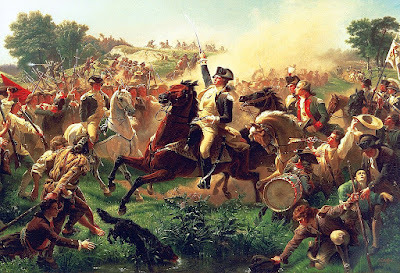 Charles Lee fell. The pompous general, Washington's second, lost not only his reputation at Monmouth but also his commission. He was court-martialed after ordering a retreat in the battle's first hours, creating a mess his boss had to clean up. He left the army in disgrace.
Women also contributed by playing roles rarely seen on a battlefield. They brought water to soldiers, treated them, and sometimes took their places. Led by Mary Ludwig Hays, who allegedly fired a cannon after her husband fell, they gave rise to the legend of Molly Pitcher.
These developments and more are covered in Mark Lender's Fatal Sunday , the definitive work on the battle, and in miniseries like The Revolution and Outlander . The latter series, now streaming on Starz, featured the confrontation in "Written in My Own Heart's Blood," an episode based on Diana Gabaldon's novel of the same name.
The battle did not change the balance of power in 1778. British soldiers, recent occupiers of Philadelphia, completed a successful retreat to New York City, where they licked their wounds and lived to fight another day. The war, which began in 1775, did not end, as a practical matter, until Washington finally cornered the redcoats at Yorktown in 1781.
Nonetheless, Monmouth was still important, which is why I included it in my current work. It is the pivotal centerpiece of The Winding Road, the sequel to The Patriots and the second book in the Stone Shed trilogy.
I am about halfway through the first draft. I hope to finish the draft by early March and publish the book itself by the end of May.
Image Credit: The featured illustration, "Washington Rallying the Troops at Monmouth," is an 1854 oil painting by Emanuel Leutze. The public-domain image is offered through Wikimedia Commons.
Even so, the Battle of Monmouth, the only major engagement of the American Revolution in 1778, was important. It was a riveting moment in history that still spawns books, visual works, and arguments today.
George Washington rose at Monmouth. He solidified his position as commander of the Continental Army. He did so by chasing the British from a lush meadow in central New Jersey on June 28, 1778. He successfully deployed a force he had rebuilt at Valley Forge.
 Charles Lee fell. The pompous general, Washington's second, lost not only his reputation at Monmouth but also his commission. He was court-martialed after ordering a retreat in the battle's first hours, creating a mess his boss had to clean up. He left the army in disgrace.
Women also contributed by playing roles rarely seen on a battlefield. They brought water to soldiers, treated them, and sometimes took their places. Led by Mary Ludwig Hays, who allegedly fired a cannon after her husband fell, they gave rise to the legend of Molly Pitcher.
These developments and more are covered in Mark Lender's Fatal Sunday , the definitive work on the battle, and in miniseries like The Revolution and Outlander . The latter series, now streaming on Starz, featured the confrontation in "Written in My Own Heart's Blood," an episode based on Diana Gabaldon's novel of the same name.
The battle did not change the balance of power in 1778. British soldiers, recent occupiers of Philadelphia, completed a successful retreat to New York City, where they licked their wounds and lived to fight another day. The war, which began in 1775, did not end, as a practical matter, until Washington finally cornered the redcoats at Yorktown in 1781.
Nonetheless, Monmouth was still important, which is why I included it in my current work. It is the pivotal centerpiece of The Winding Road, the sequel to The Patriots and the second book in the Stone Shed trilogy.
I am about halfway through the first draft. I hope to finish the draft by early March and publish the book itself by the end of May.
Image Credit: The featured illustration, "Washington Rallying the Troops at Monmouth," is an 1854 oil painting by Emanuel Leutze. The public-domain image is offered through Wikimedia Commons.
December 6, 2024
Going through a cycle of life
There is nothing quite like it. Holding a grandchild for the first time is like holding a child for the first time. It is a joyful, meaningful, humbling experience, one that reminds a person of the cycles of life.
Grandbabies are special. They are life's portable generators, little souls who lift our spirits and give us a boost when we need it. They remind us that the world, despite its many problems, is still a beautiful place.
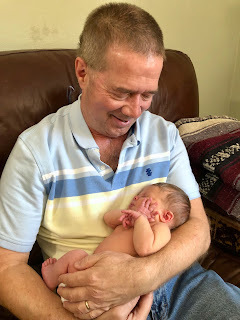 My wife, Cheryl, and I got a reminder this week when we met Sarah Elizabeth Heldt, the first child of our son, Matthew, and his wife, Mikayla. We enjoyed a life experience that many people, particularly those in large families, take for granted. Born on November 25 in Oceanside, California, Sarah came into the world days before and days after two great-grandfathers passed away. She is the newest leaf on a family tree that already has many branches and deep roots that stretch from coast to coast.
Cheryl, the proud grandma, was particularly excited to see Sarah. She gave her a gift, an ornate Christmas stocking the new arrival will no doubt treasure for years to come. Our daughter Amy made the stocking in Puerto Rico and sent it to Cheryl to complete and bring on our trip to Southern California. Cheryl added Sarah's name to the stocking after her name, a closely guarded secret, was announced at her birth.
Matthew and Mikayla wasted no time hanging the stocking next to their own above their fireplace. They added another leaf to the tree.
As they did, they brought everything into focus. They reminded two grandparents that another generation had formed and was now going through its own motions. They brought everything full circle.
Sarah is our second grandchild. The first, Stella Irene Knipe, is now a six-year-old who snow skis, plays hockey, and develops her artistic side in North Idaho. She is growing much too fast for her grandparents.
We hope to have more grandchildren in the future. For now, though, we will cherish what we have. We will celebrate two granddaughters at a joyous time of the year and savor another cycle of life.
Merry Christmas and Happy New Year to you and yours!
Grandbabies are special. They are life's portable generators, little souls who lift our spirits and give us a boost when we need it. They remind us that the world, despite its many problems, is still a beautiful place.
 My wife, Cheryl, and I got a reminder this week when we met Sarah Elizabeth Heldt, the first child of our son, Matthew, and his wife, Mikayla. We enjoyed a life experience that many people, particularly those in large families, take for granted. Born on November 25 in Oceanside, California, Sarah came into the world days before and days after two great-grandfathers passed away. She is the newest leaf on a family tree that already has many branches and deep roots that stretch from coast to coast.
Cheryl, the proud grandma, was particularly excited to see Sarah. She gave her a gift, an ornate Christmas stocking the new arrival will no doubt treasure for years to come. Our daughter Amy made the stocking in Puerto Rico and sent it to Cheryl to complete and bring on our trip to Southern California. Cheryl added Sarah's name to the stocking after her name, a closely guarded secret, was announced at her birth.
Matthew and Mikayla wasted no time hanging the stocking next to their own above their fireplace. They added another leaf to the tree.
As they did, they brought everything into focus. They reminded two grandparents that another generation had formed and was now going through its own motions. They brought everything full circle.
Sarah is our second grandchild. The first, Stella Irene Knipe, is now a six-year-old who snow skis, plays hockey, and develops her artistic side in North Idaho. She is growing much too fast for her grandparents.
We hope to have more grandchildren in the future. For now, though, we will cherish what we have. We will celebrate two granddaughters at a joyous time of the year and savor another cycle of life.
Merry Christmas and Happy New Year to you and yours!
November 14, 2024
Reading again by listening
I never read my books after they are published. I occasionally update errors I discover or that readers point out, but I never read a book again from cover to cover. I have too many other things I would rather do with my limited time, like writing and editing my next work.
That said, I will listen to books again. When converting books to audio, I will review the narrator's "first drafts" and listen for any flaws. In the process, I will re-experience novels I wrote sometimes years earlier.
 Last month, I did just that. For several hours — 11.5 to be exact — I listened to
Crown City
, the fifth and final book in the Time Box series. I listened to Roberto Scarlato, a skilled voice artist, bring a familiar work to life.
Last month, I did just that. For several hours — 11.5 to be exact — I listened to
Crown City
, the fifth and final book in the Time Box series. I listened to Roberto Scarlato, a skilled voice artist, bring a familiar work to life.
As I did, I revisited storylines, characters, and passages I had put on the shelf on November 26, 2021, when I published the Kindle edition of Crown City . I revisited many things I liked and a few I did not.
When you read or listen to a book months, or even years, after producing it, you view it differently. You tell yourself, "I'm glad I did this," or "I wish I had done that." You view your own work as a person with different knowledge, experience, priorities, and biases.
In the tenth of his Top 20 rules for writers, Stephen King advises scribes to finish their first draft within three months. He does so for a reason that makes perfect sense to those of us who have produced a novel.
When you write something over the course of months, you change. Your characters change. Your plotlines and story arcs change. A tale that made sense in April may not make sense in September.
Listening to a book years after it was published gives me the opportunity to spot things I might have done differently. It gives me the chance to see what I did right or wrong and apply that knowledge to future works.
It also gives me the opportunity to appreciate the work of my narrators, who wrestle with difficult personal names, place names, unusual words, and even phrases in foreign languages. As one who grew up in Washington state, which has tripwire place names like Puyallup and Sequim, and attended college at the University of Oregon, where students wore shirts shouting "Orygun" and "Willamette, damn it!" to educate some out-of-staters, I understand the challenges.
Fortunately for me — and listeners — the narrators have risen to the challenge. Mr. Scarlato, who has narrated my last five audiobooks, has done a particularly good job. He successfully navigated the minefield of Hawaiian and Japanese names in The Refuge and nailed the many distinct accents in Camp Lake , The Fair , Sea Spray , and Crown City . He did justice to novels I rediscovered for the second time.
With the arrival of Crown City , which goes live on Amazon, Audible, and Apple Books this week, I now have twenty books in audio. I intend to convert the remaining four and others in the coming years.
That said, I will listen to books again. When converting books to audio, I will review the narrator's "first drafts" and listen for any flaws. In the process, I will re-experience novels I wrote sometimes years earlier.
 Last month, I did just that. For several hours — 11.5 to be exact — I listened to
Crown City
, the fifth and final book in the Time Box series. I listened to Roberto Scarlato, a skilled voice artist, bring a familiar work to life.
Last month, I did just that. For several hours — 11.5 to be exact — I listened to
Crown City
, the fifth and final book in the Time Box series. I listened to Roberto Scarlato, a skilled voice artist, bring a familiar work to life.As I did, I revisited storylines, characters, and passages I had put on the shelf on November 26, 2021, when I published the Kindle edition of Crown City . I revisited many things I liked and a few I did not.
When you read or listen to a book months, or even years, after producing it, you view it differently. You tell yourself, "I'm glad I did this," or "I wish I had done that." You view your own work as a person with different knowledge, experience, priorities, and biases.
In the tenth of his Top 20 rules for writers, Stephen King advises scribes to finish their first draft within three months. He does so for a reason that makes perfect sense to those of us who have produced a novel.
When you write something over the course of months, you change. Your characters change. Your plotlines and story arcs change. A tale that made sense in April may not make sense in September.
Listening to a book years after it was published gives me the opportunity to spot things I might have done differently. It gives me the chance to see what I did right or wrong and apply that knowledge to future works.
It also gives me the opportunity to appreciate the work of my narrators, who wrestle with difficult personal names, place names, unusual words, and even phrases in foreign languages. As one who grew up in Washington state, which has tripwire place names like Puyallup and Sequim, and attended college at the University of Oregon, where students wore shirts shouting "Orygun" and "Willamette, damn it!" to educate some out-of-staters, I understand the challenges.
Fortunately for me — and listeners — the narrators have risen to the challenge. Mr. Scarlato, who has narrated my last five audiobooks, has done a particularly good job. He successfully navigated the minefield of Hawaiian and Japanese names in The Refuge and nailed the many distinct accents in Camp Lake , The Fair , Sea Spray , and Crown City . He did justice to novels I rediscovered for the second time.
With the arrival of Crown City , which goes live on Amazon, Audible, and Apple Books this week, I now have twenty books in audio. I intend to convert the remaining four and others in the coming years.
October 1, 2024
Getting an early start on No. 25
Playwright George Bernard Shaw advised that you should not "wait for perfect conditions" to begin an undertaking. You should instead "start where you are with what you have." So today, I did just that.
I started my twenty-fifth novel with the limited resources I have compiled over the past few weeks. I jumped headfirst into my next project.
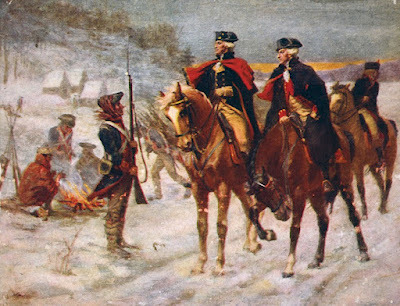 The Winding Road, the second installment in the Stone Shed trilogy, will continue the story of Noah and Jake Maclean, orphaned brothers from 2024 who experience the American Revolution through the magic of time travel. It will pick up where
The Patriots
left off.
The Winding Road, the second installment in the Stone Shed trilogy, will continue the story of Noah and Jake Maclean, orphaned brothers from 2024 who experience the American Revolution through the magic of time travel. It will pick up where
The Patriots
left off.
In the first book, the brothers, ages 23 and 16, committed to the lovely daughters of a furniture maker, a patriot family, and life in the 1770s. In the second book, they will build on these commitments. They will use their wits, knowledge, and resources to better several lives and improve America's fortunes in the midst of its war for independence.
Set in Pennsylvania, New Jersey, New York, and Connecticut from 1777 to 1779, The Winding Road will focus on Noah's experiences as a soldier in the Continental Army and his developing relationship with fiancée Abigail Ward. Jake and Rachel Ward, Abby's younger sister, will assume important secondary roles and again test the limits of a stone shed that can send people through time. Douglas and Donna Maclean will continue to follow Noah's and Jake's travels and confront new challenges as they attempt to explain their grandnephews' disappearance to police, reporters, and family members in 2024.
Other characters will also get some play, including a dashing American officer who befriends Noah, a villainous British tracker, and George Washington. The beleaguered patriot general, surrounded by rivals, will quickly warm to a mysterious new soldier who can predict coming events and provide his struggling army with needed supplies.
Readers who wanted more history in the first book will get it in the second. They will have the opportunity to follow Noah from the bitter winter at Valley Forge to the critical Battle of Monmouth to the developing spy wars in and around New York City. They will see the American Revolution in its deceptively quiet middle years.
At a projected one hundred chapters, The Winding Road will be slightly smaller than The Patriots . I expect to complete the first draft sometime early next year and publish the novel itself in the spring.
Image credit: "Washington and Lafayette at Valley Forge," a 1907 oil painting by John Ward Dunsmore, is a public-domain image offered through Wikimedia Commons.
I started my twenty-fifth novel with the limited resources I have compiled over the past few weeks. I jumped headfirst into my next project.
 The Winding Road, the second installment in the Stone Shed trilogy, will continue the story of Noah and Jake Maclean, orphaned brothers from 2024 who experience the American Revolution through the magic of time travel. It will pick up where
The Patriots
left off.
The Winding Road, the second installment in the Stone Shed trilogy, will continue the story of Noah and Jake Maclean, orphaned brothers from 2024 who experience the American Revolution through the magic of time travel. It will pick up where
The Patriots
left off.In the first book, the brothers, ages 23 and 16, committed to the lovely daughters of a furniture maker, a patriot family, and life in the 1770s. In the second book, they will build on these commitments. They will use their wits, knowledge, and resources to better several lives and improve America's fortunes in the midst of its war for independence.
Set in Pennsylvania, New Jersey, New York, and Connecticut from 1777 to 1779, The Winding Road will focus on Noah's experiences as a soldier in the Continental Army and his developing relationship with fiancée Abigail Ward. Jake and Rachel Ward, Abby's younger sister, will assume important secondary roles and again test the limits of a stone shed that can send people through time. Douglas and Donna Maclean will continue to follow Noah's and Jake's travels and confront new challenges as they attempt to explain their grandnephews' disappearance to police, reporters, and family members in 2024.
Other characters will also get some play, including a dashing American officer who befriends Noah, a villainous British tracker, and George Washington. The beleaguered patriot general, surrounded by rivals, will quickly warm to a mysterious new soldier who can predict coming events and provide his struggling army with needed supplies.
Readers who wanted more history in the first book will get it in the second. They will have the opportunity to follow Noah from the bitter winter at Valley Forge to the critical Battle of Monmouth to the developing spy wars in and around New York City. They will see the American Revolution in its deceptively quiet middle years.
At a projected one hundred chapters, The Winding Road will be slightly smaller than The Patriots . I expect to complete the first draft sometime early next year and publish the novel itself in the spring.
Image credit: "Washington and Lafayette at Valley Forge," a 1907 oil painting by John Ward Dunsmore, is a public-domain image offered through Wikimedia Commons.