John A. Heldt's Blog, page 11
February 1, 2020
Taking a second look at history
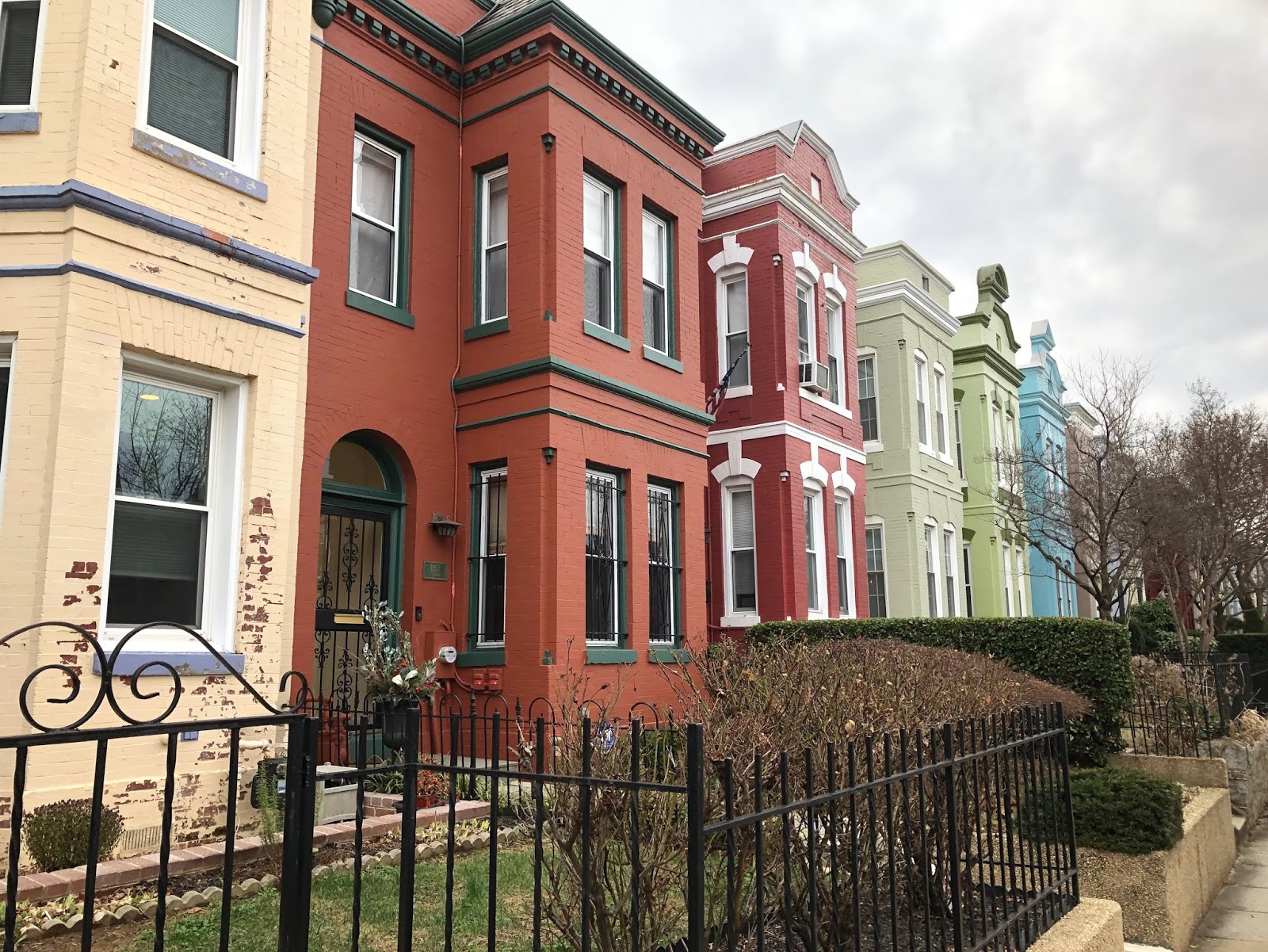 The row houses of F Street were more colorful and ornate. Ford's Theatre had a smaller lobby and a bigger stage. Even the forests of Northern Virginia were different. They had more oaks, fewer pines, and much greater density than I expected. But that's why I went. As I wrote last year after visiting the settings for three novels, writers cannot get a true feel of a place without seeing it in person. So this week I traveled once again to Washington, D.C. and put some lingering questions to rest.
 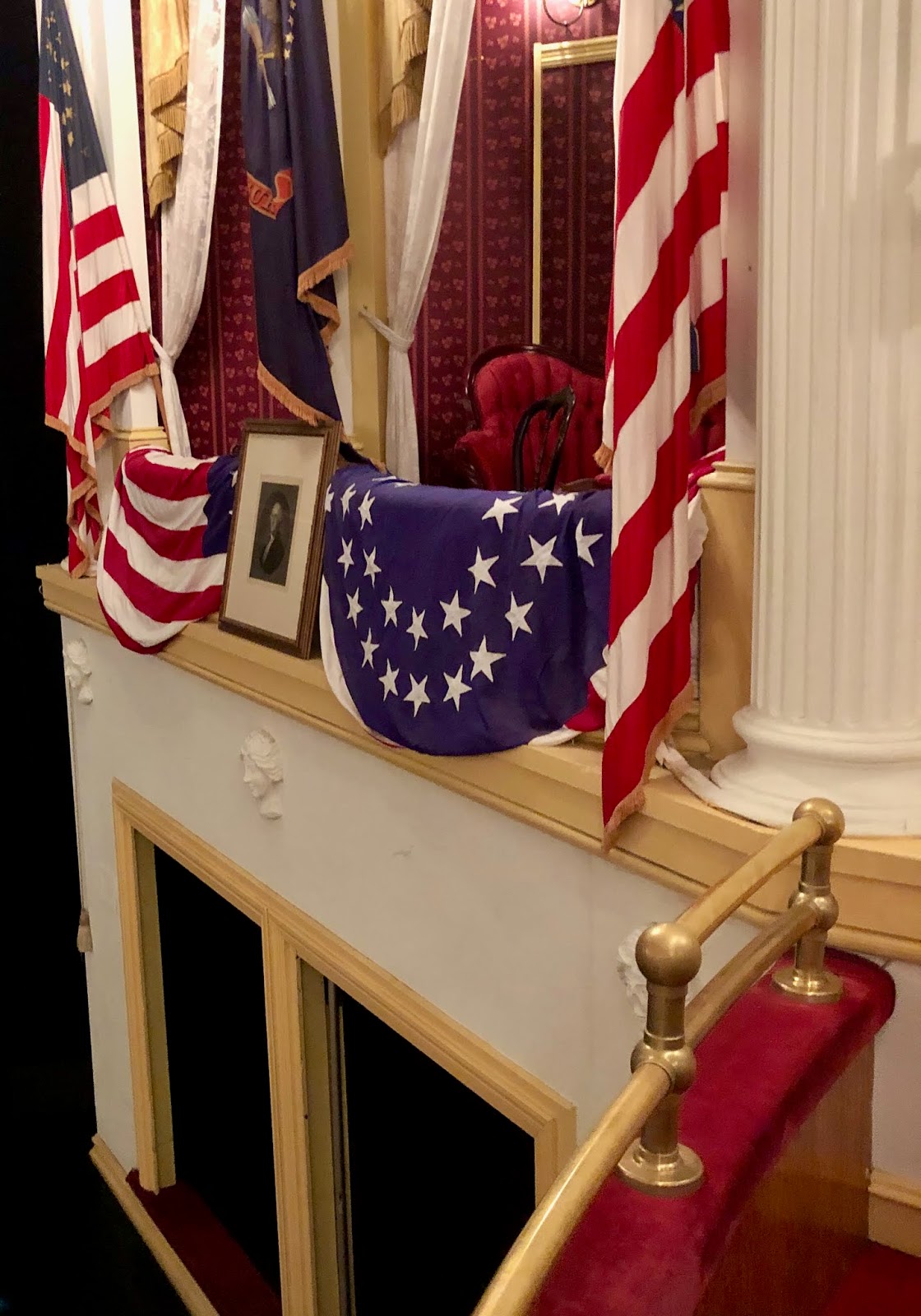 Unlike in August, when I gave the capital a brief inspection, I was thorough. I walked miles of the city's streets, visited important historic sites, and did the kind of research one can only do in the District of Columbia. As a result, I learned a lot about places that will be featured in The Lane Betrayal, my current work in progress.
 Among other things, I learned that row houses are cool. Really cool. Even those without black-wrought-iron gates, sash windows, and ornamental facades evoked a much earlier time. So did Ford's Theatre, which is still a functioning performance hall. Though President Lincoln's suite was less lavish than I imagined, the theater itself was grand. I had no difficulty picturing the place on April 14, 1865, when it became a tragic footnote in American history.
 Like Ford's, the Round Robin Bar, with its circular bar and oak-paneled walls, has changed little in a century and a half. Part of the luxurious Willard Hotel, it is still a go-to site in the capital.
 For that reason, I set three chapters in the fabled bar. I set one in the Star Saloon, where John Wilkes Booth mulled his plot over a bottle of whiskey. Now a commercial space, the saloon is adjacent to Ford's.
When I wasn't visiting venues, I was researching them at several museums and the Library of Congress. Among my top finds were old maps of Maryland and Virginia, native plant guides, and information on early settlements in what became the federal city. I plan to include what I found in the novel.
The Lane Betrayal, the first book of the Time Box series, is now in its second revision. I hope to publish the novel in early April.


January 1, 2020
Doable goals for a new year
New Year’s resolutions, according to a popular saying, are a bit like babies. They’re fun to make but extremely difficult to maintain. Though I tend to agree, I think the second part doesn't have to be true. When resolving to do something in the coming year, we, as dedicated individuals, can always resolve to do something doable.
That's the approach I'm taking to 2020, with resolutions and goals. Though I have compiled a list of writing and work-related goals for the next twelve months, I have managed to make it manageable.
Topping the list is a new series. I will finish a draft of the first book in the Time Box series in two weeks and hope to publish the book itself in twelve. Set mostly in Northern Virginia and Washington, D.C., in early 1865, the novel will introduce readers to the Lane family.
I don't plan to stop there. Though I have not yet outlined the second book in the set, I intend to start work on it in April, after book one is out, and publish it by the end of the year. Like the Carson Chronicles, the Time Box series will follow a modern family over a century. Like each of my first three series, it will consist of five books.
I also intend to convert two more novels to audio and my newest books to print. If there is one thing I've learned as an author, it's that readers like choice. I intend to give them more of that in 2020.
I hope to give fellow authors something as well. Beginning this month, I will offer marketing, research, formatting, and proofreading services at reasonable rates. Aimed at new authors, Proof Plus will augment, not replace, my writing, which will remain my primary focus.
Here's to a happy and productive year to all of you!
That's the approach I'm taking to 2020, with resolutions and goals. Though I have compiled a list of writing and work-related goals for the next twelve months, I have managed to make it manageable.
Topping the list is a new series. I will finish a draft of the first book in the Time Box series in two weeks and hope to publish the book itself in twelve. Set mostly in Northern Virginia and Washington, D.C., in early 1865, the novel will introduce readers to the Lane family.
I don't plan to stop there. Though I have not yet outlined the second book in the set, I intend to start work on it in April, after book one is out, and publish it by the end of the year. Like the Carson Chronicles, the Time Box series will follow a modern family over a century. Like each of my first three series, it will consist of five books.
I also intend to convert two more novels to audio and my newest books to print. If there is one thing I've learned as an author, it's that readers like choice. I intend to give them more of that in 2020.
I hope to give fellow authors something as well. Beginning this month, I will offer marketing, research, formatting, and proofreading services at reasonable rates. Aimed at new authors, Proof Plus will augment, not replace, my writing, which will remain my primary focus.
Here's to a happy and productive year to all of you!
December 3, 2019
Getting (another) early start
Those who know me best know how to process the pledge. When I say I won't start a new book for eight to twelve weeks, they know they can cut that time in half, add maybe a week or two, and wait for me to break my promise. Like a lot of writers, no doubt, I always do.
And so it goes again. With most of my research and preparation in the rear-view mirror, I have started writing my next novel and next series. Set in Northern Virginia and Washington, D.C., in the final three months of the American Civil War, it will document the triumphs and tribulations of a contemporary time-traveling family.
In this case, the Lanes of Fredericksburg, Virginia, and not the Carsons of Flagstaff, Arizona, will take the stage. It's my hope that this family of six will prove to be as compelling as the family of seven I retired this fall. As with the Carson Chronicles series, I will look for new ways to develop familiar themes and explore American history.
I hope to finish the rough draft of the still-unnamed novel by January, when I travel to D.C. and visit at least a few of the settings. I intend to publish the finished work no later than the end of April.
In the meantime, I will devote some time to other priorities. I hope that all of you have a Merry Christmas and a Happy New Year!
And so it goes again. With most of my research and preparation in the rear-view mirror, I have started writing my next novel and next series. Set in Northern Virginia and Washington, D.C., in the final three months of the American Civil War, it will document the triumphs and tribulations of a contemporary time-traveling family.
In this case, the Lanes of Fredericksburg, Virginia, and not the Carsons of Flagstaff, Arizona, will take the stage. It's my hope that this family of six will prove to be as compelling as the family of seven I retired this fall. As with the Carson Chronicles series, I will look for new ways to develop familiar themes and explore American history.
I hope to finish the rough draft of the still-unnamed novel by January, when I travel to D.C. and visit at least a few of the settings. I intend to publish the finished work no later than the end of April.
In the meantime, I will devote some time to other priorities. I hope that all of you have a Merry Christmas and a Happy New Year!
October 31, 2019
Revisiting a time of conflict
If there is one thing I like about researching a new book, it is learning about people, places, and times I have never met or experienced. I particularly like seeing a historical period through the eyes of the people who lived in that period.
This is especially true when exploring significant eras and events, such as World War II, which was a backdrop for The Mine , Mercer Street , Hannah's Moon , and Indian Paintbrush , and the American Civil War, which will be the primary setting for my next work.
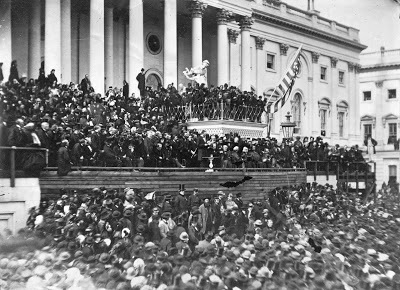
In October, I began reintroducing myself to a conflict that claimed 600,000 lives and forged a modern nation. Though I had read or watched many of the works at least once before, I enjoyed them nonetheless. I expect to peruse many more before I begin writing the first novel of my fourth series, set mostly in Washington, D.C. and northern Virginia in early 1865.
Some of the less familiar sources -- like Abraham Lincoln: A History by John M. Hay and John George Nicolay, Mary Boykin Chesnut's Civil War Diary from Dixie , and The Lady Nurse of Ward E by Amanda Akin Stearns -- are in the public domain and available online. All three were produced by individuals with a front-row seat to history. Filmmaker Ken Burns cited Chesnut's diary often in his epic 1990 television series, The Civil War, which I revisited in September.
I have also begun reading more recently published books, like A Guide to Civil War Washington, D.C.: the Capital of the Union by Lucinda Prout Janke, The Willard Hotel: An Illustrated History by Richard Wallace Carr and Marie Pinak Carr, and The Civil War in Spotsylvania County: Confederate Campfires at the Crossroads by Michael Aubrecht.
My next work, the first in a new time-travel saga, will follow a modern family from 2021 to the final three months of the Civil War and focus on the civilian side. Though most of the characters will be fictional, a few, such as Abraham Lincoln, Robert Lincoln, John Hay, Edwin Stanton, and John Wilkes Booth, will not. I learned more about Robert Lincoln, the president's oldest son, and Hay, one of his secretaries, by reading Jason Emerson's Giant in the Shadows and John Taliaferro's All the Great Prizes , the definitive works on the two men.
I hope to begin writing the first draft in January and publish by June. (Photo: Lincoln's Second Inaugural Address, March 4, 1865. Image courtesy of Wikimedia Commons.)
This is especially true when exploring significant eras and events, such as World War II, which was a backdrop for The Mine , Mercer Street , Hannah's Moon , and Indian Paintbrush , and the American Civil War, which will be the primary setting for my next work.
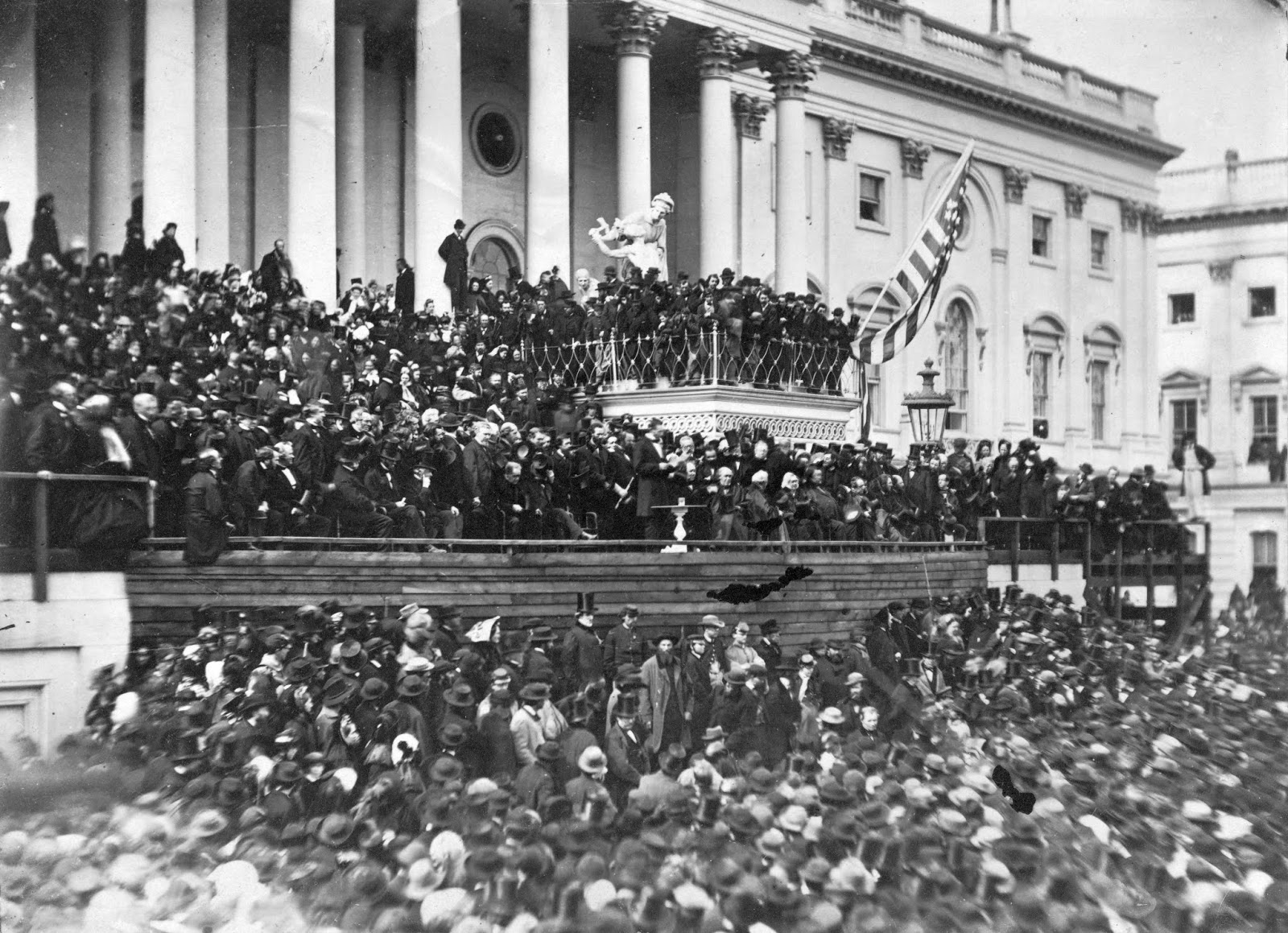
In October, I began reintroducing myself to a conflict that claimed 600,000 lives and forged a modern nation. Though I had read or watched many of the works at least once before, I enjoyed them nonetheless. I expect to peruse many more before I begin writing the first novel of my fourth series, set mostly in Washington, D.C. and northern Virginia in early 1865.
Some of the less familiar sources -- like Abraham Lincoln: A History by John M. Hay and John George Nicolay, Mary Boykin Chesnut's Civil War Diary from Dixie , and The Lady Nurse of Ward E by Amanda Akin Stearns -- are in the public domain and available online. All three were produced by individuals with a front-row seat to history. Filmmaker Ken Burns cited Chesnut's diary often in his epic 1990 television series, The Civil War, which I revisited in September.
I have also begun reading more recently published books, like A Guide to Civil War Washington, D.C.: the Capital of the Union by Lucinda Prout Janke, The Willard Hotel: An Illustrated History by Richard Wallace Carr and Marie Pinak Carr, and The Civil War in Spotsylvania County: Confederate Campfires at the Crossroads by Michael Aubrecht.
My next work, the first in a new time-travel saga, will follow a modern family from 2021 to the final three months of the Civil War and focus on the civilian side. Though most of the characters will be fictional, a few, such as Abraham Lincoln, Robert Lincoln, John Hay, Edwin Stanton, and John Wilkes Booth, will not. I learned more about Robert Lincoln, the president's oldest son, and Hay, one of his secretaries, by reading Jason Emerson's Giant in the Shadows and John Taliaferro's All the Great Prizes , the definitive works on the two men.
I hope to begin writing the first draft in January and publish by June. (Photo: Lincoln's Second Inaugural Address, March 4, 1865. Image courtesy of Wikimedia Commons.)
October 6, 2019
Sweating the small stuff
As one who has written fifteen novels that blend both fact and fiction, I know firsthand the importance of getting it right. Writing about time travel, after all, requires more than describing the means of travel. It requires accurately depicting the past. It requires meeting the standards of quality historical fiction.
The challenges are often daunting, particularly when writing about the recent past, as I have done on multiple occasions. When writing about places and times that are in the living memory of many readers, you have to make an extra effort to get even the little things right.
When I wrote my first novel, The Mine , a story set mostly in Seattle in 1941, a few older readers gently reminded me that chocolate-chip cookies were more commonly called "Toll House cookies" and that aluminum foil was generally called "tin foil," even after aluminum replaced tin as its primary component. Since that time, I have done what I could to ensure the historical accuracy of my books, which have spanned eras ranging from the 1880s to the 1980s.
Like many writers of historical fiction, I favor primary sources, such as newspapers, documents, letters, photographs, and oral histories. I generally find eyewitness accounts of events and eras, produced by those who lived through them, to be more compelling than even the best research compiled decades – or even a few years – after the fact.
Even so, I don't limit myself. When preparing to write about times I did not experience, I will often sample the movies, music, and literature of the day. I find it easier to describe Americans of the 1950s and early 1960s, for example, if I immerse myself in the very things that drove them to theaters, concert halls, and libraries.
On some occasions, I look closer to home. When writing The Journey , set in 1979 and 1980, and Camp Lake , my newest book, set in 1983, I relied mostly on memories of — and mementos from — my senior year of high school and my experience at a summer camp in Maine.
No matter where I turn for answers, however, I follow advice that has been around for decades. When writing historical fiction, even in the context of time travel, pay attention to details. Note the nuances and the particulars. Sweat the small stuff.
The challenges are often daunting, particularly when writing about the recent past, as I have done on multiple occasions. When writing about places and times that are in the living memory of many readers, you have to make an extra effort to get even the little things right.
When I wrote my first novel, The Mine , a story set mostly in Seattle in 1941, a few older readers gently reminded me that chocolate-chip cookies were more commonly called "Toll House cookies" and that aluminum foil was generally called "tin foil," even after aluminum replaced tin as its primary component. Since that time, I have done what I could to ensure the historical accuracy of my books, which have spanned eras ranging from the 1880s to the 1980s.
Like many writers of historical fiction, I favor primary sources, such as newspapers, documents, letters, photographs, and oral histories. I generally find eyewitness accounts of events and eras, produced by those who lived through them, to be more compelling than even the best research compiled decades – or even a few years – after the fact.
Even so, I don't limit myself. When preparing to write about times I did not experience, I will often sample the movies, music, and literature of the day. I find it easier to describe Americans of the 1950s and early 1960s, for example, if I immerse myself in the very things that drove them to theaters, concert halls, and libraries.
On some occasions, I look closer to home. When writing The Journey , set in 1979 and 1980, and Camp Lake , my newest book, set in 1983, I relied mostly on memories of — and mementos from — my senior year of high school and my experience at a summer camp in Maine.
No matter where I turn for answers, however, I follow advice that has been around for decades. When writing historical fiction, even in the context of time travel, pay attention to details. Note the nuances and the particulars. Sweat the small stuff.
A review, guest post, and more
Camp Lake makes its first big media splash this morning at the Reading Cafe. The Canadian blog, which has reviewed all but one of my fifteen novels, takes on my latest today. Many thanks to Sandy and Barb at the site for running the review, a guest post, and a giveaway of the entire Carson Chronicles series. Readers can find all three here.
October 1, 2019
Saying goodbye to a series
I admit I miss the characters already. Even though the proverbial ink has not yet dried on the Carson Chronicles series, I miss the fictional family I have lived with for more than two and a half years.
With the release of Camp Lake , the fifth and final book, I say so long to the seven original members of the Carson clan and their significant others. I close the door on a memorable time-travel series.
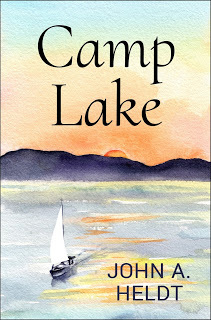 Like
River Rising
,
The Memory Tree
,
Indian Paintbrush
, and
Caitlin's Song
,
Camp Lake
embraces a place and a time — in this case, Maine in 1983.
Like
River Rising
,
The Memory Tree
,
Indian Paintbrush
, and
Caitlin's Song
,
Camp Lake
embraces a place and a time — in this case, Maine in 1983.
Though the novel begins and ends in the Carsons' home state of Arizona, it finds a home in the Pine Tree State.
Nineteen-year-old Cody, the youngest of the three sons, takes center stage in this one.
Along with Caitlin, his brainy twin sister, and Dennis Sawyer, his talented and thoughtful friend, he travels to prestigious Camp Washington, where his missing middle-aged parents met as college students and where jobs, romance, and danger await.
For Cody, a nature counselor, the summer in New England is an opportunity to develop a friendship with a beautiful colleague, a young woman with a tragic secret. For Caitlin and Dennis, it is a chance to grow as a couple and test the boundaries of sacrifice.
For the five siblings, the summer is the next stop on a journey that started in 2017; continued in 1889, 1918, 1944, and 1962; and ends in the era of big hair, space shuttles, and MTV. For all of the Carsons, parents and children, it is a last chance to reunite as a family.
Filled with humor, adventure, and suspense, Camp Lake answers the questions and ties the loose ends of a tumultuous family saga. The novel, my fifteenth overall, goes on sale today at Amazon.com.
With the release of Camp Lake , the fifth and final book, I say so long to the seven original members of the Carson clan and their significant others. I close the door on a memorable time-travel series.
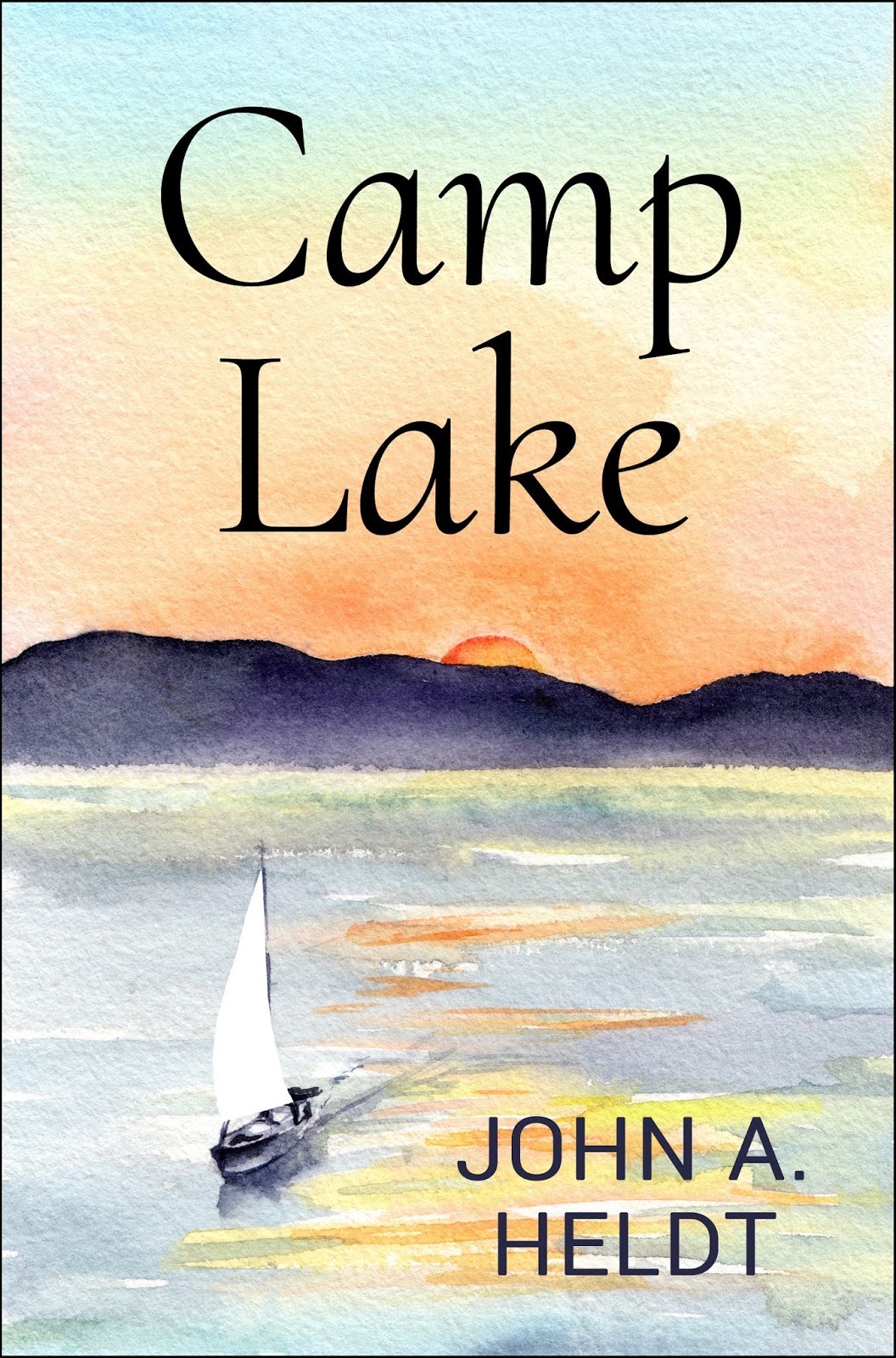 Like
River Rising
,
The Memory Tree
,
Indian Paintbrush
, and
Caitlin's Song
,
Camp Lake
embraces a place and a time — in this case, Maine in 1983.
Like
River Rising
,
The Memory Tree
,
Indian Paintbrush
, and
Caitlin's Song
,
Camp Lake
embraces a place and a time — in this case, Maine in 1983. Though the novel begins and ends in the Carsons' home state of Arizona, it finds a home in the Pine Tree State.
Nineteen-year-old Cody, the youngest of the three sons, takes center stage in this one.
Along with Caitlin, his brainy twin sister, and Dennis Sawyer, his talented and thoughtful friend, he travels to prestigious Camp Washington, where his missing middle-aged parents met as college students and where jobs, romance, and danger await.
For Cody, a nature counselor, the summer in New England is an opportunity to develop a friendship with a beautiful colleague, a young woman with a tragic secret. For Caitlin and Dennis, it is a chance to grow as a couple and test the boundaries of sacrifice.
For the five siblings, the summer is the next stop on a journey that started in 2017; continued in 1889, 1918, 1944, and 1962; and ends in the era of big hair, space shuttles, and MTV. For all of the Carsons, parents and children, it is a last chance to reunite as a family.
Filled with humor, adventure, and suspense, Camp Lake answers the questions and ties the loose ends of a tumultuous family saga. The novel, my fifteenth overall, goes on sale today at Amazon.com.
September 6, 2019
Audio, sales, and new releases
Some important updates . . .
For the fourth time in three years, I will work with talented actor and voice-over artist Allyson Voller on an audiobook. Voller, the narrator of The Mirror , Hannah's Moon , and Indian Paintbrush , has agreed to narrate Caitlin's Song . I hope to publish the audiobook on Amazon, Audible, and Apple iTunes by the winter of 2020.
 Mercer Street
will appear, for the first time, as a featured book on BookBub on September 15. Set mostly in Princeton, New Jersey, in 1938 and 1939, the novel is the second in the American Journey series. I will discount the other Kindle books in the series in the week following the promotion.
Mercer Street
will appear, for the first time, as a featured book on BookBub on September 15. Set mostly in Princeton, New Jersey, in 1938 and 1939, the novel is the second in the American Journey series. I will discount the other Kindle books in the series in the week following the promotion.
And last, but not least, Camp Lake is coming in October! Thanks to some significant and unexpected progress in revising the first two drafts, I now expect to release the novel, the fifth and last book in the Carson Chronicles series, sometime next month. I will provide more details on both the Kindle and paperback editions when I can.
In the meantime, I will continue working on other projects, including a new series. I wish everyone a happy and productive autumn!
For the fourth time in three years, I will work with talented actor and voice-over artist Allyson Voller on an audiobook. Voller, the narrator of The Mirror , Hannah's Moon , and Indian Paintbrush , has agreed to narrate Caitlin's Song . I hope to publish the audiobook on Amazon, Audible, and Apple iTunes by the winter of 2020.
 Mercer Street
will appear, for the first time, as a featured book on BookBub on September 15. Set mostly in Princeton, New Jersey, in 1938 and 1939, the novel is the second in the American Journey series. I will discount the other Kindle books in the series in the week following the promotion.
Mercer Street
will appear, for the first time, as a featured book on BookBub on September 15. Set mostly in Princeton, New Jersey, in 1938 and 1939, the novel is the second in the American Journey series. I will discount the other Kindle books in the series in the week following the promotion. And last, but not least, Camp Lake is coming in October! Thanks to some significant and unexpected progress in revising the first two drafts, I now expect to release the novel, the fifth and last book in the Carson Chronicles series, sometime next month. I will provide more details on both the Kindle and paperback editions when I can.
In the meantime, I will continue working on other projects, including a new series. I wish everyone a happy and productive autumn!
September 1, 2019
For writers, advice is abundant
In
On Writing: A Memoir of the Craft
, Stephen King advises fellow scribes to "Write with the door closed, rewrite with the door open."
 It's not bad advice. I even follow it on occasion when I'm not trying to drown out distracting sounds both inside and outside of my urban Nevada home.
Distraction can sometimes result in inspiration. And inspiration can sometimes result in a better book. King's recommendation is just a pebble on a beach that is accessible to writers. No matter where I look in libraries, in bookstores, and online, I can find easily find experts willing to impart knowledge on writing, editing, and marketing.
Some of my favorite sites include: writersdigest.com, createifwriting.com, thecreativepenn.com, janefriedman.com, victoriastrauss.com, and selfpublishingadvice.org. Promotional sites like authormarketingclub.com, thefussylibrarian.com, and bookbub.com, which will feature Mercer Street among its September 15 listings, also offer useful resources for those in the trade.
I intend to utilize at least some of the advice from these sites in the next two months, when I put the finishing touches on Camp Lake. The fifth and final novel in the Carson Chronicles series is now set for a November release.
 It's not bad advice. I even follow it on occasion when I'm not trying to drown out distracting sounds both inside and outside of my urban Nevada home.
 Distraction can sometimes result in inspiration. And inspiration can sometimes result in a better book. King's recommendation is just a pebble on a beach that is accessible to writers. No matter where I look in libraries, in bookstores, and online, I can find easily find experts willing to impart knowledge on writing, editing, and marketing.
Some of my favorite sites include: writersdigest.com, createifwriting.com, thecreativepenn.com, janefriedman.com, victoriastrauss.com, and selfpublishingadvice.org. Promotional sites like authormarketingclub.com, thefussylibrarian.com, and bookbub.com, which will feature Mercer Street among its September 15 listings, also offer useful resources for those in the trade.
I intend to utilize at least some of the advice from these sites in the next two months, when I put the finishing touches on Camp Lake. The fifth and final novel in the Carson Chronicles series is now set for a November release.
August 27, 2019
Review: Young Men and Fire
When I was a resident of the Treasure State, I knew all about one of its most tragic chapters. One cannot live within a stone's throw of Helena, Montana, without knowing at least a few details about the Mann Gulch fire, a deadly 1949 inferno that spawned films, books, songs, and changes in how firefighters are trained. Even so, I did not read -- or, in this case, listen to -- the most famous account of the event until this month, shortly after its 70th anniversary.
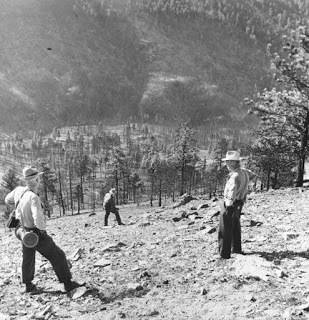 In
Young Men and Fire
, winner of the 1992 National Book Critics Circle Award, Norman Maclean tells the story of 15 smokejumpers and a Forest Service ranger who battled a blaze in a rugged and remote ravine near the Missouri River. Published two years after the author's death, the detailed nonfiction account is a staple of Montana literature.
In
Young Men and Fire
, winner of the 1992 National Book Critics Circle Award, Norman Maclean tells the story of 15 smokejumpers and a Forest Service ranger who battled a blaze in a rugged and remote ravine near the Missouri River. Published two years after the author's death, the detailed nonfiction account is a staple of Montana literature.
Maclean, a University of Chicago professor and the author of A River Runs Through It , approaches the fire as a scholar, a former firefighter, and a woodsman who was in the area when the fire broke out. Though he spends much of the book examining the scientific particulars of the fire and firefighting, he also offers touching portraits of the heroes and those directly affected by the tragic event.
Only three of the men walked away from the site, including 17-year-old Robert Sallee, the youngest member of the crew, and Wagner (Wag) Dodge, the oldest. Dodge, the 33-year-old foreman, survived by lighting a small grass fire, sitting in the embers, and waiting as the larger blaze passed around him. Sallee and Walter Rumsey, 21, escaped by beating the inferno to the lee side of a ridge.
Though Young Men and Fire does not have the depth or scope of The Big Burn , Timothy Egan's work on the Great Fire of 1910, or even similar books on natural disasters, it is nonetheless compelling, informative, and highly readable. Maclean offers both science and poetry in explaining a tragic event that still defies understanding.
I would recommend the book to general readers, fans of Montana literature, and those who love stories of heroism and sacrifice. Rating: 4/5. (Photo courtesy of Wikipedia Commons.)
 In
Young Men and Fire
, winner of the 1992 National Book Critics Circle Award, Norman Maclean tells the story of 15 smokejumpers and a Forest Service ranger who battled a blaze in a rugged and remote ravine near the Missouri River. Published two years after the author's death, the detailed nonfiction account is a staple of Montana literature.
In
Young Men and Fire
, winner of the 1992 National Book Critics Circle Award, Norman Maclean tells the story of 15 smokejumpers and a Forest Service ranger who battled a blaze in a rugged and remote ravine near the Missouri River. Published two years after the author's death, the detailed nonfiction account is a staple of Montana literature. Maclean, a University of Chicago professor and the author of A River Runs Through It , approaches the fire as a scholar, a former firefighter, and a woodsman who was in the area when the fire broke out. Though he spends much of the book examining the scientific particulars of the fire and firefighting, he also offers touching portraits of the heroes and those directly affected by the tragic event.
Only three of the men walked away from the site, including 17-year-old Robert Sallee, the youngest member of the crew, and Wagner (Wag) Dodge, the oldest. Dodge, the 33-year-old foreman, survived by lighting a small grass fire, sitting in the embers, and waiting as the larger blaze passed around him. Sallee and Walter Rumsey, 21, escaped by beating the inferno to the lee side of a ridge.
Though Young Men and Fire does not have the depth or scope of The Big Burn , Timothy Egan's work on the Great Fire of 1910, or even similar books on natural disasters, it is nonetheless compelling, informative, and highly readable. Maclean offers both science and poetry in explaining a tragic event that still defies understanding.
I would recommend the book to general readers, fans of Montana literature, and those who love stories of heroism and sacrifice. Rating: 4/5. (Photo courtesy of Wikipedia Commons.)