John A. Heldt's Blog, page 10
July 1, 2020
A Fair setting for a sequel
When it comes to selecting settings, I am a creature of habit. I usually pick the time and place of a novel weeks, if not months, in advance. On occasion, though, I break form. This was one of those times.
 Until I finished
The Lane Betrayal
in February, I struggled with where to set the second novel in the Time Box series. San Francisco in both 1849 (gold rush) and 1906 (earthquake) was a possibility. So was Philadelphia in 1876. The city hosted the Centennial Exposition that year. Neither setting grabbed me.
Until I finished
The Lane Betrayal
in February, I struggled with where to set the second novel in the Time Box series. San Francisco in both 1849 (gold rush) and 1906 (earthquake) was a possibility. So was Philadelphia in 1876. The city hosted the Centennial Exposition that year. Neither setting grabbed me.
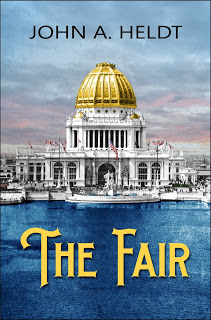
Then I read about the 1893 World's Columbian Exposition, a fair in Chicago that introduced the Ferris Wheel, Cracker Jack, the automatic dishwasher, and scores of electrical innovations. When I learned that 1893 was also the year of a severe economic depression, class conflict, and H.H. Holmes, America's Jack the Ripper, I decided to jump into that exciting and turbulent time. The Fair , the continuation of the Lane family saga, is the result of that decision.
For the Lanes, six time travelers from 2021, five months in the Gilded Age is a chance to catch their breath following a perilous and tragic journey to 1865. While physicist Mark Lane, 53, and wife Mary try to build a home in the Windy City, their children use the time to grow. Fun-loving Laura, 22, befriends a mischievous Irish artist. No-nonsense Jeremy, 19, falls hard for an engaged debutante. Younger daughter Ashley becomes a teenager. Former Army officer Jordan, 26, finds his answers elsewhere. Still grieving the death of a murdered lover, he trades Chicago for rough-and-tumble Virginia City, Nevada, where he finds adventure, purpose, and new romance.
Robert Devereaux has no intention of letting the Lanes rest. Determined to recover two time machines his former business partner stole from him, he sends assassin Silas Bain on two missions to retrieve his property and eliminate a pesky family. The billionaire commits his company to finding the Lanes, even as one of his trusted aides, a Lane confidant, secretly attempts to undermine him.
Like The Lane Betrayal , The Fair offers suspense and thrills, particularly in the last twenty chapters. Unlike the first book, it focuses primarily on relationships and motives. Readers see different sides of Mary, Jordan, and Jeremy; learn more about Devereaux and Bain; and view the limitations of 1893 through the eyes of its women.
They also see the fair. From the day President Grover Cleveland launches the exposition to the day the Lanes leave it, readers see one of history's greatest spectacles in all its glory. They see an event that is still in the news 127 years after it closed its doors.
The Fair is the second of five planned books in the series, which spans the century from 1865 to 1963. My seventeenth novel goes on sale today at Amazon.com and its twelve international sites.
 Until I finished
The Lane Betrayal
in February, I struggled with where to set the second novel in the Time Box series. San Francisco in both 1849 (gold rush) and 1906 (earthquake) was a possibility. So was Philadelphia in 1876. The city hosted the Centennial Exposition that year. Neither setting grabbed me.
Until I finished
The Lane Betrayal
in February, I struggled with where to set the second novel in the Time Box series. San Francisco in both 1849 (gold rush) and 1906 (earthquake) was a possibility. So was Philadelphia in 1876. The city hosted the Centennial Exposition that year. Neither setting grabbed me. Then I read about the 1893 World's Columbian Exposition, a fair in Chicago that introduced the Ferris Wheel, Cracker Jack, the automatic dishwasher, and scores of electrical innovations. When I learned that 1893 was also the year of a severe economic depression, class conflict, and H.H. Holmes, America's Jack the Ripper, I decided to jump into that exciting and turbulent time. The Fair , the continuation of the Lane family saga, is the result of that decision.
For the Lanes, six time travelers from 2021, five months in the Gilded Age is a chance to catch their breath following a perilous and tragic journey to 1865. While physicist Mark Lane, 53, and wife Mary try to build a home in the Windy City, their children use the time to grow. Fun-loving Laura, 22, befriends a mischievous Irish artist. No-nonsense Jeremy, 19, falls hard for an engaged debutante. Younger daughter Ashley becomes a teenager. Former Army officer Jordan, 26, finds his answers elsewhere. Still grieving the death of a murdered lover, he trades Chicago for rough-and-tumble Virginia City, Nevada, where he finds adventure, purpose, and new romance.
Robert Devereaux has no intention of letting the Lanes rest. Determined to recover two time machines his former business partner stole from him, he sends assassin Silas Bain on two missions to retrieve his property and eliminate a pesky family. The billionaire commits his company to finding the Lanes, even as one of his trusted aides, a Lane confidant, secretly attempts to undermine him.
Like The Lane Betrayal , The Fair offers suspense and thrills, particularly in the last twenty chapters. Unlike the first book, it focuses primarily on relationships and motives. Readers see different sides of Mary, Jordan, and Jeremy; learn more about Devereaux and Bain; and view the limitations of 1893 through the eyes of its women.
They also see the fair. From the day President Grover Cleveland launches the exposition to the day the Lanes leave it, readers see one of history's greatest spectacles in all its glory. They see an event that is still in the news 127 years after it closed its doors.
The Fair is the second of five planned books in the series, which spans the century from 1865 to 1963. My seventeenth novel goes on sale today at Amazon.com and its twelve international sites.


June 24, 2020
Finding history in Virginia City
Even now, I can rattle off the names like days of the week: Wallace. Galveston. Princeton. Evansville. Gulf Shores. Chattanooga. Flagstaff. Sedona. Johnstown. Boulder. Coronado. Washington, D.C.
 Between 2013 and this January, I visited each venue, a significant setting in one of my novels, before publishing that novel. I wanted to at least get a feel of the place — and even a time — before committing its particulars to print.
 This week, I added Virginia City, an important setting in The Fair, to the list. Though the Nevada mining town of 900 is not what it was in the early 1870s, when more than twenty thousand people flocked to the Comstock Mining District to make their fortune in silver, it is nonetheless still impressive.
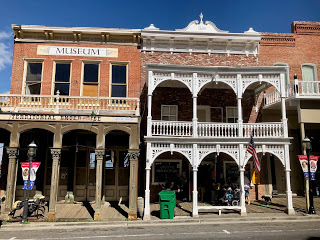
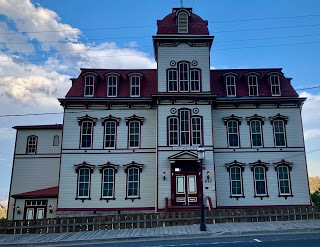
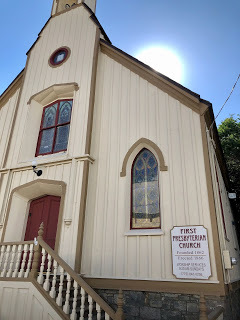
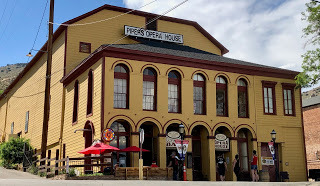 Some buildings mentioned in the novel still stand. They include the Storey County Courthouse, Piper's Opera House, First Presbyterian Church, Fourth Ward School, and the Territorial Enterprise, where Mark Twain worked as a reporter in the early 1860s. The Silver Terrace Cemeteries and the Mackay Mansion, which inspired other venues in the book, are also still around.
Other buildings, like the palatial International Hotel, are gone. The six-story, 160-room structure, once the most prominent hotel between Denver and San Francisco, burned to the ground in 1914.
 Despite these and other changes and the passage of 127 years, I did not have difficulty imagining Virginia City as it existed in the spring and summer of 1893. The town exudes the late nineteenth century. It still embodies the spirit of an industrious time in American history.
For practical reasons, I did not visit Chicago, the primary setting in The Fair. Unlike Virginia City, Chicago today is much different than it was in 1893. The grounds of the World's Columbian Exposition are now a public park. The Midway Plaisance, site of the first Ferris Wheel, is an expansive lawn at the University of Chicago.
The Fair, the second book in the Time Box series, is in its final editing phase. I still intend to publish the novel in the first week of July.
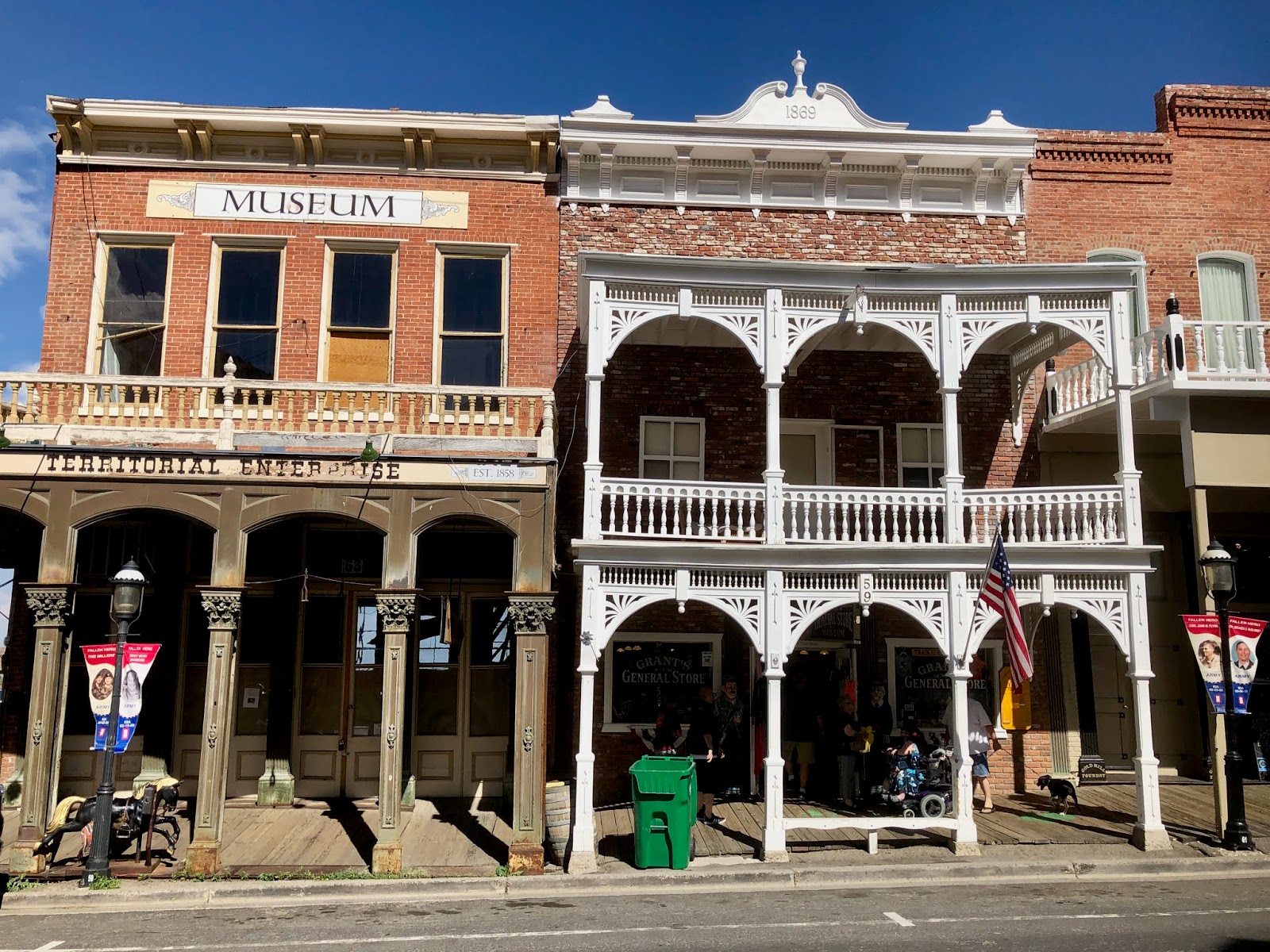
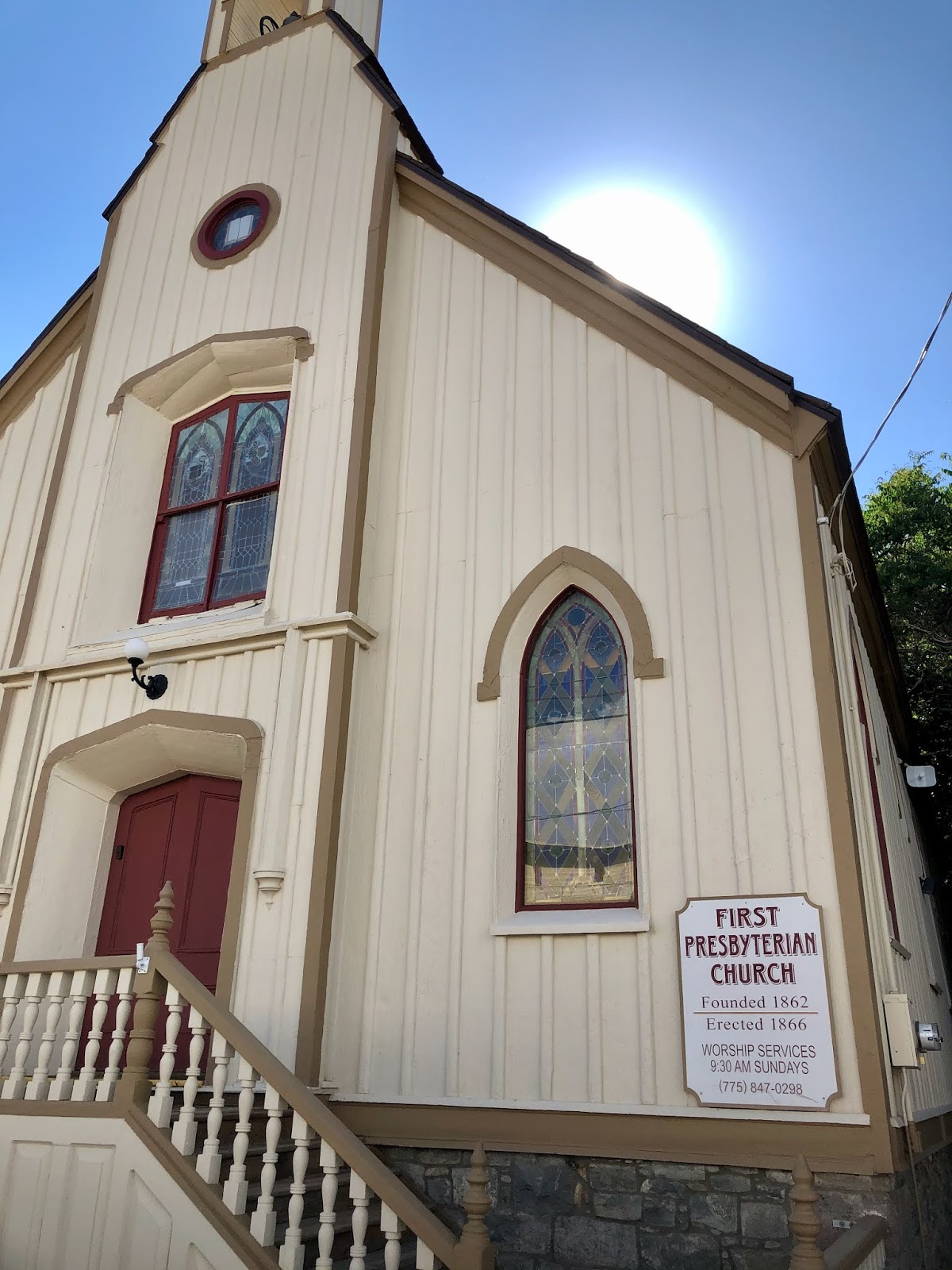
Photographs: Territorial Enterprise building, Fourth Ward School, Piper's Opera House, First Presbyterian Church.
 Between 2013 and this January, I visited each venue, a significant setting in one of my novels, before publishing that novel. I wanted to at least get a feel of the place — and even a time — before committing its particulars to print.
  This week, I added Virginia City, an important setting in The Fair, to the list. Though the Nevada mining town of 900 is not what it was in the early 1870s, when more than twenty thousand people flocked to the Comstock Mining District to make their fortune in silver, it is nonetheless still impressive.
  Some buildings mentioned in the novel still stand. They include the Storey County Courthouse, Piper's Opera House, First Presbyterian Church, Fourth Ward School, and the Territorial Enterprise, where Mark Twain worked as a reporter in the early 1860s. The Silver Terrace Cemeteries and the Mackay Mansion, which inspired other venues in the book, are also still around.
 Other buildings, like the palatial International Hotel, are gone. The six-story, 160-room structure, once the most prominent hotel between Denver and San Francisco, burned to the ground in 1914.
 Despite these and other changes and the passage of 127 years, I did not have difficulty imagining Virginia City as it existed in the spring and summer of 1893. The town exudes the late nineteenth century. It still embodies the spirit of an industrious time in American history.
 For practical reasons, I did not visit Chicago, the primary setting in The Fair. Unlike Virginia City, Chicago today is much different than it was in 1893. The grounds of the World's Columbian Exposition are now a public park. The Midway Plaisance, site of the first Ferris Wheel, is an expansive lawn at the University of Chicago.
The Fair, the second book in the Time Box series, is in its final editing phase. I still intend to publish the novel in the first week of July.
Photographs: Territorial Enterprise building, Fourth Ward School, Piper's Opera House, First Presbyterian Church.
June 7, 2020
Creating covers by committee
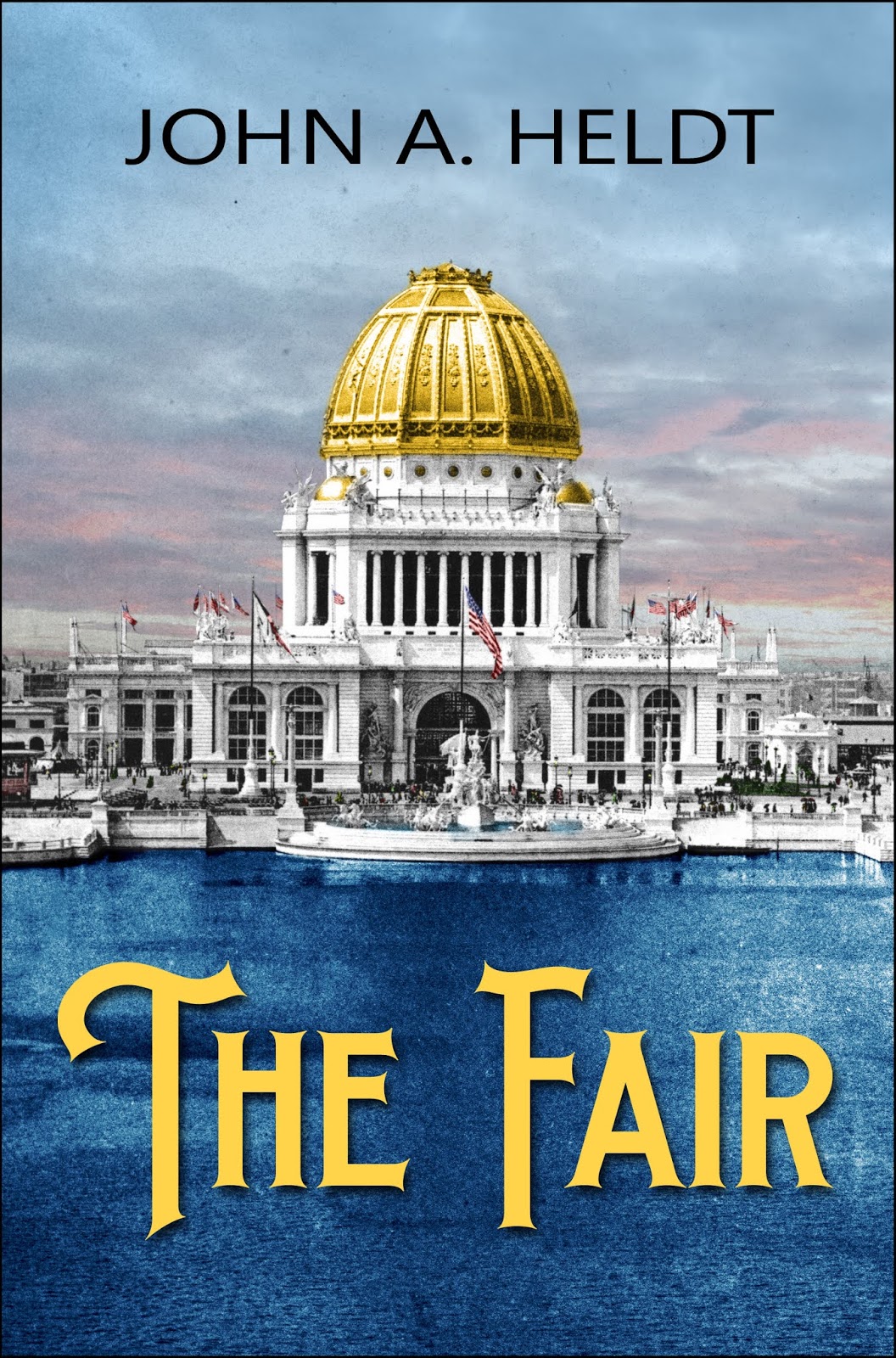 According to an old proverb, too many cooks spoil the broth. While that may be true with some things, I have not found it to be true when arriving at book covers. As one who is as artistic as a dog with a paintbrush, I depend on the insights of others when developing the right wrapper for a particular novel. This month, I did so again with The Fair, my latest work.
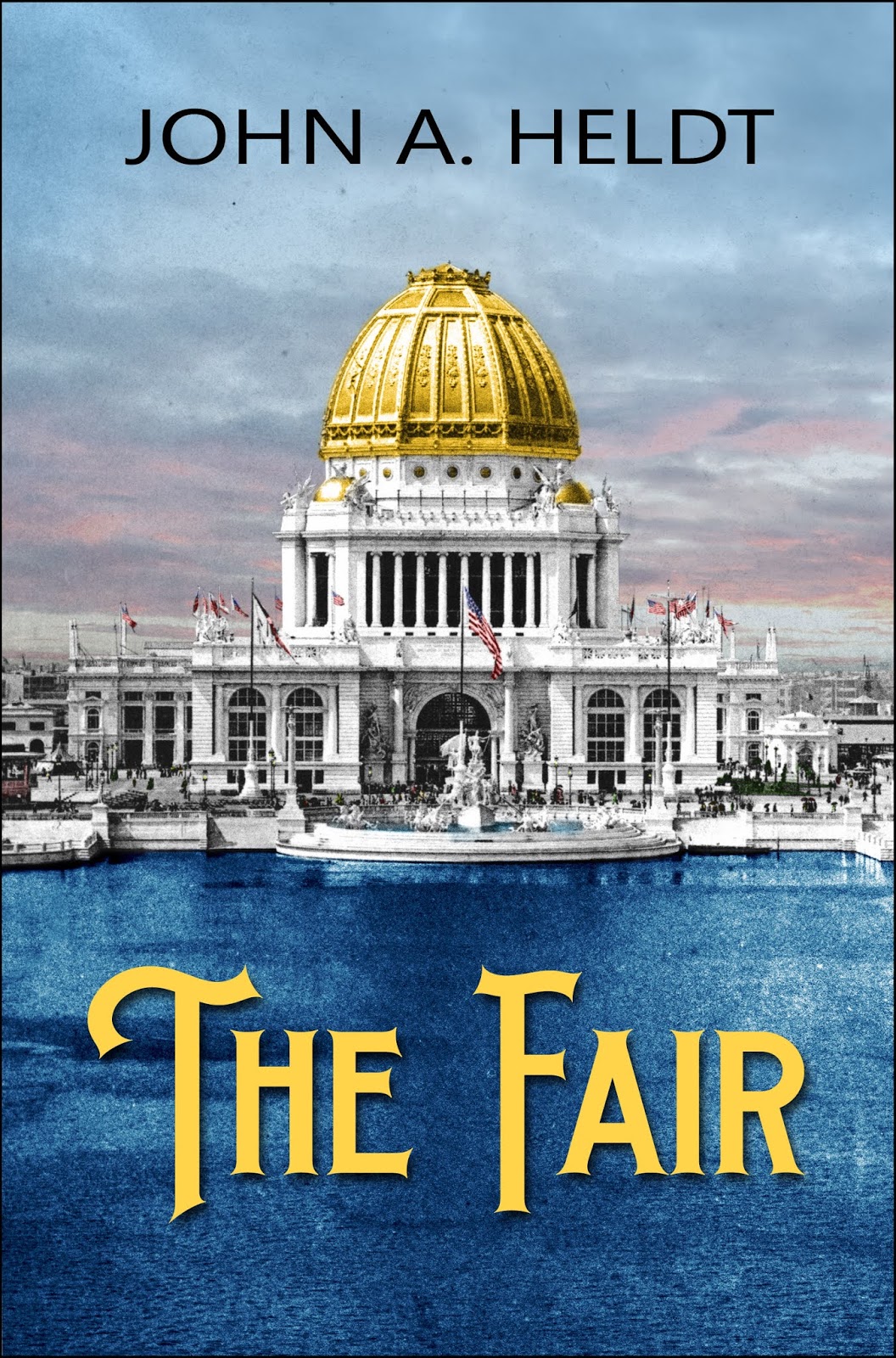
 Thanks to my committee of advisors, a select group of friends and relatives, I settled on a cover that I believe is appealing and strikes a balance between the book's competing themes. Set mostly in Chicago during the 1893 World's Columbian Exposition, The Fair is a mix of time travel, history, romance, humor, and adventure, with grandeur as a backdrop.
For this cover, Laura Wright LaRoche, my longtime illustrator, enhanced an original photo of the fair's Administration Building and Great Basin. Others helped me choose the style and color of the title font, a font that reflects the serious and whimsical themes of the fair, which introduced the world to the Ferris Wheel, Cracker Jack, and the wonders of electricity. I was, and remain, grateful for their help.
Though the book itself is still a work in progress, it is one that is getting much closer to publication. I expect to publish The Fair, the second novel in the Time Box series, sometime in early July.
May 13, 2020
Writing around the future
I have been in this position before.
When writing Mercer Street in 2015, I had to contend with the Chicago Cubs. The Cubs, you may recall, were a bad baseball team for a long time. Between 1946 and 2014, they did not reach the World Series even once. So assuming — in the novel — that they would NOT reach the World Series in 2015 seemed like a safe bet.
Then the 2015 Cubs started winning and messed things up. They tore through the National League playoffs and put the World Series matter in doubt until October 21. The New York Mets, who swept the Cubs in the league championship series, saved me from rewriting a book I had held in reserve for four weeks.
In The Mirror , written in 2013 but set partly in 2021, I had to guess what the world would look like eight years hence. In Indiana Belle and Class of '59 , published in 2016, I had to write around a presidential election because I did not know the outcome.
Enter the coronavirus. What once looked like a short-term problem for everyone has turned into a long-term problem for someone setting a series, at least partly, in the years 2021 to 2023. Like other writers setting books in the near future, I am forced to ask what the world will look like next year — or the next.
In The Fair, my current work in progress, I make only two passing mentions to social distancing and none to COVID-19. I assume that the pandemic currently sweeping the globe will be old news by the time the Lanes, my time travelers, leave the present in August 2021. I hope, for many reasons, that I'm right.
The safe approach, of course, is to set books far into the future. When you write about events decades or even centuries away, you limit the number of finger-waggers who can remind you that you got it wrong. You give yourself wiggle room.
Some writers, of course, stick their necks out anyway and come out smelling like a rose. George Orwell's Nineteen Eighty-Four , written in 1948, seems eerily prescient today. So do the works of H.G. Wells and other authors. TIME magazine mentioned several in 2018.
Fortunately for the Lanes, they will spend more time in years like 1865 and 1893 than the 2020s. Writing about their battles with influenza and tuberculosis will require more research the guesswork. The Fair, the second book of the Time Box series, is now in the revision stage. I hope to publish it by August 1.
When writing Mercer Street in 2015, I had to contend with the Chicago Cubs. The Cubs, you may recall, were a bad baseball team for a long time. Between 1946 and 2014, they did not reach the World Series even once. So assuming — in the novel — that they would NOT reach the World Series in 2015 seemed like a safe bet.
Then the 2015 Cubs started winning and messed things up. They tore through the National League playoffs and put the World Series matter in doubt until October 21. The New York Mets, who swept the Cubs in the league championship series, saved me from rewriting a book I had held in reserve for four weeks.
In The Mirror , written in 2013 but set partly in 2021, I had to guess what the world would look like eight years hence. In Indiana Belle and Class of '59 , published in 2016, I had to write around a presidential election because I did not know the outcome.
Enter the coronavirus. What once looked like a short-term problem for everyone has turned into a long-term problem for someone setting a series, at least partly, in the years 2021 to 2023. Like other writers setting books in the near future, I am forced to ask what the world will look like next year — or the next.
In The Fair, my current work in progress, I make only two passing mentions to social distancing and none to COVID-19. I assume that the pandemic currently sweeping the globe will be old news by the time the Lanes, my time travelers, leave the present in August 2021. I hope, for many reasons, that I'm right.
The safe approach, of course, is to set books far into the future. When you write about events decades or even centuries away, you limit the number of finger-waggers who can remind you that you got it wrong. You give yourself wiggle room.
Some writers, of course, stick their necks out anyway and come out smelling like a rose. George Orwell's Nineteen Eighty-Four , written in 1948, seems eerily prescient today. So do the works of H.G. Wells and other authors. TIME magazine mentioned several in 2018.
Fortunately for the Lanes, they will spend more time in years like 1865 and 1893 than the 2020s. Writing about their battles with influenza and tuberculosis will require more research the guesswork. The Fair, the second book of the Time Box series, is now in the revision stage. I hope to publish it by August 1.
April 8, 2020
Noticing the world around us
Since joining the ranks of the sheltered in place, I have noticed the little things. Clean air. Quiet streets. Fewer planes in the sky. The smell of briquettes and not fast food. Even animal sounds. A mourning dove, my neighborhood's rooster, now announces each day at six.
Such is life in a COVID-19 world. When our mechanized civilization shuts down, our senses open. We notice more and appreciate more. We do more too. We speak to people we have put off for far too long. We watch the movies and prepare the dishes we had filed away. We pull the weeds and plant the flowers. We take the long walks.
We also view our fellow citizens differently. I know I will never again grumble about a long wait in a doctor's office or a keypad mistake by a distracted grocery checker. When people we often take for granted risk their lives for society, I, for one, take notice and applaud.
We work differently as well. Though not all of us can return to our jobs or return to them in the same capacity, we can still be productive. Thanks to technology, creative approaches, and the willingness to adapt, some have not stopped working at all. I know such people.
I have used the down time to finish one work and begin another. Caitlin's Song will be out in audio this month. The Fair, book two in the Time Box series, is 30-percent complete. I hope all of you are making the most of this trying and unusual time. Stay safe!
Such is life in a COVID-19 world. When our mechanized civilization shuts down, our senses open. We notice more and appreciate more. We do more too. We speak to people we have put off for far too long. We watch the movies and prepare the dishes we had filed away. We pull the weeds and plant the flowers. We take the long walks.
We also view our fellow citizens differently. I know I will never again grumble about a long wait in a doctor's office or a keypad mistake by a distracted grocery checker. When people we often take for granted risk their lives for society, I, for one, take notice and applaud.
We work differently as well. Though not all of us can return to our jobs or return to them in the same capacity, we can still be productive. Thanks to technology, creative approaches, and the willingness to adapt, some have not stopped working at all. I know such people.
I have used the down time to finish one work and begin another. Caitlin's Song will be out in audio this month. The Fair, book two in the Time Box series, is 30-percent complete. I hope all of you are making the most of this trying and unusual time. Stay safe!
March 18, 2020
Coping with the coronavirus
Let me say first, I feel fortunate. Unlike many who are struggling in these desperate times, my wife and I have the resources to weather the storm -- at least for now. My heart goes out to those who do not.
My community of Las Vegas is feeling the brunt. For the first time since the assassination of John F. Kennedy in 1963, the Strip has shut down. Casinos, hotels, and restaurants, the economic engine of this tourist town, are closing their doors. Like many, I wonder when the worst will pass. I wonder when I will be able to resume work, look at a 401k statement without closing my eyes, or visit a store without seeing empty shelves and long lines. The challenges created by the spread of COVID-19 are both serious and numerous.
But so are the opportunities. If there is one thing that tough times force you to do, it is to rearrange priorities. Difficult experiences also prompt you to do things things you might not otherwise do. For some, it means volunteering, exercising more, or tackling projects around the house. For most, it means finding productive and meaningful uses of time when that typically scarce resource is suddenly in abundance. I know it does for me. I did not plan to start my next book for several more weeks. But it did not take me long to realize that home quarantine was an opportunity to do now what I might not be able to do -- or do as quickly -- later. Time, to a writer, is a gift.
So I jumped back in. I finished a chapter summary, ordered some research materials, read a few books, and watched some documentaries. I did and will continue to do what I can to make the most of a trying situation. I will begin writing the second novel in the Time Box series before the end of the month and plan to publish it by the summer. I hope that when the book does comes out, the world will be a healthier, happier, and less stressful place. I think we all do.
My community of Las Vegas is feeling the brunt. For the first time since the assassination of John F. Kennedy in 1963, the Strip has shut down. Casinos, hotels, and restaurants, the economic engine of this tourist town, are closing their doors. Like many, I wonder when the worst will pass. I wonder when I will be able to resume work, look at a 401k statement without closing my eyes, or visit a store without seeing empty shelves and long lines. The challenges created by the spread of COVID-19 are both serious and numerous.
But so are the opportunities. If there is one thing that tough times force you to do, it is to rearrange priorities. Difficult experiences also prompt you to do things things you might not otherwise do. For some, it means volunteering, exercising more, or tackling projects around the house. For most, it means finding productive and meaningful uses of time when that typically scarce resource is suddenly in abundance. I know it does for me. I did not plan to start my next book for several more weeks. But it did not take me long to realize that home quarantine was an opportunity to do now what I might not be able to do -- or do as quickly -- later. Time, to a writer, is a gift.
So I jumped back in. I finished a chapter summary, ordered some research materials, read a few books, and watched some documentaries. I did and will continue to do what I can to make the most of a trying situation. I will begin writing the second novel in the Time Box series before the end of the month and plan to publish it by the summer. I hope that when the book does comes out, the world will be a healthier, happier, and less stressful place. I think we all do.
March 2, 2020
Review: Outlander (TV series)
For someone obsessed with time travel, I took my time getting around to the gold standard of the genre. I didn't read
Outlander
, published in 1991, until ten years ago and didn't take on the rest of the story until it became a miniseries in 2014. But as they say, better late than never.
For those of you with trial STARZ accounts, or Facebook pages with advertisements that remind you of those accounts, the Outlander series, now in its fifth season, is a pretty big thing right now. And for good reason. It is world-class entertainment.
The series, based on Diana Gabaldon's novels, follows nurse Claire Randall Fraser from 1946 to 1743 and beyond on a journey through time. Along the way, Claire, played by Caitriona Balfe, tries to find her place in two worlds -- the world of Frank Randall, her professor husband, and that of James "Jamie" Fraser, her hunky highlander.
Though the Outlander series has long been considered a staple of romance, I appreciate it most for its attention to other things. Even without the sex scenes -- and yes, there are plenty of those -- it would stand on its own as an achievement of historical fiction.
It does not matter if an episode is set in Scotland in the 1740s, Boston in the 1960s, or the colony of North Carolina in the 1770s. The writers and producers make it work. They give you the glory and misery of each place and era. They provide the grit, the costumes, the accents, and the settings that so many others do not.
Beyond the attention to historical detail, I like how the main characters adapt to their changing surroundings. Claire evolves from nurse to "healer" to modern physician and back in the series and makes the most of what she has. In Season 5, she makes homemade penicillin from bread mold to treat colonial neighbors who think mercury pills and blood-letting are the answer to every ill.
Similarly, Jamie, played by the charismatic Sam Heughan, evolves from soldier to printer to landowner while supporting and mentoring a host of family and friends. Though Claire is the central figure in the series, Jamie is the most compelling. He retains his humor and his humanity despite challenges that would break other men.
I would recommend the series, in any format, to anyone. In a world where so many books, movies, and television series are overrated, this magnificent collection delivers the goods. Rating: 5/5.
For those of you with trial STARZ accounts, or Facebook pages with advertisements that remind you of those accounts, the Outlander series, now in its fifth season, is a pretty big thing right now. And for good reason. It is world-class entertainment.
The series, based on Diana Gabaldon's novels, follows nurse Claire Randall Fraser from 1946 to 1743 and beyond on a journey through time. Along the way, Claire, played by Caitriona Balfe, tries to find her place in two worlds -- the world of Frank Randall, her professor husband, and that of James "Jamie" Fraser, her hunky highlander.
Though the Outlander series has long been considered a staple of romance, I appreciate it most for its attention to other things. Even without the sex scenes -- and yes, there are plenty of those -- it would stand on its own as an achievement of historical fiction.
It does not matter if an episode is set in Scotland in the 1740s, Boston in the 1960s, or the colony of North Carolina in the 1770s. The writers and producers make it work. They give you the glory and misery of each place and era. They provide the grit, the costumes, the accents, and the settings that so many others do not.
Beyond the attention to historical detail, I like how the main characters adapt to their changing surroundings. Claire evolves from nurse to "healer" to modern physician and back in the series and makes the most of what she has. In Season 5, she makes homemade penicillin from bread mold to treat colonial neighbors who think mercury pills and blood-letting are the answer to every ill.
Similarly, Jamie, played by the charismatic Sam Heughan, evolves from soldier to printer to landowner while supporting and mentoring a host of family and friends. Though Claire is the central figure in the series, Jamie is the most compelling. He retains his humor and his humanity despite challenges that would break other men.
I would recommend the series, in any format, to anyone. In a world where so many books, movies, and television series are overrated, this magnificent collection delivers the goods. Rating: 5/5.
February 29, 2020
Driving in a familiar Lane
I admit I considered another course. After writing the Carson Chronicles, an exhaustive five-book set, I was ready for a change.
But as I pondered my options for my next series, I realized I was not quite ready to say goodbye to time travel, family sagas, or even historical fiction. So I jumped back in. I took the best elements of my first fifteen novels, focused a little more on suspense, and came up with a storyline for what I hope will be my best series yet.
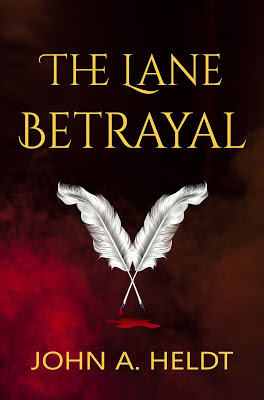 Like the Carsons, the Lanes of Fredericksburg, Virginia, are a family with a problem. Weeks after noted physicist Mark Lane, 52, creates the world's first time machines, he learns his corporate partner wants to use the portable devices for nefarious purposes.
Rather than give him the chance to do so, Mark takes the time boxes and his family to the relative safety of 1865. For Mark, wife Mary, and their four children, the adventure is a chance to grow. Mary runs a business selling modern cosmetics. Jeremy, 19, and Ashley, 12, befriend an abolitionist and two escaped slaves in wartime Washington. Laura, 22, finds her place as a nurse in a military hospital. Jordan, 25, falls for a beautiful widow on a recovery mission in Virginia. All hope to find peace in the past.
But billionaire Robert Devereaux has no interest in giving the Lanes even a moment's rest. Shortly after Mark's betrayal, he sends an assassin to 1865 to retrieve his property and set matters straight.
Like most of my previous works, The Lane Betrayal combines history, romance, adventure, and multiple points of view. It also features my first true villain and cameos by Abraham Lincoln, Mary Lincoln, Edwin Stanton, John Hay, Walt Whitman, and John Wilkes Booth.
The Lane Betrayal is the first book in the Time Box series, which will span 1865 to 1963. The novel, available as a Kindle book on Amazon.com and its international sites, goes on sale today.
But as I pondered my options for my next series, I realized I was not quite ready to say goodbye to time travel, family sagas, or even historical fiction. So I jumped back in. I took the best elements of my first fifteen novels, focused a little more on suspense, and came up with a storyline for what I hope will be my best series yet.
 Like the Carsons, the Lanes of Fredericksburg, Virginia, are a family with a problem. Weeks after noted physicist Mark Lane, 52, creates the world's first time machines, he learns his corporate partner wants to use the portable devices for nefarious purposes.
 Rather than give him the chance to do so, Mark takes the time boxes and his family to the relative safety of 1865. For Mark, wife Mary, and their four children, the adventure is a chance to grow. Mary runs a business selling modern cosmetics. Jeremy, 19, and Ashley, 12, befriend an abolitionist and two escaped slaves in wartime Washington. Laura, 22, finds her place as a nurse in a military hospital. Jordan, 25, falls for a beautiful widow on a recovery mission in Virginia. All hope to find peace in the past.
But billionaire Robert Devereaux has no interest in giving the Lanes even a moment's rest. Shortly after Mark's betrayal, he sends an assassin to 1865 to retrieve his property and set matters straight.
Like most of my previous works, The Lane Betrayal combines history, romance, adventure, and multiple points of view. It also features my first true villain and cameos by Abraham Lincoln, Mary Lincoln, Edwin Stanton, John Hay, Walt Whitman, and John Wilkes Booth.
The Lane Betrayal is the first book in the Time Box series, which will span 1865 to 1963. The novel, available as a Kindle book on Amazon.com and its international sites, goes on sale today.
February 12, 2020
Review: Where Crawdads Sing
Like others, I suspect, I put this one off. I prefer other genres and wasn't eager to jump into a long novel when I was in the middle of producing my own. But 4.8 stars on Amazon and Oprah's blessing are hard to ignore, so I made an exception. I'm glad I did. I found
Where the Crawdads Sing
, the debut novel by Delia Owens, every bit as poignant and captivating as most readers say it is.
The story begins in 1952, when Kya Clark, a girl of six, is abandoned by her mother, her siblings, and finally her abusive father. After trying and failing to make her peace with the outside world, Kya raises herself in a shack in the wilds of coastal North Carolina. What follows is a coming-of-age story that spans two decades.
The story is implausible at times. Kya, dubbed "The Marsh Girl" by her many detractors, never gets sick, even though she has never been immunized. She never gets pregnant, despite dabbling in unprotected sex. And she becomes the published author of several reference wildlife books, despite the lack of a formal education.
But these flaws did not hinder my enjoyment of a story that grabbed my attention from the first chapter. The depictions of life in a small Southern town in the 1950s and 1960s are first-rate. So are the descriptions of the plants and animals of the exotic and sometimes forbidding wetlands. Throughout the book, Kya, a recluse, is at one with nature, the one thing that never betrays her.
Crawdads is also a riveting murder mystery. When Chase Andrews, a philandering former football star who is obsessed with Kya, is found dead under an abandoned fire tower, all eyes turn toward the beautiful marsh girl. The whodunit is not solved until the last chapter.
I would recommend Crawdads to anyone who loves a good story, particularly one with an appealing, strong-willed female protagonist. I look forward to seeing the movie version. Rating: 4.5/5.
The story begins in 1952, when Kya Clark, a girl of six, is abandoned by her mother, her siblings, and finally her abusive father. After trying and failing to make her peace with the outside world, Kya raises herself in a shack in the wilds of coastal North Carolina. What follows is a coming-of-age story that spans two decades.
The story is implausible at times. Kya, dubbed "The Marsh Girl" by her many detractors, never gets sick, even though she has never been immunized. She never gets pregnant, despite dabbling in unprotected sex. And she becomes the published author of several reference wildlife books, despite the lack of a formal education.
But these flaws did not hinder my enjoyment of a story that grabbed my attention from the first chapter. The depictions of life in a small Southern town in the 1950s and 1960s are first-rate. So are the descriptions of the plants and animals of the exotic and sometimes forbidding wetlands. Throughout the book, Kya, a recluse, is at one with nature, the one thing that never betrays her.
Crawdads is also a riveting murder mystery. When Chase Andrews, a philandering former football star who is obsessed with Kya, is found dead under an abandoned fire tower, all eyes turn toward the beautiful marsh girl. The whodunit is not solved until the last chapter.
I would recommend Crawdads to anyone who loves a good story, particularly one with an appealing, strong-willed female protagonist. I look forward to seeing the movie version. Rating: 4.5/5.
Review: Crawdads Sing
Like others, I suspect, I put this one off. I prefer other genres and wasn't eager to jump into a long novel when I was in the middle of producing my own. But 4.8 stars on Amazon and Oprah's blessing are hard to ignore, so I made an exception. I'm glad I did. I found
Where the Crawdads Sing
, the debut novel by Delia Owens, every bit as poignant and captivating as most readers say it is.
The story begins in 1952, when Kya Clark, a girl of six, is abandoned by her mother, her siblings, and finally her abusive father. After trying and failing to make her peace with the outside world, Kya raises herself in a shack in the wilds of coastal North Carolina. What follows is a coming-of-age story that spans two decades.
The story is implausible at times. Kya, dubbed "The Marsh Girl" by her many detractors, never gets sick, even though she has never been immunized. She never gets pregnant, despite dabbling in unprotected sex. And she becomes the published author of several reference wildlife books, despite the lack of a formal education.
But these flaws did not hinder my enjoyment of a story that grabbed my attention from the first chapter. The depictions of life in a small Southern town in the 1950s and 1960s are first-rate. So are the descriptions of the plants and animals of the exotic and sometimes forbidding wetlands. Throughout the book, Kya, a recluse, is at one with nature, the one thing that never betrays her.
Crawdads is also a riveting murder mystery. When Chase Andrews, a philandering former football star who is obsessed with Kya, is found dead under an abandoned fire tower, all eyes turn toward the beautiful marsh girl. The whodunit is not solved until the last chapter.
I would recommend Crawdads to anyone who loves a good story, particularly one with an appealing, strong-willed female protagonist. I look forward to seeing the movie version. Rating: 4.5/5.
The story begins in 1952, when Kya Clark, a girl of six, is abandoned by her mother, her siblings, and finally her abusive father. After trying and failing to make her peace with the outside world, Kya raises herself in a shack in the wilds of coastal North Carolina. What follows is a coming-of-age story that spans two decades.
The story is implausible at times. Kya, dubbed "The Marsh Girl" by her many detractors, never gets sick, even though she has never been immunized. She never gets pregnant, despite dabbling in unprotected sex. And she becomes the published author of several reference wildlife books, despite the lack of a formal education.
But these flaws did not hinder my enjoyment of a story that grabbed my attention from the first chapter. The depictions of life in a small Southern town in the 1950s and 1960s are first-rate. So are the descriptions of the plants and animals of the exotic and sometimes forbidding wetlands. Throughout the book, Kya, a recluse, is at one with nature, the one thing that never betrays her.
Crawdads is also a riveting murder mystery. When Chase Andrews, a philandering former football star who is obsessed with Kya, is found dead under an abandoned fire tower, all eyes turn toward the beautiful marsh girl. The whodunit is not solved until the last chapter.
I would recommend Crawdads to anyone who loves a good story, particularly one with an appealing, strong-willed female protagonist. I look forward to seeing the movie version. Rating: 4.5/5.