Annie Cardi's Blog, page 76
August 21, 2012
First Pages
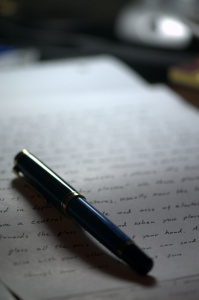 Cheryl Klein has a great post about the first chapter in YA novels, including some annoying tropes and thoughts about pacing. One part I found particularly interesting:
“But I believe that the number-one thing that hooks readers is authority, by which I mean a sense that this writer is in control of the story and how it’s being told. An author with authority isn’t in a rush to give away the central plotline of the book, because s/he knows that plot is going to be good, and so s/he can afford to take her time getting there, and to do it right….The author can take that time because s/he still makes all of this backstory build up steadily to the Inciting Incident, which happens by the end of the first chapter if not earlier.”
I don’t think Klein is necessarily saying that we all need to have leisurely openings about the scenery or the weather. But I think it’s so common to hear that you need to hook the reader with the first paragraph, and I’m glad that Klein suggests focusing on character and emotional core at that point. A lot of books start on a day that something changes; it’s good to have a moment of time in which we see the characters in their status quo. Then we can appreciate how things will change. (Klein has a few great examples, like The Hunger Games and The Fault in Our Stars.)
Still, it’s important to note that Klein also says you need an inciting incident pretty quickly. If there’s no momentum by the end of the first chapter, a reader can feel like there’s not enough reason to keep reading.
This has definitely given me something to think about for my latest projects. Make sure to check out the full post, and share your own first chapter tips/pet peeves in the comments.
(image: J. Paxon Reyes)


August 20, 2012
Quote of the Day
“Storytelling makes us more alive, more human, more courageous, more loving. Why does anybody tell a story? It does indeed have something to do with faith, faith that the universe has meaning, that our little human lives are not irrelevant, that what we choose or say or do matters, matters cosmically. It is we humans who either help bring about, or hinder the coming of the kingdom. We look around us, and it is a complex world, full of incomprehensible greed…irrationality, brutality, war, terrorism–but also self-sacrifice, honor, dignity–and in all of this we look for, and usually find, pattern, structure, meaning. Our truest response to the irrationality of the world is to paint or sing or write, for only in such response do we find truth.”–Madeleine L’Engle
From Madeleine L’Engle Herself: Reflections on a Writing Life. This idea of writing as a way of expressing hope for humanity and finding meaning in the chaos reminds me of Faulkner’s Nobel Prize acceptance speech.


August 17, 2012
Friday Fifteen
You’ve been waiting for it all week and now it’s here–the Friday Fifteen! Here are this week’s fifteen-word reviews:
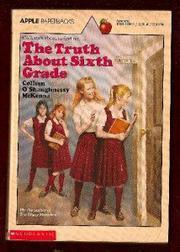 1. The Truth About Sixth Grade by Colleen O’Shaughnessy McKenna
Nice take on shifting friendships in middle school. Apparently it’s part of a series.
2. In My Kitchen: 100 Recipes and Discoveries for Passionate Cooks by Ted Allen
I want to make every single recipe in here. The duck, guys; the duck!
3. Reading Like a Writer by Francine Prose
Thoughtful look at how literary analysis makes us stronger writers. In short: read!
4. The Great Gatsby by F. Scott Fitzgerald
Enjoyed in high school, admired in college. Saw Gatz and thought “Damn, that’s good writing.”
5. A Sister for Sam by Evelyn Mason
I don’t care what you think, Sam. Little sisters are awesome! (Guess what I am.)


Thanks, Chocolate: Top 10 Writing Essentials
At Writer’s Digest, Erik Larson shares his top 10 essentials to a writer’s life. When your first and second items are coffee, you have my full agreement.
This got me thinking about my own top 10 essentials. In no real particular order:

Hydration nation.
1. Water
Although I sing songs about the awesomeness of coffee, I tend to have a glass of water by my side when I’m writing. Usually it’s because I write at night and caffeine after 7pm isn’t so great. Plus water is refreshing. Don’t worry, coffee, I still love you!
2. iTunes
As I’ve mentioned before, pretty much all of my projects have a corresponding playlist. Nothing gets me quite in the writing mood like a good story soundtrack.
3. Blocks of Undisturbed Time
Stealing from Larson on this one. I think most writers wish they had time to sit down and write without distractions. Walt and I like to schedule writing time in the evenings so we both know that’s all we have to do.
4. Dropbox
No matter where I am, I can access my files via this file-hosting program and write in any spare time. Way better than my old method of emailing myself drafts and trying to remember which was the most current.

Not me running, because apparently I look heinous when I run. Thanks, race photos.
5. Running
Okay, I feel like a lot of writers talk about how they feel about running and how it connects them to their work. But it’s true. I’m not even that great a runner–so far the biggest race I’ve done is a 10k. But I try to work out in the mornings, and a lot of times I end up thinking about whatever I’m writing. I also don’t run without music (mostly because I’m scared I’ll get hit by a car because I’m too distracted) so it’s the perfect time for writerly brainstorming.
6. Friends Who Like Books
I’m fortunate to know a lot of people who not only like reading and writing, but also like YA and children’s lit. When you’re feeling down about your writing and your general life choices, having a support system that encourages your life choices is amazing. And friends can share book recommendations/read your drafts/commiserate about the craziness of the writing life. Extra points if your partner/family is supportive as well.
7. Chocolate
Essential to life, not just the writing process. It helps if you can hold off on the chocolate until you’ve finished that chapter.
8. Literary Community
YA author reading at a local bookstore? I’m there. SCBWI event? Love to! Formal events outside of your own writing/reading circle are a great reminder that this is a valid life choice. Writing is awesome. Reading is awesome. And there are a lot of people out there who like both. Plus, it’s so helpful to get information about writing as a career.

Bear, you will never get work done in a non-dedicated writing space!
9. Dedicated Writing Space
If I try to write in the same place on the couch I curl up in to watch TV, I’m guaranteed not to get work done. If I sit down at my desk and say “just half an hour,” I’ll usually go longer. Whether it’s a desk in your bedroom, a coffee shop, or a nook next too the washing machine (whatever works), it helps to have a place you know is for business.
10. Stories
Whether it’s a new book by an author you love or a news article or your friend telling you about that time he saw Santa Claus in May, the world is full of stories. Maybe part of it is just how my brain works, but I’m constantly inspired by stories that have been told and all the potential stories hanging around us. And honestly, all of the above don’t matter at all without stories.
What are your writerly must-haves?
(image 1: RL Hyde)(image 2: Thomas Hawk)(image 3: selva)


A Slice of Chapter Five
Guys, this isn’t a pile of books. It’s a cake.

Baking and writing together at last! Make sure to click through for lots of other amazing book-inspired cakes. I especially like the writing on the Twilight cake.
(image: Boulby’s Bakers & Confectioners)


August 16, 2012
MG and YA Journeys
Awesome post at WriteOnCon about what differentiates middle grade and young adult. Author Claire Legrand talks about levels of swearing, language, violence–the movie rating approach. But she also talks about less quantifiable aspects of novels, like the character’s internal/external experiences and how they approach what happens in their lives. One part I especially liked, about journeys:
“At the end of a MG book, the main character has experienced something, in her own world, that has changed everything. She now sees her world in a different way. The MG protagonist has started the process of becoming who she will grow up to be. Anything could happen now; her journey has only just begun.
On the other hand, at the end of a YA book, the main character’s world has collided with the outside world, changing everything. He now sees his world as it relates to the outside world. For a long time, the YA protagonist has been trying to figure out who he will grow up to be. What he believes in, what he wants, who he is. This experience has helped start to answer these questions. He still has many other questions, of course, and who knows what life beyond high school will bring? But now, at last, he’s finally getting somewhere.”
I don’t tend to write middle grade, but I love this look at the difference in emotional core. MG characters are beginning to figure out their places in the world and how they can interact as individuals. YA characters are establishing themselves within the larger context and deciding who they want to be. This shift is subtle but vital to tween and teen characters.
And I think this is another reason I like MG and YA so much. It’s very easy to relate to characters who are learning about themselves and establishing themselves in the context of the larger world. Even if the action required to do so isn’t big, the emotional reprecussions are huge and, again, it’s easy to sympathize.
Claire shares lots of other excellent thoughts about the MG/YA divide, so make sure to check out the whole post.


August 15, 2012
The Secret Lives of Best Friends and Other Minor Characters
Writer’s Digest has a great post up about strengthening your minor characters–what are their motivations? What traits can you round out?
This got me thinking about the best friend characters in YA. They pop up in lots of novels, especially contemporary YA, and sometimes I feel the best friend characters are a little lacking. They can feel like they only exist to be the main character’s best friend–pushing them into conversations with the romantic lead, fuming at appropriate times, or acting like a lovable oddball. All of that is fine, but it’s good to remember that these characters should also be complete people. In real life, your best friends aren’t just your cheering section–they go home and talk to their pets and take salsa lessons.
When I feel like my minor characters aren’t full people, thinking about big things like motivation and character traits can be hard. But it’s not as hard to imagine those little, normal life things. What does minor character X do when she’s at home on a Saturday morning? What’s minor character Y’s after-school activity? Where does minor character Z’s family go on vacation? These might not be huge, defining qualities, but it helps you start imagining a life for your character outside of your protagonist’s journey.
How do you flesh out your minor characters?


Quote of the Day
 “Life is a luminous halo, a semitransparent envelope surrounding us from the beginning of consciousness to the end. Is it not the task of the novelist to convey this varying, this unknown and uncircumscribed spirit, whatever aberration or complexity it may convey?”–Virginia Woolf
(image: Wikimedia Commons)


August 14, 2012
At the Bindery
Reading Rainbow shows us how books are made:
Wondering if there’ll be an ebook update eventually.
(via The Paris Review)


Jazz Up Your Quotes
A couple of fun blogs that take on literary quote matching. I’m feeling the synesthesia!
I’ve mentioned before that I like to create playlists for my various literary projects. But I’ve never tried matching songs to previously created works from the literary canon. Enter literary jukebox, which pairs famous quotes with thematically similar songs.
And this tumblr might leave you craving a sugary treat, but I think Dough Country for Old Men, which pairs pictures of donuts with literary quotes, is pretty fun. The title puns alone get my approval. My own attempt at donut quotes:
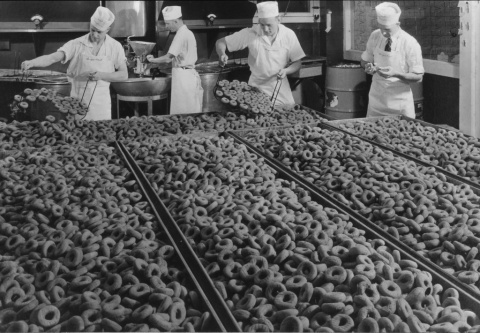
Ambition should be made of sterner stuff.–William Shakespeare
(via Bon Appetit)(image: OSU Special Collections & Archives : Commons)