Annie Cardi's Blog, page 79
July 31, 2012
Happy Birthday, Harry (and Jo!)
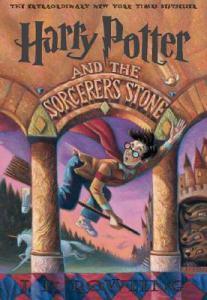 There are plenty of fictional characters who have birthdays. But the only one I remember is Harry Potter’s–July 31st, aka today. Okay, so Harry’s birthday figures pretty heavily into the plot, but I think it also has to with how Harry Potter is more than just a fictional character. He and Rowling’s other characters are parts of our lives.
At her Children’s Book-a-Day Almanac, Anita Silvey has a great post up about Harry Potter and why the series won so many readers. One point she makes:
“Not only does Harry have loyal and wonderful friends like Ron and Hermione, but he also encounters intriguing adults—Albus Dumbledore and Professor Snape for instance. After I read Harry Potter, I had a new life goal—some day I want to teach Defense Against the Dark Arts at Hogwarts. Millions of other readers have projected themselves into the stories in entirely different roles.”
The reference to adults in Harry Potter is a good one, and it’s not brought up often in children’s literature. It’s not only important to craft compelling young protagonists; the adults around them should be compelling as well. It provides even more opportunities for readers to connect with the series, and for readers’ opinions to change over time.
July 31 is also JK Rowling’s birthday. These days, it’s easy to think of Rowling as a wildly successful and beloved author. But Silvey points out that the path to publication was rough for her, too:
“Almost every publisher in England rejected the manuscript of Harry Potter; she had to persevere for years with a story that seemed to be only of interest to her. Finally, she found an editor new to the field in a small publishing house: Barry Cunningham of Bloomsbury Press was willing to take a chance on her book. For around $1,000 dollars he acquired the rights to publish the first book about Harry Potter, and when he called her in for an editorial meeting, he told her that she needed to get a job, because “Nobody, absolutely nobody, ever makes any money in children’s books.””
I have no idea how anyone could pass on Harry Potter. I was hooked on the first page! Still, it’s a great reminder that a) not everyone is going to love your book, no matter how amazing it is, and b) even the most awesome books get rejected. If Rowling decided to quit after a few rejection letters, we’d have been deprived of a fantastic series and a rejuvenation in children’s literature as a whole.
If you still want more HP fun and trivia, check out these ten facts you might not have known. And raise a glass of butterbeer in honor of Harry Potter, the boy who lived!
PS–One summer a friend and I decided we wanted to get an ice cream cake. We didn’t have any friends who were having birthdays and it was after the 4th of July but way before Labor Day. So we decided to celebrate Harry Potter’s birthday and asked the Dairy Queen people to write “Happy Birthday, Harry” in icing. Made the treat that much sweeter.


Quote of the Day
“Writing a novel is like driving a car at night. You can only see as far as your headlights, but you can make the whole trip that way.”–E.L. Doctorow
This pretty much sums up my writing process. I usually have an idea of where I’d like to end up and how I get there, but I don’t always know the exact path the story will take.


Twice as High
Two parts of my childhood–Reading Rainbow and the Doors–come together care of Jimmy Fallon:
It sounds so perfect, it’s kind of eerie.


July 30, 2012
Chapter by Chapter in Harry Potter
Holy cow, I’m on the WordPress Freshly Pressed list today! Thanks to WordPress for the opportunity, and to all the readers who have stopped by to check out last week’s Friday Fifteen. If you liked that post, it’s a regular feature so you should check out the Friday Fifteen archive. So many fifteen-word reviews!
Back to normal book business. One lovely feature in the Harry Potter series is the illustration featured at the beginning of each chapter. Now Redditor ajcfood has put together each chapter illustration in one giant composite:
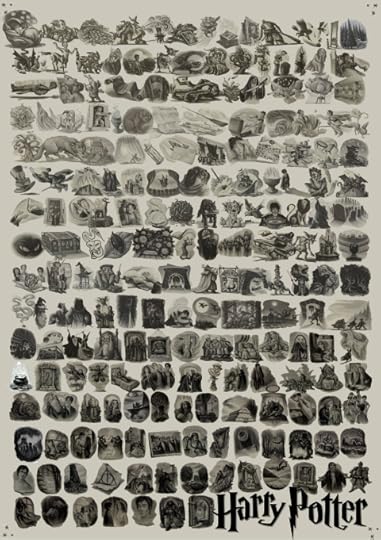
Click through to see the larger image. Wouldn’t this make a fantastic poster? It really gives you a sense of the scope and narrative of the series.
Mary GrandPré is the artist behind it all (she also does the covers). Her work provides a glimpse into each chapter, and connects beautifully with Rowling’s magical stories. Check out this interview with GrandPré in which she talks a little about her process.


July 27, 2012
Friday Fifteen
Happy Friday! Welcome to this week’s edition of the Friday Fifteen, in which I review five books in fifteen words or less. Since today marks the start of the 2012 Olympics, here’s a special UK-themed edition:
 1. The Boggart by Susan Cooper
Charming MG novel mixing mythical creatures and modernity. Boggarts were cool before Harry Potter.
2. Pride and Prejudice by Jane Austen
Sisters, snobs, and misunderstandings. Austen’s characters deal with issues we tackle today. See also LBD.
3. Songs of Innocence and of Experience by William Blake
The Decemberists could probably make a great album out of these poems.
4. A Little Princess by Frances Hodgson Burnett
Sara Crewe keeps calm and carries on.
5. The Tale of Peter Rabbit by Beatrix Potter
Sometimes it’s worth risking death to score some tasty veg.


Links Galore
A few more links to round out Friday:
2013 debut author and fellow critique group member Tara Sullivan talks about how important writing communities are.
Superheroes as typography.
Check out the books on the Man Booker prize long list.
Sci-fi for people who don’t think they like sci-fi. (Cough, guilty, cough)
Fictional characters who love to read.


I’m on a Reblogging Spree
From Hank Green, a musical video about how great/crazy Tumblr is:

So…I still want to say it “gif” with a hard g. As in “reblog.”
At the January SCBWI conference, lots of people asked what Tumblr was and if they needed to be on there for their writerly platform. I don’t think you need to use any social media platform you don’t feel comfortable using, but I will argue that Tumblr is filled with Doctor Who and kittens and coffee and pretty pictures–aka, it’s a good time.
Feel free to scope out my Tumblr too!


A Caustic Keynote
The kids’ keynote speaker at this year’s Boston Book Festival: Lemony Snicket! From the BBF website:
“2012′s BBF kids’ keynote will be delivered by the elusive and mysterious Lemony Snicket, author of the wildly popular Series of Unfortunate Events. This October, he’ll be publishing Who Could That Be At This Hour? the first volume of his autobiography, an account that shouldn’t be published, in four volumes that should never be read. .”
Notice that the use of Lemony Snicket, not Daniel Handler. So excited for this one! Hoping to see more events for the festival posted soon.


Literature Meets Fanfic
Earlier this week, I talked a little about literary adaptations and making sure they can stand as their own stories. Today, let’s take a look at the adaptation’s less-respected but close cousin, the fan fiction. With all the flurry around 50 Shades of Grey, fanfic is getting a lot of attention. Obviously 50 Shades was changed for publication (it’s not longer about Bella and Edward in an alternate universe), but it’s still raised questions about what fanfic is to readers, to authors, and where the line is drawn between fanfic and adaptations.
The Wall Street Journal recently looked at this issue, touching on famous author reactions to fanfic inspired by their works. JK Rowling is totally cool with it, while George R.R. Martin and Anne Rice hate it. Although I can understand being concerned about your work and how it’s managed in the public, I’m more inclined to side with Rowling. From what I’ve seen, fan fiction is writing because the writer loves the original work. They love it so much they think about what happens to the characters outside of that story and want to participate in the experience.
The article also points out famous and literary novels that are very closely inspired by other famous work, like Wide Sargasso Sea by Jean Rhys (about Bertha Mason in Jane Eyre) and Ursula LeGuin’s Lavinia (about Aeneas’s wife in the Aeneid). Other examples I can think of are Rosencrantz and Guildenstern Are Dead by Tom Stoppard and Grendel by John Gardner. These are all so closely connected with their source material that it’s hard not to classify them as fanfic. I think what separates these works from being considere fanfic is a) a level of literary skill (these are already well-respected authors), b) using literature in the public domain, and c) like in any adaptation, focusing on making the new story unique and essential in the larger literary landscape.
Whether it’s called fanfic or adaptation or retellings, I’m a fan of stories. If it’s a way for a fan to engage with a work they love, great. If it’s a way for great writers to give us compelling and original takes on classic stories, awesome. I just want to read a good story.


July 26, 2012
On Not Loving Books
It seems like today’s a big day for hating the books you read. Lev Grossman goes off on hating a novel by a well-respected author and wonders if it’s just him. Publishers Weekly has a post up about which books readers couldn’t finish.
I don’t hate many of the books I read. Maybe I don’t fall in love with all of them, but I don’t think I leave many reading experiences thinking, “Dear lord, if only I could erase all the words from the page.” Still, I’m all in favor of setting aside a book that isn’t working for you. A few years ago I read Anna Karenina because I thought I should. Honestly–not a huge fan. I only finished it because I thought I should, and I don’t think I’m better off for it. Just like you don’t have to like every food or movie or song, you don’t have to love every book you read. Maybe you’re just not in the right place for it, or maybe it’s just not for you. Why waste your time reading books you don’t enjoy or get something out of?
My suggestion: Put the book aside. No guilt. Life is too short and there are too many awesome books out there to waste time on the ones you don’t like.