Annie Cardi's Blog, page 74
September 5, 2012
May the Words Be Ever in Your Favor
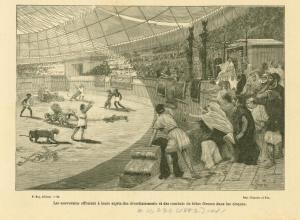 Another reason to pay attention in school–you could get ideas for your own bestselling dystopian YA series. The Oxford Dictionaries looks at the language of The Hunger Games. They point out how Panem is a take “panem et circenses,” a reference by Roman poet Juvenal to Ancient Roman society. Another part I liked in particular:
“Like many fantasy writers, Collins has invented some new vocabulary of her own. Anavox is akin to a slave – someone who has been punished for a ‘crime’ and thereby made a mute servant. Her reason for choosing this word is simple: the Greek prefix ‘a’ means ‘without’ and the Latin ‘vox’ means ‘voice’ so avox literally means ‘without voice’.”
When I was in sixth grade, I was so mad at my parents for signing me up for Latin class. But apparently they–and Suzanne Collins–were onto something. From real history to bits of inspired Latin, a little knowledge can really inspire your book.
(image: NYPL Digital Gallery)


September 4, 2012
Your Book in Fifty Words
It’s easy to get lost in all the bits of your story. A way to focus? Short summaries:
“So here’s the challenge – write a short summary of your novel. You’re only allowed fifty words…What’s the point of this, you may ask? Two things. One, it allows you to condense your novel and really see the bare bones of the story. You only get the really important details. The bare minimum to tell people. Two, it allows you to recognize problems with your novel if you CAN’T summarize it that short. If fifty words isn’t enough, you may have too much going on.”
Such a great idea! Rachel includes some tips on how to form your summaries and some examples to get you started, so make sure to check out the full post.
Going to try this one on my current projects.


August 31, 2012
Friday Fifteen
Hey there, Friday Fifteen fans! Here’s this week’s edition of the fifteen-word reviews:
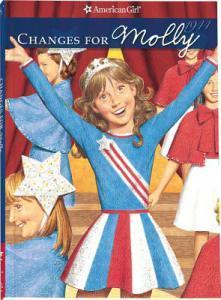 1. Changes for Molly by Valerie Tripp
This is where I learned how women curled their hair in the olden days.
2. Hamlet by William Shakespeare
In high school I thought “Kill him already, you dick!” Reread later, appreciate it more.
3. Julia’s Kitchen Wisdom: Essential Techniques and Recipes from a Lifetime of Cooking by Julia Child and David Nussbaum
More compact version of Julia’s classic style and recipes.
4. Mrs. McNosh Hangs Up Her Wash by Sarah Weeks and Nadine Bernard Westcott
I only wish doing the laundry was this cute. Lots of silliness and rhyming.
5. Buffy Chronicles : The Unofficial Companion to Buffy the Vampire Slayer by Ngaire E. Genge
I bought pretty much everything Buffy-related when I was in 8th grade. Solid trivia.


August 30, 2012
Detail Work
Over at YA Highway, Veronica Roth has a great post about why the details matter:
“Details are what build a world, what build a character. And when you’re like me and the same descriptions come to mind over and over again, or you find it difficult to describe things with any specificity, details are where you can return to ground your story and your characters.
The best ones feel like little revelations about a character or a story– John Lennon draping himself over chairs, or Craig sitting down when he pees, or Regina popping antacids. The best ones are not obvious or cliche, but unique enough to be memorable, and not so odd that they take you out of the story as you read.”
I like that she mentions that details need to be focused. You can’t just have your character collect baseball cards or do handstands in math class for no reason. What do these details offer your characters and their emotional journey, and how will readers interact with these details?
Veronica also shares some of the YA Highway team’s favorite character details as well.
One of my favorite details is from Judy Blume’s Just as Long as We’re Together. Stephanie and her new friend Alison are hanging out one afternoon and mention they both used to collect Barbies. They end up getting the Barbies out of storage and playing around with them for a little while. Afterward, they promise not to tell anyone about it. I remember reading this when I was in middle school and it struck me as the perfect combination of silliness and nostalgia that you can only share with a good friend when you’re that age. It’s a delicate balance between childhood and maturity, and sometimes you want to slip back into those old games. This moment shows that Stephanie and Alison are still trying to manage that balance, and feel comfortable enough with each other to act like a kid every once in a while.
What character-revealing details have struck you?


Quote of the Day
“No man chooses evil because it is evil; he only mistakes it for happiness, the good he seeks.”–Mary Shelley
What better way to celebrate Mary Shelley’s birthday than with this fabulous quote? It’s one of my favorite quotes for writing, because it’s a good reminder that a) all characters are flawed somehow, and b) even the worst villains don’t think of themselves as purely villains.


August 29, 2012
Author Events and Public Speaking
Confession: I hate public speaking.
The few readings I’ve done have been preceded by me telling my husband that fiction writers shouldn’t be expected to talk in front of other people, and that public speaking is a bizarre form of hazing. Nothing bad has happened–usually things go well–but they still make me nervous.
For the next one, I’m definitely going to reread Cynthia Leitich Smith’s post about how to handle public speaking events and potential problems like hecklers, not having enough time, and small turnout. Lots of really helpful advice and great anecdotes. I especially like her suggestion for how to politely respond to awkward or obnoxious questions.
Also, something very important to keep in mind about all kinds of author events:
“Say thank you, no matter what. The vast majority of children’s-YA book event planners are volunteers and among the most formidable champions of your field.”
Public speaking can be overwhelming, but it’s really helpful to keep in mind that the people planning and attending the events love these books. They’re not out to get you or make you feel awkward. They want to listen to you speak because you make something they love. And then you get to talk to them, too, and engage with them about their own reading and writing experiences. How cool is that?


August 28, 2012
Links Galore
A few more links for today:
The dragon evolutionary tree. So much awesomeness.
Start the school year right with advice from your favorite YA protagonists.
Great selection of YA books dealing with mental health.
The Horn Book’s KidLit Election 2012 already has my vote. Edward Cullen takes the creeper candidate to a new level.


The Giver and Its Legacy
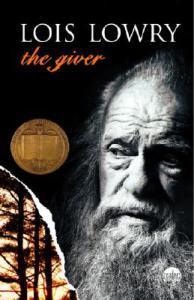 Watch out for spoilers, guys. Although if you haven’t read The Giver yet, you need to get off the internet and go do that now.
On reading The Giver for the first time as an adult:
Kate [Milford]: I think I felt in my gut that he didn’t make it. I went inside from the beach, got on the computer at 2 p.m. on this gorgeous day, shut myself inside, and started doing mindless work. I didn’t want to think about it. But since then, over and over, I’ve been thinking about it. You have to decide what you want to think.
Jen [Doll]: It makes me wonder if the ambiguous ending of the book is a purposeful parallel of the message of the book itself, the ability to choose versus having things told to you, dictated, or prescribed. Choosing is harder, but in a free society, we have to be able to do it for ourselves, and of course, we value that. The ending itself becomes about this idea of choosing versus having your choice taken away, which is obviously a big part of the theme of the book.
I know The Giver is part of a series, but I’m with Kate when I think about the ending. When I first read it, I was in middle school and it was a major emotional moment for me. Was there hope? Was escape enough? And I love Jen’s point about choice, and how that’s really emphasized in the ambiguity of the ending.
Make sure to read the whole article; it’s reminded me of how much I love The Giver and what a wonderful book it is.


Writing for the End
This week, Writerly Life’s Tip Tuesday suggests how the ending can push your writing forward through a rough middle slog:
“Don’t think about the middle or all the small wearying intervening scenes you have to write. Instead, allow yourself to picture the very ending. Get a clear image of the last scene, the final message you want to send; if you can, try to picture even the final image. Where is your character? What has been accomplished? Who is your character with? Who is he or she thinking of in his or her last thought?”
Just like picturing the finish line during a race or imagining a new, unpacked apartment while you’re surrounded by boxes and chaos (guess what I’m doing this week), imagining the end of your book while you’re in the middle can be a big boost. You want to make it to the end. You want to be in that last moment when your readers think “Oh my gosh, best book ever!”
Still, I think it’s okay to be imagining your ending while you’re in the middle and still allow the ending to change once you get there. I had an image in mind for the end of Queen of the Air that didn’t get used at all, but the vibe was still the same. Sometimes stories take you in a different direction than you expected. Heck, even JK Rowling changed her ending slightly after she told the world that the last word of the Harry Potter series would be “scar.” If Rowling can do it, so can you.


August 27, 2012
Rules for Students and Artists of All Ages
Even if you’re not headed back to school in the next couple of weeks, this is a great time of year to get back in that productive groove. This list by Sister Corita Kent and popularized by John Cage provides great inspiration for artists of all kinds:
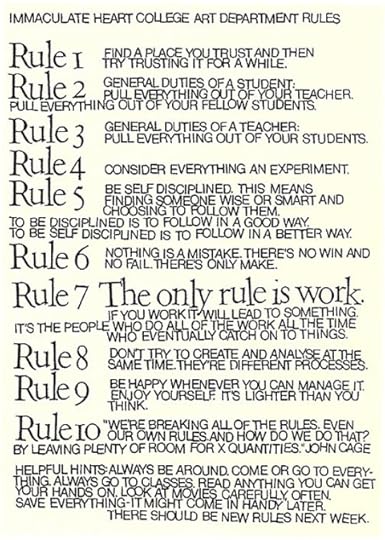
Another good one to post above the writing desk.
(image: Brain Pickings)(via swissmiss)