
Alexandra Sokoloff's Blog, page 28
November 14, 2012
The Next Big Thing: Huntress Moon
My sister horror/thriller author Sarah Pinborough tagged me as part of the Next Big Thing blog hop, one of those community building/promotional things that authors do to get exposure and give exposure to the authors we're reading and loving.
Sarah is a UK diva, I mean writer, that I met in Toronto at the World Horror Convention. Female authors are few and far between in our genre (despite the fact that some of the brightest stars in the genre firmament are women: Mary Shelley, Shirley Jackson, Daphne duMaurier, Charlotte Perkins Gilman...), and Sarah and I bonded right away. If you want a good scare, look no further, and she's recently expanded into the darker recesses of non-supernatural evil with her crime thrillers and TV writing. She's also wicked fun, and for the proverbial good time, I highly encourage you all to follow her on Facebook.
Here's the interview on Sarah's latest book: http://sarahpinborough.com
And her follow info: http://www.facebook.com/sarah.pinborough
---------------------------------------------
So I'm up next in this blog hop, and I get to answer the exact same questions.
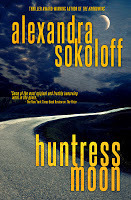
1) What is the title of your newest or next book?
Huntress Moon. The next is book two in the series, Blood Moon.
And I just found out this morning that Huntress Moon is one of Suspense Magazine's picks for Best Books of 2012!

2) Where did the idea come from for the book?
The idea came to me at the San Francisco Bouchercon, always the most inspiring of the mystery conferences for me. One afternoon there were two back-to-back discussions with several of my favorite authors: Val McDermid interviewing Denise Mina, then Robert Crais interviewing Lee Child. (Can you even imagine...?)
There was a lot of priceless stuff in those two hours, but two things that really struck me from the McDermid/Mina chat were Val saying that crime fiction is the best way to explore societal issues, and Denise saying that she finds powerful inspiration in writing about what makes her angry.
Write about what makes you angry? It doesn’t take me a millisecond’s thought to make my list. Child sexual abuse is the top, no contest. Violence against women and children. Human trafficking. Discrimination of any kind. Religious intolerance. War crimes. Genocide. Torture.
That anger has fueled a lot of my books and scripts over the years.
And then right after that, there was Lee Child talking about Reacher, one of my favorite fictional characters, and it got me thinking about what it would look like if a woman were doing what Reacher was doing. And that was it - instantly I had the whole story of Huntress Moon.
Because of course I’ve been brooding about all of this for decades, now. I've always thought that as writers we're only working with a handful of themes, which we explore over and over, in different variations. And I think it's really useful to be very conscious of those themes. Not only do they fuel our writing, they also brand us as writers.
With the Huntress series I finally have an umbrella to explore, dramatically, over multiple books, the roots and context of the worst crimes I know. And at least on paper, do something about it.
3) What genre does your book fall under?
It’s never just one for me! Psychological thriller, police procedural, hard-boiled mystery.
4) What actors would you choose to play the part of your characters in a movie rendition?
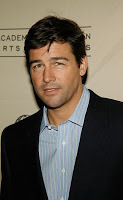
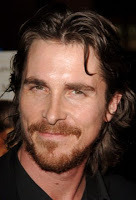
I always see Kyle Chandler as Special Agent Roarke, but practically that wouldn’t happen. Maybe for a TV series. If Russell Crowe were even remotely interested I'd die happy. And Christian Bale would work just fine!


Such a dearth of American leading men, and even fewer who can get a movie made! Ryan Gosling is too young but would be just about old enough by the time the movie actually went into production, and I think he's brilliant.
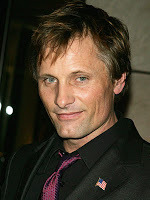
Then there's Viggo Mortenson, if I made both lead characters older. And who wouldn't do whatever it takes for Viggo!
And I’m a longtime fan of Norman Reedus, which also would probably be more likely for TV. (He looks younger than he actually is!)
If it’s a movie, Keira Knightly or Mila Kunis would be superb for the Huntress.


I would gladly rewrite the character as a little older for Milla Jovovich or Charlize Theron.


On the TV front, I've been impressed with Lauren Cohan and Summer Glau.
And I am so hoping that Lindsay Lohan gets herself together and goes on to be the brilliant star she clearly could be. People forget or just don't know how many of our most beloved actors fell just as far as she has before they got a second chance from people in the industry who understand very well about demons and the perils of a too-early stardom. I think she'd be great.

And Special Agent Epps – no contest. I wrote him with Idris Elba in mind. Constantly. Did I mention how much I love my job
5) What is the one-sentence synopsis of your book?
A driven FBI agent is on the hunt for that most rare of killers... a female serial.
6) Is your book self-published or traditionally published?
Self-published.
7) How long did it take you to write the first draft of the manuscript?
It felt like forever! I started it two years ago, and maybe I actually got to a first draft back then, but then I had a whole lot of life - and death - intervene. I picked it back up at the beginning of this year and powered down and finished it.
8) What other books would you compare this story to within your genre?
People who review it compare it to The Girl With the Dragon Tattoo and Dexter - and the TV shows Criminal Minds and CSI and Luther, but I've always thought of the Huntress as a female Reacher. Only crazier. And the structure is definitely like The Fugitive. But with a woman. Which means a hell of a lot more erotic tension.
9) Who or what inspired you to write this book?
See # 2 above!
10) What else about the book might pique the reader's interest?
I wrote it about a female serial killer – when arguably, using the FBI Behavioral Analysis Unit's definition of sexual homicide, there’s never been any such thing. I wanted to explore that very point as a social and psychological issue, and that’s one of the tensions of the book. Is she a serial killer or not? What is she doing, really?
Also, it’s very clear that the vast majority of readers end up strongly sympathizing with, and empathizing with, or even falling in love with the killer, and most of them are surprised by that.
Also, if you've ever fallen for someone who is just wrong in every way and still irresistible... well, you might relate.
---------------------------------------------------------------------------------------------------------------
So for next week, I'm tagging five great authors who write fantastic female leads. I'm not going to say "kick ass" female leads because that's not what I'm looking for in a female protagonist, even if said female protagonist can indeed kick ass. Personally I want to see a woman who is strong and complicated in the ways that a real woman is strong and complicated, and that is rarely about being able to beat the living shit out of people. So here are some of my top choices in the category.
- Michelle Gagnon is a thriller writer who has recently brought her powerhouse female perspective and adrenaline-charged storytelling to the YA thriller genre with her latest, Don't Turn Around. Noa is a terrific teenage role model. http://michellegagnon.com
- Christa Faust knows noir backward and forward, and has virtually created a whole new direction for the genre and its characters. Angel Dare is an alt heroine who brings OUT everything that noir anti-heroines like Gloria Grahame were doing in a coded sense, and Butch Fatale takes the "two-fisted detective" archetype to a new meaning. http://christafaust.net/
- As anyone who reads this blog knows, I am VERY picky about men writing "strong women", and on the dark side, Wallace Stroby is as good as it gets, both shattering and reversing noir gender stereotypes. His Crissa Stone series presents a thief who doesn't just hold her own, but leads and controls motley collections of doomed male gangsters. And I'm even more fond of Stroby's Sara Cross, who mirrors the classic noir paradigm: she's a truly good woman whose near-fatal flaw is a tragically bad man. http://wallacestroby.com/
- Zoe Sharp actually DOES write a kick-ass female lead, Charlie Fox, who works as a bodyguard and makes the physical reality of her job perfectly plausible (I've learned a lot about self-defense from these two...) while she battles uniquely feminine psychological demons. And her new installment in the Charlie series is set in New Orleans! http://zoesharp.com/
- Rhodi Hawk combines psychological thriller, Southern Gothic, and a hint of the supernatural in her lushly written series, also set in New Orleans. Her latest, A Tangled Bridge, is just out. http://rhodihawk.com/literary.htm
Tune in next week as I blog about these wonderful authors, and I'll be linking to their interviews.
And this week you can find other The Next Big Thing Q&As here (as described by Sarah Pinborough).
Bill Hussey is an awesome YA author whose grisly Witchfinder series is well worth reading! Kids everywhere love it – adults too. Strange that someone so chirpy can write the death of children so well. That’s probably why I like him.
http://www.williamhussey.co.uk
Suzanne McLeod is an urban fantasy writer (if we must use genres!) whose Spellcracker series from Gollancz have done tremendously well. A saucy minx. We drink together.
http://www.spellcrackers.com
Jonathan Green is a prolific fiction and non-fiction writer who has covered a range of styles and genres in his time. He’s a steampunk king and a disco diva. I heart him.
http://jonathangreenauthor.blogspot.co.uk
------------------------------------------------------------------------
(PS: To everyone who entered my Halloween giveaway drawing, I haven't forgotten you. My Jersey-based mistress of marketing was one of the many, many people who suffered severe flooding during the storm, and I don't want to press her on the contest right now; we'll draw winners and get the books out as soon as things have settled a little more back East. Thanks for understanding!)

Sarah is a UK diva, I mean writer, that I met in Toronto at the World Horror Convention. Female authors are few and far between in our genre (despite the fact that some of the brightest stars in the genre firmament are women: Mary Shelley, Shirley Jackson, Daphne duMaurier, Charlotte Perkins Gilman...), and Sarah and I bonded right away. If you want a good scare, look no further, and she's recently expanded into the darker recesses of non-supernatural evil with her crime thrillers and TV writing. She's also wicked fun, and for the proverbial good time, I highly encourage you all to follow her on Facebook.
Here's the interview on Sarah's latest book: http://sarahpinborough.com
And her follow info: http://www.facebook.com/sarah.pinborough
---------------------------------------------
So I'm up next in this blog hop, and I get to answer the exact same questions.

1) What is the title of your newest or next book?
Huntress Moon. The next is book two in the series, Blood Moon.
And I just found out this morning that Huntress Moon is one of Suspense Magazine's picks for Best Books of 2012!
.png)
2) Where did the idea come from for the book?
The idea came to me at the San Francisco Bouchercon, always the most inspiring of the mystery conferences for me. One afternoon there were two back-to-back discussions with several of my favorite authors: Val McDermid interviewing Denise Mina, then Robert Crais interviewing Lee Child. (Can you even imagine...?)
There was a lot of priceless stuff in those two hours, but two things that really struck me from the McDermid/Mina chat were Val saying that crime fiction is the best way to explore societal issues, and Denise saying that she finds powerful inspiration in writing about what makes her angry.
Write about what makes you angry? It doesn’t take me a millisecond’s thought to make my list. Child sexual abuse is the top, no contest. Violence against women and children. Human trafficking. Discrimination of any kind. Religious intolerance. War crimes. Genocide. Torture.
That anger has fueled a lot of my books and scripts over the years.
And then right after that, there was Lee Child talking about Reacher, one of my favorite fictional characters, and it got me thinking about what it would look like if a woman were doing what Reacher was doing. And that was it - instantly I had the whole story of Huntress Moon.
Because of course I’ve been brooding about all of this for decades, now. I've always thought that as writers we're only working with a handful of themes, which we explore over and over, in different variations. And I think it's really useful to be very conscious of those themes. Not only do they fuel our writing, they also brand us as writers.
With the Huntress series I finally have an umbrella to explore, dramatically, over multiple books, the roots and context of the worst crimes I know. And at least on paper, do something about it.
3) What genre does your book fall under?
It’s never just one for me! Psychological thriller, police procedural, hard-boiled mystery.
4) What actors would you choose to play the part of your characters in a movie rendition?
I always see Kyle Chandler as Special Agent Roarke, but practically that wouldn’t happen. Maybe for a TV series. If Russell Crowe were even remotely interested I'd die happy. And Christian Bale would work just fine!


Such a dearth of American leading men, and even fewer who can get a movie made! Ryan Gosling is too young but would be just about old enough by the time the movie actually went into production, and I think he's brilliant.
Then there's Viggo Mortenson, if I made both lead characters older. And who wouldn't do whatever it takes for Viggo!
And I’m a longtime fan of Norman Reedus, which also would probably be more likely for TV. (He looks younger than he actually is!)

If it’s a movie, Keira Knightly or Mila Kunis would be superb for the Huntress.


I would gladly rewrite the character as a little older for Milla Jovovich or Charlize Theron.



On the TV front, I've been impressed with Lauren Cohan and Summer Glau.

And I am so hoping that Lindsay Lohan gets herself together and goes on to be the brilliant star she clearly could be. People forget or just don't know how many of our most beloved actors fell just as far as she has before they got a second chance from people in the industry who understand very well about demons and the perils of a too-early stardom. I think she'd be great.

And Special Agent Epps – no contest. I wrote him with Idris Elba in mind. Constantly. Did I mention how much I love my job
5) What is the one-sentence synopsis of your book?
A driven FBI agent is on the hunt for that most rare of killers... a female serial.
6) Is your book self-published or traditionally published?
Self-published.
7) How long did it take you to write the first draft of the manuscript?
It felt like forever! I started it two years ago, and maybe I actually got to a first draft back then, but then I had a whole lot of life - and death - intervene. I picked it back up at the beginning of this year and powered down and finished it.
8) What other books would you compare this story to within your genre?
People who review it compare it to The Girl With the Dragon Tattoo and Dexter - and the TV shows Criminal Minds and CSI and Luther, but I've always thought of the Huntress as a female Reacher. Only crazier. And the structure is definitely like The Fugitive. But with a woman. Which means a hell of a lot more erotic tension.
9) Who or what inspired you to write this book?
See # 2 above!
10) What else about the book might pique the reader's interest?
I wrote it about a female serial killer – when arguably, using the FBI Behavioral Analysis Unit's definition of sexual homicide, there’s never been any such thing. I wanted to explore that very point as a social and psychological issue, and that’s one of the tensions of the book. Is she a serial killer or not? What is she doing, really?
Also, it’s very clear that the vast majority of readers end up strongly sympathizing with, and empathizing with, or even falling in love with the killer, and most of them are surprised by that.
Also, if you've ever fallen for someone who is just wrong in every way and still irresistible... well, you might relate.
---------------------------------------------------------------------------------------------------------------
So for next week, I'm tagging five great authors who write fantastic female leads. I'm not going to say "kick ass" female leads because that's not what I'm looking for in a female protagonist, even if said female protagonist can indeed kick ass. Personally I want to see a woman who is strong and complicated in the ways that a real woman is strong and complicated, and that is rarely about being able to beat the living shit out of people. So here are some of my top choices in the category.
- Michelle Gagnon is a thriller writer who has recently brought her powerhouse female perspective and adrenaline-charged storytelling to the YA thriller genre with her latest, Don't Turn Around. Noa is a terrific teenage role model. http://michellegagnon.com
- Christa Faust knows noir backward and forward, and has virtually created a whole new direction for the genre and its characters. Angel Dare is an alt heroine who brings OUT everything that noir anti-heroines like Gloria Grahame were doing in a coded sense, and Butch Fatale takes the "two-fisted detective" archetype to a new meaning. http://christafaust.net/
- As anyone who reads this blog knows, I am VERY picky about men writing "strong women", and on the dark side, Wallace Stroby is as good as it gets, both shattering and reversing noir gender stereotypes. His Crissa Stone series presents a thief who doesn't just hold her own, but leads and controls motley collections of doomed male gangsters. And I'm even more fond of Stroby's Sara Cross, who mirrors the classic noir paradigm: she's a truly good woman whose near-fatal flaw is a tragically bad man. http://wallacestroby.com/
- Zoe Sharp actually DOES write a kick-ass female lead, Charlie Fox, who works as a bodyguard and makes the physical reality of her job perfectly plausible (I've learned a lot about self-defense from these two...) while she battles uniquely feminine psychological demons. And her new installment in the Charlie series is set in New Orleans! http://zoesharp.com/
- Rhodi Hawk combines psychological thriller, Southern Gothic, and a hint of the supernatural in her lushly written series, also set in New Orleans. Her latest, A Tangled Bridge, is just out. http://rhodihawk.com/literary.htm
Tune in next week as I blog about these wonderful authors, and I'll be linking to their interviews.
And this week you can find other The Next Big Thing Q&As here (as described by Sarah Pinborough).
Bill Hussey is an awesome YA author whose grisly Witchfinder series is well worth reading! Kids everywhere love it – adults too. Strange that someone so chirpy can write the death of children so well. That’s probably why I like him.
http://www.williamhussey.co.uk
Suzanne McLeod is an urban fantasy writer (if we must use genres!) whose Spellcracker series from Gollancz have done tremendously well. A saucy minx. We drink together.
http://www.spellcrackers.com
Jonathan Green is a prolific fiction and non-fiction writer who has covered a range of styles and genres in his time. He’s a steampunk king and a disco diva. I heart him.
http://jonathangreenauthor.blogspot.co.uk
------------------------------------------------------------------------
(PS: To everyone who entered my Halloween giveaway drawing, I haven't forgotten you. My Jersey-based mistress of marketing was one of the many, many people who suffered severe flooding during the storm, and I don't want to press her on the contest right now; we'll draw winners and get the books out as soon as things have settled a little more back East. Thanks for understanding!)


November 12, 2012
NaNoWriMo Prompt: THE PLAN
Okay, yes, I disappeared! Research trip to San Francisco so that I can finally start writing again, on my third draft now of Blood Moon. I can't believe how much running around I packed into five days. Totally worth it. I'm also so sore I can barely walk. I always forget how PHYSICAL life is up there in the Bay Area. Better than a stair master.
So now it's nearly a third of the way into the month, and if you've been doing Nano diligently you may be closing in on 20,000 words. Amazing, but some people really do get that far.
Depending on how thorough you're being with all this writing, then, you've probably written the first act and are moving into the second. Or if you're taking this "write a book in a month" thing literally, then you're closer to the midpoint. Of a very short book.
Either way, you are currently faced with the dreaded second act. Although anyone who has the workbooks and/or reads this blog regularly shouldn't fear the second act any more, right?
But today I wanted to review what I think it the key to any second act, and really the whole key to story structure: The PLAN.
You
always hear that “Drama is conflict,” but when you think about it –what the
hell does that mean, practically?
It’s
actually much more true, and specific, to say that drama is the constant
clashing of a hero/ine’s PLAN and an antagonist’s, or several antagonists’,
PLANS.
In
the first act of a story, the hero/ine is introduced, and that hero/ine either
has or quickly develops a DESIRE. She might have a PROBLEM that needs to be
solved, or someone or something she WANTS, or a bad situation that she needs to
get out of, pronto.
Her
reaction to that problem or situation is to formulate a PLAN, even if that plan
is vague or even completely subconscious. But somewhere in there, there is a
plan, and storytelling is usually easier if you have the hero/ine or someone
else (maybe you, the author) state that plan clearly, so the audience or reader
knows exactly what the expectation is.
And
the protagonist’s plan (and the corresponding plan of the antagonist’s)
actually drives the entire action of the second act. Stating the plan tells us
what the CENTRAL ACTION of the story will be. So it’s critical to set up the
plan by the end of Act One, or at the very beginning of Act Two, at the latest.
Let’s
look at some examples of how plans work.
I’m
going to start, improbably, with the actioner 2012, even though I thought it was a pretty
terrible movie overall.
Now,
I’m sure in a theater this movie delivered on its primary objective, which was
a rollercoaster ride as only Hollywood special effects can provide. Whether we
like it or not, there is obviously a massive worldwide audience for movies that
are primarily about delivering pure sensation. Story isn’t important, nor,
apparently, is basic logic. As long as people keep buying enough tickets to
these movies to make them profitable, it’s the business of Hollywood to keep
churning them out.
But
in 2012, even in that rollercoaster ride
of special effects and sensations, there was a clear central PLAN for an
audience to hook into, a plan that drove the story. Without that plan, 2012 really would have been nothing but a chaos of
special effects.
If
you’ve seen this movie (and I know some of you have … ), there is a point in
the first act where a truly over-the-top Woody Harrelson as an Art Bell-like
conspiracy pirate radio commentator rants to protagonist John Cusack about
having a map that shows the location of “spaceships” that the government is
stocking to abandon planet when the prophesied end of the world commences.
Although
Cusack doesn’t believe it at the time, this is the PLANT (sort of camouflaged
by the fact that Woody is a nutjob), that gives the audience the idea of what
the PLAN OF ACTION will be: Cusack will have to go back for the map in the
midst of all the cataclysm, then somehow get his family to these “spaceships”
in order for all of them to survive the end of the world.
The
PLAN is reiterated, in dialogue, when Cusack gets back to his family and tells
his ex-wife basically exactly what I just said above: “We’re going to go back
to the nutjob with the map so that we can get to those spaceships and get off
the planet before it collapses.”
And
lo and behold, that’s exactly what happens; it’s not only Cusack’s PLAN, but
the central action of the story, that can be summed up as a CENTRAL QUESTION: Will
Cusack be able to get his family to the spaceships before the world ends?
Or
put another way, the CENTRAL STORY ACTION is John Cusack getting his family to
the spaceships before the world ends.
(Note
the ticking clock, there, as well. And as if the end of the world weren’t
enough, the movie also starts a literal “Twenty-nine minutes to the end of the
world!” ticking computer clock at, yes, 29 minutes before the end of the movie.
I must point out here that ticking clocks are dangerous because of the huge
cliché factor. We all need to study structure to know what not to do, as well.)
And
all this happens about the end of Act I.
Remember that I said that it’s essential to have laid out the CENTRAL
QUESTION and CENTRAL STORY ACTION by the end of Act I? But also at this point –
or possibly just after the climax of Act I, in the very beginning of Act II – we
need to know what the PLAN is. PLAN and CENTRAL QUESTION are integrally
related, and I keep looking for ways to talk about it because this is such an
important concept to master.
A
reader/audience really needs to know what the overall PLAN is, even if they
only get it in a subconscious way. Otherwise they are left floundering,
wondering where the hell all of this is going.
In
2012, even in the midst of all the
buildings crumbling and crevasses opening and fires booming and planes
crashing, we understand on some level what is going on:
-
What does the protagonist want? (OUTER DESIRE) To save his
family.
-
How is he going to do it? (PLAN) By
getting the map from the nutjob and getting his family to the secret spaceships
(that aren’t really spaceships).
-
What’s standing in his way? (FORCES OF
OPPOSITION) About a million natural disasters as the planet caves in, an evil
politician who has put a billion dollar price tag on tickets for the spaceship,
a Russian Mafioso who keeps being in the same place at the same time as Cusack,
and sometimes ends up helping, and sometimes ends up hurting. (Was I the only
one queased out by the way all the Russian characters were killed off, leaving
only the most obnoxious kids on the planet?)
Here’s
another example, from a much better movie:
At
the end of the first sequence of Raiders of the Lost Ark (which
is arguably two sequences in itself, first the action sequence in the cave in
South America, then the university sequence back in the US), Indy has just finished
teaching his archeology class when his mentor, Marcus, comes to meet him with a
couple of government agents who have a job for him (CALL TO ADVENTURE). The
agents explain that Hitler has become obsessed with collecting occult artifacts
from all over the world, and is currently trying to find the legendary Lost Ark
of the Covenant, which is rumored to make any army in possession of it
invincible in battle.
So
there’s the MACGUFFIN, the object that everyone wants, and the STAKES: if
Hitler’s minions (THE ANTAGONISTS) get this Ark before Indy does, the Nazi army
will be invincible.
And
then Indy explains his PLAN to find the Ark: his old mentor, Abner Ravenwood,
was an expert on the Ark and had an ancient Egyptian medallion on which was
inscribed the instructions for using the medallion to find the hidden location
of the Ark.
So
after hearing the plan, we understand the entire OVERALL ACTION of the story:
Indy is going to find Abner (his mentor) to get the medallion, then use the
medallion to find the Ark before Hitler’s minions can get it.
And
even though there are lots of twists along the way, that’s really it: the basic
action of the story.
Generally,
PLAN and CENTRAL STORY ACTION are really the same thing – the Central Action of
the story is carrying out the specific Plan. And the CENTRAL QUESTION of the
story is – “Will the Plan succeed?”
Again,
the PLAN, CENTRAL QUESTION and CENTRAL STORY ACTION are almost always set up –
and spelled out – by the end of the first act, although the specifics of the
Plan may be spelled out right after the Act I Climax at the very beginning of
Act II.
Can
it be later? Well, anything’s possible, but the sooner a reader or audience
understands the overall thrust of the story action, the sooner they can relax
and let the story take them where it’s going to go. So much of storytelling is
about you, the author, reassuring your reader or audience that you know what
you’re doing, so they can sit back and let you drive.
If
you haven’t done this yet, take a favorite movie or book (or two or three) and
identify the PLAN, CENTRAL STORY ACTION and CENTRAL QUESTION and them in a few
sentences. Like this:
-
In Inception, the PLAN is for the
team of dream burglars to go into a corporate heir’s dreams to plant the idea
of breaking up his father’s corporation. (So the CENTRAL ACTION is going into
the corporate heir’s dream and planting the idea, and the CENTRAL QUESTION is: Will they succeed?)
-
In Sense and Sensibility, the
PLAN is for Marianne and Elinor to secure the family’s fortune and their own
happiness by marrying well. (How are they going to do that? By the period’s
equivalent of dating – which is the
CENTRAL ACTION. Yes, dating is a PLAN! The CENTRAL QUESTION is: Will the
sisters succeed in marrying well?)
-
In The Proposal, Margaret’s PLAN
is to learn enough about Andrew over the four-day weekend with his family to
pass the INS marriage test so she won’t be deported. (The CENTRAL ACTION is
going to Alaska to meet Andrew’s family and pretending to be married while they
learn enough about each other to pass the test. The CENTRAL QUESTION is: Will
they be able to successfully fake the marriage?
Now,
try it with your own story!
-
What does the protagonist WANT?
-
How does s/he PLAN to do it?
-
What and who is standing in his or her way?
For
example, in my latest thriller, Book of Shadows, here's the Act One set up: the protagonist, homicide detective Adam
Garrett, is called on to investigate the murder of a college girl, which looks
like a Satanic killing. Garrett and his partner make a quick arrest of a
classmate of the girl's, a troubled Goth musician. But Garrett is not convinced
of the boy's guilt, and when a practicing witch from nearby Salem insists the
boy is innocent and there have been other murders, he is compelled to
investigate further.
So
Garrett’s PLAN and the CENTRAL ACTION of the story is to use the witch and her
specialized knowledge of magical practices to investigate the murder on his
own, all the while knowing that she is using him for her own purposes and may
well be involved in the killing.
The CENTRAL QUESTION is: will they catch the killer before s/he kills
again – and/or kills Garrett (if the witch turns out to be the killer)?
-
What does the protagonist WANT? To catch
the killer before s/he kills again.
-
How does he PLAN to do it? By using the
witch and her specialized knowledge of magical practices to investigate
further.
-
What’s standing in his way? His own
department, the killer, and possibly the witch herself. And if the witch is
right … possibly even a demon.
It’s
important to note that the Plan and Central Action of the story are not always
driven by the protagonist. Usually, yes. But in The Matrix, it’s Neo’s mentor Morpheus who has the overall
PLAN, which drives the central action right up until the end of the second act.
The Plan is to recruit and train Neo, whom Morpheus believes is “The One”
prophesied to destroy the Matrix. So that’s the action we see unfolding:
Morpheus recruiting, deprogramming and training Neo, who is admittedly very
cute, but essentially just following Morpheus’s orders for two thirds of the
movie.
Does
this weaken the structure of that film? Not at all. Morpheus drives the action
until that crucial point, the Act Two Climax, when he is abducted by the agents
of the Matrix, at which point Neo steps into his greatness and becomes “The One” by taking over the action and making a new
plan: to rescue Morpheus by sacrificing himself.
It
is a terrific way to show a huge character arc: Neo stepping into his destiny.
And I would add that this is a common structural pattern for mythic journey
stories – in Lord of the Rings, it's Gandalf who has the PLAN and drives the
reluctant Frodo in the central story action until Frodo finally takes over the
action himself.
Here’s
another example. In the very funny romantic comedy It’s Complicated, Meryl Streep’s character Jane is the protagonist,
but she doesn’t drive the action or have any particular plan of her own. It’s
her ex-husband Jake (Alec Baldwin), who seduces her and at the end of the first
act, proposes (in an extremely persuasive speech) that they continue this
affair as a perfect solution to both their love troubles – it will fulfill their sexual and intimacy needs
without disrupting the rest of their lives.
Jane
decides at that point to go along with Jake’s plan (saying, “I forgot what a
good lawyer you are”). In terms of action, she is essentially passive, letting
the two men in her life court her (which results in bigger and bigger comic
entanglements), but that makes for a more pronounced and satisfying character
arc when she finally takes a stand and breaks off the affair with Jake for
good, so she can finally move on with her life.
I
would venture to guess that most of us know what it’s like to be swept up in a
ripping good love entanglement, and can sympathize with Jane’s desire just to
go with the passion of it without having to make any pesky practical decisions.
It’s a perfectly fine – and natural – structure for a romantic comedy, as long as at that
key juncture, the protagonist has the realization and balls – or ovaries –
to take control of her own life again and make a stand for what she truly wants.
I
give you these last two examples – hopefully
– to show how helpful it can be to study
the specific structure of stories that are similar to your own. As you can see
from the above, the general writing rule that the protagonist drives the action
may not apply to what you’re
writing – and you might want to make a
different choice that will better serve your own story. And that goes for any general writing rule.
QUESTIONS:
Have you identified the CENTRAL ACTION of your story? Do you know what the protagonist's and antagonist's PLANS are? At what point
in your book does the reader have a clear idea of the protagonist’s PLAN? Is it stated aloud? Can you make it clearer
than it is?
And yes, let's hear how everyone's doing!
- Alex
(PS: To everyone who entered my Halloween giveaway drawing, I haven't forgotten you. My mistress of marketing was one of the many, many people who suffered severe flooding during the storm, and I don't want to press her on the contest right now; we'll draw winners and get the books out as soon as things have settled a little more back East. Thanks for understanding!)

So now it's nearly a third of the way into the month, and if you've been doing Nano diligently you may be closing in on 20,000 words. Amazing, but some people really do get that far.
Depending on how thorough you're being with all this writing, then, you've probably written the first act and are moving into the second. Or if you're taking this "write a book in a month" thing literally, then you're closer to the midpoint. Of a very short book.
Either way, you are currently faced with the dreaded second act. Although anyone who has the workbooks and/or reads this blog regularly shouldn't fear the second act any more, right?
But today I wanted to review what I think it the key to any second act, and really the whole key to story structure: The PLAN.
You
always hear that “Drama is conflict,” but when you think about it –what the
hell does that mean, practically?
It’s
actually much more true, and specific, to say that drama is the constant
clashing of a hero/ine’s PLAN and an antagonist’s, or several antagonists’,
PLANS.
In
the first act of a story, the hero/ine is introduced, and that hero/ine either
has or quickly develops a DESIRE. She might have a PROBLEM that needs to be
solved, or someone or something she WANTS, or a bad situation that she needs to
get out of, pronto.
Her
reaction to that problem or situation is to formulate a PLAN, even if that plan
is vague or even completely subconscious. But somewhere in there, there is a
plan, and storytelling is usually easier if you have the hero/ine or someone
else (maybe you, the author) state that plan clearly, so the audience or reader
knows exactly what the expectation is.
And
the protagonist’s plan (and the corresponding plan of the antagonist’s)
actually drives the entire action of the second act. Stating the plan tells us
what the CENTRAL ACTION of the story will be. So it’s critical to set up the
plan by the end of Act One, or at the very beginning of Act Two, at the latest.
Let’s
look at some examples of how plans work.
I’m
going to start, improbably, with the actioner 2012, even though I thought it was a pretty
terrible movie overall.
Now,
I’m sure in a theater this movie delivered on its primary objective, which was
a rollercoaster ride as only Hollywood special effects can provide. Whether we
like it or not, there is obviously a massive worldwide audience for movies that
are primarily about delivering pure sensation. Story isn’t important, nor,
apparently, is basic logic. As long as people keep buying enough tickets to
these movies to make them profitable, it’s the business of Hollywood to keep
churning them out.
But
in 2012, even in that rollercoaster ride
of special effects and sensations, there was a clear central PLAN for an
audience to hook into, a plan that drove the story. Without that plan, 2012 really would have been nothing but a chaos of
special effects.
If
you’ve seen this movie (and I know some of you have … ), there is a point in
the first act where a truly over-the-top Woody Harrelson as an Art Bell-like
conspiracy pirate radio commentator rants to protagonist John Cusack about
having a map that shows the location of “spaceships” that the government is
stocking to abandon planet when the prophesied end of the world commences.
Although
Cusack doesn’t believe it at the time, this is the PLANT (sort of camouflaged
by the fact that Woody is a nutjob), that gives the audience the idea of what
the PLAN OF ACTION will be: Cusack will have to go back for the map in the
midst of all the cataclysm, then somehow get his family to these “spaceships”
in order for all of them to survive the end of the world.
The
PLAN is reiterated, in dialogue, when Cusack gets back to his family and tells
his ex-wife basically exactly what I just said above: “We’re going to go back
to the nutjob with the map so that we can get to those spaceships and get off
the planet before it collapses.”
And
lo and behold, that’s exactly what happens; it’s not only Cusack’s PLAN, but
the central action of the story, that can be summed up as a CENTRAL QUESTION: Will
Cusack be able to get his family to the spaceships before the world ends?
Or
put another way, the CENTRAL STORY ACTION is John Cusack getting his family to
the spaceships before the world ends.
(Note
the ticking clock, there, as well. And as if the end of the world weren’t
enough, the movie also starts a literal “Twenty-nine minutes to the end of the
world!” ticking computer clock at, yes, 29 minutes before the end of the movie.
I must point out here that ticking clocks are dangerous because of the huge
cliché factor. We all need to study structure to know what not to do, as well.)
And
all this happens about the end of Act I.
Remember that I said that it’s essential to have laid out the CENTRAL
QUESTION and CENTRAL STORY ACTION by the end of Act I? But also at this point –
or possibly just after the climax of Act I, in the very beginning of Act II – we
need to know what the PLAN is. PLAN and CENTRAL QUESTION are integrally
related, and I keep looking for ways to talk about it because this is such an
important concept to master.
A
reader/audience really needs to know what the overall PLAN is, even if they
only get it in a subconscious way. Otherwise they are left floundering,
wondering where the hell all of this is going.
In
2012, even in the midst of all the
buildings crumbling and crevasses opening and fires booming and planes
crashing, we understand on some level what is going on:
-
What does the protagonist want? (OUTER DESIRE) To save his
family.
-
How is he going to do it? (PLAN) By
getting the map from the nutjob and getting his family to the secret spaceships
(that aren’t really spaceships).
-
What’s standing in his way? (FORCES OF
OPPOSITION) About a million natural disasters as the planet caves in, an evil
politician who has put a billion dollar price tag on tickets for the spaceship,
a Russian Mafioso who keeps being in the same place at the same time as Cusack,
and sometimes ends up helping, and sometimes ends up hurting. (Was I the only
one queased out by the way all the Russian characters were killed off, leaving
only the most obnoxious kids on the planet?)
Here’s
another example, from a much better movie:
At
the end of the first sequence of Raiders of the Lost Ark (which
is arguably two sequences in itself, first the action sequence in the cave in
South America, then the university sequence back in the US), Indy has just finished
teaching his archeology class when his mentor, Marcus, comes to meet him with a
couple of government agents who have a job for him (CALL TO ADVENTURE). The
agents explain that Hitler has become obsessed with collecting occult artifacts
from all over the world, and is currently trying to find the legendary Lost Ark
of the Covenant, which is rumored to make any army in possession of it
invincible in battle.
So
there’s the MACGUFFIN, the object that everyone wants, and the STAKES: if
Hitler’s minions (THE ANTAGONISTS) get this Ark before Indy does, the Nazi army
will be invincible.
And
then Indy explains his PLAN to find the Ark: his old mentor, Abner Ravenwood,
was an expert on the Ark and had an ancient Egyptian medallion on which was
inscribed the instructions for using the medallion to find the hidden location
of the Ark.
So
after hearing the plan, we understand the entire OVERALL ACTION of the story:
Indy is going to find Abner (his mentor) to get the medallion, then use the
medallion to find the Ark before Hitler’s minions can get it.
And
even though there are lots of twists along the way, that’s really it: the basic
action of the story.
Generally,
PLAN and CENTRAL STORY ACTION are really the same thing – the Central Action of
the story is carrying out the specific Plan. And the CENTRAL QUESTION of the
story is – “Will the Plan succeed?”
Again,
the PLAN, CENTRAL QUESTION and CENTRAL STORY ACTION are almost always set up –
and spelled out – by the end of the first act, although the specifics of the
Plan may be spelled out right after the Act I Climax at the very beginning of
Act II.
Can
it be later? Well, anything’s possible, but the sooner a reader or audience
understands the overall thrust of the story action, the sooner they can relax
and let the story take them where it’s going to go. So much of storytelling is
about you, the author, reassuring your reader or audience that you know what
you’re doing, so they can sit back and let you drive.
If
you haven’t done this yet, take a favorite movie or book (or two or three) and
identify the PLAN, CENTRAL STORY ACTION and CENTRAL QUESTION and them in a few
sentences. Like this:
-
In Inception, the PLAN is for the
team of dream burglars to go into a corporate heir’s dreams to plant the idea
of breaking up his father’s corporation. (So the CENTRAL ACTION is going into
the corporate heir’s dream and planting the idea, and the CENTRAL QUESTION is: Will they succeed?)
-
In Sense and Sensibility, the
PLAN is for Marianne and Elinor to secure the family’s fortune and their own
happiness by marrying well. (How are they going to do that? By the period’s
equivalent of dating – which is the
CENTRAL ACTION. Yes, dating is a PLAN! The CENTRAL QUESTION is: Will the
sisters succeed in marrying well?)
-
In The Proposal, Margaret’s PLAN
is to learn enough about Andrew over the four-day weekend with his family to
pass the INS marriage test so she won’t be deported. (The CENTRAL ACTION is
going to Alaska to meet Andrew’s family and pretending to be married while they
learn enough about each other to pass the test. The CENTRAL QUESTION is: Will
they be able to successfully fake the marriage?
Now,
try it with your own story!
-
What does the protagonist WANT?
-
How does s/he PLAN to do it?
-
What and who is standing in his or her way?
For
example, in my latest thriller, Book of Shadows, here's the Act One set up: the protagonist, homicide detective Adam
Garrett, is called on to investigate the murder of a college girl, which looks
like a Satanic killing. Garrett and his partner make a quick arrest of a
classmate of the girl's, a troubled Goth musician. But Garrett is not convinced
of the boy's guilt, and when a practicing witch from nearby Salem insists the
boy is innocent and there have been other murders, he is compelled to
investigate further.
So
Garrett’s PLAN and the CENTRAL ACTION of the story is to use the witch and her
specialized knowledge of magical practices to investigate the murder on his
own, all the while knowing that she is using him for her own purposes and may
well be involved in the killing.
The CENTRAL QUESTION is: will they catch the killer before s/he kills
again – and/or kills Garrett (if the witch turns out to be the killer)?
-
What does the protagonist WANT? To catch
the killer before s/he kills again.
-
How does he PLAN to do it? By using the
witch and her specialized knowledge of magical practices to investigate
further.
-
What’s standing in his way? His own
department, the killer, and possibly the witch herself. And if the witch is
right … possibly even a demon.
It’s
important to note that the Plan and Central Action of the story are not always
driven by the protagonist. Usually, yes. But in The Matrix, it’s Neo’s mentor Morpheus who has the overall
PLAN, which drives the central action right up until the end of the second act.
The Plan is to recruit and train Neo, whom Morpheus believes is “The One”
prophesied to destroy the Matrix. So that’s the action we see unfolding:
Morpheus recruiting, deprogramming and training Neo, who is admittedly very
cute, but essentially just following Morpheus’s orders for two thirds of the
movie.
Does
this weaken the structure of that film? Not at all. Morpheus drives the action
until that crucial point, the Act Two Climax, when he is abducted by the agents
of the Matrix, at which point Neo steps into his greatness and becomes “The One” by taking over the action and making a new
plan: to rescue Morpheus by sacrificing himself.
It
is a terrific way to show a huge character arc: Neo stepping into his destiny.
And I would add that this is a common structural pattern for mythic journey
stories – in Lord of the Rings, it's Gandalf who has the PLAN and drives the
reluctant Frodo in the central story action until Frodo finally takes over the
action himself.
Here’s
another example. In the very funny romantic comedy It’s Complicated, Meryl Streep’s character Jane is the protagonist,
but she doesn’t drive the action or have any particular plan of her own. It’s
her ex-husband Jake (Alec Baldwin), who seduces her and at the end of the first
act, proposes (in an extremely persuasive speech) that they continue this
affair as a perfect solution to both their love troubles – it will fulfill their sexual and intimacy needs
without disrupting the rest of their lives.
Jane
decides at that point to go along with Jake’s plan (saying, “I forgot what a
good lawyer you are”). In terms of action, she is essentially passive, letting
the two men in her life court her (which results in bigger and bigger comic
entanglements), but that makes for a more pronounced and satisfying character
arc when she finally takes a stand and breaks off the affair with Jake for
good, so she can finally move on with her life.
I
would venture to guess that most of us know what it’s like to be swept up in a
ripping good love entanglement, and can sympathize with Jane’s desire just to
go with the passion of it without having to make any pesky practical decisions.
It’s a perfectly fine – and natural – structure for a romantic comedy, as long as at that
key juncture, the protagonist has the realization and balls – or ovaries –
to take control of her own life again and make a stand for what she truly wants.
I
give you these last two examples – hopefully
– to show how helpful it can be to study
the specific structure of stories that are similar to your own. As you can see
from the above, the general writing rule that the protagonist drives the action
may not apply to what you’re
writing – and you might want to make a
different choice that will better serve your own story. And that goes for any general writing rule.
QUESTIONS:
Have you identified the CENTRAL ACTION of your story? Do you know what the protagonist's and antagonist's PLANS are? At what point
in your book does the reader have a clear idea of the protagonist’s PLAN? Is it stated aloud? Can you make it clearer
than it is?
And yes, let's hear how everyone's doing!
- Alex
(PS: To everyone who entered my Halloween giveaway drawing, I haven't forgotten you. My mistress of marketing was one of the many, many people who suffered severe flooding during the storm, and I don't want to press her on the contest right now; we'll draw winners and get the books out as soon as things have settled a little more back East. Thanks for understanding!)
November 1, 2012
Ready, Set, NaNo!!!
It's here - the big day. Big month. Big everything.
The queen of suspense, Mary Higgins Clark, said about first drafts:
Writing a first draft is like clawing my way through a mountain of concrete with my bare hands.
Isn't that the truth?
Well, the point of NaNo is to write so fast that you - sometimes - forget that your hands are dripping blood. It's a stellar way of turning off your censor (we all have one of those little suckers) and just get those pages out.
So am I doing NaNo? Well, sort of. In spirit.
It seems I am NEVER at the start of a new book when November rolls around. Today I'm finishing putting in notes on my first draft of Blood Moon, the sequel to Huntress Moon. And as much as I hate to do it, I know that what I really must do is NOT look at the manuscript for a while before I reread the thing and launch into the next draft. So instead of writing, what I'm doing is a research trip up to San Francisco (I know, I have such a tough life). I need to be in my locations and figure out how certain scenes and sequences work physically. Which is definitely writing, but it's not NaNo writing.
But I'm using the Nano energy to set goals: by the end of the month I will have a book that I can get out to beta readers.
And of course, I'll be posting Nano prompts throughout the month. In fact, here's a list of helpful hints if you find yourself stuck.
1. Keep moving forward – DO NOT go back and endlessly revise your first chapters. You may end up throwing them out anyway. Just move forward. If you’re stuck on a scene, just write down vaguely what might happen in it or where it might happen as a place marker and move on to a scene you know better. The first draft can be just a sketch – the important thing is to get it all down, from beginning to end. Then you can start to layer in all the other stuff.
2. Keep the story elements checklist close at hand for easy reference.
- Story Elements Checklist for Generating Index Cards
Or if you prefer the elements in a narrative:
Narrative Structure Cheat Sheet
3. Before you start an Act, review the elements of the act you're launching into. Or if you're stuck, review the story elements of the Act you're stuck on.
- Elements of Act One
- Elements of Act Two, Part 1
- Elements of Act Two, Part 2
- Elements of Act Three
- What Makes A Great Climax?
- Elevate Your Ending
- Creating Character
4. As you're writing, you will find out more about your story. Write the premise again, and make sure you have identified and understand the Plan and Central Story Action.
- Plan, Central Question, Central Story Action
- What's the Plan?
- Plan, Central Question, Central Story Action, part 2
5. When you’re stuck - make a list.
- Stuck? Make A List.
6. Do word lists of visual and thematic elements for your story to build your image systems. Start a collage book or online clip file of images if that appeals to you. Great thing to do when you're too tired to write anymore but still have a little time to spend on your book.
- Thematic Image Systems
7. Remember that the first draft is always going to suck.
- Your First Draft Is Always Going To Suck
8. You can always watch movies and do breakdowns to inspire you and break you through a block.
Good luck, everyone - and feel free to stop in and gripe! That's part of the process, too.
- Alex
=====================================================
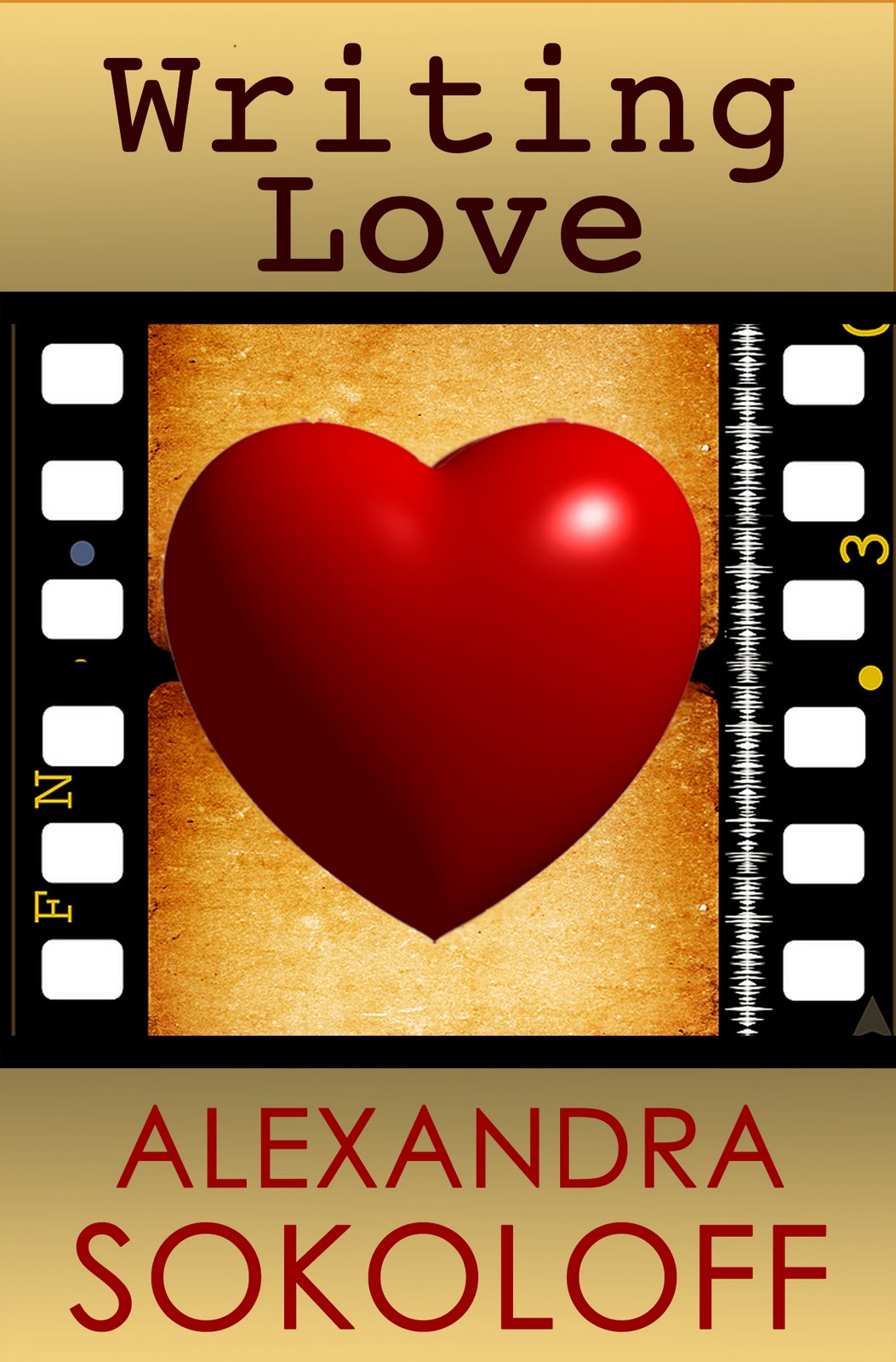
Screenwriting Tricks for Authors and Writing Love, Screenwriting Tricks for Authors, II, are now available in all e formats and as pdf files. Either book, any format, just $2.99.
- Kindle
- Amazon UK
- Amaxon DE (Eur. 2.40)
 - Smashwords (includes online viewing and pdf file)
- Amazon/Kindle
- Barnes & Noble/Nook
- Amazon UK
- Amazon DE
-------------------------------------------------------------------

The queen of suspense, Mary Higgins Clark, said about first drafts:
Writing a first draft is like clawing my way through a mountain of concrete with my bare hands.
Isn't that the truth?
Well, the point of NaNo is to write so fast that you - sometimes - forget that your hands are dripping blood. It's a stellar way of turning off your censor (we all have one of those little suckers) and just get those pages out.
So am I doing NaNo? Well, sort of. In spirit.
It seems I am NEVER at the start of a new book when November rolls around. Today I'm finishing putting in notes on my first draft of Blood Moon, the sequel to Huntress Moon. And as much as I hate to do it, I know that what I really must do is NOT look at the manuscript for a while before I reread the thing and launch into the next draft. So instead of writing, what I'm doing is a research trip up to San Francisco (I know, I have such a tough life). I need to be in my locations and figure out how certain scenes and sequences work physically. Which is definitely writing, but it's not NaNo writing.
But I'm using the Nano energy to set goals: by the end of the month I will have a book that I can get out to beta readers.
And of course, I'll be posting Nano prompts throughout the month. In fact, here's a list of helpful hints if you find yourself stuck.
1. Keep moving forward – DO NOT go back and endlessly revise your first chapters. You may end up throwing them out anyway. Just move forward. If you’re stuck on a scene, just write down vaguely what might happen in it or where it might happen as a place marker and move on to a scene you know better. The first draft can be just a sketch – the important thing is to get it all down, from beginning to end. Then you can start to layer in all the other stuff.
2. Keep the story elements checklist close at hand for easy reference.
- Story Elements Checklist for Generating Index Cards
Or if you prefer the elements in a narrative:
Narrative Structure Cheat Sheet
3. Before you start an Act, review the elements of the act you're launching into. Or if you're stuck, review the story elements of the Act you're stuck on.
- Elements of Act One
- Elements of Act Two, Part 1
- Elements of Act Two, Part 2
- Elements of Act Three
- What Makes A Great Climax?
- Elevate Your Ending
- Creating Character
4. As you're writing, you will find out more about your story. Write the premise again, and make sure you have identified and understand the Plan and Central Story Action.
- Plan, Central Question, Central Story Action
- What's the Plan?
- Plan, Central Question, Central Story Action, part 2
5. When you’re stuck - make a list.
- Stuck? Make A List.
6. Do word lists of visual and thematic elements for your story to build your image systems. Start a collage book or online clip file of images if that appeals to you. Great thing to do when you're too tired to write anymore but still have a little time to spend on your book.
- Thematic Image Systems
7. Remember that the first draft is always going to suck.
- Your First Draft Is Always Going To Suck
8. You can always watch movies and do breakdowns to inspire you and break you through a block.
Good luck, everyone - and feel free to stop in and gripe! That's part of the process, too.
- Alex
=====================================================
Screenwriting Tricks for Authors and Writing Love, Screenwriting Tricks for Authors, II, are now available in all e formats and as pdf files. Either book, any format, just $2.99.
- Kindle
- Amazon UK
- Amaxon DE (Eur. 2.40)
 - Smashwords (includes online viewing and pdf file)
- Amazon/Kindle
- Barnes & Noble/Nook
- Amazon UK
- Amazon DE
-------------------------------------------------------------------
October 31, 2012
NaNoWriMo Prep: A Process For Writing
These are such anxious days, waiting to hear from friends who were in the line of the storm. I'm hoping everyone is fine and undamaged.
But I know some of you will be launching into NaNo tomorrow and I wanted to get this post up for reference.
Obviously, NaNo is just for getting it all out of you any way you can! I'm not trying to suggest how you do that (although I do find coffee, Cheetos and chocolate help...). But if you find yourself lost somewhere in the middle of the month, there, some of these links might help.
Good luck to all, and keep us posted on everything!
- - Alex
----------------------------------------------------------------------------
A PROCESS FOR WRITING
1. First, before you start a project, even if you already have a great idea that you’re committed to, it really helps to allow yourself to do free-form brainstorming, to see what themes and characters are rolling around in your head that might just help you with the new project. And if you don’t have that great idea yet, this is the way to uncover it.
- First, You Need An Idea
2. Take a stab at writing the premise. You may not know what it is exactly, yet – that’s fine!
- What’s Your Premise?
3. See if you can identify what KIND of story it is. Again, you may not know this at early stages – don’t worry about it! Just ask the question of yourself, and keep alert for the answer.
- What KIND of Story Is It?
4. Make a Master List of movies and books in the genre of your new project, and that are structurally similar to your project (the same KIND or type of story).
- Analyzing Your Master List
5. Pick at least three of them that are MOST SIMILAR to your own story and watch them, doing a detailed story breakdown, identifying the key Story Elements, Acts, Sequences, Climaxes, etc. I really urge you to put some thought into which movies will be of the most use to your own story and not just do breakdowns for the sake of doing them – that’s fun, but it’s not the point.
- Three Act Structure Review
- The Three-Act, Eight Sequence Structure
6. At the same time, start generating index cards for your own story. Write every scene that you know or imagine in the story on index cards and stick them on a structure grid if you have a vague idea where that scene goes. Write cards for the climaxes and story elements even if you don’t know specifically what they are, yet. Allow yourself to be inspired by the movies you’re watching – let the movies show you what scenes are missing in your own story.
- The Index Card Method and Structure Grid
- Story Elements Checklist for Generating Index Cards
7. Also do word lists of visual and thematic elements for your story to start building your image systems. Start a collage book or online clip file of images if that appeals to you.
- Thematic Image Systems
8. Work back and forth between the index cards and your growing on paper or in file outline of the story. Write whole scenes out when you are inspired. Flesh out the acts by reviewing the elements of each act:
- Elements of Act One
- Elements of Act Two, Part 1
- Elements of Act Two, Part 2
- Elements of Act Three
- What Makes A Great Climax?
- Elevate Your Ending
- Creating Character
9. As you continue to work the index cards, your sequences and act climaxes will become clearer to you. These will also probably change during the writing process – that’s fine! The goal of the cards and the initial outline is a road map to help your subconscious out when you’re doing that endless slog of a first draft.
10. As you find out more about your story, write the premise again, and make sure you have identified and understand the Plan and Central Story Action.
- Plan, Central Question, Central Story Action
- What's the Plan?
- Plan, Central Question, Central Story Action, part 2
11. When you’re ready to start writing from the beginning then write. Set a writing schedule and stick to it – you can sacrifice one hour of TV or playing on Facebook a night. Professional authors are people who understand that TV and social networking are the biggest waste of writing time on the planet. Do you want to veg, or do you want to create? The choice is yours.
12. Keep moving forward – DO NOT go back and endlessly revise your first chapters. You may end up throwing them out anyway. Just move forward. If you’re stuck on a scene, write down vaguely what might happen in it or where it might happen as a place marker and move on to a scene you know better. The first draft can be just a sketch – the important thing is to get it all down, from beginning to end. Then you can start to layer in all the other stuff.
13. When you’re stuck - make a list.
- Stuck? Make A List.
14. Remember that the first draft is always going to suck.
- Your First Draft Is Always Going To Suck
15. You can always watch movies and do breakdowns to inspire you and break you through a block.
16. When you reach THE END – celebrate! Most people never get anywhere near that far in their whole lives. Take several weeks off for perspective, no matter how much you want to jump back into it.
17. Then when your brain is clear, do a read through as suggested here to see what the story is that you wrote (as opposed to what you THOUGHT you were writing. Then start the rewriting process. Definitely do a re-carding of the whole story – it will have changed!
- Top Ten Things I Know About Rewriting
=====================================================
Screenwriting Tricks for Authors and Writing Love, Screenwriting Tricks for Authors, II, are now available in all e formats and as pdf files. Either book, any format, just $2.99.
- Kindle
- Amazon UK
- Amaxon DE (Eur. 2.40)
- Smashwords (includes online viewing and pdf file)
- Amazon/Kindle
- Barnes & Noble/Nook
- Amazon UK
- Amazon DE
=====================================================
HALLOWEEN GIVEAWAY
Last day to sign up to win one of 31 signed hardcover copies of my spooky thrillers Book of Shadows and The Unseen .
Enter here to win!
Book of Shadows .
An ambitious Boston homicide detective must join forces with a beautiful, mysterious witch from Salem in a race to solve a series of satanic killings.
Amazon Bestseller in Horror and Police Procedurals
The Unseen
A team of research psychologists and two psychically gifted students move into an abandoned Southern mansion to duplicate a controversial poltergeist experiment, unaware that the entire original research team ended up insane... or dead.
Inspired by the real-life paranormal studies conducted by the world-famous Rhine parapsychology lab at Duke University.

But I know some of you will be launching into NaNo tomorrow and I wanted to get this post up for reference.
Obviously, NaNo is just for getting it all out of you any way you can! I'm not trying to suggest how you do that (although I do find coffee, Cheetos and chocolate help...). But if you find yourself lost somewhere in the middle of the month, there, some of these links might help.
Good luck to all, and keep us posted on everything!
- - Alex
----------------------------------------------------------------------------
A PROCESS FOR WRITING
1. First, before you start a project, even if you already have a great idea that you’re committed to, it really helps to allow yourself to do free-form brainstorming, to see what themes and characters are rolling around in your head that might just help you with the new project. And if you don’t have that great idea yet, this is the way to uncover it.
- First, You Need An Idea
2. Take a stab at writing the premise. You may not know what it is exactly, yet – that’s fine!
- What’s Your Premise?
3. See if you can identify what KIND of story it is. Again, you may not know this at early stages – don’t worry about it! Just ask the question of yourself, and keep alert for the answer.
- What KIND of Story Is It?
4. Make a Master List of movies and books in the genre of your new project, and that are structurally similar to your project (the same KIND or type of story).
- Analyzing Your Master List
5. Pick at least three of them that are MOST SIMILAR to your own story and watch them, doing a detailed story breakdown, identifying the key Story Elements, Acts, Sequences, Climaxes, etc. I really urge you to put some thought into which movies will be of the most use to your own story and not just do breakdowns for the sake of doing them – that’s fun, but it’s not the point.
- Three Act Structure Review
- The Three-Act, Eight Sequence Structure
6. At the same time, start generating index cards for your own story. Write every scene that you know or imagine in the story on index cards and stick them on a structure grid if you have a vague idea where that scene goes. Write cards for the climaxes and story elements even if you don’t know specifically what they are, yet. Allow yourself to be inspired by the movies you’re watching – let the movies show you what scenes are missing in your own story.
- The Index Card Method and Structure Grid
- Story Elements Checklist for Generating Index Cards
7. Also do word lists of visual and thematic elements for your story to start building your image systems. Start a collage book or online clip file of images if that appeals to you.
- Thematic Image Systems
8. Work back and forth between the index cards and your growing on paper or in file outline of the story. Write whole scenes out when you are inspired. Flesh out the acts by reviewing the elements of each act:
- Elements of Act One
- Elements of Act Two, Part 1
- Elements of Act Two, Part 2
- Elements of Act Three
- What Makes A Great Climax?
- Elevate Your Ending
- Creating Character
9. As you continue to work the index cards, your sequences and act climaxes will become clearer to you. These will also probably change during the writing process – that’s fine! The goal of the cards and the initial outline is a road map to help your subconscious out when you’re doing that endless slog of a first draft.
10. As you find out more about your story, write the premise again, and make sure you have identified and understand the Plan and Central Story Action.
- Plan, Central Question, Central Story Action
- What's the Plan?
- Plan, Central Question, Central Story Action, part 2
11. When you’re ready to start writing from the beginning then write. Set a writing schedule and stick to it – you can sacrifice one hour of TV or playing on Facebook a night. Professional authors are people who understand that TV and social networking are the biggest waste of writing time on the planet. Do you want to veg, or do you want to create? The choice is yours.
12. Keep moving forward – DO NOT go back and endlessly revise your first chapters. You may end up throwing them out anyway. Just move forward. If you’re stuck on a scene, write down vaguely what might happen in it or where it might happen as a place marker and move on to a scene you know better. The first draft can be just a sketch – the important thing is to get it all down, from beginning to end. Then you can start to layer in all the other stuff.
13. When you’re stuck - make a list.
- Stuck? Make A List.
14. Remember that the first draft is always going to suck.
- Your First Draft Is Always Going To Suck
15. You can always watch movies and do breakdowns to inspire you and break you through a block.
16. When you reach THE END – celebrate! Most people never get anywhere near that far in their whole lives. Take several weeks off for perspective, no matter how much you want to jump back into it.
17. Then when your brain is clear, do a read through as suggested here to see what the story is that you wrote (as opposed to what you THOUGHT you were writing. Then start the rewriting process. Definitely do a re-carding of the whole story – it will have changed!
- Top Ten Things I Know About Rewriting
=====================================================
Screenwriting Tricks for Authors and Writing Love, Screenwriting Tricks for Authors, II, are now available in all e formats and as pdf files. Either book, any format, just $2.99.
- Kindle
- Amazon UK
- Amaxon DE (Eur. 2.40)
- Smashwords (includes online viewing and pdf file)- Amazon/Kindle
- Barnes & Noble/Nook
- Amazon UK
- Amazon DE
=====================================================
HALLOWEEN GIVEAWAY
Last day to sign up to win one of 31 signed hardcover copies of my spooky thrillers Book of Shadows and The Unseen .
Enter here to win!
Book of Shadows .
An ambitious Boston homicide detective must join forces with a beautiful, mysterious witch from Salem in a race to solve a series of satanic killings.
Amazon Bestseller in Horror and Police Procedurals
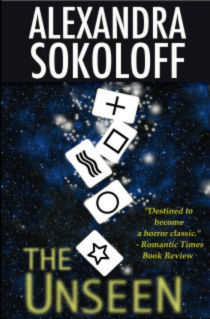
The Unseen
A team of research psychologists and two psychically gifted students move into an abandoned Southern mansion to duplicate a controversial poltergeist experiment, unaware that the entire original research team ended up insane... or dead.
Inspired by the real-life paranormal studies conducted by the world-famous Rhine parapsychology lab at Duke University.
October 28, 2012
NaNoWriMo Prep: Thematic Image Systems
I couldn't send you all off to do NaNo without taking you through one of my all-time favorite writing exercises, the one I get the most raves about when I do my workshops.
But first, we need to talk about theme. I’m not here to define theme, today...
Oh, is that cheating?
Well, okay, if you insist. Theme is what the story is about. On a deeper level than the plot details. The big meaning. Usually a moral meaning.
Hmm. See why I don’t want to define it?
Well, how about defining by example?
I’ve heard, often, “Huck Finn is about the inhumanity of racism.”
Uh...
I don't know about you, but for me, that's too soft and vague. You
could write about five billion different stories on that.
Also
have heard a lot that the theme of Romeo and Juliet is “Great love
defies even death.” Except that – in the end, they’re dead, right? So
how exactly is the love defying death? Risking death and losing,
maybe. Inspiring people after death, maybe.
Okay, how
about this? “A man is never truly alone who has friends” is a great
statement of the theme of It’s A Wonderful Life. (And stated overtly
in the end of that movie.)
The trouble is, I personally
think it’s closer to the soul of that movie to say that it’s the
little, ordinary actions we do every day that add up to true heroism.
So
defining theme has always seemed like a slippery process to me.
Different people can pull vastly different interpretations of the theme
of a story from the same story. And even if you can cleverly distill
the meaning of a story into one sentence… admit it, you’re not REALLY
covering everything that the story is about, are you?
I
think it’s more useful to think of theme as layers of meaning. To
think of theme not as a sentence, but as a whole image system.
And
that’s where it gets really fun to start working with theme – when it’s
not just some pedantic sentence, but a whole world of interrelated
meanings, that resonate on levels that you’re not even aware of,
sometimes, but that stay with you and bring you back to certain stories
over and over and over again.
(Think of some of the
dreams you have - maybe – where there will be double and triple puns,
visual and verbal. I had a dream last night, in fact, that had just
about every possible act, object, setting and word variation on
"counter").
There are all kinds of ways to work theme
into a story. The most obvious is the PLOT. Every plot is also a
statement of theme.
It’s A Wonderful Life is a great,
great example of plot reflecting theme. George Bailey’s desire in the
beginning of the film is to be a hero, to do big, important things.
Throughout the story, that desire seems to be thwarted at every turn by
the ordinariness of his life. And yet, every single encounter George
Bailey has is an example of a small, ordinary goodness, a right choice
that George makes, that in the end, when we and he see the town as it
would have been if he had never existed, lets us understand that it IS
those little things that make for true heroism.
Presumed
Innocent is an interesting book for plot reflecting theme. I love how
that book (and the very good film made of it) depicts the horrifying
randomness of the legal system – that justice can turn on the assignment
of a judge, on the outcome of a political race, on the loyalties of a
witness – or on the very, very clever defendant himself. To me it’s a
brilliant exploration of what justice really is, or isn’t, or can never
be.
And here's a brilliant example of a plot twist
conveying theme: with Lecter’s escape, The Silence of the Lambs drives
home the point that we can win a battle with evil, but never the entire
war.
DIALOGUE is another way to reflect theme.
I
rewatched The Matrix a couple of times this year and was very amused to
note this blatantly thematic dialogue in Sequence 1. I’ve bolded all
the thematic references:
----------------
From The Matrix, written by Larry & Andy Wachowski
In Neo's apartment. He is asleep at his computer, with headphones on. On his computer screen, we see he is running a search on a man named Morpheus. Suddenly on his computer screen appear the words 'Wake up, Neo.' He sits up, and stares at his computer screen.
Neo : What?
On the computer, now appears 'The Matrix has you...'
Neo : What the hell?
On the computer, now appears 'Follow the white rabbit...'
Neo : Follow the white rabbit?
He presses the 'esc' key
repeatedly, no effect. the computer comes up with one last message :
'Knock knock, Neo.' There is a loud knock at his door, and he jumps. He
stares at the door, and then back at his computer screen. it's now
blank.
Neo : .....Who is it?
Choi : It's Choi.
Neo : Yeah...yeah...you're two hours late.
Choi : I know, it's her fault.
Choi gestures towards DuJour.
Neo : You got the money?
Choi : Two grand.
Neo :Hold on.
Neo
goes into his apartment, shuts the door, and opens a book, takes out a
CD rom and goes back to the door, handing the CD to Choi.
Choi : Hallelujah. You're my saviour, man. My own personal Jesus Christ.
Neo :You get caught using that...
Choi : Yeah, I know. This never happened, you don't exist.
Neo : Right.
Choi : Something wrong, man? You look a little whiter than usual.
Neo : My computer....it..you ever have that feeling where you don't know if you're awake or still dreaming?
Choi : Mm, all the time. It's called Mescaline. It's the only way
to fly. Hey, it sounds to me like you need to unplug, man.
------------
The
Matrix is all about waking up (enlightenment), about what reality is,
and about Neo as the potential savior of the world, which has been
enslaved by a virtual reality program. And escaping. And going down
the rabbit hole.
Well, that above is maybe a four
minute scene, and look how blatant the themes are. It spells out the
entire story. And yet it works on the surface level as well, an
audience isn’t stopping to think, "Oh, there’s a theme, and there’s a
theme, and yet another theme."
(If there’s anything I
learned from screenwriting it’s that you can JUST SAY IT. And it
generally works better if you just do.)
Another hugely
effective and important way to convey theme is through VISUAL
STORYTELLING. Whether you’re writing a book or a film, it’s useful to
do specific passes through your story, thinking of yourself as a
production designer whose specific function is to create the look of the
story – AND – reflect the themes of the story in those visuals.
As
I've said here before, no one does image systems better than Thomas
Harris. The Silence of the Lambs and Red Dragon are serial killer
novels, but Harris elevates that overworked genre to art, in no small
part due to his image systems.
In Silence, Harris
borrows heavily from myth and especially fairy tales, choosing elements
that create a deeper meaning for his plots, and achieves the sense of a
mythic battle between good and evil. You’ve got the
labyrinth/Minotaur. You’ve got a monster in a cage, a troll holding a
girl in a pit (and that girl is a princess, remember – her mother is
American royalty, a senator). You’ve got a twist on the “lowly peasant
boy rescues the princess with the help of supernatural allies” fairy
tale – Clarice is the lowly peasant who enlists the help of (one might
also say apprentices to) Lecter’s wizardlike perceptions to rescue the
princess. You have a twisted wizard in his cave who is trying to turn
himself into a woman.
There’s a theme running through
Silence of monstrousness. Before Harris got all Freudian with Lecter,
to the detriment of the character, IMO, he presented this character as a
living embodiment of evil – an aberration of nature, right down to the
six fingers on his left hand. In fact, Harris virtually created the
Serial Killer as Monster.
So to reflect this
inhumanness (and also just creep us out) Harris works the animal
imagery, especially insect imagery, with the moths, the spiders and
mice in the storage unit, and the entomologists with their insect
collections in the museum, the theme of change, larva to butterfly.
In
Red Dragon Harris also works the animal imagery to powerful effect. The
killer is not a mere man, he’s a beast. When he’s born he’s compared to
a bat because of his cleft palate. He kills on a moon cycle, like a
werewolf. He uses his grandmother’s false teeth, like a vampire. And
let’s not forget – he’s trying to turn into a dragon.
LOCATION
is another huge, huge factor in conveying theme. Places have specific
meanings, or you the author can create a specific meaning for a place.
I’ve said this before, but basements are used so often in horror
stories because basements symbolize our subconscious, and all the fears
and childhood damage that we hide from ourselves. Characters’ houses
or apartments reflect themselves. The way you describe a city gives
it a particular meaning – you can emphasize particular qualities that
help you tell your story.
So how do you create a visual/thematic image system in your books?
Well,
start by becoming more conscious of what thematic systems authors are
working with in books and films that YOU love. As I am always saying –
make yourself a list
(ten is good) of books and films that have particularly effective image
systems. Then reread and rewatch some of your favorites, paying
close attention to how theme is conveyed, in plot, in dialogue, in
visuals, in location.
What I do when I start a project,
along with outlining, is to keep a list of thematic words that convey
what my story is about, to me. For The Harrowing it was words like:
Creation, chaos, abyss, fire, forsaken, shattered, shattering, portal,
door, gateway, vessel, empty, void, rage, fury, cast off, forgotten,
abandoned, alone, rejected, neglected, shards, discarded… pages and
pages like that.
For The Price – bargain, price, deal,
winter, ice, buried, dormant, resurrection, apple, temptation, tree,
garden, labyrinth, Sleeping Beauty, castle, queen, princess, prince,
king, wish, grant, deal, contract, task, hell, purgatory, descent,
mirror, Rumpelstiltskin, spiral…
Some words I’ll have
from the very beginning because they’re part of my own thematic DNA. But
as the word lists grow, so does my understanding of the inherent themes
of each particular story.
Do you see how that might
start to work? Not only do you get a sense of how the story can look to
convey your themes, but you also have a growing list of specific words
that you can work with in your prose and dialogue so that you’re
constantly hitting those themes on different levels.
At
the same time that I’m doing my word lists, I start a collage book, and
try to spend some time every week flipping through magazines and
pulling photos that resonate with my story. I find Vogue, the Italian
fashion mags, Vanity Fair, Premiere, Rolling Stone and of course,
National Geographic, particularly good for me. I tape those photos
together in a blank artists’ sketchbook (I use tape so I can move the
photos around when I feel like it. If you’re more – well, if you’re
neater than I am, you can also use plastic sleeves in a three-ring
binder). You can create a slideshow of images or a collage in
Photoshop (just don't ask me how to do it.) It’s another way of growing
an image system. Also, it doesn’t feel like writing so you think you’re
getting away with something.
And these days Pinterest is a great way of collecting thematic images; you can see some of mine, here.
Also, know your world
myths and fairy tales! Why make up your own backstory and characters
when you can tap into universally powerful archetypes? Remember, there’s
no new story under the sun, so being conscious of your antecedents can
help you bring out the archetypal power of the characters and themes
you’re working with.
And maybe most importantly: Know what your PERSONAL themes are. And that means - yes - Make a list.
So th NANOWRIMO ASSIGNMENTS for today are:
- Make a thematic words list for you book.
- Make
a list of your personal THEMES - the ones you vibrate to in other
people's stories, and the ones you keep coming back to in your own
stories, over and over again.
- And - What particular themes do you see working in your WIP?
I'd
love to hear some examples of books and films that to you have
particularly striking thematic image systems, and your own favorite
images to work with.
And by the way - what are some ways of conveying theme that I’ve left out?
- Alex
=====================================================
Screenwriting Tricks for Authors and Writing Love, Screenwriting Tricks for Authors, II, are now available in all e formats and as pdf files. Either book, any format, just $2.99.
- Kindle
- Amazon UK
- Amaxon DE (Eur. 2.40)
- Smashwords (includes online viewing and pdf file)
- Amazon/Kindle
- Barnes & Noble/Nook
- Amazon UK
- Amazon DE
=====================================================
HALLOWEEN GIVEAWAY
It's
October, my favorite month, and you-know-what is coming, so I'm giving
away 31 signed hardcover copies of my spooky thrillers Book of Shadows . and The Unseen .
Enter here to win!
Book of Shadows .
An
ambitious Boston homicide detective must join forces with a beautiful,
mysterious witch from Salem in a race to solve a series of satanic
killings.
Amazon Bestseller in Horror and Police Procedurals
The Unseen
A team of research psychologists and two psychically gifted students
move into an abandoned Southern mansion to duplicate a controversial
poltergeist experiment, unaware that the entire original research team
ended up insane... or dead.
Inspired by the real-life paranormal
studies conducted by the world-famous Rhine parapsychology lab at Duke
University.

But first, we need to talk about theme. I’m not here to define theme, today...
Oh, is that cheating?
Well, okay, if you insist. Theme is what the story is about. On a deeper level than the plot details. The big meaning. Usually a moral meaning.
Hmm. See why I don’t want to define it?
Well, how about defining by example?
I’ve heard, often, “Huck Finn is about the inhumanity of racism.”
Uh...
I don't know about you, but for me, that's too soft and vague. You
could write about five billion different stories on that.
Also
have heard a lot that the theme of Romeo and Juliet is “Great love
defies even death.” Except that – in the end, they’re dead, right? So
how exactly is the love defying death? Risking death and losing,
maybe. Inspiring people after death, maybe.
Okay, how
about this? “A man is never truly alone who has friends” is a great
statement of the theme of It’s A Wonderful Life. (And stated overtly
in the end of that movie.)
The trouble is, I personally
think it’s closer to the soul of that movie to say that it’s the
little, ordinary actions we do every day that add up to true heroism.
So
defining theme has always seemed like a slippery process to me.
Different people can pull vastly different interpretations of the theme
of a story from the same story. And even if you can cleverly distill
the meaning of a story into one sentence… admit it, you’re not REALLY
covering everything that the story is about, are you?
I
think it’s more useful to think of theme as layers of meaning. To
think of theme not as a sentence, but as a whole image system.
And
that’s where it gets really fun to start working with theme – when it’s
not just some pedantic sentence, but a whole world of interrelated
meanings, that resonate on levels that you’re not even aware of,
sometimes, but that stay with you and bring you back to certain stories
over and over and over again.
(Think of some of the
dreams you have - maybe – where there will be double and triple puns,
visual and verbal. I had a dream last night, in fact, that had just
about every possible act, object, setting and word variation on
"counter").
There are all kinds of ways to work theme
into a story. The most obvious is the PLOT. Every plot is also a
statement of theme.
It’s A Wonderful Life is a great,
great example of plot reflecting theme. George Bailey’s desire in the
beginning of the film is to be a hero, to do big, important things.
Throughout the story, that desire seems to be thwarted at every turn by
the ordinariness of his life. And yet, every single encounter George
Bailey has is an example of a small, ordinary goodness, a right choice
that George makes, that in the end, when we and he see the town as it
would have been if he had never existed, lets us understand that it IS
those little things that make for true heroism.
Presumed
Innocent is an interesting book for plot reflecting theme. I love how
that book (and the very good film made of it) depicts the horrifying
randomness of the legal system – that justice can turn on the assignment
of a judge, on the outcome of a political race, on the loyalties of a
witness – or on the very, very clever defendant himself. To me it’s a
brilliant exploration of what justice really is, or isn’t, or can never
be.
And here's a brilliant example of a plot twist
conveying theme: with Lecter’s escape, The Silence of the Lambs drives
home the point that we can win a battle with evil, but never the entire
war.
DIALOGUE is another way to reflect theme.
I
rewatched The Matrix a couple of times this year and was very amused to
note this blatantly thematic dialogue in Sequence 1. I’ve bolded all
the thematic references:
----------------
From The Matrix, written by Larry & Andy Wachowski
In Neo's apartment. He is asleep at his computer, with headphones on. On his computer screen, we see he is running a search on a man named Morpheus. Suddenly on his computer screen appear the words 'Wake up, Neo.' He sits up, and stares at his computer screen.
Neo : What?
On the computer, now appears 'The Matrix has you...'
Neo : What the hell?
On the computer, now appears 'Follow the white rabbit...'
Neo : Follow the white rabbit?
He presses the 'esc' key
repeatedly, no effect. the computer comes up with one last message :
'Knock knock, Neo.' There is a loud knock at his door, and he jumps. He
stares at the door, and then back at his computer screen. it's now
blank.
Neo : .....Who is it?
Choi : It's Choi.
Neo : Yeah...yeah...you're two hours late.
Choi : I know, it's her fault.
Choi gestures towards DuJour.
Neo : You got the money?
Choi : Two grand.
Neo :Hold on.
Neo
goes into his apartment, shuts the door, and opens a book, takes out a
CD rom and goes back to the door, handing the CD to Choi.
Choi : Hallelujah. You're my saviour, man. My own personal Jesus Christ.
Neo :You get caught using that...
Choi : Yeah, I know. This never happened, you don't exist.
Neo : Right.
Choi : Something wrong, man? You look a little whiter than usual.
Neo : My computer....it..you ever have that feeling where you don't know if you're awake or still dreaming?
Choi : Mm, all the time. It's called Mescaline. It's the only way
to fly. Hey, it sounds to me like you need to unplug, man.
------------
The
Matrix is all about waking up (enlightenment), about what reality is,
and about Neo as the potential savior of the world, which has been
enslaved by a virtual reality program. And escaping. And going down
the rabbit hole.
Well, that above is maybe a four
minute scene, and look how blatant the themes are. It spells out the
entire story. And yet it works on the surface level as well, an
audience isn’t stopping to think, "Oh, there’s a theme, and there’s a
theme, and yet another theme."
(If there’s anything I
learned from screenwriting it’s that you can JUST SAY IT. And it
generally works better if you just do.)
Another hugely
effective and important way to convey theme is through VISUAL
STORYTELLING. Whether you’re writing a book or a film, it’s useful to
do specific passes through your story, thinking of yourself as a
production designer whose specific function is to create the look of the
story – AND – reflect the themes of the story in those visuals.
As
I've said here before, no one does image systems better than Thomas
Harris. The Silence of the Lambs and Red Dragon are serial killer
novels, but Harris elevates that overworked genre to art, in no small
part due to his image systems.
In Silence, Harris
borrows heavily from myth and especially fairy tales, choosing elements
that create a deeper meaning for his plots, and achieves the sense of a
mythic battle between good and evil. You’ve got the
labyrinth/Minotaur. You’ve got a monster in a cage, a troll holding a
girl in a pit (and that girl is a princess, remember – her mother is
American royalty, a senator). You’ve got a twist on the “lowly peasant
boy rescues the princess with the help of supernatural allies” fairy
tale – Clarice is the lowly peasant who enlists the help of (one might
also say apprentices to) Lecter’s wizardlike perceptions to rescue the
princess. You have a twisted wizard in his cave who is trying to turn
himself into a woman.
There’s a theme running through
Silence of monstrousness. Before Harris got all Freudian with Lecter,
to the detriment of the character, IMO, he presented this character as a
living embodiment of evil – an aberration of nature, right down to the
six fingers on his left hand. In fact, Harris virtually created the
Serial Killer as Monster.
So to reflect this
inhumanness (and also just creep us out) Harris works the animal
imagery, especially insect imagery, with the moths, the spiders and
mice in the storage unit, and the entomologists with their insect
collections in the museum, the theme of change, larva to butterfly.
In
Red Dragon Harris also works the animal imagery to powerful effect. The
killer is not a mere man, he’s a beast. When he’s born he’s compared to
a bat because of his cleft palate. He kills on a moon cycle, like a
werewolf. He uses his grandmother’s false teeth, like a vampire. And
let’s not forget – he’s trying to turn into a dragon.
LOCATION
is another huge, huge factor in conveying theme. Places have specific
meanings, or you the author can create a specific meaning for a place.
I’ve said this before, but basements are used so often in horror
stories because basements symbolize our subconscious, and all the fears
and childhood damage that we hide from ourselves. Characters’ houses
or apartments reflect themselves. The way you describe a city gives
it a particular meaning – you can emphasize particular qualities that
help you tell your story.
So how do you create a visual/thematic image system in your books?
Well,
start by becoming more conscious of what thematic systems authors are
working with in books and films that YOU love. As I am always saying –
make yourself a list
(ten is good) of books and films that have particularly effective image
systems. Then reread and rewatch some of your favorites, paying
close attention to how theme is conveyed, in plot, in dialogue, in
visuals, in location.
What I do when I start a project,
along with outlining, is to keep a list of thematic words that convey
what my story is about, to me. For The Harrowing it was words like:
Creation, chaos, abyss, fire, forsaken, shattered, shattering, portal,
door, gateway, vessel, empty, void, rage, fury, cast off, forgotten,
abandoned, alone, rejected, neglected, shards, discarded… pages and
pages like that.
For The Price – bargain, price, deal,
winter, ice, buried, dormant, resurrection, apple, temptation, tree,
garden, labyrinth, Sleeping Beauty, castle, queen, princess, prince,
king, wish, grant, deal, contract, task, hell, purgatory, descent,
mirror, Rumpelstiltskin, spiral…
Some words I’ll have
from the very beginning because they’re part of my own thematic DNA. But
as the word lists grow, so does my understanding of the inherent themes
of each particular story.
Do you see how that might
start to work? Not only do you get a sense of how the story can look to
convey your themes, but you also have a growing list of specific words
that you can work with in your prose and dialogue so that you’re
constantly hitting those themes on different levels.
At
the same time that I’m doing my word lists, I start a collage book, and
try to spend some time every week flipping through magazines and
pulling photos that resonate with my story. I find Vogue, the Italian
fashion mags, Vanity Fair, Premiere, Rolling Stone and of course,
National Geographic, particularly good for me. I tape those photos
together in a blank artists’ sketchbook (I use tape so I can move the
photos around when I feel like it. If you’re more – well, if you’re
neater than I am, you can also use plastic sleeves in a three-ring
binder). You can create a slideshow of images or a collage in
Photoshop (just don't ask me how to do it.) It’s another way of growing
an image system. Also, it doesn’t feel like writing so you think you’re
getting away with something.
And these days Pinterest is a great way of collecting thematic images; you can see some of mine, here.
Also, know your world
myths and fairy tales! Why make up your own backstory and characters
when you can tap into universally powerful archetypes? Remember, there’s
no new story under the sun, so being conscious of your antecedents can
help you bring out the archetypal power of the characters and themes
you’re working with.
And maybe most importantly: Know what your PERSONAL themes are. And that means - yes - Make a list.
So th NANOWRIMO ASSIGNMENTS for today are:
- Make a thematic words list for you book.
- Make
a list of your personal THEMES - the ones you vibrate to in other
people's stories, and the ones you keep coming back to in your own
stories, over and over again.
- And - What particular themes do you see working in your WIP?
I'd
love to hear some examples of books and films that to you have
particularly striking thematic image systems, and your own favorite
images to work with.
And by the way - what are some ways of conveying theme that I’ve left out?
- Alex
=====================================================
Screenwriting Tricks for Authors and Writing Love, Screenwriting Tricks for Authors, II, are now available in all e formats and as pdf files. Either book, any format, just $2.99.
- Kindle
- Amazon UK
- Amaxon DE (Eur. 2.40)
- Smashwords (includes online viewing and pdf file)- Amazon/Kindle
- Barnes & Noble/Nook
- Amazon UK
- Amazon DE
=====================================================
HALLOWEEN GIVEAWAY
It's
October, my favorite month, and you-know-what is coming, so I'm giving
away 31 signed hardcover copies of my spooky thrillers Book of Shadows . and The Unseen .
Enter here to win!
Book of Shadows .
An
ambitious Boston homicide detective must join forces with a beautiful,
mysterious witch from Salem in a race to solve a series of satanic
killings.
Amazon Bestseller in Horror and Police Procedurals
The Unseen
A team of research psychologists and two psychically gifted students
move into an abandoned Southern mansion to duplicate a controversial
poltergeist experiment, unaware that the entire original research team
ended up insane... or dead.
Inspired by the real-life paranormal
studies conducted by the world-famous Rhine parapsychology lab at Duke
University.
October 21, 2012
NaNoWriMo Prep: Elements of Act One
So now we've talked about basic filmic structure as it might be applied to novels, and you have your structure grid, and a grasp on how you're going to use index cards to brainstorm and lay out your story.
I don't know about you, but when I start a project, I
know much, much, much more about the first act than any of the rest of
it. I can see the mountains in the distance, but at first, I know much
more about the basic set up and characters. So it makes sense to start
at the beginning, and fill out the Elements of Act One.
What actually goes into a first act?
The first act of a movie (first 30 pages) or book
(first 100 pages, approx.) is the SET UP. By the end of the first act
you’re going to be introduced to all the major players of the story, the
themes, the location, the visual image system, the conflicts, and
especially the main conflict.
When you’re making up index cards, you can immediately
make up several cards that will go in your first act column. You may or
may not know what some of those scenes look like already, but either
way, you know they’re all going to be there.
- Opening image
- Meet the hero or heroine
- Hero/ine’s inner and outer need
- Hero/ine's ghost or wound
- Hero/ine’s arc
- Inciting Incident/ Call to Adventure
- Meet the antagonist (and/or introduce a mystery, which is what
you do when you’re going to keep your antagonist hidden to reveal at
the end)
- State the theme/what’s the story about?
- Allies
- Mentor
- A mirror character (sometimes)
- Meet the Love interest (and please don't "Meet Cute")
- Plant/Reveal (or: Set ups and Payoffs)
- Hope/Fear (and Stakes)
- Time Clock (possibly. May not have one and may be revealed later in the story)
- Central Question
- Plan/Central Story Action (may not be introduced until early Act II)
- Sequence One climax
- Act One climax (or curtain, or culmination)
- Crossing the Threshold or Into the Special World (which we'll talk about later)
Yeah, it’s a lot! That’s why first acts are often the
most revised and rewritten sections of the story. It’s also why it’s
often the section most in need of cutting and condensing. The answer is
usually combining scenes. All these things have to be done, but they all
have to be done within such a limited time frame (and page frame) that
you simply HAVE to make each scene work on multiple levels.
Let’s break these things down.
OPENING IMAGE:
Of course in a film you have an opening image by
default, whether you plan to or not. It’s the first thing you see in the
film. But good filmmakers will use that opening image to establish all
kinds of things about the film – mood, tone, location, and especially
theme. Think of the opening image of WITNESS – the serene and isolated
calm of wind over a wheat field. It’s the world of the Amish – the
non-violent, unhurried world into which city violence will soon be
introduced. It’s a great contrast with the next image to come – the
chaos and noise of the city. This is a great opening image because it
also suggests the climax (which takes place in the grain silo – the
villain is killed by the spill of grain as the townspeople keep him
surrounded.
The opening image of THE USUAL SUSPECTS is a man
taking a piss… a sly reference to Verbal and the whole movie “taking the
piss” – as the British say - on the audience.
The opening image of SILENCE OF THE LAMBS is a dark, misty forest, through which Clarice is running as if in a dream.
Well, novelists, instead of (or in addition to)
killing yourself trying to concoct a great first line, how about giving
some thought to what your opening scene LOOKS like? It takes a lot of
the pressure off that first page anxiety - because you're focused on
conveying a powerful image that will intrigue and entice the reader into
the book. What do we see? How does it make us feel?
Try it!
(I'll talk more about this in posts on VISUAL STORYTELLING.)
MEETING THE HERO/INE
Of course you’re going to devise an interesting,
clever and evocative introduction to your main character. But there are a
whole lot of structural things that you need to get across about your
hero/ine from the very beginning. You have to know your character’s
INNER AND OUTER DESIRES and how they conflict.
In fact, let’s just stop right there and talk about this crucial idea of
INNER AND OUTER DESIRE.
The first thing any acting student learns in terms of
creating a character and building a scene is to ask the question: “What
do I WANT?” - n every scene, and in the story overall. When I was
directing plays (yeah, in one of my multiple past lives) and a scene was
just lying dead on the stage, I could always get the actors to breathe
life into it by getting them to clarify what they wanted in the scene
and simply playing that want. This is something that starts in the
writing, obviously, and should always be on the author’s mind, too: Who
wants what in the scene, and how do those desires conflict? Who WINS in
the scene?
But even before all that, one of the most important
steps of creating a story, from the very beginning, is identifying the
protagonist overall desire and need in the story. You also hear this
called “internal” and “external” desire, and “want” and “deep need”, but
it’s all the same thing. A strong main character will want something
immediately, like to get that promotion, or to have sex with the love
interest. But there’s something underneath that surface want that is
really driving the character, and in good characters, those inner and
outer desires are in conflict. Also, the character will KNOW that s/he
wants that outer desire, but probably have very little idea that what
she really needs is the inner desire.
One of the great examples of all time of inner and
outer desire in conflict is in the George Bailey character in IT’S A
WONDERFUL LIFE. From the very beginning George wants to see the world,
to do big things, design big buildings – all very male, external,
explosive goals. But his deep need is to become a good man and community
leader like his father, who does big things and fights big battles –
but on a microcosm, in their tiny, “boring” little community of Bedford
Falls, which George can’t wait to escape.
But every choice he actually makes in the story defers
his external need to escape, and ties him closer to the community that
he becomes the moral leader of, as he takes on his late father’s role
and battles the town’s would-be dictator, Mr. Potter. George does not
take on that role happily – he fights it every single step of the way,
and resents it a good bit of the time. But it’s that conflict which
makes George such a great character whom we emphasize with – it’s a
story of how an ordinary man becomes a true hero.
In SILENCE OF THE LAMBS, Clarice’s outer desire is for
advancement in the FBI. And Harris conveys this desire in what is a
brilliant storytelling trick: He has Dr. Lecter tell her so. “You’re
sooooo ambitious, aren’t you?” He purrs. And “I’ll give you what you
most desire, Clarice. Advancement.”
It’s brilliant because it makes Lecter all-knowing,
but it also clearly spells out Clarice’s desire, which the
audience/reader really does need to know to commit to the character and
relax into the story. I’m a big believer in just spelling it out.
But what Clarice REALLY needs is not advancement. What
she needs to save a lamb – the lamb that haunts her dreams, the lamb
she hears screaming. In the story, the kidnapped senator’s daughter
Catherine is the lamb, and Harris uses animal imagery to subtly evoke a
lamb and the scene of the slaughter of the lambs that haunts Clarice.
And again, Lecter is the one who draws this deep need out of Clarice.
Also Clarice’s need and desire come into conflict:
what she WANTS is advancement, but in order to save Catherine, she has
to defy her superiors and jeopardize her graduation from the academy.
It’s usually true that the external desire will be a
selfish want – something the protagonist wants for him or herself, and
the inner need will be unselfish - something the protagonist comes to
want for other people. This is a useful guideline because it clearly
shows character growth.
But even in a romantic comedy, where the inner and
outer desire might not be so deep, there can be a lot of meaning and
change. In Romancing The Stone, Joan Wilder's obvious plot-driven outer
desire is to save her sister - she's a good person and she's already
got an unselfish drive. But she's also got a personal outer desire: for
a great love with the man of her dreams, the one she keeps writing
about.
But her inner
need is to become the self-realized woman she is capable of being: the
intrepid, independent, and loving woman she writes about. Through the
course of the movie we see her becoming that woman before our eyes, and
we see her flawed real-life man fall in love with her because of that
independence and adventurousness. She gets her man by finding herself.
CHARACTER ARC
Closely entwined with the inner/outer desire lines is
the ARC of the character (and this is important to think about from the
very beginning of Act One, since you are devising the end of your story
at the same time as you’re planning the beginning.)
The arc of the character is what the character learns
during the course of the story, and how s/he changes because of it. It
could be said that the arc of a character is almost always about the
character realizing that s/he’s been obsessed with an outer goal or
desire, when what she really needs to be whole, fulfilled, and lovable
is (fill in the blank). On top of that a character will go from shy and
repressed to a capable and respected leader, from selfish to altruistic,
from pathological liar to a seeker of truth… and the bigger the change,
the more impact the story will have, as long as you keep it believable.
So it’s essential to know where you want your
character to end up. Once you know that, you can work backward to
create a number of personal obstacles and external problems that are
keeping that character from being everything s/he can be.
INCITING INCIDENT/CALL TO ADVENTURE
This is the event that starts the story and forces the hero/ine to react.
In JAWS, it happens on the first few pages of the
book, and the first few minutes of the movie: the shark swims into the
quiet bay and eats a swimmer. That’s the event that forces the hero,
Sheriff Brody, to take action. (In mysteries and thrillers the first
death is often the inciting incident – it’s so common that writers refer
to it as “the corpse hits the floor”. In the case of JAWS, the corpse
hits the ocean floor.)
In STAR WARS, Luke Skywalker finds the hologram of the
captured Princess Leia pleading for help that she has hidden in the
robot R2D2.
In CHINATOWN, a woman claiming to be Evelyn Mulwray
walks into Jake Gittes’ office and hires him to prove her husband is
cheating on her. (In a detective story, the inciting incident is often
the case that lands in the detective’s lap, or again, “the corpse hits
the floor”.
In RAIDERS OF THE LOST ARK, the government guys come
to Professor Indiana Jones and want to hire him to recover the lost Ark
of the Covenant – before Hitler gets it.
In SILENCE OF THE LAMBS, Clarice is called to FBI
agent Crawford’s office, where he tells her he has “an interesting
errand for her.”
In HARRY POTTER AND THE SORCERER’S STONE, an owl
delivers Harry’s invitation to Hogwart’s School. (The Call to
Adventure is very often a literal phone call, summons, knock on the
door, or mailed invitation).
Each of these incidents propels the hero/ine into
action. They must make a decision – to take the job, accept the task,
answer the call. This is not an optional step for you, the writer –
it is a crucial part of every story.
Joseph Campbell and Christopher Vogler detail another
step here – THE REFUSAL OF THE CALL. The hero/ine is often reluctant
to take that step into adventure and at first says no to the job. Let's
face it - we all tend to resist change and the unknown, right? So much
easier to just see what's on TV tonight.
In CHINATOWN, for example, Jake initially tries to
talk “Mrs. Mulwray” out of pursuing the case. In HARRY POTTER AND
THE SORCERER’S STONE there’s a whole sequence of Harry’s uncle trying to
prevent Harry from receiving his invitation to Hogwart’s school.
THE ANTAGONIST
The antagonist, opponent, villain deserves his/her own post - see here and here.
For the purposes of this post I’ll just say, either you’ll be
introducing the antagonist in the first act, or you’ll be introducing a
mystery or problem or crisis that has actually been set in motion by the
antagonist.
ALLIES
Also in the first act, you’ll set up most of the
hero/ine’s allies – the sidekick, the roommate, the best friend, the
love interest, the brother or sister.
MENTOR
Not all stories have mentors, and the mentor might not be introduced until some time in the second act.
LOVE INTEREST
Again, optional, but it's rare not to have one! This
character generally plays a dual role: the love interest can also be the
antagonist (in most love stories), an ally, a mentor, or the actual
villain.
Obviously, meeting the love of your life is an
extremely significant moment and it should be treated as such in your
script or book. Unfortunately this usually translates into appalling
"meet cute" scenes in which - more times than I can freaking count - the
hero spills coffee on the heroine, or vice-versa, ruining her or his
new suit just before that big job interview, so the heroine has an
excuse to hate the hero even though he offers to pay for the suit. Or
vice-versa.
I'm not going to go into my whole rant about "meet
cute" right now, I'm just bringing it up as an example hoping you will
cringe as much as I do and vow to do better. A lot better. As always, I
suggest you make a list of your favorite meetings of soon-to-be lovers,
and see what great storytellers do with the moment - whether it be
comic, erotic, or downright bizarre.
HOPE/FEAR (STAKES)
Just as good storytellers will be sure to make it
perfectly clear what the main character’s inner and outer desires are,
these storytellers will also be very clear about what we HOPE and FEAR
for the main character. This is one of the most dynamic storytelling
tricks you can employ in your writing, in fact, because it engages your
reader or audience fully in the action of the story.
Generally what we hope for the character is the same
as her or his INNER NEED. We hope George Bailey will defeat Mr. Potter.
We fear Potter will drive George and his family into ruin (and George
possibly to suicide). Our fear for the character should be the absolute
worst case scenario: in a drama, mystery or thriller we’re talking
madness, suicide, death, ruin. In a comedy or romance the stakes are
more likely the loss of love.
Our awareness of the stakes may grow along with the
main character’s growing awareness, but it most stories there are clues
to the bigger picture right from the beginning
STATEMENT OF THEME:
A reader or audience will get restless if they don’t
have a good idea of what the story is within the first five (I’d even
say three) minutes of a movie, or the first twenty pages of a book.
Sometimes it’s enough to have just a sense of the central conflict. But
often good storytellers will make it perfectly clear what the theme of
the story is, and very early on in the story. In the first act of IT’S A
WONDERFUL LIFE, George is impatient to leave pokey little Bedford Falls
and go out in the world to “do big things”. George’s father tells him
that in their own small way, he feels they ARE doing big things at the
Building and Loan; they’re satisfying one of the most basic needs of
human beings by helping them own their own homes. This is a lovely
statement of the theme of the movie: that it’s the ordinary, seemingly
mundane acts that we do every day that add up to a heroic life.
FIRST ACT CLIMAX/CENTRAL QUESTION:
We talked about sequence and act climaxes last week –
that an act climax will have a reversal, revelation, and often a
setpiece and/or change of location set piece that spins the story into
the second act. What we didn’t talk about is the idea of the central
question of the story.
I will be didactic here and say that by the end of the
first act you MUST have given your reader or audience everything they
need to know about what the story is going to be about: what kind of
story it is, who the hero/ine and antagonist (or mystery) are, and what
the main conflict is going to be. It’s useful to think of the story a
posing a central question: Will Clarice get Lecter to give her the
information she need to catch Buffalo Bill before he kills again? Will
Sheriff Brody’s team be able to kill the shark before it kills again
(and in time to save the tourist season?) Will the crew of the Nostromo
be able to catch and kill that alien before it kills them?
(All right, those are some bloody examples, but that’s me.)
It’s the question on which the entire action of the story hinges.
Here’s an interesting structural paradigm to consider.
In a lot of stories, the central question is actually answered in the
second act climax, and the answer is often: No.
What’s the second act climax of SILENCE OF THE LAMBS?
(Hint: it’s the one scene/setpiece that EVERYONE remembers, and Clarice has nothing to do with it.)
Right – Lecter escapes. Well, what does that have to do with our heroine?
It means that Lecter will NOT be helping her catch
Buffalo Bill. In fact, in the movie, when she gets the phone call that
Lecter has escaped, she says aloud, “Catherine’s dead.”
Because Clarice thinks that she needs Lecter to save
Catherine. But Lecter, like the great mentor he is, has TAUGHT Clarice
enough that she can catch Buffalo Bill and save Catherine herself (okay,
with help from the teaching of her other mentor, Crawford).
Ingenious storytelling, there, which is why I keep returning to SILENCE OF THE LAMBS for my story structure examples.
Obviously your ASSIGNMENT is to create index cards for
the first act, all the while of course making index cards for other
parts of your story as they occur to you.
And if you don't know what an element is yet, like the
opening image, or the call to adventure, then I strongly suggest that
you just write a card that says OPENING IMAGE. And one for CALL TO
ADVENTURE, and pin it up there on your structure grid in approximately
the right place. Our creative minds are so very eager to do this work
for us that if you just acknowledge that you need a scene like that,
your subconscious will jump right to work and figure one out for you. I
swear. It is one of the great miracles of writing.
If you'd like to to see more of these story elements
in action, check out these breakdowns of the first acts of several
movies, identifying these steps:
THE MATRIX
CHINATOWN Act One Breakdown
HARRY POTTER AND THE SORCERER'S STONE - Act One Breakdown
Romancing the Stone
I'll do Plan, Central Question, and Central Story Action in a separate post, because those are just that important.
So I’m interested in all questions and comments, of
course, but I’m always looking for good examples of inner and outer
desire, especially inner and outer desire in conflict. Got any for me?
- Alex
=====================================================
PREVIOUS NANOWRIMO PREP POSTS:
What is the Three Act Structure and Why Should You Care?
The Three-Act, Eight Sequence Structure
The Index Card Method and Structure Grid
Story Elements Checklist for Brainstorming Index Cards
=====================================================
Screenwriting Tricks for Authors and Writing Love, Screenwriting Tricks for Authors, II, are now available in all e formats and as pdf files. Either book, any format, just $2.99.
- Kindle
- Amazon UK
- Amaxon DE (Eur. 2.40)
- Smashwords (includes online viewing and pdf file)
- Amazon/Kindle
- Barnes & Noble/Nook
- Amazon UK
- Amazon DE
=====================================================
HALLOWEEN GIVEAWAY
It's
October, my favorite month, and you-know-what is coming, so I'm giving
away 31 signed hardcover copies of my spooky thrillers Book of Shadows . and The Unseen .
Enter here to win!
Book of Shadows .
An
ambitious Boston homicide detective must join forces with a beautiful,
mysterious witch from Salem in a race to solve a series of satanic
killings.
Amazon Bestseller in Horror and Police Procedurals
The Unseen
A team of research psychologists and two psychically gifted students
move into an abandoned Southern mansion to duplicate a controversial
poltergeist experiment, unaware that the entire original research team
ended up insane... or dead.
Inspired by the real-life paranormal
studies conducted by the world-famous Rhine parapsychology lab at Duke
University.

I don't know about you, but when I start a project, I
know much, much, much more about the first act than any of the rest of
it. I can see the mountains in the distance, but at first, I know much
more about the basic set up and characters. So it makes sense to start
at the beginning, and fill out the Elements of Act One.
What actually goes into a first act?
The first act of a movie (first 30 pages) or book
(first 100 pages, approx.) is the SET UP. By the end of the first act
you’re going to be introduced to all the major players of the story, the
themes, the location, the visual image system, the conflicts, and
especially the main conflict.
When you’re making up index cards, you can immediately
make up several cards that will go in your first act column. You may or
may not know what some of those scenes look like already, but either
way, you know they’re all going to be there.
- Opening image
- Meet the hero or heroine
- Hero/ine’s inner and outer need
- Hero/ine's ghost or wound
- Hero/ine’s arc
- Inciting Incident/ Call to Adventure
- Meet the antagonist (and/or introduce a mystery, which is what
you do when you’re going to keep your antagonist hidden to reveal at
the end)
- State the theme/what’s the story about?
- Allies
- Mentor
- A mirror character (sometimes)
- Meet the Love interest (and please don't "Meet Cute")
- Plant/Reveal (or: Set ups and Payoffs)
- Hope/Fear (and Stakes)
- Time Clock (possibly. May not have one and may be revealed later in the story)
- Central Question
- Plan/Central Story Action (may not be introduced until early Act II)
- Sequence One climax
- Act One climax (or curtain, or culmination)
- Crossing the Threshold or Into the Special World (which we'll talk about later)
Yeah, it’s a lot! That’s why first acts are often the
most revised and rewritten sections of the story. It’s also why it’s
often the section most in need of cutting and condensing. The answer is
usually combining scenes. All these things have to be done, but they all
have to be done within such a limited time frame (and page frame) that
you simply HAVE to make each scene work on multiple levels.
Let’s break these things down.
OPENING IMAGE:
Of course in a film you have an opening image by
default, whether you plan to or not. It’s the first thing you see in the
film. But good filmmakers will use that opening image to establish all
kinds of things about the film – mood, tone, location, and especially
theme. Think of the opening image of WITNESS – the serene and isolated
calm of wind over a wheat field. It’s the world of the Amish – the
non-violent, unhurried world into which city violence will soon be
introduced. It’s a great contrast with the next image to come – the
chaos and noise of the city. This is a great opening image because it
also suggests the climax (which takes place in the grain silo – the
villain is killed by the spill of grain as the townspeople keep him
surrounded.
The opening image of THE USUAL SUSPECTS is a man
taking a piss… a sly reference to Verbal and the whole movie “taking the
piss” – as the British say - on the audience.
The opening image of SILENCE OF THE LAMBS is a dark, misty forest, through which Clarice is running as if in a dream.
Well, novelists, instead of (or in addition to)
killing yourself trying to concoct a great first line, how about giving
some thought to what your opening scene LOOKS like? It takes a lot of
the pressure off that first page anxiety - because you're focused on
conveying a powerful image that will intrigue and entice the reader into
the book. What do we see? How does it make us feel?
Try it!
(I'll talk more about this in posts on VISUAL STORYTELLING.)
MEETING THE HERO/INE
Of course you’re going to devise an interesting,
clever and evocative introduction to your main character. But there are a
whole lot of structural things that you need to get across about your
hero/ine from the very beginning. You have to know your character’s
INNER AND OUTER DESIRES and how they conflict.
In fact, let’s just stop right there and talk about this crucial idea of
INNER AND OUTER DESIRE.
The first thing any acting student learns in terms of
creating a character and building a scene is to ask the question: “What
do I WANT?” - n every scene, and in the story overall. When I was
directing plays (yeah, in one of my multiple past lives) and a scene was
just lying dead on the stage, I could always get the actors to breathe
life into it by getting them to clarify what they wanted in the scene
and simply playing that want. This is something that starts in the
writing, obviously, and should always be on the author’s mind, too: Who
wants what in the scene, and how do those desires conflict? Who WINS in
the scene?
But even before all that, one of the most important
steps of creating a story, from the very beginning, is identifying the
protagonist overall desire and need in the story. You also hear this
called “internal” and “external” desire, and “want” and “deep need”, but
it’s all the same thing. A strong main character will want something
immediately, like to get that promotion, or to have sex with the love
interest. But there’s something underneath that surface want that is
really driving the character, and in good characters, those inner and
outer desires are in conflict. Also, the character will KNOW that s/he
wants that outer desire, but probably have very little idea that what
she really needs is the inner desire.
One of the great examples of all time of inner and
outer desire in conflict is in the George Bailey character in IT’S A
WONDERFUL LIFE. From the very beginning George wants to see the world,
to do big things, design big buildings – all very male, external,
explosive goals. But his deep need is to become a good man and community
leader like his father, who does big things and fights big battles –
but on a microcosm, in their tiny, “boring” little community of Bedford
Falls, which George can’t wait to escape.
But every choice he actually makes in the story defers
his external need to escape, and ties him closer to the community that
he becomes the moral leader of, as he takes on his late father’s role
and battles the town’s would-be dictator, Mr. Potter. George does not
take on that role happily – he fights it every single step of the way,
and resents it a good bit of the time. But it’s that conflict which
makes George such a great character whom we emphasize with – it’s a
story of how an ordinary man becomes a true hero.
In SILENCE OF THE LAMBS, Clarice’s outer desire is for
advancement in the FBI. And Harris conveys this desire in what is a
brilliant storytelling trick: He has Dr. Lecter tell her so. “You’re
sooooo ambitious, aren’t you?” He purrs. And “I’ll give you what you
most desire, Clarice. Advancement.”
It’s brilliant because it makes Lecter all-knowing,
but it also clearly spells out Clarice’s desire, which the
audience/reader really does need to know to commit to the character and
relax into the story. I’m a big believer in just spelling it out.
But what Clarice REALLY needs is not advancement. What
she needs to save a lamb – the lamb that haunts her dreams, the lamb
she hears screaming. In the story, the kidnapped senator’s daughter
Catherine is the lamb, and Harris uses animal imagery to subtly evoke a
lamb and the scene of the slaughter of the lambs that haunts Clarice.
And again, Lecter is the one who draws this deep need out of Clarice.
Also Clarice’s need and desire come into conflict:
what she WANTS is advancement, but in order to save Catherine, she has
to defy her superiors and jeopardize her graduation from the academy.
It’s usually true that the external desire will be a
selfish want – something the protagonist wants for him or herself, and
the inner need will be unselfish - something the protagonist comes to
want for other people. This is a useful guideline because it clearly
shows character growth.
But even in a romantic comedy, where the inner and
outer desire might not be so deep, there can be a lot of meaning and
change. In Romancing The Stone, Joan Wilder's obvious plot-driven outer
desire is to save her sister - she's a good person and she's already
got an unselfish drive. But she's also got a personal outer desire: for
a great love with the man of her dreams, the one she keeps writing
about.
But her inner
need is to become the self-realized woman she is capable of being: the
intrepid, independent, and loving woman she writes about. Through the
course of the movie we see her becoming that woman before our eyes, and
we see her flawed real-life man fall in love with her because of that
independence and adventurousness. She gets her man by finding herself.
CHARACTER ARC
Closely entwined with the inner/outer desire lines is
the ARC of the character (and this is important to think about from the
very beginning of Act One, since you are devising the end of your story
at the same time as you’re planning the beginning.)
The arc of the character is what the character learns
during the course of the story, and how s/he changes because of it. It
could be said that the arc of a character is almost always about the
character realizing that s/he’s been obsessed with an outer goal or
desire, when what she really needs to be whole, fulfilled, and lovable
is (fill in the blank). On top of that a character will go from shy and
repressed to a capable and respected leader, from selfish to altruistic,
from pathological liar to a seeker of truth… and the bigger the change,
the more impact the story will have, as long as you keep it believable.
So it’s essential to know where you want your
character to end up. Once you know that, you can work backward to
create a number of personal obstacles and external problems that are
keeping that character from being everything s/he can be.
INCITING INCIDENT/CALL TO ADVENTURE
This is the event that starts the story and forces the hero/ine to react.
In JAWS, it happens on the first few pages of the
book, and the first few minutes of the movie: the shark swims into the
quiet bay and eats a swimmer. That’s the event that forces the hero,
Sheriff Brody, to take action. (In mysteries and thrillers the first
death is often the inciting incident – it’s so common that writers refer
to it as “the corpse hits the floor”. In the case of JAWS, the corpse
hits the ocean floor.)
In STAR WARS, Luke Skywalker finds the hologram of the
captured Princess Leia pleading for help that she has hidden in the
robot R2D2.
In CHINATOWN, a woman claiming to be Evelyn Mulwray
walks into Jake Gittes’ office and hires him to prove her husband is
cheating on her. (In a detective story, the inciting incident is often
the case that lands in the detective’s lap, or again, “the corpse hits
the floor”.
In RAIDERS OF THE LOST ARK, the government guys come
to Professor Indiana Jones and want to hire him to recover the lost Ark
of the Covenant – before Hitler gets it.
In SILENCE OF THE LAMBS, Clarice is called to FBI
agent Crawford’s office, where he tells her he has “an interesting
errand for her.”
In HARRY POTTER AND THE SORCERER’S STONE, an owl
delivers Harry’s invitation to Hogwart’s School. (The Call to
Adventure is very often a literal phone call, summons, knock on the
door, or mailed invitation).
Each of these incidents propels the hero/ine into
action. They must make a decision – to take the job, accept the task,
answer the call. This is not an optional step for you, the writer –
it is a crucial part of every story.
Joseph Campbell and Christopher Vogler detail another
step here – THE REFUSAL OF THE CALL. The hero/ine is often reluctant
to take that step into adventure and at first says no to the job. Let's
face it - we all tend to resist change and the unknown, right? So much
easier to just see what's on TV tonight.
In CHINATOWN, for example, Jake initially tries to
talk “Mrs. Mulwray” out of pursuing the case. In HARRY POTTER AND
THE SORCERER’S STONE there’s a whole sequence of Harry’s uncle trying to
prevent Harry from receiving his invitation to Hogwart’s school.
THE ANTAGONIST
The antagonist, opponent, villain deserves his/her own post - see here and here.
For the purposes of this post I’ll just say, either you’ll be
introducing the antagonist in the first act, or you’ll be introducing a
mystery or problem or crisis that has actually been set in motion by the
antagonist.
ALLIES
Also in the first act, you’ll set up most of the
hero/ine’s allies – the sidekick, the roommate, the best friend, the
love interest, the brother or sister.
MENTOR
Not all stories have mentors, and the mentor might not be introduced until some time in the second act.
LOVE INTEREST
Again, optional, but it's rare not to have one! This
character generally plays a dual role: the love interest can also be the
antagonist (in most love stories), an ally, a mentor, or the actual
villain.
Obviously, meeting the love of your life is an
extremely significant moment and it should be treated as such in your
script or book. Unfortunately this usually translates into appalling
"meet cute" scenes in which - more times than I can freaking count - the
hero spills coffee on the heroine, or vice-versa, ruining her or his
new suit just before that big job interview, so the heroine has an
excuse to hate the hero even though he offers to pay for the suit. Or
vice-versa.
I'm not going to go into my whole rant about "meet
cute" right now, I'm just bringing it up as an example hoping you will
cringe as much as I do and vow to do better. A lot better. As always, I
suggest you make a list of your favorite meetings of soon-to-be lovers,
and see what great storytellers do with the moment - whether it be
comic, erotic, or downright bizarre.
HOPE/FEAR (STAKES)
Just as good storytellers will be sure to make it
perfectly clear what the main character’s inner and outer desires are,
these storytellers will also be very clear about what we HOPE and FEAR
for the main character. This is one of the most dynamic storytelling
tricks you can employ in your writing, in fact, because it engages your
reader or audience fully in the action of the story.
Generally what we hope for the character is the same
as her or his INNER NEED. We hope George Bailey will defeat Mr. Potter.
We fear Potter will drive George and his family into ruin (and George
possibly to suicide). Our fear for the character should be the absolute
worst case scenario: in a drama, mystery or thriller we’re talking
madness, suicide, death, ruin. In a comedy or romance the stakes are
more likely the loss of love.
Our awareness of the stakes may grow along with the
main character’s growing awareness, but it most stories there are clues
to the bigger picture right from the beginning
STATEMENT OF THEME:
A reader or audience will get restless if they don’t
have a good idea of what the story is within the first five (I’d even
say three) minutes of a movie, or the first twenty pages of a book.
Sometimes it’s enough to have just a sense of the central conflict. But
often good storytellers will make it perfectly clear what the theme of
the story is, and very early on in the story. In the first act of IT’S A
WONDERFUL LIFE, George is impatient to leave pokey little Bedford Falls
and go out in the world to “do big things”. George’s father tells him
that in their own small way, he feels they ARE doing big things at the
Building and Loan; they’re satisfying one of the most basic needs of
human beings by helping them own their own homes. This is a lovely
statement of the theme of the movie: that it’s the ordinary, seemingly
mundane acts that we do every day that add up to a heroic life.
FIRST ACT CLIMAX/CENTRAL QUESTION:
We talked about sequence and act climaxes last week –
that an act climax will have a reversal, revelation, and often a
setpiece and/or change of location set piece that spins the story into
the second act. What we didn’t talk about is the idea of the central
question of the story.
I will be didactic here and say that by the end of the
first act you MUST have given your reader or audience everything they
need to know about what the story is going to be about: what kind of
story it is, who the hero/ine and antagonist (or mystery) are, and what
the main conflict is going to be. It’s useful to think of the story a
posing a central question: Will Clarice get Lecter to give her the
information she need to catch Buffalo Bill before he kills again? Will
Sheriff Brody’s team be able to kill the shark before it kills again
(and in time to save the tourist season?) Will the crew of the Nostromo
be able to catch and kill that alien before it kills them?
(All right, those are some bloody examples, but that’s me.)
It’s the question on which the entire action of the story hinges.
Here’s an interesting structural paradigm to consider.
In a lot of stories, the central question is actually answered in the
second act climax, and the answer is often: No.
What’s the second act climax of SILENCE OF THE LAMBS?
(Hint: it’s the one scene/setpiece that EVERYONE remembers, and Clarice has nothing to do with it.)
Right – Lecter escapes. Well, what does that have to do with our heroine?
It means that Lecter will NOT be helping her catch
Buffalo Bill. In fact, in the movie, when she gets the phone call that
Lecter has escaped, she says aloud, “Catherine’s dead.”
Because Clarice thinks that she needs Lecter to save
Catherine. But Lecter, like the great mentor he is, has TAUGHT Clarice
enough that she can catch Buffalo Bill and save Catherine herself (okay,
with help from the teaching of her other mentor, Crawford).
Ingenious storytelling, there, which is why I keep returning to SILENCE OF THE LAMBS for my story structure examples.
Obviously your ASSIGNMENT is to create index cards for
the first act, all the while of course making index cards for other
parts of your story as they occur to you.
And if you don't know what an element is yet, like the
opening image, or the call to adventure, then I strongly suggest that
you just write a card that says OPENING IMAGE. And one for CALL TO
ADVENTURE, and pin it up there on your structure grid in approximately
the right place. Our creative minds are so very eager to do this work
for us that if you just acknowledge that you need a scene like that,
your subconscious will jump right to work and figure one out for you. I
swear. It is one of the great miracles of writing.
If you'd like to to see more of these story elements
in action, check out these breakdowns of the first acts of several
movies, identifying these steps:
THE MATRIX
CHINATOWN Act One Breakdown
HARRY POTTER AND THE SORCERER'S STONE - Act One Breakdown
Romancing the Stone
I'll do Plan, Central Question, and Central Story Action in a separate post, because those are just that important.
So I’m interested in all questions and comments, of
course, but I’m always looking for good examples of inner and outer
desire, especially inner and outer desire in conflict. Got any for me?
- Alex
=====================================================
PREVIOUS NANOWRIMO PREP POSTS:
What is the Three Act Structure and Why Should You Care?
The Three-Act, Eight Sequence Structure
The Index Card Method and Structure Grid
Story Elements Checklist for Brainstorming Index Cards
=====================================================
Screenwriting Tricks for Authors and Writing Love, Screenwriting Tricks for Authors, II, are now available in all e formats and as pdf files. Either book, any format, just $2.99.
- Kindle
- Amazon UK
- Amaxon DE (Eur. 2.40)
- Smashwords (includes online viewing and pdf file)- Amazon/Kindle
- Barnes & Noble/Nook
- Amazon UK
- Amazon DE
=====================================================
HALLOWEEN GIVEAWAY
It's
October, my favorite month, and you-know-what is coming, so I'm giving
away 31 signed hardcover copies of my spooky thrillers Book of Shadows . and The Unseen .
Enter here to win!
Book of Shadows .
An
ambitious Boston homicide detective must join forces with a beautiful,
mysterious witch from Salem in a race to solve a series of satanic
killings.
Amazon Bestseller in Horror and Police Procedurals
The Unseen
A team of research psychologists and two psychically gifted students
move into an abandoned Southern mansion to duplicate a controversial
poltergeist experiment, unaware that the entire original research team
ended up insane... or dead.
Inspired by the real-life paranormal
studies conducted by the world-famous Rhine parapsychology lab at Duke
University.
October 17, 2012
NaNoWriMo Prep: Campbell, Vogler, the Hero's Journey, The Writer's Journey and Narrative Structure Cheat Sheet
I'm always encouraging you guys to read EVERYTHING you can about writing processes and structure, and I feel like this is a good time to nudge you all again to do a little reading about Joseph Campbell and the monomyth he details in his classic Hero With a Thousand Faces, and Christopher Vogler's Hollywood Cliffs' Notes version of the same: The Writer's Journey.
Wikipedia is a perfectly fine overview, and has all the info and links for you to explore further if you are so moved, and I hope you do.
Campbell
Vogler
It's easy to get lost in Campbell (such a GOOD lost!) so Vogler's is a more streamlined
version, but as useful as it is, and it is - I think it falls short in
one major way.
Here are the twelve steps of the journey that Vogler details:
The hero/ine is introduced in the ORDINARY WORLD
they receive the CALL TO ADVENTURE
They are RELUCTANT at first or REFUSE THE CALL, but
are encouraged by a MENTOR to
CROSS THE THRESHOLD and enter the Special World, where
they encounter TESTS, ALLIES, AND ENEMIES.
They APPROACH THE IN-MOST CAVE, cross a second threshold
where they endure the ORDEAL
They take possession of their REWARD and
are pursued on THE ROAD BACK to the Ordinary World.
They cross the third threshold, experience a RESURRECTION, and are transformed by the experience.
They RETURN WITH THE ELIXIR, a boon or treasure to benefit the ORDINARY WORLD.
Absolutely! But let's break that down into where those steps fall in the three-act structure:
Act One:
Heroes are introduced in the ORDINARY WORLD
they receive the CALL TO ADVENTURE
They are RELUCTANT at first or REFUSE THE CALL, but
are encouraged by a MENTOR to
CROSS THE THRESHOLD and enter the Special World, where
Act Two:
they encounter TESTS, ALLIES, AND ENEMIES.
They APPROACH THE IN-MOST CAVE, cross a second threshold
Act Three:
where they endure the ORDEAL
They take possession of their REWARD and
are pursued on THE ROAD BACK to the Ordinary World.
They cross the third threshold, experience a RESURRECTION, and are transformed by the experience.
They RETURN WITH THE ELIXIR, a boon or treasure to benefit the ORDINARY WORLD.
Do you see the problem with this template? All good for Acts I and III... but there are only two steps to guide you through that vast, interminable, suicide-inducing second act. And the second act is a full HALF of the story.
That's not a whole hell of a lot of help when you're in the middle of the damn thing.
I have another problem with Vogler, in that THE ROAD BACK step. I have far too often seen fairly new writers struggling with that concept, when the fact is that not all stories even have this step. It's a great element for a pure Mythic Journey story, like Lord of the Rings (the first), Star Wars, and The Wizard of Oz. But NOT ALL STORIES FALL INTO THIS PATTERN.
So I've composed an alternate version of this journey that gives a little more detail to help you through that treacherous middle.
--------------------------------------------------------------------------
NARRATIVE STRUCTURE CHEAT SHEET, from Screenwriting Tricks for Authors
Act I:
We meet the Hero/ine in the Ordinary World.
S/he has:
-- a Ghost or Wound
-- a strong Desire
-- Special Skills
And
an Opponent, or several, which is standing in the way of her getting
what s/he wants, and possibly wants exactly the same thing that s/he
wants.
She gets a Call to Adventure: a phone call, an invitation, a look from a stranger, that invites her to change her life and crystallizes her desire.
That impulse may be blocked by a
-- Threshold Guardian
-- And/or the Opponent
-- And/or she is herself reluctant to take the journey.
But she overcomes whatever opposition,
-- Gathers Allies and the advice of a Mentor
-- Formulates a specific PLAN to get what s/he wants
And Crosses the Threshold Into the Special World.
Act II:1
The hero/ine goes after what s/he wants, following the PLAN
The opponent blocks and attacks, following his or her own PLAN to get what s/he wants
The hero/ine may now:
-- Gather a Team
-- Train for battle (in a love story this can be shopping or dating)
-- Investigate the situation.
-- Pass numerous Tests
All following the Plan, to achieve the Desire.
No
matter what genre, we experience scenes that deliver on the Promise of
the Premise – magic, flying, sex, mystery, horror, thrills, action.
We also enjoy the hero/ine’s Bonding with Allies or Falling in Love
And usually in this Act the hero/ine is Winning.
Then at the Midpoint, there is a big Reversal, Revelation, Loss or Win that is a Game-Changer.
Act II:2
The hero/ine must Recover and Recalibrate from the game-changer of the Midpoint.
And formulate a New Plan
Neither the Hero/ine nor the Antagonist has gotten what they want, and everyone is tired and pissed.
Therefore they Make Mistakes
And often Cross a Moral Line
And Lose Allies
And
the hero/ine, or if not the hero/ine, at least we, are getting the idea
(if we didn’t have it before) that s/he might be WRONG about
what s/he wants.
Things begin to Spiral Out of Control
And get Darker and Darker (even if it’s funny)
Until everything crashes in a Black Moment, or All is Lost Moment, or Visit to Death.
And then, out of that compete despair comes a New Revelation for the hero/ine, including understanding what s/he has been wrong about from the beginning
That leads to a New Plan for the Final Battle.
Act III
The Heroine Makes that last New Plan
Possibly Gathers the Team (Allies) again
Possibly briefly Trains again
Then Storms the Opponent’s Castle (or basement)
The Team (if there is one) Attacks the Opponent on his or her own turf, and all their
--- Skills are tested.
--- Subplots are resolved,
--- and secondary Opponents are defeated in a satisfying way.
Then
the Hero/ine goes in alone for the final battle with the Antagonist.
Her Character Arc, everything s/he’s learned in the story, helps her win
it.
The Hero/ine has come Full Circle
And we see the New Way of Life that s/he will live.
--------------------------------------------------
If
this works to make the process a little easier for you, great! It may
be more useful to look at it later, during your rewrites.
And if
not, no problem - forget it! I'm just always looking to try to explain
things in different ways, because I know for myself, sometimes it just
doesn't sink in until I hear it for the tenth or ten thousandth time.
So do you use Campbell and/or Vogler in plotting or revising your stories? Tell us about it!
- Alex
=====================================================
Screenwriting Tricks for Authors and Writing Love, Screenwriting Tricks for Authors, II, are now available in all e formats and as pdf files. Either book, any format, just $2.99.
- Kindle
- Amazon UK
- Amaxon DE (Eur. 2.40)
- Smashwords (includes online viewing and pdf file)
- Amazon/Kindle
- Barnes & Noble/Nook
- Amazon UK
- Amazon DE
=====================================================
HALLOWEEN GIVEAWAY
It's
October, my favorite month, and you-know-what is coming, so I'm giving
away 31 signed hardcover copies of my spooky thrillers Book of Shadows . and The Unseen .
Enter here to win!
Book of Shadows .
An
ambitious Boston homicide detective must join forces with a beautiful,
mysterious witch from Salem in a race to solve a series of satanic
killings.
Amazon Bestseller in Horror and Police Procedurals
The Unseen
A team of research psychologists and two psychically gifted students
move into an abandoned Southern mansion to duplicate a controversial
poltergeist experiment, unaware that the entire original research team
ended up insane... or dead.
Inspired by the real-life paranormal
studies conducted by the world-famous Rhine parapsychology lab at Duke
University.

Wikipedia is a perfectly fine overview, and has all the info and links for you to explore further if you are so moved, and I hope you do.
Campbell
Vogler
It's easy to get lost in Campbell (such a GOOD lost!) so Vogler's is a more streamlined
version, but as useful as it is, and it is - I think it falls short in
one major way.
Here are the twelve steps of the journey that Vogler details:
The hero/ine is introduced in the ORDINARY WORLD
they receive the CALL TO ADVENTURE
They are RELUCTANT at first or REFUSE THE CALL, but
are encouraged by a MENTOR to
CROSS THE THRESHOLD and enter the Special World, where
they encounter TESTS, ALLIES, AND ENEMIES.
They APPROACH THE IN-MOST CAVE, cross a second threshold
where they endure the ORDEAL
They take possession of their REWARD and
are pursued on THE ROAD BACK to the Ordinary World.
They cross the third threshold, experience a RESURRECTION, and are transformed by the experience.
They RETURN WITH THE ELIXIR, a boon or treasure to benefit the ORDINARY WORLD.
Absolutely! But let's break that down into where those steps fall in the three-act structure:
Act One:
Heroes are introduced in the ORDINARY WORLD
they receive the CALL TO ADVENTURE
They are RELUCTANT at first or REFUSE THE CALL, but
are encouraged by a MENTOR to
CROSS THE THRESHOLD and enter the Special World, where
Act Two:
they encounter TESTS, ALLIES, AND ENEMIES.
They APPROACH THE IN-MOST CAVE, cross a second threshold
Act Three:
where they endure the ORDEAL
They take possession of their REWARD and
are pursued on THE ROAD BACK to the Ordinary World.
They cross the third threshold, experience a RESURRECTION, and are transformed by the experience.
They RETURN WITH THE ELIXIR, a boon or treasure to benefit the ORDINARY WORLD.
Do you see the problem with this template? All good for Acts I and III... but there are only two steps to guide you through that vast, interminable, suicide-inducing second act. And the second act is a full HALF of the story.
That's not a whole hell of a lot of help when you're in the middle of the damn thing.
I have another problem with Vogler, in that THE ROAD BACK step. I have far too often seen fairly new writers struggling with that concept, when the fact is that not all stories even have this step. It's a great element for a pure Mythic Journey story, like Lord of the Rings (the first), Star Wars, and The Wizard of Oz. But NOT ALL STORIES FALL INTO THIS PATTERN.
So I've composed an alternate version of this journey that gives a little more detail to help you through that treacherous middle.
--------------------------------------------------------------------------
NARRATIVE STRUCTURE CHEAT SHEET, from Screenwriting Tricks for Authors
Act I:
We meet the Hero/ine in the Ordinary World.
S/he has:
-- a Ghost or Wound
-- a strong Desire
-- Special Skills
And
an Opponent, or several, which is standing in the way of her getting
what s/he wants, and possibly wants exactly the same thing that s/he
wants.
She gets a Call to Adventure: a phone call, an invitation, a look from a stranger, that invites her to change her life and crystallizes her desire.
That impulse may be blocked by a
-- Threshold Guardian
-- And/or the Opponent
-- And/or she is herself reluctant to take the journey.
But she overcomes whatever opposition,
-- Gathers Allies and the advice of a Mentor
-- Formulates a specific PLAN to get what s/he wants
And Crosses the Threshold Into the Special World.
Act II:1
The hero/ine goes after what s/he wants, following the PLAN
The opponent blocks and attacks, following his or her own PLAN to get what s/he wants
The hero/ine may now:
-- Gather a Team
-- Train for battle (in a love story this can be shopping or dating)
-- Investigate the situation.
-- Pass numerous Tests
All following the Plan, to achieve the Desire.
No
matter what genre, we experience scenes that deliver on the Promise of
the Premise – magic, flying, sex, mystery, horror, thrills, action.
We also enjoy the hero/ine’s Bonding with Allies or Falling in Love
And usually in this Act the hero/ine is Winning.
Then at the Midpoint, there is a big Reversal, Revelation, Loss or Win that is a Game-Changer.
Act II:2
The hero/ine must Recover and Recalibrate from the game-changer of the Midpoint.
And formulate a New Plan
Neither the Hero/ine nor the Antagonist has gotten what they want, and everyone is tired and pissed.
Therefore they Make Mistakes
And often Cross a Moral Line
And Lose Allies
And
the hero/ine, or if not the hero/ine, at least we, are getting the idea
(if we didn’t have it before) that s/he might be WRONG about
what s/he wants.
Things begin to Spiral Out of Control
And get Darker and Darker (even if it’s funny)
Until everything crashes in a Black Moment, or All is Lost Moment, or Visit to Death.
And then, out of that compete despair comes a New Revelation for the hero/ine, including understanding what s/he has been wrong about from the beginning
That leads to a New Plan for the Final Battle.
Act III
The Heroine Makes that last New Plan
Possibly Gathers the Team (Allies) again
Possibly briefly Trains again
Then Storms the Opponent’s Castle (or basement)
The Team (if there is one) Attacks the Opponent on his or her own turf, and all their
--- Skills are tested.
--- Subplots are resolved,
--- and secondary Opponents are defeated in a satisfying way.
Then
the Hero/ine goes in alone for the final battle with the Antagonist.
Her Character Arc, everything s/he’s learned in the story, helps her win
it.
The Hero/ine has come Full Circle
And we see the New Way of Life that s/he will live.
--------------------------------------------------
If
this works to make the process a little easier for you, great! It may
be more useful to look at it later, during your rewrites.
And if
not, no problem - forget it! I'm just always looking to try to explain
things in different ways, because I know for myself, sometimes it just
doesn't sink in until I hear it for the tenth or ten thousandth time.
So do you use Campbell and/or Vogler in plotting or revising your stories? Tell us about it!
- Alex
=====================================================
Screenwriting Tricks for Authors and Writing Love, Screenwriting Tricks for Authors, II, are now available in all e formats and as pdf files. Either book, any format, just $2.99.
- Kindle
- Amazon UK
- Amaxon DE (Eur. 2.40)
- Smashwords (includes online viewing and pdf file)- Amazon/Kindle
- Barnes & Noble/Nook
- Amazon UK
- Amazon DE
=====================================================
HALLOWEEN GIVEAWAY
It's
October, my favorite month, and you-know-what is coming, so I'm giving
away 31 signed hardcover copies of my spooky thrillers Book of Shadows . and The Unseen .
Enter here to win!
Book of Shadows .
An
ambitious Boston homicide detective must join forces with a beautiful,
mysterious witch from Salem in a race to solve a series of satanic
killings.
Amazon Bestseller in Horror and Police Procedurals
The Unseen
A team of research psychologists and two psychically gifted students
move into an abandoned Southern mansion to duplicate a controversial
poltergeist experiment, unaware that the entire original research team
ended up insane... or dead.
Inspired by the real-life paranormal
studies conducted by the world-famous Rhine parapsychology lab at Duke
University.
October 15, 2012
NaNoWriMo Prep: Story Elements Checklist
As any of you who are brainstorming Index Cards
right now have found, this is not an orderly process. You will be
coming up with scenes in no order whatsoever, all over the structure
grid. Some that you will have no idea where to put. And so while this week I
will be working ahead through story structure in a relative order, I
want to re-post the whole general Story Elements Checklist, so you have a
whole overview of scenes and story elements you will be needing beyond
whatever act we happen to be talking about at the time.
When you start out brainstorming index cards, you can make cards for all of the elements below, even if you have no idea what those scenes might look like, because with only one or two exceptions (which I've noted below), these are scenes and elements that are going to appear in your story no matter what genre you're writing in.
Even better - they're almost certainly going to appear in the Act in which I've listed them below. There are exceptions, of course, but those are rare. When you start looking at stories for where these elements turn up, and noticing how prevalent the patterns are, it will make plotting out any story so much easier you won't even believe it. And I'm a big believer that just asking the question will get your subconscious working on the perfect answer. Write out the card in the most general sense today, and you may well wake up with the perfect scene tomorrow morning.
STORY ELEMENTS CHECKLIST FOR GENERATING INDEX CARDS
ACT ONE
* Opening image
* Meet the hero or heroine in the ordinary world
* Hero/ine’s inner and outer desire.
* Hero/ine's ghost or wound
* Hero/ine’s arc -
* Inciting Incident/Call to Adventure
*
Meet the antagonist (and/or introduce a mystery, which is what you do
when you’re going to keep your antagonist hidden to reveal at the end)
* State the theme/what’s the story about?
* Allies
* Mentor (possibly. You may not have one or s/he may be revealed later in the story).
* Love interest (probably)
* Plant/Reveal (or: Set ups and Payoffs)
* Hope/Fear (and Stakes)
* Time Clock (possibly. May not have one or may be revealed later in the story)
* Sequence One climax
* Plan, Central Question, Central Story Action
* Act One climax
---------------------------------------------------------------------------------------
ACT TWO, PART ONE
* Crossing the Threshold/ Into the Special World (may occur in Act One)
* Threshold Guardian/Guardian at the Gate (possibly)
* Hero/ine’s Plan
* Antagonist’s Plan
* Training Sequence (possibly)
* Series of Tests
-
* Picking up new Allies
* Assembling the Team (possibly)
* Attacks by the Antagonist (whether or not the Hero/ine recognizes these as coming from the antagonist)
* In a detective story, Questioning Witnesses, Lining Up and Eliminating Suspects, Following Clues.
*Bonding with Allies
THE MIDPOINT
* Completely changes the game
* Locks the hero/ine into a situation or action
* Can be a huge revelation
* Can be a huge defeat
* Can be a “now it’s personal” loss
* Can be sex at 60 – the lovers finally get together, only to open up a whole new world of problems
----------------------------------------------------------------------------------
ACT TWO, PART TWO
*
Recalibrating – after the shock or defeat of the game-changer in the
midpoint, the hero/ine must Revamp The Plan and try a New Mode of
Attack.
* Escalating Actions/ Obsessive Drive
* Hard Choices and Crossing The Line (immoral actions by the main character to get what s/he wants)
* Loss of Key Allies (possibly because of the hero/ine’s obsessive actions, possibly through death or injury by the antagonist).
* A Ticking Clock (can happen anywhere in the story)
* Reversals and Revelations/Twists.
* The Long Dark Night of the Soul and/or Visit to Death (also known as: All Is Lost)
* In a romance or romantic comedy, the All Is Lost moment is often a The Lover Makes A Stand scene
THE SECOND ACT CLIMAX
* Often can be a final revelation before the end game: the knowledge of who the opponent really is
* Answers the Central Question
------------------------------------------------------------------------
ACT THREE
The
third act is basically the Final Battle and Resolution. It can often
be one continuous sequence – the chase and confrontation, or
confrontation and chase. There may be a final preparation for battle,
or it might be done on the fly. Either here or in the last part of
the second act the hero will make a new, FINAL PLAN, based on the new
information and revelations of the second act.
The essence of a third act is the final showdown between protagonist and antagonist. It is often divided into two sequences:
1. Getting there (Storming the Castle)
2. The final battle itself
* Thematic Location - often a visual and literal representation of the Hero/ine’s Greatest Nightmare
* The protagonist’s character change
* The antagonist’s character change (if any)
* Possibly ally/allies’ character changes and/or gaining of desire
*
Possibly a huge final reversal or reveal (twist), or even a whole
series of payoffs that you’ve been saving (as in Back to the Future and
It’s A Wonderful Life)
* RESOLUTION: A glimpse into
the New Way of Life that the hero/ine will be living after this whole
ordeal and all s/he’s learned from it.
* Closing Image
Now,
I'd also like to remind everyone that this is a basic, GENERAL list.
There are story elements specific to whatever kind of story you're
writing, and the best way to get familiar with what those are is to do
the story breakdowns on three (at least) movies or books that are
similar to the KIND of story you're writing.
Which we will talk about next.
- Alex
=====================================================
Screenwriting Tricks for Authors and Writing Love, Screenwriting Tricks for Authors, II, are now available in all e formats and as pdf files. Either book, any format, just $2.99.
- Kindle
- Amazon UK
- Amaxon DE (Eur. 2.40)
- Smashwords (includes online viewing and pdf file)
- Amazon/Kindle
- Barnes & Noble/Nook
- Amazon UK
- Amazon DE
=====================================================
HALLOWEEN GIVEAWAY
It's
October, my favorite month, and you-know-what is coming, so I'm giving
away 31 signed hardcover copies of my spooky thrillers Book of Shadows . and The Unseen .
Enter here to win!
Book of Shadows .
An
ambitious Boston homicide detective must join forces with a beautiful,
mysterious witch from Salem in a race to solve a series of satanic
killings.
Amazon Bestseller in Horror and Police Procedurals
The Unseen
A team of research psychologists and two psychically gifted students
move into an abandoned Southern mansion to duplicate a controversial
poltergeist experiment, unaware that the entire original research team
ended up insane... or dead.
Inspired by the real-life paranormal
studies conducted by the world-famous Rhine parapsychology lab at Duke
University.

right now have found, this is not an orderly process. You will be
coming up with scenes in no order whatsoever, all over the structure
grid. Some that you will have no idea where to put. And so while this week I
will be working ahead through story structure in a relative order, I
want to re-post the whole general Story Elements Checklist, so you have a
whole overview of scenes and story elements you will be needing beyond
whatever act we happen to be talking about at the time.
When you start out brainstorming index cards, you can make cards for all of the elements below, even if you have no idea what those scenes might look like, because with only one or two exceptions (which I've noted below), these are scenes and elements that are going to appear in your story no matter what genre you're writing in.
Even better - they're almost certainly going to appear in the Act in which I've listed them below. There are exceptions, of course, but those are rare. When you start looking at stories for where these elements turn up, and noticing how prevalent the patterns are, it will make plotting out any story so much easier you won't even believe it. And I'm a big believer that just asking the question will get your subconscious working on the perfect answer. Write out the card in the most general sense today, and you may well wake up with the perfect scene tomorrow morning.
STORY ELEMENTS CHECKLIST FOR GENERATING INDEX CARDS
ACT ONE
* Opening image
* Meet the hero or heroine in the ordinary world
* Hero/ine’s inner and outer desire.
* Hero/ine's ghost or wound
* Hero/ine’s arc -
* Inciting Incident/Call to Adventure
*
Meet the antagonist (and/or introduce a mystery, which is what you do
when you’re going to keep your antagonist hidden to reveal at the end)
* State the theme/what’s the story about?
* Allies
* Mentor (possibly. You may not have one or s/he may be revealed later in the story).
* Love interest (probably)
* Plant/Reveal (or: Set ups and Payoffs)
* Hope/Fear (and Stakes)
* Time Clock (possibly. May not have one or may be revealed later in the story)
* Sequence One climax
* Plan, Central Question, Central Story Action
* Act One climax
---------------------------------------------------------------------------------------
ACT TWO, PART ONE
* Crossing the Threshold/ Into the Special World (may occur in Act One)
* Threshold Guardian/Guardian at the Gate (possibly)
* Hero/ine’s Plan
* Antagonist’s Plan
* Training Sequence (possibly)
* Series of Tests
-
* Picking up new Allies
* Assembling the Team (possibly)
* Attacks by the Antagonist (whether or not the Hero/ine recognizes these as coming from the antagonist)
* In a detective story, Questioning Witnesses, Lining Up and Eliminating Suspects, Following Clues.
*Bonding with Allies
THE MIDPOINT
* Completely changes the game
* Locks the hero/ine into a situation or action
* Can be a huge revelation
* Can be a huge defeat
* Can be a “now it’s personal” loss
* Can be sex at 60 – the lovers finally get together, only to open up a whole new world of problems
----------------------------------------------------------------------------------
ACT TWO, PART TWO
*
Recalibrating – after the shock or defeat of the game-changer in the
midpoint, the hero/ine must Revamp The Plan and try a New Mode of
Attack.
* Escalating Actions/ Obsessive Drive
* Hard Choices and Crossing The Line (immoral actions by the main character to get what s/he wants)
* Loss of Key Allies (possibly because of the hero/ine’s obsessive actions, possibly through death or injury by the antagonist).
* A Ticking Clock (can happen anywhere in the story)
* Reversals and Revelations/Twists.
* The Long Dark Night of the Soul and/or Visit to Death (also known as: All Is Lost)
* In a romance or romantic comedy, the All Is Lost moment is often a The Lover Makes A Stand scene
THE SECOND ACT CLIMAX
* Often can be a final revelation before the end game: the knowledge of who the opponent really is
* Answers the Central Question
------------------------------------------------------------------------
ACT THREE
The
third act is basically the Final Battle and Resolution. It can often
be one continuous sequence – the chase and confrontation, or
confrontation and chase. There may be a final preparation for battle,
or it might be done on the fly. Either here or in the last part of
the second act the hero will make a new, FINAL PLAN, based on the new
information and revelations of the second act.
The essence of a third act is the final showdown between protagonist and antagonist. It is often divided into two sequences:
1. Getting there (Storming the Castle)
2. The final battle itself
* Thematic Location - often a visual and literal representation of the Hero/ine’s Greatest Nightmare
* The protagonist’s character change
* The antagonist’s character change (if any)
* Possibly ally/allies’ character changes and/or gaining of desire
*
Possibly a huge final reversal or reveal (twist), or even a whole
series of payoffs that you’ve been saving (as in Back to the Future and
It’s A Wonderful Life)
* RESOLUTION: A glimpse into
the New Way of Life that the hero/ine will be living after this whole
ordeal and all s/he’s learned from it.
* Closing Image
Now,
I'd also like to remind everyone that this is a basic, GENERAL list.
There are story elements specific to whatever kind of story you're
writing, and the best way to get familiar with what those are is to do
the story breakdowns on three (at least) movies or books that are
similar to the KIND of story you're writing.
Which we will talk about next.
- Alex
=====================================================
Screenwriting Tricks for Authors and Writing Love, Screenwriting Tricks for Authors, II, are now available in all e formats and as pdf files. Either book, any format, just $2.99.
- Kindle
- Amazon UK
- Amaxon DE (Eur. 2.40)
- Smashwords (includes online viewing and pdf file)- Amazon/Kindle
- Barnes & Noble/Nook
- Amazon UK
- Amazon DE
=====================================================
HALLOWEEN GIVEAWAY
It's
October, my favorite month, and you-know-what is coming, so I'm giving
away 31 signed hardcover copies of my spooky thrillers Book of Shadows . and The Unseen .
Enter here to win!
Book of Shadows .
An
ambitious Boston homicide detective must join forces with a beautiful,
mysterious witch from Salem in a race to solve a series of satanic
killings.
Amazon Bestseller in Horror and Police Procedurals
The Unseen
A team of research psychologists and two psychically gifted students
move into an abandoned Southern mansion to duplicate a controversial
poltergeist experiment, unaware that the entire original research team
ended up insane... or dead.
Inspired by the real-life paranormal
studies conducted by the world-famous Rhine parapsychology lab at Duke
University.
October 13, 2012
Nanowrimo Prep: The Index Card Method and Structure Grid
So hopefully you've had enough time to watch at least one movie and note the sequences. Do you start to see how that works?
By
all means, keep watching movies to identify the sequence breakdown, but at the same time, let's
move on to
THE INDEX CARD METHOD
This is the number one structuring tool of most screenwriters I know. I have no idea how I would write without it.
Get
yourself a pack of index cards. You can also use Post-Its, and the
truly OCD among us use colored Post-Its to identify various subplots by
color, but I find having to make those kinds of decisions just fritzes
my brain. I like cards because they’re more durable and I can spread
them out on the floor for me to crawl around and for the cats to walk
over; it somehow feels less like work that way. Everyone has their own
method - experiment and find what works best for you.
Now,
get a corkboard or a sheet of cardboard - or even butcher paper - big
enough to lay out your index cards in either four vertical columns of
10-15 cards, or eight vertical columns of 5-8 cards, depending on
whether you want to see your story laid out in four acts or eight
sequences. You can draw lines on the corkboard to make a grid of spaces
the size of index cards if you’re very neat (I’m not) – or just pin a
few marker cards up to structure your space. I find the tri-fold boards that kids use for science projects just perfect in size and they come pre-folded in exactly three acts of the right size! Just a few dollars at any Office Max or Staples.
Write Act One at the top of
the first column, Act Two: 1 at the top of the second (or third if
you’re doing eight columns), Act Two: 2 at the top of the third (or
fifth), Act Three at the top of the fourth (or seventh).
Then
write a card saying Act One Climax and pin it at the bottom of column
one, Midpoint Climax at the bottom of column two, Act Two Climax at the
bottom of column three, and Climax at the very end. If you already know
what those scenes are, then write a short description of them on the
appropriate cards. These are scenes that you know you MUST have in your
story, in those places - whether or not you know what they are right
now.
And now also label the beginning and end of where
eight sequences will go. (In other words, you’re dividing your corkboard
into eight sections – either four long columns with two sections each,
or eight shorter columns).
Here is a photo of the grid on a white board - with sticky Post Its as index cards:
And an example of index cards on a tri-fold board from my friend, the wonderful author Diane Chamberlain. (Far neater than any grid I've ever done for myself!)
So you have your structure grid in front of you.
What you will start to do now is brainstorm scenes, and that you do with the index cards.
A
movie has about 40 to 60 scenes (a drama more like 40, an action movie
more like 60), every scene goes on one card. Now, if
you’re structuring a novel this way, you may be doubling or tripling the
scene count, but for me, the chapter count remains exactly the same:
forty to sixty chapters to a book.
This is the fun part,
like putting together a jigsaw puzzle. All you do at first is write down
all the scenes you know about your story, one scene per card (just one or two lines describing each scene - it can be as simple as - "Hero and heroine meet" or - "Meet the antagonist".) You don’t
have to put them in order yet, but if you know where they go, or
approximately where they go, you can just pin them on your board in
approximately the right place. You can always move them around. And just
like with a puzzle, once you have some scenes in place, you will
naturally start to build other scenes around them.
I
love the cards because they are such an overview. You can stick a bunch
of vaguely related scenes together in a clump, rearrange one or two, and
suddenly see a perfect progression of an entire sequence. You can throw
away cards that aren’t working, or make several cards with the same
scene and try them in different parts of your story board.
You will find it is often shockingly fast and simple to structure a whole story this way.
And
this eight-sequence structure translates easily to novels. And you might have an extra sequence
or two per act, but I think that in most cases you’ll find that the
number of sequences is not out of proportion to this formula. With a
book you can have anything from 250 pages to 1000 (well, you can go that
long only if you’re a mega-bestseller!), so the length of a sequence
and the number of sequences is more variable. But an average book these
days is between 300 and 400 pages, and since the recession, publishers
are actually asking their authors to keep their books on the short side,
to save production costs, so why not shoot for that to begin with?
I
write books of about 350-400 pages (print pages), and I find my
sequences are about 50 pages, getting shorter as I near the end. But I
might also have three sequences of around 30 pages in an act that is 100
pages long. You have more leeway in a novel, but the structure remains
pretty much the same.
In the next few posts we’ll talk
about how to plug various obligatory scenes into this formula to make
the structuring go even more quickly – key scenes that you’ll find in nearly
all stories, like opening image, closing image, introduction of hero,
inner and outer desire, stating the theme, call to adventure/inciting incident, introduction of allies,
love interest, mentor, opponent, hero’s and opponent’s plans, plants and
reveals, setpieces, training sequence, dark night of the soul, sex at
sixty, hero’s arc, moral decision, etc.
And for those
of you who are reeling in horror at the idea of a formula… it’s just a
way of analyzing dramatic structure. No matter how you create a story
yourself, chances are it will organically follow this flow. Think of the
human body: human beings (with very few exceptions) have the exact same
skeleton underneath all the complicated flesh and muscles and nerves
and coloring and neurons and emotions and essences that make up a human
being. No two alike… and yet a skeleton is a skeleton; it’s the
foundation of a human being.
And structure is the foundation of a story.
ASSIGNMENTS:
Make
two blank structure grids, one for the movie you have chosen from your
master list to analyze, and one for your WIP (Work In Progress). You
can just do a structure grid on a piece of paper for the movie you’ve
chosen to analyze, but also do a large corkboard or cardboard structure
grid for your WIP. You can fill out one structure grid while you watch
the movie you’ve chosen.
Get a pack of index cards or Post Its
and write down all the scenes you know about your story, and where
possible, pin them onto your WIP structure grid in approximately the
place they will occur.
If you are already well
into your first draft, then by all means, keep writing forward, too – I
don’t want you to stop your momentum. Use whatever is useful about what
I’m talking about here, but also keep moving.
And if
you have a completed draft and are starting a revision, a structure grid
is a perfect tool to help you identify weak spots and build on what you
have for a rewrite. Put your story on cards and watch how quickly you
start to rearrange things that aren’t working!
Now, let
me be clear. When you’re brainstorming with your index cards and you
suddenly have a full-blown idea for a scene, or your characters start
talking to you, then of course you should drop everything and write out
the scene, see where it goes. Always write when you have a hot flash. I
mean – you know what I mean. Write when you’re hot.
Ideally I will always be working on four piles of material, or tracks, at once:
1. The index cards I'm brainstorming and arranging on my structure grid.
2.
A notebook of random scenes, dialogue, character descriptions that are
coming to me as I'm outlining, and that I can start to put in
chronological order as this notebook gets bigger.
3. An expanded on-paper (or in Word) story outline that I'm compiling as I order my index cards on the structure grid.
4.
A collage book of visual images that I'm pulling from magazines that
give me the characters, the locations, the colors and moods of my story
(we will talk about Visual Storytelling soon.)
In the
beginning of a project you will probably be going back and forth between
all of those tracks as you build your story. Really this is my favorite
part of the writing process – building the world – which is probably
part of why I stay so long on it myself. But by the time I start my
first draft I have so much of the story already that it’s not anywhere
near the intimidating experience it would be if I hadn’t done all that
prep work.
At some point (and a deadline has a lot to
do with exactly when this point comes!) I feel I know the shape of the
story well enough to start that first draft. Because I come from
theater, I think of my first draft as a blocking draft. When you direct a
play, the first rehearsals are for blocking – which means simply
getting the actors up on their feet and moving them through the play on
the stage so everyone can see and feel and understand the whole shape of
it. That’s what a first draft is to me, and when I start to write a
first draft I just bash through it from beginning to end. It’s the most
grueling part of writing, and takes the longest, but writing the whole
thing out, even in the most sketchy way, from start to finish, is the
best way I know to actually guarantee that you will finish a book or a
script.
Everything after that initial draft is frosting
– it’s seven million times easier to rewrite than to get something onto
a blank page.
Then I do layer after layer after layer –
different drafts for suspense, for character, sensory drafts, emotional
drafts – each concentrating on a different aspect that I want to hone
in the story – until the clock runs out and I have to turn the whole
thing in.
But that’s my process. You have to find your
own. If outlining is cramping your style, then you’re probably a
“pantser” – not my favorite word, but common book jargon for a person
who writes best by the seat of her pants. And if you’re a pantser, the
methods I’ve been talking about have probably already made you so
uncomfortable that I can’t believe you’re still here!
Still,
I don’t think it hurts to read about these things. I maintain that
pantsers have an intuitive knowledge of story structure – we all do,
really, from having read so many books and having seen so many movies. I
feel more comfortable with this rather left-brained and concrete
process because I write intricate plots with twists and subplots I have
to work out in advance, and also because I simply wouldn’t ever work as a
screenwriter if I wasn’t able to walk into a conference room and tell
the executives and producers and director the entire story, beginning to
end. It’s part of the job.
But I can’t say this enough: WHATEVER WORKS. Literally. Whatever. If it’s getting the job done, you’re golden.
- Alex
=====================================================
Screenwriting Tricks for Authors and Writing Love, Screenwriting Tricks for Authors, II, are now available in all e formats and as pdf files. Either book, any format, just $2.99.
- Kindle
- Amazon UK
- Amaxon DE (Eur. 2.40)
- Smashwords (includes online viewing and pdf file)
- Amazon/Kindle
- Barnes & Noble/Nook
- Amazon UK
- Amazon DE
=====================================================
HALLOWEEN GIVEAWAY
It's October, my favorite month, and you-know-what is coming, so I'm giving away 31 signed hardcover copies of my spooky thrillers Book of Shadows . and The Unseen .
Enter here to win!
Book of Shadows .
An ambitious Boston homicide detective must join forces with a beautiful, mysterious witch from Salem in a race to solve a series of satanic killings.
Amazon Bestseller in Horror and Police Procedurals
The Unseen
A team of research psychologists and two psychically gifted students
move into an abandoned Southern mansion to duplicate a controversial
poltergeist experiment, unaware that the entire original research team
ended up insane... or dead.
Inspired by the real-life paranormal
studies conducted by the world-famous Rhine parapsychology lab at Duke
University.

By
all means, keep watching movies to identify the sequence breakdown, but at the same time, let's
move on to
THE INDEX CARD METHOD
This is the number one structuring tool of most screenwriters I know. I have no idea how I would write without it.
Get
yourself a pack of index cards. You can also use Post-Its, and the
truly OCD among us use colored Post-Its to identify various subplots by
color, but I find having to make those kinds of decisions just fritzes
my brain. I like cards because they’re more durable and I can spread
them out on the floor for me to crawl around and for the cats to walk
over; it somehow feels less like work that way. Everyone has their own
method - experiment and find what works best for you.
Now,
get a corkboard or a sheet of cardboard - or even butcher paper - big
enough to lay out your index cards in either four vertical columns of
10-15 cards, or eight vertical columns of 5-8 cards, depending on
whether you want to see your story laid out in four acts or eight
sequences. You can draw lines on the corkboard to make a grid of spaces
the size of index cards if you’re very neat (I’m not) – or just pin a
few marker cards up to structure your space. I find the tri-fold boards that kids use for science projects just perfect in size and they come pre-folded in exactly three acts of the right size! Just a few dollars at any Office Max or Staples.
Write Act One at the top of
the first column, Act Two: 1 at the top of the second (or third if
you’re doing eight columns), Act Two: 2 at the top of the third (or
fifth), Act Three at the top of the fourth (or seventh).
Then
write a card saying Act One Climax and pin it at the bottom of column
one, Midpoint Climax at the bottom of column two, Act Two Climax at the
bottom of column three, and Climax at the very end. If you already know
what those scenes are, then write a short description of them on the
appropriate cards. These are scenes that you know you MUST have in your
story, in those places - whether or not you know what they are right
now.
And now also label the beginning and end of where
eight sequences will go. (In other words, you’re dividing your corkboard
into eight sections – either four long columns with two sections each,
or eight shorter columns).
Here is a photo of the grid on a white board - with sticky Post Its as index cards:
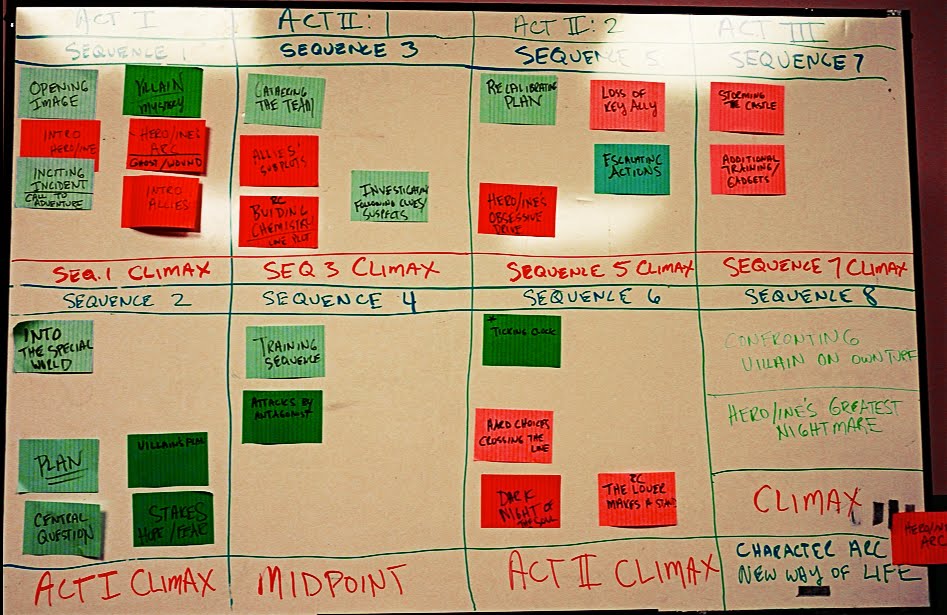
And an example of index cards on a tri-fold board from my friend, the wonderful author Diane Chamberlain. (Far neater than any grid I've ever done for myself!)

So you have your structure grid in front of you.
What you will start to do now is brainstorm scenes, and that you do with the index cards.
A
movie has about 40 to 60 scenes (a drama more like 40, an action movie
more like 60), every scene goes on one card. Now, if
you’re structuring a novel this way, you may be doubling or tripling the
scene count, but for me, the chapter count remains exactly the same:
forty to sixty chapters to a book.
This is the fun part,
like putting together a jigsaw puzzle. All you do at first is write down
all the scenes you know about your story, one scene per card (just one or two lines describing each scene - it can be as simple as - "Hero and heroine meet" or - "Meet the antagonist".) You don’t
have to put them in order yet, but if you know where they go, or
approximately where they go, you can just pin them on your board in
approximately the right place. You can always move them around. And just
like with a puzzle, once you have some scenes in place, you will
naturally start to build other scenes around them.
I
love the cards because they are such an overview. You can stick a bunch
of vaguely related scenes together in a clump, rearrange one or two, and
suddenly see a perfect progression of an entire sequence. You can throw
away cards that aren’t working, or make several cards with the same
scene and try them in different parts of your story board.
You will find it is often shockingly fast and simple to structure a whole story this way.
And
this eight-sequence structure translates easily to novels. And you might have an extra sequence
or two per act, but I think that in most cases you’ll find that the
number of sequences is not out of proportion to this formula. With a
book you can have anything from 250 pages to 1000 (well, you can go that
long only if you’re a mega-bestseller!), so the length of a sequence
and the number of sequences is more variable. But an average book these
days is between 300 and 400 pages, and since the recession, publishers
are actually asking their authors to keep their books on the short side,
to save production costs, so why not shoot for that to begin with?
I
write books of about 350-400 pages (print pages), and I find my
sequences are about 50 pages, getting shorter as I near the end. But I
might also have three sequences of around 30 pages in an act that is 100
pages long. You have more leeway in a novel, but the structure remains
pretty much the same.
In the next few posts we’ll talk
about how to plug various obligatory scenes into this formula to make
the structuring go even more quickly – key scenes that you’ll find in nearly
all stories, like opening image, closing image, introduction of hero,
inner and outer desire, stating the theme, call to adventure/inciting incident, introduction of allies,
love interest, mentor, opponent, hero’s and opponent’s plans, plants and
reveals, setpieces, training sequence, dark night of the soul, sex at
sixty, hero’s arc, moral decision, etc.
And for those
of you who are reeling in horror at the idea of a formula… it’s just a
way of analyzing dramatic structure. No matter how you create a story
yourself, chances are it will organically follow this flow. Think of the
human body: human beings (with very few exceptions) have the exact same
skeleton underneath all the complicated flesh and muscles and nerves
and coloring and neurons and emotions and essences that make up a human
being. No two alike… and yet a skeleton is a skeleton; it’s the
foundation of a human being.
And structure is the foundation of a story.
ASSIGNMENTS:
Make
two blank structure grids, one for the movie you have chosen from your
master list to analyze, and one for your WIP (Work In Progress). You
can just do a structure grid on a piece of paper for the movie you’ve
chosen to analyze, but also do a large corkboard or cardboard structure
grid for your WIP. You can fill out one structure grid while you watch
the movie you’ve chosen.
Get a pack of index cards or Post Its
and write down all the scenes you know about your story, and where
possible, pin them onto your WIP structure grid in approximately the
place they will occur.
If you are already well
into your first draft, then by all means, keep writing forward, too – I
don’t want you to stop your momentum. Use whatever is useful about what
I’m talking about here, but also keep moving.
And if
you have a completed draft and are starting a revision, a structure grid
is a perfect tool to help you identify weak spots and build on what you
have for a rewrite. Put your story on cards and watch how quickly you
start to rearrange things that aren’t working!
Now, let
me be clear. When you’re brainstorming with your index cards and you
suddenly have a full-blown idea for a scene, or your characters start
talking to you, then of course you should drop everything and write out
the scene, see where it goes. Always write when you have a hot flash. I
mean – you know what I mean. Write when you’re hot.
Ideally I will always be working on four piles of material, or tracks, at once:
1. The index cards I'm brainstorming and arranging on my structure grid.
2.
A notebook of random scenes, dialogue, character descriptions that are
coming to me as I'm outlining, and that I can start to put in
chronological order as this notebook gets bigger.
3. An expanded on-paper (or in Word) story outline that I'm compiling as I order my index cards on the structure grid.
4.
A collage book of visual images that I'm pulling from magazines that
give me the characters, the locations, the colors and moods of my story
(we will talk about Visual Storytelling soon.)
In the
beginning of a project you will probably be going back and forth between
all of those tracks as you build your story. Really this is my favorite
part of the writing process – building the world – which is probably
part of why I stay so long on it myself. But by the time I start my
first draft I have so much of the story already that it’s not anywhere
near the intimidating experience it would be if I hadn’t done all that
prep work.
At some point (and a deadline has a lot to
do with exactly when this point comes!) I feel I know the shape of the
story well enough to start that first draft. Because I come from
theater, I think of my first draft as a blocking draft. When you direct a
play, the first rehearsals are for blocking – which means simply
getting the actors up on their feet and moving them through the play on
the stage so everyone can see and feel and understand the whole shape of
it. That’s what a first draft is to me, and when I start to write a
first draft I just bash through it from beginning to end. It’s the most
grueling part of writing, and takes the longest, but writing the whole
thing out, even in the most sketchy way, from start to finish, is the
best way I know to actually guarantee that you will finish a book or a
script.
Everything after that initial draft is frosting
– it’s seven million times easier to rewrite than to get something onto
a blank page.
Then I do layer after layer after layer –
different drafts for suspense, for character, sensory drafts, emotional
drafts – each concentrating on a different aspect that I want to hone
in the story – until the clock runs out and I have to turn the whole
thing in.
But that’s my process. You have to find your
own. If outlining is cramping your style, then you’re probably a
“pantser” – not my favorite word, but common book jargon for a person
who writes best by the seat of her pants. And if you’re a pantser, the
methods I’ve been talking about have probably already made you so
uncomfortable that I can’t believe you’re still here!
Still,
I don’t think it hurts to read about these things. I maintain that
pantsers have an intuitive knowledge of story structure – we all do,
really, from having read so many books and having seen so many movies. I
feel more comfortable with this rather left-brained and concrete
process because I write intricate plots with twists and subplots I have
to work out in advance, and also because I simply wouldn’t ever work as a
screenwriter if I wasn’t able to walk into a conference room and tell
the executives and producers and director the entire story, beginning to
end. It’s part of the job.
But I can’t say this enough: WHATEVER WORKS. Literally. Whatever. If it’s getting the job done, you’re golden.
- Alex
=====================================================
Screenwriting Tricks for Authors and Writing Love, Screenwriting Tricks for Authors, II, are now available in all e formats and as pdf files. Either book, any format, just $2.99.
- Kindle
- Amazon UK
- Amaxon DE (Eur. 2.40)
- Smashwords (includes online viewing and pdf file)- Amazon/Kindle
- Barnes & Noble/Nook
- Amazon UK
- Amazon DE
=====================================================
HALLOWEEN GIVEAWAY
It's October, my favorite month, and you-know-what is coming, so I'm giving away 31 signed hardcover copies of my spooky thrillers Book of Shadows . and The Unseen .
Enter here to win!
Book of Shadows .
An ambitious Boston homicide detective must join forces with a beautiful, mysterious witch from Salem in a race to solve a series of satanic killings.
Amazon Bestseller in Horror and Police Procedurals
The Unseen
A team of research psychologists and two psychically gifted students
move into an abandoned Southern mansion to duplicate a controversial
poltergeist experiment, unaware that the entire original research team
ended up insane... or dead.
Inspired by the real-life paranormal
studies conducted by the world-famous Rhine parapsychology lab at Duke
University.
October 11, 2012
Nanowrimo Prep: What's Your Premise?
So now that you've generated your lists of story ideas and have honed in on one, it's time to write your premise line.
I know, you'd rather stick needles in your eyes, right? Me, too. But no one ever has to read your lame early attempts, you get that, right? This exercise is for YOU to get comfortable with the story you're about to tell. It's your GPS for the story, one of the most important steps in starting a book. But it's absolutely appalling to me how many people write books without ever having settled on the premise.
I am always finding myself in this same conversation with aspiring authors.
Me: “So what’s your book about?”
Aspiring Author: “Oh, I can’t really describe it in a few sentences– there’s just so much going on in it.”
Why would I ever want to look at a book if the author doesn't even know the storyline?
The time to know what your book is about is before you start it, and you
damn well better know what it’s about by the time it’s finished and
people, like, oh, you know - agents and editors, are asking you what
it’s about.
And here’s another tip – when people ask you what your book is about,
the answer is not “War” or “Love” or “Betrayal”, even though your book
might be about one or all of those things. Those words don’t distinguish
YOUR book from any of the millions of books about those things.
When people ask you what your book is about, what they are really asking
is – “What’s the premise?” In other words, “What’s the story line in
one easily understandable sentence?”
That one sentence is also referred to as a “logline” (in Hollywood) or
“the elevator pitch” (in publishing) or “the TV Guide pitch” – it all
means the same thing.
That sentence really should give you a sense of the entire story: the
character of the protagonist, the character of the antagonist, the
conflict, the setting, the tone, the genre. And – it should make whoever
hears it want to read the book. Preferably immediately. It should make
the person you tell it to light up and say – “Ooh, that sounds great!”
And “Where do I buy it?”
Writing a premise sentence is a bit of an art, but it’s a critical art
for authors, and screenwriters, and playwrights. You need to do this
well to sell a book, to pitch a movie, to apply for a grant. You will
need to do it well when your agent, and your publicist, and the sales
department of your publishing house, and the reference librarian, or the Kindle Direct Publishing upload screen asks you for a
one-sentence book description, or jacket copy, or ad copy. You will use
that sentence over and over and over again in radio and TV interviews,
on panels, and in bookstores (over and over and OVER again) when
potential readers ask you, “So what’s your book about?” and you have
about one minute to get them hooked enough to buy the book.
And even before all that, the premise is the map of your book when you’re writing it.
So what are some examples of premise lines?
Name these books/films:
- When a great white shark starts attacking beachgoers in a coastal town
during high tourist season, a water-phobic Sheriff must assemble a team
to hunt it down before it kills again.
- A young female FBI trainee must barter personal information with an
imprisoned psychopathic genius in order to catch a serial killer who is
capturing and killing young women for their skins.
- A treasure-hunting archeologist races over the globe to find the
legendary Lost Ark of the Covenant before Hitler’s minions can acquire
and use it to supernaturally power the Nazi army.
Notice how all of these premises contain a defined protagonist, a
powerful antagonist, a sense of the setting, conflict and stakes, and a
sense of how the action will play out. Another interesting thing about
these premises is that in all three, the protagonists are up against
forces that seem much bigger than the protagonist.
And okay, they're some pretty bloody examples, as usual for me. So let’s try some love premises:
• A commitment-phobic Englishman falls in love with a beautiful, elusive
American during a year in which all the people around him seem to be
marrying and finding their mates at a round-robin of four weddings – and
a funeral.
• A lonely widower and a lonely journalist who live on opposite sides of
the country fall in love with each other without ever having met.
• A man and a woman debate the theory that a man and a woman can never
really be friends, over a period of years in which they become best
friends, then fall in love.
Note that I have not described any of those stories as “THIS BLOCKBUSTER MOVIE meets THAT BLOCKBUSTER MOVIE.”
This is a very common mistake that authors make. There is no faster way
to make an agent’s or editor’s or producer’s or director’s eyes glaze
over than to pitch your book as “It’s When Harry Met Sally meets
Jaws!!!!”
Remember that this “method” of pitching was immortalized in The Player, a
movie that is a satire of Hollywood. The famous pitch: “It’s Out of
Africa meets Pretty Woman!!!” was a joke.
That is not to say it is not done. In fact, the Kirkus review of The
Harrowing included the line: “Poltergeist meets The Breakfast Club”, and
you better believe my publisher jumped on that and put it on the cover
of the paperback. This is a literal description of my book, and I bless
Kirkus every day for saying it.
But I, the author, am not allowed to say that. It’s cheating. It’s a
joke. You can say it as shorthand to your agent, or to your friends, and
your agent can say it that way to your editor. Some agents and editors really like to be pitched that way, apparently, although I know just as many who hate it.
But that's not going to help you develop your plot. When you sit down to write your book, you need a premise that is detailed and specific.
Here’s my premise for THE HARROWING:
Five troubled college students left alone on their isolated campus over
the long Thanksgiving break confront their own demons and a mysterious
presence – that may or may not be real.
I wrote that sentence to quickly convey all the elements I want to get across about this book.
Who’s the story about? Five college kids, and “alone” and “troubled”
characterize them in a couple of words. Not only are they alone and
troubled, they have personal demons. What’s the setting? An isolated
college campus, and it’s Thanksgiving - fall, going on winter. Bleak,
spooky. Plus – if it’s Thanksgiving, why are they on campus instead of
home with their families?
Who’s the antagonist? A mysterious presence. What’s the conflict? It’s
inner and outer – it will be the kids against themselves, and also
against this mysterious presence. What are the stakes? Well, not so
clear, but there’s a sense of danger involved with any mysterious
presence.
And there are a lot of clues to the genre – sounds like something
supernatural’s going on, but there’s also a sense that it’s
psychological – because the kids are troubled and this presence may or
may not be real. There's a sense of danger, possibly on several levels.
Here’s my premise line for my thriller, BOOK OF SHADOWS.
A very rational, very male Boston homicide detective and a very
intuitive, very female practicing witch from Salem reluctantly team in a
race to catch a Satanic killer that she believes is trying to summon a
real demon.
Who’s the story about? A homicide detective and a modern witch, and
their professions and the descriptives “rational” and “intuitive”
characterize them in a couple of words – and set up an obvious contrast
and potential for an “opposites attract” story.
What’s the setting? Boston and Salem – again, opposites.
Who’s the antagonist? A Satanic killer – any way you look at it, that’s
not good. What’s the conflict? It’s both interpersonal and external: it
will be the cop and the witch against each other, and the two of them
against the killer. What are the stakes? Life and death, and something
possibly supernatural as well, if there really is a demon involved.
And there are clues to the genre: there may be something supernatural
going on, but that’s only what she believes, so there’s a mystery there:
not just who the killer is, but what the killer is. There's a sense of
danger, too, possibly on several levels.
The best way to learn how to write a good premise line is to practice. I
encourage you to take the master list of films and books you’ve made
and for each story, write a one-sentence premise that contains all these
story elements: protagonist, antagonist, conflict, stakes, setting,
atmosphere and genre.
If you need a lot of examples all at once, pick up a copy of the TV
Guide, or click through the descriptions of movies on your TiVo or DVR.
Those aren’t usually the best written premises, but they do get the
point across, and it will get you thinking about stories in brief.
But the very best thing you can do is to spend some time writing out the
premises for your master list. Not only is it great practice for
crafting premise lines, but it will give you a terrific sense of the
elements that you want to see in a story, and quite possibly a good
sense of the story patterns that you most enjoy.
ASSIGNMENT: Write out premise lines for each story on your master list, and for your own Work In Progress (WIP).
No putting this off - you're going to need this premise to move forward. It can be a lot easier to start by bashing out several sentences, a whole paragraph, and then start
distilling it down, that's fine (in fact I encourage you to start a premise/synopsis file and keep adding descriptions of your story in different lengths to that file - believe me, you'll need all of them later!)
And remember, your premise sentence may change as you actually write the book and discover what your story is really about. This is just for you to start with what you THINK it's about. Don't sweat it.
But do it.
- Alex
---------------------------------------------------------------------------------------------
To celebrate NaNoWriMo (and get you all prepped in time!), I've made the first Screenwriting Tricks for Authors
workbook FREE for Kindle this week - 10/9/12 - 10/12/12. Now those of you who don't have it
can download the book instead of hunting through these posts (I know
some of you still do...)
It's free worldwide, and
remember, you don't have to have a Kindle - you can download a free
Kindle app to read it on your computer.
- Amazon US
- Amazon UK
- Amaxon DE
- Amazon FR
- Amazon ES
- Amazon IT
The book contains full breakdowns of Chinatown, Romancing the Stone, Harry Potter and the Sorcerer's Stone, The Mist and You've Got Mail.
Writing Love is on sale for $2.99 and contains full breakdowns of Groundhog Day, Sea of Love, Sense and Sensibility, Leap Year, While You Were Sleeping, Notting Hill, Four Weddings and a Funeral, The Proposal. New in Town, and Romancing the Stone
- Smashwords (includes online viewing and pdf file)- Amazon/Kindle
- Barnes & Noble/Nook
- Amazon UK
- Amazon DE


