
Matador Network's Blog, page 2125
March 27, 2015
Signs you learned to eat in England
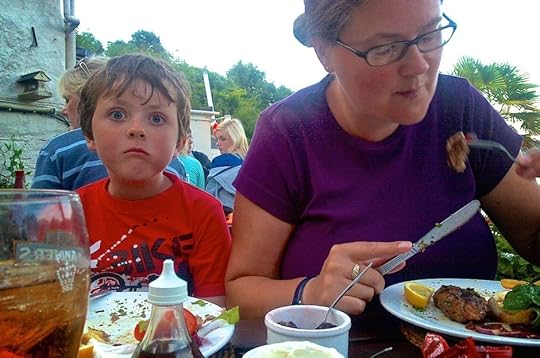
Photo: wapster
1. Curry abroad (even in India) just doesn’t cut the mustard.
There is a certain taste of English curry that you just can’t find overseas. In the way that Mexican food in the US has a special taste of its own, English Curry is specific to our shores. To find a really ‘authentic’ curry, you head to Birmingham, Bradford, or East London, not Mumbai or New Delhi.
2. You know if you are a ketchup or brown sauce lover.
Early on you developed your preference and it will NEVER change. It’s believed that our taste buds have a north-south divide. If you’re from the north, then you like brown sauce. From the south? You opt for red, obviously. Either way, you know which you like and there is no changing your mind.
3. Marmite, you either love it or hate it.
Like the adverts say, you either love or hate this yeasty spread. If you love it, it gets packed in your suitcase every time you leave the country. If you hate it, you literally cannot wrap your head around what people like about it.
4. You are used to having sooo many flavours of crisps to choose from.
We are a crisp-loving nation, and we have the best flavours. You probably grew up thinking that you knew exactly what roast chicken and prawn cocktail tasted like, but then you tried the actual food and realised you had been duped. Salt and vinegar, cheese and onion, roast beef and pickled onion are just some of the many flavours that you can’t live without.
5. Talking of crisps, you can cook a potato an infinite number of ways.
We love potatoes with everything. Pop some mash on some meat, bake it, and you have a pie. Pop some sliced potatoes on meat and you have a hot pot. Chips, roast potatoes, jacket potatoes with beans and cheese, the potato is king!
6. You know that Friday is fish ‘n’ chip night.
Cod and chips, and mushy peas eaten out of newspaper wrapping…this is what Friday nights were made for. Don’t forget the salt and malt vinegar.
7. And Sundays are made for roast dinners.
It doesn’t feel like Sunday unless you eat a roast dinner. Whether home cooked or enjoyed at the pub with the Sunday papers, that roast meat and potatoes served with a whole pile of veggies and a Yorkshire pud or two will make your day complete. And don’t forget, lashings of gravy — no roast is complete without a pool of rich gravy goodness.
8. And you know which sauce goes with which meat.
You learn from an early age that mint jelly goes with lamb, cranberry sauce with turkey, horseradish with beef, bread sauce accompanies chicken and apple sauce compliments pork, right?
9. You think that the best cure for any hangover is a fry up.
Two sausages, two bacon, fried eggs, baked beans, and fried mushrooms plus toast with lashings of butter, and a cup of builder’s tea. Yep that greasy concoction can cure even the heftiest hangover
10. And talking of beans, you know they are good for the heart.
There is nothing quite like sweet, tomatoey beans to accompany a good sausage and mash, or egg and chips. It is the taste that makes you feel most at home when abroad.
11. You love a sarnie for lunch.
You will likely have grown up with the idea that lunch basically means a sandwich. English sandwiches come in all shapes and sizes and always involve butter on the bread — it just isn’t a sandwich without the butter, right?
12. And speaking of butter, you always have butter in the fridge.
No butter in the fridge is a disaster. Your toast and jam depends on it, as does your mash, your fish, and your bread-and-butter pudding. Being without butter can be a devastating loss to your day.
13. You just love a good pudding served with custard.
Be it apple crumple, sticky toffee pudding, spotted dick, or treacle tart, it isn’t complete if you don’t add a big dollop or two of thick, hot custard. It doesn’t matter how old you get, this will always be the truth.
14. You think English chocolate is the best in the world.
Forget Belgium, forget Switzerland — there is nothing quite like a bit of Cadbury’s. Dairy milk, Fruit n Nut, Double Deckers and Curly Wurlies, you’d take any of these over Lindt. Maybe it’s that glass-and-a-half of milk that does it?
15. And you think English baked treat are also the best.
There is nothing quite like a cuppa accompanied by some English baked goods, Bakewell Tarts, Custard Tarts, Lemon Drizzle Cake. French and Italian master bakers move over, we got Mr Kipling and he makes “exceedingly good cakes.” 


16 reasons why Pittsburgh's the best

Photo: Jared Zimmerman
1. We have our own language: Pittsburghese.
Yinz. Dippy eggs. Daahntahn. N’at. Jagoff. Progie. Sahside. Gumbands. Stillers. Buccos. Sammich.
“Umina ast yinz guys jest one last time.” If you don’t understand, you’re not from here.
2. We have Andy Warhol and Gene Kelly to be proud of.
The famous artist Andy Warhol called Pittsburgh his home, we even have a museum AND a bridge dedicated to him. But you also can’t forget about one of the most iconic actors of him Gene Kelly, known for acting in Singin’ in the Rain.
3. We yarn-bomb bridges here.
Andy Warhol’s bridge? Yeah we yarn-bombed it in August of 2013. Thanks in large part to a group that calls themselves “Knit the Bridge,” over 580 knitted and crocheted blankets were draped over and sewn together across the entire bridge. Andy Warhol would have been pleased.
4. The Strip District has freshly baked biscotti.
This is authentic Pittsburgh. Local stores and restaurants line The Strip. It’s heaven for foodies and brings a low key vibe for locals. Nothing compares to the fish markets, the fresh biscotti, and the roasted coffee beans that you can find in this part of town. It’s close enough to downtown to walk to, but far enough away to experience a different more authentic atmosphere.
5. The view from the Fort Pitt Bridge is unforgettable.
Pittsburgh has many great views, from the West End Overlook to the paths on the North Shore. However, every time I exit the Fort Pitt Tunnel and traverse the similarly named bridge, I lose my breath. From the Fort Pitt Bridge, Pittsburgh erupts into view with the fountain in Point State Park and Heinz Field to the left, and the US Steel Tower and PPG Place dominates the skyline.
6. You can walk anywhere in the City of Bridges.
Along with the Fort Bridge, we have 445 other bridges throughout the entire city. The best part about our bridges is that they’re built to be walkable. So whether you’re crossing the Roberto Clemente Bridge to get to a Pirate’s game or the 7th Street Bridge to get to the Andy Warhol Museum, you’re guaranteed to have a great view.
7. Our sports teams are better than yours.
Steelers. Pirates. Penguins. Riverhounds. We love our teams. In fact we’re crazy about them! The city awakens when any of our rivals come the Steel City and take on one of our beloved teams. Nothing brings out our passion more than dawning the good ol’ black and gold. We don’t mean to brag, but our Steelers do have 6 Super Bowl wins, how many does yours have?
8. We have an actual sports symbol called “the Terrible Towel.”
With our passion for sports comes the famous Terrible Towel. It was introduced during the 1975 playoffs by Myron Cope, a beloved former Steelers radio announcer. It brought the magic touch to an already exciting season by invigorating the Steelers’ victory over the Dallas Cowboys in the Super Bowl.
9. I can eat a Primanti Bros sammich 24/7.
We do food pretty well in Pittsburgh, and the Primanti Bros are no exception. A sandwich joint founded in 1933, the Primanti Bros originated in the Strip District. Their famous sandwich, the Pitts-burger, places a Pittsburgh cheesesteak, French fries, sweet & sour coleslaw, and tomatoes between two slices of Italian bread. On a scale of 1-Best Sammich Ever, the Primanti Brothers’ Pitts-burger Cheese Steak rivals that of the Philly cheesesteak.
10. Pittsburgh is the birthplace of the banana split.
Another great food invention, the banana split has called Pittsburgh its home since 1904. Invented by a 23-year old apprentice pharmacist, David Evans Strickler, in Latrobe, just south of Pittsburgh, it quickly gained popularity among college students. The rest is history.
11. The first injectable polio vaccine was developed at the University of Pittsburgh.
Not only are we known for our food, but Pittsburgh was also the first to develop an injectable polio vaccine in 1952. The virologist Jonas Salk spent years developing and testing his vaccine until it was ready for use in 1955. With an estimated 350,000 cases in 1988, polio has been decreased to only 223 cases worldwide in 2012. This paved the way for Pittsburgh to become an innovative center for the health industry.
12. Mr. Rogers, our favorite neighbor, lived his entire life here.
If you grew up in Pittsburgh and didn’t want to be Mister Rogers’ neighbor, there must have been something wrong with you. One of the most successful children’s shows, it brought educational television to a new standard. Fred Rogers created a world in which kids were enthralled by learning in the Land of Make Believe. Unfortunately for us, Mister Rogers died in 2003, two years after the final episode.
13. The Great Allegheny Passage connects us with the outdoors.
This 335 mile long trail starts in Pittsburgh and ends in Washington, DC. It’s a hike worth taking through forested valleys, little towns, and across rushing rivers. If you can’t take time off for the enter 335 miles, just pick a segment and spend the day out in nature.
14. We have more museums and culture than there is time in a day.
From the Carnegie Museum of Natural History to the Phipp’s Conservatory to the Benedum Center, if you’re like me — the culture and history of any location is always something to check out. You could see the Pittsburgh Symphony at Heinz Hall or check out the Carnegie Science Center across from Heinz Field. Countless options abound whether you’re looking for art, history, science, or theater.
15. We use ‘parking chairs’ to save spots for our cars.
Instead of driving around all day looking for a parking spot, we tend to play by different rules in Pittsburgh. Regardless of the weather, lawn chairs will be out and about, saving Pittsburghers their parking spots. It’s convenient. It’s simple. It’s the Pittsburgh way.
16. The potholes are few and the winter is mild.
Who are we kidding, Pittsburgh has potholes like crazy. And the weather? Don’t even get me started. Potholes and weather aside, Pittsburgh is a great city full of life and activity. Basically, it’s the best.
Realities of German American kids

Photo: Franz & P
1. Principle wins over your independence — and over your social life.
America, where is your public transportation? No, the cross-country Greyhound, known best for its shifty passengers and once daily departure times, doesn’t count; neither does the overcrowded and overpriced Amtrak, and trust me when I say that Southwest Airlines is still a long shot from the affordability of Ryanair. Don’t tell Mr. Ford I said this, but the new American car is a tram — at least that’s the belief German parents hold on to, denying the iconic driver’s licenses sought after by ‘regular’ American kids. What’s the bid deal? Those parents ask, fully comfortable denying their kids independence until they turn 18 and can sign the paperwork themselves. So, while other American kids are enrolled in Driver’s Ed at 15 ½, or um Gottes Willen nein, pull up to school in their ‘Sweet Sixteen’ birthday gifted jeeps, the American kid with German parents is destined to bike to school until graduation. The downside of this healthy and hip mode of transportation is that in America’s spread out towns, direly missing the reliability, extensiveness, and perfect punctuality of the Deutsche Bahn, this lack of independence comes at the cost of extra-curricular activities AND a social life. Vielen Dank.
2. American celebrations of German ‘heritage’ are embarrassing for everyone — but most of all for us.
Our parents might enjoy the occasional bratwurst and sauerkraut dinner — or better yet, Schnitzel or Spätzle or any other food with too many consonants — but their American kids would choose a regular hot dog any day. And whoever started the myth that German women like to grow their leg and underarm hair long — but crop their hairdos Angela Merkel-style — should be sentenced to eating that very sauerkraut for the rest of their lives. But these aren’t the only ideas of a mistaken heritage that other American kids believe is the German reality. Despite the US public school system’s best efforts, many American kids of German parents enroll in classes with peers who could not identify Germany on a map, let alone value traditions beyond the stereotype. America’s crown jewel celebration of German ‘heritage,’ the annual “Bratwurst Festival” of a particularly ignorant Midwestern State, only embarrasses said state — and, of course, the kids living there who are associated with Deutschland.
3. Fitting in is ALMOST worth eating at McDonald’s.
Alright. We have all seen Morgan Spurlock’s McDonald’s-for-30-days experiment in super-sizing himself (one of the few products of American mainstream media American kids of German parents are allowed to watch — rejoice!). But the obvious downside of American ‘consumption culture’ don’t make it any less appealing to the teenager just trying to fit in. “What’s wrong with another dark bread sandwich for your packed lunch?” The Prussian mother asks in her heavy accent, followed by “What is ‘MTV’ and no, you can’t watch it.” It will take the American kid of German parents just a few dozen times sneaking Lunchables and Big Macs to realize what Spurlock and those pesky German parents have in common: they are right.
4. We have more than one story — but apparently, no more than one haunting history.
Nigerian novelist Chimamanda Adichie said in her 2009 TED talk titled The Danger of a Single Story that “the problem with stereotypes is not that they are untrue, but that they are incomplete. They make one story become the only story.” The German kids of this third or fourth generation after WWII seem to have finally found space alongside the world’s direct blame for those horrible crimes against humanity: young adults in Germany have emerged from the darkest of shadows that isn’t even theirs, nor was it their parents’. American kids raised by those same German parents, however, have apparently not yet served their time in full. Further, those all too common reminders of Nazi fault by American schoolteachers, classmates, and neighbors are now paired with unsettling suspicion of Germany’s geo-political “power” once again taking root across the pond. It’s uncanny the number of times American kids of German descent have to defend themselves — and their parents — against ill-founded, ‘single story’-believing insults…in fact, it can lead to a very lonely, dark bread sandwich-eating childhood for those part-German, part-American kids. Prost.
March 24, 2015
Definitive guide to Muslim hipsters
Follow Matador on Vimeo
Follow Matador on YouTube
Longboard? Check. Ray-Bans? Check. iPhone? Check. Hijab? Check and check.
By now, you’ve heard of Mipsters, #Mipsterz or Muslim hipsters depending on your preference.
What GlobalPost wants to know is, “how do we become Mipsterz?”
“A Mipster is someone who seeks inspiration from the Islamic tradition of divine scriptures, volumes of knowledge, mystical poets, bold prophets, inspirational politicians, esoteric Imams, and our fellow human beings searching for transcendental states of consciousness,” the Facebook page Mipsterz-Muslim Hipsters says.
Yikes. That sounds complicated.
Let’s check the video replay on this. The entire trend really took form when a group of young Muslim women produced their own YouTube video in December 2013.
Here’s what we learned:
It helps if you’re female. There are no Mister Mipsters in this video.
By David Trifunov, GlobalPost
This article is syndicated from GlobalPost.
Signs you're born, raised in Toronto

Photo: alvin woon
1. You don’t live in Toronto; you live in [insert neighbourhood here].
You’re not just a Torontonian; you define yourself by your neighbourhood. You might be from Parkdale or the Annex or maybe the east end’s Riverdale or the Danforth. No matter where you live, you love it and you’re proud to show it off.
2. You know how to walk.
You don’t meander from left to right or stroll in the middle of the sidewalk. You know how to get from Point A to Point B — the fastest way possible. To you, there’s nothing worse than getting stuck behind someone slow with no possibility of overtaking. Why don’t they teach ‘walking’ in high school?
3. You complain about the TTC but still use it.
The strikes, the delays, the angry drivers — the TTC is the bane of your existence. But if you don’t own a bicycle or know how to navigate the PATH, then transit is your saviour. Plus, there’s no way you’d own a car with this traffic.

More like this How to piss off a Torontonian
4. You know the phrase ‘Believe in the Lord’ all too well.
5. You shudder at every Rob Ford headline.
But you still tuned in to Jimmy Kimmel to watch our crack-smoking ex-mayor make his late-night debut. Even out of office, you question: what will he do next?
6. You mercilessly diss our city’s sport records but you still own either a Maple Leafs, Raptors, or Blue Jays jersey.
7. Brunch is your Sunday ritual.
You probably already have your go-to spot that serves wasabi-infused caesars, huevos rancheros, and handcrafted scones. Pretentious? Maybe. But you know its well worth the lineup. For you, brunch is more than breakfast — it’s an occasion.
8. If you don’t already have a tattoo, you’ve at least considered it.
The same applies to owning plaid (probably from ‘The Black Market’ vintage). This city is chock-full of hipsters, and whether you like it or not, the style takeover has probably influenced your clothing decisions at some point or another.
9. Every time a Toronto weekly goes under, a little piece of you dies.
Remember The Grid? Or its predecessor Eye Weekly? (R.I.P.) At least you still have NOW magazine as your go-to Toronto bible, despite its pages of adult classifieds and Dan Savage love advice.
10. Forget Kevin Bacon — you have six degrees of separation to a Degrassi character.
Hey, remember when Drake rapped on that show?
11. You’ve lost some of your dignity at The Dance Cave.
Your first time was probably underage or just after you got your student ID. There is also a very good chance you rocked out to Phoenix while dancing next to “Pajama Man.” You definitely hit your peak if you ended the night with a Big Fat Burrito or Smoke’s Poutinerie after the lights came on to Lily Allen’s “Fuck You.”

This story was produced through the travel journalism programs at MatadorU. Learn More
12. You’re a restaurant aficionado.
It’s nearly impossible to keep up with your top-10 list in this city’s culturally diverse restaurant scene. From chef Grant van Gameren’s Bar Isabel that dishes up whole grilled octopus to Queen West’s Grand Electric that proves people will wait hours for a taco, our chefs are local celebrities.
13. You will do anything for patio season.
There’s always that one week, mid-winter, when the weather skyrockets and you tell yourself winter is over. You call your friends, put on your spring jacket, and hit up the nearest patio for a beer. In the midst of your patio bliss, you forget the pain of winter. Inevitably, it snows even harder the next week.
14. You’re a lot of things rolled into one.
So you’re from Toronto, eh? So you mean you’re a quarter English, a little bit Italian, or part Japanese? We might wear our pride on our sleeves but we’re also proud of our diversity. From Greektown to Little Portugal to Chinatown, we know we’re a melting pot and we’ve got the festivals to prove it.
17 uses of New Mexico's green chile
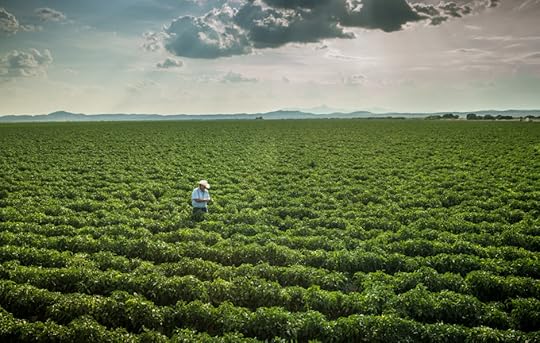
Photo courtesy of New Mexico Tourism
FEW STATES FEEL AS PASSIONATELY about their produce as New Mexicans do for their chile — test any local in a battle of chile knowledge, and you’ll be bested every time. The green chile in particular holds a special honor and is widely used in high-end restaurants like The Corn Maiden, but residents take even more pride in their own family recipes.
Several varieties of the New Mexican green chile exist, but Hatch is by far the best known — it even has its own festival every August. While most locals prefer the more traditional, savory green chile dishes (such as chile relleno, green chile stew, smothered enchiladas, and breakfast burritos), there are numerous creative and unusual uses of this New Mexico staple found throughout the state.
1. Mac ‘n’ cheese
A little spicy, a little creamy, and a whole lot of comfort — adding in New Mexican green chile to one of America’s most iconic mixes of dairy and pasta takes mac ‘n’ cheese to the next level. The heat of the chile is balanced by the cheese, giving the dish a unique kick, and you’ll find it on menus across the state, from De La Vega’s Pecan Grill and Brewery in Las Cruces to the Coyote Cafe in Santa Fe.
2. Meatballs
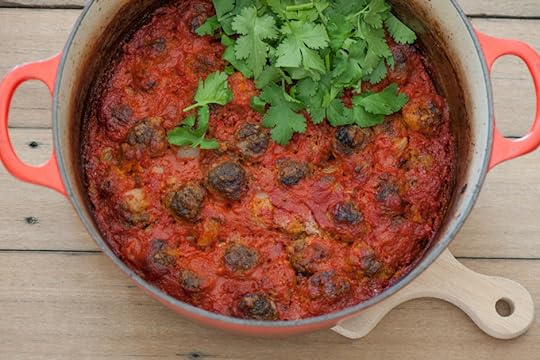
Photo: jules
In New Mexico, meatballs are eaten with or without spaghetti, but the best ones are made mixed with green chile. Albuquerque’s El Pinto Restaurant and Cantina created a recipe that makes for a hearty meal on their own, but feel free to add a little spice to this Italian staple with some green chile alfredo sauce and linguini.
3. Wine and chile pairing
New Mexico is home to some of the oldest American vineyards, and several establishments offer the chance to pair local wines with chile from the region. The sensation is often described as “a balance of heat and sweet,” with the mellowness of the wine cutting through the fire of the chile dishes. Travelers can experience this at La Posta de Mesilla, or at the Santa Fe Wine and Chile Fiesta.
4. Pizza
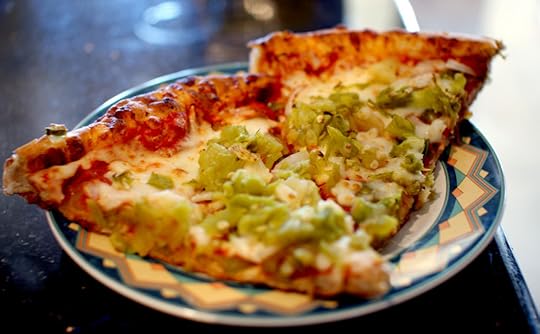
Photo: uıɐɾ ʞ ʇɐɯɐs
Second only to the use of green chile in mac ‘n’ cheese is a pizza topped with the peppers. You won’t find this unique blend of spice, crunch, cheese, and sauce elsewhere in America (other states may claim they can recreate it, but a New Mexican would never concur). Most restaurants, like Dr. Field Goods, are happy to accommodate you with green chile as a topping — you can even get them from Domino’s in a pinch.
5. Sorbet
One way to beat the heat of a New Mexican green chile (or enhance it, depending on your preference) is to make it into an icy treat. The pure fruit flavors add a natural sweetness and healthier alternative to ice cream, and adding tequila offers an intensified adult version of what otherwise makes for a very interesting dessert.
6. Waffles
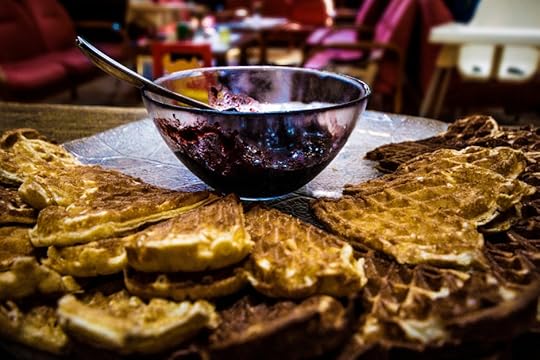
Photo: Ksenia Novikova
Waking up to the smell of breakfast cooking is one thing, but adding green chile to something as simple and delicious as a waffle takes the first meal of the day up a notch. A batter of waffle mix that includes cheddar cheese and New Mexican green chile turns what most people consider a sweet offering into a savory breakfast dish. Syrup and butter optional.
7. Popcorn
To really take advantage of the green chile flavor, sprinkle it over popcorn. You can buy ready-made versions (including a salty-sweet caramel) at places like Walker’s Popcorn Company, or you can make your own infused popcorn by adding fresh kernels to 3 tablespoons of olive oil and green chile powder. You’ll never microwave popcorn again.
8. Grilled cheese and green chile soup
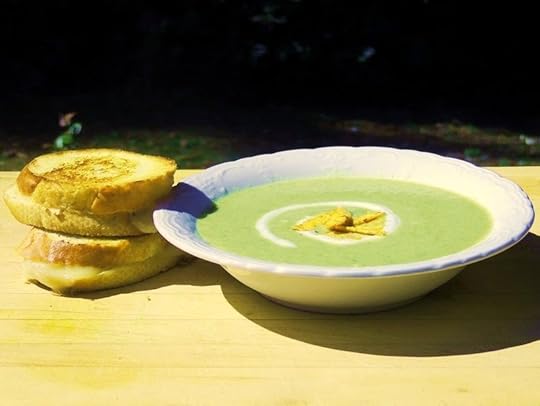
Photo: Bobbi’s Kozy Kitchen
Consider this the adult version of your favorite childhood lunch. Made up primarily of Hatch green chile (and some Greek yogurt for balance and creaminess), this is grilled-cheese-tomato-soup the New Mexican way.
9. Cookies
New Mexicans often freeze their green chile before cooking with it — the heat of the chile actually increases the longer it stays frozen. The Houston Chronicle’s Dai Huynh tested this theory with a recipe for spicy-sweet chocolate cookies, where the bitterness of the chocolate helps to temper the heat from the chile.
10. Truffles
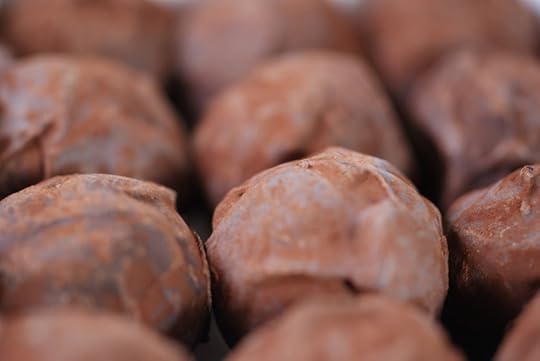
Photo: Lee McCoy
It’s no longer a secret that chile and chocolate go surprisingly well together. Chocolatiers have begun displaying the combination in dessert cases within the last decade, and it was only a matter of time before New Mexican chile made an appearance here as well. Typically featuring ground chile powder, these truffles are easy to replicate on your own.
11. Hummus
Pita chips and hummus have become the “it” appetizer lately; if you’re looking to stand out at your next dinner party, adding Hatch green chile is the way to go. Creamy, spicy, and hearty, this version of homemade hummus schools store-bought brands (and using fresh ingredients is cheaper, too).
12. Pie
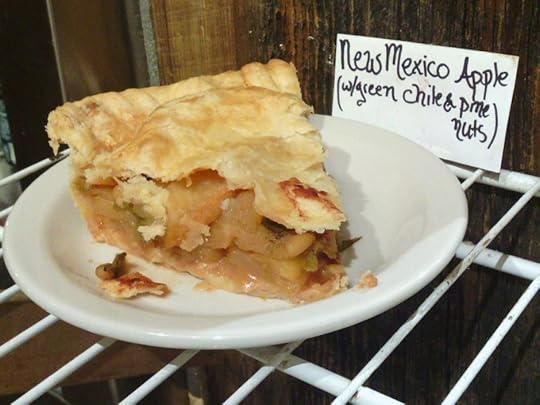
Photo courtesy of New Mexico Tourism
In case you’ve gotten this far down the list and haven’t figured it out, green chile is an absolute knockout in desserts. Skeptics are encouraged to visit the Pie-O-Neer in Pie Town, New Mexico, where they’ll be happy to convince you. There are more than a dozen varieties of pie on the menu, but if you’re going to drive all the way out Highway 60 to get there, don’t leave without sampling the apple pie with chopped green chile and pine nuts.
13. Vodka
Infusing vodka is a simple process, so it’s no wonder that a green chile version exists. To make your own, roast some Hatch green chile, place it in an airtight jar, pour enough vodka to cover it, and let the mixture soak for two weeks (the longer you leave it to infuse, the stronger the taste). It’s especially good for making Bloody Marys.
14. Donuts

Photo: theturquoisetable
Adding green chile powder to glazes or donut fillings is something Albuquerque’s Duke City Donuts and Rebel Donuts do best. You’ll find flavors like green chile apple and bacon and green chile cream cheese served seasonally, when ingredients are at their freshest.
15. Watermelon
This is an easy recipe that can be used to spice up summer BBQs. Plain watermelon becomes a slightly savory dish with Hatch chile dust, which can be store-bought or homemade by roasting the chile or drying it in a dehydrator before grinding it to powder. Lime juice balances out the heat and the spicy, sour, and sweet flavors of the simple ingredients.
16. Cheeseburgers
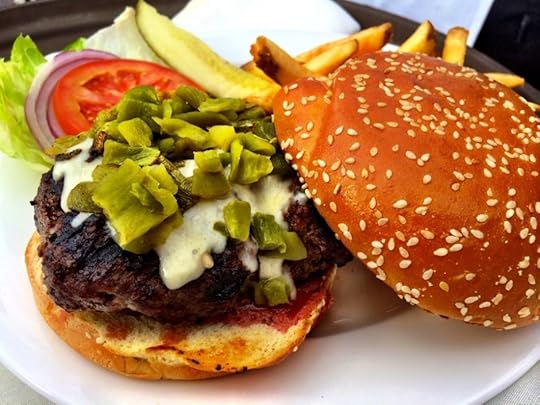
Photo courtesy of New Mexico Tourism
To New Mexico locals, putting green chile on a burger is no big deal. But if as a visitor you’re biting into your first one, it’ll likely make an impression. Most restaurants and cafes will claim their version is the best, but it’s better to make your own decision after indulging in a few stops along the Green Chile Cheeseburger Trail.
17. Brownies
A final decadent dessert, the density of the cake and deep flavor of the chocolate is enhanced with a dash of roasted and chopped chile. A dollop of whipped cream or a scoop of vanilla ice cream adds another dimension to the dish, and can counter the aggressiveness of the chile for those who can’t take the heat.
 This post is proudly produced in partnership with the New Mexico Tourism Department. Visit their site for more food-based adventures.

March 23, 2015
Food quality around the world
OXFAM INTERNATIONAL just released this colorful new graph showing which countries win at feeding their citizens. The “Good Enough To Eat” Food Index ranks 125 countries using UN data and assesses four key areas:
1. Do people have enough to eat?
This looks at the percentage of malnourished people and underweight children.
2. Can people afford to eat?
This looks at food prices relative to other goods and services, and whether there’s inflation (aka, food price volatility).
3. Is food of good quality?
This looks at the nutritional diversity of food and access to clean and safe water.
4. What is the extent of unhealthy outcomes of people’s diet?
This looks at rates of diabetes and obesity.
An “Overall” category combines all four measures to produce a definitive ranking. The best place to eat? The Netherlands. The worst place to eat? Chad. These extremes are fairly representative, with the top 20 places for eating well mostly in Europe and the bottom 30 mostly in Africa.
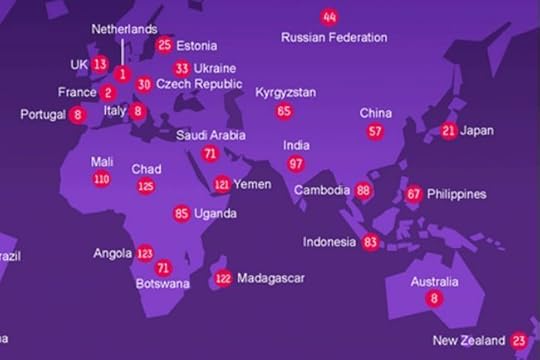
Oxfam International/Screengrab
Oxfam created the Food Index to highlight the challenges people face in getting enough of the right kind of food. Around the world more than 840 million people (roughly 1 in 8) go hungry every day — largely due to poverty and inequality driven by poor governance, weak food distribution, market failure and lack of resources to buy the food they need.
There’s enough food to go around, so why are people struggling? Oxfam explains that misuse of resources, waste and overconsumption are to blame. So is the structure of the global food system:
“There are a number of reasons why people are going hungry today. They include a lack of investment in small-scale agriculture and infrastructure in developing countries, the growing impacts of climate change on food production and security, prohibitive trading agreements and also biofuels targets — such as that set by the European Union — that divert crops from dinner tables to fuel tanks….”
Oxfam’s deceptively simple Food Index captures a range of economic and social drivers of eating patterns in poor and wealthy countries alike. Hunger is an issue that’s “starkly felt in poor countries,” the group says.
What’s unexpected is how many wealthy countries lose points due to obesity, high food prices and poor nutrition — particularly among their poorer citizens.
Here are the 14 best and worst places to eat around the world.
Top 7 countries
These countries, all in Western Europe, ranked highly due to low malnutrition and undernourishment and high access to safe, clean water.
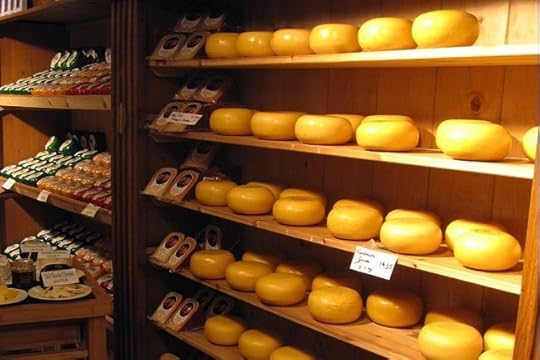
1. The Netherlands
Sarah Dougherty/Courtesy
2. Switzerland

Wikimedia Commons
3. France

Francois Guillot/AFP/Getty Images
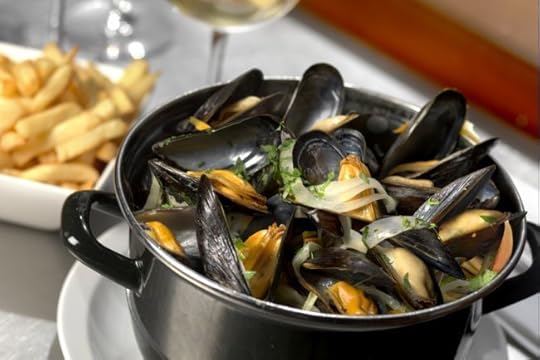
4. Belgium
visitflanders/Flickr Commons
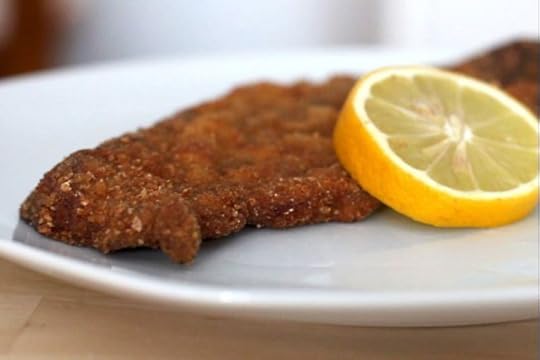
5. Austria
YouTube/Screenshot
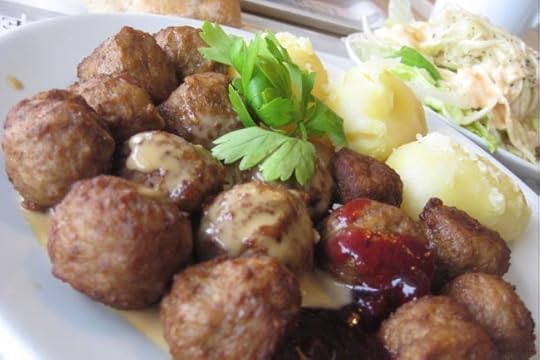
6. Sweden
dangessner/Flickr Commons
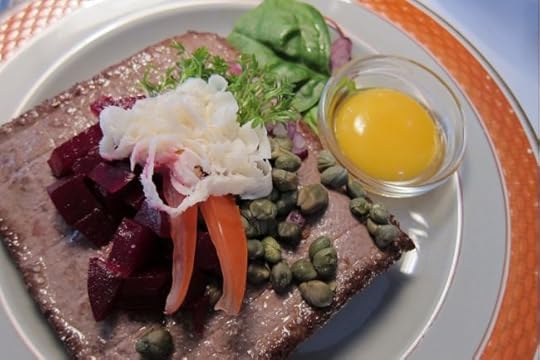
7. Denmark
add1sun/Flickr Commons
Bottom 7 countries
The bottom seven countries are in Sub-Saharan Africa and Yemen. They rank low due to high food prices, meaning people can’t afford to eat enough high quality food to stay healthy.
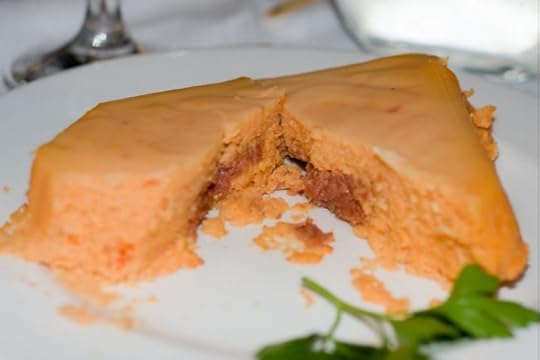
119. Nigeria
Wikimedia Commons
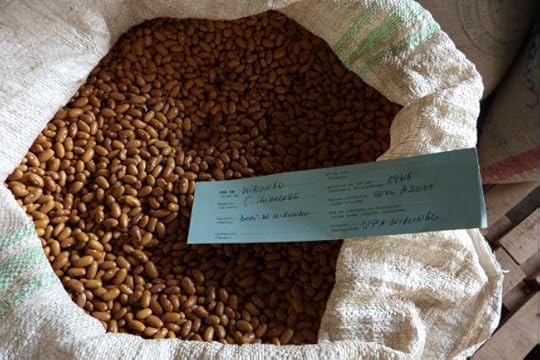
120. Burundi
Trade for Development/Flickr Commons
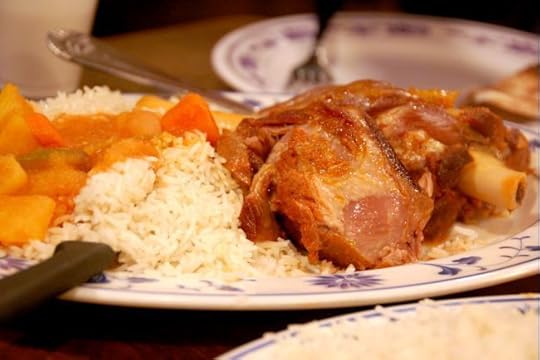
121. Yemen
rduta/Flickr Commons
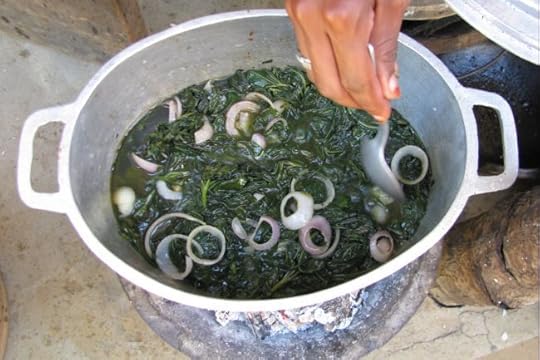
122. Madagascar
David Darricau/Flickr Commons
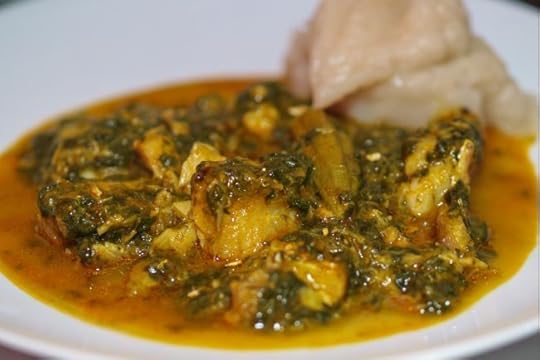
123. Angola
Wikimedia Commons
124. Ethiopia
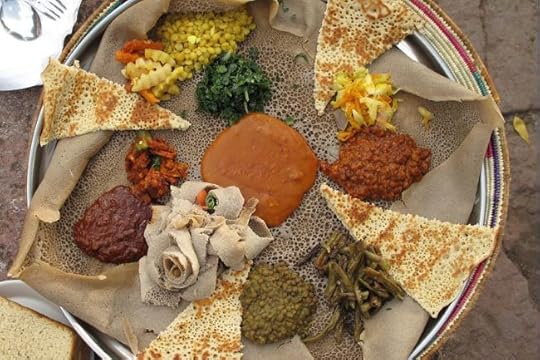
Wikimedia Commons
125. Chad
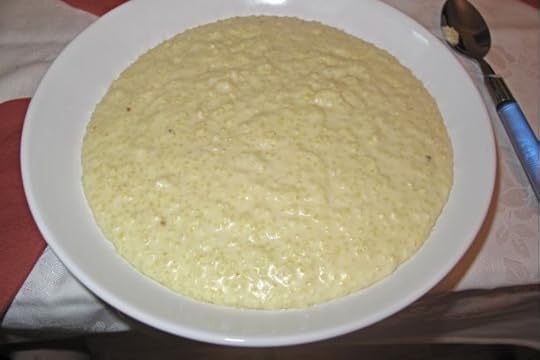
Wikimedia Commons
Solution? Fix the broken food system
Despite this bleak picture of hunger, poor health and inequality, there are some economic and policy solutions that can help people meet their food and nutrition needs. Here are a few recommended by Oxfam:
– Invest in small farming operations in developing countries to increase crop production and diversity of crops
– Reduce global carbon emissions to make food production more resilient to climate change
– Scrap biofuels targets that channel food into fuel tanks instead of human consumption
– Improve land rights so that vulnerable communities don’t lose access to farmlands
– Urge governments and the food industry to curb overweight and obesity levels
– Regulate food speculation to prevent high and volatile food prices.
Sources: Oxfam International Food Index | Media Brief | Press Release.
By: Sarah Dougherty, GlobalPost
This article is syndicated from GlobalPost.
7 reasons kids are better travelers

Photo: Visit St. Pete/Clearwater
1. Kids are naturally curious.
In general, us kids have a way different way of looking at things than adults. Thank God. For example, if we hear there is a poisonous snake in the area we are traveling in, we will want to see pictures of the snake, we will ask what it likes to eat, we want to know how long its poison takes to kill someone, etc. This is awesome stuff to learn!
As for many adults, they’d probably get freaked out and never leave their hotel room the entire time, and then go back home and tell the world how ‘dangerous’ that destination was.
2. Kids don’t need to plan every freaking step of the way.
When adults go on a trip, they usually have it all planned out months ahead of time, down to what hostel they’ll be staying at in a couple of weeks, what every Trip Advisor review in the area says, and where Lonely Planet thinks they should eat.
But a kid would just be like “Well, I know we’ll be in Uruguay for about a month and I know that I really want to go to the beach. So, let’s land, head to the beach, and if we like a certain town, we stay, if we don’t, we move on. If there are waves, we surf, if there aren’t, we go get ice cream. All is good in the world, we are on vacation in Uruguay!” I’m not being naïve here – from experience, it really can be that simple if you let it.
3. Kids are spontaneous.
I’m not saying adults can’t be but, seriously, it often comes with planning, like: “I am going to try and be spontaneous today.” Still better than nothing, but it’s different than how kids naturally are. Let’s say it’s noon on a gorgeous sunny day, and everybody is bored. A kid might say “Hey, let’s go to the mountain!”, and start packing his or her backpack, throwing whatever food happens to be in the house in the bag.
But many adults would need a few days to prepare all the ‘right’ snacks, wash their sleeping bag, waterproof their boots, etc. On day three when they are finally ready, it’s now raining and then they tell you the trip is cancelled.
4. Kids don’t stress out about the little things.
Adults always seem to worry about at least five things at once, if not more. Let’s say you’re at the airport and the loudspeaker said that all the flights were canceled due to a storm. An adult would most likely get frustrated and say they didn’t feel like having to go back to where they were staying, since they already came all the way to the airport. They would get mad at the airline person at the counter (for real, do you honestly think she controls the weather and personally cancelled the flights just to mess up your day?).
But a kid would probably be happy they got to stay extra time on vacation. And, anyway, it’s weather. Roll with it. ‘You get what you get, and you don’t have a fit’ – do you remember nothing you learned in kindergarten?
5. Kids are much more open to adventure.
So, you are in Peru and you end up in an underground place where there are all these spooky tunnels. First thought I would have is: “Aw, yeah! I’m Indiana Jones! Dun dun dun duh, dun dun duh!”. Too many of you adults would be worried about getting your 200 dollar ‘outdoor adventure’ shirt dirty, and would complain about how the lighting was bad for photos.
Let’s say a cute old grandma with no English told you she wanted to show you a cool place, but you didn’t understand her, so she pointed to a boat and started walking over there, beckoning for you to come. An adult wouldn’t know what to do and probably wouldn’t go. I mean, this is definitely not on the planned itinerary… A kid would think, “Cool! We’re going on a boat!” Maybe she ends up taking you to this secret jungle cove where monkeys live and it’s the best part of the whole trip.
This story was produced through the travel journalism programs at MatadorU. Learn More
But the adult would never know what they missed out on. And would probably spend the rest of the day posting stupid selfies on Facebook of themselves with a monkey in the local zoo.
6. Kids notice details.
We find you a rock which is obviously in the shape of a heart, and too many of you just see a weird-shaped grey rock that you throw aside. Adults go to Antarctica and see colonies of penguins that they think all look the same – us kids notice the one penguin who is by far the best and the fastest at tummy-sliding into the water. You robotically take us to the Louvre because it’s what the family guidebook told you that good parents do, but years later we still remember the nice lady, Marianne, at the counter who had that funny laugh and who gave us a free postcard of a Monet painting.
7. Kids travel to ‘check in’ to ‘real’ life.
Most adults seem to ‘go on vacation’ to check out of their ‘real’ life.
19 American habits I lost in Ghana

Photo: crosby_cj
1. I stopped referring to “Africa” instead of the many individual African countries.
You’ll never hear me say “When I was in Africa…” again when referring to my experience in Ghana. Africa is a continent — and a massive one at that. It doesn’t take much to realize Ghana, Kenya, South Africa, and Morocco can’t be lumped into one blurry stereotype.
2. I forgot how to sleep in.
I didn’t get up with the roosters, because they started squawking at three in the morning. Instead I got up with the neighbors at five, who blasted their radios and sang what was supposed to be the words to Celine Dion’s “My Heart Will Go On.”
3. I stopped worrying about all the chemicals I was being exposed to.
I stopped squirming at the unpronounceable words on the back of my hand sanitizer and bug spray. One-hundred percent DEET? Perfect. I slathered that stuff on my arms like lotion and pretended to not notice when I pulled off the paint from cars if I leaned against them for too long. I’m sure it was fine — whatever will keep the mosquitos away.
More like this: On the realities of expat life in Ghana
4. I totally forgot about cheese.
I used to eat cheese with everything — drizzled on nachos, heaped into small mountains on pasta, sliced for crackers, baked into a panini sandwich, swimming with macaroni noodles — you name it. My digestive system was in for a pleasant surprise when I discovered cheese was not a thing in Ghana. “You can only find cheese in Kumasi,” a teacher at the secondary school said. The following weekend I took the 3-hour bus trip into town, splurged on a package of sliced cheese, and cradled it in my lap until I got home.
I hoarded the cheese in the refrigerator for my entire stay. Although I was a bit suspicious of why the cheese never grew mold, I did the unthinkable and shared my treasure with my host family because for once I wasn’t feeling cheese. Judging by their faces after tasting it for the first time, neither were they.
5. I stopped thinking of funerals as only sad occasions.
A funeral is a massive party for the community to come together and celebrate the life of a loved one in the midst of grief and tragedy. Ghanaian funeral events and rites take days, but much of the events focus on dancing or drinking Fanta and eating rare local delicacies, like goat or cow meat, with the rest of the village.
The Adowa funeral dance, which I attempted with some luck except when looking like a chicken with the bent arm movements (to the delight of my local friends), is an essential part of every Ghanaian funeral. An all-out burial is also common, with caskets shaped like airplanes, chickens, cars, or even Coca Cola bottles.
6. I forgot about American “good table manners.”
Welcome to communal eating, where a small group of people share a bowl filled with some sort of starch and soupy stew, eating only with their right hand. I learned to not expect a spoon, or my own plate for that matter. I tried my best to not drip too much oily liquid on my foot as I practiced making a “natural spoon” with my last three fingers.
7. I stopped freaking out about harmless bugs.
At first I shrieked when my host sister spotted a tarantula in the kitchen. She laughed when she saw my terror and started playing with its legs. “See? It’s only dancing.” I never did warm up to playing with tarantulas, but when we had a monster spider living in the bathroom for a week I named it Bernard to help ease my phobia long enough so I could at least use the restroom.
8. I stopped hiding away in my bedroom.
As an introvert, I tend to hide in my bedroom when I don’t feel like chit-chat or I read a book in bed instead of joining a party in the living room. The Ghanaian compound is designed to limit this kind of seclusion and prevent loneliness — and I think it’s a good thing.
“It’s built in a square,” my host brother told me one evening as we played a game of dame. “All the rooms and doors face the center of the compound — the place where we come together to eat and talk.”
I nodded in approval as he tried to apologize for how small my shared room was. “It’s brilliant,” I said, and I believed it. If I ever get to design a house, I’ll keep this model in mind.
9. I stopped requiring a cell phone to stay in touch.
At first I kept checking my pockets, feeling like I was missing something. “Did that guy text me back?,” I would wonder. “Oh wait, I’m totally free of that stuff.”
10. I stopped taking photographs of everything and learned how to just be in the moment.
“Why are you still carrying that?” one of my local friends asked as he pointed at my Nikon SLR I pulled out of my backpack and slipped back in a moment later, hoping he would not notice.
The truth is I love taking photographs abroad, but the village where I lived felt like the wrong place to whip out my bulky camera. Most of them had never seen a camera like mine before or believed a photograph took away part of their souls. I left the camera home most days with a new respect for being in the moment and for not exploiting people through my lens.
11. I stopped requiring a mirror.
When I first moved to a Ghanaian village, I stressed about not having a mirror. How else was I going to scrutinize over every blemish or check out the humidity damage to my hair? Soon this and the desire to wear makeup passed. If I had a zit the locals excused it away as a mosquito bite. I didn’t realize my untamable eyebrows were sprouting near my eye socket until I finally saw my reflection — seven months later.
12. I stopped judging businesses by their names.
When I got out of the village and into Kumasi I noticed some of the best places had names that would never fly at home. Blood of Jesus Restaurant, anyone? Patience Beauty Salon? Victoria’s Secret Fast Food? How about the Beware Friends Fashion Center?
13. I stopped stopped believing that if something was heavy, I couldn’t carry it alone.
It’s no secret that Ghanaian hawkers can balance towering bundles of fruits, bowls, and firewood on their heads, or that construction workers can haul around raw concrete materials in the same way. Yes, the maintenance man in the village can move a refrigerator down the road on his head by himself, but that doesn’t mean I have to gawk.
This story was produced through the travel journalism programs at MatadorU. Learn More
14. I stopped wasting water.
I learned to take a shower with only one bucket of water — no need to keep the water running. Besides, our compound made a group effort to limit water use, relying on monsoon rain water collected in massive 50-gallon containers in the center of our housing compound for cooking and washing.
Once the water in the containers was low enough to see the bottom with a few soggy worms floating in the standing pools. I was worried we would have to haul water from the well, but that night the rain came pounding down so hard I woke up thinking the village was under attack before fumbling to the porch in time to see the barrels filling by the second.
15. I stopped getting annoyed every time the power went out.
Instead of getting angry or flustered when the “lights are off” as the Ghanaians say, I did what they would do — grab a “torch,” walk outside, talk to the neighbor, go to bed early, or admire the pristine night sky.
16. I stopped expecting all food to be instant.
There isn’t a fast food restaurant in most Ghanaian villages — or a restaurant for that matter. I’m a microwave kind of girl, but I had to abandon all these prior notions about food prep time.
I learned to cook out of frustration and to satisfy my gnawing appetite, only to discover that spending three to four hours preparing a local meal of jollof, red-red, or groundnut soup for my host family and friends made me feel an unexpected sense of delight.
17. I stopped needing a cup every time I was thirsty.
Clean water is available in the Ghanaian village, but it is packaged in small pouches called water sachets that require people to bite off the corner before drinking. A bundle of sachets is cheaper than a water bottle, so I carried these suckers from the center of town to my compound, balancing the package on my head. Don’t ask me about the time one exploded on the trek home.
18. I never left food on my plate.
I ate every bite, and the gracious hosts made sure of it — even if the banku tasted like sour milk or the floating eyeball in the oily broth from the dried fish made me gag.
19. I stopped feeling suspicious every time a stranger asked where I was going.
“Where are you going?” is just as common of a phrase or even a replacement for “How are you doing?” It’s normal for a stranger or new acquaintance to pose the question in Ghana.
How to piss off a Clevelander

Photo: Daniel Schultz
Say you’re from Cleveland when you’re not.
Cleveland is as much a victim of suburban sprawl as almost any other American city, especially in the Rust Belt with a roster of cities like Detroit, Buffalo, Youngstown and Pittsburgh. As a result, Cleveland is surrounded by an army of cookie-cutter suburbs that have pretty much spent their existence succeeding off of the city’s misery. Yet despite all this, people who live in these communities insist on calling Cleveland home, even though their true home probably hurt Cleveland economically and socially, not to mention they couldn’t dream of living within the city limits. So here’s the deal: You’re not from Cleveland unless you’re actually from Cleveland.
Now that I’ve pissed off the vastly larger metro population, let’s move on.
Call Cleveland “The Mistake on the Lake”.
Is referencing a joke older than you really the best way to endear yourself to Clevelanders? Besides, there’s no way you know where that joke started, why it was funny, and why it’s not really funny anymore. Even if you get it, only Clevelanders can make fun of Clevelanders. It’s a sibling-esque relationship. Keep your uncreative, generic jokes pointed due north — Canada.
Invoke Drew Carey.
Drew Carey seems like a perfectly nice guy. I enjoy watching the Price Is Right host curse on Twitter. But Drew Carey is no more a representation of Cleveland than any other number of celebrities who grew up in the area and now reside in Los Angeles after achieving fame. It’s not like his show was filmed here, save the “Cleveland Rocks” opening sequence. The rest was a set in a California studio. TV is magic, folks.
Tell us with surprise that we don’t suck after all.
There have been no shortage of articles proclaiming without an ounce of originality that Cleveland is the American comeback story. I know this because we love sharing the articles. Tourism, too, has been on the uptick. The general consensus is “Wow! Cleveland doesn’t suck after all.” That’s kind of a backhanded compliment, no? Could you imagine going on a date and ending with, “Wow! You don’t smell like garbage after all”? I hope not.
Tell us we suck when you’ve never visited.
There’s a negative connotation associated with Cleveland that nobody can deny. It’s slowly changing, but only with those who actually make the effort to visit. Otherwise, there’s still a large number of ignorant Americans who inherently pity anyone living in Cleveland — even those who choose to live here. Not cool.
Call us “Little Chicago”.
Cleveland is about 350 miles east of Chicago, and has its own history, culture and unique story. Nothing against Chicago, it’s a perfectly lovely place to visit or live, but these are drastically different cities.
Remind us of our winter.
Consider the very simple fact that we live here. Do we really need a reminder from you, dear visitor, that our winter weather is generally awful? No, thank you. Keep your small talk to yourself, and come back when the sun does.
Ask where Cleveland is.
When did American schools stop teaching geography? Nobody expects you to drop a pin on Middle of Nowhere, Wyoming, but Cleveland should be fairly easy to spot. Not to mention we’re on a freaking Great Lake.
Matador Network's Blog

- Matador Network's profile
- 6 followers

