Matador Network's Blog, page 2123
April 3, 2015
7 things every Austrian learns upon moving to the US

Photo: Roman Königshofer
1. To actually welcome associations with Arnold and Sound Of Music.
Telling someone you are from Austria can lead to one of three responses:
The person has an idea of where Austria is geographically, maybe has even traveled to Europe before. Rare, but it happens.
Your conversation partner blurts out keywords like “Arnold” (Schwarzenegger) or “Sound Of Music”. Not quite at the educational level of example #1, but hey, at least it’s something.
A confused look manifests on your partner’s face, followed by: “Oh. Don’t you guys eat kangaroo there?” Facepalm.
2. Wienerschnitzel is a fast food chain.
Seeing the name of a Viennese culinary icon on a triangular-shaped edifice of a fast food joint for the first time can be shocking. Even more disturbing is the fact that what they are selling does not relate in any way to a breaded, deep fried veal cutlet, usually served with potato salad.
3. Lay off the gas pedal on highways.
Austria has a speed limit of 130km/h (roughly 80 mph) on highways and neighboring Germany is known for no speed limit altogether. Driving on US highways therefore requires some restraint to avoid being flagged down by the type of highway patrol officer you have only seen on the movie screen before.

This story was produced through the travel journalism programs at MatadorU. Learn More
4. “How are you?” is more pleasantry than an actual question.
Inquiring about someone’s wellbeing in Austria is an honest question demanding an honest answer. You learn quickly that in the US, nobody really cares how you feel. Hold on, let me take that back. People might care, but they wouldn’t necessarily tell you that in an answer to this common conversation opener. You have to adjust to the fact that this is more to make it easier for people to get some small talk started rather than being actually interested in your emotional state in that very moment. Deal with it.
5. Public transport sucks. Mostly.
Vienna has five underground lines, 29 tram and 90 bus lines, meaning that even people living in the outskirts of this 1.8 million metropolis can get to where they want to go in a duration competitive with driving. With a few notable exceptions (like New York City, DC, and Chicago), public infrastructure in the US is abysmal. Should public transport offerings exist in a given area, then they are characterized by a patchwork of bus lines, light rail, and metro lines, requiring travelers to switch from one mode of transport to another multiple times to get to their destination, doubling or tripling travel time in some cases. Surviving without a car in the US is a daring challenge.
6. There are other places to eat than at fast food chains.
Well, at least in the big metropolitan areas and especially if you are willing to venture into different ethnic enclaves, like Chinatown. The choice of culinary options is astonishing and one can find anything from Afghan to Thai and not be tied to patties of ground meat in a sliced bun.
7. Annual vacation time is laughably short.
In Austria, one usually starts out his career at any given company with 25 days of annual paid time off. And let’s not forget the 13 public holidays in Austria. At the two previous companies I worked at in the US, I would have reached that annual allowance after approximately ten years of service. Ten. That is still much better than the meager two weeks that folks usually need to get by with in the States. 


How to piss off someone from Finland

Photo: pni
1. Talk all the time, just for the sake of talking.
Us Finns do not know a concept called “awkward silence.” If you talk incessantly, it will really annoy us because we actually love silence. Even surrounded by our best friends, we can sometimes just happily sit and be silent for long periods of time. During these kinds of moments, if you start talking to fill the awkward silence, Finns will think you are a bother.
This even applies when you see close relatives after a long time — after telling briefly how it’s been lately, we don’t necessarily need to talk that much anymore. We can just “be.”
2. Talk to strangers when using the public transport.
This goes hand in hand with the first point. We Finns really do love our personal space! Even more so when we are riding on the bus, tram, or train. If you sit next to us and start talking, we may awkwardly try to answer something, but we’re secretly hoping that you’ll just stop. And everyone else on board will look at you like there’s something wrong with you.
If there’s a choice, Finns prefer not to sit next to anyone. The usual sight in a bus or tram is that there’s one person sitting on every row of two seats. If there aren’t free rows anymore and we have to sit next to someone, we get annoyed.

More like this: 7 things to do in Finland in your 20s
3. Ask if we have polar bears.
This is still a classic one which I’ve bumped into every now and then when abroad. Some people will actually think that we have polar bears because Finland is cold and ‘in the North’. Well, that doesn’t mean we have all the same things as the North Pole. If you really don’t know and want to ask — don’t! And if you know that we don’t have polar bears but want to ask anyway as a “funny joke” — double don’t! You’re only going to get back a look saying, “Moron.”
4. Ask if we work at Nokia.
No, everyone in Finland is not a software engineer nor do they work at Nokia. Nowadays you can annoy even the Nokia engineers themselves by asking this. There was a time when working at Nokia actually was a thing craved by many, but those days are unfortunately long gone. Nowadays the best things we have to export are not connected to Nokia, even though they have much to do with engineering.
We build magnificent ships and we produce great paper, just to mention a couple of examples. Try asking us about this instead.
5. Suggest that we have something in common with the Russians.
Just because we border Russia doesn’t mean that we have much in common. Actually, Finns have a kind of primal hate relationship with Russia, which originates from the wartimes during the 1940s. We take great pride from beating the then Soviet Union in the Winter War. We won by being smarter and more cunning.
If you try to draw a parallel between the Finns and the Russians, it’s one of the worst insults you can throw at a Finn.
More like this: 13 signs you were born and raised in Finland
6. Assume that we all live in the countryside.
The majority of the landscape of Finland can be described as countryside filled with thick spruce and pine forests. But the majority of the population lives in the cities. And they have done since the day they were born. It was the generation of our grandparents who lived in the countryside on their parents’ farm before they moved into the cities.
7. Be too “helpful” and care too much about other people’s business.
One of the most typical mindsets of Finnish people is that “everybody minds their own business, and only their own.” Whether it’s a matter of a happy or a bad incident, we mostly like to keep it to ourselves. Even if you mean well and would just like to help with some things, it can be seen negatively as an intent to interfere with things which are none of your business.
An exception is if we specifically ask for your help. Then and only then are you allowed to interfere.
Travel, creativity, and science.

Photo: Divya Shivaram
ERNEST HEMINGWAY WAS A LIFELONG TRAVELER. He famously loved hunting, boozing and bullfights in Spain, France, and Africa, and he spent much of his time in Cuba, where he is still revered. And readers of his writing will know how central travel was to his work.
“In going where you have to go,” Hemingway once said, “and doing what you have to do, and seeing what you have to see, you’ll dull and blunt the instrument you write with. But I would rather have it bent and dull and know I had to put it to the grindstone again and hammer it into shape and put a whetstone to it, and know that I had something to write about, than to have it bright and shining and nothing to say, or smooth and well-oiled in the closet, but unused.”
It turns out, there may be some science to back this sentiment up. Neuroscientists and psychologists have been studying the connection between travel and creativity, and it turns out, travel does wonders for the creative mind.
1. Travel stimulates the mind in ways being at home doesn’t.
Neural pathways are sensitive to change. They are influenced by your environment, so when you change the environment you’re in, you can stimulate them in ways they wouldn’t be if you stayed in the same place. Experiencing new things — whether those things be as simple as seeing, smelling, touching, or hearing something new, or more complicated experiences like interactions with new people and cultures — wakes your mind up and revitalizes it. A more lively mind is a more creative one.
2. Travel makes you more open-minded — in more ways than one.
We’ve all heard the old Mark Twain quote about travel being “fatal to prejudice” but it turns out that the open-mindedness that comes along with travel does more than just make you a better person. Adam Galinsky, a professor at Columbia, told The Atlantic, “Foreign experiences increase both cognitive flexibility and depth and integrativeness of thought, the ability to make deep connections between disparate forms.”
The more you interact with new people and cultures, Galinsky says, the more your mind experiences the creative benefits of that interaction.
3. Time abroad correlates with creative output.
One of Galinsky’s studies found a clear correlation between the creative output of fashion designers and how much time they’d spent abroad.
An obvious reason for this is that many of the designers were inspired by what they’d seen while living abroad, but as all travel writers know, that’s the point: being in a new place practically forces creative work out of you. Not only are you seeing new and strange things every day, but you’re starting to see the things you thought you knew back home in a different light. This ability to think differently about things is fundamental to creativity.
4. The most creative people are the ones who immerse themselves in other cultures.
Galinsky’s study found that people who were jet-setters — moving from place to place so quickly that they didn’t have enough time to immerse themselves in their host culture — weren’t as creative as the people who took the time to really get to know a place. So being well-traveled is not necessarily the best way to stimulate your creativity: you have to interact with the places you’re going to if you want to get the full benefit.
5. Travel helps you identify who you are.
Developing a unique voice is one of the most difficult parts of creative work. It requires a lot of soul-searching, and a solid amount of confidence in your own identity. Travel can help you better define your identity. You get pushed in ways you might not back home, and this forces you to confront who you really are. Mary Helen Immordino-Yang, a psychology professor at USC, says,“the ability to engage with people from different backgrounds than yourself, and the ability to get out of your own social comfort zone, is helping you to build a strong and acculturated sense of your own self.”
6. Travel makes you less racist, and being racist makes you less creative.
This sounds like a stretch, but it’s actually not: as Galinsky points out, people who travel have more flexible minds, and are often better at identifying similarities between themselves and the people they are visiting. These leads to having more trust for humanity as a whole.
A study at Tel Aviv University recently found that racism — or, more specifically, the belief that each race has an underlying “essence” that makes it different than other races — contributes to a more rigid style of thinking which hampers creativity.
So by traveling, you are not only becoming a better person, you’re becoming a more creative person.
23 maps to learn about the world
YOU CAN LEARN A LOT FROM a map. Who, for example, hasn’t asked themselves the burning question, “How many goats are there in the world, and where are they most dense?” Or who, perhaps while driving through middle America, hasn’t thought, “I wonder how many of these homes are actually meth labs?” And I know for a fact that every man in America has wondered if his state is home to the largest average penis size.
Fortunately, maps can answer all of these questions and more. Here are 23 maps that will teach you something about the world that you didn’t know before. Yes, you may not have needed to know some of these things, but learning is good for its own sake. Right?
1
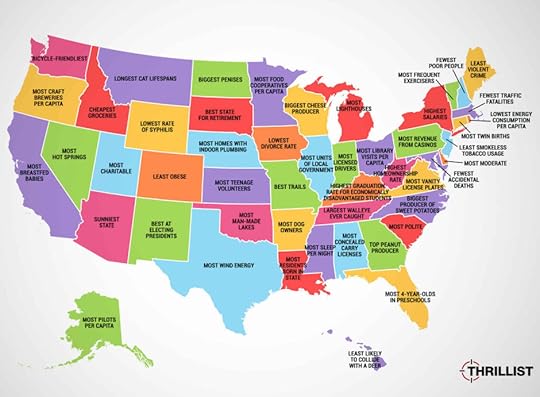
What each state is best at
Hawaii's "best at" seems a little unfair. And kudos, North Dakota. Via
2
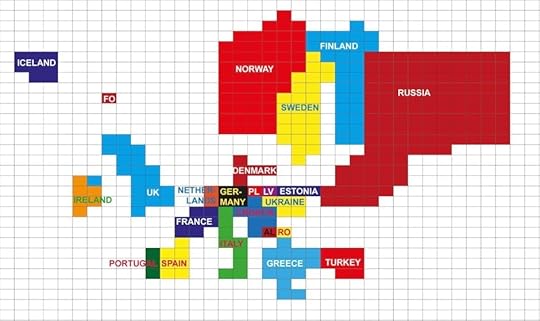
A map of Europe adjusted for coastline length
"Coastline length" is a notoriously difficult measurement, but this map helps give you some idea of how it's length can be much longer in much smaller countries like Britain while being very short in places like France. Via

3
The Age of Heterosexual consent by country
A larger version of this map available here.
Intermission
173
The 20 coolest towns in the US
by Matador Team
367
What bartenders actually think of your drink order
by Lisa Millar-Jones
17 places Coloradans would rather keep to themselves
by Michael Bonocore
4
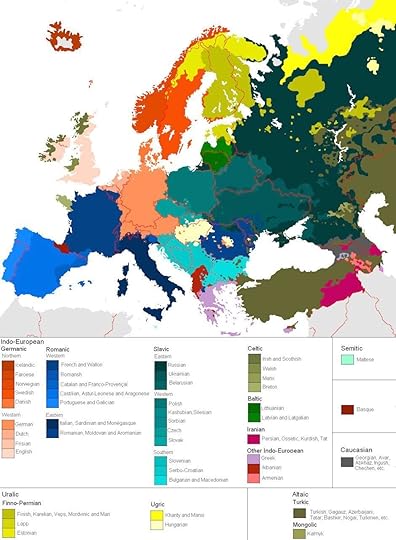
The Languages of Europe
A larger version of this map available here.

5
The Meth Labs of the US
There's a very clear "meth belt" in the United States. Via
6
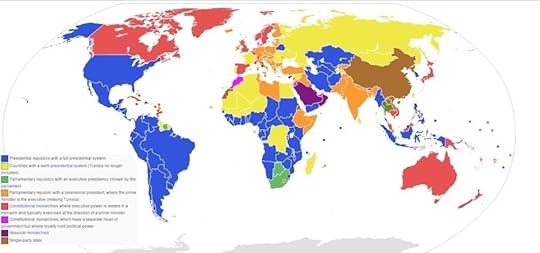
World Systems of Government
A larger version of this map is available here.
7
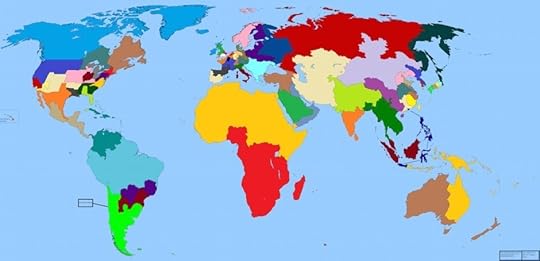
The world split up into $1 trillion of GDP
The more colorful, the more wealthy an area is. Via
8
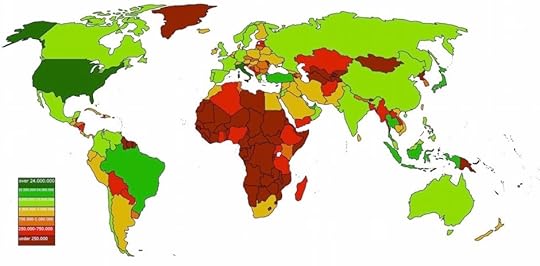
Number of Instagram posts with #(country name)
As someone on Reddit pointed out, Turkey likely does well around Thanksgiving. Via
9
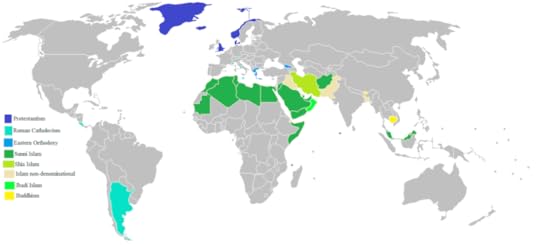
The state religions of the world
There are surprisingly few left. Via
Intermission
367
What bartenders actually think of your drink order
by Lisa Millar-Jones
137
The 22 craziest party hostels around the world
by Matt Kepnes
15 photographs that show the diverse beauty of Utah
by Michael Bonocore
10
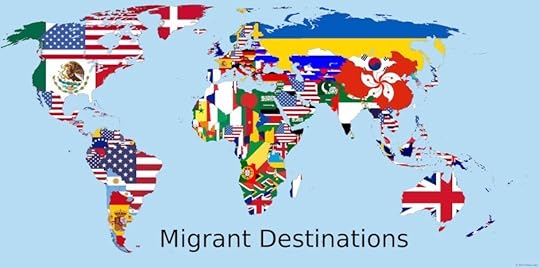
The most popular destinations for migrants in each country
Mexico's should surprise no American, but that the converse is true about US immigrants to Mexico is perhaps a bit unexpected. Via
11
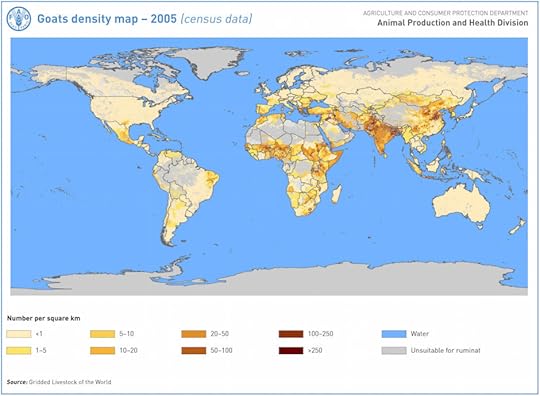
World goat density
Presented without comment. Via
12
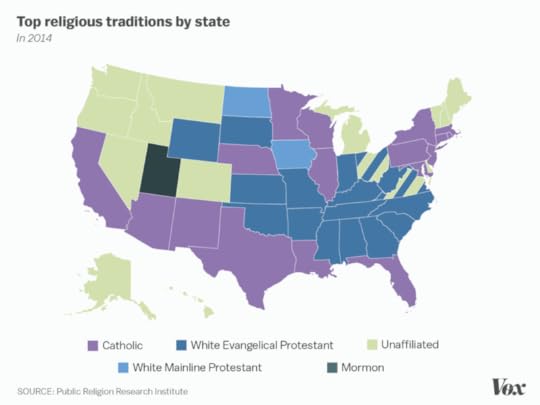
Top religious traditions by state
The Northeastern United States not being uniformly Catholic is the biggest surprise for me. Via
13
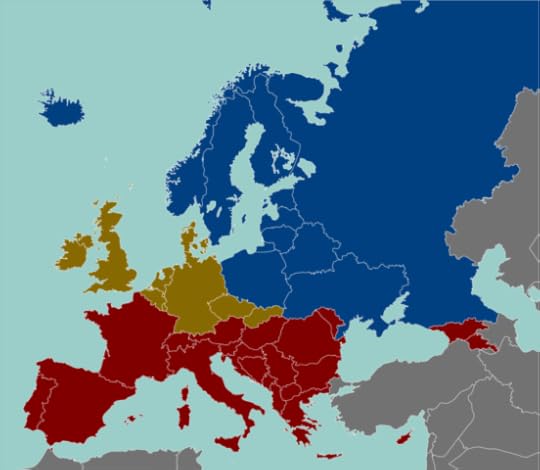
Europe by alcohol preference
Blue is vodka, red is wine, and the kind of yellowish-brown is beer. Via
14
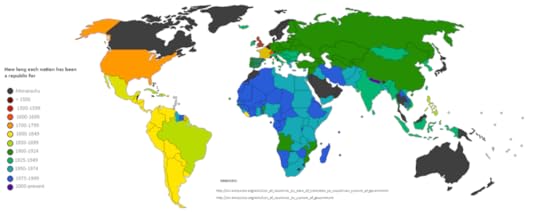
How long has each country been a republic?
And which countries still aren't? Via
15
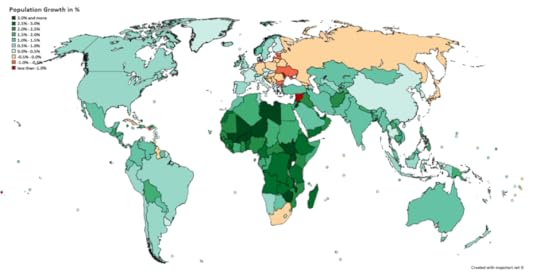
World population growth
For the year 2014. Via
Intermission
137
The 22 craziest party hostels around the world
by Matt Kepnes
484
9 American habits I lost when I moved to Germany
by Vanessa Van Doren
Texas has the greatest skies on Earth, and these 13 photographers prove it
by Kate Siobhan Mulligan
16
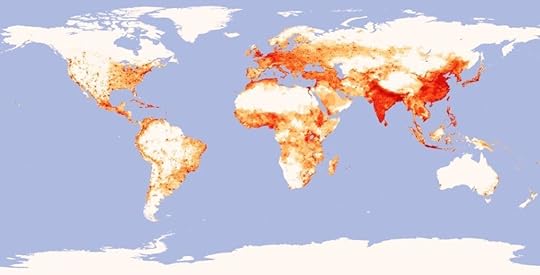
Population density
Canada is practically an expanse of white. Via

17
The importance of the Mississippi to the Midwest
Without the Mississippi River system, the Midwest as we know it would basically not exist. Via
18
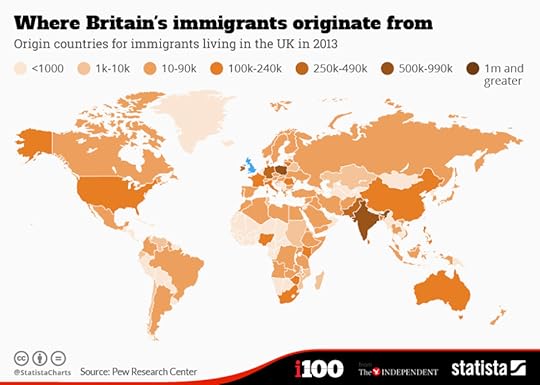
Where Britain's immigrants come from
India and Poland are no surprise, but you may be surprised at the amount of American immigrants. Via
19
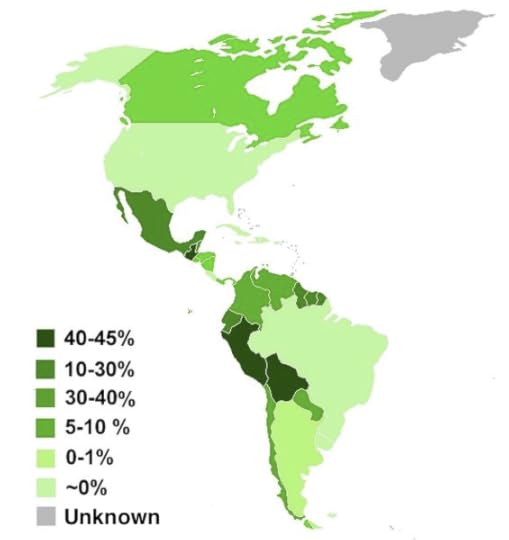
Native American population percentage
In which countries have the most Native Americans survived? Via
20
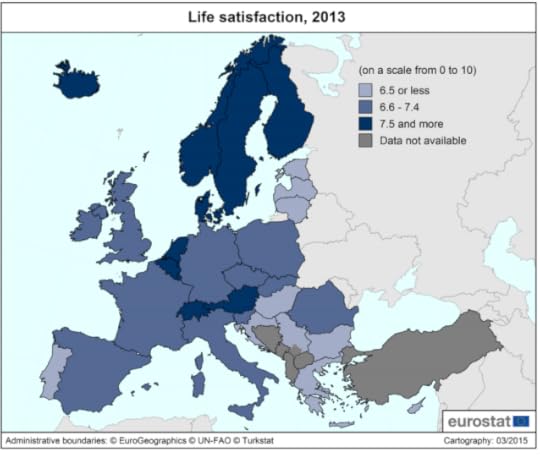
Life satisfaction in Europe
The moral: stay away from the Balkans and Baltics. Via
21
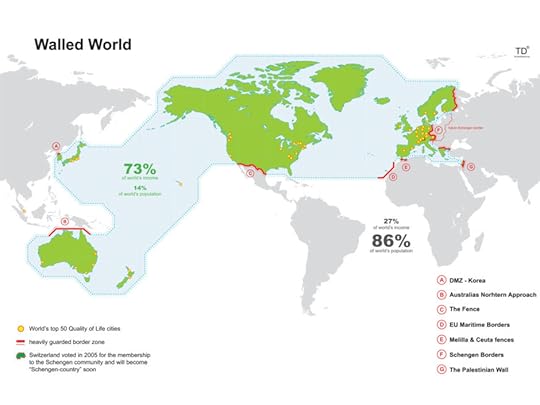
The world's most heavily guarded countries
Where are the world's great walls built, and why? Via
22
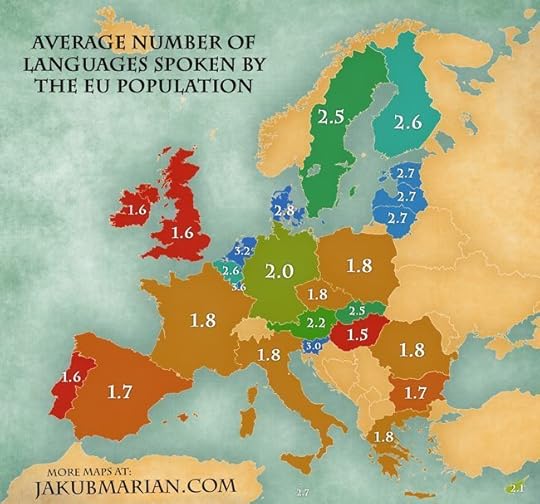
The average number of languages spoken in each country
Thank god the US isn't on this map.
23
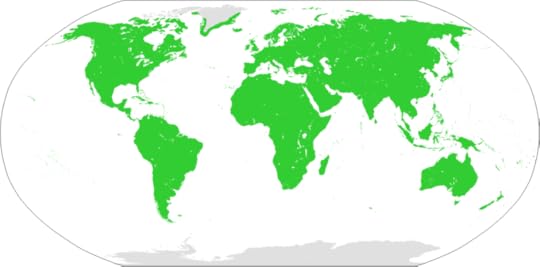
The habitable range of homo sapiens
We really have expanded over a staggeringly huge part of the earth. Via
April 2, 2015
2 minutes of Michigan at its best
Follow Matador on Vimeo
Follow Matador on YouTube
FILMMAKER Eric Hines explores and films the beauty of Michigan. The timelapses were shot on a Canon 5D Mark III and the slow motion video was shot on a RED Epic.
Hines write on his Vimeo page:
“Sleeping in the back of my car, walking through forests at night, getting lost on dirt roads, and driving for hours on end around this gorgeous place has been an incredible inspiration to me.”
Cincinnati most underrated city

Photo: Jaybird
WHEN YOU HEAR ABOUT SOME OF THE GREAT US cities, you always hear about New York, San Francisco, Chicago, or maybe some of the smaller, quirkier places like Austin and Athens, Georgia. You never hear about Cincinnati. Which makes absolutely no sense: Cincinnati is one of the coolest cities in America. Especially lately. Here’s why.
Downtown Cincy has turned from kinda meh to amazing in a just a few years.
When I was a kid, Over-the Rhine was not a place you drove through. Granted, we were white kids who didn’t know anything about cities, but that doesn’t mean we were wrong: at one point, OTR was the most dangerous neighborhood in America. But it’s seriously turned around. OTR is awesome now. It’s got one of my favorite bars on the planet (MOTR), gourmet hot dog joints (Senate), and the always-awesome Findlay Market. And now there’s the Banks. The Banks wasn’t even a thing when I left the city back in 2011. We spent our weekends in Newport. Now, when I go home to visit family, I don’t have to cross a major body of water to have a drink. I mean, I still do, but I don’t have to.
Cincinnati is actually pretty beautiful.
When most people think of Midwestern cities, they think of cities sitting on plains. Cincinnati, though, sits nestled between hills and a gorgeous river. We love to quote Winston Churchill, who said it was “the most beautiful of the inland cities of the union.” And it’s not just the natural surroundings: downtown Cincinnati has some really incredible architecture.
Beer.
It was inevitable that a town with as much German heritage as Cincinnati would have incredible beer. Hell, there are even beer cellars running underneath the streets of OTR. Don’t know what I’m talking about? Watch Walk the Moon’s “Anna Sun” music video.
Small cities almost never have as many professional sports teams as we do.
I mean, hey, it’d be cool if we won a championship or two, but the city of El Paso is like, three times bigger than us, and how many pro teams do they have? Nada.
Cincinnati Chili.
*Drops mic.*
Graeter’s.
If Oprah says it’s the best, it’s the best. Aglamesis ain’t bad either.
The streetcar.
Okay, it’s a slow start, but the more public transportation the better. Maybe the streetcar will someday lead to a resuscitation of the weird abandoned subway tunnels all over the city.
Weird abandoned subway tunnels.
I know the subway is Cincinnati’s greatest failure, but how cool is it that we have a half-built labyrinth underneath our feet? It’s like an urban exploration utopia.
Cincinnati Public Schools are one of the great education reform success stories.
Cincinnati has really turned it around in the past decade. When I was in school (Go Aves, by the way) Cincinnati Public Schools were kind of a joke. Now they’ve seriously turned things around.
The Freedom Center. And the Cincinnati Museum. And the Cincinnati Zoo.
I lived in DC for a few years, and our museums in Cincinnati are forces to be reckoned with: the Freedom Center is just as high quality as a lot of the Smithsonian Museums (the Zoo is great too, but some of the Natural History stuff at Union Terminal hasn’t changed since I was 5. I’m looking at you, topless cavewoman). Also, the Festival of Lights and Tunes and Blooms are the best, and nothing really compares to the first time you see the weird laser tunnel intro at the Omnimax.
Holy crap, it is cheap.
You can live comfortably in Cincinnati. In a house. While not making an absurd amount of money. It’s (literally) one of the most affordable cities in America.
14 of the most beautiful churches in Europe
RELIGION plays a major role in the history of Europe. To this day, the majority of Europeans label themselves as Christians, and so much of the region’s culture has been influenced by its religious past. Home to some of the world’s most beautiful, and remote, churches and cathedrals, here are 14 of the continent’s best:
1. The Church Of The Assumption, Lake Bled, Julian Alps, Slovenia
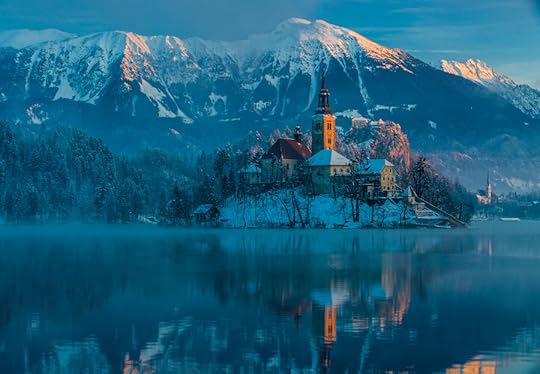
Sunrise 2015…. by Ruzdi Ekenheim on 500px
2. Church In Oia Santorini, Greece
By Elia Locardi
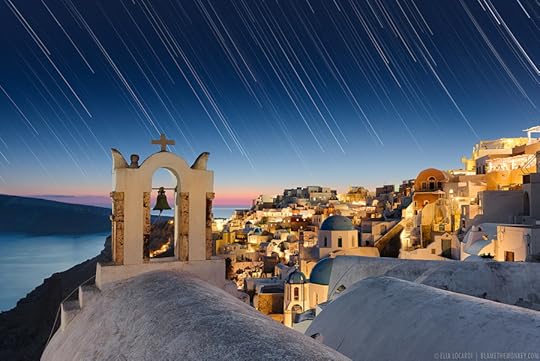
Moments In Time | Oia Santorini by Elia Locardi on 500px
3. The Church Of Vik, Iceland
By Max Rive
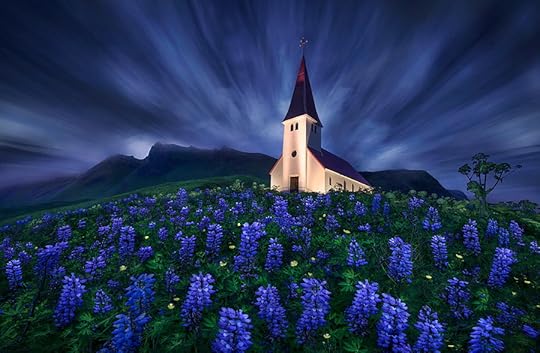
Forever Strong by Max Rive on 500px
4. Chapel, Dolomite Mountains, Alta Badia, Italy
By Andrej Kunka
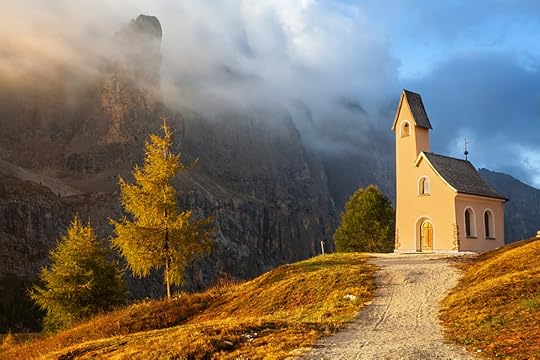
Small chapel, Passo Gardena, Italy by Andrej Kunka on 500px
5. St. Coleman, Alps, Germany
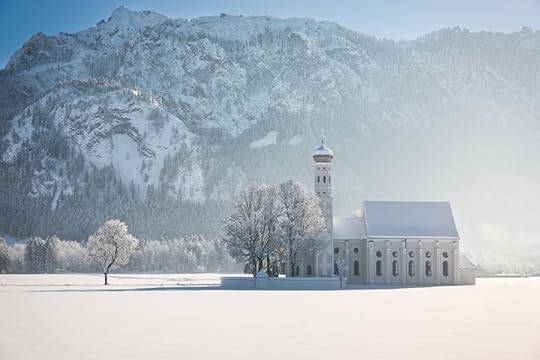
St. Coloman with trees in winterly landscape, Alps, Germany by Frank Fischbach on 500px
6. Notre Dame De Paris, Paris France
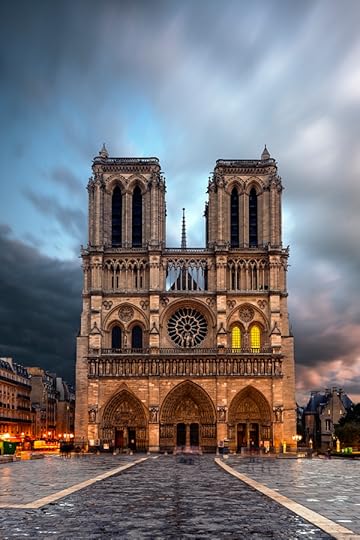
Notre Dame de Paris by Silviu Bondari on 500px
7. Sagrada Familia, Barcelona, Spain
By AirPano
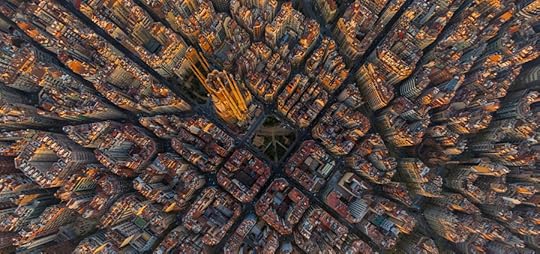
Sagrada Família, Barcelona, Spain by AirPano on 500px
8. St Peter’s Basilica, Rome, Italy
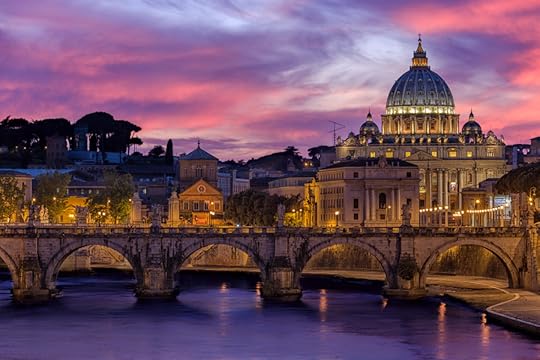
St. Peter's Basilica by David Wasserman on 500px
9. St. Primus And Felician Church, Jamnik, Slovenia
By Uroš Demšar

Jamnik by Uroš Demšar on 500px
10. Hallgrímskirkja Church, Reykjavík, Iceland

Hallgrímskirkja by Carlos M. Almagro on 500px
11. St. Paul’s Cathedral, London, England
By Ed Norton
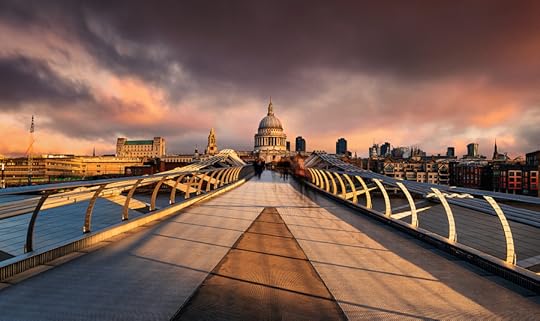
St Paul's Cathedral by Ed Norton on 500px
12. St. Basil Cathedral, Moscow, Russia
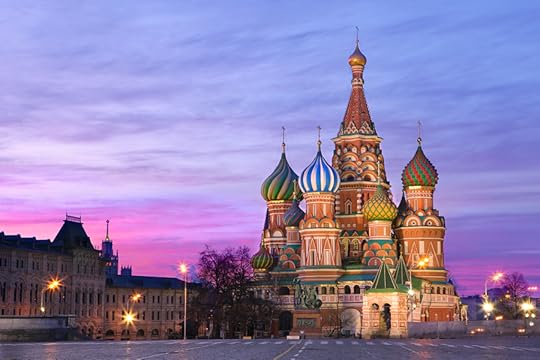
St. Basil Cathedral by Michael Oreshnikov on 500px
13. Westminster Abbey, London, England
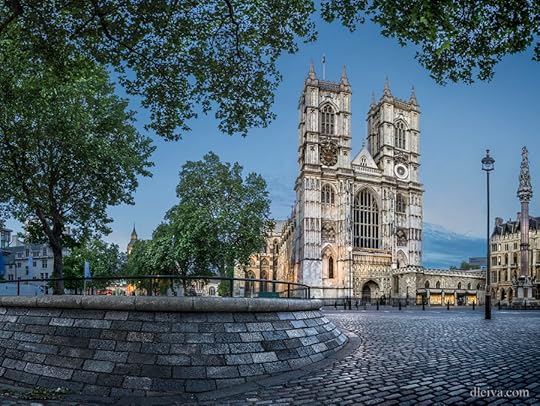
Westminster abbey, London by Domingo Leiva on 500px
14. The Catholic Church Of Hallstatt, Austria
By Elia Locardi
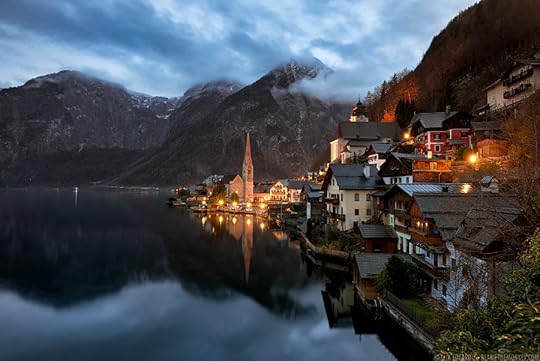
Village of Dreams by Elia Locardi on 500px
8 expat tips to know before you go

Photo: shootlah!
SO MANY OF US DREAM of changing our lives; of moving to sunnier climes and enjoying better food, nicer people, and cleaner air. Moving countries is portrayed as a panacea, a balm to soothe life’s ills. According to the results of our ongoing expat survey, 85% of expats feel they made the right decision when they moved abroad*, indicating that the expat life is indeed all it’s cracked up to be. However, there are several things many expats wish they knew before they flew. Here’s a roundup of expat tips for anyone thinking of leaving home.
1. Even if you’re in an English-speaking country, communication will be difficult.
We all understand and accept that moving to a country with a foreign language will be difficult. What we’re less aware of is that communication is hard even when we do speak the language. Strong accents, localised lingo, and different customs can be confusing. An American in Scotland may find themselves nodding and smiling in utter confusion just as often as a Brit in Burma. Don’t expect it to be easy just because you speak the language.
2. Everything will take much longer than you expect.
Tracy, a medical student from Baltimore, told us: “When I moved to Oxford in the UK, everything was so hard. I couldn’t get a phone contract because I didn’t have an address but I couldn’t get an address because I didn’t have a phone. This sort of scenario happened again and again.”
Conversely, Stefano, a Brit living in LA, found it hard moving westward across the pond: “For the first few months, I had a British credit card so every time I wanted to fill up my car, I would have to pre-pay at the counter and just guess how much gas I needed. Sometimes, I’d be short and have to go back in. Sometimes, I paid too much. The first time, I had to get a refund of $15.”
Expect illogical bureaucracy and grindingly slow progress for at least the first few months.
3. You’ll lose good friends from back home.
You may have known each other for 10 years and gone through a dozen breakups and make-ups together, but sometimes an ocean or continent is just too large an obstacle.
Kerry, a British expat in Australia, told us: “When I left, Sarah and I swore we would have weekly catchups and be a part of each other’s lives. When she had her first daughter, I sent her some flowers and an invitation to Skype. We tried to set something up but things just kept getting in the way. A year later, I still haven’t met her daughter.”
Accept that some friendships will wither and stall.
4. You may feel guilty.
You’ve started a bright new life in a sunny country and left behind your parents and siblings. What you quickly realise is that they still have problems but, now, you can’t be there for them. Sure, you can send words of support but you’re not really there. That knowledge fills many an expat with a sense of guilt.
Patrick, a freelance tour guide in Ecuador told us: “My parents are pensioners and my father has started having problems with his knees. My mother is a nervous driver but has had to take the wheel to drive him to his appointments. Knowing I’m not there for them keeps me awake at night.”
5. There will be sexism.
It won’t always be as flagrant as a driving ban Saudi Arabia; more often, it will be casual sexism that catches you by surprise. One expat we spoke to said her boss in South Korea told her that “women shouldn’t smoke in public.” Another said her school principal told her that she was “so beautiful” — not quite appropriate in the circumstances. Another expat said she was excluded from after-school sports in her Qatari workplace because she was a woman (“they were quite open about the reason and saw nothing wrong with telling me that”).
It’s difficult to just shut up and accept this but it may be helpful to remember that every country is still evolving. Women have been able to vote in the UK for a century but there is still a sizeable gender pay gap. No country is perfect, but every country is evolving even if it’s painfully slowly.
6. You will get the mean reds.
The mean reds — Holly Golightly describes them as “horrible… suddenly you’re afraid, and you don’t know what you’re afraid of.”
The mean reds make you question your decisions, they goad you for feeling lonely and frustrated, they ask why 10 degrees of extra heat haven’t eliminated your problems and neuroses. They point out that you still haven’t figured things out and make you doubt you ever will.
Go out, say yes, take a class, make friends, and try things. The mean reds will happen regardless — but they will also pass.
7. A cute rural village may not actually be right for you.
Small rural villages are small and charming for a reason: expats don’t move to them. This reason may also explain why you won’t fit in there. Sure, you want to experience local culture, but local culture may not want to (or know how to) experience you. There is so much to adjust to in a new country, you may be better off starting in a big city with its conveniences, opportunities, and support systems. Once you are au fait with local customs and the language, and have found your stride, you can consider moving to a small village. The transition will be far less overwhelming this way.
8. You may never be accepted.
Canadian expat Keith loved his seven years in South Korea but left after realising that he would never be accepted as a local: “I spoke the language, I had a Korean girlfriend, I understood the culture but I was always going to be a foreigner.”
Keith told us that salespeople would argue over who would help him because they were worried he would make them speak English; that he wouldn’t be allowed to try on clothes because he may stretch them; that waitresses would automatically bring him forks instead of chopsticks. On top of this, Koreans of a certain age harboured a visible sense of resentment.
“The elder generation’s experience of foreigners isn’t great and so they can often be outwardly hostile. I got tired of smiling like it didnt bother me.”
What are your lessons learnt from expat life? Share in the comments below.
* Breakdown of answers
I am certain I made the right decision: 64%
I think I made the right decision: 21%
I am not yet sure if I made the right or wrong decision: 11%
I think I made the wrong decision: 3%
I am certain I made the wrong decision: 1%
This article was originally published on AtlasandBoots.com, and has been re-published here with permission.
March 29, 2015
Woman's solo Alaska adventure (vid)
Follow Matador on Vimeo
Follow Matador on YouTube
IF you’ve ever doubted whether you could rough it alone in the wilderness, this video may be the dose of inspiration you need to boost your confidence. Take a journey through Alaska with this solo female backpacker as she hikes, bikes, wades, hitchhikes, slips and dances across the vast wilderness. It’s like Wild, but further north. Or Into the Wild, but with a happy ending, and it may just leave you itching to pick up a tent and hitchhike your way to Alaska.
24 reasons why Florida is awesome
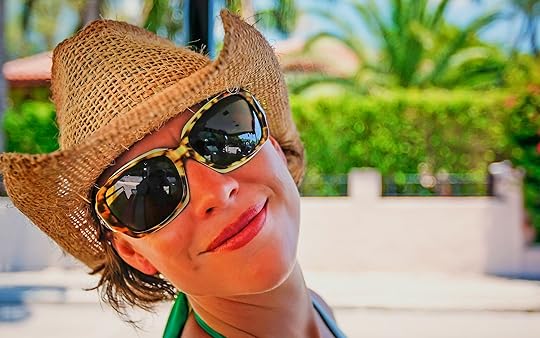
Photo: John B. Kalla
1. Calle Ocho shows other festivals how it’s done.
Every March, Cuba meets Miami in a massive party covering 23 blocks and attracting a crowd of a million. The crowning event of the ten-day annual Carnaval Miami, this blowout began in 1978 to celebrate Miami’s growing Cuban culture, and Samba music, mojitos and ceviche make this the party to end all parties.
2. It’s home to the original underwater hotel.
Before Dubai and Fiji got in on the action, there was Jules’ Undersea Lodge in Key Largo.
3. The seafood is baller.
Apalachicola oysters and big Gulf of Mexico shrimp…know what I’m saying?
4. And hush puppies = pure joy.

Photo: Kyle Steed
No seafood joint’s menu is complete without this Gulf Coast delicacy.
5. There’s a kind of deer that only exists in the Florida Keys.
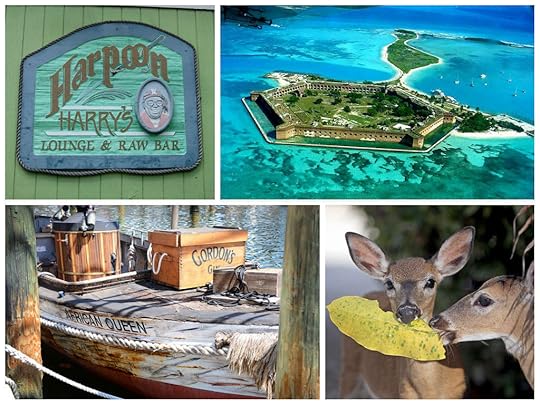
Photos clockwise from bottom left: Visit Florida, Clipp2nd, Karen Hoffmann, Visit Florida
The key deer are an endangered subspecies, but they can be spotted in the wild on No Name Key due to the lack of heavy human presence. And, get this, they can swim between islands.
6. Northeast Florida is home to the oldest city in the US.
Or more accurately, “the oldest continuously occupied European-established city and port in the continental United States” is in northeast Florida (thanks, Wikipedia!). Founded by the Spanish in 1565, St. Augustine has its very own Fountain of Youth, a tribute to what Spanish explorers were looking for when they came here.
7. Sweet tea just makes life better.
Seriously, what do other states drink? WATER?
8. Cuban sandwiches are the best.
Havana’s famed Cuban sandwiches, tostones, and papas rellenas are always a welcome sight, but especially at 3am after a big night out.
9. “Beach time warp” is a thing.

Photo: Janine
“Have I been here for ten minutes or ten days? I could check my skin, but it started burning as soon as I stepped out the door.”
10. And “the beach” isn’t the only source of water-themed fun.

via)
The springs, rivers, and lakes also make Florida awesome.
11. Orlando actually has a really lively food scene.
Evidenced by multiple hip, upscale restaurants with rotating menus and locally sourced ingredients. Ravenous Pig is probably the best known, along with Rusty Spoon (allegedly started by a disgruntled ex-Ravenous Pig chef). There’s also Cask & Larder, Ravenous Pig’s soul-food experiment.
And then you’ve got Little Vietnam’s unpronounceable restaurants, Sweet Cupcakes, 4Rivers BBQ, Lazy Moon’s 30-inch pizzas, and Prato’s seasonal Italian menu. You’re doing good here.
12. And the farmers’ markets are awesome.
Before Disney, the Orlando area was practically nothing but mid-Florida rural boringness. There’s still not much development to speak of around the the city, so every Saturday of the entire year you can find local produce, plants, wares, goods, and foods riddled throughout the town. Winter Park’s is probably the best though.
13. Outdoor adventure is almost too easy here.
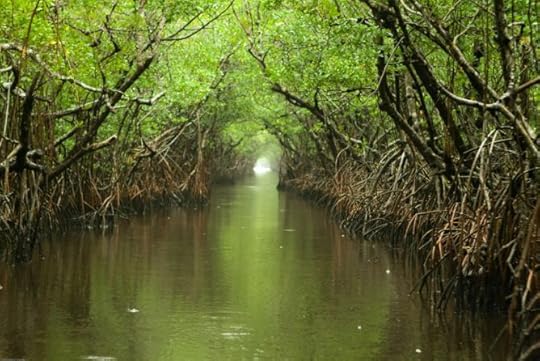
Photo: Wikimedia Commons
All of Florida is basically a swampland, so swimming, canoeing, camping, and hiking spots (and mosquitoes) are abundant. And after the wet season ends in November, winter months are the ideal time for exploring Everglades National Park.
14. While Wet ’n Wild is alright, Mother Nature offers a few of her own water parks.
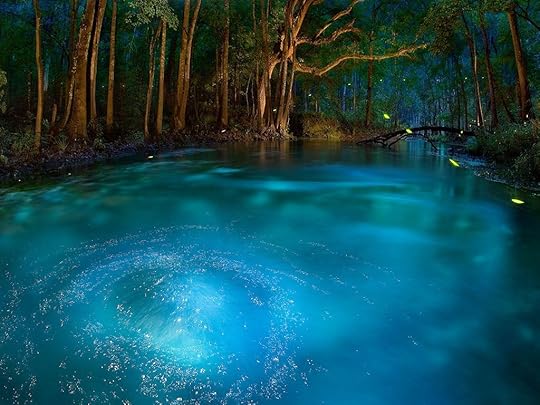
(via)
Like Wekiwa, Blue Springs, and late-night kayaking with bioluminescent aquatic life.
15. Miami has some seriously swanky hotels.
Right near the beach, in particular hosts the truly bold and beautiful of the area.
16. Publix is superior to any other supermarket on Earth.
As are the subs. I’ll have an Ultimate. Boar’s Head please. (Why did you even ask me?) And everyone knows you have to order the chicken tender sub at least once. You’ll say “toss it in buffalo sauce please” if you’re smart.
17. The Tampa Theatre is on the National Historic Register for a reason.

Photo: photomatt28
Built in 1926, the Tampa Theatre retains its classic Mediterranean revival style and elegance. The Wurlitzer organ is played before each show. The ceiling is painted to look like the starry night sky, and you can sip on a glass of wine during the performances. This is how movies were meant to be watched.
18. Kelly Slater learned to surf here.

Photo: “JT” Taylor
There’s Sebastian Inlet and the beach’s popular First Peak, where a back flow from the Indian River Lagoon creates a fast-breaking wedge, deservedly helping it land on the international competition circuit.
And New Smyrna’s inlet also has some of the most consistent waves in Florida (it’s also known for its shark attacks, but let’s forget that for a second) — the sandbar between its jetties allow for well-shaped peaks, long rides and reformed barrels, making the waves perfect for performance tricks. No wonder this spot ranks at the top of any East Coast list.
19. Miami’s Club 50 Viceroy pool looks like this:

Photo: Club 50 Viceroy
50 stories up, this club doesn’t encourage swimming in the roof pool, though after a few cocktails it will seem pretty tempting. If you feel desperate for a swim, check out the 50-person hot tub in the Viceroy Hotel spa.
20. And the Miami skyline looks like this:
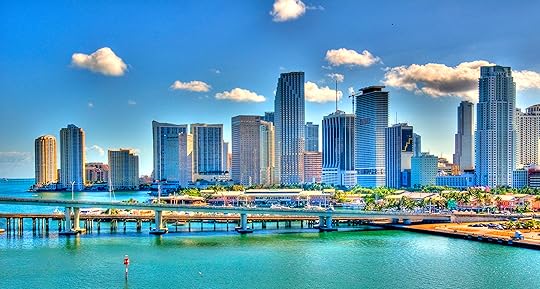
(via)
21. It’s home to one of the biggest underwater bronze Christ statues in the world.
Christ of the Abyss has been hanging out in 25 feet of water off the coast of Key Largo since 1962.

Photo: Wilfred_Hdez
22. Haulover Beach is one of the country’s finest destinations for hanging out in the buff.
Smack in metropolitan Miami, Haulover Beach has been featured as one of the Travel Channel’s “Top Beaches” — and 1,000,000 visitors a year give it its reputations as one of the most popular clothing optional beaches in the country.
To make sure it stays family-friendly, the city of Miami maintains the amenities, including patrolling lifeguards, barbecue grills, refreshment stands and showers. If you get bored just soaking up rays, there are volleyball games and even occasional surfing contests.
23. Even the dive bars are good enough for the rich and famous.
Famous since “Miami Vice,” Anthony Bourdain frequents Mac’s Club Deuce when he’s in Miami, and locals of all sorts will be here until 4 am. So come around, sit down, listen to the jukebox or play pool, and keep an eye out for Keith Richards.
25. Floridians are just pleasant.
They hold open doors. They wave. They’re friendly folks. What’s not to love?
This article references the following sources from Matador:
9 things you’ll miss your first time in the Florida Keys, by Joe Batruny
10 things you should know about people from Orlando, by Bryce Emley
10 dive bars in Miami, Florida, by Hiroki Watarai
A US festival for every month of the year, by Sabina Lohr
20 overlooked national landmarks in the US that are overlooked, by Hal Amen
19 signs you were born and raised in the Florida Panhandle, by Savannah Steiger
7 east coast surf spots for the ASP world tour, by Benita Hussain
The world’s largest religious statues, by Hal Amen
Best nude beaches in the world, by Buzzy Gordon
Matador Network's Blog

- Matador Network's profile
- 6 followers