
Matador Network's Blog, page 2124
March 29, 2015
How to piss off a Coloradan

Photo: eagle
Be Lazy.
It’s well publicized that we’re the least-obese state in the country. We didn’t get that way by sleeping in and sitting around. There’s a reason the trailhead has twice as many cars as the mall on that sixty degree day in January. We’re a state of doers and have no tolerance for those who won’t participate. Had too many drinks last night? Too bad. Get on the mountain bike, we’ve got 20 miles planned. Rather take the lift? No, I think we’ll skin up to the summit. Sure, I guess we could fish from the road, but if we backpack in eight miles there are 12-inch brookies that have never seen a fly.
Say anything remotely disparaging about John Elway.
The Bronco legend is so revered here that he could run for governor on a platform of puppy euthanasia and still win in a landslide. So it’s best to keep your comments about his high career interception rate to yourself and go search YouTube for clips of “The Drive.” Oh, and even though he’s only been here for a few years, it’s best not to talk smack about PFM either (that’s Peyton F’ing Manning).
Tell a bunch of weed jokes.
Sure our own Governor Hickenlooper was guilty after legalization passed in 2012 when he cautioned us to not “break out the Cheetos or Goldfish too quickly,” but enough already. Just because we were first, doesn’t mean we spend every night watching The Big Lebowski awash in a sea of Taco Bell wrappers. Get over it. It’s legal and it’s not a big deal. And it probably will be legal in your state before your halfway through that bag of Cool Ranch.
Drive slow up the pass.
We have mountains. There are steep winding roads that go over them. We’re used to it and can safely drive them without slowing to a crawl or burning out our brakes on the way down. What we can’t get used to is that white Chevy Suburban with Texas plates chugging up Monarch Pass in the passing lane. Or the RV from Nebraska the size of a Motley Crüe tour bus that’s towing a Jeep and six dirt bikes over Hoosier. Don’t you want to go to Wyoming next summer? Do the courteous thing, people…there’s a scenic pull off ahead. Use it.
Assume we all live in ski towns.
Did you know it’s 175 miles from the Kansas state line to foothills in Golden? And that most of it looks, well…exactly like Kansas? Over 80% of us live along the Front Range, before the mountains even start. So no, I don’t ski on my lunch break. And we barely got a dusting of that two-foot dump you heard about on the nightly news. We might dream of Tuesday powder days and chair lifts at the back door, but really that just seems like a lot of shoveling.
Ask for a Coors Light.
With one of the nation’s highest concentration of craft breweries lining the Front Range, Coloradans are passionate about their beer. And after a long day on the slope or the trail, the last thing we’d ever do is give a shit about how blue the mountains are on that tall silver can of beer-flavored water. Save your beer snob comments and give me a double IPA or a barrel-aged sour, please.

This story was produced through the travel journalism programs at MatadorU. Learn More
Be careless during fire season.
We may be far away from east coast hurricanes or west coast earthquakes, but we know firsthand the damage done by wildfires. And nothing gets our blood boiling so much as those that are caused by humans. I mean, the Hayman Fire was caused by some dumbass burning old love letters…and she was a forest service employee! So heed those Red Flag warnings and think twice before you build that rager at your campsite, toss your cigarette out the window or put on your own 4th of July fireworks spectacular in that dry grassland.
Complain about how far away DIA is from Denver.
I get it. It’s really out there. Like way out in the middle of a vast expanse of ranchland dotted with chain hotels, but is it really the thing we have to spend the whole ride to the airport talking about? And yes, we have to drive by that creepy “Devil Horse” sculpture with the glowing red eyes that guards the entrance – probably the only sculpture ever to fall on and kill its creator. Not a fan? Then maybe next time you should just take the light rail right from downtown. Does your city do that?
Move here.
Yes, I’m a hypocrite. A lot of people here came from somewhere else, myself included. But, it’s like as soon as we got here, we’ve forgotten about our former life and assumed we’ve always been here. And the last thing I need is a new crop of Midwesterners or Texans showing up and clogging the trailhead parking lots, packing the lift lines and making a drive on I-25 more painful than it already is. And don’t get me started on Californians. I’m sure you can afford that beautiful mountain home for the same price as your LA bungalow, but don’t you miss the beach? 


Travel made me respect my parents

Photo: Juan Pablo Rico
I check the clock for the third time in five minutes. It is now 11:40am, a good 40 minutes past the time we were expecting our transfer to Cartagena’s bus station. I flex my shoulders and try to relax. Peter always tells me I worry too much; that I get too uptight about loose schedules and tardy transfers.
A few minutes later, our Airbnb host Nadia sticks her head in the door. She says some words. I catch enough to understand that she’s saying our bus leaves in 20 minutes. I know that already. She ushers us out the door and says she’ll call a taxi instead. Downstairs, we wait. Instead of hailing a taxi, she speaks to two lads on motorbikes and then gestures for us to get on.
My eyes are wide. “En esto?” I ask unsurely.
“Si,” she replies. She takes my small backpack and gives it to the first guy. Catching my concern, she says “tranquilo, tranquilo” and gently pushes me towards the bike.
“Pero es seguro?” I ask, questioning if it’s safe as she ushers me onto the bike with my 13kg bag on my back, a helmet that won’t strap shut and a stranger that’s about to zip off with me through the streets of Colombia.
“Tranquilo,” replies Nadia.
“Pero–” my voice trails off, unsure of what more to say.
And then we’re off, Peter riding pillion on one bike, me on the other. This is everything our mothers warned us against when we said we were visiting Colombia. What if we got robbed, kidnapped, killed in a crash?
We weave through the streets and for a while it seems we are double backing on ourselves and then triple backing. Were they doing it to disorient us? Twenty minutes later, we arrive at the station with just enough time to run onto the bus. It’s all fine in the end but as I take my seat, I chide myself for being foolhardy. Why didn’t I insist on a taxi instead? Why had I got on the back of a stranger’s motorbike without a proper helmet and with 13kg of weight on my back? The answer is that when you don’t have the words to protest, acquiescence is easier; you just smile and say okay.
They survived the rise of the National Front, of skinheads and riots, of the fear and disillusionment of the Thatcher years, of never being able to articulately inform the ‘other side’ of their feelings about any of it.
My level of Spanish is enough to get us by in most tourist situations — ordering food, booking a room, and buying tickets albeit with pauses and errors — but there have been occasions where it’s left me lacking: when a company cancelled our dive last-minute and I couldn’t express how unprofessional they were, or when we bought a camera in Panamericana and couldn’t figure out their convoluted collection process.
Everything is so much harder here because of the language barrier. Every sentence has to be digested, broken down, and translated to English in my head. My response then has to be translated into Spanish and then relayed out loud. When I don’t understand something, it becomes a long and arduous process to get something done.
We were expecting South America — real backpacker country — to be far easier than the South Pacific, but in reality it’s been harder. So many of us equate intelligence with eloquence, of being able to clearly express thoughts, ideas and arguments. I’ve had a hard time sounding and feeling stupid. To the credit of the South Americans, they have always been gracious with my broken Spanish and always encouraging of my efforts.
These past two months have given me a newfound respect for my parents. They came to England when there wasn’t a stronghold of Bengali stallholders selling goods on Whitechapel road, no string of Indian restaurants on Brick Lane, no interpreters and translators to explain medical care or school enrollment, or bank accounting, or bill paying. They did each and every one of those things with virtually no English. They bore the weight of feeling ignorant for years, not months, and they survived. They survived the rise of the National Front and skinheads and riots, the fear and disillusionment of the Thatcher years, and never being able to articulately inform the ‘other side’ of their feelings about any of it.
I’ve had only a mere glimpse of how hard it was, but it has given me a newfound respect not only for my parents, but immigrants everywhere that move to a country in which they don’t speak the language.
If you’re one of them, I salute you. You’re a braver person than I.
This article originally appeared on Atlas & Boots — Travel with Abandon and is republished here with permission.
March 28, 2015
14 fascinating things on Lithuania
Some interesting knowledge about a little known European country, like:
92% of the population speaks one foreign language
55% speak two foreign languages
it is among the fastest internet speeds in the world
Video by Vimeo user TAPE.
These images show the beauty of Utah
NOT ONLY is Utah one of the most underrated states in America, but it is also one of the most geographically diverse, and these 10 photographs 15 prove it.
1. Zion Narrows, Zion National Park
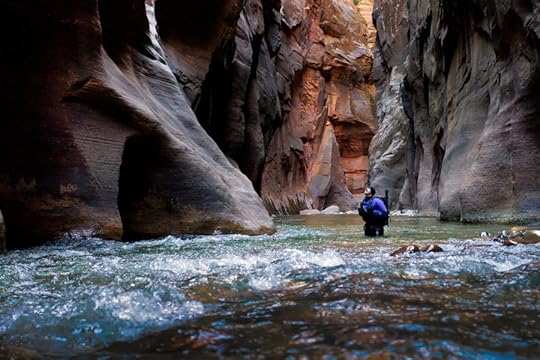
Canyon Walls by Casey McCallister on 500px
2. Delicate Arch, Arches National Park

Live Life by Toby Harriman on 500px
3. Grand Staircase-Escalante National Monument

Curve Appeal by Erin Babnik on 500px
4. Zion National Park

The Road to Zion by Michael Shainblum on 500px
5. Mesa Arch, Canyonlands National Park

Mesa Arch by Ryan Engstrom on 500px
6. Lake Powell, Utah and Arizona Border
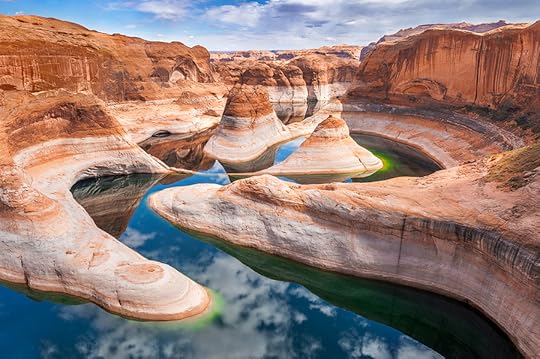
Reflection Canyon by Yanbing Shi on 500px
7. Midway Ice Castles
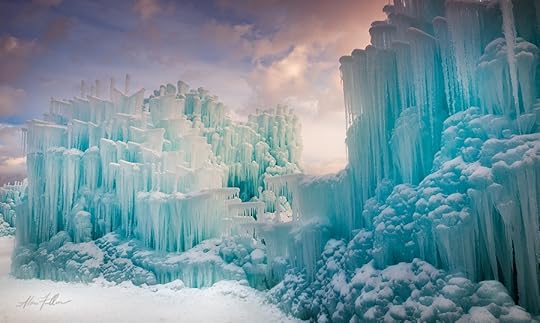
Ice Castles by Alan Fullmer on 500px
8. Park City

The Magic of Utah's Park City by Suresh Reddi on 500px
9. Little Grand Canyon, Books Cliffs

Lightning from The Wedge by Bill Church on 500px
10. Canyonlands National Park

Golden Light Overlook by Kane Engelbert on 500px
11. Little Cottonwood Canyon

Winter Wonderland by Viraj Nagar on 500px
12. Monument Valley, Utah and Arizona Border

Apocalypse by Miguel Angel Martín Campos on 500px
13. The Watchmen, Zion National Park

The Fires of Heaven by Tyson Poeckh on 500px
14. The Narrows, Zion National Park

Climbing in Zions Slot Canyons by Chris Burkard on 500px
15. Double Arches, Arches National Park

Double Arches by Michael Shainblum on 500px

1
8 signs you're a California parent

Photo: San Diego Shooter
1. Your kid has been Disneyland at least three times this year.
What is a once-in-a-lifetime trip for other families is a standard Saturday for your family. Given that season pass tickets for local residents aren’t that much more than a one-day pass, you find yourself spending more time around Mickey and Minnie than you ever thought possible before you had kids here.
2. And they’ve spent more time at breweries than Chuck E. Cheese.
Hey, it’s not your fault they make beer gardens so entertaining for children. You know exactly what breweries have child-friendly koi ponds and grassy areas, and you have no problem letting the kids entertain themselves within spitting distance of brewing tanks if it means you can enjoy a pint of your favorite microbrew in the sun. Plus, your kids are avoiding the germ mecca of the ball pool while you enjoy that beer — double bonus.

More like this: 29 signs you were born and raised in Southern California
3. You drive three hours just so your child can play in falling snow.
You kid is ten and still hasn’t ever seen actual snow falling from the sky. So when you hear it’s supposed to snow a lot in Big Bear or Julian, you quickly pack the family into the car and go on a mission to find the white stuff. Unfortunately, you hit traffic about halfway to your destination as everyone else has had this same idea. Being the stalwart that you are, you nevertheless persevere and your kids do eventually experience fresh snow…by sledding down a five-foot slope on the side of the road.
4. Your kid skateboards and surfs.
It’s practically guaranteed that your kid’s going to be joining the other neighborhood kids skateboarding the streets…or begging the older ones for surfing lessons from the moment they can say ‘gnarly’. And if you grew up here, you’ll definitely be passing on the wonders of riding the waves to the kids as soon as possible.
5. You actually consider eating your placenta.
You’ve definitely met someone who’s ingested it, and your doula or childbirth instructor likely encapsulates it. Before you know it, you’re googling “eating your placenta” during your pregnancy and actually begin to consider paying the few hundred bucks to have your placenta turned into tiny little happy pills. Your husband even supports it (anything to avoid raging hormones). In the end, you’ll either decide you literally can’t stomach it, or you’ll truly embrace California parenthood and pop those placenta pills with abandon. Enjoy.
5. You wear your baby.
You forego strollers and instead wear your baby whenever you can. California is overcrowded — who wants to navigate their child around all those people in a big contraption? You know all the different ways to wear your baby…even if it did take several hours of YouTube watching to figure out how to wrap that 7-foot long piece of fabric around your bod or get that sling positioned just right. When you can’t be bothered to mess with tucks and folds and rings, you grab your ever-present-in-California Ergobaby carrier.
6. And you’re in a gang. A stroller gang.
You may like to wear your baby, but you still need a stroller sometimes. Probably it’s a BOB which you were sold on because it can be pushed on sand (hello beach). Or you got it because you often see a pack of 30 BOBS being pushed up a hill during a morning stroller workout session, and you decided you had to have one too. Eventually, you’ll join one of those early morning stroller gangs in an attempt to get in shape. You live in California…swimsuit season is always right around the corner.
7. You count down the days until your kid can keep flip flops on his or her feet.
You haven’t worn actual shoes in five years — why should your child?
The 26 funniest Lithuanian phrases

Photo: Matteo Staltari
1. A Lithuanian doesn’t have dirty mind, but sometimes he can have very, very “curly thoughts” (garbanotos mintys).
2. Lithuanians don‘t have to understand the meaning of something. They only need to “catch the corner” (pagauti kampą).
3. Lithuanians won’t lie to you. They’ll “hang pasta on the ears” (kabinti makaronus) or “cast a spell on you” (priburti).
4. Lithuanian kids don’t go the toilet. They “go and visit the dwarves” (eiti pas nykštukus).
More like this: How to piss off a Lithuanian
5. A Lithuanian doesn’t go crazy. His “roof drives away” (stogas nuvažiuoja).
6. In Lithuania, those who don’t close the doors behind them are “born in a trolleybus” (troleibuse gimęs).
7. A Lithuanian doesn’t merely enjoy the view. He “swallows with his eyes” (ryti akimis).
8. A Lithuanian doesn’t ever abandon anyone. He just “leaves somebody on the ice” (palikti ant ledo).
9. A Lithuanian isn’t stubborn, he “shows the goats” (rodyti ožius).
10. A Lithuanian doesn’t get surprised. His “eyeballs pop out of his forehead” (akys ant kaktos iššoko).
11. Nothing is too far away for a Lithuanian. It can only be “nine seas away” (už devynių jūrų).
12. Nothing is too late either, but “spoons may be served after lunch” (šaukštai po pietų).
13. In Lithuania, there are no fights. Just “clarifications of relationships” (aiškintis santykius).
14. A Lithuanian isn’t indifferent. He just can’t “see further than his nose” (toliau nosies nematyti).
This story was produced through the travel journalism programs at MatadorU. Learn More
15. A Lithuanian may not be very straightforward, but he will never bother “wrapping words in cotton” (nevynioti žodžių į vatą).
16. A Lithuanian won’t give you a lecture. He’ll show you “where the legs grow from” (iš kur kojos dygsta).
17. A Lithuanian won’t ask if you want to grab a beer. He’ll ask if you want some “liquid bread” (skysta duona).
18. A Lithuanian doesn’t get fit. He “rolls the muscles” (užsikočioti raumenis).
19. A Lithuanian girl doesn’t wear a ton of makeup. She “wears a kilo” of it (kilogramas špakliaus).
20. A Lithuanian doesn’t fail, become useless, or talk crap. He simply “slices a mushroom” (grybą pjauna).
21. A Lithuanian doesn’t have time for a hangover, because he has to take care of his “burning shafts” (šachtos dega).
22. In Lithuania, things don’t happen without a reason. They appear “from the air” (iš oro).
23. In Lithuania, you can‘t instantly spot a fool, but you can always see when a person’s “face is unharmed by intellect.” (intelekto nesužalotu veidu).
24. A Lithuanian never changes his mind. His “fantasy comes off” (atšoko fantazija).
25. Lithuanians don’t date two partners at a time. They “act on two fronts” (varyti dviem frontais).
26. Lithuanians don’t fool around. They “spit and catch” (spjaudyti ir gaudyti).
Basques bide their time

Photo: LeoAmadeus
VITORIA, Spain — For a region that long appeared to entertain Western Europe’s most radical separatist tendencies, the Basque Country seems strangely unmoved by the winds of independence blowing across other parts of the continent.
Separatism has deep roots in the Basque Country, a ruggedly beautiful mountain region that hugs the Atlantic coast of northern Spain and is called Euskadi in the distinct local language.
Aside from a peaceful nationalist movement that has dominated Basque politics since Spain emerged from dictatorship in 1970s, a violent separatist group known as Basque Homeland and Freedom, or ETA, waged a campaign of shooting and bombing that killed more than 800 people between 1968 and 2011.
Although ETA declared a permanent cease-fire three years ago, the legacy of separatist violence helps explain why the Basques haven’t joined the rush for independence launched by Catalonia on Spain’s eastern Mediterranean coast. The government in the Catalan capital Barcelona hopes to hold a referendum on the region’s future in November.
“Catalonia is not held back by the perverse effects of the violence that Euskadi suffered for more than four decades,” the Basque Nationalist Party, or PNV, said in a written reply to questions from GlobalPost.
“Although ETA has renounced violence irreversibly, Euskadi has not healed the wounds of terrorism,” added the conservative nationalist party, which currently runs the Basque regional government. “The starting points for Catalonia and Euskadi are different and so will be the paths the two nations take towards our freedom… it’s not a race or a competition.”
Some of the differences can be explained by Spain’s return to democracy after the death of dictator Francisco Franco in 1975, when a new, decentralized constitution created regional governments and parliaments with powers to run local affairs. Demands for greater self-rule were particularly strong from Catalonia and the Basque Country, where local languages, culture and traditional freedoms had been suppressed.
Unlike the authorities in Catalonia however, the Basques also secured the right to raise their own taxes and fix their own budget.
When the global financial crisis hit Spain hard in 2009, it caused a recession that led to record unemployment and stinging cuts in public spending. In relatively rich Catalonia, complaints that taxes were being transferred to other, less-productive parts of Spain bolstered support for separatism. That triggered huge demonstrations and led regional president Artur Mas to call the independence referendum.
With control over its own budget, the Basque government has faced no such complaints.
Basque President Inigo Urkullu has expressed support for the Catalan referendum — which the Spanish government in Madrid has vowed to block — but has shown no inclination to follow suit.
Urkullu’s PNV party burned its fingers when it did try to push for a referendum in 2008 — after a plan to secure greater regional autonomy was rejected by the Spanish parliament, Ayala says.
The wording of that planned vote didn’t explicitly call for independence — only for the “right of the Basque people to decide” — but it was vetoed by Spain’s constitutional court, a setback that was blamed for the PNV’s loss of power in 2009 for the first time.
This time around, Ayala says the PNV is waiting until Spanish national elections in 2015 in the hope they will produce a weak minority government in Madrid that will bend to demands for greater autonomy.
With that in mind, in January the PNV persuaded other parties in the Basque parliament to work on drafting a “new statute” of autonomy for the region.
Reaching agreement on that text may not be easy. Deep divisions between Basque nationalist parties have been cited as another reason why the region hasn’t been able to follow Catalonia in developing a mass, peaceful movement in support of independence.
“We have different concepts about which kind of country we want to build,” says Laura Mintegi, a leader of the left-wing separatist coalition Euskal Herria Bildu.
“For us there’s no point in asking for an independent state, but doing the same thing as the old state — I’m thinking about neo-liberal economic policies,” she told GlobalPost. “It’s fundamental to get social justice and we don’t see the PNV moving in that way.”
Mintegi was the left-wing coalition’s candidate to head the Basque regional government in the 2012 election. She did well, leading the coalition — which includes former members of banned ETA-linked parties — to second place, close behind the PNV.
Together, the two nationalist groupings have 48 seats in the parliament in Vitoria — or Gastiez as the city is called in Basque. Spain’s mainstream Socialist and conservative parties hold just 26 seats of the assembly’s 75 seats.
The nationalists’ success doesn’t necessarily mean the Basques would vote to leave Spain even if they were to hold a referendum, however.
Only 25 percent expressed out-and-out support for independence in a poll carried out by the Basque Sociological Survey Office in November, compared to 29 percent resolutely opposed. The largest group — 31 percent — said it may be prepared to support independence “depending on the circumstances,” a figure that would appear to give credence to the nationalist parties’ cautious approach.
“Right now the focus is on the economy and peace because we understand that a country, to freely decide its future, must do so from a healthy economic situation and with a society that has managed to heal the wounds of the violent episode suffered by this people,” the PNV’s parliamentary group said. “But we have not forgotten our national demands, not at all.”
By: Paul Ames, GlobalPost
This article is syndicated from GlobalPost.
Traveler's guide to hero's journey

“What each must seek in this life never was on land or sea. It is something out of his own unique potentiality for experience, something that never has been and never could have been experienced by someone else.”
“You are the hero of your own story.”
~ Joseph Campbell
The hero’s journey is an ancient storytelling pattern discovered and popularized by the the great mythologist and scholar Joseph Campbell. While studying the mythologies of cultures throughout history Campbell realized that many similar themes, archetypes and patterns arise throughout the ages, creating a cyclical architecture of story that has been utilized by teachers and storytellers for millennia.
At its core the hero’s journey expresses the progression of a individual from a ‘normal’ state of affairs/perspective (i.e. not ideal, mundane, unconscious) to a higher, individualized state of consciousness through a series of trials and travails.
The hero’s journey (HJ) is powerful tool to help understand our personal lives and travels in a broader, mythological context. The ‘journey’ is both an internal progression of self transformation and a physical journey through the world. For travel storytellers the HJ can provide a mythologically based map to the interplay of internal and external events in relation to the individual on a globetrotting journey.
The HJ has been the subject of discussion many times in both simple and complex terms. Here I present eight simplified steps. Usually the HJ is represented in 12 or 17 steps, or many more. This particular exploration of the hero’s journey is intended for the world traveler who wishes to view their life-changing journeys through the lens of a personal mythology.
***
Step 1: The ordinary world (commonplace, known, mundane)
This is where you find yourself when life seems mundane and you wish for a higher purpose or calling. Maybe things don’t outright suck but the Ordinary World does not satisfy. Perhaps you can’t quite put your finger on it, but something is missing. You know there is more for you… but what? This is a situation we may find ourselves in before set out on our travels; in a world that is not calling us to our higher values or broadening our perspective. Just as we can’t know sweetness without the sour, we have to experience the banality and frustrations of the Ordinary World before we are ready to hear the Call to Adventure.
Traveler Translation: Step one in the HJ is being where you don’t want to be. Your hometown, your depressing job – wherever it is that you consciously or unconsciously want to escape. This is the jumping off point of the journey.
‘The big question is whether you are going to be able to say a hearty yes to your own adventure.’ ~ Joseph Campbell
Step 2: The call to adventure (the world is calling you forth)
Something breaks the spell of the ordinary world and summons you to your journey. It could be a novel, a beautiful travel video, a chance conversation, getting fired, launching your blog or an article you read on your lunch break that stirs your wanderlust. The call can be anything.
In mythological terms the call to adventure often comes from a character known as a herald or from the mentor (more on the mentor in a moment). The movies are filled with these archetypes; a classic Herald was the owl delivering Harry Potter his invitation to Hogwarts and a classic Mentor figure is Gandalf showing up at the door of Bilbo Baggins. The Call of the Herald or the Mentor signal that the would-be Hero is being summoned by the powers of the Universe and that adventure is afoot.
Traveler translation: We may actually experience the call to adventure many times before we acknowledge and accept it. It’s also important to note that the call happens on many scales smaller than epic world travels — the call can be fulfilled on daily basis wherever you are. It’s about responding to a prompting to explore further and accept the invitation to the unknown. Or it’s just about getting out of the city and into some waves.
Step 3: The Mentor and the Gift (those who have gone before)
The mentor’s role is to aid the Hero by providing guidance, spiritual support, pep talks, the occasional smack on the head and a vital Gift. The Mentor is wise and has been down the roads the Hero will walk many times and has in the course of their journey learned a great deal that will aid the hero…if the Hero is open. The Mentor can be a person you know, a friend, colleague or family member. The mentor can also be a stranger, who seems to waltz into your life at the right moment, with the right words of advice and encouragement. The mentor can also be an artist, brand or group that embodies the values and aesthetics of the hero and calls the hero’s higher nature into being. The Mentor can be a blog. It doesn’t matter who or what the mentor is — what matters is that the Mentor prompts the Hero in someway towards the call of adventure and provides the Hero with an indispensable gift that will serve the Hero on their journey.
So what’s all this about a gift? In the myths of old the Gift was often a physical object, usually badass and magical — a special talisman, weapon, garment or secret knowledge — that the Hero would wield at some crucial point. In our lives the Gift can be as simple and as intangible as permission to be and do as you please. The gift can be a guidebook, rucksack, lightsaber, novel, surf board or mantra. The mentor’s gift can be the support and inclusion in a community of like-minded individuals. The gift can simply be the example of the mentor sets to follow. Whatever the mentor’s gift may be, it helps set the Hero in motion and will be indispensable during the journey.
Traveler translation: Who or what is stepping into your life, inspiring and motivating you to heed The call and live your personal journey to the fullest? This is a mentor. What gift — what tool, point of view, mantra, group inclusion or information are they providing you with that stokes your fire and aids your Journey? This is the gift of the mentor. Look for the Gifts of the Mentors in your life and remember the old saying “when the student is ready the teacher appears.”
Step 4: Crossing the threshold (into the unknown)
After the Hero has followed The Call to Adventure there quickly comes a point where a border or boundary must be crossed.
This Threshold is the line that separates the Ordinary World from the Extraordinary / Unknown World that the Journey will take place in. The Threshold is a place of excitement, uncertainty and of immense possibility. It draws a line between the two distinct worlds of the Hero — The Known and the Unknown. The Threshold is often attended by what is known mythologically as Threshold Guardians. It sounds pretty daunting, like something out of a comic book ; Threshold Guardians of the Galaxy. This is as much the troll that blocks access to the bridge as it is the rude TSA agent that must be endured silently. The Threshold is not always a fun place to be, but it is necessary.
Traveler translation: For us travelers the Threshold can be easy to identify. It can be the boarding of an airplane, the crossing of a border, ocean or timezone. It can be setting foot on foreign soil and hearing for the first time the garbled cacophony of new languages and cultures. The Threshold signifies the real start of the Adventure. The excitement that builds and makes nests of nerves in your stomach tell you that some internal and external line is being crossed. Externally speaking, on one side of the Threshold is the Known place and on the other side is the Unknown place. Internally, the Threshold signifies the leaving behind of the old you to be transformed by the eventual outcome of your Journey.
‘If you can see your path laid out in front of you step by step, you know it’s not your path. Your own path you make with every step you take. That’s why it’s your path.’ ~ Joseph Campbell
Step 5: The road (lands traveled, lessons learned, friends made)
Once the threshold has been crossed the journey really begins. It is at this stage in the HJ where the hero gathers allies and experience as she makes her way through the unknown world. The road is a stage of maturation for the Hero as she gains valuable insight and learns to better wield the potential of the mentor’s gift. It’s also a great time for a montage to show how the Hero is learning and leveling up through trial and exploration. In mythology, this stage is often called the road of trials, because the hero is tested and gathers strength.
Traveler translation: The word travel comes from travail — so the term Road of Trials is actually on point. For all the glamor and excitement, world travel tests you and asks you to learn quick and roll with the punches. Think of the Road as the stage of travel where you are finding your feet, meeting fellow wanderers and learning valuable lessons about how to travel well. This stage is a transformational one where you the Traveler/Hero come into your own, become more comfortable with the Journey and pave the way for the deeper experiences and perspectives that present themselves later in the Journey.
‘Opportunities to find deeper powers within ourselves comes when life seems most challenging.’ ~ Joseph Campbell
Step 6: The dragon’s cave (self transformation, cathartic moment, dark night of the soul)
Simply put, The cave symbolizes inner conflict, death and rebirth. I know that sounds pretty gnarly but stick with me.
In the movies this stage is the Big Boss Battle, where the Hero faces certain death at the hands of her foe should she fail. This is a dramatic high point where the hero is tested. In some of the myths of old the archetype we call the Dragon’s Cave was at times depicted literally as that, a dragon’s cave (Smaug!), yet still symbolized the dark inner forces that impede the realization of the true self. In the cave a conflict takes place in which the Hero stands to lose or gain everything and which all of the lessons learned on the road and the power of the mentor’s gift are brought to bear. In some of the old myths the ‘descent’ into the cave was depicted as a visit to the underworld where the Hero face the deities of death who depict the dark forces of his unconscious that he must master.
Traveler translation: This stage of the HJ marks the ‘half way’ point in the hero’s journey. When the Hero’s Journey is represented in a circle, as it so often is, this is the bottom, 6 o’clock position that stands polarized to the 12 o’clock first position of the ordinary world. The experience of the cave, even if it is uncomfortable, is exactly what you wanted/needed and that is why it stands in exact opposition to the Ordinary world you chose to leave behind. The Cave does not have to be a negative experience. Ultimately it is about facing your bullshit, dying to your old self and leveling up. The cave can be getting mugged. The cave can be getting the courage to introduce yourself to your future wife. It can be facing down your first class of eager yet silent ESL students. For me, the cave has been breaking up with my girlfriend while on the road. At another point the cave was a long night deciding that I was not getting on the plane to go home, not yet.
Step 7: Seizing the treasure (you earned it)
For simplification we can think of this stage as the cave part two. In short, the treasure is that which the hero has gained during your conflict in the dragons cave. In the myths this was often physical boon such as a sword, gold or magic item. Awesome magic swords aside, the treasure is best viewed as an attainment of the inner dimensions. It’s about leveling up. The Hero has faced her greatest fear and foe and wielding the power she has gathered on her journey she has emerged from the Cave reborn. The physical treasures are merely symbolic of the inner treasure that a hero has gained.
Traveler translation: What realizations, truths or breakthroughs came from your time in the cave? When you were challenged, whether it was a positive or negative experience for you, what did you learn about yourself, how did you grow? The Treasure is the inner gold that we seize on our Journey and take with us. It is how travel changes us for the better. It symbolizes a death of the old self and a phoenix rebirth.
Step 8: The road home (full circle)
Eventually you may reach a point where you are on the path back ‘home’ — perhaps to the exact same place that you left behind in The Ordinary World at the beginning of the journey. The road home is at times taken reluctantly and at times outright refused. Mythologically this stage is thought of as the magic flight — where the hero must either race home to save the ordinary world (from something nasty) with his new found powers and inner mastery. The hero is often aided by super natural powers (Eagles Gandalf!). It is at this stage that the affects of the cave and the seizing of the treasure have sunk in and the hero has reached a sort of atonement with herself and the world.
Traveler translation: The road home is a chance to reflect on the journey and the self transformation that has taken place. For many of us world travel is one of the most influential, inspirational and transformational experiences we’ve had…period, end of story. The road Home is a time to deepen the connections you have made on your journey and ponder what this new you means and what you will do back in the ordinary Wwrld. In myth we think of this stage as ascending from the cave and moving again towards the threshold again.
‘We’re not on our journey to save the world but to save ourselves. But in doing that you save the world. The influence of a vital person vitalizes.’ ~ Joseph Campbell
Step 9: Returning to and remixing the ordinary world (time to integrate the awesome)
The hero, what Joseph Campbell would now call “The master of two worlds” has come full circle and returned to The Ordinary World that she had left behind. Only now she has been initiated as a traveler, tested and rewarded in the Unknown World. In this way she has ‘mastered’ both worlds, the known and the unknown, the inner and outer, the physical and spiritual.
The last step is perhaps the most important; the hero must help heal, upgrade, remix, and remaster the ordinary world with their new knowledge and empowerment. Something vital and personal MUST be brought back from the journey and applied to the ordinary world — an ideal, some wisdom, photography, poetry, freedom, love, stoke…
Traveler translation: Travel changes us. Hopefully for the better. That positive growth is brought back with us and affects the world we inhabit. We upgrade and so does the world, thank you very much holographic fractal universe. The conscious application of the treasure we seized from our journey must happen for the circle of the Hero’s Journey to be complete. This does seem to put a certain responsibility on the traveler — but more often than not we can’t wait to share our travel-won Treasures with the world. That’s why the greatest storytellers have often been great travelers.
Share the treasure of your journey for your sake and for ours.
If you are interested on learning more about the work of Joseph Campbell and the hero’s journey the excellent Power of Myth series filmed in the late 1980s is a great place to get a feel for this fascinating topic and is on Youtube and Vimeo. His masterpiece ‘The Hero with A Thousand Faces’ is a big, thick tome and well worth the time for the student of world culture and mythos.
X Swedish words we should be using

Photo: Lars Lundqvist
1. Ogooglebar | Ungoogleable
Something or someone who brings up not result when searched in Google.
Example:
A: My blind date is completely ogooglebar. I’m reassured.
B: Flashers rarely make the news, you know.
2. Fulparkerare | Ugly parker
Someone who parks their car so poorly that no one else can park.
Example: “The white lines are not here to make the streets pretty, you fulparkerare!”
3. Planka | To go through a turnstiles by standing as flat as a plank behind someone else.
Example: “I was not rubbing against him! I was just trying to save a few bucks by doing the planka trick!”
4. Åsiktstaliban | Opinion Taliban
Someone or a group of people who tolerate only one opinion on an issue (usually theirs).
Example: “Don’t bother reading the comment section on any given article online, they’re always full of Åsiktstaliban.”
5. livslogga | Life log
To incessantly document one’s life with pictures.
Example: “I know my Instagram is full of pictures of me doing yoga and eating legumes, but I’m addicted to livslogga.”
6. Vobba | Working from home, even though you’ve taken a (paid) day off because your kid is sick.
Example: “Never will I vobba again. My kid’s well-being is not worth me cleaning vomit off my laptop”
7. Mobildagis | Mobile phone daycare
A place where mobile phones are stored.
Example: “I can’t meet up for coffee today, I’m swamped; I need to pick up the kids at school and the cell phones from the mobildagis.”
8. Flipperförälder | Pinball parent
A parent who is the complete opposite of a helicopter parent — who lets their kids have freedom.
Example: “When little Sequoïa starts playing with matches, Suzanne and Andrew are excited for him to learn the danger of fire all by himself. They are such great flipperförälders.”
9. Appa | To app
To fix a problem by using a cell phone app.
Example: “You can’t appa Sequoïa’s third-degree burn on his hand. You need to take him to the ER.”
10. Köttrymd | The non-digital world
Where the laptops, tablets, and phones have no place.
Example: I dropped my phone at the mobildagis, I can now fully enjoy Köttrymd and head to Ikea to relax a little.
March 27, 2015
Take a hyperlapse tour of Austria
Follow Matador on Vimeo
Follow Matador on YouTube
FilmSpektakel spent 2 years capturing 600 unbelievable time-lapse clips of Austria’s cities and landscapes. Beautifully composted shots, fantastic sound design and tight editing makes this epic video a one of a kind film that shares the true beauty of Austria.
Matador Network's Blog

- Matador Network's profile
- 6 followers

