
Matador Network's Blog, page 2128
March 18, 2015
7 challenges women freelancers face
Photo: Hannah Eliasson
I’M A FREELANCE JOURNALIST. You know, the historically old-mens-club profession that women struggle to survive in. You’ve seen Anchorman, right? We can’t tell the news! We’re only women! But the sad reality is that although my profession has come a long way, women are still underrepresented. And that goes for freelancers in every career. We’re trod upon. We aren’t taken seriously. But we don’t have to put up with that garbage! Here are seven challenges faced by female freelancers—and what you can do to push through them.
CHALLENGE: Getting fair pay for equal work.
Yes, women still have a hard time getting fair pay for work. No, it’s not something that has disappeared because we’re now better adjusted as a society. According to the American Association of University Women, we ladies make only 85 percent of what men with equal qualifications earn. And that’s across all professions, freelance or not.
SOLUTION: Negotiate. Start high and don’t let anyone pay you less than you’re worth. You may think you need to take whatever rate is offered, but trust me, you don’t. Take a stand for all women and demand more.
CHALLENGE: Finding assignments outside the pigeonhole.
Millennials may find this type of behavior old-fashioned, but it’s true: Women are typecast into specific topics just by being a woman. The (mostly male) powers-that-be have a tendency to think that because we’re women, we want to work on projects about weddings. Flowers. Babies. Makeup. Everything else, like sports and bars, go to the men.
SOLUTION: Ask for more varied assignments. Be clear about your interests and the type of work you’re looking for. If you’re a writer and pitching stories, you lead the way with your article topic; if you only pitch hard-hitting topics, you’ll put yourself in a niche that you can be proud of.
CHALLENGE: Conforming to feminine appearance standards.
Thanks to years of supermodels and unattainable beauty standards, women are now forced to look a specific way at business meetings. If you aren’t dressed in a perfectly professional way that combines grace, confidence, the exact amount of make-up and humility, you probably don’t stand a chance. There are even companies still that require women to wear skirts, closed-toe shoes, and nylons, or else risk being fired. We just want to wear pants. Why can’t we wear pants?!
SOLUTION: It’s not much of a solution for leaving the house looking however you’d like, but I do most of my work via email. My Gmail avatar is a picture of me with my typically brown hair (rather than the current purple that resulted from a night of boredom). Only my nearest and dearest know the current color—and I like it that way. But when I do meet prospective clients in person, if they can’t handle my hair, then they aren’t getting my work. So no matter what you look like or what you’re wearing, stand tall and proud. If someone doesn’t like it, too bad for them.
CHALLENGE: Finding enough support while parenting.
A lot of companies these days are still hesitant to offer a decent amount of paternity leave. Which means if you’re a married female freelancer and you have a child, you don’t get much help during the workday. Let alone if you’re a single mother freelancer. By nature, freelancing is fickle. Your monthly pay can vary wildly without notice — and that often doesn’t leave room to pay for daycare. And because of our wondrous womanly bodies, we can also develop serious illnesses during and after pregnancy that leave us bedridden and unable to work. For most freelancers, if you aren’t working, you aren’t getting paid.
SOLUTION: If you can find an inexpensive, good babysitter, hold on to that person! But if not, bid for higher paying jobs and get work done as often as possible: during naps, television time, late in the evening when the kids are in bed. If nothing else comes through and you just can’t get work done, consider applying for unemployment or state-aided assistance.
CHALLENGE: Enduring all the “mother assumptions.”
To flip parenting on its head, it’s also hard being a female freelancer who doesn’t have children—because if you’re a woman of a certain age, everyone assumes you do. But oddly enough (to many clients), some women don’t want children and prefer to work at home. No, I don’t have a baby sleeping in the other room. No, I’m not working freelance so I can spend time with my non-existent kids. No, I can’t relate to that client who says, “My kids are crazy lately! I’m sure you get it.”
SOLUTION: This appears to be getting better as more women decide not to have children, but in the meantime, sneak in that you don’t have kids whenever you can. If someone can’t look at your project because they “have to get to the kid’s birthday party,” follow up with a, “Have fun! I don’t have kids, but who knows, maybe one day.” And if anyone assumes you do have children, be perfectly honest with them: “I don’t have kids and I’m not sure why you think I do.” We need to start calling people on this nonsense.
CHALLENGE: Tempering your attitude.
This one goes both ways. Women with a strong personality and bold attitude shock businessmen. We’re supposed to be delicate flowers who are nurturing and don’t have strong opinions. So our own attitudes play against us. But then, the myth is perpetuated. Men in the business world are often more hesitant to take advice or tips from a woman, or they don’t take us seriously.
This story was produced through the travel journalism programs at MatadorU. Learn More
SOLUTION: Don’t stop being you, sister. The somewhat depressing glory of seeing your suggestions pushed off is seeing someone fall on their face, then go back and have to do exactly what you said for things to work. If you change your attitude to a mellower version of yourself, you’re doing a disservice to women of all kind. If we embrace our personalities and hold them dear even in the face of adversity, it will eventually become the norm.
CHALLENGE: Finding work in general
It’s no secret that freelancing has been, and continues to be, a male-dominated word. For some reason, that gives a lot of clients the idea that because you’re a woman, you don’t know what you’re doing. Or, you’re just not as good as the legion of men who are doing the same work. It sounds ridiculous, I know. But it often costs us capable ladies lucrative work.
SOLUTION: You could always pull a Men With Pens, and go by a male pen name. But honestly, that deception seems a little time-intensive and counterproductive. This one is tough because there’s no real solution except for working harder and finishing stronger than men. It’s a constant battle, albeit one we’re ultimately winning, but it will take a long time for things to even out. 


Shocked to learn about America

Photo: Cavale Doom
LIKE WITH EVERY COUNTRY, PEOPLE tend to have misconceptions about the United States. Whether it’s because of the country’s political history or because of its portrayal in movies and the media, people abroad may not have that strong of a grasp on what it’s really like here. Antonin Januska, a user of the “Ask me anything” website Quora, put the question to the rest of the site: “What are some things the outside world would be shocked to learn about the United States?”
Here’s some of what he got in response.
We’re really diverse.
Michael Liberty pointed out that, “As of 2011, the majority of children born in the United States are not white (non-hispanic).”
Yeah, we love our oil, but…
Michael Liberty: “The US is actually a net exporter of petroleum products.”
Yes, we have a lot of guns, but they tend to belong to a minority of us.
An anonymous user wrote, “Somewhere between 35%-45% of American households own one or more guns, perhaps a lot less than some people think.”
At the same time, Michael Liberty pointed out that, “The combined deer hunters of Wisconsin, Michigan, West Virginia, and Pennsylvania alone would comprise the largest military in the world.”
It’s a really big country.
JD Davidson says:
Most people don’t understand just how large the United States is. There are 2,732 miles (straight line) from Seattle and Miami and those are two major cities, not the backcountry. You could travel the same distance from Paris and end up in Bamako, the capital of Mali, an entirely different continent and culture.
Yes, we’re pretty religious, but it isn’t just the religions you think.
We’re not just Puritans: Jim Ryan mentions that “America has between 500 and 600 Buddhist meditation centers.”
On top of this, an anonymous user pointed out, “In addition to Mormonism (the Church of Jesus Christ of Latter Day Saints), several other religions have been founded in the United States, including the Church of Scientology, Church of Christ, Scientist and Unitarian Univeralism.”
We waste an obscene amount of food.
JD Davidson mentions that “Americans… waste up to 40% of their food.” Anne Comfort says, “We throw in the garbage each year the amount of food that would feed the world twice over.”
…But we like good food more than our reputation would suggest.
Matthew Kane breaks a huge misconception:
When I travel oversees the biggest misconception I find about American culture is that people think all Americans eat at Mcdonalds every day and Mcdonalds is the extent of American cuisine…
Most of us only eat at Mcdonalds for one of three reasons (excluding those who love a good Big Mac..I am not hating on Mcdonalds):
1. We are 10 years old and want a chicken mcnugget happy meal and to play in the balls at the playland
2. We are at a rest stop on the turnpike and are starving
3. We have 5 bucks in our pocket and want something fast with tons of calories to get us through the day
The South is made up of (at least) two very distinct regions.
Burke Miller writes:
People from the US Southeast are NOT cowboys.
It’s funny how many times I’ve heard this. It’s probably just a geographical misconception. Maybe thinking that the South is homogenous?
Anyway, the South is split roughly into two halves the Southwest and the Southeast (once you hit Texas you’re more or less in the Southwest).
We may be a lot of things in the Southeast, but cowboys are more of a southwestern US folk.
We drive a lot.
JD Davidson breaks it down:
With poor public transportation (and by that I mean practically non-existent) and all this wide open space, driving long distances is nothing to Americans. 2 hours? The max for a drive to work. 6 hours? Average to drive to see family for holidays. 8 hours by car? Acceptable to go to the beach.
The “American Dream” isn’t quite roofs thatched with gold.
This is probably a dying misconception, but our past wealth has made many think that we’re all living large. Fajrian Yunus, a tourist visiting the U.S. for the first time, said:
It’s not difficult to find sign of poverty in USA. Walk around during midnight, you will see homeless people sleeping in public place (park, sidewalk, train, etc). What is the most shocking to me is that, at that time I walked around Washington DC during midnight, and I saw a group of homeless people sleeping in a park and nearby sidewalk, within walking distance from the White House and US Capitol.
At the same time, Michael Liberty points out, “The average income of the poorest 5% in the US is higher than the income of 68% of the world.”
Our language has its quirks.
Anne Comfort points out something that I, an American, had never thought of before:
“Hey man” can be said to a woman or a man.”
Everything.
The best answer came from user Phil Darnowsky, who wrote:
Let me make a bold, blanket statement that may shock a number of people from the outside world: if you aren’t an American, and you haven’t spent a substantial amount of time here (on the order of ten years, say), your mental picture of the USA is dead wrong…
It is a freaking huge country with a vast and heterogeneous population… Is America the skyscrapers of New York City? Is it the endless sprawl of suburbia outside Chicago? Is it the Iowa cornfields? The ruins of Detroit and the farms that are spring up amongst them? is it Silicon Valley? Or maybe Hollywood? The small cities of the Pennsylvania coal district that are hurting but refuse to die? Route 50 through Nevada where you can drive for an hour and never see another car?
The answer is yes. All of these things and more. Come see for yourself.
Read more of the answers at the question’s page Quora.
Reasons you should move to Barcelona
Follow Matador on Vimeo
Follow Matador on YouTube
From a tangle of tapas at Bar Paris to Barceloneta’s Mediterranean beaches and the steeples of Sagrada Familia, here’s a look at why people everywhere take up living in Barcelona.
Locations:
Parc Guell
Sagrada Familia
Barceloneta
Camp Nou
Filmed with: Nikon D5200, Glidecam HD200, Benro a2970f
Track: musiccampare, “Trip to Spain”
For more of my work:
http://www.jeremyullmann.com/
http://www.facebook.com/jeremyullmanntravel
http://www.youtube.com/JeremyUllmannTravel
March 15, 2015
20 eco cities around the world
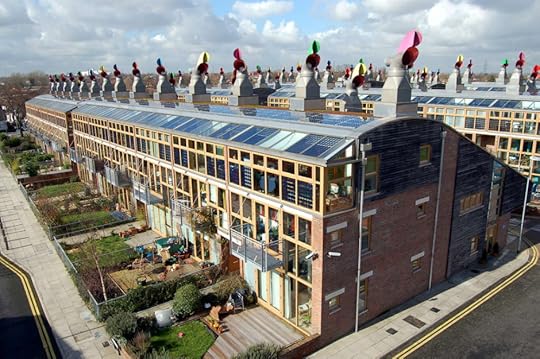
Photo: Telex4
Designed by Bill Dunster, London’s BedZED project aims to be a carbon neutral area that strives to create an environment that facilitates a more sustainable lifestyle in Britain. Built in 2002, it has 82 units that include flats, maisonettes, town houses, and office space.
Solar panels and biomass materials are prime energy resources, and there is an onsite sewage treatment and rainwater recycling systems in place. Most of the materials were sourced within fifty miles of the site, as the project wanted to have a low impact on the environment from the word ‘go’.
As the UK’s largest eco-village of this kind, BedZed strives to enable residents and office workers to drastically reduce their carbon footprint. This includes reducing energy usage, reducing the amount of fossil fuels we burn, and the amount of materials we throw away as waste through the recycling of sewage, water, and food wastage.
2. Aberdeen, Scotland
Aberdeen wants to reduce its Co2 emissions by 42% by 2020. There are also six city parks within the city and many more around the outer reaches. In fact, over a quarter of the land in Aberdeen consists of open spaces of various forms, and the city council is currently auditing these spaces to discern their quality and how accessible they are to the city’s population. You can donate or volunteer in one such incentive here.
3. Oslo, Norway
Oslo wants to become Co2 neutral by 2030. It has introduced high taxes for companies with high carbon emissions — money which is then invested into technologies looking into carbon dioxide capture and storage by which to slow down global warming.
Not only is it one of the most heavily populated cities in Norway, it’s also the greenest. The economy in Norway is thriving and it’s refreshing to see that they aren’t complacent with this wealth.
4. Stockholm, Sweden
Stockholm is saying adjö (goodbye) to fossil fuels. Having heavily invested in alternative energy, it aims to be fossil fuel free by 2050. Despite being one of the highest-energy consumers, Sweden has very low carbon emissions due to its nuclear and hydroelectric power stations and conservative way of living. It also boasts energy efficient housing and wind power initiatives.
Hammarby Sjöstad, an eco town within Stockholm, is a 10,000 home-strong destination located in what was a former industrial area. With rain water harvesting, solar powered homes and street lights, they are well and truly an eco town. They also use processed sewage by which to fuel their cookers. Car pooling is prominent here too.
Hammarby Sjöstad is a result of Stockholm’s mandatory reuse of land before any such urban sprawl can continue. This recycling of derelict areas into modern and efficient communities is just one way in which Sweden can be called an eco city.
Stockholm also boasts a growing second-hand clothing market, a sound recycling infrastructure, and emphasises research into sustainability.
5. Reykjavik, Iceland
With hydrogen buses for transport and its heat and electricity coming almost entirely from geothermal and hydropower sources (like all of Iceland), Reykjavik is well and truly making the most out of the resources it has available to it. Geothermal heat is also used for heating local outdoor swimming pools.
Not resting on its laurels, despite already being very eco minded, Reykjavik has aimed to reduce greenhouse gas emissions by 35% by 2020. In fact, the pioneering city is a global hub for renewable energy research.
This independence from a reliance upon fossil fuels has saved Iceland more than $8 billion over the last thirty years, and the Natural Energy Authority has estimated that the country is only using around a quarter of its hydropower capacity and a fifth of its geothermal capacity.
6. Wellington, New Zealand
New Zealand’s capital is a green city with a population that supports an eco friendly way of life. 33% of Wellington’s population already uses public transport to get to work, and its transport runs on green energy. In 2007, Wellington’s council set the goal of cutting their emissions by 40% and community emissions by 30% before 2020.
7. San Francisco, USA
The greenest city in America, San Francisco is hoping to be a waste free city by 2020 and currently reuses 80% of its waste. It was also the first city to ban the plastic bag, back in 2007, from all grocery stores.
The city is showing that recycling is not only good for the environment, but in creating 10 times more jobs than cities that rely on landfills, it can also be economically advantageous. If the rest of the country followed suit, a landmass as big as the USA could have a huge impact on a lamenting job market and help begin to restore the damage to local ecology. Plastic isn’t biodegradable and has a hugely detrimental effect on nature.
8. Sydney, Australia
With miles and miles of pristine coastline and an abundance of wildlife, Sydney has a lot at stake when it comes to their ecology. To combat this they have the ‘Green Sydney Government Initiatives’ that range from delivering energy and water to the city, sustainably.
There have been 8,900 street trees planted in the inner-city since 2005. 14 ‘rain gardens’ have been installed, bringing the total up to 107 — these rain gardens help filter stormwater and help to prevent harmful pollutants making it into Sydney’s waterways. 5,500 solar panels have been installed to more than 30 city buildings, and these panels are expected to supply around 12.5% of the city’s requirements by 2015.
9. Bristol, England
Bristol’s emissions have been falling every year since 2005. Bristol has big plans for sustainable energy and transport investment. There are solar panels on council-owned buildings, a thriving ‘cycling city’ culture, and an engaged number of inhabitants wanting their town to be both an economical and ecologically-thriving metropolis.
Bristol has also won the European Green Capital Award 2015 (somewhat prematurely), accredited by the European Commission. The award was given for Bristol’s rapid progress and continuing ambition in being a city with a good quality of life while also being environmentally minded and putting £140 million into an energy investment programme.
10. Copenhagen, Denmark
Copenhagen has recently won the world’s ‘Most Liveable City’ moniker — stripping the title from the likes of Melbourne and Madrid. More and more cities are proving that being a great place to live doesn’t have to go hand in hand with being environmentally negligent.
Bicycles are in abundance, with a third of the city’s residents using them for commuting to work and school. It is estimated that this will rise to 50% of people over the next year. The city’s Queen Louise Bridge sees an amazing 35,000 commuters cycling across it every day. It’s been dubbed ‘Europe’s coolest green city’ by The Ecologist magazine and it’s one of Europe’s biggest organic food consumers.
There’s also an abundance of green spaces for the city’s inhabitants to enjoy, and environmental places to sleep, eat, and shop. The Danish capital is one of the world leaders in clean technologies, with financial incentives to recycle and tax reductions for using electric cars.
11. Vancouver, Canada
Vancouver hopes to become the greenest city in the world by 2020, and although it will face heavy competition, with multiple cities doubling their efforts in this vein, the densely-populated city does have a chance of achieving this aim. The city already leads the world in hydroelectric power — making up to 90 percent of its overall supply — as well as investing greatly into wind, solar, and wave power. There are also over 250 miles of cycle lanes and new solar powered waste compactors on the rise.
It plans to reduce greenhouse emissions by a third before 2020, to double the amount of ‘green’ jobs in the city, and to reduce waste going to landfills dramatically.
View their Greenest City 2020 Action Plan here.
This article was originally published on MigratoryMan.com, and has been re-published here with permission.
Kenya's version of The Office [vid]
There are over 4,000 registered NGOs in Kenya and things can get pretty dysfunctional.
That’s the premise of The Samaritans, Kenya’s witty comedy series highlighting the often absurd world of international development.
The mockumentary follows Aid for Aid, a fictional NGO that specializes in doing lots of nothing:
The main characters are the staff who have to deal with the odd demands and decisions of the head UK Aid for Aid office and hopelessly inept local bureaucrats, while trying to write as many useless reports as possible, all under the guise of ‘saving’ Africa.
Like The Office, the show stars a clueless, jerky boss named Scott — in this case, a 28-year-old American whose only prior “Africa-experience” was a six-week internship in Casablanca.
He introduces himself to the staff: “Many of you might be asking who I banged to get this position… I’m not as wet behind the ears as some of you may think, I’ve worked for my mother’s NGO since I was six-years old.”
In real life, the actor who plays Scott has an NGO background, is from England and is pretty good at faking an American accent. The rest of the cast consists of professional actors mixed with NGO workers.
The Samaritans is hilarious and off-color but more importantly, it pushes dialogue on what is and isn’t working in international aid. Hussein Kurji of Xeinium Productions, a Kenya-based production company, explains how the show developed:
Over the years I have heard numerous stories from friends and acquaintances, who come from all parts of the world to work in these NGO’s. I thought to myself, well it might just be a good idea to collect these crazy stories and make a show from an outsiders point of view, from a local point of view…
Now the challenge was to put a satirical spin on NGOs without offending the sensitivities that Africa faces. The solution was two-fold — make the show about nothing and in so doing naturally focus on aid workers, who for all good intentions often get caught up in the mammoth world of development.
The Samaritans has already funded two episodes through Kickstarter and its website, www.AidForAid.org. Kurji continues work on a full first season with hopes of internatinoal distribution.
By Sarah Dougherty, GlobalPost
This article is syndicated from GlobalPost.
March 14, 2015
Secret tips from Disney moms

Photo: Chris Alcoran
EVERY YEAR, thousands of moms, grandmoms (and even a few dads and granddads) from around the globe compete to get one of the 50 coveted spots on the Disney Parks Moms Panel. This prestigious panel of experts spends the next year fielding questions from travelers about anything and everything Disney.
According to Leanne J. O’Regan, director of social media for Disney Parks, the required skills include “knowledge of the destinations and great storytelling.”
This year, 22 new members were admitted. “The Moms Panelists are so experienced there’s rarely a question that stumps them,” says O’Regan. So whether you’re craving a doughnut (one panelist knew every location at Walt Disney World Resort) or want to know the best places to watch the parades, these insiders have the answers.
Yahoo Travel asked some of 2015’s new members to reveal their secret go-to Disney tips. Here’s what they told us.
1. Dine during off-hours
To avoid large crowds during meal times, consider eating lunch and dinner at “off times.” I always try to sit down for lunch before 11:30 am. — Ana Fallas (Houston, Tex.)
2. Need an adult beverage?
I love the margaritas and the ambiance of La Cava del Tequila in Mexico at World Showcase. Be sure to try their avocado margarita! —Ana Fallas (Houston, Tex.)
3. Baby care
There is one Baby Care Center in each of the four theme parks. I recommend all parents locate and use them! Not only are Baby Care Centers great for changing a diaper or nursing a baby, they also have an area for older siblings to read books or watch a movie while they wait. Plus, this is the location where Disney Cast Members will look after any children who may become separated from their parents, so it’s important to know where they are located. —Andrea Updyke (Raleigh, N.C.)
4. Snack happy
My favorite snack at Walt Disney World Resort can be found at the Refreshment Port in Epcot’s World Showcase. It is a warm croissant donut rolled in cinnamon sugar, which if you ask me, is a must-have for every trip! —Andrea Updyke (Raleigh, N.C.)

Photo: nickel.media
5. FastPass+ system
I love the new FastPass+ system and how it has helped my family stay together, instead of splitting up, while we are at Walt Disney World Resort. However, I did have some initial difficulty making FastPass+ selections for some of the more popular attractions, especially to meet Anna and Elsa in Princess Fairytale Hall at Magic Kingdom Park. I finally discovered a great way to get my Frozen fan in to meet the sisters from Arendelle while using the My Disney Experience app on my mobile phone. The FastPass+ system was showing no availability for a party of four, but I was able to grab a time slot for a party of one and then use the “Copy” option afterwards to secure times for other guests in our party. I was able to get overlapping times for each guest, which did limit our overall FastPass+ window to just 25 minutes, but my little Elsa fan was so glad to have the opportunity to practice her “freezing skills” with Elsa! —Brandy Bocchino (Easley, S.C.)
6. Make food a priority
You can’t leave Walt Disney World Resort without trying these three items: (1) caramel apple stuffed French toast for breakfast at Cinderella’s Royal Table; (2) a zebra dome for dessert at Boma – Flavors of Africa; and (3) a holiday turkey sandwich with their own brand chips at Earl of Sandwich at Downtown Disney. —Camila Rosa (Rio de Janeiro, Brazil)
7. Timing is everything
Beat the crowds by arriving at Magic Kingdom Park at least 20 minutes prior to opening. You’ll get to enjoy the Welcome Show while you pass through security and you’ll have shorter lines for the first few hours of the day! —Carrie McCurry (Brentwood, Tenn.)
8. Tips for tots
If you are traveling to Walt Disney World Resort with a preschooler, I highly recommend having breakfast or lunch Hollywood & Vine in Disney’s Hollywood Studios to enjoy Disney Junior’s Play ‘n Dine! Not only was the food fantastic and the chef and other Cast Members did a fantastic job of accommodating my son’s food allergies, but we were also able to meet Disney Junior characters in an air-conditioned environment, avoid waiting in queues to see them, and meet some characters that were not available in the Park that day! —Crystal Benedict (Parker, Colo.)
9. Go by rail
Walking can be tough with little ones. Utilizing the Walt Disney World Railroad will allow you to rest your feet while you move around the Magic Kingdom. —Jason Kaplan (Dunwoody, Ga.)
10. Magic Kingdom Park parade spot
Guests should find a spot 45 minutes before the posted start time under the covered elevated wooden platform in front of the Country Bear Jamboree attraction. This spot gives them a direct view, keeps them close to food (Westward Ho food cart and Pecos Bill Tall Tale Inn and Cafe) if little ones get hungry, undercover in case it rains, and in a narrow area so the crowds are not too thick. —Jason Kaplan (Dunwoody, Ga.)
11. Mexican food and fireworks
Schedule an advanced dining reservation around 7:45 p.m. at La Cantina De San Angel to enjoy authentic Mexican cuisine and drinks while watching the beautiful IllumiNations: Reflections of Earth fireworks showcase. Request an indoor window table or just relax outside on patio. —Jason Kaplan (Dunwoody, Ga.)

Photo: Don Sullivan
12. Haircut stop
Visit the Harmony Barbershop in the Magic Kingdom for a haircut. Even better, get the First Haircut package for your little one. You receive a certificate, a “First Haircut” Mickey-ear hat, and a lock of your tyke’s tresses to keep. —Kathy Karalekas (Tampa, Fla.)
13. Work your way from back to front
When entering a theme park, head to the back of the park and work your way forward. Everyone starts up front, so you’ll be going against the crowd. This works especially well at Epcot and Disney’s Hollywood Studios. —Leanne Tomala (Saint Peters, Mo.)
14. Epic Epcot fireworks
After several years of “rigorous” testing, my family and I have found that the absolute best place to watch Epcot’s nightly fireworks show, IllumiNations: Reflections of Earth, is along the World Showcase Lagoon waterfront near the German pavilion. We’ve always been able to get a perfect view of the entire show, sometimes only minutes before it starts. —Lynne Chlala (Verdun, Quebec, Canada)
Photo: Justin in SD
15. Photo memories
Take a family photo in the same location (or with the same character) every time you visit. What treasures we have of our son posing with Sorcerer Mickey! It’s the perfect way to document how our son has grown over the years. —Missy McCallister-Sizemore (Edinburg, Tex.)
16. Disability access service card
As a mom to a son with special needs, I appreciate that Disney Parks makes every effort to accommodate guests so that all families can enjoy the magic of the theme parks. Take a picture of the Disability Access Service (DAS) card, especially that QR code, in case your DAS is lost. I was so glad I did this on our last visit. A Cast Member was able to retrieve my son’s information and issue a replacement card within minutes! —Missy McCallister-Sizemore (Edinburg, Tex.)
17. Best parade viewing
One of my favorite places to view the parades in Magic Kingdom Park is in Frontierland. Grab a drink and a snack from Golden Oak Outpost and have a seat and enjoy the parade. The Parade starts in this area so it is the first area to clear out once the Parade is over. —Susan Pazera (Westhampton Beach, N.Y.)
This post originally appeared on Yahoo Travel and is reprinted here with permission. Let Yahoo Travel inspire you every day. Hang out with us on Facebook, Twitter, Instagram, and Pinterest. Check out our original adventure travel series “A Broad Abroad.”
Can you name the state capitals?
Feature image by
Tourism changed this baker's life
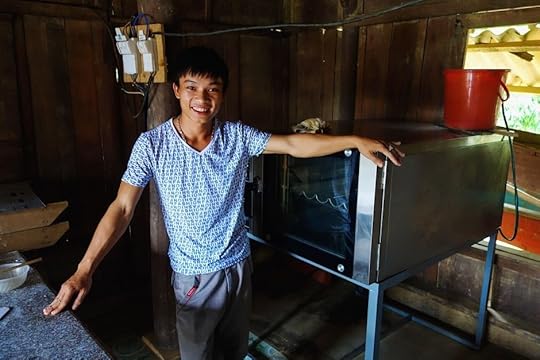
Photo by the author.
Between the walls of a nondescript timber building in Tan Hoa, a young man named Trung vigorously kneads his dough mix. He keeps one eye on the clock hanging above the unhinged door. In three minutes his latest batch of baguettes will be ready, and he’ll have to begin baking his next lot. There is a large quota to meet and he is determined not to miss it. His close friends call out from inside the house to come join them for a shot of rice wine, but their pleas are ignored. Despite their jubilant protests, he can’t afford to skip this deadline. Rice wine won’t pay the bills, and Trung is intent on paying his.
The province of Quang Binh, in which Tan Hoa is a part, is one of the poorest regions in all of Vietnam. While around 50% of the population in the communist nation are classified as low-income farmers, more than 70% of Quang Binh’s residents work in the agricultural industry.
Until recent years, the opportunities available for the families in Quang Binh to improve their living conditions were minimal. For those that could not afford to leave the province or attend higher education, farming was their only viable option.
To abandon the company that had provided so much faith and opportunity to him was difficult, but he saw a chance to go beyond simply providing for his family to instead forge a new destiny for them.
Reaching skyward from the farmland, jagged mountains of limestone cast a prehistoric atmosphere, delivering a sense of indescribable awe to those privileged enough to travel through this striking environment. For Tan Hoa, a rural village of 300 people who are enveloped by these imposing karsts, the monoliths had always been little more than a backdrop. Much potential lies hidden amongst the stone, but in the minds of the local Nguon people, it would always remain locked in its current state with little chance of change — much like their own lives.
That was until 2009 when the rediscovery of the world’s largest cave, Hang Son Doong, was confirmed in the Phong Nha-Ke Bang National Park.
For the first time in Quang Binh’s history, tourism was now a major player in the economy. New ventures were forming in which entrepreneurial individuals could capitalize on this incredible opportunity, if they knew how to best take advantage of it. The sustainable adventure tour company Oxalis, which exclusively runs the trekking tours to Hang Son Doong, was one such positive example. Their unique expeditions and community-based business model was a success, helping to inject much-needed tourist dollars into the poor communities of the region.
Trung managed to gain employment as a chef for Oxalis, utilizing his exceptional skills in wilderness cooking to provide delicious meals to guests who pay up to $3,000 for a tour of the gargantuan caverns. Along with many of his friends from his native Tan Hoa, he had been fortunate enough to land his job with Oxalis at the right time. While only 300 people live in the village, more than 40 of them now earn an income either directly or indirectly through the tour company. Above-average wages and a massive potential for personal development makes this an exciting time for the ethnic minority Nguon people.
Not satisfied with this simple favorable chance, Trung sought out more. He took notice that his employer was buying large quantities of bread from the markets in Phong Nha town and transporting them to his village, where tours to the Tu Lan cave systems departed from.
Trung saw an opportunity and began researching the technicalities and costs required in purchasing his own baker’s oven. He studied the best way to produce high-quality bread with other bakers in town. He saw his chance to improve his family’s economic position and quietly toiled toward achieving his goal.
For 18 months, Trung made himself available for every shift that was offered to the crew. He cut down on his monetary spending and stopped drinking with his childhood friends. He kept his dream a secret so as not to receive distraction from his neighbors and comrades.
He estimated that a complete baker’s setup including, among other things, upgrading the electrical supply to his house, dough mixing station and modern oven would cost around US$4,000. In a country where the average wage for rural regions is $2,000 a year, but can actually be as low as $150 annually, this is a massive amount of money. Still, Trung managed to save $3,000 in 18 months. He secured the remaining $1,000 via bank loan, and proudly purchased his new equipment.
Handing in his notice of resignation to Oxalis was a bittersweet moment for Trung. To abandon the company that had provided so much faith and opportunity to him was difficult, but he saw a chance to go beyond simply providing for his family to instead forge a new destiny for them.
Building on his already stellar culinary skills, Trung’s Bakery has quickly established a reputation of providing large quantities of delicious bread. His customers stretch across the township, from small families to growing corporations. Oxalis has enthusiastically become one of his main clients. His friends have drawn inspiration from his entrepreneurial endeavors and are now seeking to capitalize on their own new possibilities.
Under the shadows of limestone, a young baker named Trung is making the most of his opportunity and bringing the village with him.
Berlin's ticketless subway travelers
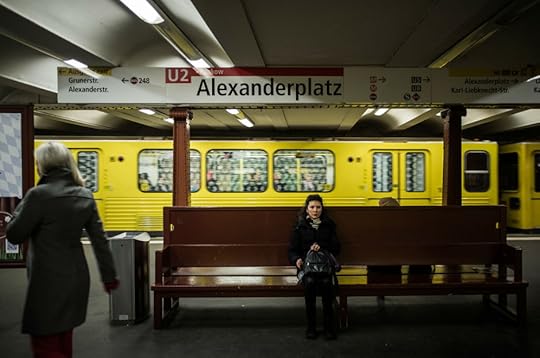
Photo: Ayertosco
BERLIN, Germany — As the subway train hisses to a stop and the doors slide open, the rider in the army surplus jacket glances up from a German translation of The Hitchhikers’ Guide to the Galaxy. A nervous scan of the new passengers, and his eyes drop back to the novel. The doors slide shut.
“Ticket, please,” says a young woman dressed like a typical Berlin hipster.
The reader’s head jerks up. It doesn’t take a psychic to know what he’s thinking. The single, dreaded word might as well be written on his forehead.
Kontrol.
Sounds like something out of The Matrix, right? Or maybe John Le Carre? Welcome to Germany’s subway system, the playing field for a cat-and-mouse game between fare-dodging “schwarzfahrer,” or “black riders,” and the freelance spies tasked with making them pay.
Pretty much every city with a metro system has turnstyle jumpers. But since the 1960s, Germany’s buses and trains have been run under the so-called “proof-of-payment system.” That means subways and streetcars don’t have turnstyles to stop people from riding without tickets. It’s like the honor system — with random spot checks.
Proof-of-payment is common throughout Europe, though it was recently abandoned as a failure in Los Angeles.
But in Germany, there’s a twist: “Kontrollers” work on commission. They’re not conductors. They’re plainclothes operatives who work undercover on the trains, earning bonuses from the fines they issue, on top of a modest hourly wage.
The relative cost of gaming the system is simple: Ride for free, you save two or three euros each trip. Get nailed, you face a 40-euro fine. But for old pros like Johann — a 47-year-old “black rider” who asked that his real name not be published — stealing is practically a civic duty.
“I never buy a ticket,” he said. “Not once in the past 20 years.”
He isn’t unusual.
“I’ve been doing it since I was about 10 years old,” said 29-year-old Anna (another pseudonym). “There was even this one time in school when we had this class trip, and everyone had a ticket except for me. When Kontrol caught me, the whole class had to get out of the bus and the entire trip was canceled.”
Every year, Berlin Kontrollers catch around 400,000 schwarzfahrer. Around 20,000 a year are prosecuted for repeated violations. At one point, as many as a third of the inmates in the city’s Plotzensee jail were behind bars for failing to pay fines of up to 3,000 euros.
They’re not all the delinquents you might expect.
A surprising percentage of schwarzfahrer are otherwise upstanding citizens who do it just for the thrill — like one elderly dowager who insists that holding an unvalidated ticket in her hand, ready for action, works better on Kontrol than garlic on vampires. There’s a Facebook page and an iPhone app that alert “black riders” to the lines Kontrollers are working on any given day.
“When those people come in, I know them,” said Anna. “Even though they don’t wear any uniform, I just know, and I get out of the train. A certain kind of people work for Kontrol.”
Anna wouldn’t elaborate on who that certain kind of person is, and the Berlin transit authority didn’t respond to a request for an interview. But GlobalPost has casually observed that some of the conventional wisdoms about Kontrollers — that they are always burly young men, for instance, or poorly dressed — are myths.
But nobody likes Kontrol. The checks, which usually commence with a fellow passenger suddenly standing up and asking for tickets, are considered a chronic nuisance.
Proof-of-payment is usually reserved for transit systems where the small number of travelers makes it a waste of money to staff ticket booths and maintain gates and turnstyles. It arguably works in large cities like Munich and Berlin — where as many as a million people ride the subway every day — only because of Germans’ notorious willingness to follow the rules.
At the same time, a history of secret police and citizens informing on citizens — both with the Gestapo and the Stasi — gives black riding political resonance.
And even here, Berlin writes off tens of millions of euros in fines every year when fare dodgers fail to pay. Some of them wind up in jail, costing the government more money for courts, guards, and cells. Others are too clever even for that.
Ominous name aside, Kontrol doesn’t have the powers of the police, explains veteran schwarzfahrer Johann. They can’t make arrests or even touch train passengers. So it’s easy to beat the system.
When Johann gets nabbed, he pats his pockets, looks dismayed, and tells the Kontroller he has an annual pass but must have left his wallet in his office. Then he gives them a fake name and address.
“I just throw the tickets away,” he said.
Schwarzfahrer: 1. Kontrol: 0.
By: Jason Overdorf, GlobalPost
This article is syndicated from GlobalPost.
March 13, 2015
The ultimate guide to Irish accents
THERE’S NO doubt that the people of Ireland get annoyed with the fake Hollywood Irish accent and there’s a good reason for that: there is not one and only Irish accent, but a myriad of them.
In Ireland, drive 10km in any direction, and you’ll hear a different version of the English language. People in Tullamore sound different from the ones who live in Birr, and you only need to cross O’Connell Bridge to realise that South Dubliners are a different breed altogether.
This guide misses a few important spots, like Donegal and The Midlands, but it’s still very accurate. Nobody truly understands the poor people of Kerry and the inhabitants of Cork get their fair share of slagging from the rest of the country.
Have a watch and try to remember that even when you have mastered the accents, you’ll only truly be part of the clan when you’ll pepper you conversations with idioms such as “The head on you and the price of turnips!”
Feature image by plofiz.
Matador Network's Blog

- Matador Network's profile
- 6 followers

