
Matador Network's Blog, page 2129
March 13, 2015
The 20 funniest Japanese expressions (and how to use them)
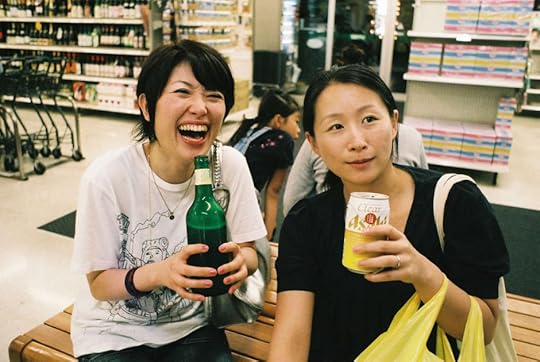
Photo: James Hadfield
1. In Japan, you don’t simply say you’re really, really busy.
You say that you’re “so busy you’d be willing to borrow a cat’s paw for help” (猫の手も借りたい: neko no te mo karitai).
2. In Japan, you don’t just love someone (most often a child or grandchild) to bits.
You say that “it wouldn’t hurt even if you put that someone in your eye” (目の中に入れても痛くない: me no naka ni iretemo itakunai).
3. In Japan, you don’t just get tired of hearing something repeatedly.
You “grow callouses on your ears” (耳にたこができる: mimi ni tako ga dekiru) from hearing the same thing over and over again.
4. In Japan, you don’t just want something really badly.
You want something so much that “your hand comes out of your throat” (喉から手が出る: nodo kara te ga deru).
5. In Japan, when there’s nothing you can do about a situation.
You’re not just helpless; you’re “a carp on a cutting board” (まな板の上の鯉: manaita no ue no koi).
6. In Japan, you don’t just say something is delicious.
You say that “your cheeks are falling off (ほっぺたが落ちる: hoppeta ga ochiru).
7. In Japan, a small amount isn’t called a pittance.
It’s called a “sparrow’s tear” (雀の涙: suzume no namida).
8. In Japan, someone who can help when you’re in a dire situation is not your savior.
That person is your “Buddha in hell” (地獄に仏: jigoku ni hotoke).
9. In Japan, you don’t become paralyzed with fear.
You become “a frog glared at by a snake” (蛇に睨まれた蛙: hebi ni niramareta kaeru).
10. In Japan, when something unexpected and confusing happens.
You’re not just bewildered; you feel like you’ve been “tricked by a fox” (狐につままれる: kitsune ni tumamareru).
11. In Japan, you don’t just take a quick bath.
You “shower like a crow” (烏の行水: karasu no gyozui).
12. In Japan, when a shop or restaurant has very few customers.
You don’t say business is slow; you say “the cuckoos are crying” (閑古鳥が鳴く: kankodori ga naku).
13. In Japan, when two people hate each other.
They’re not just enemies; they have “a dog and monkey relationship” (犬猿の仲: ken-en no naka).
14. In Japan, someone who stands in your way is not just an obstacle.
They’re a “lump above your eye” (目の上のたんこぶ: me no ue no tankobu).
15. In Japan, when two things are completely different in quality, you don’t say that there’s no comparison.
You say that it’s like comparing “the moon and a soft-shell turtle” (月とスッポン: tsuki to suppon).
16. In Japan, when something is very small in size, you don’t say it’s tiny.
You say it’s the size of “a cat’s forehead” (猫の額: neko no hitai).
17. In Japan, when someone is capable and worthy of respect, you don’t just try to follow that person’s example.
You’re supposed to “brew and drink the dirt from under that person’s fingernails” (爪の垢を煎じて飲む: tsume no aka wo senjite nomu).
18. In Japan, a story without a proper ending is not just unfinished.
It’s “a dragonfly with its tail cut off” (尻切れとんぼ: shiri-kire tonbo).
19. In Japan, you don’t just speak honestly.
You “speak with your belly cut open” (腹を割って話す:hara wo watte hanasu).
20. In Japan, someone who has never had to work hard hasn’t just had an easy life.
Such a person is described as “never having had to lift anything heavier than chopsticks” (箸より重いものを持ったことがない: hashi yori omoi mono wo motta koto ga nai). 


Winning film from the NYC Drone fest
Follow Matador on Vimeo
Follow Matador on YouTube
AT FIRST, the opening image just looks like an empty large body of water. But if you look closely, you may notice a small detail you didn’t see before. Floating is the winner of the 2015 NYC Drone Film Festival.
The winning filmmaker Florian Fischer says on his website:
“It was great fun to shoot this dronie and a privilege to hang out in such beautiful surroundings. It was on our surface interval at a divespot called ‘Blackbeards Treasurehole’ off the southern end of Eleuthera. Mace swam a few hundred meters away from the boat and relaxed on the surface. Micha was checking the distance from surface to drone while I had the goggles on to frame the shot. It’s always a bit tricky to catch the right moment before shooting the drone straight up in the air. Mace was doing such a great job so we decided to stick to him as our dronie-model.”
For more of Fischer’s work, check out Behind The Mask.
15 signs you're from Utah
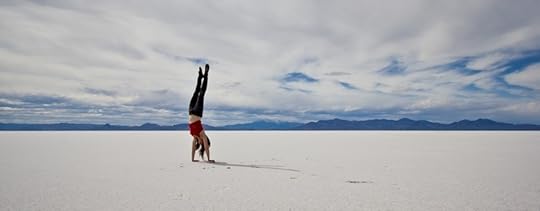
Photo: Dan Kunz
1. You had a jello drawer.
There was a place in your kitchen designated for boxes of multi-colored jello waiting to be mixed into salads with mandarin oranges, whipped cream, romaine lettuce, cranberries, or carrots. Whether or not jello was ever your thing, it was still the thing.
2. You’ve been asked how many moms you had growing up.
Even though you’ve never met a polygamist and marrying multiple people has been illegal in Utah since the late 1800s, people out of state are relentless in harassing you with the only detail they seem to associate with your state.
3. You had to complete a scavenger hunt to go to prom.
Getting asked to prom was more exciting than the actual prom because you’d be given clues to a scavenger hunt to find your invitation. A slip of paper with your date’s name on it was hidden: in the cereal aisle, a dumpster, at the bottom of a sheet cake, almost anywhere. You were expected to say “yes” the same way. Prom never seemed quite as thrilling by the time it came around.
4. You’re a ski resort snob.
You’re appalled by the slope conditions on what other states call ‘mountains’, and have no problem reminding people Utah hosted the Winter Olympics in 2002 for a reason.
5. You drove to Wyoming to buy fireworks.
Each July you stocked up on illegal fireworks to smuggle across the Wyoming border to spice up Independence Day and Pioneer Day on July 24th. This is about as rebellious as you got.
6. You know that Salt Lake City isn’t all of Utah.
You know there’s more to Utah than Salt Lake’s sprawling suburbs. Utah has amazing national parks and great small towns all over the state — Arches, Zion, Bryce Canyon, Canyonlands, Lake Powell, Uinta National Forest, Flaming Gorge, Moab, Green River, Bluff…
7. You don’t believe in ‘T’.
Not tea, but the letter ‘t’ — because as far as you can tell from your neighbors, you live in ‘Lay’on’ by the ‘moun’in.’
8. But vehemently deny having a ‘Utah accent’.
You swear you sound like the people on TV, so what’s the big ‘dill?’ So what if you ‘fill’ like having a ‘marshmillow’ for a ‘mill?’
9. You never got snow days.
When you heard about snow cancellations on the news in other states, you thought they were wimps — while secretly wishing you’d get out of school because there was four feet of snow piling against the door.
10. You don’t use your turn signal.
But hate those other Utah drivers that give the state a bad driving reputation. It’s not your fault — you’ve been conditioned to stop caring because every time you politely signaled and tried to merge, the other drivers stared straight ahead and pretended not to see you.
11. You hate the plague of endless road construction.
You’re not sure how long it takes to drive on I-15 due to daily accidents (caused by those other Utah drivers) and the construction zones that move back and forth on this major traffic artery but never go away. You can also name five major intersections that have been under construction so long you forgot what the original place looked like without orange cones. Note: The projects seem most ambitious near malls around Christmas.
12. You know nothing is open on Sundays.
The only places that seem to have normal business hours on Sundays are the Mormon churches found on every other block.

This story was produced through the travel journalism programs at MatadorU. Learn More
13. You have a love / hate relationship with DI second-hand stores.
You’re not crazy about the smell of those used goods at Deseret Industries, and happily drop off your own unwanted stuff, but that recliner you found there for your first dorm was okay. And the vintage Nintendo set. And the serving platter that was a genuine antique…
14. You’ve heard too many watered-down versions of the F-Word.
What the ‘ef’ is up with this ‘freakin,’ ‘flip,’ ‘fetch,’ and ‘frick’ thing anyway?
15. You forget how awesome Utah is.
Sure Utah has its quirks, but the community is unrivaled. Where else will a neighbor bring by a casserole dish stuffed with rich and gooey homemade funeral potatoes when your grandmother dies? Where else can you live a decent driving (and possibly walking) distance from some of the best hiking, climbing, boating, skiing, boarding, riding, rafting, camping, biking, and running available in world-renowned national parks? Where else do you read a billboard or a monument that says, “This is the place,” and catch yourself feeling lucky?
Biggest lie about moving abroad

Photo: gtpete63
There is no doubt that when you move to a foreign country, shit gets hard. In fact, a friend, just today, was joking (in that not-at-all-joking way) that she asked her Spanish teacher to cover a class on ordering takeout. Imagine? One of the most simple and comforting luxuries becoming an ordeal? Imagine ordering Chinese food in Chinese…when you don’t know Chinese (and saying “Peking duck” doesn’t count). And then having to give them directions to your place? Hey, it’s happened. Let’s just call it a success if your food arrives without feathers and a face in under two hours.
Calling a cab isn’t much different. Even I, a Spanish speaker, had trouble understanding taxis here in the beginning. I have never heard such fast-talking, dismembered words. And when I’d ask them to repeat themselves, I could actually see their degree of pissed-off face just by the tone of their voice. I’d have to talk back all snappy and rude-like so that they’d respect me enough to not hang up on me. This too has happened.
Speaking of cars, they aren’t really expected to get inspected so traffic is ugly and dirty and loud. Beat up cars, held together by duct tape and hope, dust the streets with a Lost-like black smoke fog. Motorcycles backfire so loudly that you duck for cover. People cut you in line if you leave too much space in front of you, and by too much space I mean mere centimeters. The supermarket doesn’t carry everything all the time and it especially won’t carry what you want when you’re craving it. The power will go out as soon as you turn on your coffeemaker and it will come back on as soon as you’ve moved the coffeemaker to an outlet backed up by the generator. The day will be sunny until you’ve left the and then a downpour will hit fast and hard like a Spartan you never saw coming. Club music will pound through giant speakers mounted on truck beds that shake your building just when you sit down to enjoy a quiet night in with a movie. Again, this has happened and it will all piss you off.
But you’ll get used to it, this new way of life that screams adventure (or, well, that sometimes just screams). I mean, that’s what people tell you, right? That you’ll get used to it.
And you will.
Ahem…most of you will.
Buuuut some of you? Ehhhh, some of you won’t.
Time helps, yes. Being optimistic too. But one of the greatest lies we abroaders tell is that you’ll get used to it, that we all get used to it. Lies. All lies. There is a reason we have a term for people who bolt. They’re called runners and they exist because this isn’t for everyone.
Hoping for the best out of your Chinese delivery and getting an unknown sauce is not for everyone. Getting screwed out of your spot in line because you weren’t pressed tightly against the person in front of you, essentially sniffing their hair, also not for everyone. Gunshot motorcycles, giant speakers, and the loss of language, culture, and familiarity, again, not for all. So if you are a so-called runner or a potential bolt risk, here’s my advice… ready for it? Screw it. Go. Just Go. No looking back. No regret. No second-guessing. Of course you can get used to it, but maybe you just don’t want to.
An amazing tour of Greece by air
Filmmaker Robert Balasko, Art-Studio.tv shares some beautiful footage of a country I clearly need to explore more. It was filmed using a DJI Phantom V2 and GoPro Hero 3+ during a mototrip from Croatia to peninsula Peloponnese/Greece.
24 hours in a Masai Village [PICS]
IN August of 2014, I was lucky enough to join a trip to Tanzania with The Giving Lens. A hybrid photo-tour and humanitarian effort, part of our trip involved living in a rural Maasai village just outside of Karatu for two days, documenting the daily life, learning to understand the history and struggles of the Maasai, and teaching photography in the nearby school. This was not a stop that catered to tourists, we were merely guests — which included sleeping inside mud huts and sacrificing a goat. Their lives did not stop for us except to share a meal and their culture. One thing that really struck me about the village was the rhythm of life there, the rise and fall of each day, and how everyone in the village had a role. While two days is nothing, this photo essay documents some of what I saw, learned, and felt during short but impactful stay.
1
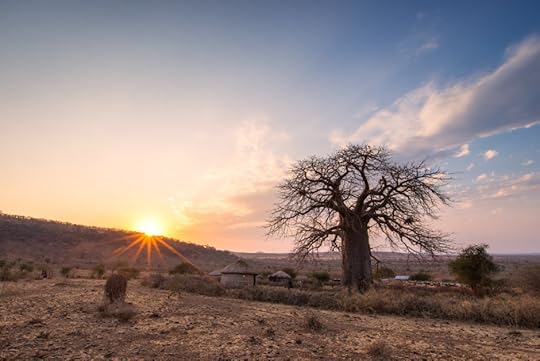
The sunrise
A baobab tree, the huts, the savannah, and the cattle. Nothing else but the wild. Maasai villages are, most of the time, located quite far from towns and cities making access to food, water, shops, education, and healthcare difficult. In addition, the climate is very dry, the vegetation is poor, and water supplies are scarce. When entering such a village, one can really feel heat, the dust, and the drought. By choice, Maasai people have a hard life. Even though everything looks quiet at sunrise, most of people are already active, preparing for another day under the sun.
2
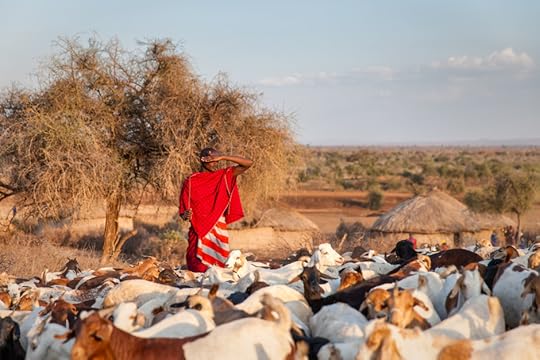
The Masai and his cattle
The Maasai still live the way their ancestors did and thus they are breeders for generations and generations. The herds, mostly cows and goats, are the primary source of food for the whole village. They're kept inside the village at night, and the warriors guide them out to graze each morning. The cattle and goats provide meat for sure, but only sometimes, such as during celebrations; otherwise, the herds are protected as a commodity to be traded or sold. But the cattle is also the measure of a man’s – and a village’s – wealth.
3
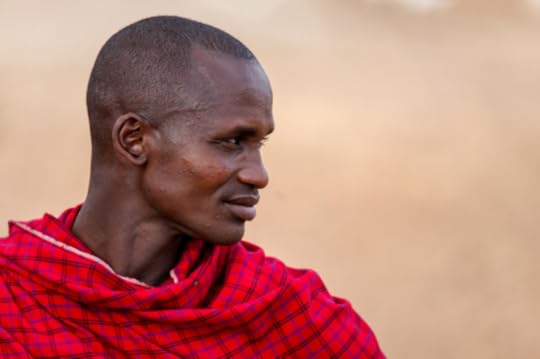
The warrior
In the past, Maasai men were raised as warriors and fought against other tribes for cattle and land. They don’t need to fight enemies like that anymore, but they are still trained to fight. These days they are prepared to fend for their flock, as their cattle may be threatened by quite a lot of dangerous animals including hyenas, cheetahs, and lions.
Intermission
187
12 differences between a normal friend and a Spanish friend
by Ana Bulnes
2
The road to Ngorongoro Crater
by Cara Giaimo
4
13 places in South America where you’ll be dwarfed by nature
by Karin-Marijke Vis
4
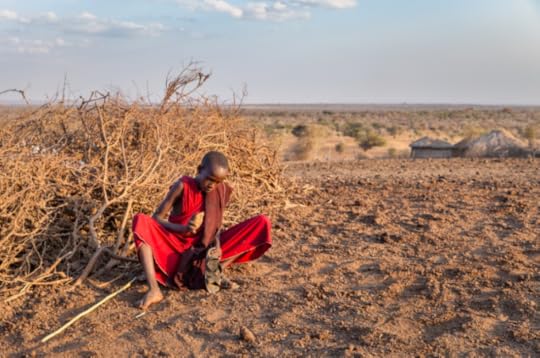
The young warrior
Becoming a Maasai warrior is a long process, and the status of warrior is usually not reached before adulthood. But boys are very quickly sent out of the village with the older men to take care of the younger cattle (usually calves and lambs). Eventually, they are initiated by tests of courage and endurance. During their adolescence they are circumcised, a rite that they must endure in silence to prove their resistance and manhood. They then become young warriors, can take care of the cattle, and take part in most of the men’s chores. Here a boy pauses to fix his shoe, made of recycled tire.
5
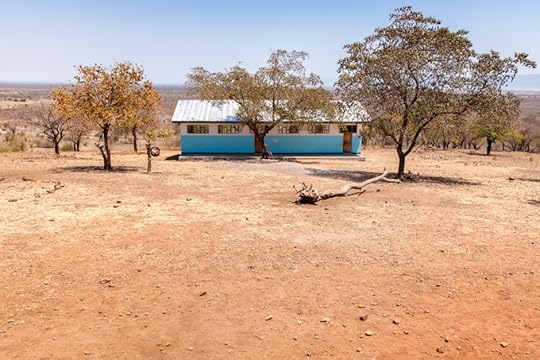
The school
School is compulsory for all children in Tanzania up to a certain age. But since Maasai villages are usually far from other town and cities, and since they don’t have access to transportation, the Maasai children often cannot reach the closest school. At least, not safely: The tribe's chief lost a daughter who was struck by a car when walking a long distance, along a busy highway, on her way to school. After this, he reached out to local NGOs and the government, and a small school has been opened next to the village.
6
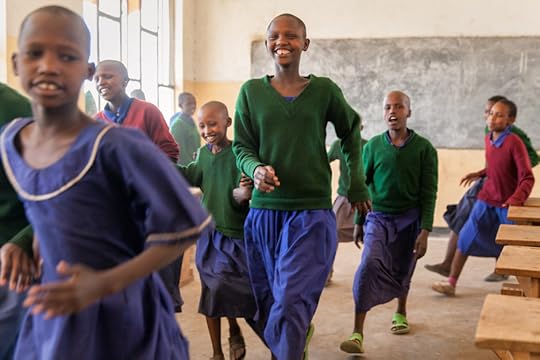
The education
School is not an integral part of the Maasai culture, neither are uniforms. Education in the tribe is traditionally the sharing of knowledge from the elders to the young, out in the field, often pertaining to raising cattle and running a village. Thus, education within the Maasai village is a 24/7/365 process which is actually had while doing everyday tasks. As a consequence, sitting in a classroom for hours seems useless for the Maasai. Thus, in addition to traditional courses, teachers have to constantly innovate and find dynamic and interactive ways of giving lessons to keep students engaged.
7
The window
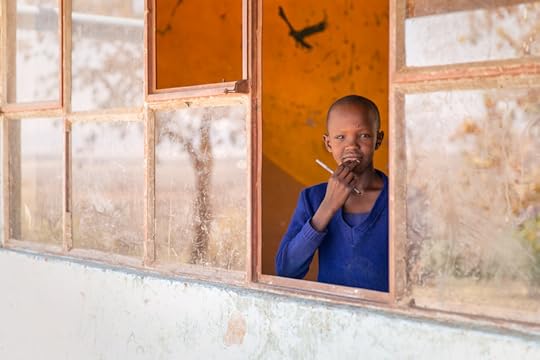
Schools, and buildings in general, usually look to be in quite bad condition. There was little money to build them and less money to keep them in good condition. This school, as an example, was only built five years ago but decayed walls, cracked floors, flaking paint, and missing windows made it look substantially older than that. It is not that they are badly built, it's that they have to face severe weather conditions. The sun is extremely hot, the atmosphere can be either very dry or humid just after a rain shower, and during the rainy season heavy thunderstorms are common. Considering the school first started in the shade of the baobab tree – four walls and a roof, a few desks, and some broken windows doesn't seem so bad.
8
The boma and the shúkà
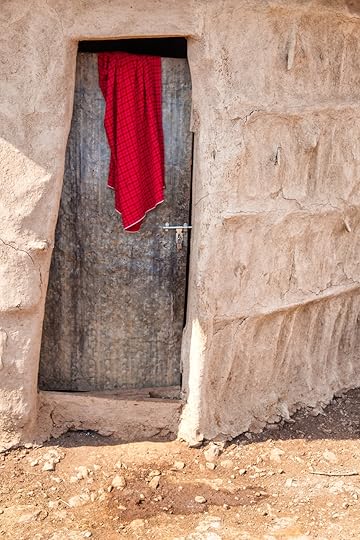
The Maasai are very serious when it comes to their traditions. Their houses, called bomas, are built from branches tied together to form a circular structure which is then filled with mud. Inside you will usually find two or three slightly elevated wooden platforms covered with a hard cow skin – these are the beds. The shúkà, the Maasai blanket, is also very important in the Maasai traditions; it is, indeed, the basis of the Maasai outfit. People tie shúkàs around their shoulders, chests, and / or waists. Although red is the most typical color, blue or violet shúkàs are quite common too. They look warm but actually are fairly thin, and yet provide a very efficient protection against the sun.
9
The elder woman
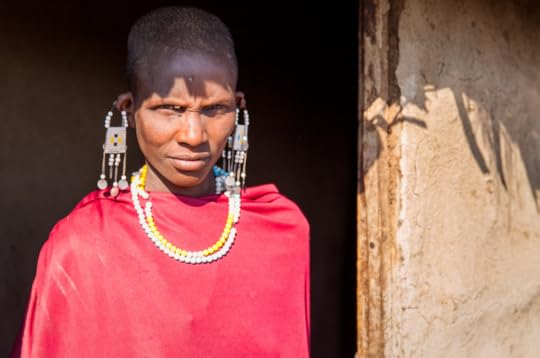
While Maasai men tend to get the spotlight, women, of course, play an equally important role in the Maasai society. They are traditionally responsible for many chores such as cooking and milking cows, but they also repair bomas, build fences, and do pretty much everything around the village while the warriors are in the fields with the cattle. They walk for hours seeking water and bringing it back to the village; they scour for sticks for fire, further and further each day, hacking branches off with machetes and caring back bundles of wood often with the weight of the load on their forehead – and they often do it all with a baby or two tied to their backs.
Intermission
363
What bartenders actually think of your drink order
by Lisa Millar-Jones
3
On the road to see Tanzania’s miracle healer
by Jonathan Kalan
85
The 20 funniest Portuguese expressions (and how to use them)
by Sandra Guedes
10
The beads
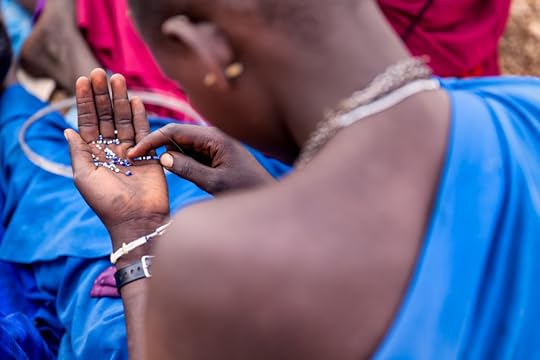
Handicraft, and especially bead working, is another strong tradition of Maasai life. The women spend hours making ornaments of all kinds that help position and identify people in the society. Hence, they sell that jewelry to visitors or in nearby markets and make a substantial income that serves the whole community. That income is, of course, extremely important since income sources for the Maasai are very scarce.
11
The Amudu
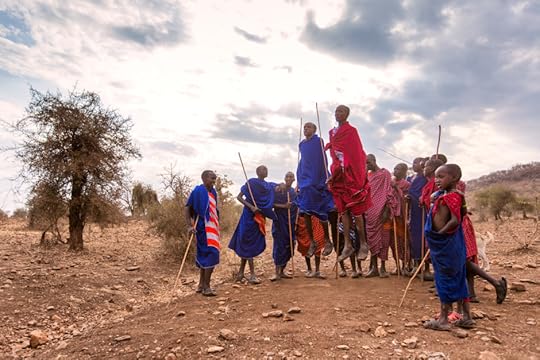
Music and dance are very present in the Maasai culture. The Warriors perform the famous “jumping dance,” the Adumu, while singing some almost "call and response" style harmonies around a song leader, the olaranyani, who sings the main melody. The Adumu is basically a competition between the dancers: the objective is to jump higher that the others while keeping a narrow posture and hitting the ground as hard as possible with your feet.
12
The sunset and the baobab tree
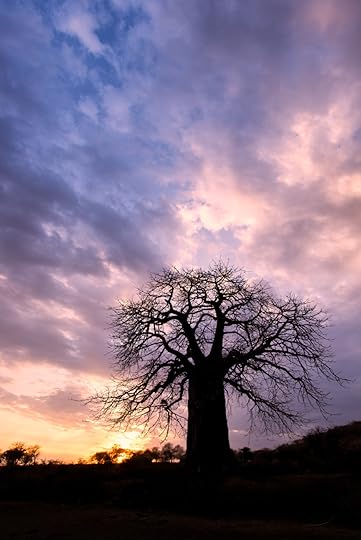
The baobab tree, or Adansonia digitata, is one of the symbols of Africa. Baobab can be up to 30 meters high (around 100 feet) but their trunks are more impressive, reaching diameters up to 12 meters (around 40 feet). They are believed to live up to 1,000 years. It is thus easy to understand why they are a symbol of strength, power, and endurance – three values that each and every Maasai has to strongly believe in in order to succeed at handling the daily challenges of their way of life.
15 places selfie sticks are banned
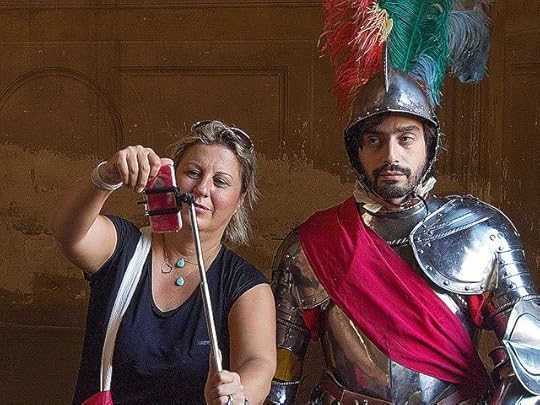
Photo: Larry Miller
Leave your selfie stick at the door.
That’s the message from a growing number of museums, galleries, sporting stadiums and music venues around the world in response to the now ubiquitous extension pole favored by selfie-loving smartphone photographers everywhere.
From the Museum of Modern Art in New York City to the National Portrait Gallery in the Australian capital of Canberra, the selfie stick, otherwise known as the “wand of narcissism,” has been put on the list of prohibited items alongside umbrellas, backpacks and sharp objects.
“From now on, you will be asked quietly to put it away,” Sree Sreenivasan, the chief digital officer at the Metropolitan Museum of Art, told The New York Times.
“It’s one thing to take a picture at arm’s length, but when it is three times arm’s length, you are invading someone else’s personal space.”
The popularity of the selfie stick has been driven by the selfie craze gripping social media-savvy smartphone users around the world. The articulated pole enables them to take self-portraits or group shots without their arms getting in the way.
But not everyone is a fan.
It’s not just the “obnoxious factor” that has people annoyed by the selfie stick. There are also real safety concerns — for people and priceless works of art.
“We can confirm that selfie sticks are banned on matchdays at Emirates Stadium,” a spokesperson for English soccer club Arsenal was quoted as saying.
“The club’s ground regulations prohibit any object that could be used as a weapon or could compromise public safety.”
A spokeswoman for Smithsonian’s Hirshhorn Museum and Sculpture Garden in Washington, DC, said selfie sticks were banned to “preserve the safety of the artwork and the visitors who come to enjoy it.”
The list of places that have banned, or are seriously considering banning, the selfie stick is growing.
Here are 15 selfie stick no-go zones.
1. Hermitage, Amsterdam
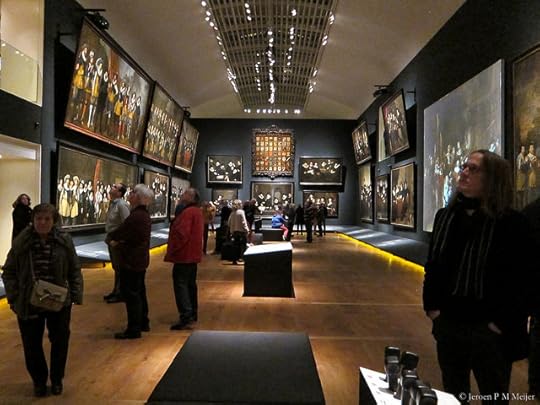
Photo: jpmm
2. National Portrait Gallery, Canberra
View image | gettyimages.com
3. Museum of Modern Art, New York City
View image | gettyimages.com
4. Smithsonian museums
View image | gettyimages.com
5. Some British Premier League soccer clubs
View image | gettyimages.com
6. South Korea has banned the sale of unregistered selfie sticks.
View image | gettyimages.com
7. Palace of Versailles near Paris will introduce a ban “within a few weeks.”
Photo: Elliot Gilfix
8. The Getty Center, Los Angeles
View image | gettyimages.com
9. Seattle Art Museum 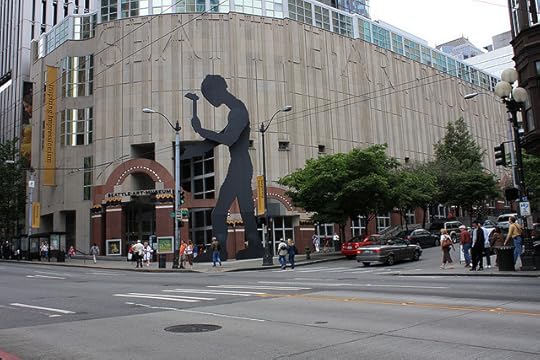
Photo: David Herrera
10. Many British music venues

Photo: Wembley Arena
11. Art Gallery of Ontario is considering banning

Photo: Sam Javanrouh
12. ZoukOut dance music festival, Singapore

Photo: YuJin Lim
13. National Gallery of London

Photo: Maurice
14. Ultra Music Festival, Miami
View image | gettyimages.com
15. Metropolitan Museum of Art, New York City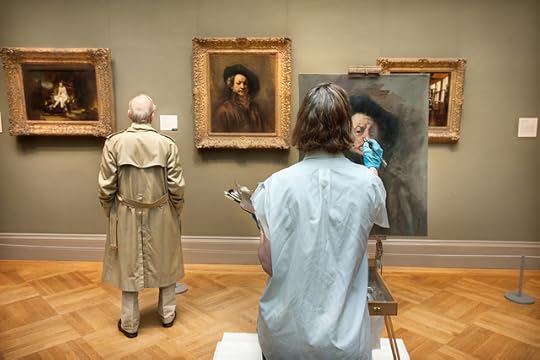
Photo: Chris Ford
By Allison Jackson, GlobalPost
This article is syndicated from GlobalPost.
How to parent like an Armenian
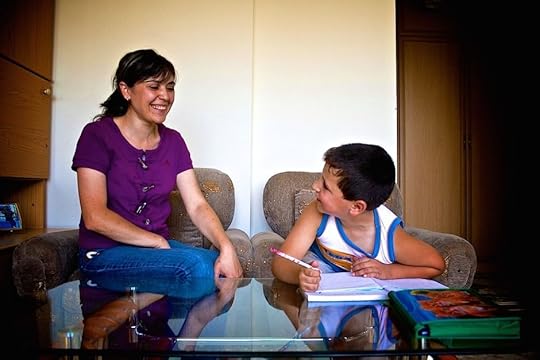
Photo: Asian Development Bank
1. Let kids be kids.
Armenian children are able to explore, and do what they want as long as they aren’t in grave danger, with the caveat that they dress appropriately. Kids get scolded more for not wearing a hat than playing around with fire. Minor bumps and scrapes are a part of life, and teach children their boundaries. If something does happen, grandma will put toothpaste on it or grandpa will massage it with rubbing alcohol. Mom and dad may give you the talk about being safe, but grandparents will always step in and tell them to let you be.
2. Give your children alcohol.
This might be a hot button issue in America, but in Europe it isn’t. At five-years old, I was given what looked to me like cola, but in fact was a warm beer. Now, warm beer is not a favorite drink of kids; lesson learned. Recently, I let my son taste this warm fuzzy concoction and he absolutely hated it. Perfect. Not many alcoholics here.
3. Family comes first. Always.
There is nothing more important than family in Armenia. None of this American crap of ‘turn 18 and you are out on your own.’ Armenian kids live with their parents until they are prepared to be out on their own.
Children grow up close to their grandparents — in my case two blocks away. Retaining traditions is very important and when the elders are around they teach the grandkids to learn about and celebrate their culture. Who else are you going to learn to make boereg from? Also, siblings always watch out for each other. It was like my brothers and cousins were mafia members reporting back to my parents everything I did at school.
No matter how many times your brother asks you to watch his kids, or crazy Aunt Sylvia asks you to help to get customers for her window installation business, we chip in. We never say no to family unless we are in the hospital or are helping someone else. If we can’t help, we find someone who can. Armenian networking at its finest.
4. Watch out for boys.
Armenian girls have a hard time dating. These days it’s a little more lax, but Armenian parents and grandparents must still approve. If not, you get the headache of your life. Your boyfriend better be rich, handsome, the nicest guy ever, Armenian, and willing to accept your crazy family as his own. Beware they might stick around long after your relationship, because they have become family. If he doesn’t treat your daughter right, the boyfriend should consider fleeing the country.
5. Don’t bottle up emotions.
We don’t keep in our feelings and opinions. In the heat of the moment, tell it like it is, then let it go, and return to a happy family. Healing hugs and kisses are always welcome, if not required, and showing affection to kids is mandatory after an argument.
This story was produced through the travel journalism programs at MatadorU. Learn More
6. Don’t ever give up.
Coming from a bartering culture, our kids learn not to give up. They learn to own the situation to get what they need. My grandfather’s legendary story is rags to riches — selling lettuce in the countryside to building high-rise luxury apartments in Istanbul. When we feel defeated we can bemoan it to death, but Armenians keep on going and reach our goals regardless. Kids learn that there is always a story to be made.
7. Learn to eat.
Since many Armenians were displaced from our homeland, we learned early on to be the most gracious hosts and guests, meaning we are at home wherever we go. Being the social butterflies we are, kids watch their parents scramble to prepare food and tea when guests pop by. Even as guests, we share arm loads of sweet lokoum or baklava over chit-chat.
What to do in Germany in your 20s

Photo: James Hadfield
1. Live in Berlin and Munich.
Munich with Germany’s highest rental prices v Berlin with some of the cheapest. Nymphenburg’s royal beauty v the chaos of Kreuzberg. Munich’s fancy P1 v Berlin’s underground parties. You can love just one, but you should give a fair chance to both of them.
2. Tear up Cologne’s Carnival.
Just shout “Kölle Alaaf” and jump right into the chaos where one million bunnies, bears, and hot nurses party like a boss in their winter coats till the early hours of the morning.
3. Get dirty in the Reeperbahn.
After drinking beers in Dollhouse and watching Germany’s best — let’s call them — exotic dancers, you might even gather the courage to visit nearby Herbertstraße, where the “real” action takes place…
4. Spend Christmas in a cottage in the Garmisch Alps.
You, your friends and family, the stars and a huge supply of mulled wine. Done.
5. Do New Year’s at Berlin’s Brandenburg Gate.
A million revellers, tons of beer, a ridiculous amount of fireworks, and free entrance. Did we mention David Hasselhoff and Tokio Hotel play the stage? Take that, Times Square!
6. Eat all the greasy German food you can.
Can’t decide between roasted pork or cheese spaetzle after you’ve polished off your sausage salad starter? Just get them both! Want to crown the whole experience off with a huge, creamy piece of Black Forest gateau? Go for it. As long as you’re still young and your body will forgive you your sins, this is your time to devour your ancestors’ ridiculously calorific recipes.
7. Get drunk at Oktoberfest.
Experience this one while you’re young. Because when you become older and more sensible, you’ll seriously start questioning why you just paid €10 for a liter of beer only to be wedged in with thousands of others in a beer tent and surrounded by the smell of alcohol, sweat, and other human excretions, when you could get a decent €1 beer in the supermarket and just have a chill evening with your friends.
8. Get your Goethe on.
But not just any book. Now that you’re a little bit older and wiser than you were in your high school years, read a German classic. Who knows, now that you’ve got millennial troubles of your own, you might just find a soulmate-like connection with Goethe’s deeply unsatisfied Faust or Fontane’s tragic Effi.
This story was produced through the travel journalism programs at MatadorU. Learn More
9. Take a road trip through Germany’s villages.
Go, grab a friend, and get to know your country. Check out old Stolberg’s timber-framed houses and Landsberg am Lech’s historic Old Town. See where Luther made history in Wartburg, or just road trip through the Rhine, checking out all medieval castles that make Germany so epic along the way.
10. Take part in a counter-demonstration to Pegida.
Because after growing up in a multicultural Germany with kebab for breakfast, after partying whole months away with Erasmus students from Italy, Romania, and Turkey, and after being connected with the whole wide world online, you’re the generation that truly knows that integration and multiculturalism can work.
March 12, 2015
Restaurant with the best seat in NYC

Photo: Shani Ha
French artist Shani Ha has created an interactive installation that may just be the best seat in New York City.
“Table for two“, located at the corner of 7th Avenue and Carmine Street, is a table split in the middle by the window of a restaurant. One half with one chair is outside on the sidewalk, and the other half with another chair is inside the restaurant.

Photo: Shani Ha
The glass that separates the individuals who sit at “Table for two” gives them the choice to look at the person sitting across from them or to look at their own reflection. “[It] becomes a screen that both connects and isolates”, explains Shani Ha.
Those who sit at this table are offered a cup of mint tea “as a allusion to the conviviality custom in north Africa […] where the artist is originally from“, but the installation also provides a moment of spontaneous connection with the self or with others that many New Yorkers may need.
Matador Network's Blog

- Matador Network's profile
- 6 followers

