
Matador Network's Blog, page 2132
March 10, 2015
Journalist gear: Nish Nalbandian
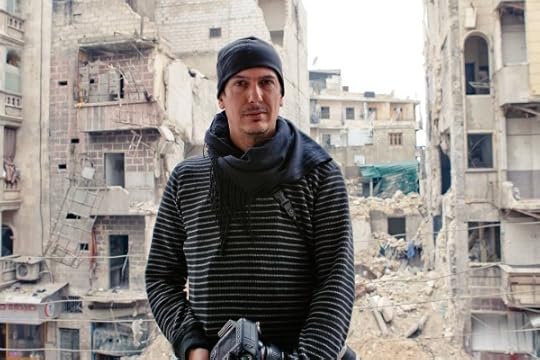
Nish Nalbandian while working in Aleppo. Photo: Richard Charles Harvey
Matador is teaming up with the FFR1 to show you what conflict and foreign freelancers carry with them on assignments.
Nish Nalbandian is a photojournalist, documentary photographer, and filmmaker who has worked in over 35 countries worldwide in a variety of environments and situations from wars to sporting events, back alleys to luxury resorts, from cities to remote deserts. He is most interested in making pictures and films that show the humanity of those he’s photographing and believes that curiosity, empathy, and compassion are what make for great photography.
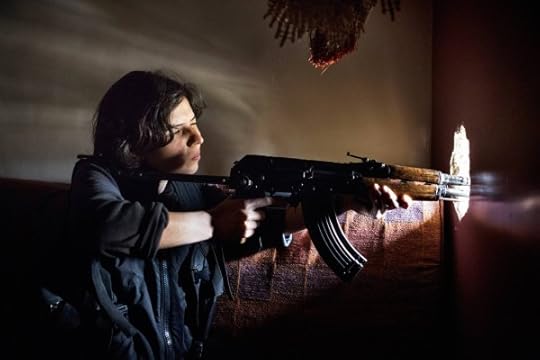
Rukan, a female YPG fighter and unit leader aims her weapon from a fighting position in the Sheikh Maqsood districgt of Aleppo, Syria on April 19, 2013. The YPG (Popular Protection Units) of the Kurdish Democratic Union Party (PYD) considers itself a popular democratic militia with the mission of maintaining order and protecting the lives of those in the primarily kurdish districts of Syria. In March of 2013 the YPG and FSA began to cooperate in the conflict against the Syrian Regime.
Photo: Nish Nalbandian
Nish is a self-taught photographer who picked up his first DSLR in 2007, and has only been shooting professionally since 2011. He shot mostly travel and adventure when first starting, but in 2013 decided to focus on larger issues of the human condition, including conflict. While Nish does cover breaking news, he is more interested in following stories for a longer amount of time and creating stories that dig deeper. He is drawn by the desire to see and understand the lives of people living in their own communities far from his own.
View more of Nish’s work on his website and follow him online through Facebook, Twitter, and Instagram.
Here’s what he carries while covering conflicts all around the globe.
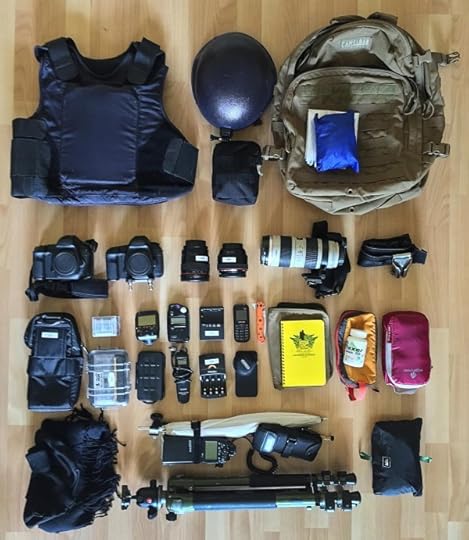
Row 1:
1. Second Chance Level III-A Vest with Ceramic Rifle Plates. The vest and plates work together to make a level IV system. I chose this system because it fits underneath a jacket or sweatshirt. While it does not provide as much coverage as the bigger vests, generally people cannot tell you are wearing it, making you less of a target.
2. Ballistic Helmet.
3. Med Kit with Celox Bandages and Tourniquet
4. Camelback Molle Backpack with rain cover and plastic bags to cover cameras.
Row 2:
1. 5DMk III body with strap
2. 5DMk III body with Spyder Plate
3. 24mm f1.4 for wide shots
4. 50mm f1.2 for low light (this is my favorite lens)
5. 70-200 f2.8 IS with strap Think Tank Thin Skin Belt with Spider Holster. (the Spyder holster is amazing. It allows you to carry a body with lens at your side hands-free and then access it quickly. )
Row 3:
1. Think Tank Flash Pouch for 2-6 below
2. Pelican case with 6 Mk III batteries and several sets of AA Batteries
3. Remote Flash Trigger
4. Waterproof case for extra cards (lots of them)
5. Light meter. I use this as much as I can when shooting portraits.
6. Intervalometer — I love timelapses
7. Chargers for AA and Mk III batteries
8. Burner phone (turned off, no iPhone for security reasons). I keep this and a burner wallet with a few bucks in it and an old driver’s licence in my front pocket.
9. iPod with headphones. To chill out at night.
10. Pocketknife. Absolutely necessary. Always in my pocket.
11. Case with documents, copies, press credentials, notebooks and pens. I always take laminated copies of my passport and hand those over when at all possible.
12. Toilet kit including wet naps, Gold Bond Powder, Big bottle of Ciproflaxin (diarrhea will keep you down. Take it when you first get loose and you’re fine.)
13. Bag with extra underwear and socks. I can last for weeks in the same clothes as long as I can change my underwear and socks.
Row 4:
1. Scarf, Hat, Gloves… I just bring a black scarf… I know it’s not as ‘cool’ as the checkered ones….
2. Light kit: Canon Speedlight 600, external battery pack, Manfrotto lightstand extender, and shoot-through umbrella with mount. I use this as my portrait kit. It doesn’t weight much, and I can use it to get great looking off camera lighting fast and easy.
3. Tripod and head. This is an old Manfrotto tripod that has literally been all over the world with me, used and abused. It straps onto the side of the pack.
4. Camp Towel. So if I do get a chance to wash up I can dry off. Also useable as a pillow. Dries quick because it’s microfiber.
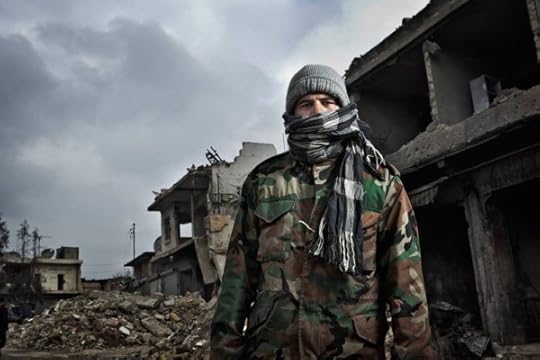
A Syrian man poses for a portrait on February 8 in the rubble of buildings in Azaz, Syria which were destroyed by a government airstrike last year.
Photo: Nish Nalbandian
Not shown:
1. Irridium Satellite phone for daily checkins.
2. Macbook air (erased completely, nothing on it except for pictures)
3. Toughtek DUO mini RAID system (I keep my data on my cards, and backed up onto the RAID each night)
4. Pull-on boots. I hate taking time to have to unlace and re-lace my boots each time I go into someone’s house, so I buy nice pull on boots for quick exits.
5. Gaffer’s tape. This is one of the most necessary pieces of gear you can carry. It will fix almost anything, is reusable, and has replaced duct tape for me.
Packing:
All of it fits in the bag so I can leave the hotel and go for a week with everything I need. I transport it between hotels/countries with clothes and personal gear and tripods in a duffel and camera gear in a pelican case. 

1The Frontline Freelance Register (FFR) is a representative body for freelancers, created and run by freelancers. It is an independent, ring-fenced entity which sits within the Frontline Club Charitable Trust with membership open to all freelance journalists working in conflict or foreign reporting. The FFR’s core objective is to support the physical and mental well-being of freelance journalists. In a world where staff jobs and fully paid foreign assignments are increasingly scarce, foreign and war reporting is dominated by freelancers, many of whom are deeply committed professionals doing outstanding work. At the same time, many of these freelancers lack the institutional support and the financial means to adequately manage the challenges of operating in dangerous environments in the long term. They also lack organised representation, often leaving them at the mercy of powerful media groups. FFR aims to help freelancers by providing them with a forum, a representative body, and a critical mass to face some of these challenges.


Millennials in East Tennessee

Photo: KINO
1. You’ve been to the Jack Daniel’s Distillery to cure a hangover.
2. You know that being served the “fruit of the Spirit” by the hippies at the Yellow Deli means devouring a Deli Rose sandwich.
3. You feel Bonnaroo is comparable to Woodstock.
4. You also feel it’s ridiculous that people consider Bonnaroo comparable to Woodstock.
5. Sundrop is your drink of choice.
6. When downtown in Nashville, you create false identities for yourself because you know you’ll never see anyone you meet ever again.
7. You don’t really like the color orange despite your Vols-obsessed family.
8. You were actually embarrassed when Tennessee voted yes on Amendment 1.
9. But then you celebrated when the state also voted to start selling wine in grocery stores.
10. You’ve gotten drunk before going to Rock City’s Enchanted Garden of Lights at Christmas time and almost didn’t make it through the Fat Man’s Squeeze.
11. You love bluegrass but can’t stand country.
12. You know someone who works on the set of Nashville.
13. You’ll never admit it, but you think Dollywood is better than Six Flags.
14. You bought a dulcimer to get in touch with your Appalachian roots but never learned how to play it.
15. There’s not enough booze in the world to convince you to spend any amount of time on Honky Tonk Highway.
16. You’ve bruised your legs jumping from the rocks at the site of the 1996 Olympic whitewater canoe and kayak competition.
17. You were heartbroken when you found out you would never again experience vertigo at Shenanigans.
18. But you were ecstatic when they reopened it a year later.
19. You still tell people your state has the world’s longest pedestrian bridge even though you know Poughkeepsie, New York took over that title in 2009.
20. You’ve ruined your clothes with grass stains while box sledding down the giant hill in Renaissance Park.
21. You don’t get paid enough to buy a cup of coffee from the coffee shop you work at in Nashville.
22. You were pissed when you found out George Clooney stayed in Chattanooga for a few days and no one recognized him.
23. You think being anywhere close to Gig City is the ultimate bragging right for a millennial.
24. You’re convinced that your subdivision isn’t on the same level of suburbia as everyone else’s.
25. You know people who have only traveled to eight other states — and they all border Tennessee.
26. You’ve felt like you were at Hogwarts while visiting friends at the University of the South.
27. You’ve gotten a calzone from Lupi’s while still wet from the North Chick swimming hole.
28. You’ve been tempted to drive on one of the runaway truck ramps while driving over Monteagle.
29. Memphis seems like a mythical place that you’ll venture over to someday. Maybe.
30. You saw Loretta Lynn and Jack White perform together in Nashville — and it was literally the most Tennessean thing you’ve ever experienced.
Best and worst countries for women
In honor of women (who we think deserve recognition all year round), we took a look at how they fare in terms of health, living and work conditions as measured by the 2013 Global Gender Gap Index.
Notably, the United Kingdom ranked 18th, while the United States came 23rd.
The Gender Gap Index looks at four pillars of comparison for its ranking:
Economic participation and opportunity looks at women’s income equality and presence in the labor force.
Educational attainment looks at women’s literacy and enrollment in school.
Health and survival compares the ratio of girls born to boys born. It also takes into account female life expectancy.
Political empowerment looks at how many women hold seats in political office, and how many female heads of state a country has had.
Here are the four best and the four worst countries to be a woman, along with their individual scores:
1. Iceland
Economic participation and opportunity: 22
Educational attainment: 1
Health and survival: 97
Political empowerment: 1
2. Finland
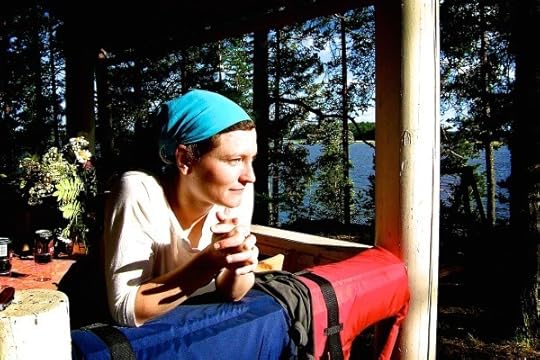
Photo: Juska Wendland
Economic participation and opportunity: 19
Educational attainment: 1
Health and survival: 1
Political empowerment: 2
3. Norway
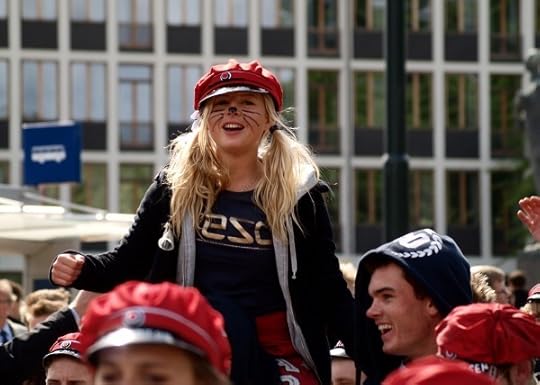
Image by Geir Halvorsen
Economic participation and opportunity: 1
Educational attainment: 1
Health and survival: 93
Political empowerment: 3
4. Sweden
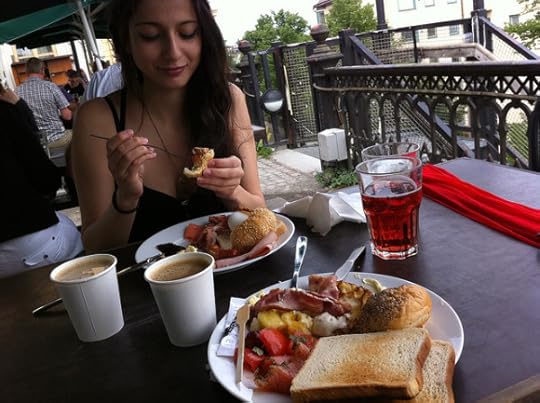
Photo: Stephen Coles
Economic participation and opportunity: 14
Educational attainment: 38
Health and survival: 69
Political empowerment: 4
133. Syria
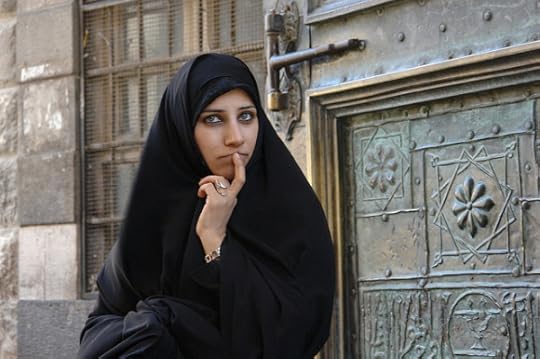
Photo: Charles Roffey
Economic participation and opportunity: 136
Educational attainment: 96
Health and survival: 58
Political empowerment: 112
134. Chad
Economic participation and opportunity: 75
Educational attainment: 135
Health and survival: 112
Political empowerment: 102
135. Pakistan
Economic participation and opportunity: 135
Educational attainment: 129
Health and survival: 124
Political empowerment: 64
136. Yemen
Economic participation and opportunity: 132
Educational attainment: 134
Health and survival: 81
Political empowerment: 131
By Sarah Wolfe, GlobalPost
This article is syndicated from GlobalPost.
8 Truths about being LGBT in India
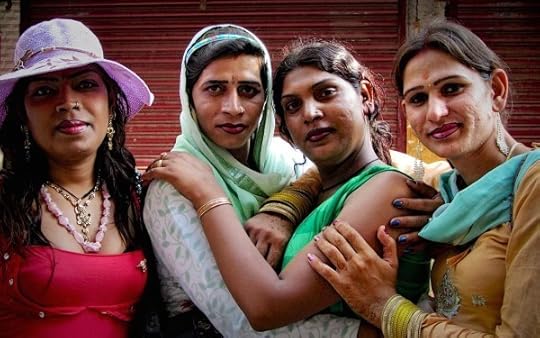
Photo: Daniel LofredoRota
1. It’s illegal — again.
In 2009, the Delhi High Court handed down a landmark ruling decriminalizing homosexual acts. The religious lobby immediately filed appeals and, in 2013, the India Supreme Court overturned this ruling, recriminalizing homosexual acts stating it was not the court’s job to review the constitutionality of acts passed by parliament. Absolutely ridiculous.
2. This has led to scams targeting gay guys, both local and foreign.
Grindr and similar apps are great for helping gay guys meet while maintaining discretion. However, this has led to a rise in blackmail scams targeting gay guys. They arrange to meet you, and once in a compromising position, someone else busts in to take a photograph. Threats of turning photos over to the police ensue. It’s two-on-one and they’ve got the pics. You either pay or get arrested.
3. Gay guys can’t do things a lot of straight guys do.
Like holding hands in public. Straight male friends often do this as a sign of closeness and friendship. But two gay guys would never risk it, for fear of the possibly violent reprisals.
4. Local guys dating foreigners are often considered to be prostitutes.
If either guy is less than absolutely masculine, it doesn’t matter how discreet you are in public, locals will still stare, heckle, and make you very uncomfortable.
5. Gay guys are forced by their families to marry women and have kids.
It’s a big deal to come out in India, clearly. A lot of families react by simply forcing their son to get married.
6. As a result, a lot of gay guys you’ll meet have at least a fiancé, possibly a wife and kids.
There’s a good chance they won’t mention it until after the fact. If they do, they may not understand why you have a problem with it, which is a really sad example of the state of affairs for gay people in India. And no, I’m not talking about the bisexual guys who are married.

This story was produced through the travel journalism programs at MatadorU. Learn More
7. There’s a lot of hypocrisy regarding the treatment of Trans people.
In India, transwomen (male to female) are known as hirjas. They are treated as less than second-class citizens who seek out a living by begging on streets and on public transportation. Yet, they are also considered touched by the gods and are often invited to bless newborns — though this doesn’t mean that they get treated any better because of it.
Lesbians get almost no attention in India.
Which says pretty much all you need to know about the general treatment of women in India.
The 20 funniest Portuguese sayings
Photo: Antimidia
1. A Portuguese does not ‘give up,’ he ‘takes his little horse away from the rain.’ (Tirar o cavalinho da chuva.)
2. A Portuguese does not ‘have a problem,’ he ‘is done to the beef.’ (Estou feito ao bife!)
3. A Portuguese does not want you ‘to leave him alone,’ he wants you to ‘bother Camões.’ (Vai chatear o Camões.)
4. A Portuguese does not ’cause problems,’ he ‘breaks all the dishes.’ (Partir a loiça toda.)
5. For a Portuguese, you are not ‘sexy,’ you are ‘as good as corn.’ (Boa como o milho.)

More like this 10 extraordinarily useful Portuguese phrases for travelers
6. A Portuguese does not ‘work a lot,’ he ‘gets water up his beard. (Água pela barba.)
7. A Portuguese does not ‘talk about the same thing over and over again,’ he ‘turns the record and plays the same song’. (Gira o disco e toca o mesmo.)
8. A Portuguese does not do something ‘to show off,’ he does it ‘so the English can see it.’ (Para inglês ver.)
9. A Portuguese is not ‘shameless,’ he has ‘a rotten face.’ (Cara podre) Or he ‘has a lot of cans’. (Ter muita lata.)
10. A Portuguese does not just ‘shut up and listen to things he does not like,’ he ‘swallows frogs.’ (Engolir sapos.)
More like this 8 signs you were raised by a Portuguese mother
11. A Portuguese does not tell you to ‘piss off,’ he tells you ‘to go to the place where Judas lost his boots.’ (Onde Judas perdeu as botas.) Or, he will tell you to ‘go away and comb monkeys’. (Vai pentear macacos.)
12. A Portuguese does not ‘wake up angry,’ he ‘wakes up with his feet outside’. (Com os pés de fora.)
13. A Portuguese is not ‘upset,’ he is ‘with olive oil’. (Estar com os azeites.)
14. A Portuguese is not ‘experienced’, he has ‘spent many years turning chickens’ (São muitos anos a virar frangos.)
15. A Portuguese does not ‘think you have strange ideas,’ he ‘thinks you have little monkeys inside your head’. (Ter macaquinhos na cabeça.)
16. For a Portuguese, something is not ‘really simple,’ it is ‘bread to bread and cheese to cheese’. (Pão, pão, queijo, queijo.v)
17. A Portuguese does not ‘die,’ he ‘goes from this one to a better one.’ (Ir desta para melhor.) Or, he ‘goes off with the pigs’. (Ir com os porcos.)
18. A Portuguese does not ‘feel suspicious,’ he ‘has a flea behind his ear’. (Estar com a pulga atrás da orelha.)
19. A Portuguese is not ‘worry free,’ he ‘is sitting under banana tree’. (Estar a sombra da bananeira.)
20. A Portuguese is not ‘clumsy,’ he ‘looks like a silly cockroach’. (Barata tonta.)
March 8, 2015
5 mysterious airplane disappearances
Here are five of the strangest aviation-related crashes and disappearances the world has known:
1. Amelia Earhart
The first woman to fly solo across the Atlantic Ocean, Amelia Earhart disappeared during an attempt to fly around the world in 1937.
She and navigator Fred Noonan were last heard from near Howland Island in the central Pacific Ocean.
In her last known transmission at 8:43am on July 2, Earhart broadcast “We are on the line 157 337. We will repeat this message. We will repeat this on 6210 kilocycles. Wait.”
But nothing more was heard from the American aviation pioneer.
No definitive wreckage has ever been found.
2. Flight 19

Photo: Wikimedia Commons
On Dec. 5, 1945, five US Navy aircraft disappeared during a training flight in what would spark the legend of the Bermuda Triangle.
The 14 airmen, led by experienced instructor Charles Taylor, took off from Fort Lauderdale, Florida, in sunny conditions.
But an hour and a half into their flight, they reported they had become disorientated and couldn’t recognize the landmarks below them. Taylor told the Naval Air Station via radio that his compasses had stopped working.
The weather deteriorated, and it’s presumed the pilots made forced landings in the water. No trace of the aircraft was found.
What’s even weirder is that one of the planes sent to look for them also disappeared.
3. Glenn Miller
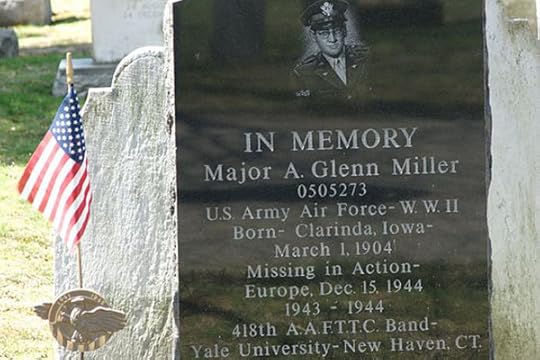
Photo: Wikimedia Commons
Glenn Miller, a legendary big-band leader, was on his way to entertain US troops in France when his airplane disappeared over the English Channel in 1944.
The single-engine UC-64 Norseman departed from a Royal Air Force base north of Bedford, England, on Dec. 15 and was never heard from again.
No trace of the crew, passengers or aircraft has ever been found.
Miller left behind his wife and two adopted children. His status remains “missing in action,” as seen in the photo above.
4. EgyptAir Flight 990
Heading to Cairo via New York, EgyptAir Flight 990 crashed into the Atlantic Ocean south of Massachusetts in 1999, killing all 217 people onboard.
There are two very different theories as to why it crashed.
The National Transportation Safety Board found co-pilot Gamil el-Batouty at fault, alleging he had committed suicide for unknown reasons by nosediving the plane into the water below.
But the Egyptian Civil Aviation Authority blamed the crash on the mechanical failure of the plane’s elevator control system.
Even stranger are the cockpit voice recordings recovered from the wreckage, in which el-Batouty is heard softly saying “I rely on God” after the captain had left to use the bathroom. He repeated the phrase at least seven more times, switching off the engines before the plane pitched downward.
5. Air France Flight 447
This Airbus A330 disappeared over the Atlantic Ocean in 2009 while carrying 228 passengers and crew from Rio de Janeiro to Paris.
The final crash report suggested ice crystals had obstructed tubes in the aircraft, causing the autopilot to disconnect.
Crew members tried to recover control, but the aircraft plunged into the waters below. The official report suggested human error was a contributing factor.
It took five days for crews to even find the wreckage and another three years to determine the crash’s cause. Most of the bodies were recovered in the months that followed, but 74 passengers were never found.
It became known as the deadliest crash in Air France’s history.
By Sarah Wolfe, GlobalPost
This article is syndicated from GlobalPost.
March 7, 2015
Romanian habits I lost in London

Photo: Daniel Hoherd
1- Being aware of people around me when I talk.
In Romania I was always aware of what I was saying. We didn’t have conversations in public about family problems or boyfriend drama. In London, I have no problem speaking to my friend in public about relationships, medical problems, or her flatmate’s night with that tattooed guy. Especially while speaking in our home language, there is only a very small chance that someone will understand what my friends and I are talking about. Freedom of speech is something I definitely take advantage of.
2- Keeping all the plastic bags, bottles, and jars.
Recycling is alive and well in London, so there’s no need to keep a bag full of hundreds of plastic bags in all sorts of shapes and sizes. Every shop gives you a free bag, so I don’t need to remind myself to carry a plastic bag with me when I leave the house, just in case I might “need it” for something.
3- On my birthday, the drinks are on me!
Now it’s more like: on my birthday I will hire the venue, choose a DJ, and whoever comes pays for their own drink. On top of this, my friends in London will also buy me a drink. Gone are the days when I had to think about who I should invite to my birthday party because the budget is tight, and how I was going to pay for my closest friends’ drinks.
4- Sunday’s are for a three-course lunch with the family.
In Romania, almost no one works on Sundays. If it’s sunny we will have a barbecue, if it’s not sunny we will have a soup, a main dish, and dessert; all homemade and cooked early in the morning. An English Sunday is more like sleeping in, then grabbing some eggs Benedict in a nice coffee shop while reading the Sunday Times. Some English families uphold the tradition of a Sunday roast, but I haven’t gotten ‘in’ with one of those families yet, so my weekends are a lot less involved.
5- Eating at restaurants is only for special occasions.
I used to only dine out when it was someone else’s birthday (especially because they were paying), or when someone from abroad came to visit. London gives me no time to cook on a daily basis though, so eating in restaurants is almost an every day habit. Food is more affordable here. I save posh restaurants for special occasions, and find less expensive venues located in posh areas are for when someone is coming to visit.
6- When I order a coffee, I just get coffee.
And in Romania, it’s usually just one type: regular coffee, nothing special. But Starbucks-style coffees are found in every coffeehouse in London, and in every person’s house as well. There are plenty to choose from: latte, cappuccino, espresso, espresso macchiato, double espresso, milky coffee, americano with hot milk, americano with cold milk, black americano, etc. Not to mention the variety of milk choices: full fat, skimmed, or soya milk. Oh! It comes in different sizes as well.
7- If a guest says ‘no’ when you ask to serve them some food or drinks, you take it as a yes.
Back home, this exchange results in the table being filled up with tasty food and beverages in a matter of seconds. But having guests in London happens rarely. And when it happens, you know that they’re coming and you prepare something. They expect that, and that is the whole reason they’re coming. It’s very simple here. No guests come unannounced, and if someone says that they don’t want anything to eat, you get happy that your lunch for tomorrow is secured.
8- Partying until the sun comes up.
Nightlife in London is drinking from 9 pm until 2 am, in a local pub or a club somewhere central. There is a maximum of three people involved, and when the time comes to end the night, everyone takes a different route home either by bus or UBER. Romanians on the other hand like to party until 6 am, then gather their group of friends (at least 6) and walk all the way home. The one who lives closest to the night club is the luckiest because everyone gets to see him go inside safely.
9- Wearing lots of layers in winter.
In Romania, I used to wear a T-shirt, a jumper, a cardigan, and then a jacket. I never wore anything other than boots. If Romanians are seen without a hat or a scarf, they’re automatically labelled as a crazy person. But last week in London, it was 9 degrees Celcius and I saw few women wearing ballerina shoes without any socks. Here, no one cares about how you dress. You can go to the corner shop in your pyjamas and no one will say a word. No need to wear many clothes even if it’s freezing cold; the thought that people dress lightly in winter warms you up enough anyway.
10- When leaving for a trip, at least 3 people are going with you to the bus, train, or airport to say goodbye.
Sometimes tears flow as well, and the process feels like you’re leaving forever. London knows that you’ll always be back, so it doesn’t require any tears. No one has time for a farewell trip to King’s Cross or Paddington anyway, or even a wave outside the house when you get on a cab. You’re big enough to know the way yourself, you have a smartphone for God’s sake!
Naked gardening is a thing in the UK
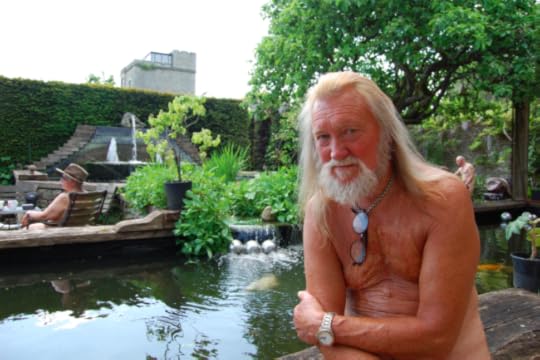
Ian Pollard, owner of Abbey House Gardens (Corinne Purtill/GlobalPost)
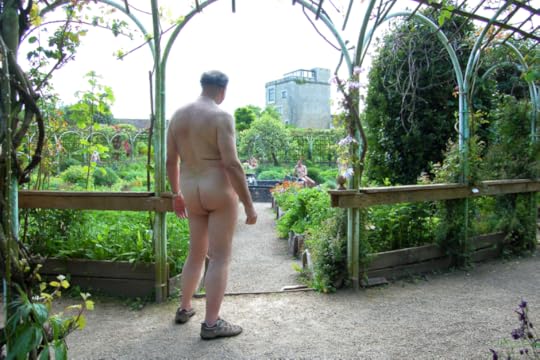
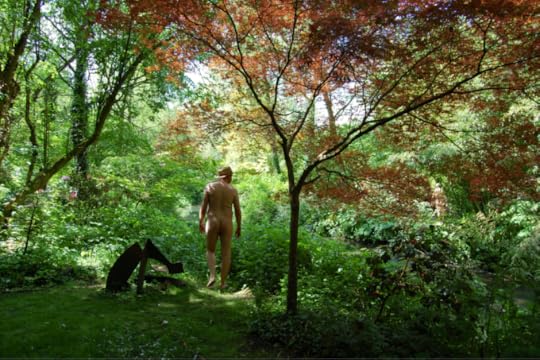
MALMESBURY, UK — With flowers in bloom and the sun gently sparkling on the River Avon on a Sunday afternoon, Abbey House Gardens looked like nothing so much as the Garden of Eden — mostly because everyone there was naked.
The people stretched out on benches reading newspapers and doing Sudoku puzzles were naked. The people eating ice cream and fixing themselves cups of tea at the café stand were naked. The men and women admiring the koi pond and photographing the rose collection and making polite chit-chat with neighbors on the next picnic blanket over — all of them, starkers as the day they were born.
The clothing-optional days at Abbey House Gardens, a bucolic botanic garden surrounding a private home in this west England village, are a high point on the summer social calendar of Britain’s small but dedicated community of nudists (or naturists, as they’re called here).
The crowd was a cross section of British society: farmers, civil servants, teachers and engineers, all united by their shared preference for living life in the buff.
“We’re normal people,” says Judith Stinchcombe, chairman of British Naturism, the 9,500-strong national nudist club. “We just like doing everyday, normal things without clothes.”
Britain is no easy place for the naturist. The weather is so fickle that it’s hard most days to leave the house without a light jacket, let alone pants.
“One day it’s like this, tomorrow it could be winter. You learn to live with it,” said John Ablett, 60, as he and his wife Sue circled the herb garden, he in flip-flops, she in pink sandals and gold-rimmed glasses.
With temperatures in the 70s, this particular Sunday, the Abletts and others agreed, was pretty much a perfect day to be naked.
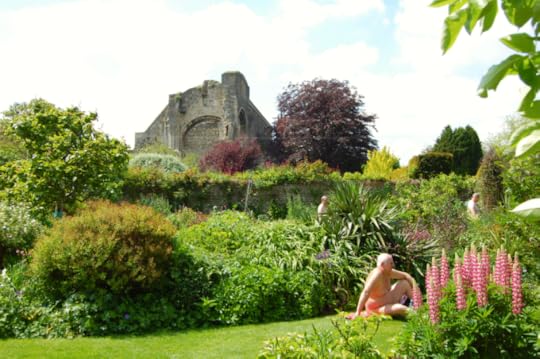
(Corinne Purtill/GlobalPost)
“It’s that breeze,” John said, stretching out his arms as a light summer wind rippled through the flowers.
There are a few practical concerns about spending a day disrobed, veterans said. You need sunscreen, and lots of it. Bug spray helps, too. So do a few small concessions to practicality and comfort, sported comfortably against bare flesh: baseball caps, Crocs sandals, athletic socks, fanny packs.
Ages ranged from families with young children to elderly people tooling around on motorized scooters. The crowd was mostly male, and it was one of the rare public venues with a line for the men’s restroom and none for the women’s.
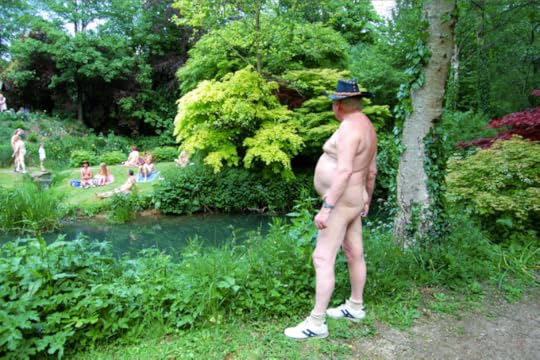
(Corinne Purtill/GlobalPost)
For a “textile” — the naturist’s term for a person who prefers to stay dressed — the effect was of walking through a public park with a very particular type of X-ray vision.
Sunning themselves in the gardens were people of all shapes and sizes, a rainbow of nakedness very different from manicured, sculpted monotony of the nude bodies favored in the media.
Mo and Chris Thomas strolled the manicured hedgerows with cameras around their necks, sandals on their feet and nothing in between. The couple lives half the year in Spain and spends the other half traveling, mostly to nudist-friendly destinations.
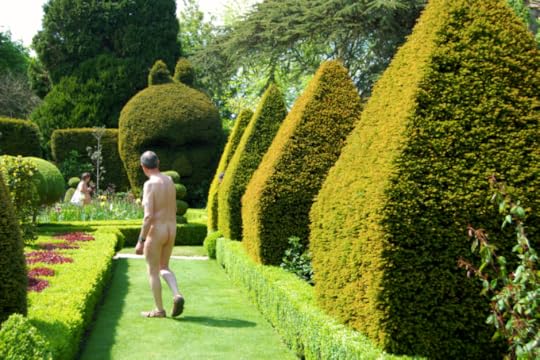
(Corinne Purtill/GlobalPost)
The retired financial service workers have been naturists for 17 years. It was her idea first. Stripping down is a great equalizer, they said.
“If someone’s got no clothes on and you meet them on a beach or a café and get chatting, you don’t know what job they’ve got or where they’re from,” said Mo, 59.
“Nobody’s dressing up to prove their wallet’s bigger than yours,” said Chris, 58. “We’re all the same.”
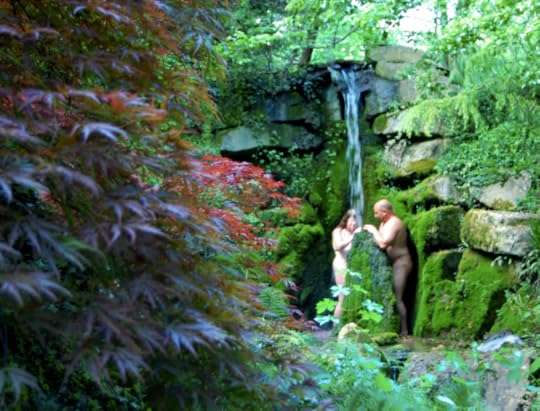
(Corinne Purtill/GlobalPost)
Ian and Barbara Pollard purchased the 16th-century former Benedictine abbey in 1994 and set to work refurbishing its overgrown five-acre grounds. The couple’s fame spread beyond Malmesbury when a BBC team came to film the work and noticed their penchant for gardening in the nude.
After the special aired under the title The Naked Gardeners, the Pollards were flooded with calls and emails from naturists around the country: “If you want to go down to your garden naked, can we come and do it too?” Ian recalled. The first clothing-optional day was in 2003, and it’s been a perennial fixture since.
Nudity is welcome, but not required. Signs posted at the entrances inform potential visitors that they may strip or stay dressed as they choose. Although the Thomases reported seeing a skittish group turn away at the sign, other dressed guests said they were unfazed by the fauna on display.
“They don’t mind us coming in clothes, so why not?” said John Gibson, a retired teacher from Leeds. “Go for it.”
(Corinne Purtill/GlobalPost)
There are a few rules of etiquette in the naturist scene. Bring a towel if you’re planning to sit. No photographing people without their consent. And no inappropriate sexual advances or behavior.
That’s the biggest misconception textiles have about naturists, Pollard said — “that they’re all screwing, all the time.”
True nudism, practitioners said, is about enjoying nakedness for its own sake, without sexual connotations. Again and again, people described life au naturel with the same word: Freedom.
(Corinne Purtill/GlobalPost)
“You have to be conscious of the boundary between naturism and where a sexual thing kicks in,” said Keith Mitchell, 42, of London.
“That’s not what we do. That’s not what this is about. You’d be made to feel uncomfortable or asked to leave if there was a possibility that people were trying to cross that line.”
Abbey House’s future isn’t clear. The couple has recently split, Pollard said, and Barbara is seeking a divorce. The house may be put up for sale.
It’s a blow to those who have come to love the gardens as a place where they can be themselves in the company of others who also enjoy the sun on their skin, everywhere.
“It would be great if at some point in a future society, [being naked] was as socially acceptable as walking down the street,” Mitchell said. “It’d be a nice society, if that was the case.”
By: Corinne Purtill, GlobalPost
This article is syndicated from GlobalPost.
Offensive Westerners in Myanmar
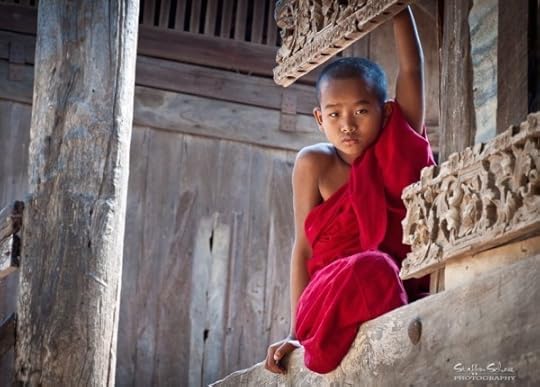
Photo: Staffan Scherz
Few supreme beings are so casually blasphemed as the Buddha.
His face has been plastered on kitschy toilet seats sold on Amazon. And on port-a-potties in the Netherlands. Chic Italian designers sell chairs resembling his disembodied head, a sacred image that isn’t meant to be touched, let alone sat on.
It gets worse. Penthouse Magazine printed a spread in which a nude model pops her nipple in Buddha’s mouth.
Practically everyone knows that irreverent depictions of Islam’s Prophet Muhammed risk violent backlash. Vulgar depictions of Jesus Christ, while less apt these days to bring on bloodshed, at least register as obscene. Crude portrayals of either are typically created with provocation in mind.
But Buddhism, the fourth-largest religion on earth, is often disrespected in an offhand way.
In the West, Buddha’s face is lazily presented as a fetishized image indicating something vaguely exotic and serene. Stoners lean against Buddha pillows and get high. Buddha statues are used to decorate clubs packed with sweaty, wasted partygoers. College kids ink up their bodies with Buddha tattoos — a shocking act in the eyes of reverent Buddhists.
Blaspheming Buddha is unlikely to provoke the sort of murderous rampage suffered by Charlie Hebdo, the Parisian satire magazine that in recent years has made a point of insulting Muhammed. But in some Buddhist-majority states — namely Myanmar — it can get you deported or possibly thrown in prison.
That’s the fate of a New Zealander named Philip Blackwood. Until recently, the 32-year old was managing a Western-style gastro bar in Myanmar, also known as Burma, a post-totalitarian state transforming into a hip holiday spot. He and two other Myanmar citizens who ran the bar have been imprisoned.
Their crime? In December, they allegedly disgraced the faith by promoting a drinks special using an image, posted to Facebook, of Buddha wearing headphones.
As a senior police official told local outlet The Irrawaddy: “He said he did it because using the Buddha in ads is in fashion internationally.” Blackwood faces multiple charges that could amount to a four-year prison sentence. His lawyer has reportedly received death threats just for taking on the case.
Blasphemy charges in Myanmar aren’t common. Almost everyone in Myanmar is taught from childhood that Buddha’s image is sacred and that provoking monks is forbidden. They seldom break this societal pact. The same can’t be said for the Westerners now pouring into the country. Many have no clue that wearing skimpy clothes in a temple is as appalling as wearing a bikini in church.
Misusing Buddha’s image isn’t just insulting to the average Buddhist, says Buddhism scholar Paul Fuller of Britain’s Bath Spa University. It’s actually seen by many, he says, as “potentially dangerous.”
“Misuse of Buddha images is not simply unlucky,” Fuller says. Many Buddhists believe his image has “the power to avert danger and produce beneficial outcomes in this life and the next.”
To disgrace Buddha’s image — by, say, putting his face on a flier promoting margaritas — is to invite a run of bad luck. And Myanmar, a crumbling nation ravaged by war, needs all the luck it can get.
Thanks to its long spell of isolation, few in Myanmar know that well-meaning outsiders flippantly use Buddha’s image to sell booze and knick knacks. Authorities were also appalled last year when a Canadian tourist showed up with Buddha’s image tattooed on his right leg, a most unholy spot given its proximity to the feet.
He was promptly deported. A similar scandal played out in Buddhist-majority Sri Lanka, which deported a British tourist last year for turning up with a Buddha tattooed on her arm. Sri Lanka also has the distinction of banning R&B singer Akon for appearing in a music video titled “Sexy Bitch” in which bikini-clad women gyrate in front of a Buddha statue.
How would Buddha react to all this? According to Buddhist scripture, Fuller says, he wouldn’t have reacted at all.
As Fuller explained in an essay on Buddhist blasphemy: “Surely the Buddha, being free from all attachment, would not have taken any offense.”
By Patrick Winn, GlobalPost
This article is syndicated from GlobalPost.
March 6, 2015
Epic Utah downhill and B.A.S.E. jump
Follow Matador on Vimeo
Follow Matador on YouTube
Climbing, mountain biking, B.A.S.E. jumping, hiking — do it all in the Utah desert.
Matador Network's Blog

- Matador Network's profile
- 6 followers

