
Matador Network's Blog, page 2136
February 27, 2015
AirAsia 10 country pass very cheap

Photo by GeoWizard
SOUTHEAST ASIA IS ONE OF the best regions in the world to travel in, and it’s never been particularly expensive to get around. Now it’s almost absurdly cheap. AirAsia, a Malaysian budget airline, just recently started offering the Asean Pass, a 30-day plane pass that allows you to visit 10 countries… for only $160.
The ten countries are the members of the ASEAN political and economic alliance. It includes Malaysia, Indonesia, Singapore, Brunei, the Philippines, Cambodia, Thailand, Laos, Myanmar, and Vietnam. The way the pass works is this: for $160, you get 10 credits over the course of 30 days. Any flight that’s under two hours will only cost you one credit. Any flight that’s more than two hours will cost you three. You can also get a 60 day, 20 credit pass for $290, and you can buy up to five a person, if you want to stockpile for later Asia trips.
You would, incidentally, have to pay for the flight to actually get to Southeast Asia in the first place if you aren’t already in the region, and the credits don’t count local airport fees — but the deal is still incredibly good for budget travelers.
“The pass allows us to bridge communities and attract more foreign tourists to the region,” AirAsia CEO said in a press release. “It’s the perfect instrument to promote Asean integration.”
If only the rest of the world was this focused on integration. You can book a pass here. 


Banksy creates travel vid for Gaza
RENOWNED STREET ARTIST BANKSY recently made a promotional travel video. The title is something you’d expect to see attached to any video made by any tourism board in the world: “Make this the year YOU discover a new destination.” The video, it turns out, is showcasing the Gaza Strip.
Banksy — whose real identity is unknown — has made trips to the West Bank in the past but for this trip, he had to get into Gaza using illegal underground tunnels. He (?) went to Gaza to put up his trademark political murals.
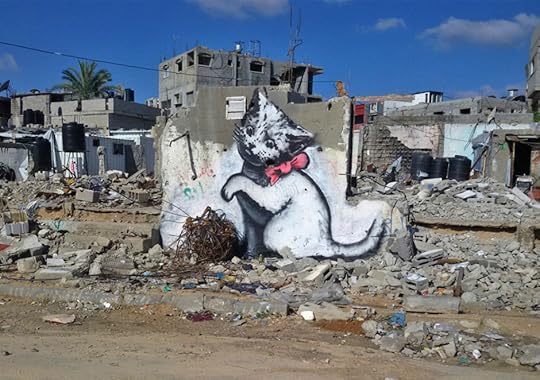
Via Banksy
Explaining this mural, Banksy said:
“A local man came up and said ‘Please — what does this mean?’ I explained I wanted to highlight the destruction in Gaza by posting photos on my website — but on the internet people only look at pictures of kittens.”
Give the video a watch. Banksy’s still at the top of his game.
15 signs you were born and raised in Missouri
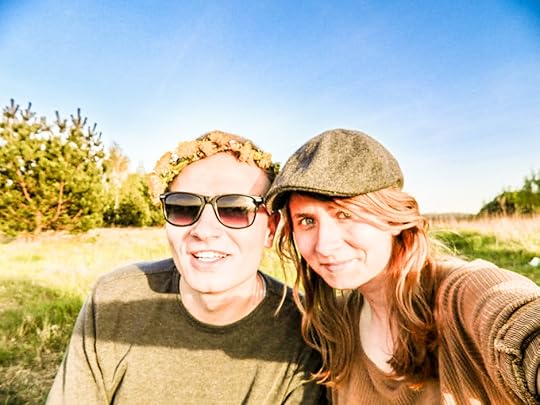
Photos: mgrabski
1. You have no opinion about the “Missouri vs Missourah” debate.
No, it’s not that locals pronounce it “Missourah” and outsiders pronounce it “Missouri.” Nor does it have anything to do with whether you live in the Ozarks. Most people say “Missouri” and some people say “Missourah” and that’s all cool.
2. You took Hunter Education in school.
Our school literally had us line up in the gym and take turns firing rifles at targets. We were also required to pass a written test on gun safety and hunter safety. Don’t say that Missouri doesn’t take its hunter education seriously.
3. You also had to take a Missouri Constitution Test to graduate high school.
Missouri doesn’t let its students graduate without passing a written test on both the US and Missouri constitutions. Many of us spent a few weeks in high school playing “Missouri Constitution Jeopardy” to prepare for the test. “I’ll take Preambles for $800, Mrs. Harris!”
4. You describe locations in “time it takes to drive to St. Louis.”
St. Louis is often used as an arbitrary endpoint, as in: “I live in Hannibal. It’s about two hours north of St. Louis.” People from Missouri will often say things like that to people from other states, as if everyoneelse automatically knows where St. Louis is and why it’s important that Hannibal is two hours away.
5. You’ve been in the Mark Twain Cave.
While we’re on the subject of Hannibal, you probably took at least one trip to the Mark Twain Cave. Did your tour guide do the thing where they turned out all the lights and showed you what the cave would have looked like when Tom Sawyer explored it by candlelight?
6. You tried out to play Tom Sawyer or Becky Thatcher.
Hannibal’s Tom and Becky Program invites 7th graders to dress up as Mark Twain’s favorite characters and become “goodwill ambassadors” for the local area. If you got to be a Tom or a Becky when you were in 7th grade, you know you were the coolest kid around.
7. You know what a “rural route” school is.
It’s a school for everyone who lives on the same rural route! It’s self-explanatory! What’s a “rural route?” Um… there are rural areas, and they’re connected by roads, and… oh, it’s a US Post Office designation? Good to know.
8. You took a school field trip to the St. Louis Science Center.
It’s practically required that every Missouri child visit the St. Louis Science Center at least once, preferably arriving in a school bus with at least 40 other children. If you were really lucky, your school got you tickets for the OMNIMAX Theater.
9. Forget Walt Disney World: You had Six Flags St. Louis.
The Science Center wasn’t the only reason to visit St. Louis — you also begged your parents to take you to Six Flags at least once every summer, so you could ride the Screamin’ Eagle or Mr. Freeze. The really lucky kids had season passes.

More like this: 10 signs you were born and raised in Kansas City
10. You’ve been to Silver Dollar City.
Shhh. Don’t tell non-Missourians how much fun Silver Dollar City is. They still think only senior citizens go to Branson, and there isn’t a secret amusement park with water rides, an old-timey fun house, andsix roller coasters hidden in there.
11. You were in 4-H.
A lot of us Missouri kids were in 4-H, studying everything from livestock to nutrition to technology. Many of us ended up exhibiting what we learned in 4-H at the county or state fairs. Did your exhibit win a ribbon?
12. You’ve heard Truman State University described as “the Harvard of the Midwest.”
Never mind that half-a-dozen other Midwestern schools want to claim that title. Missourians know that there can only be one other Harvard besides Harvard, and it’s Truman State.
13. You had to deal with everyone driving over the state line to buy fireworks.
Fireworks are legal in Missouri, which means there are a lot of fireworks stands set up along the highway come summertime — and a lot of people driving over the state line to get those fireworks, even though they might be breaking the law by shooting off those fireworks in their home state…
14. You know that you’re supposed to call that one part of Missouri the “boot heel.”
Because it’s shaped like a boot heel, of course. What else would you call it?
15. You do, actually, like people to show you things.
Generations ago there was some apocryphal story about some Missourian saying “Show me!” and we’ve been stuck with the “Show-Me State” nickname ever since. But it’s kind of true. Want a Missourian to believe something? You had better be ready to provide proof. After all, we grew up in the land of tall tales, jackalopes, and those “weather predictor dolls” that come with a little index card that reads “If the doll is wet, it’s raining.” You’ve been fooled once and you won’t be fooled again.
Signs you're born to travel by train

Photo: Peter Benedik
1. You’ve never minded talking to strangers.
You may encounter Amish people who have a fiery passion for Go Fish, a painter with no direction, a recent widow planning to start fresh in New Orleans, an elderly Milan couple who loves the concept of conspiracy theories, a self proclaimed hermit from Oregon, or a train kid traveling cross country with a Chiweenie that he sneaked on board.
Everyone’s leaving from someplace, everyone’s going to somewhere, and everyone’s just bored enough to talk to you over microwavable pizza in the dining car. Conversation is a luxury of train travel, and you’ve always made the most of it.
2. You’ve always been intrigued by the history of trains.
The railway system can transport you to the days of early 19th-century trainmen spreading crushed limestone and gravel, laying railroad tie after railroad tie until the world linked itself together by steel tracks of innovation, industrialization, and connection between metropolis and landscape.
3. You’re comforted by background noises.
The chugging, the rattling, the rumbling, the hissing and screeching of brakes. It’s like falling asleep with the DVD menu on repeat. Sure, it may wake you up periodically, but it’ll lull you right back into your dreams.
4. You love getting your train legs.
Freely roaming a train beats the confinement of a car, bus, or plane any day. But if you’ve ever been jerked while trying to make it to your seat and find yourself in the lap of a stranger with a cup of cranberry juice sloshed everywhere, don’t worry. It’s happened to the best of us. You’ll soon sashay through aluminum gangways and sway with the train’s rhythmic bounce like it’s your second nature.
5. You’re totally unfazed by delays.
While some passenger trains crack 200 mph, there’s always that chance you’ll find yourself seven hours behind schedule somewhere in Nebraska due to train equipment malfunction.
At this point, there’s not much you can do but sip your whiskey and ginger ale from a plastic cup in the observation deck while discussing theories on the Georgia Guide Stones with a scruffy-faced man from Oklahoma City.

This story was produced through the travel journalism programs at MatadorU. Learn More
6. You relish in little flashes of life.
Trains go where cars can’t, allowing you to see kayakers gliding through the Colorado River with their paddles in the air, barefoot children startling Fleckvieh cattle in Bavaria, surfers waving from the foamy coast of Encinitas, a couple doused in rice outside a church in Iowa, or three teenagers camping in a field of red poppies in France, leaning out from their tent with messy hair to sway their arms back and forth.
Trains allow you to see these pieces of life that fasten the world together. Keep looking out your window.
Marriage equality in Alabama
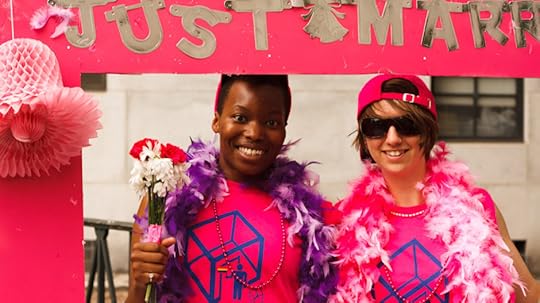
Photo via joseanavas
Never have I experienced such profundity and beauty as in the expressions of love I witnessed on February 9, 2015, when marriage equality reached several counties in my home state of Alabama.
The probate judges of the other counties remain in their religious backed bigotry, as ordered by Alabama Chief Justice (and wannabe pastor) Roy Moore. But among the counties taking the big step in the direction of progress was, Montgomery County. When my fiancé, Stacey Morris, was contacted by members of the ACLU Alabama and asked to come to Montgomery to show the support, we sprang into action. That Sunday night was spent making signs and preparing for a long day and at 7:00 am we left our small duplex in Opelika and set out for Montgomery.
It was my intention to only stay until 1:00 pm as I had to be at work at midnight. But, the positive atmosphere and overwhelming energy of the day would keep me there long after that.
Born a straight man in the southeastern US, I never thought I would some day be standing in front of a courthouse holding a gay pride sign, while debating with a Christian on the validity of scripture. But, 8:15 am found me in exactly that place.
***
I was invited into a discussion with David Day, the lone protester, and for well over an hour we “argued” over the existence of God and the credibility of the bible. David is a Christian fundamentalist, and I am an atheist. My position is that I see no empirical evidence supporting the existence of any God or Gods, especially the God of the bible. David’s position seems to be the bible, as translated by Ray Comfort.
I attempted several times to get his personal thoughts and feelings on what was happening that day, but they always routed back to the bible. For almost an hour and a half we talked, and though we do not agree I will say this, I’ll take David Day over a Fred Phelps any time. He wasn’t mean or outright hateful; he was actually quite polite in his biblical bigotry.
But I can’t help feeling sorry for David, and anyone else who disregards human emotions at the command of obsolete words of ancient books, written by goat herders who thought the earth was flat.
All that suppression must be difficult. I am, however, glad that David deserted his 5-days-a-week protest post at a women’s health clinic, to come down and talk with me.
The rest of the day was spent meeting some truly amazing people. One of the youngest couples to be married that day was Megan Hilton, 19 and Jordan Robbins, 22. They wanted to get married simply because they deeply loved one another. It’s a fact apparent to anyone who is around them for more than five minutes, but most apparent to Jordan’s mother, Kimberly Zenke. Kimberly and her husband, Leo, accompanied the couple in support of their daughter and new daughter in law. Support that has renewed my faith in humanity.
“I’m a believer,” Kimberly said, referring to God, “but their love is real.”
She went on to say that Megan’s love has healed her daughter, that they have healed each other and that she could not imagine standing in the way of that love. Quite a few protester voices have been heard mentioning family values. Well, in my opinion a better example of family values than this, there is not.
***
Throughout the day, couples cycled through the courthouse receiving applause from their supporters. Then emerged a pair of big, burly men sporting beards that ZZ Top could have admired. I sprinted over to them — I had to meet these guys, and I’m so glad I did.
John Bales, 71 and Wade Tinney, 51 have been together for 17 years. They’ve been more than life partners however, they’ve also been business partners. In 1998, they opened Alabama’s first gay campground together. Black Bear Camp Men’s Retreat is a 33-acre resort in Geneva Alabama catering to gay naturists.
In October of 2000, the Associated Press reported that the patrons of the resort were, “typically the rugged type beards, bellies,” and that football was the scene at Black Bear Camp. John was quoted in saying, “probably fifty percent of our customers are married, or divorced with kids…we don’t get the flamboyant type.”
John began buying property for the camp in 1982 as a retirement plan. He and his partner Wade operated the resort for over 16 years, until they retired in November of 2014. The farewell letter to their customers posted on the Black Bear website is a testament of the lasting relationships forged in the Alabama wilderness.
“We have enjoyed our sixteen year and three month run and will forever treasure the good friends and good times…Of all the things I have done in my life, providing this resource for other gay men is one of the proudest. But as a wise man said, everything which cannot last forever will end. For Black Bear Camp that time has come. Good bye and good will, Hugs.”
I’m truly happy to say that John and Wade are no longer simply partners or business partners, they are a married couple recognized by the state of Alabama. And while it’s sad that it took this long, it was a great day for these big, burly guys.
Amongst the supporters, the few protesters, and the people conducting their day-to-day business, was a strong police presence. In light of the recent violence and death linked to law enforcement across the nation, I was a bit nervous walking up to the courthouse that morning. But as the day carried on, my nerves were settled. The level of professionalism, common courtesy, and neutrality displayed by the Montgomery police department was the epitome of protection and service.
By the end of the day, I had no idea if the personal opinions of the officers on duty there were in support or protest of gay marriage. That fact alone tells me that law enforcement in Montgomery is a cut above the rest. I wish this country had more men and women like them behind the badge.
***
Stacey and I met some fun and interesting people throughout the day, but none more so than Mr. Paul Hard. In 2011, Paul and his partner, David Fancher, traveled to Massachusetts to be married legally. Sadly, three months later David was killed in a car accident on I-65. I couldn’t imagine losing the woman I love, but when Paul received his husband’s death certificate the marital status read, “never married.”
The state of Alabama may as well have slapped him in the face. According to the Southern Poverty Law Center, they have been working for the past four years to have this changed and on Monday morning, Paul was handed his husband’s amended death certificate recognizing their marriage.
But Paul had more business to which to attend that day. From 8:00 am until the last couple came through at almost 5:00 pm, Paul was available to officiate weddings. In fact, he officiated the second legal same-sex marriage in Alabama. Between ceremonies, Paul could be found chatting with supporters and inviting people to the ACLU reception. His warm attitude and hilarious antics had people flocking to him all day.
By the end of the night, Stacey and I made a decision we didn’t expect to make. As a couple of atheists we were wondering who we could find to perform our wedding ceremony. Later that night at the reception it hit me, and we asked if Paul would be willing. Smiling, he said “I would love to.”
The mass reception, put on by the ACLU, was held at a Montgomery lounge called Cru. At around 9:00 pm, several hours after I had planned to be home, a couple of older ladies exchanged their vows outside of the lounge under a lit alter. Just before the ceremony began, the onlookers were asked to move in close.
“You’re all family, get in here with us!” they said.
Tears streamed down my face as I witnessed their long-awaited legal union. I thought of the struggle these couples have endured; being told that their relationships weren’t valid. But in Alabama, it seems this struggle is lessening with the final words of the day:
“By the power vested in me by the Universal Life Church and FINALLY the state of Alabama, I now pronounce you, wife and wife.”
The perception of black travelers
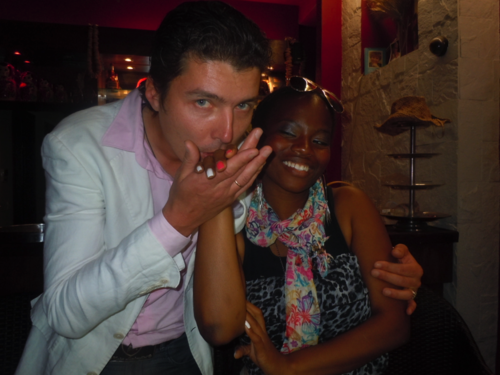
Jeta and a bar owner in Dubrovnik (Photo: Siury Mercedes)
Story by Jeta Stephens
“Las tetas!” yelled an Argentine man on my walk to the train in BuenosAires.
You don’t have to speak Spanish to catch the translation. (Hint:He wasn’t talking about my teeth.)
That was in 2006, and at the time, I thought being busty while wearing an orange tank provoked his lewd call. I was offended and a little self-conscious. Today, I am a wiser, more traveled señorita, and I realize there’s a “thing” that follows black women as they venture away from home to foreign lands. Experience has proven that without provocation on our part, we’re more frequently perceived in a sexual way.
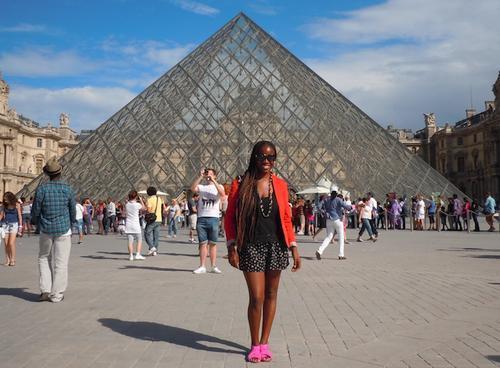
Jeta in front of the Louvre in Paris. (Photo: Siury Mercedes)
That day in 2006 was the beginning of a barrage of sexually charged insults, compliments, and puzzling reactions I’ve received while traveling. Years later, I stood near the busy Puerta del Sol in Madrid, waiting to meet a friend. Somehow, a man approached me, out of everyone in the area, and asked, “Are you selling something?”
Initially, I thought he meant drugs, but when he invited me to a nearby brothel, I realized what he was actually soliciting was sex, and I quickly walked away. Prostitution isn’t illegal in Spain. However, the women on the prowl are usually dressed in miniskirts and go-go boots. My outfit of the night was a three-quarter-length pea coat and sneakers. Moments like this make me wonder, “Why me?” There were plenty of others to choose from, but I was the lucky target. It was the “thing.” Whether we dress it up or down, it’s an orbit we can’t escape.
Related: Traveling While Black: What You Need to Know
Then there’s Croatia. Oh, my beloved Croatia. There is little diversity in this part of the world, and I have never felt so magnetic. Fortunately, Croatians react with admiration when they see new faces. I felt like a lifelong friend to many of the women and men. If any black woman needs a confidence booster, go there! One night in Dubrovnik, I was bouncing between a restaurant owner in Old Town, an excommunicated Russian bar owner outside of the city center, and an excursion salesman near the port. But that attention comes with speed bumps. When the restaurant owner felt comfortable enough, he confessed that he was drawn to me because I reminded him of his favorite porn star. I appreciated his honesty, but that admission cheapened the friendship we had just spent three hours building.
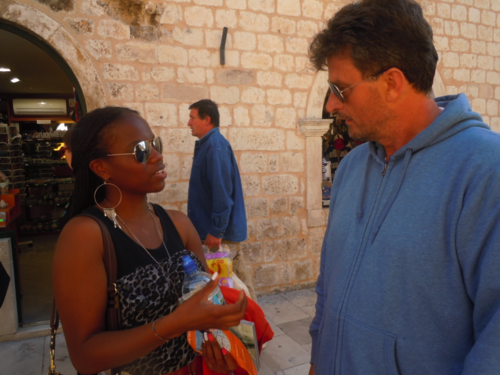
Jeta chatting with the locals in downtown Dubronvnik (Photo: Siury Mercedes)
While many woman deal with catcalls and unwanted attention while traveling, I now see a difference in my journeys versus those of my friends of other descents. One day, a friend and I were recounting shocking stories of our travels through Latin America when she revealed, “These crazy things only happen when I’m with you.”
So, why is this? Cross-country hypersexualization of black women has a long history. In the early 1800s, Saartjie Baartman, a black South African woman, moved to London and was forced to exhibit her body to paying customers because of her “unusual” curves. Since then (even beforehand), black women have been seen as exotic and have been examined for our differences. It’s quite interesting to witness that as much as things change, they remain the same.
Related: I’m Black, So I’m Kind of a Big Deal in China
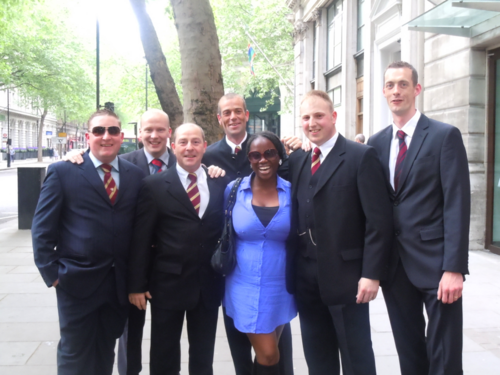
Businessmen in London who stopped for a picture (Photo: Siury Mercedes)
The next question is, how do we handle it? I believe that the best solution is to embrace it. Know that your orbit is unique and empowering, and view every interaction as an opportunity to teach and learn something new. With that said, it’s important to travel with discernment. Stay away from brothels. And if you are on a romantic mission, don’t choose a mate who fetishizes you. Otherwise, things are bound to get weird really fast.
I once looked at this extra attention as a burden. Now, I see it as a beautifully mystifying asset. As I write, I’m listening to Whitney Houston’s “I’m Every Woman,” and it many ways it exemplifies how I feel. As women, we wear many crowns. We are all beautiful and deserve to be loved and adored. As long as onlookers can appreciate our differences with respect, I proudly own the “thing” and the magnificent adventures that it brings.
This article originally appeared on Yahoo Travel, and is reprinted here with permission. Let Yahoo Travel inspire you every day. Hang out with us on Facebook, Twitter, Instagram, and Pinterest. And check out Yahoo Travel’s original video series “A Broad Abroad.”
12 English habits I lost in Mexico

Photo: Charles Roffey
1. Shaking hands
In England we generally shake hands when meeting someone for the first time or even just say hi without any physical contact taking place. In Mexico, however, women generally greet people with a kiss. I have gotten so used to this form of greeting that on a recent trip to England I confused everyone, by going in for the kiss, when a simple smile would have sufficed. It caused some pretty awkward situations.
2. Using a knife
Setting the table in England involves placing both a knife and a fork down. In Mexico, however, it is common to just be given a fork to eat with. It took some getting used to at first but now the forgotten knife very rarely makes it to my dinner table.
3. Staying silent on public transport
Eye contact on public transport is pretty unforgivable in England, and striking up a conversation with your neighbour is treated with suspicion and sometimes even fear. In Mexico, however, you often greet all your fellow passengers when getting on a bus and it is not at all uncommon to strike up conversation and share intimate stories or philosophies of life with the person sitting next to you, before reaching your stop and bidding your new best friend a great day.
4. Believing that I won’t get run over
I grew up with the underlying belief that if you step into the road and a car is coming, they will very likely stop for you. Don’t get me wrong, I didn’t just wander into the road without looking but I did have a genuine feeling of safety crossing the road. This casualness about the roads is something that I lost pretty quickly living in Mexico. Never believe that a car will stop for you here. Car is king and pedestrian must get out of the way…quickly!
5. Being on time or 15 minutes early
Us Brits are pretty punctual, because punctuality to us is a sign of respect for the time of the person we are meeting. Arriving to a business meeting we always know to arrive a little early to demonstrate our reliability. This is a habit, however that I have certainly lost in Mexico. To arrive early would be simply unheard of and to arrive on time unusual to say the least. Whilst I initially found the unpunctuality here difficult, I have to say that I have grown to like the relaxed nature of it. I no longer get that uncomfortable feeling in my stomach when running late, I simply relax knowing I will arrive when I arrive and that will be ok.
6. Buying everything online
In the UK I loved to buy things online. I underestimated the convenience of looking for even the rarest book, or most unusual cooking ingredient and finding it online, to be purchased and delivered to my door. In Mexico, sadly the postal service is so unreliable that buying online is still a pretty untapped resource. If I buy online from abroad I have to pay crazy taxes, that is if the goods ever arrive
7. Bagging my own groceries and filling up my car with petrol
These two things that us English are so used to doing are done for you in Mexico. Someone is waiting at the end of the check out to pack your goods and you just pull up to the petrol station and tell the attendant how much petrol you want and they do it for you without you leaving your car. They will even check your oil and wash your windscreen too sometimes. It took me a while to feel comfortable with both of these, feeling like I could easily do it myself, but now I have got used to being a little lazy.
8. Searching for the sun
In the past any little inch of sun that came out in the sky was sun that I needed to bathe under. On summer holidays, I would be out in the sun in the middle of the day, tanning (read, burning) my sun deprived English skin. After very little time living in Mexico however, I quickly became a sun-avoider. I will seek out the line of shade offered by the edge of a building and will walk in a line behind all the other Mexicans avoiding the glare. And the midday sun? Forget it, I will be safely hiding in my cool, shady apartment thanks very much.
9. Drinking wine
In England wine was my preferred tipple mainly because it was the cheapest option when out drinking with friends. Drinking spirits or cocktails was super pricey and beer never really appealed. When I arrived in Mexico I discovered that despite the country producing some truly delicious wine, wine drinking is not so popular here and it is expensive. Nowadays you are far more likely to find me sipping on a mescal or with a cold beer in my hand.
10. Cooking with an oven
Lots of English cooking involves the use of an oven. Be it a roast dinner, shepherds pie or apple crumble, we love oven-cooked dinners. In most Mexican households however, you will find the oven being used as a cupboard, storing all the pots and pans and sometimes what looks like an oven is actually just a cupboard with no oven functionality inside at all. Oven cooking was a tough habit to break when I first arrived but soon my cooking became all about the frying pan and the comal with no baking to be seen. But oh what I would do for a roast dinner right now…
11. Drinking out of the tap
London tap water isn’t the tastiest but it is not likely to cause you to be sat on the toilet for hours with a bad case of travellers belly. In Mexico, no one drinks from the tap. Instead they buy water in huge 15 litre bottles called garrafones. Initially getting used to buying water like that was pretty strange and I would often forget and fill up a glass with tap water. Now, however, it is the exact opposite, in England drinking straight from the tap feels slightly wrong somehow.
12. RSVPing
Receive an invitation to a party, a wedding, even a gallery opening in England and you will RSVP as soon as possible. It is the polite thing to do to help the organiser know how many people are coming. In Mexico, however, people rarely RSVP and you will never know quite how many people are going to make it to any event. I quite like not having to RSVP, because it lets you leave your options open to see what you feel like doing on any given day, but it is not so great when you are the one organising the party!
Idyllic images of #VanLife in Norway
Have you ever wanted to leave it all behind?
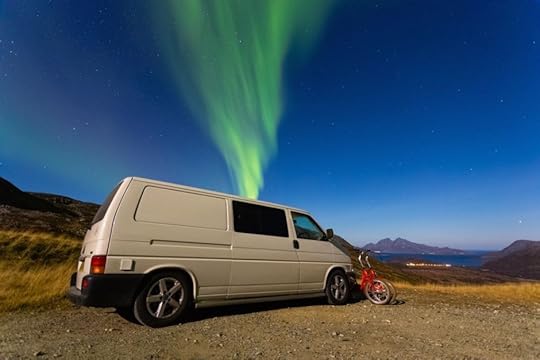
Theo, a professional filmmaker/photographer and Bee, an animal conservationist, left behind their busy city lifestyle for a more nomadic approach to life: exploring Europe and living full-time in their VW T4 campervan. Their aim is to capture some of the most stunning places around Europe and adapt to their surroundings. They blog about life on the road, sharing information and techniques they acquire along the way.
This article is a compilation of images that originally appeared on VDub Van Life — Exploring Europe and is published here with permission.
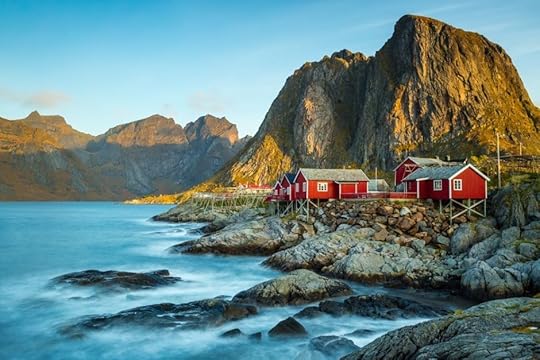
1
Hamnøy
2
#VanLife entertainment
3
Mountains near Tromsø
Intermission
186
12 differences between a normal friend and a Spanish friend
by Ana Bulnes
8
Arctic Swell: Surfing the ends of the earth
by David Miller
15
Exploring the rock churches of Lalibela, Ethiopia
by Darren Ornitz
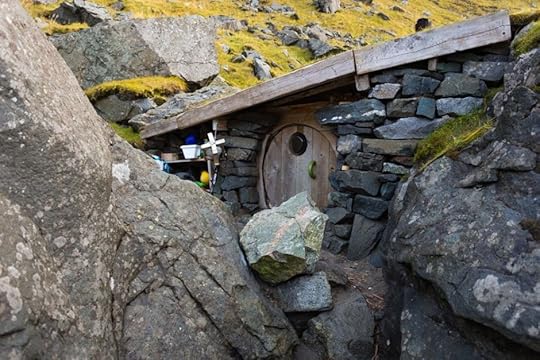
4
Hidden cabin in Kvalvika beach
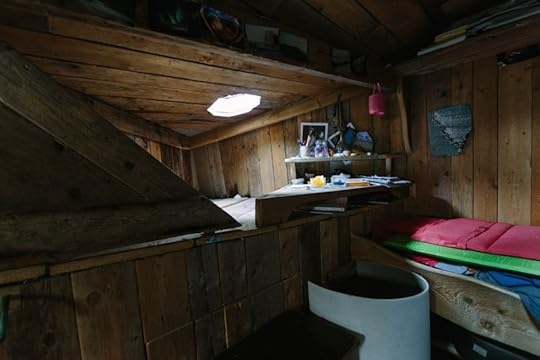
5
Inside the hidden cabin
6
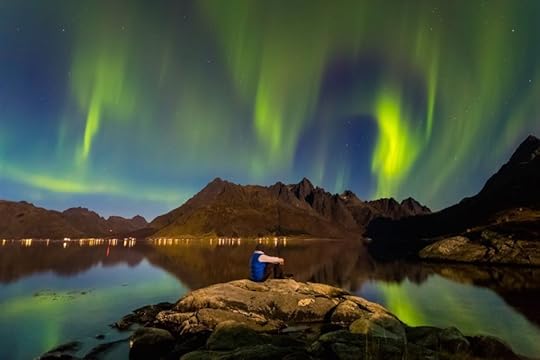
Last Aurora in Lofoten

7
Autumn in Lofoten

8
Unstad
9
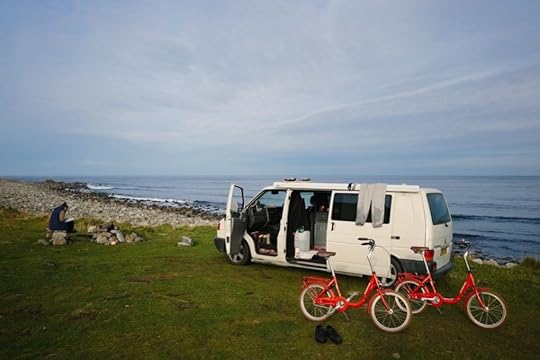
Alternative transport
Intermission
137
The 22 craziest party hostels around the world
by Matt Kepnes
1
Trolltunga, Norway: The most terrifying ledge in the world
by Matt Hershberger
A photographic journey through the Torres del Paine, Patagonia
by Michael Marquand
10
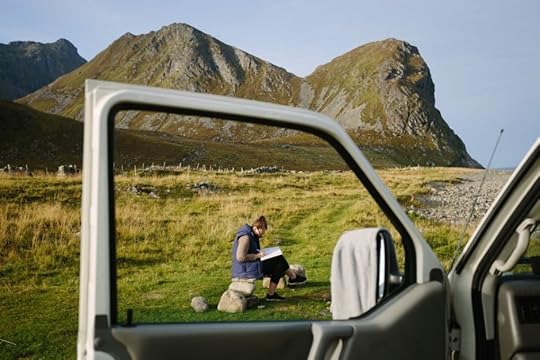
Framed
11
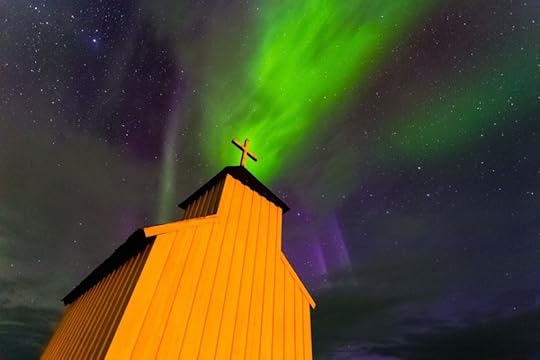
Aurora Borealis above church steeple
12
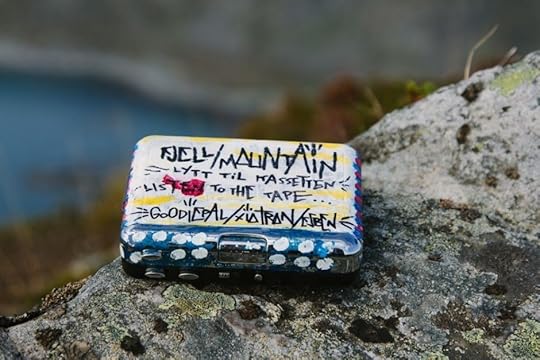
A gift
13
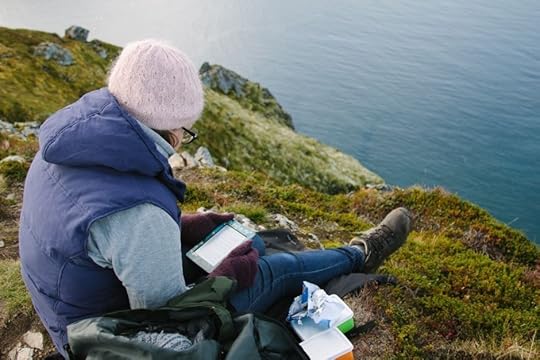
Reading
14
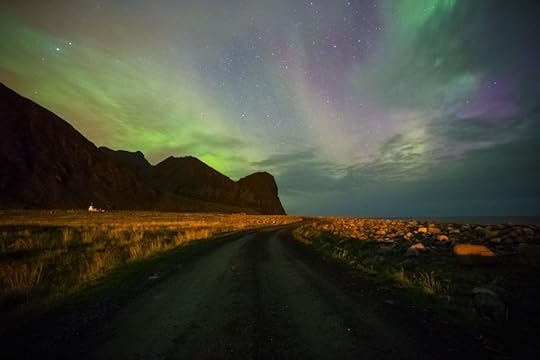
More Aurora
15
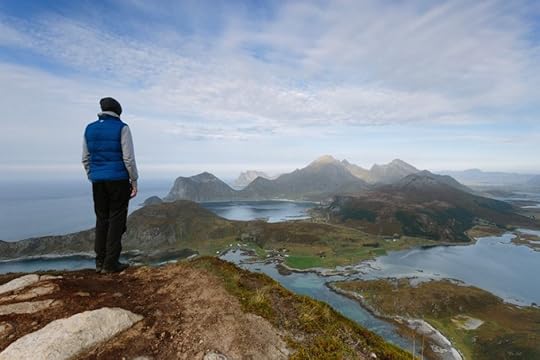
Above it all
Intermission
362
What bartenders actually think of your drink order
by Lisa Millar-Jones
89
How to piss off a Norwegian
by Kenneth Haug
25
Daily life around monasteries in Burma
by Rom Srinivasan
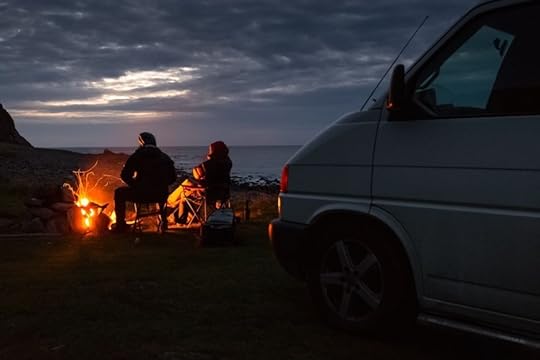
16
Campfire

17
Theo taking in the view from Trolltunga
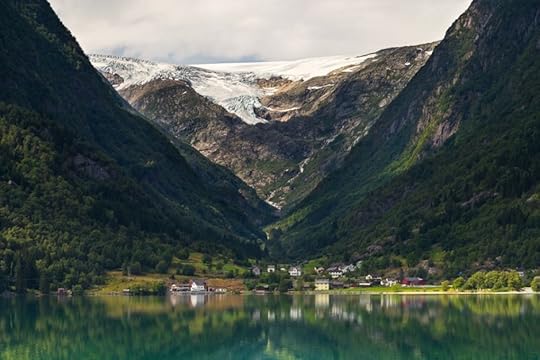
18
Folgefonna glacier, Norway
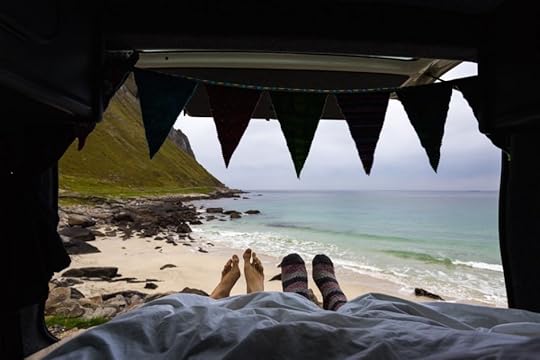
19
Room with a view
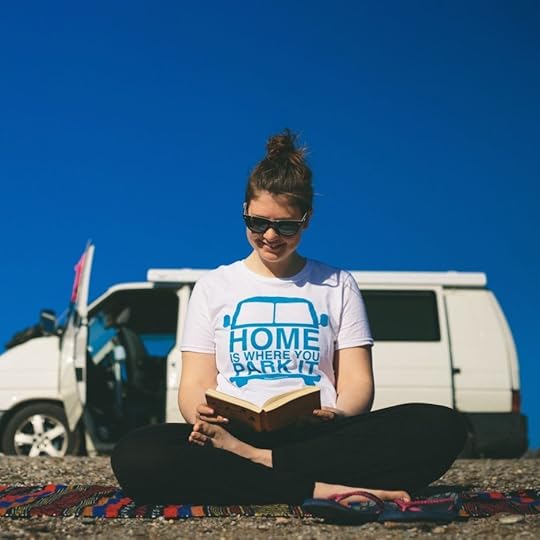
20
Home is where you park it
What it’s like to be a rice farmer
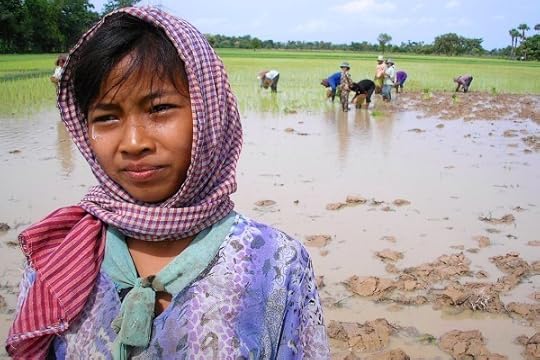
Photo: GilesT1
The world turned blue and green as my sickle swept through rice stalks. Our gang was silent and sweating in the sultry afternoon. The only sound was the crackle of breaking stalks and the slop of feet in monsoon-fed water. An old lady, in baggy pajamas (acceptable daywear in Cambodia), stopped and whirled an armful of stalks into a binding sheaf.
The Southeast Asian landscape is dominated by emerald rice paddies, dotted with workers, bent like apostrophes. From the windows of buses and trains, foreigners gaze at these postcard vistas, and dream about a simpler, more bucolic life.
While some people long to escape rice paddy labor, for many Cambodians, their fields are labors of love that provide sustenance and income. Indeed, the loss of their fields (sometimes through forced eviction) is one of the main reasons people take work at remote factories, and even sometimes fall into prostitution.
I wondered, what is it like to actually work in those fields?
So I joined a family of farmers to harvest one of their fields in Takeo — a province that borders Vietnam. Rice fields fanned out in all directions. Different plots were marked by sticks bearing plastic bags that fluttered like flags. Sown at different different times of the year, some fields were still bright with young plants while others were brown and heavy with grain.
About 75 percent of Cambodia’s 10 million people are farmers. A family typically farms just a few hectares, each of which brings in up to $1,000.
There were six of us. Three generations working together. The youngest was a girl of 10. While drinking with the family the previous night the girl had slapped my shoulder and said, “He is Supheap”. Having received my Cambodian name I reciprocated and named her Daisy. Everyone marveled at such an exotic moniker. Daisy waded purposefully through the paddy.
For the rest of us, too focused on cutting every last stalk to worry about the possibility of catching a water-born parasite, it was a slow, meditative slop through knee-deep sludge. Back-ache would be a concern if the farmers had the luxury of health care and leisure time to worry about such things. But the only person surfacing from the green swathes rubbing his back and complaining was me.
Daisy followed our rushing sickles with a large plastic sheet. Piling the fallen ranks on top, she dragged them to her older brother who waited by a rattling tractor.
There, Supon’s smiling wife, Supea, laid out rice, deep fried eggs, pork and vegetables. We devastated the spread in minutes.
It was sensual work. Silky mud filled the space between each toe. I sopped forward grabbing handfuls of sinewy stalks and slashing them with a flick of the wrist. Broken bunches lay in my wake. The technique wasn’t difficult and within the hour I was slashing with confidence followed only by a tutting grandfather plucking at the many stalks I missed.
Time dilated. The only clock was the hot, vaulting sun. Had it been half an hour or two? Freed from the sound of landing emails and Facebook’s siren call, stress evaporated. The work was like a meditation: grab and cut, grab and cut.
The process was broken only to take photos. I had my camera and Supon, the head of the family, had his white iPhone. With each photo we attempted to catch the ocean in a cup.
Supon was proud of his iPhone. When I took a welcome break from the labor in order to snap shots Supon produced his white gadget and took his own. Supon is a Facebook fiend. He uploaded his pictures before me using Cambodia’s cheap mobile internet. He included captions in broken English like, “Foreigner help my family today, very happy, who like?” (An app that renders Khmer script into Facebook has yet to be written). With over three acres of rice fields to his name Supon is wealthier then his peers who content themselves with cheaper brands of Smartphone that retail around $120.
Each acre produces 8000 pounds of rice in two annual harvests. Most of it feeds Supon’s extended family who, like most Cambodians, eats rice for every meal. Anything left will be sold to buy meat, vegetables and livestock.
Sometimes Supon hires a thundering harvester to do the job, but that day we were cutting by hand. The price of the hire is not so much more than the cost of professional harvesters most families hire to help. They are usually poorer members of the community who have no land. “The harvester strips the grains from the rice but leaves the stalks in the water,” Supon said. “So we also harvest by hand so we can save the stalks to feed to our cows.”
Harvesting is followed by threshing, usually within a day or so. The grains are stripped from the plant by foot and the collected husks are spread in the sun to dry. During harvest season every house is bearded by plastic sheets covered in brown grains. During the final stage of the process the rice is put through a mill to remove the husk.
“I estimate we grow at least 300 varieties of rice in Cambodia,” said Ouk Makara, director of the Cambodian Agricultural Research and Development Institute. “We have different strains depending on whether the rice is grown in the dry season or the wet season.”
The most popular strain grown in the wet season is Cambodian jasmine rice, or Phka Romdoul. In November it was named the world’s best rice for the third year running.
After half a day bent double and sweating, we sliced at the last scraps of the field. A thousand stubs poked out of the water. The afternoon sun shone a net between them. I clasped my smarting back and arched backwards. Supon’s father-in-law stood and smiled with his two remaining teeth. He rubbed his back too.
“Everyone’s back hurts after a while,” said Supon. “Yours will hurt more because you’re not used to it.” A Cambodian proverb posits, “Do not plan to study with the desire to become a government minister… you must study to become a farmer in order to have wealth in the future.”
This points to the reality that for many, cultivating rice is the most available route to financial stability. Its tough work. In Cambodia planting, tending and harvesting is done almost exclusively by hand — it’s not uncommon to see elderly people bent double with arthritis by the end of their lives.
When we finished, we trudged back to Supon’s wooden house. There, Supon’s smiling wife, Supea, laid out rice, deep fried eggs, pork and vegetables. We devastated the spread in minutes.
Their toddler and nephew had eaten already. They tottered around pealing their first phrase, “hop bai” which means “eat rice” but is used to describe all kinds of food. Indeed, rice is so enmeshed in the culture that phatic conversation revolves around it. “Hello, have you eaten rice yet?” is a common greeting.
As evening fell, I reclined in a hammock trying to keep my eyes open. Supon lent over and kissed his wife. His parents-in-law sat on a wooden platform swinging their legs, saying nothing. Every night all three generations sleep on the floor of the single upstairs room.
Despite the problems Cambodia is well-known for, there, in Supon’s house, I didn’t see poor people. Nor did I see denizens of a society struggling towards the promised land of “development.” Supon had attended university in Phnom Penh, his fees met by a wealthy friend, but he dropped out, preferring a traditional lifestyle.
Indeed, if you speak to the migrant workers in the garment factories or on plantations, most long to return to the rural idyll of rice farming and small-holder cultivation. The reasons many don’t are complex — some don’t have enough land to support their large families, others have no land at all and sink to the bottom of society. But there are plenty like Supon, those who have chosen the farmer’s life and who go about its hardships successfully with hearts that brim with happiness.
By Nathan Thompson, GlobalPost
This article is syndicated from GlobalPost.
Matador Network's Blog

- Matador Network's profile
- 6 followers

