Michael Hyatt's Blog, page 183
November 7, 2012
#031: My Advice to Beginning Bloggers [Podcast]


As a result of my book, Platform: Get Noticed in a Noisy World, and my speaking, I get a lot of e-mail about blogging. People want to know what I advise about getting started. In this episode of the podcast, I answer this question.

Photo courtesy of ©iStockphoto.com/Petegar
In my book, I share a social media framework. It consists of three parts:
Home base. This is a place in cyberspace that you own and control. For most people, this will be a blog. It could also be a podcast or a video podcast. It is a place where you have 100 percent control of the design and the content—in other words, the branding and the message.
Embassies. These are places in cyberspace you don’t own and control, but where you have a presence. Examples would include Twitter, Facebook, LinkedIn, Google+, Pinterest, etc. Don’t confuse these with a home base. You don’t want to use these as the primary means of delivering your content to the marketplace.
Outposts. These are places in cyberspace you monitor using a tool like Google Alerts.
Click to Listen

Podcast: Subscribe in iTunes | Play in browser | Download
So, for most people wanting to build a platform, a blog will be their homebase. It is the foundation of everything else they do.
But how do you get started? You can launch a successful blog by taking eight steps.
Determine your blog’s focus. For example:
My blog is about intentional leadership.
My friend, John Saddington, has a blog about entrepreneurship and startups.
My daughter, Mary Crimmins, has a blog about fresh, seasonal, and local food.
My friends at Gap International have a blog about exceptional business performance and growth.
Before determining your focus, answer these two questions:
Can you generate high-quality content with this focus on a regular basis. By “regular” I mean at least once a week. (This is the minimum standard.)
Will your content attract a loyal and growing audience?
Select a service. There are scores of options—WordPress, TypePad, Blogger—but I only recommend WordPress. However, it comes in two flavors:
WordPress.com—the hosted version
WordPress.org—the self-hosted version
To decide which one, answer these questions:
What is your ultimate goal? Is this just a hobby or will this be the basis of your personal or professional platform? If the former, choose WordPress.com. If the latter, choose WordPress.org.
How much control do you want? Self-hosted WordPress provides an unlimited number of themes and plugins. Hosted WordPress provides a more limited set of options.
What is your level of technical proficiency? If you are technologically challenged, choose WordPress.com. If you are a bit of a power-user, choose WordPress.org. Note: You don’t have to be a Geek or a programmer.
If in doubt, start with WordPress.com. You can always upgrade later.
Set up your blog. If you are going the self-hosted route, watch my screencast, “How to Launch a Self-Hosted WordPress Blog in 20 Minutes or Less.”
Then select a theme. With WordPress, you can select from thousands of pre-designed themes and then adjust the details. Chose from one of the major theme providers: WooThemes.com, ElegantThemes.com, StudioPress, or StandardTheme. I am also developing a premium WordPress theme called GetNoticed!, that will be available in a few months.
Remember: a blog is never really done. It is a work in process. Don’t get stuck here. “Perfectionism is the mother of procrastination.”
Write your first post. If you haven’t done a lot of writing, this may prove to be the most difficult part. Keep your posts short if you don’t have a lot of experience. (I recommend less than five hundred words.) Develop momentum. Get the hang of it. Stick to what you know. And you most certainly know more than you think you know!
If you don’t know where else to start, begin with a “Welcome to My Blog” post. Tell your prospective readers why you have started your blog and what kinds of things you intend to write about. Here’s an example of mine: “Welcome to My New Blog.”
Consider using an off-line blogging client. An off-line blogging client is like a word processor for blogging. It enables you to write when you’re not online and then upload your post when you connect to the Internet. You can also schedule posts to run on a specific day and time, which is a very useful function when your schedule is tight or you’d like to take a vacation.
The most popular are Windows Live Writer and BlogJet (for Windows) and


November 6, 2012
8 Leadership Lessons from a Symphony Conductor
A while back, Gail and I went to the Nashville Symphony with our daughter, Mary, and her husband, Chris. Mary had bought tickets for Gail’s birthday. It was a magnificent evening.
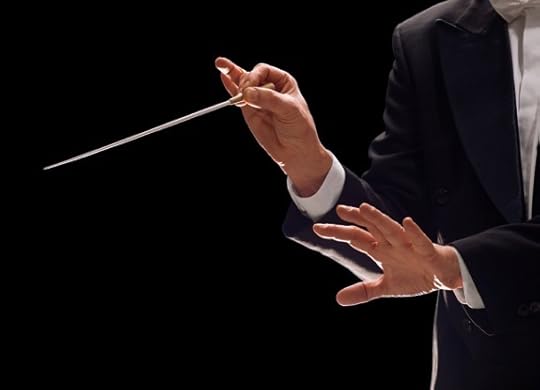
Photo courtesy of ©iStockphoto.com/StudioThreeDots
The orchestra was conducted by the renowned Hugh Wolff. He and the orchestra performed Beethoven’s Concerto No. 4 in G major for Piano and Orchestra. Horacio Guitiérrez played the piano. After the intermission, the orchestra performed Rachmaninoff’s Symphonic Dances, Op. 45.
We had seats on the second row. I was less than twenty feet from Hugh Wolff. I was fascinated just watching him lead the orchestra. Toward the end of the evening, it occurred to me that conducting an orchestra and leading a team have much in common:
The conductor has a plan. Conductors start with a score and a clear idea of how the music should sound. Only then do they attempt to recreate in real time their musical “vision.”
The conductor recruits the best players. Great conductors attract great players. Mediocre conductors attract mediocre players. The very best players want to work for the very best conductors. Like attracts like.
The conductor is visible, so everyone can see him. The conductor stands on a platform, so that every single member of the orchestra can see him. This is the only way the orchestra can stay in alignment, with each player starting and stopping at the appropriate time.
The conductor leads with his heart. Great conductors are swept up in the music. They are passionate. They don’t just play with their head; they also play with their heart. You can read it on their face. You can sense it in their movement. They are fully present and “playing full out.”
The conductor delegates and focuses on what only he can do. The conductor doesn’t do everything. He doesn’t sell the tickets. He doesn’t participate (usually) in the preliminaries. He doesn’t even make sure that the orchestra is in tune. (The concertmaster does that.) He stays off stage until it is time for him to do what only he can do—lead.
The conductor is aware of his gestures and their impact. A conductor can’t afford to make an unintentional gesture. Everything means something. The flick of the wrist, the raising of an eyebrow, and the closing of the eyes all have meaning. A good conductor can’t afford to be careless with his public demeanor.
The conductor keeps his back to the audience. Conductors are aware of the audience but their focus is on the the players and their performance. The only time the conductor stops to acknowledge the audience is before the playing begins and after it is finished. Other than that, he is focused on delivering an outstanding product.
The conductor shares the spotlight. When the concert is over, and the audience is clapping, the conductor turns to the audience and takes a bow. A good conductor immediately turns to the orchestra and invites them to stand and bow as well. He shares the glory with his colleagues, realizing that without them, the music would not be possible.
All of this has direct and immediate application to those of who lead. You might consider attending a symphony with your team and then discussing the implications for how you lead your organization.
Question: How do these items relate to leadership? What else can we learn from conductors?








November 4, 2012
SC Telco Federal Credit Union Annual Meeting [Event]

After speaking at the 2011 SC Telco Federal Credit Union Annual Meeting, I’m excited to be back with them this year. In addition to speaking with their executive team, I will be going deeper on the topic of life planning.
Date:
November 17, 2012
Time:
09:30-11:00 a.m.
Event:
SC Telco Federal Credit Union Annual Meeting
Topic:
Life Plan: Designing the Life You’ve Always Wanted
Sponsor:
SC Telco Federal Credit Union
Venue:
Embassy Suites
Location:
Greenville, SC
Public:
Private



November 3, 2012
I Am Not a Leader (or So I Thought)
This is a guest post by Tammy Helfrich. She is a wife, mom, and writer. She currently works for a Fortune 500 company and helps customers implement new processes. You can read her blog or follow her on Twitter.
“I don’t have a leader title.”
“I don’t have anyone who reports to me.”
“I don’t have experience leading people.”

Photo courtesy of ©iStockphoto.com/shulz
I used to say these things, as an excuse. I used to say I am not a leader. I used to believe I was not a leader.And do you know what happens when you believe that? You’re lying to yourself.
For most of my life, people had told me that I was a good example for others. But I didn’t always believe it. I often kept people at arm’s length. I didn’t allow them in. I didn’t want to get involved in their stories. That required work.
I have discovered over the years that even though I never wanted a leader title, I was a leader to my peers. I worked hard, and I had good relationships. I always did above and beyond what my job required. I got to know my leaders. I kept a positive attitude. I led by example.
In his book, The 360 Degree Leader, John Maxwell talks about the circle of influence you have. Sometimes people within the middle of an organization have more power than those with leadership titles.
I started paying attention to this. I started conversations with leaders at all levels of our organization. I didn’t have a hidden agenda. I simply wanted to learn and let them know I was with them—I believed in them. I wanted to learn from them.
John Maxwell says,
What matters is that we are willing to do what it takes, to make a positive impact wherever we find ourselves in life—to add value in any way we can to others.”
I believe we can all do this. We can be a leader, regardless of what our title says.
How can you be a leader? There are five tactics.
Take ownership. Be responsible for your work. You own the work that you do. You own your processes. When you do this, people start to notice, and you can help lead others to do the same.
Lead by example. Actions speak louder than words. Be the positive voice within your department, rather than the negative one. Encourage others to look at situations with a positive energy.
Talk to leaders in your organization. Don’t expect anything in return. You will be amazed at how many leaders are willing to talk to you. Not only do they want to hear your ideas, but they are typically more than happy to share what has worked for them.
Offer ideas, don’t just report a problem. Be sure to offer a solution. Many of the best solutions to a company’s challenges come from the middle of an organization. Why? Because these are the people who know what truly happens on a day-to-day basis. Leaders who are willing to listen can often create change with the right ideas and solutions.
Encourage coworkers and leaders. Most people will encourage their coworkers. They work side-by-side with them. However, leaders rarely get encouragement, and it can get very lonely at the top. Showing them you care and you are with them really helps. I have been absolutely amazed at the positive responses I have had from leaders who took my encouragement to heart.
You are a leader. Believe you are a leader. Take a small step forward today. You will be amazed at what a difference it will make.
Question: How have you led—apart from your title? You can leave a comment by clicking here.



November 1, 2012
Association for Financial Technology (AFT) 2013 Spring Meeting [Event]
I am looking forward to speaking to the Association for Financial Technology (AFT) on the topic of “Shift: Leading Well In Turbulent Times.” AFT is a volunteer association of industry visionaries, thought leaders, strategic senior managers and delivery professionals from companies that serve the financial services vertical market.
Date:
March 18, 2013
Time:
02:30-03:30 p.m.
Event:
Association for Financial Technology (AFT) 2013 Spring Meeting
Topic:
Shift: Leading in Challenging Times
Sponsor:
Association for Financial Technology
Venue:
Boca Raton Resort and Club
Location:
Boca Raton, FL
Public:
Private



October 31, 2012
#030: 9 Rules for Leading More Productive Meetings [Podcast]
I have attended hundreds of meetings—maybe a few thousand—and led a few hundred, too. Often, meetings seem like a waste of time.

Photo courtesy of ©iStockphoto.com/francisblack
There have been some notable exceptions, and in this episode I talk about what made these meetings different.
Click to Listen
Podcast: Subscribe in iTunes | Play in browser | Download
The good news is that most meetings can be improved. Here is my list of nine rules for leading more productive meetings.
Rule 1: Be fully engaged.
Rule 2: Establish hard edges.
Rule 3: Create a written agenda.
Rule 4: State the desired outcome.
Rule 5: Lead the conversation.
Rule 6: Review the minutes and action items.
Rule 7: Take written minutes.
Rule 8: Clarify action items.
Start each action item with a verb.
Specify the deliverable.
Assign a single owner to each action.
Agree on a due date.
Rule 9: Determine the next meeting date.
Look, improving the quality of meetings takes work. Meetings don’t get better or more productive on their own. Every once in a while we need to step back from the meeting itself and ask, “How can we make our time together more productive?”
We need to be honest. Meetings consume a lot of resources. The more efficient they are, the better the return on our investment.
Listener Questions
Chris Pilon asked, “How can I make conference calls with my team more productive?”
Eric Rheam, “How do I get out of meetings I should not attend?”
Jayson Feltner, “What kind of system do you use for note-taking in meetings?”
John Wilkerson, “What do you do when you are scheduled at the end of a meeting and nothing before really applies?”
Ryan Parker, “How do I hear people but keep the meeting from turning into one long gripe session?”
Scott Reynolds, “How do you take good meetings notes? and How do you process those notes when you get back to your desk?”
Chris Jeub asked, “Is there any progress on your WordPress theme?”
Special Announcements
I created My Tools page in response to the numerous questions I get every week about what hardware, software, and other tools I use to do specific tasks. It is a comprehensive resource page with links to all my tools. If nothing else, it might just stimulate your thinking process.
My next podcast will be on the topic of “My Advice to Beginning Bloggers.” If you have a question about this topic—and want a chance to get on the show—leave me a voicemail message. This is a terrific way to cross-promote YOUR blog or website, because I will link to it, just like I did with the callers in this episode.
Episode Resources
In this episode I mentioned several resources, including:
Screencast: How to Launch a Self-Hosted WordPress Blog in 20 Minutes or Less
Podcast: “How to Become a Happy Person Others Want to Be Around”
Post: “3 Actions You Can Take Now to Shift Your Emotional State”
Post: Recovering the Lost Art of Note Taking
Show Transcript
You can download a complete, word-for-word transcript of this episode here, courtesy of Ginger Schell, a professional transcriptionist, who handles all my transcription needs.
Subscription Links
If you have enjoyed this podcast, please subscribe:

iTunes

Zune

RSS
Your Feedback
If you have an idea for a podcast you would like to see or a question about an upcoming episode, e-mail me.
Also, if you enjoyed the show, please rate it on iTunes and write a brief review. That would help tremendously in getting the word out! Thanks.
Question: What meeting tips do you have to offer that I haven’t covered? You can leave a comment by clicking here.




October 29, 2012
The BEECH Retreat [Event]
I am looking forward to speaking at the BEECH Retreat on the topic of Platform. BEECH is a hands-on event dedicated to empowering bloggers, entrepreneurs, and social media leaders to sharpen their skills, renew their vision, and broaden their influence.
Date:
February 2, 2013
Time:
07:30-08:30 p.m.
Event:
The BEECH Retreat
Topic:
Platform: Get Noticed in a Noisy World
Sponsor:
JJP Holdings, Inc.
Venue:
South Seas Island Resort
Location:
Captiva, FL
Public:
Public
Registration:
Click here to register.
More Info:
Click here for more information.



An Interview with Max Lucado About His New Book, Grace
In my thirty-plus year career in publishing, I have had the privilege of working with a number of amazing authors. One of those is my friend, Max Lucado.
If you can’t see this video in your RSS reader or email, then click here.
In twenty-five years of writing, Max has sold more than 80 million books. His new book, Grace: More Than We Deserve, Greater Than We Imagine, was published by Thomas Nelson last month. In a moment, I’ll tell you about an opportunity to get a free copy.
Recently, I had an opportunity to sit down with Max and talk with about his new book. In this interview, I asked him:
A lot of people say grace has been your life message, do you believe that is accurate?
How has your understanding of grace changed over the years?
What is the difference between saving grace and sustaining grace?
Do you think the average person today understands grace, and if not, what is in the way?
What does grace look like when we experience it and express it?
Where does this book fit into the full scope of your work?
The book really is terrific. Classic Max. And, it’s on a topic that is always refreshing.
Thomas Nelson, Max’s publisher, has agreed to give 50 copies of his new book, Grace: More Than We Deserve, Greater Than We Imagine to my readers. To get a chance at snagging one, you must take the following three actions:
Leave a comment below. Answer the question at the bottom of this post.
Fill out the special form. I have set up a separate contact form to make it convenient for you to provide your mailing address. Please do not put your shipping address in your comment. This will automatically disqualify you.
Twitter a link to this post. You can do so automatically by clicking here. If you don’t have a Twitter account, you can use Facebook.
On Friday, November 2, 2012, I will select 50 people at random. If you are one of those selected, I will notify you via email. If you don’t hear from me, you can assume you were not selected.
Question: What is your understanding of grace and why is it important? You can leave a comment by clicking here.



October 27, 2012
How to Lead a More Balanced Life
This is a guest post by Todd Stocker. He is the Executive Pastor at Trinity Lutheran Church in Hudson, Wisconsin. You can read his blog or follow him on Twitter.
My backside aches this morning. Forty miles of riding a bike with a well worn seat will do that to you. But this pain is nothing compared to what almost happened yesterday.

Photo courtesy of ©iStockphoto.com/TommL
As Kellie and I ventured through the countryside on our twenty-one speeds, we experienced a pain that many people experience in their own personal lives and don’t even know it. Here’s what happened and how it relates to you.
When I’m riding, I have a habit of looking over my shoulder to see if anyone else is coming and also to take a second look at something I just passed. At one point yesterday, traveling twenty mph, I executed my habitual over-the-shoulder look to re-see a beautiful lilac bush.
Turning my gaze forward, I realized I was off balance, heading from the paved path and into the forest where certain death awaited! (Cue dramatic music). A quick correction and I was back on track and not in the hospital. Thank you, Jesus!
The application? Many of you are constantly looking over your shoulder at your past and not keeping your eye on the present and future. Past fears, failures and even success keeps your life off balance and off focus. As a result, moving forward is difficult if even possible.
So how should we keep our balance between our past, present and future? Try this: “Glance at the past. Work in the present. Focus on the future.”
Glance at the past. When I was biking, it occurred to me that my problem wasn’t the look into what I passed but rather the length of the look. Glancing is better than looking. Your past is helpful but don’t get stuck. Remember past events with the attitude of a learner but only briefly. Let yesterday’s success and failure be guides for today’s activities. Five percent of your time should be spent here.
Work in the present. In other words, be in the moment. Establish your priorities and goals and be diligent on what needs to be done today. Seventy percent of your activity should be engaged here.
Focus on the future. Look forward to where you want or need to go. Where your eyes are fixed is where the rest of your “biking” will take you. Twenty-five percent of your focus should be set here.
Finally, remember that God says not to worry about yesterday or tomorrow and not to waste the day that He gave you. He also encourages you and me to enjoy the journey with all of its bumps and success!
Question: What do you tend to spend most of your time—past, present, or future? You can leave a comment by clicking here.



October 24, 2012
#029: 7 Rules for More Effective Slide Presentations [Podcast]
Whether you are a professional speaker or someone who only makes the occasional presentation, you could be more effective with better slides. In this podcast, I share my seven rules for better presentations.
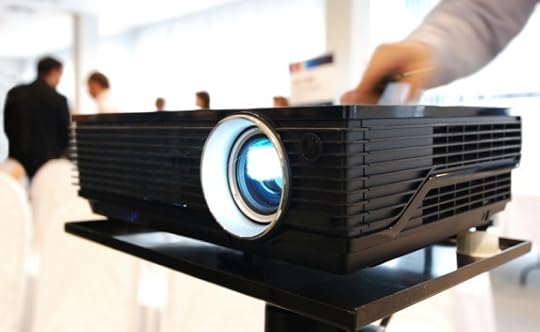
Photo courtesy of ©iStockphoto.com/Arand
I have sat through hundreds of slide presentations, maybe thousands. Some of them were stunning; most of them mind-numbing. I will also share with you from my experience as a professional speaker, who doesn’t have it all figured out but who is committed to never-ending improvement.
Click to Listen
Podcast: Subscribe in iTunes | Play in browser | Download
I originally created slideshows the old-fashioned way—with cardboard-framed, 35mm slides inserted into a slide carousel. In May 1990, Microsoft revolutionized the business world by releasing PowerPoint. It totally changed the way presentations were made.
In 2004, my friend, Joel Smith of Comprehensive Media, first introduced me to Apple’s Keynote program, a competitor to PowerPoint. I was blown away.
But unfortunately, slide presentation software has not improved the quality of speeches. In fact, often it gets in the way.
In this episode I share my seven rules for making your slide presentations more effective.
Make sure you start with a solid presentation.
Don’t give your presentation center stage.
Use big, compelling images.
Stick to one point per slide.
Make your slides readable.
Eliminate clutter.
Antoine de Saint-Exupéry said. “A designer knows he has achieved perfection not when there is nothing left to add, but when there is nothing left to take away.”
Have a backup plan.
Listener Questions
DJ Wade-O asked, “Do you believe there should be a correlation between the length of your presentation and the length of your slide deck?” He also asked, “Do you think you should use the same background and design for every slide deck?”
Dwayne Morris, “Do you agree with Guy Kawasaki that decks should be five slides or less?”
Matt McMoore, “How do you handle main points and sub points?”
Mike Hansen, “What does a bad slide look like?”
Ryan Parker, “What do you use for Skype interviews?”
Scott Kantner, “What kind of pre-flight checklist do you use to address the technical details?”
Special Announcements
I am excited to announce the publication of my new audio course entitled, “Everything You Need to Know to Get Published.” If you have ever thought about writing a book (or even if you have written a book) this course is for you.
In 21 audio sessions, I cover everything I have learned about publishing in my thirty-plus years in the industry as a publisher, former literary agent, and two-time New York Times bestselling author.
I am offering a special $100 discount to my blog readers and podcast listeners. If you order now, I’ll also throw in four FREE bonus products worth more than $150.00.
Click here to find out more.
My next podcast will be on the topic of “How Get the Most Out of the Meetings You Attend.” If you have a question about this topic—and want a chance to get on the show—leave me a voicemail message. This is a terrific way to cross-promote YOUR blog or website, because I will link to it, just like I did with the callers in this episode.
Episode Resources
In this episode I mentioned several resources, including:
Conference: The SCORRE Conference
Web Service: iStockPhoto.com
Web Service: Flickr.com
Web Service: ShutterStock.com
Book: Slide:ology by Nancy Duarte
Book: Resonate by Nancy Duarte
Book: Presentation Zen by Garr Reynolds
Book: Presentation Zen Design by Garr Reynolds
Book: How to Be a Presentation God by Scott Schwertly
Speech: Platform: Get Noticed in a Noisy World
Font: Myriad Pro
Post: How to Record a Video Interview in Eight Steps
Software: Call Recorder for Skype
Hardware: Logitech HD Pro Webcam C910
Hardware: Mac Mini Displayport to VGA
Hardware: Mac Mini Displayport to HDMI
Hardware: Mac Mini DisplayPort to DVI Adapter
Show Transcript
The transcript for this episode is not quite ready. I will upload and link to it when it is.
Subscription Links
If you have enjoyed this podcast, please subscribe:
iTunes
Zune
RSS
Your Feedback
If you have an idea for a podcast you would like to see or a question about an upcoming episode, e-mail me.
Also, if you enjoyed the show, please rate it on iTunes and write a brief review. That would help tremendously in getting the word out! Thanks.
Question: What presentation tips do you have to offer that I haven’t covered? You can leave a comment by clicking here.