
Anne R. Allen's Blog, page 50
October 11, 2015
Marketing Your Book on Social Media? How to Avoid Scams
Self-publishing and social media have empowered writers in ways we never dreamed of a decade ago. They've also forced us to learn a lot of stuff we never used to have to bother our artistic little heads about. These days, whether you're trad-pubbed or indie, the rise of social media has put a lot of […]
The post Marketing Your Book on Social Media? How to Avoid Scams appeared first on Anne R. Allen's Blog... with Ruth Harris.


Marketing Your Book on Social Media? How to Avoid Scams
Self-publishing and social media have empowered writers in ways we never dreamed of a decade ago.
They've also forced us to learn a lot of stuff we never used to have to bother our artistic little heads about.
These days, whether you're trad-pubbed or indie, the rise of social media has put a lot of the responsibility for book "visibility" into the hands of the author. Some of that is goodâit's nice to be in controlâbut a lot of it is a major pain in the patoot. And the wallet.
Unfortunately, the people making the most money from the indie movement these days seem to be the people providing marketing and other services to authors, not the writers themselves.
In the early days of the "Kindle Revolution" we were all wowed by the fabulous Cinderella stories about superstars like Amanda Hocking and John Locke, who put a bunch of ebooks on Amazon, promoted them on free social media sites, and made millions. We were told all we had to do was to make some Facebook friends, put up a snazzy page on MySpace, follow some peeps on Twitter, and bingo! Instant Kindle riches!
Funny how those names are never mentioned any more isn't it? Amanda went over to the Big Five and became an ordinary mid-lister and John Locke lost a lot of cred when it turned out much of his success came from phony paid reviews.
And now, five years later, with tens of thousands of new ebooks being published every week, the market is saturated, e-readers and tablets are packed with more content than we can read in a lifetime, and authors have to learn marketing skills or remain invisible in the ever-swelling marketplace.
These days, most indies are fixated on the power of the freebie book and the bargain-ebook email newsletter. That's because they work for a lot of authors.
For writers who aren't in the publishing game yet, the newsletter campaign works like this: you discount your bookâor make it freeâand buy advertising from a daily newsletter that sends news of your book sale to targeted readers.
Those newsletters are lucrative, and their numbers grow daily: Ereader News Today, Bookbub, Pixel of Ink, FreeBooksy, the Fussy Librarian, Kindle Nation Daily, EBook Bargains UK, Free Kindle Books and Tips, The Books Machine, Books Butterfly, BookGoodies, and ReadCheaply are a few that come to mind, but there are dozens more. The bigger the circulation of the newsletter, the higher the cost of a one-day ad and the tougher it is to be selected as a client.
Bookbub, the Rolls Royce of bargain-ebook newsletters is so selective very few authors can get in, and the prices are prohibitive for new writers (now $2300 for a one-day ad for a $2.99 mystery novel.) The others are effective in some genres and not others. It's always a gamble.
There are some newsletters and promotional sites that charge a lot less than the biggies. Some are free. Some work, some don't, again depending on genre. For some great info on them, check out Nicholas C. Rossis' blogpost on his results from using free book promo sites.
But here's the thing: the benefits of the price reduction promoâwhether or not you advertise in a newsletterâare minimal for a new, single-title author. Price reductions and freebies are most effective if you have a substantial backlist and use the freebie or sale book to introduce readers to an established series.
So what other kinds of marketing can new authors use? What about paying for social media marketing? Is it worthwhile to pay for Twitter ads?
What about Facebook? Forbes reported that Mark Dawson made over $450,000 from his books in 2014 using Facebook advertising as a core part of his book sales process. Can the rest of us do that? What really works in terms of bringing in sales and increasing the bottom line?
What about all these scammy people who sell Twitter followers and Facebook "likes"? How can you tell a real fan from a ghost from a "click farm"?
BTW, the one thing I can tell you does NOT work is asking established authors to promote your book for you. We all have our own books to write and market. Asking frantically busy authors to donate time to promote the books of newbies for free will just get you unfollowed and unfriended.
But paid social media advertising is something else. It seems to be working very well for some people. But how do you make sure the plan you're looking at will work? I haven't tried paid social media ads yet, so I asked award-winning marketing expert Chris Syme to guest post for us today and give us the skinny on how to tell a legit advertiser from a spammer...Anne
How Writers Can Recognize A Social Media Advertising Scamby Chris Syme @CKSyme
When it comes to online advertising, authors are often frustrated. There are so many options, it is hard to recognize the good from the bad. And to top it off, there are differing accounts on what works and what does not. So what's an author to do?
First Things First: What's Really a Scam?
Before we dive into the scams, let's talk about the reality.
Online advertising (including social media) is a fairly new endeavor so it is not surprising that results are not consistent yet.
Facebook advertising has only been available to small businesses for a few years and it is constantly evolving. As a result, consistent best practices are tough to pin down without lots of testing. If you take into account budget, sector (books, sports, beauty products, whatever) goal (website clicks, conversion ads, etc.) and audience, it makes advertising on Facebook a challenge to maneuver. But not impossible.
Yes, some have reached their goals with Facebook ads, and some have not.
That doesn't mean that Facebook advertising is a scam. It can be done correctly and successfully. Facebook's ad platform is built on marketing best practices and if used correctly can be a good channel for supplementing book sales or building an email list.
There are many reasons why some ads fail, but I've found the most common one is when audience, budget, and goal do not match.
The targeted audience is too big or too small. The budget is too small The length of the campaign is too long or short. Maybe you're trying website clicks when you should be using download as a goal.
Going deep into all this is a post for another day. I just want to make the point that ad campaigns do failâ¦everywhere. Print, radio, TV, online, magazine, and emailâall fail if done poorly, but that doesn't mean anybody has been scammed.
Paid advertising takes some skill, so be prepared to spend time learning out how to optimize your chances of success.
(NOTE From Anne: As I've mentioned before, all writers would do well to add copywriting to their skill set these days. We need to learn to sell ourselves in our blurbs and ads. For more on how to write a good blurb, see Ruth Harris's post, 8 Tips for Writing that Killer Blurb. No matter how much you spend on advertising, if the copy doesn't sell the book, we're wasting our money.)
The Good, The Bad, And The Really Ugly
So we've established that sometimes legitimate ad platforms can produce poor results when not used well. But there is a huge difference between ads that fail on legitimate platforms and platforms that are just hype.
In order to recognize the scam platforms we are looking for a couple indicators:
1. Best practices in marketing are clearly violated.
This is where your due diligence comes in. For instance, with a little research from legitimate marketing companies like HubSpot and Buffer, we can find out how to use hashtags (#tags) correctly.
HubSpot, a free source of top marketing research, reported early in 2014 that hashtags can raise the engagement of a post, sometimes by as much as 55%. People wanting to game the system then started a practice called hashtag stuffing where posts consist just of hashtags thinking they were getting peoples' attention.
Buffer, another reliable data source, followed up Hubspot's research seeking to find out how many hashtags were the right number.
They found that TWO were optimum and anything over two caused engagement rates to drop severely. Most people can tell innately that a tweet full of hashtags is annoying but it is nice to have research to validate that gut feeling.
(I ditto that! Tweets full of hashtags make me crazy. I'm so glad to hear they don't even work. So people can stop that now, okay?...Anne)
If you come across a service that uses hashtag stuffing, run the other direction. One that likes to target authors is called Tweet Generator. Another is content.mo whose services I have tested.
A better option is to develop a team of ambassadors on Twitter that will help you magnify your messages. Use your loyal readers to help.
(But make sure they are actually loyal readers. Following random strangers and expecting them to do your advertising won't sell books. But it WILL get you unfollowed...Anne)
Do the work yourself and save your money.
Also, an analysis of this company's top 20 influencers did not produce one account that would be in the market for my books.
My $19 produced zero sales and zero new Twitter followers. Maybe I should have spent more money.
But alas, here's a review from author Stefan Edmunds, who purchased a five-day tweet package. Also no sales.
Scam artists know what they are doing. They are playing on people's pain points and ignorance.
They can build fake followings completely on accounts that follow back automatically. Keep in mind that all you need to start a Twitter account is an email address. It's an ugly, dark business. There is no verification to make sure that real people are setting up accounts. These companies abound on the internet.
Hint: if their website looks like it was put up in ten minutes and has no names of real people behind the company or an about page with contact information, beware.
2. The company uses deceptive marketing messages to fool prospective buyers.
Scamming websites often make outrageous promises about their audiences and their results. If they say they have hundreds of thousands of fans, that doesn't mean that any of them are qualified book buyers.
Or even real people.
Buying followers is also very common (and cheap) on Twitter and many of these followers are fake accounts set up by "farms" of online workers setting up and maintaining fake accounts to service scamming websites. If they say they have 500,000 followers, look at their accounts. See who their followers are.
I ran a test with a couple different promotions just to see what kind of results I could get. The company I used boasts three different Twitter accounts with 375,000 followers.
I want to add that it is fairly easy to amass Twitter followers if you know what you are doing. For instance, this particular company is supposedly followed by LeBron James, according to the report I ran on their followers on the Social Analytics site, Simply Measured.
But the real LeBron James only follows 184 people.
So, on a whim I looked through them all. This company was not there. And, their fake LeBron James has only three million followers while the real King James has 23 million. This LeBron James page is a fake account built to fool people into following. It has been followed by millions of people who think it 's the real thing. At three million, it adds impressive numbers to their fake reach numbers.
If you are really interested in trying a paid Twitter promotion, try one just for authors run by someone with publishing experience. Also try searching for reviews of the company on Google.
Once you learn how to recognize the snake oil, you will save yourself a lot of grief and money.
Not all digital advertising opportunities are created equal. But the first step is being able to distinguish the legitimate offerings from the scams.
If you have a question about advertising platforms, send me an email at chris@cksyme.com. I 'll do my best to find you a good answer.
Chris Syme has over 20 years experience in communications and marketing and is the principal of CKSyme Media Group. She is a former university media relations professional, a frequent speaker on the national stage, and the author of two books on social media: Listen, Engage, Respond and Practice Safe Social 2.0. Her agency won the 2014 SoMe Award for Social Media Agency Of The Year. Her new book, SMART Social Media For Authors is now available on Amazon for pre-order here. You can follow her on Twitter @cksyme and get more information on her agencyâs blog for authors here.
What about you, Scriveners? Do you have any questions for Chris? Have you ever bought an advertising campaign that fizzled? Do you think it was a scam? What advice do you have for new writers who want to advertise their book on a budget?
BOOK OF THE WEEK
Available for pre-order on Amazon
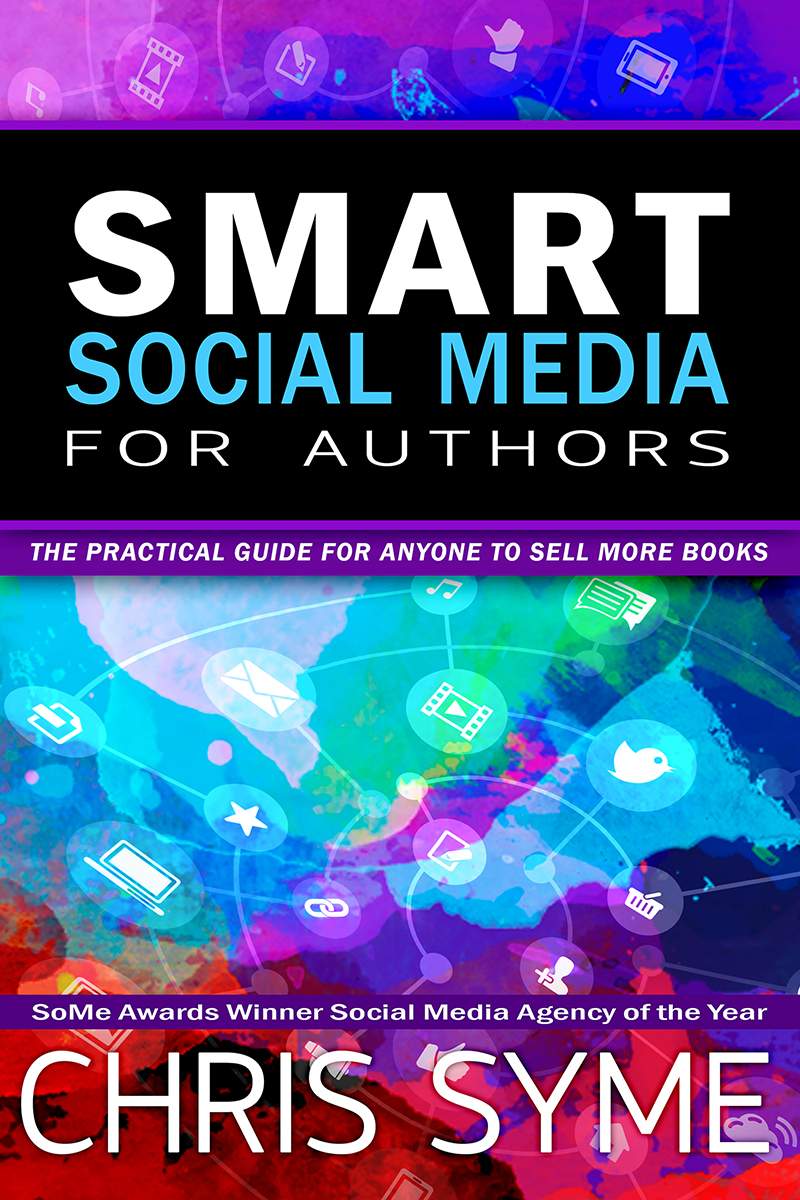
Social media is confusing. You're worn out trying to replicate the success of other authors without much luck. Before you give up, get some common-sense advice from a 20-year marketing veteran.
Author Chris Syme believes that trying to mimic the success of other authors is a dangerous and expensive strategy. If you understand the "why" behind marketing tactics, you'll learn how to make strong marketing decisions that will produce results.
In SMART Social Media For Authors you'll discover:
The five rules of SMART marketing and how to use them to develop your first successful plan How to identify must-have social media channels that fit your goals The fundamental planning steps most authors skip at their peril How to run short- and long-term digital advertising campaigns And much, much more! If you've struggled to make social media work for you, then you'll love Syme's user-friendly, easy-to-implement, and to-the-point social media strategies.
Buy the book to get your marketing on track today!
OPPORTUNITY ALERTS
The Poisoned Pencil: New YA publisher open to submissions! The well-known mystery publisher The Poisoned Pen now has a YA imprint. They accept unagented manuscripts and offer an advance of $1000. Submit through their website submissions manager. Response time is 4-6 weeks.
Open call for the Independent Women Anthology: short stories (flash fiction included), poetry, essays, artwork, or any other woman and/or feminist-centered creative work. 10,000 word max. All genres but explicit erotica. $100 per short story, $50 for flash, poetry, and photography/artwork. All profits will be donated to the Pixel Project Charity to end Violence Against Women. Deadline January 31, 2016 with a goal of publication on International Women's Day, March 8, 2016.
TETHERED BY LETTERS' FALL 2015 LITERARY CONTEST ENTRY FEES: $7-$15 Currently accepting submissions for short stories (1,000 to 7,500 words, open genre), flash fiction (55, 250, or 500 words), and poetry (maximum of three pages per poem). All winners will be published in F(r)iction. All finalists will receive free professional edits and be considered for later publication. The prizes are $500 short story $150 flash fiction, and $150 for poetry. Multiple entries accepted. International submissions welcome. Deadline December 1.
The Ernest Hemingway Flash Fiction Contest. $10 fee Unpublished fiction. 1500 words or less. Simultaneous submissions ARE welcome. All entries will be considered for publication in Fiction Southeast. (a prestigious journal that has published people like Joyce Carol Oates) Winner gets $200 and publication. Deadline: Dec. 1st
Writers' Village International Short Fiction Award winter 2015 . Cash prizes totaling $3200.Ten further Highly Commended entrants will have their stories acknowledged at the site and gain a free entry in the next round. Entry fee $24 INCLUDES A PROFESSIONAL CRITIQUE. Any genre of prose fiction may be submitted up to 3000 words, except plays and poetry. Entries are welcomed worldwide. Multiple entries are permitted. Deadline: November 30th.
The IWSG Short Story Anthology Contest 2015. NO FEE! The top ten stories will be published in an anthology. (Authors will receive royalties on sales.) Eligibility: Any member of the Insecure Writer's Support Group is encouraged to enter â blogging or Facebook member (no fee to join the IWSG). The story must be previously unpublished. Entry is free. Word count: 5000-6000. Theme: Alternate History/Parallel Universe. Deadline: November 1st
MASTERS REVIEW FALL FICTION CONTEST $20 ENTRY FEE. 7000 word limit.The winning story will receive $2,000 and publication on the site. Second and third place stories will receive $200 and $100, publication, and all story winners will receive a critique. Fifteen finalists will be recognized online and have their stories read by the VanderMeers. Deadline October 31.
October 4, 2015
How to Start a Blog in 20 Easy Steps: A Guide for New Author-Bloggers
by Anne R. Allen
This blog almost wasn't here today. On Tuesday, it disappeared. When I loaded the home page, I got a message saying "this page does not exist on this blog."
Panic attack time.
Luckily, my Google Plus friend SEO expert Johnny Base was able to help me get it back up and running and thwart whoever was trying to hack it. Thanks, Johnny!
But I had to go through some painful hours there wondering if I could survive without a blog.
I realize plenty of authors do. I spent a few minutes trying to tell myself, "well...it would give me more time to work on my books...."
But blogging can boost your career in so many ways, as I wrote in my September 13th post, "Does an Author Really Need a Blog?" This blog sure has helped mine.
Plus if you write non-narrative nonfiction like, ahem, How to be a Writer in the E-Age , a blog is pretty essential to your platform.
If you haven't tried it yet, you'll find that creating a blog isn't as hard as you may think.
A lot of blogging advice is aimed at professional bloggers who are looking to make money from the blog itself. They want things slick, flashy, and monetized.
But that's probably not what you want as an author. You want a personal, inviting place where people can visit and get to know youâa home rather than a storefront.
I had to learn blogging by trial and errorâlots of error. Tech people always assume everybody knows the basics, which is why the basics are the hardest part to figure out if you're brand new to all this.
Here's the stuff I wish somebody had told me when I was starting out...
20 Steps To Becoming a Blogger
1) Read Blogs
If you don't do it yet, spend a couple of weeks reading a bunch of writing and publishing blogs before you jump in and create your own. See what you like and don't like.
Blogs written by agents, authors and other industry professionals are great places to educate yourself. They're like a visit to a writers' conference available free any day of the week. And like writers' conferences, they're also good places to network with other writers at all stages of their careersâpeople who can help your own career in dozens of ways.
For suggestions of blogs to visit, see my post "What Should A Novelist Blog About?" I also highly recommend Molly Greene, Jami Gold and Janice Hardy's Fiction University. Their blogs are all full of great information that will be helpful to you whether you plan to self-publish or go the traditional route.
Also, many writer-bloggers have a "blogroll" in their sidebar with a list of other great writing blogs. Start clicking around. If you like what somebody says, click on their name in the comments and you'll probably get their profile and you can go visit their blog.
While you're reading, think of things you might like to say in your own blog. Start jotting down ideas for posts.
You'll want to have several pieces ready to go by the time you launch your own blog.
For non-bloggers who are getting blogposts in their email but may not know how to read an actual blog or see the comments, you can click through the email to the blog by clicking on the header (for our subscribers, it's the title in blue at the top of the email.) That will take you to this blog in its native habitat at blogspot.com.
The advantage of clicking through is that you can read the comments (just click on the word "comments" at the bottom of the post. It will usually say "28 Comments" or whatever the number is.)
For most of you reading right now, that may sound too beginnerish to mention, but we were all beginners once. I remember when I finally figured out how to comment on a blog. It felt like such a triumph. And I'd been reading them for at least six months. Online sites never come with a manual.
Blog comments have a wealth of information. Some of our commenters know much more than we do! And if you leave a comment yourself, that will help you raise your profile and increase name recognition.
2) Get a blogging ID
You may find it tough to comment on some blogs without the proper ID. Ruth and I have recently decided to allow "anonymous" commenting, so if you don't have an ID, you can comment here as "anonymous" and then sign your name at the bottom. But many bloggers don't allow anons because it involves weeding out a lot more spam.
There are a number of ways to get an ID.
Join Google+. It's an easy, no-strings social site where you can participate or not (just unclick "email me" functions if you want to keep participation to a minimum.) This gives you a "user ID" that allows you to comment on most blogs without jumping through all those hoops. Plus when you comment, your Google profile picture will come up and if people click on it, they will go to your Google profile. If that profile has links to your blog, website and books, you may have just made a sale or got a potential blog follower. If you have gmail, it's super easy to sign up, and it's not hard for anybody, even a cybermoron like me. In a guest post written for us by Johnny Base, there's a video showing you exactly how to sign up.Get a Gravatar ID. Gravatar is a universally recognized image that follows you from site to site appearing beside your name when you do things like comment or post on a blog. Clicking on it will lead people to your Gravatar ID, where you can put links to your sites, just like on Google Plus. So when people read a comment, they can click on your image and find you on the Web. ( Although something seems to be weird there right now. When I click on "my profile" it closes the tab. Very mysterious. I assume they'll fix that.) You can also join Wordpress without having a Wordpress blog. You can sign up for a username only account. Unfortunately, Blogger, which is owned by Google, sometimes doesn't accept a Wordpress ID, so a Google ID is better for a Blogger blog. Tech companies always seem to be at war with each other and they don't seem to mind the collateral damage.
3) Comment and interact with other commenters on high profile blogs
You only have to say a few words of agreement (or disagreement, if phrased politely), or offer your own experience about the topic.
Commenting on high traffic blogs is the quickest way to get into search engines. Most of my early mentions on Google came from my comments on other people's blogs.
A comment right here can put your name in front of 5,000 people in a week. It could take many months to reach that many people with a new blog.
Discussions on big blogs can also lead to discussions on your own. Find yourself making a long comment? That's a future blogpost. When you post the comment, you can invite people to discuss the topic further on your own blog.
Support somebody's argument on a high-profile blog and you have a blogfriend. That's how I got my first followers.
4) Choose a blogging platform
The biggest free blogging platforms are WordPress, Tumblr, and Blogger. But there are lots of others to choose from, like SquareSpace, TypePad, LiveJournal, and Weebly. Medium is a newer site that comes highly recommended. WordPress is the most popular.
You can also have a blog on your personal website, or on a writer's forum like Goodreads or SheWrites, but these aren't as likely to be picked up by search engines, so if your goal is to be more visible, I suggest using a blogging platform that's not buried in another site.
I use Blogger (owned by Google, with an address that reads "blogspot.com") because it's the easiest to set up and useâand has templates that are easy to customize. But Blogger does have drawbacks. There's no tech support, so you have to go around to forums asking for help. And you don't have as many choices.
And scary things can happen, like what happened to me this week. Johnny Base tells me when a blog gets to be the size of this one, with up to 100,000 hits a month, it's time to move to a paid web host site. So we'll be doing that in the next few months.
But Blogger has been working fine for us for five years and it works for most authors.
If you prefer to start with a free WordPress blog, you can get step by step instructions here from Jane Friedman. WordPress has the advantage of tech support, and a free blog can be easily converted to a self-hosted (paid) blog if you start getting a lot of traffic. A WordPress blog can also be more easily translated into an ebook.
4) Decide on a focus and tone for your blog.
Blog gurus will tell you to address a niche, but that's not always the best way to start. I think the most important thing is to develop a strong personal voice and be flexible. And don't plan to blog about writing all the time. There are an awful lot of us out here doing just that and you want to provide something fresh.
For more on this check out my post, What Should An Author Blog About?
Beginning author-bloggers form a wonderful community. That community can help you in hundreds of ways, so don't worry too much about seeming like a "professional" blogger right away. Be real, flexible, open and friendly and you can ease into your niche later.
Remember the most successful blogs reveal the writer's personality and provide something useful at the same time. Even if you choose to be a niche blogger like me, keep flexible.
Don't focus on one book or lock yourself into one genre, especially if you're a newbie.
Zombies could invade the second draft of what started out as a cozy mystery. Or a Victorian romance could veer into steampunk. Romance writer Rosa Lee Hawkins might decide to become dark, gritty R. L. Hawk. She won't want to be stuck with that pink, lacy blogâor betray her romance-loving followers. You can always add stuff, but it's harder to take it away.
But note: if you make a big genre change, you can alter everything about a blogâheader, name, template, toneâbut still keep the original url (blog address.) I suggest you do that so you don't lose the search engine attention you've gained so far.
5) Think of a name and tagline.
Don't get too creative here. Make sure you put your own name in the title. Your name is your brand. Yes, I know a lot of blogs have names like "Musing, Meandering and Muttering," but this self-defeating for an author.
Nothing is more annoying than reading a great blogpost and not being able to find out who wrote it. I'm amazed at how many writers are still doing this.
Here's the thing: anywhere you go online, you want to promote your brand, or you're wasting time (time you could be writing that masterpiece that's the reason for all this, remember?) It's OK to be unimaginative like me and call it YOUR NAME's blogâmaybe reducing the ho-hum factor with something like "Susie Smith, Scrivener."
You're doing this to get your name out there, so for goodness sake, put your name on the blog.
6). Choose a couple of photos to decorate the blog.
Use a friendly, professional photo of yourself for your profile, and another for the header to set the tone. And of course post your book covers if you have them for sale.
Try to keep with the same color scheme and general feel when choosing photos.
And make sure they aren't copyrighted! Use your own or use free ones from places like WikiCommons, or you could be hit with a big bill from the copyright holder.
Do think about tone when you choose. If you write MG humor, you don't want your blog looking all dark and Goth, and cheery colors will give the wrong message for that serial killer thriller series. Romance sites don't have to be pink, but they should be warm, inviting and a little sexy or girly.
Also, aim to echo the tone and color of your other social media pages in order to establish a personal "brand" look.
7) Prepare a bio for your "About Me" page.
This is the most important part of your blog. Again, I'm amazed at how many writers don't have one. It's why you're here, remember?
Make it intriguing and funny without giving TMI. You can add some more picsâmaybe of your dog or your funky car. Keep family out unless it's a family or parenting blog. Pseudonyms for kids are a smart idea for protecting their privacy. You can learn more in my post on How to Write an Author Bio.
8) Go to a friend's blog.
If they use Blogger or Wordpress, there will be a link at the top that says "create blog."
9) Click on "create blog."
Follow directions in the window. They're easy. In Blogger anyway.
10) Choose a template.
Don't mess with the design too much, except in terms of colorâa busy blog isn't a place people want to linger. And don't add animation, really big files or anything that takes too long to load. Keep with your color scheme and tone.
11) Pick your "gadgets."
There are lots. But again, keep it simple. I suggest just choosing the basics like "about me", "followers", "subscribe", "share" and "search this blog". "Share" is the thing so people can Tweet or FB or G+ your post. You want this to happen.
You can go back and add anything you want later. Later you'll want your archives and most popular posts. Just go to your "design" tab to find more.
Make sure you add links to your other social media accounts. It's easy if you just add a gadget that will make a link live that gives your Twitter handle (as we do) or says "Like me on Facebook." You can get a Facebook badge from FB, but mine disappeared some time ago. If you Tweet, you can Google "Twitter buttons" to get a cute one. Don't get the animated kind, thoughâthey slow your load time. And be sure to put your actual Twitter handle on the blog somewhere so people who Tweet your posts can attribute them to you.
In a little while, you'll want to install the gadget that posts links to your most popular posts. That makes people want to move around the site and not leave after they've read one thing.
I don't recommend putting your stats on the front page: "42 hits" or whatever. It will only advertise that you're a newbie. Do keep track of your stats on your own dashboard, but remember it takes about a year to get blog traffic going. So don't get discouraged. Yes, you will have weeks when you have two hits. My blog had five hits in its entire first three months.
Checking stats privately is a good idea, so you can see where your traffic is coming from and what posts are popular. If you get a ton of hits from one address (and it's not spam) someone probably posted a link to your blog, so check it out and get a discussion going.
But don't obsess about your traffic. Establishing an audience takes time. Longer than you think. So relax and have fun.
12) Set up privacy settings.
I suggest making no restrictions on comments on new posts. Don't make every comment wait for your approval before it goes live. You won't get a discussion going that way. Monitor your blog yourself instead. I've personally found that 99% of commenters are friendly. And the spambot will take care of a lot of the robo-spam.
I used to suggest turning off the CAPTCHA word verification thingy, but they've improved it so it's not such an infuriating puzzle, so I've put ours back on. Now there's just a box to check to "prove you're not a robot,"
But DO have every comment over a week old sent to you for approval. Old posts attract spam and trolls.
13) Sign up for email notification of new comments
That way you can respond to them in a timely way. If commenters give an email address in their profile (always smart) you can respond to them via email, but I prefer to respond in the comment thread to stimulate discussion.
14) Upload those photos.
But not too many. One per post is good. Unless you're a photojournalist, you're trying to sell yourself as a writer, not a photographer (or a chooser of stock photos.) And NEVER use copyrighted photos. You may get a bill and it won't be cheap.
If you're more of a photographer than a writer, you'll probably prefer Tumblr, which is more about images than text.
And NO MUSIC. People read blogs at work. And on their phones. Even though you're sure everybody on the planet adores the classic oeuvre of the Archies, some of us don't. Trust me on this.
It's that easy. But don't forget to:
15) BOOKMARK your blog
Or you may never find it again. Remember you can't find it with a Google search it until the search spiders have found it. I lost this blog for three months after I started it.
You'd be amazed how many people set up a blog only to have it disappear into cyberspace. If you've done that, it's worth it to go looking for them use the oldest one as the basis for your new blog: it will have some Google cred by now. Then delete the others. You don't want people who Google you to find a dead blog from 2007. They'll think you're deceased.
These days you ARE your Google search page. Don't run the risk of looking like a dead person.
16) Sign in.
When you go back to your blog, click "sign in" in the upper right hand corner. And then hit "design" or "new post" to get inside the blog. That's what they call the "back" of the blog where you do your actual work.
Why is the link that opens the blog labeled "design"? I don't have a clue. That's the kind of thing that sends a non-techie into a panic, but must be obvious to most techies. It may be called something else in Wordpress. Maybe one of the commenters will let us know.
17) Keep to a schedule.
Decide how often you want to blogâI suggest once a week to startâthen do it. Preferably on the same day each week. Most blog gurus will tell you to blog more often, but this is a pretty highly rated blog and I have never blogged more than twice in one week.
I like to do what some people call "slow blogging". It's like the slow food movement. Quality over quantity.
Joining the Slow Blog movement is simple. Start a blog and announce you're planning to post on alternate Tuesdays, or every full moon, or whenever. Or if you already have a blog, next time you miss a few days, tell yourself you didn't FAIL to blog; you SUCCEEDED in joining the Slow Bloggers. All you have to do is skip those boring apologies, and you're in.
18) Write some blogposts.
As I said above, it's a good idea to write several pieces before you start the blog, so you have time to get into a rhythm and you don't fall into the trap of so many one-post would-be bloggers who have those deceased blogs floating around in cyberspace.
If you have four or five posts lined up, you'll give yourself a running start.
I personally write in Word, save it in my documents, and then copy and paste into Blogger.This is because the auto-save is slower than Word's. I learned that the hard way.
But if you compose in Word and paste into Blogger, turn off the "smart quotes" (the curly ones) in Word. It's not that a post won't go live with smart quotes, but they seem to interfere with the rss feed, so your followers won't be able to read the blog in their feed. I'm too much of a cyberemoron to tell you why, but for some reason the rss elves prefer stupid quotes.
So how do you write for a blog?
A post should be from 500-2000 words presented in short, punchy paragraphs. (If you post more often, you can make the posts shorter.)Bulleting, numbering and bolding are your friends. Make a point and present it in a way that's easy to grasp.Use subheaders! That means going up to the toolbar and choosing a format from the drop down menu. In Blogger, you can choose "Normal", "Header" "Subheader", or "Minor Header." Formatting is important because search engine spiders notice properly formatted subheaders and get your post into Google faster.Make sure you link to your sources. And choose good anchor text for those hyperlinks. Don't just say "for more information click here." Say "you can find more information in the article How to choose Anchor Text" and highlight the whole title. (Those aren't actually live links) That's so the search engine spiders will find you. They are looking for live links that tell the search engine something. "Here" doesn't say much. Don't navel-gaze. Offer information and interesting observations. Direct your focus outward, not inward. (And don't expect to get as much traffic for fiction and poetry. People are usually looking for nonfiction and information in blogs.)Don't feel you have to say everything in one post. If you have more to say than fits in one postâgreat! You have material for next time.Keep to one topic per post, because that stimulates conversation more effectively. If you have dozens of short things to sayâTweet them.Ask a question of your readers at the end. It makes people feel involved and stimulates discussion.
19) Go tell those blogfriends you've made that you've got a blog.
Hopefully, a few will follow. Don't despair if you don't get a lot of followers right away. I had maybe ten for my first six monthsâconsisting of my critique group and my mom.
Twitter is one of the best places to promote your blogposts, so if you're not on Twitter, consider joining. Then RT other posts on the same subject you're blogging about. That way you'll get a core of Twitter followers who will want to read your posts.
Facebook is also a great place to promote your blog. If you sign up for Networked blogs, they will post a link to your FB page automatically (as long as you use stupid quotes: their elves don't like smart quotes either.) Google Plus will post a Blogger blog automatically if you link it to your Google Plus account. (But don't link your comments to Google Plus. Then only Google Plus members can comment.)
Any social medium is good for blog promotion. We get a lot of hits from Pinterest, and we're not even on it. We're grateful to followers who post links for us. Thanks!
20) Congratulations. You are now a blogger.
Really. It's that easy.
***
What about you, scriveners? Do any of you regular bloggers have suggestions for newbies? Newbies, do you have any questions? If you're a blogger, what do you find the hardest part of blogging? The easiest?
BOOK OF THE WEEK
BOOMER WOMEN: Three Comedies about a Generation that Changed the World. ONLY 99c for a limited time.

The Lady of the Lakewood Diner, Food of Love and The Gatsby Game, available in one boxed set. 99c at Nook, iTunes and all the Amazons. Also available at Kobo and Scribd
"Canny cultural observation that brings to mind two of my favorite British authors, Barbara Pym and Penelope Fitzgerald. Yes, the humor is there and sometimes spew-your-cocktail funny, but the character depth and plot fulfillment go so far beyond the humor. I felt I knew these people. I felt I was there."...Debra Eve at The Later Bloomer
"I applaud Allen's consistently genuine voice, with accuracy that spells 'that could have been me'. Behind the humor, she is gracefully revolutionary."...Kathleen Keena author of The Play's The Thing.
OPPORTUNITY ALERTS
Open call for the Independent Women Anthology: short stories (flash fiction included), poetry, essays, artwork, or any other woman and/or feminist-centered creative work. 10,000 word max. All genres but explicit erotica. $100 per short story, $50 for flash, poetry, and photography/artwork. All profits will be donated to the Pixel Project Charity to end Violence Against Women. Deadline January 31, 2016 with a goal of publication on International Women's Day, March 8, 2016.
TETHERED BY LETTERS' FALL 2015 LITERARY CONTEST ENTRY FEES: $15 Short Story; $7 Flash Fiction/$15 three Flash Fictions; $7 poem /$15 for three poems. Currently accepting submissions for the short story contest (1,000 to 7,500 words, open genre), flash fiction contest (55, 250, or 500 words), and poetry contest (maximum of three pages per poem). All winners will be published in F(r)iction. All finalists will receive free professional edits on their submission and be considered for later publication. The prizes are $500 (USD) for the short story winner, $150 (USD) for the flash fiction winner, and $150 (USD) for the poetry winner. Multiple entries accepted. International submissions welcome. Deadline December 1.
The Ernest Hemingway Flash Fiction Contest. $10 fee Unpublished fiction. 1500 words or less. Simultaneous submissions ARE welcome. All entries will be considered for publication in Fiction Southeast. (a prestigious journal that has published people like Joyce Carol Oates) Winner gets $200 and publication. Deadline: Dec. 1st
Writers' Village International Short Fiction Award winter 2015 . Cash prizes totaling $3200.Ten further Highly Commended entrants will have their stories acknowledged at the site and gain a free entry in the next round. Entry fee $24 INCLUDES A PROFESSIONAL CRITIQUE. Any genre of prose fiction may be submitted up to 3000 words, except plays and poetry. Entries are welcomed worldwide. Multiple entries are permitted. Deadline: November 30th.
The IWSG Short Story Anthology Contest 2015. NO FEE! The top ten stories will be published in an anthology. (Authors will receive royalties on sales.) Eligibility: Any member of the Insecure Writer's Support Group is encouraged to enter â blogging or Facebook member (no fee to join the IWSG). The story must be previously unpublished. Entry is free. Word count: 5000-6000. Theme: Alternate History/Parallel Universe. Deadline: November 1st
MASTERS REVIEW FALL FICTION CONTEST $20 ENTRY FEE. 7000 word limit.
The winning story will receive $2,000 and publication on the site. Second and third place stories will receive $200 and $100, publication, and all story winners will receive a critique. Fifteen finalists will be recognized online and have their stories read by the VanderMeers. Deadline October 31.
RROFIHE TROPHY NO-FEE SHORT STORY CONTEST NO ENTRY FEE. For an unpublished short story. Minimum word count 3,500; maximum to 5,000 words. Winner receives $500, trophy, announcement and publication on anderbo.com. Deadline October 15.
This blog almost wasn't here today. On Tuesday, it disappeared. When I loaded the home page, I got a message saying "this page does not exist on this blog."
Panic attack time.
Luckily, my Google Plus friend SEO expert Johnny Base was able to help me get it back up and running and thwart whoever was trying to hack it. Thanks, Johnny!
But I had to go through some painful hours there wondering if I could survive without a blog.
I realize plenty of authors do. I spent a few minutes trying to tell myself, "well...it would give me more time to work on my books...."
But blogging can boost your career in so many ways, as I wrote in my September 13th post, "Does an Author Really Need a Blog?" This blog sure has helped mine.
Plus if you write non-narrative nonfiction like, ahem, How to be a Writer in the E-Age , a blog is pretty essential to your platform.
If you haven't tried it yet, you'll find that creating a blog isn't as hard as you may think.
A lot of blogging advice is aimed at professional bloggers who are looking to make money from the blog itself. They want things slick, flashy, and monetized.
But that's probably not what you want as an author. You want a personal, inviting place where people can visit and get to know youâa home rather than a storefront.
I had to learn blogging by trial and errorâlots of error. Tech people always assume everybody knows the basics, which is why the basics are the hardest part to figure out if you're brand new to all this.
Here's the stuff I wish somebody had told me when I was starting out...
20 Steps To Becoming a Blogger
1) Read Blogs
If you don't do it yet, spend a couple of weeks reading a bunch of writing and publishing blogs before you jump in and create your own. See what you like and don't like.
Blogs written by agents, authors and other industry professionals are great places to educate yourself. They're like a visit to a writers' conference available free any day of the week. And like writers' conferences, they're also good places to network with other writers at all stages of their careersâpeople who can help your own career in dozens of ways.
For suggestions of blogs to visit, see my post "What Should A Novelist Blog About?" I also highly recommend Molly Greene, Jami Gold and Janice Hardy's Fiction University. Their blogs are all full of great information that will be helpful to you whether you plan to self-publish or go the traditional route.
Also, many writer-bloggers have a "blogroll" in their sidebar with a list of other great writing blogs. Start clicking around. If you like what somebody says, click on their name in the comments and you'll probably get their profile and you can go visit their blog.
While you're reading, think of things you might like to say in your own blog. Start jotting down ideas for posts.
You'll want to have several pieces ready to go by the time you launch your own blog.
For non-bloggers who are getting blogposts in their email but may not know how to read an actual blog or see the comments, you can click through the email to the blog by clicking on the header (for our subscribers, it's the title in blue at the top of the email.) That will take you to this blog in its native habitat at blogspot.com.
The advantage of clicking through is that you can read the comments (just click on the word "comments" at the bottom of the post. It will usually say "28 Comments" or whatever the number is.)
For most of you reading right now, that may sound too beginnerish to mention, but we were all beginners once. I remember when I finally figured out how to comment on a blog. It felt like such a triumph. And I'd been reading them for at least six months. Online sites never come with a manual.
Blog comments have a wealth of information. Some of our commenters know much more than we do! And if you leave a comment yourself, that will help you raise your profile and increase name recognition.
2) Get a blogging ID
You may find it tough to comment on some blogs without the proper ID. Ruth and I have recently decided to allow "anonymous" commenting, so if you don't have an ID, you can comment here as "anonymous" and then sign your name at the bottom. But many bloggers don't allow anons because it involves weeding out a lot more spam.
There are a number of ways to get an ID.
Join Google+. It's an easy, no-strings social site where you can participate or not (just unclick "email me" functions if you want to keep participation to a minimum.) This gives you a "user ID" that allows you to comment on most blogs without jumping through all those hoops. Plus when you comment, your Google profile picture will come up and if people click on it, they will go to your Google profile. If that profile has links to your blog, website and books, you may have just made a sale or got a potential blog follower. If you have gmail, it's super easy to sign up, and it's not hard for anybody, even a cybermoron like me. In a guest post written for us by Johnny Base, there's a video showing you exactly how to sign up.Get a Gravatar ID. Gravatar is a universally recognized image that follows you from site to site appearing beside your name when you do things like comment or post on a blog. Clicking on it will lead people to your Gravatar ID, where you can put links to your sites, just like on Google Plus. So when people read a comment, they can click on your image and find you on the Web. ( Although something seems to be weird there right now. When I click on "my profile" it closes the tab. Very mysterious. I assume they'll fix that.) You can also join Wordpress without having a Wordpress blog. You can sign up for a username only account. Unfortunately, Blogger, which is owned by Google, sometimes doesn't accept a Wordpress ID, so a Google ID is better for a Blogger blog. Tech companies always seem to be at war with each other and they don't seem to mind the collateral damage.
3) Comment and interact with other commenters on high profile blogs
You only have to say a few words of agreement (or disagreement, if phrased politely), or offer your own experience about the topic.
Commenting on high traffic blogs is the quickest way to get into search engines. Most of my early mentions on Google came from my comments on other people's blogs.
A comment right here can put your name in front of 5,000 people in a week. It could take many months to reach that many people with a new blog.
Discussions on big blogs can also lead to discussions on your own. Find yourself making a long comment? That's a future blogpost. When you post the comment, you can invite people to discuss the topic further on your own blog.
Support somebody's argument on a high-profile blog and you have a blogfriend. That's how I got my first followers.
4) Choose a blogging platform
The biggest free blogging platforms are WordPress, Tumblr, and Blogger. But there are lots of others to choose from, like SquareSpace, TypePad, LiveJournal, and Weebly. Medium is a newer site that comes highly recommended. WordPress is the most popular.
You can also have a blog on your personal website, or on a writer's forum like Goodreads or SheWrites, but these aren't as likely to be picked up by search engines, so if your goal is to be more visible, I suggest using a blogging platform that's not buried in another site.
I use Blogger (owned by Google, with an address that reads "blogspot.com") because it's the easiest to set up and useâand has templates that are easy to customize. But Blogger does have drawbacks. There's no tech support, so you have to go around to forums asking for help. And you don't have as many choices.
And scary things can happen, like what happened to me this week. Johnny Base tells me when a blog gets to be the size of this one, with up to 100,000 hits a month, it's time to move to a paid web host site. So we'll be doing that in the next few months.
But Blogger has been working fine for us for five years and it works for most authors.
If you prefer to start with a free WordPress blog, you can get step by step instructions here from Jane Friedman. WordPress has the advantage of tech support, and a free blog can be easily converted to a self-hosted (paid) blog if you start getting a lot of traffic. A WordPress blog can also be more easily translated into an ebook.
4) Decide on a focus and tone for your blog.
Blog gurus will tell you to address a niche, but that's not always the best way to start. I think the most important thing is to develop a strong personal voice and be flexible. And don't plan to blog about writing all the time. There are an awful lot of us out here doing just that and you want to provide something fresh.
For more on this check out my post, What Should An Author Blog About?
Beginning author-bloggers form a wonderful community. That community can help you in hundreds of ways, so don't worry too much about seeming like a "professional" blogger right away. Be real, flexible, open and friendly and you can ease into your niche later.
Remember the most successful blogs reveal the writer's personality and provide something useful at the same time. Even if you choose to be a niche blogger like me, keep flexible.
Don't focus on one book or lock yourself into one genre, especially if you're a newbie.
Zombies could invade the second draft of what started out as a cozy mystery. Or a Victorian romance could veer into steampunk. Romance writer Rosa Lee Hawkins might decide to become dark, gritty R. L. Hawk. She won't want to be stuck with that pink, lacy blogâor betray her romance-loving followers. You can always add stuff, but it's harder to take it away.
But note: if you make a big genre change, you can alter everything about a blogâheader, name, template, toneâbut still keep the original url (blog address.) I suggest you do that so you don't lose the search engine attention you've gained so far.
5) Think of a name and tagline.
Don't get too creative here. Make sure you put your own name in the title. Your name is your brand. Yes, I know a lot of blogs have names like "Musing, Meandering and Muttering," but this self-defeating for an author.
Nothing is more annoying than reading a great blogpost and not being able to find out who wrote it. I'm amazed at how many writers are still doing this.
Here's the thing: anywhere you go online, you want to promote your brand, or you're wasting time (time you could be writing that masterpiece that's the reason for all this, remember?) It's OK to be unimaginative like me and call it YOUR NAME's blogâmaybe reducing the ho-hum factor with something like "Susie Smith, Scrivener."
You're doing this to get your name out there, so for goodness sake, put your name on the blog.
6). Choose a couple of photos to decorate the blog.
Use a friendly, professional photo of yourself for your profile, and another for the header to set the tone. And of course post your book covers if you have them for sale.
Try to keep with the same color scheme and general feel when choosing photos.
And make sure they aren't copyrighted! Use your own or use free ones from places like WikiCommons, or you could be hit with a big bill from the copyright holder.
Do think about tone when you choose. If you write MG humor, you don't want your blog looking all dark and Goth, and cheery colors will give the wrong message for that serial killer thriller series. Romance sites don't have to be pink, but they should be warm, inviting and a little sexy or girly.
Also, aim to echo the tone and color of your other social media pages in order to establish a personal "brand" look.
7) Prepare a bio for your "About Me" page.
This is the most important part of your blog. Again, I'm amazed at how many writers don't have one. It's why you're here, remember?
Make it intriguing and funny without giving TMI. You can add some more picsâmaybe of your dog or your funky car. Keep family out unless it's a family or parenting blog. Pseudonyms for kids are a smart idea for protecting their privacy. You can learn more in my post on How to Write an Author Bio.
8) Go to a friend's blog.
If they use Blogger or Wordpress, there will be a link at the top that says "create blog."
9) Click on "create blog."
Follow directions in the window. They're easy. In Blogger anyway.
10) Choose a template.
Don't mess with the design too much, except in terms of colorâa busy blog isn't a place people want to linger. And don't add animation, really big files or anything that takes too long to load. Keep with your color scheme and tone.
11) Pick your "gadgets."
There are lots. But again, keep it simple. I suggest just choosing the basics like "about me", "followers", "subscribe", "share" and "search this blog". "Share" is the thing so people can Tweet or FB or G+ your post. You want this to happen.
You can go back and add anything you want later. Later you'll want your archives and most popular posts. Just go to your "design" tab to find more.
Make sure you add links to your other social media accounts. It's easy if you just add a gadget that will make a link live that gives your Twitter handle (as we do) or says "Like me on Facebook." You can get a Facebook badge from FB, but mine disappeared some time ago. If you Tweet, you can Google "Twitter buttons" to get a cute one. Don't get the animated kind, thoughâthey slow your load time. And be sure to put your actual Twitter handle on the blog somewhere so people who Tweet your posts can attribute them to you.
In a little while, you'll want to install the gadget that posts links to your most popular posts. That makes people want to move around the site and not leave after they've read one thing.
I don't recommend putting your stats on the front page: "42 hits" or whatever. It will only advertise that you're a newbie. Do keep track of your stats on your own dashboard, but remember it takes about a year to get blog traffic going. So don't get discouraged. Yes, you will have weeks when you have two hits. My blog had five hits in its entire first three months.
Checking stats privately is a good idea, so you can see where your traffic is coming from and what posts are popular. If you get a ton of hits from one address (and it's not spam) someone probably posted a link to your blog, so check it out and get a discussion going.
But don't obsess about your traffic. Establishing an audience takes time. Longer than you think. So relax and have fun.
12) Set up privacy settings.
I suggest making no restrictions on comments on new posts. Don't make every comment wait for your approval before it goes live. You won't get a discussion going that way. Monitor your blog yourself instead. I've personally found that 99% of commenters are friendly. And the spambot will take care of a lot of the robo-spam.
I used to suggest turning off the CAPTCHA word verification thingy, but they've improved it so it's not such an infuriating puzzle, so I've put ours back on. Now there's just a box to check to "prove you're not a robot,"
But DO have every comment over a week old sent to you for approval. Old posts attract spam and trolls.
13) Sign up for email notification of new comments
That way you can respond to them in a timely way. If commenters give an email address in their profile (always smart) you can respond to them via email, but I prefer to respond in the comment thread to stimulate discussion.
14) Upload those photos.
But not too many. One per post is good. Unless you're a photojournalist, you're trying to sell yourself as a writer, not a photographer (or a chooser of stock photos.) And NEVER use copyrighted photos. You may get a bill and it won't be cheap.
If you're more of a photographer than a writer, you'll probably prefer Tumblr, which is more about images than text.
And NO MUSIC. People read blogs at work. And on their phones. Even though you're sure everybody on the planet adores the classic oeuvre of the Archies, some of us don't. Trust me on this.
It's that easy. But don't forget to:
15) BOOKMARK your blog
Or you may never find it again. Remember you can't find it with a Google search it until the search spiders have found it. I lost this blog for three months after I started it.
You'd be amazed how many people set up a blog only to have it disappear into cyberspace. If you've done that, it's worth it to go looking for them use the oldest one as the basis for your new blog: it will have some Google cred by now. Then delete the others. You don't want people who Google you to find a dead blog from 2007. They'll think you're deceased.
These days you ARE your Google search page. Don't run the risk of looking like a dead person.
16) Sign in.
When you go back to your blog, click "sign in" in the upper right hand corner. And then hit "design" or "new post" to get inside the blog. That's what they call the "back" of the blog where you do your actual work.
Why is the link that opens the blog labeled "design"? I don't have a clue. That's the kind of thing that sends a non-techie into a panic, but must be obvious to most techies. It may be called something else in Wordpress. Maybe one of the commenters will let us know.
17) Keep to a schedule.
Decide how often you want to blogâI suggest once a week to startâthen do it. Preferably on the same day each week. Most blog gurus will tell you to blog more often, but this is a pretty highly rated blog and I have never blogged more than twice in one week.
I like to do what some people call "slow blogging". It's like the slow food movement. Quality over quantity.
Joining the Slow Blog movement is simple. Start a blog and announce you're planning to post on alternate Tuesdays, or every full moon, or whenever. Or if you already have a blog, next time you miss a few days, tell yourself you didn't FAIL to blog; you SUCCEEDED in joining the Slow Bloggers. All you have to do is skip those boring apologies, and you're in.
18) Write some blogposts.
As I said above, it's a good idea to write several pieces before you start the blog, so you have time to get into a rhythm and you don't fall into the trap of so many one-post would-be bloggers who have those deceased blogs floating around in cyberspace.
If you have four or five posts lined up, you'll give yourself a running start.
I personally write in Word, save it in my documents, and then copy and paste into Blogger.This is because the auto-save is slower than Word's. I learned that the hard way.
But if you compose in Word and paste into Blogger, turn off the "smart quotes" (the curly ones) in Word. It's not that a post won't go live with smart quotes, but they seem to interfere with the rss feed, so your followers won't be able to read the blog in their feed. I'm too much of a cyberemoron to tell you why, but for some reason the rss elves prefer stupid quotes.
So how do you write for a blog?
A post should be from 500-2000 words presented in short, punchy paragraphs. (If you post more often, you can make the posts shorter.)Bulleting, numbering and bolding are your friends. Make a point and present it in a way that's easy to grasp.Use subheaders! That means going up to the toolbar and choosing a format from the drop down menu. In Blogger, you can choose "Normal", "Header" "Subheader", or "Minor Header." Formatting is important because search engine spiders notice properly formatted subheaders and get your post into Google faster.Make sure you link to your sources. And choose good anchor text for those hyperlinks. Don't just say "for more information click here." Say "you can find more information in the article How to choose Anchor Text" and highlight the whole title. (Those aren't actually live links) That's so the search engine spiders will find you. They are looking for live links that tell the search engine something. "Here" doesn't say much. Don't navel-gaze. Offer information and interesting observations. Direct your focus outward, not inward. (And don't expect to get as much traffic for fiction and poetry. People are usually looking for nonfiction and information in blogs.)Don't feel you have to say everything in one post. If you have more to say than fits in one postâgreat! You have material for next time.Keep to one topic per post, because that stimulates conversation more effectively. If you have dozens of short things to sayâTweet them.Ask a question of your readers at the end. It makes people feel involved and stimulates discussion.
19) Go tell those blogfriends you've made that you've got a blog.
Hopefully, a few will follow. Don't despair if you don't get a lot of followers right away. I had maybe ten for my first six monthsâconsisting of my critique group and my mom.
Twitter is one of the best places to promote your blogposts, so if you're not on Twitter, consider joining. Then RT other posts on the same subject you're blogging about. That way you'll get a core of Twitter followers who will want to read your posts.
Facebook is also a great place to promote your blog. If you sign up for Networked blogs, they will post a link to your FB page automatically (as long as you use stupid quotes: their elves don't like smart quotes either.) Google Plus will post a Blogger blog automatically if you link it to your Google Plus account. (But don't link your comments to Google Plus. Then only Google Plus members can comment.)
Any social medium is good for blog promotion. We get a lot of hits from Pinterest, and we're not even on it. We're grateful to followers who post links for us. Thanks!
20) Congratulations. You are now a blogger.
Really. It's that easy.
***
What about you, scriveners? Do any of you regular bloggers have suggestions for newbies? Newbies, do you have any questions? If you're a blogger, what do you find the hardest part of blogging? The easiest?
BOOK OF THE WEEK
BOOMER WOMEN: Three Comedies about a Generation that Changed the World. ONLY 99c for a limited time.
.jpg)
The Lady of the Lakewood Diner, Food of Love and The Gatsby Game, available in one boxed set. 99c at Nook, iTunes and all the Amazons. Also available at Kobo and Scribd
"Canny cultural observation that brings to mind two of my favorite British authors, Barbara Pym and Penelope Fitzgerald. Yes, the humor is there and sometimes spew-your-cocktail funny, but the character depth and plot fulfillment go so far beyond the humor. I felt I knew these people. I felt I was there."...Debra Eve at The Later Bloomer
"I applaud Allen's consistently genuine voice, with accuracy that spells 'that could have been me'. Behind the humor, she is gracefully revolutionary."...Kathleen Keena author of The Play's The Thing.
OPPORTUNITY ALERTS
Open call for the Independent Women Anthology: short stories (flash fiction included), poetry, essays, artwork, or any other woman and/or feminist-centered creative work. 10,000 word max. All genres but explicit erotica. $100 per short story, $50 for flash, poetry, and photography/artwork. All profits will be donated to the Pixel Project Charity to end Violence Against Women. Deadline January 31, 2016 with a goal of publication on International Women's Day, March 8, 2016.
TETHERED BY LETTERS' FALL 2015 LITERARY CONTEST ENTRY FEES: $15 Short Story; $7 Flash Fiction/$15 three Flash Fictions; $7 poem /$15 for three poems. Currently accepting submissions for the short story contest (1,000 to 7,500 words, open genre), flash fiction contest (55, 250, or 500 words), and poetry contest (maximum of three pages per poem). All winners will be published in F(r)iction. All finalists will receive free professional edits on their submission and be considered for later publication. The prizes are $500 (USD) for the short story winner, $150 (USD) for the flash fiction winner, and $150 (USD) for the poetry winner. Multiple entries accepted. International submissions welcome. Deadline December 1.
The Ernest Hemingway Flash Fiction Contest. $10 fee Unpublished fiction. 1500 words or less. Simultaneous submissions ARE welcome. All entries will be considered for publication in Fiction Southeast. (a prestigious journal that has published people like Joyce Carol Oates) Winner gets $200 and publication. Deadline: Dec. 1st
Writers' Village International Short Fiction Award winter 2015 . Cash prizes totaling $3200.Ten further Highly Commended entrants will have their stories acknowledged at the site and gain a free entry in the next round. Entry fee $24 INCLUDES A PROFESSIONAL CRITIQUE. Any genre of prose fiction may be submitted up to 3000 words, except plays and poetry. Entries are welcomed worldwide. Multiple entries are permitted. Deadline: November 30th.
The IWSG Short Story Anthology Contest 2015. NO FEE! The top ten stories will be published in an anthology. (Authors will receive royalties on sales.) Eligibility: Any member of the Insecure Writer's Support Group is encouraged to enter â blogging or Facebook member (no fee to join the IWSG). The story must be previously unpublished. Entry is free. Word count: 5000-6000. Theme: Alternate History/Parallel Universe. Deadline: November 1st
MASTERS REVIEW FALL FICTION CONTEST $20 ENTRY FEE. 7000 word limit.
The winning story will receive $2,000 and publication on the site. Second and third place stories will receive $200 and $100, publication, and all story winners will receive a critique. Fifteen finalists will be recognized online and have their stories read by the VanderMeers. Deadline October 31.
RROFIHE TROPHY NO-FEE SHORT STORY CONTEST NO ENTRY FEE. For an unpublished short story. Minimum word count 3,500; maximum to 5,000 words. Winner receives $500, trophy, announcement and publication on anderbo.com. Deadline October 15.
September 27, 2015
Style That Doesn't go out of Fashion: Style Sheets, Style Guides, and Why Audrey Hepburn Style is a Writerâs Best Friend
by Ruth Harris
What's a Style Sheet?
Look, guys, I don't want to freak you out but, if you're writing a book (or a short story or a novella), you need a style sheet.
If you plan to self-pub, a style sheet will save your sanity while you're writingâand after because a style sheet will save you time and money when you hire a copy editor. If you want to try trad-pubbing, you'll need a style sheet, too. Publishers have cut back staffs and copyediting, like a lot of things, ain't what it used to be.
In case you don't know what a style sheet is and maybe have never even heard of one, a style sheet is a list of all the important dataânames, addresses, dates, people and placesâin your manuscript. Creating a style sheet is straightforward: the first time a character or place name (or any other data) is mentioned, add it to a list. That list is your style sheet. Simple as that.
Your style sheet is a road map to your book, a quality-control tool that provides coherence and consistency.
Analogous to continuity in a movie, your style sheet will ensure, among other things, that your characters don't suddenly change names, marital status or political affiliationâor worseâin the middle of your novel. Trust me, it happens.
Like this: Your MC is James Q. Black. You don't want him to suddenly to become Jimmy Z. Brown and confuse the hell out of your reader or the agent or editor you're trying to sell. Because, guess what?, the reader will get confused and give up or you won't make the sale. A style sheet will save you from the vagaries of memoryâand from yourself.
Or this:
Example #1: You want to make certain your reader knows exactly which character is facing an attack by alien hordes while dangling off the edge of a cliff by the fingertips. Is it James Q. or Jimmy Z, or, god forbid, Jane Z.âreader wants to know!Example #2: Your heroine, Suzie Smith, lives at 21 Main Street. Add Suzie Smith plus her address to your style sheet. Will save you from calling her Suzy Smith a few chapters later and makes sure you refer to her address as 21 Main Street. Not twenty-one Main Street. And certainly not 22 Maine Avenue.Example #3: Suzie's bff, Marianne, works at Lulu's Bakery. Add Marianne and Lulu's Bakery to your style sheet. Because if you don't, you risk glitches like: Mary Ann? Who's dat and what's she doing in this story? Loulou's Bakery? What's dat and what's it doing in this story? A confused reader is a reader who's going to love bomb you with a five-star review? Nope.
Character descriptions that ensure a blonde is blonde (unless a change in hair color is critical to the plot) can also be included in your style sheet. A six foot tall zombie is six feet, not five six. A scar on the right side of your gunslinger's face stays on the right side, doesn't wander over to the left or completely disappear (at least not without a credible explanation).
Style sheets how-tos.
Fiction editor Beth Hill, explains her approach to style sheets at the editor's blog and offers some useful how-tos.Author Lou Belcher tells how to set up a style sheet before you start writing.Katherine O'Moore-Klopf of KOK edit shares a detailed and helpful pdf of a Pocket Books style sheet.Deanna Hoak, star sf/f copyeditor of award-winning bestsellers, discusses the importance of style sheets.Thanks to Sara Lancaster for her FREE downloadable template.
Style guide or style sheet. There's a difference?
Well, yeah, although IRL sometimes there is overlap. Generally speaking, though, a style sheet keeps track of the nuts and bolts: 21 Main Street not twenty-one Main Street or 22 Maine Street, remember?
A style guide, OTOH, offer suggestions about how to write. Some publishers provide a style guide, a sort of house rules for writers.
To get started, acquaint yourself with a few tried and tested classics.
This FREE style guide from The Economist emphasizes clarityâa goal every writer is (or should be) aiming for.The New York Times Style Guide ($13)A useful overview of the AP Style guide.An entertaining consideration of the difference between a diaeresis and an umlaut (don't forget the diphthong!) in The New Yorker .This FREE download of Fowler's Modern English Usage covers grammar, syntax, style, word choice, and advice on usage.How to choose a style guide.William Strunk's classic The Elements Of Style FREE download.Elmore Leonard's beloved classic 10 Rules of Writing is a style guide with the stated goal of keeping the writer invisible to the reader.The Guardian's Rules For Writers series includes the thoughts of writers like Zadie Smith and Hilary Mantel, Margaret Atwood and Michael Moorcock.Here are rules for writing dialogue and William Safire's witty Rules for Writers.Writing teacher Roy Peter Clark reflects on the power of the short sentence.
Just remember, rules and style guides are suggestions, not iron-clad laws. Once you know them and use them confidently, you can (maybe) break them as long as you know what you're doing.
Audrey Hepburn style and why it matters.
What did Audrey do that no one else didâor could do? She looked like herself. On purpose. Period.
Barbra Streisand and Diana Vreeland and Tilda Swinton are other examples. Among the men, think of Salvador Dali, Andy Warhol and Woody Allen. Include Joan Didion and Joan Rivers, Steve McQueen and Steve Buscemi. And don't forget Grace Coddington, Steve Jobs, Diana Ross, David Geffen, Jackie Onassis, Tom Wolfe, Lauren Hutton, the Kardashians.
Style icons don't look like anyone else, they look like themselves and no one else. They do not follow trends, they set them. They are not fashion victims but style leaders.
They are unique and instantly identifiable. They don't fear owning their own wavy/frizzy/stick straight hair, scrawny/fleshy/muscular body, big nose/thick lips/long chin. They understand that the key to standing out is to work with what they have and to be the best version of themselves. On purpose.
What does style and looking like yourself on purpose have to do with writing and selling books?
In the tsunami/avalanche/crap ton of books being published and a flattening market as noted in a recent post by Porter Anderson, the big question is: how can your book stand out?
Style is how. Style is not fashion and style is not some fad that's here today, gone tomorrow. Style is enduring, unique, recognizable, desirable and, most of all, authentic. For a writer, style is writing like yourself. On purpose.
Consider Elmore Leonard and Ernest Hemingway, Tom Wolfe, Jackie Collins, Janet Evanovich, Robert B. Parker, and Raymond Chandler: each one has developed an immediately recognizable style.
Finding your own style isn't quick and it isn't easy. Which doesn't mean it's impossible. Or, even worse, no fun.
Stephen King has an answer to the question of why developing a style of your own can be difficult: "Good writing is often about letting go of fear and affectation."
When you write, are you afraid of what critics/your Mom/a reviewer/your crit group will say? Do you feel pressured to prove to the world how smart you are and how brilliant your prose? Do you want to impress a Paris Review critic or your high school English teacher?
Do you shrink from ideas that seem too far out/too freaky/too scary/too ordinary/too done-to-death? You know what I mean: boy meets girl, boy loses girl, boy gets girl. You don't want to write that. Not again.
Or do you?
And you do know, don't you, there there are maybe 7 basic plots?
Are you holding yourself back from developing a unique style because you're afraid? Of what? Of the nay-saying phantoms in your head? Of what "people" will say? Do you cringe from imagined hostile reviews?
Is your writing suffering because you're afraid of what people you don't even know much less care about are going to think?
Does the thought of a one-star review send you to the shrink?
Do you want to hide or do you want to shine?
Now you're beginning to see what I'm getting at, aren't you?
But, you say, if I let go, if I indulge my nuttiest, weirdest, furthest-out or done-a-million-times idea, people will laugh at me, sneer at me, think I'm crazy, call me untalented.
The fact is, you're right. Only a few examples needed to make the point:
Jackson Pollock was ridiculed and called "Jack the Dripper."Picasso's Cubist paintings were considered "shocking."Elvis Presley was considered "vulgar" and his performances were censored and even cancelled because he was said to be a threat to the morals of American youth.And let's not even go into all the huge bestsellers (Harry Potter, anyone?) that were rejected over and over before finding their readers.
Mahatma Gandhi reduced the outraged, you-can't-do-that reactions to a formula: "First they ignore you, then they laugh at you, then they fight you, then you win."
So then what?
How do you develop a style of your own?
The obvious answer is that a writer must face his or her fears. Booze is popular. So is chocolate. But, honestly, don't both seem a bit passé in this time of organic, grass fed, artisanal, gluten-free Everything?
The advice of an in-demand sports psychologist gave me an idea for a different approach. Why not accentuate the positive? Why not conquer fear with confidence?
The psychologist's theory is that if a golfer is a good putter, s/he should practice putting until s/he becomes a superb putter? This expert's approach was not to focus on correcting an athlete's weaknesses, but on polishing his/her strengths.
Writers can take the same approach: write what you're good at. To bring the end of this post back to the beginning, as you polish what you're already do wellânarrative, dialogue, characterization, humor, horror, thrills, romanceâyou'll will inevitably hone and define a style. It will be as individual as a fingerprint, as recognizable as Streisand, Tilda or Audrey and you will develop it by doing what you like bestâand by practicing what you're already good at.
Simple, yet not so simple, and, yet, eminently do-able.
Plus, like many of the best things in life, style is FREE.
What about you, Scriveners? Do you have a distinctive style? Did you experiment with several before you came up with one that's really "you"? Have you ever changed a character's name and forgotten to go back and change it? (I once sent a partial to an agent where the heroine's name changed halfway through. Ack!)...Anne
BOOK OF THE WEEK
When it comes to style, you can't beat Chanel. Read The Chanel Caper by Ruth Harris for only $2.99 on all the Amazons
Chick Lit for Chicks Who Weren't Born Yesterday
Here's what USA Today bestseller, Vanessa Kelly says about The Chanel Caper in Love Rocks:
"The Chanel Caper is a romantic comedy, a thriller, and a send-up of the big city lifestyle in the wake of the global financial crisis. All the disparate elements of this very funny story are tethered by the engaging Blake, a smart, sensible, and dryly witty heroine intent on saving her marriage. It's definitely a romance for the grownups, set against the backdrop of the bright lights of the city that never sleeps."
OPPORTUNITY ALERTS
The Ernest Hemingway Flash Fiction Contest. $10 fee Unpublished fiction. 1500 words or less. Simultaneous submissions ARE welcome. All entries will be considered for publication in Fiction Southeast. (a prestigious journal that has published people like Joyce Carol Oates) Winner gets $200 and publication. Deadline: Dec. 1st
Writers' Village International Short Fiction Award winter 2015 . Cash prizes totaling $3200.Ten further Highly Commended entrants will have their stories acknowledged at the site and gain a free entry in the next round. Entry fee $24 INCLUDES A PROFESSIONAL CRITIQUE. Any genre of prose fiction may be submitted up to 3000 words, except plays and poetry. Entries are welcomed worldwide. Multiple entries are permitted. Deadline: November 30th.
The IWSG Short Story Anthology Contest 2015. NO FEE! The top ten stories will be published in an anthology. (Authors will receive royalties on sales.) Eligibility: Any member of the Insecure Writer's Support Group is encouraged to enter â blogging or Facebook member (no fee to join the IWSG). The story must be previously unpublished. Entry is free. Word count: 5000-6000. Theme: Alternate History/Parallel Universe. Deadline: November 1st
RROFIHE TROPHY NO-FEE SHORT STORY CONTEST NO ENTRY FEE. For an unpublished short story. Minimum word count 3,500; maximum to 5,000 words. Winner receives $500, trophy, announcement and publication on anderbo.com. Deadline October 15.
Glimmer Train Press Family Matters Prize: $1,500 and publication in Glimmer Train. Entry fee $18. Stories up to 12,000 words: about families of all configurations. Deadline: September 30.
Tom Howard/Margaret Reid Poetry Contest $4,000 in prizes. Entry fee $10 per poem. Submit poems in modern and traditional styles, up to 250 lines each. Deadline: September 30.
What's a Style Sheet?
Look, guys, I don't want to freak you out but, if you're writing a book (or a short story or a novella), you need a style sheet.
If you plan to self-pub, a style sheet will save your sanity while you're writingâand after because a style sheet will save you time and money when you hire a copy editor. If you want to try trad-pubbing, you'll need a style sheet, too. Publishers have cut back staffs and copyediting, like a lot of things, ain't what it used to be.
In case you don't know what a style sheet is and maybe have never even heard of one, a style sheet is a list of all the important dataânames, addresses, dates, people and placesâin your manuscript. Creating a style sheet is straightforward: the first time a character or place name (or any other data) is mentioned, add it to a list. That list is your style sheet. Simple as that.
Your style sheet is a road map to your book, a quality-control tool that provides coherence and consistency.
Analogous to continuity in a movie, your style sheet will ensure, among other things, that your characters don't suddenly change names, marital status or political affiliationâor worseâin the middle of your novel. Trust me, it happens.
Like this: Your MC is James Q. Black. You don't want him to suddenly to become Jimmy Z. Brown and confuse the hell out of your reader or the agent or editor you're trying to sell. Because, guess what?, the reader will get confused and give up or you won't make the sale. A style sheet will save you from the vagaries of memoryâand from yourself.
Or this:
Example #1: You want to make certain your reader knows exactly which character is facing an attack by alien hordes while dangling off the edge of a cliff by the fingertips. Is it James Q. or Jimmy Z, or, god forbid, Jane Z.âreader wants to know!Example #2: Your heroine, Suzie Smith, lives at 21 Main Street. Add Suzie Smith plus her address to your style sheet. Will save you from calling her Suzy Smith a few chapters later and makes sure you refer to her address as 21 Main Street. Not twenty-one Main Street. And certainly not 22 Maine Avenue.Example #3: Suzie's bff, Marianne, works at Lulu's Bakery. Add Marianne and Lulu's Bakery to your style sheet. Because if you don't, you risk glitches like: Mary Ann? Who's dat and what's she doing in this story? Loulou's Bakery? What's dat and what's it doing in this story? A confused reader is a reader who's going to love bomb you with a five-star review? Nope.
Character descriptions that ensure a blonde is blonde (unless a change in hair color is critical to the plot) can also be included in your style sheet. A six foot tall zombie is six feet, not five six. A scar on the right side of your gunslinger's face stays on the right side, doesn't wander over to the left or completely disappear (at least not without a credible explanation).
Style sheets how-tos.
Fiction editor Beth Hill, explains her approach to style sheets at the editor's blog and offers some useful how-tos.Author Lou Belcher tells how to set up a style sheet before you start writing.Katherine O'Moore-Klopf of KOK edit shares a detailed and helpful pdf of a Pocket Books style sheet.Deanna Hoak, star sf/f copyeditor of award-winning bestsellers, discusses the importance of style sheets.Thanks to Sara Lancaster for her FREE downloadable template.
Style guide or style sheet. There's a difference?
Well, yeah, although IRL sometimes there is overlap. Generally speaking, though, a style sheet keeps track of the nuts and bolts: 21 Main Street not twenty-one Main Street or 22 Maine Street, remember?
A style guide, OTOH, offer suggestions about how to write. Some publishers provide a style guide, a sort of house rules for writers.
To get started, acquaint yourself with a few tried and tested classics.
This FREE style guide from The Economist emphasizes clarityâa goal every writer is (or should be) aiming for.The New York Times Style Guide ($13)A useful overview of the AP Style guide.An entertaining consideration of the difference between a diaeresis and an umlaut (don't forget the diphthong!) in The New Yorker .This FREE download of Fowler's Modern English Usage covers grammar, syntax, style, word choice, and advice on usage.How to choose a style guide.William Strunk's classic The Elements Of Style FREE download.Elmore Leonard's beloved classic 10 Rules of Writing is a style guide with the stated goal of keeping the writer invisible to the reader.The Guardian's Rules For Writers series includes the thoughts of writers like Zadie Smith and Hilary Mantel, Margaret Atwood and Michael Moorcock.Here are rules for writing dialogue and William Safire's witty Rules for Writers.Writing teacher Roy Peter Clark reflects on the power of the short sentence.
Just remember, rules and style guides are suggestions, not iron-clad laws. Once you know them and use them confidently, you can (maybe) break them as long as you know what you're doing.
Audrey Hepburn style and why it matters.
What did Audrey do that no one else didâor could do? She looked like herself. On purpose. Period.
Barbra Streisand and Diana Vreeland and Tilda Swinton are other examples. Among the men, think of Salvador Dali, Andy Warhol and Woody Allen. Include Joan Didion and Joan Rivers, Steve McQueen and Steve Buscemi. And don't forget Grace Coddington, Steve Jobs, Diana Ross, David Geffen, Jackie Onassis, Tom Wolfe, Lauren Hutton, the Kardashians.
Style icons don't look like anyone else, they look like themselves and no one else. They do not follow trends, they set them. They are not fashion victims but style leaders.
They are unique and instantly identifiable. They don't fear owning their own wavy/frizzy/stick straight hair, scrawny/fleshy/muscular body, big nose/thick lips/long chin. They understand that the key to standing out is to work with what they have and to be the best version of themselves. On purpose.
What does style and looking like yourself on purpose have to do with writing and selling books?
In the tsunami/avalanche/crap ton of books being published and a flattening market as noted in a recent post by Porter Anderson, the big question is: how can your book stand out?
Style is how. Style is not fashion and style is not some fad that's here today, gone tomorrow. Style is enduring, unique, recognizable, desirable and, most of all, authentic. For a writer, style is writing like yourself. On purpose.
Consider Elmore Leonard and Ernest Hemingway, Tom Wolfe, Jackie Collins, Janet Evanovich, Robert B. Parker, and Raymond Chandler: each one has developed an immediately recognizable style.
Finding your own style isn't quick and it isn't easy. Which doesn't mean it's impossible. Or, even worse, no fun.
Stephen King has an answer to the question of why developing a style of your own can be difficult: "Good writing is often about letting go of fear and affectation."
When you write, are you afraid of what critics/your Mom/a reviewer/your crit group will say? Do you feel pressured to prove to the world how smart you are and how brilliant your prose? Do you want to impress a Paris Review critic or your high school English teacher?
Do you shrink from ideas that seem too far out/too freaky/too scary/too ordinary/too done-to-death? You know what I mean: boy meets girl, boy loses girl, boy gets girl. You don't want to write that. Not again.
Or do you?
And you do know, don't you, there there are maybe 7 basic plots?
Are you holding yourself back from developing a unique style because you're afraid? Of what? Of the nay-saying phantoms in your head? Of what "people" will say? Do you cringe from imagined hostile reviews?
Is your writing suffering because you're afraid of what people you don't even know much less care about are going to think?
Does the thought of a one-star review send you to the shrink?
Do you want to hide or do you want to shine?
Now you're beginning to see what I'm getting at, aren't you?
But, you say, if I let go, if I indulge my nuttiest, weirdest, furthest-out or done-a-million-times idea, people will laugh at me, sneer at me, think I'm crazy, call me untalented.
The fact is, you're right. Only a few examples needed to make the point:
Jackson Pollock was ridiculed and called "Jack the Dripper."Picasso's Cubist paintings were considered "shocking."Elvis Presley was considered "vulgar" and his performances were censored and even cancelled because he was said to be a threat to the morals of American youth.And let's not even go into all the huge bestsellers (Harry Potter, anyone?) that were rejected over and over before finding their readers.
Mahatma Gandhi reduced the outraged, you-can't-do-that reactions to a formula: "First they ignore you, then they laugh at you, then they fight you, then you win."
So then what?
How do you develop a style of your own?
The obvious answer is that a writer must face his or her fears. Booze is popular. So is chocolate. But, honestly, don't both seem a bit passé in this time of organic, grass fed, artisanal, gluten-free Everything?
The advice of an in-demand sports psychologist gave me an idea for a different approach. Why not accentuate the positive? Why not conquer fear with confidence?
The psychologist's theory is that if a golfer is a good putter, s/he should practice putting until s/he becomes a superb putter? This expert's approach was not to focus on correcting an athlete's weaknesses, but on polishing his/her strengths.
Writers can take the same approach: write what you're good at. To bring the end of this post back to the beginning, as you polish what you're already do wellânarrative, dialogue, characterization, humor, horror, thrills, romanceâyou'll will inevitably hone and define a style. It will be as individual as a fingerprint, as recognizable as Streisand, Tilda or Audrey and you will develop it by doing what you like bestâand by practicing what you're already good at.
Simple, yet not so simple, and, yet, eminently do-able.
Plus, like many of the best things in life, style is FREE.
What about you, Scriveners? Do you have a distinctive style? Did you experiment with several before you came up with one that's really "you"? Have you ever changed a character's name and forgotten to go back and change it? (I once sent a partial to an agent where the heroine's name changed halfway through. Ack!)...Anne
BOOK OF THE WEEK
When it comes to style, you can't beat Chanel. Read The Chanel Caper by Ruth Harris for only $2.99 on all the Amazons
Chick Lit for Chicks Who Weren't Born Yesterday
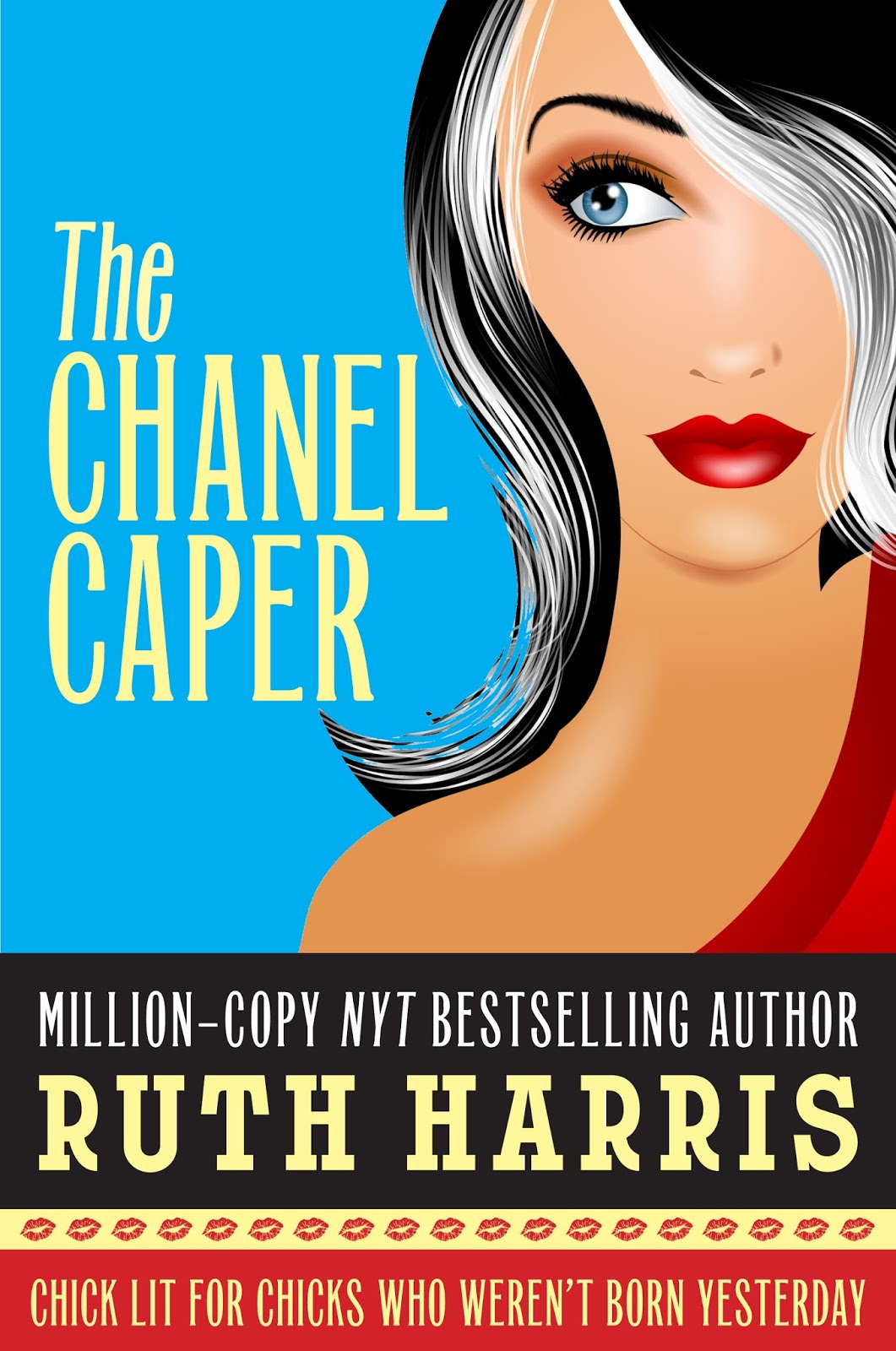
Here's what USA Today bestseller, Vanessa Kelly says about The Chanel Caper in Love Rocks:
"The Chanel Caper is a romantic comedy, a thriller, and a send-up of the big city lifestyle in the wake of the global financial crisis. All the disparate elements of this very funny story are tethered by the engaging Blake, a smart, sensible, and dryly witty heroine intent on saving her marriage. It's definitely a romance for the grownups, set against the backdrop of the bright lights of the city that never sleeps."
OPPORTUNITY ALERTS
The Ernest Hemingway Flash Fiction Contest. $10 fee Unpublished fiction. 1500 words or less. Simultaneous submissions ARE welcome. All entries will be considered for publication in Fiction Southeast. (a prestigious journal that has published people like Joyce Carol Oates) Winner gets $200 and publication. Deadline: Dec. 1st
Writers' Village International Short Fiction Award winter 2015 . Cash prizes totaling $3200.Ten further Highly Commended entrants will have their stories acknowledged at the site and gain a free entry in the next round. Entry fee $24 INCLUDES A PROFESSIONAL CRITIQUE. Any genre of prose fiction may be submitted up to 3000 words, except plays and poetry. Entries are welcomed worldwide. Multiple entries are permitted. Deadline: November 30th.
The IWSG Short Story Anthology Contest 2015. NO FEE! The top ten stories will be published in an anthology. (Authors will receive royalties on sales.) Eligibility: Any member of the Insecure Writer's Support Group is encouraged to enter â blogging or Facebook member (no fee to join the IWSG). The story must be previously unpublished. Entry is free. Word count: 5000-6000. Theme: Alternate History/Parallel Universe. Deadline: November 1st
RROFIHE TROPHY NO-FEE SHORT STORY CONTEST NO ENTRY FEE. For an unpublished short story. Minimum word count 3,500; maximum to 5,000 words. Winner receives $500, trophy, announcement and publication on anderbo.com. Deadline October 15.
Glimmer Train Press Family Matters Prize: $1,500 and publication in Glimmer Train. Entry fee $18. Stories up to 12,000 words: about families of all configurations. Deadline: September 30.
Tom Howard/Margaret Reid Poetry Contest $4,000 in prizes. Entry fee $10 per poem. Submit poems in modern and traditional styles, up to 250 lines each. Deadline: September 30.
September 20, 2015
How to Get Your Indie Book Translated and Reach the Growing "Globile" Market
by Mark Williams
How would you like to double, triple or even quadruple your titles without writing a single extra word?
Think E Unum Pluribus.
The United States' original motto "E Pluribus Unum" translates as "From Many, One", a reference to the creation of one country â the USA â from the myriad colonies that fought the British for independence.
E Unum Pluribus, therefore, translates to "From One, Many."
No, I'm not advocating chopping long books into short ones just to game the system. But rather turning one book into many, without writing an extra word, and at a stroke increasing your potential audience reach by literally hundreds of millions.
Translation is not just for the Big 5 anymore
Translation is the name of the game, and if you haven't been thinking seriously about translations so far, I can promise you will be by the time you finish this post.
English is the lingua franca of the world. As authors it is our single greatest asset. We have immense reach simply by writing in the world's most widespread language.
But beyond that reach are not just hundreds of millions, but literally billions of readers who do not speak or read English.
Back in 2010 Big 5 publishers (then the Big 6) could get an elite handful of top authors into translation around the globe, but even these had limits. Their books would only be available in a few big stores in a few big cities in the richer countries of the world, and few people could afford them.
Five years laterâ¦
I'm an indie author. No Big 5 publisher backing me. But right now I've got titles live and selling in English, French, Spanish, Portuguese, German and Chinese.
I have translations underway into Japanese, Norwegian, Dutch, Afrikaans, Arabic, Hindi, Urdu and Ukrainian.
And I'm actively seeking translation-partners in Vietnamese, Indonesian, Filipino, Turkish, Polish, Hungarian, Romanian, Swedish and a host of other languages too long to list here.
So much has changed, and the changes are profound.
A brief trip down memory lane:
Ponder these words of wisdom from Newsweek in early 1995.
"Visionaries see a future of telecommuting workers, interactive libraries, and multimedia classrooms⦠[They say] we'll soon buy books and newspapers straight over the Internet. Uh, sure. The truth is no online database will replace your daily newspaperâ¦
"We're promised instant catalog shopping â just point and click for great deals. We'll order airline tickets over the network, make restaurant reservations and negotiate sales contracts. Stores will become obsolete. So how come my local mall does more business in an afternoon than the entire Internet handles in a month?"
Amazon was barely six months old when that article was written. Ebooks were slightly more than a figment of a 14 year-old's imagination, but not by much.
Back then the internet existed, but who really cared? To connect to the internet you not only needed an expensive desktop or laptop computer, but you needed reliable electricity, a landline telephone connection (ideally next door to the telephone exchange), and an expensive data plan from an ISP.
If you wanted to exchange an email with someone in another city or country, or even your next-door neighbour, the person at the other end had to have the same equipment. And they had to have it switched on and be sat at the desk to know you'd emailed them.
The internet was the exclusive preserve of the wealthy and tech savvy in big cities in a handful of countries. And who really needed it anyway? What was it for?
There was no Facebook. No Twitter. No YouTube. No iPad. Noâ¦
Fast forward to 2007
In April 2007 the first iPad had appeared. But it was just for geeks.
YouTube, Facebook and Twitter existed, but few people were taking them seriously.
Twitter was just one year old. YouTube was just two years old. Facebook was the granddaddy, having launched in 2004, but apart from college students, who knew? The social media experts of the day were advising people to ignore this new fad, Facebook. MySpace was the height of social media savvy in 2007.
And then came the Kindle.
Amazon had come of age by then and was not only delivering cheap print books to our door on a scale unimaginable in 1995, but in 2007 it had just brought out this new device, the Kindle.
But the internet was still the exclusive preserve of the rich First World countries. You still needed an expensive desktop computer, reliable electric, a landline telephone connection, and to be living in a big city where a local ISP existed.
By 2009-10 strange stories were emerging from Japan that people were reading books on their phones. Books? Most of us were still struggling with text messages that we had to abbreviate to mindless gobbledegook just to cram onto those tiny screens.
The experts assured us it was just a fad. Reading on phones was "peculiarly Japanese" and would never happen outside of Japan.
Fast forward five more years...
Today we can now not just buy and read books, exchange emails and engage in social media on phones and tablets, but do our weekly shopping, book plane tickets and make restaurant reservations, stream TV and films⦠It would be quicker to list what you can't do on a phone.
And not just in big cities next to the telephone exchange like in 1995, but anywhere a wi-fi connection can reach.
At which point you may be wondering what this has to do with authors getting their titles translated into other languages.
Here's the thing:
Way back in 2009 when the Kindle opened to indie authors, the ebook market was, for all practical purposes, the United States. And the ebook market was a handful of people who owned a Kindle or another brand of ereader. In 2010 that market became the US and UK. Both English language.
Today there are over a dozen Kindle stores across the world, not just in English (US, UK, Australia, Canada, India) but in Spanish, French, German, Italian, Dutch, Brazilian Portuguese and Japanese. There's even a Kindle China store.
That alone should have you thinking seriously about translations.
But that's just the tip of the iceberg.
The Kindle store may be the biggest ebook store in most of those countries (Canada, the Netherlands and China being the exceptions) but ebooks are being read all over the world.
Consider this:
The Guadalajara International Book Fair in Mexico is in November. It's the biggest Spanish-language book fair in the world.
Publishing Perspectives reported that the Guadalajara Rights Center â a meeting place for publishers to exchange foreign-language rights - had sold out its 125 tables several months in advance, a sure sign of trad pub's growing interest in the global Spanish book market.
There is a global New Renaissance unfolding right now, and the Big 5 are preparing to rake in the cash from it.
Penguin Random House (PRH) this month reported parent company Bertelsmann has seen its highest revenues since 2007, thanks in large part to PRH's expanded global reach. PRH reported "excellent performance in Latin America and double-digit growth in (Latin American) e-book sales."There's a new ebook megastore, Orbile, opening in Mexico this month, and Kobo is handling its ebooks. Amazon has Kindle stores in Mexico and Brazil. Apple is in Latin America. Google Play has ebook stores in 17 Latin American countries. And there are also countless "local" ebook retailers in the region.
The big publishers are well positioned to reap the rewards as the Latin American ebook market blooms. Indie authors can do well there too.
Easy access through the above-mentioned stores, and just this month the Italian aggregator Streetlib announced a deal to get indie titles into the key Latin American ebook retailer BajaLibros.
As for the rest of the worldâ¦opportunities abound. The global ebook market is about to blossom.
Smartphones are bringing even bigger changes
Up until the start of this decade, the World Wide Web was something only the lucky few could actually participate in.
For most people in the Third World, reliable electric and a landline telephone connection were unaffordable luxuries you hoped your grandchildren might one day live to see.
But then "globile" happened. Global mobile, that is. The phenomenal rise of the global smartphone, no longer the exclusive preserve of the rich west, but an everyday device for people across the planet.
The rest of the world â even the poorest nations on the map â have quite simply skipped those painful desktop decades and gone straight from the pre-internet (and even pre-telephone) era to the age of 4G internet and smartphones.
Today there are over two billion â no, that's not a typo â two billion people around the world with a smartphone in their hands and a connection to the internet.
That's two billion people who could potentially be reading your ebooks.
Many read English, of course. We are soooo lucky!
And for the rest of the planet, English is the second language of myriad countries, and that number is growing by the day.
In China there are over 300 million people learning English right now, and millions more are signing up every month. Very soon there will be more English-language learners in China than there are people in the United States.
But that's a tiny fraction of the Chinese population. If you want to top the Chinese ebook charts you need to think seriously about a translation into Mandarin.
The Exploding "Globile" Market
A reminder â "globile" means global mobile. It's this brave new world where two billion (and rising) people around the planet are our potential audience.
How does an audience of five billion sound?
Seriously. That's how many people will be connected to the internet and potentially reading our books in the very near future.
As of this summer India officially has more internet users than the USA has people. Thirty million more!
And fifty million of those connected to the internet for the first time in the past six months.
To ram home the significance of this, the USA has just 280 million people online. Yet the USA has 86% of its population online. India? Just 27%.
By end 2017 India will have five hundred million people connected to the internet.
And here's where it gets really exciting. Those projections are based on current take-up rates. They don't take into account projects like Google Loon, Internet Saathi or Facebook Aquila, which are going to wildly accelerate such take-up.
Google Loon and Internet bicycles
You may be thinking Google Loon is a term of abuse you shout at Google's driverless cars, but Google has a vision where everyone on the planet will be connected to the internet. Not in some distant century, but in the next decade.
Google Loon is Google's internet balloon project. High-flying internet-relay balloons that will bring the internet to remote areas where a traditional cable or wi-fi connection simply isn't viable.
Google Loon plans to bring the internet to remote parts of the USA and Canada, for example, currently without access. And it plans to bring the internet to the Third World.
In July Google signed an agreement with Sri Lanka to give the entire island internet access by balloon. A case of science-fiction literally becoming reality. Arthur C. Clarke, who lived in Sri Lanka, "predicted" the idea many years before.
Google also has more down-to-earth methods of getting the world connected.
Google's Internet Saathi project, just launched this summer, is taking the internet to millions of women in remote villages in India. By bicycle. Trained teams touring India by bike showing rural women how to connect to the internet with their smartphones.
It's a scenario that, just a few short years ago, was quite unthinkable.
Facebook's Internet.org and Aquila drones.
And it's just the beginning. Facebook is also in on the act.
Facebook has this wonderful project called internet.org, which brings (limited) free internet access to some of the poorest nations on the planet.
And then there's Facebook's Aquila drones.
While Amazon is working on drones that will one day deliver your POD book to someone's door, Facebook's Aquila drones â each the size of a Boeing 747, solar powered and flying at 60,000 feet â will be delivering your ebooks, tweets and Facebook posts to places that right now can only dream of connecting to the internet.
Facebook and Google are also using satellites to bring the internet to the world. And theyâre not alone. At the end of August the third Immarsat Global Express broadband satellites was launched from Kazakhstan and will orbit over the Pacific.
Also at the end of August the Pacific Caribbean Cable System (PCCS) started commercial operations. The PCCS links the USA, via Florida, with the Caribbean nations, Central America and northern South America as far as Ecuador, meaning millions more people across the Caribbean and Latin America have access to 4G-standard internet service.
The Internet Saathi project and ebooks
But letâs come back to the Internet Saathi project to remind us why this matters to authors.
Over the next eighteen months five million women in 45,000 Indian villages will be getting lessons in how to use their smartphones to connect to the internet.
Google last month tweeted that the first rural women student, Jayant, had successfully used her smartphone to look up information about the cattle she rears to support her family.
The internet is a truly wonderful thing.
But it wonât just change Jayantâs life in practical terms like providing information about her cattle. It will also open up a world of entertainment and social engagement previously unknown to her.
How long before Jayant and the other five million women in this project will friend you on Facebook, retweet one of your tweets, or read one of your ebooks?
But Google's South Asia VP Rajan Anandan warns that while the English language has dominated the growth of the internet in India so far, "the next 100 million Internet users will not be fluent in English".
Thatâs one hundred million reasons to start thinking about translations into India's myriad local languages.
India is the second most populated country on the planet. On current projections it will soon have more people than China.
China is currently the world's largest smartphone market. India is expected to jump into second place ahead of the USA as soon as 2017.
A reminder, every smartphone and tablet out there is a device people could be reading our ebooks on. So should we be focused on the US market and ignore the rest of the world?
We can and of course should all stay focused on the big western market(s) that sustains us now.
But itâs not rocket science to see the way things are going.
The US and UK markets are not going to get any less crowded with titles. Just the opposite. If weâre not big name authors then getting discovered is a growing challenge.
The more titles we have out, the more chance there is a reader will find us.
Which brings us back to E Unum Pluribus.
From one, many. Whatâs that all about?
Put simply, if youâve got 2 titles in English then, obviously, youâve just 2 titles in your global catalogue.
But get those 2 titles translated into French and you suddenly have 4 titles available, and have added tens of millions of French-speaking readers to your potential audience, pretty much without having written an extra word.
Potential readers not just in France, but in Belgium and the European principalities, in Canada, not to mention Morocco, Algeria, Senegal. Niger, Benin, Togo, the Ivory Coastâ¦
Now get those same 2 English-language books into Spanish. Your 2-book portfolio has suddenly become 6, and you have a readership not just in Spain but across most of Latin America, in the USA and around the world.
Add Italian and German translations to your repertoire and you increase your 2 book portfolio to 10 titles. Add Portuguese, Dutch and Japanese translations to the list... And why not go for broke and throw in some Chinese translations too?
When complete your two titles will have become 2 x English, 2 x Spanish, 2 x Portuguese, 2 x French, 2 x German, 2 x Italian, 2 x Dutch, 2 x Japanese and 2 x Chinese.
Your 2 English-language titles have suddenly become 18 titles.
5 English-language books? How does 45 titles in your global portfolio grab you?
And did I mention box-sets?
But why stop there? As said earlier, Iâm actively seeking translation-partners in Vietnamese, Indonesian, Filipino, Turkish, Polish, Hungarian, Romanian, Swedish, etc.
None of these are random choices, but driven by the way the nascent global markets are shaping up.
"But I canât afford to get even one of my books translated into one language, let alone all of them translated into more languages than Iâve had hot dinners. How much is this costing you?"
A lot less than you'd think, is the answer.
Translation Partnerships: Fiberead and Babelcube.
Translation costs? Well, no question translations can get very expensive. Serious money. I know some indies who went that route very early on and still are nowhere near recouping their costs. Paying big money for a translation that you cannot easily distribute or promote in the relevant countries is probably not a good idea.
Which is why I've long advocated the partnership model, where the translator takes on the task with no up-front payment, instead working on the promise of a share of the royalties when that title sells. This gives the translator the incentive not just to do an outstanding job, but also to help promote and market that title in the local language once the job is done.
At which point you'll be asking, "But how do you find even one translator, let alone dozens, willing to work for nothing on your book in the hope they might get paid down the road?"
Time to share the indie world's best kept secret. Translation-aggregators.
There are two key players out there right now: Fiberead and Bablecube
Fiberead
Fiberead is based in China and will take your English-language book, translate it into Mandarin, format it and provide a cover translation, and make it available in China's many ebook retailers, including the Kindle China store, but also some much bigger players.
Fiberead charge nothing up front and pay you royalties on all sales. I've got five titles live and selling in China right now (some have made the bestseller list) and I will be uploading another half dozen to Fiberead before the year's end.
Fiberead are also getting my titles into paper in China.
Babelcube
Babelcube has a different model. They provide a meeting place and a safe-house for authors and translators to pitch their wares and secure deals.
You sign up with a translator (you need to do your homework carefully to be sure they are any good) and upload your work. The translator uploads their version down the road. When both parties are happy, Babelcube will get the book on retail sites around the world and pay both translator and author from the sales.
Again, no up-front costs, although in this instance you need to get your own cover translation.
I've got a number of titles being translated into different languages through Babelcube, and several are already out there and selling.
Babelcube offer ten languages. Fiberead just Chinese. But that gives authors an easy route to get started with eleven languages.
And another player, Douban, is about to open up to western indies wanting to sell in China. Watch out for an announcement at the Frankfurt Book Fair in October.
Those who want to explore the translations paths further will find two posts here covering several different translation models. (LINK) and (LINK). Everything from paying for your translations outright to using translator-aggregators to teaming with a traditional publisher.
And for those who'd rather let a publisher do all the hard work, here's a post on how to query foreign-language publishers when you donât speak their language.
While Babelcube and Fiberead are great, I find it more satisfying still to find my own translation partners, and of course in far more languages than they offer. I love exploring uncharted waters.
By chance I was researching Thor Heyerdahl for my newly-launched travelogue-memoir series West Africa Is My Back Yard. The first of the series is already available in Spanish, will be out in Portuguese and German later this year, and a half dozen more languages sometime in 2016.
Which sounds exciting until you consider Thor Heyerdahlâs flagship book The Kon-Tiki Expedition has been translated into seventy languages.
Well, the new globile world is every bit as uncharted as the waters the Kon-Tiki sailed in, and anything Thor Heyerdahl can do I can do too.
So it's 71 translation languages or bust!
***
What about you, Scriveners? Have you thought of getting your books translated, but thought it would be too expensive? Have you ever pictured your books making a bestseller list in some far-off country? Do leave questions for Mark in the comments. He's on African time, and sometimes his electricity or Internet go out, but he'll be happy to answer when he can...Anne
***
Mark Williams , "The International Indie Author" is an ex-pat Brit living in The Gambia, West Africa. He's a novelist, TV scriptwriter, playwright and freelance travel writer.
He's the author of the international best-selling novels Sugar & Spice and Anca's Story, currently marketed`under the Saffina Desforges brand, and co-author with Saffina of the "Rose Red" crime thriller series. He was the biggest-selling indie author in the UK in 2011 and has since topped the charts in other countries including France and China.
In 2014 he became the first and so far only indie author to reach number one in Amazonâs Kindle China store. You can read his blog here, and join his FB group "The International Indie Author, Your Guide to Going Global."
BOOK OF THE WEEK
Available at all the Amazons, B & N, Kobo, Smashwords, Scribd
Join Mark Williams on the first part of this odyssey through the history, geography, culture and daily life of the country he calls his home - The Gambia and the region he calls his back yard - West Africa.
If you like Bill Bryson's travelogues that leave no stone unturned to share the author's fascination with the world around him, you'll love West Africa Is My Back Yard.
All proceeds from the series go towards supporting, babies, children, families and schools in The Gambia.
OPPORTUNITY ALERTS
The Ernest Hemingway Flash Fiction Contest. $10 fee Unpublished fiction. 1500 words or less. Simultaneous submissions ARE welcome. All entries will be considered for publication in Fiction Southeast. (a prestigious journal that has published people like Joyce Carol Oates) Winner gets $200 and publication. Deadline: Dec. 1st
Writers' Village International Short Fiction Award winter 2015 . Cash prizes totaling $3200.Ten further Highly Commended entrants will have their stories acknowledged at the site and gain a free entry in the next round. Entry fee $24 INCLUDES A PROFESSIONAL CRITIQUE. Any genre of prose fiction may be submitted up to 3000 words, except plays and poetry. Entries are welcomed worldwide. Multiple entries are permitted. Deadline: November 30th.
The IWSG Short Story Anthology Contest 2015. NO FEE! The top ten stories will be published in an anthology. (Authors will receive royalties on sales.) Eligibility: Any member of the Insecure Writer's Support Group is encouraged to enter â blogging or Facebook member (no fee to join the IWSG). The story must be previously unpublished. Entry is free. Word count: 5000-6000. Theme: Alternate History/Parallel Universe. Deadline: November 1st
RROFIHE TROPHY NO-FEE SHORT STORY CONTEST NO ENTRY FEE. For an unpublished short story. Minimum word count 3,500; maximum to 5,000 words. Winner receives $500, trophy, announcement and publication on anderbo.com. Deadline October 15.
Glimmer Train Press Family Matters Prize: $1,500 and publication in Glimmer Train. Entry fee $18. Stories up to 12,000 words: about families of all configurations. Deadline: September 30.
Tom Howard/Margaret Reid Poetry Contest $4,000 in prizes. Entry fee $10 per poem. Submit poems in modern and traditional styles, up to 250 lines each. Deadline: September 30.
How would you like to double, triple or even quadruple your titles without writing a single extra word?
Think E Unum Pluribus.
The United States' original motto "E Pluribus Unum" translates as "From Many, One", a reference to the creation of one country â the USA â from the myriad colonies that fought the British for independence.
E Unum Pluribus, therefore, translates to "From One, Many."
No, I'm not advocating chopping long books into short ones just to game the system. But rather turning one book into many, without writing an extra word, and at a stroke increasing your potential audience reach by literally hundreds of millions.
Translation is not just for the Big 5 anymore
Translation is the name of the game, and if you haven't been thinking seriously about translations so far, I can promise you will be by the time you finish this post.
English is the lingua franca of the world. As authors it is our single greatest asset. We have immense reach simply by writing in the world's most widespread language.
But beyond that reach are not just hundreds of millions, but literally billions of readers who do not speak or read English.
Back in 2010 Big 5 publishers (then the Big 6) could get an elite handful of top authors into translation around the globe, but even these had limits. Their books would only be available in a few big stores in a few big cities in the richer countries of the world, and few people could afford them.
Five years laterâ¦
I'm an indie author. No Big 5 publisher backing me. But right now I've got titles live and selling in English, French, Spanish, Portuguese, German and Chinese.
I have translations underway into Japanese, Norwegian, Dutch, Afrikaans, Arabic, Hindi, Urdu and Ukrainian.
And I'm actively seeking translation-partners in Vietnamese, Indonesian, Filipino, Turkish, Polish, Hungarian, Romanian, Swedish and a host of other languages too long to list here.
So much has changed, and the changes are profound.
A brief trip down memory lane:
Ponder these words of wisdom from Newsweek in early 1995.
"Visionaries see a future of telecommuting workers, interactive libraries, and multimedia classrooms⦠[They say] we'll soon buy books and newspapers straight over the Internet. Uh, sure. The truth is no online database will replace your daily newspaperâ¦
"We're promised instant catalog shopping â just point and click for great deals. We'll order airline tickets over the network, make restaurant reservations and negotiate sales contracts. Stores will become obsolete. So how come my local mall does more business in an afternoon than the entire Internet handles in a month?"
Amazon was barely six months old when that article was written. Ebooks were slightly more than a figment of a 14 year-old's imagination, but not by much.
Back then the internet existed, but who really cared? To connect to the internet you not only needed an expensive desktop or laptop computer, but you needed reliable electricity, a landline telephone connection (ideally next door to the telephone exchange), and an expensive data plan from an ISP.
If you wanted to exchange an email with someone in another city or country, or even your next-door neighbour, the person at the other end had to have the same equipment. And they had to have it switched on and be sat at the desk to know you'd emailed them.
The internet was the exclusive preserve of the wealthy and tech savvy in big cities in a handful of countries. And who really needed it anyway? What was it for?
There was no Facebook. No Twitter. No YouTube. No iPad. Noâ¦
Fast forward to 2007
In April 2007 the first iPad had appeared. But it was just for geeks.
YouTube, Facebook and Twitter existed, but few people were taking them seriously.
Twitter was just one year old. YouTube was just two years old. Facebook was the granddaddy, having launched in 2004, but apart from college students, who knew? The social media experts of the day were advising people to ignore this new fad, Facebook. MySpace was the height of social media savvy in 2007.
And then came the Kindle.
Amazon had come of age by then and was not only delivering cheap print books to our door on a scale unimaginable in 1995, but in 2007 it had just brought out this new device, the Kindle.
But the internet was still the exclusive preserve of the rich First World countries. You still needed an expensive desktop computer, reliable electric, a landline telephone connection, and to be living in a big city where a local ISP existed.
By 2009-10 strange stories were emerging from Japan that people were reading books on their phones. Books? Most of us were still struggling with text messages that we had to abbreviate to mindless gobbledegook just to cram onto those tiny screens.
The experts assured us it was just a fad. Reading on phones was "peculiarly Japanese" and would never happen outside of Japan.
Fast forward five more years...
Today we can now not just buy and read books, exchange emails and engage in social media on phones and tablets, but do our weekly shopping, book plane tickets and make restaurant reservations, stream TV and films⦠It would be quicker to list what you can't do on a phone.
And not just in big cities next to the telephone exchange like in 1995, but anywhere a wi-fi connection can reach.
At which point you may be wondering what this has to do with authors getting their titles translated into other languages.
Here's the thing:
Way back in 2009 when the Kindle opened to indie authors, the ebook market was, for all practical purposes, the United States. And the ebook market was a handful of people who owned a Kindle or another brand of ereader. In 2010 that market became the US and UK. Both English language.
Today there are over a dozen Kindle stores across the world, not just in English (US, UK, Australia, Canada, India) but in Spanish, French, German, Italian, Dutch, Brazilian Portuguese and Japanese. There's even a Kindle China store.
That alone should have you thinking seriously about translations.
But that's just the tip of the iceberg.
The Kindle store may be the biggest ebook store in most of those countries (Canada, the Netherlands and China being the exceptions) but ebooks are being read all over the world.
Consider this:
The Guadalajara International Book Fair in Mexico is in November. It's the biggest Spanish-language book fair in the world.
Publishing Perspectives reported that the Guadalajara Rights Center â a meeting place for publishers to exchange foreign-language rights - had sold out its 125 tables several months in advance, a sure sign of trad pub's growing interest in the global Spanish book market.
There is a global New Renaissance unfolding right now, and the Big 5 are preparing to rake in the cash from it.
Penguin Random House (PRH) this month reported parent company Bertelsmann has seen its highest revenues since 2007, thanks in large part to PRH's expanded global reach. PRH reported "excellent performance in Latin America and double-digit growth in (Latin American) e-book sales."There's a new ebook megastore, Orbile, opening in Mexico this month, and Kobo is handling its ebooks. Amazon has Kindle stores in Mexico and Brazil. Apple is in Latin America. Google Play has ebook stores in 17 Latin American countries. And there are also countless "local" ebook retailers in the region.
The big publishers are well positioned to reap the rewards as the Latin American ebook market blooms. Indie authors can do well there too.
Easy access through the above-mentioned stores, and just this month the Italian aggregator Streetlib announced a deal to get indie titles into the key Latin American ebook retailer BajaLibros.
As for the rest of the worldâ¦opportunities abound. The global ebook market is about to blossom.
Smartphones are bringing even bigger changes
Up until the start of this decade, the World Wide Web was something only the lucky few could actually participate in.
For most people in the Third World, reliable electric and a landline telephone connection were unaffordable luxuries you hoped your grandchildren might one day live to see.
But then "globile" happened. Global mobile, that is. The phenomenal rise of the global smartphone, no longer the exclusive preserve of the rich west, but an everyday device for people across the planet.
The rest of the world â even the poorest nations on the map â have quite simply skipped those painful desktop decades and gone straight from the pre-internet (and even pre-telephone) era to the age of 4G internet and smartphones.
Today there are over two billion â no, that's not a typo â two billion people around the world with a smartphone in their hands and a connection to the internet.
That's two billion people who could potentially be reading your ebooks.
Many read English, of course. We are soooo lucky!
And for the rest of the planet, English is the second language of myriad countries, and that number is growing by the day.
In China there are over 300 million people learning English right now, and millions more are signing up every month. Very soon there will be more English-language learners in China than there are people in the United States.
But that's a tiny fraction of the Chinese population. If you want to top the Chinese ebook charts you need to think seriously about a translation into Mandarin.
The Exploding "Globile" Market
A reminder â "globile" means global mobile. It's this brave new world where two billion (and rising) people around the planet are our potential audience.
How does an audience of five billion sound?
Seriously. That's how many people will be connected to the internet and potentially reading our books in the very near future.
As of this summer India officially has more internet users than the USA has people. Thirty million more!
And fifty million of those connected to the internet for the first time in the past six months.
To ram home the significance of this, the USA has just 280 million people online. Yet the USA has 86% of its population online. India? Just 27%.
By end 2017 India will have five hundred million people connected to the internet.
And here's where it gets really exciting. Those projections are based on current take-up rates. They don't take into account projects like Google Loon, Internet Saathi or Facebook Aquila, which are going to wildly accelerate such take-up.
Google Loon and Internet bicycles
You may be thinking Google Loon is a term of abuse you shout at Google's driverless cars, but Google has a vision where everyone on the planet will be connected to the internet. Not in some distant century, but in the next decade.
Google Loon is Google's internet balloon project. High-flying internet-relay balloons that will bring the internet to remote areas where a traditional cable or wi-fi connection simply isn't viable.
Google Loon plans to bring the internet to remote parts of the USA and Canada, for example, currently without access. And it plans to bring the internet to the Third World.
In July Google signed an agreement with Sri Lanka to give the entire island internet access by balloon. A case of science-fiction literally becoming reality. Arthur C. Clarke, who lived in Sri Lanka, "predicted" the idea many years before.
Google also has more down-to-earth methods of getting the world connected.
Google's Internet Saathi project, just launched this summer, is taking the internet to millions of women in remote villages in India. By bicycle. Trained teams touring India by bike showing rural women how to connect to the internet with their smartphones.
It's a scenario that, just a few short years ago, was quite unthinkable.
Facebook's Internet.org and Aquila drones.
And it's just the beginning. Facebook is also in on the act.
Facebook has this wonderful project called internet.org, which brings (limited) free internet access to some of the poorest nations on the planet.
And then there's Facebook's Aquila drones.
While Amazon is working on drones that will one day deliver your POD book to someone's door, Facebook's Aquila drones â each the size of a Boeing 747, solar powered and flying at 60,000 feet â will be delivering your ebooks, tweets and Facebook posts to places that right now can only dream of connecting to the internet.
Facebook and Google are also using satellites to bring the internet to the world. And theyâre not alone. At the end of August the third Immarsat Global Express broadband satellites was launched from Kazakhstan and will orbit over the Pacific.
Also at the end of August the Pacific Caribbean Cable System (PCCS) started commercial operations. The PCCS links the USA, via Florida, with the Caribbean nations, Central America and northern South America as far as Ecuador, meaning millions more people across the Caribbean and Latin America have access to 4G-standard internet service.
The Internet Saathi project and ebooks
But letâs come back to the Internet Saathi project to remind us why this matters to authors.
Over the next eighteen months five million women in 45,000 Indian villages will be getting lessons in how to use their smartphones to connect to the internet.
Google last month tweeted that the first rural women student, Jayant, had successfully used her smartphone to look up information about the cattle she rears to support her family.
The internet is a truly wonderful thing.
But it wonât just change Jayantâs life in practical terms like providing information about her cattle. It will also open up a world of entertainment and social engagement previously unknown to her.
How long before Jayant and the other five million women in this project will friend you on Facebook, retweet one of your tweets, or read one of your ebooks?
But Google's South Asia VP Rajan Anandan warns that while the English language has dominated the growth of the internet in India so far, "the next 100 million Internet users will not be fluent in English".
Thatâs one hundred million reasons to start thinking about translations into India's myriad local languages.
India is the second most populated country on the planet. On current projections it will soon have more people than China.
China is currently the world's largest smartphone market. India is expected to jump into second place ahead of the USA as soon as 2017.
A reminder, every smartphone and tablet out there is a device people could be reading our ebooks on. So should we be focused on the US market and ignore the rest of the world?
We can and of course should all stay focused on the big western market(s) that sustains us now.
But itâs not rocket science to see the way things are going.
The US and UK markets are not going to get any less crowded with titles. Just the opposite. If weâre not big name authors then getting discovered is a growing challenge.
The more titles we have out, the more chance there is a reader will find us.
Which brings us back to E Unum Pluribus.
From one, many. Whatâs that all about?
Put simply, if youâve got 2 titles in English then, obviously, youâve just 2 titles in your global catalogue.
But get those 2 titles translated into French and you suddenly have 4 titles available, and have added tens of millions of French-speaking readers to your potential audience, pretty much without having written an extra word.
Potential readers not just in France, but in Belgium and the European principalities, in Canada, not to mention Morocco, Algeria, Senegal. Niger, Benin, Togo, the Ivory Coastâ¦
Now get those same 2 English-language books into Spanish. Your 2-book portfolio has suddenly become 6, and you have a readership not just in Spain but across most of Latin America, in the USA and around the world.
Add Italian and German translations to your repertoire and you increase your 2 book portfolio to 10 titles. Add Portuguese, Dutch and Japanese translations to the list... And why not go for broke and throw in some Chinese translations too?
When complete your two titles will have become 2 x English, 2 x Spanish, 2 x Portuguese, 2 x French, 2 x German, 2 x Italian, 2 x Dutch, 2 x Japanese and 2 x Chinese.
Your 2 English-language titles have suddenly become 18 titles.
5 English-language books? How does 45 titles in your global portfolio grab you?
And did I mention box-sets?
But why stop there? As said earlier, Iâm actively seeking translation-partners in Vietnamese, Indonesian, Filipino, Turkish, Polish, Hungarian, Romanian, Swedish, etc.
None of these are random choices, but driven by the way the nascent global markets are shaping up.
"But I canât afford to get even one of my books translated into one language, let alone all of them translated into more languages than Iâve had hot dinners. How much is this costing you?"
A lot less than you'd think, is the answer.
Translation Partnerships: Fiberead and Babelcube.
Translation costs? Well, no question translations can get very expensive. Serious money. I know some indies who went that route very early on and still are nowhere near recouping their costs. Paying big money for a translation that you cannot easily distribute or promote in the relevant countries is probably not a good idea.
Which is why I've long advocated the partnership model, where the translator takes on the task with no up-front payment, instead working on the promise of a share of the royalties when that title sells. This gives the translator the incentive not just to do an outstanding job, but also to help promote and market that title in the local language once the job is done.
At which point you'll be asking, "But how do you find even one translator, let alone dozens, willing to work for nothing on your book in the hope they might get paid down the road?"
Time to share the indie world's best kept secret. Translation-aggregators.
There are two key players out there right now: Fiberead and Bablecube
Fiberead
Fiberead is based in China and will take your English-language book, translate it into Mandarin, format it and provide a cover translation, and make it available in China's many ebook retailers, including the Kindle China store, but also some much bigger players.
Fiberead charge nothing up front and pay you royalties on all sales. I've got five titles live and selling in China right now (some have made the bestseller list) and I will be uploading another half dozen to Fiberead before the year's end.
Fiberead are also getting my titles into paper in China.
Babelcube
Babelcube has a different model. They provide a meeting place and a safe-house for authors and translators to pitch their wares and secure deals.
You sign up with a translator (you need to do your homework carefully to be sure they are any good) and upload your work. The translator uploads their version down the road. When both parties are happy, Babelcube will get the book on retail sites around the world and pay both translator and author from the sales.
Again, no up-front costs, although in this instance you need to get your own cover translation.
I've got a number of titles being translated into different languages through Babelcube, and several are already out there and selling.
Babelcube offer ten languages. Fiberead just Chinese. But that gives authors an easy route to get started with eleven languages.
And another player, Douban, is about to open up to western indies wanting to sell in China. Watch out for an announcement at the Frankfurt Book Fair in October.
Those who want to explore the translations paths further will find two posts here covering several different translation models. (LINK) and (LINK). Everything from paying for your translations outright to using translator-aggregators to teaming with a traditional publisher.
And for those who'd rather let a publisher do all the hard work, here's a post on how to query foreign-language publishers when you donât speak their language.
While Babelcube and Fiberead are great, I find it more satisfying still to find my own translation partners, and of course in far more languages than they offer. I love exploring uncharted waters.
By chance I was researching Thor Heyerdahl for my newly-launched travelogue-memoir series West Africa Is My Back Yard. The first of the series is already available in Spanish, will be out in Portuguese and German later this year, and a half dozen more languages sometime in 2016.
Which sounds exciting until you consider Thor Heyerdahlâs flagship book The Kon-Tiki Expedition has been translated into seventy languages.
Well, the new globile world is every bit as uncharted as the waters the Kon-Tiki sailed in, and anything Thor Heyerdahl can do I can do too.
So it's 71 translation languages or bust!
***
What about you, Scriveners? Have you thought of getting your books translated, but thought it would be too expensive? Have you ever pictured your books making a bestseller list in some far-off country? Do leave questions for Mark in the comments. He's on African time, and sometimes his electricity or Internet go out, but he'll be happy to answer when he can...Anne
***
Mark Williams , "The International Indie Author" is an ex-pat Brit living in The Gambia, West Africa. He's a novelist, TV scriptwriter, playwright and freelance travel writer.
He's the author of the international best-selling novels Sugar & Spice and Anca's Story, currently marketed`under the Saffina Desforges brand, and co-author with Saffina of the "Rose Red" crime thriller series. He was the biggest-selling indie author in the UK in 2011 and has since topped the charts in other countries including France and China.
In 2014 he became the first and so far only indie author to reach number one in Amazonâs Kindle China store. You can read his blog here, and join his FB group "The International Indie Author, Your Guide to Going Global."
BOOK OF THE WEEK
Available at all the Amazons, B & N, Kobo, Smashwords, Scribd

Join Mark Williams on the first part of this odyssey through the history, geography, culture and daily life of the country he calls his home - The Gambia and the region he calls his back yard - West Africa.
If you like Bill Bryson's travelogues that leave no stone unturned to share the author's fascination with the world around him, you'll love West Africa Is My Back Yard.
All proceeds from the series go towards supporting, babies, children, families and schools in The Gambia.
OPPORTUNITY ALERTS
The Ernest Hemingway Flash Fiction Contest. $10 fee Unpublished fiction. 1500 words or less. Simultaneous submissions ARE welcome. All entries will be considered for publication in Fiction Southeast. (a prestigious journal that has published people like Joyce Carol Oates) Winner gets $200 and publication. Deadline: Dec. 1st
Writers' Village International Short Fiction Award winter 2015 . Cash prizes totaling $3200.Ten further Highly Commended entrants will have their stories acknowledged at the site and gain a free entry in the next round. Entry fee $24 INCLUDES A PROFESSIONAL CRITIQUE. Any genre of prose fiction may be submitted up to 3000 words, except plays and poetry. Entries are welcomed worldwide. Multiple entries are permitted. Deadline: November 30th.
The IWSG Short Story Anthology Contest 2015. NO FEE! The top ten stories will be published in an anthology. (Authors will receive royalties on sales.) Eligibility: Any member of the Insecure Writer's Support Group is encouraged to enter â blogging or Facebook member (no fee to join the IWSG). The story must be previously unpublished. Entry is free. Word count: 5000-6000. Theme: Alternate History/Parallel Universe. Deadline: November 1st
RROFIHE TROPHY NO-FEE SHORT STORY CONTEST NO ENTRY FEE. For an unpublished short story. Minimum word count 3,500; maximum to 5,000 words. Winner receives $500, trophy, announcement and publication on anderbo.com. Deadline October 15.
Glimmer Train Press Family Matters Prize: $1,500 and publication in Glimmer Train. Entry fee $18. Stories up to 12,000 words: about families of all configurations. Deadline: September 30.
Tom Howard/Margaret Reid Poetry Contest $4,000 in prizes. Entry fee $10 per poem. Submit poems in modern and traditional styles, up to 250 lines each. Deadline: September 30.
September 13, 2015
Does an Author Really Need a Blog? 10 Reasons a Blog May Help Your Career
by Anne R. Allen
"Blogging doesn't sell books."
"Don't waste your time blogging."
"Make book trailers! Email those newsletters! Spend more time on Pinterest and Instagram! Blogging is so over!"
I'm hearing this stuff every day.
But I still think a blog is one of the best uses of an author's time. Even if you only blog once a month. (I'm a big advocate of slow blogging, but I think it's best to post on a timetable: write at your leisure, but post to a schedule.)
Why do I think authors should blog?
Because it worked for me. Let me tell you my storyâ
Six years ago my career was over. My publisher had gone under. My fourth agent had dropped me. All my freelance writing gigs had dried up or stopped paying.
I was bloodying my knuckles on the doors of agents and publishers. If I got a response at all, it was to let me know that nobody wanted a washed-up author of funny mysteries. (Humor never sells; just ask any agent.) I was advised to change my name and start writing steampunk or YA zombie romance.
If you Googled my name you'd have to go through 10 pages before you found one entry about me or my books.
On a sad Friday the 13th in the late 'oughties, I decided to start this blog as a place to post archives of my old columns from Freelance Writing Organization International.
I promptly lost the blog. Yeah. Don't do this. Remember to bookmark that baby blog!
But three months later, I went hunting and found it again. And I started blogging once a week or so. For the first year, nobody read it. Nobody. I have posts that still haven't had more than 10 hits.
But posting once a week to a timetable and treating the blog like a job gave me back some of the confidence I'd lost when my career fell apart. I felt like a professional again. I could communicate with other writers all over the world. (As well as close to home: a book blogger I met on an Irish siteâso I thought she was Irishâturned out to be my neighbor in San Luis Obispo, CA!)
Then, in 2010, after I won a guest post spot on Nathan Bransford's blog, more people started to drift over here. (Guest blogging is the key to building your blog traffic.)
Fast forward two years and miracles had happened.
Four publishers came to meâI didn't have to query. Instead I got to choose.I was sharing my blog with Ruth Harris: the NYT bestselling author.When I first started reading Ruth's books in the early 1990s, I never dreamed I'd even meet such a famous author. I'd written a book with another NYT bestselling author Catherine Ryan Hyde.I was being invited to speak at writers' conferences and seminarsâand magazines and anthologies actually solicited my work. When you Googled my name, you got 47 pages of ME before you got to Anne R. Allen the San Jose stockbroker (who must hate me. I apologize, Anne.)
And by 2013, this blog was named to the top 101 Websites for Writers by Writer's Digest and I had 7 books in print, was published in numerous anthologies and two of my novels were on the Amazon humor bestseller listâwhere they each stayed for over half a year.
And good stuff keeps happening. I now have ten books out there. I chat daily with movers and shakers in the industry. I just got a hefty check from F&W publishing because they'd decided to excerpt one of my Writer's Digest articles for the 2016 Novel and Short Story Market. A total surprise.
All of this happened directly because of my blog.
I'm not saying all blogs will do this. But with patience, a blog can help you meet the people who can take your career to the next level. And that's what social media is about: meeting people and networking.
I know many authors who, like me, have met their publishers, agents, and writing partners through blogging. (And that neighbor I met on the Irish writing site? She's now a literary agent.)
Do all authors need a blog?
Nope. Plenty of successful authors don't have them.
But you need to be on social media somewhere. You can't just have a launch party in your local bookstore and get a press release into your hometown newspaper and expect to make significant sales. (And even if you go the traditional publishing route, don't count on your publisher for much help with marketing.)
Today, a writer's market is global. Do you know the country where people read the most? India. Or where the 2nd biggest population of English speakers lives? India. Followed by Pakistan and Nigeria.
We're going to have more info on the global marketplace next week from Mark Williams of the International Indie Author. He's been helping me find translators for my books. Ghostwriters in the Sky and Why Grandma Bought that Car will soon be available in Spanish!
The advantage of a blog is that it can be your home in that global marketplaceâa place where people can drop in and get to know you and find out about your books.
NOTE: Blogging isn't for direct sales of books. No social media is about hard-selling. (See my post on Social Media Secrets .) Social media is about meeting people and making friends. (With people and with search engines. You want Google to be your BFF.)
As Chuck Wendig said this week, "Worry less about selling books online. Worry more about being a COOL HUMAN meeting other COOL HUMANS. That last one will take you far."
Why blog?
1) You need a website anyway.
A blog is a website. It's an interactive one, which is a plus when you're starting out. People can comment and get to know you. Yes, you may want a flashy expensive static website later on, but if you're not published, that can look pretentious. A blog is more down-to-earth.
Sending out a query when you don't have a website is often a waste of time. Many agents and reviewers will reject on that item alone. (And yes, if you're getting lots of form rejections on a polished query or book proposal, this may be the reason. Stop revising the query for the millionth time and start blogging.)
I'm not saying you should start blogging when you're a total newbie, or when you've just started that book you've always wanted to write. Don't scatter your energies. If it's either blogging or writing the book, the book should always win.
But I'd say you'd benefit from starting one when you're getting ready to send out queries or preparing to self-publish. (Which should probably be when you're polishing up your second book.)
2) It gets your name into the search engines.
A static website gets less traffic, so the search engine spiders don't notice it. Before a search engine can tell people where your website is, they have to find it. The way they do that is with special software robots, called spiders. To discover information on the hundreds of millions of Web pages out there, spiders build lists of the words found on Web sites.
The more active the site, the more likely the spiders will find it. Spiders will begin with a popular site, index the words on its pages and follow every link found within the site. (This is why you want to link to other sites from your blog, and you want to encourage other bloggers to link to you from theirs.) This is why blog hops are a great thing for new bloggers.
An active blog that's getting hits and comments will get noticed. It may take six months to a year, but it will get Google's attention, then when somebody Googles you, you'll be on the first page of the Search Engine Results Page (known as SERP.)
Whenever you query an agent or publisher or reviewer, or you send a story to an anthology or literary magazineâpretty much every time you want to do business onlineâthe first thing people will do is Google you. A blog is one of the best ways to get your name on that all important first SERP.
3) You're a writer.
Blogging is writing. This is your medium. It's what you do. Like in the Geico ads.
So do it. It's a great way to polish your writing skills. And if you're a fiction writer, you'll learn to write better nonfiction and advertising copy, which you're going to have to do when you're marketing your books anyway.
You'll also get used to writing to a deadline. An important skill.
4) You'll learn to write Web content.
Writing for a blog teaches you to write for the digital age. You can see immediately what posts are getting the most traffic.
You'll also learn to use keywords, bulleting, subheaders and minor headers to draw the eye through a post. This is useful for composing any kind of content for the Web.
Once you're published, you're going to need to know how to write guest blogposts (one of the best methods of marketing your book) as well as other web content. Why not start practicing now?
5) Other social media are subject to faddism.
Facebook is making it tougher and tougher for people to see your posts if you don't pay to boost them. And the word is that Twitter will go the same way.
And trend watchers tell us Facebook mostly for old people now. Instagram is the place for younger people at the moment, but that can change on a dime.
We don't want to forget MySpace...oh, whoops, I guess we already have.
6) Other social media can kick you out any time.
A lot of people have been finding their Facebook accounts deleted because they use a "fake name" (like they put "Author" after their real name.) They have to start all over again getting friends and followers. It can take months to get their following back, if they ever do.
And you can get kicked off through no fault of your own. I got put in Facebook jail for a week once because some troll reported me for spam (for something I posted on my own page.) And once they slapped a CAPTCHA on all my links for about six months for no reason I could see.
7) Control.
Unfortunately, the Internet is infested with trolls, rage addicts, and spammers. I know a woman whose Facebook account got hacked by some diet-drug spammer who hit all her FB peeps with insulting ads. Several promptly "defriended" her before she even knew what happened.
Another friend got hit by a porn site who "tagged" a bunch of amateur porn with my friend's name so it went all over his page. Stuff like this happens every day.
But on your own blog, there's that nice "delete" button. A troll, spammer or furious fool shows up and you click it. All gone.
8) It's FREE!
Oh, I know everybody is going to tell you you need to have a professional, self-hosted blog and pay a designer to set it up for you and pay every month for a really good one, because OMG what will happen when you get 10,000 hits an hour and your blog crashes?
Sorry to pop anybody's bubble, but that doesn't happen to author blogs. Not even the superstars get that much blog traffic. We get up to 110K hits a month here, but not per hour. And this free Blogger blog has never crashed. If it ever does, we may move to a self-hosted site and start paying the big bux, but for our purposes, this little freebie blog has been doing very nicely.
If you're starting out, I guarantee a free Blogger or Wordpress blog will do you just fine.
NOTE: I don't recommend using the free blogs on dedicated book sites like Goodreads, BookLikes or SheWrites, even though the sites can be great for other things.
Those blogs are not as likely to get picked up by search engines so the spiders won't find it. (If you want your blog on Goodreads, just link to your Blogger or Wordpress blog and it will go up on Goodreads whenever you post. But I get about 2 hits a week on the Goodreads version of this blog and 20,000 on this one.)You don't own your own content. Technically the site owns it. Those sites can disappear. Lots of writers blogged on RedRoom until it suddenly died in 2014 and everybody lost their blogs.
9) You get to have fun and make friends.
I have made so many wonderful friends through blogging. Friends who live all over the world. These are people I never would have met otherwise. They have been encouraging and supportive as I rebuilt my career, and it's been wonderful to see so many of them succeed too.
Plus it's just plain fun to write for my loyal core of readers every week and then see new people come and comment and join the group. It's a little informal get-together every Sunday that I really enjoy.
10) It's the only form of social media where you don't have to act all "OMG I'm totally still in high school!" My favorite reason for blogging. You can be a grown-up. You can discuss complex ideas. You can share them with like-minded people, who can also bring up complex ideas.
If you like to read and write and think, blogging is probably the best medium for you. Most other social media are more about the visuals.
For more on how authors can benefit from blogging, see Robin Houghton's guest post on this blog from last spring, "10 Reasons for Authors to Blog."
***What about you, Scriveners? Do you blog? Have you tried guest blogging? What part of blogging attracts you? What stops you from blogging? Do you have advice for new bloggers?
BOOK OF THE WEEK
So Much for Buckingham, #5 in the Camilla Randall Mysteries (but it can be read as a stand-alone) is on an Amazon Countdown! Until Sept 19th it will be 99c in the US and £.99 in the UK
"Delicious wit, wonderful eccentric characters, and a beguiling plot. Camilla Randall is a delight!"...Melodie Campbell, Canada's "Queen of Comedy"
It's a comedy-mystery about cyberbullying, the gangs of new media, and the ghost of Richard III. Plus a cat named Buckingham.
"This wonderfully satiric comedy is a joy to read. On the surface, it's a frothy romance cum suspense story about a whacky writer, Camilla, whose life is threatened by trolls and who topples from one hilarious disaster into the next. But underneath, it provides a perceptive insight into the mad world of modern publishing, the sub-culture of Internet lunatics and the mindset of cultists who can - and do - believe ten impossible things before breakfast. The reader is left with the question: how much of the story, perish the thought, might be true? Tremendous fun, wittily satiric and highly recommended."...Nigel J. Robinson
OPPORTUNITY ALERTS
The Ernest Hemingway Flash Fiction Contest. $10 fee Unpublished fiction. 1500 words or less. Simultaneous submissions ARE welcome. All entries will be considered for publication in Fiction Southeast. (a prestigious journal that has published people like Joyce Carol Oates) Winner gets $200 and publication. Deadline: Dec. 1st
Writers' Village International Short Fiction Award winter 2015 . Cash prizes totaling $3200.Ten further Highly Commended entrants will have their stories acknowledged at the site and gain a free entry in the next round. Entry fee $24 INCLUDES A PROFESSIONAL CRITIQUE. Any genre of prose fiction may be submitted up to 3000 words, except plays and poetry. Entries are welcomed worldwide. Multiple entries are permitted. Deadline: November 30th.
The IWSG Short Story Anthology Contest 2015. NO FEE! The top ten stories will be published in an anthology. (Authors will receive royalties on sales.) Eligibility: Any member of the Insecure Writer's Support Group is encouraged to enter â blogging or Facebook member (no fee to join the IWSG). The story must be previously unpublished. Entry is free. Word count: 5000-6000. Theme: Alternate History/Parallel Universe. Deadline: November 1st
RROFIHE TROPHY NO-FEE SHORT STORY CONTEST NO ENTRY FEE. For an unpublished short story. Minimum word count 3,500; maximum to 5,000 words. Winner receives $500, trophy, announcement and publication on anderbo.com. Deadline October 15.
Glimmer Train Press Family Matters Prize: $1,500 and publication in Glimmer Train. Entry fee $18. Stories up to 12,000 words: about families of all configurations. Deadline: September 30.
The Central Coast Writers Conference. One of the best little Writers Conferences around! You can attend Anne's workshops on How to Write 21st Century Prose and How to Deal with Reviews and even have her critique your work. September 19-20. SEE YOU THERE!!
Tom Howard/Margaret Reid Poetry Contest $4,000 in prizes. Entry fee $10 per poem. Submit poems in modern and traditional styles, up to 250 lines each. Deadline: September 30.
Real Simple's eighth annual Life Lessons Essay Contest FREE to enter, First prize: $3,000 for an essay of up to 1500 words on: "What Single Decision Changed Your Life?" Would your world now be completely different if, at some point in the past, you hadn't made a seemingly random choice? Deadline Sept 21.
Dear Lucky Agent Contest, judged by Michelle Richter of Fuse Literary. For Mystery, Thriller or Suspense manuscripts. Send the first 150-250 words of your completed ms. This is a FREE recurring online contest sponsored by Writer's Digest with different agent judges. With every contest, the details are essentially the same, but each contest is focused around a specific category. ACT FAST, Deadline is Sept. 17, 2015.
"Blogging doesn't sell books."
"Don't waste your time blogging."
"Make book trailers! Email those newsletters! Spend more time on Pinterest and Instagram! Blogging is so over!"
I'm hearing this stuff every day.
But I still think a blog is one of the best uses of an author's time. Even if you only blog once a month. (I'm a big advocate of slow blogging, but I think it's best to post on a timetable: write at your leisure, but post to a schedule.)
Why do I think authors should blog?
Because it worked for me. Let me tell you my storyâ
Six years ago my career was over. My publisher had gone under. My fourth agent had dropped me. All my freelance writing gigs had dried up or stopped paying.
I was bloodying my knuckles on the doors of agents and publishers. If I got a response at all, it was to let me know that nobody wanted a washed-up author of funny mysteries. (Humor never sells; just ask any agent.) I was advised to change my name and start writing steampunk or YA zombie romance.
If you Googled my name you'd have to go through 10 pages before you found one entry about me or my books.
On a sad Friday the 13th in the late 'oughties, I decided to start this blog as a place to post archives of my old columns from Freelance Writing Organization International.
I promptly lost the blog. Yeah. Don't do this. Remember to bookmark that baby blog!
But three months later, I went hunting and found it again. And I started blogging once a week or so. For the first year, nobody read it. Nobody. I have posts that still haven't had more than 10 hits.
But posting once a week to a timetable and treating the blog like a job gave me back some of the confidence I'd lost when my career fell apart. I felt like a professional again. I could communicate with other writers all over the world. (As well as close to home: a book blogger I met on an Irish siteâso I thought she was Irishâturned out to be my neighbor in San Luis Obispo, CA!)
Then, in 2010, after I won a guest post spot on Nathan Bransford's blog, more people started to drift over here. (Guest blogging is the key to building your blog traffic.)
Fast forward two years and miracles had happened.
Four publishers came to meâI didn't have to query. Instead I got to choose.I was sharing my blog with Ruth Harris: the NYT bestselling author.When I first started reading Ruth's books in the early 1990s, I never dreamed I'd even meet such a famous author. I'd written a book with another NYT bestselling author Catherine Ryan Hyde.I was being invited to speak at writers' conferences and seminarsâand magazines and anthologies actually solicited my work. When you Googled my name, you got 47 pages of ME before you got to Anne R. Allen the San Jose stockbroker (who must hate me. I apologize, Anne.)
And by 2013, this blog was named to the top 101 Websites for Writers by Writer's Digest and I had 7 books in print, was published in numerous anthologies and two of my novels were on the Amazon humor bestseller listâwhere they each stayed for over half a year.
And good stuff keeps happening. I now have ten books out there. I chat daily with movers and shakers in the industry. I just got a hefty check from F&W publishing because they'd decided to excerpt one of my Writer's Digest articles for the 2016 Novel and Short Story Market. A total surprise.
All of this happened directly because of my blog.
I'm not saying all blogs will do this. But with patience, a blog can help you meet the people who can take your career to the next level. And that's what social media is about: meeting people and networking.
I know many authors who, like me, have met their publishers, agents, and writing partners through blogging. (And that neighbor I met on the Irish writing site? She's now a literary agent.)
Do all authors need a blog?
Nope. Plenty of successful authors don't have them.
But you need to be on social media somewhere. You can't just have a launch party in your local bookstore and get a press release into your hometown newspaper and expect to make significant sales. (And even if you go the traditional publishing route, don't count on your publisher for much help with marketing.)
Today, a writer's market is global. Do you know the country where people read the most? India. Or where the 2nd biggest population of English speakers lives? India. Followed by Pakistan and Nigeria.
We're going to have more info on the global marketplace next week from Mark Williams of the International Indie Author. He's been helping me find translators for my books. Ghostwriters in the Sky and Why Grandma Bought that Car will soon be available in Spanish!
The advantage of a blog is that it can be your home in that global marketplaceâa place where people can drop in and get to know you and find out about your books.
NOTE: Blogging isn't for direct sales of books. No social media is about hard-selling. (See my post on Social Media Secrets .) Social media is about meeting people and making friends. (With people and with search engines. You want Google to be your BFF.)
As Chuck Wendig said this week, "Worry less about selling books online. Worry more about being a COOL HUMAN meeting other COOL HUMANS. That last one will take you far."
Why blog?
1) You need a website anyway.
A blog is a website. It's an interactive one, which is a plus when you're starting out. People can comment and get to know you. Yes, you may want a flashy expensive static website later on, but if you're not published, that can look pretentious. A blog is more down-to-earth.
Sending out a query when you don't have a website is often a waste of time. Many agents and reviewers will reject on that item alone. (And yes, if you're getting lots of form rejections on a polished query or book proposal, this may be the reason. Stop revising the query for the millionth time and start blogging.)
I'm not saying you should start blogging when you're a total newbie, or when you've just started that book you've always wanted to write. Don't scatter your energies. If it's either blogging or writing the book, the book should always win.
But I'd say you'd benefit from starting one when you're getting ready to send out queries or preparing to self-publish. (Which should probably be when you're polishing up your second book.)
2) It gets your name into the search engines.
A static website gets less traffic, so the search engine spiders don't notice it. Before a search engine can tell people where your website is, they have to find it. The way they do that is with special software robots, called spiders. To discover information on the hundreds of millions of Web pages out there, spiders build lists of the words found on Web sites.
The more active the site, the more likely the spiders will find it. Spiders will begin with a popular site, index the words on its pages and follow every link found within the site. (This is why you want to link to other sites from your blog, and you want to encourage other bloggers to link to you from theirs.) This is why blog hops are a great thing for new bloggers.
An active blog that's getting hits and comments will get noticed. It may take six months to a year, but it will get Google's attention, then when somebody Googles you, you'll be on the first page of the Search Engine Results Page (known as SERP.)
Whenever you query an agent or publisher or reviewer, or you send a story to an anthology or literary magazineâpretty much every time you want to do business onlineâthe first thing people will do is Google you. A blog is one of the best ways to get your name on that all important first SERP.
3) You're a writer.
Blogging is writing. This is your medium. It's what you do. Like in the Geico ads.
So do it. It's a great way to polish your writing skills. And if you're a fiction writer, you'll learn to write better nonfiction and advertising copy, which you're going to have to do when you're marketing your books anyway.
You'll also get used to writing to a deadline. An important skill.
4) You'll learn to write Web content.
Writing for a blog teaches you to write for the digital age. You can see immediately what posts are getting the most traffic.
You'll also learn to use keywords, bulleting, subheaders and minor headers to draw the eye through a post. This is useful for composing any kind of content for the Web.
Once you're published, you're going to need to know how to write guest blogposts (one of the best methods of marketing your book) as well as other web content. Why not start practicing now?
5) Other social media are subject to faddism.
Facebook is making it tougher and tougher for people to see your posts if you don't pay to boost them. And the word is that Twitter will go the same way.
And trend watchers tell us Facebook mostly for old people now. Instagram is the place for younger people at the moment, but that can change on a dime.
We don't want to forget MySpace...oh, whoops, I guess we already have.
6) Other social media can kick you out any time.
A lot of people have been finding their Facebook accounts deleted because they use a "fake name" (like they put "Author" after their real name.) They have to start all over again getting friends and followers. It can take months to get their following back, if they ever do.
And you can get kicked off through no fault of your own. I got put in Facebook jail for a week once because some troll reported me for spam (for something I posted on my own page.) And once they slapped a CAPTCHA on all my links for about six months for no reason I could see.
7) Control.
Unfortunately, the Internet is infested with trolls, rage addicts, and spammers. I know a woman whose Facebook account got hacked by some diet-drug spammer who hit all her FB peeps with insulting ads. Several promptly "defriended" her before she even knew what happened.
Another friend got hit by a porn site who "tagged" a bunch of amateur porn with my friend's name so it went all over his page. Stuff like this happens every day.
But on your own blog, there's that nice "delete" button. A troll, spammer or furious fool shows up and you click it. All gone.
8) It's FREE!
Oh, I know everybody is going to tell you you need to have a professional, self-hosted blog and pay a designer to set it up for you and pay every month for a really good one, because OMG what will happen when you get 10,000 hits an hour and your blog crashes?
Sorry to pop anybody's bubble, but that doesn't happen to author blogs. Not even the superstars get that much blog traffic. We get up to 110K hits a month here, but not per hour. And this free Blogger blog has never crashed. If it ever does, we may move to a self-hosted site and start paying the big bux, but for our purposes, this little freebie blog has been doing very nicely.
If you're starting out, I guarantee a free Blogger or Wordpress blog will do you just fine.
NOTE: I don't recommend using the free blogs on dedicated book sites like Goodreads, BookLikes or SheWrites, even though the sites can be great for other things.
Those blogs are not as likely to get picked up by search engines so the spiders won't find it. (If you want your blog on Goodreads, just link to your Blogger or Wordpress blog and it will go up on Goodreads whenever you post. But I get about 2 hits a week on the Goodreads version of this blog and 20,000 on this one.)You don't own your own content. Technically the site owns it. Those sites can disappear. Lots of writers blogged on RedRoom until it suddenly died in 2014 and everybody lost their blogs.
9) You get to have fun and make friends.
I have made so many wonderful friends through blogging. Friends who live all over the world. These are people I never would have met otherwise. They have been encouraging and supportive as I rebuilt my career, and it's been wonderful to see so many of them succeed too.
Plus it's just plain fun to write for my loyal core of readers every week and then see new people come and comment and join the group. It's a little informal get-together every Sunday that I really enjoy.
10) It's the only form of social media where you don't have to act all "OMG I'm totally still in high school!" My favorite reason for blogging. You can be a grown-up. You can discuss complex ideas. You can share them with like-minded people, who can also bring up complex ideas.
If you like to read and write and think, blogging is probably the best medium for you. Most other social media are more about the visuals.
For more on how authors can benefit from blogging, see Robin Houghton's guest post on this blog from last spring, "10 Reasons for Authors to Blog."
***What about you, Scriveners? Do you blog? Have you tried guest blogging? What part of blogging attracts you? What stops you from blogging? Do you have advice for new bloggers?
BOOK OF THE WEEK
So Much for Buckingham, #5 in the Camilla Randall Mysteries (but it can be read as a stand-alone) is on an Amazon Countdown! Until Sept 19th it will be 99c in the US and £.99 in the UK
"Delicious wit, wonderful eccentric characters, and a beguiling plot. Camilla Randall is a delight!"...Melodie Campbell, Canada's "Queen of Comedy"
It's a comedy-mystery about cyberbullying, the gangs of new media, and the ghost of Richard III. Plus a cat named Buckingham.
"This wonderfully satiric comedy is a joy to read. On the surface, it's a frothy romance cum suspense story about a whacky writer, Camilla, whose life is threatened by trolls and who topples from one hilarious disaster into the next. But underneath, it provides a perceptive insight into the mad world of modern publishing, the sub-culture of Internet lunatics and the mindset of cultists who can - and do - believe ten impossible things before breakfast. The reader is left with the question: how much of the story, perish the thought, might be true? Tremendous fun, wittily satiric and highly recommended."...Nigel J. Robinson
OPPORTUNITY ALERTS
The Ernest Hemingway Flash Fiction Contest. $10 fee Unpublished fiction. 1500 words or less. Simultaneous submissions ARE welcome. All entries will be considered for publication in Fiction Southeast. (a prestigious journal that has published people like Joyce Carol Oates) Winner gets $200 and publication. Deadline: Dec. 1st
Writers' Village International Short Fiction Award winter 2015 . Cash prizes totaling $3200.Ten further Highly Commended entrants will have their stories acknowledged at the site and gain a free entry in the next round. Entry fee $24 INCLUDES A PROFESSIONAL CRITIQUE. Any genre of prose fiction may be submitted up to 3000 words, except plays and poetry. Entries are welcomed worldwide. Multiple entries are permitted. Deadline: November 30th.
The IWSG Short Story Anthology Contest 2015. NO FEE! The top ten stories will be published in an anthology. (Authors will receive royalties on sales.) Eligibility: Any member of the Insecure Writer's Support Group is encouraged to enter â blogging or Facebook member (no fee to join the IWSG). The story must be previously unpublished. Entry is free. Word count: 5000-6000. Theme: Alternate History/Parallel Universe. Deadline: November 1st
RROFIHE TROPHY NO-FEE SHORT STORY CONTEST NO ENTRY FEE. For an unpublished short story. Minimum word count 3,500; maximum to 5,000 words. Winner receives $500, trophy, announcement and publication on anderbo.com. Deadline October 15.
Glimmer Train Press Family Matters Prize: $1,500 and publication in Glimmer Train. Entry fee $18. Stories up to 12,000 words: about families of all configurations. Deadline: September 30.
The Central Coast Writers Conference. One of the best little Writers Conferences around! You can attend Anne's workshops on How to Write 21st Century Prose and How to Deal with Reviews and even have her critique your work. September 19-20. SEE YOU THERE!!
Tom Howard/Margaret Reid Poetry Contest $4,000 in prizes. Entry fee $10 per poem. Submit poems in modern and traditional styles, up to 250 lines each. Deadline: September 30.
Real Simple's eighth annual Life Lessons Essay Contest FREE to enter, First prize: $3,000 for an essay of up to 1500 words on: "What Single Decision Changed Your Life?" Would your world now be completely different if, at some point in the past, you hadn't made a seemingly random choice? Deadline Sept 21.
Dear Lucky Agent Contest, judged by Michelle Richter of Fuse Literary. For Mystery, Thriller or Suspense manuscripts. Send the first 150-250 words of your completed ms. This is a FREE recurring online contest sponsored by Writer's Digest with different agent judges. With every contest, the details are essentially the same, but each contest is focused around a specific category. ACT FAST, Deadline is Sept. 17, 2015.
September 6, 2015
Beware Groupthink: 10 Red Flags to Watch For When Choosing a Critique Group
by Anne R. Allen
Joining a good critique group can be the easiest (and cheapest) way for new writers to learn the nuts and bolts of writing and keep those cringe-making first drafts from gumming up slush piles or becoming part of the infamous "tsunami of self-published crap."
Whether online or in-person, critique groups can give new writers a chance to learn their craft and help working writers polish first drafts and save time for their long-suffering editors.
Critique groups can also provide emotional support as we go through the query and publishing process.
I personally belong to a fantastic in-person group that has become like family to me. I trust them with everything from nurturing my sucky first drafts to polishing final copy. We're veteran writers with a long history together. Critiquing is a craft, like every other aspect of writing, and abilities grow with practice. After nearly 20 years together, these folks are pros.
But I lucked out. Not all groups are useful. They can succumb to "Groupthink," a phenomenon where the the desire for harmony or conformity in the group results in irrational or dysfunctional behavior.
Groupthink can be dangerous. One or two empathy-challenged control freaks can goad a group of mild-mannered scribblers into a verbal Lord of the Flies attack-fest that will drive out the most faithful muse.
Somebody will say something with an air of authority and everybody will chime in and agree...even if they would never say such a thing themselves and the comment is misguided or wrong.
Unfortunately less assertive personalities seem compelled to agree with mean people more often than kind ones. Probably an atavistic instinct left over from the days when following the biggest, meanest alpha meant survival.
Mean people can show up anywhere. Not everybody needs the anonymity of the Internet to behave like a troll or a bully.
I was reminded of that last weekend when I was leaving a concert carrying a heavy folding chair when my gouty knee started to give way. I hung onto a nearby car to break my fall and called to a 30-something man in the parking lot to ask if he'd mind helping me carry the chair to my carâless than 100 yards in the direction where he was headed. He flatly refused, shamed me for being old, told me to go to the gym, and pointed out I had two hands.
He was a horrible person and proud of it.
A critique group with a member like that can morph into a nasty gang of bullies via Groupthink, even if the rest of the group are otherwise non-sociopathic. So watch out for the warning flags:
10 Things that Can make a Critique Group go Sour
1) Dogmatic PC/Religious Policepersons.
Critiquers who think you should only write about people exactly like themâor that all writing must support a narrow political or religious world viewâare useless in improving your work. And they can be toxic in a group.
I once attended a workshop where a critiquer shredded a writer's story "because none of your characters have taken Jesus Christ as their personal savior." I couldn't get out of there fast enough.
But what's even more troubling is the book-banning movement coming out of academia today. The Atlantic covered it recently in a piece called The Coddling of the American Mind.
Certain people now believe any writing that might "trigger" an emotional reaction in somebody who has experienced trauma should be banned.
Since pretty much all of us have experienced some kind of trauma, and, as Salman Rushdie said on Morning Edition yesterday, "we live in an era when absolutely everybody is upset about absolutely everything" this has allowed students to bully and terrorise their professors and turn universities into minefields of political correctitude.
Being offended has become a blood sport.
From Ovid to Sylvia Plath, any work of literature that depicts violence or racism or sexismâor any other yucky stuff that might upset the tender psyches of helicopter-parented young personsâcannot be allowed.
And they want books that disclose sexism or racism or other bad stuff existed in earlier eras to be issued a fatwa too: young people might be devastated to find out that history happened. (So yay! They get to repeat it!)
I assume these book-banners see the same racism, sexism, and violence that's on all our screens 24/7, but they are apparently only traumatized if that reality is reflected in artâespecially the written word. Books are dangerous and must be censored.
As an Ivy League graduate and child of two college professors, I find this academic neo-fascism terrifying. Not only are we losing our literary canon and abusing our educators, but the movement is making college education irrelevant and creating a generation unable to grow up. (Or help an old lady carry a chair across a parking lot.)
Small minds create small books. If you see his kind of stifling of artistic expression in a group, or there's a member of the Permanently Offended Community onboard, run for the nearest exit and don't look back.
2) Misinformed and outdated "writing rules".
People who are full of false or outdated ideas of what constitutes good writing can ruin yours.
For my tips on bad advice to ignore, check out my post on "Why You Should Ignore Advice from Your Critique Group".
And I'll be teaching about "How to Write for the 21st Century Reader" at the Central Coast Writer's Conference on September 18-20.
Rules for writing have changed with new technology. Outdated and pointless dogma can keep your writing stuck in the last century...and buried in the slush pile or Amazon's worst-sellers.
3) Unenforced Rules (or None)
Any writing group, whether in person or online, needs an agreed-upon set of rules of etiquette and procedure.
Page or word-count limits Genres that are accepted (explicit sex and violence: yes or no?)An agreed-upon way to respond to a critique (silence? thanks? general discussion?) How are personal remarks dealt with? How are new members recruited and vetted? When does the group close to additional members?How can a disruptive member be removed?
In-person group rules should also address:
How long a critiquer should speak. If the piece should be presented on paper or read aloud. Cross-talk, direct questions of the author and general behavior. Attendance, late arrivals and serial no-shows. Without following standard protocolâlike no cross-talk and no arguingâin-person meetings can turn into shout-fests that leave everybody feeling battered.
They also waste valuable time.
4) No moderator (or a bad one.)
Somebody needs to be in control and make sure egos are kept in check, conversation stays on topic, and emotional arguments don't derail the proceedings.
Without a strong moderator, one or two dominating people can bully the rest, or the meeting can turn into a free-for-all gabfest where nothing much gets done.
This can happen online as well as in person. We've all seen online bullies make a mess of forums and social media groups. And one troll can hijack a conversation thread and make everybody defensive and angry.
That kind of activity can be even more destructive when our "baby" manuscripts are at stake.
A good moderator should be able to warn, then remove, a habitual bully, disrupter, or babbler.
5) The grammar militia
If you belong to a group with a resident grammar maven, you've lucked out. They can help a whole lot with getting your ms. in shape and save you money in editing fees.
But be wary of a group where everybody is focused on grammar rather than big-picture stuff like story arc and characterization. Often groups that use a written text instead of reading aloud will focus on punctuation and tiny grammar issues and not look at the overall picture.
Critiquing the written text is great, but be careful the group isn't missing the forest in favor of focusing on a couple of tiny trees.
Also, you're not going to be helped much by critiquers who are always complaining about sentence fragments in fiction (even Shakespeare used them!) And do ignore people who say you should never use a preposition to end a sentence with.
If you pay attention to this stuff, all your work will end up sounding like a high school term paper.
6) Power-trippers and divas
I've been in critique groups where one member would go into a rage when it became obvious the writer being critiqued wasn't going to make the changes the diva thought were required.
People with serious control issues or a compulsion to be the center of attention at all times need therapy, not a writing group.
If you see evidence of unwell behavior at your first meeting, you can be sure it will only get worse. Move on.
7) Praiseaholics.
To a certain type of people-pleaser, any string of words typed onto a piece of paper is genius. Nothing is ever wrong and nothing can be improved. They might even get angry when you come in with a second draft, because the rough draft was "perfect."
These people are not going to help your writing. If you get into a whole group of praiseaholics, it can feel great, but you're going to be in for a nasty reality check when you send your work into the real marketplace.
Yes, we all love praise, and basking in a little admiration can be good for the soul. But effusive, unbalanced praise is only going to waste your time and set you up for future disappointment.
8) Co-Authors.
Some critiquers are so "helpful" they try to rewrite your story entirelyâto sound exactly like one of theirs.
Even if this person is a successful professional author, you don't want to be a copy of anybody. You want to be YOU.
Smile sweetly and ignore everything that doesn't resonate with you.
9) Know-it-Alls (Who Don't)
They know everything about everything and they're never wrong.
Except they mostly are.
These are the people who live to prove the Dunning-Kruger effect, which states that the least-informed people are generally the most confident in their opinions.
The Dunning-Krugers always need to "correct" other people's work with their remarkably clueless opinions.
They'll tell an ex-nun she knows nothing about the Catholic Church and a former truck driver that he's totally ignorant about truck stop food.
They will say with absolute certainty that Africa is full of tigers, fast food hamburgers are made of rat meat, and "everybody knows" you have to pay an agent up front to get a "real read".
(BTW, NEVER do this! Only bogus agents charge reading fees...people who could never sell your book. I hear these scammers are making a comeback, so beware. Also, "submission services" and "submission coaching" are scams too. Real agents can spot them in a nanosecond and the queries are auto-rejected.)
I once had a critiquer spend ten minutes telling me I could not have a character sit on the stump of a eucalyptus tree in a local park, because the park had no eucalyptus trees. The Groupthinking members all agreed in shaming me for "not doing any research." On the way home, I drove through the park and sat on a eucalyptus stump, getting out my anger by throwing eucalyptus pods into the ocean. I didn't go back to that group.
10) The Empathy-Challenged
We were all newbies once. Critiquers need to learn to "temper the wind to the shorn lamb". If a writer is a newbie, critiques shouldn't hit them with everything that's less than professional about their work all at once.
A good critique uses the sandwich technique. Put your criticism between two items of praise.
Praising a fledgling writer's strong points can help guide them to better writing as much as pointing out their faults.
People can't hear 100% negativity. They will feel they're under attack and simply shut down.
How to Find a Critique Group
A great way to find a local in-person writing group these days is through Meetup.com. You can also find groups through your library or bookstore or sometimes through a local chapter of a genre writing organization like RWA or Sisters in Crime. You can also look in your newspaper or entertainment weekly for meeting announcements.
Online groups can be great too. CritiqueCircle comes highly recommended. Other recommended sites are YouWriteOn, and Critters.org. The Writers Forum also has moderated groups (there is a membership fee.) For more info check out Jami Gold's blog.
But don't join too many. Some new authors make the mistake of getting critiques for one piece in many groups. This can result in what Sheila Kelly at Paperback Writer calls "Death by Critique." If you keep rewriting a chapter or story to please too many people, you'll end up with something nobody likes, especially you.
Critiques: Good and Bad
A good critique has only one purposeâto help writers improve their work. It's about the work, not the author or the critiquer.
Bad critiques are generally negative, personal, unhelpful andâmore often than notâthey're about the critiquer, not the work.
I first met superstar author Catherine Ryan Hyde in her pre-Pay it Forward days when she got some terrible critiques at a local writing group.
Her story was brilliant. Scenes from it are still vivid in my mind. But the critiques were 90% negativeâthey all agreed with the man who said a woman who has never been in combat shouldn't be "allowed" to write about a male character fighting a war.
He was waving flags #1, #2, #9 and #10.
He was also making the critique be about him. He was writing a military memoir and craved the attention Catherine was getting.
I was only a guest, so I wasn't invited to speak, but on the way out, I stopped Catherine and said I thought the critiques were silly. She shrugged and said she'd learned to listen to a few smart critiquers and ignore the Groupthink.
But not every new writer has such tough skin.
I once attended a prestigious writers' conference where I saw a talented young man bullied in a late-night workshop. What was worse, the bullies were egged on by the workshop leaderâwho seemed more interested in wielding power than in improving anybody's prose. He was obviously an empathy-challenged power-tripper who needed the whole workshop to be about him. I tried to speak to the abused writer afterwardâto say how much I disagreed with what had been saidâbut he dismissed me with a few angry words and took off running. I realized he was close to tears. He could only see me as a member of the gang who had bullied him.
That night I tried to write about that awful scene. In my story, the critiqued writer was so damaged by the bullying that he killed himself.
Of course my story was way too melodramatic, so I later changed it to a murder with the appearance of suicide. Then I added a few more murders (I had to kill off that workshop leader!) plus some romantic sizzle, a couple of ghosts, a crossdressing dominatrix, and a lot of laughs.
The result was my comic mystery Ghostwriters in the Sky, the first book in my Camilla Randall Mystery series. (And you can read it right now for 99c.)
I think all writers who have been in critique groups or workshops can relate to my scene of the out-of-control writers goaded into bullying by a narcissistic workshop leader.
As helpful as critique groups can be, they can be truly toxic when they go bad. So watch out for those red flags!
What about you, Scriveners? How do you feel about the "emotional trigger" people who believe in strict censorship of the arts? Do you belong to a critique group? Have you ever been in a bad one? Do you have any horror stories to share? Any other warning signs you'd like to add to my "red flag" list?
BOOK OF THE WEEK
The first book in the Camilla comedic mystery series is 99c!
Ghostwriters in the Sky is a spoof of writers conferences, full of funny situations most writers will identify with.
"Janet Evanovich for English Majors"
Ghostwriters in the Sky is available in e-book at all the Amazons, iTunes, Kobo, Inktera, Scribd and at Barnes and Noble for NOOK. It's available in Paper (regular and large print) at Amazon and Barnes and Noble.
A wild comic romp set at writersâ conference in the wine-and-cowboy town of Santa Ynez, California. When a ghostwriterâs plot to blackmail celebrities with faked evidence leads to murder, Camilla must team up with a crossdressing dominatrix to stop the killerâwho may be a ghostâfrom striking again.
Meanwhile, a hot LA cop named Maverick Jesus Zukowski just may steal her heart.
OPPORTUNITY ALERTS
The Ernest Hemingway Flash Fiction Contest. $10 fee Unpublished fiction. 1500 words or less. Simultaneous submissions ARE welcome. All entries will be considered for publication in Fiction Southeast. (a prestigious journal that has published people like Joyce Carol Oates) Winner gets $200 and publication. Deadline: Dec. 1st
Writers' Village International Short Fiction Award winter 2015 . Cash prizes totaling $3200.Ten further Highly Commended entrants will have their stories acknowledged at the site and gain a free entry in the next round. Entry fee $24 INCLUDES A PROFESSIONAL CRITIQUE. Any genre of prose fiction may be submitted up to 3000 words, except plays and poetry. Entries are welcomed worldwide. Multiple entries are permitted. Deadline: November 30th.
The IWSG Short Story Anthology Contest 2015. NO FEE! The top ten stories will be published in an anthology. (Authors will receive royalties on sales.) Eligibility: Any member of the Insecure Writerâs Support Group is encouraged to enter â blogging or Facebook member (no fee to join the IWSG). The story must be previously unpublished. Entry is free. Word count: 5000-6000. Theme: Alternate History/Parallel Universe. Deadline: November 1st
The Central Coast Writers Conference. One of the best little Writers Conferences around! You can attend Anne's workshops on How to Write 21st Century Prose and How to Deal with Reviews and even have her critique your work. September 19-20.
Tom Howard/Margaret Reid Poetry Contest $4,000 in prizes. Entry fee $10 per poem. Submit poems in modern and traditional styles, up to 250 lines each. Deadline: September 30.
Real Simple's eighth annual Life Lessons Essay Contest FREE to enter, First prize: $3,000 for an essay of up to 1500 words on: "What Single Decision Changed Your Life?" Would your world now be completely different if, at some point in the past, you hadn't made a seemingly random choice? Deadline Sept 21.
BARTLEBY SNOPES CONTEST $10 FOR UNLIMITED ENTRIES. Compose a short story entirely of dialogue. Must be under 2,000 words. Your entry cannot use any narration (this includes tag lines such as he said, she said, etc.). These are the only rules. 5 finalists will also appear in Issue 15 of the magazine. Last year they awarded $2,380 in prize money. Deadline: September 15.
Joining a good critique group can be the easiest (and cheapest) way for new writers to learn the nuts and bolts of writing and keep those cringe-making first drafts from gumming up slush piles or becoming part of the infamous "tsunami of self-published crap."
Whether online or in-person, critique groups can give new writers a chance to learn their craft and help working writers polish first drafts and save time for their long-suffering editors.
Critique groups can also provide emotional support as we go through the query and publishing process.
I personally belong to a fantastic in-person group that has become like family to me. I trust them with everything from nurturing my sucky first drafts to polishing final copy. We're veteran writers with a long history together. Critiquing is a craft, like every other aspect of writing, and abilities grow with practice. After nearly 20 years together, these folks are pros.
But I lucked out. Not all groups are useful. They can succumb to "Groupthink," a phenomenon where the the desire for harmony or conformity in the group results in irrational or dysfunctional behavior.
Groupthink can be dangerous. One or two empathy-challenged control freaks can goad a group of mild-mannered scribblers into a verbal Lord of the Flies attack-fest that will drive out the most faithful muse.
Somebody will say something with an air of authority and everybody will chime in and agree...even if they would never say such a thing themselves and the comment is misguided or wrong.
Unfortunately less assertive personalities seem compelled to agree with mean people more often than kind ones. Probably an atavistic instinct left over from the days when following the biggest, meanest alpha meant survival.
Mean people can show up anywhere. Not everybody needs the anonymity of the Internet to behave like a troll or a bully.
I was reminded of that last weekend when I was leaving a concert carrying a heavy folding chair when my gouty knee started to give way. I hung onto a nearby car to break my fall and called to a 30-something man in the parking lot to ask if he'd mind helping me carry the chair to my carâless than 100 yards in the direction where he was headed. He flatly refused, shamed me for being old, told me to go to the gym, and pointed out I had two hands.
He was a horrible person and proud of it.
A critique group with a member like that can morph into a nasty gang of bullies via Groupthink, even if the rest of the group are otherwise non-sociopathic. So watch out for the warning flags:
10 Things that Can make a Critique Group go Sour
1) Dogmatic PC/Religious Policepersons.
Critiquers who think you should only write about people exactly like themâor that all writing must support a narrow political or religious world viewâare useless in improving your work. And they can be toxic in a group.
I once attended a workshop where a critiquer shredded a writer's story "because none of your characters have taken Jesus Christ as their personal savior." I couldn't get out of there fast enough.
But what's even more troubling is the book-banning movement coming out of academia today. The Atlantic covered it recently in a piece called The Coddling of the American Mind.
Certain people now believe any writing that might "trigger" an emotional reaction in somebody who has experienced trauma should be banned.
Since pretty much all of us have experienced some kind of trauma, and, as Salman Rushdie said on Morning Edition yesterday, "we live in an era when absolutely everybody is upset about absolutely everything" this has allowed students to bully and terrorise their professors and turn universities into minefields of political correctitude.
Being offended has become a blood sport.
From Ovid to Sylvia Plath, any work of literature that depicts violence or racism or sexismâor any other yucky stuff that might upset the tender psyches of helicopter-parented young personsâcannot be allowed.
And they want books that disclose sexism or racism or other bad stuff existed in earlier eras to be issued a fatwa too: young people might be devastated to find out that history happened. (So yay! They get to repeat it!)
I assume these book-banners see the same racism, sexism, and violence that's on all our screens 24/7, but they are apparently only traumatized if that reality is reflected in artâespecially the written word. Books are dangerous and must be censored.
As an Ivy League graduate and child of two college professors, I find this academic neo-fascism terrifying. Not only are we losing our literary canon and abusing our educators, but the movement is making college education irrelevant and creating a generation unable to grow up. (Or help an old lady carry a chair across a parking lot.)
Small minds create small books. If you see his kind of stifling of artistic expression in a group, or there's a member of the Permanently Offended Community onboard, run for the nearest exit and don't look back.
2) Misinformed and outdated "writing rules".
People who are full of false or outdated ideas of what constitutes good writing can ruin yours.
For my tips on bad advice to ignore, check out my post on "Why You Should Ignore Advice from Your Critique Group".
And I'll be teaching about "How to Write for the 21st Century Reader" at the Central Coast Writer's Conference on September 18-20.
Rules for writing have changed with new technology. Outdated and pointless dogma can keep your writing stuck in the last century...and buried in the slush pile or Amazon's worst-sellers.
3) Unenforced Rules (or None)
Any writing group, whether in person or online, needs an agreed-upon set of rules of etiquette and procedure.
Page or word-count limits Genres that are accepted (explicit sex and violence: yes or no?)An agreed-upon way to respond to a critique (silence? thanks? general discussion?) How are personal remarks dealt with? How are new members recruited and vetted? When does the group close to additional members?How can a disruptive member be removed?
In-person group rules should also address:
How long a critiquer should speak. If the piece should be presented on paper or read aloud. Cross-talk, direct questions of the author and general behavior. Attendance, late arrivals and serial no-shows. Without following standard protocolâlike no cross-talk and no arguingâin-person meetings can turn into shout-fests that leave everybody feeling battered.
They also waste valuable time.
4) No moderator (or a bad one.)
Somebody needs to be in control and make sure egos are kept in check, conversation stays on topic, and emotional arguments don't derail the proceedings.
Without a strong moderator, one or two dominating people can bully the rest, or the meeting can turn into a free-for-all gabfest where nothing much gets done.
This can happen online as well as in person. We've all seen online bullies make a mess of forums and social media groups. And one troll can hijack a conversation thread and make everybody defensive and angry.
That kind of activity can be even more destructive when our "baby" manuscripts are at stake.
A good moderator should be able to warn, then remove, a habitual bully, disrupter, or babbler.
5) The grammar militia
If you belong to a group with a resident grammar maven, you've lucked out. They can help a whole lot with getting your ms. in shape and save you money in editing fees.
But be wary of a group where everybody is focused on grammar rather than big-picture stuff like story arc and characterization. Often groups that use a written text instead of reading aloud will focus on punctuation and tiny grammar issues and not look at the overall picture.
Critiquing the written text is great, but be careful the group isn't missing the forest in favor of focusing on a couple of tiny trees.
Also, you're not going to be helped much by critiquers who are always complaining about sentence fragments in fiction (even Shakespeare used them!) And do ignore people who say you should never use a preposition to end a sentence with.
If you pay attention to this stuff, all your work will end up sounding like a high school term paper.
6) Power-trippers and divas
I've been in critique groups where one member would go into a rage when it became obvious the writer being critiqued wasn't going to make the changes the diva thought were required.
People with serious control issues or a compulsion to be the center of attention at all times need therapy, not a writing group.
If you see evidence of unwell behavior at your first meeting, you can be sure it will only get worse. Move on.
7) Praiseaholics.
To a certain type of people-pleaser, any string of words typed onto a piece of paper is genius. Nothing is ever wrong and nothing can be improved. They might even get angry when you come in with a second draft, because the rough draft was "perfect."
These people are not going to help your writing. If you get into a whole group of praiseaholics, it can feel great, but you're going to be in for a nasty reality check when you send your work into the real marketplace.
Yes, we all love praise, and basking in a little admiration can be good for the soul. But effusive, unbalanced praise is only going to waste your time and set you up for future disappointment.
8) Co-Authors.
Some critiquers are so "helpful" they try to rewrite your story entirelyâto sound exactly like one of theirs.
Even if this person is a successful professional author, you don't want to be a copy of anybody. You want to be YOU.
Smile sweetly and ignore everything that doesn't resonate with you.
9) Know-it-Alls (Who Don't)
They know everything about everything and they're never wrong.
Except they mostly are.
These are the people who live to prove the Dunning-Kruger effect, which states that the least-informed people are generally the most confident in their opinions.
The Dunning-Krugers always need to "correct" other people's work with their remarkably clueless opinions.
They'll tell an ex-nun she knows nothing about the Catholic Church and a former truck driver that he's totally ignorant about truck stop food.
They will say with absolute certainty that Africa is full of tigers, fast food hamburgers are made of rat meat, and "everybody knows" you have to pay an agent up front to get a "real read".
(BTW, NEVER do this! Only bogus agents charge reading fees...people who could never sell your book. I hear these scammers are making a comeback, so beware. Also, "submission services" and "submission coaching" are scams too. Real agents can spot them in a nanosecond and the queries are auto-rejected.)
I once had a critiquer spend ten minutes telling me I could not have a character sit on the stump of a eucalyptus tree in a local park, because the park had no eucalyptus trees. The Groupthinking members all agreed in shaming me for "not doing any research." On the way home, I drove through the park and sat on a eucalyptus stump, getting out my anger by throwing eucalyptus pods into the ocean. I didn't go back to that group.
10) The Empathy-Challenged
We were all newbies once. Critiquers need to learn to "temper the wind to the shorn lamb". If a writer is a newbie, critiques shouldn't hit them with everything that's less than professional about their work all at once.
A good critique uses the sandwich technique. Put your criticism between two items of praise.
Praising a fledgling writer's strong points can help guide them to better writing as much as pointing out their faults.
People can't hear 100% negativity. They will feel they're under attack and simply shut down.
How to Find a Critique Group
A great way to find a local in-person writing group these days is through Meetup.com. You can also find groups through your library or bookstore or sometimes through a local chapter of a genre writing organization like RWA or Sisters in Crime. You can also look in your newspaper or entertainment weekly for meeting announcements.
Online groups can be great too. CritiqueCircle comes highly recommended. Other recommended sites are YouWriteOn, and Critters.org. The Writers Forum also has moderated groups (there is a membership fee.) For more info check out Jami Gold's blog.
But don't join too many. Some new authors make the mistake of getting critiques for one piece in many groups. This can result in what Sheila Kelly at Paperback Writer calls "Death by Critique." If you keep rewriting a chapter or story to please too many people, you'll end up with something nobody likes, especially you.
Critiques: Good and Bad
A good critique has only one purposeâto help writers improve their work. It's about the work, not the author or the critiquer.
Bad critiques are generally negative, personal, unhelpful andâmore often than notâthey're about the critiquer, not the work.
I first met superstar author Catherine Ryan Hyde in her pre-Pay it Forward days when she got some terrible critiques at a local writing group.
Her story was brilliant. Scenes from it are still vivid in my mind. But the critiques were 90% negativeâthey all agreed with the man who said a woman who has never been in combat shouldn't be "allowed" to write about a male character fighting a war.
He was waving flags #1, #2, #9 and #10.
He was also making the critique be about him. He was writing a military memoir and craved the attention Catherine was getting.
I was only a guest, so I wasn't invited to speak, but on the way out, I stopped Catherine and said I thought the critiques were silly. She shrugged and said she'd learned to listen to a few smart critiquers and ignore the Groupthink.
But not every new writer has such tough skin.
I once attended a prestigious writers' conference where I saw a talented young man bullied in a late-night workshop. What was worse, the bullies were egged on by the workshop leaderâwho seemed more interested in wielding power than in improving anybody's prose. He was obviously an empathy-challenged power-tripper who needed the whole workshop to be about him. I tried to speak to the abused writer afterwardâto say how much I disagreed with what had been saidâbut he dismissed me with a few angry words and took off running. I realized he was close to tears. He could only see me as a member of the gang who had bullied him.
That night I tried to write about that awful scene. In my story, the critiqued writer was so damaged by the bullying that he killed himself.
Of course my story was way too melodramatic, so I later changed it to a murder with the appearance of suicide. Then I added a few more murders (I had to kill off that workshop leader!) plus some romantic sizzle, a couple of ghosts, a crossdressing dominatrix, and a lot of laughs.
The result was my comic mystery Ghostwriters in the Sky, the first book in my Camilla Randall Mystery series. (And you can read it right now for 99c.)
I think all writers who have been in critique groups or workshops can relate to my scene of the out-of-control writers goaded into bullying by a narcissistic workshop leader.
As helpful as critique groups can be, they can be truly toxic when they go bad. So watch out for those red flags!
What about you, Scriveners? How do you feel about the "emotional trigger" people who believe in strict censorship of the arts? Do you belong to a critique group? Have you ever been in a bad one? Do you have any horror stories to share? Any other warning signs you'd like to add to my "red flag" list?
BOOK OF THE WEEK
The first book in the Camilla comedic mystery series is 99c!
Ghostwriters in the Sky is a spoof of writers conferences, full of funny situations most writers will identify with.
"Janet Evanovich for English Majors"
.jpg)
Ghostwriters in the Sky is available in e-book at all the Amazons, iTunes, Kobo, Inktera, Scribd and at Barnes and Noble for NOOK. It's available in Paper (regular and large print) at Amazon and Barnes and Noble.
A wild comic romp set at writersâ conference in the wine-and-cowboy town of Santa Ynez, California. When a ghostwriterâs plot to blackmail celebrities with faked evidence leads to murder, Camilla must team up with a crossdressing dominatrix to stop the killerâwho may be a ghostâfrom striking again.
Meanwhile, a hot LA cop named Maverick Jesus Zukowski just may steal her heart.
OPPORTUNITY ALERTS
The Ernest Hemingway Flash Fiction Contest. $10 fee Unpublished fiction. 1500 words or less. Simultaneous submissions ARE welcome. All entries will be considered for publication in Fiction Southeast. (a prestigious journal that has published people like Joyce Carol Oates) Winner gets $200 and publication. Deadline: Dec. 1st
Writers' Village International Short Fiction Award winter 2015 . Cash prizes totaling $3200.Ten further Highly Commended entrants will have their stories acknowledged at the site and gain a free entry in the next round. Entry fee $24 INCLUDES A PROFESSIONAL CRITIQUE. Any genre of prose fiction may be submitted up to 3000 words, except plays and poetry. Entries are welcomed worldwide. Multiple entries are permitted. Deadline: November 30th.
The IWSG Short Story Anthology Contest 2015. NO FEE! The top ten stories will be published in an anthology. (Authors will receive royalties on sales.) Eligibility: Any member of the Insecure Writerâs Support Group is encouraged to enter â blogging or Facebook member (no fee to join the IWSG). The story must be previously unpublished. Entry is free. Word count: 5000-6000. Theme: Alternate History/Parallel Universe. Deadline: November 1st
The Central Coast Writers Conference. One of the best little Writers Conferences around! You can attend Anne's workshops on How to Write 21st Century Prose and How to Deal with Reviews and even have her critique your work. September 19-20.
Tom Howard/Margaret Reid Poetry Contest $4,000 in prizes. Entry fee $10 per poem. Submit poems in modern and traditional styles, up to 250 lines each. Deadline: September 30.
Real Simple's eighth annual Life Lessons Essay Contest FREE to enter, First prize: $3,000 for an essay of up to 1500 words on: "What Single Decision Changed Your Life?" Would your world now be completely different if, at some point in the past, you hadn't made a seemingly random choice? Deadline Sept 21.
BARTLEBY SNOPES CONTEST $10 FOR UNLIMITED ENTRIES. Compose a short story entirely of dialogue. Must be under 2,000 words. Your entry cannot use any narration (this includes tag lines such as he said, she said, etc.). These are the only rules. 5 finalists will also appear in Issue 15 of the magazine. Last year they awarded $2,380 in prize money. Deadline: September 15.
August 30, 2015
Depressed? Anxious? Stressed? A Must-have Guide to Must-lists For Writers
Get Instant Relief Without Dangerous Drugs, Messy Creams Or Exhausting Exercise!
by Ruth Harris
Writers writeâexcept when we're staring into space or out the window, at a blank screen or an unfinished sentence.
From first draft to final draft, we spend a lot of our time looking for help, info, inspiration. Which is why the right list at the right time is a writer's best friend.
We are living in the information age. Just about anything a writer wants to know or needs to find out is just a few keystrokes away. No more trips to the library. No more scrolling through hard-to-read microfiche. No more searching through heavy tomes to find that one piece of information you're looking for.
We needâ
a nameâor a job or hometownâfor a charactercharacter traits, good and bad, for a hero, a villain or someone in betweena great setting for a book or a sceneto know what a lawyer, brick layer or middle manager actually does all day longwhere a stripper buys her pasties and g-strings or an expert mountain climber stocks up on crampons and ice axesa way for the bad guy to blow up a fishing shack or the hero to go beyond first aid to save a life
Researchâthe World Beyond Google
Which president came before Theodore Roosevelt?How does your macho, orchid-loving PI revive a dying phaleonopsis?What does SPECTRE stand for?Which cities have the highest murder rates?How many times has Tony Bennett sung I Left My Heart In San Francisco?Google and Wikipedia and YouTube are the basic go-tos but there are many other sites (just about all of them FREE) that will answer your questions and, even better, give you answers to the questions you didn't even think to ask.
Here is a brief round up of sites I have found indispensable for reference/research including a few that aren't usually thought of as reference sources.
The New York Times maintains a massive searchable archive containing more than 13 million articles dating from 1851. You can search by author, section, or time periods from past 24 hours, past year or by specific dates.
The Washington Post maintains a searchable archive dating from 2005. (For dates prior to 2005, there is a paid archive search.)
USA Today , New York's Daily News and the BBC also offer valuable search options.
Time magazine's archive extends from 1923 to the present and includes the weekly's covers for a visual look at what made the headlines week by week during most of the 20th Century and all of the 21st.
The Pew Research Center offers a searchable database covering everything from demographic data and scandals to international affairs and global religious beliefs.
RefDesk.com is a fact-checker for the Internet.
Fashion, fads, pop culture:
From hair dos to manicures, grunge to prep: If you need a clue about what your characters are or were wearing or detailed info about their grooming routines, Vogue is the place to go.
Need to jog your memory about books, TV, movies and music? Try Entertainment Weekly.
The dish on celebs? Need inspiration from human-interest stories? What about The Sexiest Man Alive? People is the place to go. And not to forget: James Bond trivia.
For the raciest in bathing suits or a who's who and what's what in the locker room and on the gridiron, the skating rink, the baseball diamond or the tennis court, Sports Illustrated will clue you in. Writing for a younger demo? SI Kids has the deets.
Hung up for a movie or TV series quote? This site will probably know.
Want to ask an expert?
Sign up with Quora where you can choose from over 400,000 topics to create a feed of information tuned to your interests. Google Plus has communities devoted to just about any subject you can think of.
Messing with the Mafia? From Omertà to La Cosa Nostra, from Al Capone to John Gotti, the answers are here.
Not the usual suspects:
Pinterest, eBay and Etsy are usually not considered research sites but they are gold mines of ideas presented visually and, in the case of eBay and Etsy, items described in detailâa big help when you don't know what this or that knicknack or collectible is called or when you want to find a popular hobby or off-beat interest for a character.
Need a name for a Catalan or Chinese character? Want a name for a hillbilly, a witch, a rapper? A name with ancient Celtic, Biblical or literary allusions? Try the
Looking for location but maps don't do the job? Travel blogs offer lots of ideas and lots of quirky info. Here are a few to start you off: Top 50 travel blogs. 25 top blogs for solo female travelers. Huffington Post's choice of best travel blogs.
Language and lingo:
Consult the Oxford dictionaries in a variety of languages including: British English, American English, German, French, and Spanish. The Oxford biographical dictionary contains bios of almost 60,000 people, English and beyond.
A dictionary on steroids, WordHippo tells you the meaning of a word and also finds synonyms, antonyms, words that rhyme with it, sentences containing it, other words starting or ending with it, its etymology, and much more. Type in what you are looking for, choose the appropriate category and WordHippo will come up with the results, as well as give one-click links to other data for the word.
Streetwise slang? Here's the guide to current lingo: urban dictionary.
Gone but not forgotten:
Setting your story during a particular day in a certain year? Get the scoop on what happened on that day the BBC News OnThisDay site.
Authors of Regency fiction will find information on law, language, clothing, and the peerage plus links to other relevant sites from Regency author Joanna Waugh.
There's a research blog for the history of graphic design at the University of Southern Missisippi.
The US Army has an extensive, searchable site that covers American wars from the Colonial era to the current War On Terror in the archives of the US Army Center of Military History.
The specialists:
Contemporary art? Try MOMA in New York City or the Metropolitan Museum. In San Francisco, try the SFMOMA, or MOCA in Los Angeles.
Renaissance art, Pop art, and Asian/Oriental art
From the Congo to the Côte d'Ivoire: African art
Folk art? From Grandma Moses to Amish quilts.
Science? Get information about Mind & Brain, Plants & Animals, Earth & Climate, Space & Time, Matter & Energy, Computers & Math, Fossils & Ruins at ScienceDaily.
Health and medicine? Rely on the experts at the Mayo Clinic.
Jobs and careers? Here are 12,000 to choose from.
Need more ideas for occupations? Try this A-Z list.
Stuck? Clueless?
Don't even know what to look for next? Give this site a vague idea of what you're interested in and they will recommend websites/photos/videos: StumbleUpon.
Characters and character traits:
Nasty girl or boy wizard? Villain or hero? Damsel in distress or burnt-out cop on the beat? Characters need to be complex and sometimes contradictory.
Here's a list of 638 primary character traits.
Here's another list of 443 character traits organized especially for fiction writers.
A third list, simple and bare bones, highlights basic character traits
Custom lists:
These are the lists you make for yourself. They can comprise any subject or field of reference and can be kept digitally, in pen and paper notebooks or on spreadsheets. They can include inspirational quotes and motivational videos, the names of formatters, editors and cover designers, notes of deadlines and promo dates.
These lists are personal and custom-crafted. Because they arise from your own requirements and interests, they are 100% certified organic and pesticide-free.
What about you, Scriveners? Do you have a favorite go-to research site? Do add it in the comments! I've only recently discovered Quora and it's given me dozens of ideas.
We are trying something new with the comments. We are now allowing commenters without IDs and we put the CAPTCHA back on, since now it's not a bunch of unreadable blobs, but just a box to check to say you're not a robot. So if you've had trouble commenting before, do try again
News! My piece Short is the New Longâtelling you why you should write more short fictionâis featured in the 2016 Novel and Short Story Writer's Market: "the most trusted guide to getting published." I bought every edition of the Writer's Market for decades. Now I'm in it. Kind of a milestone...Anne
BOOK OF THE WEEK
A Kiss at Kihali: sweet romance set against the backdrop of African animal rescue
A must-read for animal lovers.
A vailable at Amazon US, Amazon UK, Amazon CA, Kobo, NOOK, iTunes
Beautiful and inspirational, A KISS AT KIHALI draws on the power of human-animal relationships, the heroic accomplishments of African animal orphanages, and the people, foreign and Kenyan, drawn to careers involving the care and conservation of wild animals. Filled with drama and danger that lead to a happy ending, A KISS AT KIHALI will appeal to readers who love tender romance and who have personally experienced the intense, mystical bond between humans and animals.
"A must-read for anyone who cares about animals and the environment, because what we do to them, we do to ourselvesâ... bestselling author Sibel Hodge
OPPORTUNITY ALERTS
The Ernest Hemingway Flash Fiction Contest. $10 fee Unpublished fiction. 1500 words or less. Simultaneous submissions ARE welcome. All entries will be considered for publication in Fiction Southeast. (a prestigious journal that has published people like Joyce Carol Oates) Winner gets $200 and publication. Deadline: Dec. 1st
The Central Coast Writers Conference. One of the best little Writers Conferences around! You can attend Anne's workshops on How to Write 21st Century Prose and How to Deal with Reviews and even have her critique your work. September 19-20.
Tom Howard/Margaret Reid Poetry Contest $4,000 in prizes. Entry fee $10 per poem. Submit poems in modern and traditional styles, up to 250 lines each. Deadline: September 30.
Real Simple's eighth annual Life Lessons Essay Contest FREE to enter, First prize: $3,000 for an essay of up to 1500 words on: "What Single Decision Changed Your Life?" Would your world now be completely different if, at some point in the past, you hadn't made a seemingly random choice? Deadline Sept 21.
BARTLEBY SNOPES CONTEST $10 FOR UNLIMITED ENTRIES. Compose a short story entirely of dialogue. Must be under 2,000 words. Your entry cannot use any narration (this includes tag lines such as he said, she said, etc.). These are the only rules. 5 finalists will also appear in Issue 15 of the magazine. Last year they awarded $2,380 in prize money. Deadline: September 15.
KUDOS
Congrats to Florence Cronin, whose humorous short story was short-listed in the Mark Twain Humor Writing Contest!
by Ruth Harris
Writers writeâexcept when we're staring into space or out the window, at a blank screen or an unfinished sentence.
From first draft to final draft, we spend a lot of our time looking for help, info, inspiration. Which is why the right list at the right time is a writer's best friend.
We are living in the information age. Just about anything a writer wants to know or needs to find out is just a few keystrokes away. No more trips to the library. No more scrolling through hard-to-read microfiche. No more searching through heavy tomes to find that one piece of information you're looking for.
We needâ
a nameâor a job or hometownâfor a charactercharacter traits, good and bad, for a hero, a villain or someone in betweena great setting for a book or a sceneto know what a lawyer, brick layer or middle manager actually does all day longwhere a stripper buys her pasties and g-strings or an expert mountain climber stocks up on crampons and ice axesa way for the bad guy to blow up a fishing shack or the hero to go beyond first aid to save a life
Researchâthe World Beyond Google
Which president came before Theodore Roosevelt?How does your macho, orchid-loving PI revive a dying phaleonopsis?What does SPECTRE stand for?Which cities have the highest murder rates?How many times has Tony Bennett sung I Left My Heart In San Francisco?Google and Wikipedia and YouTube are the basic go-tos but there are many other sites (just about all of them FREE) that will answer your questions and, even better, give you answers to the questions you didn't even think to ask.
Here is a brief round up of sites I have found indispensable for reference/research including a few that aren't usually thought of as reference sources.
The New York Times maintains a massive searchable archive containing more than 13 million articles dating from 1851. You can search by author, section, or time periods from past 24 hours, past year or by specific dates.
The Washington Post maintains a searchable archive dating from 2005. (For dates prior to 2005, there is a paid archive search.)
USA Today , New York's Daily News and the BBC also offer valuable search options.
Time magazine's archive extends from 1923 to the present and includes the weekly's covers for a visual look at what made the headlines week by week during most of the 20th Century and all of the 21st.
The Pew Research Center offers a searchable database covering everything from demographic data and scandals to international affairs and global religious beliefs.
RefDesk.com is a fact-checker for the Internet.
Fashion, fads, pop culture:
From hair dos to manicures, grunge to prep: If you need a clue about what your characters are or were wearing or detailed info about their grooming routines, Vogue is the place to go.
Need to jog your memory about books, TV, movies and music? Try Entertainment Weekly.
The dish on celebs? Need inspiration from human-interest stories? What about The Sexiest Man Alive? People is the place to go. And not to forget: James Bond trivia.
For the raciest in bathing suits or a who's who and what's what in the locker room and on the gridiron, the skating rink, the baseball diamond or the tennis court, Sports Illustrated will clue you in. Writing for a younger demo? SI Kids has the deets.
Hung up for a movie or TV series quote? This site will probably know.
Want to ask an expert?
Sign up with Quora where you can choose from over 400,000 topics to create a feed of information tuned to your interests. Google Plus has communities devoted to just about any subject you can think of.
Messing with the Mafia? From Omertà to La Cosa Nostra, from Al Capone to John Gotti, the answers are here.
Not the usual suspects:
Pinterest, eBay and Etsy are usually not considered research sites but they are gold mines of ideas presented visually and, in the case of eBay and Etsy, items described in detailâa big help when you don't know what this or that knicknack or collectible is called or when you want to find a popular hobby or off-beat interest for a character.
Need a name for a Catalan or Chinese character? Want a name for a hillbilly, a witch, a rapper? A name with ancient Celtic, Biblical or literary allusions? Try the
Looking for location but maps don't do the job? Travel blogs offer lots of ideas and lots of quirky info. Here are a few to start you off: Top 50 travel blogs. 25 top blogs for solo female travelers. Huffington Post's choice of best travel blogs.
Language and lingo:
Consult the Oxford dictionaries in a variety of languages including: British English, American English, German, French, and Spanish. The Oxford biographical dictionary contains bios of almost 60,000 people, English and beyond.
A dictionary on steroids, WordHippo tells you the meaning of a word and also finds synonyms, antonyms, words that rhyme with it, sentences containing it, other words starting or ending with it, its etymology, and much more. Type in what you are looking for, choose the appropriate category and WordHippo will come up with the results, as well as give one-click links to other data for the word.
Streetwise slang? Here's the guide to current lingo: urban dictionary.
Gone but not forgotten:
Setting your story during a particular day in a certain year? Get the scoop on what happened on that day the BBC News OnThisDay site.
Authors of Regency fiction will find information on law, language, clothing, and the peerage plus links to other relevant sites from Regency author Joanna Waugh.
There's a research blog for the history of graphic design at the University of Southern Missisippi.
The US Army has an extensive, searchable site that covers American wars from the Colonial era to the current War On Terror in the archives of the US Army Center of Military History.
The specialists:
Contemporary art? Try MOMA in New York City or the Metropolitan Museum. In San Francisco, try the SFMOMA, or MOCA in Los Angeles.
Renaissance art, Pop art, and Asian/Oriental art
From the Congo to the Côte d'Ivoire: African art
Folk art? From Grandma Moses to Amish quilts.
Science? Get information about Mind & Brain, Plants & Animals, Earth & Climate, Space & Time, Matter & Energy, Computers & Math, Fossils & Ruins at ScienceDaily.
Health and medicine? Rely on the experts at the Mayo Clinic.
Jobs and careers? Here are 12,000 to choose from.
Need more ideas for occupations? Try this A-Z list.
Stuck? Clueless?
Don't even know what to look for next? Give this site a vague idea of what you're interested in and they will recommend websites/photos/videos: StumbleUpon.
Characters and character traits:
Nasty girl or boy wizard? Villain or hero? Damsel in distress or burnt-out cop on the beat? Characters need to be complex and sometimes contradictory.
Here's a list of 638 primary character traits.
Here's another list of 443 character traits organized especially for fiction writers.
A third list, simple and bare bones, highlights basic character traits
Custom lists:
These are the lists you make for yourself. They can comprise any subject or field of reference and can be kept digitally, in pen and paper notebooks or on spreadsheets. They can include inspirational quotes and motivational videos, the names of formatters, editors and cover designers, notes of deadlines and promo dates.
These lists are personal and custom-crafted. Because they arise from your own requirements and interests, they are 100% certified organic and pesticide-free.
What about you, Scriveners? Do you have a favorite go-to research site? Do add it in the comments! I've only recently discovered Quora and it's given me dozens of ideas.
We are trying something new with the comments. We are now allowing commenters without IDs and we put the CAPTCHA back on, since now it's not a bunch of unreadable blobs, but just a box to check to say you're not a robot. So if you've had trouble commenting before, do try again
News! My piece Short is the New Longâtelling you why you should write more short fictionâis featured in the 2016 Novel and Short Story Writer's Market: "the most trusted guide to getting published." I bought every edition of the Writer's Market for decades. Now I'm in it. Kind of a milestone...Anne
BOOK OF THE WEEK
A Kiss at Kihali: sweet romance set against the backdrop of African animal rescue
A must-read for animal lovers.
A vailable at Amazon US, Amazon UK, Amazon CA, Kobo, NOOK, iTunes
Beautiful and inspirational, A KISS AT KIHALI draws on the power of human-animal relationships, the heroic accomplishments of African animal orphanages, and the people, foreign and Kenyan, drawn to careers involving the care and conservation of wild animals. Filled with drama and danger that lead to a happy ending, A KISS AT KIHALI will appeal to readers who love tender romance and who have personally experienced the intense, mystical bond between humans and animals.
"A must-read for anyone who cares about animals and the environment, because what we do to them, we do to ourselvesâ... bestselling author Sibel Hodge
OPPORTUNITY ALERTS
The Ernest Hemingway Flash Fiction Contest. $10 fee Unpublished fiction. 1500 words or less. Simultaneous submissions ARE welcome. All entries will be considered for publication in Fiction Southeast. (a prestigious journal that has published people like Joyce Carol Oates) Winner gets $200 and publication. Deadline: Dec. 1st
The Central Coast Writers Conference. One of the best little Writers Conferences around! You can attend Anne's workshops on How to Write 21st Century Prose and How to Deal with Reviews and even have her critique your work. September 19-20.
Tom Howard/Margaret Reid Poetry Contest $4,000 in prizes. Entry fee $10 per poem. Submit poems in modern and traditional styles, up to 250 lines each. Deadline: September 30.
Real Simple's eighth annual Life Lessons Essay Contest FREE to enter, First prize: $3,000 for an essay of up to 1500 words on: "What Single Decision Changed Your Life?" Would your world now be completely different if, at some point in the past, you hadn't made a seemingly random choice? Deadline Sept 21.
BARTLEBY SNOPES CONTEST $10 FOR UNLIMITED ENTRIES. Compose a short story entirely of dialogue. Must be under 2,000 words. Your entry cannot use any narration (this includes tag lines such as he said, she said, etc.). These are the only rules. 5 finalists will also appear in Issue 15 of the magazine. Last year they awarded $2,380 in prize money. Deadline: September 15.
KUDOS
Congrats to Florence Cronin, whose humorous short story was short-listed in the Mark Twain Humor Writing Contest!
August 23, 2015
What Should a Novelist Blog About? Do's and Don'ts for Author-Bloggers
by Anne R. Allen
When I teach blogging to new writers, the most common question I get is: "What should I blog about?"
My answer isn't the same as you'll hear from the major blogging gurus, because most of them are teaching people how to blog for its own sake.
They will all tell you to find a niche and stick with it. And they'll also tell you to blog at least 3 times a week.
But I say if you're blogging to promote a fiction writing career, forget niches and just be yourself. And don't let your blog take over your fiction writing time. This is why I recommend slow blogging once a week or less (but preferably to a schedule.)
Your blog subject matter should depend on your genre and where you are in your career.
Of course, first you need to get that career started. When you're a newbie, your blogging goals will be different from those of an established author. An established author is blogging for fans and readers that already exist. But a newbie is blogging to attract readers in the first place.
1) If you're an unpublished or newly-published indie author/blogger, your primary goal is to get your name out there.
The best way to do that is to network with other bloggers. Your colleagues can be your best resource early in your career.
I often harp on how silly it is to market to your fellow writers, but when you're starting out, you're not marketing. You're networking. And other writers can help you form a great support network.
You also want to network with book review bloggers and bloggers interested in your subject matter.
Most people who read blogs and comment regularly are also bloggers themselves, so this is your potential core audience when you're starting out.
Blog hops can be valuable at this stage of your career. Jump on any opportunity to participate.
Go to other blogs in your nicheâthat's readers, reviewers and other authorsâto see what they're blogging about and get to know them. When you find yourself leaving a long comment: that's your next blog post!
A great place to network is the Insecure Writers Support Group, founded by sci-fi author Alex J. Cavanaugh. The Insecure Writers have even published an anthology full of inspiring, helpful tips for new writers (and it's free right now!) Their blog always has great tips, and they have blog hops that help you get to know a bunch of other bloggers fast. They have a new one coming up in September.
I also highly recommend Kristen Lamb's Blog for top-notch writing, publishing, and social media advice 4 days a week and her We Are Not Alone website for networking.
And the Writer's Village, administered by Dr. John Yeoman (he has a PhD in Creative Writing) is a great place to learn craft and hang out with other writers, especially if you're in the UK.
Also spend some time on sites that cater to your genre. I highly recommend Romance University for romance and women's fiction writers and Adventures in YA Publishing and YA Highway for Young Adult writers.
If you're planning on a traditional publishing career, you should also be regularly visiting agents' blogs like Janet Reid's, BookEnds and for Christian writers, Books and Such. You can also network with writers in the query process at QueryTracker and AgentQuery .
If you think you might go indie, you can network on blogs like Joe Konrath's, The Creative Penn, Indies Unlimited and The Passive Voice.
Visiting blogs can be like hanging out with co-workers in the coffee room or cafeteria at a new job. You'll find a huge amount of information just by listening. Think of your blog as your cubicle where people stop by to say hello. But first you have to introduce yourself in a general meeting place.
This means yes, you CAN talk about writing and publishing when you're starting out. You can commiserate and congratulate each other as you ride the roller coaster of this crazy business.
As long as you don't complain too much. Believe me, we've all felt the temptation to vent about the unfairness of the industry, the stupidity of some reviewers, and sheep-like buyers of badly written bestsellers, but I guarantee that stuff won't help your career.
2) Once you've got followers and you've got some books published, it's time to switch gears.
You don't have to stop blogging about writing entirely, but mix it up so you can start attracting more non-writersâespecially readers in your niche. (Do as I say, not as I do, unless you have, ahem, a how-to book for writers.)
Remember people surf the Web looking for two things: information and entertainment.
Your blog can spin a good yarn, make people laugh, provide information, or all three, as long as you put it in your own honest, unique voice and you're not too whiny or preachy. You want to provide a way for people to relate to you on a personal level.
Of course, first you need to know who you're blogging for. If you're writing hard sci-fi, you're going to want to reach a different readership than if you're writing cozy mysteries.
Try picturing your ideal audience when you're deciding what to blog about. What movies and TV shows might appeal to people who would like your book? What's their age group? What other interests do those people have?
If you're writing YA dystopian, blogging news about the next Divergent film might attract your ideal demographic. Tweet news about the stars and you'll get those fans coming to your blog. Write mysteries? Discuss classic mysteries or all the retellings of the Sherlock Holmes stories in film and new books.
If you're writing Regency romance, run a series on your favorite films set in the era, or talk costumes and history. Or join a Janeite community and weigh in on controversial topics like the mental health of Jane Austen's mother and whether Colin Firth is the one and only Darcy.
What Works in a Writer's Blog
This is by necessity a partial list. Please feel free to make more suggestions in the comments.
Do consider any of the following:
Interviews and Profiles: These don't have to be interviews with authors, although that's a fantastic way to network AND reach readers. Write crime novels? Interview a cop, forensic expert or private detective. Write bookstore cozies? Profile a series of bookstore clerks and visit their blogs. Any time you write a post about somebody other than yourself, you bring those peopleâand their friendsâto your site.Curated lists: Do you surf the 'Net looking for articles and blogposts on your favorite subjects? Collect the urls of the best ones and recommend them in a regular list on your blog. This is one of the best ways of getting to know top bloggers. Put them on a list and they'll get a Google alert and stop by your blog. Maybe they'll even invite you to guest post. And if you recommend a lesser-known blogger...you've made a friend! Some blogs that have great curated lists are Joel Friedlander's This Week in Blogs and Elizabeth S. Craig's Sunday Twitterific.Informative pieces: This is where you can use all that research you did for your books that sounds too much like "info-dumping" in your novel.Reviews and spotlights of books in your genre: Reviews are hard work and sometimes a thankless job, but good reviewers get a lot of respect in the industry. Spotlights are easier, so you might want to intersperse them. Film reviews and info about other media in your genre. Alex J. Cavanaugh's blog is a great example of how to do this right.Comic or inspirational vignettes about your life. This can be almost anything, as long as it's entertaining, has a point, and doesn't turn into a pity party.Stuff about your pets. Seriously. Never underestimate the power of a cute puppy or grumpy cat to draw readers.Opinions (as long as you avoid polarizing subjects: see below) Any opinion piece about publishing news will probably get a lot of readers in the bookish community. An opinion blog I love these days is hilarious Irish writer Tara Sparling's blog. History and nostalgia pieces: Write historicals, or novels set in an earlier era? Anything about that era will be of interest to your readers. This is where people writing books of military history can share their own experiences. If you lived through history, the world wants to know about it. A blog is the perfect place to share.Travel pieces about where you live or the settings of your books. Even if you've only made the journey via Google maps and Wikipedia, your readers will be interested. If it's your hometown, even better. Interview local business owners and people who live and work in similar places to your fictional ones. How-to's and recipes. Write crafting mysteries? Offer interesting quilt patterns or knitting directions. Have a character who likes to fly kites? Tell readers how to build one. And no matter what genre you write, if food is involved, people will enjoy a recipe for it. Or maybe you can offer a recipe for the busy writer to throw in the crockpot, or a tasty snack to serve to your book group.Almost anything of general interestâespecially to the kind of people you think might like your books. Anything that might make a good magazine article will make a good blogpostâespecially a magazine your ideal reader is likely to buy.A series of articles or vignettes you hope to make into a book. This is especially true of nonfiction, and fiction and poetry are becoming more acceptable too. But do note that if you get a traditional contract, you will be asked to take down those posts because of "non-compete" rules. Also, a blogged short piece may not be eligible for contests or "first rights" publication in a traditional magazine.
Not so Much
These topics don't do much to advance your career:
Daily word count. Sorry. Nobody cares. (Unless you're a member of a writers' group encouraging each other onâas sometimes happens during NaNoWriMo.) Although the original "weblogs" were often personal diaries, today's blogs are "other" oriented rather than "self" oriented and you need to write stuff that's interesting to people who don't already know you.Rejection sorrows and personal woes. These belong in your private journal. The one with the lock on it.Your writer's block. Ditto.Teachy-Preachy stuff. Especially if you're not an expert. Don't lecture people on how to get published if you're not.Apologies for not blogging. We know it's hard to get around to the old blog. You don't need to tell us the specifics. Just call it "slow blogging" and get on with something interesting.Writing about writing exclusively, unless you have a "how to" book for writers.Religion or politics: unless your work is exclusively for people of the same faith or political persuasion. Or you live in a part of the world with interesting politics and you have a unique viewpoint. (Extra credit if you're in a war zone.)Your WIP. If you want to write your novel in public and get feedback, Wattpad is a great place to do that. It's password protected and posting there is not officially "publishing". Remember every novel needs editing. Your future self will thank you for not publishing that "s***y first draft". Remember the Internet is forever.
Treat a blog as an expression of who you are
It's the face you offer the world. So be real and have fun. Think of your blog as something like your own version of Oprah magazine. It can be any collection of eclectic things that add up to you.
Blogging can lead you to unexpected places:
Sometimes blogging can take off and you find you'd rather blog than work on your WIP. There's nothing wrong with that. You may have a future as a professional blogger and content providerâa much more lucrative field than writing novels. Nina Badzin discovered she enjoyed blogging more than fiction writing and used her blog to launch a career as a freelance writer.Or if you're a book review blogger, you may be invited to intern for an agent and even become an agent yourself. That's what happened to book blogger Danielle Smith, now an agent at Red Fox Literary
But if you have your heart set on being a novelist, remember your fiction must take priority. Slow blogging works! I'll be talking more about my version of slow blogging in future posts.
What about you, Scriveners? Do you have a blog? Do you have trouble deciding what to blog about? What's your favorite kind of blog to read? Have you tried to write a novel on your blog? How did it turn out? Do you have more suggestions for topics to blog about?
BOOK OF THE WEEK
FREE!
August 22-26
"Anne R. Allen's book of short stories explores womanhood in all seasons. I've read this book twice and get something new to appreciate each time. It is the kind of book one returns to periodically, just to revisit characters and stories like old friends that help clarify ages and stages of life and the changing world. Her poems are timely, tying stories together with theme, grace, and humor."
...Mary J. Caffrey
Why Grandma Bought that Car
a short book of short stories
 FREE!
FREE!
Humorous portraits of rebellious women at various stages of their lives. From aging Betty Jo, who feels so invisible she contemplates robbing a bank, to neglected 10-year-old Maude, who turns to a fantasy Elvis for the love she's denied by her patrician family, to a bloodthirsty, Valley-Girl version of Madame Defarge, these womenâyoung and oldâare all rebelling against the stereotypes and traditional roles that hold them back. Which is, of course, why Grandma bought that carâ¦
And the audiobook is only $6.09!
Great for the morning commute!
Narrated by C.S. Perryess and Claire Vogel
OPPORTUNITY ALERTS
The Ernest Hemingway Flash Fiction Contest. $10 fee Unpublished fiction. 1500 words or less. Simultaneous submissions ARE welcome. All entries will be considered for publication in Fiction Southeast. (a prestigious journal that has published people like Joyce Carol Oates) Winner gets $200 and publication. Deadline: Dec. 1st
The Central Coast Writers Conference. One of the best little Writers Conferences around! You can attend Anne's workshops on How to Write 21st Century Prose and How to Deal with Reviews and even have her critique your work. The inspiring keynote speaker is Jonathan Maberry. September 19-20.
Tom Howard/Margaret Reid Poetry Contest $4,000 in prizes. Entry fee $10 per poem. Submit poems in modern and traditional styles, up to 250 lines each. Deadline: September 30.
Real Simple's eighth annual Life Lessons Essay Contest FREE to enter, First prize: $3,000 for an essay of up to 1500 words on: "What Single Decision Changed Your Life?" Would your world now be completely different if, at some point in the past, you hadn't made a seemingly random choice? Deadline Sept 21.
BARTLEBY SNOPES CONTEST $10 FOR UNLIMITED ENTRIES. Compose a short story entirely of dialogue. Must be under 2,000 words. Your entry cannot use any narration (this includes tag lines such as he said, she said, etc.). These are the only rules. 5 finalists will also appear in Issue 15 of the magazine. Last year they awarded $2,380 in prize money. Deadline: September 15.
Glimmer Train Short Story Award for New Writers Entry Fee $15. A prize of $1,500, publication in Glimmer Train Stories, and 20 copies of the prize issue is given quarterly for a short story by a writer whose fiction has not been published in a print publication with a circulation over 5,000. Using the online submission system, submit a story of 1,200 to 12,000 words. Deadline: August 31.
Creative Nonfiction magazine is seeking new essays for an upcoming issue dedicated to MARRIAGE. TRUE STORIES about marriage from any POV: happy spouses, ex-fiancees, wedding planners, divorce attorneys. whoever. Up to 4000 words. $20 Entry fee. $1000 first prize. Deadline: August 31.
When I teach blogging to new writers, the most common question I get is: "What should I blog about?"
My answer isn't the same as you'll hear from the major blogging gurus, because most of them are teaching people how to blog for its own sake.
They will all tell you to find a niche and stick with it. And they'll also tell you to blog at least 3 times a week.
But I say if you're blogging to promote a fiction writing career, forget niches and just be yourself. And don't let your blog take over your fiction writing time. This is why I recommend slow blogging once a week or less (but preferably to a schedule.)
Your blog subject matter should depend on your genre and where you are in your career.
Of course, first you need to get that career started. When you're a newbie, your blogging goals will be different from those of an established author. An established author is blogging for fans and readers that already exist. But a newbie is blogging to attract readers in the first place.
1) If you're an unpublished or newly-published indie author/blogger, your primary goal is to get your name out there.
The best way to do that is to network with other bloggers. Your colleagues can be your best resource early in your career.
I often harp on how silly it is to market to your fellow writers, but when you're starting out, you're not marketing. You're networking. And other writers can help you form a great support network.
You also want to network with book review bloggers and bloggers interested in your subject matter.
Most people who read blogs and comment regularly are also bloggers themselves, so this is your potential core audience when you're starting out.
Blog hops can be valuable at this stage of your career. Jump on any opportunity to participate.
Go to other blogs in your nicheâthat's readers, reviewers and other authorsâto see what they're blogging about and get to know them. When you find yourself leaving a long comment: that's your next blog post!
A great place to network is the Insecure Writers Support Group, founded by sci-fi author Alex J. Cavanaugh. The Insecure Writers have even published an anthology full of inspiring, helpful tips for new writers (and it's free right now!) Their blog always has great tips, and they have blog hops that help you get to know a bunch of other bloggers fast. They have a new one coming up in September.
I also highly recommend Kristen Lamb's Blog for top-notch writing, publishing, and social media advice 4 days a week and her We Are Not Alone website for networking.
And the Writer's Village, administered by Dr. John Yeoman (he has a PhD in Creative Writing) is a great place to learn craft and hang out with other writers, especially if you're in the UK.
Also spend some time on sites that cater to your genre. I highly recommend Romance University for romance and women's fiction writers and Adventures in YA Publishing and YA Highway for Young Adult writers.
If you're planning on a traditional publishing career, you should also be regularly visiting agents' blogs like Janet Reid's, BookEnds and for Christian writers, Books and Such. You can also network with writers in the query process at QueryTracker and AgentQuery .
If you think you might go indie, you can network on blogs like Joe Konrath's, The Creative Penn, Indies Unlimited and The Passive Voice.
Visiting blogs can be like hanging out with co-workers in the coffee room or cafeteria at a new job. You'll find a huge amount of information just by listening. Think of your blog as your cubicle where people stop by to say hello. But first you have to introduce yourself in a general meeting place.
This means yes, you CAN talk about writing and publishing when you're starting out. You can commiserate and congratulate each other as you ride the roller coaster of this crazy business.
As long as you don't complain too much. Believe me, we've all felt the temptation to vent about the unfairness of the industry, the stupidity of some reviewers, and sheep-like buyers of badly written bestsellers, but I guarantee that stuff won't help your career.
2) Once you've got followers and you've got some books published, it's time to switch gears.
You don't have to stop blogging about writing entirely, but mix it up so you can start attracting more non-writersâespecially readers in your niche. (Do as I say, not as I do, unless you have, ahem, a how-to book for writers.)
Remember people surf the Web looking for two things: information and entertainment.
Your blog can spin a good yarn, make people laugh, provide information, or all three, as long as you put it in your own honest, unique voice and you're not too whiny or preachy. You want to provide a way for people to relate to you on a personal level.
Of course, first you need to know who you're blogging for. If you're writing hard sci-fi, you're going to want to reach a different readership than if you're writing cozy mysteries.
Try picturing your ideal audience when you're deciding what to blog about. What movies and TV shows might appeal to people who would like your book? What's their age group? What other interests do those people have?
If you're writing YA dystopian, blogging news about the next Divergent film might attract your ideal demographic. Tweet news about the stars and you'll get those fans coming to your blog. Write mysteries? Discuss classic mysteries or all the retellings of the Sherlock Holmes stories in film and new books.
If you're writing Regency romance, run a series on your favorite films set in the era, or talk costumes and history. Or join a Janeite community and weigh in on controversial topics like the mental health of Jane Austen's mother and whether Colin Firth is the one and only Darcy.
What Works in a Writer's Blog
This is by necessity a partial list. Please feel free to make more suggestions in the comments.
Do consider any of the following:
Interviews and Profiles: These don't have to be interviews with authors, although that's a fantastic way to network AND reach readers. Write crime novels? Interview a cop, forensic expert or private detective. Write bookstore cozies? Profile a series of bookstore clerks and visit their blogs. Any time you write a post about somebody other than yourself, you bring those peopleâand their friendsâto your site.Curated lists: Do you surf the 'Net looking for articles and blogposts on your favorite subjects? Collect the urls of the best ones and recommend them in a regular list on your blog. This is one of the best ways of getting to know top bloggers. Put them on a list and they'll get a Google alert and stop by your blog. Maybe they'll even invite you to guest post. And if you recommend a lesser-known blogger...you've made a friend! Some blogs that have great curated lists are Joel Friedlander's This Week in Blogs and Elizabeth S. Craig's Sunday Twitterific.Informative pieces: This is where you can use all that research you did for your books that sounds too much like "info-dumping" in your novel.Reviews and spotlights of books in your genre: Reviews are hard work and sometimes a thankless job, but good reviewers get a lot of respect in the industry. Spotlights are easier, so you might want to intersperse them. Film reviews and info about other media in your genre. Alex J. Cavanaugh's blog is a great example of how to do this right.Comic or inspirational vignettes about your life. This can be almost anything, as long as it's entertaining, has a point, and doesn't turn into a pity party.Stuff about your pets. Seriously. Never underestimate the power of a cute puppy or grumpy cat to draw readers.Opinions (as long as you avoid polarizing subjects: see below) Any opinion piece about publishing news will probably get a lot of readers in the bookish community. An opinion blog I love these days is hilarious Irish writer Tara Sparling's blog. History and nostalgia pieces: Write historicals, or novels set in an earlier era? Anything about that era will be of interest to your readers. This is where people writing books of military history can share their own experiences. If you lived through history, the world wants to know about it. A blog is the perfect place to share.Travel pieces about where you live or the settings of your books. Even if you've only made the journey via Google maps and Wikipedia, your readers will be interested. If it's your hometown, even better. Interview local business owners and people who live and work in similar places to your fictional ones. How-to's and recipes. Write crafting mysteries? Offer interesting quilt patterns or knitting directions. Have a character who likes to fly kites? Tell readers how to build one. And no matter what genre you write, if food is involved, people will enjoy a recipe for it. Or maybe you can offer a recipe for the busy writer to throw in the crockpot, or a tasty snack to serve to your book group.Almost anything of general interestâespecially to the kind of people you think might like your books. Anything that might make a good magazine article will make a good blogpostâespecially a magazine your ideal reader is likely to buy.A series of articles or vignettes you hope to make into a book. This is especially true of nonfiction, and fiction and poetry are becoming more acceptable too. But do note that if you get a traditional contract, you will be asked to take down those posts because of "non-compete" rules. Also, a blogged short piece may not be eligible for contests or "first rights" publication in a traditional magazine.
Not so Much
These topics don't do much to advance your career:
Daily word count. Sorry. Nobody cares. (Unless you're a member of a writers' group encouraging each other onâas sometimes happens during NaNoWriMo.) Although the original "weblogs" were often personal diaries, today's blogs are "other" oriented rather than "self" oriented and you need to write stuff that's interesting to people who don't already know you.Rejection sorrows and personal woes. These belong in your private journal. The one with the lock on it.Your writer's block. Ditto.Teachy-Preachy stuff. Especially if you're not an expert. Don't lecture people on how to get published if you're not.Apologies for not blogging. We know it's hard to get around to the old blog. You don't need to tell us the specifics. Just call it "slow blogging" and get on with something interesting.Writing about writing exclusively, unless you have a "how to" book for writers.Religion or politics: unless your work is exclusively for people of the same faith or political persuasion. Or you live in a part of the world with interesting politics and you have a unique viewpoint. (Extra credit if you're in a war zone.)Your WIP. If you want to write your novel in public and get feedback, Wattpad is a great place to do that. It's password protected and posting there is not officially "publishing". Remember every novel needs editing. Your future self will thank you for not publishing that "s***y first draft". Remember the Internet is forever.
Treat a blog as an expression of who you are
It's the face you offer the world. So be real and have fun. Think of your blog as something like your own version of Oprah magazine. It can be any collection of eclectic things that add up to you.
Blogging can lead you to unexpected places:
Sometimes blogging can take off and you find you'd rather blog than work on your WIP. There's nothing wrong with that. You may have a future as a professional blogger and content providerâa much more lucrative field than writing novels. Nina Badzin discovered she enjoyed blogging more than fiction writing and used her blog to launch a career as a freelance writer.Or if you're a book review blogger, you may be invited to intern for an agent and even become an agent yourself. That's what happened to book blogger Danielle Smith, now an agent at Red Fox Literary
But if you have your heart set on being a novelist, remember your fiction must take priority. Slow blogging works! I'll be talking more about my version of slow blogging in future posts.
What about you, Scriveners? Do you have a blog? Do you have trouble deciding what to blog about? What's your favorite kind of blog to read? Have you tried to write a novel on your blog? How did it turn out? Do you have more suggestions for topics to blog about?
BOOK OF THE WEEK
FREE!
August 22-26
"Anne R. Allen's book of short stories explores womanhood in all seasons. I've read this book twice and get something new to appreciate each time. It is the kind of book one returns to periodically, just to revisit characters and stories like old friends that help clarify ages and stages of life and the changing world. Her poems are timely, tying stories together with theme, grace, and humor."
...Mary J. Caffrey
Why Grandma Bought that Car
a short book of short stories
 FREE!
FREE!
Humorous portraits of rebellious women at various stages of their lives. From aging Betty Jo, who feels so invisible she contemplates robbing a bank, to neglected 10-year-old Maude, who turns to a fantasy Elvis for the love she's denied by her patrician family, to a bloodthirsty, Valley-Girl version of Madame Defarge, these womenâyoung and oldâare all rebelling against the stereotypes and traditional roles that hold them back. Which is, of course, why Grandma bought that carâ¦
And the audiobook is only $6.09!
Great for the morning commute!
Narrated by C.S. Perryess and Claire Vogel
OPPORTUNITY ALERTS
The Ernest Hemingway Flash Fiction Contest. $10 fee Unpublished fiction. 1500 words or less. Simultaneous submissions ARE welcome. All entries will be considered for publication in Fiction Southeast. (a prestigious journal that has published people like Joyce Carol Oates) Winner gets $200 and publication. Deadline: Dec. 1st
The Central Coast Writers Conference. One of the best little Writers Conferences around! You can attend Anne's workshops on How to Write 21st Century Prose and How to Deal with Reviews and even have her critique your work. The inspiring keynote speaker is Jonathan Maberry. September 19-20.
Tom Howard/Margaret Reid Poetry Contest $4,000 in prizes. Entry fee $10 per poem. Submit poems in modern and traditional styles, up to 250 lines each. Deadline: September 30.
Real Simple's eighth annual Life Lessons Essay Contest FREE to enter, First prize: $3,000 for an essay of up to 1500 words on: "What Single Decision Changed Your Life?" Would your world now be completely different if, at some point in the past, you hadn't made a seemingly random choice? Deadline Sept 21.
BARTLEBY SNOPES CONTEST $10 FOR UNLIMITED ENTRIES. Compose a short story entirely of dialogue. Must be under 2,000 words. Your entry cannot use any narration (this includes tag lines such as he said, she said, etc.). These are the only rules. 5 finalists will also appear in Issue 15 of the magazine. Last year they awarded $2,380 in prize money. Deadline: September 15.
Glimmer Train Short Story Award for New Writers Entry Fee $15. A prize of $1,500, publication in Glimmer Train Stories, and 20 copies of the prize issue is given quarterly for a short story by a writer whose fiction has not been published in a print publication with a circulation over 5,000. Using the online submission system, submit a story of 1,200 to 12,000 words. Deadline: August 31.
Creative Nonfiction magazine is seeking new essays for an upcoming issue dedicated to MARRIAGE. TRUE STORIES about marriage from any POV: happy spouses, ex-fiancees, wedding planners, divorce attorneys. whoever. Up to 4000 words. $20 Entry fee. $1000 first prize. Deadline: August 31.
August 16, 2015
Mastering the Radio Interview: 10 Tips for Authors from a Talk Radio Host
We've got a must-read guest post for you this week. David Congalton, screenwriter and radio superstar here on the Central Coast of California, tells us how to be a good radio guest.
Radio is still essential to book promotion in the digital age. Most car-commuters still listen to broadcast or satellite radio and the popularity of podcasts is growing. I think Dave is right that radio and books go hand in hand. In fact, while Dave take the reins at the blog today, I'll be listening to the radio and catching up on my reading.
But soooo many authors are snoozerific on the radio. I've made a faux pas or two my ownself going off on tangents and getting too wordy.
So I talked Dave into stopping by and telling us how to do it right.
Dave knows what it's like to be on the other side of the mic, too. He's the author of four books and he wrote the screenplay for Authors Anonymous, one of the funniest films about writers ever made (and he has another film in development.) He was also a long-time director of the Central Coast Writers Conference, where I will be presenting on September 19th-20th. More info below...Anne
Mastering the Radio Interview: What This Talk Show Host Wants You to KnowBy David Congalton
Hosting a radio show for almost 24 years, I've probably read enough books and interviewed enough authors to start my own library. I've been fortunate to be able to chat with authors like Vincent Bugliosi, Jane Smiley, Arianna Huffington, Tim O'Brien, Catherine Ryan Hyde, and Carolyn See.
I've also made time for the 86-year-old grandma who published her memoir locally and will end up giving away more copies than she will sell. Name a genre, I've probably covered it on the radio at some point.
Radio matters. Whether it's satellite radio, or NPR, or the local AM station like the one that hosts my show. People are still listening, and more importantly, I submit, there is an overlap between people who read books frequently and also listen to the radio.
We're talking about people who are likely (1) older, (2) smarter, (3) better off (4) and have a real desire for information.
If you read, you're also likely to listen to the radio. It's been a good marriage over the years and the honeymoon is far from over.
And radio is the perfect forum for conversation.
Television news will interview you for 20 minutes and air 20 seconds.
Newspapers and magazines are still widely read, but you run the risk of being misquoted or subject to an unsympathetic/jealous reporter.
Radio is in the moment, whether live or pre-recorded. You say what you want, how you want, and the back-and-forth is largely unedited. Witness the lovely author conversations by Terry Gross on NPR's "Fresh Air," the current Holy Grail of radio book promotion. Listening to that show is like eavesdropping on a conversation between two friends.
So you want radio to be part of your marketing strategy. The good news is that talk radio, whether in New York or Yuma, Arizona, is always on the hunt for smart, articulate guests who can get to the point and light up those phones.
However, remember that you're competing with a multitude of other authors, also desiring precious air time.
Even the most supportive radio host can only read so many books, interview so many authorsâit becomes survival of the persistent. When I first started my radio show in 1992, I was getting about three to four books a week, mostly from national and regional publishers. Now I receive typically one or two books a week, mostly from local authors who are self-publishing.
Things to Keep in Mind when Pursuing a Radio Interview
1) Listen to the Radio.
We all know that basic axiom, to be a writer, you have to be a reader. In this case, I'd say that in order to be interviewed on the radio, you first have to be a listener.
How do you know which hosts to approach if you don't know anything about their programs? This may sound basic, but I can't begin to tell you how many wannabe guests approach me who clearly don't know the first thing about my show. They use key phrases like "My friends tell me I might be a great guest for your program," or they inquire about my time slot.
I can't hit the delete button fast enough on those emails.
2) The Host Probably Won't Read Your Book.
Don't be offended, but most radio hosts won't read your book. Oh, we might skim a few pages, but mainly we'll hang on to it like a life preserver during the interview and literally pull questions out of thin air.
Don't hate us. In my case, I'm responsible for 20 hours of live radio every weekâI want to support authors, but I don't always have the time. Best-selling author Mitch Albom tells the revealing story of being on book tour for Tuesdays With Morrie. He was with one FM host whose first question was, "So, Mitch. Why Tuesdays?" That's all Albom needed.
3) Soâ¦Spoon Feed Your Potential Host.
When you initially contact a host, make it easy for him or her. Hit them with the book, your bio, and most importantly, a list of sample questions. Guarantee them that you LOVE to talk and can carry a conversation.
Believe me, the less work for the host, the more chance you have of getting a booking.
Key point: Always make it clear that you're available at the last minute should a guest cancel.
4) Nonfiction Always Trumps Fiction.
Sorry, fiction writers. Nothing personal. A nonfiction writer will always have a better chance of being invited on the radio.
In truth, to interview a novelist, the host probably has to actually read the book, and, as I've already explained⦠Also, it's easier to talk about nonfiction and those subjects, particularly history and biography, tend to draw in larger listenership.
I never give a novelist more than 30 minutes; nonfiction always gets the full hour.
Today I booked an author who wrote a new book about Jimmy Doolittle's raid over Tokyo during World War II. Why? Because I'm a history buff and I rarely say no to history shows.
A good example of the nonfiction bias is the syndicated radio segment Something You Should Know with host Mike Carruthers, heard daily on hundreds of radio stations across the country. Every day, Carruthers interviews a nonfiction author for about three minutes, but the segment is widely heard.
5) A Publicist? Hmmmmm.
Should you, or should you not hire a publicist? It depends. A reputable publicist is your guide to large market radio stations and major syndicated showsâyou won't get anywhere near National Public Radio without one.
But. Don't be led astray by the fast-talking, promising-the-moon publicist.
My favorite are the ones who boast about the thousands of emails they'll send out on behalf of your book to radio stations all over the country. Trust me, those emails are deleted or go to Junk Mail and never get read. (The same is true of publicists who approach bloggers. Ruth and I no longer accept guest bloggers who use publicists because the authors don't have a clue who our audience is...Anne.)
Never, ever, hire a publicist without being told exactly what shows they've booked clients on and what specific shows they have in mind for you.
6) You Have Two Friends at a Radio Station.
You have two allies as you hatch your strategy.
The first is the station's website, which can be a rich source of information. Most websites offer programming schedules, host biographies ("Oh, she's into animal rescue. She might enjoy my new dog book."), podcasts of previous shows, or upcoming personal appearances.
Your other friend is the station receptionist, who typically spends day after day taking orders from everyone in the station and would melt for anyone who might take the time to pay attention to him or her. Many a guest has gotten to me by having our receptionist lobby on their behalf.
7) If you're Interviewed on the Phone, do it Right.
About half the author interviews I do are by telephone, (called "phoners") which is harder because you can't see each other and can't use basic visual cues.
On behalf of radio hosts everywhere, I plead with you to remember the basics:
Never use a speakerphone. Use a landline. An old-fashioned landline telephone is always better than a cell phone. Even Skype is better than a cell phone. Give the interview 100 percent of your focus, meaning don't be feeding the dogs, or playing with your kids, or cleaning the house while chatting. Find a nice quiet spot and shut out the world. Remember, the better the guest you are, the longer you get to stay on the radio. I can tell with the first response whether an author is going to be good, or not. Call in on a crappy phone, or from a noisy room, well, that's just one more reason to dump you early.
8) Explore All Your Radio Options.
Most individual News/Talk radio stations have both talk shows and news programs. They also have weekend programming with specialty shows. So if a radio host passes on your query, don't be afraid to approach these other programs.
Most people listen to radio in the morning, so five minutes on the local morning news may be better than an hour on the evening show.
9) Contact us by Email.
Don't bother calling because most phone messages are ignored.
You can always call your new friend, the receptionist, and get the name and contact information for the producer of a specific show.
10) One Last Tip.
Take a couple hours and wander around prx.org, which is the home of podcasts available on public radio. You won't believe the rich diversity of programming and hosts you'll find. Podcasting is becoming more and more viable and prx.org may just lead you to an interviewer interested in your book. (Fascinating website. Do check it out...Anne)
As an author and a writer, I've been on both sides of the microphone. There's nothing like that rush of having the red light go on in the studio, knowing that thousands of people are listening to what you're about to say.
Relax. You're going to do just fine.
Okay, Scrivenersâhave you ever done a radio interview? How did it go? Did you screw it up like I did my last one (never mention a subplot when all you need is a soundbite.) Do you have any questions for Dave? He'll be here on Sunday to answer, but after that he'll be on his way to UCLA for eye surgery, so I'll be replying after that (and we're all wishing you well, Dave!) But I can email him questions for when he's seeing again.
David Congalton is an award-winning author, screenwriter, and radio talk show host based in San Luis Obispo, CA. His popular radio show, now in its 24th year, is heard weekdays from 3 to 7 p.m. on 920 KVEC. Along with Deborah Bayles, he is the co-author of the bestselling ebook The Talk Radio Guest Book: How to be the Perfect Radio Guest. Congalton's screenplay for Authors Anonymous was made into a 2014 feature film comedy starring Kaley Cuoco, Chris Klein, and the late Dennis Farina. Follow him on Twitter: @DaveCongalton and Facebook.
SPOTLIGHTS OF THE WEEK
The Talk Radio Guest Book: How to be the Perfect Radio Guest
by David Congalton and Deborah Bayles
ebook only $2.99 on Amazon
also available here

For anyone with a product to pitch, a case to win, or a point to make, if you follow the steps in this book, you will be heard and celebrated for who you are and that which is important to you. We all want to be listened to. Read THE TALK RADIO GUEST BOOK and people will look forward to hearing what you have to say.. . Literary Agent Karen Grencik
Authors Anonymous
A hilarious "mockumentary" about critique groups!
DVD only $8.96--great gift for a writer friend!
The Central Coast Writers Conference
In beautiful San Luis Obispo, "America's Happiest Town"!

Keynote Speaker, NYT Bestselling Author Jonathan Maberry
Anne will lead a workshop on How to Write for the Digital Age and talk about dealing with reviews and she's even doing critiques! (That link goes to a video with a voice-over from me, if you wonder what I sound like...Anne)
OPPORTUNITY ALERTS
The Ernest Hemingway Flash Fiction Contest. $10 fee Unpublished fiction. 1500 words or less. Simultaneous submissions ARE welcome. All entries will be considered for publication in Fiction Southeast. (a prestigious journal that has published people like Joyce Carol Oates) Winner gets $200 and publication. Deadline: Dec. 1st
The Central Coast Writers Conference. One of the best little Writers Conferences around! You can attend Anne's workshops on How to Write 21st Century Prose and How to Deal with Reviews and even have her critique your work. The inspiring keynote speaker is Jonathan Maberry. September 19-20.
Tom Howard/Margaret Reid Poetry Contest $4,000 in prizes. Entry fee $10 per poem. Submit poems in modern and traditional styles, up to 250 lines each. Deadline: September 30.
Real Simple's eighth annual Life Lessons Essay Contest FREE to enter, First prize: $3,000 for an essay of up to 1500 words on: "What Single Decision Changed Your Life?" Would your world now be completely different if, at some point in the past, you hadn't made a seemingly random choice? Deadline Sept 21.
BARTLEBY SNOPES CONTEST $10 FOR UNLIMITED ENTRIES. Compose a short story entirely of dialogue. Must be under 2,000 words. Your entry cannot use any narration (this includes tag lines such as he said, she said, etc.). These are the only rules. 5 finalists will also appear in Issue 15 of the magazine. Last year they awarded $2,380 in prize money. Deadline: September 15.
Glimmer Train Short Story Award for New Writers Entry Fee $15. A prize of $1,500, publication in Glimmer Train Stories, and 20 copies of the prize issue is given quarterly for a short story by a writer whose fiction has not been published in a print publication with a circulation over 5,000. Using the online submission system, submit a story of 1,200 to 12,000 words. Deadline: August 31.
Creative Nonfiction magazine is seeking new essays for an upcoming issue dedicated to MARRIAGE. TRUE STORIES about marriage from any POV: happy spouses, ex-fiancees, wedding planners, divorce attorneys. whoever. Up to 4000 words. $20 Entry fee. $1000 first prize. Deadline: August 31.
KUDOS!
Congrats to Tara Tamburello! She sold her first piece of fiction thanks to an "Opportunity Alerts" entry back in January. The Vestal Review picked up her Jane Eyre-retelling for their Condensed to Flash: World Classics Anthology."
A number of you have written to thank me after they've won contests or placed short pieces with journals listed in the "OPPORTUNITY ALERTS". So please let me know if you've had good luck with any of these opportunities and I'll post your name here in the new KUDOS section! (And if you've written to me before, do resend so I can include you. Sorry I didn't think of this before.)


