
Anne R. Allen's Blog, page 51
August 9, 2015
Why Social Media is Still Your Best Path to Book Visibility
by Anne R. Allen
A lot of marketing gurus are advising authors to cut back on blogging and social media and go back to the email marketing of the last decade.
"The author with the biggest mailing list wins," has become a mantra with self-publishing gurus.
Go to most blogs and websites these days and you'll be assaulted by a pop-up window that demands you subscribe to a newsletter before you even get to see if the site has content you're interested in. (I'm glad to see that book marketing guru Frances Caballo agrees with me about how obnoxious those pop-ups are.)
Some vendors won't even let you get a glimpse of their merchandise unless you surrender your email address for spamming purposes. These companies are paying big money for advertising, just for the privilege of slamming their cyber-doors in the faces of potential customers. (Because who cares if you make any sales, right? What's important is helping the pop-up cartel take over the world!)
I assume they are following advice from the same marketers who tell authors to stockpile the addresses of everybody we've ever brushed electrons with in order to spam them with daily tips, interviews, recipes, and "calls to action" (buy my book, review my book, why haven't you reviewed my book, pre-order my next book, and seriously, why haven't you reviewed my book?)
This is because, they keep insisting, "spam newsletters sell more books ."
These experts must have access to statistics I don't. But until I see proof, I'm not dropping my blog for a clunky old newsletter.
Why?
Because I hate getting newsletters. And I like to follow that Golden Rule thing.
Are Emails More Effective than Social Media?
The "biggest email list" contest has led to a tsunami of emailed crap. And mostly the people getting the emails are other authorsâthe people least likely to have time to read them.
My inbox is stuffed every morning with more and more emails I never subscribed to from authors I've never heard of in genres I don't read. Some of them send me three or four copies at the same time.
I can't delete and unsubscribe fast enough. But it now takes me at least an hour just to delete emails every morning and evening.
That's time I could spend actually reading a book.
Unfortunately, many of them don't even have an unsubscribe button, so I have to write the author personally and ask to be deleted from the list.
Here's a quote I recently saw on Facebook from UK author Vivienne Truffnell:
"I got an email, a promotional email in fact, from someone I have zero recollection of knowing a thing about. On the small print, it said, "you're getting this newsletter because you have either interacted with me on my blog or on social media."
Well, as far as I am concerned, using my email address when I might have made a random comment on a random blog post is not fair usage. Mining that sort of data is simply going to annoy. Unless I actually deliberately choose to sign up for a newsletter, sending me such a thing is akin to shoving leaflets down my cleavage because I merely smiled at you in the street."
Vivienne's not the only one who's tired of the newsletter oversharing. Author/Editor/Speaker Roz Morris recently posted a "Manifesto for a sustainable, ethical and rewarding online life."
Her number one rule?
"You don't have to bribe me to sign up for your newsletter. If I enjoy your tone and style, I'll sign up."
And my co-author of How to be a Writer in the E-Age and Amazon superstar, Catherine Ryan Hyde, minces no words when talking about her dislike of newsletters:
"For years I've been encouraged to keep an email list of readers, but I have always refused. I feel that emailing you to tell you I have a new book out is spamming you. So, though you give me your email address for the purpose of giveaways, I don't save those addresses or use them for any other purpose. I put news on my website, on my blog, and on my social media pages, so you know where to find it. If you want it."
And this attitude hasn't hurt her sales one bit. She is consistently one of the top authors on Amazon. There are weeks when she outsells Stephen King and J.K. Rowling.
Why I Like Blogs Better than Newsletters
I realize we are at odds with all the "experts" here, but why are people so sure a newsletter is more useful than a blogpost? I have a feeling it's one of those marketing fadsâlike those loathsome pop-upsâthat have more to do with a sheep-like herd instinct than actual sales figures.
Logic would say blogs are better.
You can't comment on a newsletter. It's static and non-interactive.You can't tweet or share a newsletter. I sometimes read a great piece in a newsletter and look all over and can't find a way to share the information with anybody except by forwarding it to a handful of people. A newsletter is often a PDF, which has to be downloaded to your hard drive and may harm your computer. (Or so a pop-up tells me every time I do.)You can subscribe to a blog just as easily as a newsletter.A stranger can't stumble upon your newsletter. It doesn't bring in new readers
I do subscribe to newsletters, but I've subscribed to them since before I'd even heard of blogs. I get Publisher's Lunch and read it carefully every day, and that's officially a "newsletter." Plus I been getting C. Hope Clark's Funds for Writers newsletter for years. She's one of my sources for contests for the "opportunity alerts" here, and her articles are top-notch. But I'm disappointed when I can't share them.
I also get Elizabeth S. Craig's newsletter because she's a huge help to other writers and she only sends mailings about four times a year when she has a new book out. Plus there's always a yummy recipe.
I also get my local "Nightwriters" writing club newsletter and the one from my local chapter of Sisters in Crime because it has news about my friends.
But I subscribe to at least five times as many blogs as newsletters. I don't have to download them or wade through them to get to the good stuff. Most blogposts have one main subject per post, although they also make a mention of author news or a new release.
Yes, obviously some authors manage to maintain both a blog and a newsletter, but I don't know how. Personally, I like to reserve a little time every day (miniscule as it may be) for writing those book things. I'll bet you do too.
When Email Marketing Does Work Better than Social Media.
So should you jump on the "party like it's 1999" email newsletter bandwagon?
Newsletters are good for some things. I'm not quite as fierce as Catherine about them and I think it's okay to send out an announcement when you have a new release. (As long as readers have specifically signed up for the notice, and you're not releasing new bits of McFiction every week.) But do note that Amazon allows readers to sign up for those notices through them, so you really only have to send notices to your Nook and Kobo readers.
Newsletters are also necessary if your target demographic isn't likely to be on social media. If you write for the very old or the very young, you may find email (or even a snail-mailed postcard) provides a better way to reach them.
Some of my fellow Boomers stare at me with a mixture of terror and scorn when I mention I'm a blogger.
"I wouldn't know how to read a blog," they say. Or "I have no idea what that means." Or "the Internet is just a passing fad." Or "saddle up old Bessie. I don't need one of them new-fangled auto-mobiles."
Okay, I got carried away with that last one.
But clearly, those are people who need newsletters.
And if you're selling children's picture books or even chapter books, a lot of your customers are probably bookstore owners and librarians, and they may not be much for social media either. And your "age three-to-five" pre-readers are probably not following you on Twitter.
There are also people who really, truly hate to blog. If you find a blog is too public and you only want to communicate privately with a small group, then email will better suit your needs.
But every time you're tempted to send out a newsletter, ask yourself "would I like to find this amongst the other 500 emails in my inbox tomorrow morning?"
Remember you can send out your blog, just like a newsletter. Use a subscription service like MailChimp and they will send out your blog to subscribers as often as you tell them to. You can put anything in your blog that you can put in a newsletter.
But that newsletter isn't going to raise your profile with the general public. You need a blog and other social media for that.
Social Media's Importance in Visibility
I'm not saying we should all be using social media to sell books 24/7.
I often advise authors: don't waste so much time "building platform!". A whole lot of the social media stuff marketers tell you to do is just time-wasting busy-work.
And yes, social media sites can disappear or kick you off for weird violations of unwritten rules, or start charging money for more than a handful of people to see your post.
But unless you're already wildly famous, you need social media.
Why?
Because social media gets you into the search engines.
If you're a new writer, your search engine profile should be top priority. You need to get on Google's radar much more than you need to get into the spam folder of somebody who's already bought your book.
Newsletters only reach people who already know you. The people you really want to reach are new readers.
85% of new traffic to this blog comes from Google (and a bit from Bing.) The rest comes from Facebook and Twitter.
Search Engines Matter!
Any agent, editor, translator, audiobook narrator, or book reviewer is going to Google you firstâoften before they'll even read to the end of your query. Certainly before they request a partial, sample audition script, or a book to review.
What comes up on that Google search will make all the difference.
Yes, of course it's possible to become a successful author without an online presence, the same way it's possible to get hired for a corporate job if you write your resume on parchment and send it by carrier pigeon.
But your chances are a whole lot better if you follow established protocol.
Being on social media takes you out of the confines of your own backyard and puts you into the global marketplace. It makes the difference between hawking your book to people you already know or getting it in front of millions of readers all over the world.
But You Have To Do it Right
Most authors waste much of their social media time. As I have written before, a lot of clueless authors (and their even more clueless advisors) have made Twitter a river of never-ending spam.
Understandably, people are tired of it. And anybody who was told that never-ending spam was going to sell books is getting fed up with social media entirely.
They say: "Twitter is no good for selling books, and therefore a waste of time."
They're right on the first point, but not on the second.
Here is the Big Secret about Social Media:
It is not a direct marketing tool. It is a method of communication.
Kinda like a phone.
A phone can be a useless time-suck if you keep it turned on all the time and check it every five minutes and get into endless conversations about your friends' shopping trips, political opinions, or what they're cooking for dinner.
Does that mean you should abandon your phone? Go back to using the telegraph? Carrier pigeons? Smoke signals?
No, it means you should turn the thing off when you're working. Only check in when you want to engage with people. I usually check in with social media morning and evening. With maybe a quick stop at lunch.
Once you've made social media friends, when you have a new book, a great review or an sale event coming up, tweet and share it to all those people.
Use the 20% - 80 % rule. That means only 20 % of what you put on social media should be about business. The rest is about engaging with people as friends.
Why? Because the business stuff only matters if people care. And they will care because they know you. You're the person who tweeted the link to that great article that helped them get unstuck with the WIP. You're the one who always has the funny Grumpy Cat stuff. You're the one who made a supportive comment the day they got fired or their dog got sick.
Is Twitter a "loud, shallow waste of time"?
There's been lots of complaining about how Twitter is "a loud, shallow waste of time" as Joss Whedon said when he quit Twitter in May. And yeah. It is...a good deal of the time.
But so is your phone, if you only talk to loud, shallow people.
Should you Quit Facebook because it isn't as User-Friendly as it Once Was?
Lots of writers are complaining that Facebook isn't useful anymore because so few people can see your author page posts unless you pay.
But your author page isn't that important. Think of it like an entry in the Yellow Pages of the phone book. It lets people know who you are and what events you have coming up. You can post there a few times a week with some things of interest to your fans. But that's not where you make friends.
You make friends on your personal page. You don't use the personal page to promo your book all the time. Yes, Facebook will now block you if you appear to be using the personal page for mostly business.
But when you're engaging with your readers as friends, not as a "target market," you're not likely to get blocked.
And if you follow the 20%-80% rule, you're fine mentioning your bookâeven on Facebook. Or steer friends to your author page.
The Most Important Social Media Pages
Are not your personal pageOr your author page.Or your Pinterest PinsOr your Instagram photosOr your Twitter, Google Plus, About Me, LinkedIn or whatever profilesOr those endless promotional "event" pages.
They are your friends' pages.
If you visit your friends' pages and make them feel like equals rather than minions, and encourage them through their triumphs and crises, the way you'd like them to do for you, they will reciprocate.
And they might even be interested in reading your next book.
Yeah. That's how social media works. It's, um, social. And as with all social interactions, the best rule is always the Golden one.
And don't feel you have to be on every social media platform there is. Choose the ones where your readers are most likely to be. If you write for younger people, you'll want to be on Instagram or Tumblr. Facebook will more likely reach an older crowd. If you write for women in their 20s-40s, Pinterest may be your most useful venue. If you are interested in tech and marketing, Google Plus is the place to be. (It will also get Google's attention.)
And for some great specific info on how and when to use social media, here's a fabulous list and downloadable "cheat sheet" from Frances Caballo.
What about you, Scriveners? Have you abandoned any social media sites? Are you sending out a newsletter? Do you find it sells more books? I know I've stated some strong opinions here, but I know newsletters must be working for some of you, or the marketers wouldn't be pushing them so hard. If they work for you, how long have you been sending them out? Are they more useful than a blog for you?
Coming up in the Blog: Next week we're going to have a visit from screenwriter and radio talk show host David Congalton to talk about HOW TO BE A GOOD RADIO GUEST. Radio and podcasts are another important way to get your books "visible".
In September, we'll have a visit from Mr. International, indie superstar Mark Williams (aka the quiet half of "Saffina Desforges"), who's going to tell us how to get into the international market and connect with translators.
BOOK OF THE WEEK 99c Countdown!
It goes up to $3.99 on August 15It's only on sale in the US and the UK, alas. (The Zon's policy, not ours.)
HOW TO BE A WRITER IN THE E-AGE: A SELF-HELP GUIDEby Anne R. Allen and #1 Bestseller Catherine Ryan Hyde
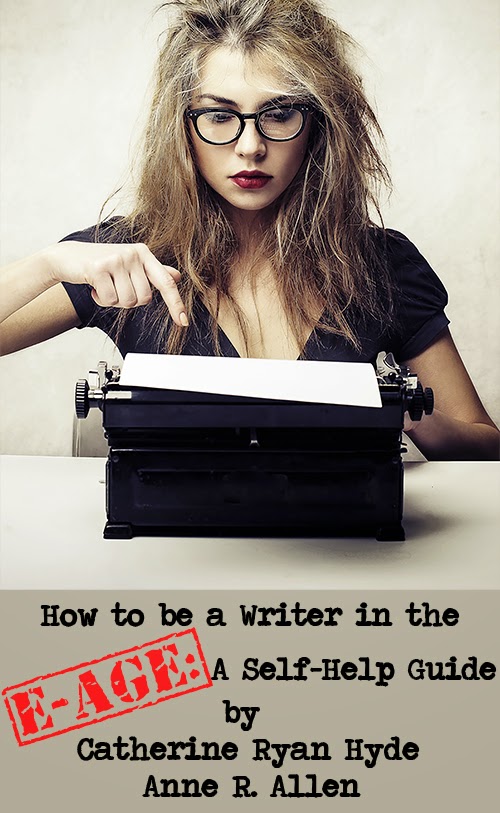
Not just for indies, and not just for authors going the traditional route. This is the book that helps you choose what path is right for YOU.
Plus there's lots of insider information on using social media and dealing with critiques, bullies, trolls, and rejection.
OPPORTUNITY ALERTS
The Central Coast Writers Conference. One of the best little Writers Conferences around! You can attend Anne's workshops on How to Write 21st Century Prose and How to Deal with Reviews and even have her critique your work. The inspiring keynote speaker is ZombieLit superstar Jonathan Maberry. September 19-20.
Tom Howard/Margaret Reid Poetry Contest $4,000 in prizes. Entry fee $10 per poem. Submit poems in modern and traditional styles, up to 250 lines each. Deadline: September 30.
Real Simpleâs eighth annual Life Lessons Essay Contest FREE to enter, First prize: $3,000 for an essay of up to 1500 words on: "What Single Decision Changed Your Life?" Would your world now be completely different if, at some point in the past, you hadnât made a seemingly random choice? Deadline Sept 21.
BARTLEBY SNOPES CONTEST $10 FOR UNLIMITED ENTRIES. Compose a short story entirely of dialogue. Must be under 2,000 words. Your entry cannot use any narration (this includes tag lines such as he said, she said, etc.). These are the only rules. 5 finalists will also appear in Issue 15 of the magazine. Last year they awarded $2,380 in prize money. Deadline: September 15.
Glimmer Train Short Story Award for New Writers Entry Fee $15. A prize of $1,500, publication in Glimmer Train Stories, and 20 copies of the prize issue is given quarterly for a short story by a writer whose fiction has not been published in a print publication with a circulation over 5,000. Using the online submission system, submit a story of 1,200 to 12,000 words. Deadline: August 31.
Creative Nonfiction magazine is seeking new essays for an upcoming issue dedicated to MARRIAGE. TRUE STORIES about marriage from any POV: happy spouses, ex-fiancees, wedding planners, divorce attorneys. whoever. Up to 4000 words. $20 Entry fee. $1000 first prize. Deadline: August 31.
"I is Another" Short Fiction contest FREE! UK's Holland Park Press seeks unpublished short fiction, 2,000 words maximum, inspired by Arthur Rimbaud's famous declaration "Je est un autre" -- "I is another". Write a story in the first person about someone who is not you but which is about a subject close to your heart. Therefore the storyline will really matter to you but the story should not be autobiographical. It should have a strong theme such as betrayal, sorrow, lust, jealousy or revenge. £200 prize, plus publication Deadline: August 31.


August 2, 2015
Your "LOOK INSIDE!" Book Preview: Will it Turn Readers Away or Close the Sale?
by Anne R. Allen
I get a lot of bargain ebook newsletters: BookBub, Fussy Librarian, Kindle News Daily, EBUK, etc.
Often a book intrigues me enough that I click through to look at the book's full details on the retail site. But I almost never buy. Sometimes the full blurb or a review will stop me, but 90% of the time, it's the sample chapters that turn me off.
I do admit I'm extremely picky these days, since I have a Kindle full of unread titles. I don't really want to buy new books—I get the newsletters mostly to see what's on the market—but sometimes a book intrigues me enough to click through to the buy page.
Unfortunately, with an awful lot of books—not only self-published, but some trad-pubbed as well—I can tell I'm not in competent hands from the first few pages.
I admit this is subjective. Some people don't mind reading less than polished books as long as the story is good—and the indie movement faithful often say "writing rules don't exist anymore because of self-publishing."
But some of us see a problem with this attitude. Blogger Jefferson Smith says, "I think indie books need a bit more tough love. Too many books are being published, for which real money is being charged, that aren’t up to professional standards. Sure, I may only be one opinion, but too many of the people indie authors turn to for criticism seem willing to let weaknesses slide a little. And in that process, we all suffer."
I share his opinion. I know this is partly because I've been a professional editor and worked at a traditional publishing house, so to me, reading amateur writing feels like work. I want to relax and immerse myself in a story, not constantly fight the urge to reach for a red pencil.
So whether you're self-publishing or trying to snag an agent or publisher, remember the early chapters are the most important part of your book—and your most powerful sales tool.
Yes, I said early chapters, plural. Not just the first five pages, which is where we've been taught to put most of our energies.
This has changed, like so many other aspects of publishing, because of new technology.
The "Look Inside" on retail sites is generally 10% of the book. So we have to make sure the story and quality don't begin to sag after that big first scene.
You have more room to make your case and sell the reader on your story. But you also have more room to show your weaknesses. So polish that first 10% until it shines.
Here are some things that will stop me from buying a book after taking a "LOOK INSIDE"
1) The story comes to a dead halt every time a new character appears—usually followed by a paragraph of police-report description.
This is classic first draft stuff. We all want to describe our characters when we meet them. But that description needs to be cut out of the final piece. Put it in your outline, writing journal, or series "bible" for future reference. But don't bore your readers with it. Let them use their own imaginations.
Yes, I know you've seen this convention in lots of classic genre writing. Garrison Keillor satirizes it in his Guy Noir radio sketches that mimic 1930s pulp fiction. (This is my own paraphrasing of a typical Guy Noir script):
"She was a curvy brunette who wore a dress so tight I could read the day of the week on her underpants. It was Wednesday. I could tell she hadn't been in Minnesota long because she didn't have that roll of fat around her midriff you get from Tater Tot hot dish…"
Do not write like this for a modern audience unless you're going for laughs.
2) Head-hopping
Head-hopping is one of the tell-tale signs of amateur writing. Everybody who has ever taught a writing class or workshop has to spend a good deal of time explaining point of view to newbies, especially the ones who stubbornly argue they should be able to write from as many points of view as they like—what was good enough for Edgar Rice Burroughs is good enough for them.
But the trouble is, this is not 1912, and you're not writing for a 19th or 20th century audience.
Because POV is one of the toughest things for a new writer to master, I advise new writers to start in first or third person limited (only one point of view character per scene).
Unfortunately, beginners are likely to choose the omniscient point of view—or what they think is omniscient—because it seems easier than trying to show the actions and feelings of many through the eyes of one character.
But it's the hardest point of view to do well. It also tends to seem old-fashioned. That's just what you want in epic fantasy, and it's fantastic for humor with a "stand-up" comedy voice. But it tends to sound dated in mystery or romance.
The problem with attempting the omniscient point of view when you're a beginner is that it usually slides into a slithery third person. The reader has to snake in and out of the consciousness of every character in the room. This leaves us not knowing who the protagonist is and we often don't know whose thoughts we're reading.
A confused reader is not buying your book.
You may be less tempted to use the omniscient POV after watching the You Tube video the Gunfighter by Eric Kissack and Kevin Tenglin. It's a brilliant parody of the intrusive narrator who takes over a story.
3) False starts
Yes, that battle between the spaceman and the dinosaur on page one is really exciting, and might make somebody turn the page. But when the reader sees on page two that it's only a dream in the head of five-year old Aiden, the protagonist's son, who can't decide if he want spacemen or dinosaurs on his birthday cake…you just lost the spaceman vs. dinosaur-loving audience.
Plus that opener did not intrigue the women's fiction readers who would enjoy the rest of the book.
Prologues can be false starts too, so be wary of using them unless you're writing epic fantasy or historical fiction, where they are often necessary to establish the historical context of the tale.
Another false start that's a pet peeve of mine is when the first point-of-view character you meet gets whacked at the end of chapter one. I'm just getting to know this person and now he's toast.
I know this is a convention of TV cop shows, but it doesn't work well in a novel. Give us somebody to root for up front and don't yank them away too soon.
When I get to see the first 10% of your book, I can see that I'm going to have to start all over again with another set of characters after that exciting first chapter and I'm gone.
4) Desultory dialogue
"Hi Aiden."
"Hi Connor."
"What you doing?"
"Nothing much."
Um, no. Beginners write dialogue the way it really sounds. The pros have learned how to put in just the good stuff.
5) Clunky dialogue tags
"Hi Aiden," yelled Connor happily as he finished his oatmeal and put on his jacket and ran out to meet his friend.
"Hi Connor," screamed Aiden energetically as he jumped off his bike and pulled his catcher's mitt from his backpack.
"What you doing?" squealed Connor awkwardly as he grabbed his baseball bat and ball from the front porch.
"Nothing much," Aiden hissed lethargically.
I know most people who've gone to the trouble of publishing a book don't write this badly, and I'm exaggerating. But I want to show the things that make a dialogue tag amateurish:
It's unnecessary for clarityUses thesaurus words instead of "said," which is invisible to the readerDescribes a series of actions that's impossible to do while saying the line of dialogue, including "hissing" a phrase without an "s."Uses the old fashioned: "said he" instead of "he said."
6) Adverbosity
I'm not in the 100% anti-adverb camp. I certainly don't want to make a blanket condemnation of a useful part of speech.
Saying "the man was almost good-looking" is not the same as saying "the man was good-looking."
Adverbs can show a character's personality and they're often necessary in dialogue. Plus if you're writing from the point of view of a tentative person, adverbs are going to be part of the characterization.
BUT when you run into an adverb when you're editing, always make sure you can't do without it. One of the marks of an amateur is the use of adverbs to create drama instead of active verbs.
To see some examples of cringe-worthy adverbs, see #5.
7) Imprecise word usage and incorrect spelling and grammar
A paying customer is not your third grade teacher; they won't give you a gold star just to boost your self-esteem.
Spelling and grammar count. Words are your tools.
If you don’t know the difference between lie and lay or aesthetic and ascetic and you like to sprinkle apostrophes willy-nilly amongst the letters, make sure you find a good editor with an eagle eye.
You wouldn't hire a plumber who didn't know how to use a wrench and I'm not going to buy a book by a writer who doesn't know how to use an apostrophe.
8) Clichéd openings
I read a lot, so I've seen some things so often I get a case of the yawns when they show up. The problem with some great ideas is a whole bunch of people have had the same great idea already.
The most common is the “alarm clock” opening—your protagonist waking up—the favorite cliché of all beginning storytellers, whether short story, novel, or script. Here’s a hilarious video from the comedians at Script Cops.They say, "78 % of all student films start with an alarm clock going off."
Here's a list of clichéd openings that can drive readers away if they read like same old/same old.
I'm NOT saying you can't use them. But you need to present them in a fresh new way.
Because I like breaking rules, I open my new book, So Much for Buckingham with a "weather report," but I hope it's short and funny and different enough that readers will go on.
"Morro Bay fog did not creep in on little cat feet like Carl Sandburg's Chicago mists. It galumphed on elephant hooves and moved in for the summer. Why didn't people warn you that "sunny California" could be so gloomy?"
9) Confusing the reader on purpose
I know it can be fun to withhold the information that your characters are all goldfish in an aquarium. Or name every character in your story "Irving". Or give them no names at all. Or maybe write in the second person plural and provide no dialogue tags. Or change your character's gender in every other chapter.
This kind of stuff can be brilliant and fun in flash or short fiction, but it can't often be sustained in a whole novel. Yes, I know some great authors have done it, and yes, I've read Virginia Woolf and Joshua Ferris and Brett Easton Ellis. They did some of those things brilliantly. (Although I think anybody who can get through Woolf's Orlando deserves some kind of medal.)
I'm a fan of literary fiction, but literary writers who aren't already well-known need to earn the respect of their readers first. Showing off how clever and quirky you are isn't going to make the sale if there's no solid story up front.
10) Info-dumps and "As you know Bob" conversation
When the first few chapters of a book are used for info-dumps—telling us the names of characters, what they look like, what they do for a living, and details of their backstories—before we get into the story, you know you're not dealing with a professional.
A pro knows that exposition (background information) needs to be filtered in slowly while we're immersed in scenes that have action and conflict.
Another big turn-off is "as-you-know-Bob" conversation:
"As you know, Bob, we're here investigating the murder of Mrs. Gilhooley, the 60-year-old librarian at Springfield High School, who may have been poisoned by one Ambrose Wiley, an itinerant preacher who brought her a Diet Dr. Pepper on August third…."
Bob knows why he's there. He's a forensics expert, not an Alzheimer's patient. Putting this stuff in dialogue insults the reader's intelligence, since nobody would say this stuff in real life. (In spite of the fact you hear an awful lot of it on those CSI TV shows.)
So how do you make that sale with the "Look Inside"?
1) Remember the buyer is probably skimming.
Use lots of white space, especially in the first chapter. That means short paragraphs, unburied dialogue and lean, uncluttered prose. For more on how to write for the 21st century reader/skimmer, here's my post on 6 Tips to Modernize Your Prose.
2) Introduce the protagonist on page one
Tell us what she wants and why she can't have it. Make us care about the main storyline of the book right away.
3) Give us immediate conflict.
This doesn't mean plunging us into the middle of a battle scene. It can be as simple as an author getting a bad review on Amazon, which is how I open So Much for Buckingham. Camilla's response to a silly review on page one is the inciting incident for the entire catastrophe that ensues.
4) Present several characters right away.
Starting with one person musing is a snooze, and a cast of thousands will just overwhelm the reader. Give us two, three or four characters who have interesting quirks and one we can really care about.
5) Break up your story into short chapters with great endings.
I love to see several chapters in an opener, especially if different chapters present different points of view. Here's a fantastic guest post from Jessica Bell on how to write chapter endings.
What about you, Scriveners? Do you think in terms of the customer who "looks inside" when doing your final edit? Do you find it changes the way you write? What are your pet peeves when you look inside a book you're considering for purchase? Are you willing to buy a book that seems amateurish if it promises to have a good story?
A note to European readers: Apparently the EU now requires disclosure of the cookies that Google uses for its analytics to gather stats for this blog. So you readers in Europe and the UK probably see a big gray banner across the top of the blog. If you hit "got it" the gray thing will disappear, they tell me.
BOOK OF THE WEEK
No Place Like Home 99c this week on all the Amazons, and Nook
[image error]
"A warp-speed, lighthearted comedy-mystery"...Abigail Padgett"A fun, charming novel about the rich and less so" ...Karen Doering"A cross of dry British humor and American wackiness, and it all adds up to a fun read." ...Deborah Bayles.
And NO PLACE LIKE HOME IS ALSO AN AUDIOBOOK!!
Narrated by award-winner C. S. Perryess and Anne R. Allen (as Camilla)
Set in San Luis Obispo. Great for that morning commute...
Nearly 8 hours of hilarious entertainment!
Only $1.99 if you buy the Kindle ebook--that's three bucks for both!Available at Audible and iTunes
OPPORTUNITY ALERTS
Tom Howard/Margaret Reid Poetry Contest $4,000 in prizes. Entry fee $10 per poem. Submit poems in modern and traditional styles, up to 250 lines each. Deadline: September 30.
BARTLEBY SNOPES CONTEST $10 FOR UNLIMITED ENTRIES. Compose a short story entirely of dialogue. Must be under 2,000 words. Your entry cannot use any narration (this includes tag lines such as he said, she said, etc.). These are the only rules. 5 finalists will also appear in Issue 15 of the magazine. Last year they awarded $2,380 in prize money. Deadline: September 15.
Glimmer Train Short Story Award for New Writers Entry Fee $15. A prize of $1,500, publication in Glimmer Train Stories, and 20 copies of the prize issue is given quarterly for a short story by a writer whose fiction has not been published in a print publication with a circulation over 5,000. Using the online submission system, submit a story of 1,200 to 12,000 words. Deadline: August 31.
Creative Nonfiction magazine is seeking new essays for an upcoming issue dedicated to MARRIAGE. TRUE STORIES about marriage from any POV: happy spouses, ex-fiancees, wedding planners, divorce attorneys. whoever. Up to 4000 words. $20 Entry fee. $1000 first prize. Deadline: August 31.
"I is Another" Short Fiction contest FREE! UK's Holland Park Press seeks unpublished short fiction, 2,000 words maximum, inspired by Arthur Rimbaud's famous declaration "Je est un autre" -- "I is another". Write a story in the first person about someone who is not you but which is about a subject close to your heart. Therefore the storyline will really matter to you but the story should not be autobiographical. It should have a strong theme such as betrayal, sorrow, lust, jealousy or revenge. £200 prize, plus publication Deadline: August 31.
I get a lot of bargain ebook newsletters: BookBub, Fussy Librarian, Kindle News Daily, EBUK, etc.
Often a book intrigues me enough that I click through to look at the book's full details on the retail site. But I almost never buy. Sometimes the full blurb or a review will stop me, but 90% of the time, it's the sample chapters that turn me off.
I do admit I'm extremely picky these days, since I have a Kindle full of unread titles. I don't really want to buy new books—I get the newsletters mostly to see what's on the market—but sometimes a book intrigues me enough to click through to the buy page.
Unfortunately, with an awful lot of books—not only self-published, but some trad-pubbed as well—I can tell I'm not in competent hands from the first few pages.
I admit this is subjective. Some people don't mind reading less than polished books as long as the story is good—and the indie movement faithful often say "writing rules don't exist anymore because of self-publishing."
But some of us see a problem with this attitude. Blogger Jefferson Smith says, "I think indie books need a bit more tough love. Too many books are being published, for which real money is being charged, that aren’t up to professional standards. Sure, I may only be one opinion, but too many of the people indie authors turn to for criticism seem willing to let weaknesses slide a little. And in that process, we all suffer."
I share his opinion. I know this is partly because I've been a professional editor and worked at a traditional publishing house, so to me, reading amateur writing feels like work. I want to relax and immerse myself in a story, not constantly fight the urge to reach for a red pencil.
So whether you're self-publishing or trying to snag an agent or publisher, remember the early chapters are the most important part of your book—and your most powerful sales tool.
Yes, I said early chapters, plural. Not just the first five pages, which is where we've been taught to put most of our energies.
This has changed, like so many other aspects of publishing, because of new technology.
The "Look Inside" on retail sites is generally 10% of the book. So we have to make sure the story and quality don't begin to sag after that big first scene.
You have more room to make your case and sell the reader on your story. But you also have more room to show your weaknesses. So polish that first 10% until it shines.
Here are some things that will stop me from buying a book after taking a "LOOK INSIDE"
1) The story comes to a dead halt every time a new character appears—usually followed by a paragraph of police-report description.
This is classic first draft stuff. We all want to describe our characters when we meet them. But that description needs to be cut out of the final piece. Put it in your outline, writing journal, or series "bible" for future reference. But don't bore your readers with it. Let them use their own imaginations.
Yes, I know you've seen this convention in lots of classic genre writing. Garrison Keillor satirizes it in his Guy Noir radio sketches that mimic 1930s pulp fiction. (This is my own paraphrasing of a typical Guy Noir script):
"She was a curvy brunette who wore a dress so tight I could read the day of the week on her underpants. It was Wednesday. I could tell she hadn't been in Minnesota long because she didn't have that roll of fat around her midriff you get from Tater Tot hot dish…"
Do not write like this for a modern audience unless you're going for laughs.
2) Head-hopping
Head-hopping is one of the tell-tale signs of amateur writing. Everybody who has ever taught a writing class or workshop has to spend a good deal of time explaining point of view to newbies, especially the ones who stubbornly argue they should be able to write from as many points of view as they like—what was good enough for Edgar Rice Burroughs is good enough for them.
But the trouble is, this is not 1912, and you're not writing for a 19th or 20th century audience.
Because POV is one of the toughest things for a new writer to master, I advise new writers to start in first or third person limited (only one point of view character per scene).
Unfortunately, beginners are likely to choose the omniscient point of view—or what they think is omniscient—because it seems easier than trying to show the actions and feelings of many through the eyes of one character.
But it's the hardest point of view to do well. It also tends to seem old-fashioned. That's just what you want in epic fantasy, and it's fantastic for humor with a "stand-up" comedy voice. But it tends to sound dated in mystery or romance.
The problem with attempting the omniscient point of view when you're a beginner is that it usually slides into a slithery third person. The reader has to snake in and out of the consciousness of every character in the room. This leaves us not knowing who the protagonist is and we often don't know whose thoughts we're reading.
A confused reader is not buying your book.
You may be less tempted to use the omniscient POV after watching the You Tube video the Gunfighter by Eric Kissack and Kevin Tenglin. It's a brilliant parody of the intrusive narrator who takes over a story.
3) False starts
Yes, that battle between the spaceman and the dinosaur on page one is really exciting, and might make somebody turn the page. But when the reader sees on page two that it's only a dream in the head of five-year old Aiden, the protagonist's son, who can't decide if he want spacemen or dinosaurs on his birthday cake…you just lost the spaceman vs. dinosaur-loving audience.
Plus that opener did not intrigue the women's fiction readers who would enjoy the rest of the book.
Prologues can be false starts too, so be wary of using them unless you're writing epic fantasy or historical fiction, where they are often necessary to establish the historical context of the tale.
Another false start that's a pet peeve of mine is when the first point-of-view character you meet gets whacked at the end of chapter one. I'm just getting to know this person and now he's toast.
I know this is a convention of TV cop shows, but it doesn't work well in a novel. Give us somebody to root for up front and don't yank them away too soon.
When I get to see the first 10% of your book, I can see that I'm going to have to start all over again with another set of characters after that exciting first chapter and I'm gone.
4) Desultory dialogue
"Hi Aiden."
"Hi Connor."
"What you doing?"
"Nothing much."
Um, no. Beginners write dialogue the way it really sounds. The pros have learned how to put in just the good stuff.
5) Clunky dialogue tags
"Hi Aiden," yelled Connor happily as he finished his oatmeal and put on his jacket and ran out to meet his friend.
"Hi Connor," screamed Aiden energetically as he jumped off his bike and pulled his catcher's mitt from his backpack.
"What you doing?" squealed Connor awkwardly as he grabbed his baseball bat and ball from the front porch.
"Nothing much," Aiden hissed lethargically.
I know most people who've gone to the trouble of publishing a book don't write this badly, and I'm exaggerating. But I want to show the things that make a dialogue tag amateurish:
It's unnecessary for clarityUses thesaurus words instead of "said," which is invisible to the readerDescribes a series of actions that's impossible to do while saying the line of dialogue, including "hissing" a phrase without an "s."Uses the old fashioned: "said he" instead of "he said."
6) Adverbosity
I'm not in the 100% anti-adverb camp. I certainly don't want to make a blanket condemnation of a useful part of speech.
Saying "the man was almost good-looking" is not the same as saying "the man was good-looking."
Adverbs can show a character's personality and they're often necessary in dialogue. Plus if you're writing from the point of view of a tentative person, adverbs are going to be part of the characterization.
BUT when you run into an adverb when you're editing, always make sure you can't do without it. One of the marks of an amateur is the use of adverbs to create drama instead of active verbs.
To see some examples of cringe-worthy adverbs, see #5.
7) Imprecise word usage and incorrect spelling and grammar
A paying customer is not your third grade teacher; they won't give you a gold star just to boost your self-esteem.
Spelling and grammar count. Words are your tools.
If you don’t know the difference between lie and lay or aesthetic and ascetic and you like to sprinkle apostrophes willy-nilly amongst the letters, make sure you find a good editor with an eagle eye.
You wouldn't hire a plumber who didn't know how to use a wrench and I'm not going to buy a book by a writer who doesn't know how to use an apostrophe.
8) Clichéd openings
I read a lot, so I've seen some things so often I get a case of the yawns when they show up. The problem with some great ideas is a whole bunch of people have had the same great idea already.
The most common is the “alarm clock” opening—your protagonist waking up—the favorite cliché of all beginning storytellers, whether short story, novel, or script. Here’s a hilarious video from the comedians at Script Cops.They say, "78 % of all student films start with an alarm clock going off."
Here's a list of clichéd openings that can drive readers away if they read like same old/same old.
I'm NOT saying you can't use them. But you need to present them in a fresh new way.
Because I like breaking rules, I open my new book, So Much for Buckingham with a "weather report," but I hope it's short and funny and different enough that readers will go on.
"Morro Bay fog did not creep in on little cat feet like Carl Sandburg's Chicago mists. It galumphed on elephant hooves and moved in for the summer. Why didn't people warn you that "sunny California" could be so gloomy?"
9) Confusing the reader on purpose
I know it can be fun to withhold the information that your characters are all goldfish in an aquarium. Or name every character in your story "Irving". Or give them no names at all. Or maybe write in the second person plural and provide no dialogue tags. Or change your character's gender in every other chapter.
This kind of stuff can be brilliant and fun in flash or short fiction, but it can't often be sustained in a whole novel. Yes, I know some great authors have done it, and yes, I've read Virginia Woolf and Joshua Ferris and Brett Easton Ellis. They did some of those things brilliantly. (Although I think anybody who can get through Woolf's Orlando deserves some kind of medal.)
I'm a fan of literary fiction, but literary writers who aren't already well-known need to earn the respect of their readers first. Showing off how clever and quirky you are isn't going to make the sale if there's no solid story up front.
10) Info-dumps and "As you know Bob" conversation
When the first few chapters of a book are used for info-dumps—telling us the names of characters, what they look like, what they do for a living, and details of their backstories—before we get into the story, you know you're not dealing with a professional.
A pro knows that exposition (background information) needs to be filtered in slowly while we're immersed in scenes that have action and conflict.
Another big turn-off is "as-you-know-Bob" conversation:
"As you know, Bob, we're here investigating the murder of Mrs. Gilhooley, the 60-year-old librarian at Springfield High School, who may have been poisoned by one Ambrose Wiley, an itinerant preacher who brought her a Diet Dr. Pepper on August third…."
Bob knows why he's there. He's a forensics expert, not an Alzheimer's patient. Putting this stuff in dialogue insults the reader's intelligence, since nobody would say this stuff in real life. (In spite of the fact you hear an awful lot of it on those CSI TV shows.)
So how do you make that sale with the "Look Inside"?
1) Remember the buyer is probably skimming.
Use lots of white space, especially in the first chapter. That means short paragraphs, unburied dialogue and lean, uncluttered prose. For more on how to write for the 21st century reader/skimmer, here's my post on 6 Tips to Modernize Your Prose.
2) Introduce the protagonist on page one
Tell us what she wants and why she can't have it. Make us care about the main storyline of the book right away.
3) Give us immediate conflict.
This doesn't mean plunging us into the middle of a battle scene. It can be as simple as an author getting a bad review on Amazon, which is how I open So Much for Buckingham. Camilla's response to a silly review on page one is the inciting incident for the entire catastrophe that ensues.
4) Present several characters right away.
Starting with one person musing is a snooze, and a cast of thousands will just overwhelm the reader. Give us two, three or four characters who have interesting quirks and one we can really care about.
5) Break up your story into short chapters with great endings.
I love to see several chapters in an opener, especially if different chapters present different points of view. Here's a fantastic guest post from Jessica Bell on how to write chapter endings.
What about you, Scriveners? Do you think in terms of the customer who "looks inside" when doing your final edit? Do you find it changes the way you write? What are your pet peeves when you look inside a book you're considering for purchase? Are you willing to buy a book that seems amateurish if it promises to have a good story?
A note to European readers: Apparently the EU now requires disclosure of the cookies that Google uses for its analytics to gather stats for this blog. So you readers in Europe and the UK probably see a big gray banner across the top of the blog. If you hit "got it" the gray thing will disappear, they tell me.
BOOK OF THE WEEK
No Place Like Home 99c this week on all the Amazons, and Nook
[image error]
"A warp-speed, lighthearted comedy-mystery"...Abigail Padgett"A fun, charming novel about the rich and less so" ...Karen Doering"A cross of dry British humor and American wackiness, and it all adds up to a fun read." ...Deborah Bayles.
And NO PLACE LIKE HOME IS ALSO AN AUDIOBOOK!!
Narrated by award-winner C. S. Perryess and Anne R. Allen (as Camilla)
Set in San Luis Obispo. Great for that morning commute...
Nearly 8 hours of hilarious entertainment!
Only $1.99 if you buy the Kindle ebook--that's three bucks for both!Available at Audible and iTunes
OPPORTUNITY ALERTS
Tom Howard/Margaret Reid Poetry Contest $4,000 in prizes. Entry fee $10 per poem. Submit poems in modern and traditional styles, up to 250 lines each. Deadline: September 30.
BARTLEBY SNOPES CONTEST $10 FOR UNLIMITED ENTRIES. Compose a short story entirely of dialogue. Must be under 2,000 words. Your entry cannot use any narration (this includes tag lines such as he said, she said, etc.). These are the only rules. 5 finalists will also appear in Issue 15 of the magazine. Last year they awarded $2,380 in prize money. Deadline: September 15.
Glimmer Train Short Story Award for New Writers Entry Fee $15. A prize of $1,500, publication in Glimmer Train Stories, and 20 copies of the prize issue is given quarterly for a short story by a writer whose fiction has not been published in a print publication with a circulation over 5,000. Using the online submission system, submit a story of 1,200 to 12,000 words. Deadline: August 31.
Creative Nonfiction magazine is seeking new essays for an upcoming issue dedicated to MARRIAGE. TRUE STORIES about marriage from any POV: happy spouses, ex-fiancees, wedding planners, divorce attorneys. whoever. Up to 4000 words. $20 Entry fee. $1000 first prize. Deadline: August 31.
"I is Another" Short Fiction contest FREE! UK's Holland Park Press seeks unpublished short fiction, 2,000 words maximum, inspired by Arthur Rimbaud's famous declaration "Je est un autre" -- "I is another". Write a story in the first person about someone who is not you but which is about a subject close to your heart. Therefore the storyline will really matter to you but the story should not be autobiographical. It should have a strong theme such as betrayal, sorrow, lust, jealousy or revenge. £200 prize, plus publication Deadline: August 31.
July 26, 2015
SPEED KILLS...OR DOES IT? How to Write Fast(er) without Going Bonkers
by Ruth Harris
As the Romans said (and the Olympics borrowed for its motto): Citius, Altius, Fortius. Or, as we say: "Faster, Higher, Stronger."
Sometimes publishing seems to be an Olympic event or at least it feels that way.
Vroom. Vroom. Everyone wants to write faster. To publish more books. To keep up with/get ahead of the competition. To be a Jackie Stewart of the keyboard. A Dale Earnhardt of word count.
But, hang on, you might say. It's not a sprint. It's a marathon and marathons take time.
Or, you might have other objections:
1) I care about my work and I care about my readers. I want to share my best possible efforts and "the best" doesn't come easily or quickly.
You're right, but what we're talking about here is getting a draft written fast, not about the finished product.
2) I don't want to publish any book before it's ready and editing and revising take time.
See above.
3) I've taken part in NaNoWriMo so I can show you proof positive that anything I write fast is garbage.
So what? No one except you ever has to see it. Ever hear of that amazing process known as "fixing it later?"
4) If I write fast, won't I add to the "tsunami of crap?"
Yes, of course, you certainly can, but "crap," like beauty, lies in the eye of the beholder. Lots of people who write what you or I or Maxwell Perkins might consider crap are enjoying writing it, publishing it, making readers happy and making money in the process.
In addition, allow me to remind you that writing slowly and agonizingly can also result in crap. Pretentious crap. Boring crap. Unreadable crap.
Besides, there are all the obvious upsides to writing fast.
Your productivity soars. Where there were two books, there are now four. Duh.You get into the zone, that magic place where writing goes so effortlessly you don’t know where the twists, turns and brilliant dialogue is coming from.You outrun the inner scold, that mahatma of negativity that rains on your parade and tells you you're not good enough, not talented enough, that you're a phony and a faker.You don't give yourself time to censor or second-guess yourself.You avoid wasting time by obsessing over whether your hero should be blond, brunette or a power-baldy à la Bruce Willis. You can always figure out the details later and, more often than not, as the character engages and develops, hair color (or lack of hair) will become obvious.Writing fast increases your chances of gaining access to your sub-conscious or what Stephen King calls "the boys downstairs." Those "boys"—or girls if you're of the female persuasion—are the source of creativity. They are the ones who come up with the unexpected (even to the writer!) plot twist and dazzling solution to a problem you thought unsolvable.Watching the words and the pages pile up, you give yourself the gift of a sense of accomplishment. Where there was nothing, there is now something and the fact that there's "something" where once there was nothing builds confidence.Writing fast frees you from the endless, soul-numbing editing-revising trap.Last of all, writing fast is a sensible approach in these days of self-publishing because new books help sell old books. Just ask Joe Konrath or Dean Wesley Smith who writes about writing at pulp speed.
Before we get into (sane) ways to increase your speed, it's important to understand why you aren't writing as productively as you'd like to.
1) Are you really slow or are you yourself putting the brakes on? Are you slowing yourself down by listening to the no voices in your head? That prune-faced seventh grade teacher? That parent for whom nothing was ever good enough?
Psychologist Leslie Becker-Phelps offers a practical approach to deflecting self-criticism based on cognitive behavioral therapy. She tells how to turn self-criticism into compassionate self-awareness that will help free you from the trap you create for yourself.
2) Do you allow the perfect to become the enemy of the good?
Do you plod along, spending hours searching for the "perfect" word or trying to write the "perfect" sentence, paragraph, first sentence, last sentence? Are you getting nowhere? And not fast?
This thorough guide explains the roots of perfectionism and lays out a concrete guide toward taming the runaway perfectionist that's getting in your way.
Just remember: your book has to be good. It doesn't have to be perfect. In fact, it can’t be perfect because nothing is perfect or even can be. Fact of life, just like the birds and bees, (but not as much fun).
3) ID your working style: steady, spurt, sprint.
Sprinters can't (and shouldn't) expect to keep up a killer place all day long. Sprints are short races for a reason. No one can go full steam ahead hour after hour after hour.Spurt workers tend to write in extremely productive bursts. They also need a few days off to regroup and catch up with themselves between intense writing sessions.Steady writers work at an even pace. A hundred words a day or a thousand words a day every day, those words add up.Once you ID your working style, you will have an idea of how many words/how much speed you should realistically expect from yourself but, before you start, you need to have some idea of what you're going to write.
4) Face to face with the “O” word.
No way to escape it, but if you want to write fast you have to Do It. You know exactly what I mean, it’s the writer's version of The Big O. Outline.
In order to write fast, even pantsers need a road map. An outline does not have to be that godawful clunker from grade school with Roman numerals and tiered indents.
An outline can be as simple as a hand-written list or a scribbled synopsis. Or it can be a version of any one or more of the following ways of getting your ideas down and wrangling them into some kind of usable shape:
A logline or one of its relatives. Anne's tips on writing the dreaded synopsis...and its little friends: the hook, logline, and pitch will start you off on the right track.The elevator pitch. Author Kayelle Allen offers a fill-in-the-blanks template.The blurb you write before you write the book. Joanna Penn's tips on how to write a back cover blurb are practical and inspiring.A genre cheat sheet so you know what your readers expect and can make sure to keep on track.Here are 6 different outline templates you can apply to romance, scifi, fantasy, literary fiction and any other genre you can think of.Libbie Hawker's popular guide to outlining for pantsers: Take Off Your Pants. Libby's outlining technique applies to any genre and will help you improve your writing speed.Bestselling author of the Costa series, David Hewson explains his method of outlining novel-length fiction and tells how he brainstorms story and storyline possibilities.Scapple (Mac only. $14.99 with FREE trial) is a simple app perfect for brainstorming and making connections between any or all of the kinds of ideas (plot, character, setting, incident) you will need to write a book. If you've ever scribbled down ideas all over a piece of paper and drawn lines between related thoughts, then you already know what Scapple does.How to Write a Book in Three Days: Lessons from sword-and-sorcery master, Michael Moorcock, is inspiring and practical.Rachel Aaron's How I Went From Writing 2,000 Words a Day to 10,000 Words a Day is another source of inspiration and down-to-earth advice.5,000 Words Per Hour: Write Faster, Write Smarter has helped many writers up their speed. The author, Chris Fox, has also created an app (Mac only) to accompany the book.Roni Loren always thought of herself as a Slow Writer but deadlines compelled her to change her ways. She was surprised by the impressive increase in her speed and blogged about what she learned here.
Now that you're feeling inspired and have prepared yourself to write, it’s time to start.
Coffee (or Red Bull) works for some. Loud music for others. Vivaldi's The Seasons for still others.An external deadline can help: a contract (if only with yourself) or even a promise to someone else—including the dog who is in need of a walk.Setting a word target, a time target, a scene target adds focus in the form of an achievable goal. Do you respond better to the kiss or the whip? If the first, promise yourself a Dove Bar at the end of your just-get-it-down writing session. If the whip, then no dessert for you tonight unless you get your quota filled! Shut the door, turn off the phone, quash the internet, go to full-screen mode, do whatever you have to do to get the job done. Adapt Nora Roberts' approach: you will permit interruptions only in the case of “blood or fire.”
In your new world of Writing Fast, there are a number of possible outcomes:
Might be much better than you think and just needs a light edit. Yay! Treasure the moment because you get to feel you're better than you think and that faster doesn't mean crappier.Might be pretty good but needs a careful edit. OK, editing is part of the job of being a writer so get on with it.Might be dull, drab and needs major, butt-in-chair revision. That’s OK, too, because revision is also part of the job.The aaargh! draft: So what you wrote is real crapola and needs a four-corners rewrite? Don’t let that get you down and don’t forget: It ain’t the writing it’s the rewriting. Professionals know it and the aaargh! draft is the perfect case in point.Even worse than the aaargh draft is draft so putrid it threatens the integrity of the time-space continuum. We've all been there, done that and it's why keyboards come with delete buttons. Just because you wrote it doesn’t mean you have to publish it or even that anyone else has to see it. See if there's anything you can learn (or steal), then trash the d*mn thing and move on.Saving best for last: OMG! Did I write that? It's just about the best feeling a writer can have and, when you write fast, you outrun your insecurities and second guesses, your tendency to "fix" and fiddle, you're also raising the odds of the OMG!-Did-I-write-that? outcome.
Now that you are writing fast(er) and at a speed that feels sane to you, stand up and take a bow.
As the Romans used to say: Accipe rosas, relinque spinas.
Accept the roses, leave the thorns.
What about you Scriveners? Are you a fast writer like Ruth, or are you a sloooooow writer like me (Anne)? Ruth wrote this post partly to help me with my sluggish writing skills. Do you find you can write faster with an outline of sorts? Or are you like me and write a careful outline and then completely ignore it? Have you tried any of these tips to get you up to speed?
BOOKS OF THE WEEK
We have two FREE books to offer you this week!
Ruth Harris's New York Times bestseller Love and Money is FREE!
Amazon US, Amazon UK,
Nook, Kobo, iBooks, Google Play.
"Richly plotted and racing to a shocking climax, this glittering novel is first-class entertainment." --New York Times
"Sophisticated and entertaining. I couldn't stop reading." --Rona Jaffe, author of The Best Of Everything
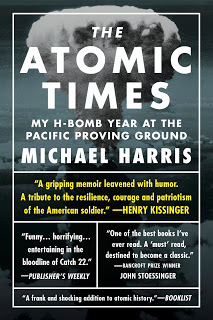
Also FREE: Michael Harris's Gripping Memoir
Kindle | Nook | Kobo | iBooks | GooglePlay
Catch-22 with radiation! Area 51 meets Dr. Strangelove!
"A gripping memoir leavened by humor, loyalty and pride of accomplishment. A tribute to the resilience, courage and patriotism of the American soldier." —Henry Kissinger
OPPORTUNITY ALERTS
BARTLEBY SNOPES CONTEST $10 FOR UNLIMITED ENTRIES. Compose a short story entirely of dialogue. Must be under 2,000 words. Your entry cannot use any narration (this includes tag lines such as he said, she said, etc.). These are the only rules. 5 finalists will also appear in Issue 15 of the magazine. Last year they awarded $2,380 in prize money. Deadline September 15.
Glimmer Train Short Story Award for New Writers Entry Fee $15. A prize of $1,500, publication in Glimmer Train Stories, and 20 copies of the prize issue is given quarterly for a short story by a writer whose fiction has not been published in a print publication with a circulation over 5,000. Using the online submission system, submit a story of 1,200 to 12,000 words. Deadline August 31.
Creative Nonfiction magazine is seeking new essays for an upcoming issue dedicated to MARRIAGE. TRUE STORIES about marriage from any POV: happy spouses, ex-fiancees, wedding planners, divorce attorneys, whoever. Up to 4000 words. $20 Entry fee. $1000 first prize. Deadline: August 31.
CRAZYHORSE SHORT-SHORT FICTION AWARD $15 Entry fee. $1,000 and publication. Three runners-up. All entries considered for publication. Submit one to three short-shorts of up to 500 words each. Deadline July 31.
DIABOLICAL PLOTS NO FEE. A new online journal that publishes original fiction, one story per month. Genres: science fiction, fantasy, horror (everything must have speculative element, even horror). 2000 word limit. Pays .06 cents/word. Deadline July 31.
As the Romans said (and the Olympics borrowed for its motto): Citius, Altius, Fortius. Or, as we say: "Faster, Higher, Stronger."
Sometimes publishing seems to be an Olympic event or at least it feels that way.
Vroom. Vroom. Everyone wants to write faster. To publish more books. To keep up with/get ahead of the competition. To be a Jackie Stewart of the keyboard. A Dale Earnhardt of word count.
But, hang on, you might say. It's not a sprint. It's a marathon and marathons take time.
Or, you might have other objections:
1) I care about my work and I care about my readers. I want to share my best possible efforts and "the best" doesn't come easily or quickly.
You're right, but what we're talking about here is getting a draft written fast, not about the finished product.
2) I don't want to publish any book before it's ready and editing and revising take time.
See above.
3) I've taken part in NaNoWriMo so I can show you proof positive that anything I write fast is garbage.
So what? No one except you ever has to see it. Ever hear of that amazing process known as "fixing it later?"
4) If I write fast, won't I add to the "tsunami of crap?"
Yes, of course, you certainly can, but "crap," like beauty, lies in the eye of the beholder. Lots of people who write what you or I or Maxwell Perkins might consider crap are enjoying writing it, publishing it, making readers happy and making money in the process.
In addition, allow me to remind you that writing slowly and agonizingly can also result in crap. Pretentious crap. Boring crap. Unreadable crap.
Besides, there are all the obvious upsides to writing fast.
Your productivity soars. Where there were two books, there are now four. Duh.You get into the zone, that magic place where writing goes so effortlessly you don’t know where the twists, turns and brilliant dialogue is coming from.You outrun the inner scold, that mahatma of negativity that rains on your parade and tells you you're not good enough, not talented enough, that you're a phony and a faker.You don't give yourself time to censor or second-guess yourself.You avoid wasting time by obsessing over whether your hero should be blond, brunette or a power-baldy à la Bruce Willis. You can always figure out the details later and, more often than not, as the character engages and develops, hair color (or lack of hair) will become obvious.Writing fast increases your chances of gaining access to your sub-conscious or what Stephen King calls "the boys downstairs." Those "boys"—or girls if you're of the female persuasion—are the source of creativity. They are the ones who come up with the unexpected (even to the writer!) plot twist and dazzling solution to a problem you thought unsolvable.Watching the words and the pages pile up, you give yourself the gift of a sense of accomplishment. Where there was nothing, there is now something and the fact that there's "something" where once there was nothing builds confidence.Writing fast frees you from the endless, soul-numbing editing-revising trap.Last of all, writing fast is a sensible approach in these days of self-publishing because new books help sell old books. Just ask Joe Konrath or Dean Wesley Smith who writes about writing at pulp speed.
Before we get into (sane) ways to increase your speed, it's important to understand why you aren't writing as productively as you'd like to.
1) Are you really slow or are you yourself putting the brakes on? Are you slowing yourself down by listening to the no voices in your head? That prune-faced seventh grade teacher? That parent for whom nothing was ever good enough?
Psychologist Leslie Becker-Phelps offers a practical approach to deflecting self-criticism based on cognitive behavioral therapy. She tells how to turn self-criticism into compassionate self-awareness that will help free you from the trap you create for yourself.
2) Do you allow the perfect to become the enemy of the good?
Do you plod along, spending hours searching for the "perfect" word or trying to write the "perfect" sentence, paragraph, first sentence, last sentence? Are you getting nowhere? And not fast?
This thorough guide explains the roots of perfectionism and lays out a concrete guide toward taming the runaway perfectionist that's getting in your way.
Just remember: your book has to be good. It doesn't have to be perfect. In fact, it can’t be perfect because nothing is perfect or even can be. Fact of life, just like the birds and bees, (but not as much fun).
3) ID your working style: steady, spurt, sprint.
Sprinters can't (and shouldn't) expect to keep up a killer place all day long. Sprints are short races for a reason. No one can go full steam ahead hour after hour after hour.Spurt workers tend to write in extremely productive bursts. They also need a few days off to regroup and catch up with themselves between intense writing sessions.Steady writers work at an even pace. A hundred words a day or a thousand words a day every day, those words add up.Once you ID your working style, you will have an idea of how many words/how much speed you should realistically expect from yourself but, before you start, you need to have some idea of what you're going to write.
4) Face to face with the “O” word.
No way to escape it, but if you want to write fast you have to Do It. You know exactly what I mean, it’s the writer's version of The Big O. Outline.
In order to write fast, even pantsers need a road map. An outline does not have to be that godawful clunker from grade school with Roman numerals and tiered indents.
An outline can be as simple as a hand-written list or a scribbled synopsis. Or it can be a version of any one or more of the following ways of getting your ideas down and wrangling them into some kind of usable shape:
A logline or one of its relatives. Anne's tips on writing the dreaded synopsis...and its little friends: the hook, logline, and pitch will start you off on the right track.The elevator pitch. Author Kayelle Allen offers a fill-in-the-blanks template.The blurb you write before you write the book. Joanna Penn's tips on how to write a back cover blurb are practical and inspiring.A genre cheat sheet so you know what your readers expect and can make sure to keep on track.Here are 6 different outline templates you can apply to romance, scifi, fantasy, literary fiction and any other genre you can think of.Libbie Hawker's popular guide to outlining for pantsers: Take Off Your Pants. Libby's outlining technique applies to any genre and will help you improve your writing speed.Bestselling author of the Costa series, David Hewson explains his method of outlining novel-length fiction and tells how he brainstorms story and storyline possibilities.Scapple (Mac only. $14.99 with FREE trial) is a simple app perfect for brainstorming and making connections between any or all of the kinds of ideas (plot, character, setting, incident) you will need to write a book. If you've ever scribbled down ideas all over a piece of paper and drawn lines between related thoughts, then you already know what Scapple does.How to Write a Book in Three Days: Lessons from sword-and-sorcery master, Michael Moorcock, is inspiring and practical.Rachel Aaron's How I Went From Writing 2,000 Words a Day to 10,000 Words a Day is another source of inspiration and down-to-earth advice.5,000 Words Per Hour: Write Faster, Write Smarter has helped many writers up their speed. The author, Chris Fox, has also created an app (Mac only) to accompany the book.Roni Loren always thought of herself as a Slow Writer but deadlines compelled her to change her ways. She was surprised by the impressive increase in her speed and blogged about what she learned here.
Now that you're feeling inspired and have prepared yourself to write, it’s time to start.
Coffee (or Red Bull) works for some. Loud music for others. Vivaldi's The Seasons for still others.An external deadline can help: a contract (if only with yourself) or even a promise to someone else—including the dog who is in need of a walk.Setting a word target, a time target, a scene target adds focus in the form of an achievable goal. Do you respond better to the kiss or the whip? If the first, promise yourself a Dove Bar at the end of your just-get-it-down writing session. If the whip, then no dessert for you tonight unless you get your quota filled! Shut the door, turn off the phone, quash the internet, go to full-screen mode, do whatever you have to do to get the job done. Adapt Nora Roberts' approach: you will permit interruptions only in the case of “blood or fire.”
In your new world of Writing Fast, there are a number of possible outcomes:
Might be much better than you think and just needs a light edit. Yay! Treasure the moment because you get to feel you're better than you think and that faster doesn't mean crappier.Might be pretty good but needs a careful edit. OK, editing is part of the job of being a writer so get on with it.Might be dull, drab and needs major, butt-in-chair revision. That’s OK, too, because revision is also part of the job.The aaargh! draft: So what you wrote is real crapola and needs a four-corners rewrite? Don’t let that get you down and don’t forget: It ain’t the writing it’s the rewriting. Professionals know it and the aaargh! draft is the perfect case in point.Even worse than the aaargh draft is draft so putrid it threatens the integrity of the time-space continuum. We've all been there, done that and it's why keyboards come with delete buttons. Just because you wrote it doesn’t mean you have to publish it or even that anyone else has to see it. See if there's anything you can learn (or steal), then trash the d*mn thing and move on.Saving best for last: OMG! Did I write that? It's just about the best feeling a writer can have and, when you write fast, you outrun your insecurities and second guesses, your tendency to "fix" and fiddle, you're also raising the odds of the OMG!-Did-I-write-that? outcome.
Now that you are writing fast(er) and at a speed that feels sane to you, stand up and take a bow.
As the Romans used to say: Accipe rosas, relinque spinas.
Accept the roses, leave the thorns.
What about you Scriveners? Are you a fast writer like Ruth, or are you a sloooooow writer like me (Anne)? Ruth wrote this post partly to help me with my sluggish writing skills. Do you find you can write faster with an outline of sorts? Or are you like me and write a careful outline and then completely ignore it? Have you tried any of these tips to get you up to speed?
BOOKS OF THE WEEK
We have two FREE books to offer you this week!
Ruth Harris's New York Times bestseller Love and Money is FREE!
Amazon US, Amazon UK,
Nook, Kobo, iBooks, Google Play.
"Richly plotted and racing to a shocking climax, this glittering novel is first-class entertainment." --New York Times
"Sophisticated and entertaining. I couldn't stop reading." --Rona Jaffe, author of The Best Of Everything
Also FREE: Michael Harris's Gripping Memoir
Kindle | Nook | Kobo | iBooks | GooglePlay
Catch-22 with radiation! Area 51 meets Dr. Strangelove!
"A gripping memoir leavened by humor, loyalty and pride of accomplishment. A tribute to the resilience, courage and patriotism of the American soldier." —Henry Kissinger
OPPORTUNITY ALERTS
BARTLEBY SNOPES CONTEST $10 FOR UNLIMITED ENTRIES. Compose a short story entirely of dialogue. Must be under 2,000 words. Your entry cannot use any narration (this includes tag lines such as he said, she said, etc.). These are the only rules. 5 finalists will also appear in Issue 15 of the magazine. Last year they awarded $2,380 in prize money. Deadline September 15.
Glimmer Train Short Story Award for New Writers Entry Fee $15. A prize of $1,500, publication in Glimmer Train Stories, and 20 copies of the prize issue is given quarterly for a short story by a writer whose fiction has not been published in a print publication with a circulation over 5,000. Using the online submission system, submit a story of 1,200 to 12,000 words. Deadline August 31.
Creative Nonfiction magazine is seeking new essays for an upcoming issue dedicated to MARRIAGE. TRUE STORIES about marriage from any POV: happy spouses, ex-fiancees, wedding planners, divorce attorneys, whoever. Up to 4000 words. $20 Entry fee. $1000 first prize. Deadline: August 31.
CRAZYHORSE SHORT-SHORT FICTION AWARD $15 Entry fee. $1,000 and publication. Three runners-up. All entries considered for publication. Submit one to three short-shorts of up to 500 words each. Deadline July 31.
DIABOLICAL PLOTS NO FEE. A new online journal that publishes original fiction, one story per month. Genres: science fiction, fantasy, horror (everything must have speculative element, even horror). 2000 word limit. Pays .06 cents/word. Deadline July 31.
July 19, 2015
What Happens to Your Blog when You Die? Why You Need to Appoint a Social Media Executor NOW
by Anne R. Allen
One of my blogger friends died last week. Ann was a regular commenter here from the beginning and often gave me suggestions for blog topics (she commented as "Churadogs".) Her own blog, Calhoun's Cannons, grew out of a local newspaper column. It's smart and funny and fierce and full of the down-and-dirty info on local politics.
Her illness, pancreatic cancer, is a ruthless killer. It sneaks up so fast that a diagnosis is usually a death sentence. Ann was diagnosed less than two months ago. Her last blogpost was on June 17th. It makes me cry when I look at it. Her family and friends are dealing with all the chaos that happens when a life is cut short without much warning.
So what will happen to Ann's blog, Facebook and Twitter accounts? Without passwords and usernames to log in, her heirs could be facing a host of problems.
It turns out social media is crammed with dead people. Senior Planet reported in 2012 that three Facebook users die every minute. The number is probably bigger now.
And bad things can happen to dead people on Facebook...or any other social media site
I'm more amazed by the savagery on the Internet every day. As I said two weeks ago, it's time for governments and big tech companies to do more to curtail rampant bullying. "Freedoms" should apply to all of us, not just sociopaths. I'm so glad to see that Reddit is finally cleaning up its act: this week the new CEO banned illegal activity on the site. Good for him!
But there's a horrible thing called RIP trolling where bands of bullies deface the pages and accounts of people who have died for the sheer "lulz" of torturing the bereaved.
Any untended blog will also attract endless spam invitations to meet hot Russian women, buy fake college papers, and enlarge your penis. Most of us would prefer not to have that as our legacy. So now is the time to act if you don't want your cyber-remains to haunt the Interwebz forever.
Don't Become a Social Media Ghost.
Yes, I know younger people don't think this applies to them. I was a firm believer in my own immortality until I was at least forty. But even young, healthy people get in accidents or are struck by sudden illnesses.
Not a nice thought, but it happens. Consider author-blogger Mac Tonnies, who updated his blog one night in 2009, went to bed and died of cardiac arrhythmia. He was 34. His blog, Posthuman Blues, is still just as he left it.
The thread of comments is heartbreaking—first expressions of annoyance from his regular followers about his lack of updates, then rumors, then the death announcement, then poignant memorials, then…spam. One friend posted a final comment in August of 2014, letting people know the blog had been turned into a book. Then the comments drift off into more sad spam. Without his password, nobody can delete the spam, and his digital remains may hang in limbo as long as there is an Internet.
The Internet is crowded with ghosts like Mr. Tonnies.
I've read sad tales of young people who have died suddenly whose social media accounts stay open forever, not just attracting those disgusting trolls, but reminding friends daily of their loss as posts on the page of the deceased keep appearing in their news feed.
An article at Mashable told of one young woman who lost her best friend, and after getting "updates" from her friend's "ghost" for months finally had to unfriend her.
Make Sure Somebody You Trust Has Access to Your Book Accounts, Too.
All of this is more complicated if you've got published books as well.
Heirs may have to deal with Amazon, Nook, Kobo, Smashwords, Audible, Wattpad, Goodreads, and other accounts as well.
This is what I confronted when my mom died. My mom developed dementia in her last year of life—but she was so clever, she hid it from us for months. But the one thing she could not do was remember passwords. I realized how bad things were when she stopped answering my emails. And she had to give up her computer entirely when she went into assisted living, because she couldn't remember how to log on.
In the huge work of moving her things and selling her house, none of us thought to look for her list of passwords. And if we'd found it, most of them would probably have been out of date because she kept changing them in those last weeks.
After she died, I had to do a lot of searching around to figure out how close down her FB, Goodreads, and Twitter accounts without her passwords. I did find it could be done on many sites—but not all—armed with her death certificate and obituary and proper identification.
Some sites were very accommodating, but Nook has steadfastly refused to take down her account and keeps sending money to a non-existent bank account. (Although they allowed me to put her book in my account as well, so there are now two accounts for her on Nook.)
Nobody knows where the money from her first account goes, but Barnes and Noble notifies the IRS of her "income" every year, which means we cannot close out her estate. Their rule is that an account must be closed from the email address used to open the account, with "no exceptions." Funny how a dying company won't allow its customers to die.
But hassles like this can be avoided with digital and social media executors.
The Digital Executor
"Digital executor" is a legal term that's accepted in some states but not all. If you have a will, you can get your lawyer to add a codicil to your will with the extra info. If your regular executor can be your digital executor as well, you have no problem.
But if your heirs are not tech-savvy, you need to appoint somebody who is.
A digital executor needs to deal with all your online financial stuff, like—
Collecting your intellectual property—online written material, music files, photos, videos, and other online content—and transferring it to your heirs. Closing online banking and shopping accounts. Deleting files from your computer or other devices, or erasing devices' hard drives Closing or maintaining online accounts like web hosting services Closing down subscription services and other accounts that are paid for (like Hulu, Netflix or Amazon Prime) and/or transferring accounts to your heirs Transferring any income-generating items (your book retailer accounts, plus websites, blogs, affiliate accounts, etc.) to your heirs Closing down your social media accounts and notifying online groups of your death.
You can find further information and even a downloadable worksheet at a site called Everplans. They have a planning tool that guides you through the process of creating, storing, and sharing everything your heirs will need.
You can also make things much easier for your executor if you use something called PasswordBox which you can download for free.
Everybody needs somebody to do this for them in the digital age, but it's a more complicated business than a simple social media executor.
The Social Media Executor
Social media executors don't have to deal with anything financial the way a digital executor does. Basically they just do #7 on the list above.
They only need your social network usernames and passwords so they can protect your blog and social media accounts and notify online friends of your death.
This can include all the social media sites like Facebook, Twitter, Instagram, Tumblr, Pinterest etc. as well as online gaming sites and forums.
You can appoint a social media executor informally without going through a lawyer. And I urge you to do so. Now. Don't put it off.
But, for those of you who have lost a loved one who did not save information for a social media executor, here's how you get accounts deleted—
How to Memorialize and/or Delete a Facebook Page
Facebook is definitely the most user-friendly site for heirs. Their policy is to memorialize a deceased user’s page for the benefit of the survivors. People can post their condolences, for example, or share photos.
Memorializing a page requires proof of death via an online obituary.Taking down a page requires a death certificate and proof of identity from the legal heir, Deal with your Facebook legacy right now and make things easy for everybody. FB has made it easy for you. Go to your "Settings" page, choose "Security" and "Legacy Contact." There you can name a Facebook friend to be your account's caretaker. You can also choose if you want this person to be able to download content from your page. Or, you can simply check a box that tells FB to delete your account when you kick the bucket.
How to Close a Twitter Account
Twitter does not memorialize accounts. If you don't have access to the account via password, an executor has to contact Twitter Security via snail mail, at:
Twitter, Inc.
c/o: Trust & Safety
1355 Market St., Suite 900
San Francisco, CA 94103
Include:
The username of the deceased (e.g., @username or twitter.com/username) A copy of the deceased’s death certificate A copy of your government-issued ID (like a driver’s license) Your full legal name Your email address Your current contact information Your relationship to the deceased user or their estate Action requested (e.g., ‘please deactivate the Twitter account’) A brief description of the details that evidence this account belongs to the deceased, if the name on the account does not match the name on death certificate. A link to an online obituary or a copy of the obituary from a local newspaper
How to Delete an a Goodreads Author Account
An executor will usually want to delete an active author account, but keep the books and their reviews on site. If you have no access to the account, contact a Goodreads librarian and attach a copy of the death certificate as well as proof of your identity and relationship to the deceased.
How to Transfer an Amazon Account
In order to transfer my mom's account to my name, I contacted Amazon through Author Central with the same data I gave Goodreads. If you're not an Amazon author, this will probably be more difficult, but I found the people at Author Central very accommodating. They even offered to fold her books into my account.
If you're an heir, you'll want to keep KDP and CreateSpace accounts active and transfer the income to the estate. If you have an Amazon buying account of your own, make sure you use that email address to contact Amazon with the proper information.
Again, passwords will help a lot.
Closing Down Google Plus and YouTube Accounts
I have not been able to find a contact address for Google, so this is a tough one. I've read you need to provide Google with an email from your loved one's Google-related email address to prove that you knew each other, plus a copy of the death certificate. This should allow you to get an account deleted. But sometimes Google people are very difficult and require a court order, according to Senior Planet.
So make sure you give your executor those usernames and passwords, okay? Otherwise, the chances are good you'll be a Google Ghost for eternity.
I don't know about Pinterest, Instagram, Tumblr, etc, but I assume the problems will be similar. Give somebody those passwords!
What About Blogs?
There's not yet a standardized system for dealing with blogs once we’ve gone home to the Great Social Network in the Sky. That means that unless you've got a designated blog executor, your blog could hang forever in cyberspace like Posthuman Blues, especially if it's a Google (Blogger) blog.
Melissa Ford at Stirrup Queens posted a great list of things to do to insure that doesn't happen.
She suggests you make a "Password Passbook" for your social media executor and heirs. She advises you to make this in hard copy only, because a hacker can find a file by searching for "passwords". (Or you could label them "fishcakes" or some code only you and your executor will understand.)
She suggests a simple handmade document with three columns listing for each site:
Site name Username Password Then put this in a safe place with your other important documents and snail mail a copy to your social media executor. And remember to update it every six months or so as you change passwords and add or delete accounts.
She also reminds people to put in writing which sites you want kept up and which you want taken down and where you'd like to post the announcement of your death.
If you don't want to go the low-tech route, you can download a free Excel Worksheet for a "social media will" at Dead Social.
If you save it on your computer, give it a name that doesn't use the word "password". And also print out hard copies and put them in a safe, but prominent place. Don't make your heirs go on a fishing expedition in your computer files.
What if You Want To Leave Your Blog Up as a Memorial?
Of course some people want their blogs and social media pages to stay online after they are gone. But you still need to plan for that, so your blog doesn't become a billboard for spam.
It is possible to leave your blog up if you have a social media executor. Friends of the departed (fictional) Miss Snark have sustained her blog for agent-seekers in the "Snarkives" for nearly ten years. They have disabled comments, but her executor, "Miss Adventure" will still answer questions via email.
You can also prepare a message for your loved ones to be displayed after your death on your social media pages at a site called "Dead Social," which also has a lot of other great info on digital legacies.
You can even record a video message to be posted on your Facebook page after you go at ifIdie.net (Warning, it opens with an annoying voice over, so don't click on it if you're at work or the baby is sleeping.)
A Special Note to Writers in the Query or Submission process
If you’re in the query process, it’s also a good idea to let your executor know where to find the list of your outstanding requested manuscripts and story submissions.
A quick email from your executor to the agents or editors who are reading a writer's material would not only be kind, but it might even make it possible for a story or book to be published posthumously. (If we can judge by Steig Larssen’s phenomenal success, being deceased might even be a good career move.)
Your Digital Legacy
Nobody likes to think about shuffling off one’s mortal coil, but we all need to have a plan in place.
The subject of our digital legacies was addressed several years ago by Evan Carroll and John Romano in their book, Your Digital Afterlife. And they were responsible for getting sites like Facebook and Twitter to allow accounts to be deleted by heirs. The book has been updated since then and they also have lots of valuable information at their website, the Digital Beyond.
Adele McAlear is a blogger who focuses on the electronic remains the modern human leaves behind. On her blog, Death and Digital Legacy she offers excellent tips on how heirs can deal with social media and she also curates articles on digital estates.
Digital Legacies are now becoming big business. This year, the first Digital Legacy Conference was held in London.
Make sure you protect your own legacy by appointing an executor. Now.
What about you Scriveners? Have you thought about what will happen to your social media accounts when you die? Do you have a social media executor? Does your family know about all your social media accounts? Have you provided for distribution of your intellectual property in your will?
***
You can read an interview with me at You Read it Here First, I'm talking with Debbie McClure about my new Camilla comedy, So Much for Buckingham as well as self-vs-trad publishing and many other aspects of the writerly life.
A note to friends of Ann Calhoun: A potluck and celebration of Ann's life will be held at the South Bay Community Center - 2180 Palisades Avenue in Los Osos on Saturday, August 1, 2015 from 2-6 pm - everyone is invited - please bring your favorite dish and memories and stories of Ann, who left this earth way too early!
BOOK OF THE WEEK
Academic Body, a cozy campus mystery my mom wrote when she was in her 80s, lives on and is still selling well.
Right now, it's only 99c at Amazon, Kobo, iTunes and Nook (if you land on a page where it costs more at Nook, you've reached the old account they won't delete, so be sure to use this link.)
Retired theatrical director Paul Godwin longs for the quiet life of a college professor, but can he woo his famous wife away from the New York stage to become part of his academic life in small-town Maine? Not easily, especially after the dean accuses him of having a fling with a student and then is found dead in circumstances that make Paul a prime suspect in the investigation.
Paul's efforts to discover the real culprit provoke dangerous reprisals, but he must succeed to save his new career, his marriage - and perhaps his life.
I love the sensual aspects of this novel, the circumspect but highly charged sexual chemistry between the couple, the fact that they're not above tippling a bit and enjoying gourmet meals prepared mostly by Paul himself for the woman he loves...Sue McGinty, author of the Bella Kowalski mysteries.
OPPORTUNITY ALERTS
BARTLEBY SNOPES CONTEST $10 FOR UNLIMITED ENTRIES. Compose a short story entirely of dialogue. Must be under 2,000 words. Your entry cannot use any narration (this includes tag lines such as he said, she said, etc.). These are the only rules. 5 finalists will also appear in Issue 15 of the magazine. Last year they awarded $2,380 in prize money. Deadline September 15.
Glimmer Train Short Story Award for New Writers Entry Fee $15. A prize of $1,500, publication in Glimmer Train Stories, and 20 copies of the prize issue is given quarterly for a short story by a writer whose fiction has not been published in a print publication with a circulation over 5,000. Using the online submission system, submit a story of 1,200 to 12,000 words. Deadline August 31.
Creative Nonfiction magazine is seeking new essays for an upcoming issue dedicated to MARRIAGE. TRUE STORIES about marriage from any POV: happy spouses, ex-fiancees, wedding planners, divorce attorneys, whoever. Up to 4000 words. $20 Entry fee. $1000 first prize. Deadline: August 31.
CRAZYHORSE SHORT-SHORT FICTION AWARD $15 Entry fee. $1,000 and publication. Three runners-up. All entries considered for publication. Submit one to three short-shorts of up to 500 words each. Deadline July 31.
DIABOLICAL PLOTS NO FEE. A new online journal that publishes original fiction, one story per month. Genres: science fiction, fantasy, horror (everything must have speculative element, even horror). 2000 word limit. Pays .06 cents/word. Deadline July 31.
One of my blogger friends died last week. Ann was a regular commenter here from the beginning and often gave me suggestions for blog topics (she commented as "Churadogs".) Her own blog, Calhoun's Cannons, grew out of a local newspaper column. It's smart and funny and fierce and full of the down-and-dirty info on local politics.
Her illness, pancreatic cancer, is a ruthless killer. It sneaks up so fast that a diagnosis is usually a death sentence. Ann was diagnosed less than two months ago. Her last blogpost was on June 17th. It makes me cry when I look at it. Her family and friends are dealing with all the chaos that happens when a life is cut short without much warning.
So what will happen to Ann's blog, Facebook and Twitter accounts? Without passwords and usernames to log in, her heirs could be facing a host of problems.
It turns out social media is crammed with dead people. Senior Planet reported in 2012 that three Facebook users die every minute. The number is probably bigger now.
And bad things can happen to dead people on Facebook...or any other social media site
I'm more amazed by the savagery on the Internet every day. As I said two weeks ago, it's time for governments and big tech companies to do more to curtail rampant bullying. "Freedoms" should apply to all of us, not just sociopaths. I'm so glad to see that Reddit is finally cleaning up its act: this week the new CEO banned illegal activity on the site. Good for him!
But there's a horrible thing called RIP trolling where bands of bullies deface the pages and accounts of people who have died for the sheer "lulz" of torturing the bereaved.
Any untended blog will also attract endless spam invitations to meet hot Russian women, buy fake college papers, and enlarge your penis. Most of us would prefer not to have that as our legacy. So now is the time to act if you don't want your cyber-remains to haunt the Interwebz forever.
Don't Become a Social Media Ghost.
Yes, I know younger people don't think this applies to them. I was a firm believer in my own immortality until I was at least forty. But even young, healthy people get in accidents or are struck by sudden illnesses.
Not a nice thought, but it happens. Consider author-blogger Mac Tonnies, who updated his blog one night in 2009, went to bed and died of cardiac arrhythmia. He was 34. His blog, Posthuman Blues, is still just as he left it.
The thread of comments is heartbreaking—first expressions of annoyance from his regular followers about his lack of updates, then rumors, then the death announcement, then poignant memorials, then…spam. One friend posted a final comment in August of 2014, letting people know the blog had been turned into a book. Then the comments drift off into more sad spam. Without his password, nobody can delete the spam, and his digital remains may hang in limbo as long as there is an Internet.
The Internet is crowded with ghosts like Mr. Tonnies.
I've read sad tales of young people who have died suddenly whose social media accounts stay open forever, not just attracting those disgusting trolls, but reminding friends daily of their loss as posts on the page of the deceased keep appearing in their news feed.
An article at Mashable told of one young woman who lost her best friend, and after getting "updates" from her friend's "ghost" for months finally had to unfriend her.
Make Sure Somebody You Trust Has Access to Your Book Accounts, Too.
All of this is more complicated if you've got published books as well.
Heirs may have to deal with Amazon, Nook, Kobo, Smashwords, Audible, Wattpad, Goodreads, and other accounts as well.
This is what I confronted when my mom died. My mom developed dementia in her last year of life—but she was so clever, she hid it from us for months. But the one thing she could not do was remember passwords. I realized how bad things were when she stopped answering my emails. And she had to give up her computer entirely when she went into assisted living, because she couldn't remember how to log on.
In the huge work of moving her things and selling her house, none of us thought to look for her list of passwords. And if we'd found it, most of them would probably have been out of date because she kept changing them in those last weeks.
After she died, I had to do a lot of searching around to figure out how close down her FB, Goodreads, and Twitter accounts without her passwords. I did find it could be done on many sites—but not all—armed with her death certificate and obituary and proper identification.
Some sites were very accommodating, but Nook has steadfastly refused to take down her account and keeps sending money to a non-existent bank account. (Although they allowed me to put her book in my account as well, so there are now two accounts for her on Nook.)
Nobody knows where the money from her first account goes, but Barnes and Noble notifies the IRS of her "income" every year, which means we cannot close out her estate. Their rule is that an account must be closed from the email address used to open the account, with "no exceptions." Funny how a dying company won't allow its customers to die.
But hassles like this can be avoided with digital and social media executors.
The Digital Executor
"Digital executor" is a legal term that's accepted in some states but not all. If you have a will, you can get your lawyer to add a codicil to your will with the extra info. If your regular executor can be your digital executor as well, you have no problem.
But if your heirs are not tech-savvy, you need to appoint somebody who is.
A digital executor needs to deal with all your online financial stuff, like—
Collecting your intellectual property—online written material, music files, photos, videos, and other online content—and transferring it to your heirs. Closing online banking and shopping accounts. Deleting files from your computer or other devices, or erasing devices' hard drives Closing or maintaining online accounts like web hosting services Closing down subscription services and other accounts that are paid for (like Hulu, Netflix or Amazon Prime) and/or transferring accounts to your heirs Transferring any income-generating items (your book retailer accounts, plus websites, blogs, affiliate accounts, etc.) to your heirs Closing down your social media accounts and notifying online groups of your death.
You can find further information and even a downloadable worksheet at a site called Everplans. They have a planning tool that guides you through the process of creating, storing, and sharing everything your heirs will need.
You can also make things much easier for your executor if you use something called PasswordBox which you can download for free.
Everybody needs somebody to do this for them in the digital age, but it's a more complicated business than a simple social media executor.
The Social Media Executor
Social media executors don't have to deal with anything financial the way a digital executor does. Basically they just do #7 on the list above.
They only need your social network usernames and passwords so they can protect your blog and social media accounts and notify online friends of your death.
This can include all the social media sites like Facebook, Twitter, Instagram, Tumblr, Pinterest etc. as well as online gaming sites and forums.
You can appoint a social media executor informally without going through a lawyer. And I urge you to do so. Now. Don't put it off.
But, for those of you who have lost a loved one who did not save information for a social media executor, here's how you get accounts deleted—
How to Memorialize and/or Delete a Facebook Page
Facebook is definitely the most user-friendly site for heirs. Their policy is to memorialize a deceased user’s page for the benefit of the survivors. People can post their condolences, for example, or share photos.
Memorializing a page requires proof of death via an online obituary.Taking down a page requires a death certificate and proof of identity from the legal heir, Deal with your Facebook legacy right now and make things easy for everybody. FB has made it easy for you. Go to your "Settings" page, choose "Security" and "Legacy Contact." There you can name a Facebook friend to be your account's caretaker. You can also choose if you want this person to be able to download content from your page. Or, you can simply check a box that tells FB to delete your account when you kick the bucket.
How to Close a Twitter Account
Twitter does not memorialize accounts. If you don't have access to the account via password, an executor has to contact Twitter Security via snail mail, at:
Twitter, Inc.
c/o: Trust & Safety
1355 Market St., Suite 900
San Francisco, CA 94103
Include:
The username of the deceased (e.g., @username or twitter.com/username) A copy of the deceased’s death certificate A copy of your government-issued ID (like a driver’s license) Your full legal name Your email address Your current contact information Your relationship to the deceased user or their estate Action requested (e.g., ‘please deactivate the Twitter account’) A brief description of the details that evidence this account belongs to the deceased, if the name on the account does not match the name on death certificate. A link to an online obituary or a copy of the obituary from a local newspaper
How to Delete an a Goodreads Author Account
An executor will usually want to delete an active author account, but keep the books and their reviews on site. If you have no access to the account, contact a Goodreads librarian and attach a copy of the death certificate as well as proof of your identity and relationship to the deceased.
How to Transfer an Amazon Account
In order to transfer my mom's account to my name, I contacted Amazon through Author Central with the same data I gave Goodreads. If you're not an Amazon author, this will probably be more difficult, but I found the people at Author Central very accommodating. They even offered to fold her books into my account.
If you're an heir, you'll want to keep KDP and CreateSpace accounts active and transfer the income to the estate. If you have an Amazon buying account of your own, make sure you use that email address to contact Amazon with the proper information.
Again, passwords will help a lot.
Closing Down Google Plus and YouTube Accounts
I have not been able to find a contact address for Google, so this is a tough one. I've read you need to provide Google with an email from your loved one's Google-related email address to prove that you knew each other, plus a copy of the death certificate. This should allow you to get an account deleted. But sometimes Google people are very difficult and require a court order, according to Senior Planet.
So make sure you give your executor those usernames and passwords, okay? Otherwise, the chances are good you'll be a Google Ghost for eternity.
I don't know about Pinterest, Instagram, Tumblr, etc, but I assume the problems will be similar. Give somebody those passwords!
What About Blogs?
There's not yet a standardized system for dealing with blogs once we’ve gone home to the Great Social Network in the Sky. That means that unless you've got a designated blog executor, your blog could hang forever in cyberspace like Posthuman Blues, especially if it's a Google (Blogger) blog.
Melissa Ford at Stirrup Queens posted a great list of things to do to insure that doesn't happen.
She suggests you make a "Password Passbook" for your social media executor and heirs. She advises you to make this in hard copy only, because a hacker can find a file by searching for "passwords". (Or you could label them "fishcakes" or some code only you and your executor will understand.)
She suggests a simple handmade document with three columns listing for each site:
Site name Username Password Then put this in a safe place with your other important documents and snail mail a copy to your social media executor. And remember to update it every six months or so as you change passwords and add or delete accounts.
She also reminds people to put in writing which sites you want kept up and which you want taken down and where you'd like to post the announcement of your death.
If you don't want to go the low-tech route, you can download a free Excel Worksheet for a "social media will" at Dead Social.
If you save it on your computer, give it a name that doesn't use the word "password". And also print out hard copies and put them in a safe, but prominent place. Don't make your heirs go on a fishing expedition in your computer files.
What if You Want To Leave Your Blog Up as a Memorial?
Of course some people want their blogs and social media pages to stay online after they are gone. But you still need to plan for that, so your blog doesn't become a billboard for spam.
It is possible to leave your blog up if you have a social media executor. Friends of the departed (fictional) Miss Snark have sustained her blog for agent-seekers in the "Snarkives" for nearly ten years. They have disabled comments, but her executor, "Miss Adventure" will still answer questions via email.
You can also prepare a message for your loved ones to be displayed after your death on your social media pages at a site called "Dead Social," which also has a lot of other great info on digital legacies.
You can even record a video message to be posted on your Facebook page after you go at ifIdie.net (Warning, it opens with an annoying voice over, so don't click on it if you're at work or the baby is sleeping.)
A Special Note to Writers in the Query or Submission process
If you’re in the query process, it’s also a good idea to let your executor know where to find the list of your outstanding requested manuscripts and story submissions.
A quick email from your executor to the agents or editors who are reading a writer's material would not only be kind, but it might even make it possible for a story or book to be published posthumously. (If we can judge by Steig Larssen’s phenomenal success, being deceased might even be a good career move.)
Your Digital Legacy
Nobody likes to think about shuffling off one’s mortal coil, but we all need to have a plan in place.
The subject of our digital legacies was addressed several years ago by Evan Carroll and John Romano in their book, Your Digital Afterlife. And they were responsible for getting sites like Facebook and Twitter to allow accounts to be deleted by heirs. The book has been updated since then and they also have lots of valuable information at their website, the Digital Beyond.
Adele McAlear is a blogger who focuses on the electronic remains the modern human leaves behind. On her blog, Death and Digital Legacy she offers excellent tips on how heirs can deal with social media and she also curates articles on digital estates.
Digital Legacies are now becoming big business. This year, the first Digital Legacy Conference was held in London.
Make sure you protect your own legacy by appointing an executor. Now.
What about you Scriveners? Have you thought about what will happen to your social media accounts when you die? Do you have a social media executor? Does your family know about all your social media accounts? Have you provided for distribution of your intellectual property in your will?
***
You can read an interview with me at You Read it Here First, I'm talking with Debbie McClure about my new Camilla comedy, So Much for Buckingham as well as self-vs-trad publishing and many other aspects of the writerly life.
A note to friends of Ann Calhoun: A potluck and celebration of Ann's life will be held at the South Bay Community Center - 2180 Palisades Avenue in Los Osos on Saturday, August 1, 2015 from 2-6 pm - everyone is invited - please bring your favorite dish and memories and stories of Ann, who left this earth way too early!
BOOK OF THE WEEK
Academic Body, a cozy campus mystery my mom wrote when she was in her 80s, lives on and is still selling well.
Right now, it's only 99c at Amazon, Kobo, iTunes and Nook (if you land on a page where it costs more at Nook, you've reached the old account they won't delete, so be sure to use this link.)
Retired theatrical director Paul Godwin longs for the quiet life of a college professor, but can he woo his famous wife away from the New York stage to become part of his academic life in small-town Maine? Not easily, especially after the dean accuses him of having a fling with a student and then is found dead in circumstances that make Paul a prime suspect in the investigation.
Paul's efforts to discover the real culprit provoke dangerous reprisals, but he must succeed to save his new career, his marriage - and perhaps his life.
I love the sensual aspects of this novel, the circumspect but highly charged sexual chemistry between the couple, the fact that they're not above tippling a bit and enjoying gourmet meals prepared mostly by Paul himself for the woman he loves...Sue McGinty, author of the Bella Kowalski mysteries.
OPPORTUNITY ALERTS
BARTLEBY SNOPES CONTEST $10 FOR UNLIMITED ENTRIES. Compose a short story entirely of dialogue. Must be under 2,000 words. Your entry cannot use any narration (this includes tag lines such as he said, she said, etc.). These are the only rules. 5 finalists will also appear in Issue 15 of the magazine. Last year they awarded $2,380 in prize money. Deadline September 15.
Glimmer Train Short Story Award for New Writers Entry Fee $15. A prize of $1,500, publication in Glimmer Train Stories, and 20 copies of the prize issue is given quarterly for a short story by a writer whose fiction has not been published in a print publication with a circulation over 5,000. Using the online submission system, submit a story of 1,200 to 12,000 words. Deadline August 31.
Creative Nonfiction magazine is seeking new essays for an upcoming issue dedicated to MARRIAGE. TRUE STORIES about marriage from any POV: happy spouses, ex-fiancees, wedding planners, divorce attorneys, whoever. Up to 4000 words. $20 Entry fee. $1000 first prize. Deadline: August 31.
CRAZYHORSE SHORT-SHORT FICTION AWARD $15 Entry fee. $1,000 and publication. Three runners-up. All entries considered for publication. Submit one to three short-shorts of up to 500 words each. Deadline July 31.
DIABOLICAL PLOTS NO FEE. A new online journal that publishes original fiction, one story per month. Genres: science fiction, fantasy, horror (everything must have speculative element, even horror). 2000 word limit. Pays .06 cents/word. Deadline July 31.
July 12, 2015
Indie Authors: How to Get Visible in Libraries
We're jazzed to have a visit this week from one of the most respected journalists in the publishing industry. Porter Anderson's resumé includes CNN, The Dallas Times Herald, and the Village Voice. He also writes for online biggies like Writer Unboxed, ThoughtCatalog, and FutureBook. He visits most of the major publishing industry conferences worldwide and reports on them in his newsletter, Porter Alerts.
As regular readers know, I urge new writers to enter writing contests to beef up credits, boost your cred and get some positive feedback while you're building your career. (And maybe even win some cash!)
I list a few free and affordable contests each week in the "opportunity alerts" section at the bottom of each post. I look for established contests with an entry fee under $20. I make exceptions if there's an edit or critique offered for each entry, because that's usually worth a slightly higher-priced entry fee.
But as Porter warns, not all contests are created equal. Many are bogus and charge huge fees, especially the ones for self-published books (indies are popular prey for scammers these days.) So check this post by Victoria Strauss at Writer Beware before entering any indie novel contests.
But the new SELF-E Library Journal contest is different. For one thing, it's FREE to enter. The monetary prizes are modest ($1000 grand prize in each category). But a win or honorable mention gets you a major amount of discoverability through the Library Journal and distribution to libraries.
Compare that with the cost of a one-day Bookbub ad for a freebie book, and it looks like a very good deal to me.
Superstar indie author Hugh Howey thinks so too. He says:
"Librarians can be a powerful marketing force for emerging authors....The SELF-e approach will encourage books to be discovered and even go viral."...Hugh Howey
Since it's quite different from other contests, I figured SELF-e deserved its own post, and I've invited Porter to tell us all about it....Anne
The SELF-e Contest: Your Chance to Get the Attention of Librariansby Porter Anderson / @Porter_Anderson
Like trying to flag down triathletes in mid-event, getting the attention of librarians as a self-publishing author these days? — not easy.
After all, our library systems are in heavy competition, themselves. They're running a mean race against the digital dynamic to find their place in a world that once saw the reference department Xerox machine as the highest tech in the building.
If they can get together, self-publishing authors and libraries have a lot to offer each other.
Libraries need e-content for their patrons, preferably of the kind that can be checked out by multiple readers at once, an unlimited number of times, no waiting for available ebook copies.
And self-publishing writers need to have their ebooks discovered by readers: America's libraries have some 299.9 million of them.
As my colleague at The Bookseller in London, Philip Jones, has pointed out, "Self-publishing may still feel marginal in terms of overall business right now, but in certain genres it is already highly visible and highly influential."
So "highly visible and highly influential" is some self-published genre work, in fact, that librarians are eager to have it in their collections for library patrons to check out and read. The problem for them is the marathon they're running in their own e-evolution: librarians, themselves, have no time to find or read self-published ebooks.
 That's why, until the arrival of Library Journal's SELF-e program, so many librarians haven't been able to acquire more self-published work. If estimates are right that as many as 600,000 or more titles are being self-published annually in the States alone, librarians can't even hope to see and evaluate even a fraction of it.
So let me say a special thanks today to my longtime friend and colleague Anne R. Allen for this chance to tell you about SELF-e. It's an important development on the self-publishing scene, and one that many indies are studying carefully and using, for its ability to get them into librarians' consideration.
I'll make it clear, as I do in each piece I write about SELF-e, that Library Journal is a client of Porter Anderson Media, my consultancy. This means that I am promoting it to authors' attention as a paid professional consultant. And I've taken on this client because I think that SELF-e is a significant new channel to potential discoverability for many independent writers, a channel that is free to writers.
In fact, $4,000 in prize money is being offered at this point by Library Journal to winners in four genres of its 2015 Self-Published eBook Awards. If you're writing in romance, mystery, science fiction, or fantasy, when you submit a book or books to SELF-e, you can enter the competition. The winner in each of the four genres gets $1,000. Those winners and two runners-up in each genre also get:
A full Library Journal review, publishing in print and online (these reviews are used by librarians in choosing acquisitions) Presence in a promotional ad featuring all award winners' books in Library Journal's December "Best of Books" issue Recognition at Library Journal's Self-Published eBook Awards Reception during the American Library Association's huge Midwinter Meeting in Boston
These are extremely valuable prizes —
 each a way to flag down those librarians and have them see your work. And, as such, this is a singular competition, one that probably is unlike any other being conducted right now. What's why Anne and I are interested in making sure you have the information you need about this.
Before moving into some detail, let's get that all-important deadline down: 31 August — 11:59:59 p.m. Eastern time.
When Contests Matter
As we talked about this piece, Anne asked me about competitions that could really mean something to a career. That's exactly the right thing to ask.
Just last week, I was writing up the excellent work that Writer Beware's Victoria Strauss has been doing on warning authors against wasting time and money on "awards profiteers."
If you keep an eye on Strauss' updates at Writer Beware, you can stay abreast of a lot of scams that can get hooks into unwary writers in this age of "author services" on every corner. And among those scams, you'll find her alerting you to "awards profiteers" at work. She lists here a series of red flags to look out for, including solicitation (usually by email, of course), high entry fees, dozens or scores of entry categories, anonymous judging, "non-prize prizes," and opportunities to spend more money.
Another important reference for self-publishing authors on all author services is the Alliance of Independent Authors' (ALLi) Choosing a Self-Publishing Service. In it, you'll find independent evaluations of products and services for writers, a big help in a marketplace that sees indie writers as ready customers.
The SELF-e competition I'm bringing to your attention here is totally free to enter, as is SELF-e submission of your ebook for libraries. There are just four categories (the four genres eligible). And here are some of the judging team members announced so far:
Stephanie Chase, Director, Hillsboro PL, Oregon Stephanie Anderson, Head of Readers’ Advisory, Darien Library, CT Robin Nesbitt, Manager, Hilliard Branch, Columbus Metropolitan Lib., OH Robin Bradford, Collection Development Specialist, Timberland Regional Library Corinne Hill, Director, Chattanooga PL, TN
So as you think about the contest, let's go over SELF-e itself and get a fix on why it's a pivotal arrival on the scene for authors.
What can you submit: your ebooks. Who can submit ebooks: Any writer who holds her or his ebook rights to the material. Which librarians see them? (a) You can select to be included in your Statewide Indie Anthology for all the librarians in your state to peruse, and (b) You can select to be considered by Library Journal evaluators for inclusion in SELF-e Select, a curated collection for libraries at the national level. What do you pay? Nothing. Submission is entirely free. Do you assign your digital rights over? No, you retain your rights. You grant Library Journal a license to offer your ebooks to libraries (only) for their collections. Can you get out of it? Yes, and you can get your ebooks back out, and your rights are still intact as yours. What are you paid? Nothing. SELF-e is a discoverability play, giving you a chance to leverage the massive "prime readership" of libraries. It's not an author-revenue program.
Where is SELF-e operating now? Have a look at this map and hang on for a minute when you get there — it renders an up-to-date view as you wait. It's being refreshed by Library Journal's partner in SELF-e, BiblioBoard, so that you can tell where in the country authors are submitting work (all but six states on the mainland); where Statewide Indie Anthologies have already begun releasing to their libraries; and where Statewide Indie Anthologies are coming next.
What's ahead? As the SELF-e team continues building out the program, dashboards will be created for authors — I'm told before the end of the year — which will tell you where your books are being entered in library collections and what level of readership they're getting from patrons.
The Controversy of the Moment
As Library Journal's SELF-e has been rolled out, there's been a lot of talk about the fact that it does not pay royalties to authors whose ebooks are entered in library collections and checked out by patrons.
The way the program is paid for is that libraries subscribe to Library Journal's SELF-e Select curated collections. (They also are able to use SELF-e's submission system as a way for their local authors to offer their books to their regional libraries.) So the costs of the program are covered by the business relationships that Library Journal and BiblioBoard have with libraries and library systems.
Victoria Noe:
One of the self-published authors who was early to investigate the program is Chicago-based Victoria Noe. Her series of "Friend Grief" nonfiction books is a growing collection of highly specified considerations of grief experienced by people who lose friends and co-workers but don't have access to the typical grief processes of family members. Noe's fifth installment of the series comes out later this week, she tells me.
Noe's four first volumes are all in SELF-e Select for librarians, nationwide, to consider adding to their collections for ebook patrons to check out.
And I've found that Noe is quick to say she understands, but disagrees, with those who feel that the no-royalty aspect of SELF-e is a problem. In comments at Jane Friedman's site on my recent article there about SELF-e, she writes:
"So, yes, the 'I'm not going to make a dime from this' is something that gives all of us pause. But I'm in now, so here's why I submitted:
Libraries are obviously a huge market and a gateway to book sales: either by the library, the patrons themselves, or the possibility of the library inviting you to speak to their patrons. (God knows I'm not shy about getting up in front of an audience.)"
What Noe values the most in the SELF-e program is its curation, the preparation of vetted, evaluated ebooks for librarians, not just a vast list that no one has time to sift through.
 "The issue for self-published authors has always been curating. Libraries (public, school, etc.) tend to go by reviews. And many review sites were off-limits or prohibitively expensive for us. But otherwise it's damn hard to get noticed in the sea of self-published books. So being included in the Illinois and national collections is, for me, an important way into that market that had eluded me for some time. I've done a couple local author fairs at public libraries, but this will be the kind of validation I need to get into more (not just in Illinois, hopefully)."
And not for nothing may it be easier for Noe to see how SELF-e may raise her visibility in meaningful ways — it turns out that she has seen library acquisition at close range:
"I learned a long time ago when I was selling children's books to school librarians that everyone likes a free book. At library conferences I would offer 'buy 3 get the 4th one free'. Librarians would stand in my booth with the one book in hand that they planned to buy and say 'I have to pick 3 more!'. That’s called up-selling and I was shameless. I think of this program the same way, though I guess my ebooks are technically loss leaders....When librarians see (fingers crossed) a lot of interest in my ebooks, they're going to at least consider buying the paperbacks. They're going to consider bringing me in to talk about them. And if not for this, they probably wouldn't know I'm alive."
And that's the challenge for every self-publishing author today. How can you get any part of the market to even "know you're alive" when millions of self-published books already are out there and hundreds of thousands more are coming into play each year?
Library Journal and BiblioBoard think they have one answer, a new curated way into the system for self-publishing authors. The practicalities of how library acquisitions work and what librarians need to find and consider your book are the currency here.
Some indies may not feel that this is the right answer for them.
Perhaps they don't agree that exposure to such a realm of readers is worth it; they may feel that only a royalty fee for a checkout by a patron will do. That's perfectly fine. Each writer must make up his or her mind independently. And only that writer knows what's right for her or him.
Your decision is the best decision for you, every time. And it doesn't have to be permanent, either. If you get into SELF-e and it doesn't work for you, you can get back out and your books will be removed from library circulation. You're not stuck in anything; the rights to your work have never left you, they're yours.
Should I be able to help with any questions, please feel free to drop a comment here. And, thanking Anne again, I'll leave you with a couple more lines from Noe about how SELF-e works out for her:
"This is marketing for me. In the long run, I'd rather do this than pay for an ad or booth space. Those have their advantages, especially the booth. But it still means my work isn't curated. And while there may no longer be gatekeepers to publishing, on some level we will always need gatekeepers for discoverability."
What about you, scriveners? Do you have a self-published book you'd like to get into libraries? Do you have any questions for Porter? How about other contests? Have you ever felt ripped off by a contest? Has a contest win made a difference in your career?
***
 photo by Bob TimpsonPorter Anderson (@Porter_Anderson) is a journalist and consultant in publishing. He's The Bookseller's (London) Associate Editor in charge of The FutureBook. He's a featured writer with Thought Catalog (New York), which carries his reports, commentary, and frequent Music for Writers interviews with composers and musicians. And he's a regular contributor of "Provocations in Publishing" with Writer Unboxed.
Through his consultancy, Porter Anderson Media, Porter covers, programs, and speaks at publishing conferences and other events in Europe and the US, and works with various players in publishing, such as Library Journal's SELF-e, Frankfurt Book Fair's Business Club, and authors. You can follow his editorial output at Porter Anderson Media, and via this RSS link.
Porter will be presenting SELF-e at Writer's Digest's Annual Conference (#WDC15) in August and at Novelists Inc.'s conference (#NINC15) in October.
Click here for more about upcoming conferences (and sign up for Porter Alerts.)
BOOK OF THE WEEK
Chanel and Gatsby
Anne and Ruth BOGO!
Buy the boxed set and get another FREE ebook (you choose).

Amazon International | Nook | Kobo
Buy a copy of the boxed set of Ruth Harris's The Chanel Caper and Anne R. Allen's The Gatsby Game for $2.99 (or your country's equivalent) and you can choose a FREE ebook from either Ruth's or Anne's catalog. That's right: 3 books for $1 each. You can choose any single title from the sidebar (& find more on Ruth's book page and Anne's book page)
Just forward the confirmation email you get for the purchase, with the title you'd like free to the author of your choice and we'll gift it to you. (Make sure to let us know if you want the Kindle or E-Pub version.) Link to our contact emails in the sidebar.
You can read a great interview with Ruth Harris by Debbie A. McClure at You Read it Here First. Find out what's next for Ruth!
OPPORTUNITY ALERTS
BARTLEBY SNOPES CONTEST $10 FOR UNLIMITED ENTRIES. Compose a short story entirely of dialogue. Must be under 2,000 words. Your entry cannot use any narration (this includes tag lines such as he said, she said, etc.). These are the only rules. 5 finalists will also appear in Issue 15 of the magazine. Last year they awarded $2,380 in prize money. Deadline September 15.
CRAZYHORSE SHORT-SHORT FICTION AWARD $15 Entry fee. $1,000 and publication. Three runners-up. All entries considered for publication. Submit one to three short-shorts of up to 500 words each. Deadline July 31.
DIABOLICAL PLOTS A new online journal that publishes original fiction, one story per month. Genres: science fiction, fantasy, horror (everything must have speculative element, even horror). 2000 word limit. Pays .06 cents/word. Deadline July 31.
Rattle Poetry Prize The annual Rattle Poetry Prize offers $10,000 for a single poem to be published in the winter issue of the magazine. Each entry can contain up to 4 poems. 10 finalists will also receive $200 each and publication, and be eligible for the $2,000 Readers’ Choice Award, to be selected by subscriber and entrant vote. Entry fee $20 (includes subscription) Deadline July 15.
Golden Quill Awards Writing Contest : Flash, Poetry, and Short fiction categories. Entry fee $20 for stories and poetry, $15 for flash fiction. The theme is TRANSFORMATION. Deadline July 15.
Glamour Magazine Essay contest. FREE! Theme: "My Real Life Story". Prize is $5,000 and possible publication in Glamour Magazine for personal essays by women, between 2,500-3,500 words. Enter online or by mail. Open to US residents aged 18+.Deadline July 15.
July 5, 2015
Public Shaming, Cyberbullies, and the Hive Mind: Fighting 'Censorship by Troll'
by Anne R. Allen
Lots has been written about the pain caused by online bullying of children and teens—and that stuff is horrific—but we don't hear as much about the cyberbullying that goes on in the adult world.
But cyberbullying can have disastrous consequences, no matter what the victim's age or social status. In fact, some people think it's having a devastating impact on our whole culture.
Welsh journalist Jon Ronson tells us cyberbullying and public shaming in social media are "creating a world where the smartest way to survive is to be bland."
He fears we're heading for a dumbed-down world controlled by Internet trolls and cyberbully gangs.
Unfortunately, the Internet is still the "wild west," and tech companies and individual governments don't yet have the laws in place to combat this behavior.
We need to learn how to keep ourselves safe, avoid being swept up in mob behavior, and report abuse when we see it.
Reporting is the only way to get the necessary laws and rules put in place, even if it seems our individual complaints aren't addressed.
Unfortunately, as I was writing this piece, I heard the news that Reddit has fired Victoria Taylor, its strongest anti-abuse advocate. Reddit has harbored sadistic bullies, pedophiles, and hate groups in the past, and apparently it plans to return to its old ways. I strongly recommend avoiding Reddit unless it does something to address criminal behavior on the site.
Social Media and Public Shaming
Jon Ronson laments "toxic Reddit threads" as well as psychopathic behavior on Twitter in his hair-raising (and funny) book about online bullying and character assassination called So You've Been Publicly Shamed. It was Amazon's "Best Book" of April 2015.
Ronson is a successful, high profile author (his book The Men Who Stare at Goats was made into a major film starring George Clooney).
But his reputation was nearly destroyed by bullies who hijacked his identity and posted bizarre things in his name on Twitter.
As a result, he wrote his now-bestselling book that has been called a "tour through a not-necessarily-brave new world where faceless commenters wield the power to destroy lives and careers, where the punishments often outweigh the crimes, and where there is no self-control and (ironically) no consequences."
You can see an interview with Jon Ronson on the PBS Newshour here, and a review of his book at the New York Times here.
Anonymity, Speed of Communication, and the Power of the Hive Mind
The above blurb blames the anonymity of the Internet for much of the nastiness—and I agree that's a big factor—but I think the most egregious abuses spring from something far more dangerous than the lone anonymous troll: "groupthink" aka the "hive mind."
It is the speed of communication on the Internet—not just the anonymity—that makes it such a dangerous place. Rumors that would have taken weeks to reach the public consciousness in the pre-Internet age can rouse the Twitchfork-wielding rabble in an instant.
There's a quote attributed to psychology pioneer William James that voices the principle at work here: "there's nothing so absurd that if you repeat it often enough, people will believe it."
That kind of mass-repetition can now happen on social media in a matter of minutes.
I've observed that once people have repeated a lie—especially an outrageous one—they become invested in it. It becomes part of their identity. Members of a "hive" that has perpetrated a falsehood or misinterpretation of facts feel a narcissistic compulsion to keep repeating it—to "prove" their own righteousness.
The same thing is true when someone commits an act of verbal cruelty, the way so many Twitterers did this week to a bestselling author. Once an individual joins in an attack on a designated victim, s/he becomes assimilated into the collective hive mind and seems to lose the ability to behave as an individual.
These real-life cyberbullies mimic Sci-Fi cyborgs like Star Trek's the Borg, or Dr. Who's Daleks and Cybermen.
This means that trying to reason with an individual member of the hive is useless. Otherwise sane people will display a complete lack of empathy—behavior that's usually seen only in a true sociopath.
It's as if people are saying: "I'm not really a sociopath, but I play one on Twitter."
Thing is, social media is real life. Your victims are real people. You are inflicting real pain.
People who say, "this isn't bullying because the target is successful/ naïve, liberal/ conservative, religious/ atheist, feminist/ antifeminist, made a typo, got a fact wrong, used irony, wrote in a genre I disapprove of...and the old faithful, 'Mo-o-o-m, he started it!'" need to grow up.
There is no excuse for doing evil stuff. Stop it.
Of course the hive mind does not always do evil. As Margaret Mead said: "Never doubt that a small group of thoughtful, committed citizens can change the world."
But it needs a corollary: "Never doubt that a small group of misguided citizens can devolve into a mindless, bloodthirsty mob."
Angry Mobs are High on their Own Rage
When you become part of the hive mind, you become as unreasoning as a swarm of bees.
Drunk bees.
Angry people actually get high on their own rage. Anger management specialists tell us that self-righteous rage can trigger brain chemicals that mimic the high of cocaine. And it’s just as addictive.
A hive mind drunk on anger is unable to think or learn. It is intolerant of any divergence from the hive's orthodoxy and outraged by humor, whimsy, irony, or fantasy.
All non-literal speech goes over its buzzy little head.
In fact, the hive mind often feels the need to thwart artistic expression of any kind, as we can see with the religious-fanatic hive destroying ancient art in the Middle East.
Scapegoating and Shaming have always been a Road to Power
The dangers of the hive mind are not unique to the Internet age, of course. Humans have been whipped into cruel frenzies by stupid ideas ever since Zog convinced the tribe that throwing Gog into the smoking volcano would keep it from erupting.
Euripides explored the phenomenon in 405 BC when he wrote the Bacchae —in which a band of women, under the spell of an angry Dionysis, rip their king to pieces with their bare hands, thinking he's a wild beast.
Wily politicians have always known how to use mob behavior to their advantage. Designating a scapegoat/enemy and lying to the masses about the danger they pose is the power-play of choice for most tyrannical regimes.
When I was researching my new Camilla mystery, SO MUCH FOR BUCKINGHAM , I did a lot of reading about Richard III, (who appears as a ghost in the novel.) As you probably know, Richard III was portrayed by Shakespeare as a heinous tyrant who murdered his young nephews.
This is very likely a lie. But it has been repeated for 530 years, so has become accepted as fact—although Richard had little motive. More proof that the William James quote is correct.
The Tudor hive mind needed reassurance that Henry Tudor had a God-given right to the throne, so spreading lies about the godlessness of his dead predecessor was a no-brainer.
Public Shaming and Online Reviews
It's a quirky coincidence that in my novel, a character named Ronson is publicly shamed and slandered on social media.
I hadn't heard of Jon Ronson when I first created the character of Ronson V. Zolek, but Ronzo could easily have been a subject for Jon Ronson's book. He's a music review blogger who suffers public shaming at the hands of a band he gave a bad review. The stories they spread about him are so horrific, he may have committed suicide. (Sorry: no spoilers.)
At the same time, his girlfriend, etiquette expert and bookstore owner Camilla Randall, suffers swarms of obscene personal-attack "reviews" as well as doxxing, hacking, social media shaming—and eventually rape and death threats and real-life destruction of her business. All because she commits the cardinal sin of responding to a negative fake review on Amazon.
Although I exaggerate my characters' troubles for comic effect, none of what goes on is terribly far-fetched.
It happened to me four years ago when I wrote a blogpost that displeased one of the Queen Bees of the review bully brigade, who Tweeted a call to cyber-jihad against me.
I've taken most of the threats and "reviews" Camilla receives word for word from my own and other real online threats.
Some come from last year's #Gamergate mess—a toxic Twitter storm sparked by a woman's negative review of a videogame. Hordes of male gamers got in touch with their inner cavepersons and screamed a blistering group-howl of misogyny on Twitter and Reddit.
Women responded with nasty behavior of their own.
The battle escalated to threats of rape, torture, and mass murder that were so vicious and terrifying that some reviewers and designers had to go into hiding. Colleges went into lockdown when Columbine-style shootings were threatened.
Unfortunately, the gaming world and the book world are closely related. The Amazon forums were originally started for discussions of videogames, and #Gamergate-style misogyny and brutality is rampant there. (Women can be as rabid in their misogyny as men. Most of the rape threats I've seen aimed at women come from women. Go figure.)
Even if you have the sense to stay away from the Amazon fora—which I strongly recommend—the bullying that started there has crept into much of online bookselling.
Reviewers and Authors are Equally Victimized
Unfortunately, online customer reviews have become the "third rail" of the new publishing paradigm. No author is supposed to touch the subject.
But—as I show in SO MUCH FOR BUCKINGHAM—reviewers and authors are equally victims of bullying and we'd be better off banding together to fight it.
Unfortunately, the world of online reviews is mired in corruption. The Guardian reported in 2013 that at least 20% of online reviews are fake. These days I think it's probably more like 30%-40%.
I wrote in May about how Amazon is cracking down on the paid review mills that have grown up around their review system (and all retail and service review sites). But they can't get them all. In many third world countries, writing fake online reviews has become a growth industry.
There are also authors who use fake identities ("sock puppets") to inflate their own review numbers and vote down their "rivals'" books.
And a number of nasty groups use Amazon and Goodreads reviews to carpet-bomb books they haven't read with one-stars and personal attacks to further a political, religious, or social cause. They also do it to punish authors for imagined misdeeds or simply inflict sadistic pain on random strangers for fun.
I will no doubt get some one-star reviews as retaliation for this post. (There's nothing a bully hates more than an appeal for reason and empathy.)
Amazon is making some changes to the review algorithms in order to make the reviews more fair, which I applaud. I've heard rumors that they've started mass-removal of reviews for inscrutable reasons, but the rumors are as yet substantiated, so I reserve judgement on that.
But I fear they still aren't addressing the bully problem. Giving more weight to "verified" reviews doesn't help much because sock puppets, vigilantes and trolls know how to buy an ebook and return it within minutes to get that "verified" stamp of approval.
I'd like to see Amazon limit the number of aliases a reviewer can use. I should think five would be a sufficient number for any legitimate Amazon customer. And it would do a whole lot to cut down on the sock-puppets and one-star public-shaming swarms.
Goodreads has improved their moderation and seem to be quicker to delete toxic threads than they used to be. They have also banished some of their most sadistic Mean Girls. But unfortunately plenty remain—and new ones spring up all the time.
How to Avoid Becoming a Target
I realize that some new authors appear to be "asking for it". Especially if they're naïve and don't realize that getting bad reviews is part of the process of publishing. They can have very public temper tantrums when they get a one-star review, as happened on Goodreads last month.
An author who protests an unkind review (or responds to a negative review in any way) can be the target of toxic verbal abuse, swarms of one-stars, and the ever-popular rape and death threats.
Authors can be bullies too. The ones who feel entitled to all five-stars-all-the-time sometimes call out fans to bully reviewers who don't give them the praise they think they deserve.
I think a lot of naïve newbie authors can be led astray by the over-zealous self- and vanity- publishing industries who tell them that if they pay enough for editing and good design, they won't get one-star reviews.
They've been lied to. Every successful writer gets cruel reviews. Every. Single. One. Go check the Amazon reviews of any bestseller.
New authors need to understand that a few nasty reviews aren't abuse.
However, attacks on the author's character, false accusations of plagiarism or buying fake reviews, carpet-bombing with dozens of one-stars, stalking, hacking, doxxing (making public personal, work, and family contact information), and sending rape and death threats IS.
I've heard from veteran authors who have landed in the hospital with stress-related illnesses, panic attacks, and depression as a result of online persecution by the bullies on Amazon and Goodreads.
Reviewers get stalked, physically assaulted, and suffer public shaming, too. Not always at the hands of authors and their fans, but sometimes as a result of reviewer-on-reviewer bullying, which is a big problem in the Amazon fora—and also plays a part in my novel.
Never Participate in Public Shaming
Public shaming is like torture. If you do it, you're opening the door to have it done to you.
You are also encouraging limits to free speech and artistic expression with what superstar author Anne Rice calls "censorship by troll." This week she said on her Facebook page:
"I'm fed up with 'Censorship by Troll.' Aren't you? Well, there is a way to stop it. Appeal to websites and internet venues to enforce their existing guidelines against obscenity, abuse, threats and out and out 'hate' attacks. Just about every internet business or venue has guidelines; and if they don't, they can establish some. What is needed is moderation."...Anne Rice
If you hear that an author or reviewer has been accused of piracy, plagiarism, political incorrectness, or other "bad behavior", check the facts before joining the angry mob.
Even if the accusations are valid—does the punishment really suit the crime? Threatening to rape and mutilate a teenager who overreacts to a nasty review—or writes one—may seem justified to the hive mind, but does it make sense to your own personal brain? Would you be proud of contributing to a fellow human's heart attack, depression or suicide ?
The people who terrorized me with death threats probably thought they were doing good by ridding cyberspace of an uppity old lady. Or, more likely, they didn't think at all.
Next time, instead of grabbing your Twitchfork and joining a frenzied mob, why not take a breath and detach from the hive mind? Ask yourself if you would you like this stuff to happen to you or your child.
So What Can we do About Cyber-Gangs?
Nobody can eliminate Internet bullying entirely—and the tech giants won't do much about it until abuse reports hit critical mass—but you can do your part by learning the rules, refusing to participate and reporting abuse when you see it.
I know the rules are sometimes hard to find, so a couple of years ago I compiled a list of some of the biggies: The Laws of the Amazon Jungle.
The Internet book community is ours to create. We can become a jungle of irrational, violent, anger-addicted brats, or we can behave like literate, civilized adults. If someone is misusing a forum, or you see criminal or bullying activity, leave the group temporarily and contact the appropriate authorities.
Not only do most sites have a "report abuse" button, but you can report false and misleading reviews to the government
If your life or safety are being threatened or you witness a case of cybercrime in the US, you can report to the FBI.
If you believe a review is false and misleading, you can file a complaint with the Federal Trade Commission, the Better Business Bureau, or your local state attorney general's office: (Google: Your state + Attorney General Consumer Affairs Division+ file complaint.)
I don't know about reporting cybercrime outside the US, but maybe a reader can provide info in the comments. I know that in progressive countries like Australia, there are already laws in place against cyberbullying and trolling.
And remember that what happens online has real consequences. This is not a videogame.
Blogger Chuck Wendig said it very well this week (warning, Chuck uses colorful language):
"I question why we have to be mean for the sake of being mean....Ill-made snark and meanness dull the effectiveness of your criticism; they do not often sharpen it. Is it bullying? Maybe not taken individually, but when it becomes a crashing tide like that — I don’t care who you are, that’s not healthy for your mental well-being. Whatever the case, I think it does us well to remember: Online is IRL." (IRL=In Real Life) ...Chuck Wendig
Jay Asher, author of the NYT bestselling anti-bullying YA novel, Thirteen Reasons Why has been the victim of online bullying himself. This week he said on Facebook:
"It shouldn't matter how rich someone is, or whether we like their writing...to say a behavior toward that person is wrong...I see so many of my friends, and myself, get really hurt when people say horrible things online...We're not supposed to defend ourselves. We're not supposed to block people mocking us. We're supposed to sit there and take it. Sorry. There is nothing right about that."...Jay Asher
Jon Ronson's book is a plea for self-control, empathy, and compassion. He says social media is so young, it's like a toddler crawling toward a gun.
It's up to the grownups to stop the impending disaster. Be a grownup. Don't bully. And report people who do.
There's an old saying that advises us to ask ourselves, "Is it true? Is it necessary? Is it kind?" before speaking.
Kindness is key here. In an op ed piece in the Washington Post this week, former white supremacist Arno Michelis said:
"Being on the receiving end of violence did not make me less violent. It was the kindness of people who refused to lower themselves to my level that changed the course of my life." ...Arno Michelis
On this weekend when Americans are celebrating freedom and independence, let's declare independence from the tyranny of the hive mind, trolls, and cyberbullies!
What about you, Scriveners? Have you been the victim of cyberbullying? Have you witnessed it? Have you participated in a public shaming? How did it make you feel? Do you report abuse when you see it? Do you have info on how to report abuse outside the USA? Do keep comments civil. Bullies will be deleted.
BOOK OF THE WEEK
SO MUCH FOR BUCKINGHAM: The Camilla Randall Mysteries #5 is now available for preorder on Amazon. Only 99c if you order before July 8th
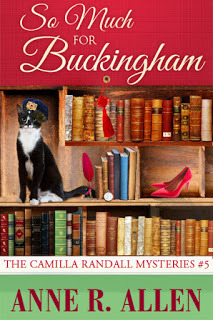
It's a comedy-mystery about cyberbullying, the gangs of new media, and the ghost of Richard III. Plus a cat named Buckingham.
Camilla's best friend Plant is in the English Midlands accused of murdering a historical reenactor dressed as the Duke of Buckingham. The only witness seems to be the ghost of Richard III. Meanwhile, Camilla's etiquette books are mysteriously attacked by obscene one-star review swarms...and she has no idea what happened to her boyfriend Ronzo. Did he really murder those kittens and then jump into the Passaic River?
*** And don't forget Ruth Harris's million-seller Husbands and Lovers is FREE for a limited time
Amazon US | Amazon UK | NOOK
Kobo | iBooks | GooglePlay
OPPORTUNITY ALERTS
BARTLEBY SNOPES CONTEST $10 FOR UNLIMITED ENTRIES. Compose a short story entirely of dialogue. Must be under 2,000 words. Your entry cannot use any narration (this includes tag lines such as he said, she said, etc.). These are the only rules. 5 finalists will also appear in Issue 15 of the magazine. Last year they awarded $2,380 in prize money. Deadline September 15, 2015.
CRAZYHORSE SHORT-SHORT FICTION AWARD $15 Entry fee. $1,000 and publication. Three runners-up. All entries considered for publication. Submit one to three short-shorts of up to 500 words each. Deadline July 31, 2015.
Rattle Poetry Prize The annual Rattle Poetry Prize offers $10,000 for a single poem to be published in the winter issue of the magazine. Each entry can contain up to 4 poems. 10 finalists will also receive $200 each and publication, and be eligible for the $2,000 Readers’ Choice Award, to be selected by subscriber and entrant vote. Entry fee $20 (includes subscription) Deadline July 15th.
Golden Quill Awards Writing Contest : Flash, Poetry, and Short fiction categories. Entry fee $20 for stories and poetry, $15 for flash fiction. The theme is TRANSFORMATION. Deadline July 15.
Glamour Magazine Essay contest. FREE! Theme: "My Real Life Story". Prize is $5,000 and possible publication in Glamour Magazine for personal essays by women, between 2,500-3,500 words. Enter online or by mail. Open to US residents aged 18+.Deadline July 15th
MARK TWAIN HUMOR CONTEST Entry fees: $12 Young Author or $22 Adult. 7,000 words (or fewer) of any original work of humor writing. Submissions must be in English. Submissions are not required to be in the style of Mark Twain or about Mark Twain. 1st Prize: $1,000 (Adult), $600 (Young Author). Other cash prizes! Deadline July 10, 2015
Lots has been written about the pain caused by online bullying of children and teens—and that stuff is horrific—but we don't hear as much about the cyberbullying that goes on in the adult world.
But cyberbullying can have disastrous consequences, no matter what the victim's age or social status. In fact, some people think it's having a devastating impact on our whole culture.
Welsh journalist Jon Ronson tells us cyberbullying and public shaming in social media are "creating a world where the smartest way to survive is to be bland."
He fears we're heading for a dumbed-down world controlled by Internet trolls and cyberbully gangs.
Unfortunately, the Internet is still the "wild west," and tech companies and individual governments don't yet have the laws in place to combat this behavior.
We need to learn how to keep ourselves safe, avoid being swept up in mob behavior, and report abuse when we see it.
Reporting is the only way to get the necessary laws and rules put in place, even if it seems our individual complaints aren't addressed.
Unfortunately, as I was writing this piece, I heard the news that Reddit has fired Victoria Taylor, its strongest anti-abuse advocate. Reddit has harbored sadistic bullies, pedophiles, and hate groups in the past, and apparently it plans to return to its old ways. I strongly recommend avoiding Reddit unless it does something to address criminal behavior on the site.
Social Media and Public Shaming
Jon Ronson laments "toxic Reddit threads" as well as psychopathic behavior on Twitter in his hair-raising (and funny) book about online bullying and character assassination called So You've Been Publicly Shamed. It was Amazon's "Best Book" of April 2015.
Ronson is a successful, high profile author (his book The Men Who Stare at Goats was made into a major film starring George Clooney).
But his reputation was nearly destroyed by bullies who hijacked his identity and posted bizarre things in his name on Twitter.
As a result, he wrote his now-bestselling book that has been called a "tour through a not-necessarily-brave new world where faceless commenters wield the power to destroy lives and careers, where the punishments often outweigh the crimes, and where there is no self-control and (ironically) no consequences."
You can see an interview with Jon Ronson on the PBS Newshour here, and a review of his book at the New York Times here.
Anonymity, Speed of Communication, and the Power of the Hive Mind
The above blurb blames the anonymity of the Internet for much of the nastiness—and I agree that's a big factor—but I think the most egregious abuses spring from something far more dangerous than the lone anonymous troll: "groupthink" aka the "hive mind."
It is the speed of communication on the Internet—not just the anonymity—that makes it such a dangerous place. Rumors that would have taken weeks to reach the public consciousness in the pre-Internet age can rouse the Twitchfork-wielding rabble in an instant.
There's a quote attributed to psychology pioneer William James that voices the principle at work here: "there's nothing so absurd that if you repeat it often enough, people will believe it."
That kind of mass-repetition can now happen on social media in a matter of minutes.
I've observed that once people have repeated a lie—especially an outrageous one—they become invested in it. It becomes part of their identity. Members of a "hive" that has perpetrated a falsehood or misinterpretation of facts feel a narcissistic compulsion to keep repeating it—to "prove" their own righteousness.
The same thing is true when someone commits an act of verbal cruelty, the way so many Twitterers did this week to a bestselling author. Once an individual joins in an attack on a designated victim, s/he becomes assimilated into the collective hive mind and seems to lose the ability to behave as an individual.
These real-life cyberbullies mimic Sci-Fi cyborgs like Star Trek's the Borg, or Dr. Who's Daleks and Cybermen.
This means that trying to reason with an individual member of the hive is useless. Otherwise sane people will display a complete lack of empathy—behavior that's usually seen only in a true sociopath.
It's as if people are saying: "I'm not really a sociopath, but I play one on Twitter."
Thing is, social media is real life. Your victims are real people. You are inflicting real pain.
People who say, "this isn't bullying because the target is successful/ naïve, liberal/ conservative, religious/ atheist, feminist/ antifeminist, made a typo, got a fact wrong, used irony, wrote in a genre I disapprove of...and the old faithful, 'Mo-o-o-m, he started it!'" need to grow up.
There is no excuse for doing evil stuff. Stop it.
Of course the hive mind does not always do evil. As Margaret Mead said: "Never doubt that a small group of thoughtful, committed citizens can change the world."
But it needs a corollary: "Never doubt that a small group of misguided citizens can devolve into a mindless, bloodthirsty mob."
Angry Mobs are High on their Own Rage
When you become part of the hive mind, you become as unreasoning as a swarm of bees.
Drunk bees.
Angry people actually get high on their own rage. Anger management specialists tell us that self-righteous rage can trigger brain chemicals that mimic the high of cocaine. And it’s just as addictive.
A hive mind drunk on anger is unable to think or learn. It is intolerant of any divergence from the hive's orthodoxy and outraged by humor, whimsy, irony, or fantasy.
All non-literal speech goes over its buzzy little head.
In fact, the hive mind often feels the need to thwart artistic expression of any kind, as we can see with the religious-fanatic hive destroying ancient art in the Middle East.
Scapegoating and Shaming have always been a Road to Power
The dangers of the hive mind are not unique to the Internet age, of course. Humans have been whipped into cruel frenzies by stupid ideas ever since Zog convinced the tribe that throwing Gog into the smoking volcano would keep it from erupting.
Euripides explored the phenomenon in 405 BC when he wrote the Bacchae —in which a band of women, under the spell of an angry Dionysis, rip their king to pieces with their bare hands, thinking he's a wild beast.
Wily politicians have always known how to use mob behavior to their advantage. Designating a scapegoat/enemy and lying to the masses about the danger they pose is the power-play of choice for most tyrannical regimes.
When I was researching my new Camilla mystery, SO MUCH FOR BUCKINGHAM , I did a lot of reading about Richard III, (who appears as a ghost in the novel.) As you probably know, Richard III was portrayed by Shakespeare as a heinous tyrant who murdered his young nephews.
This is very likely a lie. But it has been repeated for 530 years, so has become accepted as fact—although Richard had little motive. More proof that the William James quote is correct.
The Tudor hive mind needed reassurance that Henry Tudor had a God-given right to the throne, so spreading lies about the godlessness of his dead predecessor was a no-brainer.
Public Shaming and Online Reviews
It's a quirky coincidence that in my novel, a character named Ronson is publicly shamed and slandered on social media.
I hadn't heard of Jon Ronson when I first created the character of Ronson V. Zolek, but Ronzo could easily have been a subject for Jon Ronson's book. He's a music review blogger who suffers public shaming at the hands of a band he gave a bad review. The stories they spread about him are so horrific, he may have committed suicide. (Sorry: no spoilers.)
At the same time, his girlfriend, etiquette expert and bookstore owner Camilla Randall, suffers swarms of obscene personal-attack "reviews" as well as doxxing, hacking, social media shaming—and eventually rape and death threats and real-life destruction of her business. All because she commits the cardinal sin of responding to a negative fake review on Amazon.
Although I exaggerate my characters' troubles for comic effect, none of what goes on is terribly far-fetched.
It happened to me four years ago when I wrote a blogpost that displeased one of the Queen Bees of the review bully brigade, who Tweeted a call to cyber-jihad against me.
I've taken most of the threats and "reviews" Camilla receives word for word from my own and other real online threats.
Some come from last year's #Gamergate mess—a toxic Twitter storm sparked by a woman's negative review of a videogame. Hordes of male gamers got in touch with their inner cavepersons and screamed a blistering group-howl of misogyny on Twitter and Reddit.
Women responded with nasty behavior of their own.
The battle escalated to threats of rape, torture, and mass murder that were so vicious and terrifying that some reviewers and designers had to go into hiding. Colleges went into lockdown when Columbine-style shootings were threatened.
Unfortunately, the gaming world and the book world are closely related. The Amazon forums were originally started for discussions of videogames, and #Gamergate-style misogyny and brutality is rampant there. (Women can be as rabid in their misogyny as men. Most of the rape threats I've seen aimed at women come from women. Go figure.)
Even if you have the sense to stay away from the Amazon fora—which I strongly recommend—the bullying that started there has crept into much of online bookselling.
Reviewers and Authors are Equally Victimized
Unfortunately, online customer reviews have become the "third rail" of the new publishing paradigm. No author is supposed to touch the subject.
But—as I show in SO MUCH FOR BUCKINGHAM—reviewers and authors are equally victims of bullying and we'd be better off banding together to fight it.
Unfortunately, the world of online reviews is mired in corruption. The Guardian reported in 2013 that at least 20% of online reviews are fake. These days I think it's probably more like 30%-40%.
I wrote in May about how Amazon is cracking down on the paid review mills that have grown up around their review system (and all retail and service review sites). But they can't get them all. In many third world countries, writing fake online reviews has become a growth industry.
There are also authors who use fake identities ("sock puppets") to inflate their own review numbers and vote down their "rivals'" books.
And a number of nasty groups use Amazon and Goodreads reviews to carpet-bomb books they haven't read with one-stars and personal attacks to further a political, religious, or social cause. They also do it to punish authors for imagined misdeeds or simply inflict sadistic pain on random strangers for fun.
I will no doubt get some one-star reviews as retaliation for this post. (There's nothing a bully hates more than an appeal for reason and empathy.)
Amazon is making some changes to the review algorithms in order to make the reviews more fair, which I applaud. I've heard rumors that they've started mass-removal of reviews for inscrutable reasons, but the rumors are as yet substantiated, so I reserve judgement on that.
But I fear they still aren't addressing the bully problem. Giving more weight to "verified" reviews doesn't help much because sock puppets, vigilantes and trolls know how to buy an ebook and return it within minutes to get that "verified" stamp of approval.
I'd like to see Amazon limit the number of aliases a reviewer can use. I should think five would be a sufficient number for any legitimate Amazon customer. And it would do a whole lot to cut down on the sock-puppets and one-star public-shaming swarms.
Goodreads has improved their moderation and seem to be quicker to delete toxic threads than they used to be. They have also banished some of their most sadistic Mean Girls. But unfortunately plenty remain—and new ones spring up all the time.
How to Avoid Becoming a Target
I realize that some new authors appear to be "asking for it". Especially if they're naïve and don't realize that getting bad reviews is part of the process of publishing. They can have very public temper tantrums when they get a one-star review, as happened on Goodreads last month.
An author who protests an unkind review (or responds to a negative review in any way) can be the target of toxic verbal abuse, swarms of one-stars, and the ever-popular rape and death threats.
Authors can be bullies too. The ones who feel entitled to all five-stars-all-the-time sometimes call out fans to bully reviewers who don't give them the praise they think they deserve.
I think a lot of naïve newbie authors can be led astray by the over-zealous self- and vanity- publishing industries who tell them that if they pay enough for editing and good design, they won't get one-star reviews.
They've been lied to. Every successful writer gets cruel reviews. Every. Single. One. Go check the Amazon reviews of any bestseller.
New authors need to understand that a few nasty reviews aren't abuse.
However, attacks on the author's character, false accusations of plagiarism or buying fake reviews, carpet-bombing with dozens of one-stars, stalking, hacking, doxxing (making public personal, work, and family contact information), and sending rape and death threats IS.
I've heard from veteran authors who have landed in the hospital with stress-related illnesses, panic attacks, and depression as a result of online persecution by the bullies on Amazon and Goodreads.
Reviewers get stalked, physically assaulted, and suffer public shaming, too. Not always at the hands of authors and their fans, but sometimes as a result of reviewer-on-reviewer bullying, which is a big problem in the Amazon fora—and also plays a part in my novel.
Never Participate in Public Shaming
Public shaming is like torture. If you do it, you're opening the door to have it done to you.
You are also encouraging limits to free speech and artistic expression with what superstar author Anne Rice calls "censorship by troll." This week she said on her Facebook page:
"I'm fed up with 'Censorship by Troll.' Aren't you? Well, there is a way to stop it. Appeal to websites and internet venues to enforce their existing guidelines against obscenity, abuse, threats and out and out 'hate' attacks. Just about every internet business or venue has guidelines; and if they don't, they can establish some. What is needed is moderation."...Anne Rice
If you hear that an author or reviewer has been accused of piracy, plagiarism, political incorrectness, or other "bad behavior", check the facts before joining the angry mob.
Even if the accusations are valid—does the punishment really suit the crime? Threatening to rape and mutilate a teenager who overreacts to a nasty review—or writes one—may seem justified to the hive mind, but does it make sense to your own personal brain? Would you be proud of contributing to a fellow human's heart attack, depression or suicide ?
The people who terrorized me with death threats probably thought they were doing good by ridding cyberspace of an uppity old lady. Or, more likely, they didn't think at all.
Next time, instead of grabbing your Twitchfork and joining a frenzied mob, why not take a breath and detach from the hive mind? Ask yourself if you would you like this stuff to happen to you or your child.
So What Can we do About Cyber-Gangs?
Nobody can eliminate Internet bullying entirely—and the tech giants won't do much about it until abuse reports hit critical mass—but you can do your part by learning the rules, refusing to participate and reporting abuse when you see it.
I know the rules are sometimes hard to find, so a couple of years ago I compiled a list of some of the biggies: The Laws of the Amazon Jungle.
The Internet book community is ours to create. We can become a jungle of irrational, violent, anger-addicted brats, or we can behave like literate, civilized adults. If someone is misusing a forum, or you see criminal or bullying activity, leave the group temporarily and contact the appropriate authorities.
Not only do most sites have a "report abuse" button, but you can report false and misleading reviews to the government
If your life or safety are being threatened or you witness a case of cybercrime in the US, you can report to the FBI.
If you believe a review is false and misleading, you can file a complaint with the Federal Trade Commission, the Better Business Bureau, or your local state attorney general's office: (Google: Your state + Attorney General Consumer Affairs Division+ file complaint.)
I don't know about reporting cybercrime outside the US, but maybe a reader can provide info in the comments. I know that in progressive countries like Australia, there are already laws in place against cyberbullying and trolling.
And remember that what happens online has real consequences. This is not a videogame.
Blogger Chuck Wendig said it very well this week (warning, Chuck uses colorful language):
"I question why we have to be mean for the sake of being mean....Ill-made snark and meanness dull the effectiveness of your criticism; they do not often sharpen it. Is it bullying? Maybe not taken individually, but when it becomes a crashing tide like that — I don’t care who you are, that’s not healthy for your mental well-being. Whatever the case, I think it does us well to remember: Online is IRL." (IRL=In Real Life) ...Chuck Wendig
Jay Asher, author of the NYT bestselling anti-bullying YA novel, Thirteen Reasons Why has been the victim of online bullying himself. This week he said on Facebook:
"It shouldn't matter how rich someone is, or whether we like their writing...to say a behavior toward that person is wrong...I see so many of my friends, and myself, get really hurt when people say horrible things online...We're not supposed to defend ourselves. We're not supposed to block people mocking us. We're supposed to sit there and take it. Sorry. There is nothing right about that."...Jay Asher
Jon Ronson's book is a plea for self-control, empathy, and compassion. He says social media is so young, it's like a toddler crawling toward a gun.
It's up to the grownups to stop the impending disaster. Be a grownup. Don't bully. And report people who do.
There's an old saying that advises us to ask ourselves, "Is it true? Is it necessary? Is it kind?" before speaking.
Kindness is key here. In an op ed piece in the Washington Post this week, former white supremacist Arno Michelis said:
"Being on the receiving end of violence did not make me less violent. It was the kindness of people who refused to lower themselves to my level that changed the course of my life." ...Arno Michelis
On this weekend when Americans are celebrating freedom and independence, let's declare independence from the tyranny of the hive mind, trolls, and cyberbullies!
What about you, Scriveners? Have you been the victim of cyberbullying? Have you witnessed it? Have you participated in a public shaming? How did it make you feel? Do you report abuse when you see it? Do you have info on how to report abuse outside the USA? Do keep comments civil. Bullies will be deleted.
BOOK OF THE WEEK
SO MUCH FOR BUCKINGHAM: The Camilla Randall Mysteries #5 is now available for preorder on Amazon. Only 99c if you order before July 8th
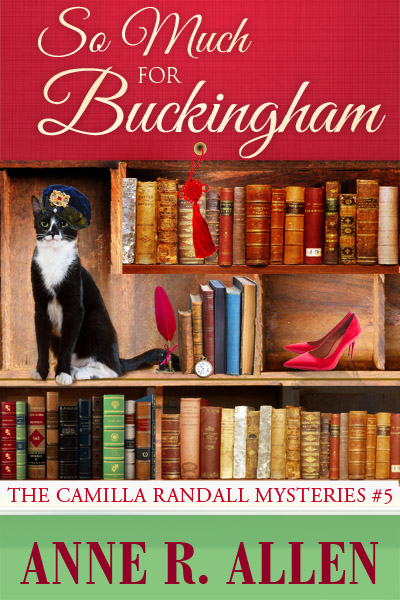
It's a comedy-mystery about cyberbullying, the gangs of new media, and the ghost of Richard III. Plus a cat named Buckingham.
Camilla's best friend Plant is in the English Midlands accused of murdering a historical reenactor dressed as the Duke of Buckingham. The only witness seems to be the ghost of Richard III. Meanwhile, Camilla's etiquette books are mysteriously attacked by obscene one-star review swarms...and she has no idea what happened to her boyfriend Ronzo. Did he really murder those kittens and then jump into the Passaic River?
*** And don't forget Ruth Harris's million-seller Husbands and Lovers is FREE for a limited time
Amazon US | Amazon UK | NOOK
Kobo | iBooks | GooglePlay
OPPORTUNITY ALERTS
BARTLEBY SNOPES CONTEST $10 FOR UNLIMITED ENTRIES. Compose a short story entirely of dialogue. Must be under 2,000 words. Your entry cannot use any narration (this includes tag lines such as he said, she said, etc.). These are the only rules. 5 finalists will also appear in Issue 15 of the magazine. Last year they awarded $2,380 in prize money. Deadline September 15, 2015.
CRAZYHORSE SHORT-SHORT FICTION AWARD $15 Entry fee. $1,000 and publication. Three runners-up. All entries considered for publication. Submit one to three short-shorts of up to 500 words each. Deadline July 31, 2015.
Rattle Poetry Prize The annual Rattle Poetry Prize offers $10,000 for a single poem to be published in the winter issue of the magazine. Each entry can contain up to 4 poems. 10 finalists will also receive $200 each and publication, and be eligible for the $2,000 Readers’ Choice Award, to be selected by subscriber and entrant vote. Entry fee $20 (includes subscription) Deadline July 15th.
Golden Quill Awards Writing Contest : Flash, Poetry, and Short fiction categories. Entry fee $20 for stories and poetry, $15 for flash fiction. The theme is TRANSFORMATION. Deadline July 15.
Glamour Magazine Essay contest. FREE! Theme: "My Real Life Story". Prize is $5,000 and possible publication in Glamour Magazine for personal essays by women, between 2,500-3,500 words. Enter online or by mail. Open to US residents aged 18+.Deadline July 15th
MARK TWAIN HUMOR CONTEST Entry fees: $12 Young Author or $22 Adult. 7,000 words (or fewer) of any original work of humor writing. Submissions must be in English. Submissions are not required to be in the style of Mark Twain or about Mark Twain. 1st Prize: $1,000 (Adult), $600 (Young Author). Other cash prizes! Deadline July 10, 2015
June 28, 2015
11 Tips For The Care And Feeding Of Your Muse: A Writerâs Guide
by Ruth Harris
The muse (also referred to as intuition, instinct, the subconscious, a superpower, the Spidey sense) is generally a friendly and cooperative breed. By nature, the muse tends to be bright eyed, curious and energetic. However, ignored or poorly-treated the muse can be become depressed and mopey and will not function effectively.
The rules for its care and feeding are simple. Obeying them will keep your museâand youâcreative, productive and in top operating condition.
1) Do feed your muse a healthy, varied diet.
Muses have adventuresome palates and perk up at the opportunity to try something new and/or different. Be sure to share all the interesting, offbeat, repellent, lurid, provocative and enlightening content that rushes past in a torrent every day.
Your muse will love you for your everyday reading habits. Reading in your genre and out, fiction and non-fiction, newspapers and magazines â will keep your muse happy and healthy. Nourished on a solid stream of input, your muse will be able to connect unrelated ideas into dazzling new plots and twists.
2) Don't put your muse on a diet.
Paleo? Low carb? Uh-uh. Muses get cranky when they're hungry and behave badly. All they can think about is food and their next meal. They are too preoccupied with thoughts of pasta, chocolate and a good, thick steak to pay attention to you and your book. Deprived of regular feeding and input, your muse will have no energy for the heavy lifting needed for creative work.
Besides, diets don't work. Not for people. Not for muses.
3) Don't bore your muse.
Muses hate getting stuck in a rut. For optimum health, your muse needs to be challenged and stimulated. Gallery hopping and channel surfing, brushing up your high school Spanish and learning to lindy, roller skate and enjoy hot dogs and a beer in bleacher seats at the ballgameâeach offers your muse new and different experience.A summer vacation at the shore might inspire the next Jaws.A visit to a natural history museum might result in Jurassic Park.An hour or two with the food channel might trigger a new cozy set in a bakery or restaurant. Or what about a new horror novel starring a demented, knife-wielding chef, TV cooking-show host or obnoxious restaurant-owner?Even the supermarket can inspire your museâthink of The Stepford Wives. Visit Whole Foods for the organic, more upscale version.Binge viewing The Sopranos or House of Cards could lead you to create the next Godfather or All The President's Men.
4) Do learn to interpret communiqués from your muse.
Muses, although generally reliable, communicate in unpredictable ways. Sometimes they shout. Sometimes they whisper.The story you can't get out of your mind, the one that wakes you up at night and intrudes when you're otherwise occupied? That's a shout. Your muse is giving you no option except to pay attention.The chapter you're bogged down on and hate writing? Your muse might be telling you you're on the wrong track and need to figure out where you've made your mistake.The balky character that lies there like a herring and won't come to life? Your muse is telling you you need to shape up and do a better job.The idea that flashes through your mind so fast it almost disappears the moment it becomes conscious? That's a whisper.
Whispers are gold and must be gathered and protected, ergo, the notebook.
5) Do keep a notebookâor several.
Whether digital or paper, the notebook is indispensable. Any writer who doesn't have a notebookâpaper or electronicâshould have his or her computer impounded.
Evernote, Microsoft OneNote and WorkFlowy all work as excellent electronic note keepers.
Paper notebooks should be everywhere you are. There are notebooks on my night table, in the kitchen, on the dining room table, in the living room, next to my desk (obviously!) and in my purse. There is even a notebook in the bathroom for those nights I wake up with a "brilliant" idea I absolutely have to write down. In the dark. So as not to disturb my DH who already knows all too much about what it's like to live with a writer.
Here are
Notebook Stories will give you lots of other choices to consider and for pens to write with, check out the Pen Addict.
6) Do obey the golden rule and treat your muse as you would want to be treated.
Muses tend to be patient and understanding but they don't like to be hurried, harried or harassed. They respond better to the kiss than the whip and will go MIA if you are feeling overwhelmed, out of control and stressed out.
If your muse has gone AWOL, look for him/her at your nearest yoga class. In fact, it might be a good idea to pull up a mat and join your muse in a tree pose and downward dog.
A well-chosen yoga tape or some time out for meditation and/or deep breathing calm you and help get you and your muse back in primo working condition.
Yoga for beginners to get you started (or restarted).Kundalini yoga.Ashtanga.Over 200 free yoga classes on line.Time out for meditation.Controlled breathing.
7) Don't ignore your muse's bio-rhythms.
Your muse will not react well when tired, sleepy or barely-awake. Some muses work better in the morning, others perform at their best later in the day or at night. Synch your work habits with those of your muse and you will find your work goes smoother and inspiration comes more easily.
Don't expect your night owl muse to be perky and creative early in the AM.
Don't ask your crack-of-dawn muse to come to your rescue at midnight.
8) Do give your free-range muse room to roam.
Stilettos or clogs? Polos or Tees? Grunge or business casual? Black tie or white shoe? Fashion magazines, style blogs and catalogs are filled with photos and descriptions of clothing. Check them out and your muse will find new ways for you to describe your character's clothing and wardrobe in ways that brings them alive and makes them real to the reader.Good hair day or bad plastic surgery? Muffin top or too rich and too thin? Beauty and grooming sites are filled with photos and comment, some of it snarky, some of it sincere, about exactly one subject: how people look. With their help, you and your muse can turn your descriptions from insipid to inspired.The business pages are a source for occupations and careers: your characters have to make a living, don't they? The tabs are an endless wellspring of sex and scandal and niche magazines or blogsâbass fishing, ice climbing, stamp collecting, arctic biologyâwill open new dictionaries for the alert writer and his or her muse.Success and failure, triumph and tragedy. Go to the sports pages. Seriously. Almost every story is basically about how an athlete, talented or otherwise, overcomesâor doesn'tâgolden-boy good looks, a reputation for dogging it, a lousy attitude in the clubhouse, jail time, drugs, booze, injury, scandal, depression, poor parenting, mean and/or incompetent coaching.Besides, it's not just the drama and the schmaltz, it's also about the language: sports are all about action and sports writers are great with verbs.
9) Do treat your muse to input from experts like choreographer, Twyla Tharp.
Her guidebook, The Creative Habit, is practical, down to earth and inspiring. Using a wide-ranging set of examples ranging from Homer to Proust, from Ulysses S. Grant to Ludwig Wittgenstein and Pope Leo X, from Merce Cunningham and George Balanchine to Ansel Adams, Raymond Chandler, Mozart and Yogi Berra, she offers a detailed road map to defining your creative identity based on her own experience.
Ms. Tharp explains the importance of routine, ritual and setting goals, how to know the difference between a good idea and a bad idea, how to recognize ruts when you're in one and she offers explicit guidelines about how to get out of them.
10) Don't ignore your gut feelings and learn how to train your muse.
Susan Kaye Quinn is a scientistâa rocket scientist, to be exactâand author of the bestselling Mindjack series. Susan refers to her muse as a superpower and in this must-read article she tells how to tap your subconscious, how to train your muse and why you should pay attention to your gut feelings.
You will find more from Susan about increasing your productivity and amping up your creativity in her post at David Gaughran's blog.
11) Do learn to trust your museâeven when you don't know exactly why.
Your intuition a.k.a. your muse is that sense of knowing without knowing. Steve Jobs called it "more powerful than intellect."
From dealing with negative thoughts, to paying attention to your dreams, and making time for solitude Carolyn Gregoire lists 10 Things Highly Intuitive People Do Differently.
What about you, Scriveners? Do you treat your muse with respect, or do you try to bully it into submission? Do you find certain practices and rituals keep the words coming? Do you have a time of day when you are more creative? Do you keep an old fashioned notebook, or do you take your notes electronically? Do you have a pen or notebook collection?
BOOKS OF THE WEEK
HUSBANDS AND LOVERS (Park Avenue Series, Book #2)âThe million-copy New York Times bestseller.
Carlys Webber transforms herself from wallflower to swan and two handsome, successful men vie for her love.
"Steamy and fast-paced, you will be spellbound."âCosmopolitan
FREE!!
Amazon US | Amazon UK | NOOK
Kobo | iBooks | GooglePlay
Sneak preview!
Anne's new Camilla comedy-mystery SO MUCH FOR BUCKINGHAM is now available for preorder on Amazon at the special pre-order price of only 99c!
Pre-order and save on Amazon in any country!
So Much for Buckingham launches officially on July 8th
OPPORTUNITY ALERTS
BARTLEBY SNOPES CONTEST $10 FOR UNLIMITED ENTRIES. Compose a short story entirely of dialogue. Must be under 2,000 words. Your entry cannot use any narration (this includes tag lines such as he said, she said, etc.). These are the only rules. 5 finalists will also appear in Issue 15 of the magazine. Last year they awarded $2,380 in prize money. Deadline September 15, 2015.
Rattle Poetry Prize The annual Rattle Poetry Prize offers $10,000 for a single poem to be published in the winter issue of the magazine. Each entry can contain up to 4 poems. 10 finalists will also receive $200 each and publication, and be eligible for the $2,000 Readersâ Choice Award, to be selected by subscriber and entrant vote. Entry fee $20 (includes subscription) Deadline July 15th.
Golden Quill Awards Writing Contest : Flash, Poetry, and Short fiction categories. Entry fee $20 for stories and poetry, $15 for flash fiction. The theme is TRANSFORMATION. Deadline July 15.
Glamour Magazine Essay contest. FREE! Theme: "My Real Life Story". Prize is $5,000 and possible publication in Glamour Magazine for personal essays by women, between 2,500-3,500 words. Enter online or by mail. Open to US residents aged 18+.Deadline July 15th
MARK TWAIN HUMOR CONTEST Entry fees: $12 Young Author or $22 Adult. 7,000 words (or fewer) of any original work of humor writing. Submissions must be in English. Submissions are not required to be in the style of Mark Twain or about Mark Twain. 1st Prize: $1,000 (Adult), $600 (Young Author). Other cash prizes! Deadline July 10, 2015
Saturday Evening Post Great American Fiction Contest. Entry fee $10. Your story should in some way touch upon the publication's mission: Celebrating America â past, present, and future. Think Norman Rockwell. No profanity or graphic sex. Any genre. No previously published stories, but they can have appeared on your blog. Between 1,500 and 5,000 words. Deadline July 1, 2015
Big Beautiful Wellness Creative Writing Contest. NO FEE Poems up to 30 lines Fiction or Nonfic between 1000 and 2000 words. $100 first prize. Theme: Body-positive living. Looking for inspirational, positive stories. Deadline July 1.
The muse (also referred to as intuition, instinct, the subconscious, a superpower, the Spidey sense) is generally a friendly and cooperative breed. By nature, the muse tends to be bright eyed, curious and energetic. However, ignored or poorly-treated the muse can be become depressed and mopey and will not function effectively.
The rules for its care and feeding are simple. Obeying them will keep your museâand youâcreative, productive and in top operating condition.
1) Do feed your muse a healthy, varied diet.
Muses have adventuresome palates and perk up at the opportunity to try something new and/or different. Be sure to share all the interesting, offbeat, repellent, lurid, provocative and enlightening content that rushes past in a torrent every day.
Your muse will love you for your everyday reading habits. Reading in your genre and out, fiction and non-fiction, newspapers and magazines â will keep your muse happy and healthy. Nourished on a solid stream of input, your muse will be able to connect unrelated ideas into dazzling new plots and twists.
2) Don't put your muse on a diet.
Paleo? Low carb? Uh-uh. Muses get cranky when they're hungry and behave badly. All they can think about is food and their next meal. They are too preoccupied with thoughts of pasta, chocolate and a good, thick steak to pay attention to you and your book. Deprived of regular feeding and input, your muse will have no energy for the heavy lifting needed for creative work.
Besides, diets don't work. Not for people. Not for muses.
3) Don't bore your muse.
Muses hate getting stuck in a rut. For optimum health, your muse needs to be challenged and stimulated. Gallery hopping and channel surfing, brushing up your high school Spanish and learning to lindy, roller skate and enjoy hot dogs and a beer in bleacher seats at the ballgameâeach offers your muse new and different experience.A summer vacation at the shore might inspire the next Jaws.A visit to a natural history museum might result in Jurassic Park.An hour or two with the food channel might trigger a new cozy set in a bakery or restaurant. Or what about a new horror novel starring a demented, knife-wielding chef, TV cooking-show host or obnoxious restaurant-owner?Even the supermarket can inspire your museâthink of The Stepford Wives. Visit Whole Foods for the organic, more upscale version.Binge viewing The Sopranos or House of Cards could lead you to create the next Godfather or All The President's Men.
4) Do learn to interpret communiqués from your muse.
Muses, although generally reliable, communicate in unpredictable ways. Sometimes they shout. Sometimes they whisper.The story you can't get out of your mind, the one that wakes you up at night and intrudes when you're otherwise occupied? That's a shout. Your muse is giving you no option except to pay attention.The chapter you're bogged down on and hate writing? Your muse might be telling you you're on the wrong track and need to figure out where you've made your mistake.The balky character that lies there like a herring and won't come to life? Your muse is telling you you need to shape up and do a better job.The idea that flashes through your mind so fast it almost disappears the moment it becomes conscious? That's a whisper.
Whispers are gold and must be gathered and protected, ergo, the notebook.
5) Do keep a notebookâor several.
Whether digital or paper, the notebook is indispensable. Any writer who doesn't have a notebookâpaper or electronicâshould have his or her computer impounded.
Evernote, Microsoft OneNote and WorkFlowy all work as excellent electronic note keepers.
Paper notebooks should be everywhere you are. There are notebooks on my night table, in the kitchen, on the dining room table, in the living room, next to my desk (obviously!) and in my purse. There is even a notebook in the bathroom for those nights I wake up with a "brilliant" idea I absolutely have to write down. In the dark. So as not to disturb my DH who already knows all too much about what it's like to live with a writer.
Here are
Notebook Stories will give you lots of other choices to consider and for pens to write with, check out the Pen Addict.
6) Do obey the golden rule and treat your muse as you would want to be treated.
Muses tend to be patient and understanding but they don't like to be hurried, harried or harassed. They respond better to the kiss than the whip and will go MIA if you are feeling overwhelmed, out of control and stressed out.
If your muse has gone AWOL, look for him/her at your nearest yoga class. In fact, it might be a good idea to pull up a mat and join your muse in a tree pose and downward dog.
A well-chosen yoga tape or some time out for meditation and/or deep breathing calm you and help get you and your muse back in primo working condition.
Yoga for beginners to get you started (or restarted).Kundalini yoga.Ashtanga.Over 200 free yoga classes on line.Time out for meditation.Controlled breathing.
7) Don't ignore your muse's bio-rhythms.
Your muse will not react well when tired, sleepy or barely-awake. Some muses work better in the morning, others perform at their best later in the day or at night. Synch your work habits with those of your muse and you will find your work goes smoother and inspiration comes more easily.
Don't expect your night owl muse to be perky and creative early in the AM.
Don't ask your crack-of-dawn muse to come to your rescue at midnight.
8) Do give your free-range muse room to roam.
Stilettos or clogs? Polos or Tees? Grunge or business casual? Black tie or white shoe? Fashion magazines, style blogs and catalogs are filled with photos and descriptions of clothing. Check them out and your muse will find new ways for you to describe your character's clothing and wardrobe in ways that brings them alive and makes them real to the reader.Good hair day or bad plastic surgery? Muffin top or too rich and too thin? Beauty and grooming sites are filled with photos and comment, some of it snarky, some of it sincere, about exactly one subject: how people look. With their help, you and your muse can turn your descriptions from insipid to inspired.The business pages are a source for occupations and careers: your characters have to make a living, don't they? The tabs are an endless wellspring of sex and scandal and niche magazines or blogsâbass fishing, ice climbing, stamp collecting, arctic biologyâwill open new dictionaries for the alert writer and his or her muse.Success and failure, triumph and tragedy. Go to the sports pages. Seriously. Almost every story is basically about how an athlete, talented or otherwise, overcomesâor doesn'tâgolden-boy good looks, a reputation for dogging it, a lousy attitude in the clubhouse, jail time, drugs, booze, injury, scandal, depression, poor parenting, mean and/or incompetent coaching.Besides, it's not just the drama and the schmaltz, it's also about the language: sports are all about action and sports writers are great with verbs.
9) Do treat your muse to input from experts like choreographer, Twyla Tharp.
Her guidebook, The Creative Habit, is practical, down to earth and inspiring. Using a wide-ranging set of examples ranging from Homer to Proust, from Ulysses S. Grant to Ludwig Wittgenstein and Pope Leo X, from Merce Cunningham and George Balanchine to Ansel Adams, Raymond Chandler, Mozart and Yogi Berra, she offers a detailed road map to defining your creative identity based on her own experience.
Ms. Tharp explains the importance of routine, ritual and setting goals, how to know the difference between a good idea and a bad idea, how to recognize ruts when you're in one and she offers explicit guidelines about how to get out of them.
10) Don't ignore your gut feelings and learn how to train your muse.
Susan Kaye Quinn is a scientistâa rocket scientist, to be exactâand author of the bestselling Mindjack series. Susan refers to her muse as a superpower and in this must-read article she tells how to tap your subconscious, how to train your muse and why you should pay attention to your gut feelings.
You will find more from Susan about increasing your productivity and amping up your creativity in her post at David Gaughran's blog.
11) Do learn to trust your museâeven when you don't know exactly why.
Your intuition a.k.a. your muse is that sense of knowing without knowing. Steve Jobs called it "more powerful than intellect."
From dealing with negative thoughts, to paying attention to your dreams, and making time for solitude Carolyn Gregoire lists 10 Things Highly Intuitive People Do Differently.
What about you, Scriveners? Do you treat your muse with respect, or do you try to bully it into submission? Do you find certain practices and rituals keep the words coming? Do you have a time of day when you are more creative? Do you keep an old fashioned notebook, or do you take your notes electronically? Do you have a pen or notebook collection?
BOOKS OF THE WEEK
HUSBANDS AND LOVERS (Park Avenue Series, Book #2)âThe million-copy New York Times bestseller.
Carlys Webber transforms herself from wallflower to swan and two handsome, successful men vie for her love.
"Steamy and fast-paced, you will be spellbound."âCosmopolitan
FREE!!
Amazon US | Amazon UK | NOOK
Kobo | iBooks | GooglePlay
Sneak preview!
Anne's new Camilla comedy-mystery SO MUCH FOR BUCKINGHAM is now available for preorder on Amazon at the special pre-order price of only 99c!
Pre-order and save on Amazon in any country!
So Much for Buckingham launches officially on July 8th
OPPORTUNITY ALERTS
BARTLEBY SNOPES CONTEST $10 FOR UNLIMITED ENTRIES. Compose a short story entirely of dialogue. Must be under 2,000 words. Your entry cannot use any narration (this includes tag lines such as he said, she said, etc.). These are the only rules. 5 finalists will also appear in Issue 15 of the magazine. Last year they awarded $2,380 in prize money. Deadline September 15, 2015.
Rattle Poetry Prize The annual Rattle Poetry Prize offers $10,000 for a single poem to be published in the winter issue of the magazine. Each entry can contain up to 4 poems. 10 finalists will also receive $200 each and publication, and be eligible for the $2,000 Readersâ Choice Award, to be selected by subscriber and entrant vote. Entry fee $20 (includes subscription) Deadline July 15th.
Golden Quill Awards Writing Contest : Flash, Poetry, and Short fiction categories. Entry fee $20 for stories and poetry, $15 for flash fiction. The theme is TRANSFORMATION. Deadline July 15.
Glamour Magazine Essay contest. FREE! Theme: "My Real Life Story". Prize is $5,000 and possible publication in Glamour Magazine for personal essays by women, between 2,500-3,500 words. Enter online or by mail. Open to US residents aged 18+.Deadline July 15th
MARK TWAIN HUMOR CONTEST Entry fees: $12 Young Author or $22 Adult. 7,000 words (or fewer) of any original work of humor writing. Submissions must be in English. Submissions are not required to be in the style of Mark Twain or about Mark Twain. 1st Prize: $1,000 (Adult), $600 (Young Author). Other cash prizes! Deadline July 10, 2015
Saturday Evening Post Great American Fiction Contest. Entry fee $10. Your story should in some way touch upon the publication's mission: Celebrating America â past, present, and future. Think Norman Rockwell. No profanity or graphic sex. Any genre. No previously published stories, but they can have appeared on your blog. Between 1,500 and 5,000 words. Deadline July 1, 2015
Big Beautiful Wellness Creative Writing Contest. NO FEE Poems up to 30 lines Fiction or Nonfic between 1000 and 2000 words. $100 first prize. Theme: Body-positive living. Looking for inspirational, positive stories. Deadline July 1.
11 Tips For The Care And Feeding Of Your Muse: A Writer’s Guide
by Ruth Harris
The muse (also referred to as intuition, instinct, the subconscious, a superpower, the Spidey sense) is generally a friendly and cooperative breed. By nature, the muse tends to be bright eyed, curious and energetic. However, ignored or poorly-treated the muse can be become depressed and mopey and will not function effectively.
The rules for its care and feeding are simple. Obeying them will keep your muse—and you—creative, productive and in top operating condition.
1) Do feed your muse a healthy, varied diet.
Muses have adventuresome palates and perk up at the opportunity to try something new and/or different. Be sure to share all the interesting, offbeat, repellent, lurid, provocative and enlightening content that rushes past in a torrent every day.
Your muse will love you for your everyday reading habits. Reading in your genre and out, fiction and non-fiction, newspapers and magazines — will keep your muse happy and healthy. Nourished on a solid stream of input, your muse will be able to connect unrelated ideas into dazzling new plots and twists.
2) Don't put your muse on a diet.
Paleo? Low carb? Uh-uh. Muses get cranky when they're hungry and behave badly. All they can think about is food and their next meal. They are too preoccupied with thoughts of pasta, chocolate and a good, thick steak to pay attention to you and your book. Deprived of regular feeding and input, your muse will have no energy for the heavy lifting needed for creative work.
Besides, diets don't work. Not for people. Not for muses.
3) Don't bore your muse.
Muses hate getting stuck in a rut. For optimum health, your muse needs to be challenged and stimulated. Gallery hopping and channel surfing, brushing up your high school Spanish and learning to lindy, roller skate and enjoy hot dogs and a beer in bleacher seats at the ballgame—each offers your muse new and different experience.A summer vacation at the shore might inspire the next Jaws.A visit to a natural history museum might result in Jurassic Park.An hour or two with the food channel might trigger a new cozy set in a bakery or restaurant. Or what about a new horror novel starring a demented, knife-wielding chef, TV cooking-show host or obnoxious restaurant-owner?Even the supermarket can inspire your muse—think of The Stepford Wives. Visit Whole Foods for the organic, more upscale version.Binge viewing The Sopranos or House of Cards could lead you to create the next Godfather or All The President's Men.
4) Do learn to interpret communiqués from your muse.
Muses, although generally reliable, communicate in unpredictable ways. Sometimes they shout. Sometimes they whisper.The story you can't get out of your mind, the one that wakes you up at night and intrudes when you're otherwise occupied? That's a shout. Your muse is giving you no option except to pay attention.The chapter you're bogged down on and hate writing? Your muse might be telling you you're on the wrong track and need to figure out where you've made your mistake.The balky character that lies there like a herring and won't come to life? Your muse is telling you you need to shape up and do a better job.The idea that flashes through your mind so fast it almost disappears the moment it becomes conscious? That's a whisper.
Whispers are gold and must be gathered and protected, ergo, the notebook.
5) Do keep a notebook—or several.
Whether digital or paper, the notebook is indispensable. Any writer who doesn't have a notebook—paper or electronic—should have his or her computer impounded.
Evernote, Microsoft OneNote and WorkFlowy all work as excellent electronic note keepers.
Paper notebooks should be everywhere you are. There are notebooks on my night table, in the kitchen, on the dining room table, in the living room, next to my desk (obviously!) and in my purse. There is even a notebook in the bathroom for those nights I wake up with a "brilliant" idea I absolutely have to write down. In the dark. So as not to disturb my DH who already knows all too much about what it's like to live with a writer.
Here are
Notebook Stories will give you lots of other choices to consider and for pens to write with, check out the Pen Addict.
6) Do obey the golden rule and treat your muse as you would want to be treated.
Muses tend to be patient and understanding but they don't like to be hurried, harried or harassed. They respond better to the kiss than the whip and will go MIA if you are feeling overwhelmed, out of control and stressed out.
If your muse has gone AWOL, look for him/her at your nearest yoga class. In fact, it might be a good idea to pull up a mat and join your muse in a tree pose and downward dog.
A well-chosen yoga tape or some time out for meditation and/or deep breathing calm you and help get you and your muse back in primo working condition.
Yoga for beginners to get you started (or restarted).Kundalini yoga.Ashtanga.Over 200 free yoga classes on line.Time out for meditation.Controlled breathing.
7) Don't ignore your muse's bio-rhythms.
Your muse will not react well when tired, sleepy or barely-awake. Some muses work better in the morning, others perform at their best later in the day or at night. Synch your work habits with those of your muse and you will find your work goes smoother and inspiration comes more easily.
Don't expect your night owl muse to be perky and creative early in the AM.
Don't ask your crack-of-dawn muse to come to your rescue at midnight.
8) Do give your free-range muse room to roam.
Stilettos or clogs? Polos or Tees? Grunge or business casual? Black tie or white shoe? Fashion magazines, style blogs and catalogs are filled with photos and descriptions of clothing. Check them out and your muse will find new ways for you to describe your character's clothing and wardrobe in ways that brings them alive and makes them real to the reader.Good hair day or bad plastic surgery? Muffin top or too rich and too thin? Beauty and grooming sites are filled with photos and comment, some of it snarky, some of it sincere, about exactly one subject: how people look. With their help, you and your muse can turn your descriptions from insipid to inspired.The business pages are a source for occupations and careers: your characters have to make a living, don't they? The tabs are an endless wellspring of sex and scandal and niche magazines or blogs—bass fishing, ice climbing, stamp collecting, arctic biology—will open new dictionaries for the alert writer and his or her muse.Success and failure, triumph and tragedy. Go to the sports pages. Seriously. Almost every story is basically about how an athlete, talented or otherwise, overcomes—or doesn't—golden-boy good looks, a reputation for dogging it, a lousy attitude in the clubhouse, jail time, drugs, booze, injury, scandal, depression, poor parenting, mean and/or incompetent coaching.Besides, it's not just the drama and the schmaltz, it's also about the language: sports are all about action and sports writers are great with verbs.
9) Do treat your muse to input from experts like choreographer, Twyla Tharp.
Her guidebook, The Creative Habit, is practical, down to earth and inspiring. Using a wide-ranging set of examples ranging from Homer to Proust, from Ulysses S. Grant to Ludwig Wittgenstein and Pope Leo X, from Merce Cunningham and George Balanchine to Ansel Adams, Raymond Chandler, Mozart and Yogi Berra, she offers a detailed road map to defining your creative identity based on her own experience.
Ms. Tharp explains the importance of routine, ritual and setting goals, how to know the difference between a good idea and a bad idea, how to recognize ruts when you're in one and she offers explicit guidelines about how to get out of them.
10) Don't ignore your gut feelings and learn how to train your muse.
Susan Kaye Quinn is a scientist—a rocket scientist, to be exact—and author of the bestselling Mindjack series. Susan refers to her muse as a superpower and in this must-read article she tells how to tap your subconscious, how to train your muse and why you should pay attention to your gut feelings.
You will find more from Susan about increasing your productivity and amping up your creativity in her post at David Gaughran's blog.
11) Do learn to trust your muse—even when you don't know exactly why.
Your intuition a.k.a. your muse is that sense of knowing without knowing. Steve Jobs called it "more powerful than intellect."
From dealing with negative thoughts, to paying attention to your dreams, and making time for solitude Carolyn Gregoire lists 10 Things Highly Intuitive People Do Differently.
What about you, Scriveners? Do you treat your muse with respect, or do you try to bully it into submission? Do you find certain practices and rituals keep the words coming? Do you have a time of day when you are more creative? Do you keep an old fashioned notebook, or do you take your notes electronically? Do you have a pen or notebook collection?
BOOKS OF THE WEEK
HUSBANDS AND LOVERS (Park Avenue Series, Book #2)—The million-copy New York Times bestseller.
Carlys Webber transforms herself from wallflower to swan and two handsome, successful men vie for her love.
"Steamy and fast-paced, you will be spellbound."–Cosmopolitan
FREE!!
Amazon US | Amazon UK | NOOK
Kobo | iBooks | GooglePlay
Sneak preview!
Anne's new Camilla comedy-mystery SO MUCH FOR BUCKINGHAM is now available for preorder on Amazon at the special pre-order price of only 99c!
Pre-order and save on Amazon in any country!
So Much for Buckingham launches officially on July 8th
OPPORTUNITY ALERTS
BARTLEBY SNOPES CONTEST $10 FOR UNLIMITED ENTRIES. Compose a short story entirely of dialogue. Must be under 2,000 words. Your entry cannot use any narration (this includes tag lines such as he said, she said, etc.). These are the only rules. 5 finalists will also appear in Issue 15 of the magazine. Last year they awarded $2,380 in prize money. Deadline September 15, 2015.
Rattle Poetry Prize The annual Rattle Poetry Prize offers $10,000 for a single poem to be published in the winter issue of the magazine. Each entry can contain up to 4 poems. 10 finalists will also receive $200 each and publication, and be eligible for the $2,000 Readers’ Choice Award, to be selected by subscriber and entrant vote. Entry fee $20 (includes subscription) Deadline July 15th.
Golden Quill Awards Writing Contest : Flash, Poetry, and Short fiction categories. Entry fee $20 for stories and poetry, $15 for flash fiction. The theme is TRANSFORMATION. Deadline July 15.
Glamour Magazine Essay contest. FREE! Theme: "My Real Life Story". Prize is $5,000 and possible publication in Glamour Magazine for personal essays by women, between 2,500-3,500 words. Enter online or by mail. Open to US residents aged 18+.Deadline July 15th
MARK TWAIN HUMOR CONTEST Entry fees: $12 Young Author or $22 Adult. 7,000 words (or fewer) of any original work of humor writing. Submissions must be in English. Submissions are not required to be in the style of Mark Twain or about Mark Twain. 1st Prize: $1,000 (Adult), $600 (Young Author). Other cash prizes! Deadline July 10, 2015
Saturday Evening Post Great American Fiction Contest. Entry fee $10. Your story should in some way touch upon the publication's mission: Celebrating America — past, present, and future. Think Norman Rockwell. No profanity or graphic sex. Any genre. No previously published stories, but they can have appeared on your blog. Between 1,500 and 5,000 words. Deadline July 1, 2015
Big Beautiful Wellness Creative Writing Contest. NO FEE Poems up to 30 lines Fiction or Nonfic between 1000 and 2000 words. $100 first prize. Theme: Body-positive living. Looking for inspirational, positive stories. Deadline July 1.
The muse (also referred to as intuition, instinct, the subconscious, a superpower, the Spidey sense) is generally a friendly and cooperative breed. By nature, the muse tends to be bright eyed, curious and energetic. However, ignored or poorly-treated the muse can be become depressed and mopey and will not function effectively.
The rules for its care and feeding are simple. Obeying them will keep your muse—and you—creative, productive and in top operating condition.
1) Do feed your muse a healthy, varied diet.
Muses have adventuresome palates and perk up at the opportunity to try something new and/or different. Be sure to share all the interesting, offbeat, repellent, lurid, provocative and enlightening content that rushes past in a torrent every day.
Your muse will love you for your everyday reading habits. Reading in your genre and out, fiction and non-fiction, newspapers and magazines — will keep your muse happy and healthy. Nourished on a solid stream of input, your muse will be able to connect unrelated ideas into dazzling new plots and twists.
2) Don't put your muse on a diet.
Paleo? Low carb? Uh-uh. Muses get cranky when they're hungry and behave badly. All they can think about is food and their next meal. They are too preoccupied with thoughts of pasta, chocolate and a good, thick steak to pay attention to you and your book. Deprived of regular feeding and input, your muse will have no energy for the heavy lifting needed for creative work.
Besides, diets don't work. Not for people. Not for muses.
3) Don't bore your muse.
Muses hate getting stuck in a rut. For optimum health, your muse needs to be challenged and stimulated. Gallery hopping and channel surfing, brushing up your high school Spanish and learning to lindy, roller skate and enjoy hot dogs and a beer in bleacher seats at the ballgame—each offers your muse new and different experience.A summer vacation at the shore might inspire the next Jaws.A visit to a natural history museum might result in Jurassic Park.An hour or two with the food channel might trigger a new cozy set in a bakery or restaurant. Or what about a new horror novel starring a demented, knife-wielding chef, TV cooking-show host or obnoxious restaurant-owner?Even the supermarket can inspire your muse—think of The Stepford Wives. Visit Whole Foods for the organic, more upscale version.Binge viewing The Sopranos or House of Cards could lead you to create the next Godfather or All The President's Men.
4) Do learn to interpret communiqués from your muse.
Muses, although generally reliable, communicate in unpredictable ways. Sometimes they shout. Sometimes they whisper.The story you can't get out of your mind, the one that wakes you up at night and intrudes when you're otherwise occupied? That's a shout. Your muse is giving you no option except to pay attention.The chapter you're bogged down on and hate writing? Your muse might be telling you you're on the wrong track and need to figure out where you've made your mistake.The balky character that lies there like a herring and won't come to life? Your muse is telling you you need to shape up and do a better job.The idea that flashes through your mind so fast it almost disappears the moment it becomes conscious? That's a whisper.
Whispers are gold and must be gathered and protected, ergo, the notebook.
5) Do keep a notebook—or several.
Whether digital or paper, the notebook is indispensable. Any writer who doesn't have a notebook—paper or electronic—should have his or her computer impounded.
Evernote, Microsoft OneNote and WorkFlowy all work as excellent electronic note keepers.
Paper notebooks should be everywhere you are. There are notebooks on my night table, in the kitchen, on the dining room table, in the living room, next to my desk (obviously!) and in my purse. There is even a notebook in the bathroom for those nights I wake up with a "brilliant" idea I absolutely have to write down. In the dark. So as not to disturb my DH who already knows all too much about what it's like to live with a writer.
Here are
Notebook Stories will give you lots of other choices to consider and for pens to write with, check out the Pen Addict.
6) Do obey the golden rule and treat your muse as you would want to be treated.
Muses tend to be patient and understanding but they don't like to be hurried, harried or harassed. They respond better to the kiss than the whip and will go MIA if you are feeling overwhelmed, out of control and stressed out.
If your muse has gone AWOL, look for him/her at your nearest yoga class. In fact, it might be a good idea to pull up a mat and join your muse in a tree pose and downward dog.
A well-chosen yoga tape or some time out for meditation and/or deep breathing calm you and help get you and your muse back in primo working condition.
Yoga for beginners to get you started (or restarted).Kundalini yoga.Ashtanga.Over 200 free yoga classes on line.Time out for meditation.Controlled breathing.
7) Don't ignore your muse's bio-rhythms.
Your muse will not react well when tired, sleepy or barely-awake. Some muses work better in the morning, others perform at their best later in the day or at night. Synch your work habits with those of your muse and you will find your work goes smoother and inspiration comes more easily.
Don't expect your night owl muse to be perky and creative early in the AM.
Don't ask your crack-of-dawn muse to come to your rescue at midnight.
8) Do give your free-range muse room to roam.
Stilettos or clogs? Polos or Tees? Grunge or business casual? Black tie or white shoe? Fashion magazines, style blogs and catalogs are filled with photos and descriptions of clothing. Check them out and your muse will find new ways for you to describe your character's clothing and wardrobe in ways that brings them alive and makes them real to the reader.Good hair day or bad plastic surgery? Muffin top or too rich and too thin? Beauty and grooming sites are filled with photos and comment, some of it snarky, some of it sincere, about exactly one subject: how people look. With their help, you and your muse can turn your descriptions from insipid to inspired.The business pages are a source for occupations and careers: your characters have to make a living, don't they? The tabs are an endless wellspring of sex and scandal and niche magazines or blogs—bass fishing, ice climbing, stamp collecting, arctic biology—will open new dictionaries for the alert writer and his or her muse.Success and failure, triumph and tragedy. Go to the sports pages. Seriously. Almost every story is basically about how an athlete, talented or otherwise, overcomes—or doesn't—golden-boy good looks, a reputation for dogging it, a lousy attitude in the clubhouse, jail time, drugs, booze, injury, scandal, depression, poor parenting, mean and/or incompetent coaching.Besides, it's not just the drama and the schmaltz, it's also about the language: sports are all about action and sports writers are great with verbs.
9) Do treat your muse to input from experts like choreographer, Twyla Tharp.
Her guidebook, The Creative Habit, is practical, down to earth and inspiring. Using a wide-ranging set of examples ranging from Homer to Proust, from Ulysses S. Grant to Ludwig Wittgenstein and Pope Leo X, from Merce Cunningham and George Balanchine to Ansel Adams, Raymond Chandler, Mozart and Yogi Berra, she offers a detailed road map to defining your creative identity based on her own experience.
Ms. Tharp explains the importance of routine, ritual and setting goals, how to know the difference between a good idea and a bad idea, how to recognize ruts when you're in one and she offers explicit guidelines about how to get out of them.
10) Don't ignore your gut feelings and learn how to train your muse.
Susan Kaye Quinn is a scientist—a rocket scientist, to be exact—and author of the bestselling Mindjack series. Susan refers to her muse as a superpower and in this must-read article she tells how to tap your subconscious, how to train your muse and why you should pay attention to your gut feelings.
You will find more from Susan about increasing your productivity and amping up your creativity in her post at David Gaughran's blog.
11) Do learn to trust your muse—even when you don't know exactly why.
Your intuition a.k.a. your muse is that sense of knowing without knowing. Steve Jobs called it "more powerful than intellect."
From dealing with negative thoughts, to paying attention to your dreams, and making time for solitude Carolyn Gregoire lists 10 Things Highly Intuitive People Do Differently.
What about you, Scriveners? Do you treat your muse with respect, or do you try to bully it into submission? Do you find certain practices and rituals keep the words coming? Do you have a time of day when you are more creative? Do you keep an old fashioned notebook, or do you take your notes electronically? Do you have a pen or notebook collection?
BOOKS OF THE WEEK
HUSBANDS AND LOVERS (Park Avenue Series, Book #2)—The million-copy New York Times bestseller.
Carlys Webber transforms herself from wallflower to swan and two handsome, successful men vie for her love.
"Steamy and fast-paced, you will be spellbound."–Cosmopolitan
FREE!!
Amazon US | Amazon UK | NOOK
Kobo | iBooks | GooglePlay
Sneak preview!
Anne's new Camilla comedy-mystery SO MUCH FOR BUCKINGHAM is now available for preorder on Amazon at the special pre-order price of only 99c!
Pre-order and save on Amazon in any country!
So Much for Buckingham launches officially on July 8th
OPPORTUNITY ALERTS
BARTLEBY SNOPES CONTEST $10 FOR UNLIMITED ENTRIES. Compose a short story entirely of dialogue. Must be under 2,000 words. Your entry cannot use any narration (this includes tag lines such as he said, she said, etc.). These are the only rules. 5 finalists will also appear in Issue 15 of the magazine. Last year they awarded $2,380 in prize money. Deadline September 15, 2015.
Rattle Poetry Prize The annual Rattle Poetry Prize offers $10,000 for a single poem to be published in the winter issue of the magazine. Each entry can contain up to 4 poems. 10 finalists will also receive $200 each and publication, and be eligible for the $2,000 Readers’ Choice Award, to be selected by subscriber and entrant vote. Entry fee $20 (includes subscription) Deadline July 15th.
Golden Quill Awards Writing Contest : Flash, Poetry, and Short fiction categories. Entry fee $20 for stories and poetry, $15 for flash fiction. The theme is TRANSFORMATION. Deadline July 15.
Glamour Magazine Essay contest. FREE! Theme: "My Real Life Story". Prize is $5,000 and possible publication in Glamour Magazine for personal essays by women, between 2,500-3,500 words. Enter online or by mail. Open to US residents aged 18+.Deadline July 15th
MARK TWAIN HUMOR CONTEST Entry fees: $12 Young Author or $22 Adult. 7,000 words (or fewer) of any original work of humor writing. Submissions must be in English. Submissions are not required to be in the style of Mark Twain or about Mark Twain. 1st Prize: $1,000 (Adult), $600 (Young Author). Other cash prizes! Deadline July 10, 2015
Saturday Evening Post Great American Fiction Contest. Entry fee $10. Your story should in some way touch upon the publication's mission: Celebrating America — past, present, and future. Think Norman Rockwell. No profanity or graphic sex. Any genre. No previously published stories, but they can have appeared on your blog. Between 1,500 and 5,000 words. Deadline July 1, 2015
Big Beautiful Wellness Creative Writing Contest. NO FEE Poems up to 30 lines Fiction or Nonfic between 1000 and 2000 words. $100 first prize. Theme: Body-positive living. Looking for inspirational, positive stories. Deadline July 1.
June 21, 2015
6 Bad Reasons to Write a Novelâ¦and 6 Good Ones
by Anne R. Allen
So you think you want to write a novel?
You're not alone.
According to a New York Times study done a decade ago, 81% of Americans "think they have a book in them". With the indie ebook revolution, I'm sure the percentage has grown.
Of course, most of that 81% won't ever write a word. There's an old, unkind joke that says, "Most people think they have a book in them. And that's where it should stay." It's true we aren't suffering a dearth of books. Just look at your Twitter feed.
I honestly believe not everybody is cut out to write book-length narrative.
And that's not a bad thing.
The problem lies in the fact that lots of people think learning to write a novel or memoir is somehow easier than learning to paint, play an instrument, compose music, or design clothing. For some reason, many people think all you need is a keyboard and a block of time andâ¦.voila! novels happen.
But those of us who do it professionally know that learning to write novels is a long, tough slog. It's also hard on our friends and loved ones. It always takes longer than we expect.
Nobody's born with the knowledge of how to craft a novel any more than anybody is born with a perfect golf swing or a great operatic voice. No matter how much native talent you have, you need to study and practice a long time before you're going to be able to create something that will appeal to readers.
So people need to make sure they really want to embark on the journey before they start down the book-writing road.
There are lots of fantastic ways to be creative. Don't get locked into the idea that writing books is the only path to creative expression. Book length-narrative may be on the way out. Short stories, personal essays, novellas, and blogposts are increasingly popularâand can be lucrative as well.
And not everybody has the talent or inclination to create with words. There are many, many ways to be creative.
Years ago I was in a writing group with a man who struggled with every sentence of his WIP. The group tended to be hard on him because he didn't seem to grasp the concept of conflict in a scene, and his characters were stereotypical lumps who mostly sat around musing.
He dropped out of the group and I ran into him two years later. At an art show. His. His paintings were fantastic: vibrant and creative and alive. He'd found his medium.
But he said he still felt guilty about this abandoned novel. I asked him why.
He said he felt that writing was "serious", while painting was "play."
He basically thought he should write because he didn't enjoy it.
I say that's exactly why NOT to write. If writing novels doesn't feel like playing, try another medium.
There's an odd prejudice in the writing world in favor of novels.
People who write and publish great short fiction or poetry are often pressured to write a "real book". And even television and screenwriters are sometimes disrespected by by people stuck in a 19th century mindset who believe "real writing" is reserved for novels.
That kind of thinking is simply out of date. The short story is undergoing a renaissance, and television is where the most creative, innovative writing is happening today. Television writers like Matthew Weiner, Vince Gilligan, Jenji Kohan, and Shonda Rhimes have become superstars in their own right.
There's nothing intrinsically "better" about writing books than any other form of creative expression. I firmly believe that everybody has a creative self that needs to be nurtured, but that creativity may express itself in hundreds of different waysâall of which enrich our culture.
Why be a mediocre novelist when you might be a great painter, poet, stand-up comic, potter, gardener, designer, or chef?
Please note I do not want to step on the dream of anybody who REALLY longs to write a book. Below are 6 excellent reasons to write one, even if nobody is ever going to read it but you.
We need to hang onto our dreams. As Damon Lindelof said in the Daily Beast last month, "media-induced cynicism is humanityâs real enemy."
We are inundated by dream-smashers and cynics who love to squash any sincere efforts at creating art.
Cynicism is easy; art is hard.
Lindelof also said, "Itâs so easy to be infected by cynicism. Itâs so easy to be mean. Itâs so easy to tell somebody who is a dreamer, 'Come on, really?' And when you see their face when you do that to them, thereâs no worse feeling in the world than understanding that youâve just unintentionally crushed someoneâs dream."
Jane Friedman echoed his sentiments in a post on her own blog titled The Age-Old Cynicism Surrounding the Dream of Book Writing. She thinks we're entering an era of "universal authorship" where everybody will be a creative writer, so the act of creating fiction won't be seen as anything special and literally everybody will be an author of some sort.
That may beâalthough I'm not completely convincedâbut novels still exist as an art form and I don't think everybody on the planet is able to craft a good one. Or is emotionally equipped to enjoy the process.
I think a lot of that 81% who think they have books in them are motivated by the wrong reasons.
The people who are actually squashing dreams may be the people telling you that writing a novel is somehow superior to composing a song or throwing a pot or nurturing a rose.
Any writer who has been in a critique group or done much beta-reading has probably run into some wannabe writers who are obviously not going to make it, often because they're writing for the wrong reasons.
Here are six of them:
6 Bad Reasons to Write a Novel
1) To Make Money
Sigh. Anybody who's been in this business for any length of time will tell you why this is a bad idea. Bob Mayer put it very well in his March 15th blogpost:
"If you desire to write a novel because you want to have a bestseller and make a bundle of money, my advice is to play the lottery; it will take much less time and your odds will be about the same, if not better, and I can guarantee that the work involved will be much less. The publishing business makes little sense and itâs changing faster than ever before; the 'gold rush' of the self-published eBook is long past."
2) Revenge
When I was working as a freelance editor, the majority of manuscripts brought to me were revenge memoirs (or thinly-disguised memoirs) designed to hurt someone who had "done wrong" to the writer.
These things were usually hot messes. Some were pages of nonsensical late-night ranting. Others were attempts at satire so one-sided they fell flat, and others were victim sagas.
No editor can make something like that readable.
Besides you can get yourself sued.
3) To Show Off How Smart You Are
Some of us get labeled "nerds" early in life, and our defense is often to talk in long sentences using big words in order to look down our noses at the dummies who don't understand us.
I have to admit to using the word "exceedingly" in many conversations at the age of seven. I could also trot out several quotations in Latin and Greek (my father was a Classics professor at Yale, so I had a good source of ammunition).
I was so sure I was impressing people.
But the truth is that stuff doesn't make you popular in 2nd grade and it sure doesn't get you readers when you're an adult.
Unless you're writing for an esoteric academic journal that's seen by ten people including the editor and his long-suffering student assistant, you're not going to succeed by showing off your knowledge of little-used Latinate words and obscure historical factoids.
Readers don't care how smart you are. They care about compelling characters and a good story.
4) To "set the record straight" about something that happened in your past
A lot of unpublished and self-published memoirs are written by people who want to tell "what really happened" in a rotten situation like family abuse, workplace bullying, or military SNAFUs.
Writing this stuff down is fantastic therapy. But it doesn't usually translate into anything another human being will want to read. There's a reason shrinks get paid the big bucks. It's exhausting to listen to people's tales of woe.
Exploring these issues with writing can spark a creative idea that might blossom into a piece of fiction or poetry or a painting or other work of art, but don't expect a lot of people to want to experience the raw material of your pain.
You have to be an accomplished writer to turn that kind of pain into art.
5) Your third grade teacher said you have "talent."
This may have been what happened to the painter I mentioned in the introduction. I see it all the time.
In fact, this post was sparked by a question I saw recently on Quora. Somebody had decided to write a novel, but he said he didn't know anything about storytelling and he didn't much like being alone and he didn't like to read or write very much and didn't want to be bothered to learn about craft or stuff like that.
Why did he want to write a novel?
Because somebody told him he had writing "talent."
It probably happened in his formative years, poor guy, and he's been trying to live up to it ever since.
I know that telling kids they have talent seems like a great idea. It builds their self-esteem and makes them more confident and happy.
And I'm not saying we should stop being encouraging to our kids, but make sure you praise ALL their talents. But when somebody gets the idea they have a "special gift" in only one area, it can backfire.
For some people, it can paralyze them with fear about living up to their potential.
For others, it can instill a sense of entitlement that can make for really bad art. And keep them from doing stuff they really might actually enjoy.
For more on this, see my post on "Is Talent Overrated?"
6) You Like Telling People You're a Writer
Saying you're a writer gives you a certain cachet at parties. Or some people think it does. It's certainly easier to explain why you've been in that minimum wage job for five years if you add that you're supporting yourself while working on a novel.
And that's fineâ¦if you're actually working on a novel.
But if you haven't actually written more than a grocery list in the last three years, and you never got past that "It was a dark and stormy night" opener, you may not be cut out for this profession. And that's okay.
A writer writes. If you don't write, you're probably not a writer. And there is absolutely nothing wrong with that.
Instead of getting defensive and angry every time somebody asks how that book is going, find something you actually want to do.
And if you're one of the people who would simply rather read a book than write one, then THANK YOU!! Readers make what we do possible.
And 6 Good Ones
Some people are born storytellers whose destined medium is the book. These people think in terms of stories from the time they can talk. They have to write. It's like breathing.
Here are some signs you may be a born novelist.
1) You see stories everywhere
Every newspaper headline gives you an idea for a plot. Every stranger's tale of woe makes you think of putting into a novel.
And every time you get a cup of coffee in you and somebody to listen, you start telling them about the great ideas you have. You get more and more animated as you tell the details about your characters and their backstories andâ¦.your friends' eyes glaze over, your girlfriend texts that she's moving to France, and nobody's returning your phone calls.
That story is itching to get out of you, but you're putting it in the wrong place. It belongs on a page. Don't worry if it's any good or not. Nobody will know unless you write it down.
Writing skills can be learned. But the ability to think up stories can't. You have a gift. Use it.
2) 100s of characters are living in your head (even when you're on your meds)
Whenever you read a news story about odd human behavior, you wonder who those people are and what motivated their behavior.
Before the end of the news piece on the surge in bank robberies by senior citizens, you've got a whole scenario going and you know what all the characters look and sound like.
You know Gladys and Myrtle robbed those banks because they needed money to finish their craft projects. Because craft supplies cost so much more than they can charge for the finished products on Etsy, they have had to turn to a life of crime to afford all those needlepoint kits and crochet patterns. The bank teller who refused to give them the money, Holly-Ann Wiggins, is a crafter herself, and she recognised them from their You Tube video on tatting...
If random people pop into your brain at regular intervals and beg you to tell their stories, you're probably one of those people who has a novel in them. Or three or four or ten....
3) You love being alone with your own thoughts
Authors need to be alone a lot of the time. If you're a born writer, you cherish and crave your alone time like a visit to a lover.
Anybody who needs immediate feedback or has abandonment issues when left alone for a few days is going to have trouble writing for the long periods of time it takes to compose whole books.
If your other possible life paths include lighthouse keeper, park ranger, or sailing around the world solo, then you've got one of the major talents that helps you become a successful novelist.
One of the best things ever written about being an author is Michael Ventura's 1992 essay "The Talent of the Room". Venturaâa veteran novelist, journalist and screenwriterâtells aspiring writers the most important talent they need to succeed is the ability to be alone in a room. If you haven't read it, do. It might help you decide if you're cut out for this life.
4) You're a patient, self-motivated person who can endure hardships while keeping your eyes on the prize
If you like long-term projects and you don't rely on outside validation for your sense of self, you have a much better chance of succeeding as a novelist.
Some things come with the territory. You can pretty much guarantee you're going to have to work at day jobs to pay the bills long after you'd hoped to be writing full time.
You're also going to get lots of flak from your friends and family who can't figure out why your project is taking so long.
If you can tune it all out and hang onto your dream, getting energy from your characters and finding joy in your story, you've got what it takes to write a novel.
5) You're great at thinking of worst case scenarios
Always imagining the worst? Paranoid? Anxious?
Can you write that stuff down instead of panicking?
You may have a novel in you!
Novelists need to be able to put their characters through the worst possible challenges for hundreds of pages before they reach their goals. People who shy away from conflict and drama may be able to write lots of fabulous prose, but if they can't think of enough awful things to happen to their characters, they won't be able to write successful novels.
A novel or memoir about smart, happy people having a great time in the good old days when everything was perfect is not going to attract a lot of readers. Humans want stories. And stories need conflict. If you've got dramas going on in your head all the time, they may help you write a compelling book.
6) You're in love with words⦠and sentencesâ¦and paragraphs...and chapters
If you're a person who verbalizes thoughtâwho is always looking for just the right word to describe that shade of blue, that feeling, that pang of cosmic painâyou've got writing in your soul.
If you go to look up a word in the dictionary and find yourself lost in it for hoursâ¦you're probably a born writer.
But you may not necessarily want to write book-length narrative. I know a lot of people writing novels who prefer writing poetry or short fiction.
A novelist has to be able to see the big picture: not just the word or phrase or exquisite image, but the paragraph and the chapter and the story arc.
Poets who write novels will usually say it's because they want to make money. Which takes us around back to #1.
Don't let yourself be bullied into giving up your favorite medium. Writing novels only for money is like buying lottery tickets as a retirement plan. Not the best choice.
Thing is, the chances of most novels to make money are about the same as the chances of most poems. It's not a big number.
But some do. I always list contests here for poetry, essays, and short fiction as well as novels. Some story and poetry prizes are more than the average advance on a novel. Don't discount the short form if that's where your muse is most comfortable.
Write what you LOVE. Not what anybodyânot even the third grade teacher who lives in your headâsays you should.
Instead heed the words of the great Joseph Campbell and follow your bliss. If you don't find that bliss alone in a room with a keyboard, don't let anybody beat you up about it. Go out and find it!
That WIP will still be sitting in your files if you find out your bliss was there all along.
John Steinbeck said, "If there is a magic in story writing, and I am convinced there is, no one has ever been able to reduce it to a recipe that can be passed from one person to another. The formula seems to lie solely in the aching urge of the writer to convey something he feels important to the reader. If the writer has that urge, he may sometimes, but by no means always, find the way to do it. "
If you have that "aching urge" that can't be soothed by anything but writing a book...go write one!
What about you, Scriveners? Have you always been a storyteller? Do you love to be alone? Do you think you might rather paint or compose music than write? Have you ever felt trapped in one medium when your soul longs for another?
COVER REVEAL!!
Here is the cover for the fifth book in my Camilla Randall series of comedy-mysteries.
SO MUCH FOR BUCKINGHAM
A comedy about character assassination, online review bullies, and Richard III. Also a cat named Buckingham.
Launching in early July from Kotu Beach Press
I am so in love with this cover by Keri Knutson of Alchemy Book Covers!
Anybody who would like a pre-launch review copy of the ebook, contact me at annerallen dot allen at gmail dot com.
BOOK OF THE WEEK
Sherwood Ltd. is only 99c this week on all the Amazons! also available at iTunes, Scribd, Inktera, Nook, Kobo, and Smashwords. And in paper from Amazon and Barnes and Noble
"It's an hilarious lampoon of crime fiction, publishing and the British in general. Anne Allen gets our Brit idioms and absurdities dead to rights...Its digs at the heroic vanities of micro-publishing and author narcissism are spot on...Whether you enjoy crime suspense, comedy or satire - or all of them together - you'll have enormous fun with this cleverly structured romp. Highly recommended!" Anne is "obviously a Brum lass masquerading as a Yank"...Dr. John Yeoman
Follow Camilla's hilarious misadventures with merry band of outlaw indie publishers in the English Midlands. Always a magnet for murder, mischief and Mr. Wrong, Camilla falls for a self-styled Robin Hood who may or may not be trying to kill her. It follows Ghostwriters in the Sky, but can be read as a stand-alone. (And sets the scene for So Much for Buckingham)
OPPORTUNITY ALERTS
BARTLEBY SNOPES CONTEST $10 FOR UNLIMITED ENTRIES. Compose a short story entirely of dialogue. Must be under 2,000 words. Your entry cannot use any narration (this includes tag lines such as he said, she said, etc.). These are the only rules. 5 finalists will also appear in Issue 15 of the magazine. Last year they awarded $2,380 in prize money. Deadline September 15, 2015.
Rattle Poetry Prize The annual Rattle Poetry Prize offers $10,000 for a single poem to be published in the winter issue of the magazine. Each entry can contain up to 4 poems. 10 finalists will also receive $200 each and publication, and be eligible for the $2,000 Readersâ Choice Award, to be selected by subscriber and entrant vote. Entry fee $20 (includes subscription) Deadline July 15th.
Golden Quill Awards Writing Contest : Flash, Poetry, and Short fiction categories. Entry fee $20 for stories and poetry, $15 for flash fiction. The theme is TRANSFORMATION. Deadline July 15.
Glamour Magazine Essay contest. FREE! Theme: "My Real Life Story". Prize is $5,000 and possible publication in Glamour Magazine for personal essays by women, between 2,500-3,500 words. Enter online or by mail. Open to US residents aged 18+.Deadline July 15th
MARK TWAIN HUMOR CONTEST Entry fees: $12 Young Author or $22 Adult. 7,000 words (or fewer) of any original work of humor writing. Submissions must be in English. Submissions are not required to be in the style of Mark Twain or about Mark Twain. 1st Prize: $1,000 (Adult), $600 (Young Author). Other cash prizes! Deadline July 10, 2015
Saturday Evening Post Great American Fiction Contest. Entry fee $10. Your story should in some way touch upon the publication's mission: Celebrating America â past, present, and future. Think Norman Rockwell. No profanity or graphic sex. Any genre. No previously published stories, but they can have appeared on your blog. Between 1,500 and 5,000 words. Deadline July 1, 2015
Big Beautiful Wellness Creative Writing Contest. NO FEE Poems up to 30 lines Fiction or Nonfic between 1000 and 2000 words. $100 first prize. Theme: Body-positive living. Looking for inspirational, positive stories. Deadline July 1.
Writer's Village International Short Fiction Contest Prizes totalling $3200! And every entrant gets a critique. (which makes this a great deal.) Any genre of fiction up to 3000 words. Entry fee $24. Deadline June 30th.
So you think you want to write a novel?
You're not alone.
According to a New York Times study done a decade ago, 81% of Americans "think they have a book in them". With the indie ebook revolution, I'm sure the percentage has grown.
Of course, most of that 81% won't ever write a word. There's an old, unkind joke that says, "Most people think they have a book in them. And that's where it should stay." It's true we aren't suffering a dearth of books. Just look at your Twitter feed.
I honestly believe not everybody is cut out to write book-length narrative.
And that's not a bad thing.
The problem lies in the fact that lots of people think learning to write a novel or memoir is somehow easier than learning to paint, play an instrument, compose music, or design clothing. For some reason, many people think all you need is a keyboard and a block of time andâ¦.voila! novels happen.
But those of us who do it professionally know that learning to write novels is a long, tough slog. It's also hard on our friends and loved ones. It always takes longer than we expect.
Nobody's born with the knowledge of how to craft a novel any more than anybody is born with a perfect golf swing or a great operatic voice. No matter how much native talent you have, you need to study and practice a long time before you're going to be able to create something that will appeal to readers.
So people need to make sure they really want to embark on the journey before they start down the book-writing road.
There are lots of fantastic ways to be creative. Don't get locked into the idea that writing books is the only path to creative expression. Book length-narrative may be on the way out. Short stories, personal essays, novellas, and blogposts are increasingly popularâand can be lucrative as well.
And not everybody has the talent or inclination to create with words. There are many, many ways to be creative.
Years ago I was in a writing group with a man who struggled with every sentence of his WIP. The group tended to be hard on him because he didn't seem to grasp the concept of conflict in a scene, and his characters were stereotypical lumps who mostly sat around musing.
He dropped out of the group and I ran into him two years later. At an art show. His. His paintings were fantastic: vibrant and creative and alive. He'd found his medium.
But he said he still felt guilty about this abandoned novel. I asked him why.
He said he felt that writing was "serious", while painting was "play."
He basically thought he should write because he didn't enjoy it.
I say that's exactly why NOT to write. If writing novels doesn't feel like playing, try another medium.
There's an odd prejudice in the writing world in favor of novels.
People who write and publish great short fiction or poetry are often pressured to write a "real book". And even television and screenwriters are sometimes disrespected by by people stuck in a 19th century mindset who believe "real writing" is reserved for novels.
That kind of thinking is simply out of date. The short story is undergoing a renaissance, and television is where the most creative, innovative writing is happening today. Television writers like Matthew Weiner, Vince Gilligan, Jenji Kohan, and Shonda Rhimes have become superstars in their own right.
There's nothing intrinsically "better" about writing books than any other form of creative expression. I firmly believe that everybody has a creative self that needs to be nurtured, but that creativity may express itself in hundreds of different waysâall of which enrich our culture.
Why be a mediocre novelist when you might be a great painter, poet, stand-up comic, potter, gardener, designer, or chef?
Please note I do not want to step on the dream of anybody who REALLY longs to write a book. Below are 6 excellent reasons to write one, even if nobody is ever going to read it but you.
We need to hang onto our dreams. As Damon Lindelof said in the Daily Beast last month, "media-induced cynicism is humanityâs real enemy."
We are inundated by dream-smashers and cynics who love to squash any sincere efforts at creating art.
Cynicism is easy; art is hard.
Lindelof also said, "Itâs so easy to be infected by cynicism. Itâs so easy to be mean. Itâs so easy to tell somebody who is a dreamer, 'Come on, really?' And when you see their face when you do that to them, thereâs no worse feeling in the world than understanding that youâve just unintentionally crushed someoneâs dream."
Jane Friedman echoed his sentiments in a post on her own blog titled The Age-Old Cynicism Surrounding the Dream of Book Writing. She thinks we're entering an era of "universal authorship" where everybody will be a creative writer, so the act of creating fiction won't be seen as anything special and literally everybody will be an author of some sort.
That may beâalthough I'm not completely convincedâbut novels still exist as an art form and I don't think everybody on the planet is able to craft a good one. Or is emotionally equipped to enjoy the process.
I think a lot of that 81% who think they have books in them are motivated by the wrong reasons.
The people who are actually squashing dreams may be the people telling you that writing a novel is somehow superior to composing a song or throwing a pot or nurturing a rose.
Any writer who has been in a critique group or done much beta-reading has probably run into some wannabe writers who are obviously not going to make it, often because they're writing for the wrong reasons.
Here are six of them:
6 Bad Reasons to Write a Novel
1) To Make Money
Sigh. Anybody who's been in this business for any length of time will tell you why this is a bad idea. Bob Mayer put it very well in his March 15th blogpost:
"If you desire to write a novel because you want to have a bestseller and make a bundle of money, my advice is to play the lottery; it will take much less time and your odds will be about the same, if not better, and I can guarantee that the work involved will be much less. The publishing business makes little sense and itâs changing faster than ever before; the 'gold rush' of the self-published eBook is long past."
2) Revenge
When I was working as a freelance editor, the majority of manuscripts brought to me were revenge memoirs (or thinly-disguised memoirs) designed to hurt someone who had "done wrong" to the writer.
These things were usually hot messes. Some were pages of nonsensical late-night ranting. Others were attempts at satire so one-sided they fell flat, and others were victim sagas.
No editor can make something like that readable.
Besides you can get yourself sued.
3) To Show Off How Smart You Are
Some of us get labeled "nerds" early in life, and our defense is often to talk in long sentences using big words in order to look down our noses at the dummies who don't understand us.
I have to admit to using the word "exceedingly" in many conversations at the age of seven. I could also trot out several quotations in Latin and Greek (my father was a Classics professor at Yale, so I had a good source of ammunition).
I was so sure I was impressing people.
But the truth is that stuff doesn't make you popular in 2nd grade and it sure doesn't get you readers when you're an adult.
Unless you're writing for an esoteric academic journal that's seen by ten people including the editor and his long-suffering student assistant, you're not going to succeed by showing off your knowledge of little-used Latinate words and obscure historical factoids.
Readers don't care how smart you are. They care about compelling characters and a good story.
4) To "set the record straight" about something that happened in your past
A lot of unpublished and self-published memoirs are written by people who want to tell "what really happened" in a rotten situation like family abuse, workplace bullying, or military SNAFUs.
Writing this stuff down is fantastic therapy. But it doesn't usually translate into anything another human being will want to read. There's a reason shrinks get paid the big bucks. It's exhausting to listen to people's tales of woe.
Exploring these issues with writing can spark a creative idea that might blossom into a piece of fiction or poetry or a painting or other work of art, but don't expect a lot of people to want to experience the raw material of your pain.
You have to be an accomplished writer to turn that kind of pain into art.
5) Your third grade teacher said you have "talent."
This may have been what happened to the painter I mentioned in the introduction. I see it all the time.
In fact, this post was sparked by a question I saw recently on Quora. Somebody had decided to write a novel, but he said he didn't know anything about storytelling and he didn't much like being alone and he didn't like to read or write very much and didn't want to be bothered to learn about craft or stuff like that.
Why did he want to write a novel?
Because somebody told him he had writing "talent."
It probably happened in his formative years, poor guy, and he's been trying to live up to it ever since.
I know that telling kids they have talent seems like a great idea. It builds their self-esteem and makes them more confident and happy.
And I'm not saying we should stop being encouraging to our kids, but make sure you praise ALL their talents. But when somebody gets the idea they have a "special gift" in only one area, it can backfire.
For some people, it can paralyze them with fear about living up to their potential.
For others, it can instill a sense of entitlement that can make for really bad art. And keep them from doing stuff they really might actually enjoy.
For more on this, see my post on "Is Talent Overrated?"
6) You Like Telling People You're a Writer
Saying you're a writer gives you a certain cachet at parties. Or some people think it does. It's certainly easier to explain why you've been in that minimum wage job for five years if you add that you're supporting yourself while working on a novel.
And that's fineâ¦if you're actually working on a novel.
But if you haven't actually written more than a grocery list in the last three years, and you never got past that "It was a dark and stormy night" opener, you may not be cut out for this profession. And that's okay.
A writer writes. If you don't write, you're probably not a writer. And there is absolutely nothing wrong with that.
Instead of getting defensive and angry every time somebody asks how that book is going, find something you actually want to do.
And if you're one of the people who would simply rather read a book than write one, then THANK YOU!! Readers make what we do possible.
And 6 Good Ones
Some people are born storytellers whose destined medium is the book. These people think in terms of stories from the time they can talk. They have to write. It's like breathing.
Here are some signs you may be a born novelist.
1) You see stories everywhere
Every newspaper headline gives you an idea for a plot. Every stranger's tale of woe makes you think of putting into a novel.
And every time you get a cup of coffee in you and somebody to listen, you start telling them about the great ideas you have. You get more and more animated as you tell the details about your characters and their backstories andâ¦.your friends' eyes glaze over, your girlfriend texts that she's moving to France, and nobody's returning your phone calls.
That story is itching to get out of you, but you're putting it in the wrong place. It belongs on a page. Don't worry if it's any good or not. Nobody will know unless you write it down.
Writing skills can be learned. But the ability to think up stories can't. You have a gift. Use it.
2) 100s of characters are living in your head (even when you're on your meds)
Whenever you read a news story about odd human behavior, you wonder who those people are and what motivated their behavior.
Before the end of the news piece on the surge in bank robberies by senior citizens, you've got a whole scenario going and you know what all the characters look and sound like.
You know Gladys and Myrtle robbed those banks because they needed money to finish their craft projects. Because craft supplies cost so much more than they can charge for the finished products on Etsy, they have had to turn to a life of crime to afford all those needlepoint kits and crochet patterns. The bank teller who refused to give them the money, Holly-Ann Wiggins, is a crafter herself, and she recognised them from their You Tube video on tatting...
If random people pop into your brain at regular intervals and beg you to tell their stories, you're probably one of those people who has a novel in them. Or three or four or ten....
3) You love being alone with your own thoughts
Authors need to be alone a lot of the time. If you're a born writer, you cherish and crave your alone time like a visit to a lover.
Anybody who needs immediate feedback or has abandonment issues when left alone for a few days is going to have trouble writing for the long periods of time it takes to compose whole books.
If your other possible life paths include lighthouse keeper, park ranger, or sailing around the world solo, then you've got one of the major talents that helps you become a successful novelist.
One of the best things ever written about being an author is Michael Ventura's 1992 essay "The Talent of the Room". Venturaâa veteran novelist, journalist and screenwriterâtells aspiring writers the most important talent they need to succeed is the ability to be alone in a room. If you haven't read it, do. It might help you decide if you're cut out for this life.
4) You're a patient, self-motivated person who can endure hardships while keeping your eyes on the prize
If you like long-term projects and you don't rely on outside validation for your sense of self, you have a much better chance of succeeding as a novelist.
Some things come with the territory. You can pretty much guarantee you're going to have to work at day jobs to pay the bills long after you'd hoped to be writing full time.
You're also going to get lots of flak from your friends and family who can't figure out why your project is taking so long.
If you can tune it all out and hang onto your dream, getting energy from your characters and finding joy in your story, you've got what it takes to write a novel.
5) You're great at thinking of worst case scenarios
Always imagining the worst? Paranoid? Anxious?
Can you write that stuff down instead of panicking?
You may have a novel in you!
Novelists need to be able to put their characters through the worst possible challenges for hundreds of pages before they reach their goals. People who shy away from conflict and drama may be able to write lots of fabulous prose, but if they can't think of enough awful things to happen to their characters, they won't be able to write successful novels.
A novel or memoir about smart, happy people having a great time in the good old days when everything was perfect is not going to attract a lot of readers. Humans want stories. And stories need conflict. If you've got dramas going on in your head all the time, they may help you write a compelling book.
6) You're in love with words⦠and sentencesâ¦and paragraphs...and chapters
If you're a person who verbalizes thoughtâwho is always looking for just the right word to describe that shade of blue, that feeling, that pang of cosmic painâyou've got writing in your soul.
If you go to look up a word in the dictionary and find yourself lost in it for hoursâ¦you're probably a born writer.
But you may not necessarily want to write book-length narrative. I know a lot of people writing novels who prefer writing poetry or short fiction.
A novelist has to be able to see the big picture: not just the word or phrase or exquisite image, but the paragraph and the chapter and the story arc.
Poets who write novels will usually say it's because they want to make money. Which takes us around back to #1.
Don't let yourself be bullied into giving up your favorite medium. Writing novels only for money is like buying lottery tickets as a retirement plan. Not the best choice.
Thing is, the chances of most novels to make money are about the same as the chances of most poems. It's not a big number.
But some do. I always list contests here for poetry, essays, and short fiction as well as novels. Some story and poetry prizes are more than the average advance on a novel. Don't discount the short form if that's where your muse is most comfortable.
Write what you LOVE. Not what anybodyânot even the third grade teacher who lives in your headâsays you should.
Instead heed the words of the great Joseph Campbell and follow your bliss. If you don't find that bliss alone in a room with a keyboard, don't let anybody beat you up about it. Go out and find it!
That WIP will still be sitting in your files if you find out your bliss was there all along.
John Steinbeck said, "If there is a magic in story writing, and I am convinced there is, no one has ever been able to reduce it to a recipe that can be passed from one person to another. The formula seems to lie solely in the aching urge of the writer to convey something he feels important to the reader. If the writer has that urge, he may sometimes, but by no means always, find the way to do it. "
If you have that "aching urge" that can't be soothed by anything but writing a book...go write one!
What about you, Scriveners? Have you always been a storyteller? Do you love to be alone? Do you think you might rather paint or compose music than write? Have you ever felt trapped in one medium when your soul longs for another?
COVER REVEAL!!
Here is the cover for the fifth book in my Camilla Randall series of comedy-mysteries.
SO MUCH FOR BUCKINGHAM
A comedy about character assassination, online review bullies, and Richard III. Also a cat named Buckingham.
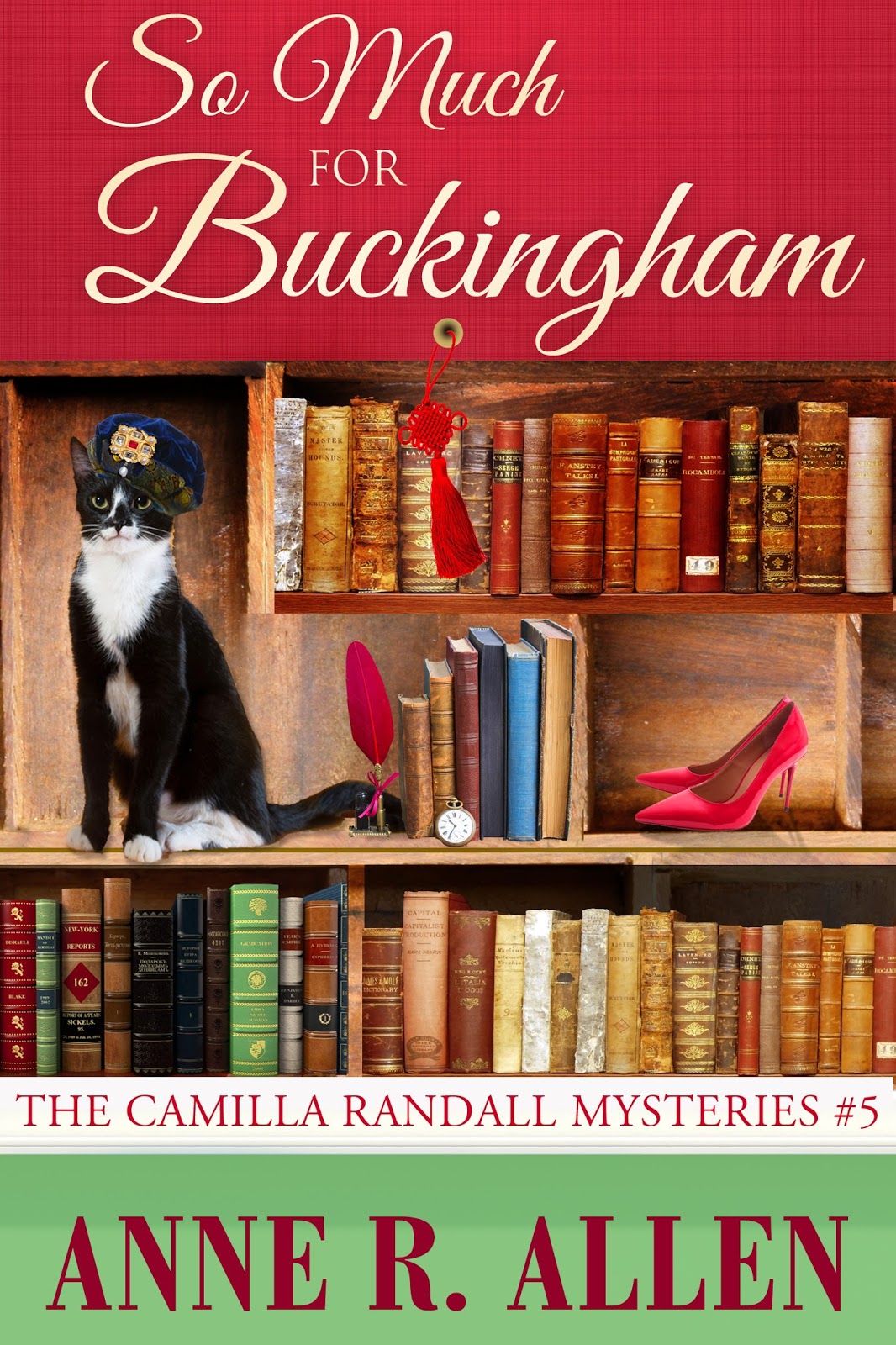
Launching in early July from Kotu Beach Press
I am so in love with this cover by Keri Knutson of Alchemy Book Covers!
Anybody who would like a pre-launch review copy of the ebook, contact me at annerallen dot allen at gmail dot com.
BOOK OF THE WEEK
Sherwood Ltd. is only 99c this week on all the Amazons! also available at iTunes, Scribd, Inktera, Nook, Kobo, and Smashwords. And in paper from Amazon and Barnes and Noble
"It's an hilarious lampoon of crime fiction, publishing and the British in general. Anne Allen gets our Brit idioms and absurdities dead to rights...Its digs at the heroic vanities of micro-publishing and author narcissism are spot on...Whether you enjoy crime suspense, comedy or satire - or all of them together - you'll have enormous fun with this cleverly structured romp. Highly recommended!" Anne is "obviously a Brum lass masquerading as a Yank"...Dr. John Yeoman
.jpg)
Follow Camilla's hilarious misadventures with merry band of outlaw indie publishers in the English Midlands. Always a magnet for murder, mischief and Mr. Wrong, Camilla falls for a self-styled Robin Hood who may or may not be trying to kill her. It follows Ghostwriters in the Sky, but can be read as a stand-alone. (And sets the scene for So Much for Buckingham)
OPPORTUNITY ALERTS
BARTLEBY SNOPES CONTEST $10 FOR UNLIMITED ENTRIES. Compose a short story entirely of dialogue. Must be under 2,000 words. Your entry cannot use any narration (this includes tag lines such as he said, she said, etc.). These are the only rules. 5 finalists will also appear in Issue 15 of the magazine. Last year they awarded $2,380 in prize money. Deadline September 15, 2015.
Rattle Poetry Prize The annual Rattle Poetry Prize offers $10,000 for a single poem to be published in the winter issue of the magazine. Each entry can contain up to 4 poems. 10 finalists will also receive $200 each and publication, and be eligible for the $2,000 Readersâ Choice Award, to be selected by subscriber and entrant vote. Entry fee $20 (includes subscription) Deadline July 15th.
Golden Quill Awards Writing Contest : Flash, Poetry, and Short fiction categories. Entry fee $20 for stories and poetry, $15 for flash fiction. The theme is TRANSFORMATION. Deadline July 15.
Glamour Magazine Essay contest. FREE! Theme: "My Real Life Story". Prize is $5,000 and possible publication in Glamour Magazine for personal essays by women, between 2,500-3,500 words. Enter online or by mail. Open to US residents aged 18+.Deadline July 15th
MARK TWAIN HUMOR CONTEST Entry fees: $12 Young Author or $22 Adult. 7,000 words (or fewer) of any original work of humor writing. Submissions must be in English. Submissions are not required to be in the style of Mark Twain or about Mark Twain. 1st Prize: $1,000 (Adult), $600 (Young Author). Other cash prizes! Deadline July 10, 2015
Saturday Evening Post Great American Fiction Contest. Entry fee $10. Your story should in some way touch upon the publication's mission: Celebrating America â past, present, and future. Think Norman Rockwell. No profanity or graphic sex. Any genre. No previously published stories, but they can have appeared on your blog. Between 1,500 and 5,000 words. Deadline July 1, 2015
Big Beautiful Wellness Creative Writing Contest. NO FEE Poems up to 30 lines Fiction or Nonfic between 1000 and 2000 words. $100 first prize. Theme: Body-positive living. Looking for inspirational, positive stories. Deadline July 1.
Writer's Village International Short Fiction Contest Prizes totalling $3200! And every entrant gets a critique. (which makes this a great deal.) Any genre of fiction up to 3000 words. Entry fee $24. Deadline June 30th.
6 Bad Reasons to Write a Novel…and 6 Good Ones
by Anne R. Allen
So you think you want to write a novel?
You're not alone.
According to a New York Times study done a decade ago, 81% of Americans "think they have a book in them". With the indie ebook revolution, I'm sure the percentage has grown.
Of course, most of that 81% won't ever write a word. There's an old, unkind joke that says, "Most people think they have a book in them. And that's where it should stay." It's true we aren't suffering a dearth of books. Just look at your Twitter feed.
I honestly believe not everybody is cut out to write book-length narrative.
And that's not a bad thing.
The problem lies in the fact that lots of people think learning to write a novel or memoir is somehow easier than learning to paint, play an instrument, compose music, or design clothing. For some reason, many people think all you need is a keyboard and a block of time and….voila! novels happen.
But those of us who do it professionally know that learning to write novels is a long, tough slog. It's also hard on our friends and loved ones. It always takes longer than we expect.
Nobody's born with the knowledge of how to craft a novel any more than anybody is born with a perfect golf swing or a great operatic voice. No matter how much native talent you have, you need to study and practice a long time before you're going to be able to create something that will appeal to readers.
So people need to make sure they really want to embark on the journey before they start down the book-writing road.
There are lots of fantastic ways to be creative. Don't get locked into the idea that writing books is the only path to creative expression. Book length-narrative may be on the way out. Short stories, personal essays, novellas, and blogposts are increasingly popular—and can be lucrative as well.
And not everybody has the talent or inclination to create with words. There are many, many ways to be creative.
Years ago I was in a writing group with a man who struggled with every sentence of his WIP. The group tended to be hard on him because he didn't seem to grasp the concept of conflict in a scene, and his characters were stereotypical lumps who mostly sat around musing.
He dropped out of the group and I ran into him two years later. At an art show. His. His paintings were fantastic: vibrant and creative and alive. He'd found his medium.
But he said he still felt guilty about this abandoned novel. I asked him why.
He said he felt that writing was "serious", while painting was "play."
He basically thought he should write because he didn't enjoy it.
I say that's exactly why NOT to write. If writing novels doesn't feel like playing, try another medium.
There's an odd prejudice in the writing world in favor of novels.
People who write and publish great short fiction or poetry are often pressured to write a "real book". And even television and screenwriters are sometimes disrespected by by people stuck in a 19th century mindset who believe "real writing" is reserved for novels.
That kind of thinking is simply out of date. The short story is undergoing a renaissance, and television is where the most creative, innovative writing is happening today. Television writers like Matthew Weiner, Vince Gilligan, Jenji Kohan, and Shonda Rhimes have become superstars in their own right.
There's nothing intrinsically "better" about writing books than any other form of creative expression. I firmly believe that everybody has a creative self that needs to be nurtured, but that creativity may express itself in hundreds of different ways—all of which enrich our culture.
Why be a mediocre novelist when you might be a great painter, poet, stand-up comic, potter, gardener, designer, or chef?
Please note I do not want to step on the dream of anybody who REALLY longs to write a book. Below are 6 excellent reasons to write one, even if nobody is ever going to read it but you.
We need to hang onto our dreams. As Damon Lindelof said in the Daily Beast last month, "media-induced cynicism is humanity’s real enemy."
We are inundated by dream-smashers and cynics who love to squash any sincere efforts at creating art.
Cynicism is easy; art is hard.
Lindelof also said, "It’s so easy to be infected by cynicism. It’s so easy to be mean. It’s so easy to tell somebody who is a dreamer, 'Come on, really?' And when you see their face when you do that to them, there’s no worse feeling in the world than understanding that you’ve just unintentionally crushed someone’s dream."
Jane Friedman echoed his sentiments in a post on her own blog titled The Age-Old Cynicism Surrounding the Dream of Book Writing. She thinks we're entering an era of "universal authorship" where everybody will be a creative writer, so the act of creating fiction won't be seen as anything special and literally everybody will be an author of some sort.
That may be—although I'm not completely convinced—but novels still exist as an art form and I don't think everybody on the planet is able to craft a good one. Or is emotionally equipped to enjoy the process.
I think a lot of that 81% who think they have books in them are motivated by the wrong reasons.
The people who are actually squashing dreams may be the people telling you that writing a novel is somehow superior to composing a song or throwing a pot or nurturing a rose.
Any writer who has been in a critique group or done much beta-reading has probably run into some wannabe writers who are obviously not going to make it, often because they're writing for the wrong reasons.
Here are six of them:
6 Bad Reasons to Write a Novel
1) To Make Money
Sigh. Anybody who's been in this business for any length of time will tell you why this is a bad idea. Bob Mayer put it very well in his March 15th blogpost:
"If you desire to write a novel because you want to have a bestseller and make a bundle of money, my advice is to play the lottery; it will take much less time and your odds will be about the same, if not better, and I can guarantee that the work involved will be much less. The publishing business makes little sense and it’s changing faster than ever before; the 'gold rush' of the self-published eBook is long past."
2) Revenge
When I was working as a freelance editor, the majority of manuscripts brought to me were revenge memoirs (or thinly-disguised memoirs) designed to hurt someone who had "done wrong" to the writer.
These things were usually hot messes. Some were pages of nonsensical late-night ranting. Others were attempts at satire so one-sided they fell flat, and others were victim sagas.
No editor can make something like that readable.
Besides you can get yourself sued.
3) To Show Off How Smart You Are
Some of us get labeled "nerds" early in life, and our defense is often to talk in long sentences using big words in order to look down our noses at the dummies who don't understand us.
I have to admit to using the word "exceedingly" in many conversations at the age of seven. I could also trot out several quotations in Latin and Greek (my father was a Classics professor at Yale, so I had a good source of ammunition).
I was so sure I was impressing people.
But the truth is that stuff doesn't make you popular in 2nd grade and it sure doesn't get you readers when you're an adult.
Unless you're writing for an esoteric academic journal that's seen by ten people including the editor and his long-suffering student assistant, you're not going to succeed by showing off your knowledge of little-used Latinate words and obscure historical factoids.
Readers don't care how smart you are. They care about compelling characters and a good story.
4) To "set the record straight" about something that happened in your past
A lot of unpublished and self-published memoirs are written by people who want to tell "what really happened" in a rotten situation like family abuse, workplace bullying, or military SNAFUs.
Writing this stuff down is fantastic therapy. But it doesn't usually translate into anything another human being will want to read. There's a reason shrinks get paid the big bucks. It's exhausting to listen to people's tales of woe.
Exploring these issues with writing can spark a creative idea that might blossom into a piece of fiction or poetry or a painting or other work of art, but don't expect a lot of people to want to experience the raw material of your pain.
You have to be an accomplished writer to turn that kind of pain into art.
5) Your third grade teacher said you have "talent."
This may have been what happened to the painter I mentioned in the introduction. I see it all the time.
In fact, this post was sparked by a question I saw recently on Quora. Somebody had decided to write a novel, but he said he didn't know anything about storytelling and he didn't much like being alone and he didn't like to read or write very much and didn't want to be bothered to learn about craft or stuff like that.
Why did he want to write a novel?
Because somebody told him he had writing "talent."
It probably happened in his formative years, poor guy, and he's been trying to live up to it ever since.
I know that telling kids they have talent seems like a great idea. It builds their self-esteem and makes them more confident and happy.
And I'm not saying we should stop being encouraging to our kids, but make sure you praise ALL their talents. But when somebody gets the idea they have a "special gift" in only one area, it can backfire.
For some people, it can paralyze them with fear about living up to their potential.
For others, it can instill a sense of entitlement that can make for really bad art. And keep them from doing stuff they really might actually enjoy.
For more on this, see my post on "Is Talent Overrated?"
6) You Like Telling People You're a Writer
Saying you're a writer gives you a certain cachet at parties. Or some people think it does. It's certainly easier to explain why you've been in that minimum wage job for five years if you add that you're supporting yourself while working on a novel.
And that's fine…if you're actually working on a novel.
But if you haven't actually written more than a grocery list in the last three years, and you never got past that "It was a dark and stormy night" opener, you may not be cut out for this profession. And that's okay.
A writer writes. If you don't write, you're probably not a writer. And there is absolutely nothing wrong with that.
Instead of getting defensive and angry every time somebody asks how that book is going, find something you actually want to do.
And if you're one of the people who would simply rather read a book than write one, then THANK YOU!! Readers make what we do possible.
And 6 Good Ones
Some people are born storytellers whose destined medium is the book. These people think in terms of stories from the time they can talk. They have to write. It's like breathing.
Here are some signs you may be a born novelist.
1) You see stories everywhere
Every newspaper headline gives you an idea for a plot. Every stranger's tale of woe makes you think of putting into a novel.
And every time you get a cup of coffee in you and somebody to listen, you start telling them about the great ideas you have. You get more and more animated as you tell the details about your characters and their backstories and….your friends' eyes glaze over, your girlfriend texts that she's moving to France, and nobody's returning your phone calls.
That story is itching to get out of you, but you're putting it in the wrong place. It belongs on a page. Don't worry if it's any good or not. Nobody will know unless you write it down.
Writing skills can be learned. But the ability to think up stories can't. You have a gift. Use it.
2) 100s of characters are living in your head (even when you're on your meds)
Whenever you read a news story about odd human behavior, you wonder who those people are and what motivated their behavior.
Before the end of the news piece on the surge in bank robberies by senior citizens, you've got a whole scenario going and you know what all the characters look and sound like.
You know Gladys and Myrtle robbed those banks because they needed money to finish their craft projects. Because craft supplies cost so much more than they can charge for the finished products on Etsy, they have had to turn to a life of crime to afford all those needlepoint kits and crochet patterns. The bank teller who refused to give them the money, Holly-Ann Wiggins, is a crafter herself, and she recognised them from their You Tube video on tatting...
If random people pop into your brain at regular intervals and beg you to tell their stories, you're probably one of those people who has a novel in them. Or three or four or ten....
3) You love being alone with your own thoughts
Authors need to be alone a lot of the time. If you're a born writer, you cherish and crave your alone time like a visit to a lover.
Anybody who needs immediate feedback or has abandonment issues when left alone for a few days is going to have trouble writing for the long periods of time it takes to compose whole books.
If your other possible life paths include lighthouse keeper, park ranger, or sailing around the world solo, then you've got one of the major talents that helps you become a successful novelist.
One of the best things ever written about being an author is Michael Ventura's 1992 essay "The Talent of the Room". Ventura—a veteran novelist, journalist and screenwriter—tells aspiring writers the most important talent they need to succeed is the ability to be alone in a room. If you haven't read it, do. It might help you decide if you're cut out for this life.
4) You're a patient, self-motivated person who can endure hardships while keeping your eyes on the prize
If you like long-term projects and you don't rely on outside validation for your sense of self, you have a much better chance of succeeding as a novelist.
Some things come with the territory. You can pretty much guarantee you're going to have to work at day jobs to pay the bills long after you'd hoped to be writing full time.
You're also going to get lots of flak from your friends and family who can't figure out why your project is taking so long.
If you can tune it all out and hang onto your dream, getting energy from your characters and finding joy in your story, you've got what it takes to write a novel.
5) You're great at thinking of worst case scenarios
Always imagining the worst? Paranoid? Anxious?
Can you write that stuff down instead of panicking?
You may have a novel in you!
Novelists need to be able to put their characters through the worst possible challenges for hundreds of pages before they reach their goals. People who shy away from conflict and drama may be able to write lots of fabulous prose, but if they can't think of enough awful things to happen to their characters, they won't be able to write successful novels.
A novel or memoir about smart, happy people having a great time in the good old days when everything was perfect is not going to attract a lot of readers. Humans want stories. And stories need conflict. If you've got dramas going on in your head all the time, they may help you write a compelling book.
6) You're in love with words… and sentences…and paragraphs...and chapters
If you're a person who verbalizes thought—who is always looking for just the right word to describe that shade of blue, that feeling, that pang of cosmic pain—you've got writing in your soul.
If you go to look up a word in the dictionary and find yourself lost in it for hours…you're probably a born writer.
But you may not necessarily want to write book-length narrative. I know a lot of people writing novels who prefer writing poetry or short fiction.
A novelist has to be able to see the big picture: not just the word or phrase or exquisite image, but the paragraph and the chapter and the story arc.
Poets who write novels will usually say it's because they want to make money. Which takes us around back to #1.
Don't let yourself be bullied into giving up your favorite medium. Writing novels only for money is like buying lottery tickets as a retirement plan. Not the best choice.
Thing is, the chances of most novels to make money are about the same as the chances of most poems. It's not a big number.
But some do. I always list contests here for poetry, essays, and short fiction as well as novels. Some story and poetry prizes are more than the average advance on a novel. Don't discount the short form if that's where your muse is most comfortable.
Write what you LOVE. Not what anybody—not even the third grade teacher who lives in your head—says you should.
Instead heed the words of the great Joseph Campbell and follow your bliss. If you don't find that bliss alone in a room with a keyboard, don't let anybody beat you up about it. Go out and find it!
That WIP will still be sitting in your files if you find out your bliss was there all along.
John Steinbeck said, "If there is a magic in story writing, and I am convinced there is, no one has ever been able to reduce it to a recipe that can be passed from one person to another. The formula seems to lie solely in the aching urge of the writer to convey something he feels important to the reader. If the writer has that urge, he may sometimes, but by no means always, find the way to do it. "
If you have that "aching urge" that can't be soothed by anything but writing a book...go write one!
What about you, Scriveners? Have you always been a storyteller? Do you love to be alone? Do you think you might rather paint or compose music than write? Have you ever felt trapped in one medium when your soul longs for another?
COVER REVEAL!!
Here is the cover for the fifth book in my Camilla Randall series of comedy-mysteries.
SO MUCH FOR BUCKINGHAM
A comedy about character assassination, online review bullies, and Richard III. Also a cat named Buckingham.
Launching in early July from Kotu Beach Press
I am so in love with this cover by Keri Knutson of Alchemy Book Covers!
Anybody who would like a pre-launch review copy of the ebook, contact me at annerallen dot allen at gmail dot com.
BOOK OF THE WEEK
Sherwood Ltd. is only 99c this week on all the Amazons! also available at iTunes, Scribd, Inktera, Nook, Kobo, and Smashwords. And in paper from Amazon and Barnes and Noble
"It's an hilarious lampoon of crime fiction, publishing and the British in general. Anne Allen gets our Brit idioms and absurdities dead to rights...Its digs at the heroic vanities of micro-publishing and author narcissism are spot on...Whether you enjoy crime suspense, comedy or satire - or all of them together - you'll have enormous fun with this cleverly structured romp. Highly recommended!" Anne is "obviously a Brum lass masquerading as a Yank"...Dr. John Yeoman
Follow Camilla's hilarious misadventures with merry band of outlaw indie publishers in the English Midlands. Always a magnet for murder, mischief and Mr. Wrong, Camilla falls for a self-styled Robin Hood who may or may not be trying to kill her. It follows Ghostwriters in the Sky, but can be read as a stand-alone. (And sets the scene for So Much for Buckingham)
OPPORTUNITY ALERTS
BARTLEBY SNOPES CONTEST $10 FOR UNLIMITED ENTRIES. Compose a short story entirely of dialogue. Must be under 2,000 words. Your entry cannot use any narration (this includes tag lines such as he said, she said, etc.). These are the only rules. 5 finalists will also appear in Issue 15 of the magazine. Last year they awarded $2,380 in prize money. Deadline September 15, 2015.
Rattle Poetry Prize The annual Rattle Poetry Prize offers $10,000 for a single poem to be published in the winter issue of the magazine. Each entry can contain up to 4 poems. 10 finalists will also receive $200 each and publication, and be eligible for the $2,000 Readers’ Choice Award, to be selected by subscriber and entrant vote. Entry fee $20 (includes subscription) Deadline July 15th.
Golden Quill Awards Writing Contest : Flash, Poetry, and Short fiction categories. Entry fee $20 for stories and poetry, $15 for flash fiction. The theme is TRANSFORMATION. Deadline July 15.
Glamour Magazine Essay contest. FREE! Theme: "My Real Life Story". Prize is $5,000 and possible publication in Glamour Magazine for personal essays by women, between 2,500-3,500 words. Enter online or by mail. Open to US residents aged 18+.Deadline July 15th
MARK TWAIN HUMOR CONTEST Entry fees: $12 Young Author or $22 Adult. 7,000 words (or fewer) of any original work of humor writing. Submissions must be in English. Submissions are not required to be in the style of Mark Twain or about Mark Twain. 1st Prize: $1,000 (Adult), $600 (Young Author). Other cash prizes! Deadline July 10, 2015
Saturday Evening Post Great American Fiction Contest. Entry fee $10. Your story should in some way touch upon the publication's mission: Celebrating America — past, present, and future. Think Norman Rockwell. No profanity or graphic sex. Any genre. No previously published stories, but they can have appeared on your blog. Between 1,500 and 5,000 words. Deadline July 1, 2015
Big Beautiful Wellness Creative Writing Contest. NO FEE Poems up to 30 lines Fiction or Nonfic between 1000 and 2000 words. $100 first prize. Theme: Body-positive living. Looking for inspirational, positive stories. Deadline July 1.
Writer's Village International Short Fiction Contest Prizes totalling $3200! And every entrant gets a critique. (which makes this a great deal.) Any genre of fiction up to 3000 words. Entry fee $24. Deadline June 30th.
So you think you want to write a novel?
You're not alone.
According to a New York Times study done a decade ago, 81% of Americans "think they have a book in them". With the indie ebook revolution, I'm sure the percentage has grown.
Of course, most of that 81% won't ever write a word. There's an old, unkind joke that says, "Most people think they have a book in them. And that's where it should stay." It's true we aren't suffering a dearth of books. Just look at your Twitter feed.
I honestly believe not everybody is cut out to write book-length narrative.
And that's not a bad thing.
The problem lies in the fact that lots of people think learning to write a novel or memoir is somehow easier than learning to paint, play an instrument, compose music, or design clothing. For some reason, many people think all you need is a keyboard and a block of time and….voila! novels happen.
But those of us who do it professionally know that learning to write novels is a long, tough slog. It's also hard on our friends and loved ones. It always takes longer than we expect.
Nobody's born with the knowledge of how to craft a novel any more than anybody is born with a perfect golf swing or a great operatic voice. No matter how much native talent you have, you need to study and practice a long time before you're going to be able to create something that will appeal to readers.
So people need to make sure they really want to embark on the journey before they start down the book-writing road.
There are lots of fantastic ways to be creative. Don't get locked into the idea that writing books is the only path to creative expression. Book length-narrative may be on the way out. Short stories, personal essays, novellas, and blogposts are increasingly popular—and can be lucrative as well.
And not everybody has the talent or inclination to create with words. There are many, many ways to be creative.
Years ago I was in a writing group with a man who struggled with every sentence of his WIP. The group tended to be hard on him because he didn't seem to grasp the concept of conflict in a scene, and his characters were stereotypical lumps who mostly sat around musing.
He dropped out of the group and I ran into him two years later. At an art show. His. His paintings were fantastic: vibrant and creative and alive. He'd found his medium.
But he said he still felt guilty about this abandoned novel. I asked him why.
He said he felt that writing was "serious", while painting was "play."
He basically thought he should write because he didn't enjoy it.
I say that's exactly why NOT to write. If writing novels doesn't feel like playing, try another medium.
There's an odd prejudice in the writing world in favor of novels.
People who write and publish great short fiction or poetry are often pressured to write a "real book". And even television and screenwriters are sometimes disrespected by by people stuck in a 19th century mindset who believe "real writing" is reserved for novels.
That kind of thinking is simply out of date. The short story is undergoing a renaissance, and television is where the most creative, innovative writing is happening today. Television writers like Matthew Weiner, Vince Gilligan, Jenji Kohan, and Shonda Rhimes have become superstars in their own right.
There's nothing intrinsically "better" about writing books than any other form of creative expression. I firmly believe that everybody has a creative self that needs to be nurtured, but that creativity may express itself in hundreds of different ways—all of which enrich our culture.
Why be a mediocre novelist when you might be a great painter, poet, stand-up comic, potter, gardener, designer, or chef?
Please note I do not want to step on the dream of anybody who REALLY longs to write a book. Below are 6 excellent reasons to write one, even if nobody is ever going to read it but you.
We need to hang onto our dreams. As Damon Lindelof said in the Daily Beast last month, "media-induced cynicism is humanity’s real enemy."
We are inundated by dream-smashers and cynics who love to squash any sincere efforts at creating art.
Cynicism is easy; art is hard.
Lindelof also said, "It’s so easy to be infected by cynicism. It’s so easy to be mean. It’s so easy to tell somebody who is a dreamer, 'Come on, really?' And when you see their face when you do that to them, there’s no worse feeling in the world than understanding that you’ve just unintentionally crushed someone’s dream."
Jane Friedman echoed his sentiments in a post on her own blog titled The Age-Old Cynicism Surrounding the Dream of Book Writing. She thinks we're entering an era of "universal authorship" where everybody will be a creative writer, so the act of creating fiction won't be seen as anything special and literally everybody will be an author of some sort.
That may be—although I'm not completely convinced—but novels still exist as an art form and I don't think everybody on the planet is able to craft a good one. Or is emotionally equipped to enjoy the process.
I think a lot of that 81% who think they have books in them are motivated by the wrong reasons.
The people who are actually squashing dreams may be the people telling you that writing a novel is somehow superior to composing a song or throwing a pot or nurturing a rose.
Any writer who has been in a critique group or done much beta-reading has probably run into some wannabe writers who are obviously not going to make it, often because they're writing for the wrong reasons.
Here are six of them:
6 Bad Reasons to Write a Novel
1) To Make Money
Sigh. Anybody who's been in this business for any length of time will tell you why this is a bad idea. Bob Mayer put it very well in his March 15th blogpost:
"If you desire to write a novel because you want to have a bestseller and make a bundle of money, my advice is to play the lottery; it will take much less time and your odds will be about the same, if not better, and I can guarantee that the work involved will be much less. The publishing business makes little sense and it’s changing faster than ever before; the 'gold rush' of the self-published eBook is long past."
2) Revenge
When I was working as a freelance editor, the majority of manuscripts brought to me were revenge memoirs (or thinly-disguised memoirs) designed to hurt someone who had "done wrong" to the writer.
These things were usually hot messes. Some were pages of nonsensical late-night ranting. Others were attempts at satire so one-sided they fell flat, and others were victim sagas.
No editor can make something like that readable.
Besides you can get yourself sued.
3) To Show Off How Smart You Are
Some of us get labeled "nerds" early in life, and our defense is often to talk in long sentences using big words in order to look down our noses at the dummies who don't understand us.
I have to admit to using the word "exceedingly" in many conversations at the age of seven. I could also trot out several quotations in Latin and Greek (my father was a Classics professor at Yale, so I had a good source of ammunition).
I was so sure I was impressing people.
But the truth is that stuff doesn't make you popular in 2nd grade and it sure doesn't get you readers when you're an adult.
Unless you're writing for an esoteric academic journal that's seen by ten people including the editor and his long-suffering student assistant, you're not going to succeed by showing off your knowledge of little-used Latinate words and obscure historical factoids.
Readers don't care how smart you are. They care about compelling characters and a good story.
4) To "set the record straight" about something that happened in your past
A lot of unpublished and self-published memoirs are written by people who want to tell "what really happened" in a rotten situation like family abuse, workplace bullying, or military SNAFUs.
Writing this stuff down is fantastic therapy. But it doesn't usually translate into anything another human being will want to read. There's a reason shrinks get paid the big bucks. It's exhausting to listen to people's tales of woe.
Exploring these issues with writing can spark a creative idea that might blossom into a piece of fiction or poetry or a painting or other work of art, but don't expect a lot of people to want to experience the raw material of your pain.
You have to be an accomplished writer to turn that kind of pain into art.
5) Your third grade teacher said you have "talent."
This may have been what happened to the painter I mentioned in the introduction. I see it all the time.
In fact, this post was sparked by a question I saw recently on Quora. Somebody had decided to write a novel, but he said he didn't know anything about storytelling and he didn't much like being alone and he didn't like to read or write very much and didn't want to be bothered to learn about craft or stuff like that.
Why did he want to write a novel?
Because somebody told him he had writing "talent."
It probably happened in his formative years, poor guy, and he's been trying to live up to it ever since.
I know that telling kids they have talent seems like a great idea. It builds their self-esteem and makes them more confident and happy.
And I'm not saying we should stop being encouraging to our kids, but make sure you praise ALL their talents. But when somebody gets the idea they have a "special gift" in only one area, it can backfire.
For some people, it can paralyze them with fear about living up to their potential.
For others, it can instill a sense of entitlement that can make for really bad art. And keep them from doing stuff they really might actually enjoy.
For more on this, see my post on "Is Talent Overrated?"
6) You Like Telling People You're a Writer
Saying you're a writer gives you a certain cachet at parties. Or some people think it does. It's certainly easier to explain why you've been in that minimum wage job for five years if you add that you're supporting yourself while working on a novel.
And that's fine…if you're actually working on a novel.
But if you haven't actually written more than a grocery list in the last three years, and you never got past that "It was a dark and stormy night" opener, you may not be cut out for this profession. And that's okay.
A writer writes. If you don't write, you're probably not a writer. And there is absolutely nothing wrong with that.
Instead of getting defensive and angry every time somebody asks how that book is going, find something you actually want to do.
And if you're one of the people who would simply rather read a book than write one, then THANK YOU!! Readers make what we do possible.
And 6 Good Ones
Some people are born storytellers whose destined medium is the book. These people think in terms of stories from the time they can talk. They have to write. It's like breathing.
Here are some signs you may be a born novelist.
1) You see stories everywhere
Every newspaper headline gives you an idea for a plot. Every stranger's tale of woe makes you think of putting into a novel.
And every time you get a cup of coffee in you and somebody to listen, you start telling them about the great ideas you have. You get more and more animated as you tell the details about your characters and their backstories and….your friends' eyes glaze over, your girlfriend texts that she's moving to France, and nobody's returning your phone calls.
That story is itching to get out of you, but you're putting it in the wrong place. It belongs on a page. Don't worry if it's any good or not. Nobody will know unless you write it down.
Writing skills can be learned. But the ability to think up stories can't. You have a gift. Use it.
2) 100s of characters are living in your head (even when you're on your meds)
Whenever you read a news story about odd human behavior, you wonder who those people are and what motivated their behavior.
Before the end of the news piece on the surge in bank robberies by senior citizens, you've got a whole scenario going and you know what all the characters look and sound like.
You know Gladys and Myrtle robbed those banks because they needed money to finish their craft projects. Because craft supplies cost so much more than they can charge for the finished products on Etsy, they have had to turn to a life of crime to afford all those needlepoint kits and crochet patterns. The bank teller who refused to give them the money, Holly-Ann Wiggins, is a crafter herself, and she recognised them from their You Tube video on tatting...
If random people pop into your brain at regular intervals and beg you to tell their stories, you're probably one of those people who has a novel in them. Or three or four or ten....
3) You love being alone with your own thoughts
Authors need to be alone a lot of the time. If you're a born writer, you cherish and crave your alone time like a visit to a lover.
Anybody who needs immediate feedback or has abandonment issues when left alone for a few days is going to have trouble writing for the long periods of time it takes to compose whole books.
If your other possible life paths include lighthouse keeper, park ranger, or sailing around the world solo, then you've got one of the major talents that helps you become a successful novelist.
One of the best things ever written about being an author is Michael Ventura's 1992 essay "The Talent of the Room". Ventura—a veteran novelist, journalist and screenwriter—tells aspiring writers the most important talent they need to succeed is the ability to be alone in a room. If you haven't read it, do. It might help you decide if you're cut out for this life.
4) You're a patient, self-motivated person who can endure hardships while keeping your eyes on the prize
If you like long-term projects and you don't rely on outside validation for your sense of self, you have a much better chance of succeeding as a novelist.
Some things come with the territory. You can pretty much guarantee you're going to have to work at day jobs to pay the bills long after you'd hoped to be writing full time.
You're also going to get lots of flak from your friends and family who can't figure out why your project is taking so long.
If you can tune it all out and hang onto your dream, getting energy from your characters and finding joy in your story, you've got what it takes to write a novel.
5) You're great at thinking of worst case scenarios
Always imagining the worst? Paranoid? Anxious?
Can you write that stuff down instead of panicking?
You may have a novel in you!
Novelists need to be able to put their characters through the worst possible challenges for hundreds of pages before they reach their goals. People who shy away from conflict and drama may be able to write lots of fabulous prose, but if they can't think of enough awful things to happen to their characters, they won't be able to write successful novels.
A novel or memoir about smart, happy people having a great time in the good old days when everything was perfect is not going to attract a lot of readers. Humans want stories. And stories need conflict. If you've got dramas going on in your head all the time, they may help you write a compelling book.
6) You're in love with words… and sentences…and paragraphs...and chapters
If you're a person who verbalizes thought—who is always looking for just the right word to describe that shade of blue, that feeling, that pang of cosmic pain—you've got writing in your soul.
If you go to look up a word in the dictionary and find yourself lost in it for hours…you're probably a born writer.
But you may not necessarily want to write book-length narrative. I know a lot of people writing novels who prefer writing poetry or short fiction.
A novelist has to be able to see the big picture: not just the word or phrase or exquisite image, but the paragraph and the chapter and the story arc.
Poets who write novels will usually say it's because they want to make money. Which takes us around back to #1.
Don't let yourself be bullied into giving up your favorite medium. Writing novels only for money is like buying lottery tickets as a retirement plan. Not the best choice.
Thing is, the chances of most novels to make money are about the same as the chances of most poems. It's not a big number.
But some do. I always list contests here for poetry, essays, and short fiction as well as novels. Some story and poetry prizes are more than the average advance on a novel. Don't discount the short form if that's where your muse is most comfortable.
Write what you LOVE. Not what anybody—not even the third grade teacher who lives in your head—says you should.
Instead heed the words of the great Joseph Campbell and follow your bliss. If you don't find that bliss alone in a room with a keyboard, don't let anybody beat you up about it. Go out and find it!
That WIP will still be sitting in your files if you find out your bliss was there all along.
John Steinbeck said, "If there is a magic in story writing, and I am convinced there is, no one has ever been able to reduce it to a recipe that can be passed from one person to another. The formula seems to lie solely in the aching urge of the writer to convey something he feels important to the reader. If the writer has that urge, he may sometimes, but by no means always, find the way to do it. "
If you have that "aching urge" that can't be soothed by anything but writing a book...go write one!
What about you, Scriveners? Have you always been a storyteller? Do you love to be alone? Do you think you might rather paint or compose music than write? Have you ever felt trapped in one medium when your soul longs for another?
COVER REVEAL!!
Here is the cover for the fifth book in my Camilla Randall series of comedy-mysteries.
SO MUCH FOR BUCKINGHAM
A comedy about character assassination, online review bullies, and Richard III. Also a cat named Buckingham.
Launching in early July from Kotu Beach Press
I am so in love with this cover by Keri Knutson of Alchemy Book Covers!
Anybody who would like a pre-launch review copy of the ebook, contact me at annerallen dot allen at gmail dot com.
BOOK OF THE WEEK
Sherwood Ltd. is only 99c this week on all the Amazons! also available at iTunes, Scribd, Inktera, Nook, Kobo, and Smashwords. And in paper from Amazon and Barnes and Noble
"It's an hilarious lampoon of crime fiction, publishing and the British in general. Anne Allen gets our Brit idioms and absurdities dead to rights...Its digs at the heroic vanities of micro-publishing and author narcissism are spot on...Whether you enjoy crime suspense, comedy or satire - or all of them together - you'll have enormous fun with this cleverly structured romp. Highly recommended!" Anne is "obviously a Brum lass masquerading as a Yank"...Dr. John Yeoman
Follow Camilla's hilarious misadventures with merry band of outlaw indie publishers in the English Midlands. Always a magnet for murder, mischief and Mr. Wrong, Camilla falls for a self-styled Robin Hood who may or may not be trying to kill her. It follows Ghostwriters in the Sky, but can be read as a stand-alone. (And sets the scene for So Much for Buckingham)
OPPORTUNITY ALERTS
BARTLEBY SNOPES CONTEST $10 FOR UNLIMITED ENTRIES. Compose a short story entirely of dialogue. Must be under 2,000 words. Your entry cannot use any narration (this includes tag lines such as he said, she said, etc.). These are the only rules. 5 finalists will also appear in Issue 15 of the magazine. Last year they awarded $2,380 in prize money. Deadline September 15, 2015.
Rattle Poetry Prize The annual Rattle Poetry Prize offers $10,000 for a single poem to be published in the winter issue of the magazine. Each entry can contain up to 4 poems. 10 finalists will also receive $200 each and publication, and be eligible for the $2,000 Readers’ Choice Award, to be selected by subscriber and entrant vote. Entry fee $20 (includes subscription) Deadline July 15th.
Golden Quill Awards Writing Contest : Flash, Poetry, and Short fiction categories. Entry fee $20 for stories and poetry, $15 for flash fiction. The theme is TRANSFORMATION. Deadline July 15.
Glamour Magazine Essay contest. FREE! Theme: "My Real Life Story". Prize is $5,000 and possible publication in Glamour Magazine for personal essays by women, between 2,500-3,500 words. Enter online or by mail. Open to US residents aged 18+.Deadline July 15th
MARK TWAIN HUMOR CONTEST Entry fees: $12 Young Author or $22 Adult. 7,000 words (or fewer) of any original work of humor writing. Submissions must be in English. Submissions are not required to be in the style of Mark Twain or about Mark Twain. 1st Prize: $1,000 (Adult), $600 (Young Author). Other cash prizes! Deadline July 10, 2015
Saturday Evening Post Great American Fiction Contest. Entry fee $10. Your story should in some way touch upon the publication's mission: Celebrating America — past, present, and future. Think Norman Rockwell. No profanity or graphic sex. Any genre. No previously published stories, but they can have appeared on your blog. Between 1,500 and 5,000 words. Deadline July 1, 2015
Big Beautiful Wellness Creative Writing Contest. NO FEE Poems up to 30 lines Fiction or Nonfic between 1000 and 2000 words. $100 first prize. Theme: Body-positive living. Looking for inspirational, positive stories. Deadline July 1.
Writer's Village International Short Fiction Contest Prizes totalling $3200! And every entrant gets a critique. (which makes this a great deal.) Any genre of fiction up to 3000 words. Entry fee $24. Deadline June 30th.


![[image error]](http://4.bp.blogspot.com/-u3UOESDBhBQ/Ui9wQwTJToI/AAAAAAAABag/AXYe5dL4hIU/s1600/NPLH%20final.png)