
Style That Doesn't go out of Fashion: Style Sheets, Style Guides, and Why Audrey Hepburn Style is a Writerâs Best Friend
by Ruth Harris
What's a Style Sheet?
Look, guys, I don't want to freak you out but, if you're writing a book (or a short story or a novella), you need a style sheet.
If you plan to self-pub, a style sheet will save your sanity while you're writingâand after because a style sheet will save you time and money when you hire a copy editor. If you want to try trad-pubbing, you'll need a style sheet, too. Publishers have cut back staffs and copyediting, like a lot of things, ain't what it used to be.
In case you don't know what a style sheet is and maybe have never even heard of one, a style sheet is a list of all the important dataânames, addresses, dates, people and placesâin your manuscript. Creating a style sheet is straightforward: the first time a character or place name (or any other data) is mentioned, add it to a list. That list is your style sheet. Simple as that.
Your style sheet is a road map to your book, a quality-control tool that provides coherence and consistency.
Analogous to continuity in a movie, your style sheet will ensure, among other things, that your characters don't suddenly change names, marital status or political affiliationâor worseâin the middle of your novel. Trust me, it happens.
Like this: Your MC is James Q. Black. You don't want him to suddenly to become Jimmy Z. Brown and confuse the hell out of your reader or the agent or editor you're trying to sell. Because, guess what?, the reader will get confused and give up or you won't make the sale. A style sheet will save you from the vagaries of memoryâand from yourself.
Or this:
Example #1: You want to make certain your reader knows exactly which character is facing an attack by alien hordes while dangling off the edge of a cliff by the fingertips. Is it James Q. or Jimmy Z, or, god forbid, Jane Z.âreader wants to know!Example #2: Your heroine, Suzie Smith, lives at 21 Main Street. Add Suzie Smith plus her address to your style sheet. Will save you from calling her Suzy Smith a few chapters later and makes sure you refer to her address as 21 Main Street. Not twenty-one Main Street. And certainly not 22 Maine Avenue.Example #3: Suzie's bff, Marianne, works at Lulu's Bakery. Add Marianne and Lulu's Bakery to your style sheet. Because if you don't, you risk glitches like: Mary Ann? Who's dat and what's she doing in this story? Loulou's Bakery? What's dat and what's it doing in this story? A confused reader is a reader who's going to love bomb you with a five-star review? Nope.
Character descriptions that ensure a blonde is blonde (unless a change in hair color is critical to the plot) can also be included in your style sheet. A six foot tall zombie is six feet, not five six. A scar on the right side of your gunslinger's face stays on the right side, doesn't wander over to the left or completely disappear (at least not without a credible explanation).
Style sheets how-tos.
Fiction editor Beth Hill, explains her approach to style sheets at the editor's blog and offers some useful how-tos.Author Lou Belcher tells how to set up a style sheet before you start writing.Katherine O'Moore-Klopf of KOK edit shares a detailed and helpful pdf of a Pocket Books style sheet.Deanna Hoak, star sf/f copyeditor of award-winning bestsellers, discusses the importance of style sheets.Thanks to Sara Lancaster for her FREE downloadable template.
Style guide or style sheet. There's a difference?
Well, yeah, although IRL sometimes there is overlap. Generally speaking, though, a style sheet keeps track of the nuts and bolts: 21 Main Street not twenty-one Main Street or 22 Maine Street, remember?
A style guide, OTOH, offer suggestions about how to write. Some publishers provide a style guide, a sort of house rules for writers.
To get started, acquaint yourself with a few tried and tested classics.
This FREE style guide from The Economist emphasizes clarityâa goal every writer is (or should be) aiming for.The New York Times Style Guide ($13)A useful overview of the AP Style guide.An entertaining consideration of the difference between a diaeresis and an umlaut (don't forget the diphthong!) in The New Yorker .This FREE download of Fowler's Modern English Usage covers grammar, syntax, style, word choice, and advice on usage.How to choose a style guide.William Strunk's classic The Elements Of Style FREE download.Elmore Leonard's beloved classic 10 Rules of Writing is a style guide with the stated goal of keeping the writer invisible to the reader.The Guardian's Rules For Writers series includes the thoughts of writers like Zadie Smith and Hilary Mantel, Margaret Atwood and Michael Moorcock.Here are rules for writing dialogue and William Safire's witty Rules for Writers.Writing teacher Roy Peter Clark reflects on the power of the short sentence.
Just remember, rules and style guides are suggestions, not iron-clad laws. Once you know them and use them confidently, you can (maybe) break them as long as you know what you're doing.
Audrey Hepburn style and why it matters.
What did Audrey do that no one else didâor could do? She looked like herself. On purpose. Period.
Barbra Streisand and Diana Vreeland and Tilda Swinton are other examples. Among the men, think of Salvador Dali, Andy Warhol and Woody Allen. Include Joan Didion and Joan Rivers, Steve McQueen and Steve Buscemi. And don't forget Grace Coddington, Steve Jobs, Diana Ross, David Geffen, Jackie Onassis, Tom Wolfe, Lauren Hutton, the Kardashians.
Style icons don't look like anyone else, they look like themselves and no one else. They do not follow trends, they set them. They are not fashion victims but style leaders.
They are unique and instantly identifiable. They don't fear owning their own wavy/frizzy/stick straight hair, scrawny/fleshy/muscular body, big nose/thick lips/long chin. They understand that the key to standing out is to work with what they have and to be the best version of themselves. On purpose.
What does style and looking like yourself on purpose have to do with writing and selling books?
In the tsunami/avalanche/crap ton of books being published and a flattening market as noted in a recent post by Porter Anderson, the big question is: how can your book stand out?
Style is how. Style is not fashion and style is not some fad that's here today, gone tomorrow. Style is enduring, unique, recognizable, desirable and, most of all, authentic. For a writer, style is writing like yourself. On purpose.
Consider Elmore Leonard and Ernest Hemingway, Tom Wolfe, Jackie Collins, Janet Evanovich, Robert B. Parker, and Raymond Chandler: each one has developed an immediately recognizable style.
Finding your own style isn't quick and it isn't easy. Which doesn't mean it's impossible. Or, even worse, no fun.
Stephen King has an answer to the question of why developing a style of your own can be difficult: "Good writing is often about letting go of fear and affectation."
When you write, are you afraid of what critics/your Mom/a reviewer/your crit group will say? Do you feel pressured to prove to the world how smart you are and how brilliant your prose? Do you want to impress a Paris Review critic or your high school English teacher?
Do you shrink from ideas that seem too far out/too freaky/too scary/too ordinary/too done-to-death? You know what I mean: boy meets girl, boy loses girl, boy gets girl. You don't want to write that. Not again.
Or do you?
And you do know, don't you, there there are maybe 7 basic plots?
Are you holding yourself back from developing a unique style because you're afraid? Of what? Of the nay-saying phantoms in your head? Of what "people" will say? Do you cringe from imagined hostile reviews?
Is your writing suffering because you're afraid of what people you don't even know much less care about are going to think?
Does the thought of a one-star review send you to the shrink?
Do you want to hide or do you want to shine?
Now you're beginning to see what I'm getting at, aren't you?
But, you say, if I let go, if I indulge my nuttiest, weirdest, furthest-out or done-a-million-times idea, people will laugh at me, sneer at me, think I'm crazy, call me untalented.
The fact is, you're right. Only a few examples needed to make the point:
Jackson Pollock was ridiculed and called "Jack the Dripper."Picasso's Cubist paintings were considered "shocking."Elvis Presley was considered "vulgar" and his performances were censored and even cancelled because he was said to be a threat to the morals of American youth.And let's not even go into all the huge bestsellers (Harry Potter, anyone?) that were rejected over and over before finding their readers.
Mahatma Gandhi reduced the outraged, you-can't-do-that reactions to a formula: "First they ignore you, then they laugh at you, then they fight you, then you win."
So then what?
How do you develop a style of your own?
The obvious answer is that a writer must face his or her fears. Booze is popular. So is chocolate. But, honestly, don't both seem a bit passé in this time of organic, grass fed, artisanal, gluten-free Everything?
The advice of an in-demand sports psychologist gave me an idea for a different approach. Why not accentuate the positive? Why not conquer fear with confidence?
The psychologist's theory is that if a golfer is a good putter, s/he should practice putting until s/he becomes a superb putter? This expert's approach was not to focus on correcting an athlete's weaknesses, but on polishing his/her strengths.
Writers can take the same approach: write what you're good at. To bring the end of this post back to the beginning, as you polish what you're already do wellânarrative, dialogue, characterization, humor, horror, thrills, romanceâyou'll will inevitably hone and define a style. It will be as individual as a fingerprint, as recognizable as Streisand, Tilda or Audrey and you will develop it by doing what you like bestâand by practicing what you're already good at.
Simple, yet not so simple, and, yet, eminently do-able.
Plus, like many of the best things in life, style is FREE.
What about you, Scriveners? Do you have a distinctive style? Did you experiment with several before you came up with one that's really "you"? Have you ever changed a character's name and forgotten to go back and change it? (I once sent a partial to an agent where the heroine's name changed halfway through. Ack!)...Anne
BOOK OF THE WEEK
When it comes to style, you can't beat Chanel. Read The Chanel Caper by Ruth Harris for only $2.99 on all the Amazons
Chick Lit for Chicks Who Weren't Born Yesterday
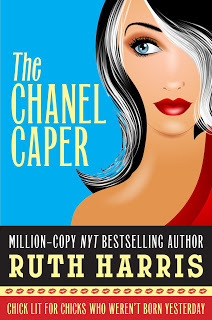
Here's what USA Today bestseller, Vanessa Kelly says about The Chanel Caper in Love Rocks:
"The Chanel Caper is a romantic comedy, a thriller, and a send-up of the big city lifestyle in the wake of the global financial crisis. All the disparate elements of this very funny story are tethered by the engaging Blake, a smart, sensible, and dryly witty heroine intent on saving her marriage. It's definitely a romance for the grownups, set against the backdrop of the bright lights of the city that never sleeps."
OPPORTUNITY ALERTS
The Ernest Hemingway Flash Fiction Contest. $10 fee Unpublished fiction. 1500 words or less. Simultaneous submissions ARE welcome. All entries will be considered for publication in Fiction Southeast. (a prestigious journal that has published people like Joyce Carol Oates) Winner gets $200 and publication. Deadline: Dec. 1st
Writers' Village International Short Fiction Award winter 2015 . Cash prizes totaling $3200.Ten further Highly Commended entrants will have their stories acknowledged at the site and gain a free entry in the next round. Entry fee $24 INCLUDES A PROFESSIONAL CRITIQUE. Any genre of prose fiction may be submitted up to 3000 words, except plays and poetry. Entries are welcomed worldwide. Multiple entries are permitted. Deadline: November 30th.
The IWSG Short Story Anthology Contest 2015. NO FEE! The top ten stories will be published in an anthology. (Authors will receive royalties on sales.) Eligibility: Any member of the Insecure Writer's Support Group is encouraged to enter â blogging or Facebook member (no fee to join the IWSG). The story must be previously unpublished. Entry is free. Word count: 5000-6000. Theme: Alternate History/Parallel Universe. Deadline: November 1st
RROFIHE TROPHY NO-FEE SHORT STORY CONTEST NO ENTRY FEE. For an unpublished short story. Minimum word count 3,500; maximum to 5,000 words. Winner receives $500, trophy, announcement and publication on anderbo.com. Deadline October 15.
Glimmer Train Press Family Matters Prize: $1,500 and publication in Glimmer Train. Entry fee $18. Stories up to 12,000 words: about families of all configurations. Deadline: September 30.
Tom Howard/Margaret Reid Poetry Contest $4,000 in prizes. Entry fee $10 per poem. Submit poems in modern and traditional styles, up to 250 lines each. Deadline: September 30.
What's a Style Sheet?
Look, guys, I don't want to freak you out but, if you're writing a book (or a short story or a novella), you need a style sheet.
If you plan to self-pub, a style sheet will save your sanity while you're writingâand after because a style sheet will save you time and money when you hire a copy editor. If you want to try trad-pubbing, you'll need a style sheet, too. Publishers have cut back staffs and copyediting, like a lot of things, ain't what it used to be.
In case you don't know what a style sheet is and maybe have never even heard of one, a style sheet is a list of all the important dataânames, addresses, dates, people and placesâin your manuscript. Creating a style sheet is straightforward: the first time a character or place name (or any other data) is mentioned, add it to a list. That list is your style sheet. Simple as that.
Your style sheet is a road map to your book, a quality-control tool that provides coherence and consistency.
Analogous to continuity in a movie, your style sheet will ensure, among other things, that your characters don't suddenly change names, marital status or political affiliationâor worseâin the middle of your novel. Trust me, it happens.
Like this: Your MC is James Q. Black. You don't want him to suddenly to become Jimmy Z. Brown and confuse the hell out of your reader or the agent or editor you're trying to sell. Because, guess what?, the reader will get confused and give up or you won't make the sale. A style sheet will save you from the vagaries of memoryâand from yourself.
Or this:
Example #1: You want to make certain your reader knows exactly which character is facing an attack by alien hordes while dangling off the edge of a cliff by the fingertips. Is it James Q. or Jimmy Z, or, god forbid, Jane Z.âreader wants to know!Example #2: Your heroine, Suzie Smith, lives at 21 Main Street. Add Suzie Smith plus her address to your style sheet. Will save you from calling her Suzy Smith a few chapters later and makes sure you refer to her address as 21 Main Street. Not twenty-one Main Street. And certainly not 22 Maine Avenue.Example #3: Suzie's bff, Marianne, works at Lulu's Bakery. Add Marianne and Lulu's Bakery to your style sheet. Because if you don't, you risk glitches like: Mary Ann? Who's dat and what's she doing in this story? Loulou's Bakery? What's dat and what's it doing in this story? A confused reader is a reader who's going to love bomb you with a five-star review? Nope.
Character descriptions that ensure a blonde is blonde (unless a change in hair color is critical to the plot) can also be included in your style sheet. A six foot tall zombie is six feet, not five six. A scar on the right side of your gunslinger's face stays on the right side, doesn't wander over to the left or completely disappear (at least not without a credible explanation).
Style sheets how-tos.
Fiction editor Beth Hill, explains her approach to style sheets at the editor's blog and offers some useful how-tos.Author Lou Belcher tells how to set up a style sheet before you start writing.Katherine O'Moore-Klopf of KOK edit shares a detailed and helpful pdf of a Pocket Books style sheet.Deanna Hoak, star sf/f copyeditor of award-winning bestsellers, discusses the importance of style sheets.Thanks to Sara Lancaster for her FREE downloadable template.
Style guide or style sheet. There's a difference?
Well, yeah, although IRL sometimes there is overlap. Generally speaking, though, a style sheet keeps track of the nuts and bolts: 21 Main Street not twenty-one Main Street or 22 Maine Street, remember?
A style guide, OTOH, offer suggestions about how to write. Some publishers provide a style guide, a sort of house rules for writers.
To get started, acquaint yourself with a few tried and tested classics.
This FREE style guide from The Economist emphasizes clarityâa goal every writer is (or should be) aiming for.The New York Times Style Guide ($13)A useful overview of the AP Style guide.An entertaining consideration of the difference between a diaeresis and an umlaut (don't forget the diphthong!) in The New Yorker .This FREE download of Fowler's Modern English Usage covers grammar, syntax, style, word choice, and advice on usage.How to choose a style guide.William Strunk's classic The Elements Of Style FREE download.Elmore Leonard's beloved classic 10 Rules of Writing is a style guide with the stated goal of keeping the writer invisible to the reader.The Guardian's Rules For Writers series includes the thoughts of writers like Zadie Smith and Hilary Mantel, Margaret Atwood and Michael Moorcock.Here are rules for writing dialogue and William Safire's witty Rules for Writers.Writing teacher Roy Peter Clark reflects on the power of the short sentence.
Just remember, rules and style guides are suggestions, not iron-clad laws. Once you know them and use them confidently, you can (maybe) break them as long as you know what you're doing.
Audrey Hepburn style and why it matters.
What did Audrey do that no one else didâor could do? She looked like herself. On purpose. Period.
Barbra Streisand and Diana Vreeland and Tilda Swinton are other examples. Among the men, think of Salvador Dali, Andy Warhol and Woody Allen. Include Joan Didion and Joan Rivers, Steve McQueen and Steve Buscemi. And don't forget Grace Coddington, Steve Jobs, Diana Ross, David Geffen, Jackie Onassis, Tom Wolfe, Lauren Hutton, the Kardashians.
Style icons don't look like anyone else, they look like themselves and no one else. They do not follow trends, they set them. They are not fashion victims but style leaders.
They are unique and instantly identifiable. They don't fear owning their own wavy/frizzy/stick straight hair, scrawny/fleshy/muscular body, big nose/thick lips/long chin. They understand that the key to standing out is to work with what they have and to be the best version of themselves. On purpose.
What does style and looking like yourself on purpose have to do with writing and selling books?
In the tsunami/avalanche/crap ton of books being published and a flattening market as noted in a recent post by Porter Anderson, the big question is: how can your book stand out?
Style is how. Style is not fashion and style is not some fad that's here today, gone tomorrow. Style is enduring, unique, recognizable, desirable and, most of all, authentic. For a writer, style is writing like yourself. On purpose.
Consider Elmore Leonard and Ernest Hemingway, Tom Wolfe, Jackie Collins, Janet Evanovich, Robert B. Parker, and Raymond Chandler: each one has developed an immediately recognizable style.
Finding your own style isn't quick and it isn't easy. Which doesn't mean it's impossible. Or, even worse, no fun.
Stephen King has an answer to the question of why developing a style of your own can be difficult: "Good writing is often about letting go of fear and affectation."
When you write, are you afraid of what critics/your Mom/a reviewer/your crit group will say? Do you feel pressured to prove to the world how smart you are and how brilliant your prose? Do you want to impress a Paris Review critic or your high school English teacher?
Do you shrink from ideas that seem too far out/too freaky/too scary/too ordinary/too done-to-death? You know what I mean: boy meets girl, boy loses girl, boy gets girl. You don't want to write that. Not again.
Or do you?
And you do know, don't you, there there are maybe 7 basic plots?
Are you holding yourself back from developing a unique style because you're afraid? Of what? Of the nay-saying phantoms in your head? Of what "people" will say? Do you cringe from imagined hostile reviews?
Is your writing suffering because you're afraid of what people you don't even know much less care about are going to think?
Does the thought of a one-star review send you to the shrink?
Do you want to hide or do you want to shine?
Now you're beginning to see what I'm getting at, aren't you?
But, you say, if I let go, if I indulge my nuttiest, weirdest, furthest-out or done-a-million-times idea, people will laugh at me, sneer at me, think I'm crazy, call me untalented.
The fact is, you're right. Only a few examples needed to make the point:
Jackson Pollock was ridiculed and called "Jack the Dripper."Picasso's Cubist paintings were considered "shocking."Elvis Presley was considered "vulgar" and his performances were censored and even cancelled because he was said to be a threat to the morals of American youth.And let's not even go into all the huge bestsellers (Harry Potter, anyone?) that were rejected over and over before finding their readers.
Mahatma Gandhi reduced the outraged, you-can't-do-that reactions to a formula: "First they ignore you, then they laugh at you, then they fight you, then you win."
So then what?
How do you develop a style of your own?
The obvious answer is that a writer must face his or her fears. Booze is popular. So is chocolate. But, honestly, don't both seem a bit passé in this time of organic, grass fed, artisanal, gluten-free Everything?
The advice of an in-demand sports psychologist gave me an idea for a different approach. Why not accentuate the positive? Why not conquer fear with confidence?
The psychologist's theory is that if a golfer is a good putter, s/he should practice putting until s/he becomes a superb putter? This expert's approach was not to focus on correcting an athlete's weaknesses, but on polishing his/her strengths.
Writers can take the same approach: write what you're good at. To bring the end of this post back to the beginning, as you polish what you're already do wellânarrative, dialogue, characterization, humor, horror, thrills, romanceâyou'll will inevitably hone and define a style. It will be as individual as a fingerprint, as recognizable as Streisand, Tilda or Audrey and you will develop it by doing what you like bestâand by practicing what you're already good at.
Simple, yet not so simple, and, yet, eminently do-able.
Plus, like many of the best things in life, style is FREE.
What about you, Scriveners? Do you have a distinctive style? Did you experiment with several before you came up with one that's really "you"? Have you ever changed a character's name and forgotten to go back and change it? (I once sent a partial to an agent where the heroine's name changed halfway through. Ack!)...Anne
BOOK OF THE WEEK
When it comes to style, you can't beat Chanel. Read The Chanel Caper by Ruth Harris for only $2.99 on all the Amazons
Chick Lit for Chicks Who Weren't Born Yesterday
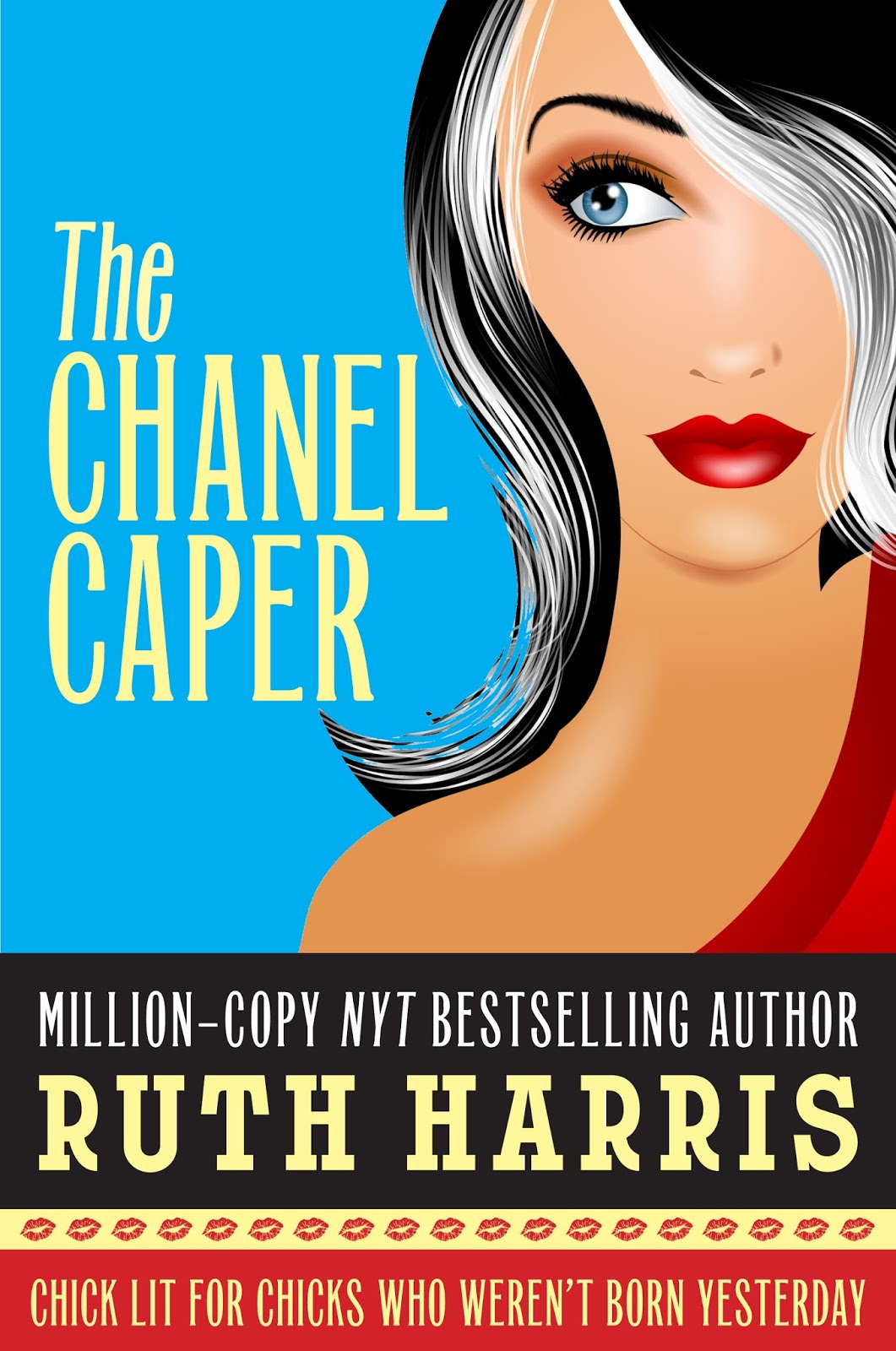
Here's what USA Today bestseller, Vanessa Kelly says about The Chanel Caper in Love Rocks:
"The Chanel Caper is a romantic comedy, a thriller, and a send-up of the big city lifestyle in the wake of the global financial crisis. All the disparate elements of this very funny story are tethered by the engaging Blake, a smart, sensible, and dryly witty heroine intent on saving her marriage. It's definitely a romance for the grownups, set against the backdrop of the bright lights of the city that never sleeps."
OPPORTUNITY ALERTS
The Ernest Hemingway Flash Fiction Contest. $10 fee Unpublished fiction. 1500 words or less. Simultaneous submissions ARE welcome. All entries will be considered for publication in Fiction Southeast. (a prestigious journal that has published people like Joyce Carol Oates) Winner gets $200 and publication. Deadline: Dec. 1st
Writers' Village International Short Fiction Award winter 2015 . Cash prizes totaling $3200.Ten further Highly Commended entrants will have their stories acknowledged at the site and gain a free entry in the next round. Entry fee $24 INCLUDES A PROFESSIONAL CRITIQUE. Any genre of prose fiction may be submitted up to 3000 words, except plays and poetry. Entries are welcomed worldwide. Multiple entries are permitted. Deadline: November 30th.
The IWSG Short Story Anthology Contest 2015. NO FEE! The top ten stories will be published in an anthology. (Authors will receive royalties on sales.) Eligibility: Any member of the Insecure Writer's Support Group is encouraged to enter â blogging or Facebook member (no fee to join the IWSG). The story must be previously unpublished. Entry is free. Word count: 5000-6000. Theme: Alternate History/Parallel Universe. Deadline: November 1st
RROFIHE TROPHY NO-FEE SHORT STORY CONTEST NO ENTRY FEE. For an unpublished short story. Minimum word count 3,500; maximum to 5,000 words. Winner receives $500, trophy, announcement and publication on anderbo.com. Deadline October 15.
Glimmer Train Press Family Matters Prize: $1,500 and publication in Glimmer Train. Entry fee $18. Stories up to 12,000 words: about families of all configurations. Deadline: September 30.
Tom Howard/Margaret Reid Poetry Contest $4,000 in prizes. Entry fee $10 per poem. Submit poems in modern and traditional styles, up to 250 lines each. Deadline: September 30.


No comments have been added yet.


