
Anne R. Allen's Blog, page 49
December 4, 2015
We've Moved!
by Anne R. Allen
We did it. Although we've been happy with this lovely free Blogger siteâand I still recommend Blogger for new author-bloggers who want a website that's free and simple and easy to useâwe realized we'd got too big for a freebie blog.
But...after we were hacked in October, we decided it was time to move to a self-hosted site that allows security plug-ins.
So you can now find the blog at our new home at AnneRAllen.com.
Yes, we're having some glitches and growing pains. Sites look very different in different browsers, so if you're having trouble or things look weird, so let us know.
Please do join us at the new site. If you're one of the nearly 2000 people who have been following us in the Blogger rss feed, you can follow the new one either with MailChimp or rss from the new blog.
We have lots of great posts coming up you won't want to miss. We will continue to post every Sunday at 10 AM Pacific Time. Ruth Harris will post on the last Sunday of each month.
This month I'll be talking about the scammers who are out there lying in wait for authors right now. Plus we'll have a visit from Irish humor writer Tara Sparling on Why Writers are like Santa Claus (so many people don't believe in us!)
In 2016, we have visits coming up from Agent Laurie Mclean, Melodie Campbell aka "Canada's Queen of Comedy", and Dr. John Yeoman of Writer's Village.
And you'll also find our usual "Opportunity Alerts" for vetted contests, publishers, and journals looking for your writing.
Plus the new blog will have an easy-to navigate menu with easy access to our archives, a menu of all our great guest posts, a resources page with links to the best writing blogs and writer services, and a lot of other helpful things.
Also, it should be easier to leave comments, especially for people with WordPress IDs, which Blogger had been blocking of late.
So please stop by and subscribe so you don't miss any posts!
...Anne and Ruth
If you're having any problems commenting on the new site, leave a comment here and we'll try to address it. Or email me at annerallen dot allen at gmail.com
We did it. Although we've been happy with this lovely free Blogger siteâand I still recommend Blogger for new author-bloggers who want a website that's free and simple and easy to useâwe realized we'd got too big for a freebie blog.

But...after we were hacked in October, we decided it was time to move to a self-hosted site that allows security plug-ins.
So you can now find the blog at our new home at AnneRAllen.com.
Yes, we're having some glitches and growing pains. Sites look very different in different browsers, so if you're having trouble or things look weird, so let us know.
Please do join us at the new site. If you're one of the nearly 2000 people who have been following us in the Blogger rss feed, you can follow the new one either with MailChimp or rss from the new blog.
We have lots of great posts coming up you won't want to miss. We will continue to post every Sunday at 10 AM Pacific Time. Ruth Harris will post on the last Sunday of each month.
This month I'll be talking about the scammers who are out there lying in wait for authors right now. Plus we'll have a visit from Irish humor writer Tara Sparling on Why Writers are like Santa Claus (so many people don't believe in us!)
In 2016, we have visits coming up from Agent Laurie Mclean, Melodie Campbell aka "Canada's Queen of Comedy", and Dr. John Yeoman of Writer's Village.
And you'll also find our usual "Opportunity Alerts" for vetted contests, publishers, and journals looking for your writing.
Plus the new blog will have an easy-to navigate menu with easy access to our archives, a menu of all our great guest posts, a resources page with links to the best writing blogs and writer services, and a lot of other helpful things.
Also, it should be easier to leave comments, especially for people with WordPress IDs, which Blogger had been blocking of late.
So please stop by and subscribe so you don't miss any posts!
...Anne and Ruth
If you're having any problems commenting on the new site, leave a comment here and we'll try to address it. Or email me at annerallen dot allen at gmail.com


November 29, 2015
25 Gift Ideas For The Writer In Your Life
by Ruth Harris
It is a truth universally acknowledged that no writer ever knows when or where his/her next great idea will strike.
Because of that inconvenient fact, notebooks are essential. Although the back of a grocery receipt or a dry cleaner's ticket will do in an emergency, a notebook will help create order out of the chaos and provides an easily accessible, highly portable record.
Because I have learned to be prepared for the unexpected brainstorm or genius idea, I surround myself with notebooks. On my desk, in the kitchen, on the dining room table, on my night table, in my bag, in pockets, purses and the glove compartment. There is even a notebook in the bathroom for those nights I wake with a "brilliant" idea I absolutely have to write down. By flashlight. So as not to disturb my DH who already knows all too much about what it's like to live with a writer. ;-)
Whether made in the U.S., France, Germany, or Japan, a notebook is a writer's don't-leave-home-without-it essential. Here are some of my faves. Most cost about $10.
Notable notebooks:
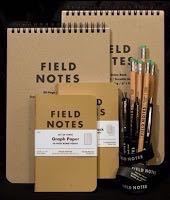
"I'm not writing it down to remember it later. I'm writing it down to remember it now." Made in the USA. Field Notes. Also Amazon.
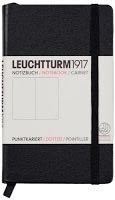
German and superb quality, come in basic black + lipstick red, emerald, dark and light blue and beyond. Acid-free paper, numbered pages, blank toc, 5-star ratings. Find them at Amazon.
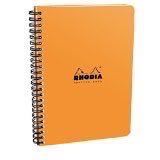
I've used Rhodia notebooks for years. Highest quality paper, makes writing a pleasure, come in a wide variety of sizes and configurations. Widely available, I get them at my local stationery store but available from Amazon.
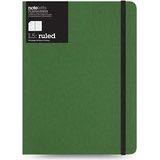
Letts Noteletts Edge have soft, flexible covers, lay-flat binding, and ivory pages with grey rules. Here in dark green, also available in a range of candy colors including yellow, purple, and red.
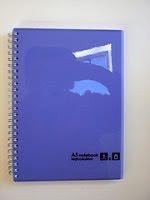
Kokuyo makes beautifully designed notebooks in a wide range of colors and styles. I found them in a Japanese stationery store in NYC but Amazon has them as does Jetpens.
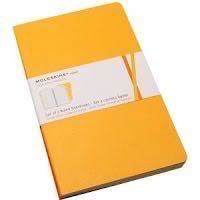
The great and classic Moleskine usually seen in traditional black but here, in snappy Hermès orange. Amazon.
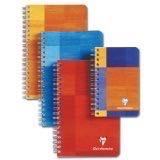
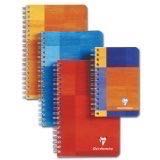
If I were French, I probably would have used these cheerful Clairfontaine notebooks in school. Most decent-quality stationery stores have them as does Amazon.
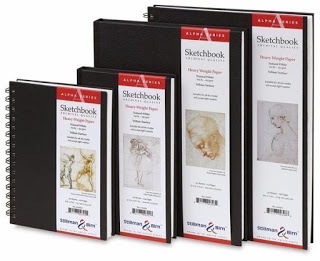
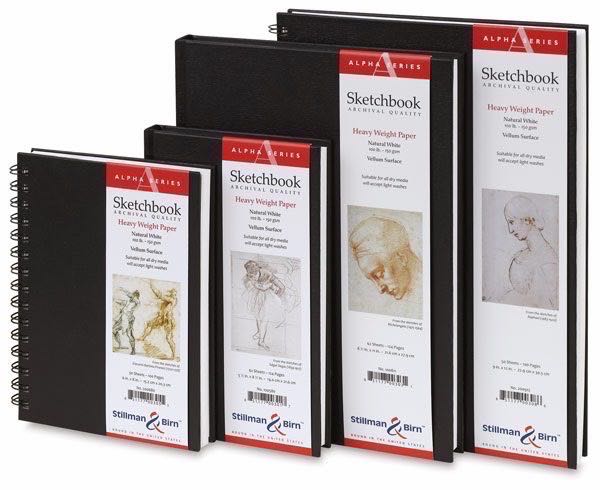
High-quality sketchbooksâStillman & Birnâalso count as essential because sometimes I have to draw a scene before I can write it. I bet I'm not the only one!
If nothing here is exactly what you're looking for, Notebook Stories blog might help you find the perfect solution. Office Supply Geek is another reliable source that might suggest the perfect gift.
Digital notebooks
They aren't exactly festive but they are necessitiesâthey live in the cloud, synch to all your devices, and they're free! Evernote and Microsoft's One Note are indispensable. My new favorite is Google Keep, perfect for keeping to-do lists and the fleeing ideas you want to jot down quickly in a few words. If the writer in your life doesn't already have these, a few minutes downloading them to his/her computer is a thoughtfulâand usefulâholiday offering.
For pens to go with notebooks:
Try JetPens and Amazon. From ball points to gel pens, from calligraphy pens to fountain pens, the vast range of colors and point styles from ultra fine to broad, is an obsessive's paradise.
My current faves include the Zebra Sarasa in Forest Green ($1.30 + a wide range of colors) and the UniBall Signo ($2.50 & a choice of 20 irresistible colors) with an ultra fine 0.38 point which makes a 3x5 card seem as big as a football stadium.
The Lamy Safari fountain pen and rollerball (both about $20) are classics and have been long-time personal favorites. They are plastic, therefore lightweight, and the contoured grip is super comfortable for long stretches of writing. They are refillable and come in a range of bright colors + black. I bought mine in yellow! :-)
Writing software makes a thoughtful gift:
I'm assuming everyone has Word but there are other excellent and well-thought-out alternatives/add-ons.
Atlantis (PC only, about $40) is try-before-you buy, fully-featured word processor. It has a helpful user forum, useful sample documents and templates, will edit existing MSWord docs and turn your documents into epubs. Add-on spellcheck comes in languages from Serbian, Estonian, Turkish and beyond.
Jutoh (Mac and PC, about $40) is fast and flexible and outputs a wide range of file formats. As far as I know, Jutoh is the only one that opens epub files. If the writer in your life has existing epubs and wants to revise, make corrections, or simply update back matter, Jutoh makes the job easy. Join ALLI and get 25% off Jutoh.
Scrivener (Mac and PC, about $45 but discount coupons available) is widely beloved, extremely flexible and customizable, and outputs uploadable files in a range of formats when the book is finished. Gwen Hernandez' Dummies Guide to Scrivener is a great go-along gift. And Scrivener has a Black Friday Sale this weekend only. Grab it today and it's only $25!!
Ulysses (Mac only including iOS) is the new(ish) kid on the block. Elegant, minimal in appearance but fully featured, Ulysses lives in the cloud and is always available on your desktop, tablet, or phone. A try-before-you-buy demo.
Vellum (Mac only with a range of options ranging from $10 to $200) takes the pain out of HTML and CSS and makes formatting easy. Vellum creates beautiful ebooks and mobis, ARCs, box sets, and supports basic word processing.
Anne and I wish all our readers Happy Holidays, Happy Givingâand Happy Receiving! ;-)
by Ruth Harris (@RuthHarrisBooks)
What about you, Scriveners? What's on your list for Santa? What do you buy for the writers in your life? Do you have a favorite notebook or pen? Or do you jot down everything electronically?
As for ourselves, what we want most for the holidays is a new, more secure, self-hosted blog. We hope (fingers crossed) to see you on our own WordPress site next Sunday! I'll be writing about some of the new scams I see targeting writers right now. I'll tell you how to spot them and stay safe. Some of these scammers have even taken in the pros, including veteran agents...Anne
BOOK OF THE WEEK
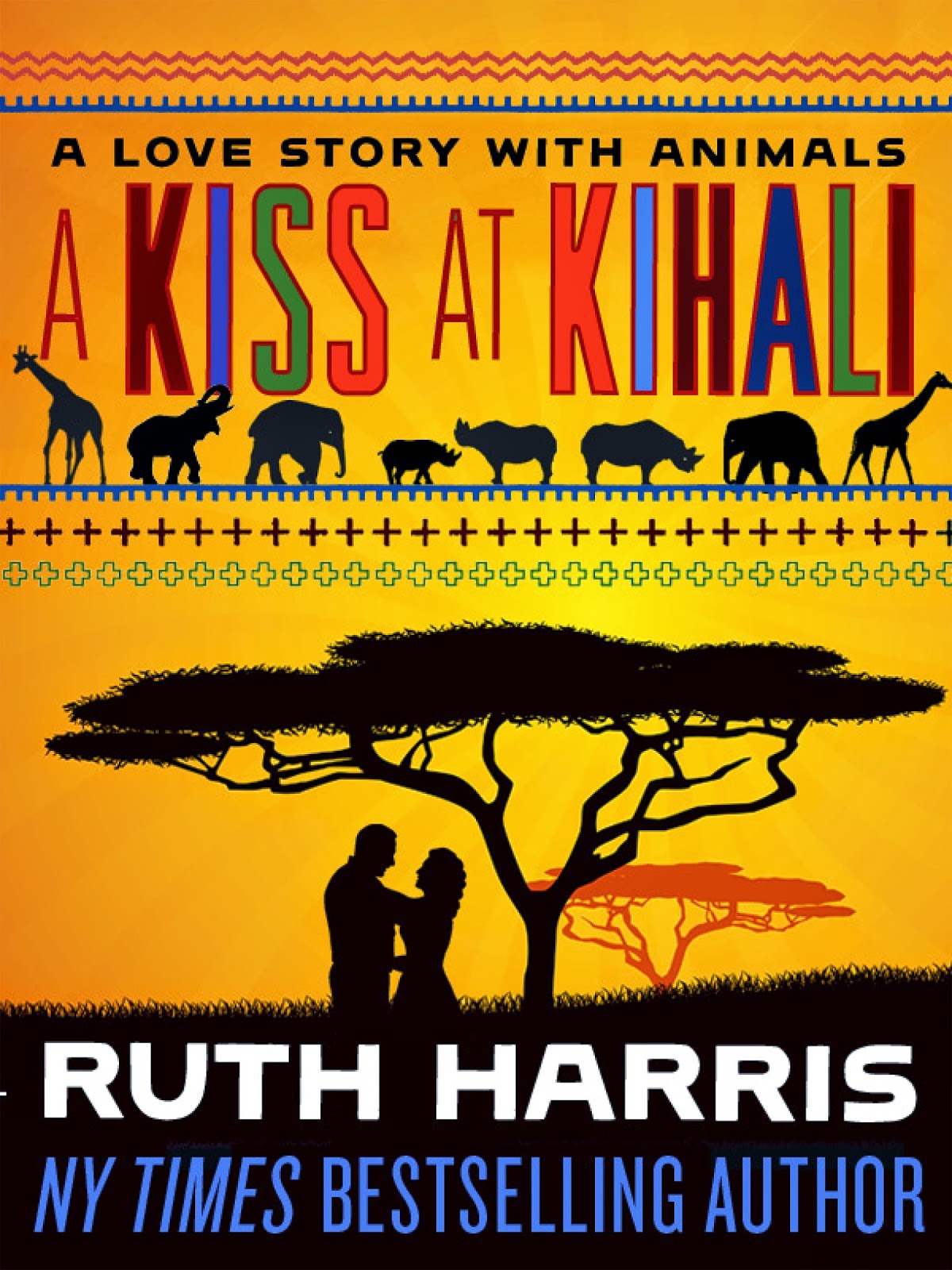
A Kiss at Kihali: sweet romance set against the backdrop of African animal rescue
A must-read for animal lovers.
Available at Amazon US, Amazon UK, Amazon CA, FREE in Kindle Unlimited
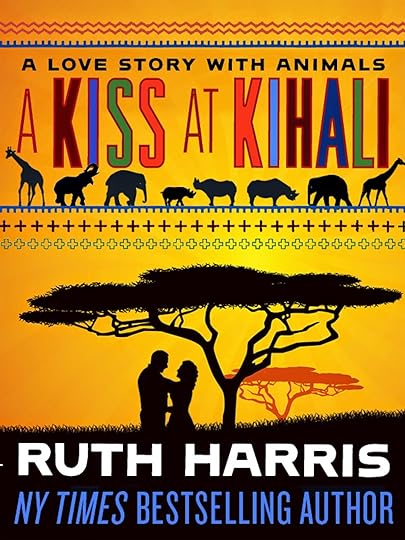
Beautiful and inspirational, A KISS AT KIHALI draws on the power of human-animal relationships, the heroic accomplishments of African animal orphanages, and the people, foreign and Kenyan, drawn to careers involving the care and conservation of wild animals. Filled with drama and danger that lead to a happy ending, A KISS AT KIHALI will appeal to readers who love tender romance and who have personally experienced the intense, mystical bond between humans and animals.
"A must-read for anyone who cares about animals and the environment, because what we do to them, we do to ourselves"... bestselling author Sibel Hodge
OPPORTUNITY ALERTS
Platypus Press. A new UK small press is looking for literary novels and poetry collections. No agent required. Though your manuscript must be complete, the first three chapters of a novel will suffice when submitting. It must be previously unpublished, but work posted on a blog or personal website is acceptable. Accepts simultaneous submissions
TARTTS SHORT FICTION COLLECTION AWARD $20 ENTRY FEE. Winning short story collection will be published by Livingston Press at the University of West Alabama, in simultaneous library binding and trade paper editions. Winning entry will receive $1,000, plus our standard royalty contract, which includes 100 copies of the book. Author must not have a book of short fiction published at time of entry, though novels are okay. Manuscript length 160-275 pages. Deadline December 31.
Amazon's Little A Poetry Contest. This is a brand new thing. NO FEE The contest will be judged by poets Cornelius Eady, Jericho Brown and Kimiko Hahn. The winner will receive $5,000 in prize money and a publishing contract featuring a $2,000 advance with Little A, Amazon Publishing's literary imprint. Poets who have published no more than one book of poetry can submit their full-length collections for consideration to LittleAPoetry@amazon.com. Deadline Dec 20th 2015
The Poisoned Pencil: New YA publisher open to submissions! The well-known mystery publisher The Poisoned Pen now has a YA imprint. They accept unagented manuscripts and offer an advance of $1000. Submit through their website submissions manager. Response time is 4-6 weeks.
Open call for the Independent Women Anthology: short stories (flash fiction included), poetry, essays, artwork, or any other woman and/or feminist-centered creative work. 10,000 word max. All genres but explicit erotica. $100 per short story, $50 for flash, poetry, and photography/artwork. All profits will be donated to the Pixel Project Charity to end Violence Against Women. Deadline January 31, 2016 with a goal of publication on International Women's Day, March 8, 2016.
SCHLAFLY BEER MICRO-BREW MICRO-FICTION CONTEST $10-$20 ENTRY FEE. Fee includes a subscription to River Styx literary magazine or one issue depending on amount of entry fee paid. Submit up to three stories of 500 words or less each. All stories will be considered for publication. $1,500 first prize plus one case of micro-brewed Schlafly Beer. Deadline January 1, 2016.
The Writer Short Story Contest judged by Literary star Colum McCann. You can have your work read by the acclaimed author of Let the Great World Spin. $25 entry fee. Write a 2,000-word short story responding to one or both of the quotes below by Mr. McCann: "There is always room for at least two truths." or "With all respects to heaven, I like it here." Deadline December 6th
TETHERED BY LETTERS' FALL 2015 LITERARY CONTEST ENTRY FEES: $7-$15 Currently accepting submissions for short stories (1,000 to 7,500 words, open genre), flash fiction (55, 250, or 500 words), and poetry (maximum of three pages per poem). All winners will be published in F(r)iction. All finalists will receive free professional edits and be considered for later publication. The prizes are $500 short story $150 flash fiction, and $150 for poetry. Multiple entries accepted. International submissions welcome. Deadline December 1.
HAMLIN GARLAND AWARD FOR THE SHORT STORY $20 ENTRY FEE. $2,000 and publication to the top unpublished story on any theme. One story per entry, multiple entries acceptable. Maximum 7,000 words. All entrants will be considered for publication. Deadline December 1.
The Ernest Hemingway Flash Fiction Contest. $10 fee Unpublished fiction. 1500 words or less. Simultaneous submissions ARE welcome. All entries will be considered for publication in Fiction Southeast. (a prestigious journal that has published people like Joyce Carol Oates) Winner gets $200 and publication. Deadline: Dec. 1st
Writers' Village International Short Fiction Award winter 2015. Cash prizes totaling $3200.Ten further Highly Commended entrants will have their stories acknowledged at the site and gain a free entry in the next round. Entry fee $24 INCLUDES A PROFESSIONAL CRITIQUE. Any genre of prose fiction may be submitted up to 3000 words, except plays and poetry. Entries are welcomed worldwide. Multiple entries are permitted. Deadline: November 30th.
It is a truth universally acknowledged that no writer ever knows when or where his/her next great idea will strike.
Because of that inconvenient fact, notebooks are essential. Although the back of a grocery receipt or a dry cleaner's ticket will do in an emergency, a notebook will help create order out of the chaos and provides an easily accessible, highly portable record.
Because I have learned to be prepared for the unexpected brainstorm or genius idea, I surround myself with notebooks. On my desk, in the kitchen, on the dining room table, on my night table, in my bag, in pockets, purses and the glove compartment. There is even a notebook in the bathroom for those nights I wake with a "brilliant" idea I absolutely have to write down. By flashlight. So as not to disturb my DH who already knows all too much about what it's like to live with a writer. ;-)
Whether made in the U.S., France, Germany, or Japan, a notebook is a writer's don't-leave-home-without-it essential. Here are some of my faves. Most cost about $10.
Notable notebooks:
"I'm not writing it down to remember it later. I'm writing it down to remember it now." Made in the USA. Field Notes. Also Amazon.
German and superb quality, come in basic black + lipstick red, emerald, dark and light blue and beyond. Acid-free paper, numbered pages, blank toc, 5-star ratings. Find them at Amazon.
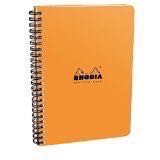
I've used Rhodia notebooks for years. Highest quality paper, makes writing a pleasure, come in a wide variety of sizes and configurations. Widely available, I get them at my local stationery store but available from Amazon.
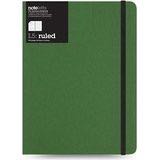
Letts Noteletts Edge have soft, flexible covers, lay-flat binding, and ivory pages with grey rules. Here in dark green, also available in a range of candy colors including yellow, purple, and red.
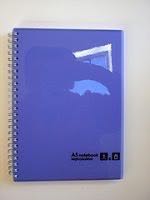
Kokuyo makes beautifully designed notebooks in a wide range of colors and styles. I found them in a Japanese stationery store in NYC but Amazon has them as does Jetpens.
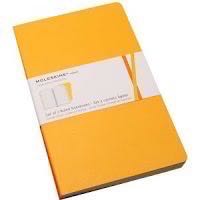
The great and classic Moleskine usually seen in traditional black but here, in snappy Hermès orange. Amazon.
If I were French, I probably would have used these cheerful Clairfontaine notebooks in school. Most decent-quality stationery stores have them as does Amazon.
High-quality sketchbooksâStillman & Birnâalso count as essential because sometimes I have to draw a scene before I can write it. I bet I'm not the only one!
If nothing here is exactly what you're looking for, Notebook Stories blog might help you find the perfect solution. Office Supply Geek is another reliable source that might suggest the perfect gift.
Digital notebooks
They aren't exactly festive but they are necessitiesâthey live in the cloud, synch to all your devices, and they're free! Evernote and Microsoft's One Note are indispensable. My new favorite is Google Keep, perfect for keeping to-do lists and the fleeing ideas you want to jot down quickly in a few words. If the writer in your life doesn't already have these, a few minutes downloading them to his/her computer is a thoughtfulâand usefulâholiday offering.
For pens to go with notebooks:
Try JetPens and Amazon. From ball points to gel pens, from calligraphy pens to fountain pens, the vast range of colors and point styles from ultra fine to broad, is an obsessive's paradise.
My current faves include the Zebra Sarasa in Forest Green ($1.30 + a wide range of colors) and the UniBall Signo ($2.50 & a choice of 20 irresistible colors) with an ultra fine 0.38 point which makes a 3x5 card seem as big as a football stadium.
The Lamy Safari fountain pen and rollerball (both about $20) are classics and have been long-time personal favorites. They are plastic, therefore lightweight, and the contoured grip is super comfortable for long stretches of writing. They are refillable and come in a range of bright colors + black. I bought mine in yellow! :-)
Writing software makes a thoughtful gift:
I'm assuming everyone has Word but there are other excellent and well-thought-out alternatives/add-ons.
Atlantis (PC only, about $40) is try-before-you buy, fully-featured word processor. It has a helpful user forum, useful sample documents and templates, will edit existing MSWord docs and turn your documents into epubs. Add-on spellcheck comes in languages from Serbian, Estonian, Turkish and beyond.
Jutoh (Mac and PC, about $40) is fast and flexible and outputs a wide range of file formats. As far as I know, Jutoh is the only one that opens epub files. If the writer in your life has existing epubs and wants to revise, make corrections, or simply update back matter, Jutoh makes the job easy. Join ALLI and get 25% off Jutoh.
Scrivener (Mac and PC, about $45 but discount coupons available) is widely beloved, extremely flexible and customizable, and outputs uploadable files in a range of formats when the book is finished. Gwen Hernandez' Dummies Guide to Scrivener is a great go-along gift. And Scrivener has a Black Friday Sale this weekend only. Grab it today and it's only $25!!
Ulysses (Mac only including iOS) is the new(ish) kid on the block. Elegant, minimal in appearance but fully featured, Ulysses lives in the cloud and is always available on your desktop, tablet, or phone. A try-before-you-buy demo.
Vellum (Mac only with a range of options ranging from $10 to $200) takes the pain out of HTML and CSS and makes formatting easy. Vellum creates beautiful ebooks and mobis, ARCs, box sets, and supports basic word processing.
Anne and I wish all our readers Happy Holidays, Happy Givingâand Happy Receiving! ;-)
by Ruth Harris (@RuthHarrisBooks)
What about you, Scriveners? What's on your list for Santa? What do you buy for the writers in your life? Do you have a favorite notebook or pen? Or do you jot down everything electronically?
As for ourselves, what we want most for the holidays is a new, more secure, self-hosted blog. We hope (fingers crossed) to see you on our own WordPress site next Sunday! I'll be writing about some of the new scams I see targeting writers right now. I'll tell you how to spot them and stay safe. Some of these scammers have even taken in the pros, including veteran agents...Anne
BOOK OF THE WEEK
A Kiss at Kihali: sweet romance set against the backdrop of African animal rescue
A must-read for animal lovers.
Available at Amazon US, Amazon UK, Amazon CA, FREE in Kindle Unlimited
Beautiful and inspirational, A KISS AT KIHALI draws on the power of human-animal relationships, the heroic accomplishments of African animal orphanages, and the people, foreign and Kenyan, drawn to careers involving the care and conservation of wild animals. Filled with drama and danger that lead to a happy ending, A KISS AT KIHALI will appeal to readers who love tender romance and who have personally experienced the intense, mystical bond between humans and animals.
"A must-read for anyone who cares about animals and the environment, because what we do to them, we do to ourselves"... bestselling author Sibel Hodge
OPPORTUNITY ALERTS
Platypus Press. A new UK small press is looking for literary novels and poetry collections. No agent required. Though your manuscript must be complete, the first three chapters of a novel will suffice when submitting. It must be previously unpublished, but work posted on a blog or personal website is acceptable. Accepts simultaneous submissions
TARTTS SHORT FICTION COLLECTION AWARD $20 ENTRY FEE. Winning short story collection will be published by Livingston Press at the University of West Alabama, in simultaneous library binding and trade paper editions. Winning entry will receive $1,000, plus our standard royalty contract, which includes 100 copies of the book. Author must not have a book of short fiction published at time of entry, though novels are okay. Manuscript length 160-275 pages. Deadline December 31.
Amazon's Little A Poetry Contest. This is a brand new thing. NO FEE The contest will be judged by poets Cornelius Eady, Jericho Brown and Kimiko Hahn. The winner will receive $5,000 in prize money and a publishing contract featuring a $2,000 advance with Little A, Amazon Publishing's literary imprint. Poets who have published no more than one book of poetry can submit their full-length collections for consideration to LittleAPoetry@amazon.com. Deadline Dec 20th 2015
The Poisoned Pencil: New YA publisher open to submissions! The well-known mystery publisher The Poisoned Pen now has a YA imprint. They accept unagented manuscripts and offer an advance of $1000. Submit through their website submissions manager. Response time is 4-6 weeks.
Open call for the Independent Women Anthology: short stories (flash fiction included), poetry, essays, artwork, or any other woman and/or feminist-centered creative work. 10,000 word max. All genres but explicit erotica. $100 per short story, $50 for flash, poetry, and photography/artwork. All profits will be donated to the Pixel Project Charity to end Violence Against Women. Deadline January 31, 2016 with a goal of publication on International Women's Day, March 8, 2016.
SCHLAFLY BEER MICRO-BREW MICRO-FICTION CONTEST $10-$20 ENTRY FEE. Fee includes a subscription to River Styx literary magazine or one issue depending on amount of entry fee paid. Submit up to three stories of 500 words or less each. All stories will be considered for publication. $1,500 first prize plus one case of micro-brewed Schlafly Beer. Deadline January 1, 2016.
The Writer Short Story Contest judged by Literary star Colum McCann. You can have your work read by the acclaimed author of Let the Great World Spin. $25 entry fee. Write a 2,000-word short story responding to one or both of the quotes below by Mr. McCann: "There is always room for at least two truths." or "With all respects to heaven, I like it here." Deadline December 6th
TETHERED BY LETTERS' FALL 2015 LITERARY CONTEST ENTRY FEES: $7-$15 Currently accepting submissions for short stories (1,000 to 7,500 words, open genre), flash fiction (55, 250, or 500 words), and poetry (maximum of three pages per poem). All winners will be published in F(r)iction. All finalists will receive free professional edits and be considered for later publication. The prizes are $500 short story $150 flash fiction, and $150 for poetry. Multiple entries accepted. International submissions welcome. Deadline December 1.
HAMLIN GARLAND AWARD FOR THE SHORT STORY $20 ENTRY FEE. $2,000 and publication to the top unpublished story on any theme. One story per entry, multiple entries acceptable. Maximum 7,000 words. All entrants will be considered for publication. Deadline December 1.
The Ernest Hemingway Flash Fiction Contest. $10 fee Unpublished fiction. 1500 words or less. Simultaneous submissions ARE welcome. All entries will be considered for publication in Fiction Southeast. (a prestigious journal that has published people like Joyce Carol Oates) Winner gets $200 and publication. Deadline: Dec. 1st
Writers' Village International Short Fiction Award winter 2015. Cash prizes totaling $3200.Ten further Highly Commended entrants will have their stories acknowledged at the site and gain a free entry in the next round. Entry fee $24 INCLUDES A PROFESSIONAL CRITIQUE. Any genre of prose fiction may be submitted up to 3000 words, except plays and poetry. Entries are welcomed worldwide. Multiple entries are permitted. Deadline: November 30th.
November 22, 2015
Disappearing Amazon Reviews: The Facts Behind Amazon’s Review Purges
by Anne R. Allen So yeah. We're still here on Blogger. Our tech guy's computer died a tragic death with all our new stuff on it. It even happens to the pros. Sigh.So it looks as if our date for moving to WordPress has to be pushed up to December. Until then, you can still […]
The post Disappearing Amazon Reviews: The Facts Behind Amazon’s Review Purges appeared first on Anne R. Allen's Blog... with Ruth Harris.
Disappearing Amazon Reviews: The Facts Behind Amazon's Review Purges
by Anne R. Allen
So yeah. We're still here on Blogger. Our tech guy's computer died a tragic death with all our new stuff on it. It even happens to the pros. Sigh.
So it looks as if our date for moving to WordPress has to be pushed up to December. Until then, you can still find us right here.
If you're getting this in your inbox, we will soon have some changes to our mail program as well, so commenting and navigating to the blog will be easier. But right now you can comment by clicking on this link. That will take you here to the actual blog. (You'll know you're in the right place because the background here is green.) Hit the word "comments" at the bottom where it lists the number of comments, and a window will open where you can read the comments and leave one of your own...Anne
So what's this about missing reviews?
Go to any author forum or social media group for writers and you'll see the plaintive posts:
"Help! My Amazon reviews are disappearing.""Amazon rejected my review because they say I 'know' the author. I don't. All I did was friend her on Facebook!""Amazon has banned my favorite reviewer because they say he got paid for his reviews. He didn't. His blog is on a book blog tour. But they don't pay him a penny.""I offered to give people a free book if they wrote me a review and now all my reviews are gone!""I got a nasty note from Amazon accusing me of 'manipulating reviews'. I've never done any such thing. I gave reviewers a gift card to buy the book, but they disclosed that."
These sad cries from the Amazon jungle can sound pretty over the top. Is this stuff really happening?
In a word, yes. Amazon has been conducting a review purge.
All review sites remove reviews. According to Forbes, Yelp removes 25% of its reviews. But Amazon has been stepping up the review removal lately and it has been freaking out a lot of authors.
Amazon has a history of periodic review purges, starting with the huge one in 2012 that came after a massive paid review scandal hit the New York Times.
Another purge happened last May. I wrote a post about it, Why Authors Should Never Pay for Amazon Reader Reviews. Amazon had just sued a number of paid review companies and was in the process of removing all their reviews. In October, the Amazon review police went farther: they sued 1000 individuals who were selling reviews on Fivrr.
"But," sez you, "That has nothing to do with me because I would never pay for a review!"
Thing is, you may have "paid" without knowing it, according to Amazon's complicated interpretation of its review rules.
What is Considered a "Paid Review"?
The following are considered paid reviews according to people I've spoken to who have contacted Amazon on the subject. You can read more at Bookworks from marketing guru Penny Sansevieri, who got her info from an Amazon spokesperson:
1) A review by a book blogger whose blog is part of a paid blog tour, even if the book blogger is not paid. Often only the organizer of the tour gets paid, but the blog review is considered a "paid review," so it can't be posted on Amazon. (Although you can post a quote from it in the "editorial review" section.)
2) A review written in exchange for a gift card. Even if that card is only in the amount of the price of the book. A reviewer could possibly use the card for purchasing something else.
3) A review written in exchange for another review. Review trading is 100% verboten.
4) A review written in expectation of a free book. A review copy must be given before the review is written or the book will be seen as payment for the review.
5) A review by a person you "know" online. Yes, you read that right. This can be someone who has friended you on Facebook, followed you on Twitter, or has done business with you in a way that's detectable to the Amazon review police.
Wha-a-a-t? Have the Rules Changed?
The "know the author" rule is a new interpretation of Amazon's rules, although the wording of the TOS hasn't actually changed.
Amazon spokespeople say that anybody who knows the author might "benefit financially" from the book's sales, and financial beneficiaries have always been forbidden to review. (I wish I knew how to benefit financially when one of my 873 Facebook friends has a bestseller, but I'm obviously not working this right.)
So how do they determine if you "know" an author, anyway?
They're not telling.
This is the message reviewers are getting from the Zon.
"Hello,
We removed your Customer Reviews because you know the author personally.
Due to the proprietary nature of our business, we do not provide information on how we determine that the accounts are related."
Book marketing guru Penny Sansevieri of Author Marketing Experts explains it this way:
"According to Amazon, family and friends write biased reviewsâ¦It may seem unfair but, to be honest, I get where Amazon is coming from here. They want authentic, unbiased reviews. And so do we â the readers. Well-intentioned friends and family might post glowing five-star reviews that merely say: "I loved this book!" While their goals are noble (supporting you!), vague reviews don't help consumers deciding whether to buy your book. As authors, we donât like getting 2-star reviews, but remember that readers will likely regard a book page with all 5-star reviews as suspicious."
But this doesn't keep authors from being pretty upset, since most publishers require that we have social media accounts exactly so that we can become "friends" with our readers and fans.
There's a petition going around at Change.org asking Amazon to change this new "know the author" policy, but it doesn't seem to have gone very far. I think most authors are afraid to sign for fear of retaliation from the review police.
Where does this New Rule Interpretation Come From?
Did Amazon hire a bunch of new employees to sit around all day policing reviews?
That seems unlikely, but they do respond to customer complaints. (And remember that as an author you are not a customer. You are a vendor.)
Unfortunately, some of their most loudly complaining customers are the anti-author vigilantes who haunt the Amazon fora, BookLikes and Goodreads. I wrote about them in my 2013 post, The Laws of the Amazon Jungle. You do NOT want to get on the wrong side of these folks.
A few badly behaving authors gaming the system have ruined things for everybody. And these vigilantes can be seriously scary. They've sent me death threats just because they didn't like one of my blogposts.
To me, Amazon's use of unhinged vigilantes to police their site is up there with the Rolling Stones' decision to ask the Hell's Angels to provide security at Altamont. But hey, they didn't ask my opinion, and Amazon is a private company. It's their circus and their monkeys and they can do whatever the heck they want.
So What Should Authors Do?
1) Do not trade or buy reviews.
Just don't. No matter how many authors do it. Or how many of them say you "owe" them a review because they reviewed you. Or how much they spam you with whiny newsletters.
While I'm on the subject: STOP SENDING FELLOW AUTHORS NEWSLETTERS THEY DID NOT SUBSCRIBE TO!!! I am beginning to sympathize with the vigilantes on this. The fact that you've read a blog or book does not mean the bloggers or authors owe you anything. Ruth and I love all our readers and subscribers, but we have 24-hour days just like other people. We get up to 100,000 hits per month. We cannot read and review the deathless prose of all those people. We need to work and sleep and have lives just the way you do.
Unfortunately some newbie authors have been told there's a rule that says reviews, sales, and newsletters should always involve a quid pro quo. This is simply not trueâand it can put you in serious trouble with the Zon.
The problem is compounded by the writers who don't happen to have been hit by a review purge and refuse to believe any of this is happening.
I still get Tweets and Facebook DMs from authors asking to trade reviews. I've been invited to join groups that are formed for the sole purpose of trading reviews. I tell them politely they're violating Amazon's rules. They ignore me.
When I warned the editor of an anthology about the new policy, a fellow contributor called me a liar in a nasty group email. She said she and her fellow contributors review each other all the time and nobody has ever caught her so nobody ever will. (Change apparently does not happen on her planet.)
People like this are the reason we have vigilantes.
NOTE: If another author happens to like your work, instead of a review trade, ask them for a quote you can put in the "editorial reviews" section of your buy page. Editorial reviews usually carry more weight with readers, anyway.
2) Accept that nothing entitles you to a review.
Sending a reader or blogger a copy of your bookâeven a hard copyâdoes not entitle you to a review. This is a sore spot with a lot of reviewers. Even if they agree to review your book, the fact you sent them a copy does not mean they HAVE to review. They may hate your book. Or they lost interest. Do you really want that on your buy page?
If somebody you have given a book does not write a review, they are probably doing you a favor. Hounding them or demanding a review will very likely backfire. And getting your peeps to gang up on a reviewer who doesn't like your book is always going to make YOU look bad.
Reviewers who have been hounded or bullied by authors sometimes turn into vigilantes. See how that works?
3) Expect more purges
Smart authors will pay attention: there's a new marshal in Amazon territory and he's going after the varmints who pay for reviews.
Just because you've been getting away with something doesn't mean you always will. Unfortunately, ignorance of the rules is not an excuse in the Amazon justice system.
According to uber-reviewer Big Al, there's more to come after the Fivrr lawsuits. Writing at Indies Unlimited in October Big Al said:
"Amazon isn't just looking to shut down these reviewers, but also identify their clients. The repercussions for that may go beyond just removal of the reviews. Conceivably they could go as far as to remove the seller and his or her products from Amazon."
With this new lawsuit, there will be more removals. Maybe the biggest review purge of all. The problem is, as Al points out, that a lot of legit reviews get thrown out with the bathwater. If you lose reviews, it's almost impossible to have them put back.
4) Save copies of Amazon reviews and post them to more than one site.
Sometimes, reviews evaporate for no discernable reason. Penny Sansevieri says sometimes they will come back just as mysteriously, but usually they don't.
This has certainly happened to me. When a book gets republished by a new publisher, often reviews fall away, never to return. So it's a good idea to always save copies of your reviews. I wish I had.
Another thing we can all do is post reviews we write to iTunes, Smashwords, Google Play, B & N or Kobo. You can also use review sites like Goodreads and Shelfari
That way reviews won't be lost forever if they disappear due to algorithm changes or review purgesâand Amazon won't have the only review game in town.
Maybe someday somebody will start up a BookBub type newsletter that says. "50 five-star reviews on iTunes" instead of Amazon. BookBub itself says it prefers books that are available on multiple platforms, so maybe they'll pay attention to other platform reviews.
But we have to post them first!
5) Don't stop asking for reviews, but be ethical.
Penny Sansevieri thinks there's nothing wrong with asking online friends and fans to write a review but we need to keep in mind that Amazon may pull it.
That's kind of my feeling too. I don't see anything unethical in asking people who know youâespecially people who get to "know" you on social media because they like your workâto review your book. Fans don't always offer mindless praise. They often say "this isn't up to her usual standard" or "I liked book one better" or whatever. At least mine do.
Unfortunately, it's human nature to be more vocal with complaints than praise, so if we have to depend entirely on first-time readers who have never heard of us, reviews will be skewed on the negative sideâif we get any reviews at all.
Authors have always reviewed other authors. It's a tradition as old as publishing. They are not always kind to each other. In fact many have been remarkably snarky. I'll be talking about that in future post.
For a good rundown of what is considered ethical reviewing, see the code of ethics for reviewers at Novel Finds.
6) Report abuse when you see it.
When you see a misleading, unethical, or inappropriate review on a retail site, click the button for reporting abuse. It's easy. Every review on Amazon has a line below that says "was this review helpful to you?" followed by "yes" and "no" buttons and another saying "report abuse."
Amazon listens to its customers. But the complaints have to reach critical mass.
But What about Amazon's OTHER Review Problem?
The plaintive cries from authors aren't just about missing reviews. You also see a lot of stuff like this:
"I have 30 one-star reviews on my barbeque cookbook. They're all from PETA activists who say meat is murderâ¦and Amazon won't remove them.""My stalker ex-boyfriend had his friends leave a bunch of one-star reviews on my buy page saying my book is terrible. It's obvious none of them has read it. Amazon says the 'reviews' don't break any of their rules.""I got a one-star review from a guy who left the same one-star review on 52 different books: 'I didn't read this book. I bought it for my wife'. I complained to Amazon, but it's still there."
Epic Fantasy author William L. Hahn pondered Amazon's review issues at The Independent Bookworm recently. He acknowledges, "Amazon appears to be cracking down on paid reviews and I think most of us would cheer that idea."
But he brings up the other BIG problem with Amazon reviews:
"ignorant, hateful, racist/sexist/ageist trolls can come crashing through an author page and wreck the place with no penalty whatsoever. Just scratch up $3 of sourdough money to buy the first title: download, write a one-star/one-line review, then return the book. Get all your money back, while your review stays up naming you as a 'Qualified Reviewer' forever! Use the same money to lather-rinse-repeat through every title, just because the authorâs a woman, or dared to praise Reagan, or said something nice on Facebook about the football team you hate."
Amazon is plagued by review trolls, revenge reviews and "reviews" by people with political and personal agendas that have nothing to do with the book.
There was a particularly nasty example of this recently:
A book by the mother of a child murdered in a school shooting was attacked by a group of conspiracy-theory loonies who claim there's no such thing as a school shooting.
Their "reviews" claim all those gun rampages are hoaxes and phony "drills" staged by mean (and remarkably clever) people who want to make the "happiness is a warm gun" community feel bad.
Yeah, I didn't know these guys existed either. The delusions of conspiracy theorists get more amazing every day.
But what makes this stuff even worse is that these people are free to torment a bereaved mother with impunityâand they use Amazon to perpetuate the cray-cray. The last time I checked, the toxic reviews libeling the mother were still there.
It doesn't make sense to me that Amazon would want its store to be used as a vehicle for spreading the propaganda of violent extremists. Amazon is a private company so the Constitutional right of "free speech" does not apply.
So I assume not enough customers are complaining.
People may not be reporting abuse because the mother's book is selling well and she has a 5-star rating. The nutjobs have probably done a lot to draw attention to her book and boost her sales and draw sympathetic reviews.
But at what cost?
If this stuff bothers you, you need to keep complaining until Amazon is as eager to remove phony "reviews" by people with personal and political agendasâwho have obviously not read a bookâas they are to block an author's social media contacts.
Unfortunately, Amazon spokespeople have stated that they do NOT require a reviewer to have read any of the books they review. That's how famously prolific Amazon reviewer Harriet Klausner (RIP) managed to "review" up to ten books a day, year after year.
Personally, I think if a retail site wants their reviews to be helpful to customers, they would be smart to weed out ALL misleading reviews, not just the positive ones.
But as I said, the Mighty Zon doesn't come to me for advice.
Note: Squeaky wheels get the grease. If you want Amazon to change their policies, pro-author voices have to be as loud as the anti-author ones. (But report abuse as a customer, not as an author.)
Ifâas a readerâyou feel misled by reviewers who don't read the books they review, say so. If enough people complain, they may change their policy. Amazon really does believe the customer is always right and will go out of their way to please customers. (I had a great experience with Amazon customer service just this week when a cancellation by a vendor meant I wasn't eligible for free shipping and they gave it to me anyway.)
Amazon's Upcoming Review Changes
Amazon has reported there will be more changes to the review algorithms in 2016. They are introducing a new policy where verified purchase reviews will have more weight, as will more recent reviews.
Unfortunately, this doesn't solve the problem of the system gamers Mr. Hahn mentions, who buy a book, get "verified" then return it without reading.
But as I said, it's the Zon's circus.
I say we should go ahead and review according to our own ethics. (I personally believe in reading a book before reviewing it, and I'm going to continue to follow that rule.)
But be aware that if you write a review of a book by somebody you "know" on social media, some vigilante may report you to the Zon police and the review will go away.
So post reviews on more than one platform and ALWAYS report abuse when you see it.
What about you, Scriveners? Have you lost any reviews recently? Have your reviews been rejected with one of these "you know the author" messages? Have you ever had an author demand a review from you because they reviewed your book? Do you think it's ethical to review somebody you "know" online? How do you react when you see a review that's obviously written by somebody who never opened the book?
BOOK OF THE WEEK
THE BEST REVENGE: Only 99c this week!
30 weeks on Amazon's Humor Bestseller list!
Read how it all began!
The prequel to the Camilla Randall Mysteries.
We meet Camilla and Plantagenet in the big-hair, pastel-suited 1980s. In this satirical romp, a spoiled 1980s debutante comes of ageâand discovers strengths nobody knew she hadâwhen she loses everything. The story takes her from the doors of Studio 54 to the coke-fueled parties of Southern California to a cell in the L.A. County Jail accused of murder. We know she didn't do it, but who did?
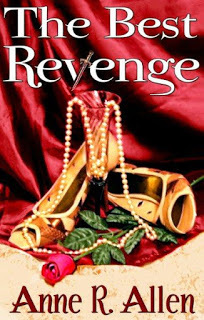
The Best Revenge is 99c at Amazon and Nook. (Also available at Smashwords, Apple, Kobo at $2.99.)
This book has been with four different publishers, and each time it gets re-published, most of its reviews disappear (and somehow never the trollish ones.) I don't think this is punishment for anything. Just tech glitches. I see today that the UK site has a new tech glitch: metadata from the 2005 edition has been substituted for the current metadata. I hope Author Central UK will be able to help. Anyway, if you happen to read it and like it, a review would be much appreciated. I don't think simply reading an author's blog labels you as "friends and family" so you can review without fear of being deleted.
OPPORTUNITY ALERTS
Amazon's Little A Poetry Contest. This is a brand new thing. NO FEE The contest will be judged by poets Cornelius Eady, Jericho Brown and Kimiko Hahn. The winner will receive $5,000 in prize money and a publishing contract featuring a $2,000 advance with Little A, Amazon Publishing's literary imprint. Poets who have published no more than one book of poetry can submit their full-length collections for consideration to LittleAPoetry@amazon.com. Deadline Dec 20th 2015
Platypus Press. A new UK small press is looking for literary novels and poetry collections. No agent required. Your book must be previously unpublished, but work posted on a blog or personal website is acceptable. They want to see your first three chapters (but the book must be complete). Simultaneous submissions accepted.
The Poisoned Pencil: New YA publisher open to submissions! The well-known mystery publisher The Poisoned Pen now has a YA imprint. They accept unagented manuscripts and offer an advance of $1000. Submit through their website submissions manager. Response time is 4-6 weeks.
Open call for the Independent Women Anthology: short stories (flash fiction included), poetry, essays, artwork, or any other woman and/or feminist-centered creative work. 10,000 word max. All genres but explicit erotica. $100 per short story, $50 for flash, poetry, and photography/artwork. All profits will be donated to the Pixel Project Charity to end Violence Against Women. Deadline January 31, 2016 with a goal of publication on International Women's Day, March 8, 2016.
SCHLAFLY BEER MICRO-BREW MICRO-FICTION CONTEST $10-$20 ENTRY FEE. Fee includes a subscription to River Styx literary magazine or one issue depending on amount of entry fee paid. Submit up to three stories of 500 words or less each. All stories will be considered for publication. $1,500 first prize plus one case of micro-brewed Schlafly Beer. Deadline January 1, 2016.
The Writer Short Story Contest judged by Literary star Colum McCann. You can have your work read by the acclaimed author of Let the Great World Spin. $25 entry fee. Write a 2,000-word short story responding to one or both of the quotes below by Mr. McCann: "There is always room for at least two truths." or "With all respects to heaven, I like it here." Deadline December 6th
Writers' Village International Short Fiction Award winter 2015. Cash prizes totaling $3200.Ten further Highly Commended entrants will have their stories acknowledged at the site and gain a free entry in the next round. Entry fee $24 INCLUDES A PROFESSIONAL CRITIQUE. Any genre of prose fiction may be submitted up to 3000 words, except plays and poetry. Entries are welcomed worldwide. Multiple entries are permitted. Deadline: November 30th.
So yeah. We're still here on Blogger. Our tech guy's computer died a tragic death with all our new stuff on it. It even happens to the pros. Sigh.
So it looks as if our date for moving to WordPress has to be pushed up to December. Until then, you can still find us right here.
If you're getting this in your inbox, we will soon have some changes to our mail program as well, so commenting and navigating to the blog will be easier. But right now you can comment by clicking on this link. That will take you here to the actual blog. (You'll know you're in the right place because the background here is green.) Hit the word "comments" at the bottom where it lists the number of comments, and a window will open where you can read the comments and leave one of your own...Anne
So what's this about missing reviews?
Go to any author forum or social media group for writers and you'll see the plaintive posts:
"Help! My Amazon reviews are disappearing.""Amazon rejected my review because they say I 'know' the author. I don't. All I did was friend her on Facebook!""Amazon has banned my favorite reviewer because they say he got paid for his reviews. He didn't. His blog is on a book blog tour. But they don't pay him a penny.""I offered to give people a free book if they wrote me a review and now all my reviews are gone!""I got a nasty note from Amazon accusing me of 'manipulating reviews'. I've never done any such thing. I gave reviewers a gift card to buy the book, but they disclosed that."
These sad cries from the Amazon jungle can sound pretty over the top. Is this stuff really happening?
In a word, yes. Amazon has been conducting a review purge.
All review sites remove reviews. According to Forbes, Yelp removes 25% of its reviews. But Amazon has been stepping up the review removal lately and it has been freaking out a lot of authors.
Amazon has a history of periodic review purges, starting with the huge one in 2012 that came after a massive paid review scandal hit the New York Times.
Another purge happened last May. I wrote a post about it, Why Authors Should Never Pay for Amazon Reader Reviews. Amazon had just sued a number of paid review companies and was in the process of removing all their reviews. In October, the Amazon review police went farther: they sued 1000 individuals who were selling reviews on Fivrr.
"But," sez you, "That has nothing to do with me because I would never pay for a review!"
Thing is, you may have "paid" without knowing it, according to Amazon's complicated interpretation of its review rules.
What is Considered a "Paid Review"?
The following are considered paid reviews according to people I've spoken to who have contacted Amazon on the subject. You can read more at Bookworks from marketing guru Penny Sansevieri, who got her info from an Amazon spokesperson:
1) A review by a book blogger whose blog is part of a paid blog tour, even if the book blogger is not paid. Often only the organizer of the tour gets paid, but the blog review is considered a "paid review," so it can't be posted on Amazon. (Although you can post a quote from it in the "editorial review" section.)
2) A review written in exchange for a gift card. Even if that card is only in the amount of the price of the book. A reviewer could possibly use the card for purchasing something else.
3) A review written in exchange for another review. Review trading is 100% verboten.
4) A review written in expectation of a free book. A review copy must be given before the review is written or the book will be seen as payment for the review.
5) A review by a person you "know" online. Yes, you read that right. This can be someone who has friended you on Facebook, followed you on Twitter, or has done business with you in a way that's detectable to the Amazon review police.
Wha-a-a-t? Have the Rules Changed?
The "know the author" rule is a new interpretation of Amazon's rules, although the wording of the TOS hasn't actually changed.
Amazon spokespeople say that anybody who knows the author might "benefit financially" from the book's sales, and financial beneficiaries have always been forbidden to review. (I wish I knew how to benefit financially when one of my 873 Facebook friends has a bestseller, but I'm obviously not working this right.)
So how do they determine if you "know" an author, anyway?
They're not telling.
This is the message reviewers are getting from the Zon.
"Hello,
We removed your Customer Reviews because you know the author personally.
Due to the proprietary nature of our business, we do not provide information on how we determine that the accounts are related."
Book marketing guru Penny Sansevieri of Author Marketing Experts explains it this way:
"According to Amazon, family and friends write biased reviewsâ¦It may seem unfair but, to be honest, I get where Amazon is coming from here. They want authentic, unbiased reviews. And so do we â the readers. Well-intentioned friends and family might post glowing five-star reviews that merely say: "I loved this book!" While their goals are noble (supporting you!), vague reviews don't help consumers deciding whether to buy your book. As authors, we donât like getting 2-star reviews, but remember that readers will likely regard a book page with all 5-star reviews as suspicious."
But this doesn't keep authors from being pretty upset, since most publishers require that we have social media accounts exactly so that we can become "friends" with our readers and fans.
There's a petition going around at Change.org asking Amazon to change this new "know the author" policy, but it doesn't seem to have gone very far. I think most authors are afraid to sign for fear of retaliation from the review police.
Where does this New Rule Interpretation Come From?
Did Amazon hire a bunch of new employees to sit around all day policing reviews?
That seems unlikely, but they do respond to customer complaints. (And remember that as an author you are not a customer. You are a vendor.)
Unfortunately, some of their most loudly complaining customers are the anti-author vigilantes who haunt the Amazon fora, BookLikes and Goodreads. I wrote about them in my 2013 post, The Laws of the Amazon Jungle. You do NOT want to get on the wrong side of these folks.
A few badly behaving authors gaming the system have ruined things for everybody. And these vigilantes can be seriously scary. They've sent me death threats just because they didn't like one of my blogposts.
To me, Amazon's use of unhinged vigilantes to police their site is up there with the Rolling Stones' decision to ask the Hell's Angels to provide security at Altamont. But hey, they didn't ask my opinion, and Amazon is a private company. It's their circus and their monkeys and they can do whatever the heck they want.
So What Should Authors Do?
1) Do not trade or buy reviews.
Just don't. No matter how many authors do it. Or how many of them say you "owe" them a review because they reviewed you. Or how much they spam you with whiny newsletters.
While I'm on the subject: STOP SENDING FELLOW AUTHORS NEWSLETTERS THEY DID NOT SUBSCRIBE TO!!! I am beginning to sympathize with the vigilantes on this. The fact that you've read a blog or book does not mean the bloggers or authors owe you anything. Ruth and I love all our readers and subscribers, but we have 24-hour days just like other people. We get up to 100,000 hits per month. We cannot read and review the deathless prose of all those people. We need to work and sleep and have lives just the way you do.
Unfortunately some newbie authors have been told there's a rule that says reviews, sales, and newsletters should always involve a quid pro quo. This is simply not trueâand it can put you in serious trouble with the Zon.
The problem is compounded by the writers who don't happen to have been hit by a review purge and refuse to believe any of this is happening.
I still get Tweets and Facebook DMs from authors asking to trade reviews. I've been invited to join groups that are formed for the sole purpose of trading reviews. I tell them politely they're violating Amazon's rules. They ignore me.
When I warned the editor of an anthology about the new policy, a fellow contributor called me a liar in a nasty group email. She said she and her fellow contributors review each other all the time and nobody has ever caught her so nobody ever will. (Change apparently does not happen on her planet.)
People like this are the reason we have vigilantes.
NOTE: If another author happens to like your work, instead of a review trade, ask them for a quote you can put in the "editorial reviews" section of your buy page. Editorial reviews usually carry more weight with readers, anyway.
2) Accept that nothing entitles you to a review.
Sending a reader or blogger a copy of your bookâeven a hard copyâdoes not entitle you to a review. This is a sore spot with a lot of reviewers. Even if they agree to review your book, the fact you sent them a copy does not mean they HAVE to review. They may hate your book. Or they lost interest. Do you really want that on your buy page?
If somebody you have given a book does not write a review, they are probably doing you a favor. Hounding them or demanding a review will very likely backfire. And getting your peeps to gang up on a reviewer who doesn't like your book is always going to make YOU look bad.
Reviewers who have been hounded or bullied by authors sometimes turn into vigilantes. See how that works?
3) Expect more purges
Smart authors will pay attention: there's a new marshal in Amazon territory and he's going after the varmints who pay for reviews.
Just because you've been getting away with something doesn't mean you always will. Unfortunately, ignorance of the rules is not an excuse in the Amazon justice system.
According to uber-reviewer Big Al, there's more to come after the Fivrr lawsuits. Writing at Indies Unlimited in October Big Al said:
"Amazon isn't just looking to shut down these reviewers, but also identify their clients. The repercussions for that may go beyond just removal of the reviews. Conceivably they could go as far as to remove the seller and his or her products from Amazon."
With this new lawsuit, there will be more removals. Maybe the biggest review purge of all. The problem is, as Al points out, that a lot of legit reviews get thrown out with the bathwater. If you lose reviews, it's almost impossible to have them put back.
4) Save copies of Amazon reviews and post them to more than one site.
Sometimes, reviews evaporate for no discernable reason. Penny Sansevieri says sometimes they will come back just as mysteriously, but usually they don't.
This has certainly happened to me. When a book gets republished by a new publisher, often reviews fall away, never to return. So it's a good idea to always save copies of your reviews. I wish I had.
Another thing we can all do is post reviews we write to iTunes, Smashwords, Google Play, B & N or Kobo. You can also use review sites like Goodreads and Shelfari
That way reviews won't be lost forever if they disappear due to algorithm changes or review purgesâand Amazon won't have the only review game in town.
Maybe someday somebody will start up a BookBub type newsletter that says. "50 five-star reviews on iTunes" instead of Amazon. BookBub itself says it prefers books that are available on multiple platforms, so maybe they'll pay attention to other platform reviews.
But we have to post them first!
5) Don't stop asking for reviews, but be ethical.
Penny Sansevieri thinks there's nothing wrong with asking online friends and fans to write a review but we need to keep in mind that Amazon may pull it.
That's kind of my feeling too. I don't see anything unethical in asking people who know youâespecially people who get to "know" you on social media because they like your workâto review your book. Fans don't always offer mindless praise. They often say "this isn't up to her usual standard" or "I liked book one better" or whatever. At least mine do.
Unfortunately, it's human nature to be more vocal with complaints than praise, so if we have to depend entirely on first-time readers who have never heard of us, reviews will be skewed on the negative sideâif we get any reviews at all.
Authors have always reviewed other authors. It's a tradition as old as publishing. They are not always kind to each other. In fact many have been remarkably snarky. I'll be talking about that in future post.
For a good rundown of what is considered ethical reviewing, see the code of ethics for reviewers at Novel Finds.
6) Report abuse when you see it.
When you see a misleading, unethical, or inappropriate review on a retail site, click the button for reporting abuse. It's easy. Every review on Amazon has a line below that says "was this review helpful to you?" followed by "yes" and "no" buttons and another saying "report abuse."
Amazon listens to its customers. But the complaints have to reach critical mass.
But What about Amazon's OTHER Review Problem?
The plaintive cries from authors aren't just about missing reviews. You also see a lot of stuff like this:
"I have 30 one-star reviews on my barbeque cookbook. They're all from PETA activists who say meat is murderâ¦and Amazon won't remove them.""My stalker ex-boyfriend had his friends leave a bunch of one-star reviews on my buy page saying my book is terrible. It's obvious none of them has read it. Amazon says the 'reviews' don't break any of their rules.""I got a one-star review from a guy who left the same one-star review on 52 different books: 'I didn't read this book. I bought it for my wife'. I complained to Amazon, but it's still there."
Epic Fantasy author William L. Hahn pondered Amazon's review issues at The Independent Bookworm recently. He acknowledges, "Amazon appears to be cracking down on paid reviews and I think most of us would cheer that idea."
But he brings up the other BIG problem with Amazon reviews:
"ignorant, hateful, racist/sexist/ageist trolls can come crashing through an author page and wreck the place with no penalty whatsoever. Just scratch up $3 of sourdough money to buy the first title: download, write a one-star/one-line review, then return the book. Get all your money back, while your review stays up naming you as a 'Qualified Reviewer' forever! Use the same money to lather-rinse-repeat through every title, just because the authorâs a woman, or dared to praise Reagan, or said something nice on Facebook about the football team you hate."
Amazon is plagued by review trolls, revenge reviews and "reviews" by people with political and personal agendas that have nothing to do with the book.
There was a particularly nasty example of this recently:
A book by the mother of a child murdered in a school shooting was attacked by a group of conspiracy-theory loonies who claim there's no such thing as a school shooting.
Their "reviews" claim all those gun rampages are hoaxes and phony "drills" staged by mean (and remarkably clever) people who want to make the "happiness is a warm gun" community feel bad.
Yeah, I didn't know these guys existed either. The delusions of conspiracy theorists get more amazing every day.
But what makes this stuff even worse is that these people are free to torment a bereaved mother with impunityâand they use Amazon to perpetuate the cray-cray. The last time I checked, the toxic reviews libeling the mother were still there.
It doesn't make sense to me that Amazon would want its store to be used as a vehicle for spreading the propaganda of violent extremists. Amazon is a private company so the Constitutional right of "free speech" does not apply.
So I assume not enough customers are complaining.
People may not be reporting abuse because the mother's book is selling well and she has a 5-star rating. The nutjobs have probably done a lot to draw attention to her book and boost her sales and draw sympathetic reviews.
But at what cost?
If this stuff bothers you, you need to keep complaining until Amazon is as eager to remove phony "reviews" by people with personal and political agendasâwho have obviously not read a bookâas they are to block an author's social media contacts.
Unfortunately, Amazon spokespeople have stated that they do NOT require a reviewer to have read any of the books they review. That's how famously prolific Amazon reviewer Harriet Klausner (RIP) managed to "review" up to ten books a day, year after year.
Personally, I think if a retail site wants their reviews to be helpful to customers, they would be smart to weed out ALL misleading reviews, not just the positive ones.
But as I said, the Mighty Zon doesn't come to me for advice.
Note: Squeaky wheels get the grease. If you want Amazon to change their policies, pro-author voices have to be as loud as the anti-author ones. (But report abuse as a customer, not as an author.)
Ifâas a readerâyou feel misled by reviewers who don't read the books they review, say so. If enough people complain, they may change their policy. Amazon really does believe the customer is always right and will go out of their way to please customers. (I had a great experience with Amazon customer service just this week when a cancellation by a vendor meant I wasn't eligible for free shipping and they gave it to me anyway.)
Amazon's Upcoming Review Changes
Amazon has reported there will be more changes to the review algorithms in 2016. They are introducing a new policy where verified purchase reviews will have more weight, as will more recent reviews.
Unfortunately, this doesn't solve the problem of the system gamers Mr. Hahn mentions, who buy a book, get "verified" then return it without reading.
But as I said, it's the Zon's circus.
I say we should go ahead and review according to our own ethics. (I personally believe in reading a book before reviewing it, and I'm going to continue to follow that rule.)
But be aware that if you write a review of a book by somebody you "know" on social media, some vigilante may report you to the Zon police and the review will go away.
So post reviews on more than one platform and ALWAYS report abuse when you see it.
What about you, Scriveners? Have you lost any reviews recently? Have your reviews been rejected with one of these "you know the author" messages? Have you ever had an author demand a review from you because they reviewed your book? Do you think it's ethical to review somebody you "know" online? How do you react when you see a review that's obviously written by somebody who never opened the book?
BOOK OF THE WEEK
THE BEST REVENGE: Only 99c this week!
30 weeks on Amazon's Humor Bestseller list!
Read how it all began!
The prequel to the Camilla Randall Mysteries.
We meet Camilla and Plantagenet in the big-hair, pastel-suited 1980s. In this satirical romp, a spoiled 1980s debutante comes of ageâand discovers strengths nobody knew she hadâwhen she loses everything. The story takes her from the doors of Studio 54 to the coke-fueled parties of Southern California to a cell in the L.A. County Jail accused of murder. We know she didn't do it, but who did?

The Best Revenge is 99c at Amazon and Nook. (Also available at Smashwords, Apple, Kobo at $2.99.)
This book has been with four different publishers, and each time it gets re-published, most of its reviews disappear (and somehow never the trollish ones.) I don't think this is punishment for anything. Just tech glitches. I see today that the UK site has a new tech glitch: metadata from the 2005 edition has been substituted for the current metadata. I hope Author Central UK will be able to help. Anyway, if you happen to read it and like it, a review would be much appreciated. I don't think simply reading an author's blog labels you as "friends and family" so you can review without fear of being deleted.
OPPORTUNITY ALERTS
Amazon's Little A Poetry Contest. This is a brand new thing. NO FEE The contest will be judged by poets Cornelius Eady, Jericho Brown and Kimiko Hahn. The winner will receive $5,000 in prize money and a publishing contract featuring a $2,000 advance with Little A, Amazon Publishing's literary imprint. Poets who have published no more than one book of poetry can submit their full-length collections for consideration to LittleAPoetry@amazon.com. Deadline Dec 20th 2015
Platypus Press. A new UK small press is looking for literary novels and poetry collections. No agent required. Your book must be previously unpublished, but work posted on a blog or personal website is acceptable. They want to see your first three chapters (but the book must be complete). Simultaneous submissions accepted.
The Poisoned Pencil: New YA publisher open to submissions! The well-known mystery publisher The Poisoned Pen now has a YA imprint. They accept unagented manuscripts and offer an advance of $1000. Submit through their website submissions manager. Response time is 4-6 weeks.
Open call for the Independent Women Anthology: short stories (flash fiction included), poetry, essays, artwork, or any other woman and/or feminist-centered creative work. 10,000 word max. All genres but explicit erotica. $100 per short story, $50 for flash, poetry, and photography/artwork. All profits will be donated to the Pixel Project Charity to end Violence Against Women. Deadline January 31, 2016 with a goal of publication on International Women's Day, March 8, 2016.
SCHLAFLY BEER MICRO-BREW MICRO-FICTION CONTEST $10-$20 ENTRY FEE. Fee includes a subscription to River Styx literary magazine or one issue depending on amount of entry fee paid. Submit up to three stories of 500 words or less each. All stories will be considered for publication. $1,500 first prize plus one case of micro-brewed Schlafly Beer. Deadline January 1, 2016.
The Writer Short Story Contest judged by Literary star Colum McCann. You can have your work read by the acclaimed author of Let the Great World Spin. $25 entry fee. Write a 2,000-word short story responding to one or both of the quotes below by Mr. McCann: "There is always room for at least two truths." or "With all respects to heaven, I like it here." Deadline December 6th
Writers' Village International Short Fiction Award winter 2015. Cash prizes totaling $3200.Ten further Highly Commended entrants will have their stories acknowledged at the site and gain a free entry in the next round. Entry fee $24 INCLUDES A PROFESSIONAL CRITIQUE. Any genre of prose fiction may be submitted up to 3000 words, except plays and poetry. Entries are welcomed worldwide. Multiple entries are permitted. Deadline: November 30th.
November 15, 2015
Catherine Ryan Hyde on Rejection: Does Your Rejected Work Need a Rewrite?
Rejections. We all get them. In fact, there are only two things we can absolutely count on in the writing business: rejections and bad reviews.
There's no doubt rejections make us feel terrible. As Brian Doyle wrote in Portland Magazine and was quoted in Letters of Note, "To receive one is to instantly and all at once have one's hopes dashed, confidence thinned, and mood dampened."
They devastate us all, no matter where we are in our career. But we have to be careful not to let them derail our careers, or mess with a perfectly good manuscript.
We have to remember a rejection usually reflects only one person's opinion, which doesn't mean anything about its quality.
Agent Pam Howell once told me, "I hate white chocolate, so if you send me white chocolate, I'll reject it. But that doesn't mean it's bad white chocolate."
Think of it this way: if your work is strong enough to get a positive emotional response from one reader, it will trigger a negative response in another. People are different. No artist can please all of the people all of the time.
The truth is, any writer who hasn't received a rejection or a bad review is simply a beginner who hasn't tried to publish anything.
At the Central Coast Writers Conference in September, we all got a big wake-up call from a panel of highly successful screenwriters: it turns out novelists have it EASY. We only get rejected by agents and editors and the occasional reviewer. Screenwriters get rejected hourlyâby the actors, the director, the producer, even the gaffer...and of course, the writer who's been brought in to "fix" your script. Everybody working on a picture is always asking for rewrites.
That helped us put things in perspective.
And the truth is the more successful authors are, the more rejections and bad reviews they'll have racked up. Superstar author Catherine Ryan Hyde has a ton. She's the author of 28 (and a half) books. She's had one made into a major motion picture, and she's hit the bestseller lists at the New York Times, USA Today, and Amazon. She's a true "hybrid" author who was published by the Big 5 for decades (S & S, Knopf, and Doubleday), then went indie, then landed in what might be the sweet spot in publishing today, Amazon imprints (Lake Union, Encore and Crossing.)
She's even been the #1 author on Amazonâknocking J.K. Rowling off her perch at #1 in the Cuckoo's Calling summer of 2013.
So when you want to find out what rejection really means, Catherine can give us the skinny. And it turns out it doesn't mean all that much.
I know so many good writers who decide they need to entirely rewrite their books after a few rejections, or they dump a story in a drawer and never look at it again because it failed to find a home or hook an agent after a few tries.
Some writers even keep their work buried in their files forever, saying they need to give it "one more polish" because they are so fearful of rejection.
But if you accept that rejection is part of the process, that it's totally subjective, and that you need to collect a whole lot of them before you'll get a "yes", you're much more likely to succeed
...Anne
When Pay It Forward Was Rejectedby Catherine Ryan Hyde
This is one of my better rejection stories.
I'm not patting myself on the back here. I'm not suggesting that I just love the way I tell this story. It's more that I have a rating system for rejection stories. The more they completely redefine rejection, the better I like them.
So this is a good one, in my opinion.
This is the one about the agentânot just any agent but my agent at the timeâwho rejected Pay It Forward.
I was already under contract with her for Walter's Purple Heart, which she had sent out many times, to many rejections. I had already shown her Funerals for Horses (to which she responded, "I love this, but it doesn't work." I'd shed light on that comment if I had any). And now, contractually, I had to show her Pay It Forward when I finished writing it.
But I should mention that I had another agent at the time. Yes, another one. You see, technically, if my agent passes on a novel, I have a right to seek representation for it elsewhere. And I had been approached by a younger, newer, hungrier agent who had read one of my stories in a small literary magazine. (Take notice of this scriveners! You know how I'm always telling you to keep writing short stories? This might happen...Anne.)
Agent #2 was enthusiastic about representing me. Enough so to be willing to take on Funerals for Horses without first right of refusal on any of my other works. And Agent #1 confirmed, with only the slightest prickle in her tone, that so long as I was doing so with full disclosure, I did have that right.
What could possibly go wrong?
Ever heard it said that an author's relationship with an agent is something like a marriage? I always took it to mean that you plunge in thinking life will be beautiful from here on out and in less than a year you've deteriorated into arguing over who has to take out the trash.
To the extent that having an agent is something like having a spouse, having two agents is a bit like bigamy. You spend a lot of time telling one or the other that she is the only one you truly love, that the other agent means nothing to you. (It was one book. It meant nothing.) As my relationship with Agent #1 began to fray, I could always make Agent #2 laugh by saying, "My other agent doesn't understand me."
Of course, I wanted to give Pay It Forward to my agent who understood me. But I couldn't. She didn't have the "first right of refusal" contract.
I mailed the manuscript to Agent #1 and waited. She called me and left a message. It said, "We need to talk."
Have you ever noticed that after people say, "We need to talk," they never go on to share any good news? Ever? I've noticed that. And I thought maybe you had, too.
I wish she had sent me this in a letter. I would have saved it. And we'd have a merry little laugh over it now.
Short version: she hated it.
She asked me why all the people in it had to be "so awful." I told her I didnât think Trevor, Reuben and Arlene were awful. She admitted that perhaps awful was the wrong word, but noted that everybody had something wrong with them. They all had problems. (Unlike life, I was thinking, where nobody ever has any issues.) She asked me why nice people couldn't pay it forward to other nice people. (Should I even comment? No. Too easy.)
She got angry because she said I wasn't listening to her suggestions on taking it apart and putting it back together. She was right. I wasn't. Because I knew I wasn't going to take it apart and put it back together. Because I didn't think it was broken.
I asked her to send it, and Walter's Purple Heart, back home to me. And I gave them to Agent #2, who had never sold anybody's first fiction. She went on to make me her first. She and her partner-husband sold my first five novels and three movie dealsâincluding selling Pay It Forward to Simon & Schuster and Warner Brothers filmsâwithout revision.
Maybe you think the point of the story is that Agent #1 was wrong. But the point of the story is that there really is no right and wrong in fiction. She didn't like it. That's her prerogative. But I'm awfully glad I didn't believe her, get discouraged, and slide it into a drawer.
Next time you get a rejection, picture the manuscript of Pay It Forward gathering dust in one of my desk drawers. And assume that the next person you ask may offer a wildly different opinion.
...Catherine Ryan Hyde
What about you, scriveners? Have you let rejection get you down? Do you rush to revise your book every time somebody rejects it or tells you it needs to be "fixed"? Are you hiding work in your files because it got rejected a few times? How do you deal with rejection?
Many thanks to Catherine for holding down the fort while I recover from dental implant surgery. For more on rejection from an editor's point of view, see Ruth Harris's post 10 REAL Reasons Your Book Was Rejected.
You can find me on Louise Wise's Wise Words this week. You can read an excerpt from So Much for Buckingham. It's Camilla Mystery #5, in which the Manners Doctor forgets her manners and responds to an Amazon review of her etiquette guide. Mayhem and murder (and hilarity) ensue.
And don't forget that by next week we should be moved to our new WordPress blog. Keep your fingers crossed. If you subscribe, the blog you get in your inbox should be from the new site. If you follow by rss feed, you may have to click through from this one...Anne
BOOK OF THE WEEK
99c Countdown!It goes up to $3.99 on November 20thIt's only on sale in the US and the UK, alas. (The Zon's policy, not ours.)
HOW TO BE A WRITER IN THE E-AGE: A SELF-HELP GUIDEby Anne R. Allen and #1 bestseller Catherine Ryan Hyde
Not just for indies, and not just for authors going the traditional route. This is the book that helps you choose what path is right for YOU.Plus there's lots of insider information on using social media and dealing with critiques, bullies, trolls, and rejection.
OPPORTUNITY ALERTS
Amazon's Little A Poetry Contest. This is a brand new thing. NO FEEThe contest will be judged by poets Cornelius Eady, Jericho Brown and Kimiko Hahn. The winner will receive $5,000 in prize money and a publishing contract featuring a $2,000 advance with Little A, Amazon Publishing's literary imprint. Poets who have published no more than one book of poetry can submit their full-length collections for consideration to LittleAPoetry@amazon.com. Deadline Dec 20th 2015
The Poisoned Pencil: New YA publisher open to submissions! The well-known mystery publisher The Poisoned Pen now has a YA imprint. They accept unagented manuscripts and offer an advance of $1000. Submit through their website submissions manager. Response time is 4-6 weeks.
Open call for the Independent Women Anthology: short stories (flash fiction included), poetry, essays, artwork, or any other woman and/or feminist-centered creative work. 10,000 word max. All genres but explicit erotica. $100 per short story, $50 for flash, poetry, and photography/artwork. All profits will be donated to the Pixel Project Charity to end Violence Against Women. Deadline January 31, 2016 with a goal of publication on International Women's Day, March 8, 2016.
SCHLAFLY BEER MICRO-BREW MICRO-FICTION CONTEST $10-$20 ENTRY FEE. Fee includes a subscription to River Styx literary magazine or one issue depending on amount of entry fee paid. Submit up to three stories of 500 words or less each. All stories will be considered for publication. $1,500 first prize plus one case of micro-brewed Schlafly Beer. Deadline January 1, 2016.
The Writer Short Story Contest judged by Literary star Colum McCann. You can have your work read by the acclaimed author of Let the Great World Spin. $25 entry fee. Write a 2,000-word short story responding to one or both of the quotes below by Mr. McCann: "There is always room for at least two truths." or "With all respects to heaven, I like it here." Deadline December 6th
TETHERED BY LETTERS' FALL 2015 LITERARY CONTEST ENTRY FEES: $7-$15 Currently accepting submissions for short stories (1,000 to 7,500 words, open genre), flash fiction (55, 250, or 500 words), and poetry (maximum of three pages per poem). All winners will be published in F(r)iction. All finalists will receive free professional edits and be considered for later publication. The prizes are $500 short story $150 flash fiction, and $150 for poetry. Multiple entries accepted. International submissions welcome. Deadline December 1.
HAMLIN GARLAND AWARD FOR THE SHORT STORY $20 ENTRY FEE. $2,000 and publication to the top unpublished story on any theme. One story per entry, multiple entries acceptable. Maximum 7,000 words. All entrants will be considered for publication. Deadline December 1.
The Ernest Hemingway Flash Fiction Contest. $10 fee Unpublished fiction. 1500 words or less. Simultaneous submissions ARE welcome. All entries will be considered for publication in Fiction Southeast. (a prestigious journal that has published people like Joyce Carol Oates) Winner gets $200 and publication.Deadline: Dec. 1st
Writers' Village International Short Fiction Award winter 2015. Cash prizes totaling $3200.Ten further Highly Commended entrants will have their stories acknowledged at the site and gain a free entry in the next round. Entry fee $24 INCLUDES A PROFESSIONAL CRITIQUE. Any genre of prose fiction may be submitted up to 3000 words, except plays and poetry. Entries are welcomed worldwide. Multiple entries are permitted.Deadline: November 30th.
November 8, 2015
5 More Delusions That Can Block a Writer’s Success
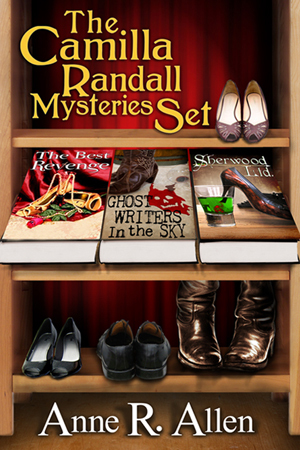
We have some big changes coming to the blog! As a lot of you know, I like Blogger. It’s user-friendly and it works just fine for most author-bloggers. (Although sometimes the Blogger elves make commenting tough for readers with blogs on other platforms. Tech wars can be brutal.) But a freebie Blogspot blog isn’t very […]
The post 5 More Delusions That Can Block a Writer’s Success appeared first on Anne R. Allen's Blog... with Ruth Harris.
5 More Delusions That Can Block a Writer's Success
We have some big changes coming to the blog!
As a lot of you know, I like Blogger. It's user-friendly and it works just fine for most author-bloggers. (Although sometimes the Blogger elves make commenting tough for readers with blogs on other platforms. Tech wars can be brutal.)
But a freebie Blogspot blog isn't very safe when you have a lot of traffic. And we have had as many as 105,000 hits a month this year. And this has made us a target for a major number of hackers and pirates. Google Alerts finds content from this site on dozens of blogs every week.
Then last month, I logged in and found our content gone.
When I went to the "home" page, it was empty. A message said "this content is no longer available".
I went numb. I had no idea what to do. I went on Facebook and had a meltdown.
Serendipitously, a tech expert who has guested for us here saw my lament. Johnny Base of SEO Evolution, who wrote one of our most popular guest posts of 2013, left a comment on my desperate Facebook post telling me to phone him.
I did and he restored the blog within hours. Yeah. He's that good.
But he told me the content wasn't safe on a freebie Blogger blog now we were on the radar of pirates. He said I needed to move to WordPress and a self-hosted site.
Then I found all the content on a weird Portuguese site where the only content was this blog and the Bible, both in English. Yeah. I may seem to play God on this blog sometimes but I really never saw myself up there with the Almighty in the book department. After all, the Bible is the bestselling book of all time. Ha!
So I figured it was time to make the move. With Johnny's help we hope to launch the new blog on our new site with WordPress on November 22. There are bound to be glitches, but most of you should be able to find it with the old urls.
If you subscribe with MailChimp, you should get the blog in your inbox as usual. If you want to comment on the blog, just click on the header and it should take you to the new blog just the way it takes you to this one now..
But for our Blogger "followers" you may have to click through from the Blogger blog to the new one. Just one more step. I hope it will all go smoothly. We'll leave this blog up with a message and a link to click through to the new blog.
So next week you'll still find us hereâwith a great guest post from literary superstar Catherine Ryan Hyde, who's going to be talking about rejections and how we ALL get them. Yes. Even her iconic novel Pay it Forward was rejected...by her own agent.
But the following week, November 22nd, you should find the blog transformed into a WordPress blog on our own self-hosted site. I'll be talking about some of the biggest scams that are targeting new authors these daysâand how to stay safe...Anne
5 More Delusions that can Block Writing Success
by Anne R. Allen
Last week I wrote about five delusions that can keep a new writer from professional success. I admit to succumbing to most of them myself at one time or another.
Writers need to be a little delusional to embark on a road that we know is fraught with obstacles. It's the only way we can keep our spirits up for the long haul. We shouldn't think of them as mistakes, but rather stages we need to go through. But the time comes when we have to let the delusions go or our careers will come to a dead halt.
The first five delusions I discussed in last week's post are:
Expecting Instant SuccessGetting Stuck on the Query-go-RoundObsessing about MarketingSigning the First Contract You're OfferedChasing TrendsHere are five more:
6) Expecting Success to Find You
Lots of brilliant writers settle into a comfort zone after their first few successes and never try to climb to the next rung of the ladder. Often they secretly believe someone is going to "discover" them through a local writing contest or a small literary magazine. And yes, that has happened in a tiny percentage of careers, but it's not all that likely
If you enter and place in the same small contests every year and publish stories in the same handful of little magazines, you can feel pretty comfy. You don't get any of those depressing rejections and hey, you're a winner!
Unfortunately, nobody but the three judges of the contest and the twelve subscribers to the litzine are likely to see your work. The chances of Oprah coming through town the day your heart-rending vignette about the death of your pet gerbil gets published on the local paper are really kind of slim. (It's okay. We all have those fantasies.)
Other writers expect success even though they never quite manage to send their work anywhere. They'll read the same manuscript to a critique group for a decade or keep rewriting first chapters of books they never finish.
I've met people at writers' conferences who always bring the same chapter of the same book to the workshops, year after year, as if they expect some publisher to sit in the workshop, recognize greatness, and swoop them off and offer a contract. They pitch the book to every agent they meet, but never send them the manuscript because they can't figure out an ending.
Reality Check: Face your fears and accept that getting rejected is part of the process. You'll never get to "yes" until you've had a lot of "no's".
Look at the "opportunity alerts" at the bottom of this column. Submit to a new magazine. Enter a contest with higher stakes. Finish that novel!
7) Imagining that Writing Narrative Requires No Training
We've all met newbie writers who say stuff like: "Why should I have to study writing? I read all the time and I edit our One Direction fan club newsletter. I'm a great speller. So I can write a novel, no prob."
They don't understand that writing narrative is an intricate, specialized craft that needs to be learned though lots of study, trial and error. Very few people can "just write" and produce a readable manuscript without feedback.
Don't be embarrassed if you recognize yourself here. I had this delusion, big time. I worked on a novel for years without showing a word to anybody. I thought I should finish it first, so I just kept going. I knew I could write fiction because I spent all my spare time reading it.
What I didn't realize is that simply reading a lot of novels doesn't teach you to write them any more than eating a lot of sandwiches teaches you to bake bread.
I didn't expect to be able to crochet a scarf or play the piano without some kind of instruction. So why did I think I could write a novel in a total vacuum?
At least I wised up after a few years. Some people spend decades flailing around writing badly rather than pay a few bucks for a workshop or a book on plotting or structure or joining a critique group.
Then there are the newbie writers who think they can hire an editor to magically turn a bunch of random pages into a coherent novel. Anybody who's worked as a freelance editor has had to deal with a few of these. It's amazing when you see the horror on their faces when it dawns on them that learning to write a novel or memoir involves more than just spilling your thoughts on a page.
Reality Check: Take a writing class or workshop and buy a few books on writing. Nathan Bransford has a good one called How to Write a Novel for only $4.99 and James Scott Bell's popular SuperStructure is only $2.99. Or try Dr. John Yeoman's How Did the Author Do That, also $4.99, which takes a novel and analyzes how all the parts work. (It's a fun novel to read, too!) Or try classics like Save the Cat by Blake Snyder or How to Write a Damn Good Novel by James N. Frey.
8) Living in the Last Millennium
Some writers' minds are so filled with images of Jacqueline Susann-style book-signing tours that they don't learn to do the things that successful authors do in the Internet age.
I know writers who treat online marketing as a fad to be ignored, so every year they launch a new paper book with a signing party at a local bookstore, announced by an ad in the hometown newspaper, or postcards sent to a local mailing list.
The same ten people come. Every year. Ten people who would have bought the book anyway. Nobody else has heard of these authors, because they don't have websites and consider themselves "above" social media.
You Google them and nothing comes up but the picture from the local paper when they helped raise money for the victims of Hurricane Katrina.
If they're with a traditional small or midsized press, they may have an ebook, but they don't know how to get online reviews or set up an Amazon author page, so their ebook ranks at about #7,891,000 in the Kindle store.
Or they self-publish with a vanity press and put tons of money into a hardcover novel that nobody can afford, "because that's how you get reviewed." (That was true 20 years ago. Not so now.)
Reality Check: Join the 21st century. It may seem scary, but if I can do it, anybody can. Take baby steps. Get a friend or relative to help you set up a simple website, fill out your Amazon author page and start commenting on blogs.
You've made a start by reading this. Frances Caballo, Molly Greene, Chris Syme, and Kristen Lamb also give top-notch info on how to use social media on their blogs. Pick up Chis Syme's Smart Social Media For Authors , Molly's Blog it!, Kristen Lamb's Rise of the Machines or, um, How to be a Writer in the E-Age by yours truly and Amazon #1 author Catherine Ryan Hyde.
9) Insisting that Literature "Shouldn't" be a Business
I meet a lot of writers who seem to think the writing life is a perpetual high school English class where there are gold stars for everybody. They are offended when publishers and agents are "mercenary" or "only out for money" or won't work with them just because they're belligerent and unpleasant. ("What about free speech?!")
Newsflash: people don't run businesses in order to lose money. Not everybody can live off the Bank of Dad forever.
And the right to "free speech" says you won't be arrested for saying nasty things in public (unless of course it can be proved to be libelous.) What it doesn't say there will be absolutely no consequences for saying those things.
A business partnership is like a marriage. The parties have to be compatible. Nobody has a "right" to an agent or publisher anymore than anybody has a "right" to a spouse.
Do note: I don't want to put down people with private incomes who prefer to write as amateurs. Some of our greatest writers and poets did not write for money (Emily Dickinson comes to mind). Writing can be a fantastic, fulfilling hobby.
But if you want to make a living as a writer, you have to learn how the business works. And act like a grown-up.
You wouldn't try to open a restaurant if you'd never worked in one, but most new writers are as naive as I was about learning about the business they're trying to enter.
Reality check: Give up the magical fairy god-agent fantasy. If you want to go the agent route, read the archives of Jane Friedman's blog, or Nathan Bransford's, subscribe to (free) Publisher's Lunch and follow a few agents on Twitter. BookEnds Literary Agency has revived their blog recently, and Janet Reid still dispenses great information on her blog.
If you'd rather work with a small press, check out Poets and Writers or Authors Publish Magazine, which has a FREE newsletter that lists small presses that don't require agents.
Or pick up a solid book on self-publishing like Jessica Bell's Self-Publish Your Book and go indie. Lots of very successful writers have.
10) Not Reading (especially in your genre)
This is a biggie. I'm amazed at people who claim to want to be writers, but when you ask them what they're reading they go totally blank.
Or theyâll mention a bestseller of a decade ago as the last book they read. Or they say they read nothing but classicsâwhich you strongly suspect they haven't read since college. Or they say they don't read because "there's nothing good out there."
It's awfully hard to write a novel today's readers are going to like if you haven't read anything published since On the Road. And it's impossible to write something contemporary Romance/Mystery/Thriller readers will enjoy if you don't read (and love) those genres.
Stephen King said, "Read, read, read. If you donât have time to read, you donât have the time (or the tools) to write."
Reality Check: Make time for reading every day. Especially new books in your genre. Consider it part of your writing routine. If you'd rather watch "Dancing with the Stars" or play a videogame, ask yourself why you want to be a writer. Are you following some delusion? Or your Mom's? Would you rather be designing videogames or fabulous dance costumes?
Guess what? There's nothing wrong with that.
And it probably pays better.
Writing is the most wonderful profession in the world if it's what you love. But there are no shortcuts and the pay is pretty lousy for all but a handful of superstars. If you'd rather be doing something else, let go of the delusions.
Life's too short to be doing something you don't love. Follow your bliss, wherever it takes you.
What about you, scriveners? Can you think of any more delusions we should warn people about? What delusions held you back when you were starting out?
BOOK OF THE WEEK
9 Months on Amazon's Humor Bestseller list!
Now only $3.99
The first three books in the hilarious Camilla series for 99c each!
GHOSTWRITERS IN THE SKY #1 in the series: Camilla meets a bogus agent, a hot cop and a ghostly killer at a California Writer's Conference. SHERWOOD LTD #2 Camilla runs into a gang of outlaws at an unorthodox UK publishing house near the real Sherwood Forest. and THE BEST REVENGE #3, the prequel, which takes Camilla and Plantagenet back to the "greed is good" 1980s, when Camilla is accused of killing a pastel-wearing, coked-up TV star.
The Camilla Randall Mysteries Box set is available at all the Amazons. Kobo, iTunes,Smashwords, Inktera, NOOK, and Scribd.
If you've been thinking of taking a look at my loopy, but oh-so-polite sleuth's misadventures with murder, mayhem and Mr.Wrong, here's a chance to read the first three cheap.
"The Best Revenge, Ghost Writers in the Sky and Sherwood Limited are hysterical. Anne Allen will keep you laughing throughout, but in the meantime she dabbles her fingers in some topics worth some serious thought: sexism, weightism, lechery, murder, duplicity, homelessness & poverty to name a few. If you love to laugh, you'll like these three books. If you love to think, ponder AND laugh, be ready to fall in love"... C.S. Perryess aka the Wordmonger
OPPORTUNITY ALERTS
Amazon's Little A Poetry Contest. A Biggie. This is a brand new thing. The contest will be judged by poets Cornelius Eady, Jericho Brown and Kimiko Hahn. The winner will receive $5,000 in prize money and a publishing contract featuring a $2,000 advance with Little A, Amazon Publishingâs literary imprint. Poets who have published no more than one book of poetry can submit their full-length collections for consideration to LittleAPoetry@amazon.com. Deadline Dec 20th 2015
The Poisoned Pencil: New YA publisher open to submissions! The well-known mystery publisher The Poisoned Pen now has a YA imprint. They accept unagented manuscripts and offer an advance of $1000. Submit through their website submissions manager. Response time is 4-6 weeks.
Open call for the Independent Women Anthology: short stories (flash fiction included), poetry, essays, artwork, or any other woman and/or feminist-centered creative work. 10,000 word max. All genres but explicit erotica. $100 per short story, $50 for flash, poetry, and photography/artwork. All profits will be donated to the Pixel Project Charity to end Violence Against Women. Deadline January 31, 2016 with a goal of publication on International Women's Day, March 8, 2016.
Win $$$ and BEER!! SCHLAFLY BEER MICRO-BREW MICRO-FICTION CONTEST $10-$20 ENTRY FEE. Fee includes a subscription to River Styx literary magazine or one issue depending on amount of entry fee paid. Submit up to three stories of 500 words or less each. All stories will be considered for publication. $1,500 first prize plus one case of micro-brewed Schlafly Beer. Deadline January 1, 2016.
The Writer Short Story Contest judged by Literary star Colum McCann. You can have your work read by the acclaimed author of Let the Great World Spin. $25 entry fee. Write a 2,000-word short story responding to one or both of the quotes below by Mr. McCann: "There is always room for at least two truths." or "With all respects to heaven, I like it here." Deadline December 6th 2015
TETHERED BY LETTERS' FALL 2015 LITERARY CONTEST ENTRY FEES: $7-$15 Currently accepting submissions for short stories (1,000 to 7,500 words, open genre), flash fiction (55, 250, or 500 words), and poetry (maximum of three pages per poem). All winners will be published in F(r)iction. All finalists will receive free professional edits and be considered for later publication. The prizes are $500 short story $150 flash fiction, and $150 for poetry. Multiple entries accepted. International submissions welcome. Deadline December 1.
HAMLIN GARLAND AWARD FOR THE SHORT STORY $20 ENTRY FEE. $2,000 and publication to the top unpublished story on any theme. One story per entry, multiple entries acceptable. Maximum 7,000 words. All entrants will be considered for publication. Deadline December 1, 2015.
The Ernest Hemingway Flash Fiction Contest. $10 fee Unpublished fiction. 1500 words or less. Simultaneous submissions ARE welcome. All entries will be considered for publication in Fiction Southeast. (a prestigious journal that has published people like Joyce Carol Oates) Winner gets $200 and publication. Deadline: Dec. 1st
Writers' Village International Short Fiction Award winter 2015 . Cash prizes totaling $3200.Ten further Highly Commended entrants will have their stories acknowledged at the site and gain a free entry in the next round. Entry fee $24 INCLUDES A PROFESSIONAL CRITIQUE. Any genre of prose fiction may be submitted up to 3000 words, except plays and poetry. Entries are welcomed worldwide. Multiple entries are permitted. Deadline: November 30th.
The 16th Annual Writerâs Digest Short Short Story Competition. $20 Fee. 1500 words. $3,000 prize, plus publication in Writerâs Digest and a paid trip to the Writerâs Digest Conference. Deadline: November 16, 2015
November 1, 2015
5 Delusions That Block Writers from Professional Success
by Anne R. Allen
We writers tend to get a tad delusional about our own work. Most of us know the average writer doesn't make great money, but we secretly believe our own efforts will bring us fabulous fame and fortune.
When we start out, we can't help visualizing our books leapfrogging over all the usual obstacles and soaring up the New York Times bestseller list (perhaps as our faces appear on the cover of Time.)
Don't be embarrassed. The delusions are necessary. If we accepted the reality of how hard it is to make a living as a writer, we'd never get that first sentence on the page.
But those delusionsâand the fear of losing the comfort they bringâcan keep a fledgling career stuck in Fantasyland.
They did for me.
I was sure I didn't have to learn the business side of things. I'd have a magical fairy god-agent to deal with all the boring stuff.
I started out with a couple of lucky breaks that unfortunately fed my delusions.
I landed an agent with a prestigious agency with my first query letter. And when he left the agency a few months later, I got another just as fabulous. Easy peasy.
Then, while the book was out on submission, I successfully published a second novel as a serial in an entertainment weekly with a substantial circulation. (I got paid per episode and made more money with that novel than my next two combined.)
But the first novel failed to sell and my second agent dropped me. Instead of capitalizing on my successful serial, I frantically tried to get another agent for the same book that had been shopped around by the first two.
Bad move. No agent wants to take on something that's already been rejected everywhere.
Another bad move: I started working on a huge, ambitious novel that took me five years to write instead of putting out more short stories and building up my publishing portfolio. I also disdained nonfiction. I didn't want to be a magazine feature writer.
I was a NOVELIST, dammit!!
But I didn't know that becoming a professional novelist takes a lot more than good fiction writing skills. You also need to learn to write good advertising copy, personal essays, and solid nonfiction pieces.
Plus you need to learn about the publishing business.
And it is a business. A life of creating art for art's sake is a lovely plan for an amateur with a secure independent income, but if you want to go pro, you have to learn the business side of publishing.
But I failed to study any of it and I let myself get stuck for years on the query-go-round with my old, rejected book, while I wrote and rewrote my magnum opus. I entered a few local writing contests, but didn't start submitting stories in a businesslike way. I got a couple more agents, but they couldn't sell my shopworn book.
People kept telling me to join RWA to find out the ins and outs of the industry (excellent advice, by the way), but I didn't see myself as a romance writer. Instead I signed with a small publisher in the UK that was trying to branch out from erotica into mainstream fiction. It involved getting to travel to England, so I'll never entirely regret my choice, but it didn't lead to financial success.
When I got one of the biggest breaks in my career, I didn't even recognise it as such. It came when a friend found an ad in a literary magazine for columnists for a Canadian writing zine called Inkwell Newswatch. She urged me to submit a writing sample (Thanks, Dorothy Segovia!) I wrote my first nonfiction article ever, got the job, and discovered I was pretty good at this nonfiction stuff.
It didn't feel like a big break at the time because I was deep in delusional fantasies of making it big with my second novel, even though by then my UK publisher was foundering. I put tons of energy into launching the book, but the company was soon to go belly-up.
What kept my career afloat? My little columns and articles in magazines and eventually, when the Newswatch closed its doors, this blog.
Here are some delusion-driven things I did that I still see going on with a lot of beginning writers today.
But hey, I made the mistakes so you don't have to...
1) Taking an Endless Ride on the Query-Go-Round
People who get stuck for years in query hell are often suffering from that "magical fairy god-agent" fantasy that kept me back for so long.
I'm not saying the query process isn't a long, tough slog. Getting an agent takes a lot of querying and not everybody is cut out for self-publishing. (And the most successful self-publishers have agents, too.)
But we need to keep learning and publishing short pieces and writing more books during the query process.
Otherwise we can end up endlessly going nowhere on the query-go-round. That's what happened to me.
I think I developed an addiction to the high you get with that request for a partial...then maybe a full...and then the fantasies you weave while waiting...and waiting...only to have your hopes dashed a year later when you get the form rejection that says nothing. (Agents are very cagy these days. Their rejections are crafted to say nothing but "no thanks." And more and more, they reject with silence. Unfortunately, they've learned that any feedback at all can draw angry retaliation from crazed newbies.)
Other writers get stuck on the query-go-round because they never take the time to learn to write a proper query and synopsis. They're relying on the brilliance of their work to hook the agent. They keep sending out the same letter that calls their work a "fiction novel" and addresses the agent as "To Whom it May Concern" and brags how their book is so much better than "all the crap out there." Their synopsis is ten pages long, but hey, it's okay to disregard agent guidelines when your book is genius.
Or they fall for scams like this one, which charges $700 to write queries for you. (BTW, all query-mill letters are automatically rejected. Agents can tell.)
Or they do what I did and become so obsessed with query writing, they forget to write better books. They send out queries on the same manuscript for years and hone that synopsis to perfection. They take all the workshops on querying at every writers conference they attend.
They become fabulous query writers and masters of the pitch and the synopsis...but they never write any new books and never get any short pieces published.
They don't want to discover what's really wrong:
That much-rejected book could be an hidden treasure that might get a contract if the author focused on polishing the book instead of the query. Or it could be a finished masterpiece that just needs a better query and synopsis. Or it could be a polished book with a killer query, but the genre/theme is not trending right now. When everybody's looking for zeppelins, you've got zombies. Or the other way around.
Reality Check: Workshop the book if you haven't, and then write another one. Maybe not so trendy this time.
Or look for a small press that specializes in your brand of zombie zeppelins. Or self-publish (but not until you've written zombie-zeppelin book #2. It's very hard to market a singleton title as an indie.)And if you're querying and have never read the Query Shark or networked with the good people at QueryTracker and Agent Query, do it. They may be your ticket off the query-go-round.
2) Believing Social Media Marketing Schemes will Make you a "Kindle Millionaire"
On the other end of the spectrum from the query addicts are the self-publishers who eat up all those books promising they'll become instant "E-Book Millionaires" by playing clever games with algorithms and social media. Thing is, those "Kindle Millionaire" books are as out of date as a 1970s book tour.
Partying like it's 2009 is not going to get you anywhere today.
There are thousands of online courses and books that promise you instant riches with ebooks and social media. I read some of them and tried some of the tactics after I finally found another publisher. Some of them worked very well. Then.
But nothing is certain in this business (except rejection and bad reviews.) What worked six months ago is probably useless now. And nobody can fulfill a promise that you'll make the bestseller list or become a millionaire.
I know lots of people are still falling for this old advice because I see them all over the place:
Writers who tweet their books 24/7âor pay somebody to.Or constantly spam their FB friends with unwanted book ads (Especially erotica. Please, erotica authors, choose your target audience carefully. Not everybody likes their FB feed full of naked people in handcuffs.) Then there are those blogging authors who are always running contests to give away book swag they've overbought and nobody wants. Or they give away expensive gift cards to bribe people to "like" their Facebook pageâa page those people will never visit again. Or they make boring book trailers and hammer friends and family to go "like" the videos on YouTube. Friends and family who are too busy, um, reading books. Or they put a ginormous amount of money into a Kickstarter campaign designed to beg for an even more ginormous amount of money to pay a publicist to do all of the above.And recently I've had a barrage of Direct Messages from newbie authors who think it's the job of established authors to promote their books and blogs for them.I suppose there's some new bad advice floating around out there saying: "Author-bloggers who already work 18 hours a day, LOVE to give up their few hours of sleep to promote newbie writers' work for freeâespecially newbie writers who can't bother to read their blogs or books. Make sure you bully them with phrases like 'I'm counting on you' and 'comment on my blog by the end of the day!' "
Um. No, kids. This is not how to sell books. Maybe some of this stuff worked 6 years ago, but it sure doesn't work now.
Reality Check: Look at what actual successful authors are doing. Hugh Howey built his huge audience by connecting with fans on his blog and Kindleboard forums. Catherine Ryan Hyde and Anne Rice have constant interaction with their readers on Facebook. Catherine gives away lots of free books from her blog.
All these bestselling authors are connecting with their fans one-on-one, not "targeting" a faceless "them". Books have to be hand-sold. Marketing schemes don't work unless you're the Big Five and can load every chain bookstore in the world with huge front-of store displays.
And don't tweet your book unless you have news about it. Like that it's free for the next 24 hours, and you just got a rave review from Big Al.
Get great advice on what really works in book marketing from experts like Frances Caballo at Social Media Just For Writers and Penny Sansevieri at Author Marketing Experts.
3) Signing the First Contract You're Offered by an Agent or Publisher. (Especially a Self-Publishing Company.)
In these days of "forever" books and eternal bookshelves, bad contracts are much more dangerous than they were in the pre-ebook days.
You may end up signing away the rights to your book and characters for a lifetimeâand even your children's lifetimes.
Some agents and publishers insist that you give them the right of "first refusal" for every word you will ever write. There are lots of bad contracts out there, even with well-known agents and publishers.
And unfortunately, there are lots of incompetent and disappearing agents, scammers, and vanity or "subsidy" publishers eager to lead you astray and deplete your savings.
If you have fantasies of a magical fairy god-agent, you could easily fall prey.
Ditto if you believe the vanity presses that tell you if you just throw enough money into marketing a book, you'll make millions.
Reality Check: educate yourself about the business before you jump in. Join professional writing organizations like RWA or SCBWI . Keep yourself informed by checking Writer Beware and Preditors and Editors.
If you're thinking of going with a self-publishing company, read this piece from Jane Friedman: 10 Questions to Ask Before Committing to Any E-Book Service. And this one by Joel Friedlander: Is Your Book Held Hostage by a Subsidy Publisher?
And if you see any clauses you don't understand, especially if they contain the phrase "in perpetuity"âget thee to a lawyer.
4) Chasing Trends
An awful lot of writers have files filled with half-written Twilight clones, a couple of Dan-Brown artifact-chasers, a YA Dystopian, and 25 ½ Shades of Mommy Pornâ¦with zombies. They never quite finish any of their projects because, well, what they really like is family sagas and women's literary fiction, but everybody says those aren't selling.
Yes, some fast-writing professionals can chase trends successfully. But if you're a newbie, your chances are slim. Most new writers can't produce a marketable book fast enough to cash in on any current trend.
Reality Check: Don't follow trends; set them.
Any subgenre that's on the bestseller list now will be saturated and waning by the time you get a book finished, polished, edited and ready to go.
Write what you love to read, not what's on the bestseller list or a hot TV trend right now. (What's hot on TV was probably trending in publishing a decade ago. Even zombies are stumbling a bit these days.)
Who would have thought that in the 1990s, an English boarding-school story with Halloweeny characters would ever sell? English boarding school stories went out decades before and fantasy wasn't selling. Besides, where would anybody put Harry Potter on a shelf? It wasn't horror like Goosebumps or a standard Enid Blyton boarding school story.
I'm sure there were people who told J.K. Rowling, "Joanne, sweetie, it's cute, but that boy wizard stuff will never sell. You should be writing chick lit like Bridget Jones Diary" or heartfelt women's fiction like Rosamund Pilcher and Maeve Binchley. Or write about dinosaurs. Do something like Jurassic Park. This is the 1990s. You have to write what people are buying now."
And we would all have been the losers.
Write what you love. Because you love to write it. There is no other reason to write.
5) Expecting Instant Financial Success.
There's no such thing as overnight success. Learning to write stuff people want to read takes way longer than we imagine.
Also, it's increasingly tough to get paid to write. Yes, there are lots more opportunities out there for writers in the digital age, but there's also more competition..and lots more writers working for nothing and giving away free books.
I cringe when I meet writers with fantasies of making a living from writing from the get-go.
A newbie writer with only a handful of credits vows she'll "never write for free".An author who has just finished her first novel brags that she'll only sign with a famous, established agent (newer agents who are building their lists are a much better bet) and they expect a huge advance. (Extremely unlikely. Advances are shrinking fast. )After publishing four or five short stories, a writer says he'll never sell to anybody but Asimov's, Ellery Queen, or The New Yorker. (Even wildly successful novelists have trouble making the cut there.)Or an author quits her day job after hitting "publish" on her first self-published ebook.
Writers like this may imagine they're practicing the "law of attraction" by acting "as if" and visualizing the big bux, but what they're actually doing is aiming to fail.
If you want to visualize yourself making it to the top of the success ladder, you need to see the whole ladder.
Nobody pole-vaults from the slush pile to the bestseller listâany more than a new hire jumps from the mailroom to the boardroom after their first month.
And now, alas, we live in an era when everybody in this business works for free some of the time. Interns apprentice for no pay in literary agencies and publishing houses. Even full-fledged agents often have day jobs.
Reality Check: Accept that everybody has to start on the first rung of the ladder. Put in your 10,000 Malcolm Gladwell hours. And meanwhile check our weekly Opportunity Alerts and get your short work into the marketplace.
If you write nonfic, write for smaller magazines, anthologies, and blogs and collect your clips.
If you write mostly fiction, send those stories out to the non- and lower-paying litzines. And enter contests! The prestige you get from placing in a well-known contest or a prestigious litzine can be worth more to your career than getting a story into a slick, commercial magazine.
Next week I'll talk about five more delusions that plagued my early career and may be blocking your own success.
And we'll have a big announcement about major changes happening with the blog.
What about you, scriveners? Do you recognize any of your own delusions here? What gave you your first reality check as a writer? Did you have any delusions I missed here?
BOOK OF THE WEEK
The Gatsby Game is a fictionalized take on a real Hollywood mystery. The mystery of the death of David Whiting, a highly delusional con man, during the filming of a Burt Reynolds' film in 1973 has never been solved. Anne R. Allen knew David, and this is her idea of what might have happened.
David Whiting's death is also the subject of the 2015 LA Critics-Award-winning film The David Whiting Story , directed by Walter Reuben.
ON SALE FOR 99c This Week!
The ebook is available for 99c at all the Amazons and NOOK,
Available in paper for $10.99 at Amazon and Barnes and Noble
It's also available at Scribd and Inktera and Kobo at regular prices.
When Fitzgerald-quoting con man Alistair Milborne is found dead a movie star's motel roomâigniting a worldwide scandalâthe small-town police can't decide if it's an accident, suicide, or foul play. As evidence of murder emerges, Nicky Conway, the smart-mouth nanny, becomes the prime suspect. She's the only one who knows what happened.
But she also knows nobody will ever believe her.
.OPPORTUNITY ALERTS
The Poisoned Pencil: New YA publisher open to submissions! The well-known mystery publisher The Poisoned Pen now has a YA imprint. They accept unagented manuscripts and offer an advance of $1000. Submit through their website submissions manager. Response time is 4-6 weeks.
Open call for the Independent Women Anthology: short stories (flash fiction included), poetry, essays, artwork, or any other woman and/or feminist-centered creative work. 10,000 word max. All genres but explicit erotica. $100 per short story, $50 for flash, poetry, and photography/artwork. All profits will be donated to the Pixel Project Charity to end Violence Against Women. Deadline January 31, 2016 with a goal of publication on International Women's Day, March 8, 2016.
Win $$$ and BEER!! SCHLAFLY BEER MICRO-BREW MICRO-FICTION CONTEST $10-$20 ENTRY FEE. Fee includes a subscription to River Styx literary magazine or one issue depending on amount of entry fee paid. Submit up to three stories of 500 words or less each. All stories will be considered for publication. $1,500 first prize plus one case of micro-brewed Schlafly Beer. Deadline January 1, 2016.
The Writer Short Story Contest judged by Literary star Colum McCann. You can have your work read by the acclaimed author of Let the Great World Spin. $25 entry fee. Write a 2,000-word short story responding to one or both of the quotes below by Mr. McCann: "There is always room for at least two truths." or "With all respects to heaven, I like it here." Deadline December 6th 2015
TETHERED BY LETTERS' FALL 2015 LITERARY CONTEST ENTRY FEES: $7-$15 Currently accepting submissions for short stories (1,000 to 7,500 words, open genre), flash fiction (55, 250, or 500 words), and poetry (maximum of three pages per poem). All winners will be published in F(r)iction. All finalists will receive free professional edits and be considered for later publication. The prizes are $500 short story $150 flash fiction, and $150 for poetry. Multiple entries accepted. International submissions welcome. Deadline December 1.
HAMLIN GARLAND AWARD FOR THE SHORT STORY $20 ENTRY FEE. $2,000 and publication to the top unpublished story on any theme. One story per entry, multiple entries acceptable. Maximum 7,000 words. All entrants will be considered for publication. Deadline December 1, 2015.
The Ernest Hemingway Flash Fiction Contest. $10 fee Unpublished fiction. 1500 words or less. Simultaneous submissions ARE welcome. All entries will be considered for publication in Fiction Southeast. (a prestigious journal that has published people like Joyce Carol Oates) Winner gets $200 and publication. Deadline: Dec. 1st
Writers' Village International Short Fiction Award winter 2015 . Cash prizes totaling $3200.Ten further Highly Commended entrants will have their stories acknowledged at the site and gain a free entry in the next round. Entry fee $24 INCLUDES A PROFESSIONAL CRITIQUE. Any genre of prose fiction may be submitted up to 3000 words, except plays and poetry. Entries are welcomed worldwide. Multiple entries are permitted. Deadline: November 30th.
We writers tend to get a tad delusional about our own work. Most of us know the average writer doesn't make great money, but we secretly believe our own efforts will bring us fabulous fame and fortune.
When we start out, we can't help visualizing our books leapfrogging over all the usual obstacles and soaring up the New York Times bestseller list (perhaps as our faces appear on the cover of Time.)
Don't be embarrassed. The delusions are necessary. If we accepted the reality of how hard it is to make a living as a writer, we'd never get that first sentence on the page.
But those delusionsâand the fear of losing the comfort they bringâcan keep a fledgling career stuck in Fantasyland.
They did for me.
I was sure I didn't have to learn the business side of things. I'd have a magical fairy god-agent to deal with all the boring stuff.
I started out with a couple of lucky breaks that unfortunately fed my delusions.
I landed an agent with a prestigious agency with my first query letter. And when he left the agency a few months later, I got another just as fabulous. Easy peasy.
Then, while the book was out on submission, I successfully published a second novel as a serial in an entertainment weekly with a substantial circulation. (I got paid per episode and made more money with that novel than my next two combined.)
But the first novel failed to sell and my second agent dropped me. Instead of capitalizing on my successful serial, I frantically tried to get another agent for the same book that had been shopped around by the first two.
Bad move. No agent wants to take on something that's already been rejected everywhere.
Another bad move: I started working on a huge, ambitious novel that took me five years to write instead of putting out more short stories and building up my publishing portfolio. I also disdained nonfiction. I didn't want to be a magazine feature writer.
I was a NOVELIST, dammit!!
But I didn't know that becoming a professional novelist takes a lot more than good fiction writing skills. You also need to learn to write good advertising copy, personal essays, and solid nonfiction pieces.
Plus you need to learn about the publishing business.
And it is a business. A life of creating art for art's sake is a lovely plan for an amateur with a secure independent income, but if you want to go pro, you have to learn the business side of publishing.
But I failed to study any of it and I let myself get stuck for years on the query-go-round with my old, rejected book, while I wrote and rewrote my magnum opus. I entered a few local writing contests, but didn't start submitting stories in a businesslike way. I got a couple more agents, but they couldn't sell my shopworn book.
People kept telling me to join RWA to find out the ins and outs of the industry (excellent advice, by the way), but I didn't see myself as a romance writer. Instead I signed with a small publisher in the UK that was trying to branch out from erotica into mainstream fiction. It involved getting to travel to England, so I'll never entirely regret my choice, but it didn't lead to financial success.
When I got one of the biggest breaks in my career, I didn't even recognise it as such. It came when a friend found an ad in a literary magazine for columnists for a Canadian writing zine called Inkwell Newswatch. She urged me to submit a writing sample (Thanks, Dorothy Segovia!) I wrote my first nonfiction article ever, got the job, and discovered I was pretty good at this nonfiction stuff.
It didn't feel like a big break at the time because I was deep in delusional fantasies of making it big with my second novel, even though by then my UK publisher was foundering. I put tons of energy into launching the book, but the company was soon to go belly-up.
What kept my career afloat? My little columns and articles in magazines and eventually, when the Newswatch closed its doors, this blog.
Here are some delusion-driven things I did that I still see going on with a lot of beginning writers today.
But hey, I made the mistakes so you don't have to...
1) Taking an Endless Ride on the Query-Go-Round
People who get stuck for years in query hell are often suffering from that "magical fairy god-agent" fantasy that kept me back for so long.
I'm not saying the query process isn't a long, tough slog. Getting an agent takes a lot of querying and not everybody is cut out for self-publishing. (And the most successful self-publishers have agents, too.)
But we need to keep learning and publishing short pieces and writing more books during the query process.
Otherwise we can end up endlessly going nowhere on the query-go-round. That's what happened to me.
I think I developed an addiction to the high you get with that request for a partial...then maybe a full...and then the fantasies you weave while waiting...and waiting...only to have your hopes dashed a year later when you get the form rejection that says nothing. (Agents are very cagy these days. Their rejections are crafted to say nothing but "no thanks." And more and more, they reject with silence. Unfortunately, they've learned that any feedback at all can draw angry retaliation from crazed newbies.)
Other writers get stuck on the query-go-round because they never take the time to learn to write a proper query and synopsis. They're relying on the brilliance of their work to hook the agent. They keep sending out the same letter that calls their work a "fiction novel" and addresses the agent as "To Whom it May Concern" and brags how their book is so much better than "all the crap out there." Their synopsis is ten pages long, but hey, it's okay to disregard agent guidelines when your book is genius.
Or they fall for scams like this one, which charges $700 to write queries for you. (BTW, all query-mill letters are automatically rejected. Agents can tell.)
Or they do what I did and become so obsessed with query writing, they forget to write better books. They send out queries on the same manuscript for years and hone that synopsis to perfection. They take all the workshops on querying at every writers conference they attend.
They become fabulous query writers and masters of the pitch and the synopsis...but they never write any new books and never get any short pieces published.
They don't want to discover what's really wrong:
That much-rejected book could be an hidden treasure that might get a contract if the author focused on polishing the book instead of the query. Or it could be a finished masterpiece that just needs a better query and synopsis. Or it could be a polished book with a killer query, but the genre/theme is not trending right now. When everybody's looking for zeppelins, you've got zombies. Or the other way around.
Reality Check: Workshop the book if you haven't, and then write another one. Maybe not so trendy this time.
Or look for a small press that specializes in your brand of zombie zeppelins. Or self-publish (but not until you've written zombie-zeppelin book #2. It's very hard to market a singleton title as an indie.)And if you're querying and have never read the Query Shark or networked with the good people at QueryTracker and Agent Query, do it. They may be your ticket off the query-go-round.
2) Believing Social Media Marketing Schemes will Make you a "Kindle Millionaire"
On the other end of the spectrum from the query addicts are the self-publishers who eat up all those books promising they'll become instant "E-Book Millionaires" by playing clever games with algorithms and social media. Thing is, those "Kindle Millionaire" books are as out of date as a 1970s book tour.
Partying like it's 2009 is not going to get you anywhere today.
There are thousands of online courses and books that promise you instant riches with ebooks and social media. I read some of them and tried some of the tactics after I finally found another publisher. Some of them worked very well. Then.
But nothing is certain in this business (except rejection and bad reviews.) What worked six months ago is probably useless now. And nobody can fulfill a promise that you'll make the bestseller list or become a millionaire.
I know lots of people are still falling for this old advice because I see them all over the place:
Writers who tweet their books 24/7âor pay somebody to.Or constantly spam their FB friends with unwanted book ads (Especially erotica. Please, erotica authors, choose your target audience carefully. Not everybody likes their FB feed full of naked people in handcuffs.) Then there are those blogging authors who are always running contests to give away book swag they've overbought and nobody wants. Or they give away expensive gift cards to bribe people to "like" their Facebook pageâa page those people will never visit again. Or they make boring book trailers and hammer friends and family to go "like" the videos on YouTube. Friends and family who are too busy, um, reading books. Or they put a ginormous amount of money into a Kickstarter campaign designed to beg for an even more ginormous amount of money to pay a publicist to do all of the above.And recently I've had a barrage of Direct Messages from newbie authors who think it's the job of established authors to promote their books and blogs for them.I suppose there's some new bad advice floating around out there saying: "Author-bloggers who already work 18 hours a day, LOVE to give up their few hours of sleep to promote newbie writers' work for freeâespecially newbie writers who can't bother to read their blogs or books. Make sure you bully them with phrases like 'I'm counting on you' and 'comment on my blog by the end of the day!' "
Um. No, kids. This is not how to sell books. Maybe some of this stuff worked 6 years ago, but it sure doesn't work now.
Reality Check: Look at what actual successful authors are doing. Hugh Howey built his huge audience by connecting with fans on his blog and Kindleboard forums. Catherine Ryan Hyde and Anne Rice have constant interaction with their readers on Facebook. Catherine gives away lots of free books from her blog.
All these bestselling authors are connecting with their fans one-on-one, not "targeting" a faceless "them". Books have to be hand-sold. Marketing schemes don't work unless you're the Big Five and can load every chain bookstore in the world with huge front-of store displays.
And don't tweet your book unless you have news about it. Like that it's free for the next 24 hours, and you just got a rave review from Big Al.
Get great advice on what really works in book marketing from experts like Frances Caballo at Social Media Just For Writers and Penny Sansevieri at Author Marketing Experts.
3) Signing the First Contract You're Offered by an Agent or Publisher. (Especially a Self-Publishing Company.)
In these days of "forever" books and eternal bookshelves, bad contracts are much more dangerous than they were in the pre-ebook days.
You may end up signing away the rights to your book and characters for a lifetimeâand even your children's lifetimes.
Some agents and publishers insist that you give them the right of "first refusal" for every word you will ever write. There are lots of bad contracts out there, even with well-known agents and publishers.
And unfortunately, there are lots of incompetent and disappearing agents, scammers, and vanity or "subsidy" publishers eager to lead you astray and deplete your savings.
If you have fantasies of a magical fairy god-agent, you could easily fall prey.
Ditto if you believe the vanity presses that tell you if you just throw enough money into marketing a book, you'll make millions.
Reality Check: educate yourself about the business before you jump in. Join professional writing organizations like RWA or SCBWI . Keep yourself informed by checking Writer Beware and Preditors and Editors.
If you're thinking of going with a self-publishing company, read this piece from Jane Friedman: 10 Questions to Ask Before Committing to Any E-Book Service. And this one by Joel Friedlander: Is Your Book Held Hostage by a Subsidy Publisher?
And if you see any clauses you don't understand, especially if they contain the phrase "in perpetuity"âget thee to a lawyer.
4) Chasing Trends
An awful lot of writers have files filled with half-written Twilight clones, a couple of Dan-Brown artifact-chasers, a YA Dystopian, and 25 ½ Shades of Mommy Pornâ¦with zombies. They never quite finish any of their projects because, well, what they really like is family sagas and women's literary fiction, but everybody says those aren't selling.
Yes, some fast-writing professionals can chase trends successfully. But if you're a newbie, your chances are slim. Most new writers can't produce a marketable book fast enough to cash in on any current trend.
Reality Check: Don't follow trends; set them.
Any subgenre that's on the bestseller list now will be saturated and waning by the time you get a book finished, polished, edited and ready to go.
Write what you love to read, not what's on the bestseller list or a hot TV trend right now. (What's hot on TV was probably trending in publishing a decade ago. Even zombies are stumbling a bit these days.)
Who would have thought that in the 1990s, an English boarding-school story with Halloweeny characters would ever sell? English boarding school stories went out decades before and fantasy wasn't selling. Besides, where would anybody put Harry Potter on a shelf? It wasn't horror like Goosebumps or a standard Enid Blyton boarding school story.
I'm sure there were people who told J.K. Rowling, "Joanne, sweetie, it's cute, but that boy wizard stuff will never sell. You should be writing chick lit like Bridget Jones Diary" or heartfelt women's fiction like Rosamund Pilcher and Maeve Binchley. Or write about dinosaurs. Do something like Jurassic Park. This is the 1990s. You have to write what people are buying now."
And we would all have been the losers.
Write what you love. Because you love to write it. There is no other reason to write.
5) Expecting Instant Financial Success.
There's no such thing as overnight success. Learning to write stuff people want to read takes way longer than we imagine.
Also, it's increasingly tough to get paid to write. Yes, there are lots more opportunities out there for writers in the digital age, but there's also more competition..and lots more writers working for nothing and giving away free books.
I cringe when I meet writers with fantasies of making a living from writing from the get-go.
A newbie writer with only a handful of credits vows she'll "never write for free".An author who has just finished her first novel brags that she'll only sign with a famous, established agent (newer agents who are building their lists are a much better bet) and they expect a huge advance. (Extremely unlikely. Advances are shrinking fast. )After publishing four or five short stories, a writer says he'll never sell to anybody but Asimov's, Ellery Queen, or The New Yorker. (Even wildly successful novelists have trouble making the cut there.)Or an author quits her day job after hitting "publish" on her first self-published ebook.
Writers like this may imagine they're practicing the "law of attraction" by acting "as if" and visualizing the big bux, but what they're actually doing is aiming to fail.
If you want to visualize yourself making it to the top of the success ladder, you need to see the whole ladder.
Nobody pole-vaults from the slush pile to the bestseller listâany more than a new hire jumps from the mailroom to the boardroom after their first month.
And now, alas, we live in an era when everybody in this business works for free some of the time. Interns apprentice for no pay in literary agencies and publishing houses. Even full-fledged agents often have day jobs.
Reality Check: Accept that everybody has to start on the first rung of the ladder. Put in your 10,000 Malcolm Gladwell hours. And meanwhile check our weekly Opportunity Alerts and get your short work into the marketplace.
If you write nonfic, write for smaller magazines, anthologies, and blogs and collect your clips.
If you write mostly fiction, send those stories out to the non- and lower-paying litzines. And enter contests! The prestige you get from placing in a well-known contest or a prestigious litzine can be worth more to your career than getting a story into a slick, commercial magazine.
Next week I'll talk about five more delusions that plagued my early career and may be blocking your own success.
And we'll have a big announcement about major changes happening with the blog.
What about you, scriveners? Do you recognize any of your own delusions here? What gave you your first reality check as a writer? Did you have any delusions I missed here?
BOOK OF THE WEEK
The Gatsby Game is a fictionalized take on a real Hollywood mystery. The mystery of the death of David Whiting, a highly delusional con man, during the filming of a Burt Reynolds' film in 1973 has never been solved. Anne R. Allen knew David, and this is her idea of what might have happened.
David Whiting's death is also the subject of the 2015 LA Critics-Award-winning film The David Whiting Story , directed by Walter Reuben.
ON SALE FOR 99c This Week!
The ebook is available for 99c at all the Amazons and NOOK,
Available in paper for $10.99 at Amazon and Barnes and Noble
It's also available at Scribd and Inktera and Kobo at regular prices.
When Fitzgerald-quoting con man Alistair Milborne is found dead a movie star's motel roomâigniting a worldwide scandalâthe small-town police can't decide if it's an accident, suicide, or foul play. As evidence of murder emerges, Nicky Conway, the smart-mouth nanny, becomes the prime suspect. She's the only one who knows what happened.
But she also knows nobody will ever believe her.
.OPPORTUNITY ALERTS
The Poisoned Pencil: New YA publisher open to submissions! The well-known mystery publisher The Poisoned Pen now has a YA imprint. They accept unagented manuscripts and offer an advance of $1000. Submit through their website submissions manager. Response time is 4-6 weeks.
Open call for the Independent Women Anthology: short stories (flash fiction included), poetry, essays, artwork, or any other woman and/or feminist-centered creative work. 10,000 word max. All genres but explicit erotica. $100 per short story, $50 for flash, poetry, and photography/artwork. All profits will be donated to the Pixel Project Charity to end Violence Against Women. Deadline January 31, 2016 with a goal of publication on International Women's Day, March 8, 2016.
Win $$$ and BEER!! SCHLAFLY BEER MICRO-BREW MICRO-FICTION CONTEST $10-$20 ENTRY FEE. Fee includes a subscription to River Styx literary magazine or one issue depending on amount of entry fee paid. Submit up to three stories of 500 words or less each. All stories will be considered for publication. $1,500 first prize plus one case of micro-brewed Schlafly Beer. Deadline January 1, 2016.
The Writer Short Story Contest judged by Literary star Colum McCann. You can have your work read by the acclaimed author of Let the Great World Spin. $25 entry fee. Write a 2,000-word short story responding to one or both of the quotes below by Mr. McCann: "There is always room for at least two truths." or "With all respects to heaven, I like it here." Deadline December 6th 2015
TETHERED BY LETTERS' FALL 2015 LITERARY CONTEST ENTRY FEES: $7-$15 Currently accepting submissions for short stories (1,000 to 7,500 words, open genre), flash fiction (55, 250, or 500 words), and poetry (maximum of three pages per poem). All winners will be published in F(r)iction. All finalists will receive free professional edits and be considered for later publication. The prizes are $500 short story $150 flash fiction, and $150 for poetry. Multiple entries accepted. International submissions welcome. Deadline December 1.
HAMLIN GARLAND AWARD FOR THE SHORT STORY $20 ENTRY FEE. $2,000 and publication to the top unpublished story on any theme. One story per entry, multiple entries acceptable. Maximum 7,000 words. All entrants will be considered for publication. Deadline December 1, 2015.
The Ernest Hemingway Flash Fiction Contest. $10 fee Unpublished fiction. 1500 words or less. Simultaneous submissions ARE welcome. All entries will be considered for publication in Fiction Southeast. (a prestigious journal that has published people like Joyce Carol Oates) Winner gets $200 and publication. Deadline: Dec. 1st
Writers' Village International Short Fiction Award winter 2015 . Cash prizes totaling $3200.Ten further Highly Commended entrants will have their stories acknowledged at the site and gain a free entry in the next round. Entry fee $24 INCLUDES A PROFESSIONAL CRITIQUE. Any genre of prose fiction may be submitted up to 3000 words, except plays and poetry. Entries are welcomed worldwide. Multiple entries are permitted. Deadline: November 30th.
October 25, 2015
The Joy of Writing: How to Keep it During NaNoWriMo
8 Bestselling Authors Share Tips and Tricks for Finding and Keeping Joy in Your Writing
by Ruth Harris
The Joy of Writing? During National Novel Writing Month? You're kidding, right?
A 55K word novel in a month?
You're fretting, nervous, sweaty.
Performance anxiety in excelsis?
Brain block? What brain?
Writing should be fun and NaNo is your opportunity to have a ball. To help get you in the mood, I've asked some experienced writers to talk about the many pleasures of writing.
Grace Burrowes
Grace Burrowes started out as a tech writer, switched to law, but millions of readers know her for her USA Today and NYT bestselling romance novels.
There are so many joys to writing, at least for me. I loveâ
The research, which connects me to people I'll never know in person, but can appreciate even from a temporal distance.The author community, which is full of the most knowledgeable, generous, creative, insightful, interesting people ever to take time from their busy lives to believe in something so much more compelling and rewarding than simple profit for its own sake.The readers, about whom, I cannot say enough good thingsThe keeper authors whose stories have inspired me through so many tight knotholes and six-hankie billing cycles But mostly, I love the process of creative self-expression. Our culture doesn't make much space for honoring each person's story, but as an author, I get to focus on that story in its fictional incarnations. I can sit with it, shape it, recast it again and again, and then set it free to entertain and be enjoyed by others. I have the best job. I find myself over and over in the context of love stories, and each time, the sense of joy and homecoming is new all over
again.
Joe Konrath
Noted blogger and ebook guru, Joe Konrath has sold over 3 million books worldwide and writes in the thriller, horror, erotica and comedy genres.
What I love about writing is the same thing I love about reading a good book; disappearing into the story as it plays out in my head. There is no other media that uses so much imagination, and creating worlds and characters is a reward unto itself. Honestly, if the federal government knew how much fun writing was, they'd tax it or make it illegal.NaNo can be challenging, difficult, and even daunting. But if you aren't having fun, maybe you should spend your time doing something you'd enjoy.
Consuelo Saah Baehr
Multi-faceted bestseller, Consuelo Saah Baehr has been published in hardcover by Delacourt and Simon & Schuster, and as an indie in ebook format. Consuelo is now a Montlake author. (Montlake is an Amazon imprint...Anne)
Having a deadline will make you write like a sonofagun.I've become a more facile writer from being a regular blogger. The discipline of making the ordinary sound interesting has given my writing muscles a workout and I'm accustomed to finding the best way to present an idea.Grace Paley once said "If you want to write better, write truer." It works. If you find the truest sentence about a scene or idea, the rest will flow very nicely. In my current book I had allocated some space for two minor characters. They have insinuated themselves into all the major plot points. They will probably run away with the book without my permission. Sounds crazy. Really happens.The above pushy duo have created intrigue and plot twists I never intended but make for a more interesting book. I, the writer, would never have thought of the things they do.When I need a good idea for a new scene or passage, I ask my mind (out loud) to think about what I need and then present the answer to me. Always works. (Saying it aloud might help).When I'm out of the house and get an idea, I write in longhand on the back of a flyer and get some wonderful and sound writing done. Longhand has a little magic attached to it and also a different locale that is quiet seems to work, too.I've been published by several of the big six and only once did I have a bad editor. I was thrilled to be edited by the smart experienced editors assigned to me. Michael Korda was a great editor. Jackie Farber who edited Daughters was a great editor. A great editor helps you shape the manuscript and focus on the story instead of the writing.It takes a day or two to adjust to good editorial suggestions. Just do the work. They are almost always right. I had a bad editor once and I could not see his point of view. Later I realized I was not alone in this.Getting in the zone takes devotion and time. If you become immersed in your characters and their story for several days, the writing will flow. DON'T let anyone or anything lure you out of "the zone." Any diversion of more than a couple of hours makes you lose concentration and you have to build it up again.
Vanessa Kelly
USA Today bestseller Vanessa Kelly is a hybrid author who publishes traditionally for Kensington and Grand Central, and as an indie. Vanessa, known for her Regencies, is one of the "stars of historical romance" and, as V.K. Sykes, she writes contemporary romance.
The character who comes alive:
This happens at least 50% of the time for me, and that particular kind of character is often inspired by a TV show or movie.
For instance, the heroine of my current WIP is based on a character from the hit TV show Strike Back. She's a total badass spy who is skilled in hand-to-hand combat, and she basically runs rings around her male colleagues. It would be easy to translate that sort of heroine into a romantic suspense or even contemporary romance, but this is for a historical romance. Not too many female spies who knew martial arts in Regency England. So, her insistence on starring in one of my Regencies isn't very convenient. Still, this kind of character can really shake things up, which is certainly the case with my current book. She inspired me to look at the storyâand also the heroâin a different way. I ended up writing a 130K first draft in just three months, partly because I enjoyed writing her character so much.
When the idea strikes:
Often in the shower or in the middle of the night, which is massively inconvenient. Since I have the worst short term memory in the history of the world, I have to leap out of the shower or get out of bed to scribble the idea down before I lose it completely.
Getting into the zone:
I often do a short meditation before I start writing to clear my head and tap into my creative well. But nothing works better than just sitting down and starting to write. I usually set a goal of hitting at least 1500 words, and I keep at it until I reach it. Even if the words are crap, I just do it. Once you have a first draft, everything gets a whole lot easier.
Khaled Talib
Khaled Talib is a Singapore-based journalist and member of the British Crime Writers Association. Khaled is the author of The Little Book of Muses, a collection of personal muses for writers and aspiring authors and author of the thriller, Smokescreen.
Let me start by telling you that I'll never run through the streets naked crying "Eureka! Eureka!" the moment I discover a red herring while writing a manuscript. So what would my reaction be if not like that famous Greek mathematician? Just between you and me â and this doesn't leave the room â I'll do a happy tribal dance when that compelling moment a plot twist I didn't even see coming pulls the rug out from under me. The moment when everything falls into place is like getting a sugar rush over and over again. Think a plate of baklavas, chocolates and an assortment of savories at one go. The excitement just doesn't fade â it gets better. I find myself being taken on a roller coaster ride. The buckling in, the nervous anticipation, the wild wind in my face as I type the words out, making sure every sentence is cleverly executed to catch the reader off guard. You want everything to be perfect, like a never been done before magic extravaganza. I find my emotions switching from excitement, nervousness to anxiety and back. And then, when I'm done, I smile to myself, amazed by my own accomplishment. Ah⦠that feeling.
Lindsay Buroker
Lindsay Buroker was a lifeguard, a fast-food-flinger, a network administrator, and a soldier in the U.S. Army before she turned to writing full time and became a bestselling author of indie fantasy and sci-fi romance.
My favorite thing about writing is coming up with fun characters and writing dialogue for them. I love banter. (If my shy, introverted self could have handled Hollywood, I might have gotten into screenwriting.) Everybody from soldiers to sentient swords to dragons get humorous lines in my stories. My readers may joke that I'm known for including lots of action, explosives, and crashes in my stories, but those crazy events just gives my characters more to talk about.
My tips for writing banter your readers will enjoy:
Give your heroes some interesting quirks. Not only does it make them feel unique, but it gives other characters something to tease them about! (I have a dragon that eats cheese and a heroic military pilot who won't go into battle without rubbing a lucky charm.)Give your heroes very different backgrounds as that gives them room for interesting misunderstandings and conflicts that go beyond the overarching story conflict (I have an assassin who was raised to be an emotionless killer â those who dare tease him get some great lines out when they're riffing on that.)Create unusual situations for your heroes to endure (imagine two manly men who are always butting heads sneaking into a bad guy's house, only to end up hiding under a bed together)Take stereotypical situations and stereotypical sayings and break patterns for an unexpected twist (Remember that moment in Shrek when Donkey was about to get eaten by a fire-breathing dragon, and it turned out to be a girl dragon who developed a crush on him?)Have fun with your characters and your writing (If you're having fun with the writing, your readers should have fun with the reading!)
Anne R. Allen
My most excellent blog partner, Anne R. Allen
There is nothing like being in that "zone" and feeling the story flow through your fingertips. There's no high better than that. It doesn't always happen, but when it does, it makes all the other aggravation worth it.But I also love when that first idea hits. Somebody tells a funny story, or I'm kvetching about something stupid that happened that day, and I'll realizeâ¦that's a great opener for a novel! Or an idea will just drift in while I'm reading a magazine. Flipping through magazines while I'm only half-paying attention is one of my greatest sources of inspiration. I suddenly get a little "zing" and know I'm onto something. That is so fun.Or sometimes a scene will just spring into my head. Last night, as I was trying to get back to sleep while all the monsters in my anxiety closet were fighting to keep me awake, I had a sudden picture of my character Ronzo, who's a tough guy from New Jersey totally out of place in a laid-back California beach town. He was reading tarot cards for an ditzy lady in Camilla's bookstore. He turned over the Death card and said, "fuhgeddaboudit." I have no idea what it means, or how that scene going to fit into the next Camilla book, but it will be there. And yes, I finally got back to sleep.I've had characters jump into a story and take it over. That happened with my first novel Food of Love. I needed a hairdresser in one scene. I wanted her to be a little unusual. So I made her bald. I figured a bald hairdresser was good for a few laughs. Then I remembered a bald woman I met once who said she'd lost her hair due to some chemical she was exposed to when fighting in Iraq. So the bald hairdresser went from comic relief to a warrior. I named her Athena and she took over and changed the whole direction of the book. What a thrill it was to meet her and realize what a great character she was.
Ruth Harris
As for me, when I was a kid, I was a modestly talented but seriously dedicated figure skater who got just good enough to compete in regional competitions. Learning to do an axel and stick the landing wasâand probably still isâone of a young skater's milestones.
I spent lots of time practicing in cold rinks, lots of time learning the axel, much of it flat on my butt. The reward of a well-executed axel, though, was the paradox of feeling in complete control at the same time that I wasâliterallyâflying. Writing catapults me into that same joyful zone.
The same word applies to axels and writing: Magic.
....Ruth Harris
What about you, scriveners? What aspects of writing give you the most joy? Is it the first moment of inspiration? When things start to fall into place? Do characters jump into your story and take over? Are you planning to join in the NaNoWriMo marathon, or do you prefer to work at a steady pace all year round?
BOOK OF THE WEEK
Three Fed-up Wivesâand only Husband Training School stands between them, murder, and a lifetime in prison.
Available on all the Amazons
Will Trailer is a super-achiever on the baseball diamond but at home? Not so much, according to his gorgeous movie star wife. Efficiency expert Howard Hopkins has just retired. His wife married him for better and for worseâbut not for 24-hours-a-day.Gordo Canholme would procrastinate breathing if he could, but will he ever get the new baby's room ready? Not without HTS, according to his very pregnant wife.
Ex-Marine Drill Instructor, Robin Aguirre, and her sister, Melodie, run HTS and have been hardened by years of experience. When the three fed-up wives enroll Will, Howard and Gordo as new students, Robin and Melodie are ready for anything the most hapless and hopeless husbands of the 21st Century can dish out.
They think.
OPPORTUNITY ALERTS
The Poisoned Pencil: The well-known mystery publisher The Poisoned Pen now has a YA imprint. They accept unagented manuscripts and offer an advance of $1000. Submit through their website submissions manager. Response time is 4-6 weeks.
Win $$$ and BEER!! SCHLAFLY BEER MICRO-BREW MICRO-FICTION CONTEST $10-$20 ENTRY FEE. Fee includes a subscription to River Styx literary magazine or one issue depending on amount of entry fee paid. Submit up to three stories of 500 words or less each. All stories will be considered for publication. $1,500 first prize plus one case of micro-brewed Schlafly Beer. Deadline January 1, 2016.
Open call for the Independent Women Anthology: short stories (flash fiction included), poetry, essays, artwork, or any other woman and/or feminist-centered creative work. 10,000 word max. All genres but explicit erotica. $100 per short story, $50 for flash, poetry, and photography/artwork. All profits will be donated to the Pixel Project Charity to end Violence Against Women. Deadline January 31, 2016 with a goal of publication on International Women's Day, March 8, 2016.
TETHERED BY LETTERS' FALL 2015 LITERARY CONTEST ENTRY FEES: $7-$15 Short Story; $7 Flash Fiction/$15 three Flash Fictions; $7 poem /$15 for three poems. Currently accepting submissions for the short story contest (1,000 to 7,500 words, open genre), flash fiction contest (55, 250, or 500 words), and poetry contest (maximum of three pages per poem). All winners will be published in F(r)iction. All finalists will receive free professional edits on their submission and be considered for later publication. The prizes are $500 (USD) for the short story winner, $150 (USD) for the flash fiction winner, and $150 (USD) for the poetry winner. Multiple entries accepted. International submissions welcome. Deadline December 1.
The Ernest Hemingway Flash Fiction Contest. $10 fee Unpublished fiction. 1500 words or less. Simultaneous submissions ARE welcome. All entries will be considered for publication in Fiction Southeast. (a prestigious journal that has published people like Joyce Carol Oates) Winner gets $200 and publication. Deadline: Dec. 1st
Writers' Village International Short Fiction Award winter 2015. Cash prizes totaling $3200.Ten further Highly Commended entrants will have their stories acknowledged at the site and gain a free entry in the next round. Entry fee $24 INCLUDES A PROFESSIONAL CRITIQUE. Any genre of prose fiction may be submitted up to 3000 words, except plays and poetry. Entries are welcomed worldwide. Multiple entries are permitted. Deadline: November 30th.
The IWSG Short Story Anthology Contest 2015 . NO FEE! The top ten stories will be published in an anthology. (Authors will receive royalties on sales.) Eligibility: Any member of the Insecure Writer's Support Group is encouraged to enter â blogging or Facebook member (no fee to join the IWSG). The story must be previously unpublished. Entry is free. Word count: 5000-6000. Theme: Alternate History/Parallel Universe. Deadline: November 1st
MASTERS REVIEW FALL FICTION CONTEST $20 ENTRY FEE. 7000 word limit.The winning story will receive $2,000 and publication on the site. Second and third place stories will receive $200 and $100, publication, and all story winners will receive a critique. Fifteen finalists will be recognized online and have their stories read by the VanderMeers. Deadline October 31.
Fuse Literary Agency's Christmas Romance Charity Anthology: NO FEE! Short Romance Fiction 5000-8000 words. They're donating 100% of the profits to the UNHCR, the UN agency leading and coordinating international action to protect Syrian refugees. Non-exclusive rights to your story, so you're 100% free to publish it elsewhere if you'd like. If your story is accepted, you will receive a single, up-front payment of $10, They want steamy, winter-holiday-themed romance. Deadline October 31.
by Ruth Harris
The Joy of Writing? During National Novel Writing Month? You're kidding, right?
A 55K word novel in a month?
You're fretting, nervous, sweaty.
Performance anxiety in excelsis?
Brain block? What brain?
Writing should be fun and NaNo is your opportunity to have a ball. To help get you in the mood, I've asked some experienced writers to talk about the many pleasures of writing.
Grace Burrowes
Grace Burrowes started out as a tech writer, switched to law, but millions of readers know her for her USA Today and NYT bestselling romance novels.
There are so many joys to writing, at least for me. I loveâ
The research, which connects me to people I'll never know in person, but can appreciate even from a temporal distance.The author community, which is full of the most knowledgeable, generous, creative, insightful, interesting people ever to take time from their busy lives to believe in something so much more compelling and rewarding than simple profit for its own sake.The readers, about whom, I cannot say enough good thingsThe keeper authors whose stories have inspired me through so many tight knotholes and six-hankie billing cycles But mostly, I love the process of creative self-expression. Our culture doesn't make much space for honoring each person's story, but as an author, I get to focus on that story in its fictional incarnations. I can sit with it, shape it, recast it again and again, and then set it free to entertain and be enjoyed by others. I have the best job. I find myself over and over in the context of love stories, and each time, the sense of joy and homecoming is new all over
again.
Joe Konrath
Noted blogger and ebook guru, Joe Konrath has sold over 3 million books worldwide and writes in the thriller, horror, erotica and comedy genres.
What I love about writing is the same thing I love about reading a good book; disappearing into the story as it plays out in my head. There is no other media that uses so much imagination, and creating worlds and characters is a reward unto itself. Honestly, if the federal government knew how much fun writing was, they'd tax it or make it illegal.NaNo can be challenging, difficult, and even daunting. But if you aren't having fun, maybe you should spend your time doing something you'd enjoy.
Consuelo Saah Baehr
Multi-faceted bestseller, Consuelo Saah Baehr has been published in hardcover by Delacourt and Simon & Schuster, and as an indie in ebook format. Consuelo is now a Montlake author. (Montlake is an Amazon imprint...Anne)
Having a deadline will make you write like a sonofagun.I've become a more facile writer from being a regular blogger. The discipline of making the ordinary sound interesting has given my writing muscles a workout and I'm accustomed to finding the best way to present an idea.Grace Paley once said "If you want to write better, write truer." It works. If you find the truest sentence about a scene or idea, the rest will flow very nicely. In my current book I had allocated some space for two minor characters. They have insinuated themselves into all the major plot points. They will probably run away with the book without my permission. Sounds crazy. Really happens.The above pushy duo have created intrigue and plot twists I never intended but make for a more interesting book. I, the writer, would never have thought of the things they do.When I need a good idea for a new scene or passage, I ask my mind (out loud) to think about what I need and then present the answer to me. Always works. (Saying it aloud might help).When I'm out of the house and get an idea, I write in longhand on the back of a flyer and get some wonderful and sound writing done. Longhand has a little magic attached to it and also a different locale that is quiet seems to work, too.I've been published by several of the big six and only once did I have a bad editor. I was thrilled to be edited by the smart experienced editors assigned to me. Michael Korda was a great editor. Jackie Farber who edited Daughters was a great editor. A great editor helps you shape the manuscript and focus on the story instead of the writing.It takes a day or two to adjust to good editorial suggestions. Just do the work. They are almost always right. I had a bad editor once and I could not see his point of view. Later I realized I was not alone in this.Getting in the zone takes devotion and time. If you become immersed in your characters and their story for several days, the writing will flow. DON'T let anyone or anything lure you out of "the zone." Any diversion of more than a couple of hours makes you lose concentration and you have to build it up again.
Vanessa Kelly
USA Today bestseller Vanessa Kelly is a hybrid author who publishes traditionally for Kensington and Grand Central, and as an indie. Vanessa, known for her Regencies, is one of the "stars of historical romance" and, as V.K. Sykes, she writes contemporary romance.
The character who comes alive:
This happens at least 50% of the time for me, and that particular kind of character is often inspired by a TV show or movie.
For instance, the heroine of my current WIP is based on a character from the hit TV show Strike Back. She's a total badass spy who is skilled in hand-to-hand combat, and she basically runs rings around her male colleagues. It would be easy to translate that sort of heroine into a romantic suspense or even contemporary romance, but this is for a historical romance. Not too many female spies who knew martial arts in Regency England. So, her insistence on starring in one of my Regencies isn't very convenient. Still, this kind of character can really shake things up, which is certainly the case with my current book. She inspired me to look at the storyâand also the heroâin a different way. I ended up writing a 130K first draft in just three months, partly because I enjoyed writing her character so much.
When the idea strikes:
Often in the shower or in the middle of the night, which is massively inconvenient. Since I have the worst short term memory in the history of the world, I have to leap out of the shower or get out of bed to scribble the idea down before I lose it completely.
Getting into the zone:
I often do a short meditation before I start writing to clear my head and tap into my creative well. But nothing works better than just sitting down and starting to write. I usually set a goal of hitting at least 1500 words, and I keep at it until I reach it. Even if the words are crap, I just do it. Once you have a first draft, everything gets a whole lot easier.
Khaled Talib
Khaled Talib is a Singapore-based journalist and member of the British Crime Writers Association. Khaled is the author of The Little Book of Muses, a collection of personal muses for writers and aspiring authors and author of the thriller, Smokescreen.
Let me start by telling you that I'll never run through the streets naked crying "Eureka! Eureka!" the moment I discover a red herring while writing a manuscript. So what would my reaction be if not like that famous Greek mathematician? Just between you and me â and this doesn't leave the room â I'll do a happy tribal dance when that compelling moment a plot twist I didn't even see coming pulls the rug out from under me. The moment when everything falls into place is like getting a sugar rush over and over again. Think a plate of baklavas, chocolates and an assortment of savories at one go. The excitement just doesn't fade â it gets better. I find myself being taken on a roller coaster ride. The buckling in, the nervous anticipation, the wild wind in my face as I type the words out, making sure every sentence is cleverly executed to catch the reader off guard. You want everything to be perfect, like a never been done before magic extravaganza. I find my emotions switching from excitement, nervousness to anxiety and back. And then, when I'm done, I smile to myself, amazed by my own accomplishment. Ah⦠that feeling.
Lindsay Buroker
Lindsay Buroker was a lifeguard, a fast-food-flinger, a network administrator, and a soldier in the U.S. Army before she turned to writing full time and became a bestselling author of indie fantasy and sci-fi romance.
My favorite thing about writing is coming up with fun characters and writing dialogue for them. I love banter. (If my shy, introverted self could have handled Hollywood, I might have gotten into screenwriting.) Everybody from soldiers to sentient swords to dragons get humorous lines in my stories. My readers may joke that I'm known for including lots of action, explosives, and crashes in my stories, but those crazy events just gives my characters more to talk about.
My tips for writing banter your readers will enjoy:
Give your heroes some interesting quirks. Not only does it make them feel unique, but it gives other characters something to tease them about! (I have a dragon that eats cheese and a heroic military pilot who won't go into battle without rubbing a lucky charm.)Give your heroes very different backgrounds as that gives them room for interesting misunderstandings and conflicts that go beyond the overarching story conflict (I have an assassin who was raised to be an emotionless killer â those who dare tease him get some great lines out when they're riffing on that.)Create unusual situations for your heroes to endure (imagine two manly men who are always butting heads sneaking into a bad guy's house, only to end up hiding under a bed together)Take stereotypical situations and stereotypical sayings and break patterns for an unexpected twist (Remember that moment in Shrek when Donkey was about to get eaten by a fire-breathing dragon, and it turned out to be a girl dragon who developed a crush on him?)Have fun with your characters and your writing (If you're having fun with the writing, your readers should have fun with the reading!)
Anne R. Allen
My most excellent blog partner, Anne R. Allen
There is nothing like being in that "zone" and feeling the story flow through your fingertips. There's no high better than that. It doesn't always happen, but when it does, it makes all the other aggravation worth it.But I also love when that first idea hits. Somebody tells a funny story, or I'm kvetching about something stupid that happened that day, and I'll realizeâ¦that's a great opener for a novel! Or an idea will just drift in while I'm reading a magazine. Flipping through magazines while I'm only half-paying attention is one of my greatest sources of inspiration. I suddenly get a little "zing" and know I'm onto something. That is so fun.Or sometimes a scene will just spring into my head. Last night, as I was trying to get back to sleep while all the monsters in my anxiety closet were fighting to keep me awake, I had a sudden picture of my character Ronzo, who's a tough guy from New Jersey totally out of place in a laid-back California beach town. He was reading tarot cards for an ditzy lady in Camilla's bookstore. He turned over the Death card and said, "fuhgeddaboudit." I have no idea what it means, or how that scene going to fit into the next Camilla book, but it will be there. And yes, I finally got back to sleep.I've had characters jump into a story and take it over. That happened with my first novel Food of Love. I needed a hairdresser in one scene. I wanted her to be a little unusual. So I made her bald. I figured a bald hairdresser was good for a few laughs. Then I remembered a bald woman I met once who said she'd lost her hair due to some chemical she was exposed to when fighting in Iraq. So the bald hairdresser went from comic relief to a warrior. I named her Athena and she took over and changed the whole direction of the book. What a thrill it was to meet her and realize what a great character she was.
Ruth Harris
As for me, when I was a kid, I was a modestly talented but seriously dedicated figure skater who got just good enough to compete in regional competitions. Learning to do an axel and stick the landing wasâand probably still isâone of a young skater's milestones.
I spent lots of time practicing in cold rinks, lots of time learning the axel, much of it flat on my butt. The reward of a well-executed axel, though, was the paradox of feeling in complete control at the same time that I wasâliterallyâflying. Writing catapults me into that same joyful zone.
The same word applies to axels and writing: Magic.
....Ruth Harris
What about you, scriveners? What aspects of writing give you the most joy? Is it the first moment of inspiration? When things start to fall into place? Do characters jump into your story and take over? Are you planning to join in the NaNoWriMo marathon, or do you prefer to work at a steady pace all year round?
BOOK OF THE WEEK
Three Fed-up Wivesâand only Husband Training School stands between them, murder, and a lifetime in prison.

Available on all the Amazons
Will Trailer is a super-achiever on the baseball diamond but at home? Not so much, according to his gorgeous movie star wife. Efficiency expert Howard Hopkins has just retired. His wife married him for better and for worseâbut not for 24-hours-a-day.Gordo Canholme would procrastinate breathing if he could, but will he ever get the new baby's room ready? Not without HTS, according to his very pregnant wife.
Ex-Marine Drill Instructor, Robin Aguirre, and her sister, Melodie, run HTS and have been hardened by years of experience. When the three fed-up wives enroll Will, Howard and Gordo as new students, Robin and Melodie are ready for anything the most hapless and hopeless husbands of the 21st Century can dish out.
They think.
OPPORTUNITY ALERTS
The Poisoned Pencil: The well-known mystery publisher The Poisoned Pen now has a YA imprint. They accept unagented manuscripts and offer an advance of $1000. Submit through their website submissions manager. Response time is 4-6 weeks.
Win $$$ and BEER!! SCHLAFLY BEER MICRO-BREW MICRO-FICTION CONTEST $10-$20 ENTRY FEE. Fee includes a subscription to River Styx literary magazine or one issue depending on amount of entry fee paid. Submit up to three stories of 500 words or less each. All stories will be considered for publication. $1,500 first prize plus one case of micro-brewed Schlafly Beer. Deadline January 1, 2016.
Open call for the Independent Women Anthology: short stories (flash fiction included), poetry, essays, artwork, or any other woman and/or feminist-centered creative work. 10,000 word max. All genres but explicit erotica. $100 per short story, $50 for flash, poetry, and photography/artwork. All profits will be donated to the Pixel Project Charity to end Violence Against Women. Deadline January 31, 2016 with a goal of publication on International Women's Day, March 8, 2016.
TETHERED BY LETTERS' FALL 2015 LITERARY CONTEST ENTRY FEES: $7-$15 Short Story; $7 Flash Fiction/$15 three Flash Fictions; $7 poem /$15 for three poems. Currently accepting submissions for the short story contest (1,000 to 7,500 words, open genre), flash fiction contest (55, 250, or 500 words), and poetry contest (maximum of three pages per poem). All winners will be published in F(r)iction. All finalists will receive free professional edits on their submission and be considered for later publication. The prizes are $500 (USD) for the short story winner, $150 (USD) for the flash fiction winner, and $150 (USD) for the poetry winner. Multiple entries accepted. International submissions welcome. Deadline December 1.
The Ernest Hemingway Flash Fiction Contest. $10 fee Unpublished fiction. 1500 words or less. Simultaneous submissions ARE welcome. All entries will be considered for publication in Fiction Southeast. (a prestigious journal that has published people like Joyce Carol Oates) Winner gets $200 and publication. Deadline: Dec. 1st
Writers' Village International Short Fiction Award winter 2015. Cash prizes totaling $3200.Ten further Highly Commended entrants will have their stories acknowledged at the site and gain a free entry in the next round. Entry fee $24 INCLUDES A PROFESSIONAL CRITIQUE. Any genre of prose fiction may be submitted up to 3000 words, except plays and poetry. Entries are welcomed worldwide. Multiple entries are permitted. Deadline: November 30th.
The IWSG Short Story Anthology Contest 2015 . NO FEE! The top ten stories will be published in an anthology. (Authors will receive royalties on sales.) Eligibility: Any member of the Insecure Writer's Support Group is encouraged to enter â blogging or Facebook member (no fee to join the IWSG). The story must be previously unpublished. Entry is free. Word count: 5000-6000. Theme: Alternate History/Parallel Universe. Deadline: November 1st
MASTERS REVIEW FALL FICTION CONTEST $20 ENTRY FEE. 7000 word limit.The winning story will receive $2,000 and publication on the site. Second and third place stories will receive $200 and $100, publication, and all story winners will receive a critique. Fifteen finalists will be recognized online and have their stories read by the VanderMeers. Deadline October 31.
Fuse Literary Agency's Christmas Romance Charity Anthology: NO FEE! Short Romance Fiction 5000-8000 words. They're donating 100% of the profits to the UNHCR, the UN agency leading and coordinating international action to protect Syrian refugees. Non-exclusive rights to your story, so you're 100% free to publish it elsewhere if you'd like. If your story is accepted, you will receive a single, up-front payment of $10, They want steamy, winter-holiday-themed romance. Deadline October 31.
October 18, 2015
Do You Need to Copyright your Manuscript? Will it Prevent Book Piracy?
by Anne R. Allen
Should I pay to copyright my manuscript?
Will a publisher or agent steal my plot from a query?
How can I protect my ideas?
We get asked these questions a lot. Until recently, our standard answer was: "Stop worrying about it. Your work is automatically copyrighted as soon as you type it onto your hard drive."
People who are paranoid about the theft of an unpublished manuscript or who obsess about somebody "stealing their ideas" red-flag themselves as amateurs.
American copyright laws passed in the early 1970s state that anything you write is automatically copyrighted as soon as you type it onto a page (or a hard drive.)
You don't have to mail it to yourself. You don't have to put the little © on the title page. You don't have to pay a copyright service. It only costs $35 to copyright a manuscript with the US government. Never use a copyright "service". If you want the extra protection of an official copyright, go right to the US Copyright Officeâmake sure it's got a .gov address.
But even if you don't register your work with the government, it is fully copyrighted as soon as you write it down.
But once you register the copyright, unfortunately, you're setting yourself up as prey for scammy vanity presses. Victoria Strauss at Writer Beware warns that you should NOT register copyright for unpublished work. It's not only unnecessary, but:
"You may be solicited by questionable companies. Vanity publishers and dodgy literary agents have long used copyright registration lists (and magazine subscription lists) to troll for customers."
But How Do I Keep People from Stealing my Ideas?
I understand that plot theft tends to be on the minds of a lot of new writers. Most writers believe our ideas are unique and glorious.
We need to believe this or we'd never be able to push ourselves through the long, tough slog of actually crafting the ideas into readable prose.
But a raw idea isn't worth as much as we think. A lot of people over-inflate the value of a plot. These are usually people who don't understand the hard work involved in turning that plot idea into a book.
You run into these people at parties. They tell you they have a dynamite idea for your next book and if you just "write down the words", they'll split the profits with you 50/50.
Every writer meets up with this phenomenon at some point. The New Yorker has a spoof of one of these encounters in "Shouts and Murmurs" in this week's issue, " An Unsolicited Great Idea for Your Next Book " by Jacob Sager Weinstein. It's hilarious. Here's a quote:
"He had become a writer for the same reason anybody did: he was incapable of coming up with ideas of his own, and he longed for a lifetime of being given them at cocktail parties."
And a few years ago, Victoria Strauss wrote at Writer Beware about some guy who was trying to sell his plot idea on eBay for ten million dollars.
"It can be compared to stories like Star Wars, Harry Potter, Lord of the Rings, Matrix, Indiana Jonesâ¦and will bring in endless fame and money to anyone who takes it."
He's not the only starry-eyed doofus who has combined delusions of grandeur with total cluelessness about the effort required to actually write a novel or screenplay and then get it in front of the public.
In the thread of the same post at Writer Beware, childrenâs author Kathleen Duey talked about the unsolicited-plot-idea people who want to share the profits 50/50.
"Try that split on any other kind of business person," Duey wrote. "'I think that a colony on Mars would be awesome and I am willing to give a 50% share of all eventual proceeds to anyone who can make it happen.'"
She reminds us to run away before one of these idea-people get going, in case you ever write something similar by accident. Delusional folks can be scary. (I used that situation as a plot device in my comic mystery set at a small UK publishing house, Sherwood Ltd . On sale at Amazon this week. See below.)
Personally, when somebody approaches me with this "proposition," I say, "the going rate for ghostwriters is $50-$200 an hour. I don't provide that service, but I can get you a referral."
Thing isâmost writers have plenty of story ideas of our own. Our biggest fear is not living long enough to write them all.
So why can't you copyright an idea?
Here's what the copyright law says (Section 102(b)) "In no case does copyright protection for an original work of authorship extend to any idea, procedure, process, system, method of operation, concept, principle or discovery, regardless of the form in which it is described, explained, illustrated or embodied in such work."
Ideas, systems, and concepts come under the laws for patents and trademarks, which usually don't apply to books.
Copyrights only cover "original works of authorship" that the author puts into a tangible form (paper, hard drive, etc,) That is, it protects your book after it's written. No one can steal, reprint or profit from your written work without your consent.
So you can't protect the ideas or plot of your story.
But don't let that bother you too much.
Plots get recycled all the time, and nobody loses. A guy named William Shakespeare lifted every one of his plots from other writers. His history plays are mostly taken from Holinshed's Chronicles, and he even took storylines from other playwrights. He ripped off Plautus's Menaechmi to write The Comedy of Errors. And a few centuries later Rogers and Hart stole the same plot to write The Boys from Syracuse.
And you know what? They were all wildly successful. Everybody won.
Can't I copyright my logline?
Yes. You can copyright a logline (a one-sentence summary of a plot, usually used for screenplays) but all somebody has to do is alter a few words and it's not under the copyright, so that's pretty pointless.
So what should you do?
You should write the most brilliant, heartfelt, personal version of that plot and polish it till it shines, then repeat the old saying:
"There are no new stories, just new ways of telling them."
Seriously. You may think you're the first person who ever thought of that storyline, but you probably aren't. Experts donât agree on the exact number of narrative plots, but there arenât many:
In the 19th century, Georges Polti listed 36 Dramatic Situations.In 1993, Ronald Tobias counted 20 Master Plots.In 2005, Christopher Booker compressed the list to Seven Basic Plots.The legendary agent who used to blog as "Miss Snark" said there were six.I found an article in Author Magazine that listed only five.
So the number seems to be shrinking, but everybody agrees it is finite.
Butâ¦What About Piracy?
However, there is another issue that has emerged with the rise of ebooks, blogs, and self-publishing: piracy of published books and blogs.
I'm having to deal with this myself. Last week I discovered the content of this blogâlifted in its entirety, all the way back to my first 200-word post in 2009âon a weird Portuguese site that offered two things: this blog and The Bible.
Yup, Ruth and me and the Word of God. Pretty much the same thing, right? Ha!
These pirates are as shameless as they are creepy.
We also contacted Google with a DMCA notice. More on that below. Also, I've discovered a new program that removes illegal content from Google. It's called Blasty. It's free while it's still in beta. We hope it will get rid of the blog pirate.
Ebook Counterfeiters
Pirates find indie books an easy target. Independent authors without a big publishing house's staff of lawyers look like easy prey.
A few months ago some guy took a bunch of ebooks, pasted his own name on the covers over the authors' names (often not even obscuring the real author) and put his stolen versions on Amazon under his own name. I saw them on a Facebook group page. They looked ridiculous. But the guy must have made enough money siphoning off sales that it was worth his while.
Amazon took the phony books down after a bunch of complaints, but there are thousands of other slightly less lazy pirates out there stealing ebooks right now.
In fact ebook theft seems to be getting worse by the day, as author John Doppler reported in a blogpost titled Kindle Counterfeiting in August.
Erotica authors seem to be the most common targets. Pirates will download books that are on a freebie run, change the title and author name, and upload them to Amazon as their own.
Amazon works hard to fight this kind of piracy, and they will work with the author if you report the theft. There will be a paper trail if Amazon paid royalties to the pirates. Sometimes you can even get the royalties back, according to Mr. Doppler.
Unfortunately registering the book with the copyright office will not do much to deter this kind of pirate. Copyright registration is only useful if you take these people to court, which isn't easy when the pirates are working out of some cafe in Sri Lanka or Bangladesh.
Torrent Pirate Sites
We also have the problem of "torrent" sites. (These are sites that use a protocol called "BitTorrent" for free file sharing.)
These sites seem to be offering your books for free, but they often only deliver the "look inside" 10% of the book that's already offered free on Amazon. This is because they don't actually want to make money off stolen books.
They use the "free" books to install malware on the users' electronic devices.
Of course, some illegal file-sharers steal your stuff just because they think everything should be free and artists don't deserve to be paid. These people have been ripping off musical artists ever since the Internet began, and the practice has spilled into ebooks.
Sometimes the pirates don't even have malevolent intentions. In many parts of the world, readers can't access legitimate ebook stores. Amazon blocks users in most of the African continent, the Middle East and much of Asia.
Torrent sites are the only way readers in those places can access your ebooks unless you get on local sites in their countries through aggregators like Smashwords, D2D and BookBaby.
As Neil Young said several years ago, "piracy is how music gets around these days." Now piracy is the way ebooks get around. Especially in Asia and Africa.
We probably don't need to freak out all that much about that kind of piracy. We know freebie runs and perma-free books help build a fan base. Think of these Asian and African pirate sites as a way to build your audience in countries where your book isn't sold yet... and when your book comes out in translation, or on a legit site, you'll have a fan base.
Fighting Piracy and Counterfeiters
But in general, content theft is a growing problem, and counterfeiting of the kind Mr. Doppler talked aboutâyour own book sold by someone else on a major retail siteâcan really cut into an author's bottom line.
Newer laws have been passed to try to curb intellectual property theft, but they don't always do much good.
The Digital Millennium Copyright Act (DMCA) was passed in the 1990s to deal with copyright infringement on the Internet. If you find material online that infringes a copyright you holdâwhether that copyright has been officially registered or notâyou can send the hosting website a DMCA notice. When the hosting website gets it, it MUST remove the material and notify the person who posted it.
Unfortunately, pirates know how to game the law to steal an author's work and there's often not much we can do about it.
However, if you are wealthy enough to hire an attorney, you can file a lawsuit. And to file a lawsuitâas opposed to a DMCA noticeâyou do need to have registered the copyright.
Joel Friedlander hosted intellectual property attorney Helen Sedwick several months ago. She gave a step-by-step how-to on how to deal with pirates who have stolen your book.
She thinks you SHOULD copyright your book in order to fight the pirates.
Sedwick says, "You cannot file a lawsuit unless the work is registered with the US Copyright Office. If you threaten to sue, and the infringer searches copyright records and doesnât find your registration, they may call your bluff. For more on how to register your copyright, see Joelâs post How to Copyright Your Book.
But another intellectual property attorney, Kathryn Goldman, doesn't think an individual author has much of a chance with a lawsuit. She addressed the problem on Molly Greene's blog in a 2-part piece called "Has Your Ebook Been Pirated?"
She says your best way to deal with pirates is contact Google with your DMCA notice to downrank their site so people won't find it when searching for your book.
"â¦if you find your book on a torrent site, you can file a Digital Millenium Copyright Act (DMCA) removal request with Google and other search engines. Here is Googleâs DMCA form. If Google receives a sufficient number of takedown requests for a particular site, their new algorithm may downrank the torrent site in search engine results pages."
She says, "Suppressing search result rankings may be the best option for an individual author with respect to the problem of work appearing on illegal torrent sites."
Does Registering your Copyright Protect you from Pirates?
Unfortunately US copyright laws don't help much against pirates unless 1) you have the money for a pricey court battle, 2) the pirates are under the jurisdiction of US laws.
Here's the thing: US copyright registration doesnât do much to fight elusive third-world pirate sites. And it doesn't always hold weight with Amazon, who will take your book down if anybody claims to have written itâeven if you have the registered copyright. At least that's what happened to author Becca Mills when a pirate sent a DMCA on her own copyrighted book, which was discussed on The Passive Voice blog in March of 2015.
Amazon took it down and refused to put it back. They considered this a "dispute between private parties" even though Becca Mills didn't even know the identity of the person who sent the DMCA and she had registered the copyright.
Other Ways to Fight the Theft of Ebooks.
If the pirates are reselling your books on Amazon, follow these steps outlined by Jon Doppler
Assemble a list of the ASINs for each version of your books. Search retailers regularly to ensure that only legitimate copies with your ASINs are present. File a copyright infringement report immediately when counterfeits are discovered.
He says you shouldn't bother contacting customer service for copyright issues; go directly to the legal department. Amazon provides an online form for filing a copyright infringement notice, or you can email your own DMCA notice to Amazonâs legal department, via copyright @ amazon.com.
What Should You Do to Protect Yourself?
For Self-Publishers:Register your copyright if you want extra protection in case of a lawsuit Keep track of your AISNsFile a DMCA notice with Google and Amazon if you see piracy.You might want to download Blasty. (It's free right now because it's still in beta.)For unpublished authors planning to go the traditional route:Do NOT register your copyright. You'll only set yourself up as prey for scammers. Writers have a lot to be wary of these days: scammy vanity publishers, bogus literary agencies, disappearing fly-by-night small presses, fake social media marketers, draconian contracts, trollish critiquersâbut plot-purloiners should not be high on the list.Never mention copyright in a query, or you'll look like a paranoid doofus.
What about you, scriveners? Have you ever been approached by somebody who wanted to sell you their idea? Have you ever worried about plot theft? Have you had a book pirated? What did you do? Did it work?
BOOK OF THE WEEK
Sherwood Ltd. is only 99c this week on all the Amazons! also available at iTunes, Inktera, Nook, and Smashwords. And in paper for $11.99 from Amazon and Barnes and Noble
Follow Camilla's hilarious misadventures with merry band of outlaw indie publishers in the English Midlands. Always a magnet for murder, mischief and Mr. Wrong, Camilla falls for a self-styled Robin Hood who may or may not be trying to kill her. It follows Ghostwriters in the Sky, but can be read as a stand-alone.
"It's an hilarious lampoon of crime fiction, publishing and the British in general....Whether you enjoy crime suspense, comedy or satire - or all of them together - you'll have enormous fun with this cleverly structured romp. Highly recommended!"...Dr. John Yeoman
"Ms. Allen...has crafted a wily tale of murder, deceit, and intrigue that can stand with the best of them. Her characters are all too real and her dialogue took me from laughter to chills to suspicion of everybody in the book...This was obviously written by an intelligent woman who is also a fine story-teller."...David H. Keith
OPPORTUNITY ALERTS
The Poisoned Pencil: The well-known mystery publisher The Poisoned Pen now has a YA imprint. They accept unagented manuscripts and offer an advance of $1000. Submit through their website submissions manager. Response time is 4-6 weeks.
Open call for the Independent Women Anthology: short stories (flash fiction included), poetry, essays, artwork, or any other woman and/or feminist-centered creative work. 10,000 word max. All genres but explicit erotica. $100 per short story, $50 for flash, poetry, and photography/artwork. All profits will be donated to the Pixel Project Charity to end Violence Against Women. Deadline January 31, 2016 with a goal of publication on International Women's Day, March 8, 2016.
TETHERED BY LETTERS' FALL 2015 LITERARY CONTEST ENTRY FEES: $7-$15 Short Story; $7 Flash Fiction/$15 three Flash Fictions; $7 poem /$15 for three poems. Currently accepting submissions for the short story contest (1,000 to 7,500 words, open genre), flash fiction contest (55, 250, or 500 words), and poetry contest (maximum of three pages per poem). All winners will be published in F(r)iction. All finalists will receive free professional edits on their submission and be considered for later publication. The prizes are $500 (USD) for the short story winner, $150 (USD) for the flash fiction winner, and $150 (USD) for the poetry winner. Multiple entries accepted. International submissions welcome. Deadline December 1.
The Ernest Hemingway Flash Fiction Contest. $10 fee Unpublished fiction. 1500 words or less. Simultaneous submissions ARE welcome. All entries will be considered for publication in Fiction Southeast. (a prestigious journal that has published people like Joyce Carol Oates) Winner gets $200 and publication. Deadline: Dec. 1st
Writers' Village International Short Fiction Award winter 2015. Cash prizes totaling $3200.Ten further Highly Commended entrants will have their stories acknowledged at the site and gain a free entry in the next round. Entry fee $24 INCLUDES A PROFESSIONAL CRITIQUE. Any genre of prose fiction may be submitted up to 3000 words, except plays and poetry. Entries are welcomed worldwide. Multiple entries are permitted. Deadline: November 30th.
The IWSG Short Story Anthology Contest 2015 . NO FEE! The top ten stories will be published in an anthology. (Authors will receive royalties on sales.) Eligibility: Any member of the Insecure Writer's Support Group is encouraged to enter â blogging or Facebook member (no fee to join the IWSG). The story must be previously unpublished. Entry is free. Word count: 5000-6000. Theme: Alternate History/Parallel Universe. Deadline: November 1st
MASTERS REVIEW FALL FICTION CONTEST $20 ENTRY FEE. 7000 word limit.The winning story will receive $2,000 and publication on the site. Second and third place stories will receive $200 and $100, publication, and all story winners will receive a critique. Fifteen finalists will be recognized online and have their stories read by the VanderMeers. Deadline October 31.
Fuse Literary Agency's Christmas Romance Charity Anthology: NO FEE! Short Romance Fiction 5000-8000 words. They're donating 100% of the profits to the UNHCR, the UN agency leading and coordinating international action to protect Syrian refugees. Non-exclusive rights to your story, so youâre 100% free to publish it elsewhere if youâd like. If your story is accepted, you will receive a single, up-front payment of $10, They want steamy, winter-holiday-themed romance. Deadline October 31.
Should I pay to copyright my manuscript?
Will a publisher or agent steal my plot from a query?
How can I protect my ideas?
We get asked these questions a lot. Until recently, our standard answer was: "Stop worrying about it. Your work is automatically copyrighted as soon as you type it onto your hard drive."
People who are paranoid about the theft of an unpublished manuscript or who obsess about somebody "stealing their ideas" red-flag themselves as amateurs.
American copyright laws passed in the early 1970s state that anything you write is automatically copyrighted as soon as you type it onto a page (or a hard drive.)
You don't have to mail it to yourself. You don't have to put the little © on the title page. You don't have to pay a copyright service. It only costs $35 to copyright a manuscript with the US government. Never use a copyright "service". If you want the extra protection of an official copyright, go right to the US Copyright Officeâmake sure it's got a .gov address.
But even if you don't register your work with the government, it is fully copyrighted as soon as you write it down.
But once you register the copyright, unfortunately, you're setting yourself up as prey for scammy vanity presses. Victoria Strauss at Writer Beware warns that you should NOT register copyright for unpublished work. It's not only unnecessary, but:
"You may be solicited by questionable companies. Vanity publishers and dodgy literary agents have long used copyright registration lists (and magazine subscription lists) to troll for customers."
But How Do I Keep People from Stealing my Ideas?
I understand that plot theft tends to be on the minds of a lot of new writers. Most writers believe our ideas are unique and glorious.
We need to believe this or we'd never be able to push ourselves through the long, tough slog of actually crafting the ideas into readable prose.
But a raw idea isn't worth as much as we think. A lot of people over-inflate the value of a plot. These are usually people who don't understand the hard work involved in turning that plot idea into a book.
You run into these people at parties. They tell you they have a dynamite idea for your next book and if you just "write down the words", they'll split the profits with you 50/50.
Every writer meets up with this phenomenon at some point. The New Yorker has a spoof of one of these encounters in "Shouts and Murmurs" in this week's issue, " An Unsolicited Great Idea for Your Next Book " by Jacob Sager Weinstein. It's hilarious. Here's a quote:
"He had become a writer for the same reason anybody did: he was incapable of coming up with ideas of his own, and he longed for a lifetime of being given them at cocktail parties."
And a few years ago, Victoria Strauss wrote at Writer Beware about some guy who was trying to sell his plot idea on eBay for ten million dollars.
"It can be compared to stories like Star Wars, Harry Potter, Lord of the Rings, Matrix, Indiana Jonesâ¦and will bring in endless fame and money to anyone who takes it."
He's not the only starry-eyed doofus who has combined delusions of grandeur with total cluelessness about the effort required to actually write a novel or screenplay and then get it in front of the public.
In the thread of the same post at Writer Beware, childrenâs author Kathleen Duey talked about the unsolicited-plot-idea people who want to share the profits 50/50.
"Try that split on any other kind of business person," Duey wrote. "'I think that a colony on Mars would be awesome and I am willing to give a 50% share of all eventual proceeds to anyone who can make it happen.'"
She reminds us to run away before one of these idea-people get going, in case you ever write something similar by accident. Delusional folks can be scary. (I used that situation as a plot device in my comic mystery set at a small UK publishing house, Sherwood Ltd . On sale at Amazon this week. See below.)
Personally, when somebody approaches me with this "proposition," I say, "the going rate for ghostwriters is $50-$200 an hour. I don't provide that service, but I can get you a referral."
Thing isâmost writers have plenty of story ideas of our own. Our biggest fear is not living long enough to write them all.
So why can't you copyright an idea?
Here's what the copyright law says (Section 102(b)) "In no case does copyright protection for an original work of authorship extend to any idea, procedure, process, system, method of operation, concept, principle or discovery, regardless of the form in which it is described, explained, illustrated or embodied in such work."
Ideas, systems, and concepts come under the laws for patents and trademarks, which usually don't apply to books.
Copyrights only cover "original works of authorship" that the author puts into a tangible form (paper, hard drive, etc,) That is, it protects your book after it's written. No one can steal, reprint or profit from your written work without your consent.
So you can't protect the ideas or plot of your story.
But don't let that bother you too much.
Plots get recycled all the time, and nobody loses. A guy named William Shakespeare lifted every one of his plots from other writers. His history plays are mostly taken from Holinshed's Chronicles, and he even took storylines from other playwrights. He ripped off Plautus's Menaechmi to write The Comedy of Errors. And a few centuries later Rogers and Hart stole the same plot to write The Boys from Syracuse.
And you know what? They were all wildly successful. Everybody won.
Can't I copyright my logline?
Yes. You can copyright a logline (a one-sentence summary of a plot, usually used for screenplays) but all somebody has to do is alter a few words and it's not under the copyright, so that's pretty pointless.
So what should you do?
You should write the most brilliant, heartfelt, personal version of that plot and polish it till it shines, then repeat the old saying:
"There are no new stories, just new ways of telling them."
Seriously. You may think you're the first person who ever thought of that storyline, but you probably aren't. Experts donât agree on the exact number of narrative plots, but there arenât many:
In the 19th century, Georges Polti listed 36 Dramatic Situations.In 1993, Ronald Tobias counted 20 Master Plots.In 2005, Christopher Booker compressed the list to Seven Basic Plots.The legendary agent who used to blog as "Miss Snark" said there were six.I found an article in Author Magazine that listed only five.
So the number seems to be shrinking, but everybody agrees it is finite.
Butâ¦What About Piracy?
However, there is another issue that has emerged with the rise of ebooks, blogs, and self-publishing: piracy of published books and blogs.
I'm having to deal with this myself. Last week I discovered the content of this blogâlifted in its entirety, all the way back to my first 200-word post in 2009âon a weird Portuguese site that offered two things: this blog and The Bible.
Yup, Ruth and me and the Word of God. Pretty much the same thing, right? Ha!
These pirates are as shameless as they are creepy.
We also contacted Google with a DMCA notice. More on that below. Also, I've discovered a new program that removes illegal content from Google. It's called Blasty. It's free while it's still in beta. We hope it will get rid of the blog pirate.
Ebook Counterfeiters
Pirates find indie books an easy target. Independent authors without a big publishing house's staff of lawyers look like easy prey.
A few months ago some guy took a bunch of ebooks, pasted his own name on the covers over the authors' names (often not even obscuring the real author) and put his stolen versions on Amazon under his own name. I saw them on a Facebook group page. They looked ridiculous. But the guy must have made enough money siphoning off sales that it was worth his while.
Amazon took the phony books down after a bunch of complaints, but there are thousands of other slightly less lazy pirates out there stealing ebooks right now.
In fact ebook theft seems to be getting worse by the day, as author John Doppler reported in a blogpost titled Kindle Counterfeiting in August.
Erotica authors seem to be the most common targets. Pirates will download books that are on a freebie run, change the title and author name, and upload them to Amazon as their own.
Amazon works hard to fight this kind of piracy, and they will work with the author if you report the theft. There will be a paper trail if Amazon paid royalties to the pirates. Sometimes you can even get the royalties back, according to Mr. Doppler.
Unfortunately registering the book with the copyright office will not do much to deter this kind of pirate. Copyright registration is only useful if you take these people to court, which isn't easy when the pirates are working out of some cafe in Sri Lanka or Bangladesh.
Torrent Pirate Sites
We also have the problem of "torrent" sites. (These are sites that use a protocol called "BitTorrent" for free file sharing.)
These sites seem to be offering your books for free, but they often only deliver the "look inside" 10% of the book that's already offered free on Amazon. This is because they don't actually want to make money off stolen books.
They use the "free" books to install malware on the users' electronic devices.
Of course, some illegal file-sharers steal your stuff just because they think everything should be free and artists don't deserve to be paid. These people have been ripping off musical artists ever since the Internet began, and the practice has spilled into ebooks.
Sometimes the pirates don't even have malevolent intentions. In many parts of the world, readers can't access legitimate ebook stores. Amazon blocks users in most of the African continent, the Middle East and much of Asia.
Torrent sites are the only way readers in those places can access your ebooks unless you get on local sites in their countries through aggregators like Smashwords, D2D and BookBaby.
As Neil Young said several years ago, "piracy is how music gets around these days." Now piracy is the way ebooks get around. Especially in Asia and Africa.
We probably don't need to freak out all that much about that kind of piracy. We know freebie runs and perma-free books help build a fan base. Think of these Asian and African pirate sites as a way to build your audience in countries where your book isn't sold yet... and when your book comes out in translation, or on a legit site, you'll have a fan base.
Fighting Piracy and Counterfeiters
But in general, content theft is a growing problem, and counterfeiting of the kind Mr. Doppler talked aboutâyour own book sold by someone else on a major retail siteâcan really cut into an author's bottom line.
Newer laws have been passed to try to curb intellectual property theft, but they don't always do much good.
The Digital Millennium Copyright Act (DMCA) was passed in the 1990s to deal with copyright infringement on the Internet. If you find material online that infringes a copyright you holdâwhether that copyright has been officially registered or notâyou can send the hosting website a DMCA notice. When the hosting website gets it, it MUST remove the material and notify the person who posted it.
Unfortunately, pirates know how to game the law to steal an author's work and there's often not much we can do about it.
However, if you are wealthy enough to hire an attorney, you can file a lawsuit. And to file a lawsuitâas opposed to a DMCA noticeâyou do need to have registered the copyright.
Joel Friedlander hosted intellectual property attorney Helen Sedwick several months ago. She gave a step-by-step how-to on how to deal with pirates who have stolen your book.
She thinks you SHOULD copyright your book in order to fight the pirates.
Sedwick says, "You cannot file a lawsuit unless the work is registered with the US Copyright Office. If you threaten to sue, and the infringer searches copyright records and doesnât find your registration, they may call your bluff. For more on how to register your copyright, see Joelâs post How to Copyright Your Book.
But another intellectual property attorney, Kathryn Goldman, doesn't think an individual author has much of a chance with a lawsuit. She addressed the problem on Molly Greene's blog in a 2-part piece called "Has Your Ebook Been Pirated?"
She says your best way to deal with pirates is contact Google with your DMCA notice to downrank their site so people won't find it when searching for your book.
"â¦if you find your book on a torrent site, you can file a Digital Millenium Copyright Act (DMCA) removal request with Google and other search engines. Here is Googleâs DMCA form. If Google receives a sufficient number of takedown requests for a particular site, their new algorithm may downrank the torrent site in search engine results pages."
She says, "Suppressing search result rankings may be the best option for an individual author with respect to the problem of work appearing on illegal torrent sites."
Does Registering your Copyright Protect you from Pirates?
Unfortunately US copyright laws don't help much against pirates unless 1) you have the money for a pricey court battle, 2) the pirates are under the jurisdiction of US laws.
Here's the thing: US copyright registration doesnât do much to fight elusive third-world pirate sites. And it doesn't always hold weight with Amazon, who will take your book down if anybody claims to have written itâeven if you have the registered copyright. At least that's what happened to author Becca Mills when a pirate sent a DMCA on her own copyrighted book, which was discussed on The Passive Voice blog in March of 2015.
Amazon took it down and refused to put it back. They considered this a "dispute between private parties" even though Becca Mills didn't even know the identity of the person who sent the DMCA and she had registered the copyright.
Other Ways to Fight the Theft of Ebooks.
If the pirates are reselling your books on Amazon, follow these steps outlined by Jon Doppler
Assemble a list of the ASINs for each version of your books. Search retailers regularly to ensure that only legitimate copies with your ASINs are present. File a copyright infringement report immediately when counterfeits are discovered.
He says you shouldn't bother contacting customer service for copyright issues; go directly to the legal department. Amazon provides an online form for filing a copyright infringement notice, or you can email your own DMCA notice to Amazonâs legal department, via copyright @ amazon.com.
What Should You Do to Protect Yourself?
For Self-Publishers:Register your copyright if you want extra protection in case of a lawsuit Keep track of your AISNsFile a DMCA notice with Google and Amazon if you see piracy.You might want to download Blasty. (It's free right now because it's still in beta.)For unpublished authors planning to go the traditional route:Do NOT register your copyright. You'll only set yourself up as prey for scammers. Writers have a lot to be wary of these days: scammy vanity publishers, bogus literary agencies, disappearing fly-by-night small presses, fake social media marketers, draconian contracts, trollish critiquersâbut plot-purloiners should not be high on the list.Never mention copyright in a query, or you'll look like a paranoid doofus.
What about you, scriveners? Have you ever been approached by somebody who wanted to sell you their idea? Have you ever worried about plot theft? Have you had a book pirated? What did you do? Did it work?
BOOK OF THE WEEK
Sherwood Ltd. is only 99c this week on all the Amazons! also available at iTunes, Inktera, Nook, and Smashwords. And in paper for $11.99 from Amazon and Barnes and Noble
Follow Camilla's hilarious misadventures with merry band of outlaw indie publishers in the English Midlands. Always a magnet for murder, mischief and Mr. Wrong, Camilla falls for a self-styled Robin Hood who may or may not be trying to kill her. It follows Ghostwriters in the Sky, but can be read as a stand-alone.
.jpg)
"It's an hilarious lampoon of crime fiction, publishing and the British in general....Whether you enjoy crime suspense, comedy or satire - or all of them together - you'll have enormous fun with this cleverly structured romp. Highly recommended!"...Dr. John Yeoman
"Ms. Allen...has crafted a wily tale of murder, deceit, and intrigue that can stand with the best of them. Her characters are all too real and her dialogue took me from laughter to chills to suspicion of everybody in the book...This was obviously written by an intelligent woman who is also a fine story-teller."...David H. Keith
OPPORTUNITY ALERTS
The Poisoned Pencil: The well-known mystery publisher The Poisoned Pen now has a YA imprint. They accept unagented manuscripts and offer an advance of $1000. Submit through their website submissions manager. Response time is 4-6 weeks.
Open call for the Independent Women Anthology: short stories (flash fiction included), poetry, essays, artwork, or any other woman and/or feminist-centered creative work. 10,000 word max. All genres but explicit erotica. $100 per short story, $50 for flash, poetry, and photography/artwork. All profits will be donated to the Pixel Project Charity to end Violence Against Women. Deadline January 31, 2016 with a goal of publication on International Women's Day, March 8, 2016.
TETHERED BY LETTERS' FALL 2015 LITERARY CONTEST ENTRY FEES: $7-$15 Short Story; $7 Flash Fiction/$15 three Flash Fictions; $7 poem /$15 for three poems. Currently accepting submissions for the short story contest (1,000 to 7,500 words, open genre), flash fiction contest (55, 250, or 500 words), and poetry contest (maximum of three pages per poem). All winners will be published in F(r)iction. All finalists will receive free professional edits on their submission and be considered for later publication. The prizes are $500 (USD) for the short story winner, $150 (USD) for the flash fiction winner, and $150 (USD) for the poetry winner. Multiple entries accepted. International submissions welcome. Deadline December 1.
The Ernest Hemingway Flash Fiction Contest. $10 fee Unpublished fiction. 1500 words or less. Simultaneous submissions ARE welcome. All entries will be considered for publication in Fiction Southeast. (a prestigious journal that has published people like Joyce Carol Oates) Winner gets $200 and publication. Deadline: Dec. 1st
Writers' Village International Short Fiction Award winter 2015. Cash prizes totaling $3200.Ten further Highly Commended entrants will have their stories acknowledged at the site and gain a free entry in the next round. Entry fee $24 INCLUDES A PROFESSIONAL CRITIQUE. Any genre of prose fiction may be submitted up to 3000 words, except plays and poetry. Entries are welcomed worldwide. Multiple entries are permitted. Deadline: November 30th.
The IWSG Short Story Anthology Contest 2015 . NO FEE! The top ten stories will be published in an anthology. (Authors will receive royalties on sales.) Eligibility: Any member of the Insecure Writer's Support Group is encouraged to enter â blogging or Facebook member (no fee to join the IWSG). The story must be previously unpublished. Entry is free. Word count: 5000-6000. Theme: Alternate History/Parallel Universe. Deadline: November 1st
MASTERS REVIEW FALL FICTION CONTEST $20 ENTRY FEE. 7000 word limit.The winning story will receive $2,000 and publication on the site. Second and third place stories will receive $200 and $100, publication, and all story winners will receive a critique. Fifteen finalists will be recognized online and have their stories read by the VanderMeers. Deadline October 31.
Fuse Literary Agency's Christmas Romance Charity Anthology: NO FEE! Short Romance Fiction 5000-8000 words. They're donating 100% of the profits to the UNHCR, the UN agency leading and coordinating international action to protect Syrian refugees. Non-exclusive rights to your story, so youâre 100% free to publish it elsewhere if youâd like. If your story is accepted, you will receive a single, up-front payment of $10, They want steamy, winter-holiday-themed romance. Deadline October 31.


