
Cynthia Sally Haggard's Blog: Cynthia Sally's Blog, page 16
February 23, 2024
The world of Downton Abbey with an adventurous twist
It wasn’t surprising that many a young woman from the past decided that she didn’t want to be married. After all, her husband had complete legal authority over her, including her money, which he could spend as he liked without any regard to her feelings.
So it is not surprising that the young women we meet in A BEAUTIFUL DISGUISE have no wish to marry, even though their motivations may be very different.
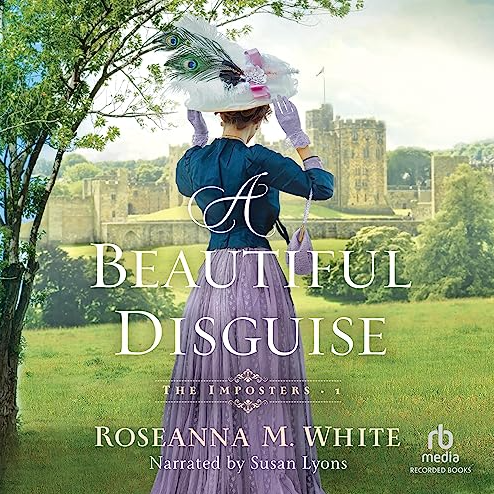
For Eugenia “Genie” Ballantine, marriage is seen as a sacrifice for her family, a way to continue the legacy that her great-grandfather started now that her brother has died. As she wishes to marry for love, such a dynastic marriage is distasteful to her.
For Lady Lavinia Heming, marriage is seen as curtailment of freedom, for the poor young woman has been suffering from a nasty case of Scarlet fever, and has only just regained enough strength to enjoy society. Of course she doesn’t want to get married!
For Lady Marigold Fairfax marriage is out of the question, because she must help her brother put money on the table in order to survive. And this is where the cleverness of the plot shines, for this is Edwardian England, in the pre-war years, and people with aristocratic titles are expected to keep up appearances. But what if your father left you exactly nothing? What do you do then? So the resourceful, brilliant, Marigold has cobbled together a life which consists of cleverly redone dresses designed to make her look like a fashion plate, a secret hobby which enables her to hear things she shouldn’t (which she turns into much-needed funds,) and a wonderful family consisting of circus animals and their trainers.
The beginning of this novel is priceless! Sooo, if you love the world of Downton Abbey but are looking for something a little more adventurous, this novel is for you! Five Stars.
The post The world of Downton Abbey with an adventurous twist appeared first on Cynthia Sally Haggard.

February 16, 2024
A Fantasy Historical Novel infused with Sephardic folk-tales
In this fantasy historical novel, the characters inhabit a world that includes a Mirror Realm. On one side of the pomegranate grove or gate is the world of 1492 Sephardic Spain. When the Queen of the Sefaravad (loosely based upon Isabella of Castile) orders her Jewish subjects to convert or leave their homeland with nothing, the engine of this story starts as millions of people are on the roads moving…somewhere.
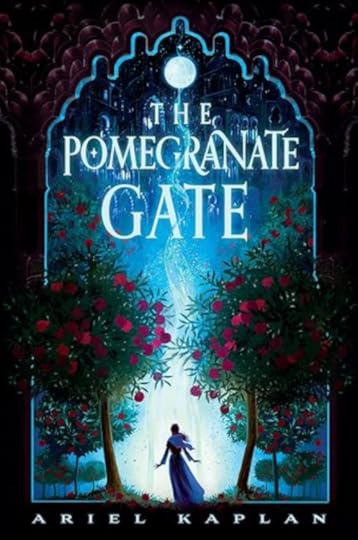
In this confusion one of the main characters Toba Peres becomes separated from her grandmother, and walks through the Pomegranate grove into the Mirror Realm. This world is a mirror image of the first, with East being West and North being South. It takes Toba a little while to figure this out as the Mirror Realm looks exactly like the old one except with these differences.
Another strange property that the Mirror Realm possesses is that is can be accessed via dreaming. Toba’s long-time friend Naftaly Cresques ~ a not-so-good tailor by trade ~ sees things that don’t exit in Sephardic Spain, but do occur in the Mirror Realm.
Naftaly, a sensitive character whose only wish is to be helpful, determines to find Toba. But his dreams center on another character who becomes Toba’s companion in the Mirror World.
In this Mirror World, Toba throws off her stifling constraints and becomes the powerful woman she was meant to be. She finds her absent father. She discovers who she really is via her family lineage. But naturally she is a threat to the social order in that world, and even with her new-found power she is never really secure.
Just as 1490s Spain was a terrifying place to be for its Sephardic inhabitants. so also is the mirror realm with its complement of magicians, sorcerers and devils. If this sort of thing fascinates you and you love (and know) Sephardic folk-tales, this is the book for you! Four Stars.
The post A Fantasy Historical Novel infused with Sephardic folk-tales appeared first on Cynthia Sally Haggard.February 9, 2024
How Wellington described his troops on the eve of Waterloo
AN INFAMOUS ARMY is how Wellington described the motley troops he was in charge of on the eve of the Battle of Waterloo, fought on 18 June 1815, and it is also the title of this novel (Book 4 in the Alastair-Audley series.)
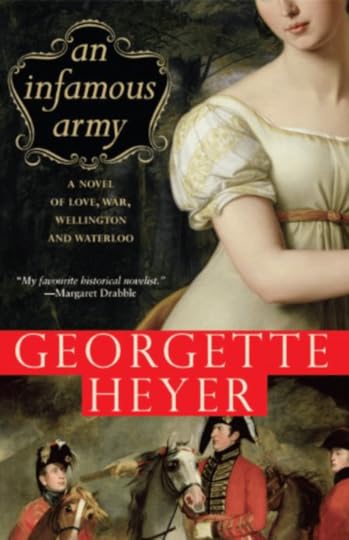
As many of you know, Waterloo was one of Britain’s greatest triumphs, for at the end of it they had annihilated the French Army and destroyed Napoleon’s power. A famous railway station in London is named after this battle.
But, according to Georgette Heyer, the author of this novel which was published in 1937, the Battle of Waterloo was nearly lost. It did not help that the allied army was made up of three parts. There were the British, who knew and trusted the Duke of Wellington, including many officers who had fought (and won) battle in the Peninsula Campaign. Then there were the Dutch-Belgians under the command of Prince Henry of Orange, a rather excitable young man who nearly ruined the day by his impulsive decisions around Quatre Bras, where his troops held a thin line against Marshal Ney’s left wing. These troops did not know Wellington, consisted mainly of raw recruits, and couldn’t be made to fight.
Then there were the Prussians.
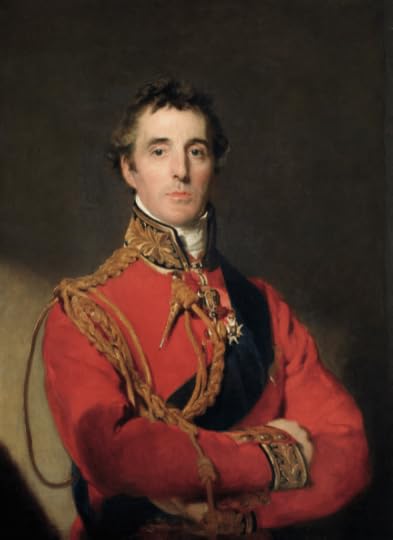 Arthur Wellesley, Duke of Wellington (1769-1852)
Many of us who have studied this battle have been told that it was the Prussians who saved the day, arriving late in the afternoon to reinforce the Allied line. What we are NOT told is that General Blücher, their commander, was so drunk that no-one could find him for several hours on the morning of battle! If it had not been for the determination and heroism of the much better-trained British forces, who held the Chateau of Hougomont and the farm at La Haye Sainte, for eight hours, Waterloo would have been a great loss.
Anyone who reads this volume will be amazed at the amount of research Ms. Heyer did for this novel, which she brings to life so brilliantly.
If you don’t know much about the Battle of Waterloo and want to know more, or want to read another Regency romance, this novel is for you! Five stars.
The post How Wellington described his troops on the eve of Waterloo appeared first on Cynthia Sally Haggard.February 2, 2024
“Clorinda” battles (and enchants) her guardian
REGENCY BUCK by Georgette Heyer is one of her most famous historical novels, and pretty much invented the genre of Regency Romance.
But what is so refreshing about Ms. Heyer’s heroines is how they break the mold of what a society miss is supposed to be. They are extremely intelligent. They are athletic. Sometimes they behave like men. And they speak their minds.
That is what makes heroine Judith Taverner so delightful. She is so relatable. She is the perfect foil for Lord Worth, her young guardian, a sensible gentleman in his mid-thirties. who nevertheless enjoys teasing her, in order to see her too fierce reaction to his ploys. And so he calls her Clorinda
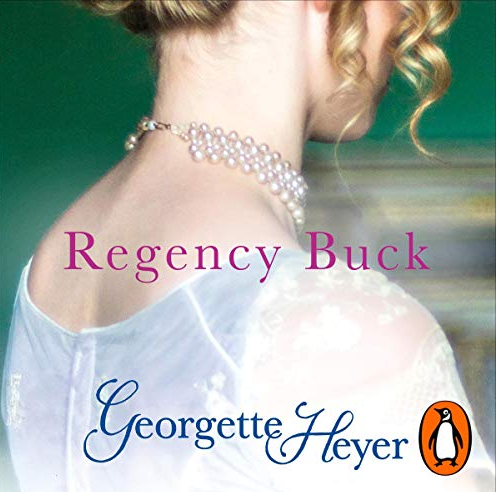
For those of you who do not know, Clorinda is a warrior woman of the saracen army and the heroine of Torquato Tasso’s poem Jerusalem Delivered (published 1581.) Unsurprisingly, the hero, Tancred falls in love with her. We first meet Clorinda when she saves a Christian man and woman from execution. Their crime? Falling in love. Next Clorinda, under the command of the King of Jerusalem is responsible for that city’s defenses.
But what drives this novel forward is the fact that Miss Taverner is in possession of eighty thousand pounds (an enormous fortune in 1811), and that if her brother Sir Peregrine Tavener should die, she would be the sole heiress.
Needless to say, this 19-year-old boy has various mishaps along the way, from nearly being shot dead in a duel to being poisoned by snuff and finally someone (I will not say who) concocts a plan to send him away to Barbados for the rest of his days.
Enter Lord Worth, the hero in this charming novel. His methods may be unorthodox, but at least he saves Peregrine’s life and unmasks the culprit. The novel ends in two betrothals.
Part of the enjoyment of listening to this novel is hearing the very talented Jasmine Blackborow. Not only did she do the varied accents wonderfully, thus bringing the novel to life, she was also brilliant with Lord Worth’s drawl. Some readers complained that it slowed down the narration, but IMHO her timing was perfection. I’m looking forward to hearing more from this talented lady! Five Stars.
The post “Clorinda” battles (and enchants) her guardian appeared first on Cynthia Sally Haggard.January 26, 2024
His friends call him “Satanus” ~ THESE OLD SHADES by Georgette Heyer
The Duke of Avon has a Reputation, one that causes his friends (and others) to call him Satanus. Now 40 years old, he has never married and his family consists of a slightly younger sister (a lady in her thirties) and a much younger brother (Lord Rupert, who is around 20.)
One day, His Grace is on his way home by foot, presumably from a not-so-nice place as he is in a shabby neighborhood, when a boy cannonades into him. Picking himself up, he perceives two things. The boy has flaming red hair and compelling blue eyes. And he is terrified.
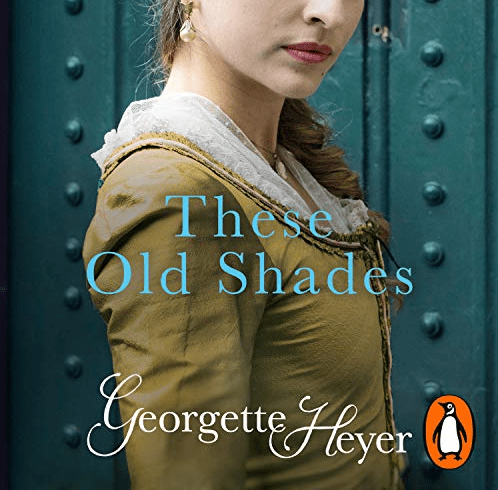
When the boy’s bully of a brother shows up, determined to continue the punishment, Avon buys him off with a diamond.
And so the boy ~ called Léon ~ becomes Avon’s page.
What makes this book so enjoyable is the remarkable character transformation that these two main characters go through. Avon goes from being a lonely, cynical nasty piece of work, to a man in love. While Léon becomes Léonie the unknown, before becoming Léonie the aristocrat.
I’m not going to tell you how this all comes about. But suffice it to say that under the studied ennui and drawl, Avon is incredibly smart and by the end of the book he has wrought justice for Léonie. Five Stars.
The post His friends call him “Satanus” ~ THESE OLD SHADES by Georgette Heyer appeared first on Cynthia Sally Haggard.January 19, 2024
A modern-day twist on an ancient tale ~ ANTIGONE by Rhea Karvanis
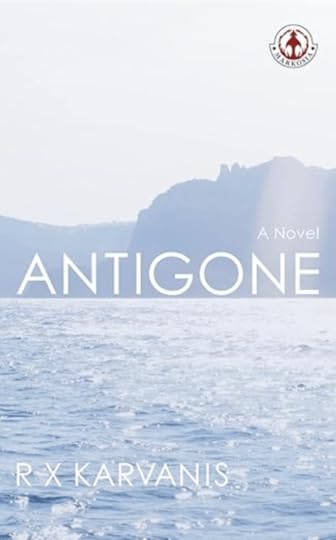
This book was an unexpected surprised. I expected it to be about the moral dilemma that Antigone faces in the Sophocles play, whether she should obey divine law and give her father an honorable burial, or whether she should obey earthly law and not bury him.
Instead we meet “Ann” on a plane going to Crete in search of her twin brother Niklas whom she has not seen for many years. Niklas is a pilot based at the airport in Heraklion, his job giving instruction to students.

But Niklas is not at all happy to see his long-lost sister. There follows some kind of chase as Ann desperately tried to keep up with her brother, a chase that happens in the bowels of the air terminus. But suddenly, doors and floors shift and the next thing we know is that both twins are in the ancient palace at Knossos.
And so we enter the world of Minoan Crete in its final phase, just before the palace was destroyed by fire in 1350 BCE.
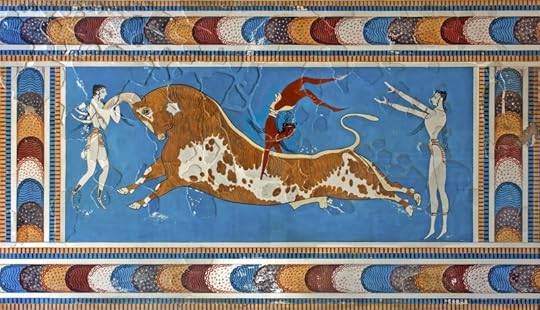
This is a fascinating bone-chilling story of what life was like amongst people who both seem exactly like us and utterly alien. We experience power, greed, jealousy as well as kindness and cooperation. We witness ancient rituals, madness and human sacrifice. The book opens up when Ann/Antigone trains to take part in the ancient version of the Olympic Games, which involves bull-taming.
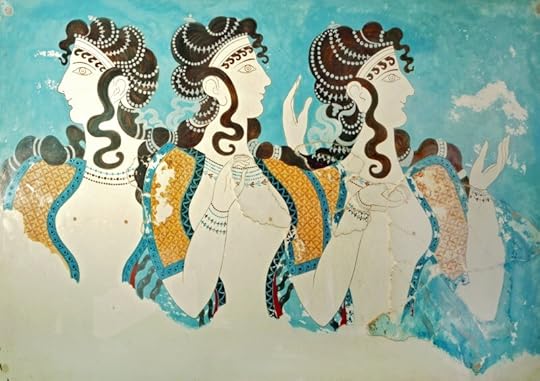
But through it all, one can never relax, because death was around every corner in the ancient world. Finally, a fire in a storeroom destroys the magnificent palace of Knossos and the protagonists flee into the mists of time.
If you love Ancient Greek Myths and are not put off by a touch of Historical Fantasy, this is the book for you! Five Stars.
The post A modern-day twist on an ancient tale ~ ANTIGONE by Rhea Karvanis appeared first on Cynthia Sally Haggard.January 12, 2024
DEVIL’S CUB is about a crack shot and expert swordsman with a tendency to murder
Georgette Heyer’s DEVIL’S CUB is the second volume of the Alastair-Audley Book Series. (Volume One THESE OLD SHADES concerns the protagonist’s father and mother.)
So who is this protagonist? His name is the Marquis de Vidal, he is 24 years old, he is a perfectly proportioned handsome young man. Needless to say, he is a rake.
Despite his French-sounding name his home is actually in England, which is a staid place for a hell-bent hellion. At any night of the week, Vidal is wenching or gambling. That, in itself, is not particularly dismaying to his parents the Duke and Duchess of Avon, as that is considered normal behavior for young nobleman. But what does disturb them is Vidal’s tendency to kill his opponents during a duel, as he is a crack shot and an expert swordsman.
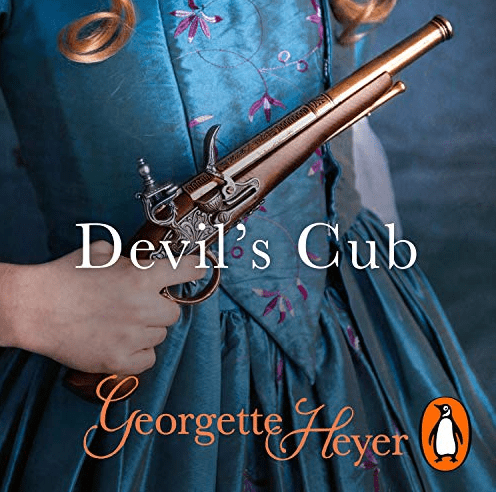
The most recent incident ~ where he actually left the body in the middle of the road ~ causes his father to command that he go to Paris for a while until wagging tongues start gossiping about something else. And so Vidal is obliged to leave London suddenly.
But of course, you could not expect such a wild rake to go alone. No, he has to proposition a teenaged girl to go with him. But in his hurry, he mistakenly addresses the note to Miss Challoner, which means that it is the beauty’s elder sister who reads the note.
For those of you who do not know “Miss SURNAME” always meant the eldest sister. The younger sisters being “Miss GIVEN NAME.” In my family, I was Miss Haggard, while my sister was Miss Melanie.
And so a note intended for Sophia Challoner, ended up in the hands of her elder sister Mary. Mary, who is a self-possessed well-educated young woman sees immediately that if her sister goes with Vidal, her reputation will be ruined. And so she goes instead.
Vidal is not happy when he discovers the switch. But as he has been commanded by his father to go to France, he forces Mary onto his private yacht. However, when he attempts to force himself upon her, she shoots him with one of his pistols. Vidal is shocked out of his assumptions, and his attitude towards the young woman changes instantly. Remarkably enough, he actually feels remorse for his boorish behavior, and determines to marry her.
But Mary is not like most women. When the catch of London Society offers her his hand in marriage, she refuses.
What happens next? You will have to read this wonderful novel to find out! Five Stars.
The post DEVIL’S CUB is about a crack shot and expert swordsman with a tendency to murder appeared first on Cynthia Sally Haggard.January 5, 2024
A MOST INTRIGUING LADY has marvelous characters
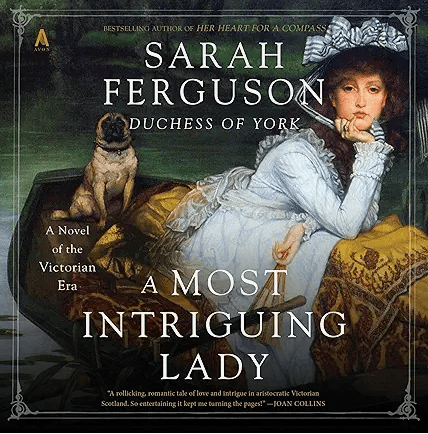
This is the second book I have read by Sarah Ferguson, Duchess of York, and I believe the second book of historical fiction she has written. So how does it compare with her first foray into the histfic genre A HEART FOR A COMPASS?
Whereas COMPASS is about Lady Margaret Montagu Douglas Scott (1846-1918) a firebrand of a woman who fought her father to delay her inevitable marriage until 1875 (when she finally married at the great old age of twenty-nine), INTRIGUING is about her younger sister Lady Mary Montagu Douglas Scott , who was born in 1851, and married Colonel Walter Rudolph Trefusis (1838-1885) in 1877 when she was about 26 years old.
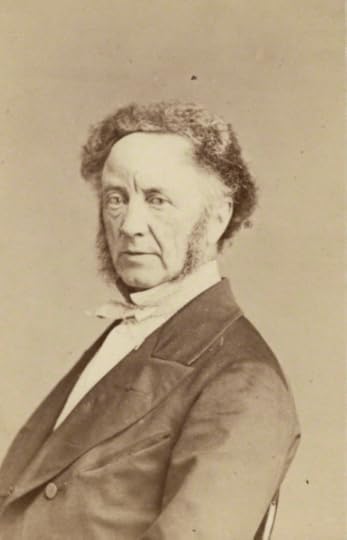 Mary’s father the fifth Duke of Buccleuch (1806-1884). Photo taken in the 1860s.
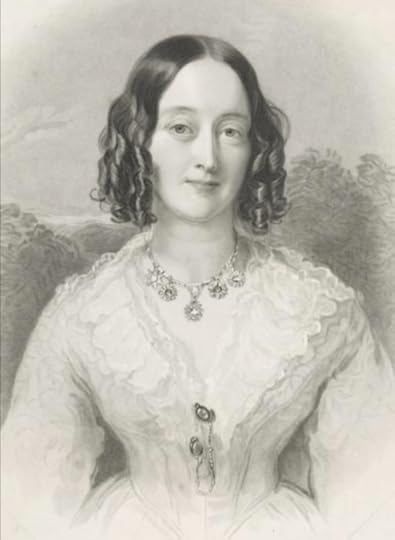 Mary’s mother Charlotte, Duchess of Buccleuch (1811-1895) Date unknown.
INTRIGUING has two centers of activity. The first occurs at the beginning of the volume and is about the supposed theft of a brooch. As the person blamed for the theft happened to be a dear friend of Lady Mary’s, she does everything in her power to find out who actually stole the brooch so that she can save his reputation.
With that problem solved, the middle part of the book sags into details about the English Country House of the 1870s. Against this background, the on-off romance between Lady Mary and her beau Colonel Trefusis plays out.
The book doesn’t perk up until the last quarter of this volume, when there is another theft, this one much more serious, involving the nascent intelligence services of Great Britain.
Despite its obvious flaws, I thoroughly enjoyed this volume, because Ms. Fergusons created such wonderful characters. Lady Mary was a thoroughly enjoyable strong female lead, while Colonel Trefusis had a great deal of empathy and understanding. But the character that I enjoyed the most was Trefusis’ aunt Louise, Lady Rolle. Four stars.
The post A MOST INTRIGUING LADY has marvelous characters appeared first on Cynthia Sally Haggard.December 29, 2023
Influential power players struck from history
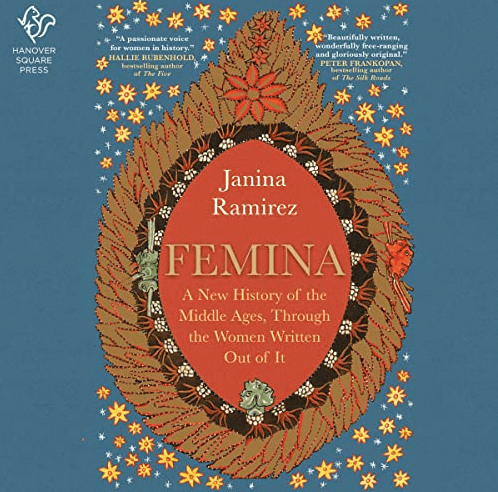
In the Middle Ages, influential power players were struck from history with the word FEMINA (woman) put beside them. Naturally the “weaker” sex was not worthy of (male) attention.
But now it is 2021, and Oxford historian Janina Ramirez is determined to set the record straight.
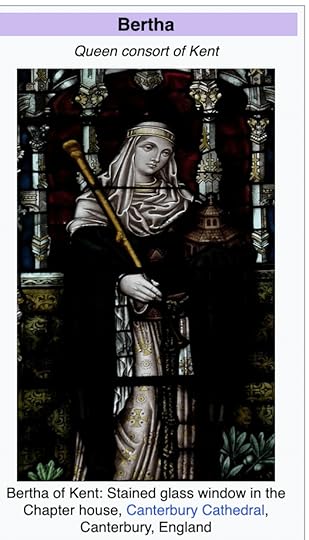
And so we learn about Bertha of Kent (565-601), a Christian Princess from Tours, who married Æthelberht of Kent in 580. Æthelberht himself was pagan, and so the marriage took place on condition that Bertha be allowed to practice her religion. And so the 15-year-old girl brought her chaplain Liudard with her to England in 580. At that time, the Romans had been gone from England for about 130 years, and so there was a Roman church available outside the city walls of Canterbury. Bertha and Liudard re-consecrated the site and dedicated it to St Martin of Tours, the patron saint of their home. It is now a UNESCO world heritage site, being the oldest church in the English-speaking world which has had continuous services since 580 CE.
When Pope Gregory the Great sent Saint Augustine to England in 596, with the mission of restoring Christianity to England, he was pleasantly surprised by the welcome give them by Queen Bertha. And so Christianity gained a firm foothold in England.
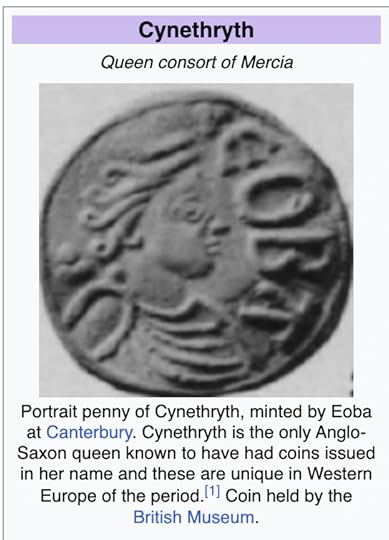
Then there is Cynethryth of Mercia (died after 798) who was the only Anglo-Saxon Queen to have had coins minted in her own name, suggesting she was co-ruler of Mercia with her husband King Offa (reigned 757-796) who built Offa’s Dyke, a border of sorts between England and Wales.
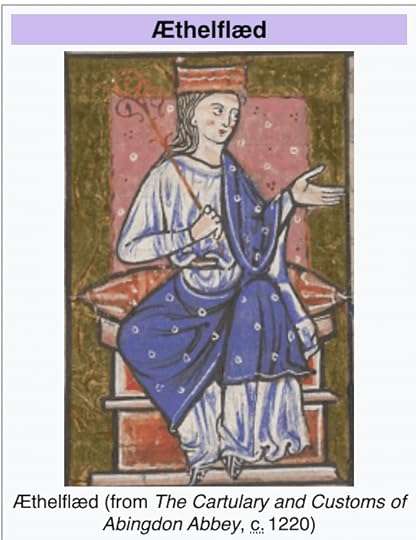
Next we meet Æthelflæd (870-918), the eldest daughter of Alfred the Great. At that time, England was being besieged by Viking hordes, and so Alfred, King of the West Saxons sealed a strategic alliance with the enormous kingdom of Mercia (which ran all the way from the Humber down to the north bank of the Thames, including the City of London) by marrying his eldest daughter to Æthelred of Mercia in the mid 880s, when she would have been in her teens.
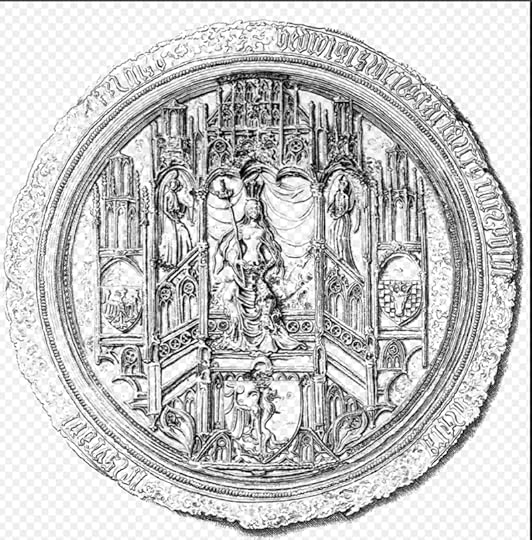 Jadwiga’s Seal
By around 900 CE, Æthelred’s health had declined so much that his wife ascended to the throne of Mercia. She was responsible for the victory against the Danes at Derby in 917, which was the first part of the Danelaw to fall to the English. In 918, Leicester surrendered without a fight and shortly afterwards, the Viking leaders of York offered to surrender to her. Unfortunately, she died on 12 June 918 and was unable to take up their offer. But what a remarkable woman Æthelflæd must have been to convince the Vikings of the largest city in Danelaw to surrender to her! Of course I had never heard of her before.
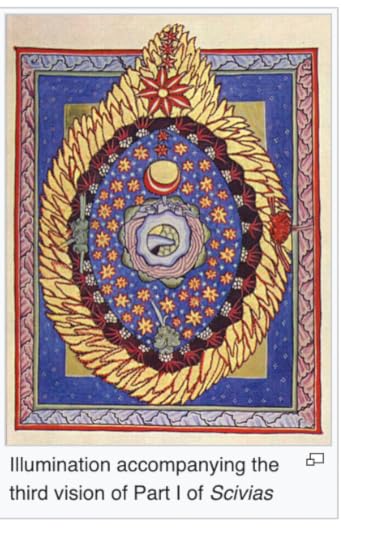
And so we go on down the ages, meeting Hildegard of Bingen (the author of Scivias), Queen Jadwiga of Poland (the only Polish Queen who ruled as a King), Margery Kempe, Juliane of Norwich and Bridget of Sweden.
If you love reading about strong female characters who you’ve never heard of, this is the book for you! Five stars.
 The post Influential power players struck from history appeared first on Cynthia Sally Haggard.
December 23, 2023
British-Indian relations simmer just before the end of the Raj
I had never heard of Dinah Jefferies before, but when I was visiting England and enjoying myself perusing a bookshop in Marlborough, her title caught my eye, maybe because the cover was so beautiful. (I am a very visual person.)
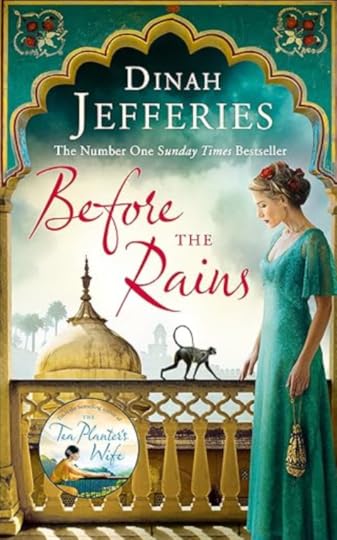
In any event, I have now finished this remarkable novel and can whole-heartedly recommend it. It concerns British-India relations in the early part of the 20th century, and is written by an English author.
For those of you who are neither British nor East Indian, you may not realize just how complex these relationships were. On the one hand, the British were offended by the polytheism, the polygamy and suttee (the practice of burning widows alive.) On the other hand they were fascinated by this vibrant culture with its spices, colors, ancient wisdom and most of all a much more natural relationship with emotions than is typical of Northern European societies. People, who up until then had been so tense with a corset of repressed emotion, would come to India and discover the freedom of expressing themselves. They fell in love with the people there. They learned Sanskrit and Pali. They began to imbibe Indian wisdom traditions. They became less stuffy.
 Mount Abu in Rajasthan
This novel concerns Eliza Fraser, whose father was high up in the British vice-royalty that governed India before it gained independence in 1947. The novel opens with ten-year-old Eliza witnessing the death of her father, when someone lets off a bomb during a parade. Eliza is absolutely devastated, but interestingly enough a young Indian boy is there with her, trying to comfort her as she holds her dying father in her arms.
 Udaipur and the Araveli Hills
Eighteen years later, Eliza returns to India by herself. Now she is an accomplished photographer (quite a feat for a young woman in the 1930s) and she has been given a commission to photograph all the members of the Royal Family in Rajputana, as well as to obtain some local color.
Although Eliza grew up in Delhi, she hasn’t been there in nearly twenty years, and so when she arrives, she behaves exactly as one would expect a liberated woman from England to behave. She wears trousers. She doesn’t take orders. She wants to roam around by herself, shooting photos of the local people.
 City Palace of Udaipur
It doesn’t take her long to realize that none of this is really possible. She has to be escorted everywhere. She has no privacy at the palace where she is a guest of the Maharaja of Rajputana. And she has the constant feeling that she is being spied on.
All of this would be intolerable were it not for the Maharaja’s younger brother. “Jay” (his real name is much longer) has been educated at Eton, speaks flawless English and understands the British very well. He takes a liking to Eliza and becomes her escort. Of course they fall in love and of course they begin a relationship.
 The Thar Desert
But East Indians in the 1930s of the stature of the Maharaja and his family do not marry for love. They do not marry the English (whom they detest.) And worst of all, they don’t marry widows, for widows are perceived to bring bad luck into the family. And so poor Eliza has three strikes against her.
What follows next is the emotional highs and lows of any couple who are passionate about each other, but continually thwarted by society’s expectations.
If you love this sort of thing, you will adore this book. Five stars.
The post British-Indian relations simmer just before the end of the Raj appeared first on Cynthia Sally Haggard.Cynthia Sally's Blog

- Cynthia Sally Haggard's profile
- 129 followers

